Home Blog Page 219

How To Introduce New Canadians To Canoeing And Camping

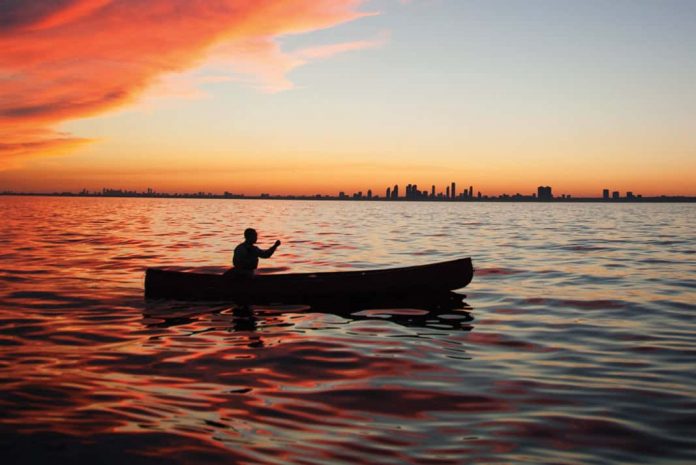
person paddling a canoe on calm waters during sunset with Toronto, Ontario in the background
In the city but off the grid. | Feature photo: Hannah Griffin

On a humid September morning, the Toronto skyline’s glassy condos that stretch to the sky and the pin-like CN Tower are filtered through an overcast haze.

Cranes work on multiplying the buildings in the downtown core, and constant airplane traffic filters in and out of the waterfront airport. Michael Zhang, his wife, Riya Wang, and four-year-old son, Michael Jr., are just two kilometers from the downtown core, canoeing in a quiet channel of the Toronto Islands. They could be in a remote national park.

Michael calmly J-strokes and they make their way up to a narrow passage between islands, floating under willows and past weedy, narrow beaches. Michael Jr. alternates between strokes with a tiny paddle and peering over the gunwales to get a better look at the soft lily pads and long-tailed ducks.
How to introduce new Canadians to canoeing and camping

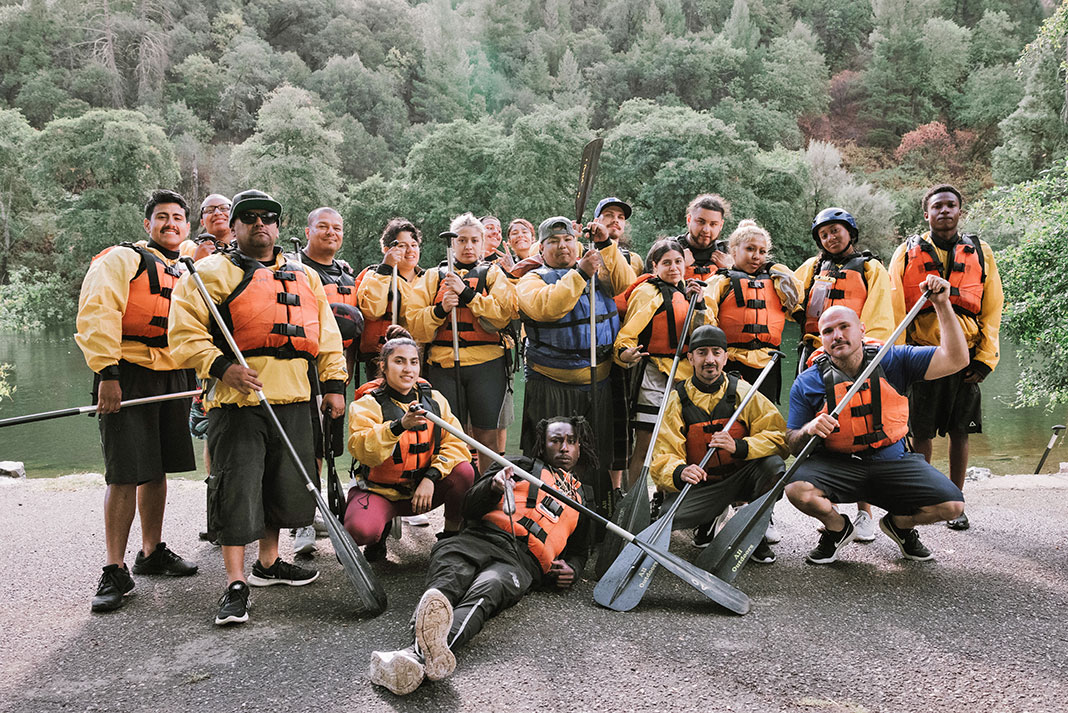
On this Sunday, Michael and his family are just like countless other Canadians who spend their weekends’ canoeing. Yet the Zhangs’ experience in many ways differs from the image of Canadian paddlers as hardened backcountry experts who begin their canoe tripping careers swaddled in a Hudson Bay print blanket.

Not long after immigrating to Canada from China in 2008, Michael had the opportunity to go paddling at the Harbourfront Canoe and Kayak Centre.

He was instantly hooked, and further participation in paddling not only helped Michael and his wife make friends, but it made them feel more connected to their new country. “More and more that has reinforced our identity and our agreement with who we are and what Canadians are,” Michael says.

The Zhangs are just one family in the ever-growing cultural mosaic of North America. In 2011, 20.6 percent of the Canadian population was foreign-born, and in 2010, 12.9 percent of the U.S. population began life in another country.
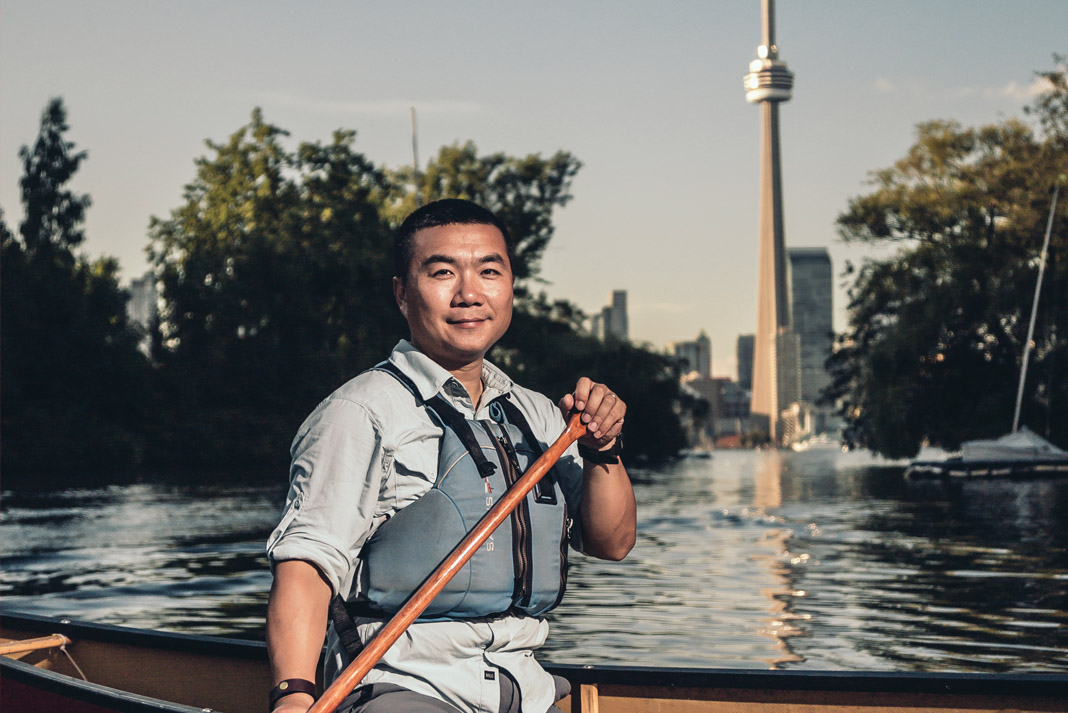
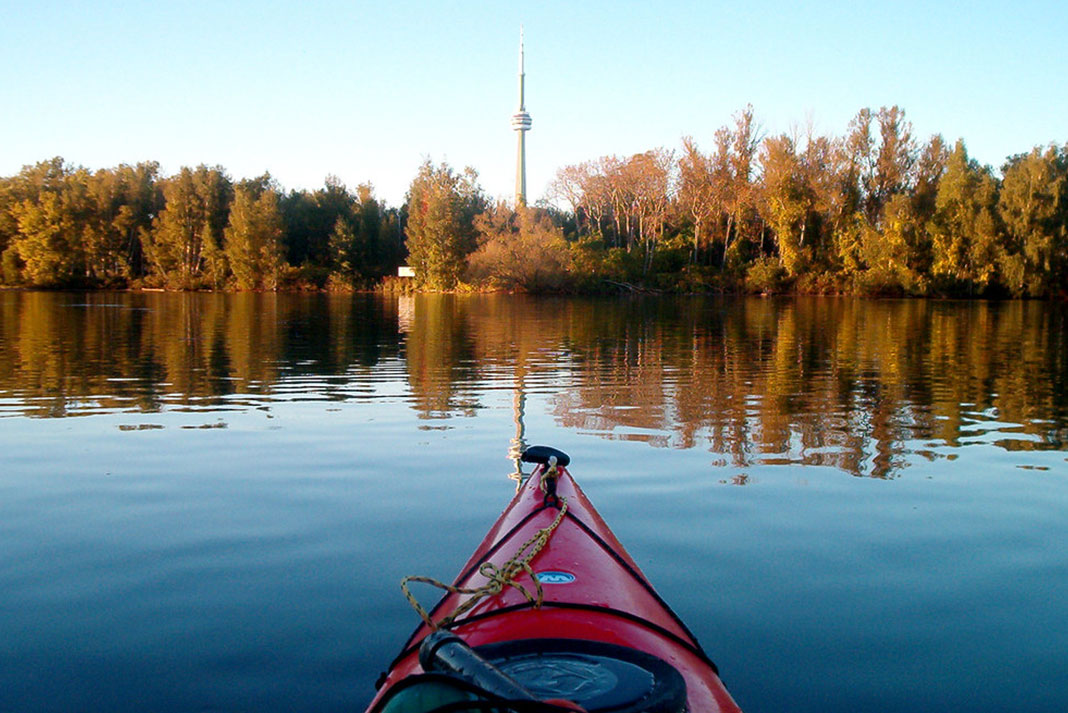
Michael Zhang canoe's on Lake Ontario with the CN Tower in Toronto, Ontario in the background
Michael Zhang paddles on Lake Ontario, where his connection to canoeing began. | Photo: Courtesy Ontario Tourism

According to the Outdoor Industry Association, 34 percent of outdoor consumers live in cities, and those consumers tend to be young and ethnically diverse.

Many North Americans who grew up canoeing and camping see it as a normal part of childhood and recreation. Those who have never held a paddle, slept in a tent or been involved in these activities can find them intimidating.

Some worry this lack of exposure for new Canadians and Americans may lead to a decline in the number of people canoeing and camping in the coming years.

As North America’s population becomes more diverse, what are the canoeing and camping industry and government agencies doing to encourage immigrants and minorities to engage with the great outdoors?
One innovative service aims to brings the wilderness closer to urban centers. Boris Issaev and Alex Z. Berlyand began non-profit Parkbus in 2010 in the hopes of making outdoor destinations in Ontario more accessible by public transportation. Immigrants without a lot of outdoor or camping experience are an important part of Parkbus’ reach.

Issaev acknowledges that a lack of experience and the numerous unknowns can be intimidating for those who have never spent time in the woods. Depending on the situation immigrants have come to Canada from, sleeping in a tent outside of the city may seem like a step backward from comforts they have worked so hard to achieve.

As North America’s population becomes more diverse, what are the canoeing and camping industry and government agencies doing to encourage immigrants and minorities to engage with the great outdoors?

A lack of outdoorsy friends, experience, and equipment can also keep new Canadians from embracing a weekend camping or a day hike. “Our mission is to break down these barriers,” Issaev says.
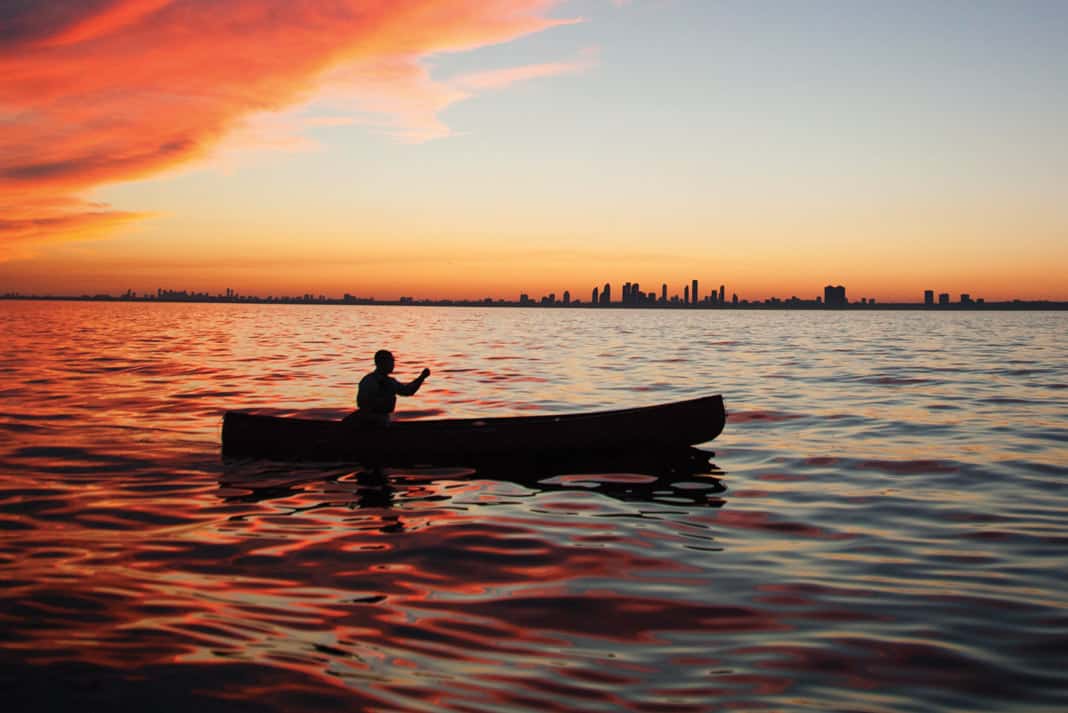
person paddling a canoe on calm waters during sunset with Toronto, Ontario in the background
In the city but off the grid. | Feature photo: Hannah Griffin

Parks Canada’s contribution

Parks Canada is also working to teach outdoor skills to those who haven’t yet been exposed to camping. Through the Learn To Camp program, participants can spend time in some of the most beautiful areas of the country while learning skills like how to set up a tent, how to prepare a meal outside and canoeing basics. The skills they teach differ depending on the diverse areas where the Learn To Camp program is offered.

Ed Jager, director of the visitor experience at Parks Canada, says the program was driven in part by how the population of the country was changing, but the demographics of park users weren’t necessarily following suit.

He says the typical park user is slightly older and wealthier than the average Canadian, more suburban and of European descent, while the participants in the Learn To Camp program tend to be the exact opposite.

“Certainly there’s a sense of the outdoors like a wild place,” Jager says when asked how camping can be intimidating to newcomers. “There’s an inherent appeal of the natural environment people have, but there’s also an inherent fear,” Jager says part of Parks Canada’s role is to make sure Canadians know about the country’s amazing parks and to make sure they can be a part of it. “The makeup of the country is changing and it’s super important people are experiencing it and being exposed.”

National Park Service

In the United States, similar programs run by the National Park Service are sprinkled from coast to coast. In Anchorage, Alaska, the NPS works to introduce youth to camping and outdoor programs with a focus on underserved audiences and Title 1 schools with a large percentage of students from low-income families. This summer they will add a new program for families in the community that are first-time campers.

Sequoia National Park in California has a program that introduces people to camping, and there are numerous NPS partner organizations that introduce new campers to the outdoors, especially focusing on children from urban environments spending time in the wilderness.
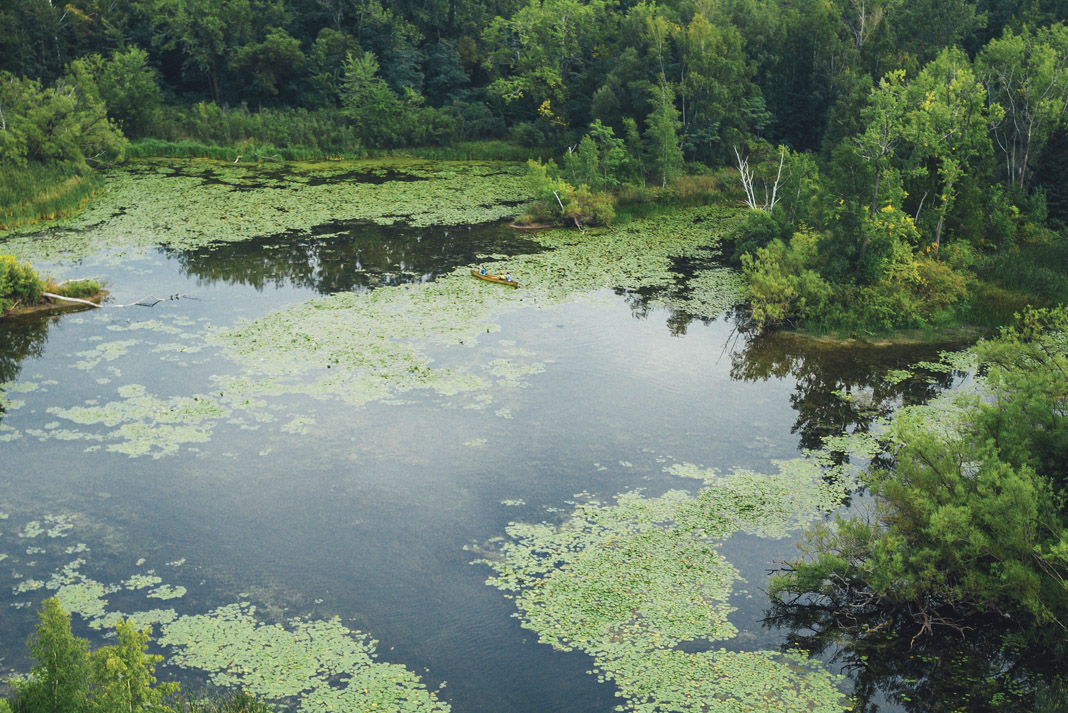
A green water oasis with a canoe in the middle of the calm waters
Attracting new Canadians to the country’s waterways is seen by some as essential to the paddling industry. | Photo: Courtesy Ontario Tourism

One of the most storied and iconic parks in Canada for canoeists is Algonquin Provincial Park. Its vast 2,946 square miles of forest, lakes and rivers is approximately the same size as the state of Delaware. For 40 years, Sven Miglin has run The Portage Store on Canoe Lake, offering canoe rentals, outfitting, guided tours and campground canoe delivery.
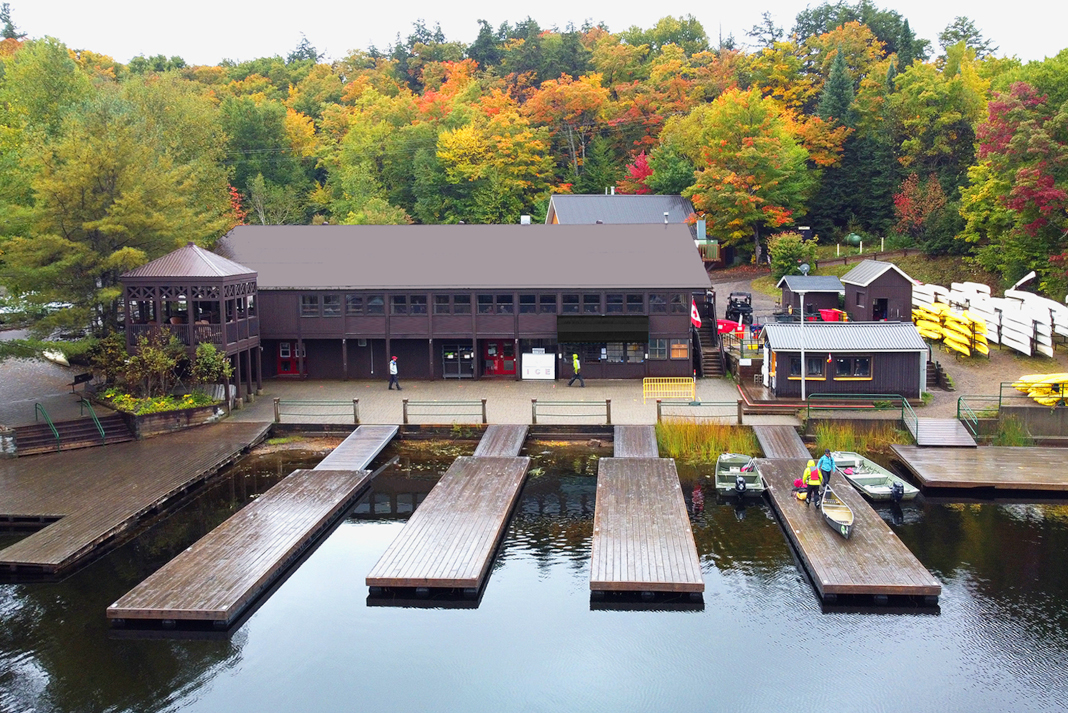
He has seen more diversity in visitors to the park but says those going on backcountry canoe trips still skew towards second and third generation canoe trippers as opposed to new Canadians.

Miglin says once new canoeists are at The Portage Store, having a helpful and sensitive staff to answer questions can help alleviate some of the intimidation.

As a long-term solution, he thinks an increase in high school camping trips to parks would have a great benefit in terms of exposure for young people. “Canada is defined by the great outdoors. The only way we preserve that is to care about it.”

Government programs, outfitters and transportation alternatives can all help in encouraging immigrants to become involved in canoeing and camping, but the boat and gear manufacturers have a role to play too.

The majority of advertisements featuring canoeists and campers show Caucasian people, something that may reflect the reality of the majority of those engaging in these activities, but nonetheless lacks diversity.

“It’s a slow process,” says Samantha Searles, director of market and consumer insights at the Colorado-based Outdoor Industry Association. She says the industry still has a ways to go in terms of diverse marketing but notes that REI, as well as some high-end brands, seem to be at the forefront.

She says she thinks some brands will go faster or be more interested than others, while some may not know how to reach this growing diverse demographic.

Back at the Toronto Islands, Michael Zhang is now alone in the canoe. His wife and son have returned home, and he paddles with ease against a gentle pink sky.

The 2.5 million people turning on the lights in their houses on shore seem far away. These are the moments that make Michael feel like Canada is home for good.

“We have so many beautiful Canadian landscapes that can be only accessed—or be better accessed—through canoes and kayaks,” he says. “I feel paddling, especially canoeing, makes me a little bit more Canadian every single time.”
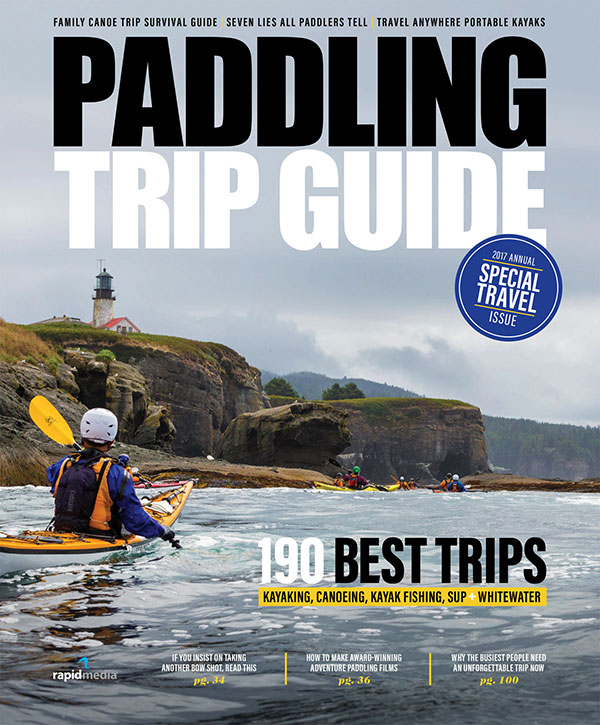
cover of Paddling Mgaazine, Issue 50This article was first published in Issue 50 of Paddling Magazine. Subscribe to Paddling Magazine’s print and digital editions, or browse the archives.


In the city but off the grid. | Feature photo: Hannah Griffin
 

Badfish SUP Reshapes Future

Photos by: Badfish SUP
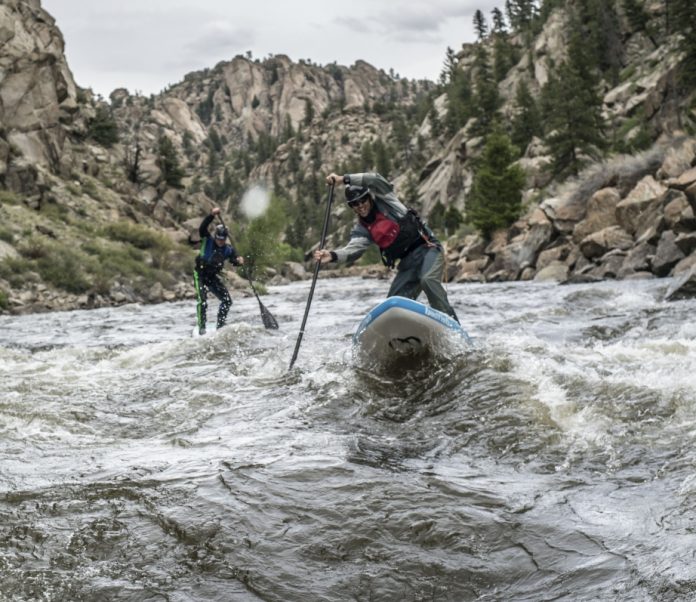
A man and a woman paddling on Badfish SUPS

The origin story of Colorado’s original standup paddle board company—Badfish SUP—is adding another chapter. Call it a rebirth. Call it a renaissance. Or, as company co-founder Mike Harvey likes to call it, a “re-independenting.”

While the expression may not exactly roll off the tongue, it’s the perfect description of the originally independent and always inventive surf and SUP company’s return to its riverside roots. After a fruitful 6-year partnership with Boardworks Surf in Carlsbad, CA, Badfish SUP has announced it is not renewing the licensing agreement and is once again handling all aspects of business from its corporate headquarters alongside the Arkansas River in Salida, CO, effective immediately.

Mirroring the classic tale of a garage band that has outgrown its first big label, Badfish has forged its own production company in order to expand its creative offerings. The new Badfish remix will focus on a fresh variety of top-quality inflatable SUPs, performance river-runners and high-end epoxy river-surfing boards in both SUP and shortboard shapes. And like that burgeoning band, co-founders Harvey and Zack Hughes have brought in industry rock star Luke Hopkins as an equal partner poised to push them to the top through added expertise in design, manufacturing, sales and distribution.

“I like to think of it as Badfish+,” says Hopkins, a passionate paddler and longtime outdoor industry guru. “Zack and Mike have done something great: They’ve created their own sport of river SUP that other brands have been trying to catch up to ever since. Now Badfish+ is expanding into even more innovative products, features and designs, with the ability to offer service that parallels product quality.”

Drawing on a lifelong surfing background from his native San Diego and a successful stint as a freestyle kayaking pro, Hughes began shaping river surfers designed to maximize his rides at the local Salida Whitewater Park in 2008. Those waves just happened to be built by Harvey, a renowned river park designer and budding standup paddler who was seeking the same result from the other direction. The merging of minds soon led to the birth of Badfish.

Since diving in full-time in 2010, the pioneering watermen behind Badfish SUP have benefited from the ultimate backyard river surfing laboratory to create a new culture based around their cutting edge designs. They’ve been shaping adventures ever since, now unleashed to further explore the evolution of the sport they helped establish.

“Rivers and surfing are still our core passion, but going back out on our own allows us to offer more cool products for all types of paddling,” says Harvey. “We’re expanding into categories we previously didn’t offer. From everyday family use on flat water to adventure paddling, fishing and travel-friendly boards, now we’ve got a board for anywhere there’s water.”

Badfish SUP will be introducing its complete line of versatile inflatables, performance surfers and feature-rich river-runners to retailers this winter, with boards available in spring 2018. In addition to Hopkins, the talented team of progressive board-riding ambassadors including Spencer Lacy, Mike Tavares, Natali Zollinger, Brittany Parker and Miles Harvey will be making the migration to re-independence alongside Badfish. Join them and come check out the new shape of adventure.

BIC SUPS Acquires Sandwich Island Composites

Photo By Adventure Kayak
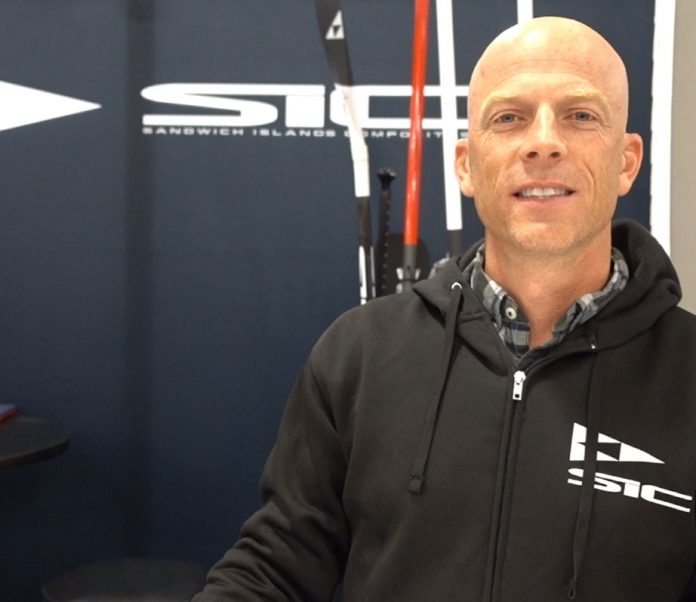
BIC owner Jimmy Blakeney wearing a SIC hoodie.

BIC SUPs announed that they have acquired SIC (Sandwich Island Composites) at Outdoor Retailer 2017. BIC will be keeping the SIC brand completely in tact. BIC beilieves that SIC has done a great job creating really unique and innovative products.

One of those products it the RS 12.6 and 14. The RS stands for “rocket ship,” and it is an all water race SUP.  It is an extremely fast board and also comes in wider models for better stability. 

Another new product is the Bayonett. The Bayonett is an extension of SIC’s Bullet series. The Bullet series is the most iconic of SIC’s products and is a great all-water touring board. The Bayonett is refined for down-winding and also comes in various widths for all levels of paddlers.

For more information, check out the video below:

First Look: Old Town Castine Touring Kayak

Photo By: Kayak Angler
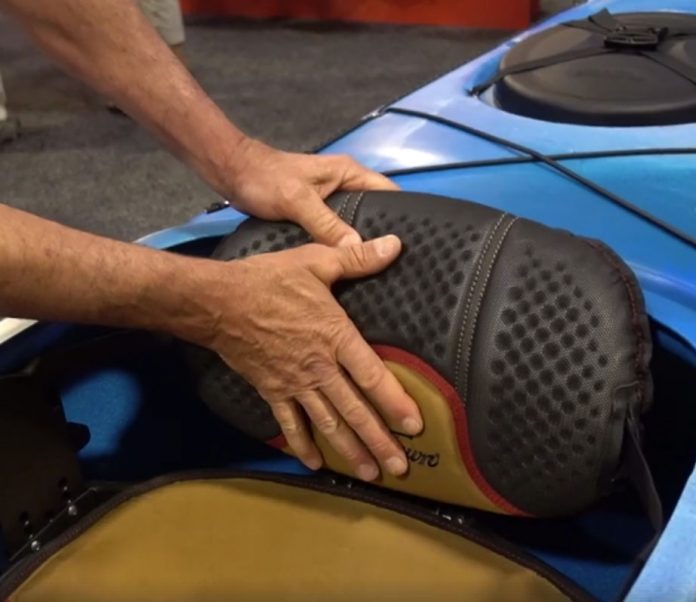
The seat of the old town castine

Old Town is getting back in the touring kayak world with a great new boat, the Castine. The Castine is a 14-foot light touring kayak with tie-downs all the way up the bow. It also has a huge dry storage area in the bow with a unique Necky wiping seal hatch cover that stays as dry as anything in the market. 

One of the coolest features is a toggle handle on the bow of the kayak that stays out of the way unless you need it, but when you do need it there is enough cord that your hands stay clear of the tip of the boat. 

Another unique feature is a very large cockpit so you won’t have any trouble getting in and out of the boat. The thigh braces are adjustable so you can find that perfect fit. 

Inside the boat, there is a day hatch that is accessible, between your legs, while you are paddling. It stays inside the cockpit while you are paddling, but slides toward you for easy accessibility. Just bump it easily on the bottom and it slides automatically in the boat.

For more info check out the video walkthrough below:

Kokatat’s New Dry Top Lineup

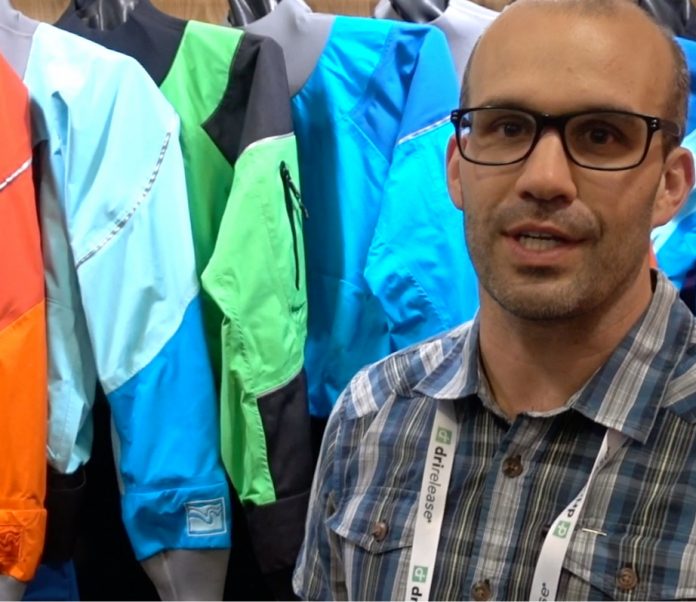
Kokatat introduced their new Session dry top at Outdoor Retailer 2017. It includes a neo-sinch adjustable collar, latex gaskets and a double tunnel. It is made from Kokatat’s proprietary Hydras 2.5 layer fabric to keep you nice and dry.

On top of the awesome new Session dry top, Kokatat has introduced a ton of new colors to their goretex fabric lines. The colors have cool names like Mantis, Ocean and Ice, but the look even cooler in person. Kokatat is bringing the 1980’s color scheme back with style. 

This will all be available January 2018.

For more, check out the video below:


Hobie Shows Off New SUPs

Hobie brought their 2017-18 line of standup paddleboards to Outdoor Retailer 2017.  First, they have a 10-foot inflatable paddleboard named the Adventure. This is the most versatile board that Hobie offers, and it comes with a paddle, air pump, and a fin. It also comes with a backpack so you can easily carry your SUP to the water and inflate it in minutes.

Hobie also introduced the Evolution SUP. The Evolution is an all-around recreational board that is 11-foot long, and has a customized deck pad that stands apart from other boards on the market.

A great transition board that Hobie introduced is the Venture. The nose of the venture is pulled in more, like the nose of a surf board. The pulled-in nose gives you a little more glide, but doesn’t sacrifice stability.

The last board that Hobie introduced is the ATR-3. This is a reimagining of the ATR series of SUPs that Hobie first introduced in 2005. The board is excellent for both recreational paddling and well as paddle surfing.

All of these products are available at your nearest Hobie dealer.

Check out the video below:

Fresh Look: New MTI Adventure Wear PFDs

MTI believes that lifejackets should be more affordable, so they have introduced a lot of great new products for 2018 that come in at a lower price point. First there is an inflatable belt pack, the 16g. It comes in at only 16-grams (hence the name) and has two different print styles.

They also redesigned the already-excellent Solaris PFD to give you more room to carry your extra gear. The front two pockets are expanded so you have tons of room. They also added a cell-phone pocket, because no one wants to leave their phone in the car.

MTI has also redesigned their entire fishing line of PFDs. They have taken the guesswork out of picking and choosing features. The Calcutta and Solaris FSPEC PFDs have drop down pockets, and tons of attachment points to tie down your small items.

Level Six’s New Dry Top Lineup

Level Six previewed their new 2018 lineup of dry tops at Outdoor Retailer 2017. The new line has a lighter-weight fabric while keeping the same strength and durability. The new material is also much more packable and compressible, so you can save room in your duffel. 

Level Six also announced that they have redesigned the iconic “Mack” dry top, into the new “Nebula.” The most interesting feature of the “Nebula” is that the color has a “Rasta” spin in honor of the legalization of Marijuana next year.

These new products will be available in the spring of 2018.

Check out the video below:


How To Paddle A SUP Safer: The Buddy System

It may seem adventurous to go out on the water alone, but this leaves you without help when something does go wrong. Having a paddling buddy allows you both to enjoy a safe trip, and gives you the support you need should something happen.

“This is Dale. Dale is a standup paddling enthusiast. But Dale is a lone wolf who enjoys his freedoms.”

“Dale does have a friend, but no patience for company, leaving Dale unprepared for his recreational paddling experience. For Dale, one choice makes all the difference.”

“Excellent choice, Dale. Always have a partner and a plan.”

When you are out paddling a SUP, try to bring a friend for safety. Practice safe SUP techniques and enjoy your day on the water.

How to Pick a Kayak Series – Part 1 – Whitewater vs Crossover

The Aquabatics Calgary ‘What type of paddler am I series’ is an online information source to try and help you decide what kind of kayaking is right for you. In this episode we tackle the often asked question for newer paddlers, should I get a pure whitewater boat or a crossover boat. In this video we ask a few questions to help you decide what works best for you.

Thanks for checking out this instructional video, we hope it is useful and helps get you looping at your local play hole and beyond. If you have any further questions, please don’t hesitate to contact us at courses@aquabatics.com.

For more great instructional videos check out our You Tube channel at www.youtube.com/aquabaticscalgary or our website at www.aquabaticscalgary.com.