Home Blog Page 227

Who Is Sea Kayaking Adventurer Olly Hicks?

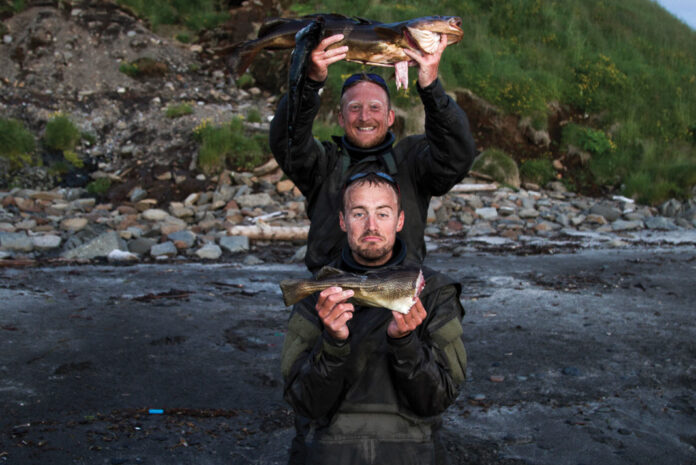
Olly Hicks (top) and George Bullard (bottom) are two fish out of water. | PHOTO: EMMA HALL

Olly Hicks is no stranger to breaking records. Once the youngest person to row solo across the Atlantic and the first to row across the Tasman Sea from Tasmania to New Zealand, he’s currently planning a solo attempt around the bottom of the earth. But his latest expedition, a 1,200-mile kayak journey from Greenland to Scotland, wasn’t about making history—it was about recreating history. In the vein of ethnographer and explorer Thor Heyerdahl, Hicks’ goal was to determine whether the trip that the mythic “Finmen” allegedly made hundreds of years ago could be, in fact, a reality.

Who were the Finmen?

In the late 17th century, there were sightings of the Inuit coming to northern Europe. No one knew where they came from, who they were, or whether they were mythical or magic sea creatures until 1728 when one arrived in Aberdeen, Scotland, with his seal skin kayak and hunting equipment. The mystery was how he got there. We wanted to add fuel to the fire that he’d paddled all the way from Greenland to Scotland.

Why use a modern tandem kayak, rather than a traditional boat?

During our North Sea practices, we’d discovered that a double boat was more seaworthy than a solo kayak, and critically, much faster. For ocean legs, your safety is in your speed—you have to be able to do the crossings quickly to minimize your exposure to bad weather.

I considered doing it in a traditional kayak, but it would be more dangerous.
We actually saw a guy in the original gear in the Faroe Islands and it looked to be quite flimsy, with no room for food and you couldn’t sleep in it. It’s possible that the Inuit paddled the route, but unlikely that they went as individuals—more likely as flotillas. I hope someone will try the route in original Inuit gear.
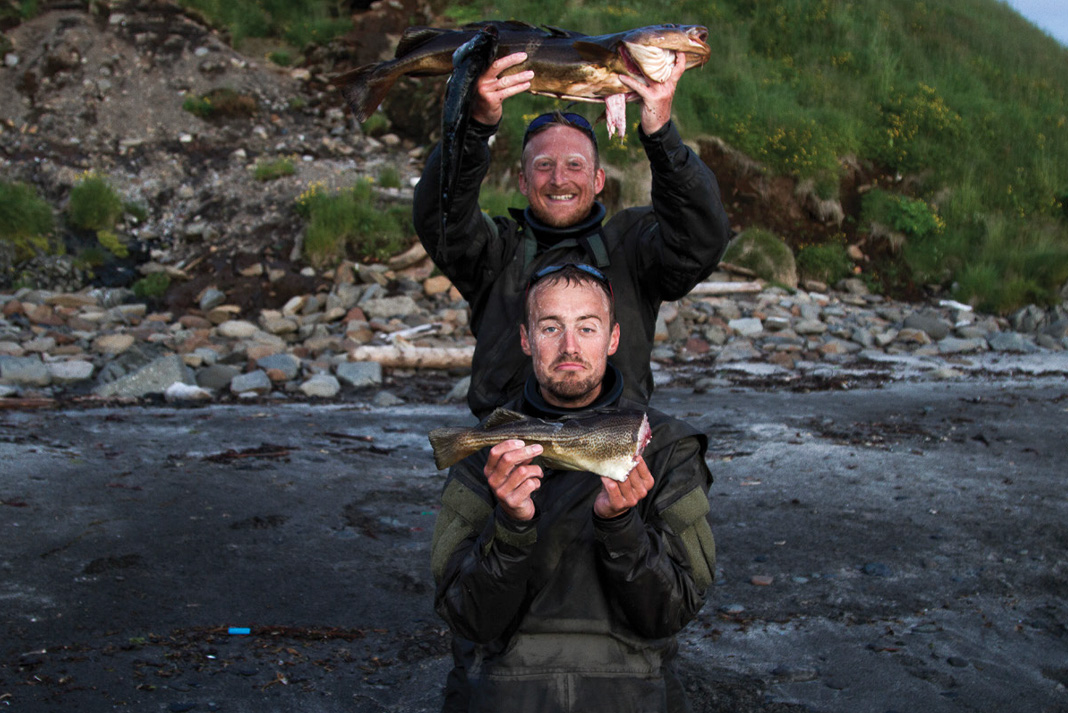
Olly Hicks (top) and George Bullard (bottom) are two fish out of water. | PHOTO: EMMA HALL

When did your teammate, George Bullard, get involved?

I was initially worried about finding a partner that I gelled with and could trust on a project with such a high-risk profile. George came in at the 11th hour. He picked up skills quickly, so he was an easy choice of teammate.

Most of my expeditions have been solo, so having to manage a teammate and the expectations and different ways of doing things was a new
challenge. But there’s not much room for antagonizing one another. We were very mission-focused, just trying to get from point A to point B. On an expedition, life becomes very simple; you’re just paddling all day. You’re either camping or you’re sleeping on the boat, and that’s it—paddle, eat, sleep.

Where did you find yourself living out a boyhood dream?

After we left Iceland, a fishing boat stopped us and said there were hurricane-force winds coming that night. They pleaded for us to go back with them. We phoned our weather teams and the majority opinion was to go back. We spent a week working with the fishermen. Although it was a bit frustrating at the time, it was one of the highlights of the trip—I’ve always wanted to work on a fishing boat.

What song would the DJ be playing if the Devil’s Dance Floor— the 300 miles of open ocean between Iceland and the Faroe Islands—was actually a dance floor? 


“Lily the Pink” by [British comedy trio] The Scaffold, which is a suitably loony tune.
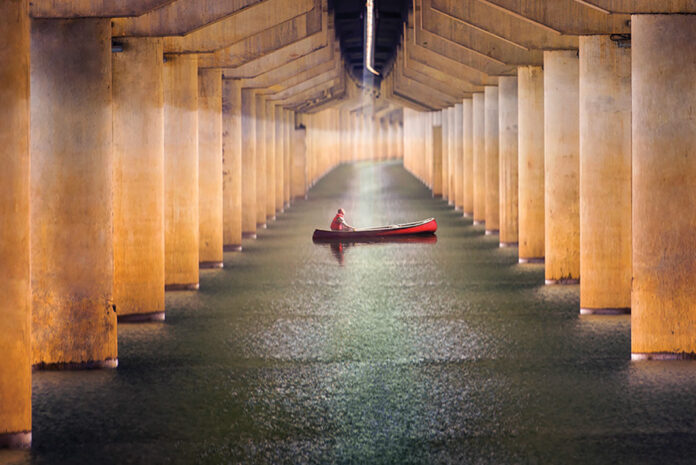
In the Jungle

Welcome to the jungle, watch it bring you to your sha na na na na knees. | Photo Credit: Cao Jiyun

On a recent Sunday evening, I was paddling a lazy river. The sky was glowing pink, the cattails golden and dancing in the evening breeze. My only company were a dozen three-foot-long salmon leaping from the water. As the river narrowed, I startled a beaver on the shore. The water was clear, with just one shallow channel deep enough for travel. The beaver dove and for a hundred meters he swam alongside the canoe. He was close enough I could have reached over the gunwale and stroked his back.

It was a little slice of paradise. I could have been anywhere, but I was close enough to portage home.

The belief in the healing powers of green spaces has existed for at least 2,500 years, since Cyrus the Great built gardens for relaxation in Persia’s ancient capital. As the effect of nature on the brain has been increasingly studied, countless reports have touted the benefits. From lowered blood pressure and stress levels, to increased contentment and creativity—logging time outside has even been linked to easing symptoms of ADHD, addiction and depression.

For nature lovers, this isn’t surprising. What is surprising is that most of these studies don’t take place in wilderness or even semi-wilderness areas. In fact, most take place in the green spaces local to the urban centers where 80 percent of the North American population lives. Even just a five-minute walk in a leafy city park can improve mood by boosting the production of all natural, feel-good chemicals in the brain, according to the journal of Environmental Health and Technology.

Most canoeists intuitively believe that the longer the trip and the more remote the location, the more positive benefits bestowed on the psyche. I partly agree. But the research is also clear: you don’t have to go far to find happiness. Your own backyard offers plenty.

Welcome to the jungle, watch it bring you to your sha na na na na knees. | Photo Credit: Cao Jiyun

I split my time between Canoeroots’ riverside rural headquarters and a home office in a city of 2.6 million. While kayakers and paddleboarders seem to embrace the notion of day-trips on urban streams, rivers and lakes, canoeists are far less common. I see canoes strapped to roof racks on the highways heading out of town, but in the city, it’s kayaks and paddleboards to canoes 20:1. Perhaps, because we associate the canoe so closely with wilderness experiences, it seems like an unlikely craft for shorter excursions.

In that case, we are missing out.

“Canoeing is like eating,” a friend recently told me. “It’s best done more than once a year.”

Too often, paddlers focus on one or two big trips for the year, gorging themselves for 10 days and then starving the other 354. In comparison to traveling remote glacier-fed mountain rivers, urban paddling sounds boring—but it’s not. Yes, it’s a wondrous experience to paddle where few humans have been before. Yet, I’ve found there’s magic on the quiet waters a stone’s throw from a buzzing metropolis. It’s not any more spectacular, but sometimes—strangely—perhaps more special. Like discovering a secret in a city of millions. For most North Americans, paddling in the urban jungle is the only way to get out on the water more often and reap those intoxicating and all-natural highs. Wilderness trips every weekend aren’t realistic for everyone, but a Sunday afternoon paddle can be.

We canoeists, who pride ourselves on overcoming grueling portages, hordes of blackflies and relentless headwinds on our quest for adventure, shouldn’t let a little concrete get in the way of achieving the greater benefits of being connected with the natural world.

Kaydi Pyette is the former editor of Canoeroots magazine.


CCC PartnerBadge WebWatch THE CANOE, an award-winning film that tells the story of Canada’s connection to water and how paddling in Ontario is enriching the lives of those who paddle there. #PaddleON.

Sea Kayaking In Patagonia Photo Highlight

Photo Credit: Will Copestake

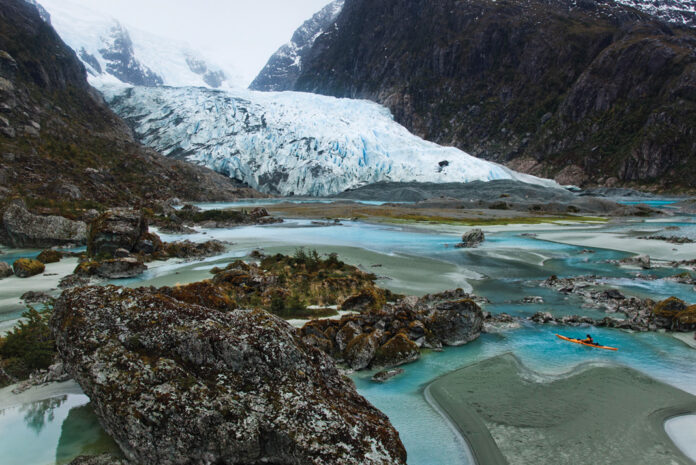
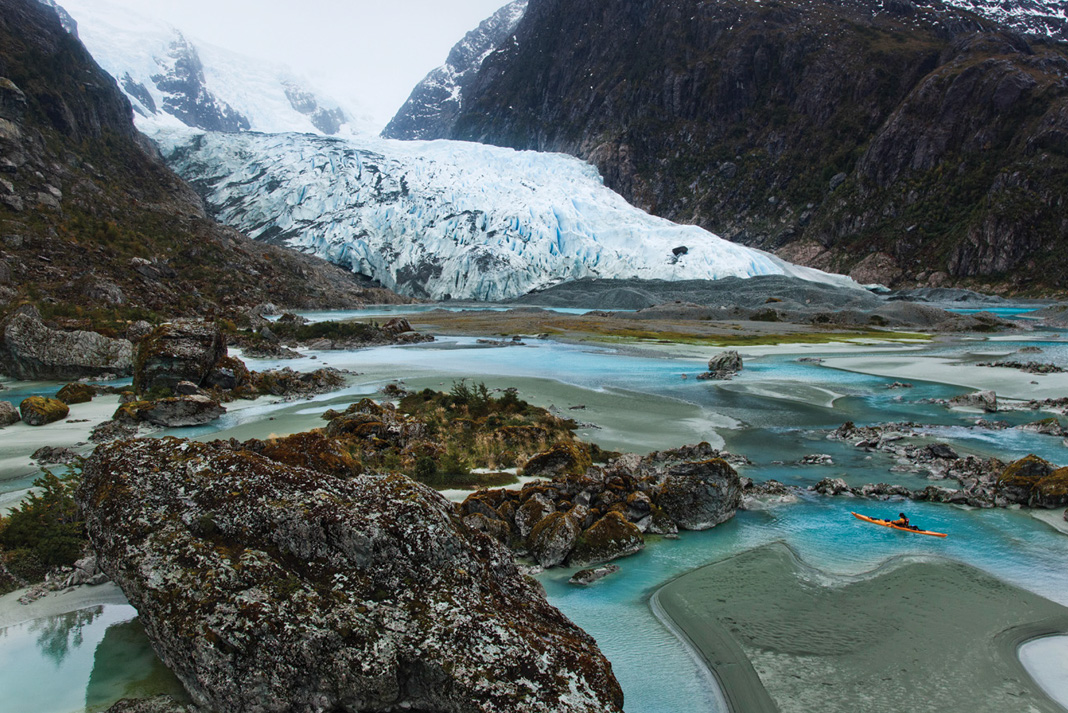
Clambering from the shore onto a house-sized boulder, I saw a view that I had never imagined I would see again. A wall of ice curled, fractured and broken, from mountains shrouded in windswept clouds that seemed to rise into infinity. Azure ribbons of crystal melt water radiated a dazzling blue as if clinging to a memory of the crevasse it had just flowed from. And a kayaker nestled amongst it all.

Paddling with my best friend, Seamus, we had at last reached somewhere I had been before, the Canal De Los Montanes. Last year, stormbound in this same channel with a client, I had felt like I was at the end of the Earth. Yet, after paddling and portaging 800 kilometers through Patagonia’s wild, western fjords I was finally back on familiar ground. Seamus and I had spent the last month journeying through an ice-filled labyrinth landscape without roads or people. We’d grown used to the company of ‘bergs and penguins, and now jokingly greeted each other by mimicking the Chewbacca- like roars of the sea lions that followed us.

After weeks of tough 40- to 50-kilometer pushes, we had just one more portage left and a few days of paddling to get back to town.

Photo Credit: Will Copestake

The Canal De Los Montanes was our last chance to live amongst the glaciers. Still well provisioned, we didn’t feel ready to go back just yet. Blessed by a week of near-perfect conditions with sunshine and no wind, we lingered in the fjord. For a week we explored glaciers and dragged our boats up glacial streams. We set camp at the foot of the ice and climbed a mountain in neoprene booties. Our worries about reaching home were gone and adventure filled our days with the same curious exploration we had relished together as kids growing up in Scotland.

Operation Phoenix: How One Army Vet’s SUP Journey Raised Awareness for PTSD

Courtesy of Bote Boards
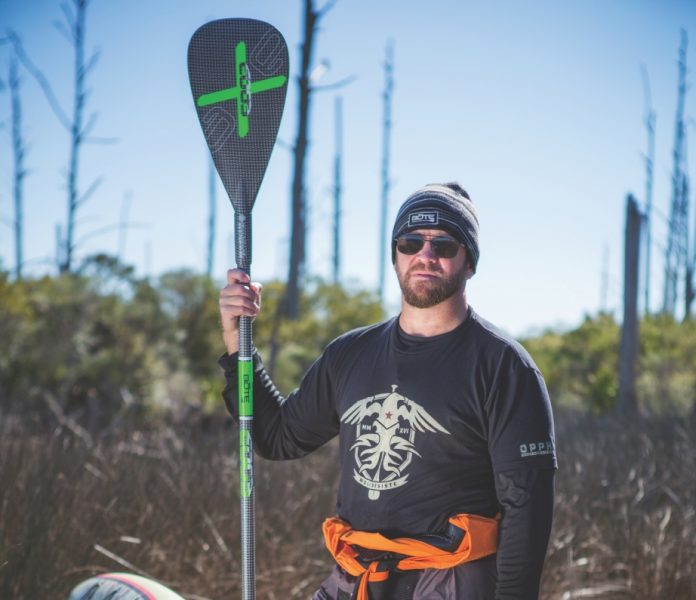
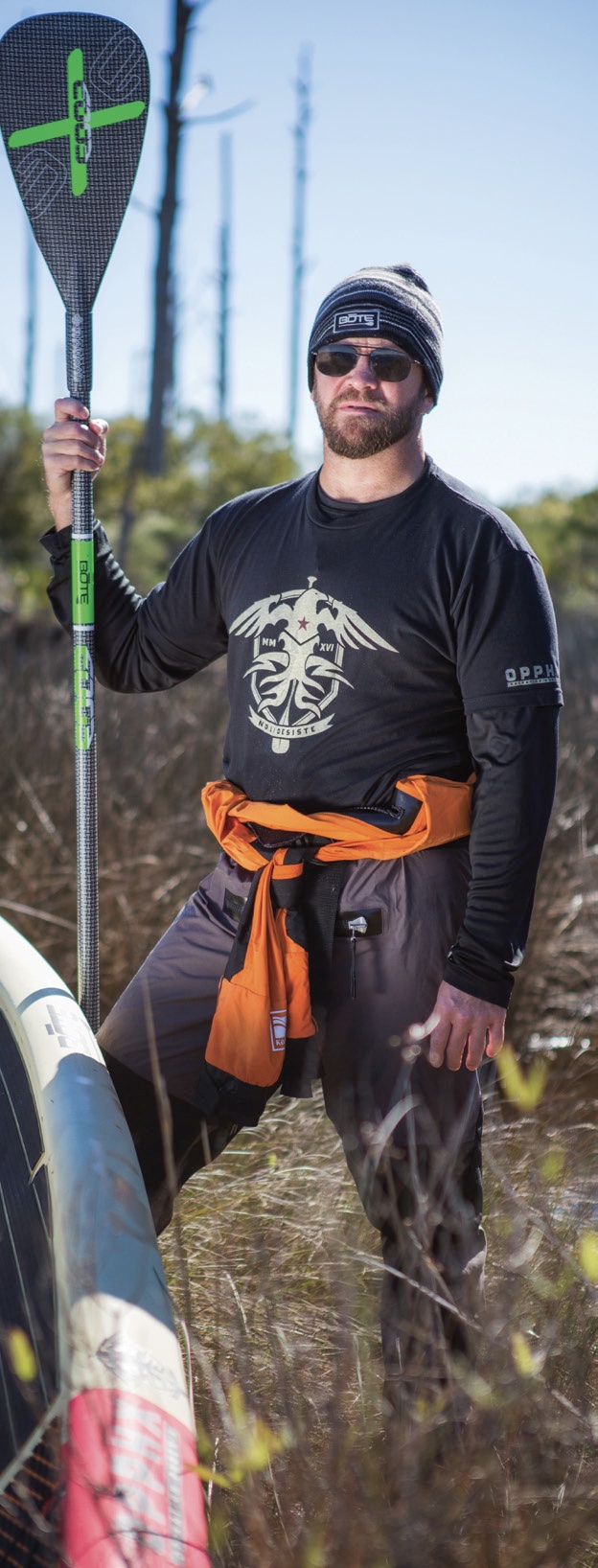
Army Vet Josh Collins holds his paddle for a portrait

Less than two years ago, the highlight of Josh Collins’ day was when his cup of medication would arrive. After more than 20 years in U.S. Army special operations—including rotations in Iraq, Afghanistan and Bosnia—his body was a mine field, ravaged by explosive blasts, parachute landings and combative trainings. His time in service had left him with traumatic brain injuries (TBIs), rib and cervical spine compressions and seizures. Like many of the roughly 12 percent of American veterans who suffer from post-traumatic stress disorder (PTSD), Collins had also begun to self-medicate with alcohol.

“I was laying in my hospital bed and wondering how this was all going to end,” he says. “I said, ‘I’m not going to do this. I’ve overcome a lot in my life and this is not going to be the end of me.’”
Collins assigned himself a special mission: Operation Phoenix (code name OPPHX). His goal? To paddle 2,600 miles from Texas to New York City, all the while raising awareness about TBIs and the 22 veterans a day who commit suicide as the result of PTSD.

It was during a recreational therapy event that he found his choice of craft. His balance issues—the result of TBIs, vestibular ear problems and nerve damage in his eyes—were resolved the moment he stood on a paddleboard. “When I got on, everything stood still. It was like being in a dark cave and then someone switches on the light,” says Collins. “I was like, ‘I want to live here.’”

The former athlete was far from ready for the challenge, though. For the average person, paddling 30 to 40 miles a day is no easy feat—but with a battered body, the 47-year-old had additional obstacles to overcome. “I’ve been in combat seven times, but I couldn’t paddle four miles without being so exhausted that I’d barely make it to shore,” he says.

It took 30 days of intensive training at Exos, a sports performance center, before Collins was finally able to hit the water on his custom-built Bote standup paddleboard, emblazoned with the words Noli Desiste (Latin for “Never Quit”).

While quitting was never really an option, over the next 140 days he faced fierce headwinds, sharks, crocodiles, and a nagging sense of self-doubt. It wasn’t until about 40 days into his mission that Collins finally hit a rhythm that would carry him all the way to the Statue of Liberty. On July 23, 2016 he arrived having raised over $210,000 for the Task Force Dagger Foundation, an organization that rehabilitates wounded soldiers.

“I thought about my placement of the paddle, about feeling the water catch and how much water I was drawing back. That became all I thought about—my next paddle stoke,” says Collins. “It was kind of like life; you’ve got all these great plans and you’re looking at the big picture, but when it comes down to it, it’s really about your next paddle stroke.”

OPPHX may be complete, but Collins’ journey is far from over. He hopes to raise an additional $21.8 million, with an ultimate goal of becoming the first person to make a man-powered voyage around the world in under 18 months. First, he’ll attempt to be the first standup paddleboarder to complete Race to Alaska, a 750-mile unsupported race starting in Port Townsend, Washington. This time, he’ll be paddling to raise awareness for the addiction issues that many veterans struggle with. Until then, he’s enjoying his continued recovery with his wife, Tonia, and his support dog H.R. Charlie at his side, taking each moment one stroke at a time. —Jessica Wynne Lockhart 

Watch a short film on Operation Phoenix

How to Complete the Yukon River Quest On A SUP

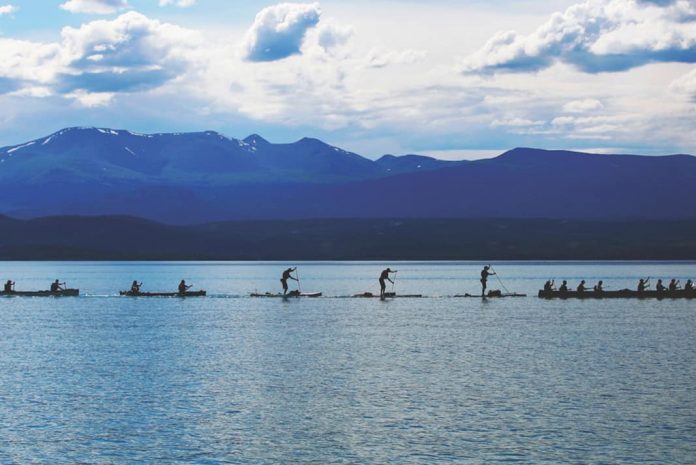
Paddlers in the midst of Yukon River Quest with beautiful mountains all around
SUP and canoe racers paddle over a large body of water on the Yukon River Quest race. | Photo: Elise Giordano

All paddleboarders know it takes a certain degree of balance, alertness and physical fitness to stay on your feet and keep your board moving forward. Now imagine trying to stay on your board after more than 50 hours, paddling a fast-moving northern river with unexpected boils and eddies, while sleep-deprivation and hallucinations mess with your mind. This past summer, 11 paddleboarders did just that, setting out with canoes and kayaks from Whitehorse to Dawson City, in the longest annual paddling race in the world, a distance of 715 kilometers.

Adding a paddleboard category to the 2016 Yukon River Quest was a source of much debate among organizers. Committee members wanted the race to stay current with paddling trends and the increasing popularity of paddleboarding. Yet many feared that this new addition would sap volunteer resources and result in added safety or logistical concerns.

“Initially, I was really surprised that boards were going to be in the race,” says race photographer Elise Giordano. “It’s such a grueling task for someone sitting down, but standing for 444 miles seemed insane.”

You have to be fit both physically and mentally – de Zwart

Giordano caught this shot (header image) on the first day of the race from a media boat. “When I saw all of those paddlers and SUPs drafting one another, it just looked like the epitome of the race,” says Giordano. “Fifty-kilometer-long Lake Laberge is one of the most difficult stretches, so seeing these teams work together to get across was a pretty great moment.”

Each year approximately 25 percent of teams drop out due to injury, exhaustion or hypothermia. It’s no wonder many were skeptical as to whether the paddleboarders could even finish within the required 74-hour time limit. In the end, nine out of the 11 SUPs finished the race.

“The SUP competitors were very self-sufficient,” says race president Harry Kern. “They successfully navigated challenging sections like Five Finger Rapids, and even if they capsized, it wasn’t a yard sale like when other boats capsize—they were remarkably efficient at recovery and within minutes were back on their feet.”

Winner of the SUP category, famed expedition paddleboarder Bart de Zwart, completed the race paddling at an average speed of 13 kilometers per hour in 54 hours and 41 minutes.

“It is the longest race I have ever done,” says de Zwart, whose accomplishments include paddleboarding a portion of the Greenland coast and winning the 11 City Tour. “There were many times when I felt sleepy and lost focus for a couple of hours. Keeping a good high average speed is the key to success even when tired—don’t stop and keep going, even if it is at a slower pace.”

Out of just under 100 contestants in various categories, de Zwart placed an impressive 26th overall.

The Yukon River Quest board has agreed to include boards again in 2017. De Zwart’s advice for them? “You have to be fit physically, but also mentally prepared,” he says. “Everybody is hurting after 10 hours on the water, but the ones who can keep going despite that do well.”

Justin Case Kayak Aims High For The Lightest Kayak

Justin Case Kayak
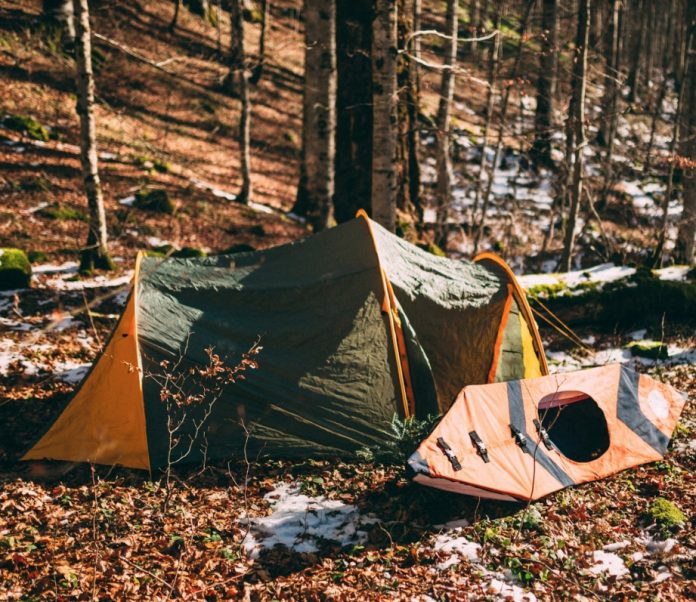
A Justin Case Kayak leans up against a tent in the woods
A video showcasing the Justin Case Kayak, which the company claims will be the lightest kayak on the market.

http://www.youtube.com/watch?v=n7Kb41nkzHQ

Justin Case Kayak

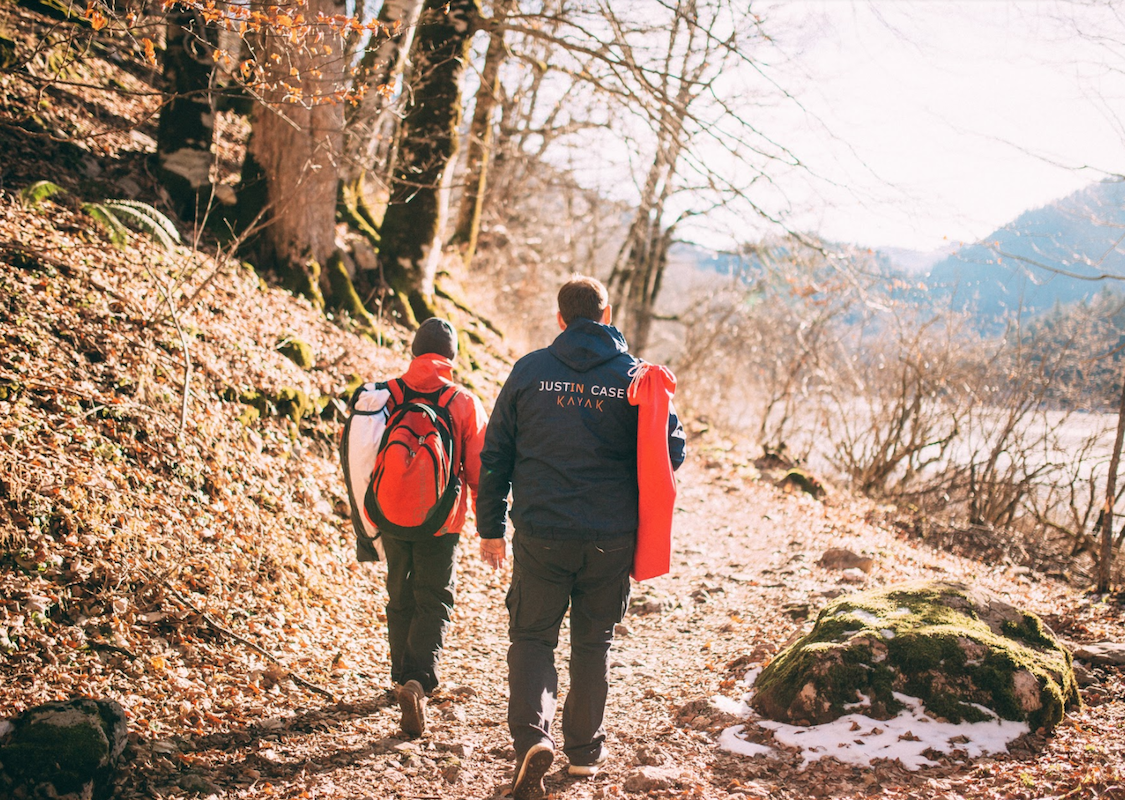
Two men walk towards a lake with Justin Case Kayaks

Justin Case Kayak launches Kickstarter campaign to fund their portable kayak. Have you ever thought of taking a kayak on a plane as a carry-on? Or storing it in the corner of your closet? Have you ever hit a shore line on a hike and wished you could keep going? Justin Case Kayak is here to change the way we embrace outdoors and stretch our boundaries. On January 31st, 2017, Justin Case Kayak launches a crowdfunding campaign to fund the production of a kayak that folds up to the size of a folding chair.

Designed for urban adventurers exploring the wild outdoors, Justin Case Kayak is the first portable kayak under 6 lbs. Canadian outdoor enthusiast, Inna Morgan came up with the concept back in 2015. The portable kayak was born out of frustration with the size, cost and storage requirements of traditional kayaks. The idea grew into an international collaboration with designers and engineers in Europe, and transformed into a real-sized foldable kayak, creating an out-of-box solution aimed at beginners to professionals to experience kayaking wherever they are. Justin Case is made with a carbon fiber frame and a ripstop skin. Weighing just 5.7 lbs, the kayak can carry over 250 lbs, and measures no more than 40 inches long, 6 inches wide when folded and can be fully assembled in approximately 10 minutes.

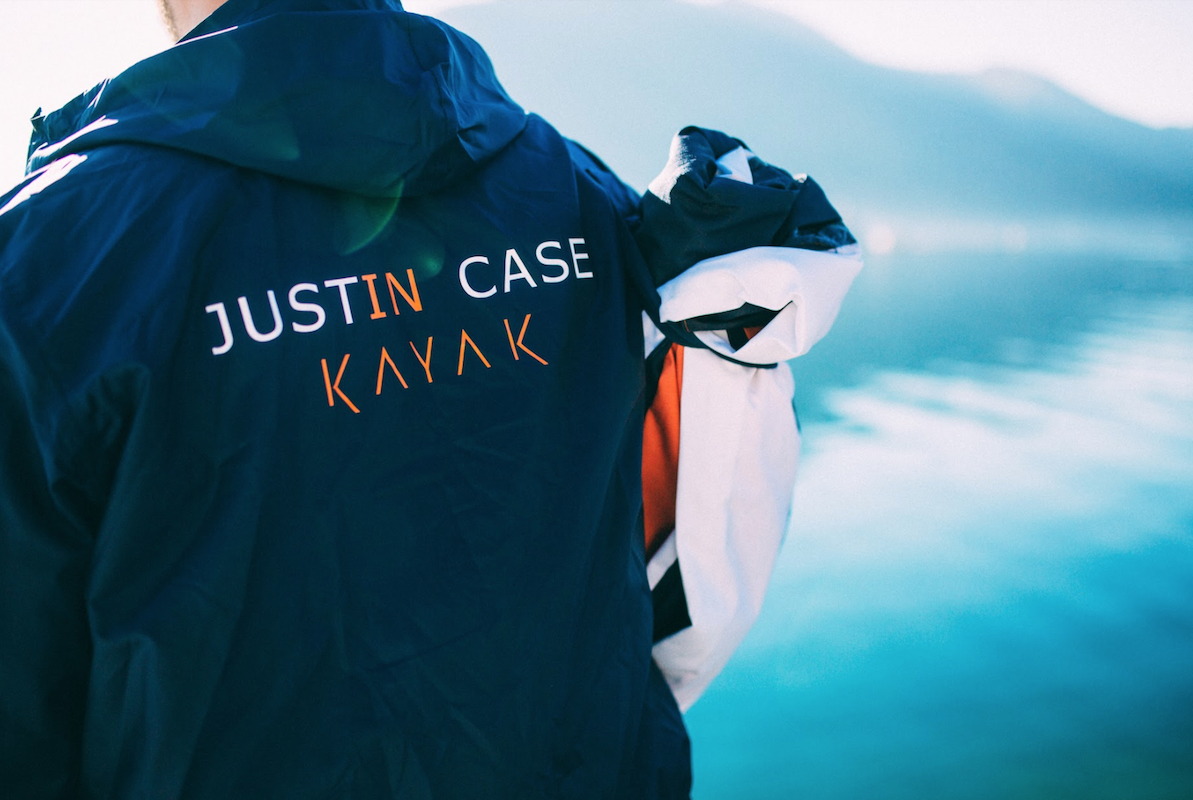
A man stand on the waters edge with a Justin Case Kayak bag over his shoulder

The concept and prototypes have been water tested repeatedly over the past 6 months, bringing a safe, reliable and durable kayak to KickStarter. The Justin Case Kayak launched on the popular crowdfunding site Kickstarter on January 31, 2017 for a 30-day campaign. Taking over 2 years to develop, the campaign is looking to raise $135,000 CAD by March 1, 2017. Perks include a special price of a kayak for $700 CAD which reflects a $150 CAD discount and delivers worldwide, as well as custom, limited edition merchandise. Product will start shipping in June. All products are designed in Canada. You can find out more about Justin Case on the Kickstarter campaign page.

www.justincasekayak.com 


Redesigned Kayak Models From Swift Canoe And Kayak

Screen Shot: Courtesy traversing.com
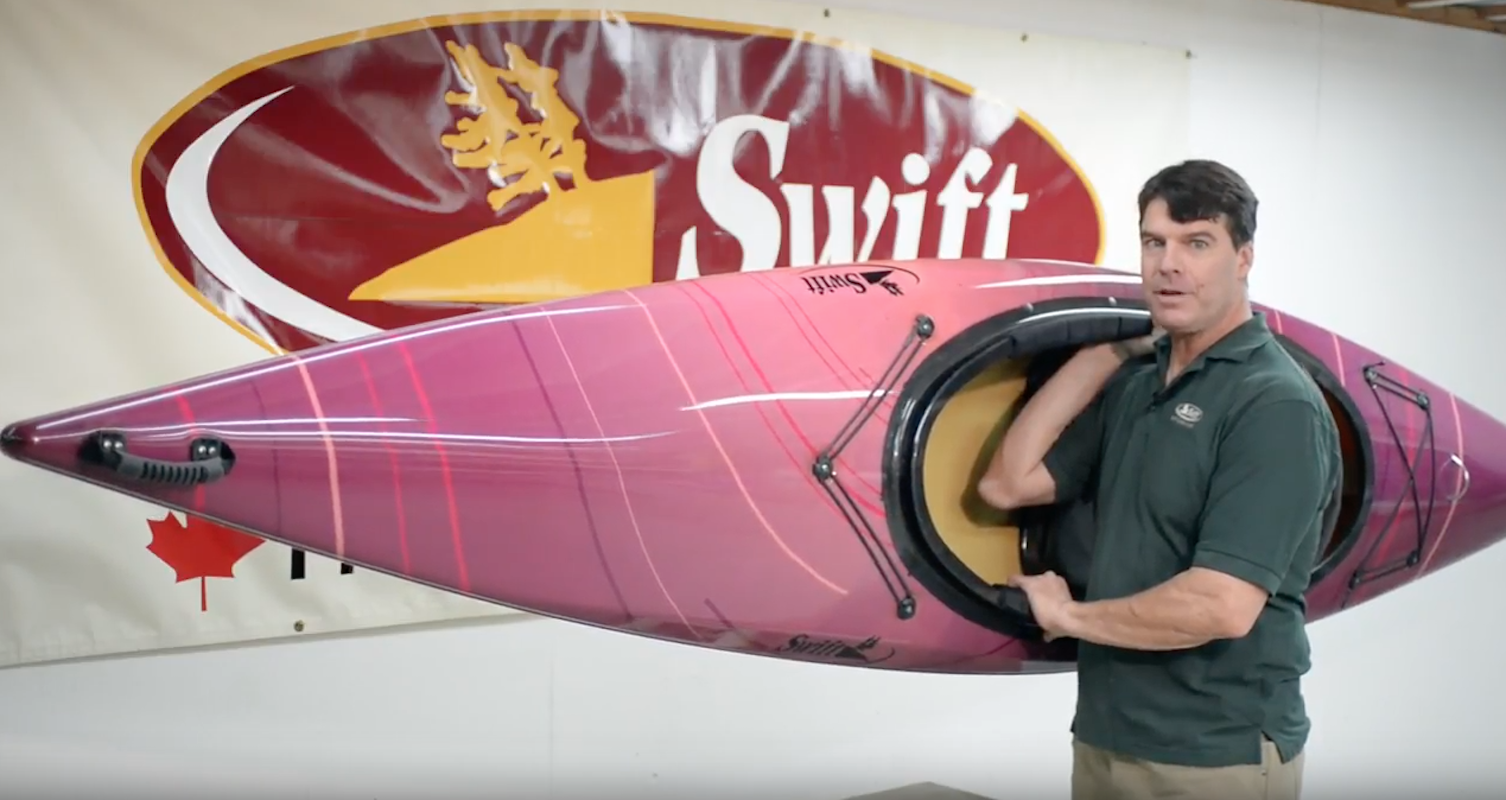
Bill Swift explains the features of Swift Canoe and Kayak’s new recreational kayak.
traversing.com

Swift Canoe and Kayak recently unveiled four news kayaks at the 2017 Toronto Boat Show. These are not new additions to the kayak lineup at Swift but are serious upgrades in the color and weight department. Personally I am excited about the new paradigm shift that Swift and others are pushing with design and color schemes.

Swift is moving to become the only composite kayak manufacturer that produces the top deck and cockpit rim as a single-unit, which saves weight and adds strength and rigidity for entry and exit of the cockpit. The traditional process for making composite kayaks uses an internal layering fasten system and an H-Channel finish to join the deck and hull together. Swift has moved to an overlapping seam design that they claim eliminates three- to four-pounds of weight. Their engineers have also been able to infuse the skeg-box directly into the mold of the composite hull to add weight savings and strength to their Kevlar fusion kayaks.

Read More: Swift Canoe And Kayak Saranac 14

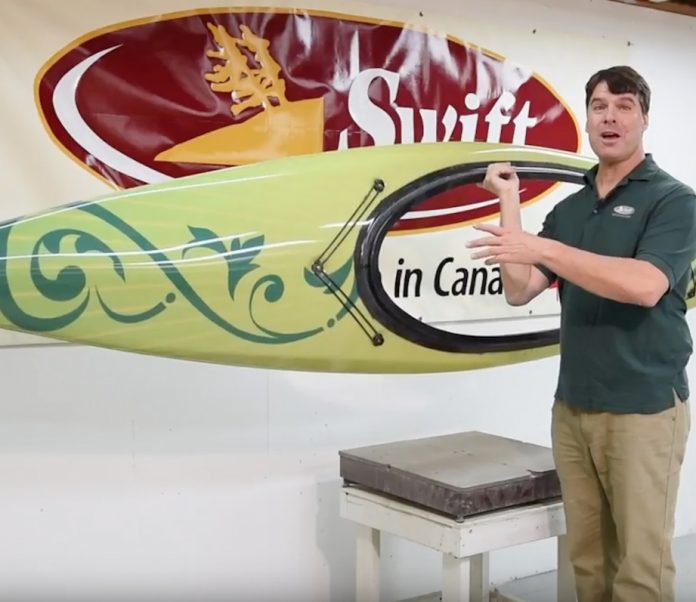
Adirondack 12 LT

Bill Swift stands in front of the updated Adirondack 12 LT recreational kayak.

Weight: 24 pounds

Material: Kevlar Fusion

Cloth-Pattern Finish Color: Purple Rain, Vine’s Finish, Henna Finish

Updated Features: Integrated Carbon Cockpit Rims, Over-lapping seams to reduce weight and increase structural stability and rigidity

Seating System: Easy-to-use back strap, adjustable lumbar support padding, fold-down storage

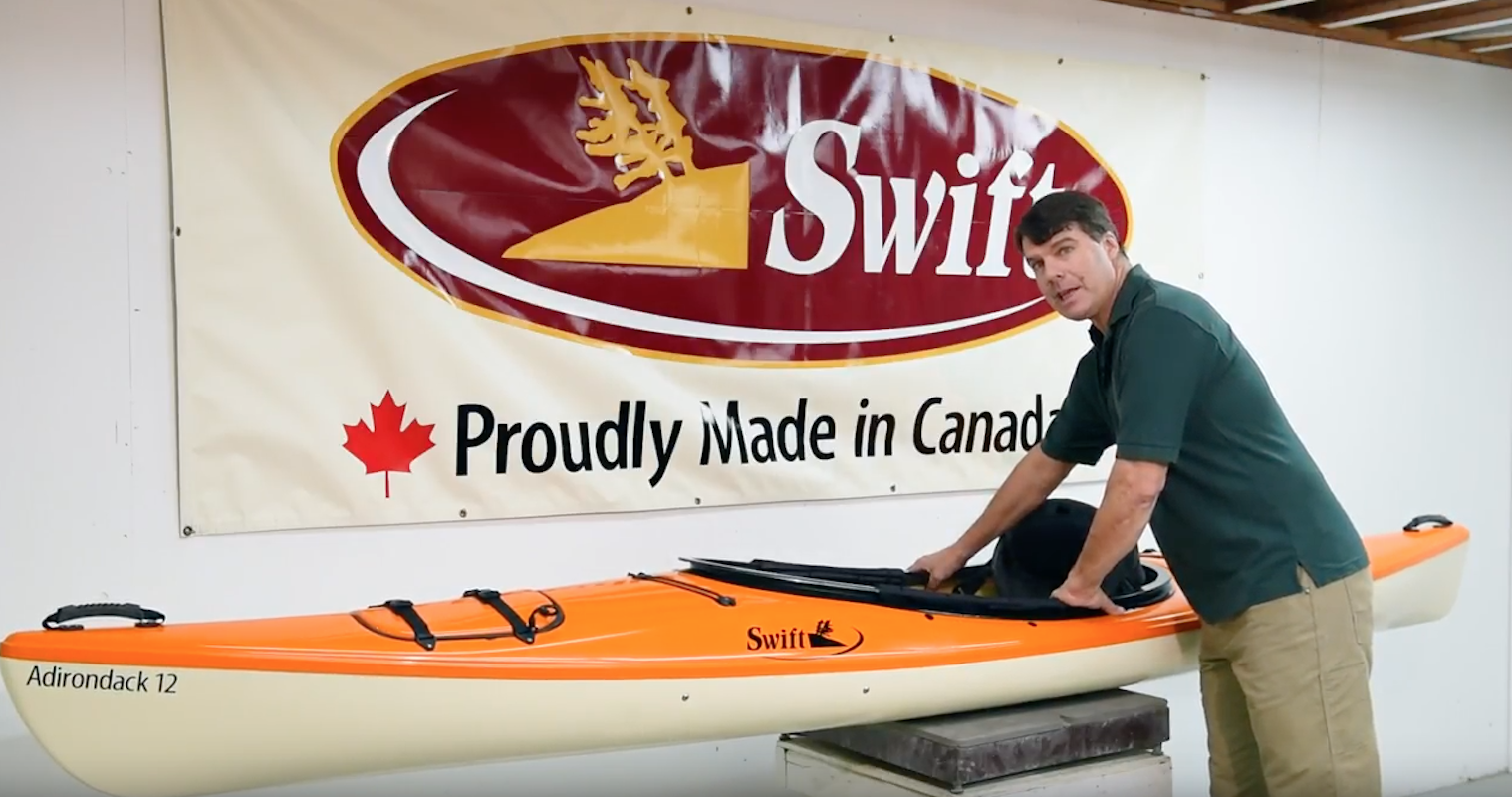
Adirondack 12

Bill Swift stands in front of the updated Adirondack 12  recreational kayak.

Weight: Less than 30 pounds

Material: Kevlar Fusion

Color: Mango

Updated Features: Retooled hatches, Integrated Carbon Cockpit Rims, Over-lapping seams to reduce weight and increase structural stability and rigidity

Seating System: Easy-to-use back strap, adjustable lumbar support padding, fold-down storage

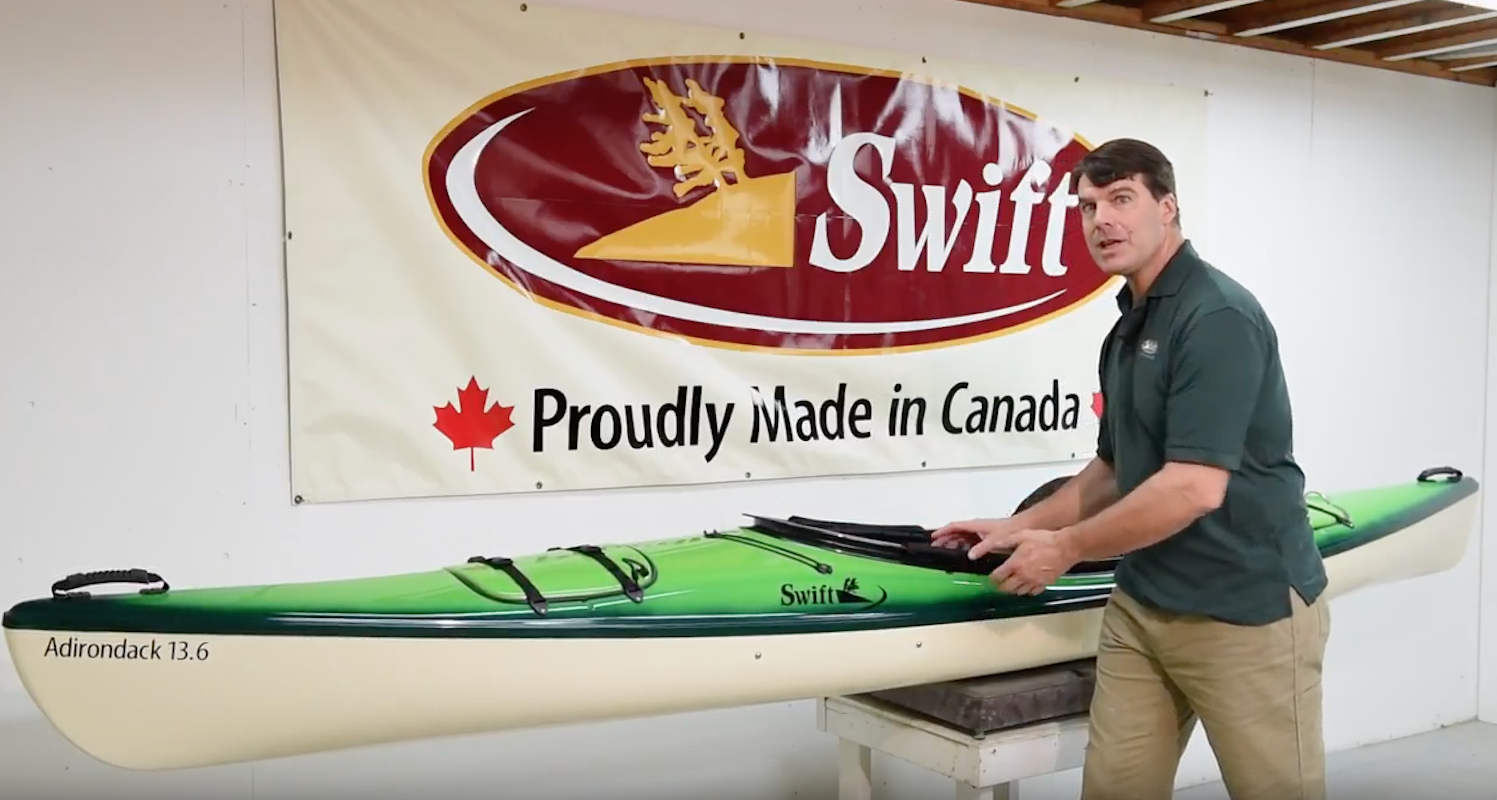
Adirondack 13.6

Bill Swift stands in front of the updated Adirondack 13.6  recreational kayak.

Material: Kevlar Fusion

Color: Boreal Color Fade-To-Champagne

Updated Features: built for larger paddlers, Integrated Carbon Cockpit Rims, Over-lapping seams to reduce weight and increase structural stability and rigidity

Seating System: Easy-to-use back strap, adjustable lumbar support padding, fold-down storage

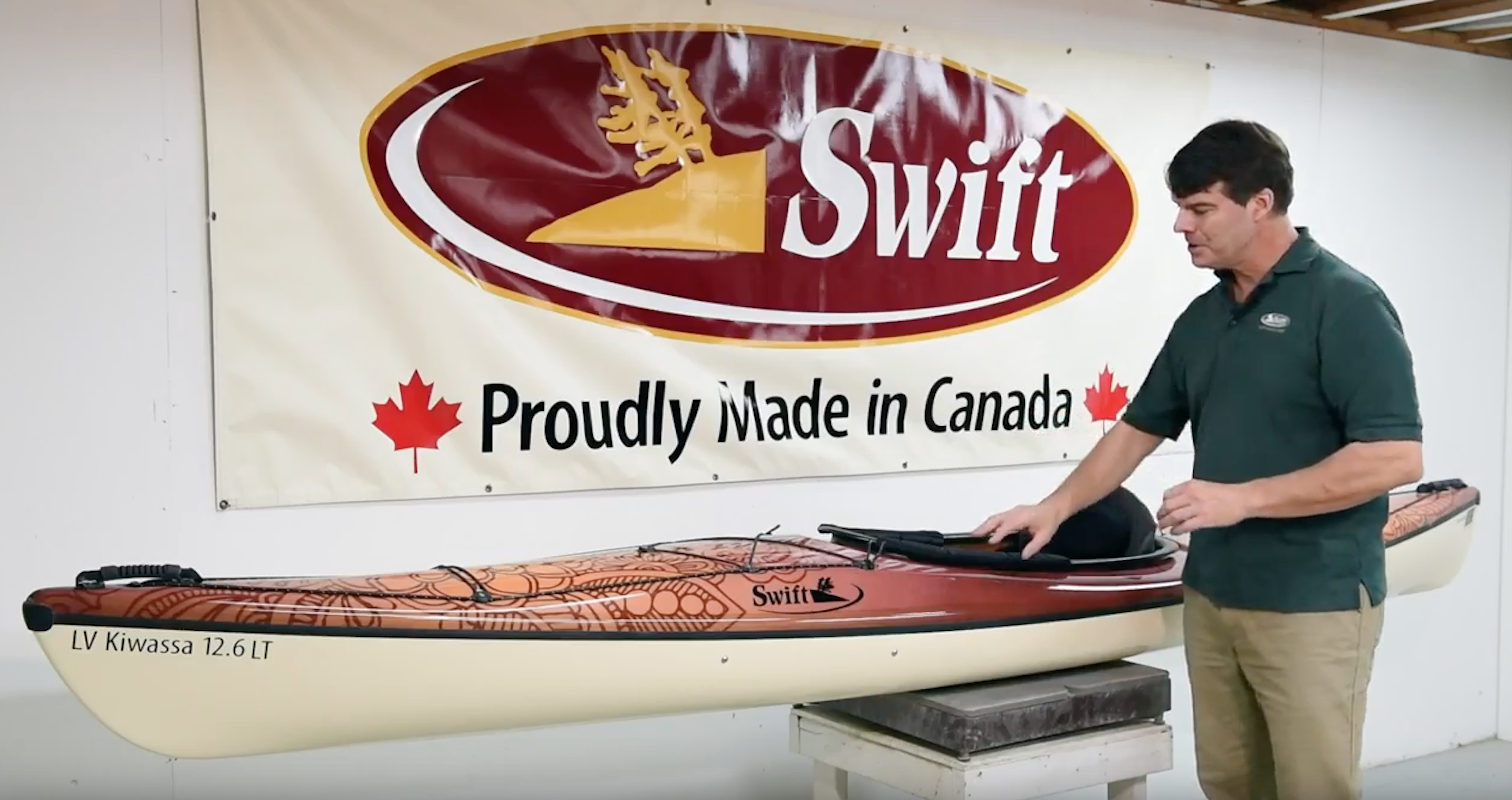
LV Kiwassa 12.6

Bill Swift stands in front of the updated LV Kiwassa 12.6  recreational kayak.

Weight 28 pounds

Material: Kevlar Fusion

Color: Henna Design

Updated Features: built for larger paddlers, Integrated Carbon Cockpit Rims, Over-lapping seams to reduce weight and increase structural stability and rigidity

Seating System: Easy-to-use back strap, adjustable lumbar support padding, fold-down storage

Video:

Swift Canoe And Kayak Saranac 14 Recreational Kayak


CCC_PartnerBadge_Web.png Swift Canoe and Kayak is an Ontario-based manufacturer of canoes and kayaks

Watch THE CANOE an award-winning film that tells the story of Canada’s connection to water and how paddling in Ontario is enriching the lives of those who paddle there. #PaddleON.

Video: How To Do The Hanging Stern Draw

Are you an intermediate or advanced paddler looking to add some new techniques to your skill bank this season? In this skills video, Simon Coward from Aquabatics Calgary introduces the hanging stern draw. This underused by seriously useful skill that uses cross current momentum to propel the kayak forward instead of multiple power strokes.

Video: How To Do A Carving Eddy Turn

Simon Coward from Aquabatics Calgary explains how to do a carving eddy turn in this beginner instructional video. Learn the basics and how to identify common errors new paddlers make when attempting carving eddy turns. Want more great beginner whitewater instruction? Check out Aquabatics’ introduction to whitewater kayaking series here.

Video: How To Do A Sweep Stroke

The sweep stroke is one of the core skills new whitewater kayakers can learn. It allows for turning the kayak effectively and efficiently, and can be used for greater control in both flatwater and whitewater conditions. In this beginner skills video, Simon from Aquabatics Calgary shows the basics of this useful core stroke.