Home Blog Page 237

Paddling Swiftwater & Pursuing Sweetwater Seals In The Wilds Of Northern Quebec

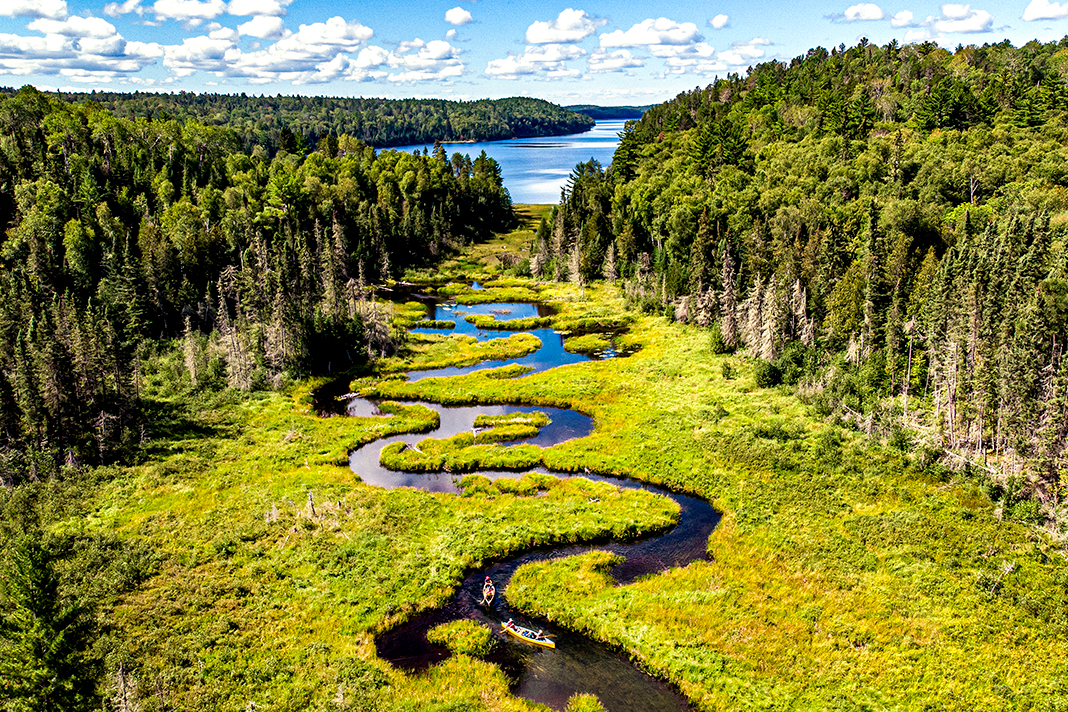
HUDSON BAY IS A CHIMERA—EQUAL PARTS BEGUILING AND BELLIGERENT. (TOP RIGHT) THE AUTHOR CONTEMPLATES A CASCADE ON THE NASTAPOKA RIVER. | Photo: Virginia Marshall

Scrambling through a sea of knee-deep scrub alder and dwarf willow, I scurry to keep pace with Jon’s loping gait. We’re trekking across the rolling taiga into the rapidly sinking sun, and the golden light washes across the mesh face of my bug jacket, obscuring all but the lanky silhouette of my canoe partner. My near blindness and the cloying warmth inside the hood amplify the sound of my panting. At last, I stumble over a rocky rise and my breath catches, half-drawn, in my throat.

Moments earlier, Jon had burst into our campsite where I was hiding with our tripmates, Conor and Kim, from the evening blackfly onslaught behind the screened walls of our tarp shelter. “What is it?” Conor asked, glancing past Jon for signs of a marauding polar bear.

Jon pressed something icy cold into my hand. “It’s what we’ve paddled 35 days to see,” he replied, dropping his arm to reveal the snowball in my palm. “But you have to hurry.”

CMYK-DSC_99985x_Ginny_at_lip.jpg

Lush subalpine meadows carpeted in delicate white bunchberry blossoms and a score of other tiny wildflowers tumble down to the edge of a misting precipice. The last rays of sun pour like honey into the deep gorge and spill fully on a thundering avalanche of water. Near the rim of the falls, hidden in shadow for most of the day, a small snowfield clings to the slippery bedrock, irreverent of the early August warmth.

The falls’ cold, billowing mists have formed this remarkable micro ecosystem, a world every bit as sublime as the imaginary Elvish kingdoms of Tolkien’s tales. And yet this spectacular cascade is unnamed on our 1970s-era, black-and-white topographic maps—an unremarkable hatch line where the Nastapoka River doglegs between bald-rock hills on its westerly journey to Hudson Bay.

The falling water whispers a certainty: If this were Banff or Yellowstone, rather than this isolated wedge of northern Quebec, the falls would be among the parks’ star attractions. But up here in Nunavik, the 100-plus- foot plunge is merely an all-but-unknown precursor to Nastapoka Falls, just a day’s paddle downriver, which plummets into Hudson Bay 40 kilometers north of the Inuit community of Umiujaq.

Together, the falls, rapids, valley and headwaters of the Nastapoka River form one of the central arteries of Parcs Quebec’s newest national park, Tursujuq, a 26,100 square kilometer (6.5 million acre) wilderness of taiga, rocky ramparts, swift rivers and crystalline lakes. Designated in 2013, the park is one of North America’s largest protected areas, nearly triple the size of Yellowstone and four times the size of Banff. However, like many parks in the North, Tursujuq is accessible only by bush plane or boat; there are no roads, signs or, for now, marked trails or campsites.

CMYK-DSC_8805x_Cottongrass.jpg

As the sun slips behind a craggy ridge, staining crimson a scarf of woolly clouds, I ponder what park status means for the Nastapoka’s future. Only one other paddling party has traveled our route this summer. Last year, there were none. In five weeks, we’ve seen just four other people—a floatplane pilot and his clients, three American fly fishermen. It’s this isolation, and the sense of discovery it instills, that I’ve come to love most about this place.

Standing at the lip of the falls, with the Nastapoka rumbling beneath the worn soles of my river shoes, I feel like a real explorer.

Reaching north towards the Canadian Arctic like a tattered mitt, with Hudson Bay’s frigid saltwater to its west and Ungava Bay tucked into its thumb, Nunavik is the name given to the vast, roadless region of Quebec above the 55th parallel. It’s also the homeland of Quebec’s Inuit people, who live in 14 small coastal communities forming a sparse perimeter around a hinterland that’s larger than the state of California. Plied by snowmobiles in winter and freighter canoes in summer—and plagued by rapacious insects, unforgiving terrain and savage weather—the interior is empty save a small number of seasonal camps where geese, caribou and fish harvests continue to sustain local families as they have for generations.

“Let Mother Nature be your master,” advises a French Canadian shopkeeper in Radisson, Quebec, when we tell her about our plans to paddle and portage north into this sea of spindly tamarack forests and black spruce bogs. We’ll navigate the confusing mosaics of lakes Bienville and d’Iberville, we explain, before tracing the eastern and northern edges of Tursujuq National Park through the Seal Lakes and, finally, down the mighty Nastapoka River, emerging 40-some days later on the treeless coastal barrens of Hudson Bay’s tidal shore.

Radisson marks the northern terminus of the James Bay Highway, a 620-kilometer-long shoelace of frost-heaved asphalt connecting the Hydro Québec-built town, and the massive hydroelectric complex it services, with the rest of the province. Construction on the James Bay Project’s series of dams, spillways, underground power plants and some 30,000 square kilometers of reservoirs and harnessed waterways began in the early 1970s, and the complex comprised the world’s largest hydroelectric development for a quarter-century. Today, it’s surpassed only by China’s Three Gorges.

HUDSON BAY IS A CHIMERA—EQUAL PARTS BEGUILING AND BELLIGERENT. (TOP RIGHT) THE AUTHOR CONTEMPLATES A CASCADE ON THE NASTAPOKA RIVER. | Photo: Virginia Marshall

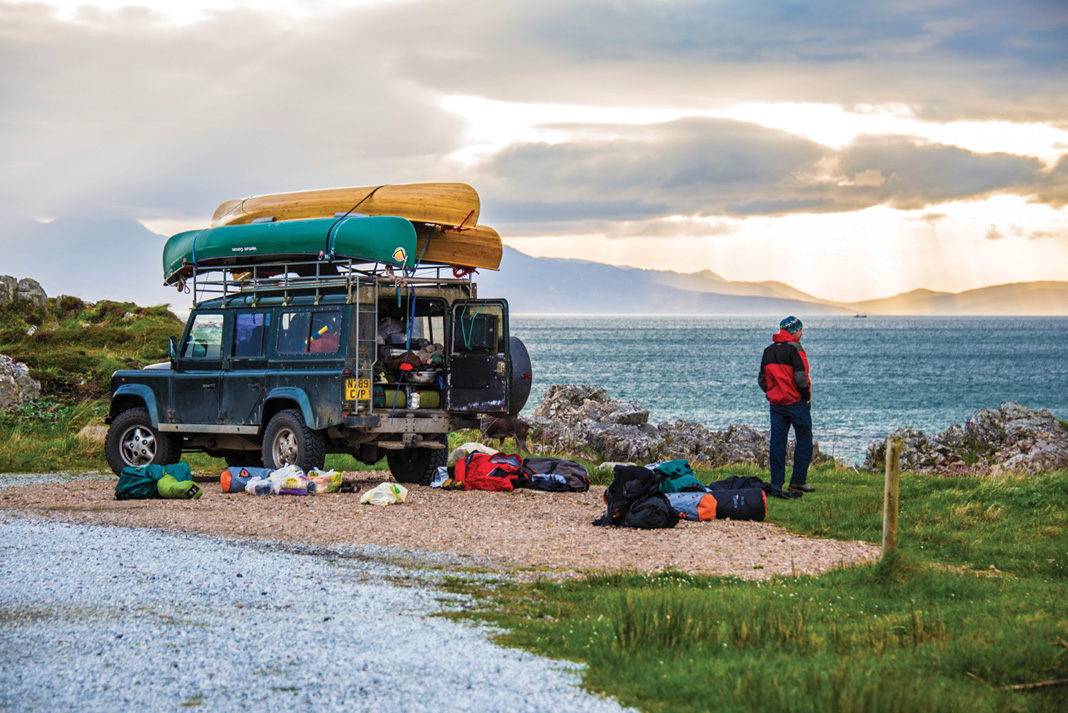
For hardy canoeists, there’s an unexpected upshot to the development. The gravel arteries used to access Hydro Québec’s remote energy outposts also offer a backdoor into the wilderness that, for now, lies beyond the utility’s reach. Our own journey begins on Lacs des Oeufs, a dusty, day-long shuttle from Radisson on the Trans-Taiga Highway. The earth-and-stone barrage at our put-in marks the last vestige of the James Bay Project, and the beginning of Nunavik’s wild and free-flowing rivers.

The shopkeeper’s hazel eyes study my face, checking that I’ve understood her warning. Behind the concern, however, there’s also a knowing look informed by a lifetime spent on the edges of the same wildness and vastness that draw us. Before taking our leave, I assure her that we’re respectfully aware of our position on the bottom rung of Nunavik’s wilderness hierarchy.

Three weeks later, as a wet and blustery headwind saps the energy from our sodden limbs and the heat from our pruney fingers, even that humble foothold feels tenuous. The only upside to the squalls and near-freezing temperature that have dogged much of our trip is that they offer fleeting respite from the hordes of insatiable blackflies, mosquitoes and bulldogs (ping pong ball-sized deer flies) that coexist on the taiga in July. Head nets, heavy-duty bug dope and psychological resilience are essential. Still, there are moments when my guard is down—and breezeless mornings, unfortunately, when so are my pants—and sanity is as elusive as sunshine.

Paddling into the lee of a mop-topped island, Jon and I pause for a moment, thankful to escape the wind-driven rain. Eager for a distraction from the monochromatic lake views, I search the shore for signs of wildlife. We’re hoping to catch sight of what we’ve been calling Nunavik’s “Big Five,” a list of hallmark species that includes wolves, bear, musk oxen, beluga whales and—rarest of all—kasagea, the shy and solitary freshwater seal.

Once again, I’m disappointed. So far, the only other creature we’ve seen, aside from our own soggy and bedraggled forms, is a sky so animated and malevolent I could swear it’s alive.

References to a unique species of freshwater seal, more than 150 kilometers removed from the ocean, in the Seal Lakes date back to the accounts of early 19th century fur traders. Isolated and enigmatic, the seals remained something of a mystery for nearly 200 years. Then, in the early 1990s, Hydro Québec eyed the narrow gorges and churning falls of the Nastapoka, surveying the river for a new waterpower project. Central to this plan was an expansive reservoir that would inundate the Seal Lakes.

In response, the local Cree people supported studies to refute Hydro Québec’s claim that the seals were widespread in northern Quebec lakes. Researchers confirmed that not only is kasagea confined to the Seal Lakes and two neighboring waterways, but that the landlocked species—geographically isolated since the last ice age—is genetically distinct from its cousin, the saltwater harbor seal.

Under pressure from environmental scrutiny and enormous development costs, Hydro Québec ultimately shelved the Nastapoka project. But the bell had been rung. When Nunavik Parks began working with the Inuit and Cree to draw up plans for a co-managed park extending east from Umiujaq to Lacs à l’Eau-Claire (Quebec’s second largest lake, formed hundreds of millennia ago by twin meteor strikes), the locals fought to have the proposed boundaries expanded to include the Nastapoka and 95 percent of its watershed, including the Seal Lakes.

Tursujuq National Park, along with two existing Nunavik parks and two more parks planned for the region, represents a big step towards the goal of protecting 30 percent of Quebec’s lands above the 55th parallel from development. As a new wave of private mining interests clamor to stake their claims in the area’s mineral-rich bedrock, conserving these ecologically intact areas is more important than ever.

Lacs des Loups Marins, the French name for the Seal Lakes, directly translated is Lakes of the Sea Wolves. The Francophone appellation for the lakes’ secretive seals has captured our imaginations since the beginning of our journey. Fisheries and Oceans Canada puts the lakes’ seal population somewhere between 50 and 600 individuals. The possibility that we may not see a single specimen is unthinkable.

When at last we veer our canoes from their northerly pilgrimage and turn west down the larger of the two lakes, glassy calm on this sunny morning, I’m half hoping a seal will leap over our bow.

Conor spots it first: a shiny, dark sausage draped atop a sun-warmed boulder. The animal slips into the water as we edge nearer, then reappears, warily circling our canoes from a safe distance. Kasagea’s wide, dark eyes stare out from a round and whiskery face. We’re ecstatic—the first of our Big Five!

CMYK-DSC_99994_cottongrass.jpg

In the next week, we’ll spot several more freshwater seals. At a huge dragon’s tongue rapid, the most gregarious hurls itself again and again into the crashing waves, seemingly for the pure enjoyment of bobbing cork-like through the haystacks. Its amusement is ours, and we linger over lunch until the seal makes a final pass and disappears into the roiling current.

Below the Seal Lakes, the Nastapoka swells, hurtling over ever- larger cataracts, each rapid more astonishingly beautiful than the last. The sinuous, sandy ridges of glacially deposited eskers give way to high rocky domes, through which the river burrows undaunted. The sparse tree cover grows ever thinner, until not even the wizened black spruce can make a stand. Stripped bare of soil and superfluity, the land seems to open itself to our passage. Where weeks before we had staggered under back-breaking loads through swampy forest, snagging shouldered canoes and following only compass bearings and intuition, we now stroll easily, often spotting the end of the portage from its beginning.

Our wildlife sightings continue down the Nastapoka River: a mother black bear and her two cubs on a rocky ridge; a tawny wolf sauntering along a sandy beach; two shaggy musk-oxen shuffling across the grassy lowlands at the river’s mouth. And, at our final campsite on Hudson Bay, windbound and cowering from a cold drizzle that’s somewhere between fog and rain, we spot the white crescent backs of beluga whales spiriting south along the shore.

Tursujuq National Park’s gleaming new visitor center rises like a mirage beside the lone road linking Umiujaq village with its airport. We’re walking the pavement back to our campsite after a dash to the Northern Store for post-trip ice cream bars, when a Nunavik Parks pick-up slows to a stop. Our brightly colored waterproof camera cases give us away as paddlers, and the truck’s driver, Michel Haarc-Morissette, is quick to offer us a tour of the not-quite-finished building.

Soon we’re studying maps, admiring the park’s fleet of shiny yellow sea kayaks, and nodding with approval at shelves piled high with new, top-of-the-line paddling and camping equipment in the center’s dedicated outfitting room. Michel tells us his role is to develop tourism products for the fledgling park, identifying key attractions and partnering with local Inuit guides and boat drivers. Beginning in 2016, Tursujuq will offer summer sea kayaking packages and snowmobile-supported winter trips in the spectacular estuary of Richmond Gulf, as well as freighter canoe excursions to Nastapoka Falls—coastal areas Michel refers to as the park’s “front-country.”

CMYK-DSC_9510x.jpg

Our 730-kilometer trip places us among the park’s few backcountry visitors, and Michel is curious to hear about our experiences in Tursujuq’s furthest flung reaches. We relate our encounter with the acrobatic seal, and the black bear that watched us drift beneath his riverside perch. We describe the scenic beauty of the Seal Lakes, and navigating the challenging class II–III rapids of the Nastapoka. But there are some experiences I don’t share.

I don’t tell Michel about the evening kasagea visited the pebble beach just beyond my tent; or the night I crept out of my sleeping bag after midnight to watch the northern lights dance like austral eelgrass across a pure-black sky, framed by the river’s steep-walled valley. I don’t tell him about the bald-rock peak from where you can gaze west across the foam-streaked blueness of Hudson Bay to the islands of Nunavut, and east across the rumpled green-and- grey carpet of northern Quebec. And of the perfect sunset Jon and I savored from the dewy meadows above the nameless falls, I breathe not a word. Some things cannot be told, only discovered.

Virginia Marshall is the former editor of Canoeroots and now the editor of sister publication, Adventure Kayak. 


v15-iss2-Canoeroots.jpgThis article originally appeared in the Canoeroots Early Summer 2016 issue.

Subscribe to Paddling Magazine and get 25 years of digital magazine archives including our legacy titles: RapidAdventure Kayak and Canoeroots.

7 Tips For Great Whitewater Etiquette

Photo: Hannah Griffin
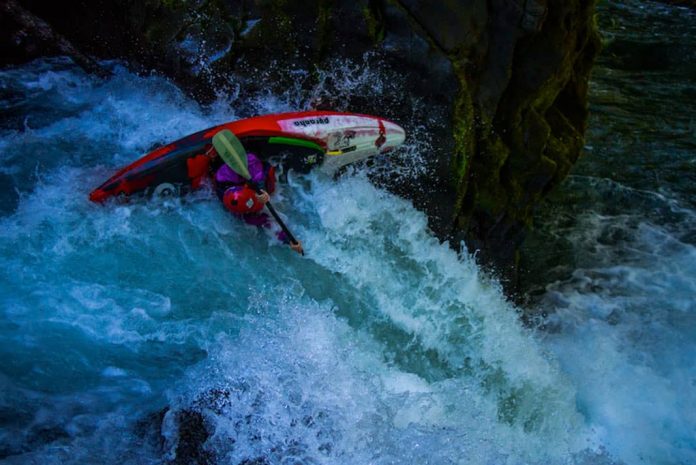
A kayaker rides some big waves.

Every sport has subtle rules of etiquette that participants expect of their teammates and partners. Some of these rules of thumb are obvious, and some will be seared into your brain from experience, like if you fail to signal to a downstream surf session and accidently crash into an unsuspecting playboater.

1. Respect the line

The social aspect of surf sessions on the river is one of the best things about playboating, especially if you are a beginner and looking to watch some more experienced paddlers land tricks. Many popular surf waves fill up with enthusiastic playboaters, especially on the weekends, making it common to have a collection of kayakers waiting in the eddies. Be polite and respect the line, making sure everyone gets a chance to show their stuff.

Read More: Essential Items To Bring To Your Next Surf Session

2. Share your snacks

Packing excellent river snacks makes breaks and floating lunches a great hiatus from the excitement of whitewater. Spread the love by sharing your snacks and treats, especially if some of your paddling partners forget to bring their own grub.

3. Use your river signals

River signals are a key safety element. From letting your friends know you are okay after a big swim to communicating with an upstream paddler that the river is clear for them to go, good signals can prevent major mishaps. Kayakers will have a variation of different signals they use, so it’s a good idea to establish a baseline with your group before you hit the river to make sure everyone is on the same page.

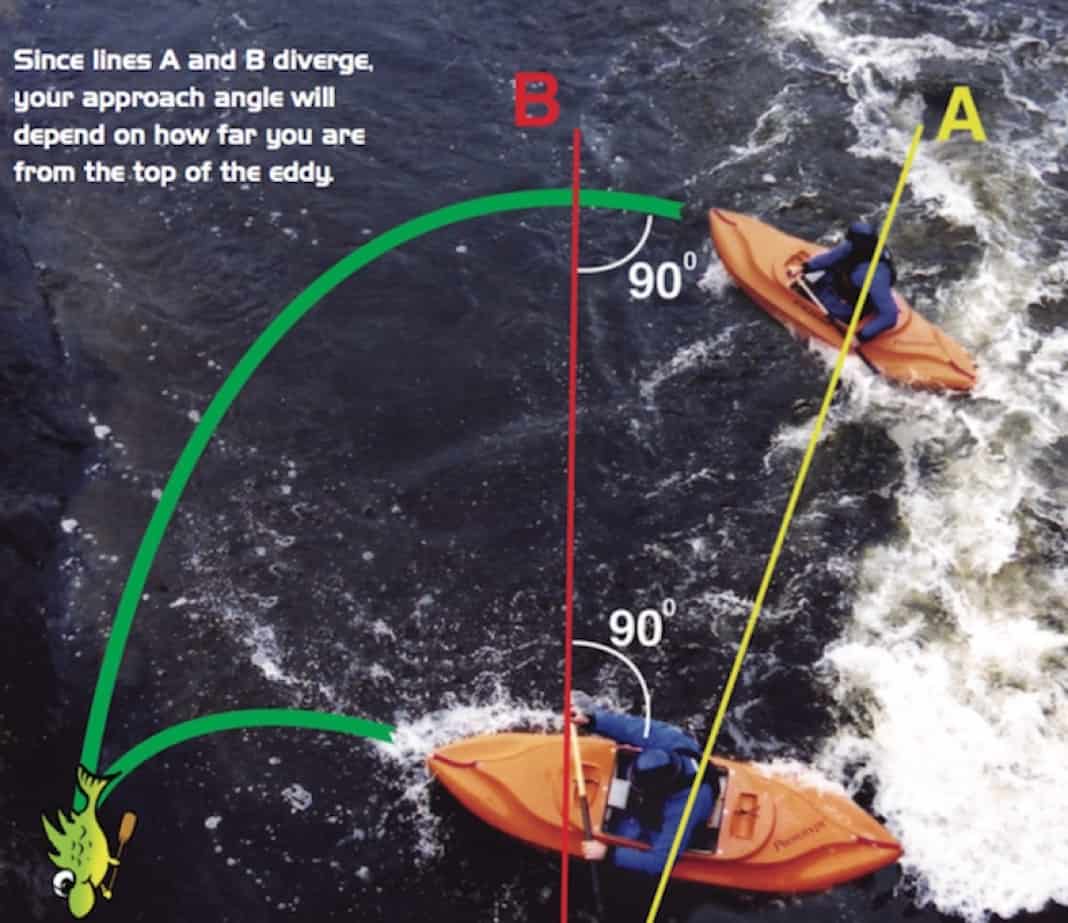
4. Make room in the eddy

If you are in the eddy before your paddling partners, be considerate of where you position yourself and how that will affect upstream kayakers. This is especially important if the eddy is essential to catch because of hazards or a drop downstream. Each time you catch an eddy, think about how much room you would want from other kayakers and hang out accordingly.

5. Be a respectful shuttle participant

Ah, the shuttle. A seemingly easy process that often ends in a lack of essential gear and confusion. While it is simple to botch the shuttle, try your best to keep track of your things and have the right items at the take-out. If you are a passenger in a shuttle vehicle, try to keep your wet things in a dry bag or on a tarp and don’t hop in your seat in wet clothes unless you have permission from the driver.

6. Offer help to less experienced kayakers

Kayaking is one of the best sports for meeting encouraging people who will volunteer tips and advice. This is often because those dispensing the advice vividly remember the exhausting days spent swimming and emptying their boats. Even if you aren’t an experienced kayaker, you can always help your fellow paddlers out from aiding boat carrying at a tricky put-in to holding their paddle while they adjust their ratchet straps to helping them tie-down their kayak. Hello good karma!

Read More: 10 Things That Will Happen When You Learn To Whitewater Kayak

7. Be prepared

Good whitewater etiquette largely depends on being prepared. Bring a throwbag and know how to use it. Have water and sunscreen. Understand your ability. Scout properly. Check water levels. Pack a first aid kit. Some of these things are learned from experience, but arriving ready to paddle as prepared as you can be will help you and your fellow kayakers have an awesome and safe day on the water.


The Ultimate Backcountry Birthday Cake Recipe

a chocolate birthday cake, made with a recipe perfect for camping
Let the pros show you how to make a cake on your next camping adventure.

Being on a canoe trip for your birthday is a treat in itself. Make it even more special with a camp-stove friendly birthday cake. More akin to a fudge brownie—and less reliant on food science for success—this backcountry birthday cake recipe is just as festive as a classic bonne fete cake when decorated with icing and candy.

Backcountry Birthday Cake Recipe

Prep at Home

  • ¼ cup (60 mL) all-purpose flour
  • 3 tbsp (45 mL) vanilla sugar or granulated sugar
  • 2 tbsp (30 mL) unsweetened cocoa powder
  • 1 tbsp (15 mL) powdered eggs
  • ¼ tsp (1 mL) baking powder
  • ⅛ tsp (0.5 mL) salt
  • ⅓ cup (75 mL) icing sugar
  • ¼ cup (60 mL) chocolate chips (optional)
  • Coloured sprinkles or candy (optional)
  • Parchment paper and foil

In a sealable plastic bag, combine flour, vanilla sugar, cocoa, powdered eggs, baking powder and salt. Seal and store at room temperature for up to one month.

[ Paddling Buyer’s Guide: See all camp kitchen accessories ]

Pack icing sugar, chocolate chips and candy in separate sealable plastic bags.

Cut a circle of parchment paper to fit into the bottom and about half an inch up the sides of a six-inch skillet; roll up and pack. Pack a piece of foil slightly larger than the skillet.

a chocolate birthday cake, made with a recipe perfect for camping
Let the pros show you how to make a backcountry birthday cake on your next camping adventure.

To Serve

  • ⅓ cup (75 mL) water
  • 1 tbsp (15 mL) vegetable oil

First, preheat your camp stove over low heat.

Shake flour mixture in bag; pour in four tablespoons of water and the oil. Gently squeeze until evenly moistened.

Rub a little water over both sides of the parchment paper to make it more flexible and prevent burning. Place parchment paper in skillet. Pour batter onto the paper and spread evenly; cover skillet with foil.

Hold skillet about two inches above the burner for five to eight minutes, or until the top just looks dry and edges spring back when lightly touched. Remove from heat; let stand covered for two minutes. Invert cake onto a plate or heatproof surface; peel off paper.

If using chocolate chips, sprinkle over hot cake and let melt, then gently spread to cover evenly. Let cool completely.

For the icing, add one teaspoon (5 mL) water to the icing sugar in the bag and gently squeeze to blend to a smooth, thick icing, just slightly thinner than a soft putty. If necessary, add a few drops of water at a time, and squeeze icing to mix, just until desired consistency. Cut a small tip off one bottom corner of bag, twist bag just above icing and gently squeeze to write or draw decorations on top of cooled cake, then garnish with sprinkles, as desired.

Additional Tips For The Perfect Backcountry Cake

Parchment paper might sound fussy for camping, but it does allow you to “bake” in a skillet without adding oil, which would create a fried product rather than a tender baked one.

If your burner doesn’t go low and tends to scorch foods and uses a pump to build pressure for the fuel canister, pump less pressure, or release some pressure, before lighting to reduce the flame and prevent burning baked goods.

Chopped dehydrated berries and nuts are a nice backcountry alternative to icing and sprinkles; just sprinkle them over top of the batter before cooking.

As a cheater backcountry birthday cake, you can use your favorite pancake recipe, stir in some coloured sprinkle and make a large pancake, then decorate the top with icing and more sprinkles.

Storm-proof matches can double as impromptu candles.

Baker’s Backcountry Cake Recipe from the NOLS Cooking Show:


How To Light Paint For Spectacular Canoe Trip Photos

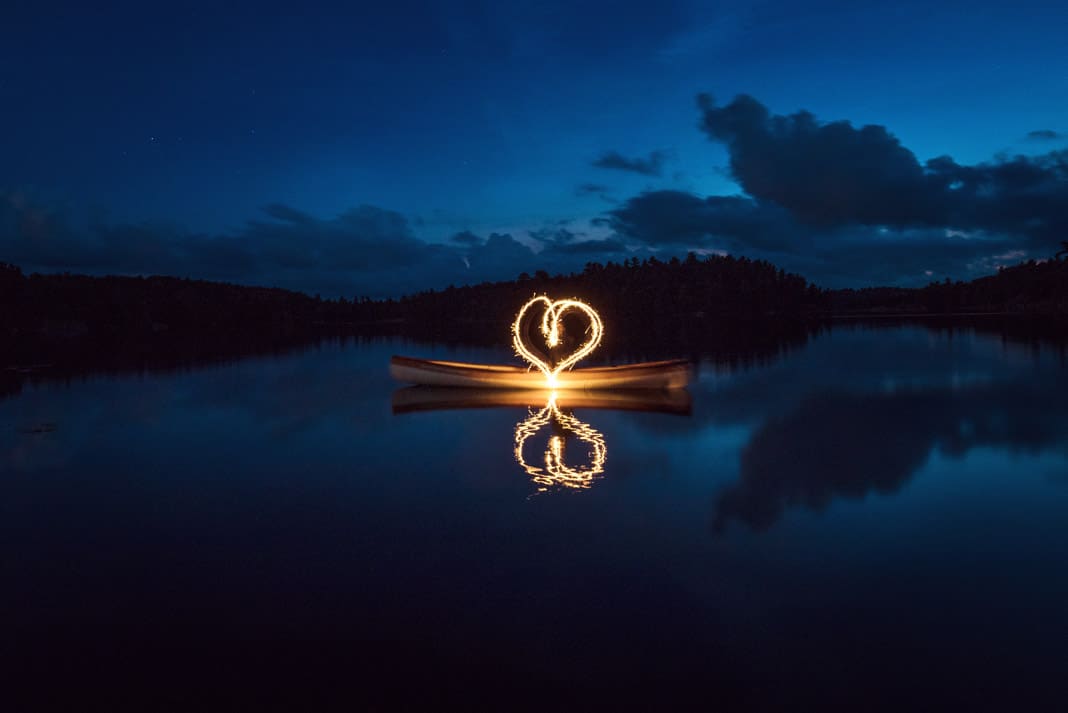
SKETCHING WITH RAYS. PHOTO: | MASTERFILE.COM

A few years ago a friend and I jumped at the opportunity to spend a few days in the backcountry of Algonquin Park on Thanksgiving weekend. After setting up camp on Misty Lake, dusk turned to night at the early hour of 6:30 p.m. With dinner finished and site chores complete, I grabbed my new DSLR to experiment with some long exposure shots. To include ourselves in the photos, we took turns standing extremely still, while one of us illuminated the other with a headlamp. Several successful shots later, my fascination with light painting was born.

Light painting uses a slow shutter speed and various light sources to create color and design in an otherwise darkened image.

During a long exposure the shutter of the camera remains open and allows all available light to hit the sensor. If you do this for a second or two in bright conditions, the image will turn out overexposed or even white. However, in dark conditions, all available light is recorded so if you walk across the frame with a light source you create a bright line. Or, if you bathe your friend in a headlamp’s glow they become visible standing in the dark. With the immediate feedback of being able to view photos on your digital camera you can really fine-tune the look.

There are two ways to paint with light. The first is to aim the light source towards the camera lens. Using a focused beam, with this technique you can trace outlines of boats or tents, draw forest creatures or write words in the air like you did with sparklers as a kid (just remember to write letters backwards). Even though you are in the camera’s field of vision, so long as you keep moving and you’re not illuminated, you won’t show up in the image.

SKETCHING WITH RAYS. PHOTO: | MASTERFILE.COM
SKETCHING WITH RAYS.
PHOTO: | MASTERFILE.COM

The second way to light paint is to stand back from the subject with the light source pointed away from the camera. This technique is perfect for creating broad highlights in an otherwise dark image. During the shutter release use your light source like a brush to paint the parts of your image you want to highlight, such as a tree, camper or canoe. For example, to illuminate your campsite against a starry sky, set your exposure to capture the sky then shine a broad beam of light across the site for a fraction of the time the shutter is open. Too much bright light and you’ll overexpose the foreground.

Once you wrap your head around these two methods you can draw pictures and words or bring attention to different areas of the scene, harnessing light to build the image you want.

Rob Nelson is a photographer with a passion for exploring wild places. www.robnelson.ca


This article originally appeared in the Canoeroots
Summer/Fall 2016 issue.

Subscribe to Paddling Magazine and get 25 years of digital magazine archives including our legacy titles: Rapid, Adventure Kayak and Canoeroots.
How To Make The Perfect DIY First Aid Kit

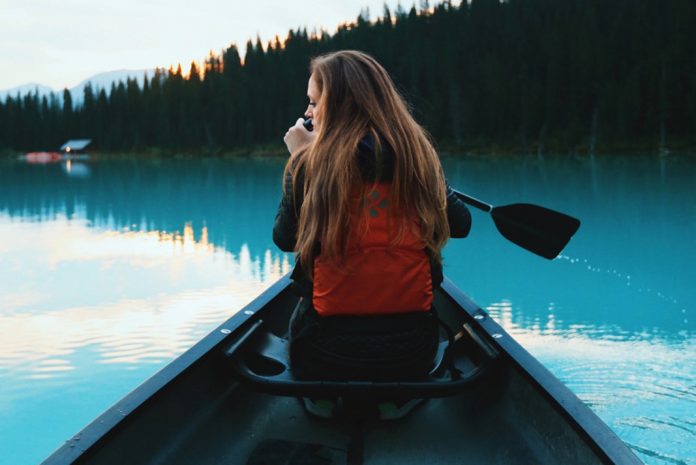
Without customization, your first aid kit is potentially just a heavy and bulky piece of junk. Yes, you read that right. Whether it’s an expedition kit costing hundreds of dollars or a simple pocket kit ordered off eBay, commercially pre- packaged first aid kits are often stocked with items that you’ll never need or can be improvised quickly in the field. By creating your own first aid kit you can customize the items to address specific environments, existing medical conditions and the needs of your group.

Consider length of trip, size of group, level of experience and training, types of activities, destination and medical backgrounds of your group when designing your kit. Pack your kit in something light and waterproof. Use small watertight bags within, like Ziplocs, to organize and categorize items for easy access.

While many outdoor retailers carry prepared commercial kits, they carry individual first aid items, like bandages and moleskin. Your local pharmacy will also have much of what you need to stock your kit and Amazon and eBay have great selections and even better prices.

Though there are great advantages to creating your own first aid kit, remember that relevant medical training, such as a wilderness first aid course and good critical thinking, are your best assets in an emergency. The following 19 items provide a foundation to build on for your DIY first aid kit for a three-to five-day wilderness canoe trip.

Mike Webster has worked as an expedition medic, outdoor emergency care instructor, past Canadian director of Wilderness Medical Associates, and is a field hospital manager for Odyssey Medical (www.odysseymedical.ca).

DRUGS

Paddlers with known life-threatening allergies should bring their own epinephrine. Antihistamines can manage minor allergic reactions. Consider bringing both ibuprofen as an anti-inflammatory and acetaminophen for pain management. An over-the-counter solution for diarrhea, acid reflux and nausea or vomiting won’t save anyone’s life, but will save a paddler’s enjoyment of his or her trip. Don’t

forget day-to-day prescription medications.

REFERENCE

Even experienced trippers may panic in an emergency. Bring a pocket-sized wilderness first aid field guide. Referencing your guide also provides time to calm down and think logically

BLEEDING CONTROL

So long as you’re not canoeing in active combat zones you won’t need a tourniquet. Gauze pads, clothing and your gloved hand all control bleeding when direct pressure is applied. Avoid clotting powders and hemostatic agents— they’re expensive and not effective. Trauma shears cut clothing and bandages better than a knife.

WOUND CARE

Blisters are one of the most common injuries on trip—bring moleskin or an equivalent. A syringe with a catheter tip is ideal for wound irrigation. Consider a magnifying glass to help find small debris lodged in wounds. Tweezers help remove debris from wounds, as well as slivers or ticks. Pack an assortment of gauze and dressings, including non-stick options for burns. Bring an occlusive dressing, which is waterproof and seals the wound completely. Athletic tape will hold bandages in place.

FRACTURES AND MUSCULOSKELETAL INJURIES

Improvised splints can be created using branches, hiking poles or closed cell sleeping pads. Vet wrap or Coban is better than tape for wrapping splints, and holds in wet conditions. A triangular bandage provides support as a sling, and a compression bandage provides support for sprains and strains.

LIFE AND DEATH

Though bulky, a rigid CPR mask will assist with providing CPR with ventilations for a prolonged time period. While you might not be worried that any of your trip mates have bloodborne pathogens, gloves give you the confidence to manages all bodily fluids—vomit or feces included.


This article originally appeared in the Canoeroots
Summer/Fall 2016 issue.

Subscribe to Paddling Magazine and get 25 years of digital magazine archives including our legacy titles: Rapid, Adventure Kayak and Canoeroots.
6 Essential Items For A Successful Cross-Country Canoe Trip

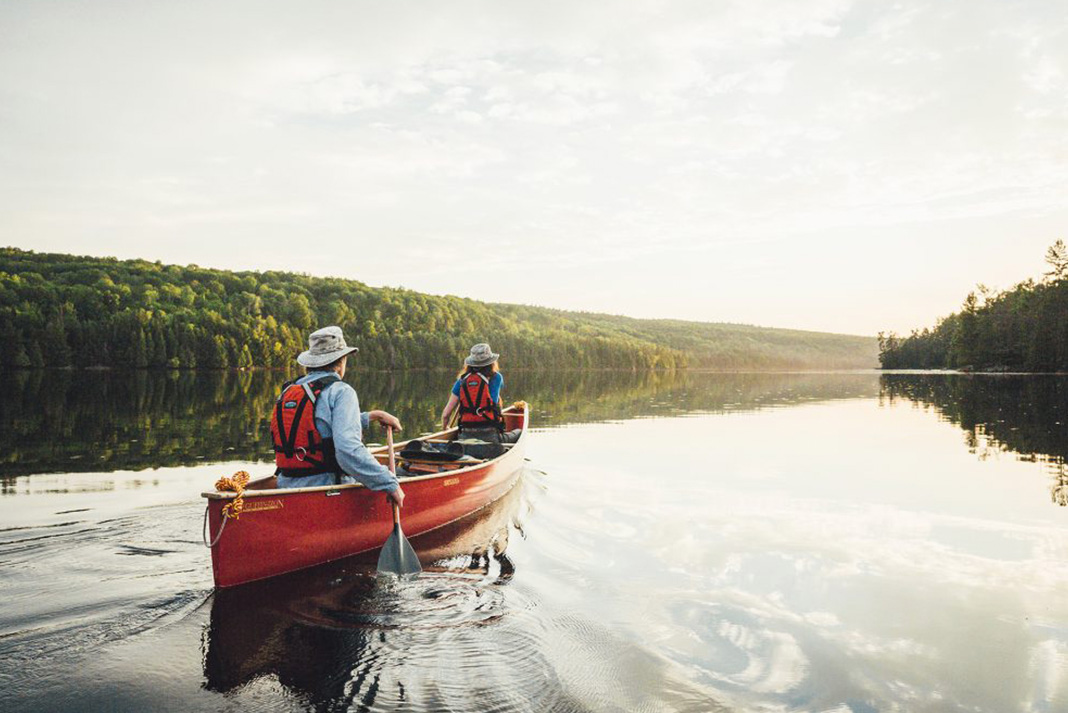
RANTA AND SPITZII ON A TRAINING PADDLE IN MARCH. | PHOTO: ALAN POELMAN Learn
How did Mike Ranta plan to follow up a speedy record-breaking solo trip across Canada in 2015? By doing it again—but faster.

Unofficially already holding the title for longest solo canoe trip, Ranta departed the West Coast on April 1, 2016, from Fisherman’s Memorial in Steveston, British Columbia. He’s aiming to break his own seven-month record over 7,500 kilometers and arrive in distant Cape Breton, Nova Scotia before his 45th birthday at the end of September. Along the way, he’s raising funds for Canada’s war heroes and invited veterans to meet him en route and sign his canoe so he and four-legged tripmate, Spitzii, can show their appreciation. These are the six essentials fueling his ride.

SPITZII, PUREBRED FINNISH SPITZ

“Spitzii turned eight on April 3 and we celebrated on the Fraser River. He’s my best friend, my bear scarer, and my campsite soldier,” says Ranta. “He and I have such a great bond and this is our third big trip we’ve done together. I wouldn’t leave without him.” As fearless as he is handsome, Spitzii hangs out on the bow deck and watches for rocks, logs and beavers, barking to alert Ranta when he sees something.

ATTA THE COCONUT

“I found a coconut when I was paddling near Prince Albert National Park in Saskatchewan. On my next trip, it disappeared on me,” says Ranta. “I did the whole trip and the coconut was gone about two years. When I was reconing for this trip I decided to camp where I stayed last time, and I’ll be damned if I didn’t find it. Spitz found it in amongst the grass. I call it Atta The Coconut. I’m from Atikokan, Ontario. Our mayor’s not impressed because he doesn’t like when people call us Atikoconuts, he prefers we call ourselves Atikokanites.”

SOURIS RIVER WILDERNESS 18

“This is its maiden voyage,” says Ranta of his red Kevlar ride. “It’s done great, it tracks nice and is bulletproof. I can’t say enough good things about it, actually.”

HAND-CRAFTED MEANY XY PADDLE

XY Company’s paddles are handmade by Don and Spencer Meany in Ranta’s hometown. They’re named after great explorers and voyageurs such as Alexander Mackenzie, Simon Fraser, William McGillivary, George Simpson, David Thompson and La Verendrye. “It’s a bent shaft, and an amazing paddle,” says Ranta.

RANTA AND SPITZII ON A TRAINING PADDLE IN MARCH. | PHOTO: ALAN POELMAN Learn
RANTA AND SPITZII ON A
TRAINING PADDLE IN MARCH. | PHOTO: ALAN POELMAN
Learn

HOMEMADE BIRCHBARK HAT

“A lot of kids call me the pirate when I go by,” says Ranta. “I use spruce root to sew it all together and a homemade adhesive from bear fat, pine pitch and charcoal. It’s a durable hat, and it’ll last forever.” Voyageur-level supporters of Ranta’s journey—defined as those donating more than $1,000 to the cause—will receive their own birchbark hat in the mail post-trip, handmade by Ranta and his father. Cowboy or sombrero styles available. Voyageur-level supporters will also receive a 2017 Spitzii calendar.

Mike Ranta places a wreath at the Tomb of the Unknown Soldier in Ottawa
Mike Ranta places a handmade wreath at the Remembrance Day ceremony in Ottawa, Ontario. | Feature Photo: David Jackson

VETERAN SPIRIT

“My brother, Kevin, is a veteran. He was in Sarajevo and Bosnia and he came back a little bit broke,” says Ranta. “He’s a good man and I didn’t like the way he was being treated. That’s kind of what put me onto this: I’ve got that veteran spirit, I like to say. War is a terrible thing and we need to step up as Canadians and help these guys.” Fifty percent of the money raised by the journey will be donated to the Atikokan Legion. The remainder will be donated to the Atikokan Youth Centre, which was the beneficiary of Ranta’s record-breaking 2015 trip. —Tom Bateman


This article originally appeared in the Canoeroots
Summer/Fall 2016 issue.

Subscribe to Paddling Magazine and get 25 years of digital magazine archives including our legacy titles: Rapid, Adventure Kayak and Canoeroots.
One Couple, 1.1 Million Acres And 365 Days Living In The Wilderness

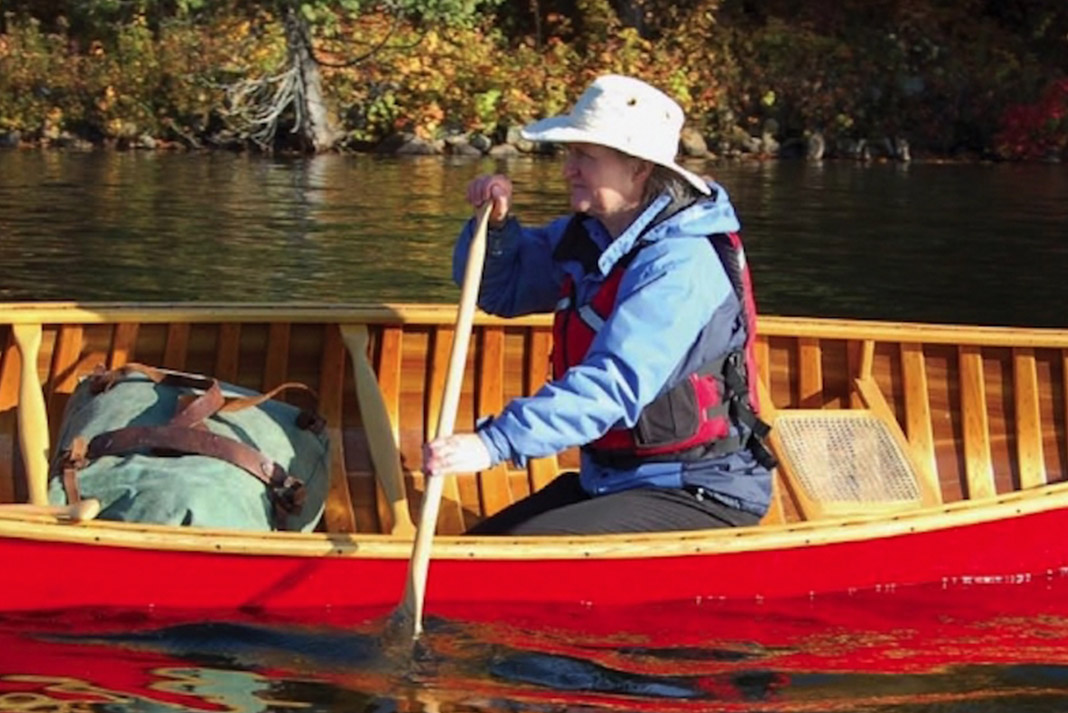
JUST THE TWO OF US. | PHOTO: NATE PTACEK

Christmas 2015 was a little different for seasoned adventurers Dave and Amy Freeman. The pair adorned their tent with solar-powered Christmas lights, built glowing ice luminaries, baked Norwegian sandbakkelse cookies and chowed down on a dehydrated holiday feast. Three months before, the Freemans had embarked on a yearlong stay in the Boundary Waters Canoe Area Wilderness in northern Minnesota. The pair are spending a full year exploring more than 3,000 miles and 500 lakes and streams by canoe and dogsled in support of a campaign to protect the Boundary Waters from proposed sulfide-ore copper mining on the wilderness’ edge.

Unlike their 2015 expedition, which saw the Freeman’s paddle from the South Kawishiwi River to Washington, D.C. to hand deliver a canoe signed with 2,000 signatures protesting the mine, the year spent in the wilderness is dedicated to exploring and bringing awareness to America’s most popular canoe tripping destination. “We are not here to cross it or conquer it, but to bear witness to it,” says Dave.

JUST THE TWO OF US. | PHOTO: NATE PTACEK

How did you stay warm through winter?

It’s all about the calories. We ate between 4,500 to 5,000 calories a day. A typical day would start with coffee and oatmeal with a dollop of peanut butter, followed by trail mix, hunks of cheese and a Thermos of soup. Dinner consisted of pasta with smoked, responsibly harvested salmon, lots of butter or olive oil, dehydrated veggies and parmesan cheese. When it was really cold or we had worked extra hard we would bake a chocolate cake.

Does the reality of a year in the wilderness live up to the dream?

It’s not for everybody and we have our moments, but for the most part we work well together and enjoy being alone. We have found that communicating clearly and honestly with each other is important and we try to caring and considerate of each other’s needs. It is easy to get short with each other when we are cold, wet and tired. When this happens we try to talk about the conflict after we have had a warm meal, or the stresses have abated.

What have been the best and most difficult times?

Sitting by the lake and drinking our coffee and watching the light change is often one of the best parts of our day. We also enjoy finding a new place to camp, setting up our tent and making our new temporary home. Low days have been when we hear news from the outside world, like the passing of a relative, the Paris attacks, the Syrian refugee crisis and Prince’s death.

What’s after a Year in the Wilderness?

Hopefully we will have acquired a diverse array of stories, insight and photos that will allow us to travel around the country and share this special place with many more people through speaking engagements at schools, businesses and symposiums. We were transformed by the wilderness long ago, but it is becoming apparent that visiting is not enough. We have to work tirelessly to protect places like the Boundary Waters so that future generations will also be able to experience its transformative effects.

What have you learned so far?

We have learned to slow down and appreciate little things we would normally rush past. Being immersed in the wilderness has helped us understand how dramatically humans have altered and continue to alter the planet. It’s becoming clear to us that we need to put sustainability at the center of the the decisions we make. More than anything this experience has affirmed what a unique national treasure the Boundary Waters is and the need to protect it.


This article originally appeared in the Canoeroots
Summer/Fall 2016 issue.

Subscribe to Paddling Magazine and get 25 years of digital magazine archives including our legacy titles: Rapid, Adventure Kayak and Canoeroots.
Discovering Yukon Gold In Whitehorse

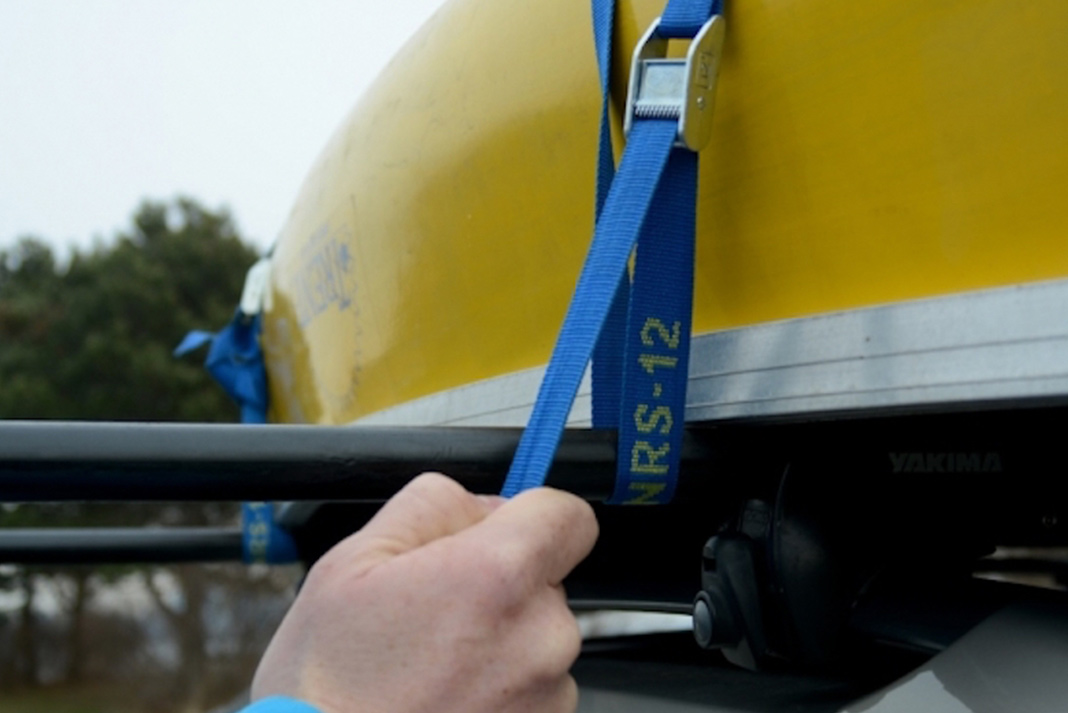
YUKON SUNSET: 11:47 P.M. | PHOTOS: PETER MATHER

The Yukon. It’s a place that looms large in the minds of many. Few other places in the world remain so unchanged by modern life. Considered a once-in-a-lifetime dream destination by many canoeists, the territory’s vast wilderness has always inspired dreamers and explorers, including the works of author Jack London and poet Robert Service, as well as North America’s largest gold rush in history.

For locals—you might hear them referred to as sourdoughs— the Yukon offers much more than a single northern river bucket-list trip. Within a one-hour drive from the little metropolis of Whitehorse—the territory’s capital—there’s something for everyone: great mountain hiking and biking, crystal clear rivers, easy fishing, exciting rapids and spectacular canoe tripping. The wilderness is on our doorstep.

While I love and have paddled many rivers in the territory, it’s the nearby Takhini that holds a special place in my heart. It’s where I learned everything I know about canoeing. —Peter Mather

CMYK_Nahanni Wildlife016.jpg
PHOTOS: PETER MATHER

TRIPS

If you have a day visit spectacular Miles Canyon for easy hiking along the river edge, just minutes south of the city.

If you have a weekend enjoy the upper stretch of the Takhini River from the lake down to the first government campground. Stop for a hike in the ancient sand dunes on river right and play in the dead tree forest. Camp at the rapid Jaws, catch fish and enjoy a fresh fish lunch cooked over the open fire.

If you have a week spend the first couple of days exploring the headwaters of the Takhini River at Kusawa Lake. Sleep on the nicest beaches in the Yukon before heading down river. Take out on the Takhini River Bridge, just 10 kilometers outside of the capital city.

If you have two weeks venture further. The 715-kilometer trip north from the Whitehorse city dock to Dawson City’s shores traces the gold rush route and offers gorgeous gravel bar camping, scenic mountain vistas, historical sites and great wildlife viewing. Plus, the logistics of this road-accessed northern river trip are very simple.

YUKON SUNSET: 11:47 P.M. | PHOTOS: PETER MATHER

STATS

AVERAGE SUMMER HIGH

14°C (July)

HOURS OF DAYLIGHT

19 (Whitehorse in June)

YUKON POPULATION

33,897 (People) 220,000 (Caribou)

WILDLIFE

Grayling, hawks and herds of elk. In August, watch for the red flash of Chinook salmon darting under your canoe. Further from town, look for caribou, bears and wolves.

DIVERSIONS

The Takhini Hot Springs are 100-year-old hot pools for soaking and relaxing, located just 28 kilometers from downtown Whitehorse.

BUCKET LIST

The Snake River offers the perfect combination of wilderness, incredible hiking, abundant wildlife and fun whitewater.

OUTFITTERS

Find a listing of outfitters offering gear rentals as well as guided trips at www.yukonwild.com.

MUST HAVE

A wetsuit or drysuit as water temperatures are barely above freezing even on the warmest days.


This article originally appeared in the Canoeroots
Summer/Fall 2016 issue.

Subscribe to Paddling Magazine and get 25 years of digital magazine archives including our legacy titles: Rapid, Adventure Kayak and Canoeroots.
What To Do When An Elephant Charges Your Canoe

Close Encounter Photo by Pete Anderson.jpg

What would you do if a 6,000-pound angry bull elephant charged your canoe?

If you’re National Geographic Explorer-in-Residence Beverly Joubert, you hunker down and keep shooting.

Along with husband, Dereck, the Jouberts are among the world’s most famous wildlife photographers. Their film and photo honors include Emmys, a Peabody and the prestigious World Ecology Award.

“Our philosophy is to be as invisible as possible—we don’t want to interact with the wildlife at all,” says Beverly.

Though they’ve focused much of their work on intimately documenting the secret lives of big cats, like lions and jaguars, the intelligent and sensitive elephant has always been an animal close to their hearts.

The Jouberts have long used canoes to get up-close with elephants. Over the course of several seasons they took a series of river trips by canoe through the Selinda Reserve in northern Botswana, the seasonal home to more than 7,000 elephants, to film the award-winning PBS documentary, Soul of the Elephant, released last October.

“Elephants are not used to seeing man in a canoe—we try to remain invisible, but if they did spot us often they didn’t know what we were,” says Beverly. “With canoeing there is no mechanical sounds or metal grinding, we just became part of the river.”

Despite trying to keep a distance, occasionally the couple gets too close. During filming Soul of the Elephant, the husband-and-wife team were charged while working from their canoe. While Dereck filmed the bluff charges, Beverly recorded the angry elephant’s terrifyingly close trumpeting and snorts.

Close Encounter Photo by Pete Anderson.jpg

After the elephant left, the Jouberts discovered what they believe had agitated him further downstream: butchered elephant bodies, cut up to remove the ivory. Elephants have rich emotional lives, and are known to grieve for the dead and help each other when in distress, says Dereck during the film.

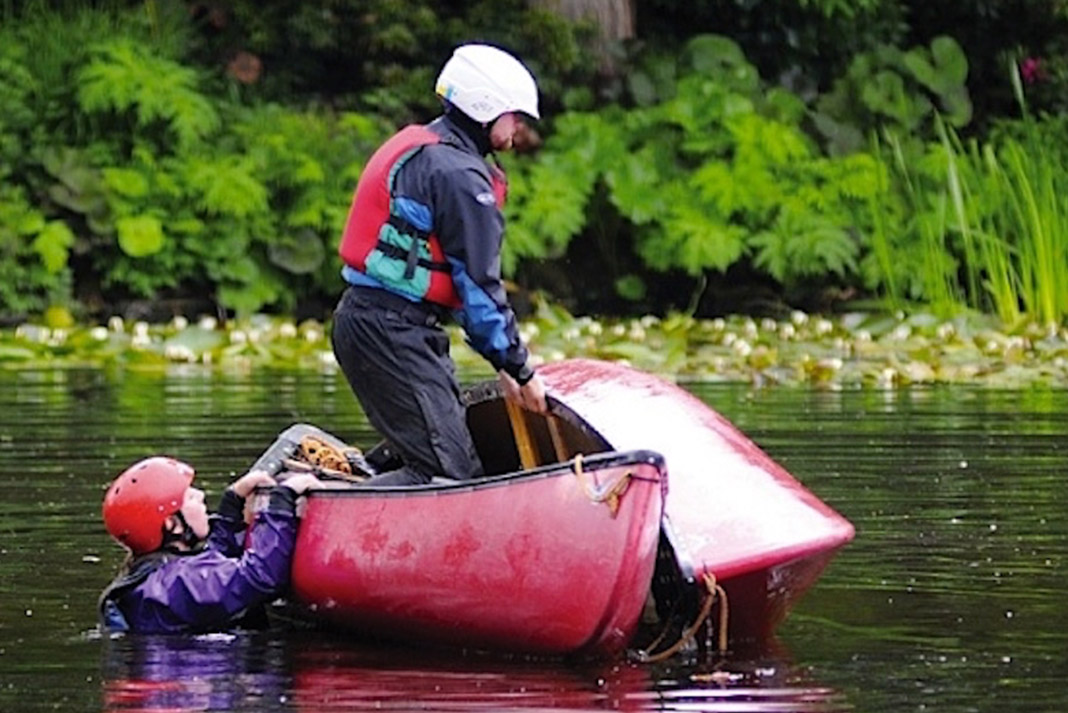
Not all encounters are so intense however. In the photo above, shot in the early 2000’s, a curious elephant approaches Beverly’s canoe. “He was feeding on succulent water grasses—he came closer with confidence, without aggression. We knew we had to be confident and remain still so we wouldn’t throw him off his game and cause him to charge or turn away,” says Beverly. “He carried on feeding. He was so close that as he was pulling up the grass I was getting hit with water droplets.”

Thirty-five years spent living primarily in bush camps on the savannah and in the jungle while chasing photos of Africa’s most iconic creatures has given the couple a thorough understanding of animal body language—it’s likely what has kept the Jouberts safe during these incredibly close encounters. “We definitely would not advise that people get close,” says Beverly.

“We’re incredibly privileged to have these moments. We’ve become ambassadors for the animals,” she adds. “The atrocities are immense—over 35 years we’ve seen the animals decline at an alarming rate.” During that time the elephant population has been reduced by 50 percent worldwide. Through their photography, the Jouberts have made it their mission to protect the remaining animals and combat those stark numbers by raising awareness with beautiful film and photography. —KP


This article originally appeared in the Canoeroots
Summer/Fall 2016 issue.

Subscribe to Paddling Magazine and get 25 years of digital magazine archives including our legacy titles: Rapid, Adventure Kayak and Canoeroots.
Navigating The Tricky Waters Of A Successful Whitewater Shuttle

A car loaded with kayaks on a remote mountain road
Google, please save me now. | Feature photo: Ryan Creary

Dave glares at me. Chris rolls his eyes. My sprayskirt is at the take-out, Dave’s gear is piled on the ground and I just locked his keys and phone in his car. The three of us are instructors, but we can’t get our act together for a short run down the White Salmon River. At least no students are witnessing our incompetence at arranging this whitewater shuttle.

Navigating the tricky waters of a successful whitewater shuttle

Shuttles are my Achilles heel and I know I’m not alone. Keys get left in cars. Take-out vehicles have no straps. Gear gets lost. Adults squash into kids’ car seats. No amount of paddling experience or number of graduate degrees seems to help.

Even technology has hung us out to dry. For decades I simply hid a spare key on my car and tossed my keys in the trunk. But in the era of electronic smart keys, I’ve got an expensive gizmo that automatically unlocks my car if I do that. And if it gets wet I won’t be able to drive home.

Google, please save me now. | Feature photo: Ryan Creary

A test of patience, planning and people skills

Shuttles put human nature’s flaws on public display. Machiavellian freeloaders concoct plans that somehow always place themselves riverside and drinking beer while others drive (assuming the beer ended up in the correct vehicle). Inattentive paddlers plop soaking posteriors onto nice leather seats, or, conversely, OCD new car owners fret over each grain of sand in their trunk. Some people take an hour to change clothes. Others offend locals by stripping down in the parking lot. Every once in a while a Lord-of-the-Flies-type shocks us all and simply heads for home from the take-out.

Even exotic shuttles are fraught. Anyone who’s run Utah’s Stillwater Canyon knows that the only way out is a jetboat up the Colorado. Jetbacks beat driving, but it’s disconcerting to ascend a river in two hours that took a week to descend with the current. Bush-plane shuttles, a staple of the far north, require extra rations in case weather delays your flight out. One friend, eager to see his dear wife after a long solo trip in the Arctic, spent an entire week waiting for weather to clear.

[ Plan your next fly-in adventure with the Paddling Trip Guide ]

Truly the worst are the really long drives. Shuttles on Idaho’s Salmon River take 12 hours. It’s one thing to spend quality time on the river with someone. Being wedged next to them in a van, unshowered and inhaling the fragrance of their neoprene booties for the same amount of time it takes to fly to China is another thing entirely. Groups that act like Nobel Peace Prize winners through weeks of stressful whitewater can fall to bickering on long shuttles home.

No driver required?

For relief from the perpetual shuttle scourge, I look to Google. All this brouhaha will be rendered moot when our self-driving cars can drop us off at the put-in and drive themselves to the take-out. They’ll scan our retinas or recognize our voices and we won’t ever have to worry about lost or waterlogged keys. Heck, after the car automatically fires up the butt warmers and turns towards the Interstate, we can nap all the way home.

Neil Schulman lives in Portland, Oregon, where he’s impatiently awaiting the self-driving shuttle revolution.

Cover of the Summer/Fall 2016 issue of Rapid magazineThis article was first published in the Summer/Fall 2016 issue of Rapid Magazine. Subscribe to Paddling Magazine’s print and digital editions, or browse the archives.


Google, please save me now. | Feature photo: Ryan Creary