Nothing will help you to win friends and influence people quite like a little something sweet after a hard day’s paddling. If you master the art of the campfire dessert, you will never have to eat a meal alone. Here are some easy ones to get you started.
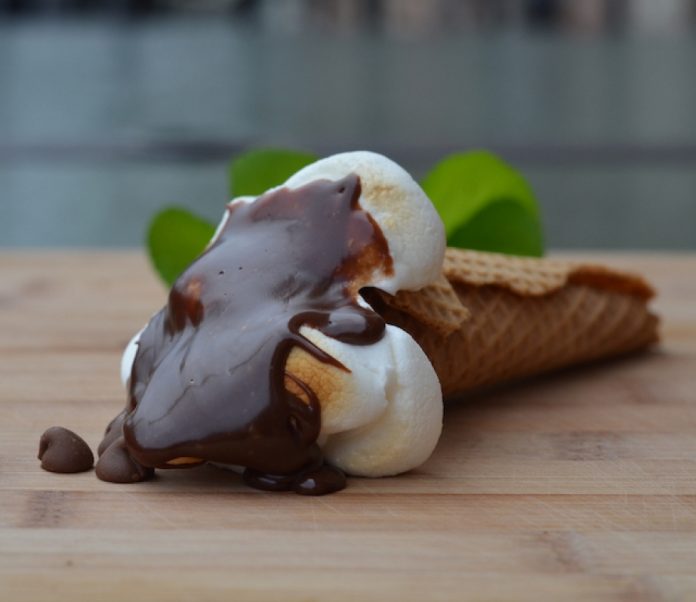
Campfire Smores in a Cone
6 Ice cream cones
½ Cup chocolate chips
½ Cup mini marshmallows
Foil
Take the ice cream cones and sprinkle a layer of chocolate chips in the bottom. Cover with a layer of mini marshmallows. Continue to layer chocolate chips and marshmallows until the cone is full. Now wrap in foil and cook over the coals for 3-5 minutes or until the marshmallows are melted.
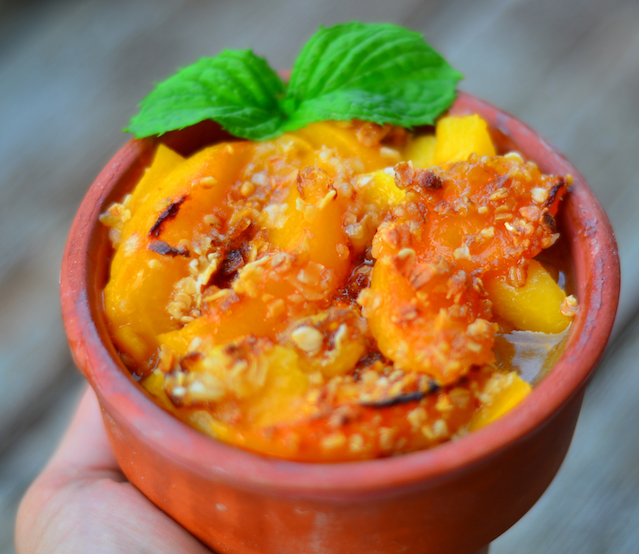
Peach Cobbler
4 Peaches halved and pitted
4 Tbsp. brown sugar
4 Tsp. butter
4 Tsp. oats
Foil
Place the peach halves on the foil and top with butter and oats. Sprinkle brown sugar on the top. Wrap and place on the hot coals for 10-15 minutes until peaches are cooked through.
Tip: For a more decadent dessert, add chocolate chips, nuts or substitute granola for the oats.
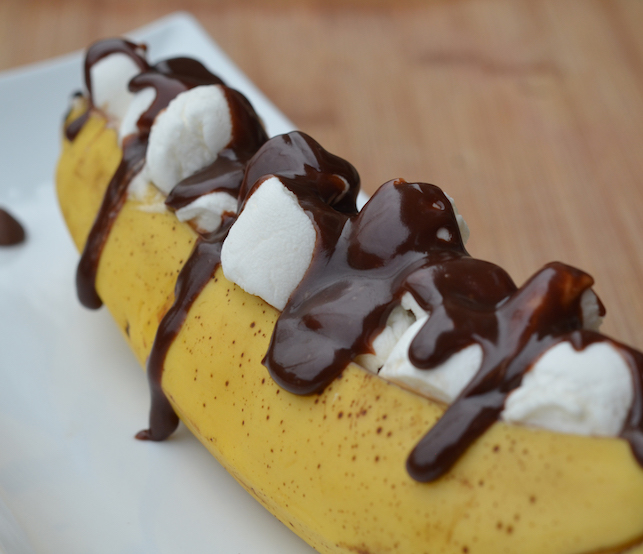
Banana Boats
4 Ripe Bananas
4 tsp. chocolate chips
4 Tbsp. marshmallows
Foil
Lay out a sheet of foil and place a banana on the foil. Slice the banana along the inside curve, leaving about an inch on both sides uncut. Spoon in the teaspoon of chocolate chip and top with a tablespoon of marshmallow. Fold the sides of the foil up around the banana so it can stay upright; leave the top part exposed so the marshmallows can brown. Cook for 10 minutes on the coals.
Nikki is an author specializing in green living, and adventure travel. She’s traveled the globe, swum with sharks and been bitten by a lion (fact). Catch her adventures here.
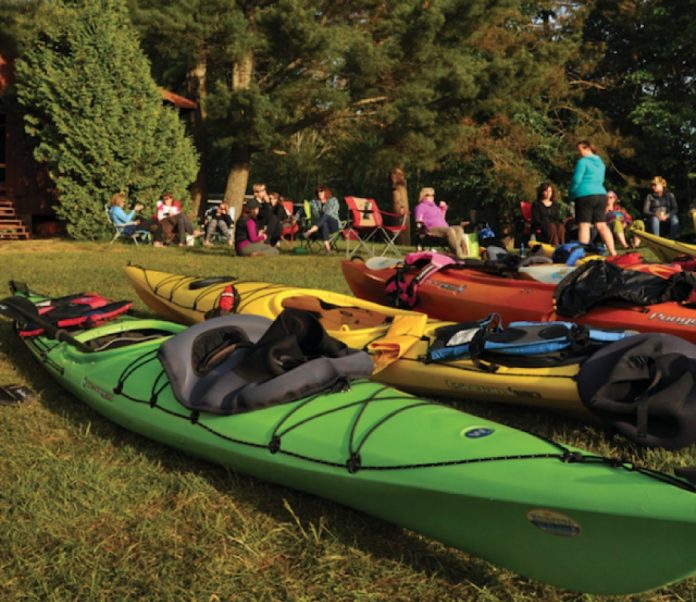
From coast to coast, early season paddling events offer great opportunities to refresh and refine skills before that big summer trip. Think of it as the ultimate spring training—after all, if you can master wet exits and rescues in May, imagine how easy they’ll be in August.
“Spring is really the best time to get people excited about kayaking,” says James Roberts, co-owner of Ontario Sea Kayak Centre (OSKC) and, with partner Dympna Hayes, founder of the annual Paddlepalooza Kayak Festival, held in May on Georgian Bay.
Early season events provide an opportunity for participants to engage with coaches and potential new paddling partners through an accessible, social chan- nel while months of paddling pleasure lie ahead—and spring fever is at its worst. Brush up on skills rusty from a long winter, swap gear that lay untouched last season, and trade stories around the campfire to find your next best paddling trip.
While northern paddlers will need wetsuits or drysuits to brave spring’s chilly waters, further south, spring offers an idyllic alchemy of air and water temperatures seemingly made just for paddlers. Whether April showers or May flowers, check out these great spring paddling events near you.
TRADITIONAL INUIT PADDLERS OF THE SOUTHEAST
May 13–15; Summerton, South Carolina| www.traditionalpaddlersretreat.com This third annual weekend fosters friendships, skills, knowledge and gear all built around traditional and Greenland paddling techniques and culture. This year, join renowned mentors Helen Wilson, Christopher Crowhurst and Dubside to hone your strokes, rescues and rolling.
GEORGIAN BAY PADDLEPALOOZA
May 20–22; Parry Sound, Ontario | www.ontarioseakayakcentre.com Featuring top coaches, superb scenery, great camping and a Saturday night party with live music and a limbo contest, the festival includes on-water clin- ics in strokes, rescues, rolling and more, plus dry land lessons on risk manage- ment, cooking, campcraft and navigation.
WOMEN ON WATER
June 10–12; Parry Sound, Ontario | www.ontarioseakayakcentre.com This fun, all-women paddling festival is perfect for beginners to advanced paddlers, featuring kayak, canoe and standup paddling (SUP) skills sessions. Plus, don’t miss slipping into a mermaid tail for a twist on aquatic adventuring.
This article first appeared in the May issue of Paddling Magazine. To read more from Paddling Magazine, click here.
“THERE ARE STRANGE THINGS DONE IN THE MIDNIGHT SUN.” —ROBERT SERVICE | PHOTO: HARRY KERN
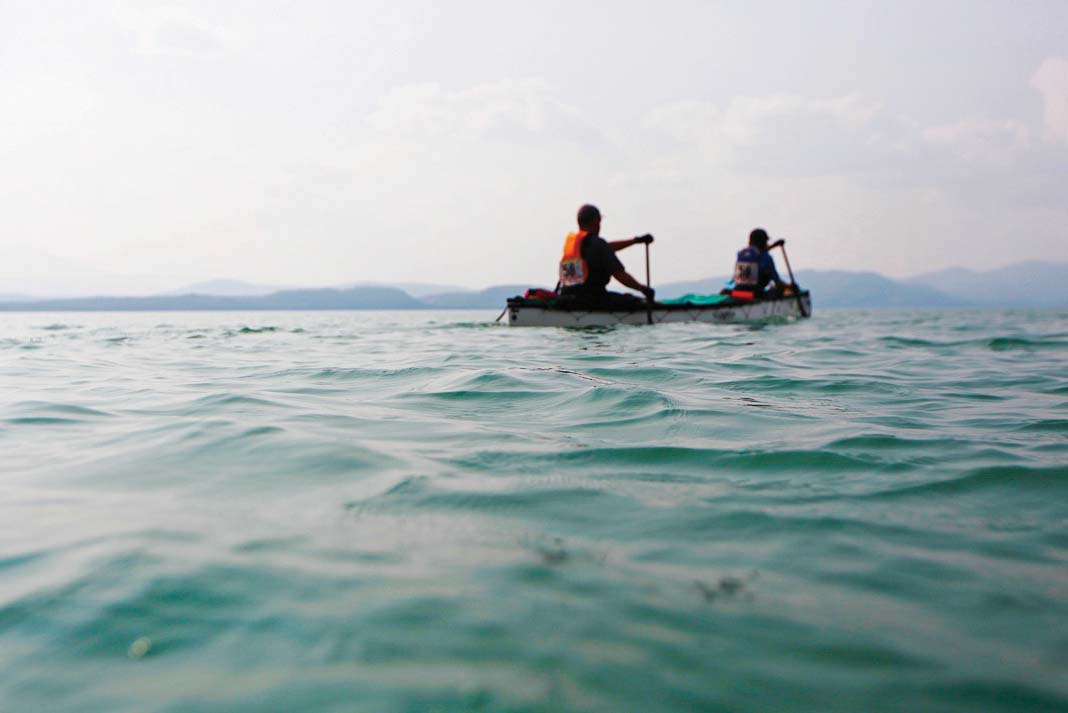
THE START LINE IS CHAOS. A whistle sounds and 155 paddlers sprint 400 meters Le Mans-style for their boats. Spectators line the shore, hooting and flashing cameras. The press of Spandex and neoprene is intense. Vaulting into our canoe, we narrowly avoid a collision with a voyageur team as we enter current. We fall in mid-pack. The forerunners are already 300 meters away.Three hours later, the Yukon River’s canyon walls give way to notorious Lake Laberge. Our map marks this section with strongly worded warnings promising disaster to those who don’t heed the rising wind. A couple of boaters die on Laberge’s 50-kilometer stretch every year. It’s up to five kilometers wide in sections.
It takes us seven and a half hours to slog across. We silently wonder how we’ll continue for another 650 kilometers but neither of us dare say a word.
A FUN CHALLENGE
Back in the depths of winter, the Yukon River Quest (YRQ) sounded like a fun challenge to my partner, Geoff, and me. It was the cabin fever talking. I should have known, because despite being the canoe-crazy one in the relationship, this was all Geoff’s idea.
The longest annual canoe and kayak race in the world, the YRQ takes paddlers 715 kilometers from Whitehorse to Dawson on the remote Yukon River in northern Canada. There are just 10 hours of mandatory rest stops along the way, and racers must finish in 84 hours.
Competitors fight the elements, the clock and each other, but by far the hardest battle plays out in each boat as sleep deprivation and exhaustion take their toll.
This same route transported tens of thousands of prospectors during the Klondike Gold Rush between 1897 and 1899. We’ve come for the same reason as those stampeders—the promise of adventure and glory.
PHOTO: HARRY KERN
TRAINING FOR THE RACE
In the spring, I browsed the competitor bio section on the YRQ website. It was daunting. There were Ironman participants, past winners and expedition paddlers with marathon CVs as long as their bent-shaft blades. Geoff and I hadn’t paddled more than 30 kilometers on flatwater in a day.
Soon after ice-out we began a regime of endurance training on weekends and short, brutal interval sessions on weekdays at 5:30 a.m. With concerning regularity one of us hit snooze and we fell back asleep.
Most troubling was our stroke rate: marathon canoeists paddle 60 to 80 strokes per minute; trippers typically average just 25 to 30. To get our cadence to a competitive level we bought ultralight carbon fiber bent shaft blades from Grey Owl Paddles and enlisted 71-year-old Bob Vincent, a decorated marathon canoeist, who’s been known to compete in a matching red and white polka dot Spandex suit. For two hours on a sunny May morning, Geoff and I had Bob and fellow coach Gwyn Hayman to ourselves. They offered first-hand tips, variations for steering and advice on quickening the recovery phase of our strokes. It helped.
By early June we could easily hold 54 strokes per minute, though we still felt galaxies out of our league. Our focus wasn’t on winning—we just wanted to finish in the time limit.
We settled on a deceptively simple strategy: Just keep paddling.
TEAM CANOEROOTS SETS OUT ON A GLASSY LAKE LABERGE. STRONG WINDS ON THE 50-KM LAKE CAN WHIP UP SIX-FOOT HIGH WAVES.| PHOTO: ELISE GIORDANO
CHECK IT OFF THE BUCKET LIST
Like many fantastically outlandish ideas before it, the Yukon River Quest was hatched over drinks in a dive bar. Created to celebrate the centennial of the gold rush, the first race traced the 700-mile route stampeders took from Dyea, Alaska, over the Chilkoot Trail and down the fabled river to Dawson, Yukon.
To further mimic the struggle of the stampeders, YRQ co-founder Jeff Brady had participants carry 50 pounds of useless gold rush-era gear, including a cast iron frying pan, hatchet, shovel, hammer and five pounds each of nails, beans and flour. Most teams made it in five days.
The pre-Whitehorse leg and unnecessary equipment regulation were dropped after 1998, creating the bona-fide paddling marathon we know today. Since then, almost 2,500 canoeists and kayakers have competed.
“People come to the Yukon River Quest because they want to say they’ve done it and check it off the bucket list,” says Brady, who will compete in his sixth race this summer. “The real challenge is for people to stay up and keep paddling. The vision of paddling under the midnight sun is beautiful, but what your body goes though is horrific.”
THE END OF LEG 1
We arrive to a mandatory gear check the morning of the race laden with some 150 pounds of equipment, water and food. We’ve prepped 70 small meals each, one for every hour we expect to be on the river. PB&J sandwiches, baguettes, cheese, cookies, fruit cups, granola bars, beef jerky, grapes and one large, cold, cheese pizza come aboard.
“This is the hardest thing you’ll ever do,” warns 56-year-old John Little, a 10-time YRQ veteran we meet at the start line. “But it’s good to do something like this once a year and remind yourself what you’re made of.”
“If you can do this, you can do anything,” Little adds.
Little’s words echo in my mind 10.5 hours later, back at the end of Lake Laberge. We pull on warmer clothes for the cool night ahead. A quarter of teams scratch each year and hypothermia is the number one reason for dropping out.
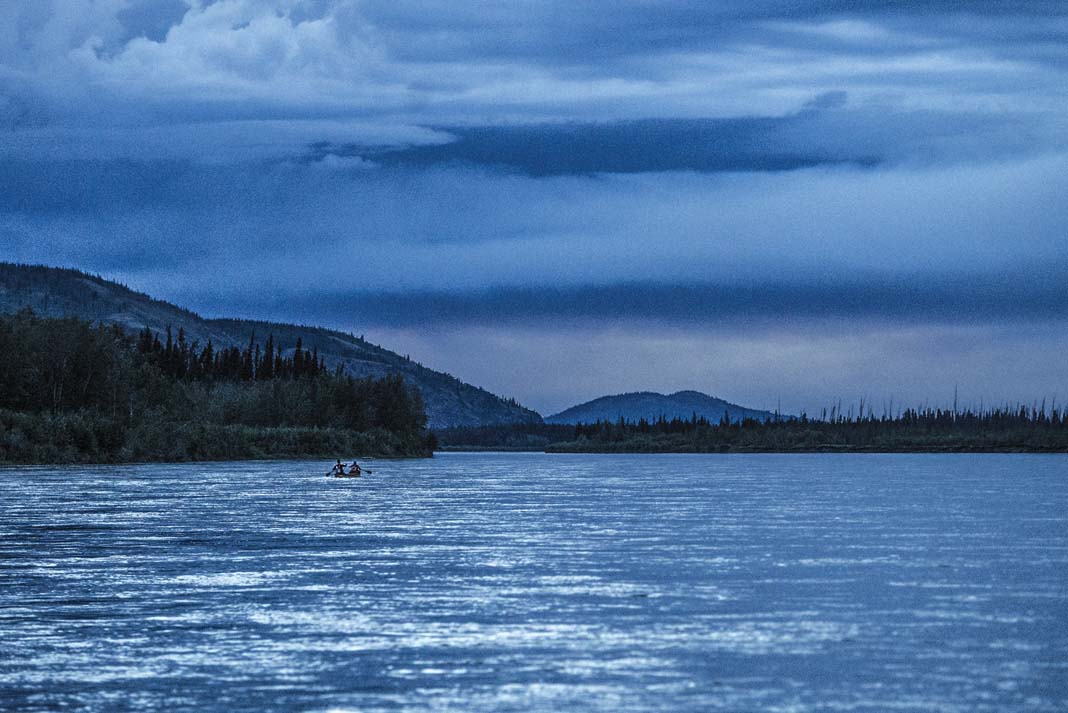
Entering the jade green current is refreshing after lake travel. This far south, the sky darkens to twilight between midnight and 4 a.m. Mist blots out the shining half-moon. We’re alone.
Fish flies come out in force, covering our bodies and gear. Grayling leap alongside our canoe while bats twist and dive to feed. It’s beautiful, but soon exhaustion and hypothermia stalk us through the night. Our only defense is to eat, drink and keep paddling. We agree the take-out pizza was an exceptionally good idea.
Mid-morning and hollow-eyed we arrive at the Big Salmon River monitoring point. A voluntary rest stop, there’s only a few paddlers here, all in obvious discomfort. Some are sick, others sore, nauseous and demoralized. No one says the word scratch, but most are considering it. “We have to get out of here,” Geoff says to me. I tape up blisters forming on my palms and we get back on the water. Just keep paddling.
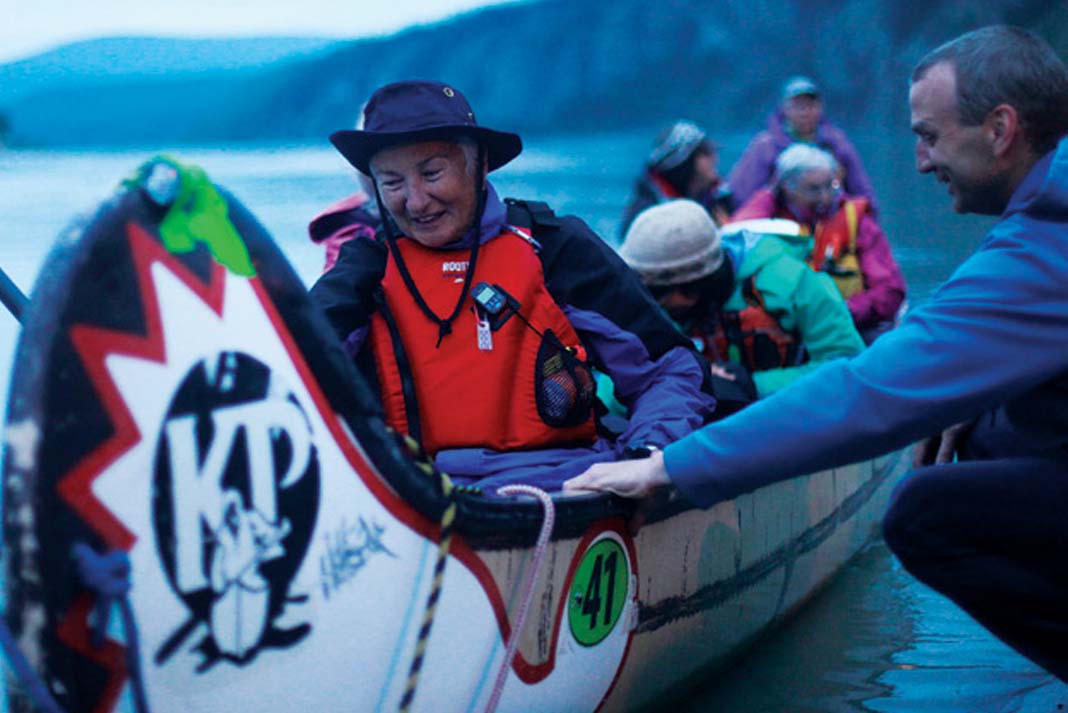
We reach the mandatory rest stop Carmacks at 7:24 p.m. We’ve traveled 301 kilometers in 30 hours.
JUST 415 KILOMETRES TO GO
Sleep deprevation is a funny thing. Just 20 hours awake and the average adult begins to function as though they’ve had two alcoholic drinks.
Continue to stay awake and simple tasks like bandaging a blister or navigating a channel, begin to seem as insurmountable as K2. Navy SEAL sergeants leading recruits through training exercises during the notoriously sleep-deprived and aptly named Hell Week report that simple obstacles, like a fence, have reduced grown men to tears.
Confusion, vision disturbances, tremors, emotional volatility. It’s sleep deprivation, rather than distance, that breaks paddlers on the Quest. Hallucinations are common, a sign that the brain is not interpreting stimuli correctly.
Many paddlers reported the same apparitions I saw—canoes pulled up on shore, people standing on the banks, giant illegible words carved into rock walls. Otters revealed themselves to be floating sticks, shore-side cabins gave way to the crisscross of downed trees, the voice at our backs was always just the wind.
Situated roughly halfway through the race, the Coal Mine Campground in tiny Carmacks is the first opportunity racers have to pause the clock and rest for seven hours.
When we arrive, most racers are sleeping. The ground is covered in an explosion of brightly colored canoes, kayaks and dry bags from four-dozen teams. The leaders have already come and gone, arriving a full 12 hours ahead of us. Their speed is bewildering.
Obviously out of the running for a podium finish and feeling absolutely wrecked, we decide to stay longer than necessary at Carmacks to get more sleep. When we wake, a full seven hours later, only eight boats remain.
Though sore, we’re invigorated by our night of rest. We get back on the water at 5:25 a.m.—just 415 kilometers to go. Cheery volunteers promise the worst is behind us. Liars.
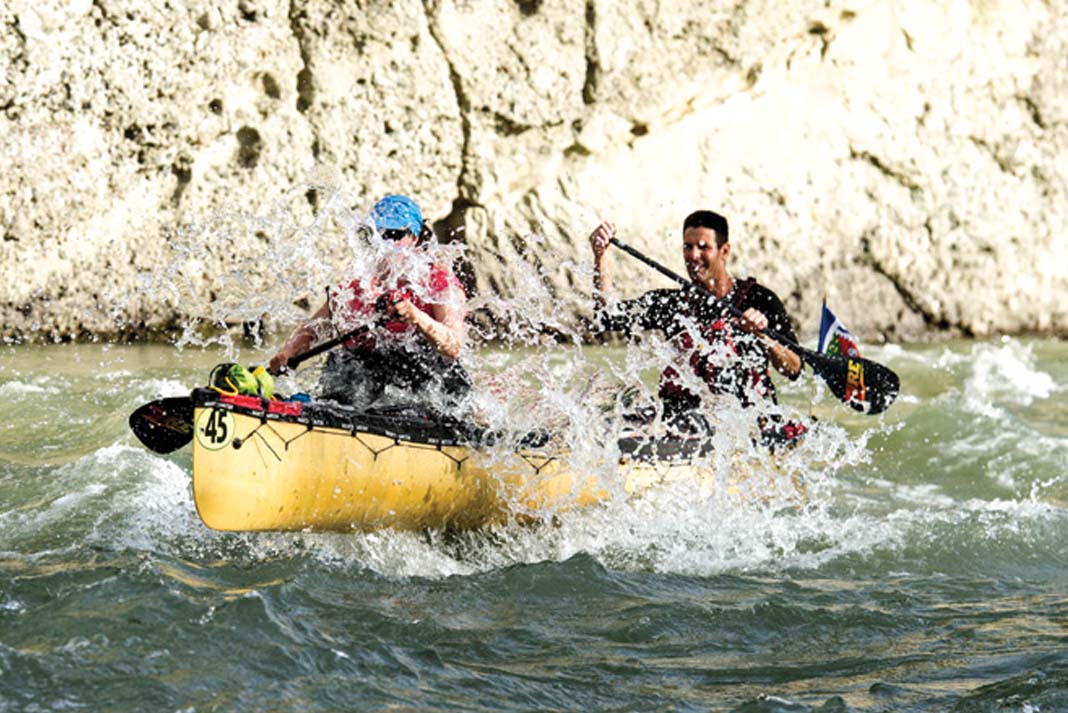
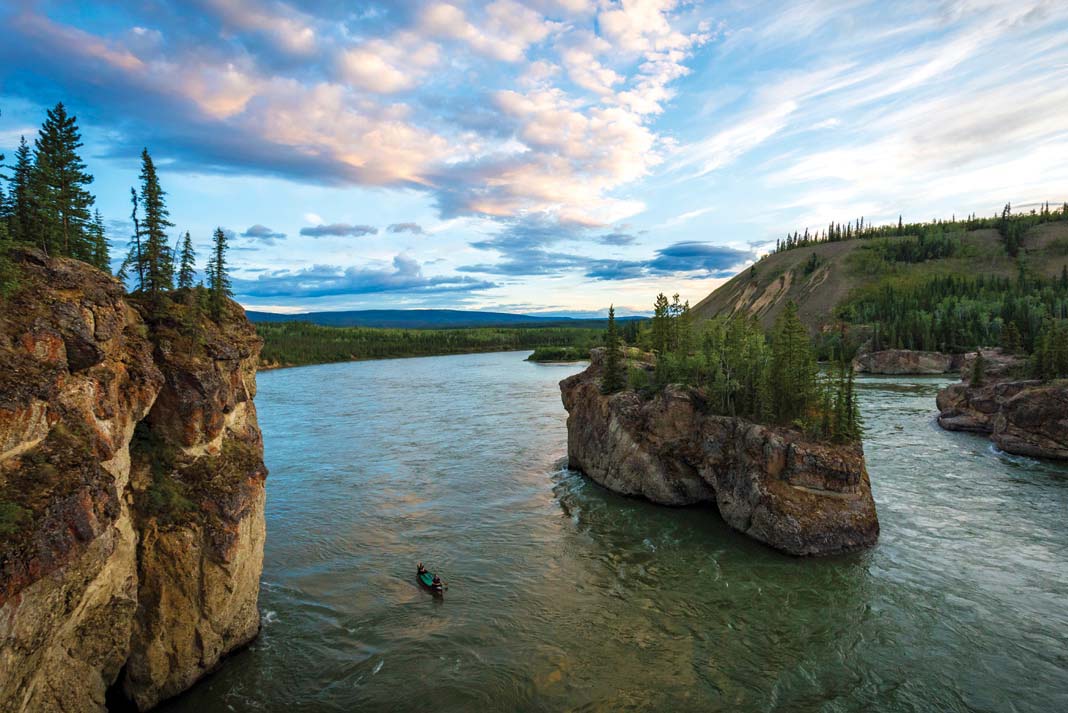
A couple hours outside Carmacks, we approach Five Finger Rapids, a major obstacle for gold rush stampeders where steamwheelers wrecked and men died. Due to low water levels, it’s the first year where no boats capsize.
As the river valley meanders, we hopscotch under rain clouds, spotting moose, beavers and a porcupine. We meet only one paddler who isn’t racing. This grizzled canoeist is on his way to the Bering Sea, three weeks distant. A yellow Lab dozes in his cedarstrip, chin on the gunwale. We tell the paddler about the race, he tells us we’re crazy.
A CANOE ENTERS THE FIVE FINGER RAPIDS NARROWS AT 11:23 P.M.| PHOTO: JOEL KRAHN
EAT, DRINK, PADDLE
Evening brings a 50 mph headwind. We paddle directly into it for hours. Some competitors pull off the river to wait it out and we begin to catch up and pass a handful of boats. Creedence and Stan Rogers blast from our waterproof speakers, and when we get tired of them we take turns singing—terribly.
It’s dusky and drizzling around midnight when the canoe wobbles and I glance back. Geoff is sitting wide-eyed and upright, his paddle across his knees. “Did you just fall asleep?” I ask. He gives a silent nod. A sleepy lean of Geoff’s 6’8” frame would certainly pitch us into the frigid water, and the river here is wide, with steep banks and swift current. A swim would be dangerous, and the end of the race. “Eat. Drink. Paddle,” I say. Energy in, energy out—consuming and moving is the only way to stay awake.
Close to 3 a.m. we spot the campfire at Kirkman Creek, a tiny flickering beacon in the blue and black half-night. We’re elated to have made it. This is a mandatory three-hour stop before the final push to Dawson. A jovial man dressed head to toe in camo welcomes us; another with a Yosemite Sam mustache offers hot soup.
We set up our tent and take off soaked clothes, feeling blessed for the opportunity to drop into unconsciousness. Climbing naked into my sleeping bag, the heaviness of sleep drowns me. My hands throb, my back aches, my skin is cold and clammy. I’m exhausted, yet filled with a dreamy, joyous feeling radiating from the middle of my stomach. This is an adventure in one of my favorite places in the world with the man I love. “I’m so happy,” I tell Geoff. And then I’m out.
JUST KEEP PADDLING
Two-and-a-half hours later, The “Good morning” trill of a volunteer comes too soon. I sit but can’t summon the motivation for anything more. Exhaustion-induced euphoria has evaporated. It’s cold. Aches have stiffened. Even more disheartening, it’s still raining. Geoff buries his face in the wall of the tent. We both ask if the other wants to continue.
“We’d wake people and they’d get angry, they’d want to fight us,” longtime Kirkman Creek volunteer Greg Spenner told us later. “Others were confused—they didn’t know where they were, or why they were there.”
We know why we’re here. It’s just 150 kilometers to Dawson, nine more map pages. There’s nothing to do but paddle. We pull on damp clothes, pack up soaked gear and push off under a grey sky. Though it’s just a fraction of the distance, the final section of the race is the crux for many. Exhaustion, slow current and navigating islands and gravel bars as the river widens takes its toll. I can barely keep my eyes open. The joy of adventure is forgotten; it’s the promise of real sleep that keeps us doggedly stroking away.
River curves stretch for mind-bending miles; we chase current only to have it seemingly disappear. I have a rushing sound in my ears and the visual sensation of starring in a stop motion film. Geoff is downing Advil to battle seizing muscles. We round a bend just before the 60-Mile checkpoint, the last of the race, and come face to face with a headwind so strong, whitecaps form as the river reverses on itself. Everything is loud and bright and astonishingly hard. I’m not sure whether to laugh or weep.
Just keep paddling.
When we finally spot the modest rooftops of Dawson, I feel kinship with the stampeders who must have seen a similar sight and felt the relief of respite at the end of a hard journey. There are cheers and a horn marking our arrival. We feel strong and weak, powerful and vulnerable.
It’s the first canoe trip where I’m happy to reach the take-out. It’s Saturday at 7:09 p.m. Our official finishing time is 69 hours. We had started paddling Wednesday at noon. We’re in 39th place of 58 teams. We hug, kiss and high-five. We are so done.
“THERE ARE STRANGE THINGS DONE IN THE MIDNIGHT SUN.” —ROBERT SERVICE | PHOTO: HARRY KERN
ADVENTURE, GLORY, AND GOLD
With its painted building facades and dusty roads, Dawson has succeeded in appearing pleasantly trapped in 1898. Amongst the RVers and period-costume-wearing tourist office employees, the paddlers are easy to spot. Fascinating is the change in the faces of competitors we met just three days prior—everyone’s aged. Eyes sunk, cheekbones protrude and fine lines amass.
Everyone sleeps.
At the banquet the following day we discover a race beyond our own limited perspective. A tandem kayak won in 44 hours and 51 minutes; a tandem canoe hot on their stern finished just 42 minutes later.
How did teams speed to Dawson a full 25 hours before us? There’s a mix of strategies we learn, including the high-tech, such as GPS units used to find the fastest current, and the dedicated—some wore condom catheters. Then there was common sense. “You don’t get out of your boat, except for Carmacks and Kirkman Creek,” advises Gaetan Plourde, one half of the winning tandem canoe team. Marathon canoeing experience helps.
When I ask who plans to return next year I get a variety of responses. Some can’t wait, others tell me the race was psychological torture, and swear never to come back.
“No one else will understand what we went through unless they’ve also done it,” kayaker Patrick Novak tells me. We’re standing in the Downtown Hotel bar, watching our comrades shoot back Dawson’s infamous Sour Toe Cocktail—a shot of liquor with a preserved human toe added as garnish. I agree.
The emotional roller coaster the race provides is fascinating and devastating. In the past 72 hours, we’ve all glimpsed ourselves at our strongest and weakest—it’s not an experience anyone forgets. And it might be a little addicting.
“Let’s do it again next year,” Geoff suggests as we walk back to our cabin under a sleepless sun.
“Or how about with a voyageur team—wouldn’t that be fun?” I ask. Though we’re in enthusiastic agreement, it’ll be another four days before the tingling in my hands goes away and Geoff can raise his arms above his head.
Why do it? The same reason people have always gone to Dawson—the promise of adventure, glory and gold.
Kaydi Pyette is the editor of Canoeroots.
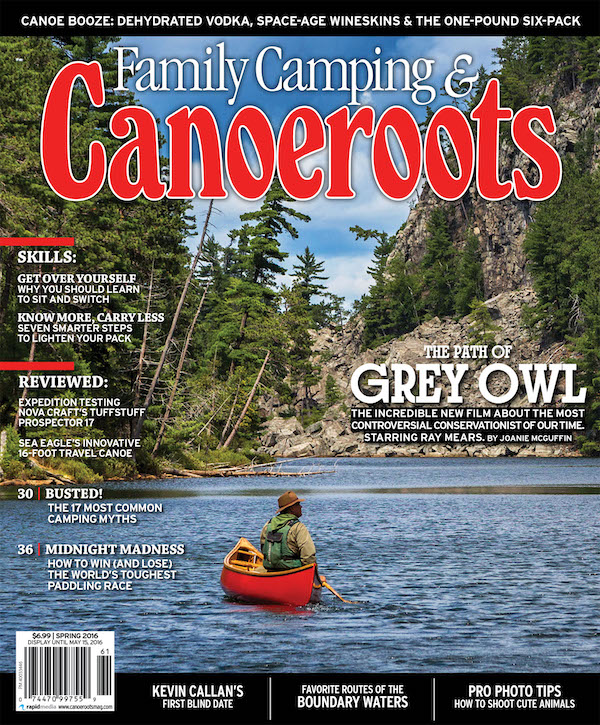
This article originally appeared in Canoeroots Spring 2016 issue.
Subscribe to Paddling Magazine and get 25 years of digital magazine archives including our legacy titles: Rapid, Adventure Kayak and Canoeroots.
Mariann Saether is on fire. After swooping in and grabbing gold at her first-ever Sickline race in 2015, we caught up with Saether and learned there’s way more to this powerhouse than paddling. At 35, Saether is a full-time teacher, a writer, an academic and more, on top of being a pro athlete. Here’s how she makes it all happen.
GET FIT
Saether attributes her success at the 2015 Sickline Race to a simple fact: “Being fitter than ever before.” Getting to that point was no easy feat, but Saether seems to see athletics the way most of us see breathing—a basic part of everyday life. Growing up in Otta, Norway, she played handball, rode horses, performed in dance shows and musicals, did synchronized swimming, snowboarding and, finally, baton twirling. “It’s a Norwegian thing,” she says with a laugh.
On top of paddling every single day, leading up to Sickline Saether hit the strength training hard. “Circuit training, weight lifting, push- ups, pull-ups, sit-ups, squats—it all makes a difference when I’m on the water,” she says. Rounding it out was her routine of running, yoga, on-water interval training and slalom practice.
STAY CENTERED
“Before a competition I can’t really talk to people. I need to be really focused on myself and contain my energy,” Saether says. The habit got her into a bit of trouble when she first started competing in the U.S.—as others chatted in the eddy and cheered each other on, Mariann sat quietly on the sidelines. They thought she seemed too serious, even unfriendly. As time went on, they learned it’s just how she needs to prepare. As others throw high fives, Saether quietly imagines every stroke of the course. “I think about where to pull and where to relax, and I make a plan B—if I fuck up that move, what am I going to do?” she says.
“It’s the same whether it’s a race or just running the river. At a big rapid I don’t just walk up to my kayak and jump in and go. I always take a minute to visualize.”
FIND BALANCE
“When I started kayaking it felt like people just started seeing me as ‘the kayaking girl,’” says Saether. But there’s much more to her life than that. In her nine years of post-secondary education, Saether has earned a degree in medieval history, studied philosophy, psychology, Norwegian, English and Spanish. “I think maybe the next phase of my life has started, where I’m not satisfied with just being a kayaker for the rest of my life,” she says. This year Saether is teaching history, science and Norwegian classes to 16- to 19-year-old students, and she hopes to one day make her living as a writer.
REMEMBER WHAT IT’S ALL ABOUT
“When I go out on the river, it’s a place to breathe and it’s a place to relax and it’s a place to forget about all the normal real-world stuff. It gives me a chance to reenergize. It’s an inner thing—I just have to do it,” Saether says. Though she loves other sports, Saether says nothing compares to the bliss she feels when she’s paddling.
“There’s no other time my mind is completely blank. Especially when I run a big rapid—it blacks out everything else. When I was heading in to the crux of the Sickline course I could hear the crowd start cheering and yelling and whooping, but as soon as I entered the whitewater part, I heard zero. Nothing. In a way it’s meditation—a way of kick-starting the brain. It gives me a lot of energy. It gives me a lot of peace.”
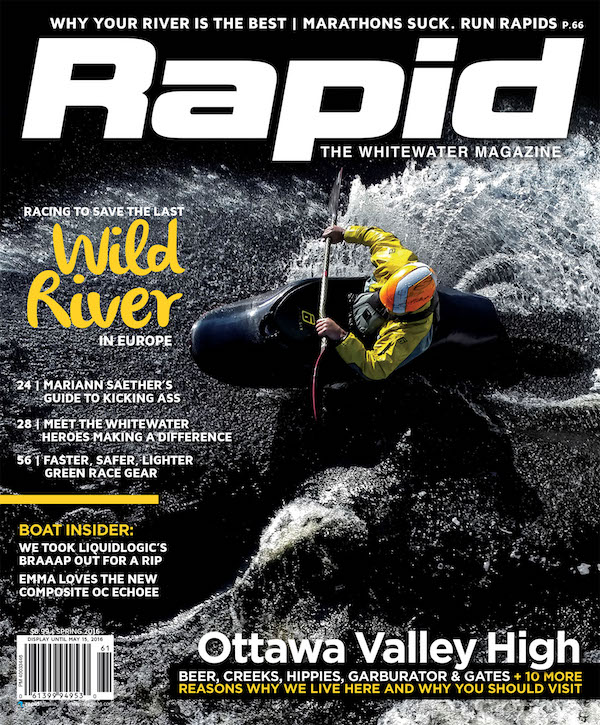
This article originally appeared in Rapid Spring 2016 issue.
Subscribe to Paddling Magazine and get 25 years of digital magazine archives including our legacy titles: Rapid, Adventure Kayak and Canoeroots.
This is where the magic happens. Ontario Sea Kayak Centre co-founders Dympna Hayes and James Roberts have transformed their cozy home and 16 acres of rugged Canadian Shield into one of the country’s premier kayak schools and outfitters. From their 400-square-foot basement gear room, the couple outfits trips in their home waters of Georgian Bay as well as Baja, Norway, Saguenay and Vancouver Island. What’s their secret to managing all that gear? “Every season, look at the gear you have and what you actually used. Then get rid of the gadgets that you didn’t,” Hayes pauses and exhales her contagious, rapid-fire laugh, “so you can buy more gear!”
1. Commercial shelving from a defunct Target store is the ultimate gear room pick. “It was the day before they were closing for good and there was nothing left except the store fixtures,” recalls Hayes. “The store manager was so taken with our story, she let us have two aisles—$6,000 worth of shelving—for $60.”
2. Hayes uses a dive slate to teach dead reckoning, and to record departure and arrival times for her own navigation. It’s equally useful for writing tidal information, making student notes during on- water lessons, and jotting down ideas that pop into her head on long tours. “Plus it works in rain and waves and cleans quickly with a handful of sand.”
3. “If I’m sore and damp, I can’t be cheerful and take care of other people’s comfort,” Hayes says of her favorite camp luxury, a Helinox chair. Roberts offers his own creative recommendation: “Use it in your tent for sleeping. Just fold the legs and leave the chair sling assembled—it cradles your pillow holding it under your head, makes a perfect cubby to keep your headlamp and book close at hand, and keeps wet tent walls and polar bear jaws off your head.”
4. Hayes has half a dozen pragmatic uses for yoga mats on kayak trips. “They’re perfect for kneeling when loading your kayak, can be used as a heel pad in your boat, make a fine welcome mat for your tent, and add insulation and dryness under your sleeping mattress.” She’s also a yoga instructor and offers yoga kayak trips on Georgian Bay throughout the summer. “I’m going to get all hippy yoga freak on you now,” she teases. “After sitting all day on the water, it feels great to plant your feet and ground yourself to the Earth.”
5. “The Outback Oven works just like a real oven—we’ve done seared beef tenderloin, baby potatoes and baked brie in these babies.” And, of course, it’s perfect for baking. “You can have fresh, warm bread on the last day of a two-week trip, or on any cold, rainy day to lift spirits.”
6. “Ladies, do yourself a favor—get a Freshette and a drysuit with a front relief zip. From behind, it’s so discrete that you’ll look like a dude.”
7. Roberts recommends the Evernote app to keep meticulous lists and impress grannies in the grocery store. “I cut and paste menu plans and gear lists from trip to trip—it adjusts the amounts for the number of participants and generates custom shopping lists.”
8. Hayes and Roberts spend some 50 nights per year in their Hilleberg Staika tent. “It’s our all-time favorite tent. It stays put in squalls on Georgian Bay’s bare rock islets, keeps us bone-dry in West Coast rainforests, and didn’t buckle under insane winds in Norway’s fiords.” After years of scrimping on shelters, the couple took a cue from their well-heeled, Hilleberg-equipped guests. “What a difference,” says Hayes, “seriously the best money I ever spent.”
9. These 10-year-old merino long underwear represent Hayes’ favorite thing about outdoor gear. “It isn’t throwaway—because it has to be something that you can fix while you’re out on trip, it’s made to last, and it’s made to be repairable.” She says of her stripy Smartwool, “I can’t see these ever falling apart—I think I’ll have them for 20 years.”
The Ontario Sea Kayak Centre is located in Parry Sound, Ontario. Every September they run Canada’s longest running traditional paddling event, Ontario Greenland Camp. Watch THE CANOE, an award-winning film that tells the story of Canada’s connection to water and how paddling in Ontario is enriching the lives of those who paddle there. #PaddleON.
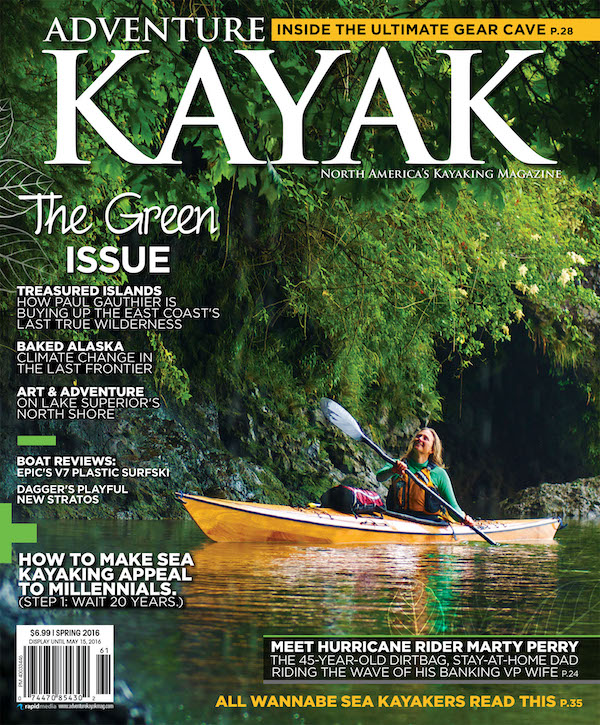
This article originally appeared in Adventure Kayak Spring 2016 issue.
Subscribe to Paddling Magazine and get 25 years of digital magazine archives including our legacy titles: Rapid, Adventure Kayak and Canoeroots.
A canoeist practices the sit-and-switch paddling technique from the middle of a solo canoe. | Feature photo: Photo: Pål Krogvold
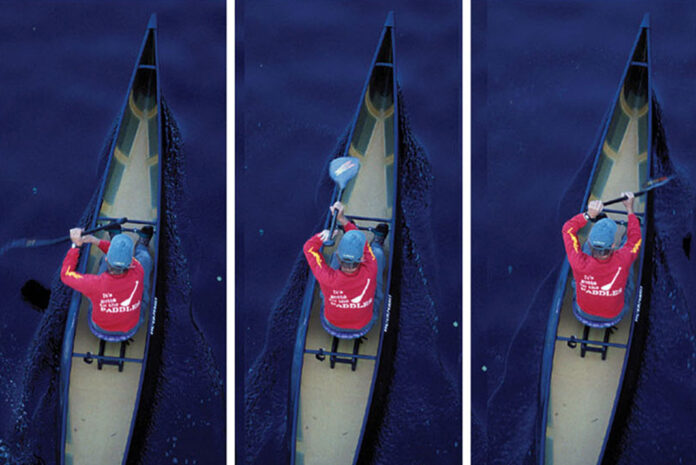
Paddling a loaded, two-person canoe doesn’t just have to be an art expose but it is okay for it to be an efficient process as well. I still recall the day when I was first introduced to the sit-and-switch paddling technique. I was trying to cross Churchill Lake on Maine’s Allagash River waterway in a headwind. My bow partner was tiring and I was in the stern, using the traditional J-stroke. Then we heard “hut, hut, hut” coming from behind.
There were four paddlers in two canoes coming fast. They had shorter bent shaft paddles and they were switching sides every 10 strokes. They did not appear to be working hard, but they easily passed us. Two hours later, when we finally reached camp, we found our sit-and-switch friends with their tents already set up. They were fishing!
Learn the sit-and-switch canoe paddling technique
The sit-and-switch method offers more speed and efficiency than the J-stroke. There are less steering corrections to slow momentum, allowing both paddlers to power forward. You don’t have to participate in races to appreciate it. If you’ve ever crossed a big lake, bore into a headwind or just tried to reach that next campsite at the end of a long day, this technique should be in your arsenal.
Getting started
The good news is that the sit-and-switch stroke is not hard to learn.
Opt for a canoe with comfortable seats. Foot braces are optional but will increase performance.
Use a bent shaft paddle. It’s more efficient, and the stout blade allows for a faster cadence.
Adjust any gear you carry to keep the canoe as level as possible.
Partners paddle on opposite sides, switching every eight to 12 strokes.
Partners should time their strokes with each other; the bow paddler sets the pace.
The stern paddler calls the switches by calling “switch” or “hut.”
A canoeist practices the sit-and-switch paddling technique from the middle of a solo canoe. | Feature photo: Photo: Pål Krogvold
Sit-and-switch stroke basics
Like any good forward stroke, power comes from the major muscle groups of the back, shoulders and torso to pull the canoe through the water.
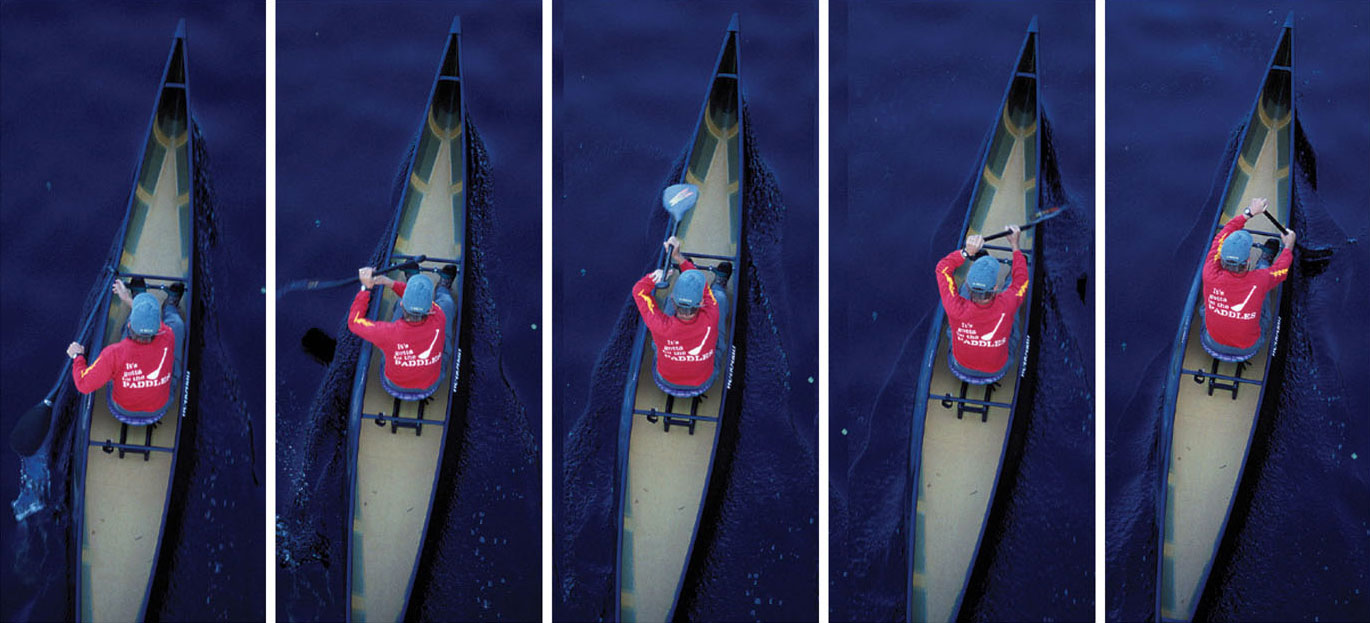
Getting the paddle in the water and anchoring it is called the “catch.” Bury the blade in the water as early as possible in your stroke by reaching forward with the lower arm and dropping that shoulder as you start the stroke.
Simultaneously, reach up and across with the upper arm, so that the upper hand is directly over the paddle blade, essentially keeping the paddle perpendicular to the water. Let the upper arm flex slightly, and keep the upper hand no higher than the top of your head. As you pull the canoe forward, drive down and slightly forward with the upper arm. Use your arms as levers to get power from your torso and shoulders.
Keep your stroke short. Once the elbow of your lower arm reaches your torso, slip the blade out to the side and reach forward again to begin your next stroke.
Aim to sit nearly erect with a slight forward lean. Do not lunge forward or bend at the waist, as this causes the canoe to porpoise up and down inefficiently.
Keeping the canoe going straight is a matter of calling switches at the right time. The canoe tends to gradually track away from the side the stern paddler is paddling on. The remedy is to switch sides every eight to 12 strokes. Solo paddlers may have to switch sides more often.
After the call to switch, finish your current stroke, then bring the shaft hand upwards, while releasing the paddle’s grip end with your top hand and swinging the paddle over the canoe to the new side. By the time the paddle is passing the centerline of the canoe your hands should be in their new positions so you can start your next stroke without breaking rhythm. The switch will take some practice to do with finesse at speed.
This article was first published in the Spring 2016 issue of Canoeroots Magazine. Subscribe to Paddling Magazine’s print and digital editions, or browse the archives.
A canoeist practices the sit-and-switch paddling technique from the middle of a solo canoe. | Feature photo: Pål Krogvold
Hailing from the north shore of the Gulf of St. Lawrence, Michael Callaghan is the founder of paddlesports school, Magtogoek Écotours. He’s kayaked on the West Coast from Baja to Alaska, but always returns to the quiet beauty of Québec.
With 1,200 kilometres of sparsely inhabited coastline, Quebec’s North Shore is a little-known kayaking paradise. Locals refer to these frigid waters—the yawning mouth of the mighty St. Lawrence River—as the ocean.
When I was young and foolish, I would venture out in jeans and rental kayak, as clueless about Gore-Tex as I was about the capricious weather and formidable currents. In the decades since, I’ve safely explored much of the North Shore’s cloudberry coast.
I’m constantly amazed by the region’s pure, unspoiled wilderness. On an average day, I can observe several species of whale, from beluga to blue. I’ve also learned about the Innu First Nation’s culture and enjoyed the boundless hospitality of the North Shore’s people. With a population of just 55,000 on a territory twice the size of England, visitors are always welcome.
Tadoussac, gateway to the region, is a three-hour drive east of Québec City. Beyond here, the road unwinds for another nine hours before stopping abruptly at a sign that reads, simply, “The end.” To explore further, you’ll need to take a ferry, plane or kayak.
PHOTO: LUC ROUSSEAU
SUGGESTED TRIPS
If you have a day visit Tadous- sac and Les Bergeronnes, the whale-watching capital of Eastern Canada. Observe blue, fin, minke, humpback and beluga whales from your own kayak, or with a guided tour.
If you have a long weekend tour the spectacular Saguenay Fjord. From Ste-Rose- du-Nord, paddle and camp beneath towering cliffs and share the waters with beluga and seals.
If you have a week explore Mingan Archipelago National Park Preserve’s chain of an- cient rock islets. A crown jewel in the Canadian parks system, the Mingan Islands’ limestone sea stacks, puffins, gannets and Innu First Nation culture intertwine along 100 kilometers of coast.
If you have two weeks take the coastal ferry from Sept- Îles to Harrington Harbour. Continue northeast up the roadless coast to St-Augustine for 10-plus days of isolated, world-class paddling through hundreds of wild islands.
PHOTO: LUC ROUSSEAU
PHOTO: ERIC MARCHAND
QUEBEC NORTH SHORE STATS
AVERAGE SUMMER HIGH: 15°C (July) WILDLIFE: Peregrine falcon, wolf, black bear, lynx, moose, seal and whales. EXPOSURE: Ever-present fog, rapidly changing weather, water temperature 2–4°C year-round. Exposed coastline with infrequent landing opportunities. TIDES: Tidal exchange reaches 6.5 meters in Saguenay Fjord, 3.5 to 4 meters everywhere else; cold-water currents to six knots in Mingan Islands. DIVERSION: Don’t miss the Marine Mammal Observation Centre (CIMM) in Tadoussac. The Innu Nikamu aboriginal music festival, held every August near Sept-Îles, is the largest in Canada. OUTFITTERS: Mer et Monde Écotours—day, sunrise and evening tours in Tadoussac. Kayak Latins du Nord—guided kayak camping in Saguenay Fjord. Magtogoek Écotours—instruction, day trips and expeditions. MUST-HAVE: Drysuit, satellite phone and an ability to “nowcast“ the weather.
This article was originally published in Adventure Kayak, Volume 16 • Issue 1.
This article originally appeared in Adventure Kayak Spring 2016 issue.
Subscribe to Paddling Magazine and get 25 years of digital magazine archives including our legacy titles: Rapid, Adventure Kayak and Canoeroots.
Every paddler and camper should know how to make a fire when the weather turns wet and nasty. Jason Marleau from Algonquin Bound Outfitters (algonquinbound.com) just south of Algonquin Provincial Park, Ontario, shares his top tips for getting a fire going when it really counts.
The Vjosa River is a gift to the earth, as powerful as a mountain and yet subject to human agendas. | Feature photo: Anze Osterman
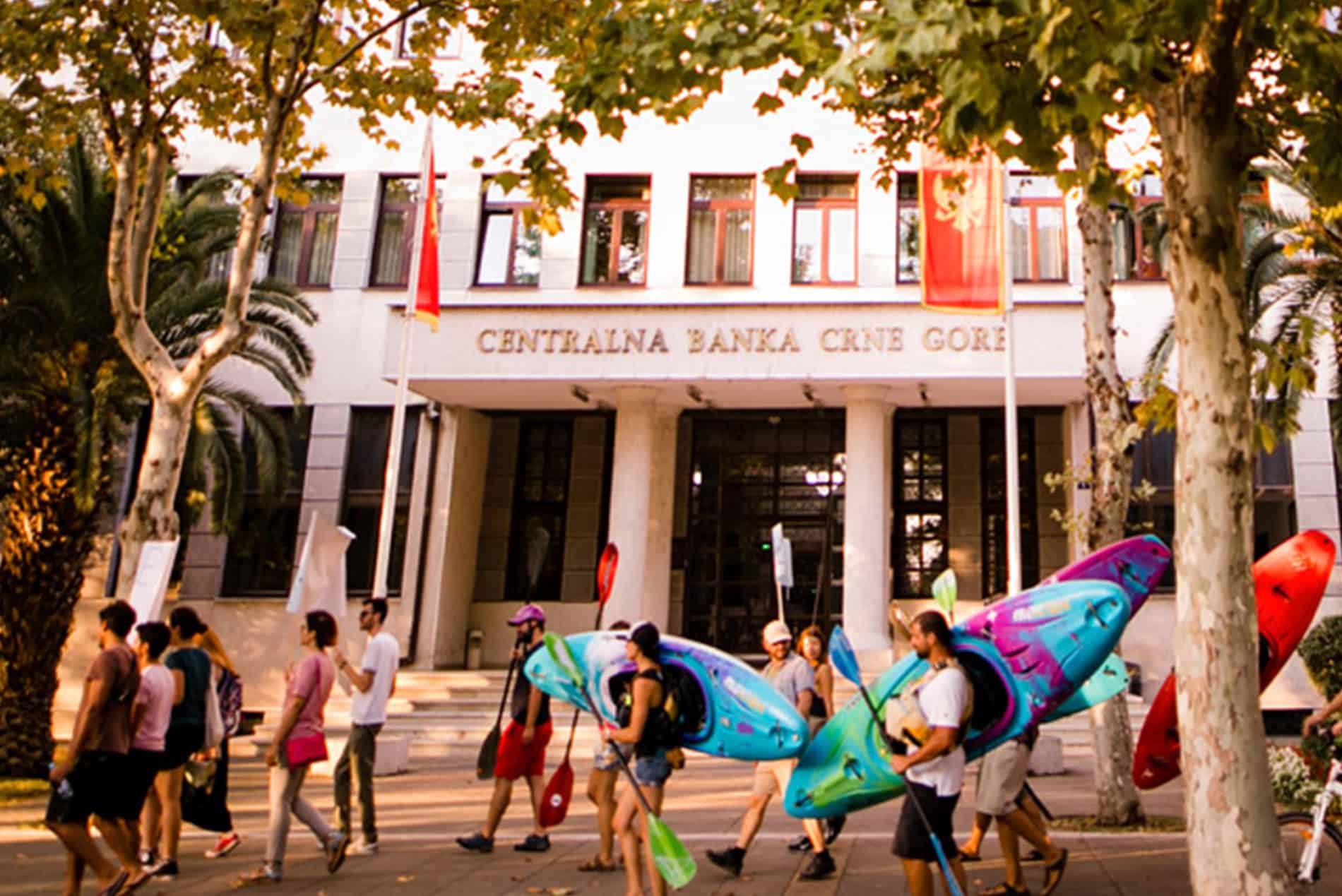
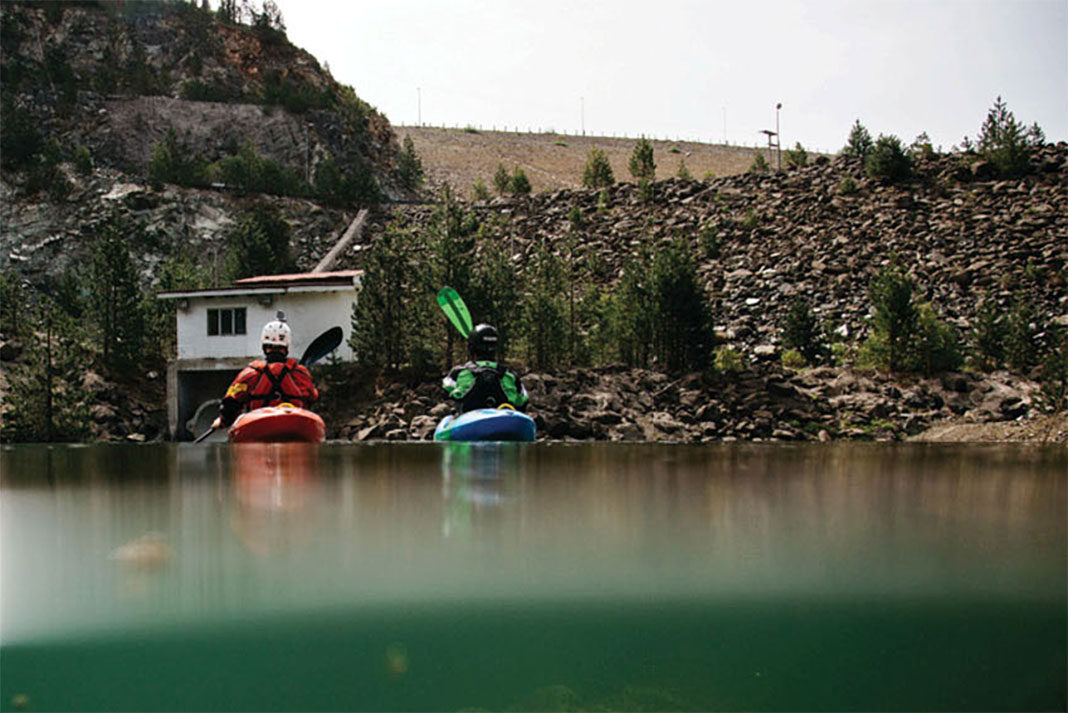
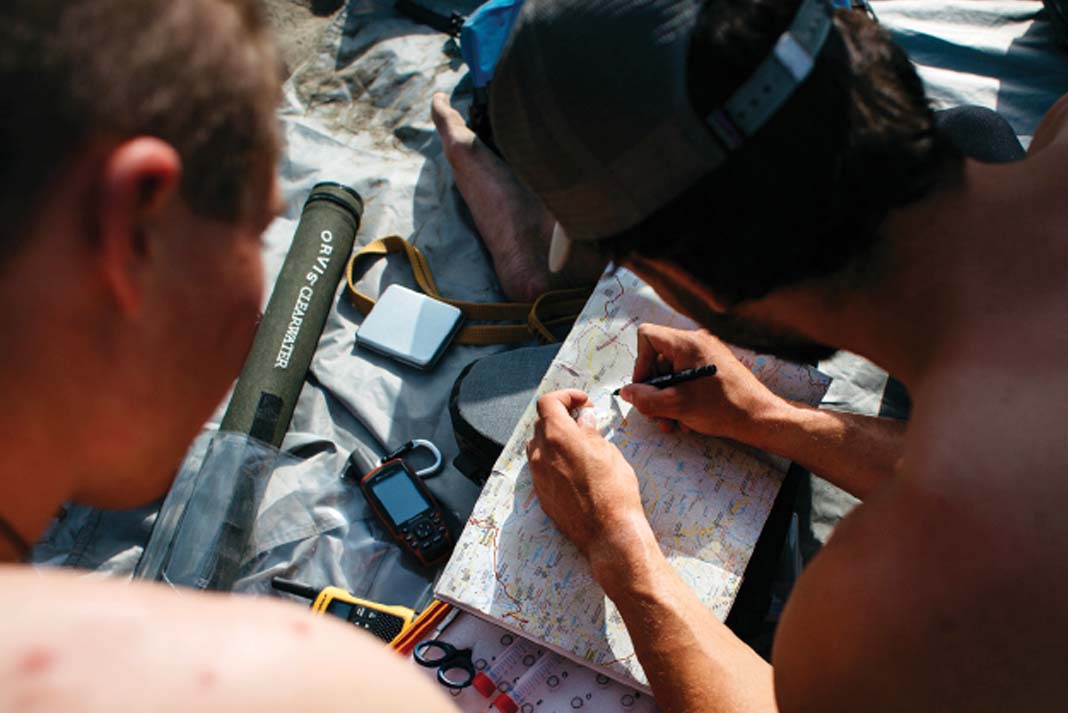
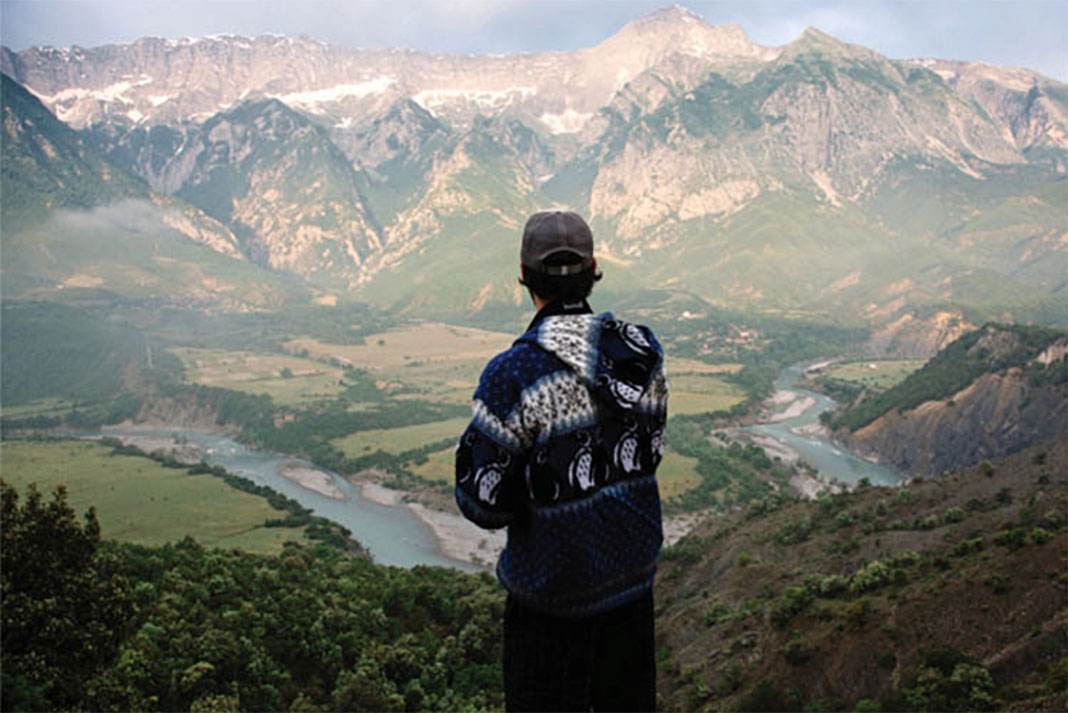
Go with the flow into the unknown, to see what the blue line on the map has to tell you. This is the mantra that leads former Olympic Slovenian rower Rok Rozman and fellow kayaker and friend Zan Kuncic to their dead-end predicament. They had been following a steadily growing stream of melting snow high in the remote Pindus Mountains of Greece for only a few hours, before their route widened into a lake held back by a of a wall of concrete boulders.
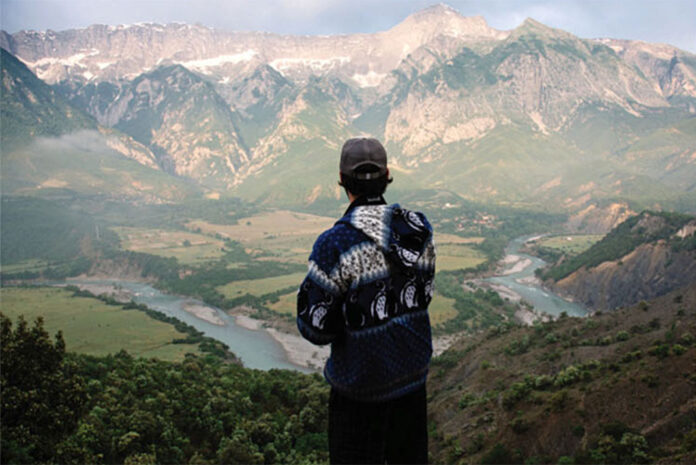
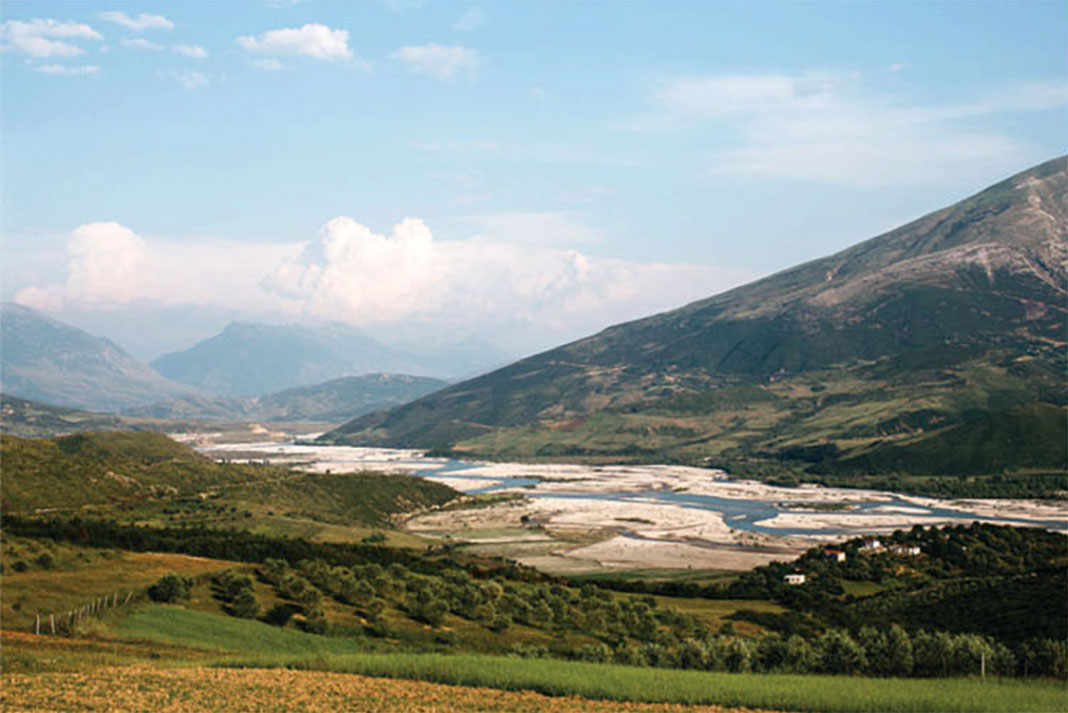
Unable to follow the flow any further, they sit in their river runners staring up at the man-made barrier that halts their path down the mountain valley. This is the only operating dam on the Vjosa, the only blemish on an otherwise perfectly intact river system. Aside from this, the Vjosa remains one of the last truly wild rivers in Europe.
The Vjosa and its many weaving tributaries, known as the Aoos in Greece where it begins, is like an ancient and deeply rooted tree, with wild and untamed branches flowing down from the Pindus Mountains towards the Adriatic Sea—but perhaps not for long. The flow of the Vjosa is slated to supply 38 hydroelectric power plants, all part of a looming dam tsunami that has already washed across Europe.
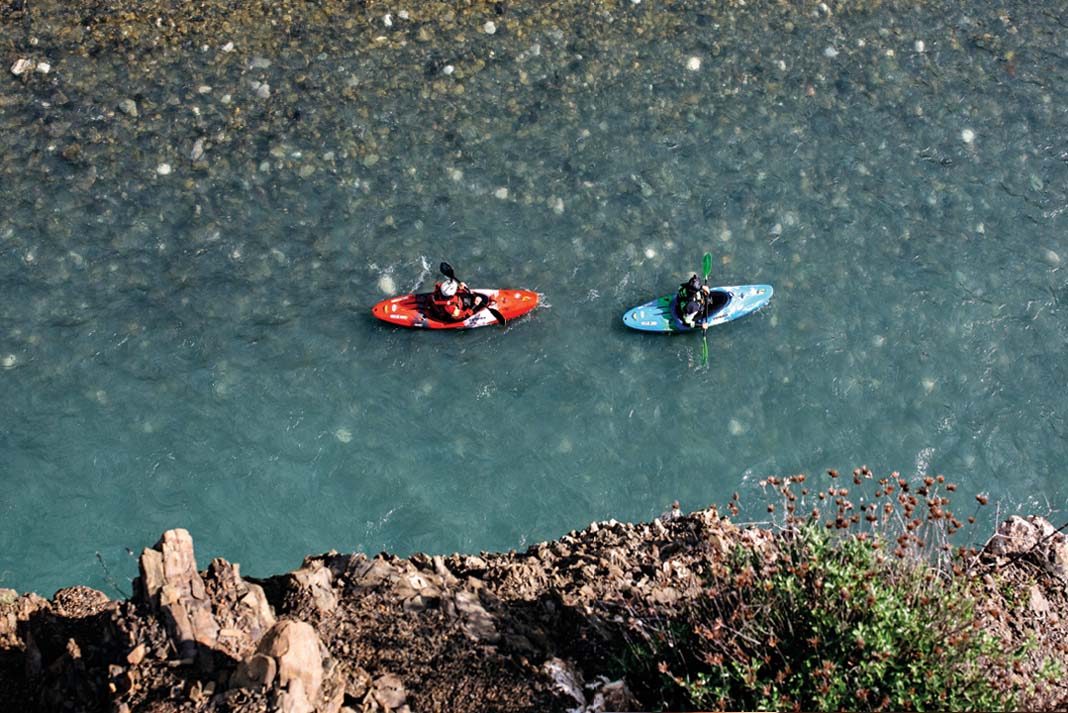
Filmmaker Anze Osterman stands on the banks to get the shot composition just right. He and Nejc Miljak plan to document Rozman and Kuncic as they paddle all 168 miles of the near pristine river in hopes of persuading the world that this one last vestige of wilderness is worth saving.
“It’s like a dinosaur. You wonder, how could it survive?”
Together calling themselves the Leeway Collective, they approached Ulrich Eichelmann, a passionate, forthright and award-winning conservationist who has been working for the protection of rivers for 26 years, fighting dam construction all over Europe. They offered to be ambassadors for the Save the Blue Heart of Europe campaign—coordinated by Eichelmann to conserve Balkan rivers—to show the world what it would miss if the Vjosa were to be squeezed into power lines.
Even if every nature conservationist put the Vjosa Projet as their number one issue, they would still be outnumbered. | Photo: Anze Osterman
To Eichelmann, the Vjosa is a gift to the earth, as powerful as a mountain and yet subject to human agendas. “It’s like a dinosaur,” he says. “You wonder, how could it survive?”
Water, though, is resilient by nature. The Pigai Aoos tributary dam where Rozman and Kuncic are left stranded cuts off six miles of riverbed, but then a stream forms out of the earth, joining another and gaining power and momentum with each passing bend in the river. The Vjosa is reborn.
The dam tsunami
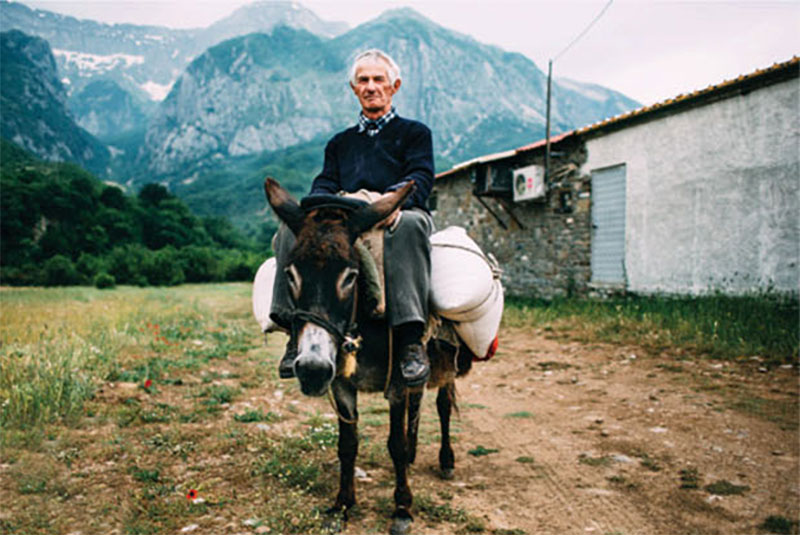
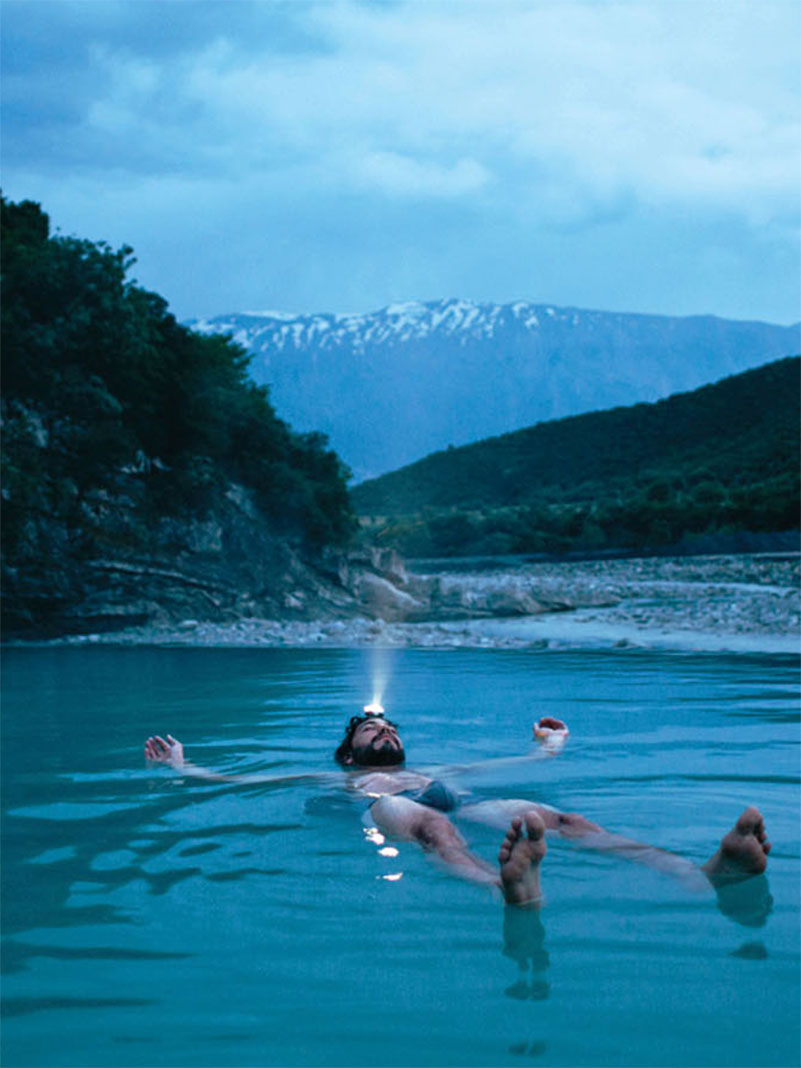
After many long days of paddling, Rozman and Kuncic take a break in Albania to explore one of the scenic bridges that passes over the Vjosa. Their kayaks capture the attention of a few men herding sheep nearby. Rozman, a gregarious people-person, is not at all deterred by the lack of a shared language. The converation is a back-and-forth banter of wild gestures, and before they know it, they’re following one of the shepherds and his overladen donkey along the Nemercke mountain ridge to the small riverside village of Kanikol.
Inside the man’s home they are introduced to a liquid called rajika, which bears a striking resemblance to vodka. In no time the ukulele and tambourine come out, and the once quiet shepherd and his wife and brother do their best to deliver as many hymns of Albanian beauty and pride as the rajika will permit.
“There is more than one parallel when rivers and people are compared,” says Rozman. “Both are friendly and full of surprises.” As Rozman steers the conversation to the Vjosa he notices a look of solemnity and respect come across the faces of the shepherd and his family.
In Kanikol, and so many villages like it, the river is a lifeline—a living, breathing member of the community. They carry it in their bodies and minds as well as in their songs.
Photo: Anze Osterman
Photo: Anze Osterman
It’s an unfortunate predicament. Albania is also in need of the electricity that hydropower could provide.
“Most of the energy never goes to the villages,” says Eichelmann. Instead, the energy is destined for export through transmission lines, which, he says, often lose upwards of 30 percent of the electricity in the process.
“To some, river flow is just something that waits to be squeezed in a power cable so we can produce more and more and more.”
The surrounding Balkan region is slated to host over 2,700 dams, a crushing number to not only the locals, but also the nature conservationists, paddlers and anglers. Yet the Vjosa, with almost all of its tributaries intact, has managed to sustain its natural sediment flow and fish migrations.
“To some, river flow is just something that waits to be squeezed in a power cable so we can produce more and more and more,” writes Rozman in one of his journal entries used in the narration of the film. “They are the ones who don’t nourish their own gardens.”
In many ways it is Albania’s historic isolation that has preserved the Vjosa from development.
Following the Second World War, Albania’s Stalinist leader Enver Hoxha kept the country rigidly sealed-off from the rest of the world. It remained that way for four decades until his death in 1985.
With a leader who wouldn’t trust the outside world, there was no money coming into Albania to invest in dam construction. Neighboring countries began setting up dams at every bend in the river but Albania lagged behind, and suffered economically for it.
“They are still living in the fifties,” says Rozman. He says many of the villagers such as those he met in Kanikol do not even know about the bids that have been placed on the Vjosa just outside their door. As far as they are aware, the river has always flowed and will continue to do so.
Photo: Anze Osterman
The Italian job
Almost three-quarters of the way through the team’s journey, with the smell of the Adriatic Sea almost tangible in the wind, the threat of dams becomes unquestionably real. They paddle through the Kalivac site, the first of the plotted dams to enter the implementation process.
Just after paddling through a massive alluvial plain, signalling the health and positive sediment flow of the river, Rozman and Kuncic enter an area that looks more like an open mine pit than a river. Terraced pyramids are cut into the surrounding hillsides and the tree line has been flattened into submission. The sounds of owls and nightjars are replaced by the hollow echo of their reluctant conversation as they enter the abandoned worksite.
The Kalivac dam construction began in 2007 but was halted when it was only 30 percent complete amidst a flurry of controversy. Francesco Becchetti, an Italian energy and waste removal heavyweight, had intended to sell the electricity to Italy through 60 miles of transmission cables.
For Albania, a country seeking a way into the European Union, hydropower was seen as a green solution and a way out of energy insecurity—never mind the deforestation, soil erosion and biological disruption.
Photo: Anze Osterman
Photo: Anze Osterman
“But in 2009, something strange happened,” says Eichelmann. The value of electricity in Europe collapsed and in an instant Becchetti halted the project. Since then, Becchetti has been accused of fraud-related offences and money laundering for dealings related to the Kalivac project. The Deutsche Bank, the second half of the joint venture project, also pulled out.
The Kalivac is a sleeping giant and Rozman and Kuncic paddle through the abandoned construction site as if afraid of waking it. “I know that this is a David and Goliath situation, as always, and it’s not very likely that we’ll win,” says Eichelmann. “But nevertheless, until the dams are finished and the reservoirs flooded, we should not stop our fight.”
Science may save the Vjosa River
If the rest of the world is any indicator of how this struggle ends, it’s going to be an uphill battle for conservationists like Eichelmann and the Leeway Collective team.
But they have a few unlikely heroes on their side—for one, trout.
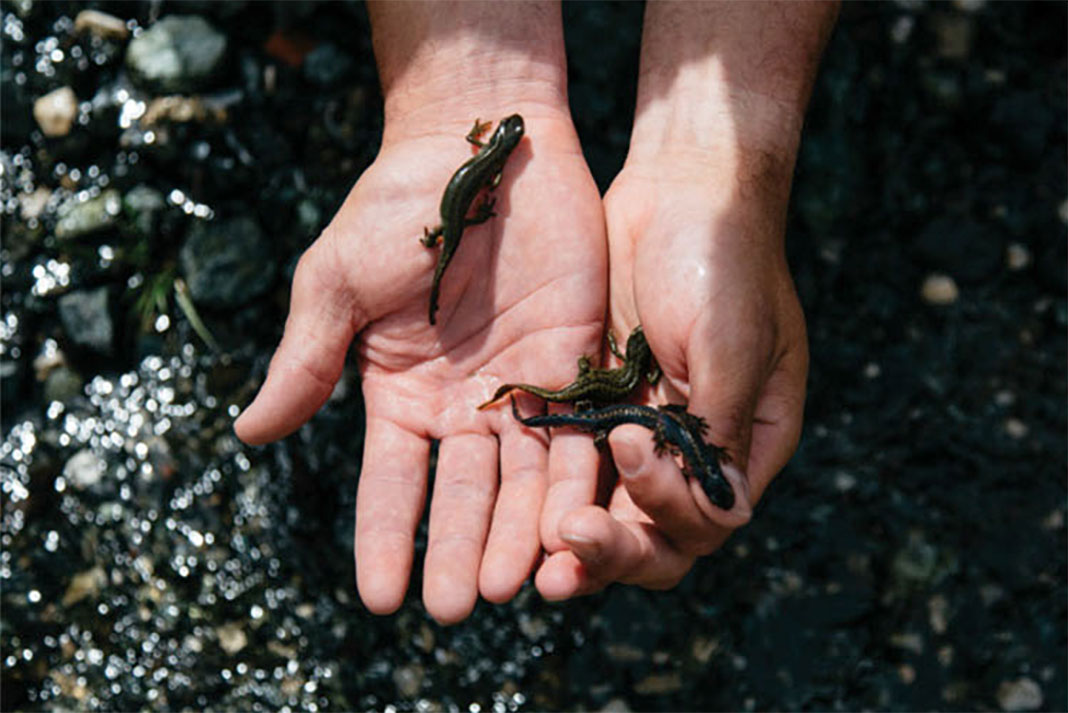
Before they left, Rozman, who is currently completing his masters in ecology and biodiversity, met with the Balkan Trout Restoration group in Slovenia and offered to collect trout samples on their journey, at no cost.
“If we find a new subspecies or something, then it’s easier to protect the river,” says Rozman. “Then you have legislation that helps you protect the river.”
Of the five tissue samples he brought back, three contained different species of trout. The results, while preliminary, indicate different evolutionary origins and a huge potential for genetic diversity.
“If high diversity of the trout population from the Aoos River is also confirmed on a larger scale, this will be a firm argument for protecting and preserving this population,” says Ales Snoj, a senior research associate at the University of Ljubljana and member of the Balkan Trout Reservation Group.
The Vjosa River is a gift to the earth, as powerful as a mountain and yet subject to human agendas. | Feature photo: Anze Osterman
For Slovenia’s Sava River, a decision on a chain of hydroelectric power plants is currently pending, waiting for an assessment on the stability of the Danube salmon population there.
Even if every nature conservationist put the Vjosa project as their number one issue, they would still be outnumbered. For Eichelmann, the key is joining forces with the kayaking and fishing communities.
“For the Vjosa to stand a chance of surviving, all groups must work together.”
“The funny thing here is that the three groups—nature conservationists, fishermen and kayakers—normally have a bit of a rivalry. They don’t like each other very much,” Eichelmann explains. The anglers resent the conservationists and kayakers for disturbing the still waters and the conservationists resent the kayakers and anglers for disturbing nature.
But, he says, for the Vjosa to stand a chance of surviving, all three groups must work together.
Photo: Anze Osterman
Balkan redemption
Some foes and allies are less clear. Earlier this year, Albanian Prime Minister Edi Rama announced his support for the idea of the proposed Vjosa National Park, the only wild river national park of its kind. He praised the idea of the park as a pride point for Albania, although his recent actions, sending out a tender for a dam upstream from Kalivac, have suggested he may have other plans for the area.
The Leeway Collective team plan to remind Rama of his spoken commitment at a Patagonia-sponsored event this spring that they’re calling the Balkan Tour. They hope to guide a mass of paddlers on rivers threatened by dam development from Slovenia across seven countries ending on the Vjosa in a massive flotilla. Along the way they will recruit paddlers and ambassadors from various watersports, as well as locals, to sign a petition that will eventually be presented to the Albanian parliament.
“Our love of and dependence on free-flowing, undeveloped rivers and wild places have inspired us to advocate against similar developments for nearly 30 years,” says Mihela Hladin, Patagonia’s European social initiatives manager.
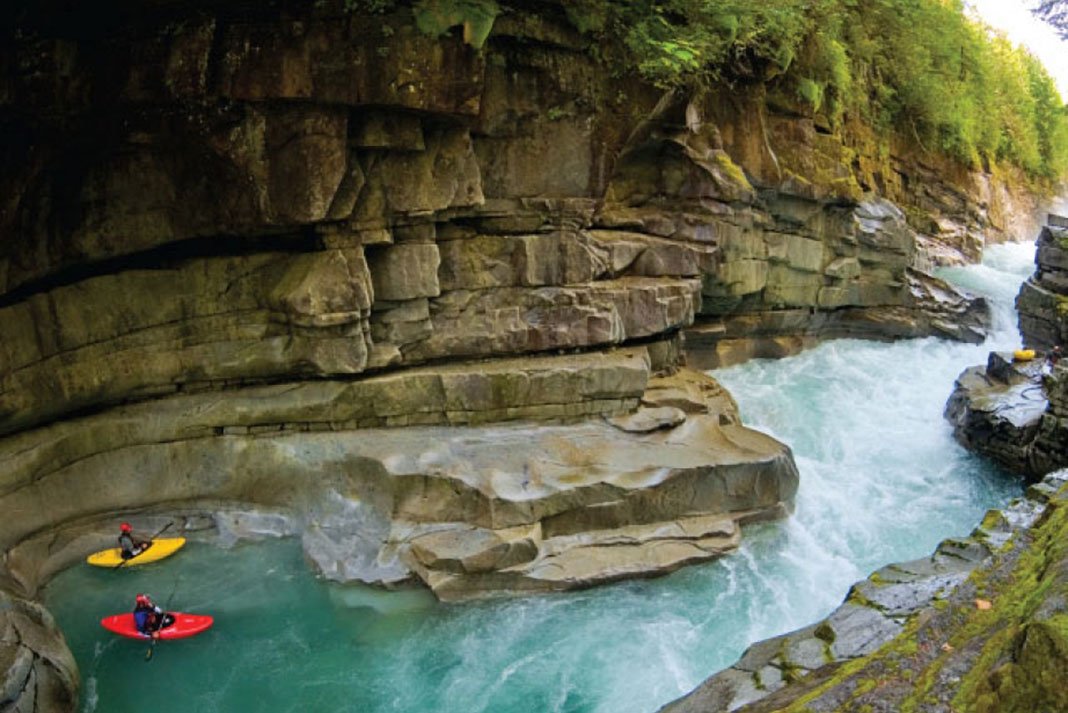
While still in Greece, before Rozman and Kuncic came upon the Kalivac dam site, they found a narrow canyon that continued in darkness for eight kilometers. Rozman says it was filled with some of the most delicate and technical class IV whitewater you could hope for.
As they paddled single file through the deep canyon, the moans and booms of the fast-running whitewater echoed through the darkness. They could almost hear the river breathing in and out, as if in deep slumber waiting to be restored to its full glory.
Katrina Pyne is a freelance writer, photographer and videographer based in Halifax, Nova Scotia.
This article originally appeared in the Spring 2016 issue of Rapid. Subscribe to Paddling Magazine and get 25 years of digital magazine archives including our legacy titles: Rapid, Adventure Kayak and Canoeroots.
The Vjosa River is a gift to the earth, as powerful as a mountain and yet subject to human agendas. | Feature photo: Anze Osterman


 This article first appeared in the May issue of Paddling Magazine. To read more from Paddling Magazine, click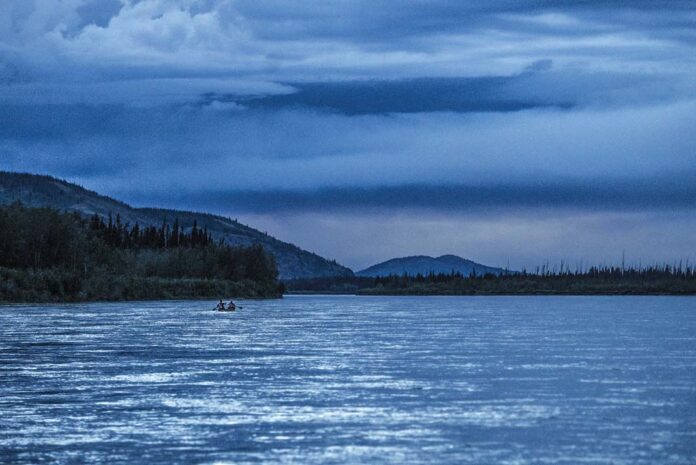
 This article originally appeared in Canoeroots Spring 2016 issue.
 This article originally appeared in Rapid Spring 2016 issue.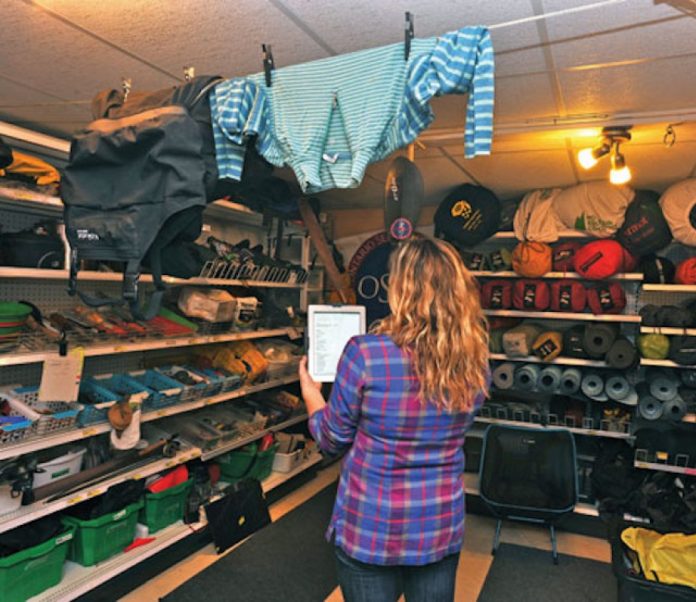
 The Ontario Sea Kayak Centre is located in Parry Sound, Ontario. Every September they run Canada’s longest running traditional paddling event, Ontario Greenland Camp. Watch
  This article originally appeared in Adventure Kayak Spring 2016 issue.