Home Blog Page 255

Surviving Against the Odds

I WILL SURVIVE. | PHOTO: VINCE PAQUOT

My kayak is a survivor. She’s survived surf landings and seal launches; summers stored under blazing sun; cartwheels and preposterous payloads; countless rescues, demonstration and otherwise; pressures from the rat race; roadtrips to the country’s easternmost coast, and its westernmost.

Like an old friend, she has been at my side since I first discovered my calling in the cock- pit of a kayak. Perfect to me just as she is, I’ve ornamented and altered her very little. Today, she wears a deck compass on her bow. The spring she came into my life, I christened her Chiquita and for a time a blue-and-gold badge rode the waves with us. Then it washed away.

If memory is a strange thing, so is loyalty. Chiquita is not the fastest boat, nor the most capacious. There are kayaks that surf better, sprint quicker, cruise easier, carry more and, yes, even look prettier. But Chiquita is and does a bit of all those things—she’s never held me back. Maybe that’s what makes her a survivor.

In my profession, I can’t wear blinders. At kayaking events and in reviews for this magazine, temptation taunts me with scores of graceful bows, glitzy colors and cozy cockpits. For a time, I entertained a dalliance with a robin’s egg-blue Pilgrim Expedition — think of the places we could go! More recently, I fell for a hot pink, rocket-fast Stellar S14S surf ski —it’s not cheating if it’s a ‘ski, right?

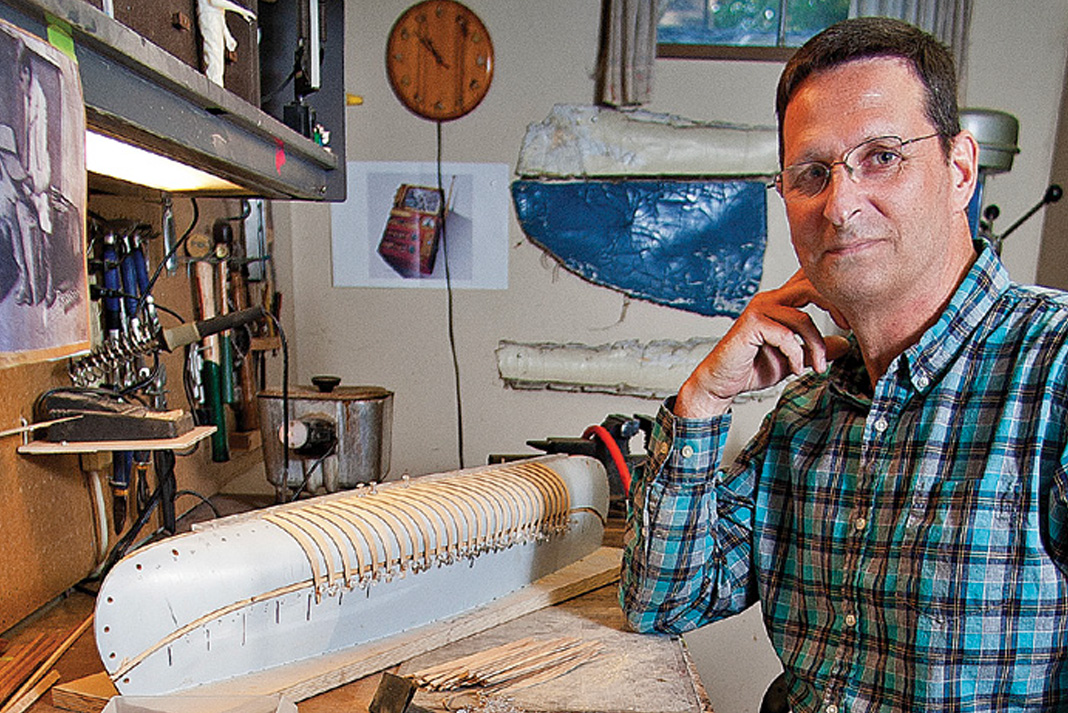
The only crush I never quite got over was the Pygmy Murrelet I borrowed from Dan Jones in the fall of 2012. Patiently hand-built by its owner, the Murrelet’s mahogany deck gleamed with an inner luster, and its multi-chine hull parried every challenge I could muster with grace and alacrity. I returned the boat reluctantly.

Over the years, Chiquita’s rotomolded yellow plastic has faded just a little, and her hull bears the scrapes and gouges of many a cobble beach and unseen shoal, including that mussel-encrusted rock that hides beneath the wave at Surge Narrows. But the plastic has never oil-canned, the welded bulkheads and lovingly 303-protected rubber hatches have never leaked. The foam seat now appears as if chipmunks have mistaken it for an acorn, yet it’s cradled me through hundreds of rolls and along thousands of kilometers of coast.

I WILL SURVIVE. | PHOTO: VINCE PAQUOT

Perhaps loyalty is simply a nostalgic and hopeful elixir of shared experience and tantalizing promise. Going on a paddling trip without Chiquita feels like leaving a trusted friend behind. I imagine if I did so permanently, the remorse would approach something akin to survivor’s guilt.

Still, when I had the opportunity to join Jones’ boat-building workshop and craft my own Murrelet, I couldn’t pass it up. For a blissful week of building, I thought only of the new boat taking shape in my hands. Then I brought the partially finished shell home and lay it in the basement beside Chiquita. Guilt and a hint of doubt needled at my excitement.

I placed a hand on Chiquita, suspended in her place of honor on the wall. She felt cool and smooth. Capable. I thought of my brother, who parks his first car—an ’85 Pontiac Bonneville four- door that once belonged to our grandmother—in the garage under carefully draped quilts, while his new Jeep collects pollen and bird droppings in the driveway. I contemplated my canoe-crazed friend who builds and paddles the most beautiful cedar- canvas boats, but scoured the classifieds until he found and bought an exact twin of the first plastic Royalex canoe he ever owned.

“Don’t worry, Chiquita,” I softly reassured the yellow kayak, “you’re staying right here.”

Send your own survivor stories to Virginia Marshall at editor@adventurekayakmag.com.


Screen_Shot_2015-07-07_at_3.08.23_PM.pngThis article first appeared in the Fall 2015 issue of Adventure Kayak magazine.

Subscribe to Paddling Magazine and get 25 years of digital magazine archives including our legacy titles: Rapid, Adventure Kayak and Canoeroots.

Why Your Roll Is Your Most Important Rite Of Passage

underwater shot of a person completing a whitewater kayak roll
Searching for that happy place. | Feature photo: Jordan Manley

Like you, I can vividly remember the first time I rolled. Not my first roll on flatwater, or the one I learned in a course or with a friend at a lake, but the first time I rolled when it really mattered. That elusive, exciting and surprising first whitewater roll. The moment I became a kayaker.

Why your roll is your most important rite of passage

Rolling is by far the most complex thing a paddler will learn—it provides a great example of the dynamic interplay between motor skills, cognitive understanding and affective values—an academic way of saying emotion. Having built my career around guiding and teaching people to paddle, I estimate I have taught about 1,500 people to roll. I can tell you it is rarely the motor skills part of the equation that is the limiting factor. The maneuver itself is relatively easy.

SEARCHING FOR THAT HAPPY PLACE. | PHOTO: JORDAN MANLEY
Searching for that happy place. | Feature photo: Jordan Manley

After figuring out the basic motions, comes wrapping one’s head around how all of this happens upside down. On-water demonstrations are a confusing mirror image of what the paddler really needs to do. A good instructor accounts for this and comes up with ingenious ways of demonstrating and then helping a new paddler understand and replicate these motions. That is the easy part. Then comes emotion—more specifically, fear.

“Thinking will not overcome fear but action will.” – W. Clement Stone

Fear is incredibly powerful. It is a rare beginner who can tolerate being upside down, under water, confined and in an awkward position. As water burns into his untrained sinuses, he reaches for the panic button. When it comes to learning, emotion trumps all. Fear overrides a normally rational brain with its flight, fight and freeze reflex, and even the most basic motor skills dissolve.

When I learned to paddle back in the long boat days, even though I could roll in a nice controlled setting, I panicked and bailed any time it really mattered. Fear overrode my cognitive understanding and proven physical ability to roll. Kayak instruction has come a long way since then, but fear is still addressed by most instructors by trying to rationally think it away. “Relax and don’t panic,” I hear instructors tell students. “You know you can hold your breath for 45 seconds.” Unfortunately emotion doesn’t work that way.

Getting beyond the grip of emotion

Good instructors understand that fear happens before thinking can, so we skip the cognitive part of the story and focus on motor skills, as that’s all that’s left. This is known as patterning—as in repetition, repetition, repetition—until the body responds with a pre-planned set of actions, regardless of what the brain thinks or affective response screams. Soldiers, karate black belts and elite athletes have all stumbled upon or purposely pursued this repetition and patterning. No cognition or emotion required, only engrained motor pattern. Shoot. Block. Jump. Roll.

My moment was several years in, with many rivers and many swims behind me. It was on the entry into Third Drop on the Gauley’s Lost Paddle Rapid. I flipped on the first move, felt the blast of water in my nose and the surge of fear, and then was upright! Before my cognitive brain could catch up, I was up and paddling again. The sense of surprise and amazement was so completely disorienting, I flipped over again.

This moment—the automatic and patterned roll—is when we have proven our dues are paid. An automated roll proves time invested in training one’s body to respond with a complex set of actions. While no one is ever beyond swimming, the first whitewater roll is the rite of passage and badge of membership into this small and unique tribe.

Jeff Jackson is a professor with Algonquin College’s Outdoor Adventure guide training diploma and is the co-author of Managing Risk: Systems Planning for Outdoor Adventure Programs.

Cover of Rapid Magazine Fall 2015 issueThis article was first published in the Fall 2015 issue of Rapid Magazine. Subscribe to Paddling Magazine’s print and digital editions, or browse the archives.

Searching for that happy place. | Feature photo: Jordan Manley


Wednesday Night Adventure Club

PADDLE WITH DAD. CHECK. | PHOTO: SCOTT MACGREGOR

Children today have more structured time than any generation before them. This spring at my house, for example, Monday was baseball practice, Tuesday and Wednesday were afterschool academic booster programs for standardized testing (don’t get me started), and Thursday was dance class and a baseball game. On Fridays everybody was too tired to do much of anything.

For weeks after the snow melted and the ice went out I’d ask the kids if they wanted to go paddling or biking after school or after dinner.

“Sure Dad, but when?” they’d reply.

Another weekend would come and go and we’d make loose plans to go the next week, if we could find the time.

Our lives are run by an oversized calendar stuck to the refrigerator door. It’s probably the same at your house. Everything important gets neatly printed in pencil inside 31 little squares and reviewed every morning at breakfast. Important events get stickers. My son strokes out the days counting down to really big occasions like summer vacation and Christmas.

Time management is an important skill

Life coaches suggest that time management is an important skill to teach young children. Our elementary school issues every child an agenda on the first day of class. Teachers are instructing children how to write every due date and appointment in the book. What they are not teaching is how to choose what goes on the list and what doesn’t, or how to prioritize the truly important things in life.

We always make our scheduled appointments. If it is written on the calendar we never miss. It’s important to commit to things and not let your team down, or leave your dance instructor waiting in an empty studio. It’s also important to schedule family time. Why? Because, if it’s not on the list it gets pushed to next week.

PADDLE WITH DAD. CHECK. | PHOTO: SCOTT MACGREGOR

When the kids were smaller, before team sports and sleepover birthday parties, life was simpler. We had more free time together and that meant more time outside. Lately, we’ve found that real life is running our lives. We’ve been putting off the things we value the most and we’ve been too busy driving to the next agenda item to notice.

“Why don’t we make Wednesday night, Do Something Adventurous Night?” she asked. “I’ll make stickers. We’ll put them on the calendar.”

It was my daughter, Kate, who came up with the idea. “Why don’t we make Wednesday night, Do Something Adventurous Night?” she asked. “I’ll make stickers. We’ll put them on the calendar.”

In took us a few weeks before we fell into the routine.

Wednesday mornings we make lists of gear we need to have packed and ready at the back door. We stick the lists to the fridge and refine and reuse them every week. We’ve gotten smarter about being organized with bins and bags consolidating and keeping everything for a given activity all in one place.

On Wednesdays I work a little faster and get home a little earlier. Dinner is reheated leftovers or a quick omelet so we can get out the door more quickly. We made going for a paddle as easy and as routine as heading to the ball diamond. We found bike trails closer to home. We learned which fishing lures to bring and what tackle we could leave behind. Most importantly we made playing outside as important and as routine as anything else in our busy lives.

Scott MacGregor is the founder and publisher of Canoeroots.


Screen_Shot_2015-07-07_at_2.59.13_PM.png

This article first appeared in the Fall 2015 issue of Canoeroots Magazine.

Subscribe to Paddling Magazine and get 25 years of digital magazine archives including our legacy titles: Rapid, Adventure Kayak and Canoeroots.

Why You Should Try Fly Fishing From A Canoe

person casts a fly fishing lure from a canoe
“There is no greater fan of fly fishing than the worm.” –Patrick McManus | Feature photo: Courtesy Ontario Tourism

Fly fishing is, to most enthusiasts, the most beautiful form of fishing. It’s most common to see pictures of fly fishermen standing characteristically waist-deep in a stream or river, but Ben Duchesney shares his opinion on expanding this art form to larger bodies of water by way of the canoe. Learn to cast from a canoe and you’ll fall in love with the beautiful combination of canoeing and fly fishing. You may even catch a few.

How to Try Fly Fishing from Your Canoe

Master the Cast

The first mistake new fly casters make is trying to muscle the cast. Like swinging a golf club, the power of the cast comes from technique, not big biceps. Keeping a straight wrist, start your back cast by raising your rod tip backwards, loading tension in the rod tip.

At the top of the cast, at an angle of 1 o’clock, snap your arm to a stop. You can also look at your line and stop the back cast when your leader is about to come off the water. Stopping the the backcast abruptly will ensure the line unfurls evenly.

person
“There is no greater fan of fly fishing than the worm.” –Patrick McManus | Feature photo: Courtesy Ontario Tourism

Once the rod stops vibrating from the back cast and you feel the rod tip being loaded in the other direction, begin your forward cast. Leading with the elbow, snap the rod grip forward by pressing forward with your thumb and pulling back with your ring and pinky fingers. This will lay out the cast evenly.

As world-famous casting instructor Joan Wulff says, the motion is similar to opening a screen door, pressing the button with your thumb and pulling the door open with your pinky and ring finger. Stop the rod when your thumbprint is pointing towards your target.

Maintain Balance

When casting, make sure your body is centered in the canoe and your hips are straight and silent. Stick with casting straight ahead for now, and just move the canoe if you need to change direction. Casts to the sides of the boat have a tendency to rock the boat more. If you start rocking the boat while casting, not only will your cast suffer but you may lose your balance.

Manage the Line

One of the trickiest and most frustrating parts of fly fishing is line management. Add gunwales and paddles and it gets even worse. Before each cast, make sure your line is free from snags and gathered at your knees. If you keep snagging, get a shirt or small bucket and place it in front of you. This will act as a stripping basket and help to keep your line clear.

What You’ll Need

Quick Casting Tips

  1. The power of the cast comes from your wrist and arm movement.
  2. Slow is smooth and smooth is stable. If you have trouble timing the cast, slow down.
  3. Before you get in a canoe, practice your technique from the lawn while sitting flat or kneeling. Then, try in a canoe on your own.

Watch the video of this technique here:

Ben Duchesney is an active paddle angler and former web editor of Kayak Angler. When he’s not fishing, he’s working on his first book, a fly fishing manual.

Cover of the Fall 2015 issue of Canoeroots MagazineThis article was first published in the Fall 2015 issue of Canoeroots Magazine. Subscribe to Paddling Magazine’s print and digital editions, or browse the archives.


“There is no greater fan of fly fishing than the worm.” –Patrick McManus | Feature photo: Courtesy Ontario Tourism


Seven Reasons Why You’re Glad You Didn’t Paddle in the ’80s

Photo: Rapid Staff
Seven Reasons Why You're Glad You Didn't Paddle in the '80s
  1. The last song playing in the tape deck in your Hyundai Pony on the shuttle may have been Wham’s “Wake Me Up Before You Go-Go.”
  2. Chuck Taylors by Converse were, like, so ‘80s. “Like, oh my God, those river shoes, like, totally bitchin’.” Maybe, but they were also really bad (meaning horrible, not cooler than the word cool could describe) on slippery rocks.
  3. Army surplus wool long underwear and neoprene dive suits were the best insulating layers most of us could afford.
  4. It was damn near impossible to get out of a big hole in a Dancer. And if you did, the bungee cord spray skirts would blow at the absolute worst of times.
  5. This Kober Extrem Allzweck, and those like it from Schlegel, were top of the line paddles. They had 90-degree offsets, aluminum shafts and weighed three-and-a-half pounds.
  6. The best instructional paddling book was a cartoon. No wait, that was actually pretty cool. Thank you, William Nealy. May you rest in peace.
  7. If you swam, you’d be buying a round of 
 of Pabst Blue Ribbon…At least today the paddles are lighter.

Screen_Shot_2015-07-07_at_3.09.09_PM.png

This article first appeared in the Fall 2015 issue of Rapid Magazine.
Subscribe to Paddling Magazine and get 25 years of digital magazine archives including our legacy titles: Rapid, Adventure Kayak and Canoeroots.

Canada’s Birthday Gift

KEEPS ON GIVING. | PHOTO: DAVID STURGE

If America was transformed by a domesticated animal—the horse—then Canada’s own coming to be was most certainly aided and abetted by a single species of tree—the birch, and the canoes that were made from it.

In the decades leading up to the country’s confederation, the canoe was integral to the way of life for Canada’s indigenous communities, as well as European traders and travelers. Given this history it should come as no surprise that many think the canoe should play a significant part in Canada’s 150th birthday celebrations coming up on July 1st, 2017.

For the Canadian Canoe Museum, where the hub of sesquicentennial canoeing activity will take place, there’s a push to bring the canoe into the national conversation as a symbol of reconciliation and reconnection amongst our river of nations. Advance preparations focused on canoes are already bringing communities closer together.

Among the birthday planners is Chief Misel Joe from Miawpukek First Nation on the south shore of Newfoundland. Ten years ago, tired of hearing debate about how the Miq’maq People first got to The Rock, he consulted the community’s elders, built a bark canoe and paddled it across the Gulf of St. Lawrence.

When we recognize the canoe on this special birthday, we’ll be honoring the history of this country, which stretches back thousands of years.

So enthused about what the building project did to keep Miq’maq traditions alive in his community, and about how the canoe story fired up the imaginations of the public, Chief Joe decided to build two more canoes. A group of community members will paddle them 1,600 kilometers to Ottawa, then on to the Canadian Canoe Museum in Peterborough, as a sesquicentennial celebration in 2017.

Similarly, the canoe became a cultural renewal project for Wayne and Kim Brooks and the Maliseet People of St. Mary’s First Nation in central New Brunswick. They were inspired when the oldest known Maliseet bark canoe, built in the early 1800s, was repatriated to Canada in 2012.

When museum protocols and worries about the safety of the “Grandfather Akwiten” canoe kept the Maliseet people at arm’s length, the Brooks’ enlisted the help of Steve Cayard, a master bark canoe builder from Maine, and built a replica of the exact same dimensions, materials and construction techniques.

Cayard and others from the Maliseet community will build another replica this summer, with more tradition-building projects planned for 2017, aiming to advance traditional skills among First Nation youth and create a cross-cultural bridge with the public.

KEEPS ON GIVING. | PHOTO: DAVID STURGE

Far to the west, retired RCMP Staff Sergeant, Ed Hill, and Squamish Nation Elder-in-Training, Wes Nahannee, live on the Sunshine Coast, in the ocean-going canoeing capital of Canada. The two have been using canoes for 15 years to strengthen relations in their cross-cultural youth program, Pulling Together. They’re looking to organize a cross-Canada canoe caper for the country’s birthday, embodying the spirit of their program.

It’s been said the canoe was the greatest gift the First Nations gave to the next generations. When we honor the canoe, we honor our country’s First Nations people, who still today are often marginalized. If the canoe is an apt symbol of our shared past, can it also be a symbol of a more connected future?

Many people consider Canada to be a young nation—150 years isn’t old in terms of statehood. When we recognize the canoe on this special birthday, we’ll be honoring the history of this country, which stretches back thousands of years.

James Raffan is an author, traveler and former executive director of the Canadian Canoe Museum. 


Screen_Shot_2015-07-07_at_2.59.13_PM.png

This article first appeared in the Fall 2015 issue of Canoeroots Magazine.

Subscribe to Paddling Magazine and get 25 years of digital magazine archives including our legacy titles: Rapid, Adventure Kayak and Canoeroots.

7 Of The Best Cross-Training Activities For Paddlers

People on a dock doing yoga
Yoga is a great way to improve your mind and body for paddling. | Photo courtesy of: Destination Ontario

If you think paddlers don’t need to work out or participate in other forms of activity, then just give it time; injury and muscle fatigue are unfortunately all too common for kayakers of all disciplines. You may have brilliant paddling technique, but kayaking often uses the same muscle groups and believe us, your body will thank you for taking time to switch it up.

With the right activities you can work your paddling muscles in new ways, prevent injuries and have fun. Whether you want to work on your paddling muscles (core, core, core), develop more stamina or do something completely different, here are some cross-training options for paddlers.

Photo by Guduru Ajay bhargav from Pexels

1 Swimming

Gliding through the water can be almost as fun as paddling on top of the water. Swimming lets you work those essential core muscles, your upper body, and improve overall stamina, all in a low impact way. Plus, it’s not a bad thing for a paddler to have strong swimming skills and confidence—both on and in the water.

SHOP SWIMMING GEAR ON AMAZON

Photo by Pixabay from Pexels

2

Nordic skiing

Cross-country skiing is another great option for working on just about all the major muscle groups and developing serious stamina. Did you know that Norwegian skier and Olympic medallist Bjørn Dæhlie has one of the highest VO2 max ever measured in a human being? Besides doing wonders for your aerobic fitness, Nordic skiing will keep you happy and active during the off-season until the water thaws again.

SHOP SKI GEAR ON AMAZON

Photo by Alexandre Weiss from Pexels
Photo: Alexandre Weiss from Pexels

3

Other paddlesports

Yes, we think you should see other boats. Get involved with your local dragon boat or outrigger canoe club for a fun yet demanding workout that will strengthen your core, upper body and stamina with new techniques. For better balance and further core strengthening, try your hand at standup paddleboarding.

Photo by Caleb Oquendo from Pexels

4

Martial arts

Work your cardio with the high-intensity intervals of sparring and grappling, while time on the punching bag will challenge your arms and shoulders, all of which will pay off the next time you challenge a friend to a friendly sprint on the water or you’re trying to catch that elusive surf wave.

SHOP MARTIAL ARTS UNIFORMS ON AMAZON


Photo by Davyd Bortnik from Pexels

5

Rock climbing

It’s no surprise that many paddlers are also avid climbers. Firstly, kayaking can get you to some intriguing climbing spots, and secondly, climbing is a demanding workout for your core, arms, and upper body in general. With the growing popularity of indoor climbing gyms, this can be an accessible and fun way to stay active throughout the winter.

SHOP ROCK CLIMBING GEAR ON AMAZON

SHOP ROCK CLIMBING ROPE ON AMAZON

SHOP ROCK CLIMBING HELMETS ON AMAZON

SHOP ROCK CLIMBING HARNESS ON AMAZON

People on a dock doing yoga
Yoga is a great way to improve your mind and body for paddling. | Photo courtesy of: Destination Ontario

6

Yoga

What do LeBron James, the New Zealand All Blacks and many experienced kayakers all have in common? They’ve all discovered that regular yoga practice makes them better athletes and helps prevent injuries. Just a few focused stretches before paddling or after arriving in camp will work wonders for keeping you loose and limber.

SHOP YOGA MATS ON AMAZON

SHOP YOGA BLOCKS ON AMAZON

Photo by Stan Swinnen from Pexels

7

Walking/hiking/running

If we’re paddling properly our legs should be engaged, but our quads, hamstrings and legs in general still need a little extra something. Compensate for those long hours spent in a boat with some quality time on your feet. A long kayak trip will be infinitely better if you also make time to hike up a nearby mountain and take some long walks on the beach.

SHOP HIKING BOOTS ON AMAZON

SHOP HIKING POLES ON AMAZON

SHOP RUNNING SHOES ON AMAZON

10 Reasons Why Sea Kayakers Should Try Whitewater

Photo: Dan Caldwell
Sea kayakers take on whitewater.

While launching your kayak off waterfalls may not be everyone’s cup of tea, whitewater kayaking can be an excellent skill-building tool for sea kayakers. We may not all have the opportunity to paddle regularly in ocean waters, but no matter how landlocked we might be, chances are that somewhere nearby is a river with a bit of current. Spending time paddling in moving water (river or ocean!) can exponentially increase your comfort level and skill in your boat—and best of all, it’s fun!

Always remember to carry (and know how to use) your safety equipment, paddle within your limits, and consider taking a course from your local whitewater club or organisation. Here are 10 skills you can hone by paddling in moving water:

Reflexes

Low brace, high brace, edging—your paddling instincts and reflexes will rapidly develop when you paddle in conditions where you need to react quickly. The river gives honest and direct feedback!

Precision

Practicing turns on flatwater is a good starting point, but there’s nothing like a crisp eddy turn to show us if our strokes are effective or need some fine-tuning. Don’t feel like launching yourself down a whitewater river? No worries – if your local lake has a creek or small river flowing into it, you can start practicing at the mouth.

Loose hips

You’ve likely heard the expression that loose hips save ships. Paddling in moving water is a great way to work on your poise and balance in lively conditions. And if it didn’t work, see the next point.

Rolling

Let’s face it… while we often practice our rolls in calm conditions, how often do we actually need to do a roll under pressure? Whitewater paddling offers plenty of opportunities to gain rolling proficiency in dynamic conditions, and you’ll be surprised at how quickly it becomes instinctive.

Communication

Exploring whitewater demands that we develop good communication skills with our paddling partners—also a useful attribute for sea kayaking.

Dynamic conditions

Paddling in dynamic conditions such as whitewater requires quick thinking, decisive moves and the ability to smoothly link a variety of strokes.

Confidence builder

Testing and developing your skills in whitewater can be a huge confidence builder for sea kayaking in more challenging conditions.

Understanding of current and water

Observing rapids and moving water (and then paddling in it!) will improve your understanding of how your boat behaves in different conditions—and how to make it behave just the way you want!

Transferrable skills

Ferrying, bracing, rolling, and overall boat handling are all skills that develop more quickly when we use them regularly through playing in whitewater—and they are all directly transferrable to sea kayaking.

Pure fun

Whether surfing on your friendly local wave or going for a daytrip down a beautiful river, whitewater paddling is addictively fun!

Olympic Peninsula: Paddle Washington’s Varied And Verdant Jewel

OLYMPIC PENINSULA | PHOTO: GARY LUHM

Based near Seattle, Gary Luhm cut his teeth paddling Washington’s Olympic Peninsula. A professional photographer specializing in sea kayaking, his nature and paddling images have graced the covers of over 40 magazines, books and catalogs.

Shaped by the breath and caress of the mighty Pacific, the Olympic Peninsula is famous for its misty forests and rugged coast. Yet my first kayak trip in Olympic National Park was an idyllic July 4th weekend on the tannin- black waters of Ozette Lake. We hiked through lush rainforest with moss, lichen and fern draping every inch of exposed wood and bark, including the planks that formed the trail.

Later, I took up kayak surfing, making weekend trips to Crescent Bay for moderate surf in winter, and Makah Bay or Westport in spring and fall. Summers I devoted to open ocean paddling, viewing puffins near Toleak, and encountering resident grey whales en route to Shi-Shi Beach. At Destruction Island, some 500 sea otters summer in vast rafts.

My favorite trip is approaching Cape Flattery from either Makah or Neah bays in a long day, skirting countless rock pillars and creeping inside sea caves and archways. We get lost in time on every visit, thrilled with each dip of the paddle, exploring like only sea kayakers can.

OLYMPIC PENINSULA | PHOTO: GARY LUHM

TRIPS

If you have a half day launch at Lake Crescent’s La Poel picnic area and paddle the pristine shore of this crystal clear, mountain-shrouded lake.

If you have a day start at Freshwater Bay west of Port Angeles and paddle four kelp-strewn miles along the Strait of Juan de Fuca to Crescent Bay and return. See harbor seals, cliff-nesting seabirds, expansive views and rich intertidal life.

If you have a weekend paddle across Ozette Lake and camp on Tivoli Island or at Ericson Bay. Experience rainforest wilderness on a hike to the coast, and view the petroglyphs at Wedding Rocks.

If you have a week advanced paddlers can venture north (car shuttle return) along the coast from La Push all the way to Neah Bay. Enjoy rafts of sea otters, colonies of puffins and sea lions, sea stacks, archways, occasional surf landings, beach camping, bonfires and a rolling Pacific Ocean that challenges the senses.

PHOTO: GARY LUHM

STATS

POPULATION
Port Angeles is the largest town, with 19,000.

WILDLIFE
Sea otter, seal, grey whale, black bear, deer, raccoon, puffin, bald eagle.

TERRA
Rainforest sites and sand beach camping.

EXPOSURE
Ocean swell, wind, cold water and fog on the coast; short fetch on lakes.

VIEWS
Sea stacks, beaches, lakes, mountains, temperate rainforest.

DIVERSION
Logging town, Forks, is best known as the setting for the Twilight novels and films.

BEST EATS
Wild Pacific salmon, bought or caught, and cooked on your grill.

OUTFITTERS
Adventures Through Kayaking—day trips, instruction, rentals; atkayaking.com. Olympic Raft and Kayak— day trips, instruction; raftandkayak.com.

MUST-HAVE
Wetsuit or drysuit, helmet for coast.

Based near Seattle, Gary Luhm cut his teeth paddling Washington’s Olympic Peninsula. A professional photographer specializing in sea kayaking, his nature and paddling images have graced the covers of over 40 magazines, books and catalogs. 


Screen_Shot_2015-07-07_at_3.08.23_PM.pngThis article first appeared in the Fall 2015 issue of Adventure Kayak magazine.

Subscribe to Paddling Magazine and get 25 years of digital magazine archives including our legacy titles: Rapid, Adventure Kayak and Canoeroots.

Wood Canoe Review: Trapper 16’6 by Langford Canoe

Perfect for morning paddles at the Rapid Media office. | Photo: Canoeroots Staff

Earlier this year, Langford Canoe celebrated 75 years in business. It’s a hotly debated topic in the Canadian canoeing scene as to whether this makes the venerable brand the oldest canoe manufacturer in Canada still operating today. Langford itself certainly lays claim to that title.

While other large-scale manufacturers of cedar canoes in Canada have long since closed their doors, Langford doggedly carries on the tradition, manufacturing 200 to 400 cedar canoes a year.

To celebrate seven-and-a-half decades of good fortune, Langford released the Trapper 16’6 this spring. It was love at first sight for the entire Canoeroots staff. We fell in love with this heritage design’s elegant, sweeping lines.

It’s not just on land that the Tripper exhibits a stately grace. On water it’s a dream to paddle—offering excellent stability, easy tracking and ample speed. Though many trippers swear by cedar designs, this gleaming hull is too gorgeous to muss up on rocks and portages; it seems like the perfect canoe for an afternoon on the bay.

Langford Trapper 16’6 Specs
Length: 16’6″
Width: 35″
Depth at center: 13.5″
Weight: 58-62 lbs
Capacity: 750 lbs
MSRP: $5,599.99

langfordcanoe.com

The Trapper is a modified version of Langford’s bestselling Legacy, curvier in the stems and with length added to its waterline. The end result is a meeting of form and function—it’s art, and I’m not the only one to think so. Langford’s customers range from paddling enthusiasts to art connoisseurs hunting for a wall showpiece.

From bow to stern, the Trapper illustrates exquisite craftsmanship. Its red cedar planks contrast beautifully with white cedar ribs and mahogany trim. When I pick up our tester, I tour Langford’s retail shop, nestled on the boundary of Algonquin Provincial Park.

Like a fingerprint, each cedar canoe is an individual. Our tester alternates a light and dark striped pattern, others fade from dark to light on a gradient, and still others are a single tone, the color painstakingly matched by Langford’s team of boat builders in their manufacturing facility near Shawinigan, Quebec.

[ Paddling Buyer’s Guide: View all Langford canoes ]

Manufactured in the traditional plank and rib construction style, a method that dates back to the 19th century, I’m floored to discover that 2,500 brass tacks are used in this model.

Perfect for morning paddles at the Rapid Media office. | Photo: Canoeroots Staff

“There’s a big difference between a cedar plank and rib canoe and a cedar-strip canoe,” Langford Canoe general manager Brent Statten stresses. Building methods aside, the difference comes down to durability. “Even if you somehow put a hole through the three layers of epoxy, the glass, plank and rib, it wouldn’t affect the structural stability of this boat. Cut a new plank, glass it and epoxy it and you’d never know,” says Statten. “Stored correctly, there’s no reason this boat shouldn’t outlive its owner,” he adds.

Gliding through the mist in the Trapper one early morning, these words come back to me. This canoe could live to see Langford’s 175th anniversary. It’s a humbling thought.


Screen_Shot_2015-07-07_at_2.59.13_PM.png

This article first appeared in the Fall 2015 issue of Canoeroots Magazine.

Subscribe to Paddling Magazine and get 25 years of digital magazine archives including our legacy titles: Rapid, Adventure Kayak and Canoeroots.