Home Blog Page 269

Last Paddle on the Dehcho

Photos: Karen McColl
Last Paddle on the Dehcho

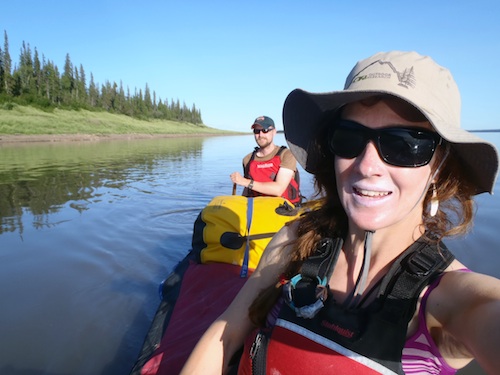
As we inch our canoe past the safety of an upstream sandbar and into an onslaught of waves, I panic. “I can’t do this! Let’s turn around!” I shout to Daniel in the bow. He allows me to steer the canoe back to the safety of shore, moments before it would have been too late.

Usually, Daniel and I paddle within about 50 meters of shore when it’s windy, but now we are trapped on an island with least one kilometer of wind-thrashed waves separating us from the shore we need to get to. Daniel wants to go for it, but I’m scared. I shed a few tears of self-pity, then we set up the tent and wait.

Around here, the Mackenzie River calls the shots.

It’s Canada’s longest river and our largest watershed, covering more than one and a half times the land area of Ontario. The year 2014 marked marks the 225-year anniversary since Alexander Mackenzie of the Northwest Company traveled the river with aboriginal guides. Long before his time, this river was known as the Dehcho, or Great River. It connects the Dehcho, Sahtu and Gwich’in First Nation regions (who are, collectively, the Dene people) as well as the Inuvialuit Settlement Region near the Mackenzie Delta.

Visitors, who come from all over the world to paddle the Mackenzie, think of it a great wilderness river, but for the Dene, it’s simply their backyard. It is here they have always hunted, fished and traveled.
 

Dan_and_I_KMcColl_copy.jpg


That backyard could be changing. Oil and gas interests are picking up in the central valley area, and an extension of the Mackenzie Valley all-season road may soon be penetrating deeper into its boreal forest and muskeg, providing easier access to the region for local First Nations and developers alike. The Mackenzie River may always be big and powerful, but it might not always be the place it is today.

I’m canoeing with Daniel Campbell, a friend-of-a-friend who hails from this territory’s capital. We put in a few days upstream of Wrigley, N.W.T. and our end destination is Inuvik, more than 1,000 kilometers downstream.

On our second day, we get a visit from Jonas and Tony, two Dene men from Willowlake River. Daniel and I had just finished unloading our barrels and bags onto a beautiful sand bar next to a creek when they cut the engine of their jet boat and drift to shore. They are going hunting for a night or two, Jonas explains, but I notice their boat is mostly empty apart from a couple of guns and some snacks. They plan to curl up on the rocks under the stars—no tent, no sleeping pad—says Jonas, as he eyes our pile of bags and barrels.

Tony doesn’t speak English but Jonas tells us Tony’s aunt is buried across the creek, where we noticed a small fenced area. Tony sits in the boat smiling, his blue eyes twinkling when I offer them chocolate. Then they’re off again, into the dusky horizon of a sun reluctant to set.

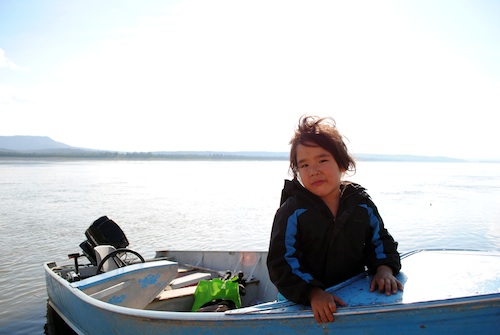
It’s hot when we arrive in Wrigley and hit the empty streets in search of a place to fill our water jugs. Today is Canada Day and everything is closed, but we have the good fortune of meeting the water truck driver on his driveway. He fills up our jug straight from his truck while his girlfriend brings us a bag of ice from inside the house Katy points at houses down the street, showing us where her parents, grandparents and cousins live, all within shouting distance.

Wrigley is the northern terminus of the Mackenzie Highway, a gravel road completed in 1994 that links the tiny community of 150 people to the Alberta border. It’s a quiet place, but Wrigley’s relative isolation may change when it’s no longer at the end of the road. The 333-kilometer highway extension north to Norman Wells is in the planning stages, with the overall goal being to extend it all the way to the Dempster Highway near Inuvik.

The highway will be built over the existing winter road, which parallels the Mackenzie River in several places. As we pass the fish-filled tributaries downriver, I imagine what it would be like to pass a family picnicking on the gravel bar or a bunch of anglers in their waders. Or worse, the plumes of dust that are sure to follow every driver on these dry gravel roads.

The Mackenzie River is already far from untouched: there are signs of humans everywhere. We don’t see jet boats whizzing by, barges transporting supplies up and down the valley and rustic cabins dotting the shore between the six communities we visit.
 

Young_girl_in_Wrigley_KMcColl_copy.jpg


I consider the Mackenzie River a low-risk, high-consequence river. It’s so slow and sluggish, it would be almost hard to capsize a canoe during calm weather. But if did happen, it would be extremely dangerous. The river is consistently more than a kilometer wide and it’s frigid—so cold I couldn’t bring myself to take a dip on even the hottest days.

Daniel and I are almost sun-blind when we land in Tulita, a community of 500 people located on a bank above the mouth of the crystal clear Great Bear River.

Our next community is the oil town of Norman Wells. By now we are able to cover 60 to 80 kilometers a day, so the 78-kilometer paddle between Norman Wells and Tulita would be a piece of cake to cover in two days, without the nasty head wind that makes us work for each stroke. Strong winds are normal around “the Wells,” where the river widens to more than five kilometers across.

I knew about the Wells before arriving was that Imperial oil had been drilling here since the 1920s, so I wasn’t expecting much in terms of scenery. It was a pleasant surprise to find that the community of 700 or so people has a beautiful mountain backdrop, even though the closest slope has been chewed away by a giant quarry. This boom and bust town is a halfway point for many paddlers, because of its location and amenities. Unlike Wrigley and Tulita, Norman Wells has a couple of restaurants and watering holes, as well as the last liquor store for 700 kiometers.

The weather is bad on departure day, so Daniel and I drag breakfast and lunch out until 3 p.m., when the water has calmed significantly. Soon after we get on the river the wind dies and the water turns to glass. It’s a beyond perfect evening.

“Is that smoke?”

It’s close to 11 p.m. and time to look for a place to camp. As we get closer to shore, we notice a few trees burning. It is smoke! We decide we should camp on the large island on our left to avoid the smouldering fire but we see a black bear swim across the channel and onto that same island. Five-hundred meters downriver, a dozen or so tents dot the shore. It’s a group of voyageur canoeists, whom we met the previous day. They are usually on the water by 6 a.m., they told us, hence the reason they are already sleeping. We watch the bear wander into the forest and, satisfied it isn’t going to bother the group, keep going. Daniel and I find a spot downriver that is smoky but bear-free.

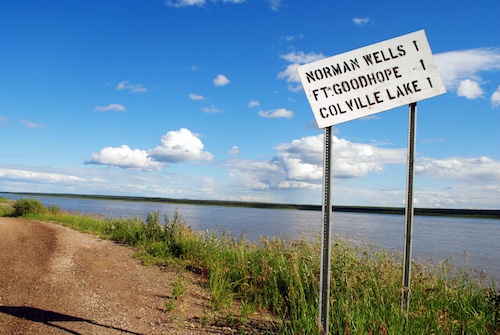
The ramparts is an area just upstream of Fort Good Hope where the Mackenzie River narrows exponentially as it flows between 90-metre high limestone cliffs. There are some rapids at the entrance to the narrows, but following the advice of our guidebook, we stayed right and avoided them altogether.

Not so much for Chris Miele, a solo paddler who arrived in Inuvik a few days after Daniel and me. The 25-year-old was moving from Vancouver, B.C., to Iceland to start a master’s degree, and brought everything he needed for school down the river, packed in suitcases. Following the advice of a hunter, Chris went left through the Ramparts, which our guidebook says only to do at high water. The river was extremely low and Chris went over a three-foot ledge that filled his canoe with water. Miraculously, his boat didn’t tip and he was eventually expelled from the swirling water and able to slowly make his way to shore. Perhaps more amazingly, he didn’t lose anything in the process.
 

Sign_in_Tulita_KMcColl_copy.jpg


High above the river in Fort Good Hope a large cross commemorates a small church built over 20 years starting in 1865. The inside is painted with outrageously bright colors made from fish oil and adorned with two paintings by the prolific northern artist Bern Will Brown, a former priest who lived in nearby Colville Lake until his death earlier this year.

Two paddlers I met in Inuvik told me they got engaged in this church. Considering that a canoe is often jokingly referred to as a divorce boat, I’m guessing that any relationship that survives a multi-week canoe trip is likely to last.

While touring the church, Daniel and I meet the ever-hospitable Sisters Joan and Pauline, who feed us one of the best meals of trip and cordially beat us at their favorite card game.

It’s during the seven-day stretch to Tsiigehtchic that Daniel and I get stuck on an island in a windstorm. After 24-hours, there’s a break in the weather.

“Time to go!” Daniel says excitedly. Without another word, we break camp and throw our gear in the canoe, allowing ourselves to cheer as we shoved off. There’s nothing like a day spent on a wind-scoured sand bar to make one go a little stir-crazy.

The next few days are rainy and windy, so it’s a welcome sight when we round a bend and see a white steeple illuminated by a ray of sun poking through the clouds in Tsiigehtchic. After visiting this friendly Gwich’in community of less than 200 people, we slog through the east channel of the Mackenzie Delta to arrive in Inuvik, our final destination. We can hear the town of about 3,500 people before we can see it: airplanes zip in and out of the airport, high-end jet boats blow past us and the deafening drone of the diesel generator reverberates upriver.

The Canadian Government planned and built Inuvik from scratch in the ’50s and although it’s small in population by southern standards, it has lots of things we haven’t seen in a while: a recreation center, large hotels and a full-sized grocery store. As we walk down the street past locals and other tourists, some speaking German and French, no one remarks on our arrival or waves from their passing truck. No one offers us a ride from the dock up to the campground either. For the first time in weeks, I am just another person in a sea of strangers. Our canoe trip on the Dehcho has come to an end.

—Karen McColl has been freelance writing since 2009 and has written for the CBC, the Globe and Mail, the Toronto Star, Outpost magazine, Up Here and Up Here Business magazines—
 

Screen_Shot_2015-03-25_at_11.19.31_AM.png

This article first appeared in the April issue of Paddling Magazine.
Gear: Best Wood Burning Stoves

Photo: Flickr user/Thomas' Pics
Gear: Best Wood Burning Stoves

Most of today’s self-propelled campers rely on liquid-fueled (propane, butane, gasoline, alcohol) stoves for all their cooking. But there’s a hardcore minority who prefer the lightweight and reliability of wood. Admittedly, I haven’t always been a big fan of wood-burning trail stoves. That said, I almost always bring one on my canoeing and camping trips. It keeps the kettle boiling, saves liquid fuel and provides heat and ambience when I don’t have a campfire. And it’s useful for burning trash—important on a long trip where packing garbage can attract animals.

In my opinion, the three trail stoves reviewed here represent the best of the breed. All are efficient, lightweight, sturdy, compact and beautifully made. What’s best for you depends on the style in which you travel—how light you want to go and whether you plan to use a liquid-fueled stove for some of your cooking. As a bonus, all of these stoves can be fueled with alcohol, heat tabs or Sterno.

Advantages of wood-burning stoves over models that burn liquid fuel include:

  • No fuel to buy or carry
  • Usually lighter and more compact than liquid-fuel models, and takes less space in a pack
  • Gives off warming heat and can double as a small campfire

The disadvantages are:

  • You must collect the wood it burns. Collecting wood can be illegal.
  • In many places, they are not a legal substitute for a liquid-fuel stove. They are never legal anywhere during a fire-ban.
  • Most won’t accept sizeable logs, especially with a pot on top. You must constantly feed the beast.
  • Blackens pots, which can result in soiled gear and hands.

CONSIDERATIONS

  • WEIGHT: Generally, the lighter the better—the stove must be sturdy enough to support a heavy pot.
  • HEIGHT VS. DIAMETER: Height increases the chimney effect and burning efficiency. But a too high stove can be tippy. A wide opening will accept thicker sticks than a narrow opening. Stoves that accept only small sticks require constant feeding.
  • BASE (floor): A base keeps hot coals from burning the ground. A separate (removable) base is more versatile than an integral one. Why? Because with use, the building ash clogs the vent holes and reduces the air flow. Eventually, the stove shuts down. You may have to extinguish the stove and invert it to clear the ashes. If the base is separate (mini-fire pan) you can lift the stove and shake out the ash from the bottom. 
  • SPEED OF ASSEMBLY: All the stoves reviewed here are fast and easy to assemble. The Trek Stov leads the pack at just five seconds.
  • STABILITY: All these stoves will support heavy pots. Very wide kettles and heavy sticks that are much longer than the stove is high, adversely affect stability.

STOVES: 

32.LittlbugStove.jpeg

LITTLBUG Sr. and Jr.

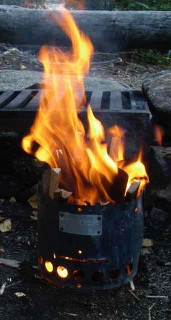
The Littlbug Senior and Junior are identical except for size (see table below). The stoves are ingeniously simple—just snap two stainless steel halves together. The stove’s near zero thickness takes up almost no space at all in a pack; the rounded half-shape nests tightly against a rolled sleeping pad or the inside wall of a barrel. The stove can be used with or without its pot supports. Without them, it will accept logs nearly as large as its diameter. With them and a pot on top, the openings are smaller—2.5 or 4.0 inches, depending on the model. Long logs can be stacked “inverted tipi” style around the pot, creating quite a blaze—and enough heat to double as a roaring campfire. 

The pot supports can be lowered to fire the stove with alcohol or Sterno. The unit can be used as a windscreen for a commercial alcohol burner or a liquid fuel stove. An ultralight (optional) folding “Fire-bowl” base contains ashes and makes dumping them a breeze—or just use a pizza pan. If you’re camping on snow, the stove can be suspended from a branch with the lightweight chain set provided. Sounds goofy but it works great even with heavy pots. I seldom go on a trip without a Littlbug stove. www.littlbug.com.


Screen_Shot_2015-03-24_at_5.13.04_PM.pngTREK STOV

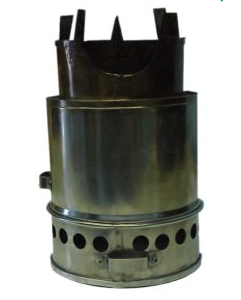
The Trek Stove has three parts: the lid, which provides ventilation and doubles as a fire pan, the double-wall stove body, and the pot support ring.  Assembly is almost instantaneous. The double-walled stove body has small vent holes around the inside top. There are larger holes at the bottom. The two sets of vent holes and double-wall construction permit fast starts and very clean burning.  Wood seems to burn hotter, more slowly and more efficiently in this stove than in the others in our sample. A wide U-shaped opening in the pot support ring allows entry of fairly thick sticks. The stove will accept wood up to about two inches in diameter if there’s no pot on top.  Add a pot and you must halve the diameter of the fuel. There’s an ash screen at the bottom. Ashes fall into the base (which becomes the cover when the stove is packed).

Lift the stove off the base to dump the ashes (requires some effort if the stove is hot and choked with ash). There’s a 1.5 inch diameter hole in the center of the base: The battery operated fan of a Sierra Zip stove can be inserted into that hole. The fan turns the Trek Stov into a veritable blow torch! The Trek Stove is remarkably engineered and a work of art.  It is the most sturdy, easiest to assemble and most sophisticated stove in our sample. It is also the heaviest and bulkiest. Unlike the other stoves here, it won’t blacken your hands when you take it apart to pack it away. http://www.nimbuskayaks.com/Trek%20stove.htm.   


IMGP0127.jpeg

EMBERLIT STOVE

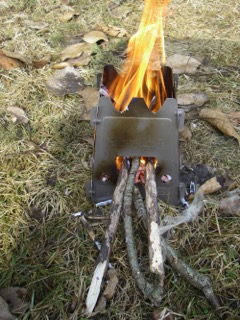
Constructed from ultralight titanium or stainless steel, the EmberLIt is the most compact stove in our sample. Five “playing card thin” pieces—four sides and a base—snap together with ease and precision.  With practice, assembly takes only about 30 seconds.  When packed, this tiny stove consumes about as much space as a large post card. The little stove is remarkably strong for its weight–it easily supported my 20 pound Dutch oven! You must insert two titanium cross-bars provided (it takes just seconds) when using pots that are smaller than the stove top. The cross bars are used only to support small pots—they are not needed for rigidity.

The Emberlit will accept wood up to about 1.5 inches in diameter with a pot on top or 3.5 inches without a pot.  You can fuel it from the top or through a port in the side (near the base).  This is the only stove in our sample that can be fueled and lit from the side. The others must be lit from the top or through a vent hole near the bottom, which can be awkward. The EmberLIt develops a fast efficient draft, but wood burns quickly—you must keep feeding it. Though fairly thick sticks can be loaded through the top of the stove, they must be short—ones that are too long will unbalance and topple the stove. Very long sticks may be loaded through the side port but you must “keep “pushing” them forward as they burn. The EmberLit shines best for preparing quick meals where its run time is short. It’s not designed to double as a campfire. www.emberlit.com


CLIFF’S RECOMMENDATIONS

  • For going ultralight, preparing fast meals, and where bulk and weight are prime concerns, I recommend the Littlbug Jr. and EmberLit Stove
  • For long burning times and stability with large wood, plus puts out enough heat to double as a campfire, I recommend the Littlbug Senior.
  • For maximum fuel efficiency and instant assembly, go with the Trek Stov.

SPECS COMPARED

  LITTLBUG JR. LITTLBUG SR. TREK STOV EmberLit STOVE
Weight (oz) 5.0 19 24 5.5 titanium / 11.3 SS
Packed size (inches) 7.0 x 5.0 x 1/16 11 x 7 x 1/16 4.5 x.4.5 x 6.0 6.0 x 5.0 x 1/16
Assembled size/inches 5.4 x 6.3 8.0” x 9.0” 8.25 x 5.1 x 8.4 6.0 x 5.0 x 5.0

Largest opening (inches): suggests size of largest diameter wood it will accept.

2.5 with pot on top or 6.0 without pot

4.0 with pot or 8.0

without /pot

2.5 with pot

4.1 without pot

1.5 with pot

3.5 without pot.

Base:

Optional folding “Fire-bowl”

3.8 oz

Optional folding

“Fire-bowl”

7.4 oz

Removable Integral
Constructed from Stainless steel Stainless steel Stainless steel Titanium/stainless steel
Ease/speed of Assembly/disassembly 20 seconds 20 seconds 5 seconds 30 seconds

Stability with a wide, heavy pot on top:

1= Solid, like a rock!

2 =Very stable

3 =Acceptably stable

3 3 1

2

Fit, finish and quality of construction Excellent Excellent Excellent Excellent
Carrying case provided Yes Yes No Yes


Cliff Jacobson is a wilderness canoeing and camping consultant and the author of over a dozen top-selling books on camping and canoeing. His video, The Forgotten Skills, details the most important campcraft procedures. He is a Distinguished Eagle Scout and a recipient of the American Canoe Association’s Legends of Paddling awardhttp://cliff-jacobson.com

Why The Gutter Park Is Idaho’s Best-Kept Secret

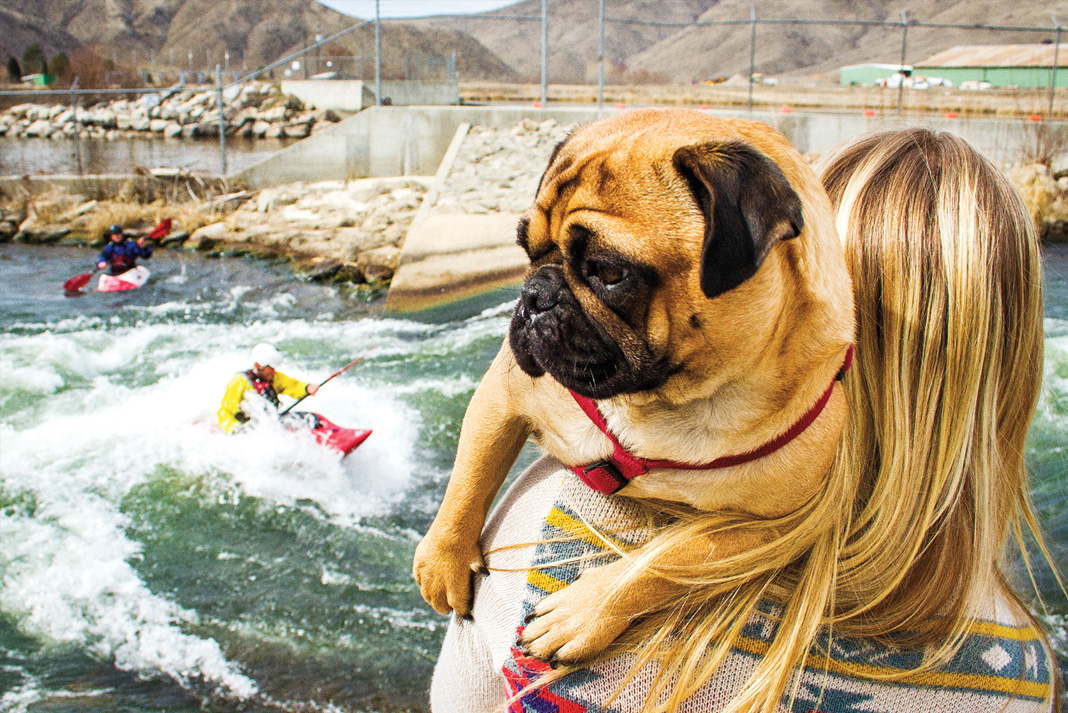
Idaho's Gutter Playpark | Photo: John Webster

North of Boise on Idaho’s Highway 55, with Old Chub beers in hand and a barbecue just big enough to manage a 12-pack of Oscar Mayers, a crew of programmers, veterinarians, marketers and business professionals ditch their suits for sprayskirts.

The magnetism that draws Idaho’s river-folk to an old fish ladder of diverted mountain runoff has held fast for decades. The Gutter is home to a tribe of grey-haired paddling people playing hooky from their desk jobs to immerse themselves in the humble pastime of gutterballin’, running figure-eights around the drops in the Gutter’s near-perfect whitewater year round.

Since long before the sculpted high-volume whitewater parks of Cascade and Boise—50 miles to the north and 25 miles to the south, respectively—the Gutter has been quietly nestled down a back road in Horseshoe Bend on the Payette River, attracting its own brand of dedicated work-dodging mischief-makers, looking for a slightly less sophisticated class of park n’ play.

The Gutter’s 100-yards of short drops, holes, surfable waves and powerful eddy lines are a tried-and-true destination for training in the pre-season, just a couple hour drive from home of the world-class North Fork Championship.

The real draw, the draw that keeps locals coming and out-of-towners tuned into Horseshoe Bend’s radar, is the massive wave that arises when a submerged air bladder—usually functioning as a dam—is partially deflated in the spring during peak runoff, diverting water through the four-tiered fish ladder.

Idaho’s Gutter Playpark | Photo: John Webster

The phenomenon is a rare sight; the last bladder deflation took place two years ago. As children whisper about the arrival of Santa Claus or a visit from the tooth fairy, the paddlers of Idaho wax poetic about the Bladder Wave that kicks off the paddling season in the earliest days of spring.

If the water level in the reservoir is high enough, the dam’s manager in Horseshoe Bend will make the call that brings paddlers from across the country. Along the Gutter they camp, in tents and under tarps, in the chilly spring air, waiting for the swell that will humble them for a new year of paddling.

“We surf on the wave, throw little blunts and do low-angle cartwheels,” says 17-year Gutter veteran, Mike Voorhees.

When Voorhees isn’t paddling the North Fork, he plays hooky from work and takes the long way home, stopping in Horseshoe Bend. He’s raised his three sons to be paddlers, starting them on the Gutter at age six before moving on to “harder stuff.”

Despite a feisty Hometown Throwdown hosted by Jackson Kayak in 2010, the Gutter has stayed outside the limelight of the paddling scene.

“They love dialing down their skills, trying different strokes or going backwards into eddies,” says paddling photographer John Webster, a frequent visitor of The Gutter.

“The older guys, that’s their jam.”


RPv17 rgb

This article first appeared in the Spring 2015 issue of Rapid magazine.

Subscribe to Paddling Magazine and get 25 years of digital magazine archives including our legacy titles: Rapid, Adventure Kayak and Canoeroots.

Why The Portage Trail Connects Canoeists To The Past

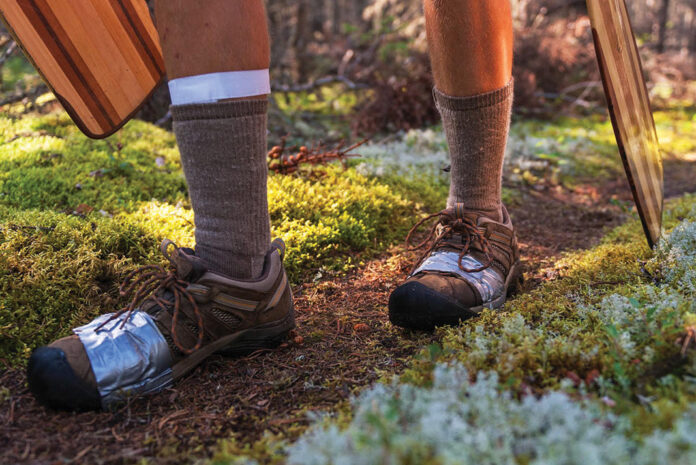
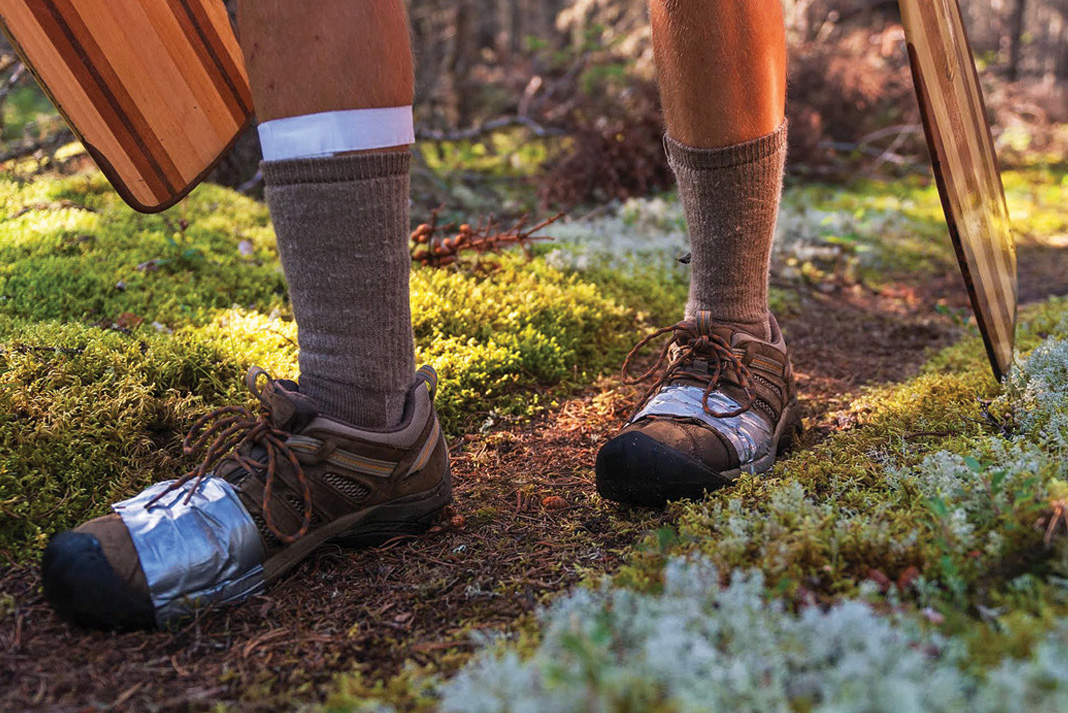
person carrying paddles along a mossy portage trail with shoes wrapped in duct tape
“What seems to us bitter trials are often blessings in disguise.” –Oscar Wilde | Feature photo: Kristian Olauson

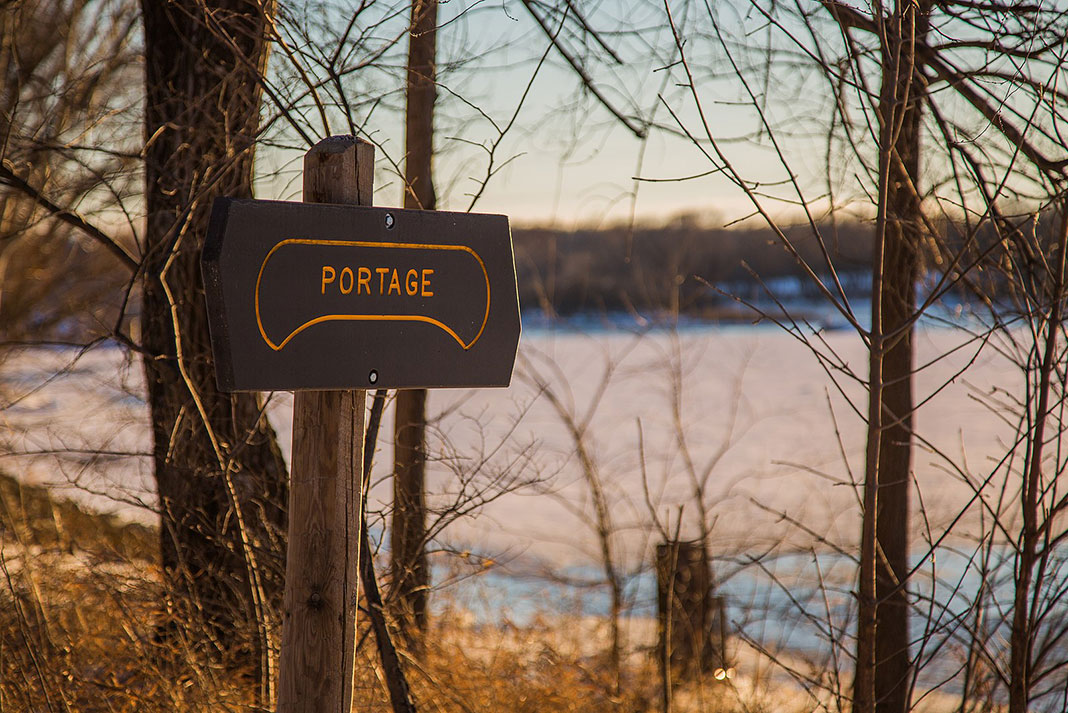
When you’re thigh-deep in muck on some godforsaken height of land, most paddlers would agree that portaging is right up there with toxic sea food and celibacy on their list of least favorite things. That is, until you stop to ponder who might have walked the same portage trail. It’s there that the magic of carrying your gear through bogs and over steeps from coast to coast to coast lies.

Why the portage trail, not the river, connects canoeists to the past

The beauty of living in a continent of lakes and rivers is that it is still possible to put a boat on the water almost anywhere and, with enough hard work and sufficient time, arrive at almost any destination.

While these waterways witnessed the march of history, the water itself is as modern as we are—swelled by today’s rains, runoff and melting glaciers. The portage trail is another matter altogether.

Change flows faster through dynamic river systems than it does over granite and dirt. Treading these ancient nastawgan, it is more than an idle dream to think that we’re walking—literally—in the footsteps of our forebears.

person carrying paddles along a mossy portage trail with shoes wrapped in duct tape
“What seems to us bitter trials are often blessings in disguise.” –Oscar Wilde | Feature photo: Kristian Olauson

However memorable the carries around canyons, rough water and falls may be, it is the arduous trails across the heights of land where canoeists have always lingered—whether for want or difficulty.

From one watershed into another

At the highest ground, waters flow, however slowly, in two directions. Invariably, that means to cross from one watershed to another is to travel through swamp. The boon of soggy feet is to come as close as a traveler possibly can to those who have come before. Height of land trails are not traveled nearly as often, the number of foot prints between ours and our ancestors is vastly smaller.

It’s on these marshy portage trails that history comes most fully alive.

In the west, along the continental divide, at Gibbons Pass, crossing from the Missouri to Columbia rivers, or vice versa, you can still sense Lewis and Clarke, more than two hundred years gone.

Further north along the Great Cordilleran spine of North America, at Athabasca Pass, you can walk with David Thompson or Sir George Simpson. You can follow their journals word for word and step by step from the east-flowing Whirlpool River over the crags and down to the mighty Columbia.

To the east, there is the legendary 19-kilometer La Loche Portage in Saskatchewan, connecting rivers flowing to Hudson Bay with Arctic waters. Here walked Sir John Franklin, on his way north to the Coppermine river in 1820, and Alexander Mackenzie, on his way to the Pacific in 1793, 12 years before Lewis and Clarke.

Perhaps the best-known place to wet your feet crossing a divide is at Grand Portage, crossing from Atlantic to Arctic waters, where the trails still ring with the silent cries of the voyageurs headed to or from the pays d’en haut.

The DNA of these men—their blood and sweat and struggle—lingers in the soil. Water flows and the river changes, but the trail never washes clean.

Cover of Canoeroots Magazine Spring 2015 issueThis article was first published in the Spring 2015 issue of Canoeroots Magazine. Subscribe to Paddling Magazine’s print and digital editions, or browse the archives.

“What seems to us bitter trials are often blessings in disguise.” –Oscar Wilde | Feature photo: Kristian Olauson


NRS Mambas

Photo: Dawn Mossop
NRS Mambas

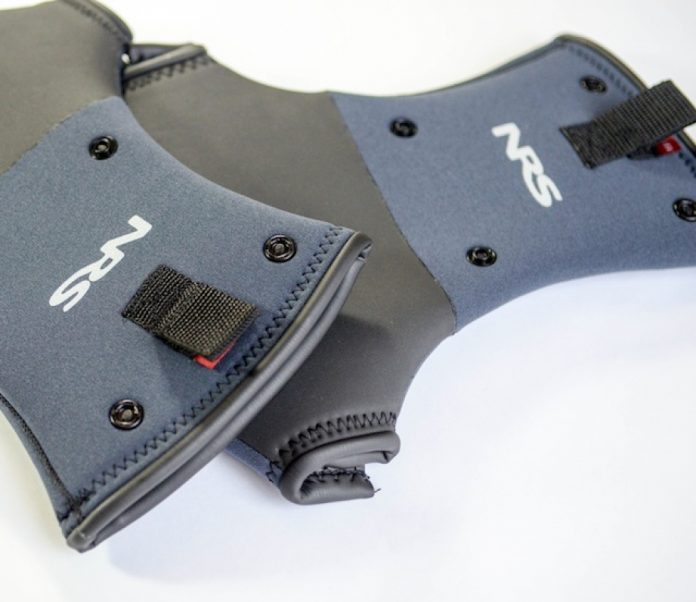
NRS Mambas are thick neoprene pogies for protecting hands from cold weather and chilly water. A Velcro strip locks them onto the shaft so I can insert my hands and make direct contact with the paddle—there’s no loss of control like with gloves and mittens.

$47.95 | www.nrs.com

RPv17 rgb


This gear review first appeared in the Spring 2015 issue of Rapid magazine.


Esquif Canoe Ceases Production

Esquif Canoe Ceases Production

On Wednesday, March 18 at 11 a.m. ET Esquif announced they had ceased production in their Frampton, Quebec facility via their Facebook page in a French and English message. 

The English message reads:

“It is with great sadness that we announce today that Esquif Canoes Inc. has stopped operating Monday, March 16th. Various elements forced Esquif to dispose of its assets and end production. 
For over 15 years, we worked hard to design and build the best canoes in the world and we want to thank all our customers and friends. Mission accomplished! Jacques and everyone from Esquif”

A representaive from Esquif was not immediately available for comment.

Whitewater canoeists had been especially excited about new material T-Formex that Esquif Canoes was manufacturing, said to be as tough as Royalex, but more abrasion resistant and lighter.

T-Formex would not have required any re-tooling for Royalex boat building operations, a boon for Esquif as well as other manufactuers that Esquif hoped to supply.

“It’s too bad, we were hoping he’d get that together,” says Tim Miller, owner of Nova Craft Canoes. Miller had planned to manufacture a number of models in T-Formex when the material became available. “It would have been great to have a product we could have molded like Royalex.” 

More to come as this story develops. 

Gear: Keen UNEEK Shoe

Photo: Kaydi Pyette
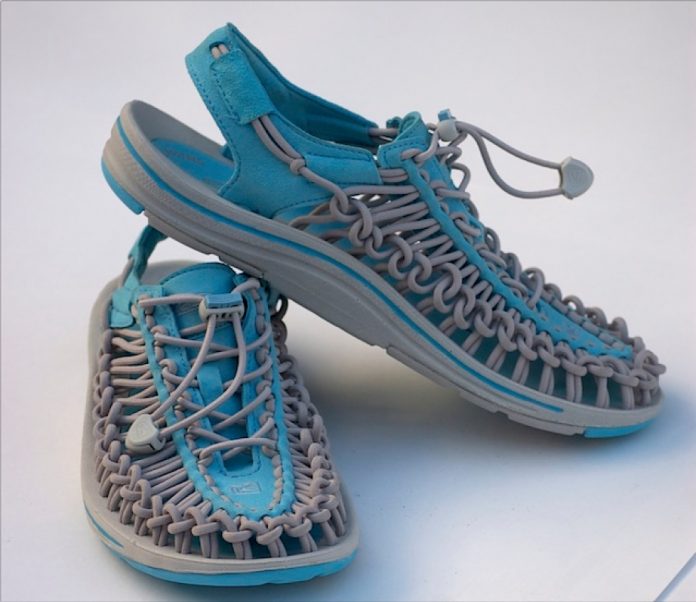
Keen's UNEEK

Keen’s new Uneek is a perfect summer sports sandal that can double as a city sandal for the bold and lacey. The super light and airy design is created using two parachute cords and a lightweight base. Survivalists love them. We love the supportive mold and custom fit the toggles offer, as well as the variety of colors.

“It’s a total love or hate shoe — people are like ‘that’s the coolest thing I’ve ever seen,’ or ‘I hate that, I want to beat up the guy who designed it.'” 

The designer of the UNEEK shares how the new shoe came about here: 


$100 | www.keenfootwear.com


Screen Shot 2015 03 18 at 10.45.19 AM

This gear review first appeared in the Spring 2015 issue of Canoeroots and Family Camping magazine.

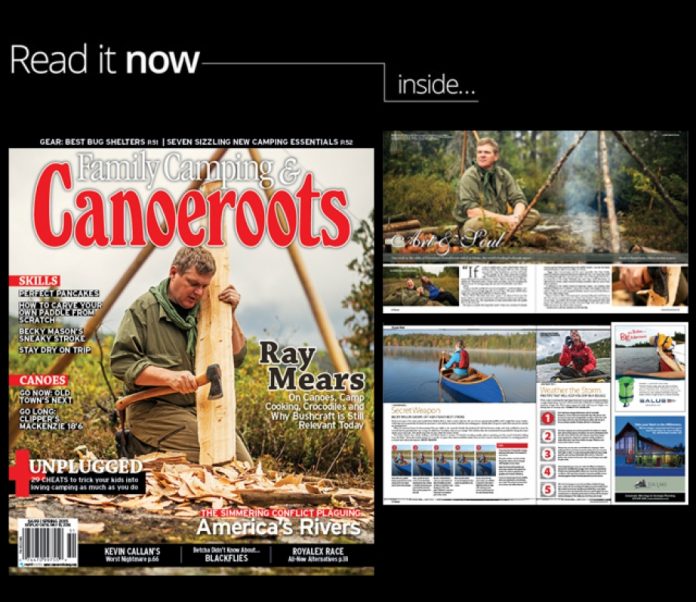
Canoeroots – Spring 2015

Canoeroots - Spring 2015
This Spring 2015 digital issue of CANOEROOTS magazine has all of the canoeing content you crave from the print newsstand edition, including trips, techniques, tips, gear reviews and profiles of your favorite adventurers, as well as additional exclusive content, like extra photos, video and links, so you can get more from your issue.
CR desktop

Also available on: 
App apple logo50Android50Google Play50amazon kindle app50nook50

Help button
 What’s Inside?

Features:

Art and Soul: One week in the wilds of Wabakimi with bushcraft expert, Ray Mears

Who Owns the River? The simmering conflict plaguing America’s rivers.

Camping Cheats: 29 ways to make your kids love camping as much as you do

Departments:

Butt End: Kevin Callan worst wilderness nightmare

Campcraft: Carve your own beautiful blades

Gear: Best bug shelters for spring camping

Expert Tip: Stay dry in a deluge

Camp Kit: Best new gear this spring

Technique: Becky Mason’s sneaky stroke

Food: Perfect pancakes

Canoe Reviews: Old Town’s NEXT and Clipper Canoe’s MacKenzie 18’6

Canvas: Recipe for photographing a tundra wolf

Canoes: All-new Royalex alternatives

Tumblehome: James Raffan on why it’s the portage trail, not the river, that connects us to our past

Editorial: Editor Kaydi Pyette’s escape from the carnival of unnecessary inventions

Base Camp: Getting your kids into higher learning

Betcha Didn’t Know About … Blackflies

Bubble Street by the bearded and funny Paul Mason

Canoescapes: Gorgeous photos that will make you want to grab your paddle and hit the water


 Archives


 Subscribe


Free Falling

Free Falling | Photo: Ciarán Heurteau

If you’ve seen another photo of Norway’s famous Flemming’s Drop, there’s a good chance it was taken from the river right shore.

The left is an inhospitable, moss-covered bank and since the take-out is on the right, there’s little reason to ever ferry across.

But with the frightening determination we’ve come to expect from some kayaker-photographers, Ciarán Heurteau imagined a new angle and knew he needed to get the shot.

A French and Irish slalom paddler, Heurteau turned to creeking in 2009.  A year later while nursing a shoulder injury, he spent more time with a camera than a kayak.

“I started reading books about photography, studying photo composition,” says Heurteau. He analyzed the works of Ansel Adams and decided he wanted to start shooting with more of a vision in mind. “I don’t want to take a photo for the sake of taking a photo,” he says, “but look at what is around, what I want and what I don’t want in the shot.”

Free Falling | Photo: Ciarán Heurteau

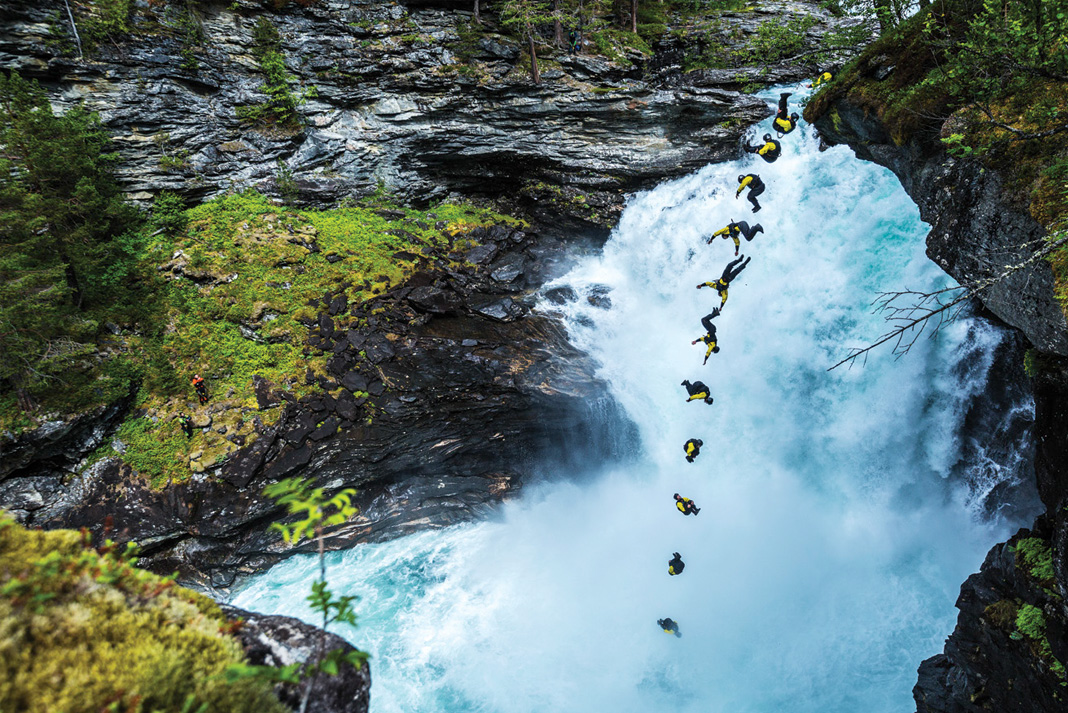
When he saw a little ledge two meters down from the mossy left bank, he knew it would be perfect the perfect vantage point to shoot paddler and diver Sven Lämmler, along with the full scale of Flemming’s Falls.

“The only problem was accessing it,” says Heurteau. “It was just an overhanging rock with a lot of unstable moss on top of it.”

Praying the ledge would hold, he jumped down and found his footing to set up for the perfectly composed photo he’d imagined.

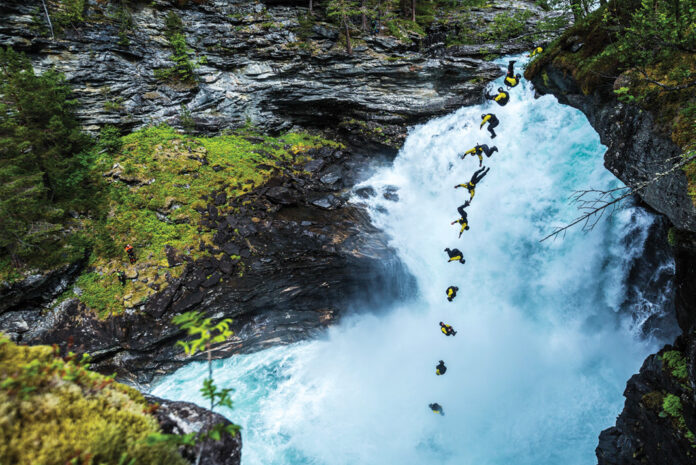
The result is this composite image, in which Lämmler, 15 minutes after running the falls by kayak, pulls off a front pike to branny to back tuck, for a total of three rotations before landing in the Rauma River.


RPv17 rgb

This article first appeared in the Spring 2015 issue of Rapid magazine.

Subscribe to Paddling Magazine and get 25 years of digital magazine archives including our legacy titles: Rapid, Adventure Kayak and Canoeroots.

Stop Obsessing Over Other Kayakers’ Adventures And Get Your Own

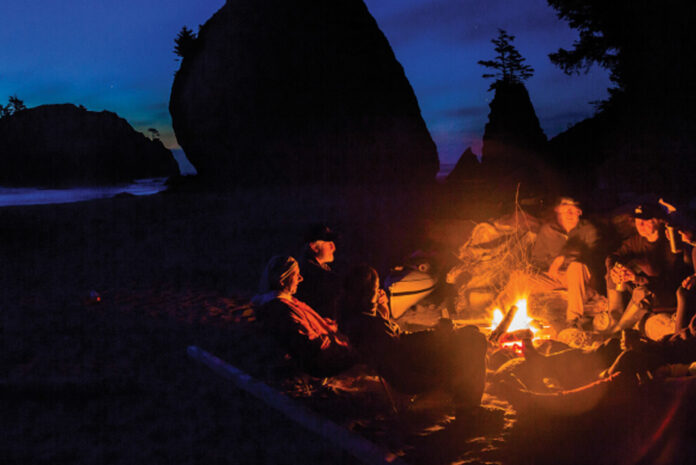
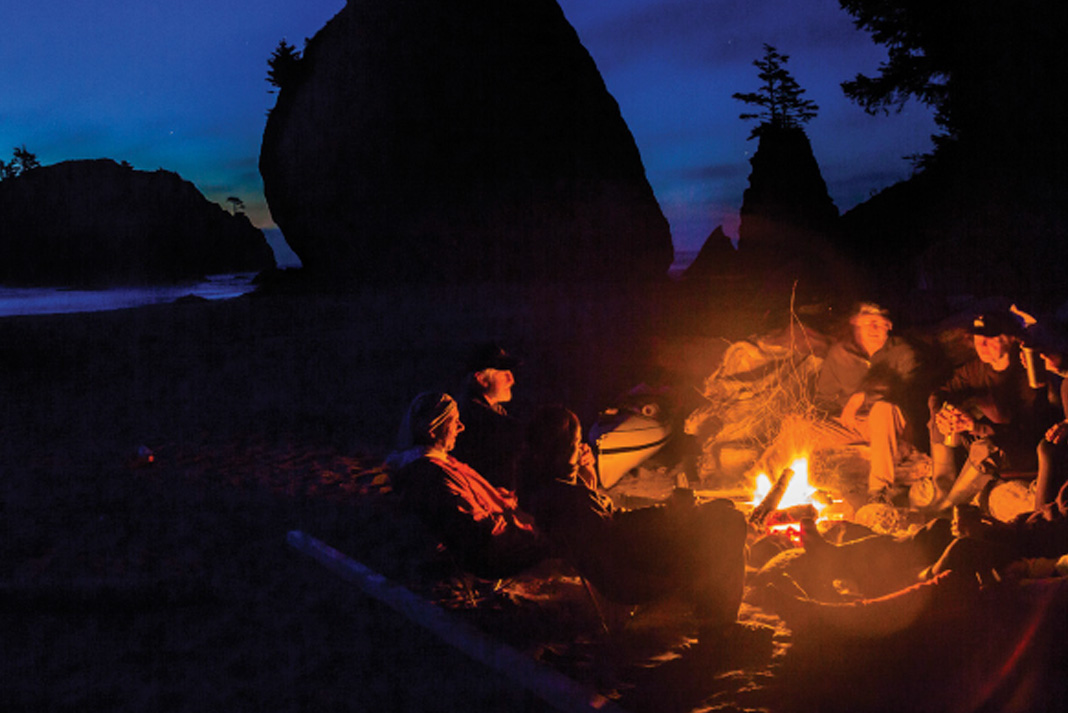
a group of people sit around a campfire while on a minor kayak adventure
Choose your own kayak adventure. | Feature photo: Gary Luhm

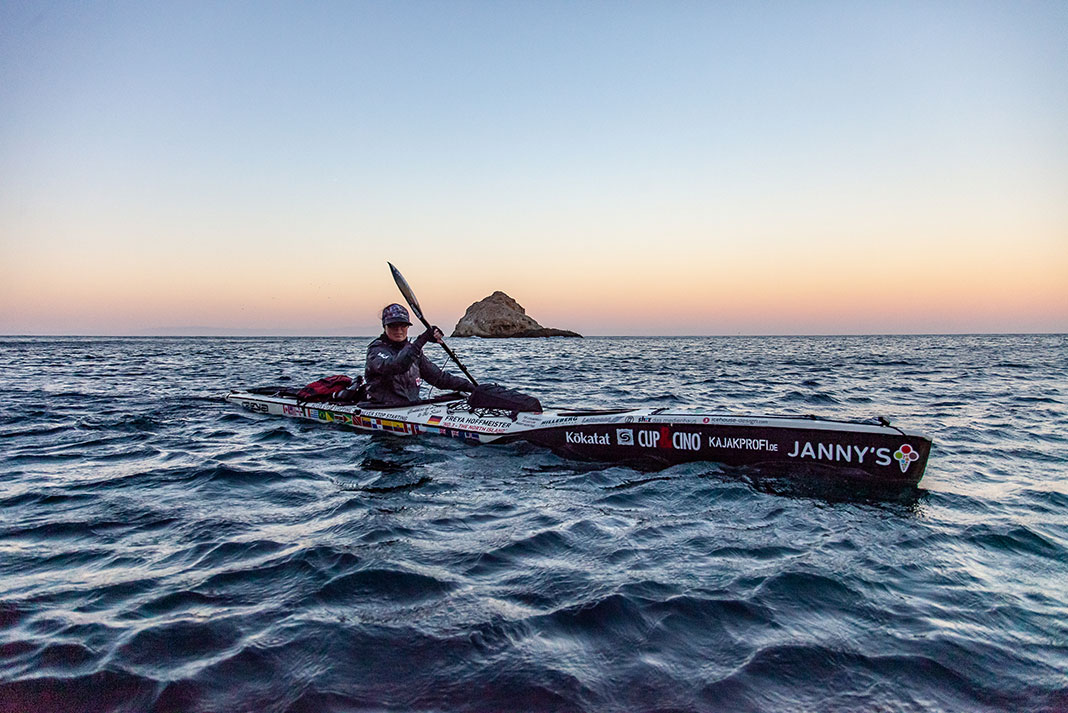
While I write these words, Sarah Outen and Justine Curgenven are wending their way through the Aleutian Islands as part of Outen’s multiyear London2London Via The World enterprise. Russell Henry is somewhere off Vancouver Island, attempting a new speed record. Lee Sessions and Jenny Johnson are dragging canoes upstream from Hudson Bay to Ungava Bay, portaging 21 waterfalls. Jon and Kirti Walpole are forging along 900 kilometers of Nunavut rivers.

Meanwhile, I’m struggling to squeeze in a week’s tour of the comparatively local and placid Discovery Islands.

Stop obsessing over other kayakers’ adventures and get your own

With hectic lives and little time to plan our own trips, paddling is becoming a spectator sport. We live vicariously through the blogs and SPOT reports of those with the disposable income, gumption and skill to spend months braving foggy Alaskan crossings or dodging mosquitos and polar bears across the Arctic. But I don’t envy them.

Besides being long, arduous, expensive and logistically complex, these trips share another characteristic: they don’t sound remotely fun.

a group of people sit around a campfire while on a minor kayak adventure
Choose your own kayak adventure. | Feature photo: Gary Luhm

They’re feats of athletic prowess and dedication, and I’m sure if I did trips like that I’d be a better person in some abstract way. But I’m not likely to. Mega-trips are impressive but not necessarily inspiring—the gulf between these journeys and my paddling is as wide as the Pacific Ocean that Outen spent 150 days rowing across.

At a recent sold-out lecture I attended by another mega-tripper, the audience left shaking their heads with both awe and a sense of irrelevance. The average paddler is fully aware they’re unlikely to ever embark on a trip with grueling 40-mile days, considerable danger and weeks of separation from their families.

To inspire, journeys must be possible for people without type triple-A personalities. Seduced by the extreme, even active paddlers can feel like slouches on their local routes instead of enjoying themselves.

That’s not the fault of the ambitious adventurers who are just following their muse. However, the voyeuristic Internet tracking of mega-expeditions is the paddlesports equivalent of trashy celebrity magazines that line grocery checkout lanes.

Just as following the glitz of the rich and famous can leave us dissatisfied with our otherwise fulfilling lives—why aren’t I driving a Ferrari and dating Taylor Swift?—the mega-expedition obsession robs more realistic trips of their own considerable grandeur.

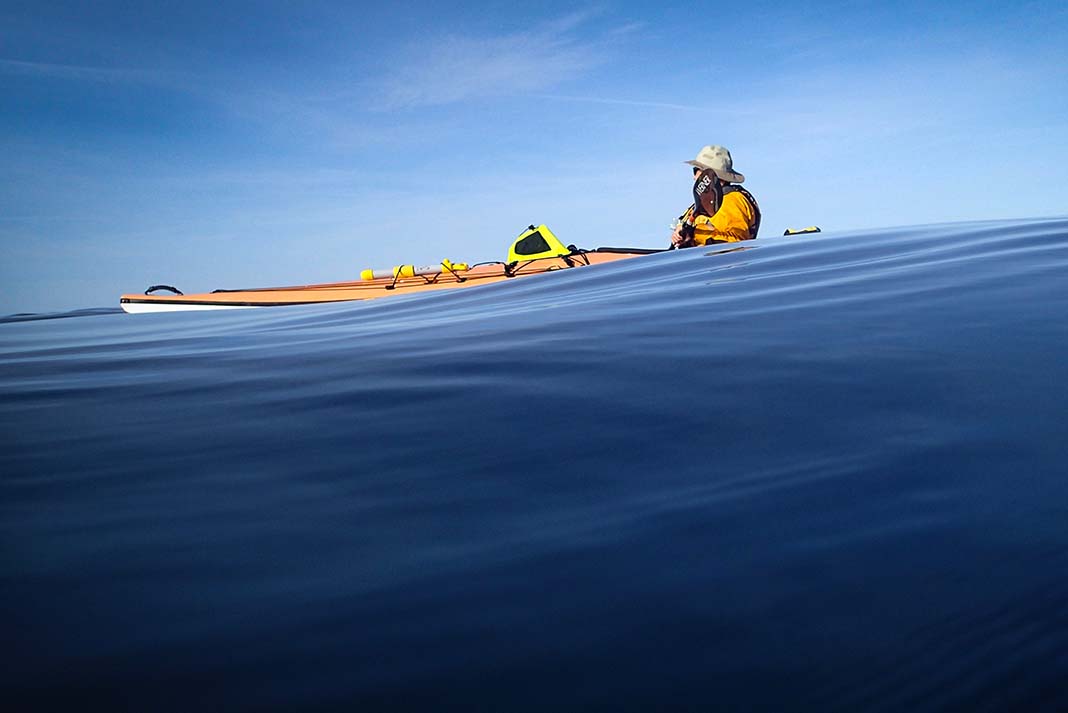
woman in hat paddles past rocky shore on a less ambitious kayak adventure
Whatever their length, kayak trips work in the ways that matter to us as human beings. | Photo: Courtesy Delta Kayaks

From mundane to momentous, the right trip fits you

Though my paddling résumé lacks epics and even frequent overnighters, I’m not an armchair kayaker. I’ve been out for a paddle six times in the past week. They were all short jaunts near my front door, squeezed between deadlines, meetings and social gatherings.

The value of these so-called mundane trips isn’t that they’re the longest, fastest or most daring. It’s that they work: They renew our spirit, strengthen friendships and rekindle our love of nights spent under the stars and in wild places.

When I do manage longer trips, I’d rather camp on a wilderness surf beach for three days than chart an expedition that can be measured on a globe. I cover short distances, take layover days and tell jokes around the campfire. Friends stop following my SPOT updates when they realize I’m not moving much. I may have fewer stories, but I like to think I have more fun.

I’m not the only one to feel this way. A countercurrent to our romanticizing of the mega-trip is gaining steam. Shawna Franklin and Leon Somme of Body Boat Blade International are promoting the Jellyfish Award for the slowest circumnavigation of Vancouver Island. If I ever compete for it, I’ll seek sponsorship from a hammock company, Penguin Books and Clear Creek Distillery instead of a racing kayak manufacturer.

Regular Adventure Kayak contributor Neil Schulman is currently seeking sponsorship for a solo, unsupported circumnavigation of Ross Island—a four-mile expedition in downtown Portland, Oregon. He won’t be tracking his progress online.

Cover of 2015 Paddling Buyer's GuideThis article was first published in the 2015 Paddling Buyer’s Guide. Subscribe to Paddling Magazine’s print and digital editions, or browse the archives.


Choose your own kayak adventure. | Feature photo: Gary Luhm