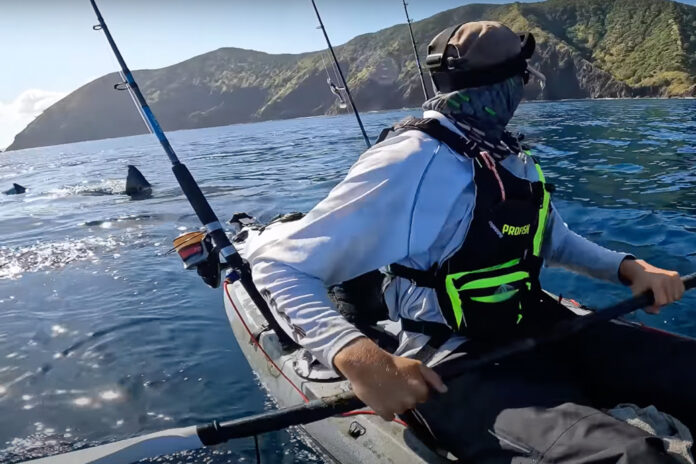
Kayak Angler Matt Wells is followed by a shark in New Zealand. Feature Image: Matt Wells | YouTube
Who hasn’t been out paddling when struck but the eerie feeling that something big is below them? Whether you paddle small lakes and rivers or the big blue, there is something about what lies beneath that can fill you with unease.
For these kayakers, any unease was justified. Check out three of the wildest kayaker encounters with really big fish on the internet:
KAYAKER: The magical moment this kayaker is surrounded by leaping bluefin tuna
On a sunny morning on the shores of Devon, England, kayaker Rupert Kirkwood found himself surrounded by a school of leaping bluefin tuna.
The bluefin tuna were feeding on garfish, leaping through the air around Kirkwood while his son, a wildlife filmmaker caught it all on camera. Can you imagine paddling with these massive torpedo-like fish flying through the air around you?
Overall, we’re calling this magical moment a win for the kayaker!
BIG FISH: This packrafter in Patagonian Chile was briefly swallowed by a whale
While a whale is technically a mammal and not a fish, ending up in the mouth of a whale rising from the depths is the stuff of paddling nightmares.
19-year-old Adrian Simancas was engulfed by a humpback whale while packrafting in Patagonian Chile. Simancas was only in the mouth of the whale for a few moments, making for one of the wildest kayaker vs “big fish” moments on the internet. This terrifying moment is definitely a win for the whale.
DRAW: Kayaker “hunted” by Great White Shark
While kayak fishing on the New Zealand coast, 19-year-old Matt Wells found himself in for a bigger fish than he bargained for when a massive emerged from the depths to inspect his rudder. In the viral video, the shark followed Wells for a while before returning to the depths and Wells made it safely to shore.
While the shark could’ve easily ruined Wells’ day, we’re calling this a draw thanks to Well’s positive attitude about the encounter.
“I think he was just giving me a fright and having a bit of fun,” Wells told newscasters in an interview about the shark.
Regardless of how and where you plan to paddle, price is often a determining factor in purchasing a kayak. It’s a common question when people are considering getting into the sport: “So, how much does a kayak cost?” As with other queries, kayak prices vary with the style and—most importantly—construction and features. What you might really be seeking to learn though is how low of a price is reasonable for a boat you can depend on to float or carry you on a voyage of your wildest aspirations.
This article breaks down the simple question into numerous categories to serve as a guide for selecting the right boat for your budget.
The Skylark is one of Eddyline’s best-selling recreational kayaks. | Photo: Eddyline
The average cost of a kayak
Kayaking is a sport in which you truly get what you pay for. Take for example recreational and sit-on-top kayaks intended for calmer waters.
You can find a plastic kayak at everyday box stores like Walmart or Dick’s Sporting Goods for less than $500 USD.
At a large outdoor retailer such as REI a recreational kayak can go for between $500 and $1,200 USD.
Meanwhile, at a paddling specialty store, recreational kayaks and a higher-performing next level called day-touring kayaks are as low in cost as around $500 and range up to almost $2,000.
The entry-level recreational kayaks sold at a box store are the lowest cost, however they are also limited in features, outfitting, and construction in a way that affects their performance, comfort and scope of intended use. You’ll find basic outfitting, including rudimentary molded seats and less comfortable back support, reflecting the fact that these kayaks are meant for shorter outings on the water.
Recreational kayaks sold at places like REI are often in the $500 to $1,200 range. These models are also meant for use on calm sheltered water, however, they also tend to be the basic models offered by brands who produce higher-performance kayaks. This means the company is able to incorporate some of their well-developed outfitting, features, and design technology into these base models—which means greater comfort and performance for you.
Many paddling specialty stores also carry the lower-cost entry-level kayaks offered by the top brands at prices as low as around $500. And in contrast, they also carry the brand’s more premium kayaks for recreational and day-touring use which can cost up to $2,000. The best recreational and day-touring kayaks can be made of lighter-weight plastics, have outfitting of a similar grade as you would find in a touring kayak, and include cherished built-in features for both paddler use and safety. At a paddling store, you can see firsthand the difference between a range of low-cost to high-performance kayaks and decide what will work best for you.
Prices by type of kayak
The price of a decent kayak also varies by type of kayak. Here’s an overview of what to expect.
Recreational kayak cost
As mentioned before, sit-on-top and sit-inside recreational kayaks have a large price range, dictated by where you shop for your kayak. Kayaks at Walmart or Costco can run as little as $200. Meanwhile, the popular Wilderness Systems Pungo 125, a recreational kayak with upgraded comfort and safety features, retails for $1,219. At the higher end of the range, Eddyline’s best-selling Skylark retails for $1,749.
A day-touring kayak between 12 to 15 feet long is the ideal choice for someone who wants a kayak with more performance and glide than a recreational kayak. The price of a day touring kayak increases significantly with material and lightness in weight. For example, a plastic day touring kayak price may be $1,200. On the other hand, a top-of-the-line composite day touring kayak (constructed of fiberglass or ultralight aramid or carbon fiber) can cost over $3,000.
The most capable touring kayaks, also often called sea kayaks, cost between $1,500 and $5,000, depending on construction (rotomolded plastic is cheapest). These kayaks are sold at specialty paddlesports stores and they’re aimed at overnight and expedition kayakers, and fitness paddlers. At this price, you are purchasing a kayak that’s been carefully designed for performance, safety and comfort.
This category is defined by kayaks that are capable of paddling long distances efficiently; include critical safety features like bulkheads and smaller cockpits for use in open and exposed water; and feature comfortable seats and thoughtfully arranged outfitting, such as ergonomic seats and thigh braces that promote comfort and paddling efficiency.
Price increases substantially with high-tech, lightweight materials. At the upper end of this price category you’ll find space-age materials like fiberglass, aramid and carbon fiber composites.
Touring kayaks offer more performance than recreational kayaks and can vary in cost depending on materials and size. | Photo: Delta Kayaks
Whitewater kayak cost
You may think that the smaller overall dimensions of a whitewater boat would mean this type of kayak is cheaper than all the rest. However, the typical price for a new whitewater kayak is about $1,000 to $1,700. They are often about the same price as a day touring kayak. At this price you’re getting a brand new whitewater kayak with comfortable outfitting and a capable design made for navigating or playing in rapids.
Like downhill skis or mountain bikes, whitewater kayak designs are tweaked more often than other categories—meaning that it’s possible to find great deals on the used market, especially in regions with strong whitewater communities, such as the Ottawa Valley, Pacific Northwest or the U.S. Southeast.
For top picks and expert reviews, check out Paddling Magazine’s guide to the best whitewater kayaks.
Fishing kayak cost
There’s huge variability in fishing kayak prices depending on where you buy the kayak and the accessories and features it has. For example, a cheap sit-on-top fishing kayak can be purchased for under $500.
But if you want to invest in a top-of-the-line fishing kayak with features as advanced as a pedal drive or motor, expect to invest $2,000 to $6,000.
Tandem kayak cost
The cost of a two-person, or tandem kayak, varies considerably by type and construction. You can purchase a two-person recreational kayak for well under $1,000 (two-person inflatable kayaks can even run under $500); in contrast, a high-end composite tandem sea kayak retails for nearly $6,000.
Inflatable kayak cost
Inflatable kayaks are generally some of the most affordable options. The lowest cost inflatable kayaks are similar to entry-level recreational kayaks. The price of the Sea Eagle 370 for example is under $500. Inflatables are also an affordable option for youth and novice paddlers looking to enjoy whitewater. The Aire Tributary Spud retails for $539, which is less than half the price of a new hardshell whitewater kayak.
Inflatable kayaks are available at an affordable cost and work well for a variety of paddling types. | Photo: Sea Eagle
Folding kayak cost
Folding kayaks have gained popularity in recent years with an increasing number of options. The price of a folding kayak varies depending on construction and size. The simplicity of a boat like the Oru Lake comes with a low price tag at $500 on par with other recreational kayaks. A more complex folding kayak such as the Trak 2.0 costs just under $4,000. It is seaworthy boat built for expeditions with a capability reflected in a cost similar to touring kayaks built of composite materials.
The price of a used kayak often mirrors the price of a similar new one. In general, a “good deal” for a used kayak is about half of its retail price. However this metric varies from model to model, and especially between the different categories of kayak (e.g., recreational versus sea kayak).
Age is the biggest influence of used kayak cost. Several variables go along with age: an older kayak will have seen harder use (or longer storage)—its hull may be damaged by impact, abrasion or UV radiation; and older kayaks often feature less refined comfort features, such as basic (uncomfortable) seats and outfitting.
It’s fair to say that a cheap, box store kayak that’s in decent shape and sold on the used market shouldn’t cost more than half of its retail price. However, some specialty sea kayaks, including high-performance, British-made touring kayaks, are harder to come by and hence demand higher prices—even if they’ve been used.
It’s critical to do your research and know the retail price of the boat you are considering. It’s just as important to inspect a used kayak for damage that may compromise its paddling efficiency, safety and comfort and therefore decrease its value.
How much to spend on a kayak
Ultimately, the question you’re trying to answer is how much is reasonable to spend on a kayak. The goal of this article is to have hopefully shown how this comes down to a combination of paddling aspirations and, of course, budget. Saving a few bucks and buying one of the cheapest kayaks is fine if you plan to paddle casually, making short outings on sheltered water. However, your skills will quickly exceed the capacity of such a boat if you plan to paddle more seriously—and you’ll be frustrated with a basic, inefficient and uncomfortable design that no longer feels like a bargain.
Weight is another major consideration: A lighter kayak is a wise (albeit more expensive) investment if your paddling reality requires you to transport your kayak to and from the water. Retail prices for new kayaks will always be inflated compared to used. One compromise solution, especially if you live in an area with a robust paddling community, is to search the used market for the kayak of your dreams. You may find a gem that meets all your needs for a fraction of the retail price.
If you are out shopping for a new kayak, the costs shared earlier are a fair expectation. Are there super cheap options where you get your groceries? Sure, but it’s a common misunderstanding that low-cost kayaks aren’t available at outdoor stores or paddling shops. And, circling back to how we started the conversation, when buying new in this sport, you do get what you pay for.
As the owner of a specialty kayak retailer, AQ Outdoors, my team and I are often the first information source for many people who are considering kayaking for the first time. When we chat with people, one of the most common discussion points is how to get in and out of a kayak.
For those of us who have kayaked before this may seem to be a trivial question, but it is one that causes concern for many potential paddlers. It’s an awkward skill to learn, yet it is essential. There are many different scenarios for entering and exiting recreational and touring kayaks. You could be on a rocky beach, a dock or a sandy beach. The technique we have chosen to share here is simple, it works well for sit-on-top or sit-inside kayaks, and it can easily be adapted to most locations.
How to get in and out of a kayak
1. Carry kayak to the water
Carry your kayak to the water’s edge or utilize a kayak cart if that is appropriate.
2. Place boat parallel to shore
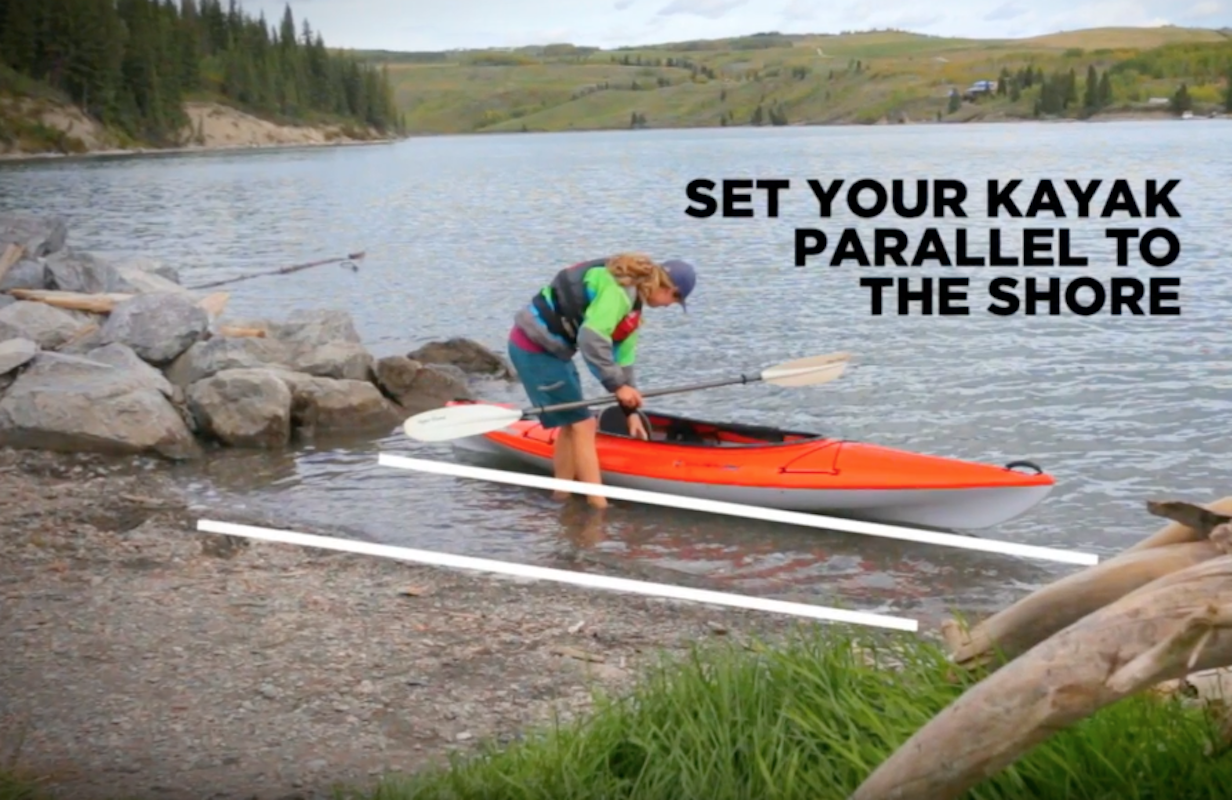
Place your kayak in the water parallel to the shore and just deep enough to float.
Photo: Simon Coward / AQ Outdoors
3. Set your paddle as an outrigger
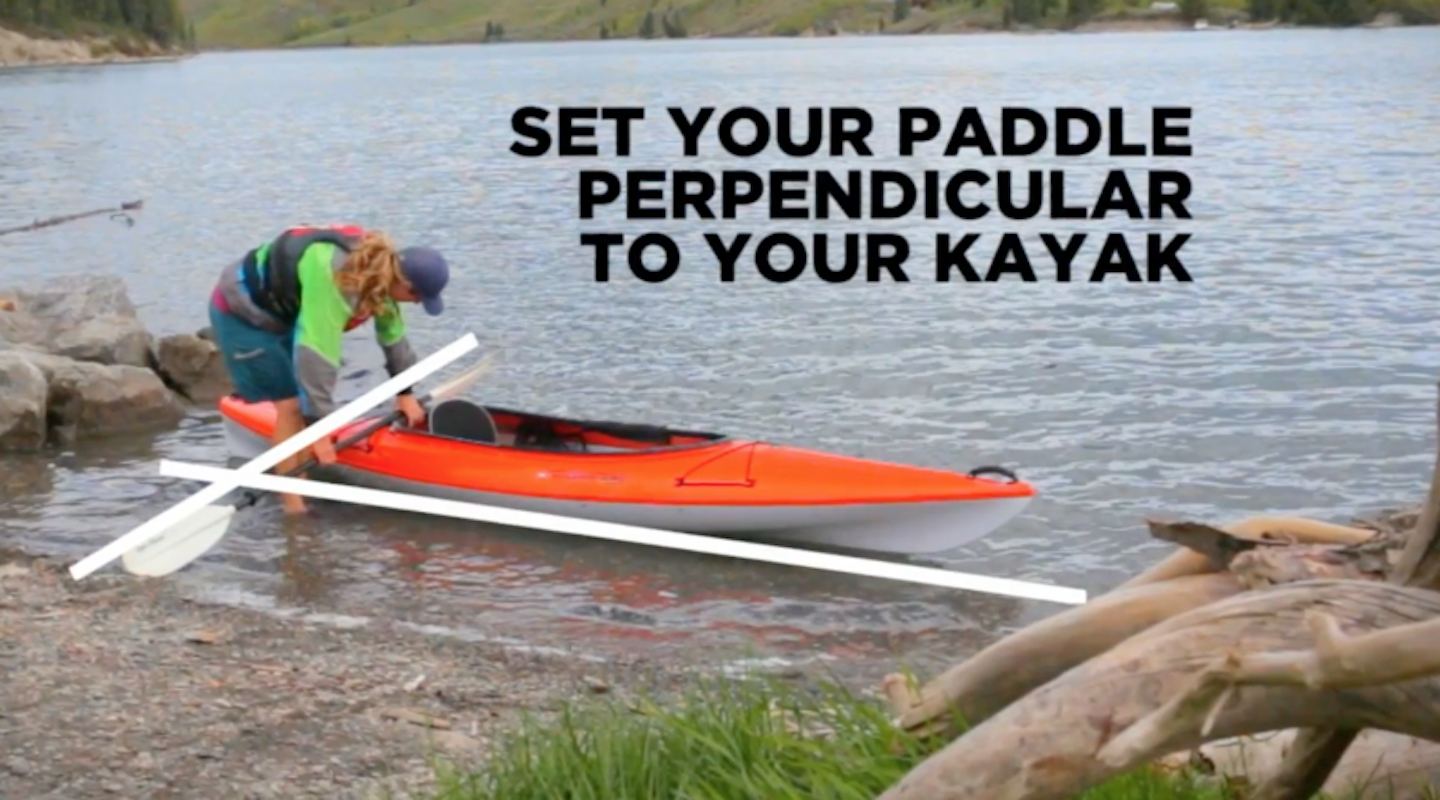
Now place your kayak paddle over the deck of the boat behind the cockpit at a 90-degree angle to the boat. This creates stability and improves your balance by bracing the paddle on both the shore and deck of the kayak.
Photo: Simon Coward / AQ Outdoors
4. Place hands across paddle and lower yourself
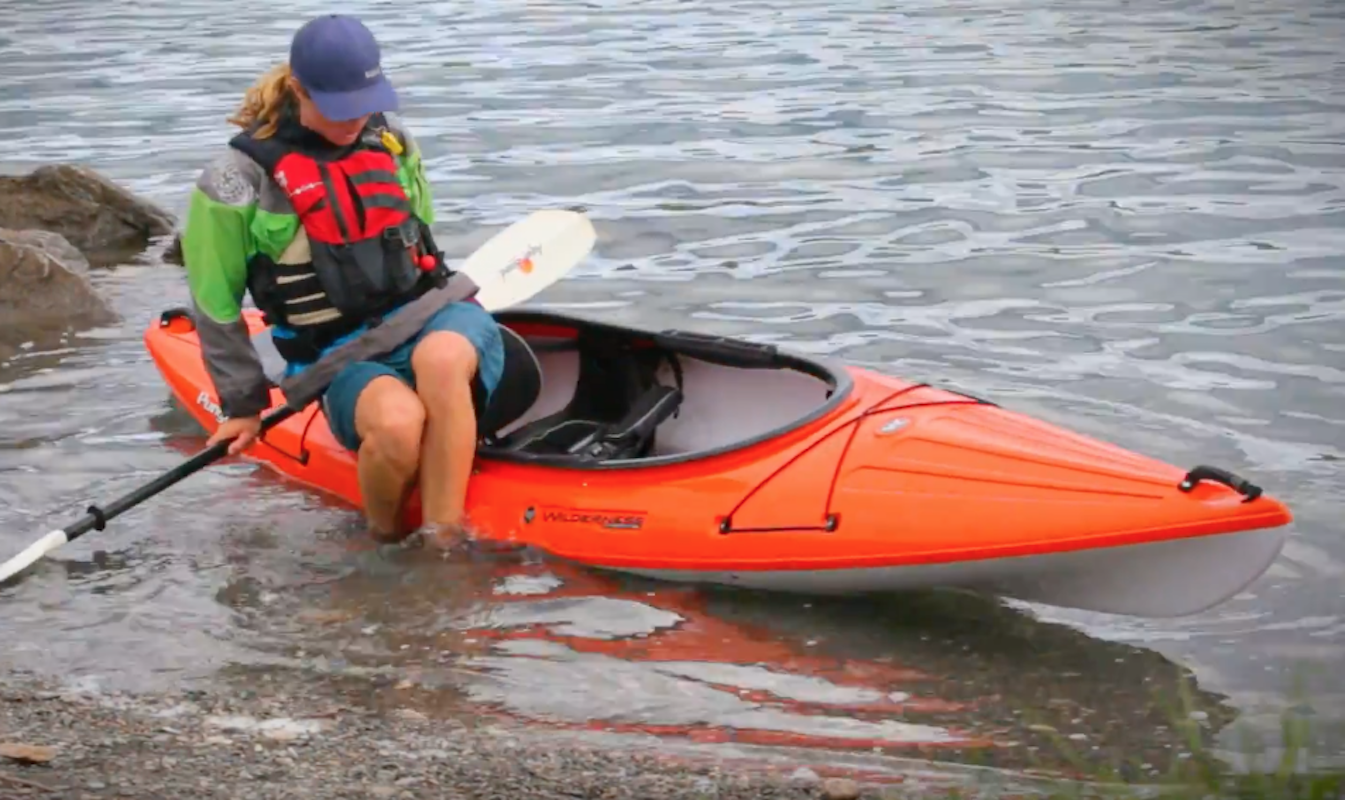
Stand in front of the paddle facing the front of the kayak and put one hand at each end of the paddle shaft. The hand behind your seat should clasp both the paddle and the cockpit rim of your kayak. Bend your knees to lower yourself to a squat.
Kayaker lowers themself using paddle as an outrigger. Notice how the boat leans slightly toward shore. Photo: Simon Coward / AQ Outdoors
5. Step closest leg into kayak
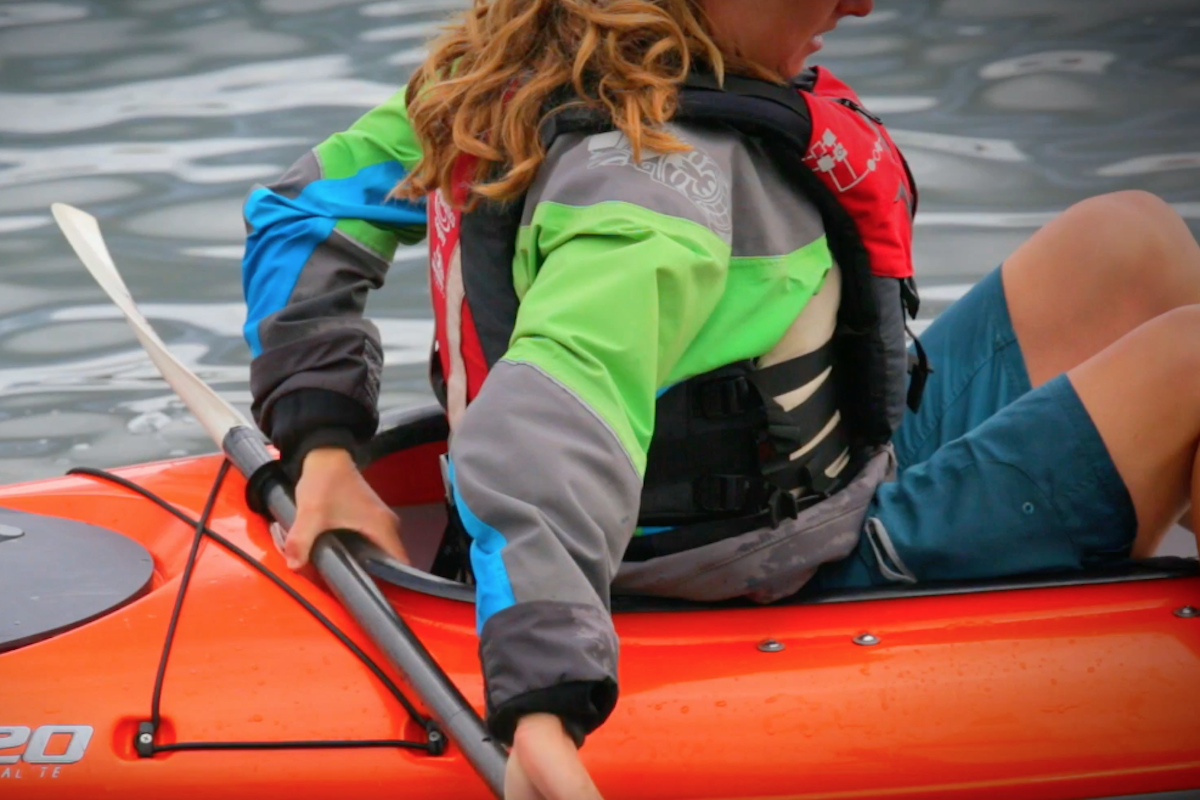
Using your hands and paddle as support, take your leg closest to the boat and step into the cockpit (all the way to the far side if possible). Make sure to use your paddle and hands to keep the boat balanced.
Notice how the paddler clamps the kayak and the paddle for stability as she steps into the kayak. Photo: Simon Coward / AQ Outdoors
6. Step second leg in
Once balanced, step your other leg into the boat and lower yourself down into the seat. The first few times this may feel more like a “flop” into the seat. However, as you practice you will find yourself getting into the seat with ease.
You are now ready to set out!
Getting out of a kayak
To get out of the kayak, simply mirror the steps you followed to get in but in reverse.
Position your kayak parallel to shore.
Lay the paddle on the deck behind you and perpendicular to the kayak so one of the blades leans on the shore as an anchor.
While clasping the paddle, slide yourself from the seat into the low squat position leaning slightly toward the shore.
Swing one leg out at a time on shore.
Benefits of this technique
It’s a versatile and easy way to get in and out of most types of kayaks.
It prevents unnecessary scratching and damage to your boat. Some methods have you get in on shore and slide into the water which can cause needless wear and tear on the boat.
With practice it is an easy and controlled way to get into your boat.
It doesn’t require any gear other than what you will have available on any paddling outing.
Docks can be tricky because they often sit higher than your kayak on the water. This is one reason launching from shore is preferred, but this isn’t always an option. Here are a few tips to help if a dock provides a better or only choice for you to get into your kayak.
Similar as in the from shore method, place your kayak in the water parallel with the dock while keeping a foot or hand on it so it doesn’t float away.
Also lay your paddle on the dock next to you so it will be accessible to grab once you’re in your boat.
Sit on the edge of the dock over your seating area and put your feet on the inside floor of the kayak.
Facing toward the bow, use the dock to lower yourself. Slide your feet forward into position as you lower onto the seat.
Once you are seated and stable grab your paddle and either push away from the dock or pull yourself along it out to the end.
The instructions provide in this article are intended to be useful and concise. After a few rounds of practice this will put your mind at ease about how to get in and out of a kayak.
Pelican, founded in 1968, is one of the largest kayak manufacturers in the world. Feature Image: Pelican
On February 28, 2025, Pelican International Inc filed a Notice of Intention to Make Proposal (NOI) under the Bankruptcy and Insolvency Act (BIA) in Canada, citing challenges in the post-COVID economy including U.S. tariffs, significant shifts in market demand, supply chain disruptions, and rising costs. In a company-issued statement, Pelican emphasized that this filing does not signal bankruptcy or closure but is instead a “proactive decision to seek protection under the BIA.”
Pelican declined further comment.
Insolvency refers to the state of being unable to meet debt obligations; insolvency does not necessarily lead to bankruptcy.
With US-Canada tariff disputes, Quebec-based Pelican seeks insolvency protection
Pelican stated the goal of initiating the BIA process is to allow the company time and a legal framework to adjust its finances for long-term stability. Pelican retains full control over its operations and daily affairs, according to the statement.
The filing comes after increasing uncertainty surrounding global trade policies, with fluctuating tariffs and trade disputes involving the U.S., Canada, Mexico and China. The market instabilities, combined with lingering supply chain disruptions following COVID-19, where paddlesports inventory peaked as demand began to drop, have contributed to financial pressures for manufacturers worldwide.
Currently, Pelican’s U.S. subsidiaries are not subject to the NOI proceedings, but Pelican noted it is evaluating whether to seek similar protection for US subsidiaries in the future.
In the statement, Pelican stated that it will not reduce its operations, and will “communicate any relevant updates directly with employees” regarding any positions eliminated as part of the restructuring process.
“We are committed to keeping all stakeholders informed throughout this process,” concluded the statement.
News comes after a recent push to expand
Initially founded in 1968 with a staff of 10 people, today Pelican’s portfolio includes Wilderness Systems, Dagger, Perception, Advanced Elements, Boardworks, Mad River Canoe, and GSI Outdoors.
In 1970, Pelican was purchased by Gérard Élie. In the years following, the first Pelican pedal boats, canoes, snowmobiles, sleds, and motor boats were produced using thermoformed plastic, a process where plastic is heated then formed into a mold popular in kayaks as a compromise between heavy polyethylene kayaks and lightweight composite kayaks.
Pelican, founded in 1968, is one of the largest kayak manufacturers in the world. Feature Image: Pelican
In 1995, Pelican International Inc was acquired by Christian and Antoine Élie who had managed the company since 1979. Since 2001, Pelican’s head office has been located in Quebec, Canada.
Pelican has aggressively expanded in recent years. In 2019, Pelican acquired Confluence Outdoors Inc; in 2021 Pelican acquired Advanced Elements Inc, and in 2022 Pelican acquired GSI LCC.
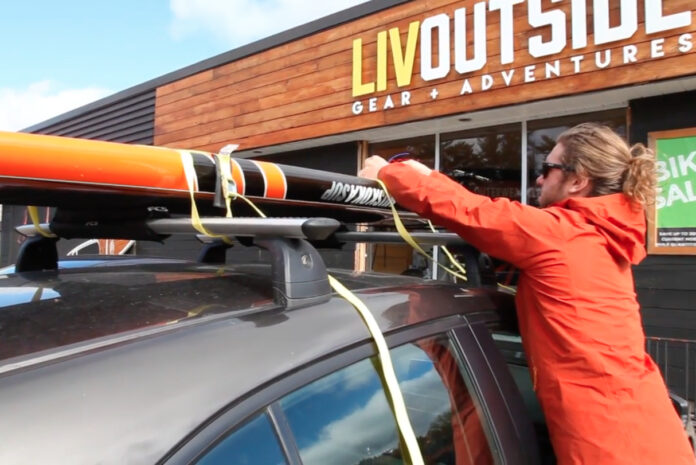
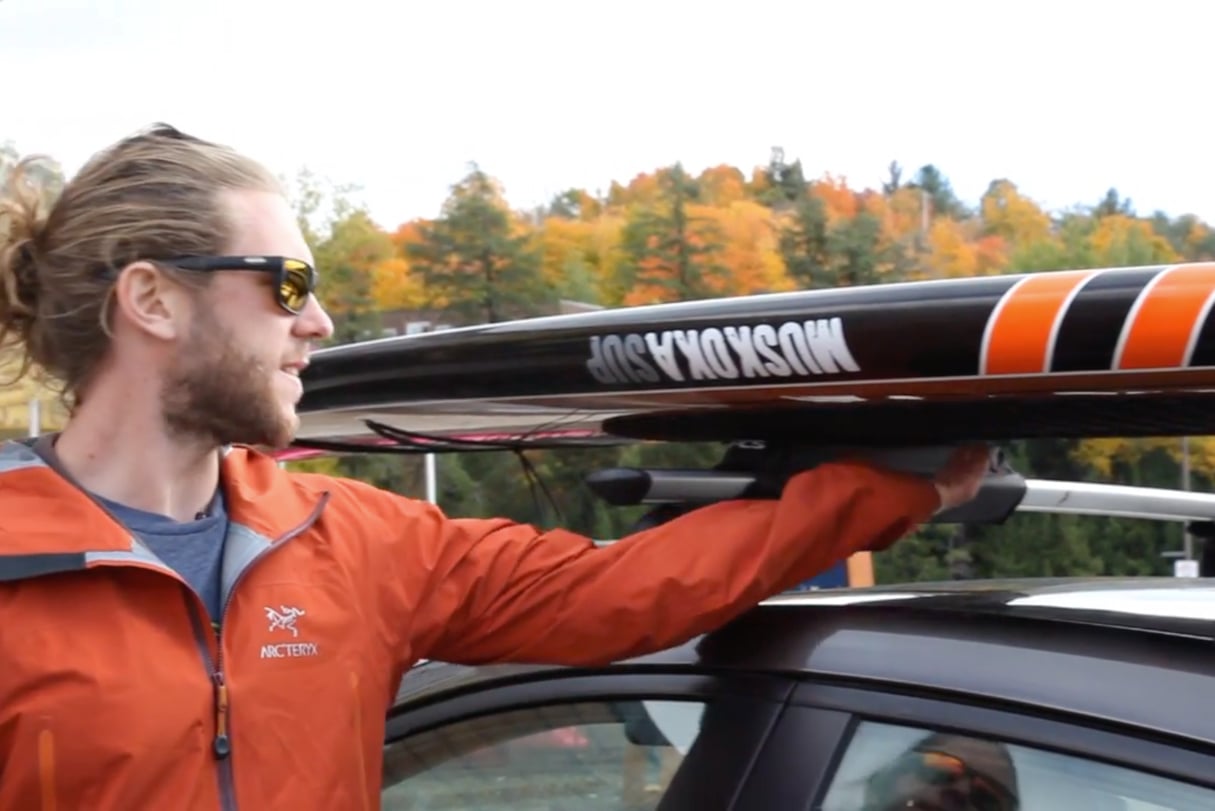
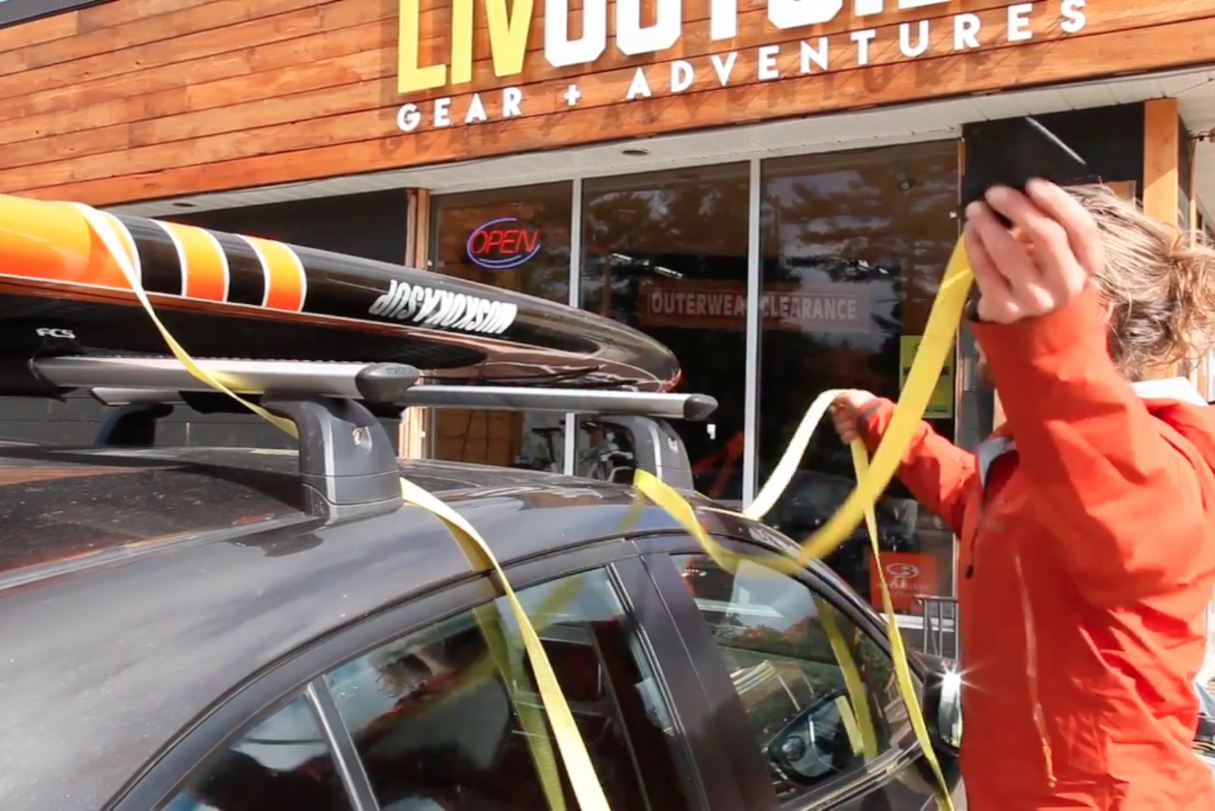
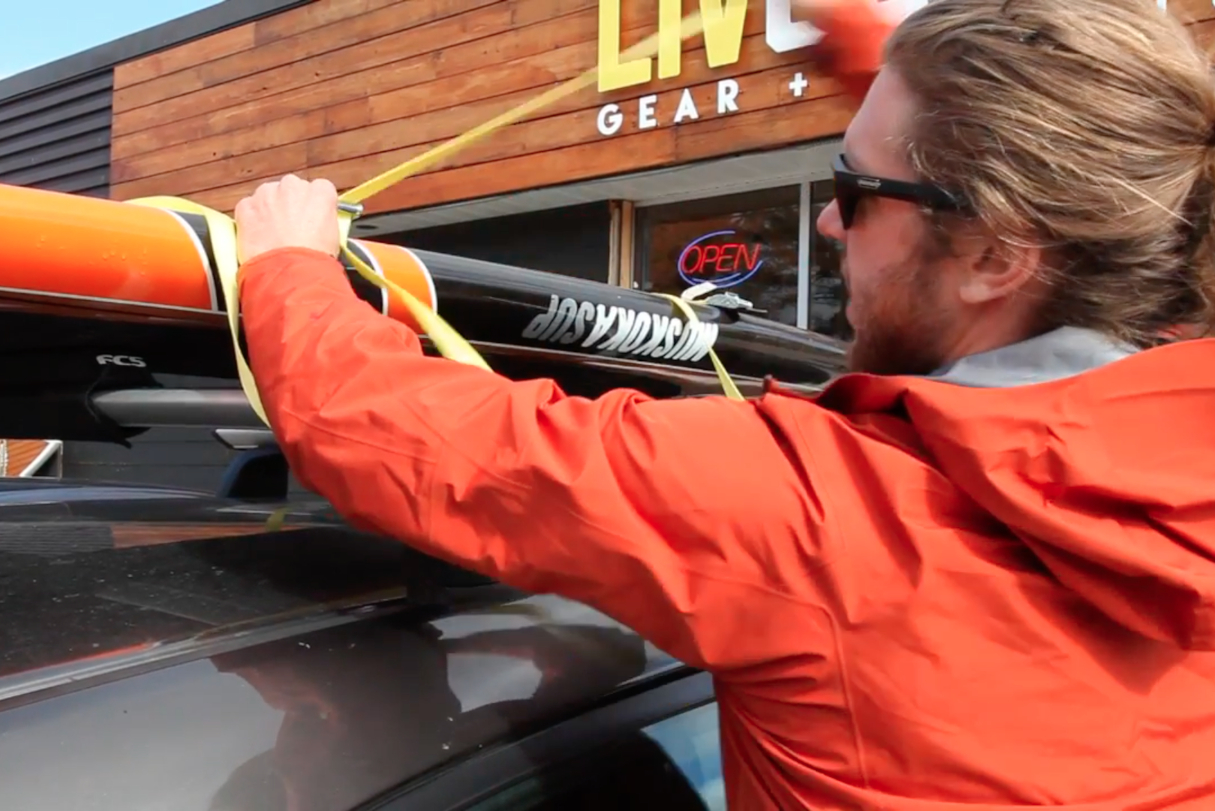
John Thomson strapping down a paddleboard. | Feature Photo: Paddling Magazine Staff
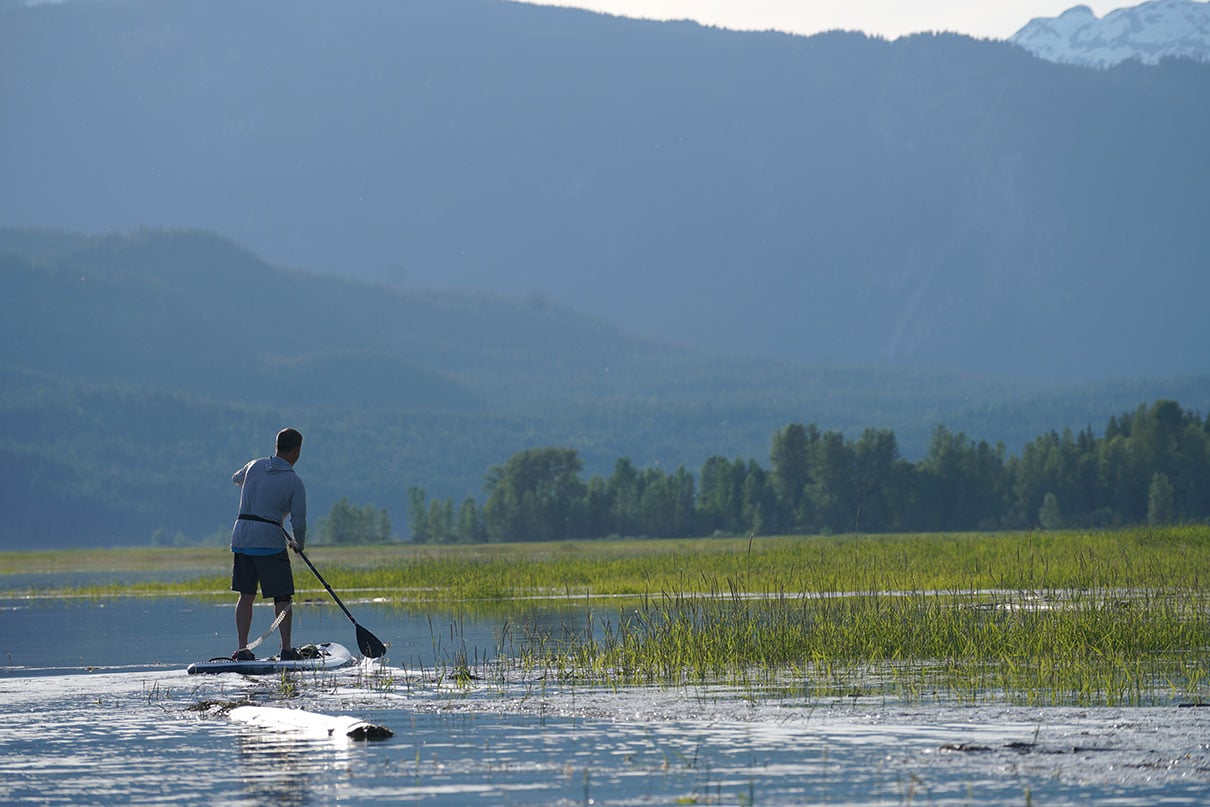
There are few things as peaceful in life as standup paddling down a crystal-clear river that meanders through a quiet forest or floating out on a calm bay. But for many learning to standup paddleboard, there are few things as stressful as figuring out how to load a paddleboard onto the car’s roof racks, and keep it secure on the highway to reach the water.
The act of transporting a paddleboard can be perplexing. But there’s a method that works for every board and every vehicle, and even whether you have roof racks or not. Once you learn the steps, it will soon be a quicker and easier process than you thought.
In this article, we’ll go over a few of the methods you can use to get your SUP to the put-in, as well as some helpful tips for keeping your board, vehicle and other vehicles on the road safe.
Paddleboard on roof rack with deck facing down. | Photo: Paddling Magazine Staff
How to transport a paddleboard on your car
Steps for using a roof rack
The great thing about paddleboarding is that, regardless of the length of board, most models are lightweight builds that can be lifted onto a car without the help of a second person. There are some exceptions—such as heavier plastic boards—but the vast majority of paddleboards can be loaded solo. Regardless of which roof rack (or lack of) your car might have, the loading process is generally the same.
Make sure the crossbars or pads are in place and the vehicle is clear and ready to have the board put on top. This will avoid you having to lay your board down in your driveway or trying to find a clear piece of grass for it.
The board can point with either the nose or tail forward. When you lift the paddleboard to place it on the racks you generally want it to lay with the standing deck face-down on the racks. Placing the board with the deck facing down lets air pass across the hull with little resistance, and keeps the bottom from getting damaged from over tightening on a roof rack without padding.
Once you pass the strap inside the rack pass the cam strap over the board. | Photo: Paddling Magazine Staff
Pass a cam strap around the inside of each rack at one end, then gently pass or toss the buckle end of each strap over the board.
Pass the buckle end underneath the crossbar at the other side, then bring the buckle back over the board to meet the free end.
Insert the free end into the teeth of the cam strap. Cinch down the strap until the board is firmly secured. Wiggle the board. If it shifts easily cinch down some more. Avoid over tightening which could damage your board.
Tuck the excess strap either under the taut strap or wrap it around a free space on the roof rack.
Tightening the cam straps to secure board. | Photo: Paddling Magazine Staff
Additional tips
It’s best to place some form of board padding on your crossbars to protect your board from damage that can be cause from cinching the board down.
If you use a long standup paddleboard that extends beyond the back of your vehicle, then it’s best to attach a small red flag to make it clear to drivers following you.
How to transport a paddleboard without a roof rack
Many sedans and hatchbacks don’t come with roof racks or rails. Soft rack systems or foam blocks are relatively inexpensive and have protective padding to secure your paddleboard. They sit on the roof and are combined with straps that run through the interior of the vehicle to keep the paddleboard in place.
With the blocks in place the paddleboard on top as mentioned in the steps for using a roof rack.
Open your car doors to pass and end of the strap through the vehicle then over the board to meet the other end of the strap as if you’ve made a circle.
Tighten the straps before closing the doors, cinching them so the board stays in place if you give it a wiggle.
Keep in mind that the straps will be causing a small gap between the seal of the door and the door frame, so if you’re driving in rain, water will likely permeate the straps and drip into your interior.
How to transport a paddleboard in a truck
Trucks are great for transporting things that fit into the pickup bed, but with most paddleboards ranging from 10 to 14 feet, mounting them is a little more complicated.
Assuming the truck doesn’t have a rack system built in (in which case mounting the board is the same as with any vehicle with a rack), you’ll need to have the board hanging off the back.
Close the tailgate and set the board as far into the pickup bed as it will reach.
Put some sort of padding over the tailgate.
Then at one of the tie-down mounts in the bed or on the side rails of the truck, pass a strap or rope through and over the boards to the other side to secure them.
As mentioned above, if the board hangs past the tailgate by more than a couple of feet, a red or orange marker is highly recommended, and might be required by law.
Other considerations
Understanding the parts of a roof rack
In order to figure out how you’re going to mount your board, it’s important to understand the terminology.
There’s the roof itself, which is the easy one.
Then there are rails, which some cars have from the factory and which your rack system will attach to.
The feet, tower or leg is the blocky component that both attaches to the vehicle and the crossbar.
The crossbars are the board or pipe shaped lengths of the roof rack you mount your paddleboard onto.
Think of it like this: the paddleboard sits on a board rack or crossbar cushions, which sit on the crossbars, which sit on the rail or which are mounted to feet which are attached to the car.
One of the most appealing things about inflatable paddleboards is the fact that they fold down to fit into a (large) backpack. That means loading a board into a vehicle takes about as long as throwing a bag into the truck or hatch of a car. Of course, the tradeoff is allowing 10 minutes of preparation time before and after your paddle to inflate and deflate the board.
The question that often comes up for people using their inflatable boards on a regular basis is whether or not they can be transported on the roof of a car while inflated. The good news is that quality inflatable standup paddleboards today are surprisingly rigid, which means even 12-foot, 6-inch or 14-foot boards can be transported without folding in half like a poorly tied-down mattress.
Keep in mind that you are still transporting an air-filled vessel, meaning something hitting it could result in a puncture. That being said, something hitting your inflatable with enough force to cause a hole would also cause significant damage to a hard board.
Transporting two paddleboards
Unless you have extremely wide crossbars, carrying two boards will mean stacking them on top of each other to turn your vehicle into a double paddleboard rack.
To do this, load the first board onto the bars as suggested above, typically with the fin at the back of the vehicle. Next, put some padding on top of the first board so the two paddleboards aren’t directly touching each other. Pool noodles or plumbing insulation works great for this because they don’t create much of a gap between the two boards. Offset the boards so the top board sits just in front of the fin of the bottom board.
Understanding how to tie down two paddleboards isn’t much different from one board. Just strap the two paddleboards to the vehicle as suggested above with the straps going all the way over the top of the two boards. Longer straps might be required.
If you have a particularly tall vehicle like an SUV, be cautious entering garages or parking structures. Know how tall the total setup is and pay attention to height restrictions.
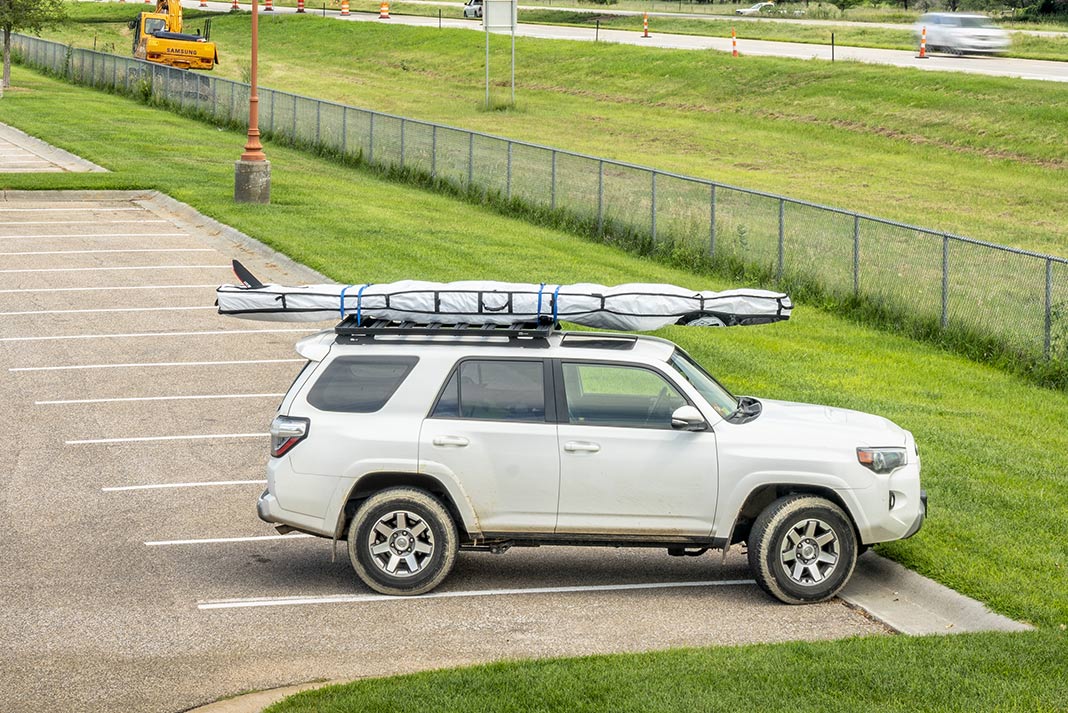
Using a bag will ensure your paddleboard isn’t damaged by the sun. | Photo by: MarekPhotoDesign.com – stock.adobe.com
To bag or not to bag
Other than inflatable boards, it’s extremely rare for paddleboards to be sold with a bag included. Depending on the length of board and the style of bag, bags can cost as much as $300. But is it a worthwhile investment?
A major concern with transporting paddleboards on the roof of the car is the impact of a hot sun. While the vehicle is in motion, the board is being constantly cooled by the wind, but if you’re leaving your board on a car all day at the office in order to hit the water as soon as the work day is done, the hot sun can be damaging. High-quality paddleboard bags have thermal protection to keep the sun rays at bay. An added benefit is protecting your board from rocks and road debris that might fly up and hit it while driving.
Most bags are not water-tight, so expect there might be some water in the bag if you’re driving in a heavy rain. It’s recommended that you leave the zipper open slightly at the back to allow the water to drain out. Keeping the zippers at the back rather than the front is also important because the wind will push the zippers open if they’re at the front of the bag. Paddleboard bags also keep boards protected in garages and sheds, but it’s always a good idea to let the board and bag dry off before storing it away.
Another big concern with leaving paddleboards on the roof is how to secure them. Unlike canoes or kayaks, which have easy places to run cable locks through, the simplicity of paddleboards means there are few options for locking them on the roof. Locking tie-down straps aren’t inexpensive, but they’re a must anytime you’re leaving a board on the roof unattended. They have metal-reinforced straps and key-locks on the closure, which should be enough to deter thieves looking for a quick slash and grab.
John Thomson shows how to strap down a paddleboard for transport. | Feature Photo: Paddling Magazine Staff
MSR Switch Stove at Canoecopia 2025. Feature Image: Joe Potoczak.
It’s time to dust off your paddles, dig out your maps and charts and start planning your summer 2025 paddling adventures! In the spirit of summer adventures, the Paddling Magazine team headed out to Canoecopia in Madison, Wisconsin, in search of the best new camping gear for paddlers.
Here’s what we found:
Nocs Provisions
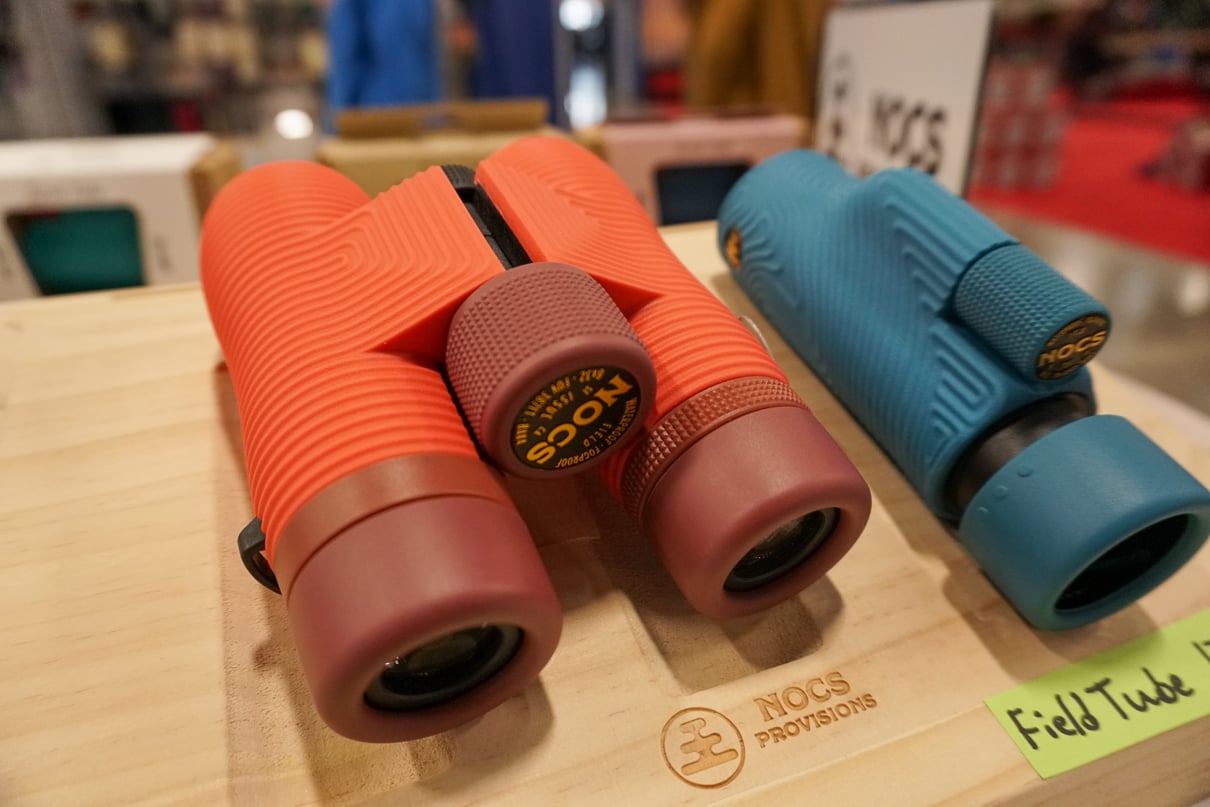
These waterproof binoculars from Nocs Provisions come in a variety of sizes and colors, making them the perfect addition to your camping gear collection. While the standard size fits nicely in the clamshell of some PFDs/lifejackets both the Field and Pro issue are perfect for wildlife watching on your paddling and camping trips this summer.
Nocs provisions binoculars at Canoecopia 2025. Image: Joe Potoczak.
Beyond the binocular setup, Nocs are also easy to pair with your phone camera with their smartphone adapter to photograph all the critters you spot while paddling. Time to level up your iNaturalist game! In addition to wildlife watching, a good pair of binoculars can be helpful for scouting routes and lines, and observing real time conditions on the water from a distance.
Wintergreen Trail Cap
Located at the edge of the popular Boundary Waters Canoe Area Wilderness, Wintergreen Northern Wear has a legacy in producing some of the best winter gear on the market. Now, they’re diving into summer camping gear for paddlers as well!
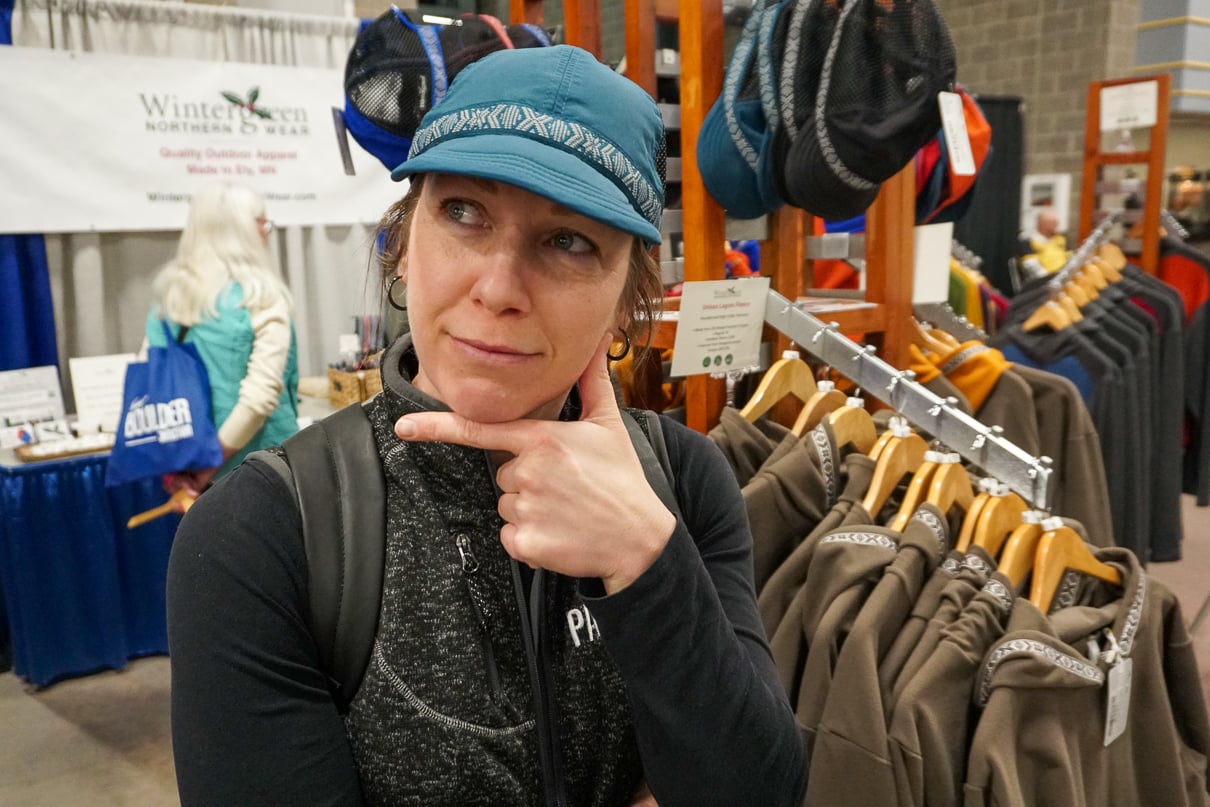
Wintergreen’s new Trail Cap at Canoecopia 2025. Image: Joe Potoczak.
The Wintergreen Trail Cap is made with a buoyant rim, breathable mesh back, and 3-ply Supplex nylon with DWR (Durable Water Repellent) and collapsible to pack easily into a canoe pack.
NRS Campfire Shirt
What’s a camping trip without your favorite flannel? The new NRS Campfire Flannel with UPF 50+ sun protection is ideal for those chilly early season trips with late nights around the campfire and early mornings with a coffee in hand.
With a pocket on the chest and the NRS logo doubling as a spot to stash your sunglasses, the campfire flannel is a timeless classic for your paddling trips.
Therm-A-Rest Boost Sleeping Bag and NeoLoft Sleeping Pad
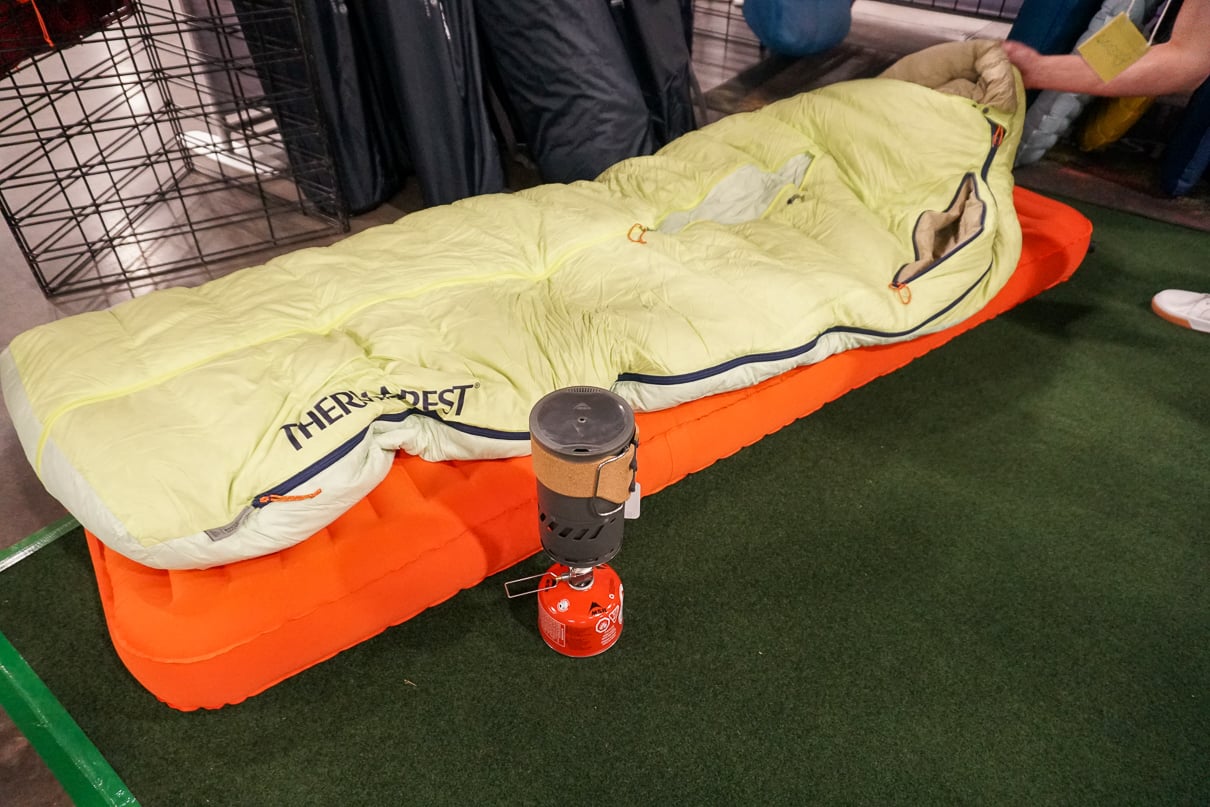
New in spring 2025, Therm-A-Rest is shaking up sleep systems with the thick new NeoLoft sleeping pad and the new Boost sleeping bag featuring armholes and a centre zipper allowing you to customize the shape of the sleeping bag to your comfort level and the surroundings.
Therm-A-Rest’s new sleeping bag and pad at Canoecopia 2025. Image: Joe Potoczak.
The NeoLoft sleeping pad comes in at one pound 9 ounces (0.71 kg) in the regular size, with an R-value of 4.7. Packed, the NeoLoft is slightly larger than a one litre Nalgene. The Boost sleeping bag features 650-fill RDS-certified hydrophobic down and is two pounds two ounces (0.95 kg) in the size regular.
MSR Switch Stove System
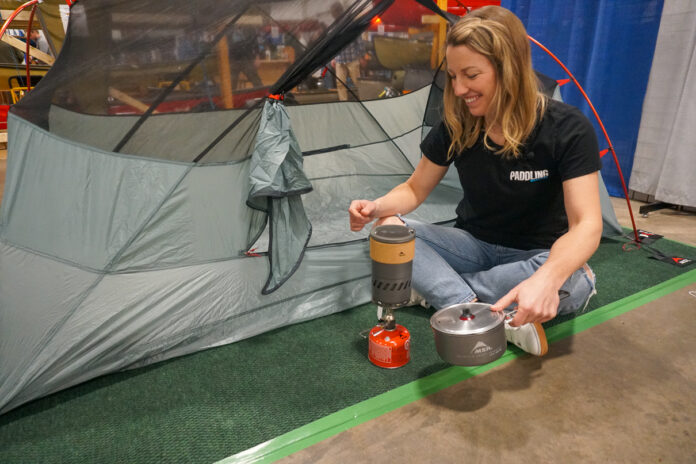
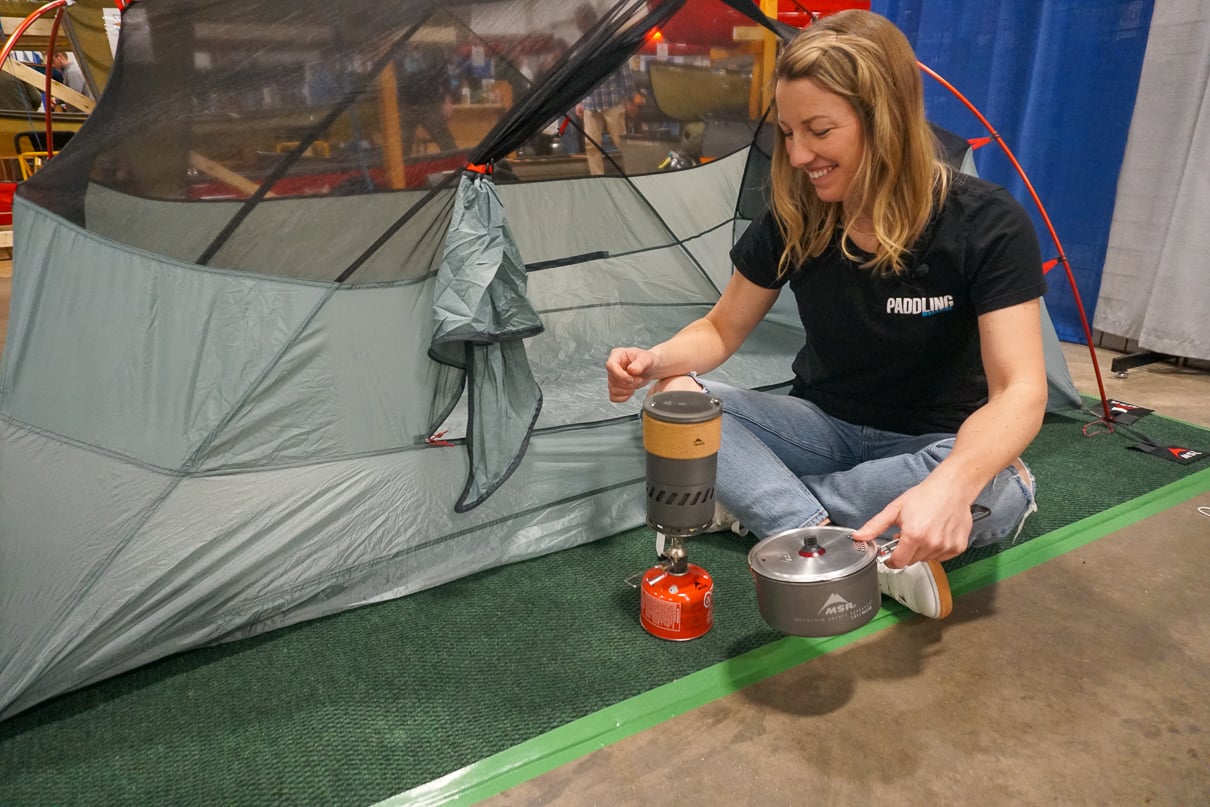
New in Spring 2025, the MSR Switch Stove System makes it possible to switch between the quick-boiling switch pot and a pan by flipping out supports on the side of the stove, making the stove compatible with a variety of pots and pans.
MSR Switch Stove at Canoecopia 2025. Feature Image: Joe Potoczak.
The complete MSR Switch Stove System weights 13.8 oz (392 g). The versatility of the Switch Stove makes it easily some of the best new camping gear in 2025.
Agawa Boreal24 Saw
Ideal for clearing brush or cutting logs for a campfire, the Agawa Boreal24 folding bow saw is designed with packability in mind. The Agawa Boreal24 opens smoothly and is one connected assembly, cutting out the need to fumble for or potentially lose parts.
Whether out on a canoe trip or clearing out your local portage or put-in after a windstorm, the Agawa Boreal24 is a handy addition to your 2025 camping gear kit.
MHO Adventures Dried Eggs
Everyone has heard of dehydrated full meals, but have you considered building out your trip pantry in dehydrated bulk? For example, pack a container of dehydrated eggs from MHO Adventures in lieu of packing out whole eggs to save space, weight, and have fresh food for longer.
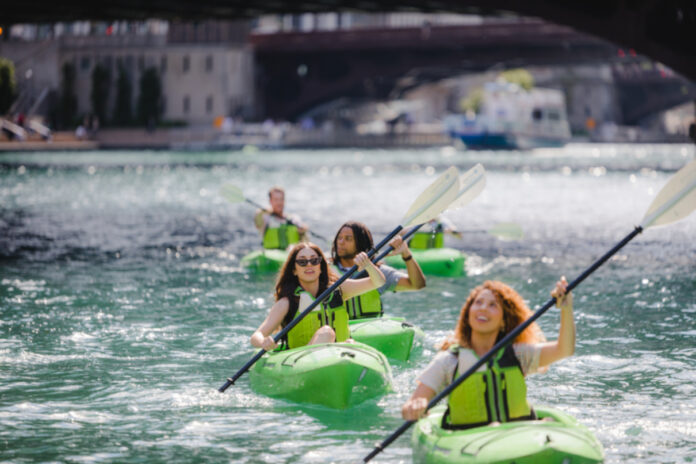
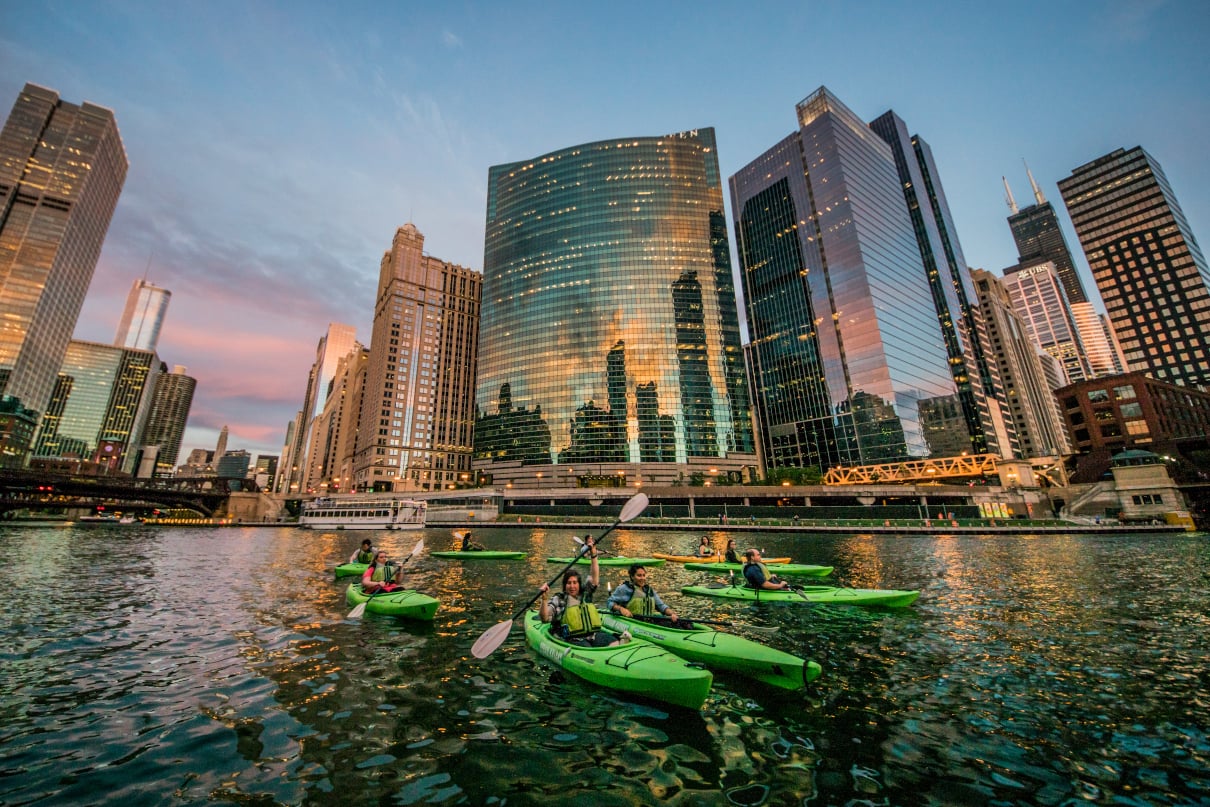
Group kayaking on the Chicago River. | Feature Photo: Joshua Mellin / Urban Kayaks
Chicago is famous for many things—astonishing skyscrapers, Art Deco architecture, the blues, Al Capone, Michael Jordan and the Bulls, Navy Pier—but kayaking isn’t generally one of them.
Ask a local about must-have Chicago experiences, however, and they might recommend a sunset tour up the city’s central artery, the Chicago River; or an afternoon in the surf when the wind is blowing over Lake Michigan.
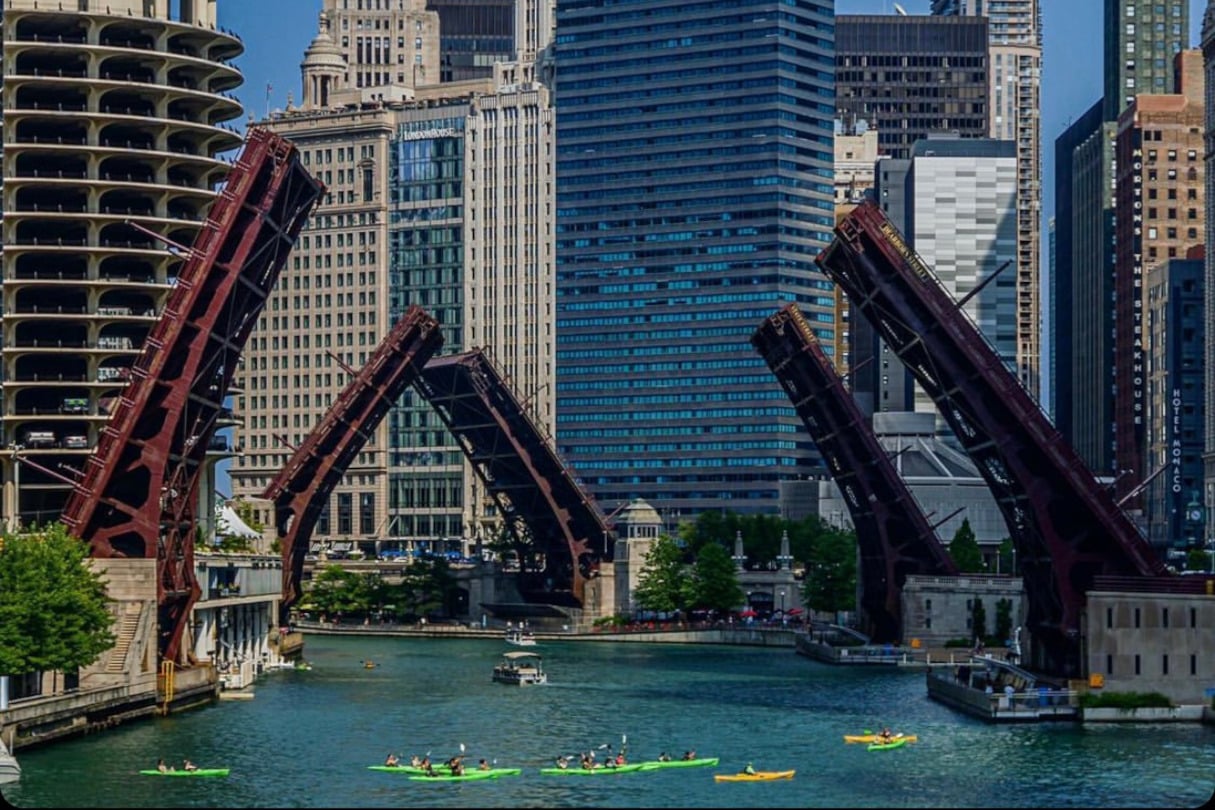
Heading up the Chicago River from the lake, paddlers are immediately engulfed by the city. A chasm of glass and limestone towers a thousand feet above the river—it’s a landscape every bit as dramatic and improbable as the Grand Canyon.
“This is the paddle we do when people come to visit,” confirm Chicago locals Alec and Sharon Bloyd-Peshkin, founders of Have Kayaks Will Travel. “It’s just spectacular, especially in the fall or in the evening with the sun setting behind the city.”
An iconic scene, the lifted bridges of Chicago. Photo: Joshua Mellin
The Best Places to go kayaking In Chicago
For a guided kayak trip
Kayak Chicago
For a memorable, half-day kayaking or paddleboard tour, join Kayak Chicago. From their location just off North Avenue, tours lead through what they call the “Wild Mile” around Goose Island before leading into the canyon of the city skyline. Kayak Chicago also has evening tours under the city lights for an unforgettable way to experience the city on a spring or summer night.
Have Kayaks Will Travel
Have Kayaks Will Travel offers informative, small-group tours, including a Devil in the White City trip based on the Erik Larson page-turner. “We paddle kayaks or canoes in the area the book is set in, on Chicago’s south side,” says Sharon, “exploring what happened here during the 1893 World’s Fair.”
Sunset tour below the city skyline with Urban Kayaks. | Photo: Joshua Mellin
Urban Kayaks
Founded by two brothers, Urban Kayaks provides kayak tours and rentals at two locations: the Riverwalk on the Chicago River and at the Monroe Harbor on the Lake Michigan lakefront. The Riverwalk location launches kayakers in a spot instantly surrounded beneath the city’s stunning skyscrapers. The Monroe Harbor offers a lakefront launch for kayak and paddleboard tours and rentals with expansive 360-degree views of the skyline and Lake Michigan.
Wateriders
Since 1997, Wateriders has been leading kayaking tours of Chicago. Their East Bank location puts paddlers near Wolf Point and the confluence of the three branches of the Chicago River for a most impressive view of the city. They also have some fascinating kayak tours including history and architecture, and ghost and gangster paddles. For those seeking the under appreciated natural side of Chicago, Wateriders Bridgeport tour offers a contrast to skyscrapers, where you’ll glide past blue heron and painted turtles.
“Put-in on the Chicago River just west of Chinatown and head north, turning east on the Main Branch right through the heart of the city,” says Sharon.
She suggests launching from the dock at kayaker-friendly Lawrence’s Fisheries and making the four-mile trip to the lock at the river mouth. Fried seafood fans can follow up with a plate (or paper bag) of Lawrence’s famously crispy fish and shrimp.
To kayak and dine
Start as above from Lawrence’s Fisheries on the Chicago River, but proceed through the lock when you reach the lake. Paddle out to the end of Navy Pier, admiring its century-old amusement park, Crystal Gardens and phenomenal skyline views. Head south on Lake Michigan alongside the city’s world-renowned waterfront park system. Landing is permitted at select beaches during summer; pull ashore at 12th Street Beach (eight miles one-way) and grab a bite at tasty Del Campo Tacos.
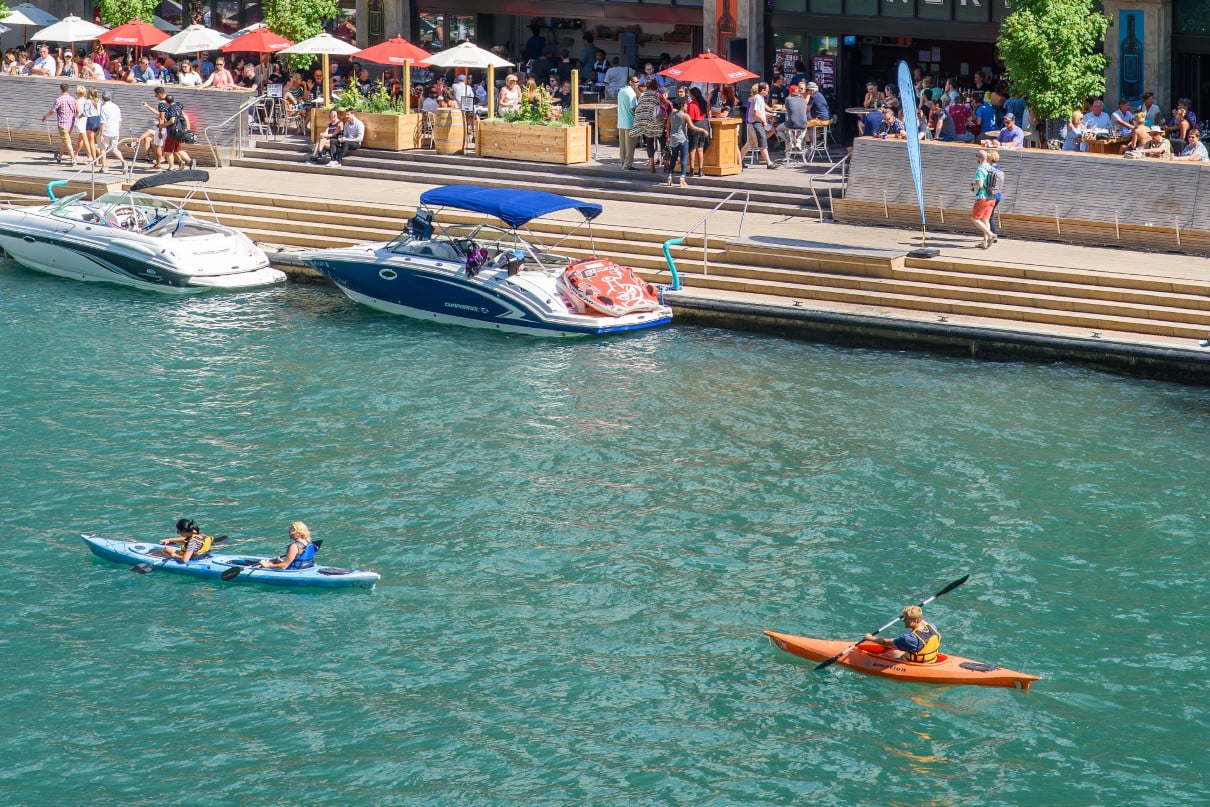
Stroll or paddle the Riverwalk. | Photo: Ranvestel Photographic
If you’re Craving waves on Lake Michigan
“Look at Google Maps and you’ll see why Montrose Beach gets the most amazing reflective waves,” says Alec. He also recommends Rainbow Beach for excellent surfing when the wind is north or east, with maximum fetch out of the northeast. “Both of these beaches have a fishhook shape that catches the northeast waves really well.” Launch at the north end of Montrose, by Wilson Park.
Many of these tour operators and even city parks also provide kayak rentals and a convenient launch site to get you on the water around Chicago without a guide or boat of your own.
The Chicago River provides one of the most incredible urban waterscapes for kayaking and paddleboarding in the U.S. However, kayakers, paddleboarders and other recreational users need to be aware the river corridor, especially at the city center, is an active waterway they will be sharing with motorized traffic.
The city has a free online guide to help safe recreation on the river. The guide provides an understanding of the traffic levels paddlers can expect and guidance to have a safe experience. The info page also includes a link to a Chicago River Water Trail Map, which includes access points throughout the city for both human-powered and motorized watercraft.
Considering the weather when paddling in the city
It isn’t called the “Windy City” for nothing. Whenever you are planning to paddle in Chicago, you want to know what conditions will look like throughout the course of your outing. This means wind, and even the waves it can produce in exposed water like Lake Michigan. You should also check water and air temperatures to dress for kayaking accordingly.
Lightning storms are another factor to take into account in the late spring and summer months when conditions can change rapidly and lightning poses a danger to anyone on the water. Be sure to check not only the current weather and water conditions, but what the forecast looks like in the hours ahead when you plan to enjoy your trip.
The Wenonah Minnesota II in superlight at Canoecopia 2025. Feature Image: Joe Potoczak.
Paddlesports are for people who understand that hard work equals big reward. On the other side of the brutal, ankle-twister portage is a campsite at the base of a waterfall. The ten-mile open water crossing comes with the reward of a quiet island at the end of the earth, and the work of carrying, transporting, and cleaning your boat and gear comes with a lifetime of memories and experiences.
Whether you’re just looking to get into the sport or a long time padder, here are nine products and innovative new ideas from Canoecopia 2025 to make the logistics and actuality of getting out on the water easier this summer:
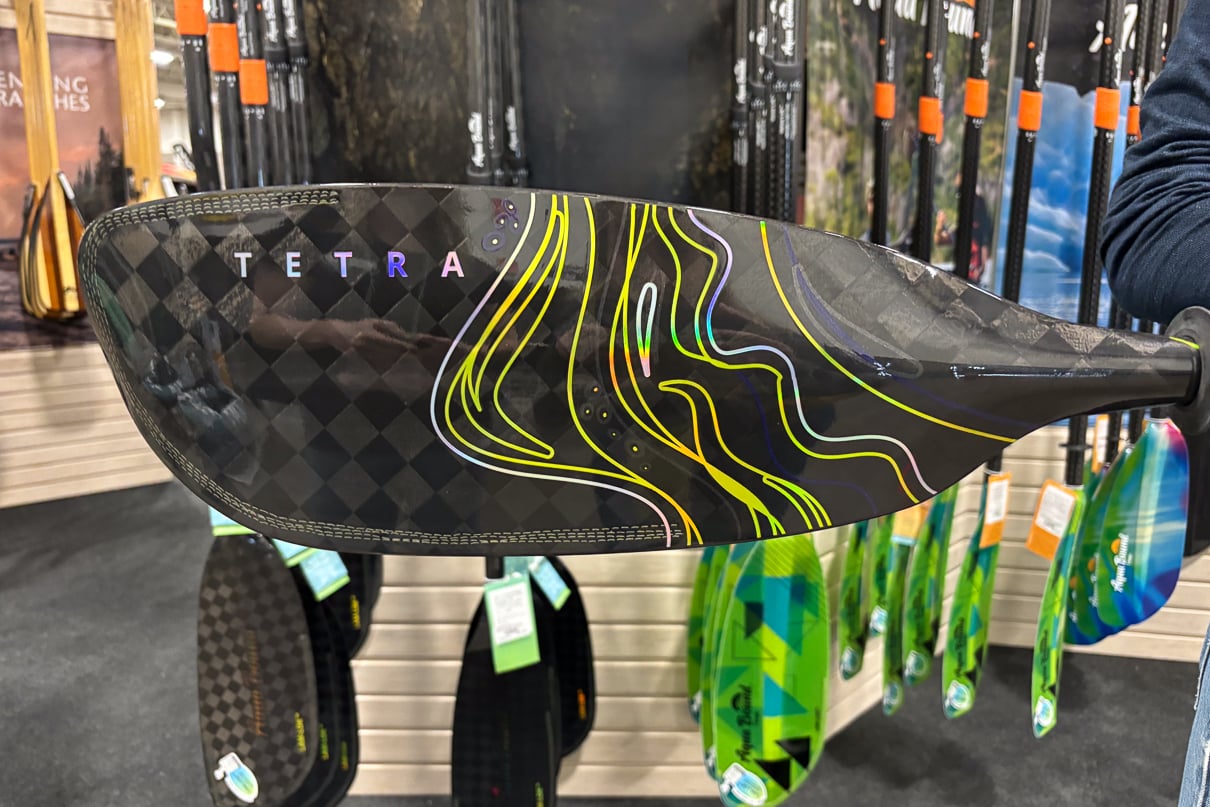
Aqua bound Tetra
New in 2025, the Aqua Bound Tetra is a low-angle ultralight paddle designed for kayakers looking to cover long miles. The full foam core makes for a lightweight and buoyant blade while the Lam-Lok technology protects the blade of the paddle, making the paddle a long-term investment.
Close up of the new Aqua Bound Tetra. Photo: Maddy Marquardt
Move over ultralight backpacking: ultralight paddling is making waves, and no, you don’t need to cut your toothbrush in half.
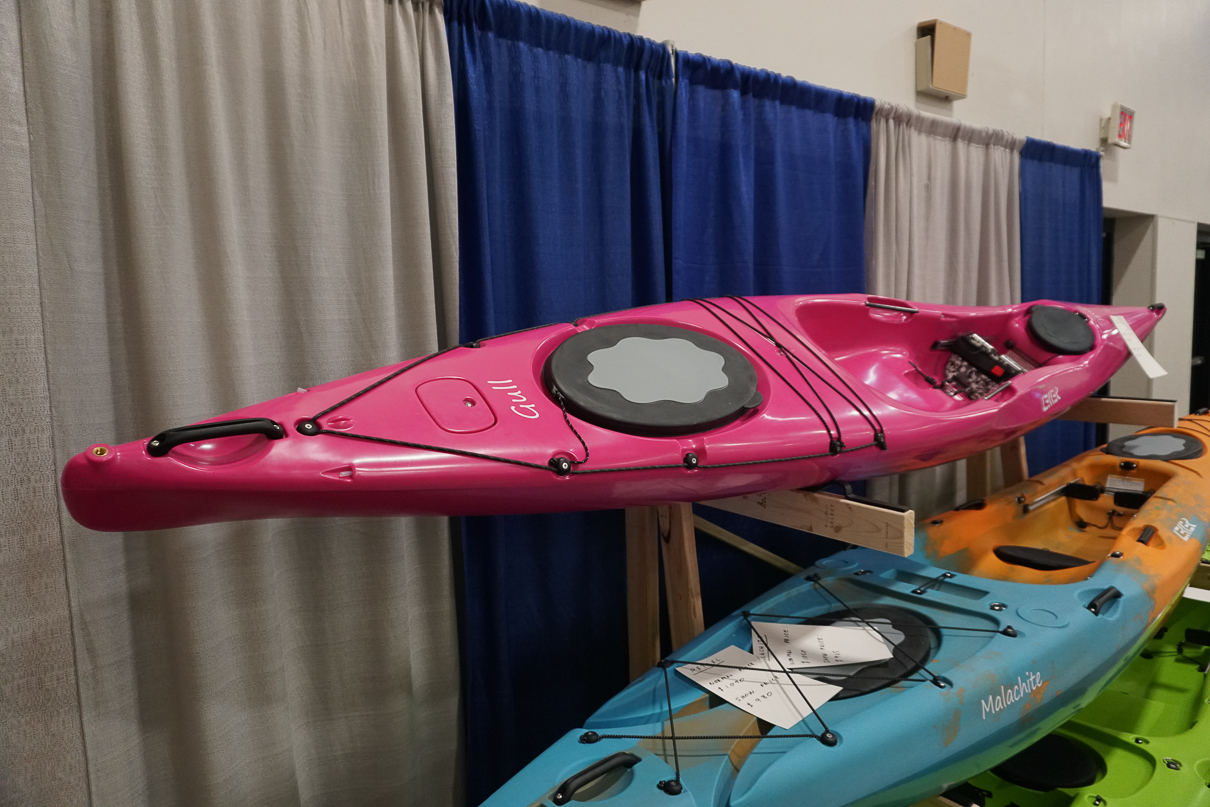
Sleek and fast, the traditional surfski is great for fitness fanatics and paddlers looking to cover long distances, but hard to keep upright for beginners. The Lekker Gull makes the surfski friendly for beginners at 14 feet long, 23.4 inches wide, and 50 pounds.
Lekker Gull Surfski at Canoecopia 2025. Image: Joe Potoczak
According to Lekker, the Gull has both the stability that a beginner needs to get into surfski paddling, while also enough speed to be playful in rough conditions for more experienced paddlers.
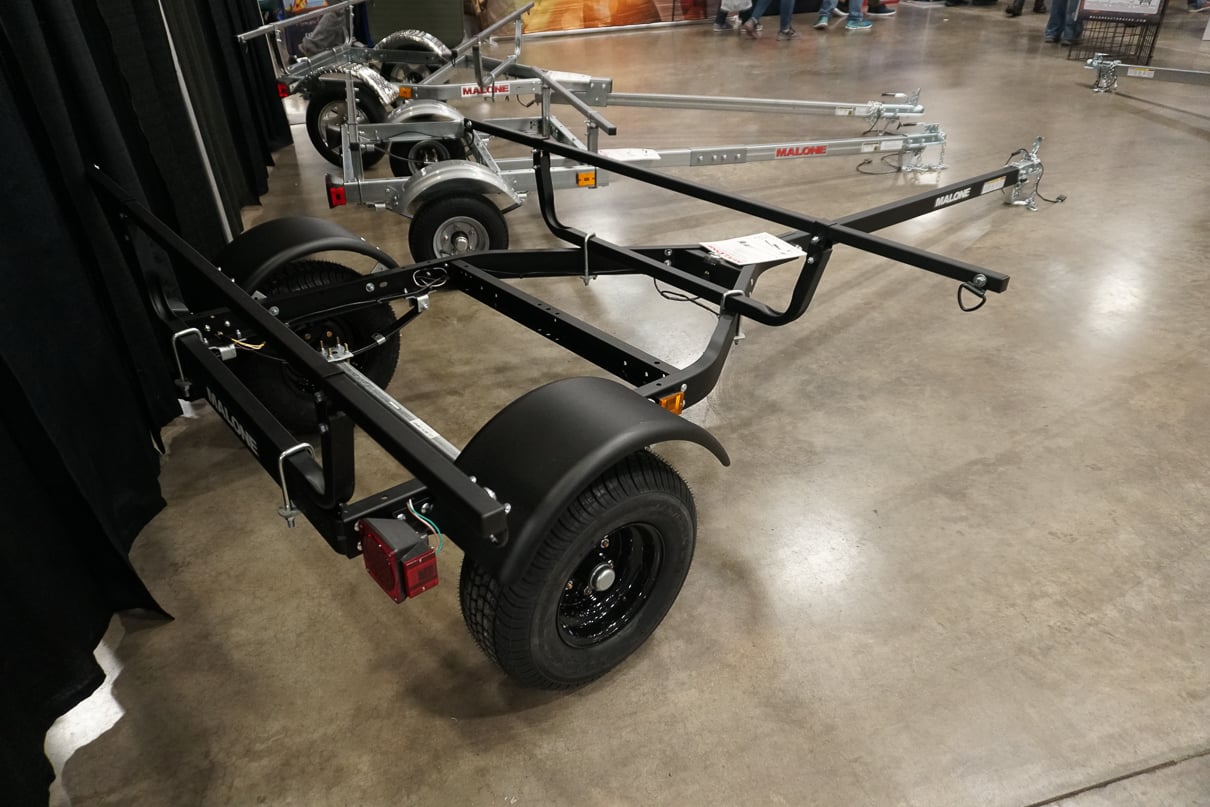
Malone Microsport Off-Road Base Trailer with 78” Load Bars
One big hurdle to getting out on the water is getting heavy boats up on the roof of your car. The obvious solution is lighter boats, but another solution especially appealing to those of us with multiple boats is the trailer.
Malone Microsport Off-Road Base Trailer with 78” Load Bars at Canoecopia 2025. Image: Joe Potoczak.
A good trailer ready for off-road travel can make it possible to transport multiple boats to rugged put-ins all without having to lift a heavy boat up over your head.
Hornbeck Packboats
Canoe tripping is surely one of the best ways to experience the wilderness— the quiet campsites and sunsets over the water, the sounds of beavers and moose in the mornings, the 400-rod portages. Canoe tripping is often easiest to accomplish with friends, but the Hornbeck Packboat brings a new, lightweight and solo-paddler friendly element to canoe tripping.
Developed in the Adirondacks, the Packboat is ultralight and ultra-minimalist, designed for simple and barebones wilderness travel. How light you might ask? Some pack boats are as light as 15-pounds!
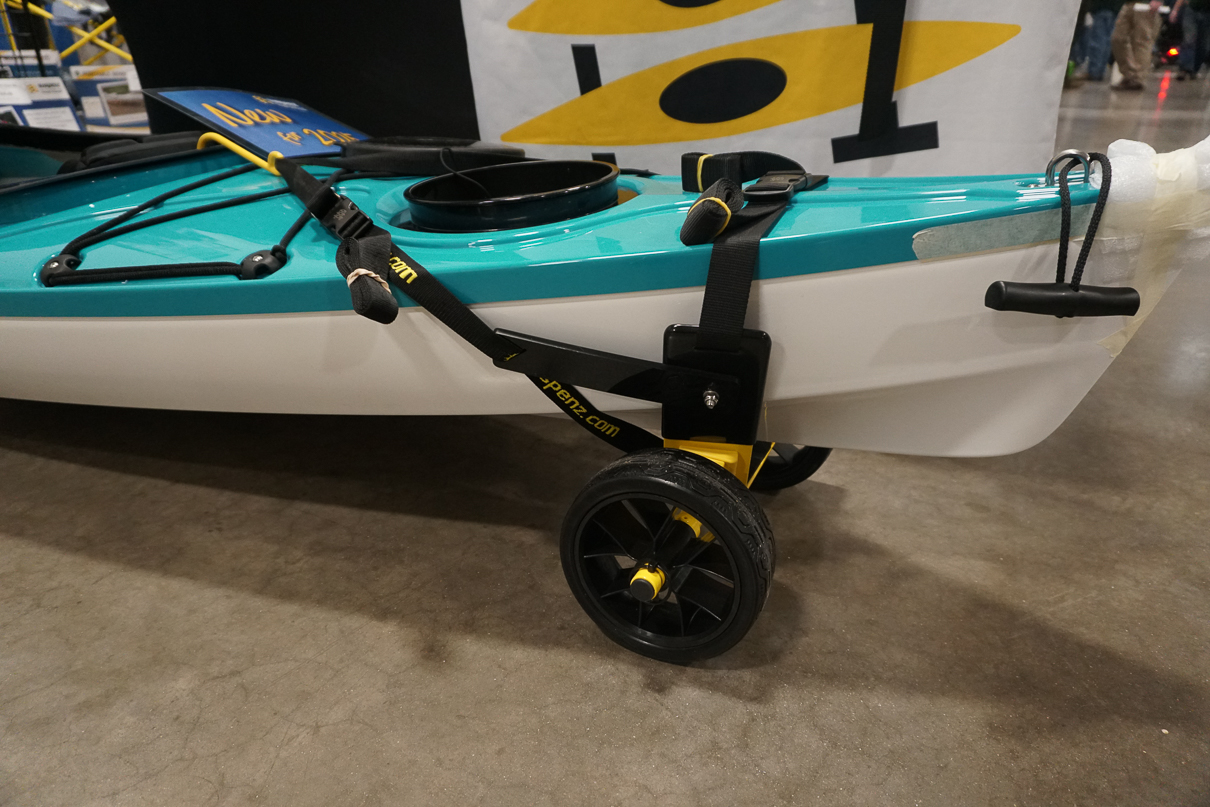
Suspenz EZ-Stow Stern Cart
Can’t opt for a lighter boat? No problem! The Suspenz EZ-Stow Stern Cart is designed to help you tackle those longer would-be carries with ease and can be the perfect solution to making the logistics of kayak and canoe transport easier for you.
Suspenz kayak cart at Canoecopia 2025. Image: Joe Potoczak
The Suspenz EZ-Stow Stern Cart fits within a hatch of most recreational and touring kayak hatches and weighs less than four pounds. Perhaps the most intriguing part of this Suspenz cart is that most boats will be suspended on a strap while in transport rather than strapped up against the hardware of the cart itself, protecting your boat from damage in the long-run.
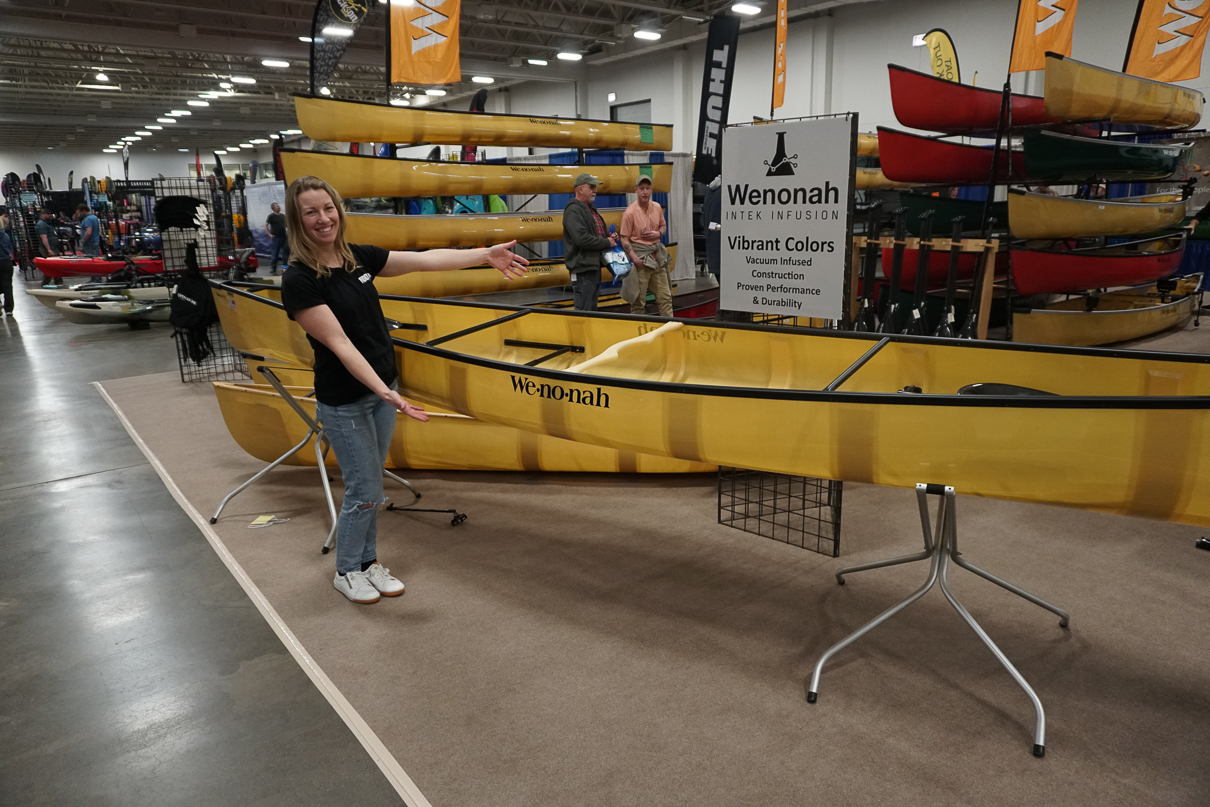
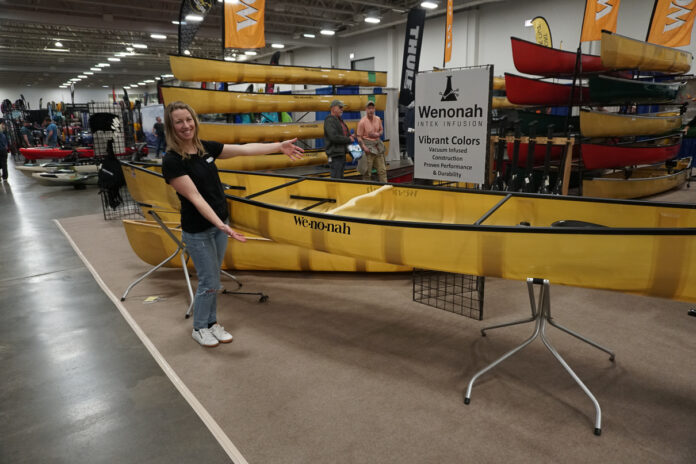
Wenonah Superlite Canoe
The SuperLite construction brings the Minnesota II performance long-distance canoe down to less than 37 pounds, more than 15 percent lighter than the standard Ultralight Aramid construction.
The Wenonah Minnesota II in superlight at Canoecopia 2025. Feature Image: Joe Potoczak.
The goal of the SuperLite Aramid construction is to take the Wenonah canoe down to its lightest possible weight without sacrificing any of the features Wenonah is known for, such as bucket seats and foot braces for a good connection to the canoe while paddling, or the sliding front seat to adjust the trim of the canoe real-time in on the water.
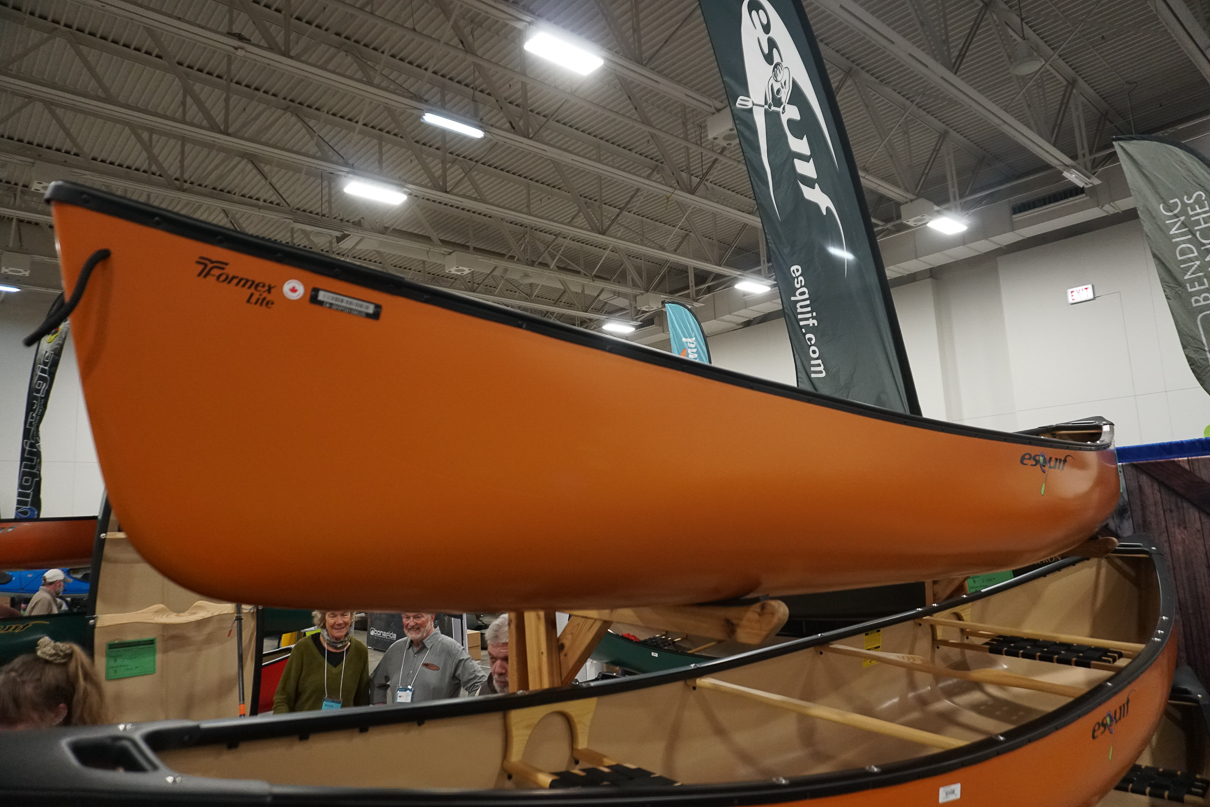
Esquif T-Formex Lite Pocket Canyon
Following the trend of lighter boats, Esquif has launched T-Formex Lite construction which optimizes where T-Formex is used on each model of canoe to maximize weight reduction and better suit each unique canoe line to its paddlers needs.
Esquif’s Pocket Canoe in T-Formex Lite. Image: Joe Potoczak
In 2025, the classic Pocket Canyon will be available in T-Formex Lite. This playful tandem canoe is ideal for shorter whitewater trips, designed to be the perfect boat for paddlers looking for something to tackle day trips and weekends in the wilderness alike. The new T-Formex Lite construction on the Pocket Canyon will
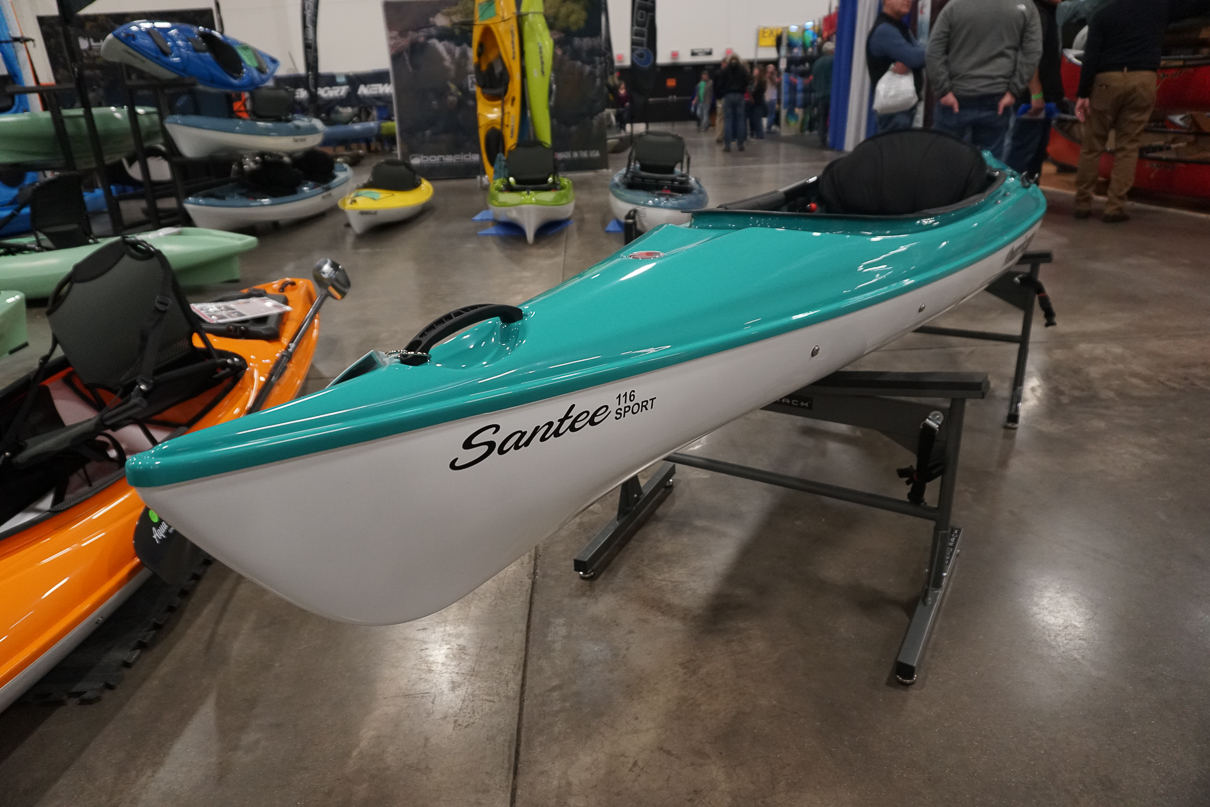
Hurricane Santee 116 Sport
This new lightweight recreational kayak from Hurricane is designed for stability, speed and style weighing just 39 pounds. Perhaps the best part of the Santee 116 Sport is the sealed bullheads at both the bow and stern of a kayak— often lacking from recreational kayaks— that means even if you were to capsize the boat, the pockets of air at either end would prevent the boat from sinking.
Hurricane Santee 116 Sport at Canoecopia 2025. Image: Joe Potoczak
The safety feature provided by bulkheads will for sure make paddling easier in the 2025 season!
Let Someone Else Do the Work- Guided Trips with MHO Adventures
The ultimate hack to make your paddling adventures easier in 2025? Let someone else do the heavy lifting, planning, and cooking. Book an all-inclusive guided wilderness canoe trip with MHO Adventures and focus on the best parts of paddling trips while someone else takes care of the logistics.
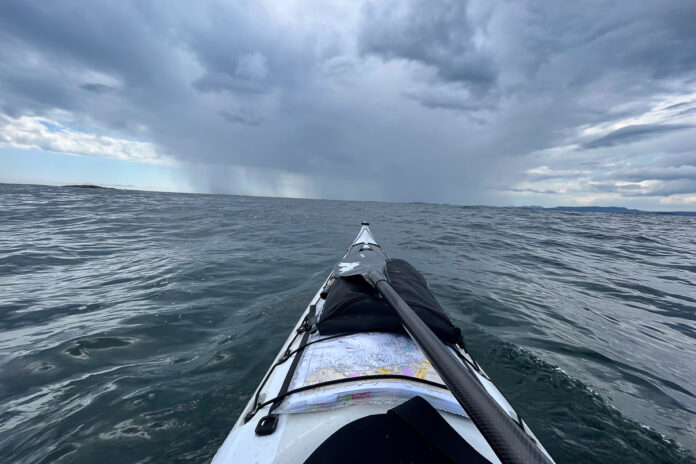
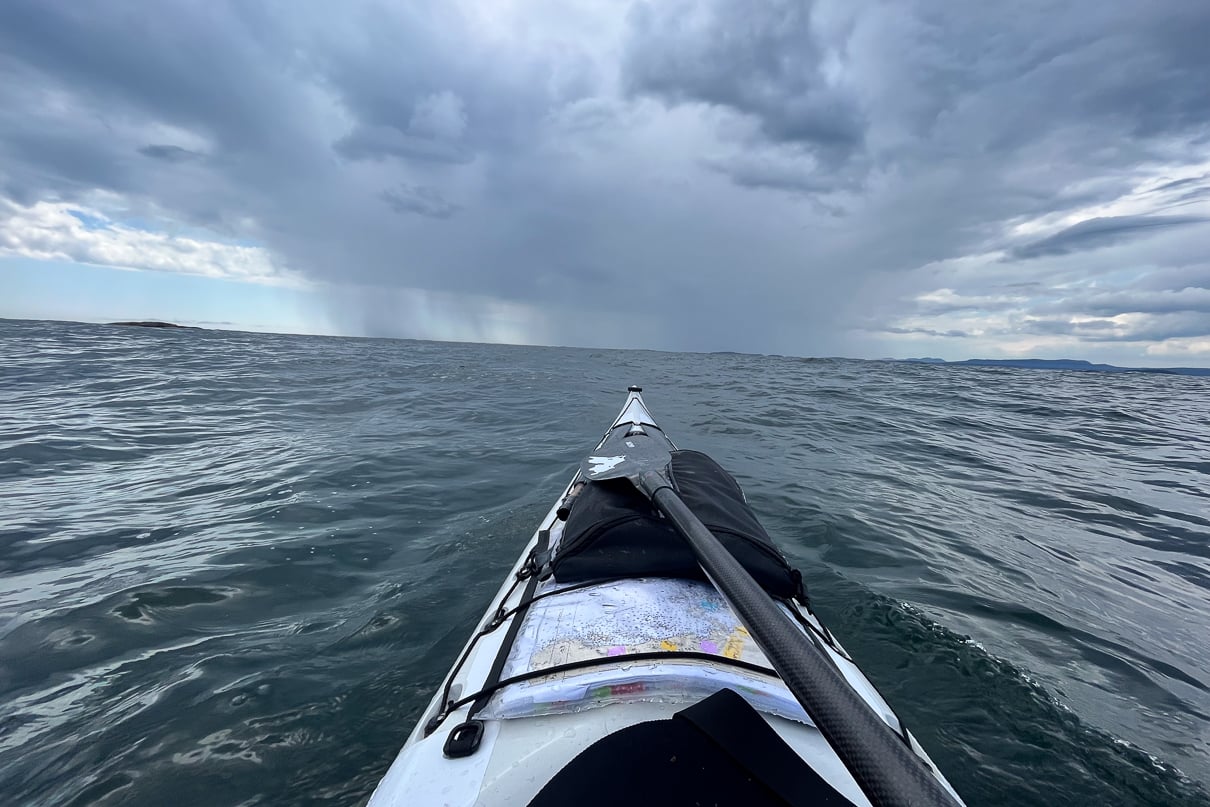
Weather approaches on Lake Superior as Simes kayaks around the largest freshwater lake in the world by surface area. Feature Image: Constance Simes | @authentic_imperfection
In 2022, Constance Simes circumnavigated Lake Superior solo, a roughly 1,200-mile (1930 km) journey around the largest freshwater lake in the world by surface area in 57 days. She wants you to know that with enough patience and practice, a big paddle trip might be in your future too.
Lake Superior circumnavigator shares that your dream kayak trip might be closer than you realize
Whether you prefer long days in a canoe, quality time with the double-bladed paddle, or ripping down whitewater deep in a canyon, many paddlers spend the winter dreaming about their next long paddle. Odds are, you’ve spent more time dreaming up trips than you have actually out paddling. While many dream about quitting the real world and paddling for a few months, few actually do.
With finding time off work, organizing logistics, funding a long trip, and hundreds of small but seemingly insurmountable barriers to your next big paddle trip, a long-haul paddle often seems more a dream than a reality.
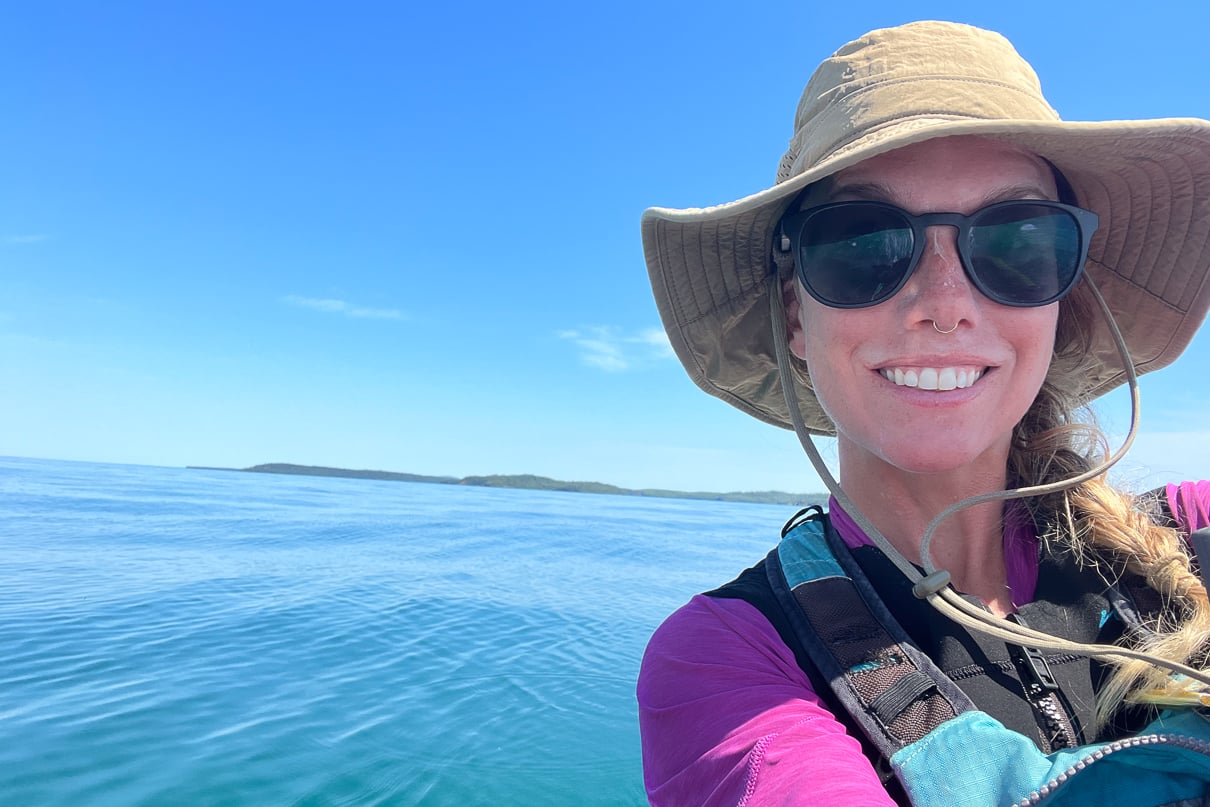
A bluebird day on Lake Superior during Simes’ solo Lake Superior circumnavigation. Constance Simes | @authentic_imperfection
Simes, who paddled around Lake Superior from June 22 to August 17, 2022, thinks that long trip might be more feasible than a lot of people realize. While a circumnavigation or thru-paddle might be a long-term goal, Simes emphasized that just because a goal is challenging doesn’t mean it’s out of reach.
“It is possible,” shared Simes. “I know that it’s hard to take time off but if you do it accordingly with proper preparation and understanding of your skills and the lake, I think most people can honestly do it.”
Simes added that while this isn’t to say that anyone should just hop in a boat with no paddling experience, the biggest part of planning and executing your dream long paddle trip is being honest with yourself about your goals.
“No one’s path is always straightforward. Things might come up and take you away from it a little bit, and you’ll find a way to make it work still,” shared Simes.
Weather approaches on Lake Superior as Simes kayaks around the largest freshwater lake in the world by surface area. Feature Image: Constance Simes | @authentic_imperfection
Simes added that one of the reasons she’s sharing her circumnavigation story is to bring some awareness to how invisible chronic illness can affect big goals like circumnavigations and long paddle trips.
“Invisible chronic illness, that has definitely made my paddling career veer in different ways than I thought it would,” explained Simes. Prior to her Lake Superior circumnavigation, Simes worked several years as a sea kayak guide on Lake Superior and in New Zealand, and took her L4 ACA Skills Assessment in preparation for the trip.
Highlights and lowlights of a kayaking 1200 miles around Lake Superior
Simes’s solo circumnavigation wasn’t without its challenges, but they weren’t the challenges you might expect from a long paddle trip. While there were certainly days with wind, waves, and inclement weather, Simes didn’t feel lonely most of the trip, and shared that one of the hardest parts of the paddle was reacclimatizing to the world outside of the wilderness.
“I didn’t get lonely. Halfway through when I was waiting for my resupply package up in Marathon, the most northeast spot, I was just having the most amazing time trying these silly bushcraft things,” shared Simes. “I didn’t see anyone for three days. I loved it.”
Where on the Canadian North Shore Simes didn’t see anything manmade for days at a time, heading back south down the Minnesota shoreline she saw increasing houses as she neared her finish, and start point, at Little Sand Bay in Wisconsin.
“I struggled a little on the North Shore,” Simes shared, referring to the portion of Lake Superior coming into Minnesota from Canada where, fairly suddenly, you go from Canadian wilderness to increasingly developed shorelines and vacation homes. “Going from those remote islands down to Minnesota, and there’s nothing wrong with the Minnesota North Shore, but it just is very shocking… I was really far from shore because I just wanted to be away from it.”
Simes also shared that unexpectedly, one of the hardest parts of her trip came after the trip had ended.
“Maybe it’s the solo aspect but I definitely had some post expedition blues after which I didn’t know was a thing until I started listening to other people’s expedition stories,” said Simes. “Why I am feeling this way, why can’t I sleep in my little cabin with no running water, but I have to sleep in my tent? It was a couple weeks of sleeping in my hammock, sleeping in my tent.”
Overall, Simes paddled nearly 1200 miles around Lake Superior in 57 days.
“I don’t think you ever really know you’re ready,” said Simes, adding that you have to ask yourself what the worst that you could get into would be, and if you can handle that. “I didn’t know I could handle days alone, but you adapt.”
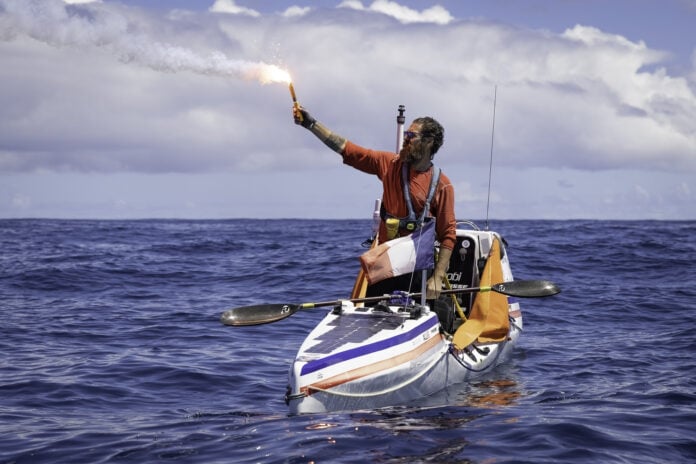
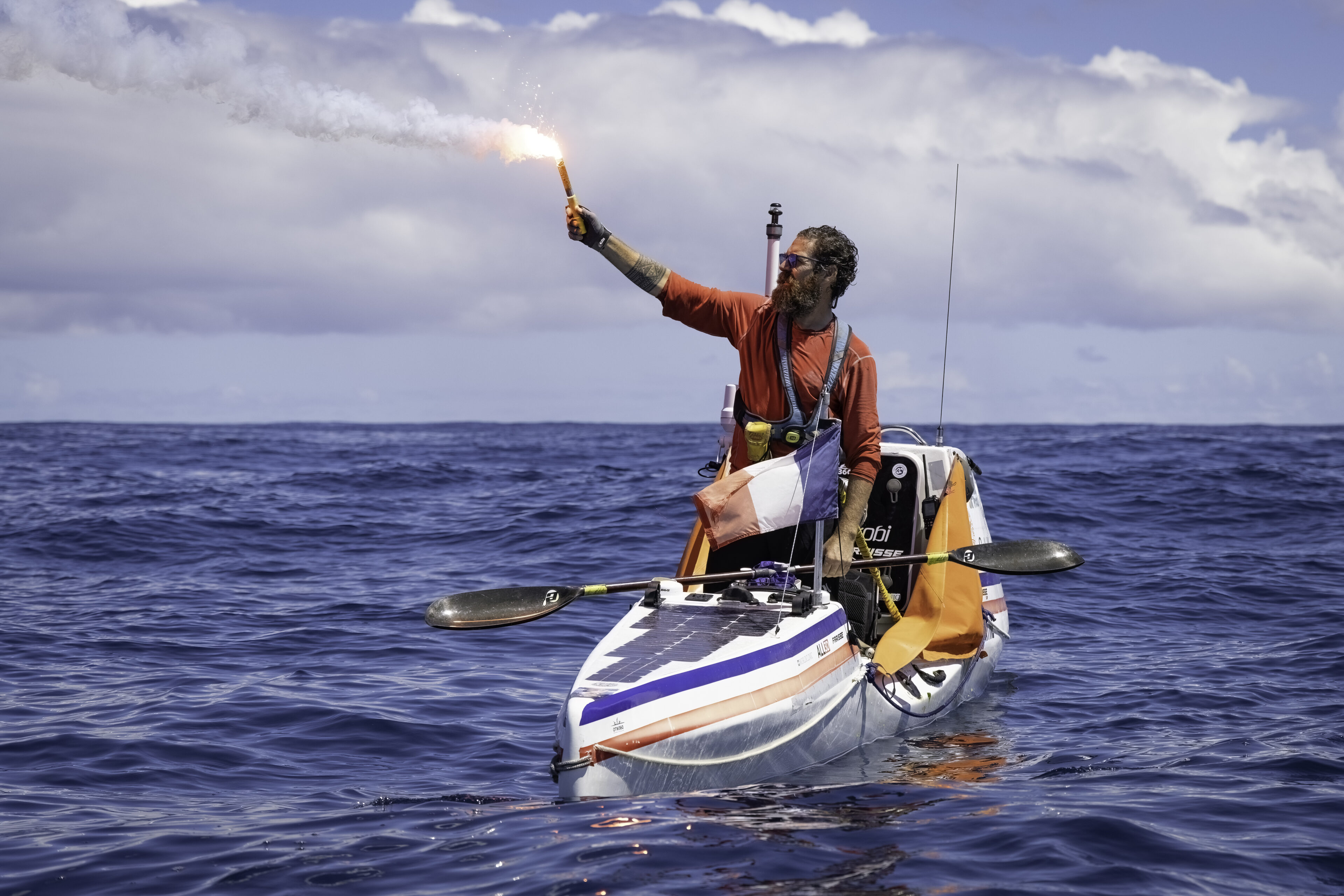
Cyril Derrumaux arriving in in Hilo, Hawaii, September 2022 after crossing the Mid-Pacific. | Feature Photo: Tom Gomes
On December 23, 2024 Cyril Derreumaux, ocean expedition paddler, departed from La Restinga, The Canary Islands to cross the Atlantic Ocean by kayak. Derreumaux completed his journey across the Atlantic March 4, 2025, reaching the island of Martinique in the late afternoon.
Derreumaux is no stranger to big ocean crossings, having completed his first solo ocean crossing, 2,761 miles from California to Hawaii, in just over 91 one days. Between this expedition, his current expedition, and a 2016 team rowing crossing from California to Hawaii, Derreumaux has spent over 200 days on the open ocean.
“The next two days are going to be big,” Derreumaux shared via his live tracker on March 2, 2025, adding that the final two days of this expedition would be high mileage and long days to make as much progress as possible.
“Today I saw a flock [of] about 70 birds working together to get flying fish. All day. I don’t know why they always stay in front of me about 200 m away. Never behind or on the side. It’s like they’re taking my boat as a reference point. It was National Geographic. Amazing,” Derreumaux wrote.
The draw of the open ocean crossing
It’s easy to wonder what exactly the draw of a big ocean crossing might be for a paddler. For many, even most, half of the joy of ocean paddling is exploring the coastline and the crossings are more something to be endured to get to the meat of the trip.
To embark on the journey where the point itself is a crossing, where that crossing is of an entire ocean, sleeping in your kayak and paddling for over 70 days losing sight of land completely might seem a strange undertaking. But much like the coastal paddler finds beauty along the coast, Derreumaux finds the open ocean to have more beauty than perhaps meets the eye.
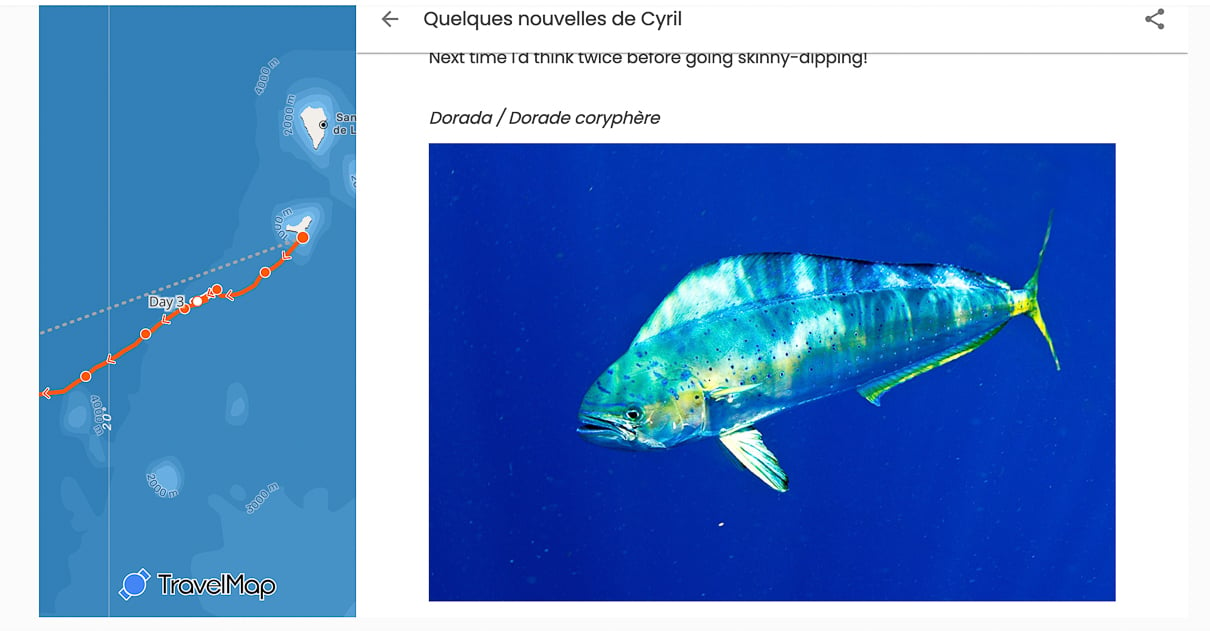
Cyril Derreumaux’s live tracker from the first few days of his Atlantic Ocean crossing, featuring a photo of a Dorada fish. Cyril Derreumaux, Tracker-Map.
In the first few days of his trip, Derreumaux shared the ocean with dolphins, flying fish, petrels, false killer whales, and even an orange crab out at sea on day five. Derreumaux glimpsed green sea turtles and felt a strange bump on his kayak on day six, then was greeted by a shark on day seven. On day 17, he spotted a marlin and a mini-tornado; in the following days tuna, a tanker and a cruise boat. A variety of sea birds kept him company throughout.
On Day 41, Derreumaux caught a wave and clocked 11 knots in his 800 pound kayak. Near the halfway point, he found flying fish on the deck of his kayak.
On day 64 as he neared the end of his journey, Derreumaux wrote: “One of the dangers of getting closer and closer to land is to let go over your routine. Maybe do two hours more of paddling to get closer, maybe skip the nap. Experience showed me that keeping to the routine is best and prevents from stupid injury. It worked for 60 days, let’s keep it for the next 10 days.”
In total, Derreumaux’s Atlantic crossing took 71 days, 14 hours, and 57 minutes and was completely human-powered, solo, and unsupported. Derreumaux will finish ahead of his initial calculations, which estimated 80-90 days on the water.
Cyril Derrumaux arriving in in Hilo, Hawaii, September 2022 after crossing the Mid-Pacific. | Feature Photo: Tom Gomes