Home Blog Page 284

The Thule Behri: A River Journey Through Nepal’s Mythical Dolpa District

The Thule Behri | PHOTO: MAXI KNIEWASSER

You don’t need be a class V hero to bucket list this Himalayan heaven—explore the continuous class IV canyons of Nepal’s Dolpa District. 

“Where in God’s name is the river?”

“I’m pretty sure it’s just over there,” Ric spit, pointing aimlessly down the valley in response to Steve’s question. Their exchange was flavoured with a hint of the tension we were all feeling.

“Just get organized. Simon and I’ll go and find some porters,” I tried to assure the boys.

We mimed the profession to an elderly village woman, asking where we could hire someone to carry our gear. Quickly understanding us, she pointed to the hills. November is harvest season in the Dolpa region of Nepal, we learned. Any would-be porters were busy gathering food for their families for the upcoming winter, but the thought of shouldering our beastly boats, laden with camping gear and food for seven days, kept us searching.

It all started when we veered off plan the day before. Steve Arns, Simon Rutherford, Ric Moxon, Brian Fletcher and I had just arrived at Birendranagar, a small town in mid-western Nepal. From there we hoped to fly to Juphal, a remote village deep in the Himalaya with a dirt landing strip and access point to the Thule Behri River.


The Thule Behri | PHOTO: MAXI KNIEWASSER

“Juphal not possible,” a smiley Nepali fellow had informed us at the airport. My stomach instantly dropped. We’d traveled halfway around the world to get to the Thule.

After arguing back and forth, the man offered another option: “We can fly to Masinechaur.”

There weren’t any maps in this airport, but Masinechaur, the locals assured us, was no more than a four-hour walk from Juphal. Since it was river right, and Juphal on river left, I figured it couldn’t be more than two hours from the river. The new put-in would start us a day or two downstream of the easier section of the Thule, whitewater we’d planned to warm up on, but lacking alternatives and confident we’d find porters to help us make the trek down to the river, we stuffed our boats into a seven-seat Cessna Caravan and got ready for the flight.

A pilot’s son, I immediately noticed the plane’s non-retractable landing gear. “Makes it stronger for high-impact landings,” I explained to the boys. Before anyone could change their mind, the pilot pushed down the throttle and we took off.

Twenty minutes later we were flying through the mountains—in the Himalaya you fly through, not over, the peaks—and got our first views of the river. After 45 minutes the landing strip came in sight and I held my breath. The airstrip looked like nothing more than a short steep gravel path cut into the side of the mountain, and at over 10,000 feet planes have to land fast. In an explosion of dust, our boating gear lurched forward as the plane screeched to a halt just in front of a stone wall. “I hope the river won’t be this exciting,” Simon joked nervously.

The Thule Behri is to the ambitious weekend warrior what the Stikine is to the hardcore class V+ boater. From mid-November to late April, when the Thule’s waters flow at a moderate level, the river is continuous class IV to IV+ whitewater that cascades through the land of Dolpa, a remote western region of Nepal that was closed to foreigners until the early ‘90s.

A page from The Book of Awesome. | PHOTO: MAXI KNIEWASSER

It wasn’t until 1995 that an international team, including Charlie Munsey, Doug Ammons and Scott Lindgren, realized the Thule’s first descent, ticking off one of the last major un-run rivers in the Himalayas. Surrounded by some of the world’s largest mountains, the Thule Behri has its source in the deep blue waters of Phoksundo Lake. The lake is sacred and home to a historic monastery of the mysterious Bonpo, followers of Tibet’s ancient spiritual tradition, a religion that predates Buddhism.

The Dolpa region has steep terrain and a ruthless climate. The winter is brutally cold, the summer monsoon unleashes floods and the rest of the year a cold arid wind blows powerfully from Tibet. Life in Dolpa is not easy. There’s no doubt the cruel conditions influence the high spirituality of the region.

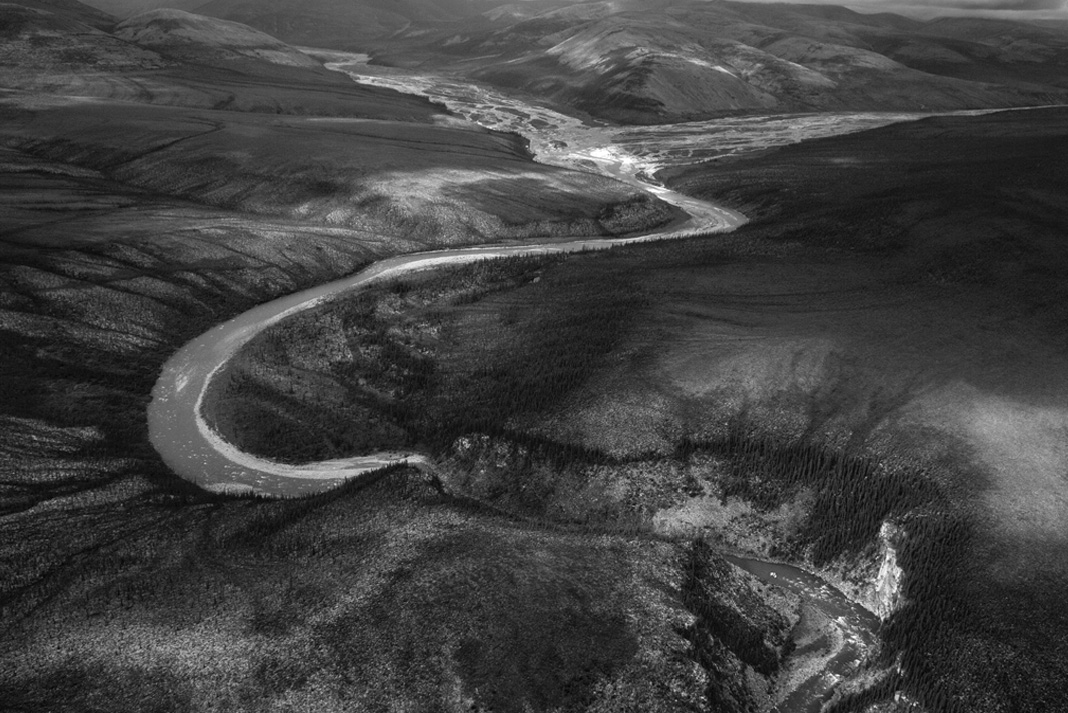
Polished bedrock canyons border the Thule for dozens of miles at a time and some of the world’s highest peaks drain into the valley. This river is not just hero territory. Its continuous class IV is surprisingly attainable for experienced boaters and lasts for days on end—it is no stretch to say that paddling the Thule could be the highlight in any enthusiast boater’s paddling career.

Eluded by any potential porters, we had no choice but to shoulder our boats and start moving. The path was steep, rocky and exposed, the gear heavier than we feared. However, the stunning scenery did much to alleviate the suffering on our search for the river. The Dhaulagiri Himal range—including its namesake 26,795-foot peak, Mount Dhaulagiri—towered above the river in a manner only seen in the Himalaya. “We wouldn’t have seen this if we had landed in Juphal,” I remarked. After six hours of trudging under the weight of our boats, we arrived at the river just as night fell.

We spent a cold night just upstream of a Buddhist monastery at Tibrikot. It was a fitting place to put in the Thule’s emerald water as when we awoke, we could all sense the spirituality of the place—a feeling we couldn’t quite pin down, but something special was in the air.

After just moments on the water we were into the entrance rapids of the Golden Canyon, a 10-mile-long section with walls rising thousands of feet on either side. “Man, this is spicy,” Ric puffed as he pulled into a small eddy. Starting below our planned put-in launched us into the first rapids below Tibrikot, some of the trip’s most challenging continuous flow. “Not much of a warm up, eh?” Brian said as he peeled out to continue the eddy-hopping madness. Brian seems to get more comfortable the harder the whitewater gets but if the rapids had been any steeper, we would have had to scout everything in this first section.

A couple miles downstream the water began to calm as the canyon walls grew tighter. For the rest of the day we eddy-hopped our way down playful class IV, leapfrogging one another so that everyone could get a chance to lead through the boulder maze, and hooting and hollering if anyone chose a less than graceful line. “Check out the wild patterns in these boulders,” Simon managed to yell at me over the river’s roar. A yearly monsoon carves and polishes the canyon’s boulders into colorful sculptures—paddling through these rock gardens is a highlight of the Thule.

As the warm afternoon light lit up the Golden Canyon in all its glory, we pulled over and made camp among ancient ponderosa pines. Astounded by the scenery and awestruck by the river, we concluded by a crackling fire that the Thule had some of the best whitewater we’d ever paddled.

This was my second trip on the Thule; after a run in 2008 I dreamt of coming back. As the veteran of the river, I organized a lot of the logistics, but once there I wasn’t much of a guide. The sheer quantity of whitewater was too much to remember and we treated this as our first time down the river.

The Tibrikot Monastery rises from the hills above the Thule, an auspicious site to start our descent. | PHOTO: MAXI KNIEWASSER

The fourth day brought us to the Awalgurta Gorge, the hardest part of the river by far. Already in the entrance rapids, we were surprised by how pushy the water had become. The river had grown markedly in volume. Knowing that two miles of dangerous class V+ lay downstream we evaluated our options. “I’m out,” I said.

In 2008, my friend Danny had a terrible swim out of a sticky hole right above some horrible sieves. He had to swim back into the hole time and again to avoid getting flushed downstream and into the sieves till the team could get a rope to him. The memory was still vivid.

Waking at dawn the next morning, we cooked breakfast and packed up camp with unusual efficiency. With ever more tributaries joining, the Thule becomes big water. We were ready. After several days of continuous boating we felt strong, further aided by the lighter boats as the trip neared its end.

Just before lunch we came upon a horizon line big enough that it was at the edge of what we could safely read and run. Brian saw a line center right, boofing a ledge over a giant hole. Ric and I followed him while Simon and Steve eddied out on river left to have a better look. At the bottom, Ric and I were high fiving each other when we heard frantic whistle blasting. “GO! GO! GO! GO!” Brian yelled. We rushed to shore and ran upstream as fast as our legs and lungs allowed us. My mind was racing. Are my friends okay? What happened? What can we do?


The last beams of light in the lush lower section of the Thule. | PHOTO: MAXI KNIEWASSER

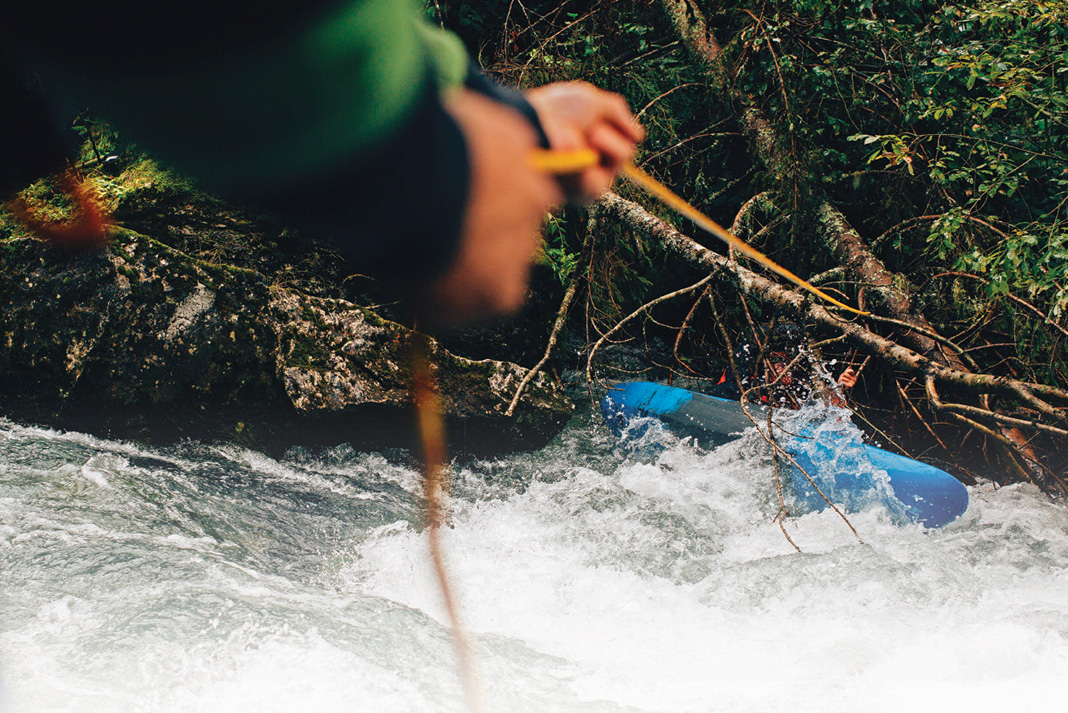
Simon, still in his boat, was getting sucked under a huge boulder. The eddy he had caught was a deadly siphon. Simon had pulled into the eddy, looking towards the middle of the river to scout the rapid. When he noticed the pull on his boat it was already too late—he was getting pulled under the boulders. In the last moment he managed to turn his boat around so he went bow first into the trap. Going in backwards would have likely been the end. As he was getting sucked into the siphon, easily big enough to swallow him and his boat, he jammed his arm in a crack in a last effort to keep himself from disappearing into the void. This stabilized him long enough for Steve to grab him and buy time for the rest of us to figure out the safest way to get him back to shore.

Himalayan rivers pose a higher than normal risk for this kind of accident. Shaped by the huge monsoon floods and the soft rock of the mountain range, the riverbeds are often comprised of massive boulders that seem delicately stacked on top of each other, especially where the river gets steeper. During paddling season when the water is much lower, the water flows through the boulder maze, rather than over it, creating many siphons—it’s the reason class IV in Nepal is so excellent, but the class V is unusually dangerous.

We always try and learn from such events, but what was there to take from this one? “I’m not gonna stop catching eddies,” Simon remarked somberly as we drifted along. He had made this move to be cautious and have a closer look at the rapid, but it had proven a near-deadly trap and a scary reminder that paddling, especially on expeditions, is a team sport.

Simon was determined to get back in his boat as quickly as possible. Less than an hour after the incident, we were traveling downstream. After another 25 miles of playful big water, class III+ and IV, we finished the Thule’s whitewater just as the sun set over the forest of Nepal’s foothills—we had paddled from the high and arid Himalaya right down into the jungle.

Sixty miles of flatwater and mellow whitewater took us toward the road bridge that would mark the end of our trip. After uncountable hours of slogging along, Steve asked, “Where in God’s name is the take-out?”


This article first appeared in the Early Summer 2014 issue of Rapid Magazine. Subscribe to Paddling Magazine’s print and digital editions, or browse the archives.

The Lost Art Of Disconnecting In A Digital Age

Vanishing Act | PHOTO: GARY MCGUFFIN

“Are you Tweeting?” Seriously?

It can be a crushing blow to any backcountry experience. Enveloped in sublime solitude, a friend’s phone lets out the cheery chirp, the confirmation of 140 characters sent to a distant cellphone tower, relayed to Twitter and thus the whole world. Even 20 miles from the nearest road, the experience becomes a little less remote and a little less wild.

What was the purpose of grunting up portages, sacrificing blood to blackflies and battling that never-ending headwind, I ask myself, if only to stay plugged into what we’re trying to escape? We’ve brought our connection to the hectic rat race—and more technology than put man on the moon—with us, and it’s right here in our pockets.

Keeping up with social media in the backcountry might seem like the antithesis to a wilderness adventure, but gone too are the days of simply vanishing into the woods. How digital devices are affecting wilderness experiences is a hot topic perplexing outdoor educators.

As tools such as satellite communicators, GPS devices and yes, even the iPhone, become smaller, cheaper and more powerful, they’ve become essentials in our camp kits. Does having them take away from what we ventured into the wilderness for in the first place? It does according to Howard Welser, an Ohio University sociology professor.

Technology might help protect us from the natural world but it also separates us, he argues in the 2012 outdoor education tome, Controversial Issues in Adventure Programming.

“Increasingly unavoidable use of and access to mobile communication technology in wilderness recreation undermines core dimensions of the wilderness experience.”

“Increasingly unavoidable use of and access to mobile communication technology in wilderness recreation undermines core dimensions of the wilderness experience,” Welser writes.

The wilderness is not just a geographical area, but also an abstract concept defined by something untamed and uncultivated. Bringing a device that locates position with pin-point accuracy, offers zoomable maps and navigation assistance, locks us in a tech bubble that keeps us from connecting with the outdoors in a fundamental way.

Vanishing Act | PHOTO: GARY MCGUFFIN

Todd Miner, executive director of the Cornell Outdoor Center at Cornell University, debates Welser, stating that technology shouldn’t be looked upon as an electronic boogeyman.

“Fighting technology is a futile and an ultimately misplaced, curmudgeony struggle,” he writes. “Technological improvements have for the most part led to safer and more enjoyable wilderness experiences…and have helped create more wilderness advocates.”

“Fighting technology is a futile and an ultimately misplaced, curmudgeony struggle.”

Obviously the debate is subjective. What one paddler considers appropriate technology another may consider disruptive.

Such was the case for author Ted Kerasote who describes in Out There: In the Wild in a Wired Age a remote northern river journey with a tripping companion so smitten with his new satellite phone that he called home at least once a day and, incredibly, even called a colleague to describe a falcon he was watching. It was disruptive to Kerasote’s experience and would likely be to yours as well.

Perhaps the answer to the question of where to draw the line can be drawn from the reasons we venture into the backcountry in the first place. Some go for the challenge and adventure, some for escape and solitude, and others are looking only for relaxation and natural beauty. Staying connected—which could mean an emergency-only satellite communicator or daily texts back home—isn’t in opposition to some of those motivations.

What’s important, writes Miner, is that people are connecting with nature. And if a satellite connection facilitates that objective, that’s okay. Just keep your Tweets off my camping trips—unless you’re sending a distress call for more Skittles.

Canoeroots’ managing editor, Kaydi Pyette, admits to having once Instagrammed a photo of a very pretty sunset on a wilderness trip. She promises never to do it again.


Get the full article in the digital edition of Canoeroots Early Summer 2014. Subscribe to Paddling Magazine’s print and digital editions, or browse the archives.
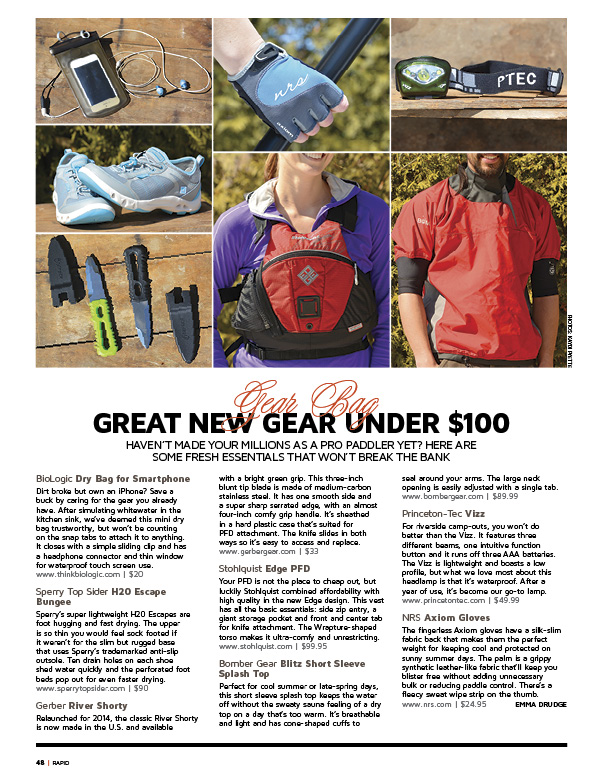
11 Of The Best Games To Play On Your Next Family Camping Trip

Parents and kids sitting around table playing a game
Endless family fun.

There’s a camping game for every occasion, whether you’re spending a rainy morning underneath a tarp, a sunny afternoon on the water, or an evening gathered around a campfire. Best of all, these games require very little equipment, meaning there’s no need to pack toys, stuffed animals, and balls (or at least not as many as your kids may have requested).

After you’ve tired of Go Fish and Frisbee, spice things up with our list of the best camping games.

1. Hot paddle

You’ll need paddles for this energizing game. Participants should stand in a circle, facing each other with a paddle in hand. One camper will need to stand aside to lead the game by shouting out one of the following instructions:

Port: Everyone lets go of their paddle and moves one paddle to the left.

Starboard: Everyone lets go of their paddle and moves one paddle to the right.

Bow: Everyone bows with paddle in hand.

Stern: Everyone lets go of their paddle and turns 360 degrees, catching the paddle before it falls.

If a participant confuses the directions or lets their paddle fall to the ground, they’re out. Continue until one person is left.

2. Pterodactyl

The objective of this game is to keep your teeth covered with your lips. Start with everyone in a circle facing one another. One player starts by saying “pterodactyl,” passing the word on to the person on their right who repeats it and so on. Players can change the direction by imitating a pterodactyl’s screech, passing that sound to the left. If anyone laughs and shows their teeth, they’re out.

3. Battleship

You’ll need two canoes on the water for this game, perfect for warm summer days. Flip the canoes over, creating an air pocket underneath them. One or two people swim under the gunwales and pop up inside each canoe. Decide in advance which canoe is the hunter, and which is the prey. The campers in the hunting canoe shout out Marco and the other shouts out Polo. The object is for the hunter canoe to catch the other canoe by bumping into it without peaking. Agree in advance on a small area of play and set a time limit so that air under the canoe doesn’t run out. Have a ref in an upright canoe to enforce the rules.

4. Water warrior

Forget the sandpit; take your next game of tug-of-war to the shallows of the beach to test balance and strength. Tie a bandana around the midpoint of the rope, get knee-deep in water and line up the midpoint with a landmark on shore that players should try to pull each other past. Pit brothers against sisters, kids against parents! For a fun variation, everyone must compete with water balloons tucked under their arms—don’t break or drop your balloon.

5. Shout out

Try to count to 20 by shouting out numbers without organizing who will speak when. Anytime two people say the same number or speak at the same time, the whole process starts over. Not only is it harder than it sounds, it’s a perfect game to keep everyone close together on the hiking trail.

6. RPS olympics

Best for bigger families and groups, have each player partner up to play Rock, Paper, Scissors, playing for best two out of three rounds. The losers become cheerleaders for their winning partners and follow them on to their next round, cheering for them. The next person to win gains the loser and their cheerleader and soon, until there are only two players, each with their own personal cheerleading sections for the championship.

7. Camouflage

This game, as you might expect, is best played in wooded areas. One player stays stationary as the spotter and counts to an agreed-upon number.

The group of players hide. But here’s the catch—you have to be able to see the spotter. Using surroundings to their advantage, players can hide in plain sight. If the spotter is having trouble finding players, they can call “food” which is when they close their eyes and hold up their hand. Players have to run and touch their hand as they count to an agreed-upon number, then find a new hiding spot.

The spotter can also yell “fingers,” which is when they hold up a certain number of fingers and those hiding have to call them out, meaning they have to peak around to see the number of fingers and possibly be spotted.

8. Telephone

This one is a classic. It seemed a little too obvious to include at first, but when we recounted those rainy camp days giggling in our tents we had to include it.

Effortlessly played with large groups of people, adults alike, one person is the operator. The operator will come up with a short sentence and whisper it once into the next person’s ear. That person then whispers what they heard to the next person and the cycle continues. The last person to hear the message will then say it out loud.

Hilarity ensues when they compare it to the operator’s original sentence. And this folks, is why gossiping is bad.

[ Paddling Trip Guide: Plan your next family adventure ]

9. Hug a tree

This game can be played with small groups of explorers within a designated perimeter. Without blindfolds, spend time with a tree. Sounding a bit too tree-hugger to you? Bear with me.

Before being blindfolded, children should get to know the tree—the texture of its bark and leaves, its circumference, its smell, what trees are nearby, and any other amazingly small details they can identify.

After they’ve spent their time with the tree, walk them away, blindfold them, and, to add to the mystery, spin them gently around a couple of times. Lead them back toward the tree, but bring them to different trees first. See if they can guess which tree they took the time getting to know. Caution: your child may become more aware of the natural world.

10. Sardines

Think: inverted hide-and-seek. Only one person hides, while the entire group tries to find them. When you find the person, instead of ousting them, you quietly hide with them. Slowly, players disappear from the game, all quietly hiding like sardines crammed into one hiding spot. The last player to find the sardines becomes the new sardine.

11. Deer ears and fox feet

Explorers sit in a circle on the ground. One player sits in the middle with her eyes closed or blindfolded. A stick sits in the dirt behind the player’s back. This is an optional rule, but we think it’s adorable, so we encourage it: the player in the middle holds her hands up to her head as if they are deer ears.

Explorers circling the player in the middle have to stealthily sneak up on the player in the middle to steal the stick behind them. If the deer in the middle hears something, they point toward the sound, hoping to catch the sly fox trying to steal the stick. She has three guesses to catch the fox(es).

This Is Your Brain On Whitewater

Photo: Patrick Camblin
This Is Your Brain On Whitewater | Photo: Patrick Camblin

Why kill me, I give you life. Love from Rupert River.

I stop walking to read this message, spray-painted on one of the copper-colored pillars of a bridge over the river, which, as I glance down, suddenly seems angry—fast, dark water crashing on grey rocks.

When I took my first paddle strokes on the Rupert, I knew only one thing about the river—it was slated to be damned.  Twenty-eight days, and almost 400 miles later I knew much more. I knew that the best sound to wake up to is the babble of whitewater. That the rich culture of the Cree people is directly connected to the wild-flowing water of the Rupert. I knew that fire-grilled, freshly caught whitefish melts in your mouth. I knew that this river was once a highway through history. That oatmeal-fed muscles could solo portage a canoe for many miles and that if you got enough black fly bites, your eyes could swell shut.

What I didn’t know was that my time on the Rupert had changed me. A connection had been forged between wild water and I—a connection that I would take with me to other rivers. A connection that would direct the course of my life, without me even realizing it.

The rest of my summer was spent washing dishes. Dam construction was underway, despite my letters, petitions and phone calls. As I filled the sink with water, my mind would fill with questions. Who decided the fate of the Rupert? Had they ever experienced the northern lights as they dance to the acoustics of whitewater? Had they felt the exhilaration of running rapids blind, or the calm of navigating the vast shoreline under afternoon sun?

I connected everyday observations to the Rupert. A sprinkler on a lawn or an idling car. When someone left a light on, or let a tap run. If people weren’t so frivolous, if they didn’t waste so much, rivers wouldn’t need to be dammed to meet their demands.

A decade later as a raft guide, I was daydreaming at the back of the boat when it dawned on me. Maybe I could give the people on my raft a taste of the experience I had on the Rupert. Instead of just getting them down the river, maybe I could share it with them too.

Photo: Patrick Camblin
This Is Your Brain On Whitewater | Photo: Patrick Camblin

Along with giving them the ride of their life, if I could show people some aspect of the river—a great blue heron fishing on stilts, an osprey circling a tree-top nest—maybe they would take home a sense of pride and respect. Maybe they too would look at things differently. Maybe the environment would climb their priority list.

It’s easy to see the rivers we paddle as strong and free. We feel the thrill, fear and accomplishment that comes with conquering whitewater but it’s not until we know a river and understand its threats—development, damming, diverting and pollution—do we realize it can also be fragile and defenseless.


This article first appeared in the Early Summer 2014 issue of Rapid Magazine. Subscribe to Paddling Magazine’s print and digital editions, or browse the archives.

Dubai: In the Land of Sand and Surf

Named for the lush green spaces that surround its seven oases, Al Ain is known as the Garden City of the United Arab Emirates. | Photo: MICHAEL NEUMANN

Just a couple hundred miles from Rub’ al-Khali, the largest sand desert on Earth, one of the world’s longest and most unusual manmade rivers flows under the scorching desert sun. 

The Wadi Adventure whitewater park was conceived as part of a tourism vision for Al Ain, the fourth largest city in the United Arab Emirates, just 90 miles from the glitzy metropolis of Dubai on the Persian Gulf coast.

In 2012, when Wadi opened its doors to the public, 50,000 visitors enjoyed the plush white pillows and shaded lounge chairs of the VIP zone next to the artificial rivers. But mixed in with the tourists was a core group of canoeists and kayakers with a mind to train in the off-season while avoiding an expensive flight to Australia, the usual winter training ground for European paddlers.

Welcoming the international crowd of slalom athletes is Fergus Coffey, the whitewater manager at Wadi Adventure. A lifelong paddler, Coffey guided rivers in North and South America and ran the kayak program at the U.S. National Whitewater Center (USNWC) in Charlotte, North Carolina, before getting offered the gig at Wadi.

“I had the opportunity to come to the UAE and set up a completely new facility,” he says. “It was too odd to pass up.”

Inspired in part by the USNWC, Wadi was originally built as a slalom site, but given the UAE’s tourist traffic, a surf pool was added to increase wider demographic appeal.

Now, as word in the paddling community spreads, Wadi Adventure is becoming a winter wonderland for whitewater paddlers from all over the world, each with a different take on its unlikely desert waterways.

man kayaking in Dubai

THE UNEXPECTED OASIS

It was 6 a.m. on January 25 when French paddler Nouria Newman and her Caimen Storm kayak arrived at Dubai’s international airport. Along with her coach and four teammates she had driven to the airport in Lyon, France, and taken a six-and-a-half hour flight that landed her in a different world.

The Fédération Française de Canoë-Kayak had coaxed her into signing onto a two-week training intensive in the middle of the desert at Wadi Adventure, Al Ain’s newest city planning success and the Middle East’s first whitewater facility. It was much warmer than the zero degree winter training conditions in Toulouse and cheaper than flying to Australia.

Last year she had managed to talk her way out of the training venture but this year she didn’t get off the hook so easily.

Exhausted from the flight, she nodded off as they drove the E66 towards Al Ain, a route cutting straight south through an otherwise blank desert landscape. When she awoke it was still dark but perfectly spaced streetlamps lit the way, and in the distance the rising sun started to shine on Jebel Hafeet, one of the UAE’s highest mountain peaks.

“When you actually enter the place it feels like Disneyland,”

says Newman, recalling her first impression of Wadi Adventure as the drive from Dubai finally ended.

Paddlers from Italy, Germany, Russia, England, America, Switzerland, Slovenia, Japan, Slovakia and Czech Republic joined Newman and her team. From June to September, Newman’s used to seeing competitors at races around the world, but to be all in one place during the off-season was something new.

“It’s like a summer camp, coming here,” she says. “We have barbecues and hang out and turn into slalom geeks for two weeks.”

Paddlers all stay in fully furnished chalets just off site and share meals when they can. They go on day trips
to Abu Dhabi. They take camel rides. On off days, some paddlers visit the massive indoor theme park of Ferrari World or the indoor ski slopes in Dubai. Ferraris, Lamborghinis and Maseratis with tinted windows roll past the park.

“Even a Russian oligarch will be able to find something expensive here,” says Coffey.

But at the park itself, cell phones turn off and crystal clear waves flowing from a mysterious water source become Newman’s primary fixation.

Waterpark in Dubai

THE PLAY PARK MIRAGE

While Nouria Newman was making rounds of the Wadi’s three whitewater runs, Ciarán Heurteau, a seasoned slalom kayaker, was taking a break from the scene.

Heurteau made the trip to Dubai with two teammates and a coach as part of the first group of kayakers to pass between the slalom gates after Wadi’s grand opening in 2012. He left feeling unsettled and uneager to return.

It’s no secret that the UAE was built on an oil regime and hosts some of the wealthiest business tycoons in the Middle East. Al Ain itself was home to the late Sheikh Zayed bin Sultan al Nahyan, the first president of the UAE. The nearby Rub’ al-Khali, a desert roughly the size of France, is home to the world’s largest oilfield, the Al-Ghawār.

When Heurteau’s not paddling, he lives in a small village in Northern Ireland where he avoids using plastic bags and is conscious of the compost that comes from his morning breakfast. For him, this artificial river was too far from the green lifestyle he leads. “The amount of money that’s just wasted, it blows you away,” he says. “It’s easy to go there to train and just not look at the whole other side of it.”

The crystal blue waters of Wadi’s 1,100 meters of faux river are sourced from municipal lines that pump and desalinate water from the coast in Abu Dhabi, about 100 miles west of Al Ain.

Ninety-four million gallons of water recirculate through the concrete channels with up to a quarter of an
inch of depth lost to evaporation each day. Five vertical pumps run for about 12 hours at a time to keep the water flowing, says Coffey, and two conveyer belts transport paddlers from the bottom of each course to the pond at the top.

For Heurteau, the illusion of a pristine desert oasis was more unsettling than magical, more manufactured fantasy than reality.

“I reckon more and more this is where people will head for training. There are no more races on natural rivers any more so it makes sense to train in places like this.”

The line goes quiet for a few seconds.

“It’s a very different feeling paddling on artificial courses,” he says. “You can see the shift in people’s thinking.”

Named for the lush green spaces that surround its seven oases,
Al Ain is known as the Garden City of the United Arab Emirates. | Photo: MICHAEL NEUMANN

THE BLISSFUL DESERT VOID

Under the black desert sky with the course floodlights turned off and only the sound of running water ringing in his ears, Vávra Hradilek finally found the desert space he’d been seeking.

In the pitch black of the night with only a photographer following him from land on an otherwise empty river, the Czech paddler got in his kayak and began running the course.

“I could only hear the water without any vision, so from memory I just went through the strokes,” he says. “It was amazing.”

For Hradilek it was a moment of pure kayak bliss.

During the day, intervals of 25 paddlers at a time would take turns running the slalom course, watching in front and behind them to avoid a collision. Along with other European paddlers, he and his 34 Czech teammates stayed in a massive block of chalets beside the river and fired up the barbecues to cook their meals together.

Hradilek was even more crowded than most with a film crew following him around for a week tracking his training and off time for a short film.

“I think summer camp is the right word. It’s all the paddlers in Europe in one place hanging out,” he says. “I’ve been in the circuit for a long time so I know most of the paddlers who come out on race days but here there were so many new people.”

The course offered night sessions to anyone interested in taking on the whitewater away from the beaming sun.

For the slalom vet these spacious hours were the highlight of his month- long intensive, his escape from the claustrophobia of a packed whitewater course. Surrounded by the vast sprawling sands of the Rub’ al-Khali—a desert dubbed the Empty Quarter—all it took was for the lights to go out for him to experience bliss in the desert void.

Katrina Pyne is a freelance journalist whose mind is constantly drifting from her desk job to quiet untouched rivers and chaotic whitewater parks. At heart, she’s still a wilderness guide. 


This article first appeared in the Early Summer 2014 issue of Rapid Magazine. Subscribe to Paddling Magazine’s print and digital editions, or browse the archives.
In the Hatch: Titika Active Wear

The Titika Bolt shorts, $38. Photos: Courtesy Titika Active Wear
The Titika Bolt shorts, $38.

Titika Active Wear is a “Canadian eco-friendly and fashion-foward active wear brand, captures the essence of femininity and strong girl mentality in athletic products that offer the latest technology and innovative fabrics.

Titika Active Wear offers versatile apparel with bold playfulness and refined sportiness. From leggings that combine the much-loved comfort of a basic legging with sexy, yet functional mesh detailing on the sides to oversized, cozy sweaters with floral mesh sleeves.”
 
Inside the clothing, there are key technologies perfect for paddlers such as: 
  • Anti-aroma silver yarn: silver thread woven through the fabric to inhibit the growth of odour-causing bacteria
  • Moisture Wicking: keeps sweat away from the body
  • Free/flat seam: special stitch to create flat seams. This reduces extra fabric that can rub and irritate your skin while you workout

Bolt/Bubbly shorts, $48, has the chafe free/flat seam technology: Titika uses a special stitch to create flat seams on their garments. This seam reduces extra fabric which can rub and irritate your skin while you work out

Titika BubblyShorts 48
 
Nathalie shorts, $60, has the Durablend technology: this fabric is a comfortable water repellant and wind breaker. It is lightweight and tear resistant, making it the perfect fabric for any outdoor activity.
Titika Nathalie 60
 
Keisha Tank, $52, has the Anti-Aroma Silver Yarn technology: silver thread is woven through the fabric to inhibit the growth of destructive and odour-causing bacteria, mold, mildew and fungus.
Titika Keisha 52
 
Heather Bra, $28, has the moisture wicking technology: keeps sweat away from the body.
Titika HeatherBra 28
For more information about Titika Active Wear or more of their latest release of female athletic wear, check out their website, titika.ca.

Gear: Pat’s Backcountry Beer

Photo: Alex Cousins
Pat's Backcountry brew, backcountry beer

Got beer? Not if your multiday paddling trip features portages of any length. Thanks to Pat’s Backcountry Beverages canoeists can drink beer in the woods without getting weighed down. Pat’s portable backcountry brew kit includes beer concentrate and an easy-to-use carbonator—add potable water and you’ll be drinking a glass of your own delicious suds just minutes later. Handcrafted pale lager and dark ale concentrates are available, as well as a variety of traditional soft drink flavors for the kids.

www.patsbcb.com | $39.95 for kit, price for concentrate varies 


CRv13i2-48.jpgGet the full article in the digital edition of Canoeroots and Family Camping, Early Summer 2014, on our free iPad/iPhone/iPod Touch App or Android App or read it on your desktop here.


Ghosts of the Fur Trade

Ghosts of the Fur Trade | Photo: Archives Ontario

By 1690, Europeans no longer relied on aboriginal traders bringing their furs to Quebec. They had traveled west from Montreal, the epicenter of trade, and entered the wilderness to live and work with the natives, establishing trading posts. As a result, the fur trade boomed.

To accommodate the flow of goods, the Hudson Bay Company (HBCo) commissioned the building of Montreal canoes. Handmade in Louis Maître’s shop in Trois Rivière, the canoes were 30 to 36 feet long, six feet wide and weighed more than 700 pounds. Able to carry four tons of trade goods, they could hold passengers and even livestock. Paddled by the Voyageurs, these canoes plied the big waters from the St Lawrence Seaway to the western shore of Lake Superior, delivering and receiving goods from major trading posts.

Exploring the waterways further west required smaller boats. Looking to compete and carve out its own territory, the North West Company (NWCo) built freight canoes with half the load capacity of the Montreal canoe.

Built by local First Nations men employed by the NWCo, these birch bark canoes were called North Canoes. They were 25 feet long, light enough to be portaged by two paddlers and able to carry two tons. Unlike the Montreal canoe, North Canoes were nimble enough to paddle up and down small rivers. The NWCo paddled them across the continent to the Pacific and Arctic oceans. Those paddlers were the first to trade with uncontacted First Nations communities on the west coast and Canada’s northern territories.

Four to eight paddlers, collectively known as Winterers, manned each North Canoe. Many considered themselves a tougher and more wilderness-savvy breed of trader than the Voyageurs who didn’t often overwinter in the First Nations communities.

By 1821, the HBCo and NWCo ceased their ruthless competition by merging under the Hudson’s Bay name. For another eight decades, annual brigades of North Canoes carried furs to James Bay and brought back trade goods for posts near the height of land, such as Grand Portage and Northern Ontario’s Temiscamingue.

Ghosts of the Fur Trade | Photo: Archives Ontario

The big Montreal canoe continued to serve the Great Lakes until 1858. The construction of the canals on the Great Lakes, the introduction of steamboats on the Ottawa River in 1851, and finally, the completion of the railroad to Mattawa in 1881, were nails in the coffin of the freighter canoe, rendered slow and old-fashioned.

This photo depicts one of the last North Canoe brigades, seen in the Temagami area in 1902. The local fort closed shortly after and the remaining canoes fell into personal ownership. A few still survive in the historical collections of heritage sites, including former fur trading posts Fort William and Grand Portage.

Paddling historian, Wally Schaber, is currently writing a book about the history of the Dumoine River watershed. www.dumoinewatershed.blogspot.com.


Get the full article in the digital edition of Canoeroots Early Summer 2014. Subscribe to Paddling Magazine’s print and digital editions, or browse the archives.
Trust The Trucker’s Hitch To Cartop Your Canoe

If you start canoe trips with a sore neck from looking up at the wiggling canoe on your roof racks and worrying that it is making a bid for freedom, then you need to learn the trucker’s hitch knot.

Trust the trucker’s hitch knot to cartop your canoe

First, we need to cover some knot-tying terminology. The free end of the rope is the end we are using to tie the knot. For an overhand loop you pass the free end over itself to make a loop. And a bight is a bend in the rope so it is doubled.

Begin by making sure you have a set of sturdy roof racks set as far apart on your roof as possible. You’ll also need two three-meter lengths of rope (avoid the braided, yellow polyproylene cheap stuff). Tie one end of the rope to the rack using a bowline (you remember: the rabbit goes up the hole, around the tree and back down the hole). Then, throw the free end of the rope over the canoe. Apologize if in doing so you have put out your partner’s eye.

4 steps to secure your canoe

  1. Make a small overhand loop about a foot above the gunwale
  2. Take the bight of a few inches in the free end and push it up through this loop.
  3. Pass the free end under your roof rack and back up through your bight
  4. Pull down on the free end. The bight will act as a pulley as the tightening rope slides through it. In this way you gain a mechanical advantage to tighten the rope. Pass the rope under the roof rack and tie a half hitch around all three lengths of rope.

Finish the knot with a second half hitch, or however many you need to feel good about passing a truck into a headwind.

The trucker’s hitch is so effective and reliable that you’ll soon find yourself using it for things like erecting your campfire tarp and a dozen other uses where you need a taut rope.

Doug Scott teaches at New Brunswick Community College in Saint John.

cover of Canoeroots Magazine, Fall 2007 issueThis article was first published in the Fall 2007 issue of Canoeroots Magazine. Subscribe to Paddling Magazine’s print and digital editions, or browse the archives.

Hitch it! | Feature photo: USCG PTC Developer/Wikimedia Commons


Video: Canoe Strokes and Control

Photo: Rolf Kraiker
Video: Canoe Strokes and Control

This introductory video by Rolf Kraiker provides insight into some of the basic principles of paddling a canoe in what’s referred to as the traditional “Canadian” style.

This video is an overview of three different steering strokes, a breakdown of some elements to improve paddling mechanics and a short demonstration of paddling control exercises.