Home Blog Page 285

Trust The Trucker’s Hitch To Cartop Your Canoe

If you start canoe trips with a sore neck from looking up at the wiggling canoe on your roof racks and worrying that it is making a bid for freedom, then you need to learn the trucker’s hitch knot.
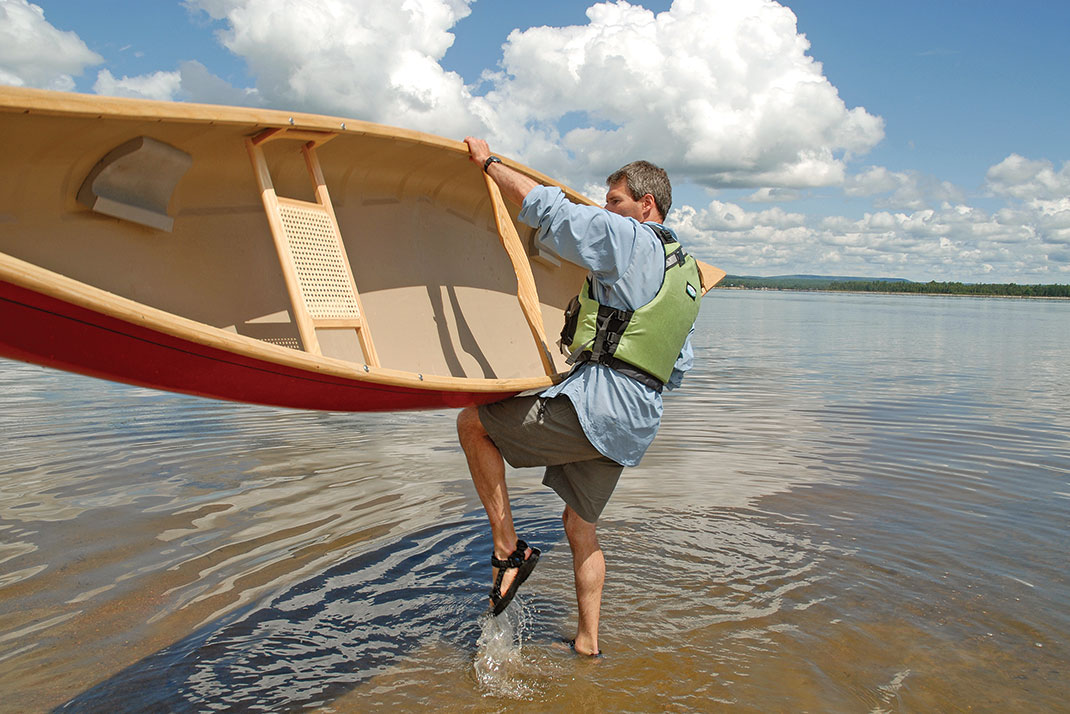
Trust the trucker’s hitch knot to cartop your canoe

First, we need to cover some knot-tying terminology. The free end of the rope is the end we are using to tie the knot. For an overhand loop you pass the free end over itself to make a loop. And a bight is a bend in the rope so it is doubled.

Begin by making sure you have a set of sturdy roof racks set as far apart on your roof as possible. You’ll also need two three-meter lengths of rope (avoid the braided, yellow polyproylene cheap stuff). Tie one end of the rope to the rack using a bowline (you remember: the rabbit goes up the hole, around the tree and back down the hole). Then, throw the free end of the rope over the canoe. Apologize if in doing so you have put out your partner’s eye.
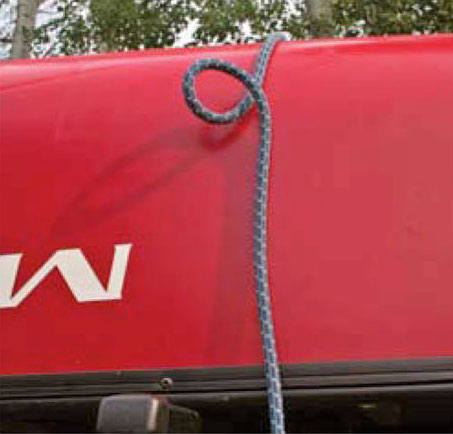
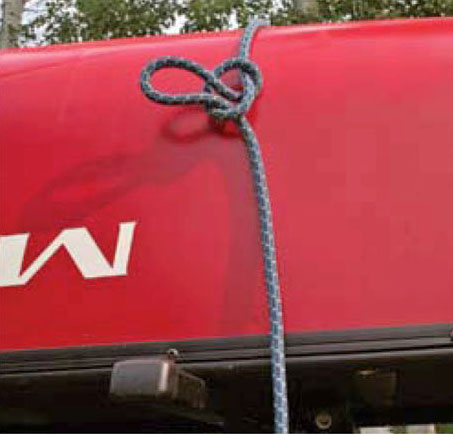
4 steps to secure your canoe

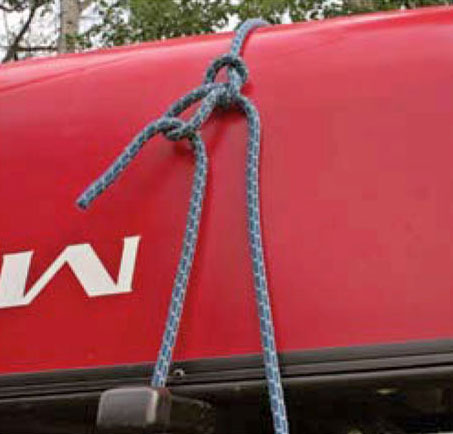
  1. Make a small overhand loop about a foot above the gunwale
  2. Take the bight of a few inches in the free end and push it up through this loop.
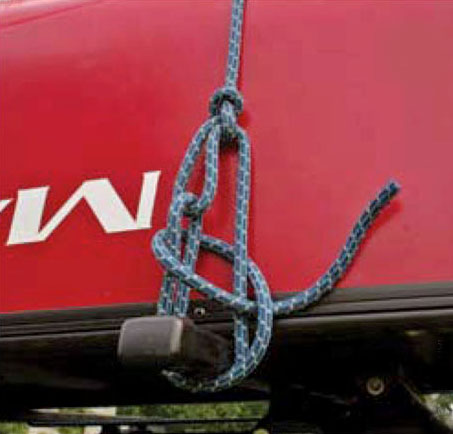
  3. Pass the free end under your roof rack and back up through your bight
  4. Pull down on the free end. The bight will act as a pulley as the tightening rope slides through it. In this way you gain a mechanical advantage to tighten the rope. Pass the rope under the roof rack and tie a half hitch around all three lengths of rope.

Finish the knot with a second half hitch, or however many you need to feel good about passing a truck into a headwind.

The trucker’s hitch is so effective and reliable that you’ll soon find yourself using it for things like erecting your campfire tarp and a dozen other uses where you need a taut rope.
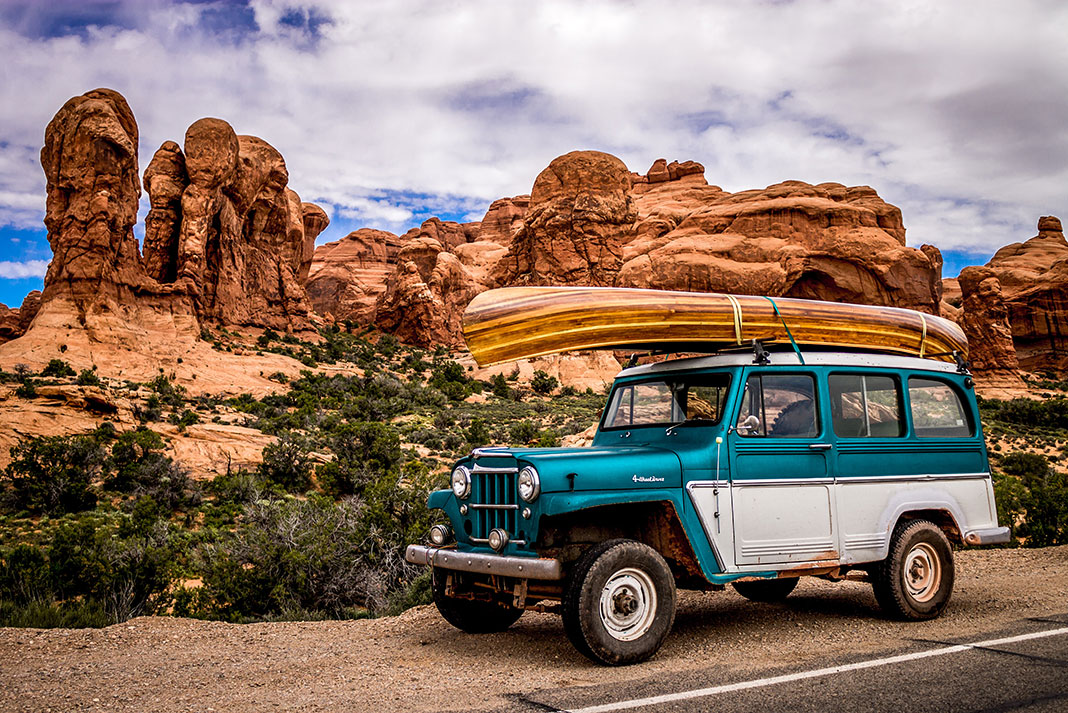
Doug Scott teaches at New Brunswick Community College in Saint John.
cover of Canoeroots Magazine, Fall 2007 issueThis article was first published in the Fall 2007 issue of Canoeroots Magazine. Subscribe to Paddling Magazine’s print and digital editions, or browse the archives.


Hitch it! | Feature photo: USCG PTC Developer/Wikimedia Commons
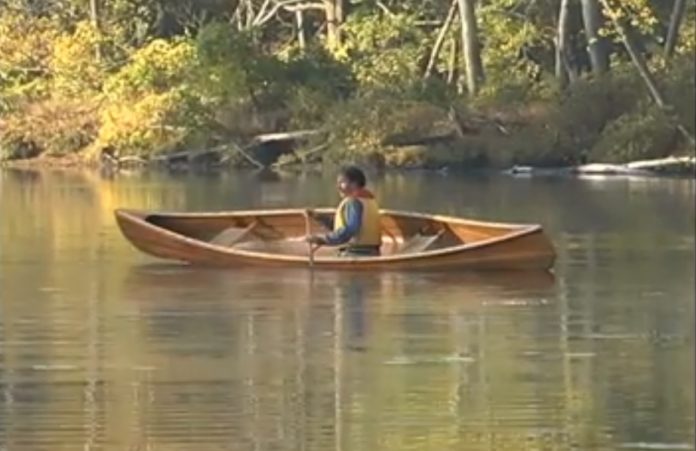
 

Video: Canoe Strokes and Control

Photo: Rolf Kraiker
Video: Canoe Strokes and Control

This introductory video by Rolf Kraiker provides insight into some of the basic principles of paddling a canoe in what’s referred to as the traditional “Canadian” style.

This video is an overview of three different steering strokes, a breakdown of some elements to improve paddling mechanics and a short demonstration of paddling control exercises.

In the Hatch: Coleman Portable InstaStart Stove Oven

Camp pizza is always a good thing. A really good thing. Photos: Courtesy Coleman
Camp pizza is always a good thing. A really good thing.

You’ve been paddling all day in gusting winds and heavy rains, you could barely tell the difference between being under the water and above. Your gear is soggy, your fingers numb, the one thing your craving is a hot meal when you get back to your campsite. Either you can settle for a hot dog (probably soggy as well) or you can settle in by the fire with a 12″ (30cm) pizza! You can even polish it off with a cake afterwards. 

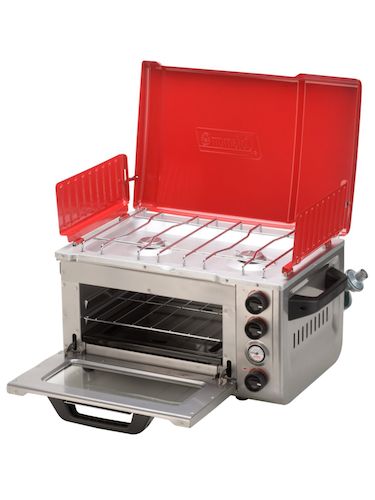
Coleman’s Portable InstaStart Stove Oven, $249.99, is small enough to be portable and convenient, but large enough to cook the foods you enjoy back home. Having two full-size appliances in one, a stove and an oven, means you’re not limited to something you can cook out of a single pot.  Have eggs and bacon in the morning for breakfast and bake a cheesy casserole for dinner. The two stove burners produce a total of 12,000 BTUs. The oven reaches 3,000 BTUs, temperate up to 500 degrees F, meaning this is no Easy Bake oven. It’s a real tool for camp cooking.

Another key feature of the InstaStart Stove Oven, is the Instastart push-button lighting system. Now you don’t have to play with fire and gas, trying to light your stove. Just push a button and you have means to cook dinner. The WindBlock system shields burners for maximum heat and to ensure you can keep dinner cooking even in the wind. The WindBlock gaurds can adjust to different pot sizes as well. 

Coleman InstaStart Stove body 1

Currently available at Canadian Tire. For more information about Coleman, or their Portable InstaStart Stove Oven. check out their website, colemancanada.ca.


Photo: Icy Horizons

"The conditions dictated we concentrated on paddling rather than trying to take pictures!" Photo: Peter Lavigne
"The conditions dictated we concentrated on paddling rather than trying to take pictures!"

“These quick pictures are from a trip we recently finished up along the northeast coast of Newfoundland,” said Adventure Kayak reader Peter Lavigne. “The first couple days were spent out running the ice pack and the icebergs were like trail markers along the way. Unfortunately, the best pics were never taken, as the conditions dictated we concentrated on paddling rather than trying to take pictures!”

Peter Lavigne body 1

Want more reader photos? Check out this shot, “Paddler’s Morning.”

Boats: One Harry Chestnut

Photo: Chestnut Canoe Company
Chestnut Canoe Company


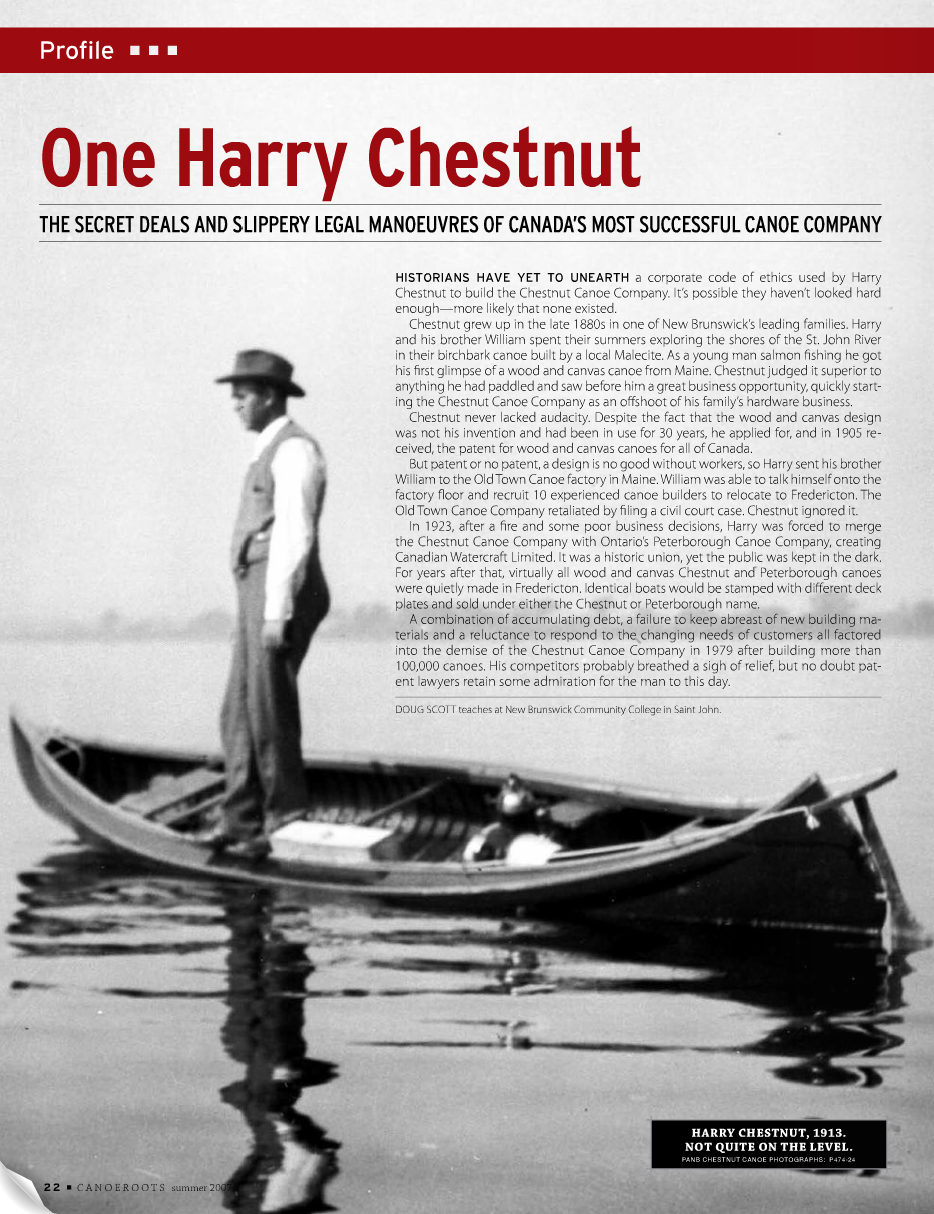
Historians have yet to unearth a corporate code of ethics used by Harry Chestnut to build the Chestnut Canoe Company. It’s possible they haven’t looked hard enough—more likely that none existed. 

Chestnut grew up in the late 1880s in one of New Brunswick’s leading families. Harry and his brother William spent their summers exploring the shores of the St. John River in their birchbark canoes built by a locale Malecite. As a young man salmon fishing he got his first glimpse of a wood and canvas canoe from Maine. Chestnut judged it superior to anything he had paddled and saw before him a great business opportunity, quickly starting the Chestnut Canoe Compnay as an offshoot to the family’s hardware business.


Screen_Shot_2014-06-27_at_9.51.38_AM.png  Continue reading this article in the digital edition of Canoeroots and Family Camping, Early Summer 2007, on our free iPad/iPhone/iPod Touch App or Android App or read it on your desktop here.


VIDEO: Heel Hook Assisted Rescue

Learn how to perform a heel hook assisted rescue. Photo: Screen Grab
Learn how to perform a heel hook assisted rescue.
[iframe width=”560″ height=”315″ src=”//www.youtube.com/embed/j-zpJQeiaNc” frameborder=”0″ allowfullscreen ]
Gordon Brown/Paddling.net

Learn how to perform a heel hook assisted rescue from Gordon Brown in this excerpt from the Gordon Brown Sea Kayaking Volume 2 DVD. “The heel hook takes advantage of the strength in leg muscles to make for an easy re-entry into your kayak.”

Want more kayak skills? Learn these marine VHF essential skills.

VIDEO: High Dock Landing

It'll be fine...right? Photo: Screen Grab
It'll be fine...right?
[iframe width=”560″ height=”315″ src=”//www.youtube.com/embed/Di69trQlxTg” frameborder=”0″ allowfullscreen ]
Body Boat Blade International

You pull up to the beach to launch your kayak from a new beach and are surprised when you see a high dock as the only means of access. How are you supposed to safely and effectively launch and land your boat? Check out this quick video from Body Boat Blade International’s Leon Somme and Shawna Franklin, as they show you how it’s done.

Want more sea kayaking videos? Check out this video, “Crazy Kayak Surfing.”

Video: Marine VHF Radio Essentials

Image: Adventure Kayak TV
Video: Marine VHF Radio Essentials

Every open water paddler should carry and know how to use a marine VHF radio for routine and emergency communication on the water. Watch this quick how-to video from Adventure Kayak magazine to learn the basics of making a call to the Coast Guard or other vessels.


Watch more technique videos and other awesome films at Adventure Kayak TV’s YouTube channel, here.


Video: Kevin Callan’s Wilderness Values

Video: Kevin Callan

Kevin Callan takes out a birchbark canoe with friend Tim Foley from the Canadian Outdoor Equipment store and explores today’s wilderness values. The traditional canoe was made by Robert Corradi from the UK.

Video: Sea Kayak Towing Tips

Image: Screen Capture Gordon Brown
Sea kayak instructor Gordon Brown demonstrates an on-land example of attaching a tow line

When sea kayaking in challenging conditions, reaction time is everything. The contact tow for is a very effective on-the-water rescue to get a paddling partner out of trouble. BCU kayak coach Gordon Brown demonstrates the tow and some of the variations and equipment you can use. Watch the video to learn how it’s done.


Get more kayak instruction films at Sea Kayak with Gordon Brown. DVDs and downloads here.