Home Blog Page 285

In the Hatch: Titika Active Wear

The Titika Bolt shorts, $38. Photos: Courtesy Titika Active Wear
The Titika Bolt shorts, $38.

Titika Active Wear is a “Canadian eco-friendly and fashion-foward active wear brand, captures the essence of femininity and strong girl mentality in athletic products that offer the latest technology and innovative fabrics.

Titika Active Wear offers versatile apparel with bold playfulness and refined sportiness. From leggings that combine the much-loved comfort of a basic legging with sexy, yet functional mesh detailing on the sides to oversized, cozy sweaters with floral mesh sleeves.”
 
Inside the clothing, there are key technologies perfect for paddlers such as: 
  • Anti-aroma silver yarn: silver thread woven through the fabric to inhibit the growth of odour-causing bacteria
  • Moisture Wicking: keeps sweat away from the body
  • Free/flat seam: special stitch to create flat seams. This reduces extra fabric that can rub and irritate your skin while you workout

Bolt/Bubbly shorts, $48, has the chafe free/flat seam technology: Titika uses a special stitch to create flat seams on their garments. This seam reduces extra fabric which can rub and irritate your skin while you work out

Titika BubblyShorts 48
 
Nathalie shorts, $60, has the Durablend technology: this fabric is a comfortable water repellant and wind breaker. It is lightweight and tear resistant, making it the perfect fabric for any outdoor activity.
Titika Nathalie 60
 
Keisha Tank, $52, has the Anti-Aroma Silver Yarn technology: silver thread is woven through the fabric to inhibit the growth of destructive and odour-causing bacteria, mold, mildew and fungus.
Titika Keisha 52
 
Heather Bra, $28, has the moisture wicking technology: keeps sweat away from the body.
Titika HeatherBra 28
For more information about Titika Active Wear or more of their latest release of female athletic wear, check out their website, titika.ca.

Gear: Pat’s Backcountry Beer

Photo: Alex Cousins
Pat's Backcountry brew, backcountry beer

Got beer? Not if your multiday paddling trip features portages of any length. Thanks to Pat’s Backcountry Beverages canoeists can drink beer in the woods without getting weighed down. Pat’s portable backcountry brew kit includes beer concentrate and an easy-to-use carbonator—add potable water and you’ll be drinking a glass of your own delicious suds just minutes later. Handcrafted pale lager and dark ale concentrates are available, as well as a variety of traditional soft drink flavors for the kids.

www.patsbcb.com | $39.95 for kit, price for concentrate varies 


CRv13i2-48.jpgGet the full article in the digital edition of Canoeroots and Family Camping, Early Summer 2014, on our free iPad/iPhone/iPod Touch App or Android App or read it on your desktop here.


Ghosts of the Fur Trade

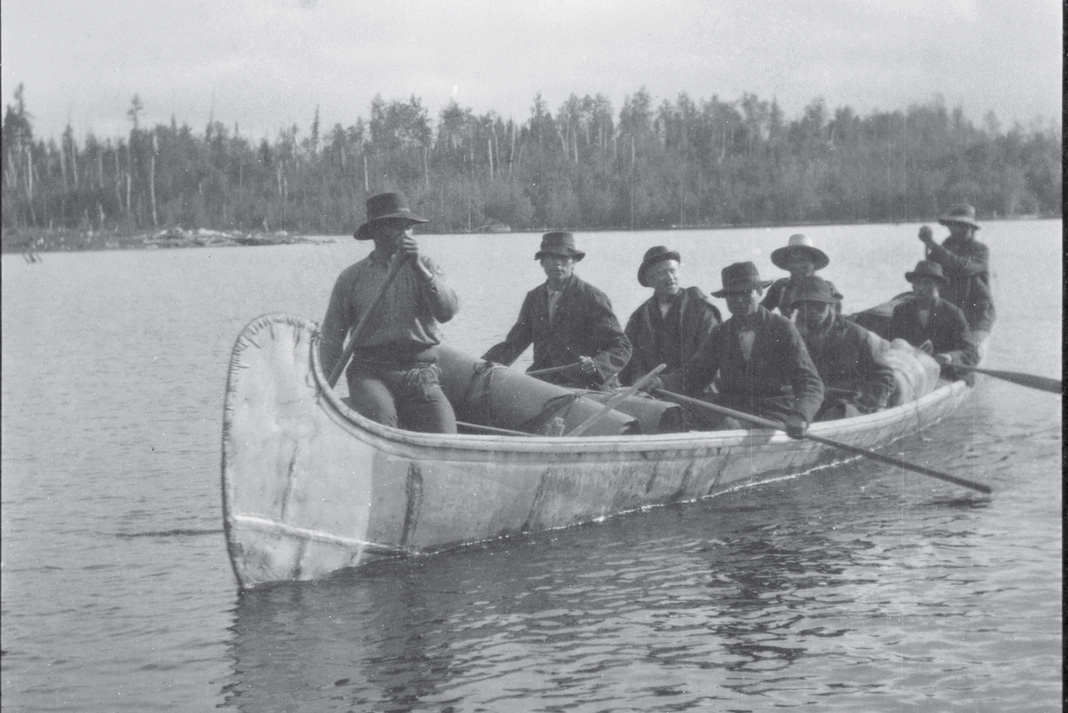
Ghosts of the Fur Trade | Photo: Archives Ontario

By 1690, Europeans no longer relied on aboriginal traders bringing their furs to Quebec. They had traveled west from Montreal, the epicenter of trade, and entered the wilderness to live and work with the natives, establishing trading posts. As a result, the fur trade boomed.

To accommodate the flow of goods, the Hudson Bay Company (HBCo) commissioned the building of Montreal canoes. Handmade in Louis Maître’s shop in Trois Rivière, the canoes were 30 to 36 feet long, six feet wide and weighed more than 700 pounds. Able to carry four tons of trade goods, they could hold passengers and even livestock. Paddled by the Voyageurs, these canoes plied the big waters from the St Lawrence Seaway to the western shore of Lake Superior, delivering and receiving goods from major trading posts.

Exploring the waterways further west required smaller boats. Looking to compete and carve out its own territory, the North West Company (NWCo) built freight canoes with half the load capacity of the Montreal canoe.

Built by local First Nations men employed by the NWCo, these birch bark canoes were called North Canoes. They were 25 feet long, light enough to be portaged by two paddlers and able to carry two tons. Unlike the Montreal canoe, North Canoes were nimble enough to paddle up and down small rivers. The NWCo paddled them across the continent to the Pacific and Arctic oceans. Those paddlers were the first to trade with uncontacted First Nations communities on the west coast and Canada’s northern territories.

Four to eight paddlers, collectively known as Winterers, manned each North Canoe. Many considered themselves a tougher and more wilderness-savvy breed of trader than the Voyageurs who didn’t often overwinter in the First Nations communities.

By 1821, the HBCo and NWCo ceased their ruthless competition by merging under the Hudson’s Bay name. For another eight decades, annual brigades of North Canoes carried furs to James Bay and brought back trade goods for posts near the height of land, such as Grand Portage and Northern Ontario’s Temiscamingue.

Ghosts of the Fur Trade | Photo: Archives Ontario

The big Montreal canoe continued to serve the Great Lakes until 1858. The construction of the canals on the Great Lakes, the introduction of steamboats on the Ottawa River in 1851, and finally, the completion of the railroad to Mattawa in 1881, were nails in the coffin of the freighter canoe, rendered slow and old-fashioned.

This photo depicts one of the last North Canoe brigades, seen in the Temagami area in 1902. The local fort closed shortly after and the remaining canoes fell into personal ownership. A few still survive in the historical collections of heritage sites, including former fur trading posts Fort William and Grand Portage.

Paddling historian, Wally Schaber, is currently writing a book about the history of the Dumoine River watershed. www.dumoinewatershed.blogspot.com.


Get the full article in the digital edition of Canoeroots Early Summer 2014. Subscribe to Paddling Magazine’s print and digital editions, or browse the archives.
Trust The Trucker’s Hitch To Cartop Your Canoe

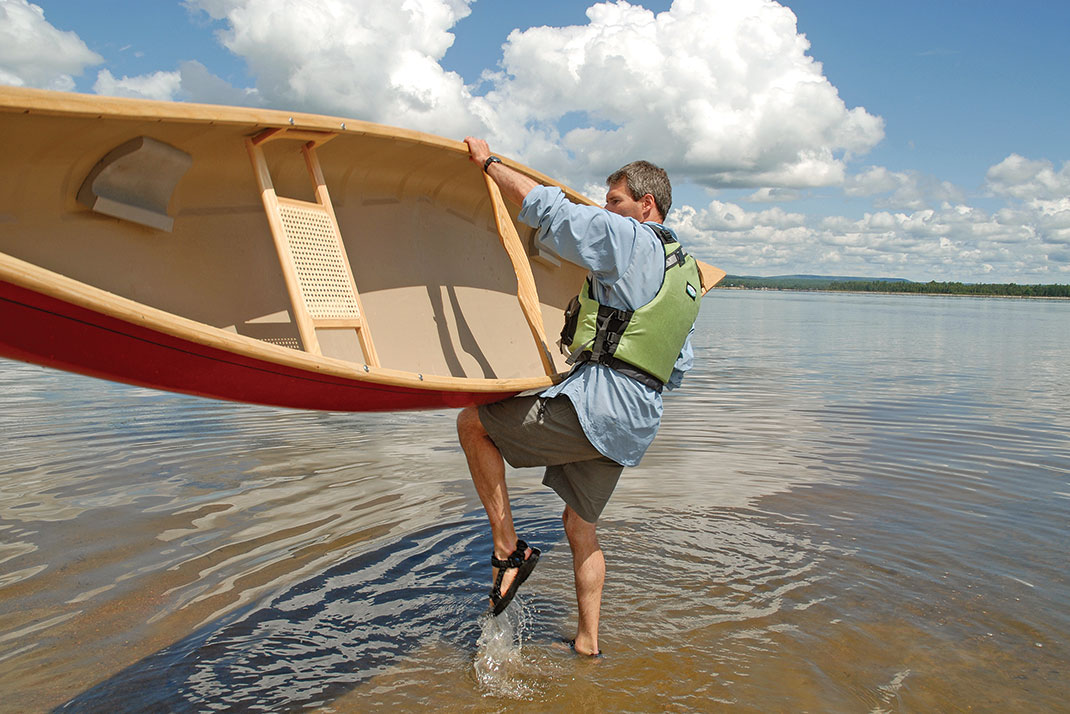
If you start canoe trips with a sore neck from looking up at the wiggling canoe on your roof racks and worrying that it is making a bid for freedom, then you need to learn the trucker’s hitch knot.

Trust the trucker’s hitch knot to cartop your canoe

First, we need to cover some knot-tying terminology. The free end of the rope is the end we are using to tie the knot. For an overhand loop you pass the free end over itself to make a loop. And a bight is a bend in the rope so it is doubled.

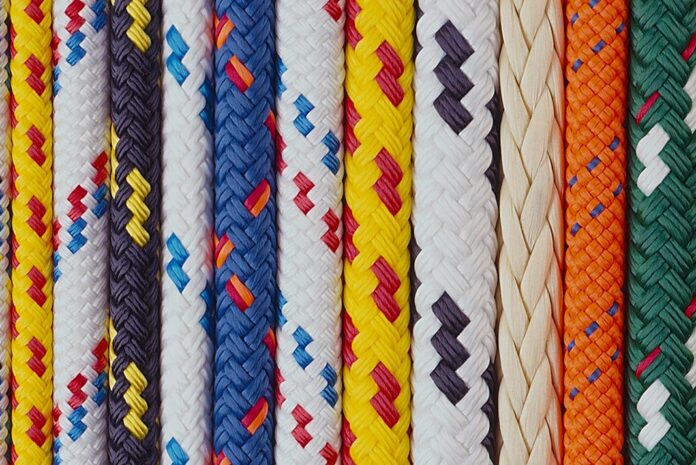
Begin by making sure you have a set of sturdy roof racks set as far apart on your roof as possible. You’ll also need two three-meter lengths of rope (avoid the braided, yellow polyproylene cheap stuff). Tie one end of the rope to the rack using a bowline (you remember: the rabbit goes up the hole, around the tree and back down the hole). Then, throw the free end of the rope over the canoe. Apologize if in doing so you have put out your partner’s eye.

4 steps to secure your canoe

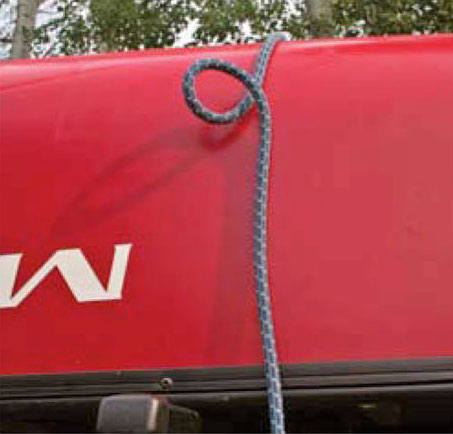
  1. Make a small overhand loop about a foot above the gunwale
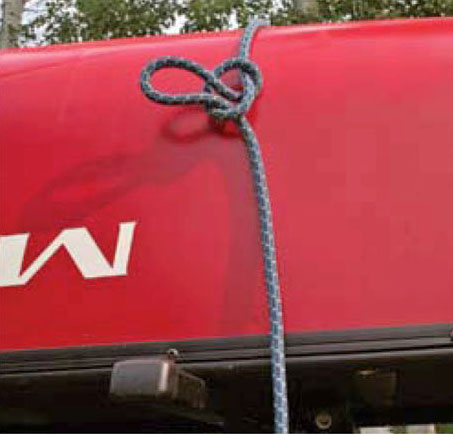
  2. Take the bight of a few inches in the free end and push it up through this loop.
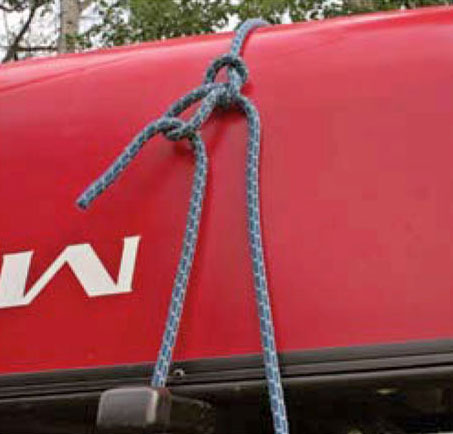
  3. Pass the free end under your roof rack and back up through your bight
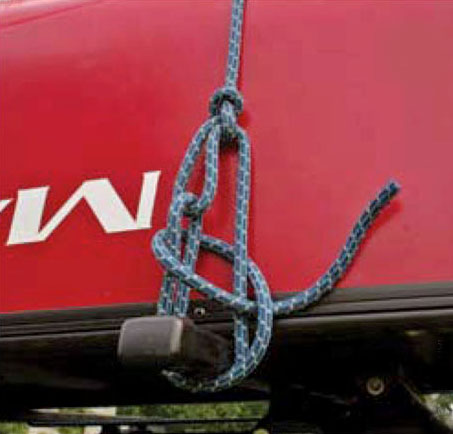
  4. Pull down on the free end. The bight will act as a pulley as the tightening rope slides through it. In this way you gain a mechanical advantage to tighten the rope. Pass the rope under the roof rack and tie a half hitch around all three lengths of rope.

Finish the knot with a second half hitch, or however many you need to feel good about passing a truck into a headwind.

The trucker’s hitch is so effective and reliable that you’ll soon find yourself using it for things like erecting your campfire tarp and a dozen other uses where you need a taut rope.

Doug Scott teaches at New Brunswick Community College in Saint John.

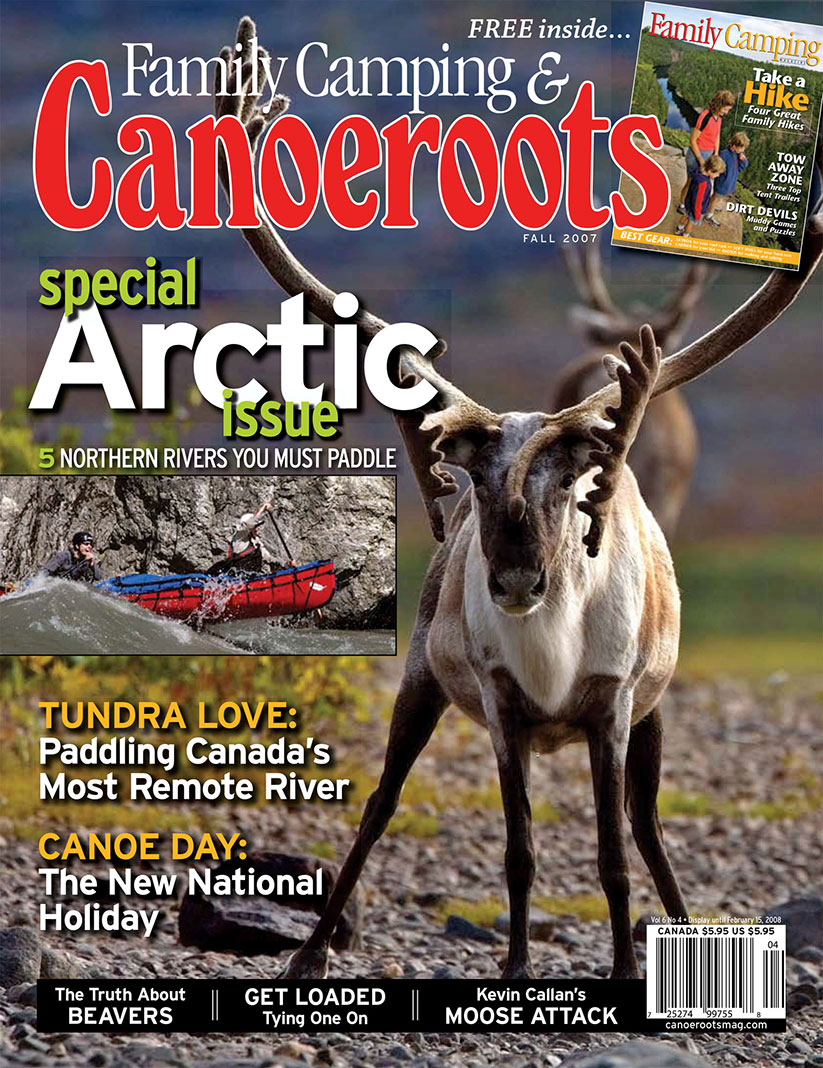
cover of Canoeroots Magazine, Fall 2007 issueThis article was first published in the Fall 2007 issue of Canoeroots Magazine. Subscribe to Paddling Magazine’s print and digital editions, or browse the archives.

Hitch it! | Feature photo: USCG PTC Developer/Wikimedia Commons


Video: Canoe Strokes and Control

Photo: Rolf Kraiker
Video: Canoe Strokes and Control

This introductory video by Rolf Kraiker provides insight into some of the basic principles of paddling a canoe in what’s referred to as the traditional “Canadian” style.

This video is an overview of three different steering strokes, a breakdown of some elements to improve paddling mechanics and a short demonstration of paddling control exercises.

In the Hatch: Coleman Portable InstaStart Stove Oven

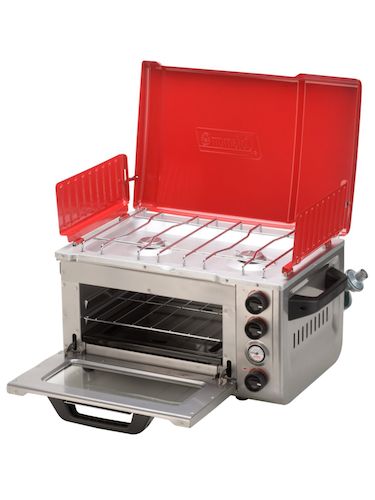
Camp pizza is always a good thing. A really good thing. Photos: Courtesy Coleman
Camp pizza is always a good thing. A really good thing.

You’ve been paddling all day in gusting winds and heavy rains, you could barely tell the difference between being under the water and above. Your gear is soggy, your fingers numb, the one thing your craving is a hot meal when you get back to your campsite. Either you can settle for a hot dog (probably soggy as well) or you can settle in by the fire with a 12″ (30cm) pizza! You can even polish it off with a cake afterwards. 

Coleman’s Portable InstaStart Stove Oven, $249.99, is small enough to be portable and convenient, but large enough to cook the foods you enjoy back home. Having two full-size appliances in one, a stove and an oven, means you’re not limited to something you can cook out of a single pot.  Have eggs and bacon in the morning for breakfast and bake a cheesy casserole for dinner. The two stove burners produce a total of 12,000 BTUs. The oven reaches 3,000 BTUs, temperate up to 500 degrees F, meaning this is no Easy Bake oven. It’s a real tool for camp cooking.

Another key feature of the InstaStart Stove Oven, is the Instastart push-button lighting system. Now you don’t have to play with fire and gas, trying to light your stove. Just push a button and you have means to cook dinner. The WindBlock system shields burners for maximum heat and to ensure you can keep dinner cooking even in the wind. The WindBlock gaurds can adjust to different pot sizes as well. 

Coleman InstaStart Stove body 1

Currently available at Canadian Tire. For more information about Coleman, or their Portable InstaStart Stove Oven. check out their website, colemancanada.ca.


Photo: Icy Horizons

"The conditions dictated we concentrated on paddling rather than trying to take pictures!" Photo: Peter Lavigne
"The conditions dictated we concentrated on paddling rather than trying to take pictures!"

“These quick pictures are from a trip we recently finished up along the northeast coast of Newfoundland,” said Adventure Kayak reader Peter Lavigne. “The first couple days were spent out running the ice pack and the icebergs were like trail markers along the way. Unfortunately, the best pics were never taken, as the conditions dictated we concentrated on paddling rather than trying to take pictures!”

Peter Lavigne body 1

Want more reader photos? Check out this shot, “Paddler’s Morning.”

Boats: One Harry Chestnut

Photo: Chestnut Canoe Company
Chestnut Canoe Company


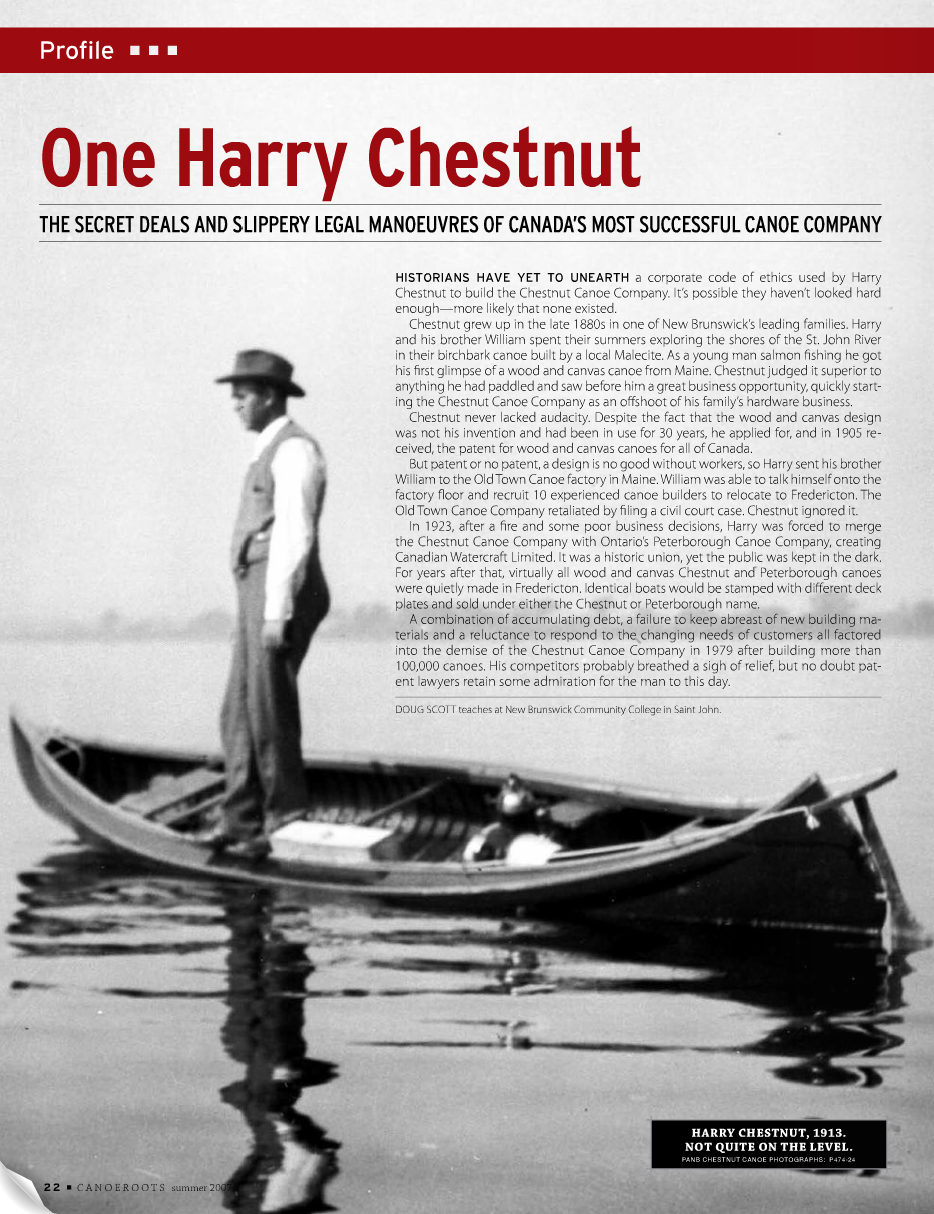
Historians have yet to unearth a corporate code of ethics used by Harry Chestnut to build the Chestnut Canoe Company. It’s possible they haven’t looked hard enough—more likely that none existed. 

Chestnut grew up in the late 1880s in one of New Brunswick’s leading families. Harry and his brother William spent their summers exploring the shores of the St. John River in their birchbark canoes built by a locale Malecite. As a young man salmon fishing he got his first glimpse of a wood and canvas canoe from Maine. Chestnut judged it superior to anything he had paddled and saw before him a great business opportunity, quickly starting the Chestnut Canoe Compnay as an offshoot to the family’s hardware business.


Screen_Shot_2014-06-27_at_9.51.38_AM.png  Continue reading this article in the digital edition of Canoeroots and Family Camping, Early Summer 2007, on our free iPad/iPhone/iPod Touch App or Android App or read it on your desktop here.


VIDEO: Heel Hook Assisted Rescue

Learn how to perform a heel hook assisted rescue. Photo: Screen Grab
Learn how to perform a heel hook assisted rescue.
[iframe width=”560″ height=”315″ src=”//www.youtube.com/embed/j-zpJQeiaNc” frameborder=”0″ allowfullscreen ]
Gordon Brown/Paddling.net

Learn how to perform a heel hook assisted rescue from Gordon Brown in this excerpt from the Gordon Brown Sea Kayaking Volume 2 DVD. “The heel hook takes advantage of the strength in leg muscles to make for an easy re-entry into your kayak.”

Want more kayak skills? Learn these marine VHF essential skills.

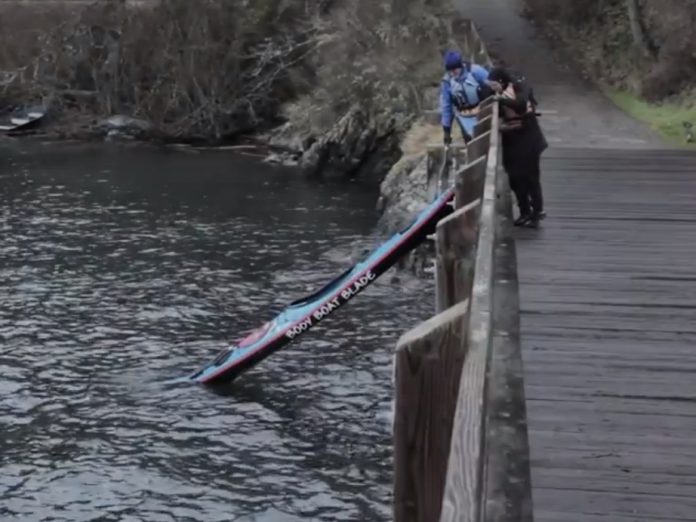
VIDEO: High Dock Landing

It'll be fine...right? Photo: Screen Grab
It'll be fine...right?
[iframe width=”560″ height=”315″ src=”//www.youtube.com/embed/Di69trQlxTg” frameborder=”0″ allowfullscreen ]
Body Boat Blade International

You pull up to the beach to launch your kayak from a new beach and are surprised when you see a high dock as the only means of access. How are you supposed to safely and effectively launch and land your boat? Check out this quick video from Body Boat Blade International’s Leon Somme and Shawna Franklin, as they show you how it’s done.

Want more sea kayaking videos? Check out this video, “Crazy Kayak Surfing.”