Home Blog Page 286

VIDEO: Heel Hook Assisted Rescue

Learn how to perform a heel hook assisted rescue. Photo: Screen Grab
Learn how to perform a heel hook assisted rescue.
[iframe width=”560″ height=”315″ src=”//www.youtube.com/embed/j-zpJQeiaNc” frameborder=”0″ allowfullscreen ]
Gordon Brown/Paddling.net

Learn how to perform a heel hook assisted rescue from Gordon Brown in this excerpt from the Gordon Brown Sea Kayaking Volume 2 DVD. “The heel hook takes advantage of the strength in leg muscles to make for an easy re-entry into your kayak.”

Want more kayak skills? Learn these marine VHF essential skills.

VIDEO: High Dock Landing

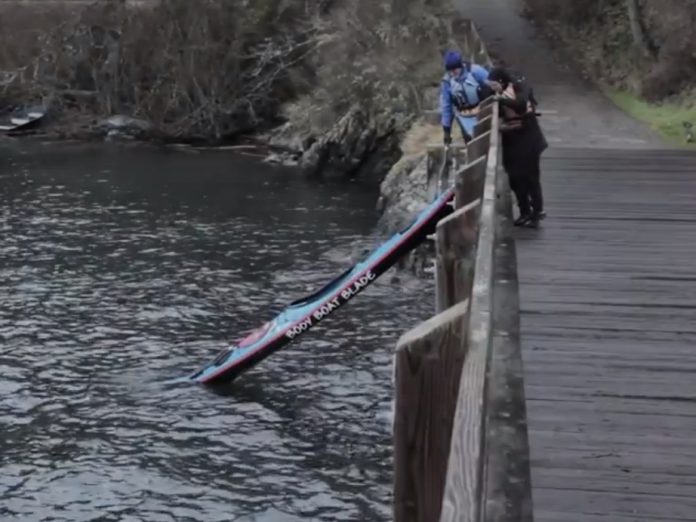
It'll be fine...right? Photo: Screen Grab
It'll be fine...right?
[iframe width=”560″ height=”315″ src=”//www.youtube.com/embed/Di69trQlxTg” frameborder=”0″ allowfullscreen ]
Body Boat Blade International

You pull up to the beach to launch your kayak from a new beach and are surprised when you see a high dock as the only means of access. How are you supposed to safely and effectively launch and land your boat? Check out this quick video from Body Boat Blade International’s Leon Somme and Shawna Franklin, as they show you how it’s done.

Want more sea kayaking videos? Check out this video, “Crazy Kayak Surfing.”

Video: Marine VHF Radio Essentials

Image: Adventure Kayak TV
Video: Marine VHF Radio Essentials

Every open water paddler should carry and know how to use a marine VHF radio for routine and emergency communication on the water. Watch this quick how-to video from Adventure Kayak magazine to learn the basics of making a call to the Coast Guard or other vessels.


Watch more technique videos and other awesome films at Adventure Kayak TV’s YouTube channel, here.


Video: Kevin Callan’s Wilderness Values

Video: Kevin Callan

Kevin Callan takes out a birchbark canoe with friend Tim Foley from the Canadian Outdoor Equipment store and explores today’s wilderness values. The traditional canoe was made by Robert Corradi from the UK.

Video: Sea Kayak Towing Tips

Image: Screen Capture Gordon Brown
Sea kayak instructor Gordon Brown demonstrates an on-land example of attaching a tow line

When sea kayaking in challenging conditions, reaction time is everything. The contact tow for is a very effective on-the-water rescue to get a paddling partner out of trouble. BCU kayak coach Gordon Brown demonstrates the tow and some of the variations and equipment you can use. Watch the video to learn how it’s done.


Get more kayak instruction films at Sea Kayak with Gordon Brown. DVDs and downloads here.


Skill Video: How To Roll A Kayak

Photo: Screen Capture
A whitewater kayak instructor stands in the water to help a kayaker practice a kayak roll.

As I progress as a teacher, my progressions adapt and change to the diversity of my students. It makes me revisit several of my previous ideas and build upon them. I have always had a how-come? approach to my teaching instead of a this is how it’s done, so do it approach.

If you break down the physics of a skill like rolling, you are hit upon all the important information a student needs to learn to understand, then execute the move. 

This video is an update on my previous roll video—it reviews previous concepts and builds upon them.


Chris Wing has been an instructor for as long as he has been a kayaker. He started H2o Dreams out of a desire to spur growth and reverence for paddle sports education all while providing a different spin to the presentation of familiar topics. Visit www.whitewaterdreams.com for more info.

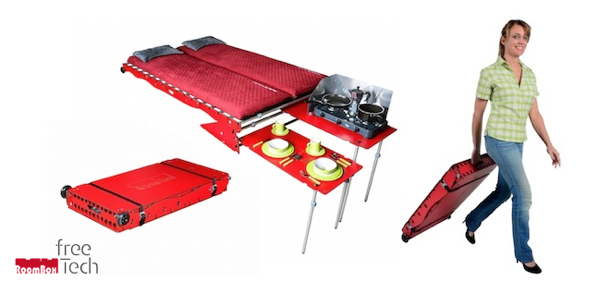
Cool Camper Kit for Your Car

Photo: SwissRoomBox
Cool Camper Kit for Your Car


We love nifty gadgets, so when this new innovation from Switzerland came across the editorial desk, we just had to share!

An incredible fusion between the simplicity of a suitcase, the ingenuity of a Swiss Army knife and the essentials of a motorhome, the SwissRoomBox freeTech is a compact and affordable conversion kit that fits nearly any compact car, SUV or minivan.

Thanks to the clever folding concept of this modular system, you can take the RoomBox with you while traveling and, in 5 minutes, transform your car into a motorhome for sleeping, cooking and eating.

For just 1,645–2,220 Euros, the RoomBox freeTech makes motorhomes accessible to any car owner. You can even pack it along as airline luggage and convert your rental car when traveling.

Check out the pics below, or visit http://www.swissroombox.com to learn more. Here’s hoping this cool kit makes it across the pond this summer!
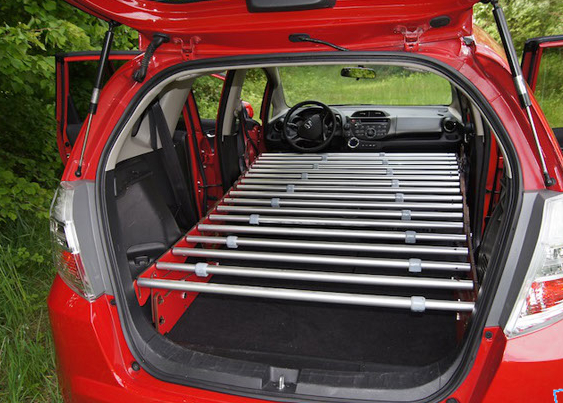
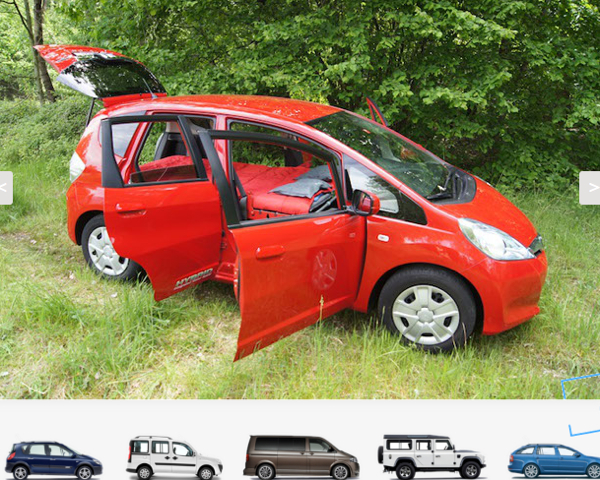
SwissRoom1SwissRoom2SwissRoom3


Easy Underwater Photography Tips

Photo: Goh Iromoto
Easy Underwater Photography Tips

You don’t need a $10,000 housing to get underwater images like this one, says Toronto adventure photographer Goh Iromoto. For paddling photography, lighter is better. He uses a waterproof camera dry bag made by EWA-Marine to protect his Canon 5D Mark III. “It weighs just 400 grams compared to the 30-pound camera system I use for commercial underwater photography,” he says. “It’s so handy, I often leave it on when I’m kayaking. I’ve even jumped off a cliff with it, shooting as I fell into the water.”

Split images trick the camera’s autofocus into focusing on the waterline, rather than the scene beyond, warns Iromoto. Before dunking the camera, focus on your subject, set the camera to aperture-priority mode and use a wide aperture like F/2.8 or F/3.5. Then it’s just a matter of making sure the lens is half in, half out of the water. “Use your intuition and watch the subject,” rather than keeping your eye glued to the viewfinder, suggests Iromoto. Shooting with an ultra-wide angle lens and getting to know how it “sees” also help. “Knowing my lens means I know instinctively what will be in the frame,” he adds, “then I can just enjoy the scene.”

AKv14i2-CoverClick here for tons more paddling photography tips in the Early Summer 2014 issue of Adventure Kayak, or download our free iPad/iPhone/iPod Touch App or Android App.

Why Spending Money On New Experiences, Rather Than More Possessions, Produces Longer-Lasting Feelings Of Satisfaction

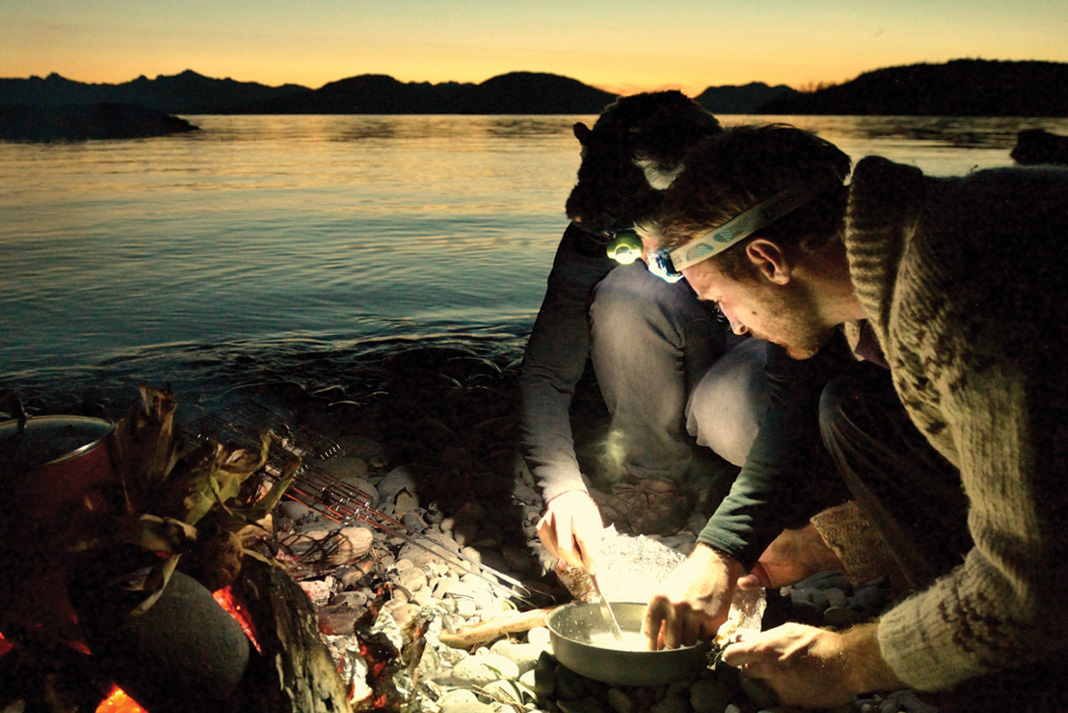
WE DON’T REMEMBER THE STOVES, WE REMEMBER THE MEALS. PHOTO: STEVE ROGERS

Work deadlines, family commitments, romantic distractions, dirty laundry, Zumba class. Our busy lives are already chock full of excuses that keep us from paddling. Gear shouldn’t be one of them.

Lately, however, I’ve noticed a concerning trend: The very equipment that is supposed to help us get outside sometimes holds us back.

In our quest to find the perfect gear to ac- company the perfect trip, we lose spontane- ity and flexibility, stretch our bank accounts and limit our opportunities for actually getting out on the water.

Some recent conversations with paddling friends have gone something like this:

“Hey, I’m going kayaking this weekend— want to come?”

“I’d like to but I don’t have ___ (Insert: ul- tralight tent; ideal expedition boat/surf boat/ whitewater boat; drysuit; carbon fiber paddle; multi-fuel backpacking stove; self-inflating, six-inch-thick, down-filled camping mattress; hybrid ultra-compressible sleeping bag; high- protein, organic, dehydrated meals).”

I’m thankful for developments in outdoor gear, but it also seems that once upon a time, paddling was a less elaborate—and less elit- ist—undertaking.

Maybe it’s a question of social circum- stance, geographic location, changing

demographics or other factors. Maybe I have rose-colored memories of summer camp trips with ridiculously heavy canoes, family trips with old canvas tents and semi-successful boat-building projects on the local pond with my siblings. Sometimes we sported cut-off jeans, often we wore old woolen sweaters. I can’t even remember our footwear or lack thereof.

Let me be clear, I am absolutely in favor of being well prepared with good gear. When guiding a 20-day trip on a remote northern river, you can be sure that I’ve triple- checked every sat phone battery, personally tested each tent zipper and carefully waterproofed and packed all the food (including the emergency meal, the extra emergency meal and the extra extra emergency meal). Even when I’m out for a relaxing afternoon paddle within splashing distance of city limits, I bring a standard safety kit and my holy crap emergency dry bag (see “DIY Ditch Kit,” page 68).

And I recognize that there is much joy to be had in months of planning for a long paddling trip to a dream location. Some- times, that’s just about all that gets me through dreary winter days. But I’m tired of people who don’t want to go paddling unless they’ve been memorizing charts and dehydrating meals for months in ad- vance. We may not all paddle Haida Gwaii, Belize or Patagonia this year, but we can all choose to get out when we can, where we can, with what we have.

WE DON’T REMEMBER THE STOVES,
WE REMEMBER THE MEALS.
PHOTO: STEVE ROGERS

Some of my most memorable paddling adventures were spontaneous, low-tech excursions. While working a busy sum- mer season on the north shore of Prince Edward Island, I had an unexpected two days off. Within an hour, I was in a kayak heading for the most remote, unpopu- lated piece of coastline

I could find. In those 48 precious hours I paddled 100 kilometers, explored stunning cliffs and beaches, camped just above the high-water line in a tiny cove, survived on nothing but canned peaches and trail mix, and returned back to work utterly happy, tired and inspired.

Sometimes a spontaneous paddling trip can help us find perspective.

Last fall, with the end of the season looming, some friends and I were com- plaining about how we hadn’t gone camp- ing enough lately. The obvious solution: we tossed gear into trunks, loaded boats onto roofs and carpooled north for a last- minute trip to a favorite island. After a golden sunset, we slept peacefully as the waves pounded the rocks below. When

I returned home Sunday evening—after perhaps only 10 kilometers of paddling—I felt ready to take on the world again.

Anthropologists who study these sorts of things would point out that North American society—fueled by the powerful forces of media and advertising—is infatuated with the pursuit of material satisfaction. We seek to define our identity by our possessions.

A study from the University of British Columbia found that spending our resources on new experiences, rather than more pos- sessions, produces longer-lasting feelings of satisfaction. This is a concept that should be familiar to outdoor enthusiasts—wasn’t the spectacular sunrise more memorable than the tent you watched it from?

Spending our resources on new experiences, rather than more possessions, produces longer-lasting feelings of satisfaction.

New gear does not lead to the perfect trip. Some of my equipment is decades old but it still works safely and reliably. No self-respecting gearhead would give my faded tent a second glance, but it’s bombproof, has spent hundreds of days in the field and invariably keeps me dry and warm. Yes, there are lighter tarps, more powerful stoves and loftier sleeping bags. And yes, there are boats with higher or lower volume, more speed, less weight, better hatches and sexier colors. I’d happily give a home to one or five of them.

There is nothing wrong with good gear. But I worry that by focusing on acquiring the newest, best, lightest, most high-tech gear, we are making outdoor experiences more elusive. Not everyone can afford to shell out hundreds of dollars for a Gore- Tex drysuit or silnylon tent. And most

of us won’t have an incredibly improved experience with a boat that weighs five pounds less or a stove that cooks water half a minute faster.

In some countries, simple, economical outdoor experiences and learning are con- sidered such an integral part of existence that a word—Norwegians call it friluft- sliv—has even been coined to describe this way of life. While the image of North America has its roots in wilderness experi- ence, in reality many people rarely have or take the opportunity to seek out experi- ences in the natural world.

If outdoor adventure sports are per- ceived as elitist, expensive and inacces- sible, even fewer people will get involved and learn to value these experiences. Enter the modern pitfalls of our soci-
ety: sedentary lifestyles, indifference to environmental issues, lack of connection to other people and lack of connection to the inspiring, challenging and beautiful forces of the natural world.

This is where we paddlers can come in as fearless visionaries of a world where getting outside is a way of life—not a privi- lege, quirky hobby or inaccessible dream.

So go ahead, get that carbon fiber paddle you’ve been dreaming about. But don’t throw away your old plastic blade. Give it to your new neighbor who’s never been in a kayak before (and lend him or her your other spare gear), call some friends and go paddling. No excuses.

Charlotte Jacklein paddles with an eclectic mix of new and old gear, whenever and wherever the water beckons. 


This article on why the kayak is the best way to enjoy the outdoors was published in the Early Summer 2014 issue of Adventure Kayak magazine.This article first appeared in the Early Summer 2014 issue of Adventure Kayak Magazine.  Subscribe to Paddling Magazine and get 25 years of digital magazine archives including our legacy titles: Rapid, Adventure Kayak and Canoeroots.

Skill: Light a One Match Fire

Photo: Flickr user mathias-erhart / Creative Commons
Skill: Light a One Match Fire

In Jack London’s short story To Build a Fire a greenhorn gold prospector falls through river ice and relizes he must build a fire or perish. He meticulously coaxes a flame from some kindling, but his fate is sealed when melting snow falling from an overhanging spruce bow smothers the flame. 

Starting a campfire on a rainy summer night maybe not be a matter of life and death, but try telling that to the cold, wet, hungry mob that’s waiting for dinner. Fear not, with a single match and the following tips you can have a roaring blaze in no time. 

Instructions

To avoid a reluctant, smoky fire that needs constant attention, take he extra time to collect good firewood. The biggest mistake is using wood that isn’t dry enough, that is, wood that hasn’t been dead long enough. When woo is dry the bark has already fallen off or can be easily removed…


Screen_Shot_2014-06-13_at_1.10.33_PM.pngContinue reading this article in the digital edition of Canoeroots and Family Camping, Early Summer 2007, on our free iPad/iPhone/iPod Touch App or Android App or read it on your desktop here.