Home Blog Page 303

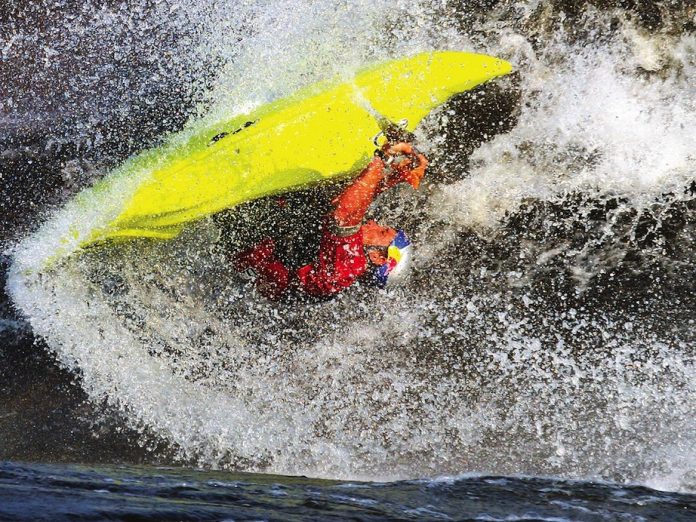
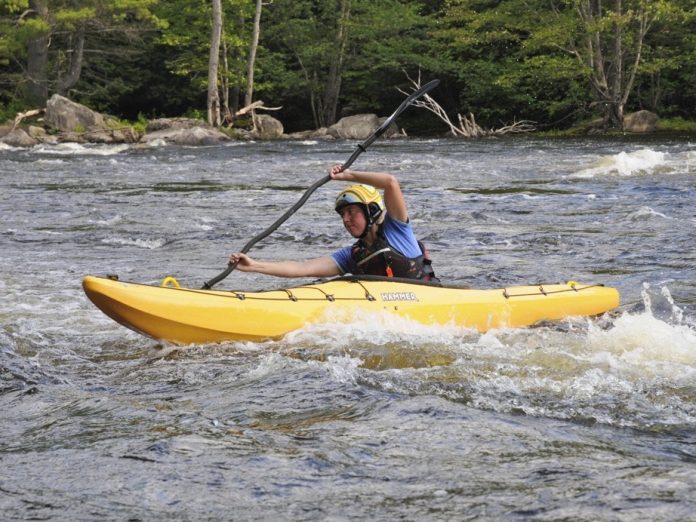
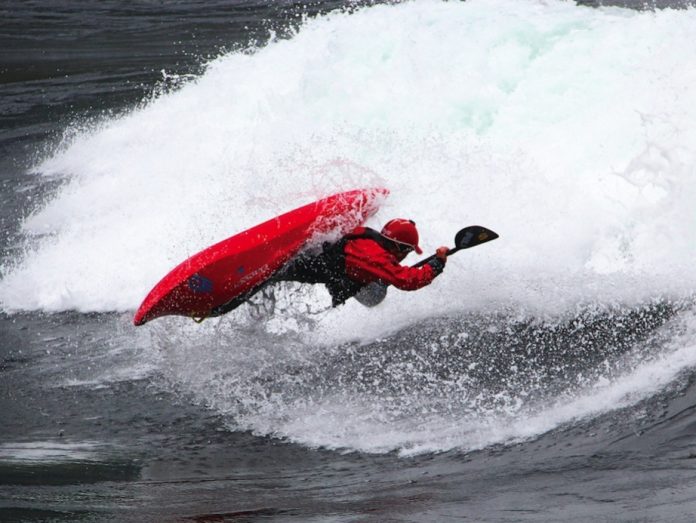
P&H Hammer Kayak Review

Photo: Dan Caldwell
P&H Hammer Kayak Review

A review of the P&H Hammer sea kayak by Adventure Kayak magazine.

Three years ago, the P&H Delphin was considered radical. Since then, the pioneering playboat has gained significant traction amongst the traditionally conservative sea kayaking community. P&H Sea Kayaks owner and designer Graham Mackereth admits his design team had no idea the Delphin would be so well received—only a hunch that the timing was right for a sportier sea kayak.

Now, the Delphin has set the stage for an even more radical design, the Hammer—prompting P&H to define a whole new category in their line-up: ocean play.

Given their pedigree—Mackereth founded Pyranha whitewater kayaks in 1971 and acquired P&H in 2003; and designers Rich Taylor and Robert Peerson split their time between modeling kayaks for rivers and sea—it’s no surprise P&H are leading the way in this emerging niche.

One of the first things you’ll notice about the Hammer is that it’s built like a whitewater kayak…

P&H Hammer specs

Length: 13 ft
 8 in
Width: 24.5 in
Weight: 50 lbs
Price: $1,799
This article originally appeared in Adventure Kayak, Summer/Fall 2013. To continue reading the full review and watch an exclusive video review, download our free iPad/iPhone/iPod Touch App or Android App or read it here for free.

Dagger Jitsu Review

Photo: Chris Gragtmans
A review of Dagger's new Jitsu playboat

This whitewater kayak review originally appeared in Rapid magazine.

It’s not always easy for companies to garner award-winning status with each new product release. Some of the biggest brands in the world have had a few products I bet they’d like to forget about—Crystal Pepsi, Apple’s Maps App, and McDonald’s Arch Deluxe. The important thing is to learn from the past and move forward, and that’s exactly what Dagger has done with the Jitsu.

The first thing that stands out about the Jitsu is its all-new contour ergo Outfitting. Cool graphics on the fabric aside, the most attractive feature of the entire system is the rotomolded seat with leg-lifter. This framework stiffens the kayak’s hull, making the boat bouncier on waves. It’s easy-to-use ratcheting leg-lifter holds your legs and knees up where they should be, aggressively braced for throwing your entire body into big aerial moves. Drop in foot blocks and foam shims on the hip pads and you’ll become one with the Jitsu in under 10 minutes.

The Jitsu is noticeably more in harmony with today’s freestyle moves than its predecessor, the Agent. The medium 5.9 Jitsu is a little over two inches shorter, an inch wider and has seven more gallons of overall volume than the medium 6.2 Agent. The outcome is a boat that is easier to throw around. And, thanks to the added width and volume, the Jitsu floats higher in the water, remaining stable enough to actually run rapids.

We first previewed the Jitsu last summer on dry land with Dagger Pro Team Manager, Chris Gragtmans. “Our two main goals were to create a boat that was dynamic on a wave and still able to do the whole realm of hole tricks,” he told us. He also emphasized the edges, stating that “the double step carve rail is a pretty cool concept and the boat definitely feels like it goes edge to edge on a wave really well.” Getting the Jitsu on the water we found Gragtmans was bang on. Reminiscent of Dagger’s Crazy 88, released nearly 10 years ago, the Jitsu loves to carve and easily transitions edge-to-edge, making zipping across the face of a wave a delight. This also makes rotational moves like blunts and airscrews whip around like a rice bale throw.

Its minimal stern rocker and abrupt tail end, or as Gragtmans puts it, “really defined parting line,” give the boat maximum speed on a wave— perfect for explosive aerial moves and grabbing smaller catch-on-the-fly waves. The tradeoff is a need to keep weight forward during spins, backsurfs and heavy landings—otherwise the stern may initiate an unintended back loop.

Dagger should be excited with this new release. The Jitsu vaults Dagger back to the leading edge of the freestyle scene and should definitely be on your list of boats to try if looking for a new play machine.


Check out our video tour of the boat with Gragtmans here.


Dagger Jitsu 5.5 / 5.9 / 6.0 Specs

LENGTH – 5’6″ / 5’9.5″ / 6′

WIDTH – 25″ / 26″ / 27″

VOLUME – 48 / 57 / 63 US GAL

WEIGHT – 29 / 31 / 34 LBS

PADDLER – 90-155 / 140-200 / 165-245 LBS

MSRP – $1,049

dagger.com 


To read the rest of this review of the Dagger Jitsu check out Rapid, Early Summer 2013. Download our free iPad/iPhone/iPod Touch App or Android App or read it here.

 

Flushed: Moon River

Photo: Flickr user Rabinito
Why river running at night is a beautiful thing


There were four of us in hardboats that first full moon night on the Chattooga. Everything was strange—shiny and magical, the way river running by lunar light can be. When we dropped through the last wave into the approach above Seven Foot Falls, however, things went dark. it was a clear night, but the moon was no longer visible; hidden by rapid and ridge.

The trip had been going well. We’d all been guides on the river for a while and knew the Chattooga and each other, in some ways, better than ourselves. We’d stopped talking somewhere above Woodall Shoals, none of that pre- or post-rapid chat. When we made sounds, we made animal noises. Mostly, we were quiet. We’d been listening with hips, hulls and strokes to what the river had to say, and what the river had to say was, in part, translated by the moonlight reflected and flickering on its surface.

A river is the same river by moonlight as it is in the day, only naked, moody, evocative, less in your face. There’s nothing black and white about being on a river at night under the moon. The colors are there, but they are changed: hushed, shimmery, wavering. Trees that appear green in daytime become a soft violet; to regard them is to be less attuned to detail—leaves or bark—than to the whole…


To read the rest of this article, check out Rapid, Early Summer 2013. Download our free iPad/iPhone/iPod Touch App or Android App or read the rest here.


Why Canoeists Are Best Prepared To Fight Off A Zombie Apocalypse

Illustration: Lorenzo Del Bianco

It all started with one off-hand remark about how paddlers are more prepared for a zombie apocalypse than the general public. After that, every major morning show was eager to have me on. Instead of chatting about the latest camp gadgets, I was the new expert on the latest trend: zombie survival kits.

Since the classic 1968 film, Night of the Living Dead, zombies have been the focus of hundreds of movies and have invaded every corner of pop culture in the past decade. Ten million of us fans watched cable television show The Walking Dead religiously. Pre-teens stay up too late, killing corpses on their game consoles. The undead have even infested the classics, including revamped novel, Pride and Prejudice and Zombies, and the silver screen hit, Abraham Lincoln vs. Zombies.

Perhaps it should come as no surprise that zombies have crept into outdoor marketing, too.

The past few years have seen a surge in zombie apocalypse survival kits from outdoor companies. Their contents are a mix of traditional camping products and survival gear, accompanied by a tongue-in-cheek ad campaign.

Here’s a sampling: survival essentials manufacturer SOL (Survive Outdoors Longer) rebranded their cornerstone survival kit to create the SZL (Survive Zombies Longer) kit. It’s covered in blood splatter graphics, of course. Gerber’s got citizens covered, “if the Dead walk,” with their Apocalypse Kit, which features an array of machetes and knives. And if you’re looking for helpful tips and gear recommendations for the dawn of the dead, they’re on offer at Goal Zero’s zombie-themed microsite, zurvived.it.

Sales reps certainly seem to be having fun with the rebranded products. “We’d rather promote bivy bags, survival knives and our solar charge flashlights for zombie protection than some other, more serious, end of the world scenario,” says Barna Robinson, a sales agent for Goal Zero.

When it comes to end of the world scenarios, canoeists, I believe, are more prepared then anyone else. Zombie survival kits boast a mix of rope, water purification tablets, first aid supplies, shelters and waterproof matches, all tucked into a durable pack. I’ve got all that, and so do you. Axes and multi-tools aside, a quick trip to the gear attic can supply enough bivy bags, solar kits and ponchos to last at least a dozen zombie attacks. Add to that dehydrated chili packs and homemade jerky, cooked on non-petroleum cook stoves, and we’re set for the onslaught.

As backcountry paddlers, we practice for the apocalypse for days at a time. We’re used to eating dehydrated food, schlepping heavy supplies through the bush, foraging and fishing for dinner, warding off predators and traveling without leaving a trace. Best of all, we’ve got the means to travel to remote, zombie-free islands.

The truth about zombie culture, why the newest zombie movie outsells the last, is not the fear of the brain-eating zombies themselves. Instead, most of us have a deep desire to see if we could survive living in an untamed world. Well, I’ve survived the sweepers and five hellish portages on the Kopka River during blackfly season without DEET. Bring on the zombies, I say.

Kevin Callan’s bug-out bag includes two machetes and a bottle of the hard stuff.

Illustration: Lorenzo Del Bianco

Drybag Review: MEC Slogg

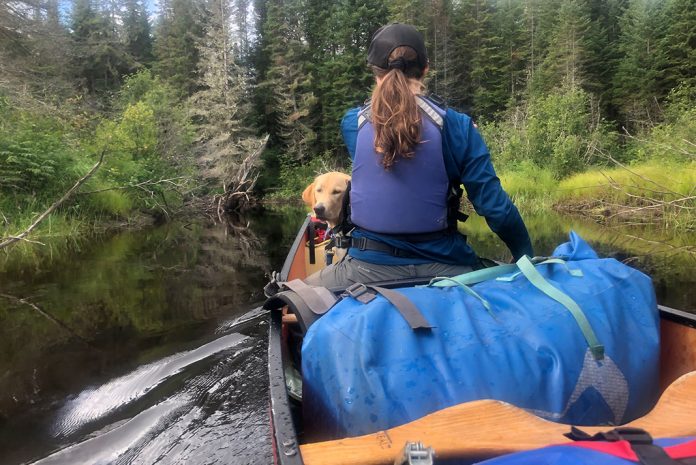
View from back of canoe of woman and dog in stern and blue dry bag behind.
One bag to carry it all. | Photo: Geoff Whitlock

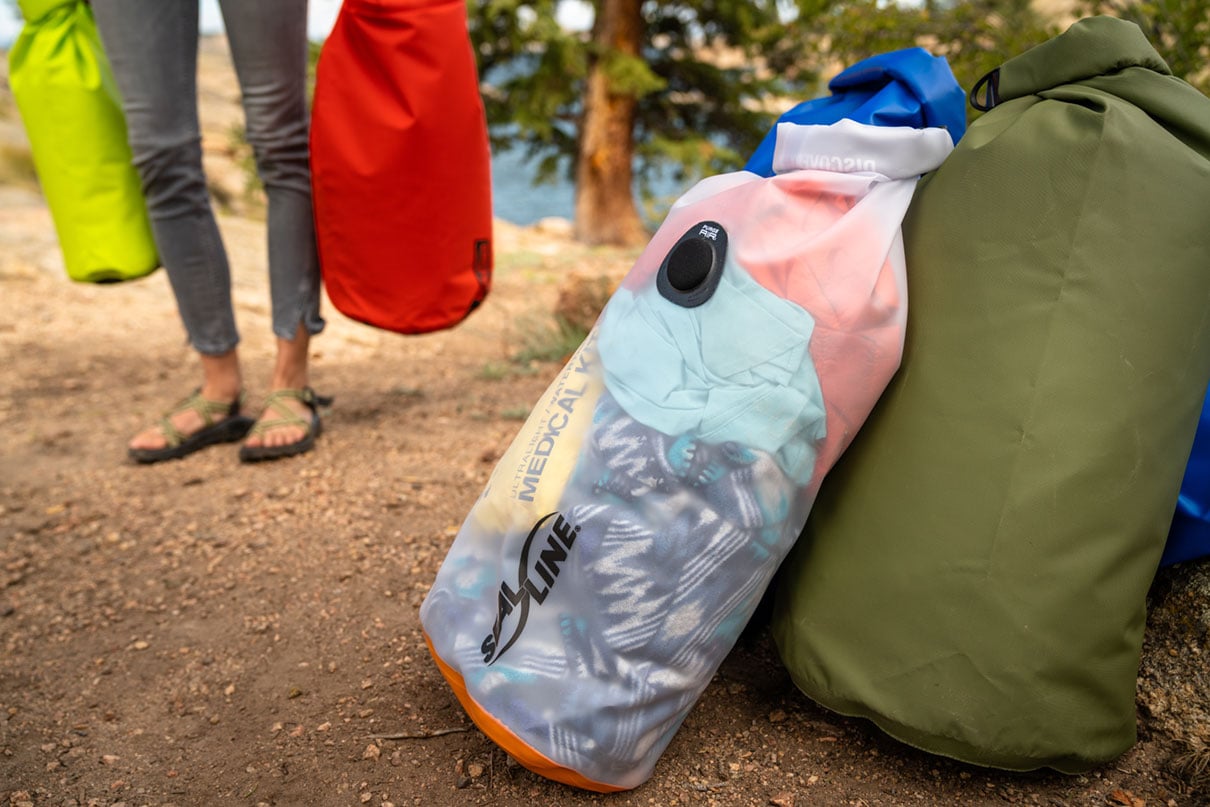
This big but lightweight drybag is simple, reliable and offers great value. Rugged and dunk-proof, it’ll find a home with backcountry canoeists and anyone else needing to keep their gear safe from the elements.

Contrary to its name, I was impressed by how comfortable MEC’s Slogg 115 is on long portages. The cushioned shoulder straps and hip belt on the easy-wearing Slogg help save your shoulders for paddling while it transfers weight effectively to your hips.

Its single 115-liter compartment means packing is super easy, but favors the already-organized. It’s cavernous blue interior will leave you searching if you drop in odd-and-ends or leave your rain gear at the bottom.

The Slogg is made of 840-denier, high-tenacity nylon and coated on both sides with PVC-free polyurethane. All seams are radio frequency welded. After seven years of hard use, the pack is only now starting to show it’s age. A couple of punctures have been easy to seal. Extend the Slogg’s life by avoiding picking it up by one handle or shoulder strap when it’s packed, to keep the attachment points in good condition.

Don’t stuff the bag too full—the stiffened roll-top closure requires a full four rolls to properly protect your gear from immersion. The closure system has been more than a match for any rainstorm and brief dunkings, but MEC warns it may not keep your gear dry during lengthy submersion.

The Slogg’s angled side handles are a welcome addition, making loading and unloading this over-sized bag much easier. They also act as anchor points, so the bag can be lashed securely if that’s your style. The Slogg comes in three sizes, a 35-liter, 70-liter and 115-liter option.

For those facing truly epic portages, MEC also offers a deluxe version with a welded frame, which mimics an alpine backpack’s ergonomics.


One bag to carry it all. | Feature photo: Geoff Whitlock


Here’s Why The Ocoee Is Nova Craft’s Best Open Boat

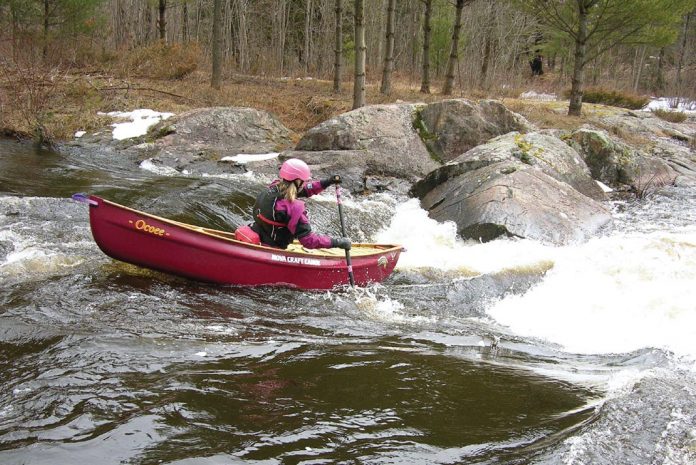
Woman paddling open boat down a rapid
Gail Shields on the Head River with the first production Nova Craft Ocoee. | Photo: Brian Shields

Before we talk about the Nova Craft Canoe Ocoee, let me first take you back in time to 1993. I was lined up for my instructor course’s final run at the top of Chalet Rapids. I had the option of running the course director’s then new Dagger Ocoee or doing my solo exam run in a 17-foot Prospector.

[ Paddling Buyer’s Guide: View all canoes from Nova Craft ]

All I’d heard for the past 10 days of the course were the instructors talking about how edgy the Ocoee was. How it was an advanced paddler’s boat. And it was then. At the time, the hot boats had been the Dagger Genesis, Impulse and Prophet and the Mohawk Viper 11—all very soft and forgiving by comparison. I admit it—I was afraid of the Ocoee. And with a pass or fail run ahead of me, there was too much at stake.

Nova Craft Canoe Ocoee Specs
Length: 11’3″
Width at gunnels: 25″
Width at waterline: 27″
Depth at bow: 21.5″
Depth at center: 15’5″
Depth at stern: 26″
Rocker: 5.5″
Capacity: 500 lbs
Royalex: 38 lbs
Royalex Plus: 44 lbs

Two years later I picked up a well-used Ocoee and learned to paddle it. As my skills improved, I learned to love it. It was the right boat at the right time.

By ‘99, in Rapid’s first open canoe shootout, all the intermediate open boaters wanted to be in the Ocoee, but most admitted they were still uncomfortable with its abrupt transition from primary to secondary stability. Like most flat-bottomed, hard-chined boats, the Ocoee doesn’t like to stay level; it wants to be tilted one way or the other. And that takes some getting used to.

The Ocoee set the standard for front surfing and technical paddling. Advanced paddlers love slicing across currents and truly carving deep into eddies. The Ocoee was also the first production boat that allowed advanced paddlers to offside tilt and engage outside edge to pivot turn an open canoe.

One of the best things about the Ocoee is how much you can play with its shape. I cut the top down, removing some of the Ocoee’s prominent sheer—the swooping up at the bow and stern. Then I narrowed the gunwales, rounding the bottom and sharpening the chines, making for faster and sharper carving.

Want it even faster? Andrew Westwood did. For slalom racing he played around with the shape, drawing the bow radically narrower than the stern. Westwood’s race boat was shaped like an arrowhead.

For creeking and rodeo (it was called rodeo then), Mark Scriver, Paul Mason and others sawed a foot or so out of the center and bonded the bow and stern back together. This modification was so successful, designer Frankie Hubbard ran with it to design the Pyranha Prelude—now the Esquif Prelude.

Nova Craft offers their Ocoee in either a Royalex or Royalex Plus, or what we used to call Royalite and Royalex. You have three gunwale options: vinyl, ash trim or bare hull.

Instructor Gail Shields, whose Bell Ocoee was used to build the Nova Craft mold, says she hasn’t been babying her lighter Royalite version and it’s holding up very well. She opted to install her own gunwales and Mike Yee Outfitting to create a hot rod of a canoe, weighing in at a crazy light 39 pounds. In fact, she needs the extra weight of nylon airbags so the boat will be legal in the rec class at ACA slalom events.

So, should you try Nova Craft’s version of this 20-year-old design? I think so, and so do Rapid readers. The Ocoee was voted favorite solo open boat of all time in our 2012 best boat survey. And if you still don’t think you’re ready for an Ocoee, no trouble, in the meantime Nova Craft makes a fantastic Prospector.

This article was first published in Rapid‘s Summer/Fall 2013 issue. Subscribe to Paddling Magazine’s print and digital editions here , or browse the archives here.


Scott MacGregor is the founder and publisher of Rapid. For the record, he passed his solo instructor level in the Prospector.

Gail Shields on the river with the first production Nova Craft Ocoee. | Photo: Brian Shields

Pyranha Nano River Runner Review

Photo: Dan Caldwell
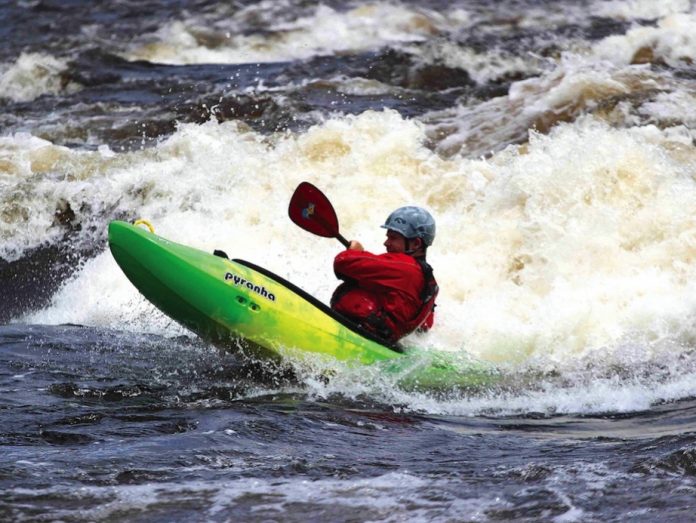
A review of the Pyranha Nano River Running kayak


It’s always a gamble when mixing design features together to come up with something new and exciting. Ideas that sound good on paper don’t always translate into success in the real world. Bassadors (a basset hound crossed with a Labrador retriever), the Ford Ranchero and McDonalds’ Land Sea Air burger are just a few unsuccessful mashups that come to mind. Fortunately, some get it right and create a product greater than the sum of its parts—this is the case with Pyranha’s new Nano.

We got our first glimpse of the Nano at Outdoor Retailer last summer, where Pyranha designer, Rich Taylor, confided to us that, “The hull is really the key.”

Flipping the boat over, he filled us in: “What we’ve done is combined three successful boats—the Shiva, the Jed and the Burn.” Line up all of these boats and you can clearly see the Nano truly does have a bow like the Shiva, Jed-like rails and a stern that takes lines from both the Shiva and Burn. The on-water result is a stable and playful ride. This kayak’s wide, semi-flat hull provides a rock-solid platform that…


This article originally appeared in Rapid, Summer/Fall 2013. To read the rest of the review, download our free iPad/iPhone/iPod Touch App or Android App or read it here.

 

Freestyle Move: Helix

Photo: Desre Pickers
Steve Fisher helix

Ten years ago, I was hanging out in a bar with some mates in Zambia, using a Mosi Lager coaster to work out a new move. The following morning, I paddled down to the Zambezi’s Rapid 12B, dropped onto the wave and stuck the move first try.

Ironically, it was this wave—on this very day—that would have hosted the 2001 World Freestyle Championships had Spain not won the bid two years before. Too bad, the newly crowned helix would have had the judges scratching their heads!

A helix is an upside down spin where the boat does a 360-degree rotation on two of its three axes. It’s basically an extension of an aerial flip turn. The hardest part is figuring it out in your head.

1. Begin at the top of a fairly large, fast wave.

2. Speeding down the face, stern rudder to turn the boat and initiate your spin momentum. A slight bounce at this point helps.

3. Once your boat is pointing across the wave, use an aggressive hip flick to over edge the carve—digging your upstream rail into the water, then leaning downstream. This will flip the boat over your head and send you airborne. Lift your paddle out of the water.

4. It’s at this step that the helix and flip turn diverge. Aggressively twist your body into the spin to continue rotating the boat on a horizontal plane.

5. As the boat comes around a full 360 degrees, switch active hands and grab the water with the opposite blade from your stern rudder. This is the key to finishing the horizontal rotation of the boat and rolling you upright. You should land flat and facing upstream.

People often mistake a good flip turn for 
a bad helix. To helix, the stern of your boat must not touch the water as it comes around on the upstream side. If it catches, your bow will come over your head vertically—that’s a radical flip turn.


This article originally appeared in Rapid, Early Summer 2011. Download our free iPad/iPhone/iPod Touch App or Android App or read it here.
Trapper Corvus Canoe Review

Photo: Dan Caldwell
A review of the Trapper Corvus canoe

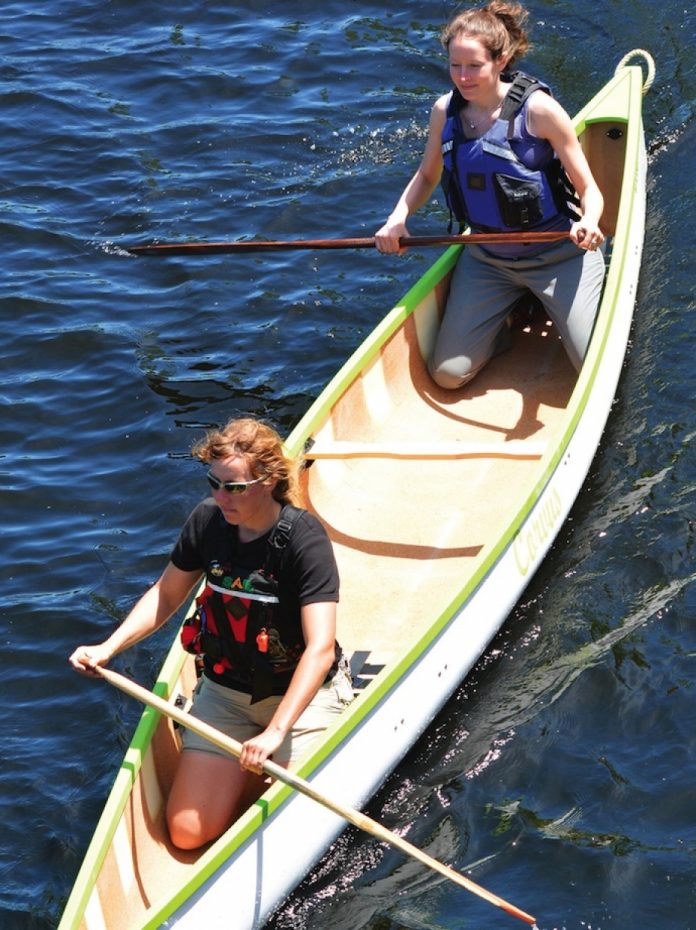
Unique and eco-friendly, Trapper’s Corvus will ensure you’re the talk of the canoe club. The smallest of Trapper’s expedition series, the sturdy Corvus was designed with both daytrips and weeklong paddles in mind and is ideal for paddling on slow-moving rivers and lakes.

If you’re not familiar with Trapper, don’t worry—this is their first year in the North American market. We paddled one of the first Corvus canoes in the country. Manufactured in Estonia, Trapper’s Ecolite construction sets its boats apart.

“Canoeing is a very green sport and we tried to provide product for it,” says Marek Pohla, co-owner of Tahe Marine, parent company of Trapper.

The Corvus’ laminate consists of woven biotex fabrics, cork, aramid and fiberglass. While Polha is resistant to claiming the title of most eco-friendly canoe line in the world, he does admit that he doesn’t know any other manufacturers going the same distance to create such ecologically sound boats.

Polha explains that 99 percent of the attractive cork that lines the hull is recycled, a byproduct of winemaking.

“When they make the cork for the wine bottle the rest is left, it’s recycled in sheet material and used in the base of the canoe,” he says.

Linen and hemp fabrics are used in the construction as well, which are over 90 percent natural products…

This article originally appeared in Canoeroots & Family Camping,  Summer/Fall 2013. To read the rest of this review, download our free iPad/iPhone/iPod Touch App or Android App or read it here.
Bluewater Prospector 17 Review

Photo: Kaydi Pyette
A review of Bluewater's Prospector 17 canoe

It’s rare that a paddler enjoys the portage as much as the paddle, but that’s just what Bluewater Canoe’s lightest weight Prospector promises. Weighing a carefree 41 pounds, this 17-foot lakewater tripping canoe is an easy walk in the woods.

“It wasn’t that long ago when a light boat couldn’t be very strong, now you can have your cake and eat it too,” says Brent Wood, operations manager at Mid-Canada Fiberglass, parent company to Bluewater.

Manufactured in an ultralight Golden Brawn lay-up, this canoe consists of three layers of Kevlar and e-glass, a mixture of Kevlar and glass. “The blend creates strength, impact and abrasion resistance, as well as rigidity,” says Wood.

The Prospector has long been heralded as the first choice of wilderness canoeists but each manufacturer has its own unique version of the traditional design. “We designed our 17-foot Prospector to be a hybrid. It was designed on the success of Bluewater’s popular Saugeen series, and we incorporated some of the Scott Prospector’s ease of use.” Wood adds that this design is narrow in the paddler stations for efficiency and boasts increased depth. “It’s a very efficient, stable family canoe.”

It’s the shallow-arch hull that provides ample stability for newcomers, yet also a feel that experienced canoeists enjoy. With just an inch and a quarter of rocker, Bluewater’s design has less rocker than traditional, river-ready Prospector designs, creating enhanced tracking. Thanks to its symmetrical shape, it can be paddled solo as well…

This article originally appeared in Canoeroots & Family Camping,  Summer/Fall 2013. To read the rest of this review, download our free iPad/iPhone/iPod Touch App or Android App or read it here.