Home Blog Page 306

Why Your Canoe is 16-feet, 6-inches

Photo: James Smedley
Canoes

This article originally appeared in Canoeroots and Family Camping magazine.

If there’s one thing that most people think they know about canoe design, it’s this: A longer canoe is always faster than a shorter one.

Well over a century ago, British engineer and hydrodynamicist William Froude came up with a simple formula that, to a certain extent, proves this theory. Froude determined that the top sustain- able speed in knots of a watercraft is equal to the square root of its waterline length multiplied by a constant value of 1.34.

This means that a 16-foot canoe would have a hull speed of 5.36 knots, or roughly 10 kilometers per hour. Of course, it’s possible to propel a 16-foot canoe faster than 10 kilometers per hour, but according to Froude, beyond this speed frictional resistance increases rapidly.

However, it’s clear that Froude wasn’t thinking about paddlers. There is a threshold where a canoe becomes excessively long and in- efficient. Naval architect John Winters, whose designs are built by Swift and Hand Crafted Canoes, recalls a man who entered a “very long canoe” in a marathon race. “Despite a superhuman effort, he lost,” writes Winters in The Shape of the Canoe, a comprehensive book on canoe design. “Excessive wetted surface…did him in.”

A pair of paddlers can move a 16-foot prospector faster than two paddlers in a 26-foot voyageur canoe because of the greater surface area (and corresponding resistance) of the larger hull.

So where does this fit into canoe design? According to Winters, length is only one element juggled in the conception of a canoe.

First off, Winters outlines the canoe’s desired usage—flatwater, whitewater, sporting or tripping, solo or tandem. Then he sets an ideal cruising speed for the hull and works backwards to determine a possible length range.

Beam, draft, displacement and dozens of other measurements are compared as a ratio to length to yield values to estimate how easily the canoe will move through the water and how well it will suit a given application. This is why “boats of widely different lengths can have similar performance characteristics,” says Winters.

The reason tandem recreational canoes typically measure 15–17 feet while solos are traditionally a foot or so shorter is simply a matter of stability and space. These lengths essentially yield the most user-friendly ratios when compared to the appropriate widths to make a canoe sufficiently comfortable and voluminous.

Did the generations of Aboriginal builders who designed canoes have their own mathematical formulas? Not very likely, says Winters. “Thousands of years of trial and error are bound to get close, even if it doesn’t explain why it works.” —Conor Mihell

This article appeared in Canoeroots & Family Camping, Spring 2012. Download our free iPad/iPhone/iPod Touch App or Android App or read it here.

Editorial: A Paddler Looks At 40

Photo: Tanya MacGregor
A paddler looks at 40

I have a lot of Jimmy Buffet on my iPod. I can sing along to more than Margaritaville and I’ve read all his books. In 1998, when Jimmy turned 50 and I was toying with the idea of starting a whitewater magazine, he wrote his autobiography, A Pirate Looks at Fifty.

On the jacket of my hardcover copy Buffet summed up his life in 400 words and I thought I’d try to do the same someday. Looking down the losing end of 39, here are my 400 words, in case I don’t make it to 50.

I survived my small-town youth of motocross, snowmobiles and four wheelers. I drove an 18-wheeler hauling gasoline for awhile, graduated high school not being able to spell, and went off to university to become an engineer.

I did my first canoe trip, wrecked my grandfather’s cedarstrip, sold all my things with motors, dropped out of school and protested the first Gulf War. I got a job at an outdoor center, learned to paddle whitewater, grew my hair and got back into school in an outdoor program. I became an open boat instructor, got a job as a raft guide, swam a lot and drank too much warm beer.

I re-met the right girl (she was in my kindergarten class and I kissed her in grade two), went on to teachers’ college, graduated and sea kayaked 1,600 miles through the Great Lakes. We learned to snowboard, blew off to the mountains, slept in my truck, ran out of money, missed warm rivers and drove home.

I helped start the Paddler Co-op, a non-profit paddling school, and got the idea to start a magazine. I left the paddling school, broke up with the right girl and moved to a rented shack by the river in Palmer Rapids.

I got lonely, proposed to the right girl, bought my first computer, racked up every credit card that arrived in the mail, and launched a 16-page trial issue of Rapid. I paddled every day, learned to use spell check, ate too many frozen pizzas, married the right girl and started a sea kayak magazine and, a year later, Canoeroots.

I hired an editor, started a paddling film festival, built a house in the Valley, moved out of the shack, drove a Corvette, had a little boy, cut my hair, took over a paddling festival and bought another magazine, for a dollar—Family Camping.

I bought a good camera, took a photo of a friend running a dam, ran the photo in Rapid, almost got arrested and nearly lost my business to the hydro power company—the owner of the dam.

I launched a kayak fishing magazine, had a baby girl, lost the fight to save national river navigation rights, bought property on the river and started a web-based paddling television show. We became the magazines of the American Canoe Association, I cancelled a family paddling trip, realized it was time to slow down a little and gave up the paddling festival. I took my kids paddling.

When I realized I’d be 40 this year, I stopped drinking coffee, found my running shoes, ordered another boat and booked my first northern river trip.

Now I’m trying to figure out what comes next. 


This article originally appeared in Rapid, Early Summer 2011. Download our free iPad/iPhone/iPod Touch App or Android App or read it here.

Right to Roam

Photo: Tim and Susannah Gent
Right to Roam

Surrounded by small wooded islands, we worked our way over deep clear water, swallows swooping low and hungry over our laden canoe. We considered two tree-covered gems before settling on our temporary home. An hour later, tent up and dinner bubbling gently over a healthy fire, an ambition had been fulfilled—canoe camping in one of the last great wildernesses in Europe. 

For British canoe campers, like my wife and myself, there are two problems: access and wilderness. Specifically, the lack of either. Though beautiful, our ever-manipulated countryside is busy making a living for someone and guarded jealously. Just to step off the roadside risks confrontation. Fields and woods are tough enough to enjoy, while our rivers and lakes are often all but unapproachable. Canoeists in overcrowded England and Wales can paddle on only three river miles in a hundred. It’s enough to make a paddler cry.

Camping is no easier. While limited opportunities do exist on crowded formal sites, to pop a tent up elsewhere, and close to water, is next to impossible. It’s the same story across much of Europe. The farther east or north you travel the better the wilderness opportunities, but one area stands out, combining beauty, space and unique access arrangements—Scandinavia. Mind you, if you want to use your own canoe, it’ll take some getting to. 

To reach our island escape, we’d driven across southern England, caught the Dover ferry to Dunkerque, and glimpsed France, Belgium, Holland, Germany and Denmark before finally crossing Öresund Bridge to Sweden. After pushing our canoe-crested, red van hard through a European tour, we were tired, but nothing could remove the grins from our faces. 

Our cheery anticipation was well founded. With a gorgeous coastline, 100,000 lakes and scores of beautiful rivers set within that vast amount of wilderness, we were in paddlers’ paradise. Adding to the glory is Sweden’s allemansrätten, literally translated to mean, “all man’s right.” 

This glorious institution, effectively a constitutionally protected right to roam, is enshrined within the very identity of Scandinavian countries, and offers some of the most mature attitudes to access found anywhere in the world. As long as you’re not causing damage, you’re free to walk, bike, ski or camp almost anywhere. 

The aim of the trip was simple. To head north along the central E45 that cuts through the heart of Sweden and experience far-flung Scandinavia for ourselves, paddling and camping as we went. The unaccustomed freedom felt good. With no need to worry about reservation schedules or plan routes in advance, we could paddle and pitch a tent wherever we liked. Few places in the developed world offer such a positive and invigorating outdoor experience.

Where do you paddle when you can go anywhere? Only to the most stunning landscapes, of course. Dropping from the jagged mountains that form an impressive natural border, we left Sweden to meet our first Norwegian fiord. Outside of Canada’s Newfoundland province, North America doesn’t offer paddling like this.

With vast towering cliffs diving deep into the ocean, these fiords also offer protection from bad weather, meaning an expedition beneath their craggy precipices is far too good to miss. We set about touching our canoe on as many fiords as we could, covering miles of spectacularly twisty Norwegian coastal roads in the process.

When we’d had enough of the coast (I suppose that’s possible), we turned back to Sweden, a landscape rich in heritage, where much of the roadway is accompanied by the flash of water between birch. 

Laisälven River soon caught our eye, at times narrow and swift, more often broad and serene. Struggling upstream one evening at the edge of a lively flow, we called it quits as our bow approached a low, bank-wide waterfall. Tired, we found the only flat land available for our tent, at the corner of a plot near a rare house. Days later, and still feeling guilty, I mentioned this suspected trespass to a fishing shop owner. He seemed surprised by my concern. 

“Allemansrätten,” he reminded me. I asked if we could really camp so close, mentioning that we must have been no more than 200 meters from the empty-looking house, technically in their garden. 

“No problem,” he replied, “even if lived in.” Pondering for a moment, he added that if the house was inhabited, perhaps anything less than 20 meters might be too close.

A long paddle upstream the next evening found us searching again. Flanking a gentle flow, the forest cover was so dense, the bank so boggy, we could find nowhere to place a tent for miles. Shoulders aching, we eventually came across a tiny space on firmer ground. Pulling ashore amidst a large shoal of hungry trout we pitched our tent, overlooked by towering conifers. 

It was only after striking camp next morning, rolling our tent away, that we found ourselves in a ring of stones. These marked a space cleared for a small Sami katta, a traditional tipi-like tent, and had just room enough for our own more modern version. It was hard to tell when the tiny clearing might last have been used, maybe not for decades. It left us with a sense of connection with the original Scandinavian inhabitants. 

Lake Sädvajaure, just short of the Arctic Circle in Sweden, offered an encounter with a more recent Sami home. We’d camped on a small island, our tent pitched on a narrow gravel beach amidst swathes of bleached dry firewood. The hours around midnight brought a stunning sunset, followed almost immediately by a clean, bright dawn. Not wishing to miss anything, we’d left the tent flap open, and as sunlight nudged another beautiful summer day across the groundsheet towards us, we set out across the lake to explore a waterfall that had roared like a distant jet engine through the brief night. Alongside the cascade, the bare poles of a modern katta sat hidden amongst the silver birch, awaiting the return of its owners with their easily transportable canvas or hide cover.

With the day already advancing fast, our eyes were now fixed on the horizon. Easing our canoe away from the shore, we left this simple home to its peaceful solitude, thoughts turned to the next lakeside camp of our own.

Freelance writer and photographer Tim Gent is a wilderness enthusiast. Living close to the sea, much of his canoeing takes place along protected sections of the English, Welsh and Scottish coast. facebook.com/t.h.gent. 
This article was originally published in the Summer 2013 issue of CanoerootsThis article first appeared in the Summer 2013 issue of Canoeroots Magazine.

 

Betcha Didn’t Know About…Silence

Photo:iStockphoto.com/NoDerog
Betcha Didn't Know About...Silence
  • You might crave it, but can you handle it? The longest anyone can bear Earth’s quietest place, an anechoic chamber at Orfield Laboratories in Minneapolis, is just 45 minutes. The chamber holds the Guinness World Record for world’s quietest place. 
  • In social animals, silence can be a sign of danger. Some scientists suggest this is why people feel comforted by humming, talking to themselves or having the radio on when alone. 
  • A silent note in a song is called a rest. Ironically, Simon and Garfunkel’s 1966 hit, The Sound of Silence, features none. 
  • After viewing the The Silence of the Lambs thriller, Martha Stewart broke up with actor Sir Anthony Hopkins, who played Hannibal “the Cannibal” Lecter. 
  • Monks in some Buddhist traditions may opt to take vows of silence. Talking during sleep isn’t ground for dismissal. 
  • Acoustic ecologists estimate that there are fewer than a dozen outdoor spaces in the United States where you can spend 20 minutes during the day without hearing noise from human activity. 
  • Natural silence is hard to find. Breath is barely audible to the human ear at 10 decibels, rustling leaves are 20 decibels and birds chirp at about 45 decibels. The loudest thunderclaps can reach up to 120 decibels. 

This article was originally published in the Summer 2013 issue of CanoerootsThis article first appeared in the Summer 2013 issue of Canoeroots Magazine.

 

Tumblehome: Origin Unknown

Photo: Graham Mackereth
Tumblehome: Origin Unknown

It’s always fun when something old and floaty turns up in someone’s barn or boathouse. It’s so much better when it looks like it might be the missing link—a fabled canoe that will connect the heritage of canoes and kayaks perfectly. Just like evolutionists, any good canoe museum curator is always curious about a possible missing link. And a few months ago, I thought we had it.

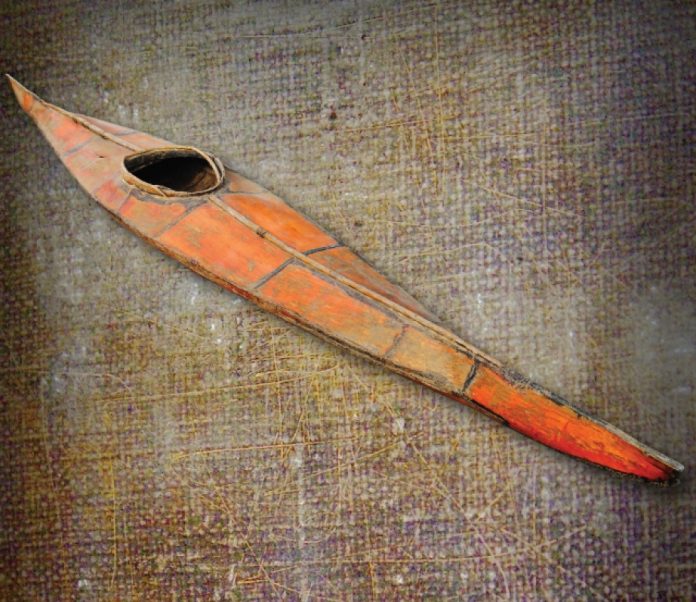
When Graham Mackereth from Pyranha Mouldings in the U.K. wrote me with news of what he thought might be an Inuit-style kayak made out of birch bark, I was intrigued. The only boats related to what he described are Gwichin-style canoes from the Mackenzie River Delta, more kayak than canoe, with long bark decks at one or both ends.

From his little museum in England, Mackereth took photos of his curious craft and sent them along as proof of what he had. It was nothing like the canoes from the Mackenzie Delta, or anywhere else I knew for that matter. I wrote back suggesting that this could be the missing link we’ve been searching for.

Upon examining the photos, it was clear that this was not the bark of the paper birch, if it was bark at all. After years in the boating world, the heritage of most canoes that I come across is easy to recognize. This one had me stumped. On the strength of questions raised about its history, I decided to involve a few others in the quest.

Ken Lister, of the world-famous Royal Ontario Museum, was first to chime in. He observed that the rib ends of this hybrid craft are sandwiched between the inner and outer gunwales, which made him conclude that the boat was not Native-made. 

“This is a craft that celebrates the creative mind and proves migration theories,” Lister said. “It reminds me a little bit of the Piltdown Man, with the exception that this one is actually real and quite serviceable,” he added, referring to the early-twentieth century hoax in which bone fragments were presented as the fossilized remains of a previously unknown early human.

Kayak aficionado, Vernon Doucett, joined the conversation next to say that, in his estimation, the boat was not made of bark, but maybe birch plywood. He suggested it might be built on a Ken Littledyke design, a British shop teacher who produced designs in the ‘60s and ‘70s.

Ex-pat British canoe and kayak guru, Alan Byde, added his voice, arguing that the mystery vessel reminded him of a chap in the U.K. who used two thick sheets of marine plywood to make a kayak a bit like this. “My guess is the mystery craft was built by someone who knew the Bob Vardy method. Definitely not a Ken Littledyke,” he asserted.

Which brought Mackereth back into the conversation—he’d discovered that the boat is made of a veneer made to look like bark. Based on comments from the curators and on closer examination, he’d found screws and other decidedly non-Inuit features. “Now that I know for certain that it’s from my side of the pond, I’m left with the significant question of why,” he wrote.

One mystery solved and another created. The search continues.

James Raffan is the director of the Canadian Canoe Museum. For a full version of the comments from the international curators, and for more on the hunt for the missing link, see his blog at www.jamesraffan.ca.

This article was originally published in the Summer 2013 issue of CanoerootsThis article first appeared in the Summer 2013 issue of Canoeroots Magazine.
 

Tarp Shelter Tactics

Photo: Dave Quinn
Tarp Set-up

This article originally appeared in Canoeroots and Family Camping magazine.

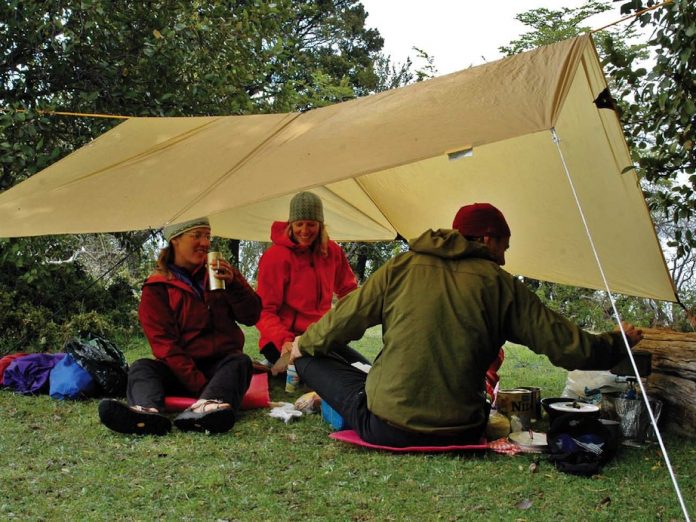
Granting protection from the rain or shade from the sun, no other piece of equipment is as useful and versatile yet easy to pack along as a tarp.

The most secure and comfortable set-ups have a stable ridge forming the highest part of the tarp.

The best way to support the ridge is to string an independent line between two trees or poles. This is called a ridgeline and once this sturdy line is established at the right height you can drape the tarp over it.

If there is no natural anchor point exactly where you need it, then run a line at an oblique angle between two adjacent trees. Tie a loop in this line where you would have your anchor and secure your ridgeline to the loop.

Next, run anchor lines from the corners at about 45 degrees from the ridgeline axis, with additional lines from grommets or tabs on the sides as wind conditions warrant. Be creative about what you anchor to: tent pegs, trees, roots, bow or stern grab handles and thwarts. The heavier the rain, the steeper the tarp’s side slopes should be so it sheds water better in case the tarp is worn and not entirely waterproof.

Remember that most tarp fabrics stretch when wet. This means the water pools just inside the hemmed edges, which don’t stretch as much. Create a drainage valley by using a line to pull down one of the attachment points near the center of the tarp’s lowest edge. Tie this line to an anchor, or simply weight it with a stuff sack of stones or a water bottle.

Think outside the box

Bungalow-style roof set-ups are great where they work, but campsite geography or weather conditions might demand creativity.

» On oddly shaped sites, run the ridgeline from one corner of the tarp to the opposite corner. This creates a longer ridgeline and triangular sloping panels that fit more easily between trees.

» For a simple lean-to, you can tie only the tarp’s highest edge to the ridgeline, instead of draping half the tarp over to create a second roof aspect. This protects from a driving rain while still providing maximum overhead coverage.

» If the weather is terrible and you don’t need much space under the tarp, set it up with one high corner and three low corners to create a cave-like set-up that opens downwind to provide maximum shelter.

Tips

»  Carry at least 20 metres of stout cord that ties and unties easily. More line means more options.

»  Learn to tie the trucker’s hitch for a tensioned ridgeline and the taut-line hitch for anchor lines that you can adjust without retying.

This article appeared in Canoeroots & Family Camping, Early Summer 2009. Download our free iPad/iPhone/iPod Touch App or Android App or read it here.

Freestyle Move: Split Phonics

Photos: Nick Troutman
Emily Jackson freestyle

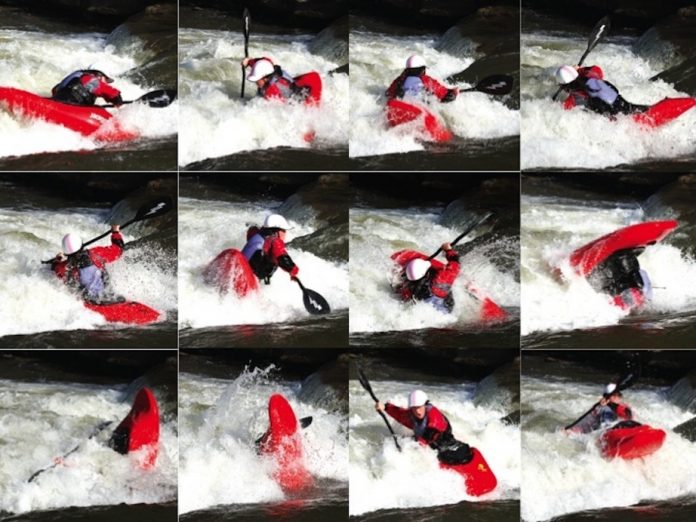
This is a fun trick because it combines a balanced cartwheel move—a splitwheel—with one that can give you some really big air—a phonics monkey.

The split phonics surfaced in 2009 when hole combos gained popularity because they scored higher in freestyle competitions than any individual moves. Combos also save time when you’re trying to squeeze in all your moves before your ride times out. At this year’s Worlds, a new combo bonus will make these moves even more attractive to competitors.

These steps outline a left-to-right split, into a right phonics.

1. Facing upstream, initiate a lefty cartwheel with a back sweep of your left paddle blade.

2. After the first end of your cartwheel gets vertical, reverse your rotation by twisting 90 degrees to look over your right shoulder and pulling the stern through with a forward stroke on the left blade. This completes the split.

3. As your bow comes down, plant a cross-bow draw with your left hand to begin a pirouette. Don’t wait too long to reach across for the pirouette or it won’t be considered a combo. Make sure you dig beneath the foam pile to grab the green water—this 
is what will pull you around 360 degrees.

4. Continue the pirouette until you
are facing back upstream. Holding the pirouette all the way around is crucial. If you are falling over on this step, you are probably going too vertical on the pirouette. Your chin and chest should finish facing up and out so that you can jump when you get to the next step.

5. Once facing upstream, lift your paddle out of the water and jump to throw a loop. Make sure you jump upstream, not straight up, or you will not complete the loop. If your loop never feels straight, you may be jumping too soon.

6. Finish your loop on top of the foam pile and facing upstream. Do a fist pump and blow kisses to your fans.


This article originally appeared in Rapid, Early Summer 2011. Download our free iPad/iPhone/iPod Touch App or Android App or read it here.

Kevin Callan Smashes Paddle, Scares Bear And Ruins His Daughter’s Birthday

Photo: Rob Faubert
Bear

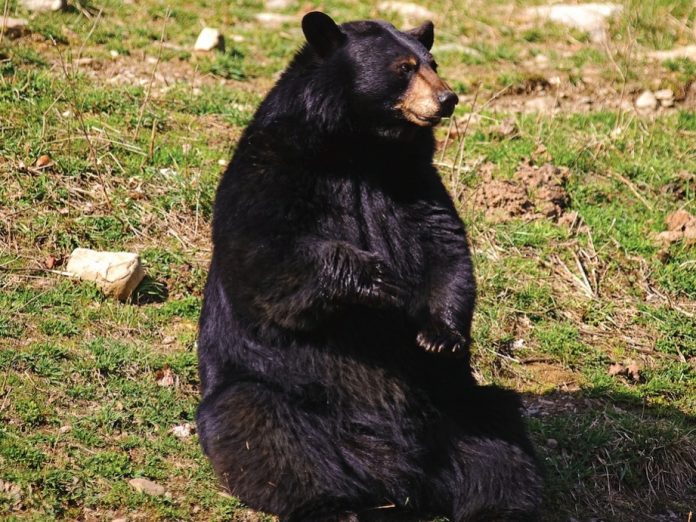
Mike Kipp saw it first. Thankfully, he’s an early riser. I was second up, and spot- ted Mike motioning me excitedly from the shore of our island campsite. He pointed out the black bear swimming off another nearby island.

At first, it was cool to see the bear—we had seen little wildlife on our trip. Then I realized he was bee-lining it straight for us. Mike was ecstatic. He hurried over to his tent and woke his family, inviting them to come out and share the experience.

I’d rather not.

I’m bear phobic—a condition acquired through incidents involving trivial things like tubes of toothpaste or Thermoses of coffee, just to name a couple. I sprinted to my family’s tent and woke my wife and daughter Kyla, telling them to prep for a hasty retreat. In her morning haze, Kyla was distraught—it was her sixth birthday and she was anticipating a breakfast of chocolate cake and the mountain of presents she knew Mom had been lugging in her pack the entire trip.

By the time everyone shook the morning cobwebs, the bear was close enough to look us in the eye. Mike was enjoying the magic with his family. I was freaking out about impending doom. We came to a com- promise on the urgency of the situation and agreed to scare the bear off when it reached midway between the two islands.

At the halfway mark, with the hair on my neck standing upright, I yelled at the bear to turn tail. I shot off a round of bear bangers. Still, it remained determined to make landfall on our island. Mike fired his starter’s pistol. It sounded more like an air gun than the elephant gun I had hoped for. The bear didn’t even blink.

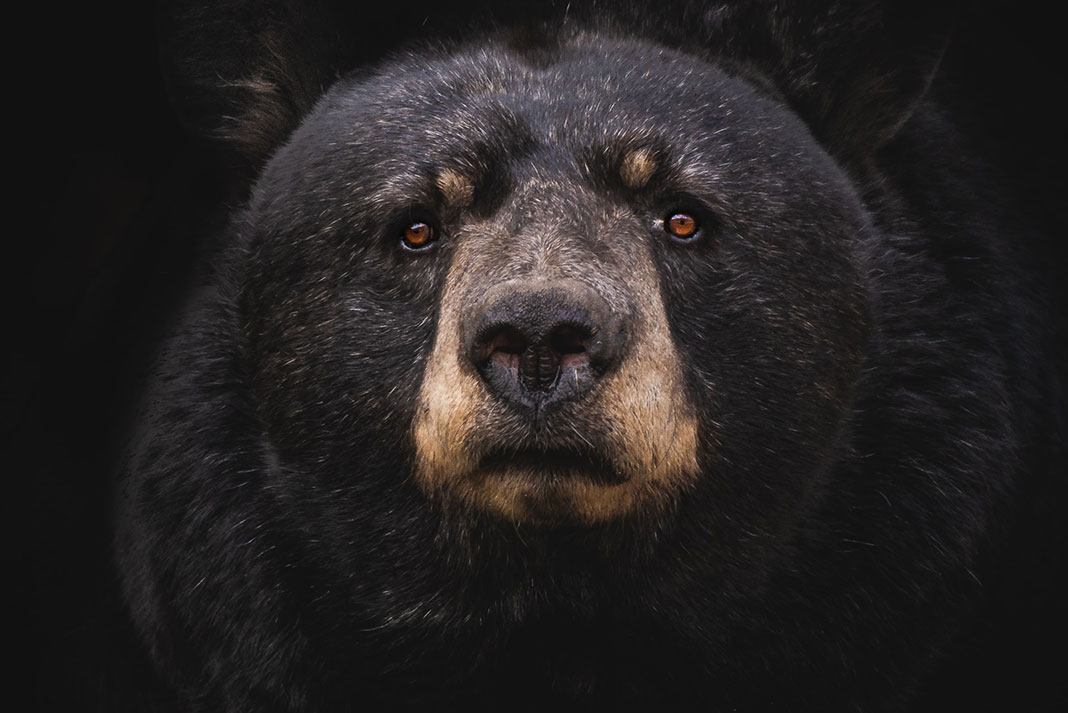
close up of a black bear face
What’s cooking? | Feature photo: Marc Olivier Jodoin/Unsplash

I had an entire arsenal—air horn, bear spray, flares—but, a canoeist to the core, I instinctively reached for my paddle. I beat the paddle against the granite shore and yelled obscenities that I hope Kyla will for- get before she is seven. The bear retreated.

The bad news was the paddle I used was the one Mike had hand carved for me a few years back. My abuse had split it right down the middle. Mike didn’t say much (Mike never really says much). He just solemnly stated, “I guess I’ll have to make you a new paddle.”

My daughter was none to pleased with my actions either. In an attempt to calm her, my wife told her that I had invited the bear over for cake. With a look of disgust she said, “Dad, I can’t believe you scared the bear away from my birthday party!”

Kevin Callan is inviting Winnie the Pooh to his daughter’s next birthday party.

This article appeared in Canoeroots & Family Camping, Late Summer 2011.


Tandem Technique

Photo: Virginia Marshall
Tandem canoe technique

Provincial and state bans that make it illegal to chat on cellphones while driving make perfect sense—conversation is a distraction that increases your risk of an accident. If this realization seems long overdue on our roads, it is equally overdue on our rivers.

It’s a challenge to process incoming verbal information while at the same time focusing on technique, river reading and feel. The outcome of these verbal distractions while paddling is similar to talking on the phone while driving.


Roles and responsibilities


On the river, discussions between paddlers in a tandem canoe often flow only one way…from the stern. There are two possible reasons for this: 1) the bow person is facing away from the stern, making it difficult to be heard over the roar of the water; 2) someone told the stern person that he was in charge.

It’s very difficult for a bow paddler to develop feel for the water and timing if he is reacting only to directions from the stern. The skills of river reading and developing personal judgment—how to help with the directional control of the canoe or how to cope with potential obstacles—are not learned by a bow paddler blinded by commands from the stern.

It’s also particularly important to realize that when a tandem pair is new to paddling, it’s too much to expect the stern paddler to be able to focus on managing his own end of the boat, while at the same time giving accurate information to the bow person about controlling his end of the boat. It’s not uncommon to see the stern person doing very little at his end other than telling the bow paddler what to do.

Talking less on the river starts with understanding the duties of each seat. The stern person is in charge of the big-picture, general direction of the canoe. The bow paddler is responsible for fine-tuning that direction. Both paddlers contribute to momentum as required.


Run silent


Experiment with silent runs at a location with familiar, easy current. On shore, plan a route that includes a few predetermined eddies and, once you’re underway, negotiate the route without conversing. Debrief at the end, discussing what went well and what could be improved, and try it again.


Concise communication


While I’ve spent the last 375 words extolling the virtues of silence, it should be understood that effective communication remains an important element in tandem paddling.

Learn to be economical and precise with words. Develop a system of communication that involves simple one-or two-word directives. Using this method, it’s possible for the stern person to hear a short directive from the bow. For example, “got it” from either paddler means that you can fix a problem on your own. “Help” might mean that you’re trying to avoid an obstacle and need help with the direction of the canoe. “Back-paddle” is self-explanatory.

Consider avoiding words such as left, right, draw or cross-bow, since many of us need a moment to process which side is in question. As skills improve, a tandem partner will start to intuit the direction his partner is intending to manoeuvre the canoe and can instinctively provide assistance. Tuning into the current and boat, rather than verbal directives, yields a more immediate response.


“I thought you meant that eddy!”


As a bow paddler, try not to be too attached to a specific or predetermined location. Your stern paddler may have been doing his best to get to that location and made an error, or maybe you were talking about two different eddies. Regardless, as a bow paddler, do your best to go with the flow—try to discern which direction is intended and provide the best possible support for a positive outcome. 

This article originally appeared in Rapid, Summer/Fall 2010. Download our free iPad/iPhone/iPod Touch App or Android App or read it here.

Family Camping: Adventures with Dad

Photo: Scott MacGregor
Family Camping

This article originally appeared in Canoeroots and Family Camping magazine.

“Can we watch a movie?” We hadn’t even backed out of the driveway and we were only going eight minutes to the general store for a bag of milk. This had to stop.

I could hardly blame them, the seven-inch LCD screen hung there from the ceiling. it was like taking a date to a sports bar and trying not to watch the game. Besides, it was far too easy to stop the whining by just pressing play.

For our family, this habit started innocently enough. We live a five-hour drive from both sets of grandparents. That’s a long way to be strapped into car seats. For long trips, Disney is a good way to pass the time. But, like most bad habits, you think you can stop whenever you want until you realize you’re pressing play on a drive to the corner store.

My problem with in-car entertainment systems is that pressing play turns me into a chauffeur. I may as well be rolling up the Plexiglass of a limo: “I’ll drive. You kids enjoy the movie; help yourselves to the mini-bar.” This is not the way it’s supposed to be.

When I was a kid, getting to ride with my dad on Saturday mornings was a special treat. I looked forward to it all week. The Silverado emblem on the red steel dash, the rumble of the diesel engine and the smell of export a regular smoke that didn’t escape out the triangular, no-draft window he’d crack for me. It was 1979 and I was eight years old, legs dangling from the bench seat and the Gatlin Brothers’ All the Gold in California crackling out of the ac Delco speakers. I don’t remember where we were going or what we did. It didn’t matter; those Saturday mornings I was riding with Dad.

My new DVD player rule—no movies on adventure days—came about last fall on a drive to Algonquin park. We’d planned a hike, playing naked (them, not me) on remote beaches and then a bike ride for ice cream. It was the Daddy day that we’d been looking forward to all week. And it began with, “Can we watch a movie?”

If all I can remember of the trips with my dad is the drive, this is likely to be true for my kids. I don’t want their memories of our Saturday adventures with me to be Finding Nemo piped through wireless headphones.

To make things easier, my new truck doesn’t have an on-board entertainment system. We play eye spy, tell stories, talk, sleep (them, not me) and watch the 3-D super-wide screen—looking out the windows. And, we listen to music.

To our adventures with Dad iPod playlist I’ve added All the Gold in California, but their favorite is Joan Jett’s, I Love Rock N’ Roll. Now when we head to the ski hill or the lake, before we back out of the driveway I hear, “Dad, can we rock it out?” even if they don’t remember our canoe trips in the Barron canyon, and all they remember is singing with their dad, I’m okay with that.

Scott Macgregor is the founder and publisher of Canoeroots magazine.

This article appeared in Canoeroots & Family Camping, Late Summer 2011.