Home Blog Page 307

Master The Basics: How To Edge A Kayak

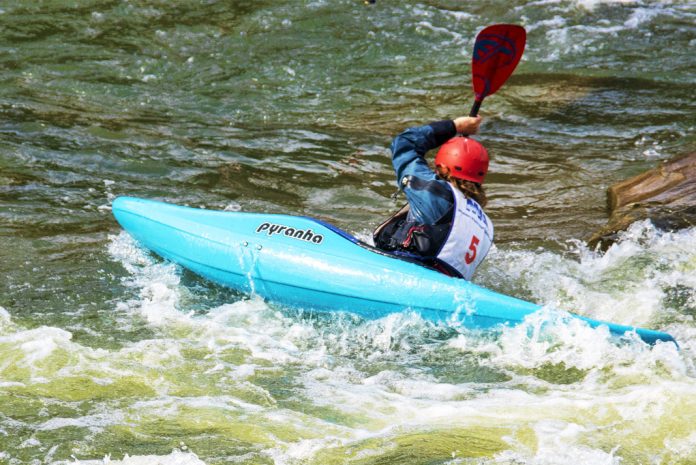
Person in a blue whitewater kayak
Learning how to edge a kayak will lend greater proficiency in all aspects of whitewater paddling, helping you to better understand your boat.

Every whitewater kayak has edges of some sort. Some of them are so pronounced that you can reach your hands under your kayak and feel big grooves running parallel along the length of the hull. Some kayaks have less aggressive edges. These edges will feel like rounded corners on the hull of your kayak, and are sometimes so round that the kayak feels like it has no edges at all. However, if used correctly, even these round-bottom kayaks can be paddled on edge.

The purpose of edges on a whitewater kayak is to provide the boat with a flat, stable hull to surf waves and glide across the water on. Edges are responsible for making whitewater kayaks maneuverable and easy to turn in whitewater, as well as making it possible to go in and out of different river currents without capsizing.
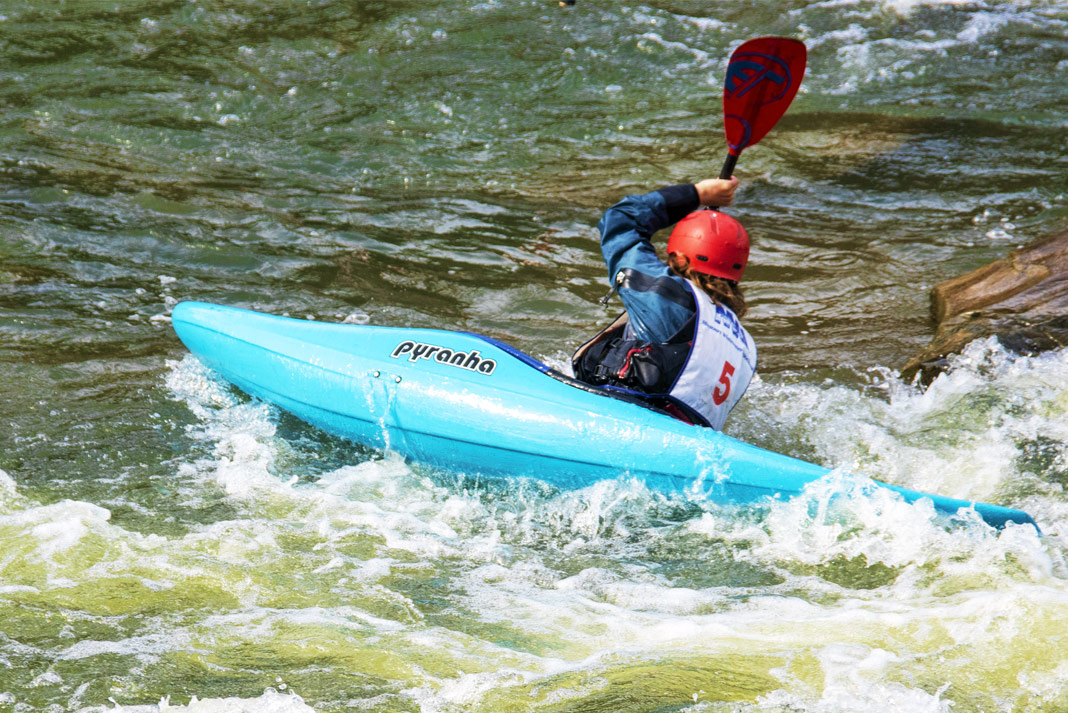
Person in blue whitewater kayak
Learning how to edge a kayak will lend greater proficiency in all aspects of whitewater paddling, helping you better understand your boat.

How to edge a kayak

Edging a kayak is actually quite easy in flatwater. In order to engage the right edge of your kayak, lift your left knee. In order to engage your left edge, lift your right knee. The part where edging becomes difficult, is when you combine it with moving water and whitewater. For this reason, it is important to practice edging in flatwater before you take it to the river.

Flatwater exercises and drills for practicing edging

When sitting in a kayak, there are several exercises you can do to practice edging.

Strengthening your obliques and hip flexors

For the first edging drill, sit straight upright in your kayak, as if you have a string coming through the top of your head and holding your body in good posture. Have a friend randomly call out “Right,” “Left,” or “Go.” When your friend calls “Go,” lift one knee at a time repeatedly and at a fast pace, so you are rocking back and forth from one edge to another.

As soon as your friend calls “Right,” you stop on your right edge, tightening your left oblique muscles in order to keep your kayak on edge as much as possible. When your friend says “Left,” you do the same thing on your left side. Have your friend call out these commands, one at a time, with several seconds in between them, for about a minute. Take a rest and note how tired your obliques and hip flexors are, then repeat the exercise again.

Increasing awareness of different levels of edge

The second edging drill is less focused on building strength in your obliques, and more focused on creating awareness and stability around the edges of your kayak. This drill exposes the kayaker to the four different “levels” of edge. When paddling different difficulties of whitewater, you will use different levels of edge—lower levels for easier whitewater, and higher levels for more challenging whitewater,

  • Level 0: Sitting upright with good posture. The boat is flat, and your knees are both relaxed.
  • Level 1: Lift your left butt cheek, as if you are sneakily trying to let out a fart.
  • Level 2: Combine level 1 with bringing your rib cage over to the right side of the kayak. Lean your torso a bit.
  • Level 3: Combine level 2 with engaging your left knee and lifting it up. You should be fully on edge at this point.
  • Level 4: As far as you can get on your right edge without flipping over.

This drill is effective in teaching a kayaker how to control their edges, and how to maneuver their body in a way that allows for the most efficient edging techniques. Practice holding each level of edge for 20 seconds, then switch sides and do the same thing with the other edge.

Eddy turns

Learning how to maneuver a kayak in whitewater can be daunting, but if you know how to edge your kayak properly, the task becomes effortless. An eddy turn is used when you paddle into an eddy or out of an eddy and into the main current. Eddy turns are tricky because the oncoming current you are paddling into has the possibility of grabbing your edge and capsizing you.

The key with eddy turns is to edge your kayak away from the oncoming current. If you are leaving an eddy stationed on the left side of the river and paddling into the main current to head downstream, you will want to lift your right knee, sit on your left edge, and lean away from the oncoming current.

A good way of remembering what to do when edging for eddy turns is to think of the phrase “fart upstream.” If you pretend you are letting out a toot toward the oncoming water, you will lift the correct edge and hopefully avoid capsizing.

Surfing a kayak

Just like edging a surfboard to surf an ocean wave, you must edge your whitewater kayak in order to surf a river wave in your kayak.

If you want to carve to the right, dig your right edge into the wave. If you want to carve to the left, dig your left edge into the wave. Keep edging back and forth, placing rudder strokes as you do this, and you will be surfing away!
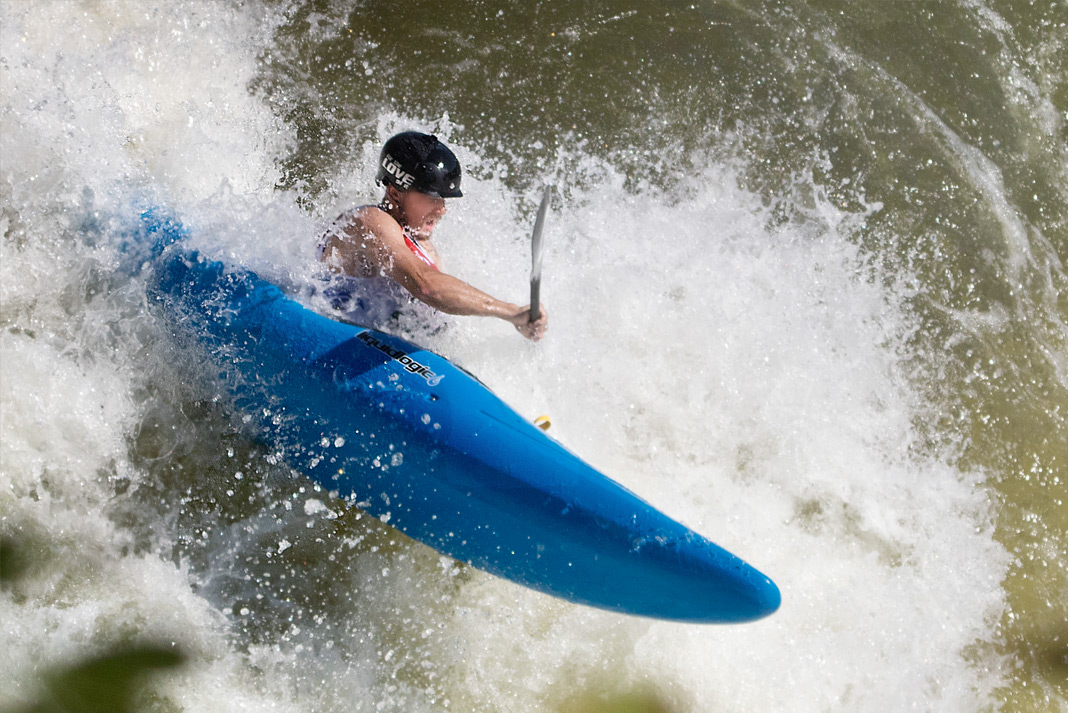
Person in blue whitewater kayak
Photo by: C Watts

Boofing

A boof is a kayaking stroke used to keep the bow of the kayak up while kayaking over a large hydraulic (often called a “hole”) in the river. A boof stroke is placed at the edge of a drop, waterfall or just before a hole. The kayaker positions their body forward, puts their kayak on edge, plants the stroke, thrusts their hips forward, then leans forward again and flattens the boat back to a level 0. The goal of all this is to avoid plugging the kayak into the hole and getting stuck.

The purpose of putting the kayak on edge while boofing is to have as little surface of your kayak on the water as possible. This creates less surface drag, which allows you to have more lift when you take your boof stroke.

Bracing

A kayaking brace is a stroke used to prevent a capsize. As soon as a kayaker feels themselves being pushed onto their edge and about to capsize, they plant a brace stroke, and edge the other direction. The goal is to get the boat back to flat, thus preventing a capsize.

Bracing is best practiced in flatwater. First, you are going to lift one knee to put your kayak onto a level 4 edge. As soon as you feel the kayak starting to capsize, smash the back face of your paddle into the water just perpendicular to your kayak. Use the water’s surface tension on your paddle blade to gather momentum the other way, and edge your kayak in the other direction—hopefully back to flat.
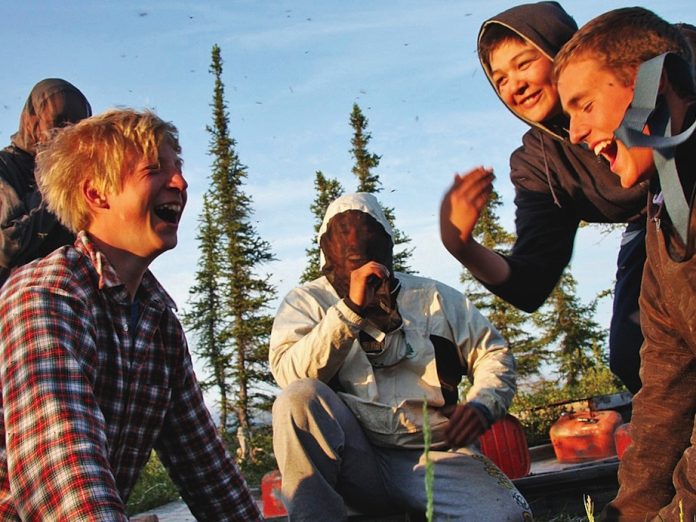
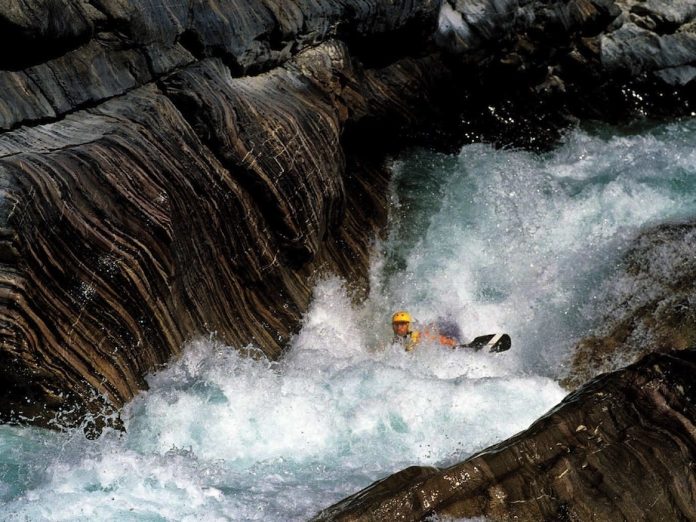
Tumblehome: High School on the Coppermine

Photo: James Raffan
James Raffan

This article originally appeared in Canoeroots and Family Camping magazine.

Four years ago, when then 15-year-old Angulalik Pedersen left Kugluktuk, Nunavut, to attend high school on full scholarship at Upper Canada College in Toronto, he brought with him a dream that one day he could take some of his southern classmates north to visit his hometown on the Arctic Ocean.

In the summer before Pedersen’s final year, with the help of his geography teacher at UCC and the Kitikmeot Inuit Association, he finally pulled it all together—a canoe trip on the Coppermine River that would end at his house on July 9, Nunavut Day.

The goal of the expedition—named Atanigi, “when two things come together” in the language of Kugluktuk—was to bring together Pedersen’s new classmates with youth from his home in the North. Because paddling is part of the extra-curricular program at UCC, Pedersen had no trouble drumming up interest for the trip in Toronto. Back home, however, extra- curricular activities involved powerboats, snow machines and ATVs…but not canoes.

With the infectious enthusiasm of Kugluktuk High School counselor cum recruitment officer Kenny Taptuna, however, half a dozen northern youth signed up. They found a canoe and the will to start learning strokes. Unfortunately, it was May and nearly everything was still frozen. As a result, when the group gathered as a whole for the first time on Air Tindi’s wharf in Yellowknife, half had no real paddling experience on flatwater, let alone preparation for whitewater.

Incredibly, the northerners surmounted their inexperience with natural athleticism and a seemingly near-genetic familiarity with boats in general. Aided by the skill and determination of three wilder- ness guides, the group practiced strokes and maneuvers on the first hundred or so kilometers of calm water near the Northwest Territories/Nunavut border.

By the time the crew turned north at Big Bend and started into the current and class II–III rapids for which the Coppermine is known, cross-cultural paddling teams were working like reasonably well-oiled machines. On the more difficult rapids, lead guide Colin Smith lashed two canoes together to make a pontoon boat— a.k.a. the “party barge”—which created a super stable, almost relaxing whitewater experience for novice paddlers.

At the Coppermine campsites, Taptuna taught nightly lessons in Inuit language and traditional games. Others started string games, throat singing lessons and impromptu inukshuk-building workshops. Traditions from the north and south blended in the common experience of paddling to the Arctic Ocean under the midnight sun.

When the paddlers arrived cold, wet and happy in Kugluktuk on Nunavut Day, they were celebrated for coming together to accomplish something remarkable. Pedersen and the other northerners were recognized by the town as the first people ever from that community to arrive via the river.

Equally significant was the realization of one young person’s dream to make this land just a little bit smaller by bringing people together in canoes.

James Raffan hopes paddlers will be inspired by Pedersen’s example to use their canoes to connect with their country and each other. Don’t forget: National Canoe Day is june 26, www.nationalcanoeday.net. American canoeists are encouraged to celebrate as well.

This article appeared in Canoeroots & Family Camping, Late Summer 2011.


River Alchemy: Whitewater Philosophy

Photo: Charlie Munsey
Doug Ammons

Montana’s Doug Ammons has a paddling résumé that reads like a life list of rivers. Best known for a generation of pushing the boundaries of class V expeditionary whitewater, Ammons pioneered first self-supported (with Rob Lesser) and solo descents of the Grand Canyon of the Stikine, as well as descents of the Yukon’s Alsek River, Alaska’s Susitna and many other seldom-paddled rivers. Also a psychologist and author of The Laugh of the Water Nymph, Ammons has made another first descent of sorts—whitewater paddling literature. His newest book, Whitewater Philosophy explores the deeper meaning gained from a lifetime of paddling difficult rivers (available from Water Nymph Press, 2009, dougammons.com).

One of your overriding intentions is to try to capture the whitewater experience in words. Why is there a need to articulate this experience and put it into words?

There is no need to articulate what the experience means beyond my own desire to understand, and my own sense of clarity and inspiration. It’s important to me as a personal process, but I don’t presume that it is important to others. The sport is action-oriented, even hyper-action-oriented, rather than reflective—so most people get all the pleasure and understanding they want when they get on the water with their friends.

Is there something inherent in paddling that limits its written interpretation?


Yes. For most people, action is the meaning. They want to be immersed directly in the water; they aren’t interested in reflecting on it. If they were reflective, it would create a meditative, even mystical, approach to experiencing one of the great powers of the world—but mostly [the experience] doesn’t seem to be that deep.

As far as writing goes, the problem to solve is: how does one make these experiences accessible to everybody? Beyond that, how do you infuse the writing with the energy and power felt in the river, stated so it infuses any reader with the same inspiration?

You write often about the incredible gifts to be found paddling whitewater rivers, especially from your experience on extremely difficult rivers. Is that where the gifts are?

The door is always open to everybody. However, the more intense experiences create more vivid and dramatic images. They cut deeper and people seem to find them more interesting.

I think it is a fallacy that class V will teach you everything. If it did, there would be a lot of wise kayakers out there. But take it from me, the class V dudes are as weird and quirky and as messed up as anybody, and no wiser.

To paddle hard whitewater, all it really takes is a lot of motivation, physical skill, time in the boat, some aptitude for understanding water and a desire to do hard things. It is goal-oriented, which leads to trying to capture the goal rather than to understand living it. None of these are qualities that reward you with gifts. It takes a humbler state of mind to recognize gifts.

Are these gifts free for all who paddle?

I think there are probably different grades of experience as the stakes get higher, but the gifts are there for everybody. Interestingly, in my experience, most beginners and intermediates are more aware of the gifts and are better at expressing them than are the highly experienced, professional kayakers. They have a freshness, humbleness and excitement that [make them open to] inspiration.

The only problem is that most people tend to leave the message on the river, when it’s actually a profound life-encompassing perspective—a lesson that potentially affects everything they do. It’s up to you to apply [the lesson] in a meaningful way beyond your paddling, or to see that your paddling has brought you a gift that is rich beyond the river.

So what are these gifts?

The river gives beauty, danger, risk, excitement and challenge, and we answer with motivation, skills, control and action. These things are all very compelling [in and of] themselves, but more than that they are doorways [framing] something beyond themselves. In this sense the river is like a Zen master pointing at the moon. We paddlers are the disciples—some of us are just staring at his finger and some are aware he is pointing at something greater and far beyond us. If you are able to use the awareness difficult paddling gives you as a tool in the rest of your life, especially for understanding yourself, then that is something worthy of the gift the river has given.

Jeff Jackson is a professor of Outdoor Adventure at Algonquin College in Pembroke, Ontario.

This article originally appeared in Rapid, Spring 2010. Download our free iPad/iPhone/iPod Touch App or Android App or read it here.

Canoe Tripper’s Tackle Kit

Photo: James Smedley
Tripper's Tackle Kit

This article originally appeared in Canoeroots and Family Camping magazine.

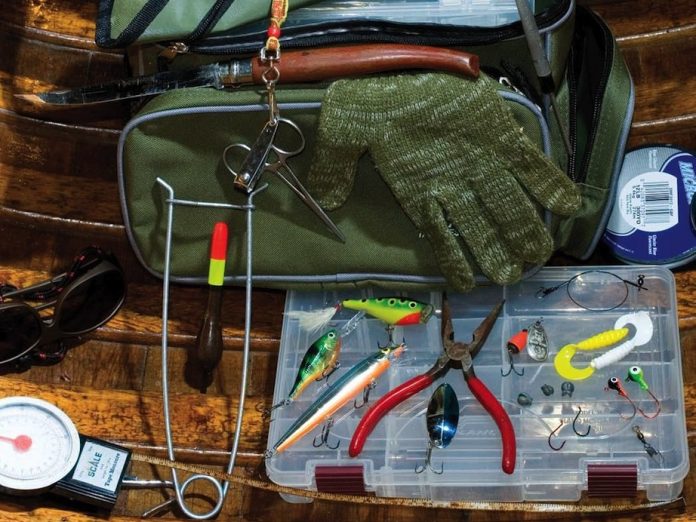
Plastic tackle boxes with telescoping shelves have their place, but it’s not on a canoe trip. The boxes break and they don’t do a good job of keeping your gear from getting tangled. Instead, use rugged nylon tackle bags (available wherever you buy your fishing gear) to hold individual flat tray boxes full of your most reliable lures. Here’s what you should have in your bag.

Box 1 » BASICS

#2 to #6 Single Hooks: For live bait.

Split Shot Sinkers: Crimp onto the line six inches above hook.

Leadhead Jigs: These are colored weighted hooks. Use 1/8 to 3/8 ounce.

Soft Plastic Grubs: Thread them onto jigs to troll, cast or jig.

Snap Swivels: The swivel minimizes line twist when casting or trolling.

Leaders: Wire or fluorocarbon leaders stop toothy fish from biting through line.


Box 2 » FLASH

Spinners: A rotating blade spins around a weighted body for plenty of flash. Try size 0 to 2.

Spoons: Few fish can resist the wiggle of a cast or trolled 1/8- to 1/2-ounce bright spoon.


Box 3 » PROFILE and SPLASH

Crankbaits: Diving body baits look and move like minnows. They cast and troll well without twisting line.

Top Water Plugs: Simulate a wounded minnow or frog with the splash and gurgle of floating surface lures. Great for bass and pike.


IN THE SIDE COMPARTMENTS…

Floats: To suspend bait or soft plastic off the bottom—great for relaxed fishing in front of campsites.

Spare Main Line: 250 yards of no-stretch super line in 10- to 20-pound test.

Leader Line: Fluorocarbon or monofilament leader material in 6- to 12-pound test.


IN THE LARGER FRONT COMPARTMENTS…

Hook Hone: Keep hooks sharp.


Lanyard with nail Clipper and forceps: Hang around your neck for easy access when rigging lines or removing hooks from fish.

Needle Nose Pliers with Side Cutter: Pliers will bend straightened hooks and side cutter will help remove a hook from fishing partner.

Polarized Sunglasses: Cut surface glare for better sub-surface visibility.

Scale and Tape Measure: Estimating is your right, but accuracy is important where there are size or weight regulations.

Jaw Spreaders: Keep the mouth of toothy fish open wide. Easier on the fish, and the angler.

Cotton Glove: Improves grip and reduces harm to fish when wet.

Filet Knife: If you feel lucky.


This article appeared in Canoeroots & Family Camping, Early Summer 2009. Download our free iPad/iPhone/iPod Touch App or Android App or read it here.

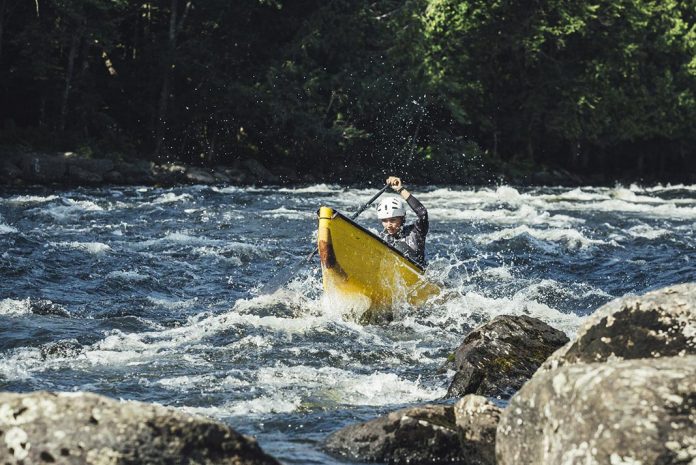
How To Canoe Self-Rescue On A Solo Whitewater Trip

Woman paddling yellow canoe solo through rapids
Your remote expedition survival tool. | Photo: Destination Ontario

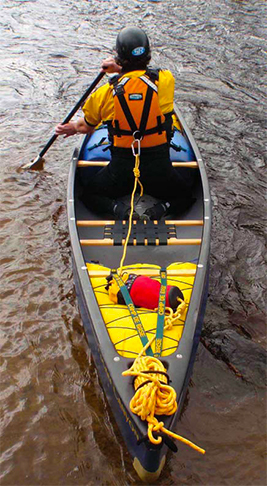
On remote expeditions, your canoe is your number one survival tool. Losing it is not an option. When traveling solo on whitewater expeditions, the only self-rescue gear I have is 100 feet of rope (one 70-foot throw bag plus the painter rope) attached to the canoe and to me.

Man paddling canoe solo with rope attached to the back of his PFD.
Eric demonstrating his self rescue setup. | Photo: Eric Leclair

If I flip, this setup frees my hands to swim hard and reach shore quickly with enough slack to hold my canoe in a dynamic way.

[ Paddling Trip Guide: View canoeing skills and instructional clinics ]

I clip into the rope via a quick-release belt on my PFD. Of course, it’s potentially very dangerous to swim attached to 100 feet of rope—it can snag on rocks and other obstructions, pinning you in the current—but in continuous, high-volume rapids with no recovery pools, this method may be the only option to retrieve your boat.

I only use this solo canoe self rescue technique when the risk posed by losing my boat outweighs the risk of swimming with the rope.

Using this technique has saved my life. Traveling solo on the Nahanni in a September snowfall, I flipped in Wrigley Whirlpool, a nasty rapid that took me by surprise 5 km upstream of its indicated location on my map.

I had just enough rope to swim to shore before the line shuddered with the load of the canoe. With the strong current, swimming my fully loaded canoe to shore would have taken far more time than I had in the icy water.

This article was originally published in Rapid‘s Summer/Fall 2010 issueSubscribe to Paddling Magazine’s print and digital editions here, or browse the archives here.


Your remote expedition survival tool. | Photo: Destination Ontario

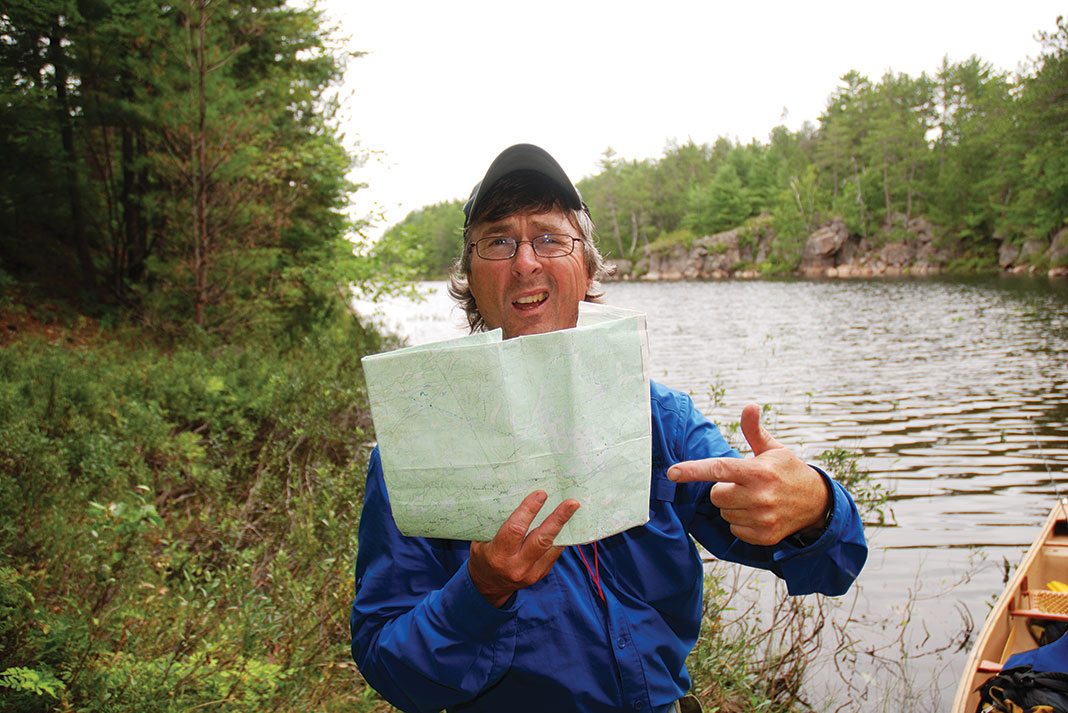
Lost And Found: Lessons Learned From Getting Lost On Trip

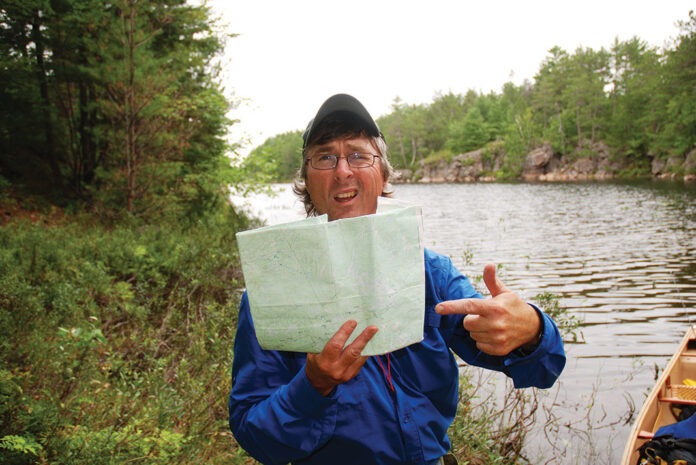
man holds up map in front of river after getting lost
Someone tell Kevin the river is behind him and the correct direction is “down.” | Feature photo: Kevin Callan

There’s a difference between being lost and not knowing your whereabouts. Throughout my wilderness travels I’ve succumbed to the second more than the first. On river trips I’ve been totally mystified on which twist or turn of the river I was propelling myself around. I’ve crossed countless lakes, clueless of which bay I was drifting across. I’ve wandered off more portage trails than I care to admit. I even once guided a film crew to the wrong access point on a familiar river—how embarrassing!

Lost and found: Lessons learned from getting lost on trip

Fortunately, being totally lost has been rare. But it has happened. And when it does, the anxiety factor increases dramatically. They say not to panic but when you are truly lost it’s hard not to run through the woods in a cold sweat, waving your arms around, screaming, “I’m going to die! I’m going to die!” at the top of your lungs. At least for me anyway.

man holds up map in front of river after getting lost
Someone tell Kevin the river is behind him and the correct direction is “down.” | Feature photo: Kevin Callan

He who walks with wolves will learn to howl

My worst case was during a solo trip down the Missinaibi River in my early twenties. It was on an early morning drift when I noticed a lone wolf lapping up water along the bank. As I snapped open my camera box, the wolf took flight into the thick boreal forest. Keyed up from the sighting, I beached my canoe and ran through the bush in hopes of catching up to the animal and capturing it on film.

Ten minutes into the chase I realized the wolf was long gone and I hadn’t a clue where I was. My compass and map, of course, were sitting on the deck of my canoe. Suddenly, each jack pine surrounding me looked identical to the next, the mosquito population seemed to increase considerably and the forest became deafeningly silent. Yes, I began to panic. Who wouldn’t?

My days as a Boy Scout didn’t help much. I retained little from our meetings at the community church every second week, except that moss grows on the north side of the tree. Apparently, it doesn’t. Moss was growing on all sides of the trees where I was standing.

Looking to life’s great teacher: television

In my youth we didn’t have television shows like Survivor Man or Man vs. Wild. I gathered my woods lore through shows like Grizzly Adams and Gentle Ben.

It was an old episode of The Forest Rangers that saved me. I recalled Joe Two Rivers telling the gang that you can deduce direction from the sun. I remembered that the sun rises in the east and sets in the west. Since it was early morning and the wolf was sighted on the west bank of the river, I figured that if I walked toward the rising sun, I would eventually get back to the river. I did. And there to greet me was the wolf standing a few feet from my canoe.

This time, when I unsnapped my camera box and the animal dashed into the woods again, I decided to stay put. I jumped back into my canoe and spent the rest of the day being slightly unsure of my whereabouts, but not lost.

[ Paddling Buyer’s Guide: View all canoe tripping accessories ]

Fun fact: Although Kevin Callan is known for his longtime Butt End column in Canoeroots, his debut article was published in the second issue of Rapid in the spring of 1999. His Butt End column kicked off in the Spring 2006 issue of Canoeroots.

Cover of the 2023 Paddling Buyer’s GuideThis article was first published in the Summer/Fall 2011 issue of Canoeroots Magazine and was republished in the 2023 Paddling Buyer’s Guide. Subscribe to Paddling Magazine’s print and digital editions, or browse the archives.

Someone tell Kevin the river is behind him and the correct direction is “down.” | Feature photo: Kevin Callan


Flushed: Adding Death to the Equation

Photo: Tyler Fox
Whitewater worst-case scenario

Usually we don’t have to defend our reasons for paddling because it is so obvious to us why we do it, but a funeral is different. Some time ago a friend of mine went to a funeral for a young man who had been a fellow kayaker. The man had been caught on a log on a difficult run, trapped, and drowned in his kayak. My friend tried to say a few words about him. He found himself talking about how much the man enjoyed kayaking, how he celebrated his time on the river and how much fun he had there.

He thought he’d done a good job explaining, until afterwards several members of the family cornered him and challenged him in an attempt to understand their grief.

How could taking such risks be worth it when it ended this way—a smart 22-year-old with his whole life ahead of him, gone, drowned doing something for fun?

My friend struggled for answers, and slipped into clichés, “At least he died doing what he loved.” At which the mother broke down in tears and said, “I miss my son. Dying isn’t loving.”

Tongue-tied and embarrassed, my friend did the best he could, but later confided to me, “They kept asking questions and I didn’t know what to say. Looking at the mother, I said all the things we normally do but it sounded stupid with her standing there crying.”

When somebody dies paddling, the entire house of cards—the laughter, exhilaration, friendships and good times—suddenly collapses. We’re left with a feeling of pain that is utterly foreign to everything that seems so special about the sport.

We need to try to find answers and dump the clichés in the trash where they belong. Clichés are thoughtless denials whose purpose is to save us from facing the disconnect between what we want to believe and the death that is staring at us. Statements like “that’s the price of pushing the envelope” beg a lot of questions: Why is this envelope so important that its price is death?

I don’t hear many answers on any of today’s blogs or videos. If someone thinks that this cliché is an answer, then he should try it out on the mother of a friend who has died. Hopefully before the words escape his lips, he’ll realize how dumb the statement really is.

We choose to go on the river of our own free will; we don’t have to be there. We aren’t saving our family or waging war against an evil empire. We aren’t doing anything that has value in the outside world. However, we are doing something that can have huge personal value, suffuse our lives with energy and challenge and beauty. But little of that is expressed in the usual reasons that people give, and it certainly isn’t expressed in any cliché I’ve ever heard.

Please, from now on if you hear somebody saying 
a cheap, unthinking cliché, ask him what he really means. Demand an answer. If we’ve got our finger on the pulse of this wondrous thing called a river, and if we are going to go places where death is a possibility, then we need to think more deeply about why we’re there. Because when you add death into the equation, the answers change.

Doug Ammons has been a world-class kayaker for 25 years, and is a PhD in psychology, musician and martial artist. He was recently named “one of the ten greatest adventurers since 1900” by Outside magazine for his audacious class V solo expeditions.

This article originally appeared in Rapid, Early Summer 2010. Download our free iPad/iPhone/iPod Touch App or Android App or read it here.

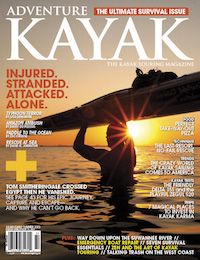
One Man’s Epic: Crossing Egypt

All photos by Dave Brosha
One Man's Epic: Crossing Egypt

I’m somewhere above the top of the world, the place where trees are a distant memory and you become convinced there are a thousand shades of white. Snow and ice and wind and a couple of hundred Canadian Forces members, scattered in and around Alert, the most northern military base in Canada. It’s the spring of 2010, and Arctic sovereignty has been the buzzword of the decade. As a freelance photographer and writer, I’ve been assigned to showcase Canada’s efforts in a land where people don’t normally live. 

A couple of days into this story, there’s a second story brewing. Word spreads quickly through the outpost: an Australian adventurer has put out a distress signal 50 days into his attempt to trek solo and unsupported to the geographic North Pole. A rescue team from the Canadian Forces is dispatched. It’s coincidence, and extremely good fortune for the troubled Australian, that the team is currently here at Alert for the operations that I’ve been assigned to cover—normally they are stationed thousands of kilometers to the south. The rescue is pulled off without a hitch and the Australian is brought back to the base. 

This is how I meet Tom Smitheringale, a six-foot-seven-inch, 260-pound giant with a broad smile, month-long beard, slight limp and the appetite of a bear having awoken from hibernation. An hour later I’m photographing him, stripped to his skivvies in a base washroom, documenting a moderate-to-severe case of frostbite that has blackened the ends of his fingers and toes. All I can think is, “Shit, did he really just fall into the Arctic Ocean, halfway to the North Pole…and survive? And he’s got the strength to smile?”

Fast-forward 18 months. I’m bombing down a deserted highway in post-Revolution Egypt with three locals that I’ve just met earlier that day: our destination is the shores of Lake Nasser near the Sudanese border to the south. Our tiny car has almost sunk to its axles from the weight of the gear we carry, and every bump feels like someone taking steel-toed boots to my ass.

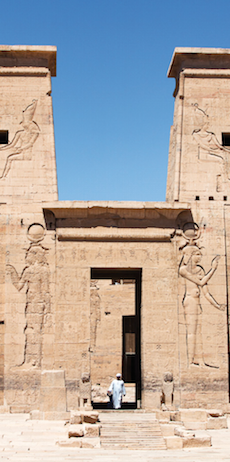
We stop to stretch our legs at an ancient temple that looks long abandoned—a splendor rising from the sand. It’s the sort of thing that would be a major tourist draw anywhere else in the world. Here, a lazy dog is the only visitor. He raises an eye as we get out of our car.

Down a nearby dusty track through the rock and sand, the shores of Lake Nasser finally come into sight. As does the silhouette against the sun of a giant, standing on the deck of a decrepit barge, waving to us as we approach. 

WHY EGYPT?

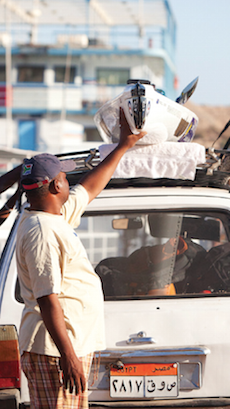
Man adjusting kayak on car in EgyptIn the year and a half since we first met, I’ve learned that while Tom Smitheringale, 43, may be a relative newcomer to the arena of self-propelled adventure travel—the North Pole attempt was his first major expedition—he is no stranger to hairy situations. A five-year veteran of the British Army, he served in Northern Ireland during The Troubles of the early ‘90s and in Africa with the elite infantry regiment, The Grenadier Guards, before turning his attention to the world of adventure outside military life. To prepare for this new expedition, he spent the previous year living in Egypt, learning Arabic and navigating a miasma of red tape.
Eventually titled by his support team as One Man Epic: Mission Sahara, Smitheringale’s sophomore expedition was no small feat on paper: cross the bulk of Egypt under human power, starting with a five-day paddle down 550-kilometer-long Lake Nasser, one of the world’s largest man-made lakes (created with the construction of the Aswan Dam across the Nile about 40 years prior), in some of the hottest conditions imaginable. From Aswan he would continue a further 20-or-so days and an additional 1,250 kilometers down the historic Nile to the Great Pyramids near the capital city of Cairo.

After becoming the first person to kayak the entire length of the Egyptian Nile, Smitheringale planned to meet up with a Bed- ouin guide and a small team of camels in the historic city of Luxor. From there, he would set out into the Sahara’s Western Desert to cross some 1,300 kilometers to the tiny, ancient Siwa Oasis near the Libyan border.

Why Egypt? I wondered when Smitheringale confided in me his plans.

“It doesn’t take a great leap of logic to understand when you’re freezing your bits off in the Arctic, you want to go thaw out some- where hot,” he explained. Still he admitted, “Of all the insane ideas in the world, I acknowledge that crossing the Sahara alone with four camels, in a world beyond guidebooks, with no support sys- tem, no hope of rescue, armed with $20,000 in cash and a small pack of essentials has to qualify as instantly certifiable.“ 

INTRIGUE, ADVENTURE, AND DANGER

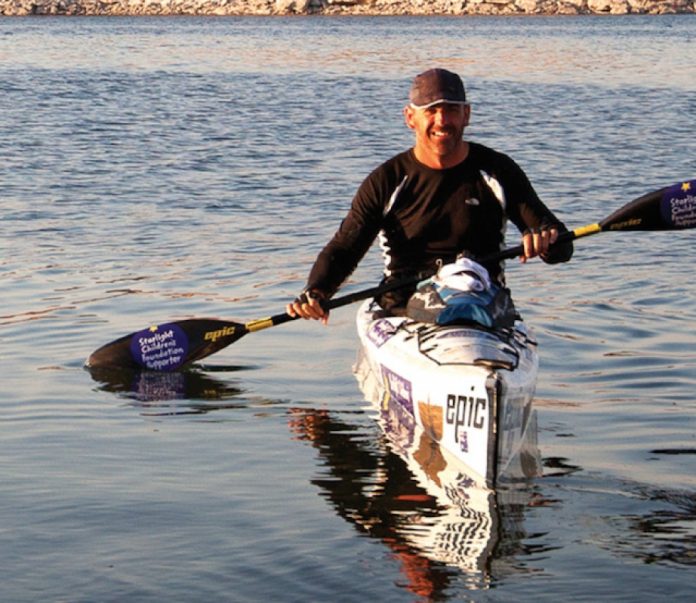
It all started smoothly enough. When I arrived, Smitheringale was just one day into his kayaking stage, and after the endless months of preparation, he was elated to finally be on the water. On Lake Nasser’s still surface, his Epic 18X Expedition—a highly efficient, race-inspired sea kayak that was manufactured in China and then shipped to Egypt—“cut through the water like the singing blade of a sharp knife.”

I followed this first leg of the Australian’s journey from the relative safety and comfort of a barge that the ever-fickle Egyptian government demanded tail Smitheringale as his official escort. According to the au- thorities, threats from crocodiles and bandits were too great to travel alone.

While accounts of Lake Nasser’s crocodile-infested waters proved greatly exaggerated—we saw just two small crocs all week—the danger of lawlessness was frightfully real.

Passing through some wild country on the Nile, traveling ahead of his escort, Smitheringale spotted “a crew of tough customers holding their AK-47s like cricket bats.” Waving hello,“I got a couple of ounces of lead in response,” he remembers. “Fearing the scene could go sour mighty quick, I made evasive maneuvers and put the kayak into cover.” Hoping his armed police escort would arrest the thugs, Smitheringale instead watched as his protectors fled downriver. Despite the government decree that he only kayak with his escort,“for more than half the trip, they never turned up or I succeeded in giving them the slip.”

Undeterred, he carried onwards. The three-and-a-half weeks Smitheringale spent on the Nile had its challenges but the rewards were many, too. The famous river was an object of constantly shifting beauty and intrigue, with something different to observe around every bend. Adventure travel is almost unheard of in Egypt, and it drew the curiosity of many along the route. “Some ran away screaming, but most people I met were downright chatty, hospitable, gracious and tons of fun,” he says.

After 31 days in “murder hot” conditions, Smitheringale completed the 1,800 kilometers from Lake Nasser to Cairo. Another 75 days and he had finished the 1,300-kilometer crossing of the Egyptian Sahara—a brutal slog with unpredictable beasts in a landscape favoring migraines and mirages.

That should be the end of this story. But simply doing what he set out to do was not enough for Smitheringale; he made a decision that would take his trip into a world of intrigue, adventure and danger seemingly scripted for Hollywood. 

SOLITARY CONFINEMENT IN LIBYA

Man in historic building in EgyptBy the time Smitheringale finished his Egypt crossing, I had long since returned home. I followed his progress across the Sahara through Facebook, his blog and through emails with his support team. Tom had become a friend, and his story was enthralling.
Perhaps it was one too many days in the sun; perhaps it was just the notion of doing something even grander. Smitheringale decided he wasn’t done in Siwa. He wanted more. And more, in this case, meant crossing into Libya with the intent of traversing all of the Sahara in North Africa right through to Morocco. This, shortly after Libya made headlines the world over with the hunt for deposed despot, Muammar Gaddafi. It was, Smitheringale would later admit,“The single most stupid move of my life.” 

Eight days after crossing into Libya, he arrived in the border town of Al-Jaghbub, fell out of communication with his support team, and was accused of having a false passport and being a spy by trigger-happy militia. Arrested “at the business end of an AK-47” he was thrown into solitary confinement at a Libyan militia prison for 28 days.

As days stretched into weeks, his supporters held their breath. Finally, word came in the form of a Facebook post from Smitheringale on March 7, 2012, stating that he had been released, but with few other details. The post read, “It would be inappropriate of me to elaborate on the details of my capture and extraction as I’m still in country.”

What the world didn’t know—and it has never been published until now—was that a British Special Operations Team extracted Smitheringale and relocated him to a safe house where he spent the next four days being debriefed by a number of different agencies working in the country. Liberated in the most dramatic of manners, he was to return home on the “advice of British authorities.” The expedition was over. 

SETTLING DOWN

Smitheringale is now back in Australia working, perhaps appropriately, as a consultant for an operational risk company. For now, he is taking a break from the world of swashbuckling adventurer. “Time will decide [what’s next]. I’d like to fall in love, get married and have kids,” he confided in a recent conversation. Never one to seek the spotlight, he seems content to slip back into anonymity. I believe Smitheringale is genuine about settling down. But then again, as he says, “ The true test is not in the talking but in the doing.” Time, after all, may reveal something grander.

Dave Brosha is a photographer, author and filmmaker based in Yellowknife, Northwest Territories, where he lives with his wife and three young children. 

This article on adventure travel in Egypt was published in the Early Summer 2013 issue of Adventure Kayak magazine.This article first appeared in the Early Summer 2013 issue of Adventure Kayak Magazine. For more great content, subscribe to Adventure Kayak’s print and digital editions here.
Slow Adventuring

Photo: Jasper Winn
Slow Adventuring

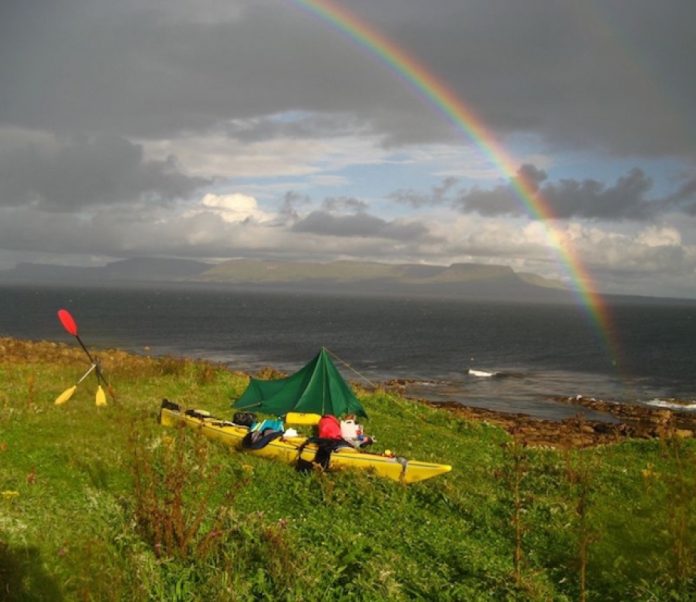
Within two hours of paddling out from the sheltered waters of Castlehaven, the coastline of Cork was a distant scribble three miles to the north and I was further out at sea, alone, in a kayak than I’d ever been before. Everything around me was Atlantic or sky, or—where the spray was blowing off the wave tops—some combination of both.

Until setting off earlier that day to circumnavigate the thousand-mile coastline of Ireland, I hadn’t paddled a kayak for over a year.

Sure, I’m from the southwest of Ireland,
 and had sea kayaked a bit along this coast, but
 that only underlined how little I knew—really 
knew—of tidal streams and currents, of prevailing winds and headland races and the correct 
procedure for sending an SOS. I was using a 
landlubber’s units of furniture to measure the
 heights of the waves. Coffee- and dining table-
height were okay, breakfast counter not so much, and wardrobe-height was a horrifying specter.

Reading to this point, serious paddlers may be tempted to throw their flares, VHF radios and certifications of competence at me in frustration. I’m going to have to make a spirited defense of my position. It’s this: I was on a slow adventure.

Slow adventure is like slow food, slow travel, slow sex and all the other unhurried pleasures of the slow movement. It’s about taking as long as it takes to do something, rather than racing clocks and calendars. It’s about enjoying the actual doing, instead of worrying about achieving a goal. Time—rather than training or equipment—is my safety net.

Roald Amundsen, the pre-eminent Norwegian explorer who beat Scott to the South Pole in 1911, famously claimed, “Adventure is just bad planning.” I agree with him. But slow adventure is the result of just enough planning. In other words, it’s the opposite of an Amundsen-style, micro-managed expedition.

Heading round Ireland, I didn’t do much planning because I didn’t know what I was planning for. I had too little essential gear packed into my 16-foot, plastic Necky Narpa, but I was richly freighted with time.

Time enough to spend a fortnight in Dingle, playing guitar in Dick Mack’s pub whilst I waited for two weeks of high winds to blow through. Time to dawdle amongst pods of basking sharks, or spend three days camped between thousand-year-old stone huts on Inishmurray Island. And, this is especially important, time to postpone indefinitely if the trip proved really stupid.

Three decades of poorly planned, low-tech, comically inept but ultimately successful travel have kept things in perspective. Walking a thousand miles through North Africa’s Atlas Mountains, riding horses across Kyrgyzstan, or on saddle-’n’-paddle trips in Patagonia, I’ve only had to raise my eyes to see that whilst I was at play other people were at work. Pretty much everywhere I’ve looked, someone—a cowboy, a fisherman, a reindeer herder or, quite often, a child in poor shoes and inadequate clothing—is doing a tough job in extreme weather. Life, too, is a slow adventure.

The joy of the slow adventure is its random nature. Unexpected twists will make the trip different from—but just as good as—whatever you had intended. There’s no pressure to achieve something, so no failure if you don’t. A trip takes as long as it takes. Or you go as far as you can comfortably and safely go in a given time.

Anyone can have a slow adventure. It’s as easy as launching your boat on a whim. Adventure will follow. Just don’t plan on it.

Jasper Winn wrote about circumnavigating his home isle in Paddle: A Long Way Around Ireland, his first book, and is currently working on a new book about living and traveling for 10 months with a nomadic Berber clan in North Africa.

This article originally appeared in Adventure Kayak, Spring 2013. Download our free iPad/iPhone/iPod Touch App or Android App or read it here.


River Alchemy: Swimming Rivers

Photo: Brian Huntington
River swimming subculture

When Alison Howard front-crawled into Port Edward, B.C., last August, she was completing not just her 28-day source-to-sea swim of northern British Columbia’s Skeena River, but the circle in a longstanding river tradition. In raising awareness of threats surrounding this beautiful and pristine watershed, Howard enthusiastically volunteered for what so many of us enthusiastically avoid—swimming.

Twenty years on, I still have a mark on my jaw from when it hit the bedrock ground beside the Ottawa River. After briefing us on our ultimately futile, high water Coliseum rookie attempt, our raft training guide simply jumped in. To us, the rapid was a mess of roaring white and certain death. He disappeared in the first wave and surfaced somewhere below, indignantly waving for us to get in the boat and get on with it. Later on in my rookie guide years, I would commonly come upon a senior guide, on a day off, swimming the river for fun.

For many paddlers, those who swim rivers— whether for a cause or for pleasure—defy reason. Kayakers view swimming with contempt (if they are good) or humiliation (if they are not), and canoeists are typically terrified of the very idea. Raft guides, always the realists, take swimming for what it is—insignificance while immersed in a tremendously powerful, uncaring force of water and gravity.

The swimming ethos can trace its roots back to 1955, when footloose former servicemen Bill Beer and John Daggett swam the Colorado’s Grand Canyon on a whim, more or less, and became daredevil media darlings. Dragging two 80-pound army surplus dry bags each, they swam the 200-plus miles in 26 days—with no plan, no backup, and no idea what they were doing.

Amazingly, they hauled a film camera with them, and for a time Beer made a living touring with his movie and telling his story. His memoirs are subtitled The True Story of a Cheap Vacation That Got a Little Out of Hand (We Swam the Grand Canyon, 1988, Mountaineers Books). These two single handedly shattered the certain death mentality that early river runners carried with them, and they likely also opened the door to public acceptance of whitewater rafting as a carefree means of having some fun on the river.

This river swimming subculture persisted for many years, and in many places, but came to an abrupt end in 1993 when Stan Hollister—the same guide who willingly swam Coliseum, scarring my jaw—died while swimming Colorado’s Cataract Canyon.

Among guides, Cataract is considered significantly more difficult than the Grand Canyon, and above 60,000 cubic feet per second (cfs) is the hardest commercially run big water in the world.

Hollister swam it at 110,000 cfs in 1983, covering the standard two-day whitewater section in one hour. In 1993, the flow was 65,000 cfs and Hollister was 52 years old. He saw some friends above the Big Drops—notorious for their massive pourovers, chaotic and churning flow and grip- ping speed—and was later found drowned below them. No one knows what happened.

Swimming fell out of favor, even though canoes still swamped and rafts still flipped. For a time, raft guides were even trained without intentional swimming.

Then in the early 2000s, during the heart of the kayaking boom, river rescue training—with its strong focus on swimming—finally gained acceptance among the rapidly expanding ranks of mainstream paddlers, knocking back the certain death mentality once more.

Today, it is not uncommon to again see rookies bobbing down the main lines of commercial rafting rivers. Sometimes just for fun.

Jeff Jackson is a professor of Outdoor Adventure at Algonquin College in Pembroke, Ontario.

This article originally appeared in Rapid, Early Summer 2010. Download our free iPad/iPhone/iPod Touch App or Android App or read it here.