Ten years ago, I was hanging out in a bar with some mates in Zambia, using a Mosi Lager coaster to work out a new move. The following morning, I paddled down to the Zambezi’s Rapid 12B, dropped onto the wave and stuck the move first try.
Ironically, it was this wave—on this very day—that would have hosted the 2001 World Freestyle Championships had Spain not won the bid two years before. Too bad, the newly crowned helix would have had the judges scratching their heads!
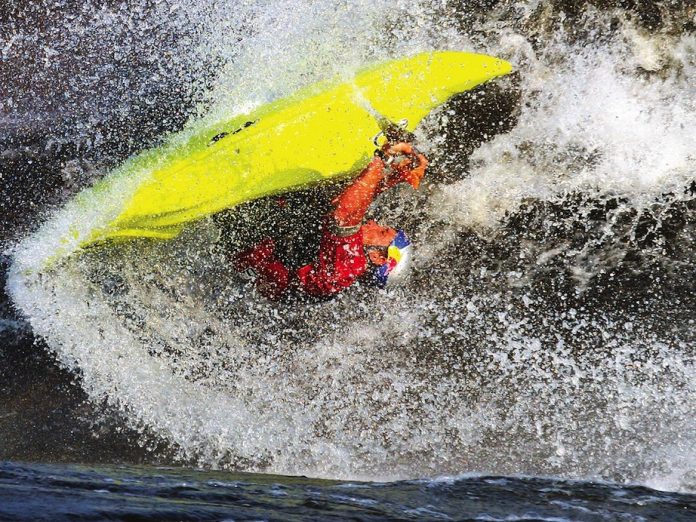
A helix is an upside down spin where the boat does a 360-degree rotation on two of its three axes. It’s basically an extension of an aerial flip turn. The hardest part is figuring it out in your head.
1. Begin at the top of a fairly large, fast wave.
2. Speeding down the face, stern rudder to turn the boat and initiate your spin momentum. A slight bounce at this point helps.
3. Once your boat is pointing across the wave, use an aggressive hip flick to over edge the carve—digging your upstream rail into the water, then leaning downstream. This will flip the boat over your head and send you airborne. Lift your paddle out of the water.
4. It’s at this step that the helix and flip turn diverge. Aggressively twist your body into the spin to continue rotating the boat on a horizontal plane.
5. As the boat comes around a full 360 degrees, switch active hands and grab the water with the opposite blade from your stern rudder. This is the key to finishing the horizontal rotation of the boat and rolling you upright. You should land flat and facing upstream.
People often mistake a good flip turn for a bad helix. To helix, the stern of your boat must not touch the water as it comes around on the upstream side. If it catches, your bow will come over your head vertically—that’s a radical flip turn.
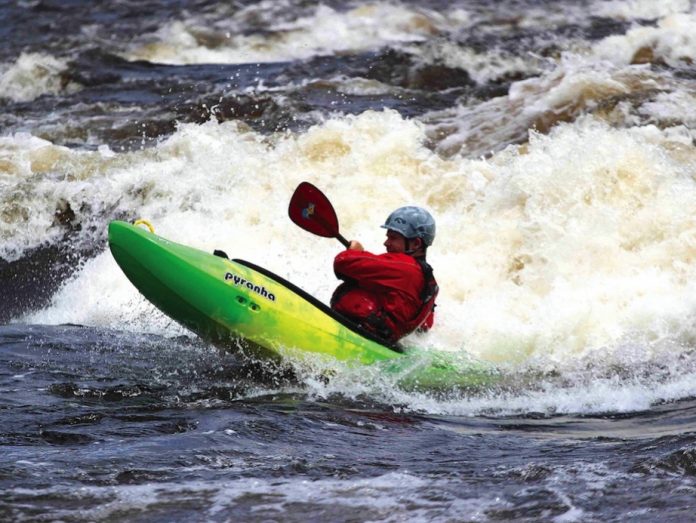
It’s always a gamble when mixing design features together to come up with something new and exciting. Ideas that sound good on paper don’t always translate into success in the real world. Bassadors (a basset hound crossed with a Labrador retriever), the Ford Ranchero and McDonalds’ Land Sea Air burger are just a few unsuccessful mashups that come to mind. Fortunately, some get it right and create a product greater than the sum of its parts—this is the case with Pyranha’s new Nano.
We got our first glimpse of the Nano at Outdoor Retailer last summer, where Pyranha designer, Rich Taylor, confided to us that, “The hull is really the key.”
Flipping the boat over, he filled us in: “What we’ve done is combined three successful boats—the Shiva, the Jed and the Burn.” Line up all of these boats and you can clearly see the Nano truly does have a bow like the Shiva, Jed-like rails and a stern that takes lines from both the Shiva and Burn. The on-water result is a stable and playful ride. This kayak’s wide, semi-flat hull provides a rock-solid platform that…
This article originally appeared in Rapid, Summer/Fall 2013. To read the rest of the review, download our free iPad/iPhone/iPod Touch App or Android App or read it here.
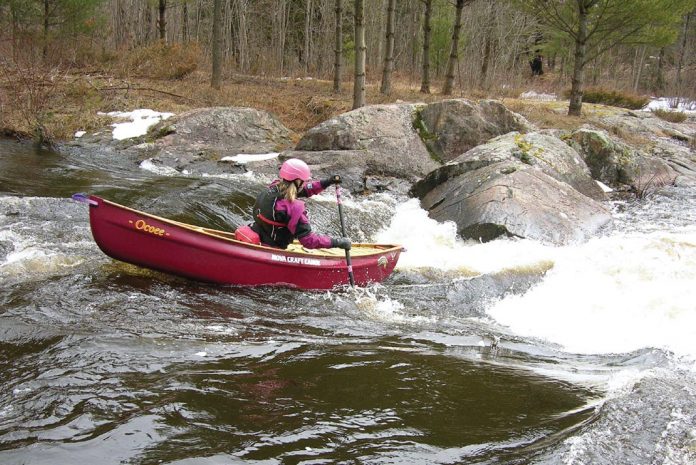
Gail Shields on the Head River with the first production Nova Craft Ocoee. | Photo: Brian Shields
Before we talk about the Nova Craft Canoe Ocoee, let me first take you back in time to 1993. I was lined up for my instructor course’s final run at the top of Chalet Rapids. I had the option of running the course director’s then new Dagger Ocoee or doing my solo exam run in a 17-foot Prospector.
[ Paddling Buyer’s Guide: View all canoes from Nova Craft ]
All I’d heard for the past 10 days of the course were the instructors talking about how edgy the Ocoee was. How it was an advanced paddler’s boat. And it was then. At the time, the hot boats had been the Dagger Genesis, Impulse and Prophet and the Mohawk Viper 11—all very soft and forgiving by comparison. I admit it—I was afraid of the Ocoee. And with a pass or fail run ahead of me, there was too much at stake.
Nova Craft Canoe OcoeeSpecs
Length: 11’3″
Width at gunnels: 25″
Width at waterline: 27″
Depth at bow: 21.5″
Depth at center: 15’5″
Depth at stern: 26″
Rocker: 5.5″
Capacity: 500 lbs
Royalex: 38 lbs
Royalex Plus: 44 lbs
Two years later I picked up a well-used Ocoee and learned to paddle it. As my skills improved, I learned to love it. It was the right boat at the right time.
By ‘99, in Rapid’s first open canoe shootout, all the intermediate open boaters wanted to be in the Ocoee, but most admitted they were still uncomfortable with its abrupt transition from primary to secondary stability. Like most flat-bottomed, hard-chined boats, the Ocoee doesn’t like to stay level; it wants to be tilted one way or the other. And that takes some getting used to.
The Ocoee set the standard for front surfing and technical paddling. Advanced paddlers love slicing across currents and truly carving deep into eddies. The Ocoee was also the first production boat that allowed advanced paddlers to offside tilt and engage outside edge to pivot turn an open canoe.
One of the best things about the Ocoee is how much you can play with its shape. I cut the top down, removing some of the Ocoee’s prominent sheer—the swooping up at the bow and stern. Then I narrowed the gunwales, rounding the bottom and sharpening the chines, making for faster and sharper carving.
Want it even faster? Andrew Westwood did. For slalom racing he played around with the shape, drawing the bow radically narrower than the stern. Westwood’s race boat was shaped like an arrowhead.
For creeking and rodeo (it was called rodeo then), Mark Scriver, Paul Mason and others sawed a foot or so out of the center and bonded the bow and stern back together. This modification was so successful, designer Frankie Hubbard ran with it to design the Pyranha Prelude—now the Esquif Prelude.
Nova Craft offers their Ocoee in either a Royalex or Royalex Plus, or what we used to call Royalite and Royalex. You have three gunwale options: vinyl, ash trim or bare hull.
Instructor Gail Shields, whose Bell Ocoee was used to build the Nova Craft mold, says she hasn’t been babying her lighter Royalite version and it’s holding up very well. She opted to install her own gunwales and Mike Yee Outfitting to create a hot rod of a canoe, weighing in at a crazy light 39 pounds. In fact, she needs the extra weight of nylon airbags so the boat will be legal in the rec class at ACA slalom events.
So, should you try Nova Craft’s version of this 20-year-old design? I think so, and so do Rapid readers. The Ocoee was voted favorite solo open boat of all time in our 2012 best boat survey. And if you still don’t think you’re ready for an Ocoee, no trouble, in the meantime Nova Craft makes a fantastic Prospector.
This article was first published in Rapid‘s Summer/Fall 2013 issue. Subscribe to Paddling Magazine’s print and digital editions here , or browse the archives here.
Scott MacGregor is the founder and publisher of Rapid. For the record, he passed his solo instructor level in the Prospector.
Gail Shields on the river with the first production Nova Craft Ocoee. | Photo: Brian Shields
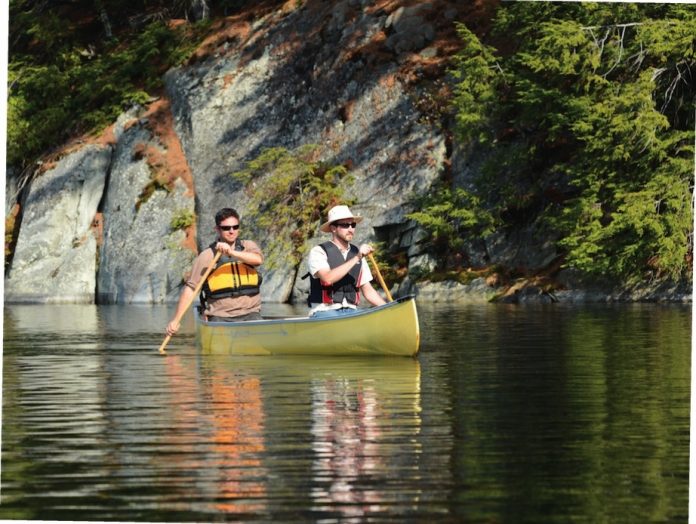
It’s rare that a paddler enjoys the portage as much as the paddle, but that’s just what Bluewater Canoe’s lightest weight Prospector promises. Weighing a carefree 41 pounds, this 17-foot lakewater tripping canoe is an easy walk in the woods.
“It wasn’t that long ago when a light boat couldn’t be very strong, now you can have your cake and eat it too,” says Brent Wood, operations manager at Mid-Canada Fiberglass, parent company to Bluewater.
Manufactured in an ultralight Golden Brawn lay-up, this canoe consists of three layers of Kevlar and e-glass, a mixture of Kevlar and glass. “The blend creates strength, impact and abrasion resistance, as well as rigidity,” says Wood.
The Prospector has long been heralded as the first choice of wilderness canoeists but each manufacturer has its own unique version of the traditional design. “We designed our 17-foot Prospector to be a hybrid. It was designed on the success of Bluewater’s popular Saugeen series, and we incorporated some of the Scott Prospector’s ease of use.” Wood adds that this design is narrow in the paddler stations for efficiency and boasts increased depth. “It’s a very efficient, stable family canoe.”
It’s the shallow-arch hull that provides ample stability for newcomers, yet also a feel that experienced canoeists enjoy. With just an inch and a quarter of rocker, Bluewater’s design has less rocker than traditional, river-ready Prospector designs, creating enhanced tracking. Thanks to its symmetrical shape, it can be paddled solo as well…
This article originally appeared in Canoeroots & Family Camping, Summer/Fall 2013. To read the rest of this review, download our free iPad/iPhone/iPod Touch App or Android App or read it here.
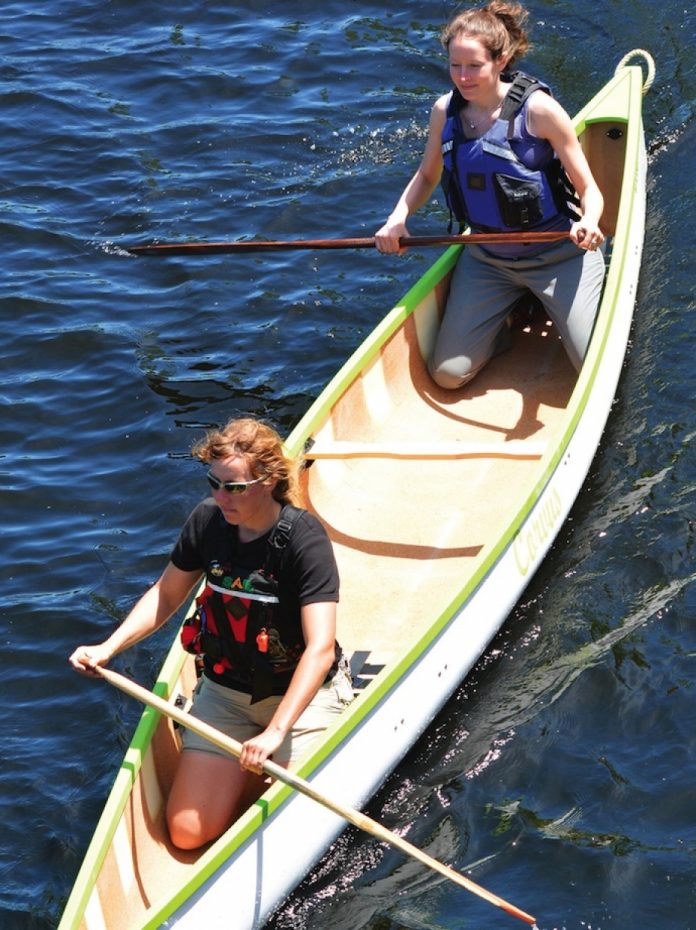
Unique and eco-friendly, Trapper’s Corvus will ensure you’re the talk of the canoe club. The smallest of Trapper’s expedition series, the sturdy Corvus was designed with both daytrips and weeklong paddles in mind and is ideal for paddling on slow-moving rivers and lakes.
If you’re not familiar with Trapper, don’t worry—this is their first year in the North American market. We paddled one of the first Corvus canoes in the country. Manufactured in Estonia, Trapper’s Ecolite construction sets its boats apart.
“Canoeing is a very green sport and we tried to provide product for it,” says Marek Pohla, co-owner of Tahe Marine, parent company of Trapper.
The Corvus’ laminate consists of woven biotex fabrics, cork, aramid and fiberglass. While Polha is resistant to claiming the title of most eco-friendly canoe line in the world, he does admit that he doesn’t know any other manufacturers going the same distance to create such ecologically sound boats.
Polha explains that 99 percent of the attractive cork that lines the hull is recycled, a byproduct of winemaking.
“When they make the cork for the wine bottle the rest is left, it’s recycled in sheet material and used in the base of the canoe,” he says.
Linen and hemp fabrics are used in the construction as well, which are over 90 percent natural products…
This article originally appeared in Canoeroots & Family Camping, Summer/Fall 2013. To read the rest of this review, download our free iPad/iPhone/iPod Touch App or Android App or read it here.
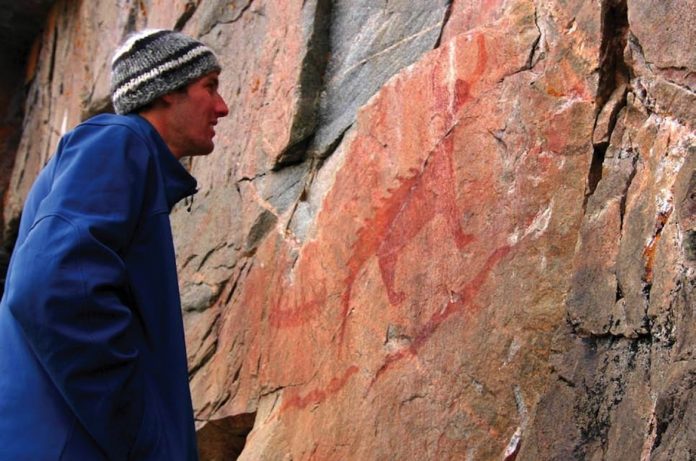
My feet shuffled uncertainly along the sloping, slippery granite. To my right, Lake Superior’s frigid green waters lashed at the precarious ledge on which I stood. To my left, a pink face of cold rock rose skyward in a single perfectly vertical pitch. Suddenly, I spotted them—caribou, men, canoes, snakes and a myriad of mythical creatures leaping and gliding across the granite canvas. To my young eyes, the creatures appeared almost alive. These were my first pictographs—ancient rock paintings symbolizing people, events and medicine important to the artists who created them hundreds or even thousands of years ago.
It’s no coincidence that many pictographs—including the ones I visited as a child at Agawa Rock—are found in spectacular natural settings. For it is in these places that the connection to the spirit world is strongest. The Agawa Rock paintings are still every bit as vibrant today, as are some 500 other pictograph sites found across the Canadian Shield.
[ Paddling Trip Guide: View all paddling trips and clinics in Ontario ]
Petroglyphs—carvings that have been incised, abraded or ground using a stone tool upon rock walls—are part of this same rock art tradition that denotes a connection with the spirit world. While pictograph sites are widespread in the Canadian Shield region, petroglyph sits are confused to the southern portion.
Want to see this fascinating artwork for yourself? Read below to find out more about pictographs and petroglyphs in Ontario and Quebec to plan your trip to see them.
How to read rock art
Pictographs and petroglyphs were used by the Ojibway, Cree and Algonkian peoples of Shield country to record historical events, share creation myths and give power to visions and medicine. Learn the meaning behind the imagery and you can read one of the most fascinating records of early history.
Radiating lines
Denote objects, places, manitous or people with great powers. For example, a human form with lines radiating from his head is probably a medicine man (Mide) who received a gift of power from a manitou and made the painting in recognition.
Tally marks
May represent the number of days fasted by a person on a vision quest or by a Mide seeking medicine.
Handprint
Prayer to Kitche Manitou (the Great Spirit), thanks for medicine received, or the mark left by maymaygwayshiuk—wise and mischievous fairies who live in the rock—when they closed the door to their rock home.
Bird
The Thunderbird was a powerful guardian Manitou that protected people from the bad underworld manitous of earth and water.
Serpent
Dangerous, malevolent spirits—often depicted with horns or spines, which signify power. Snakes lived in the water and would upset canoes and drown their occupants if not appeased by offerings.
Cross
Dates back 2,500 years in First Nation symbolism. May refer to the four cardinal directions and four Wind Manitous.
Circles
Another ancient symbol; refers to the medicine wheel. Medicine men used megis—small, round seashells believed to bring good luck—in medicine rituals. A circle around the head indicates a person with special knowledge.
Best places to see petroglyphs and pictographs
Mazinaw Rock
Bon Echo Provincial Park, Ontario
Above the waterline of Lake Mazinaw, at a level comfortably reached from a canoe, over 260 pictographs adorn a 1.5-km-long cliff face. Like the other tribes of Shield country, the Algonquins who painted these figures and symbols hundreds of years ago believed that the sheer 100-m cliff was not only a physical boundary between water and land, but also a gateway to the spirit world. The powerful messages they left for the spirits at Mazinaw Rock comprise the largest single collection of pictographs in Canada and are easily viewed by canoeists.
Stay Awhile: Take a tour of Upper and Lower Mazinaw lakes on the park boat, or by canoe (rentals available). Find comfortable wilderness campsites, sandy beaches and great fishing on Joeperry, Pearson and Mazinaw lakes.
Info:Bon Echo Provincial Park is located one hour north of Napanee (90 minutes from Belleville) on Hwy 41. (613) 336-2228.
The Teaching Rocks
Petroglyphs Provincial Park, Ontario
On a smooth, horizontal outcrop of limestone—in a peaceful Central Ontario forest—over 900 figures carefully etched into the rock comprise the most outstanding petroglyph site in all of Canada. The animals, birds, people, spirits and other images carved into the rock are estimated to be around 2,000 years old. Many of the visions, events and medicine depicted in the rock are not fully understood, but onsite interpreters can help explain some of the stories and meanings written in the stone.
Stay Awhile: Four short hiking trails round out a visit to this day-use park. Mountain biking, swimming and camping are available a 50-minute drive north at Silent Lake Provincial Park.
Info:Petroglyphs Provincial Park is located 45 minutes northeast of Peterborough, off Hwy 28. The petroglyphs site is closed Thanksgiving through early May. (705) 877-2552.
Oiseau Rock
Sheenboro, Quebec
Oiseau Rock, a 150-m cliff rising abruptly from a narrows in the mighty Ottawa River, is an example of the damage wrought by spray paint and ignorance. Nevertheless, those pictographs that are still visible—fish, canoes, a bear, a bird, arrowheads and a human-like figure (likely Nanabojou, a creator manitou who showed people how to make stone tools, weapons and canoes)—speak of the long history of the Algonkian people in this area. You can paddle or boat to the site from up- or downriver but no roads reach it.
Stay Awhile: In nearby Fort-Coulonge, adventurous families can sign up for the new via ferrata tour at Chutes Coulonge Park—literally, iron route, a guided exploration of the gorge and 48-m falls using zip-lines, bolted ladders and cable walk-wires.
Info:Oiseau Rock is located on the Quebec shore of the Ottawa River 13 km upstream from Fort William, QC, and 14.5 km downstream from Deep River, ON.
While many rock paintings survive because they are protected from the elements by an overhang or cave, the Agawa paintings have somehow defied centuries of pounding waves, grinding ice and harsh weather on an exposed cliff face. Members of the Ojibway mined ochre on nearby Devil’s Warehouse Island and mixed it with fish oil to create a lasting red paint, forming the images 150 to 400 years ago. One panel tells the story of Myeengun (The Wolf), an Ojibway chief who led his people across the lake in canoes to repel an invasion from the Iroquois tribe, while others depict manitous—natural spirits with special powers. The most fearsome of these manitous is Mishipizheu, a horned lynx who controls the moods of the lake and thrashes his tail when angered, whipping the waters into a fury.
Stay Awhile: A dozen day hikes explore the park’s rugged landscape. The Nokomis trail begins at Old Woman Bay and loops 5 km to a breathtaking view of the bay and its 200-m cliffs. A ride on the Agawa Canyon Train Tour also offers sightseeing through the heart of the park.
Info: The pictographs are located in Lake Superior Provincial Park, 140 km north of Sault Ste. Marie, off Hwy 17. At Sinclair Cove, take the half-kilometre Pictographs trail—and watch your step. (705) 856-2284.
This article originally appeared in Canoeroots & Family Camping‘s Spring 2010 issue. Subscribe to Paddling Magazine’s print and digital editions here, or browse the archives here.
How far will you take your canoe mods? | Photo: Virginia Marshall
There’s no reason to let auto buffs, washed up MTV hip hop artists and the Teutul dynasty have all the custom mods fun. Even un-tattooed, decidedly un-Teutuliar open boaters can reap the benefits of home tuning. And it doesn’t have to cost a rapper’s squandered fortune.
Take a lesson from the budget strokers and rice burners in the pages of Car Craft and Import Tuner and do more with less. Replacing a couple $5 thigh strap anchors, or spending just five minutes adjusting said straps correctly, can make your old beater perform as well as the slickest new digger and have you hanging louies, roscoes and U-turns—er, S-turns—with the best.
Here are some performance- and appearance-enhancing suggestions for whitewater canoe outfitting from canoeing Modfather Brian Shields.
1. Performance bucket seats
The saddle is your primary connection point with the boat. Use pieces of closed cell foam and contact cement to widen the saddle by an inch or so on each side to prevent sliding around on the seat. Create an even more secure feeling by gluing small foam wedges on the top edges of the saddle to make a custom bucket seat. Shag optional.
Plastic paint in aerosol cans is readily available in most standard canoe colours. Restore a worn hull by painting just the bottom where the outer layer of ABS has worn away. If you can’t find your hull colour, use flat black and mask a symmetrically shaped area to allow you to paint just below the waterline. Or get bold and creative with air brushing, pin stripes, flames or metal flake to produce a one-of-a-kind show boat.
3. Material matters
Ultra-light, super-tough nylon floatation bags are must-have upgrades from vinyl beasts. Nylon bags take the heat better than vinyl, expanding rather than exploding. Nylon is also much nicer to work with, staying flexible in cool weather, and easy to deflate and stuff in your gear bag when transporting your boat. Harmony 3D End Bags come in three sizes: 30-, 54- and 60-inch. Buy bags that fill your cages to displace as much water as possible.
4. Transformer
Master playboat multi-day tripping with this mod. Using quick-release clips, create access openings in your float bag cage so you can carry gear on longer cruises. Start by sewing or gluing short loops of webbing onto webbing clips. Then cut your existing float bag cage cord and thread it through these loops.
5. Custom trim
Wooden gunwales are the granddaddy of canoe mods. Once you paddle with wood, everything else feels like an ‘81 diesel Jetta towing a Jayco Haul-All travel trailer.
The existing thwarts in most canoes are way over-engineered. The forces on the thwart when paddling are compressive, so 3⁄4-inch square material is all you need. This cuts the weight by nearly half and improves the appearance dramatically. Round over a straight-grained piece of cherry or ash, leaving just the ends square to improve fit under the gunwales.
Be warned, however; just as chopped roof struts and urethane body panels can reduce the structural integrity of street rods, scaled-down thwarts aren’t suitable for the paddler who portages like a rampaging Godzilla and exits his canoe like an Outfit crime boss splitting a chop shop bust.
7. Chop shop
Deck plates have no function except to hide the outfitting knots. Remove them and send them to the recyclers. Then tie neater knots. However, if you have wooden gunwales, you can install custom wood deck plates that—like aftermarket body kits and spoilers—do nothing for the performance of your ride, but look oh-so-hot. Choose a piece of wood with a grain you like, set it on the ends of the boat and mark the outline on the underside. Cut just outside the pencil line with a jigsaw and do the final precise fitting with a wood rasp. Just as quick and satisfying as a Ched ‘R’ Pepper burger at the Sonic Drive-In.
8. Lowrider
Lowering the saddle greatly improves stability. Try going down to an 8-inch saddle height. Bold paddlers with excellent joint flexibility can tolerate seats as low as 6 inches. Remove the saddle and trim off the desired amount using a band saw, or work top-down with a rasp. Aging and arthritic paddlers and those who enjoy a loftier perch can ignore this mod.
9. Lift kit
If your knees lift excessively when you’re strapped in, consider moving the anchors forward so the knee straps pass over your leg closer to your kneecap. A new set of anchors is inexpensive and helps make you one with your boat. Embracing tip #8 will also reduce knee lift.
10. Retention and retrofit
Avoid strap slip when rolling and bracing by checking to see if your thigh straps are installed with the wide, padded portion up and the strap completely contacting your leg (rather than hanging ineffectively in the air). Thigh straps are often installed or adjusted incorrectly, an oversight that—as with brake shoes, steering arms and sub woofers—tends to result in spectacular blowouts.
[ Paddling Buyer’s Guide: View all whitewater canoes ]
11. Suspension package
A lower seat results in paddling with your instep flat—kinesthetically disagreeable for all but the most elastic of boaters. Support your shins with hollowed-out minicell foam blocks glued to the floor with contact cement. There’s no sense in sporting a pimped-out ride if you can’t pull off the swagger to match. Warning! Paddling with your instep flat can result in your toes extending underneath the foot pegs and has resulted in foot entrapments. Rivet plastic plate extensions on your foot pegs to prevent this, or rip them out and install foam toe blocks instead.
12. Aftermarket accessories
Install a yoke in your tandem playboat… all those trippers can’t be wrong. Humping 55 pounds again and again to the top of the set can feel a lot more like work than play. A yoke leaves you with energy left over to paddle. Fine, sculpted cherry will make you smile every time you look at it—and at the frugal non-tuners nursing backaches at day’s end.
13. H2O in the trunk
Tired of your water bottle rolling around your knees on a carabiner? Modfathers know the best place to stash fuel—be it a cylinder of nitrous or a Nalgene of water—is in the trunk. Remove the rear seat block on your saddle, carve out a bottle-sized channel with a band saw or router, replace the block and hold the bottle in place with a bungee cord bolted through the foam. Or use a fret saw to cut your bottle bunkie in situ.
14. Bodywork
Using scrap material (broken hockey sticks work well) for temporary thwarts, experiment with various hull shapes. The stability of smaller, flat-hulled boats like the Esquif Zoom improves by lengthening the rear thwart by an inch and shortening the bow thwart by half that. Hulls that are rounded and soft chined are seldom improved from factory specs. Making them wider just makes it harder to reach the water. Narrowing them can cause stability to disappear entirely.
Brian Shields has been fine-tuning floating toys for 13 years, making handsome boats fit happy paddlers.
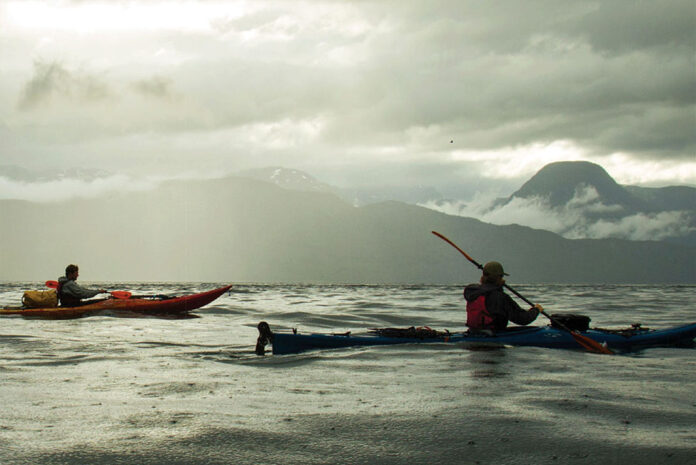
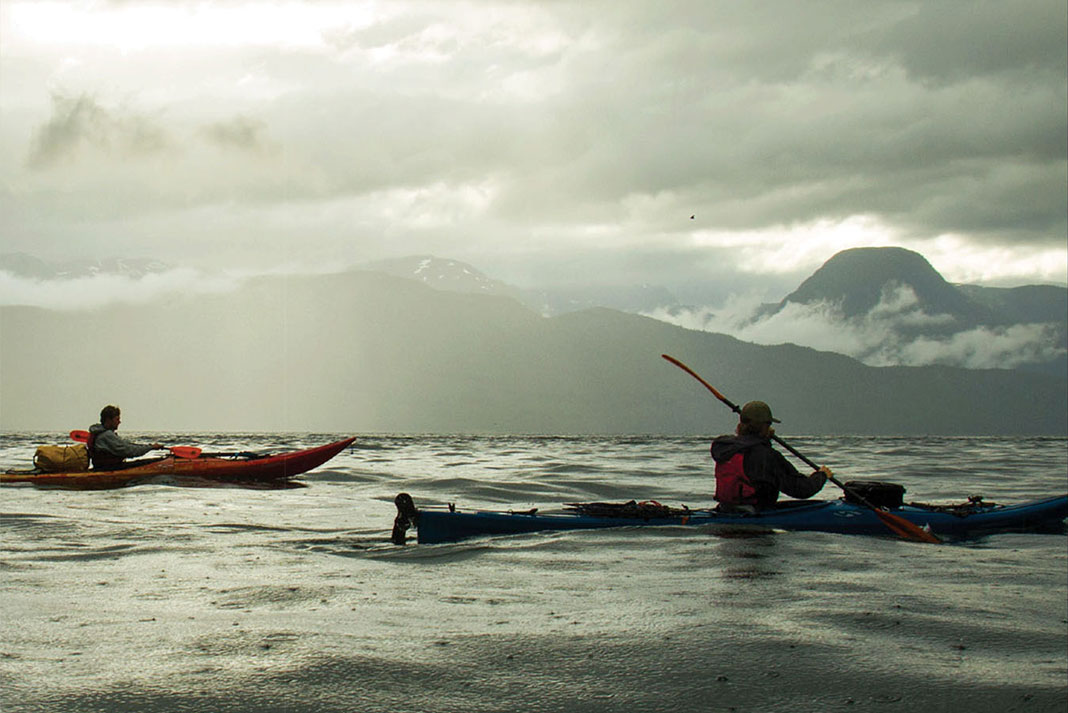
My kayak was full of water. We were over a mile from shore when I made this unsettling observation. Already overloaded with two hundred pounds of food, camping gear and camera equipment, I hadn’t noticed my shrinking freeboard until now. Through my dry suit, I felt something bob against my thigh. With the waves continuously crashing over my deck, I called to Spencer and Daniel to raft up next to me. Pumping furiously, we bailed the frigid North Pacific only slightly faster than it poured in.
Reaching one of Douglas Channel’s scarce beaches, I carefully pulled my boat up on the slippery rocks to drain the flooded front hatch and cockpit, noticing the foam bulkhead between the two was not properly sealed. Still, I was thankful the worst was over. Then the bag containing our satellite phone and tide charts washed out, full of seawater.
With our primary means of communication destroyed (we carried an emergency transmitter for back-up) and our charts ruined, we had a difficult decision to make: return to the small Haisla community of Kitamaat Village where we had begun our trip just hours before, or continue as planned eight days into the remote coastal wilderness of the Great Bear Rainforest.
Adventure—and controversy—in the Great Bear Rainforest
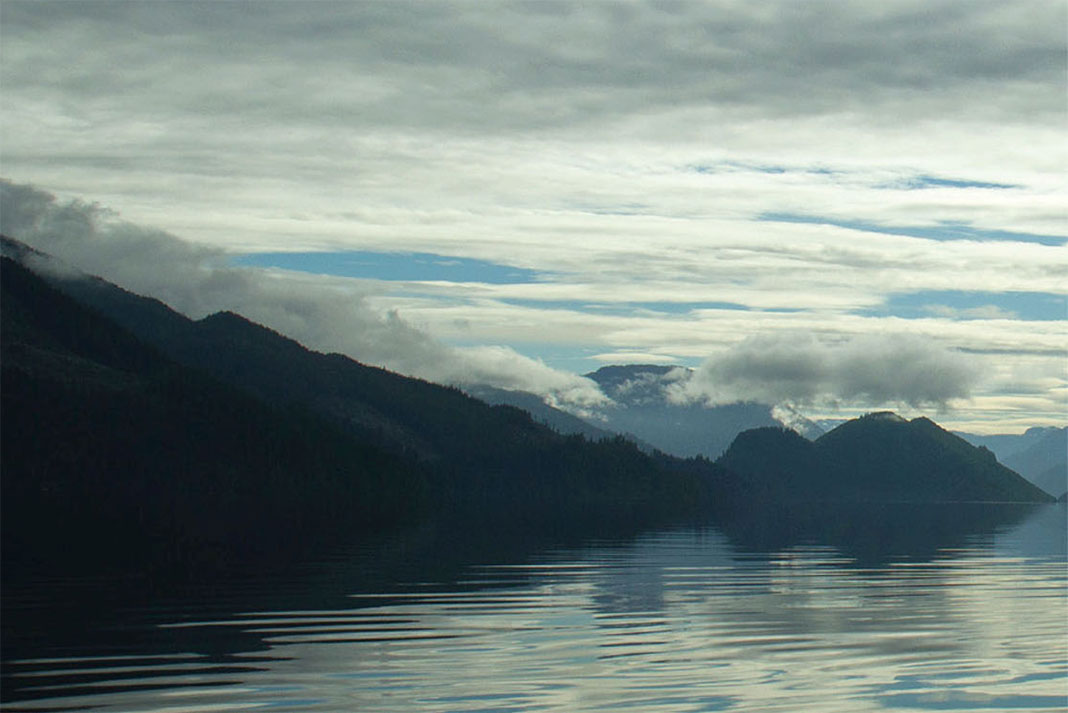
The largest temperate rainforest in the world, the Great Bear covers 70,000 square kilometers along the northern B.C. coast. When we had planned this trip two months before, I realized just how little I knew about this remarkable wilderness, despite its position at the center of an environmental debate surrounding the proposed Northern Gateway pipeline.
The Great Bear is the largest temperate rainforest in the world. | Photo: Paul Manning-Hunter
If completed, the pipeline will pump oil from the Alberta Tar Sands across Alberta and British Columbia to the Pacific Ocean where it can be loaded into tankers and shipped to Asia. Proponents of the project say it is necessary in order to diversify the markets available for Alberta oil, while opponents claim that it will bring toxic crude through sensitive and pristine ecosystems where a leak would have devastating effects.
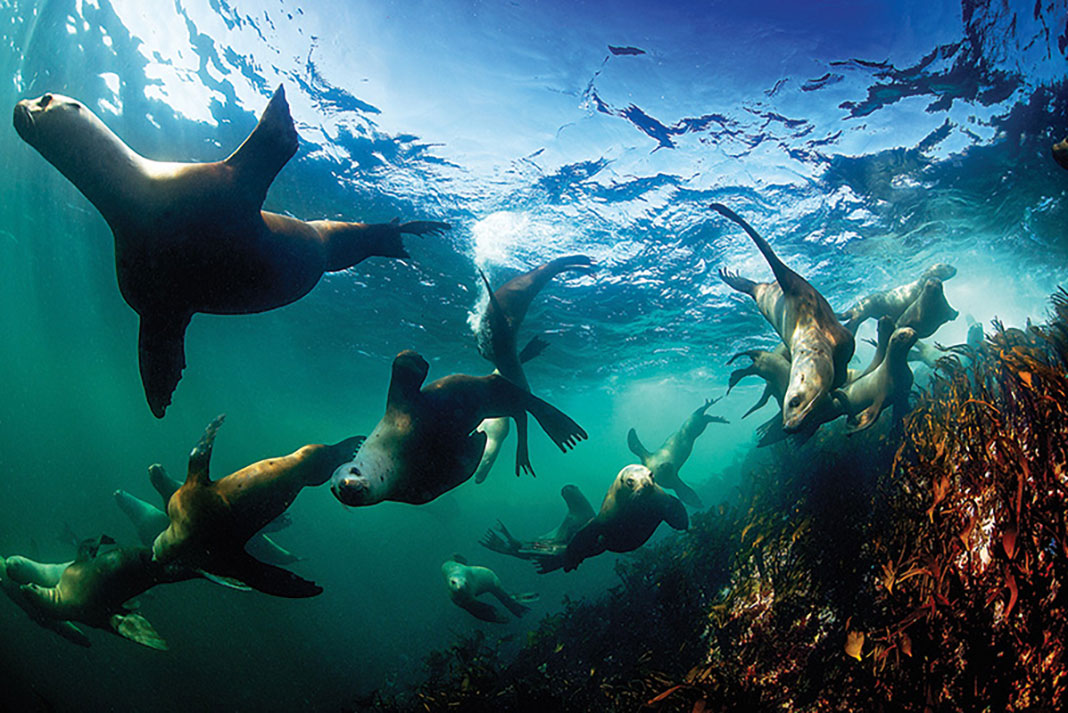
Environmental controversy isn’t new in this region. Neither are grassroots initiatives: the actions of small groups of people have already foiled bids to clearcut log, trophy grizzly hunt and open net salmon farm in the Great Bear. Eager to discover the area for myself, I also wanted to share our adventure so that others who couldn’t make the trip would be better informed on the Northern Gateway issue. Packing video equipment, I hoped to document some of North America’s most rare and majestic animals including spirit bears, cougars, grizzlies, dolphins and whales.
“Our sea kayaking experience was essentially zero.”
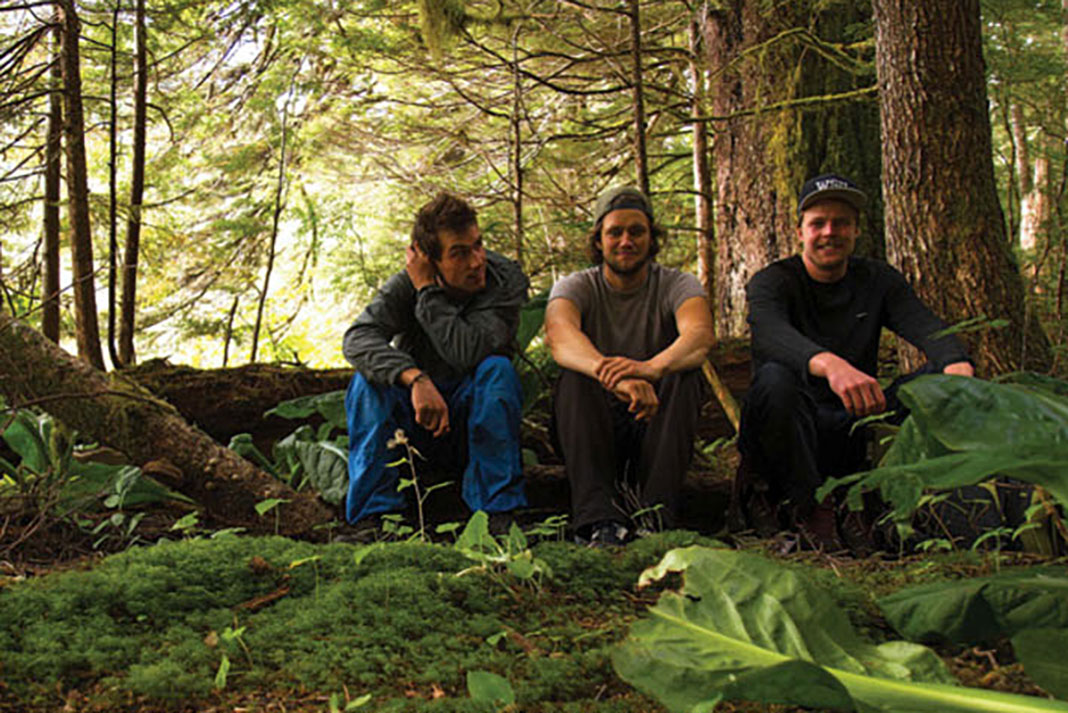
Friends for 20 years, Spencer Taft, Daniel Robb and I grew up within a few blocks of each other. We live much farther apart now, but our shared interest in nature and adventure keeps us close. Taft is pursuing his Masters of Ecology after returning from three months of hitchhiking from Kosovo to Lithuania. Robb spends his summers as a canoe guide in the Northwest Territories and his winters ski patrolling and guiding in British Columbia. He is one of the few people to complete the 20-day, 320-kilometer ski traverse along the Great Divide between Jasper and Lake Louise. Whitewater kayaking since age four, I paddle on the Canadian National Whitewater Slalom Team and train in the steep, beautiful rivers that cascade through the Rocky Mountains.
It was Robb who first mentioned the Great Bear. He told us that, when he took a recent fishing trip to the area, the Native community at Hartley Bay was protesting the plan to ship oil from the mainland through 150 kilometers of narrow, twisting and frequently stormy channels. The proposed route included the area where B.C. Ferries’ flagship Queen of the North crashed into Gil Island and sank on a gusty night in 2006. The Natives claimed that if a similar accident happened involving one of the oil tankers, the resulting spill would devastate the ecosystem their community has relied upon for thousands of years.
Talking it over, we agreed that together we were uniquely suited for an expedition through the Great Bear. I had two decades of kayaking experience, Spencer had extensive knowledge of the flora and fauna we would encounter, and Daniel had expertise preparing for multiday adventures. There was just one little problem—our combined sea kayaking experience was essentially zero.
High spirits, rough water
We started our trip near the city of Kitimat, where the proposed tanker route would begin. An industrial town planned and built by aluminum smelting giant Alcan in the 1950s, Kitimat is not commonly used as a departure point for kayak trips so there’s no paddle shop. Luckily, we found a passionate advocate for the rainforest in Joe Paolinelli, owner of Skeena Kayaking in Prince Rupert. Paolinelli had boats and equipment waiting for us in Kitimat, but in our inexperience we didn’t grab enough waterproof neoprene hatch covers, which is how our satphone arrived at its salty demise.
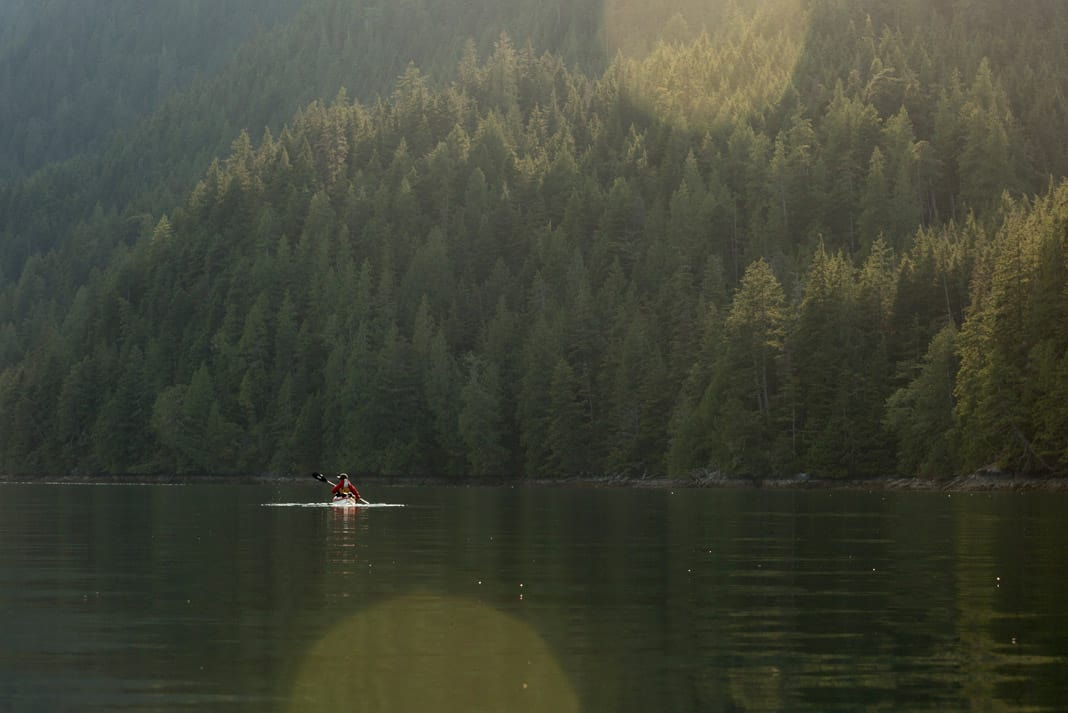
After sealing my leaking hatch with duct tape and a garbage bag, we were in high spirits as we navigated the rough water of Douglas Channel, drinking in the warm air and spectacular scenery. One of the area’s most beautiful features is also one of its most significant hazards—the shoreline is predominantly vertical rock cliffs with impenetrable vegetation beginning at the high tide mark. Getting off the water is often impossible.
Kayaking through this flooded mountain range, we wondered what might be gazing back at us from the thick curtain of woods. The Kermode, or spirit bear, is a black bear that possesses a recessive gene rendering it completely white. Found only in this area, the ghostly bears feature in Native folklore and the hope of spotting one fishing for salmon spawning up the creeks kept us close to shore.
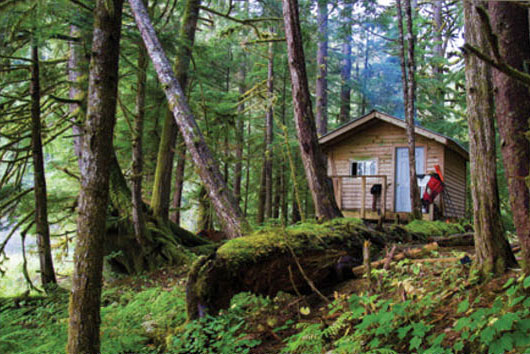
A cabin offers welcome refuge at Hugh Creek. | Photo: Paul Manning-Hunter
Out of their element (L-R): Paul Manning-Hunter, Daniel Robb and Spencer Taft. | Photo: Paul Manning-Hunter
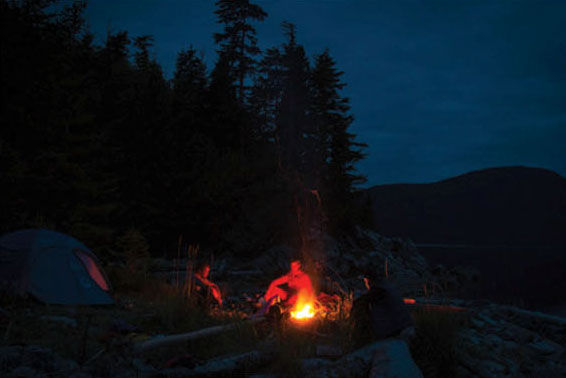
Shedding a little light in the darkness. | Photo: Paul Manning-Hunter
Eager to support our film project, the Haisla community had given us permission to use the tiny trapper’s cabins they have built throughout the region. The cabins are only eight feet by 10 feet and locating them amongst the thick vegetation was difficult. Reaching Coste Island, we couldn’t find the cabin at all and ended up tenting on a cliff overlooking the distant lights of Kitimat.
Nothing dries in the rainforest
The Coste Rocks are 150-foot pillars that rise from the ocean floor to just break the surface as craggy islets. I hoped to film harbor seals hauling out and sunbathing on the rocks so we set off at sunrise to reach them on a favorable tide. Without our charts, we congratulated ourselves for calculating the tidal period using our knowledge of the sun and moon. But we prairie boys soon found ourselves paddling against the current as a thick fog and heavy rain rolled in. As we neared the rocks, dozens of seals slid into the water. I set up a camera and we ate lunch in the drizzle, waiting. But the shiny little heads only stared sulkily at us from the water.
Photo: Paul Manning-Hunter
To escape the funnelling wind and waves of Douglas Channel, we turned down sheltered Devastation Channel and pushed on through the fog. Low tide revealed mussel-coated rocks and we aimed for Hugh Creek with mounds of the molluscs on our decks. Paddling up into the fresh water, Spencer pointed into the coniferous jungle and gave a welcome cry, “Cabin!” The wooden cabin stood on three-foot piers above the mossy ground. One tiny window barely illuminated two sets of rustic bunks and an inviting wood stove. Within minutes, we had converted it into a sauna as we steamed mussels and listened to rain drumming on the roof.
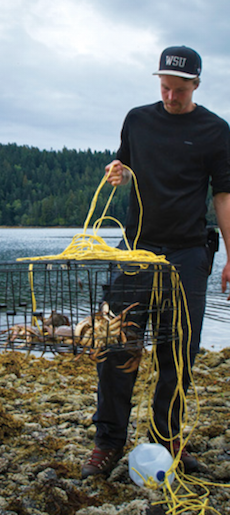
A bright morning revealed three huge crabs in our crab trap and the soggy truth that nothing dries in the rainforest. As the crabs boiled, we watched eagles scanning the confluence of the shallow creek and the ocean for their own breakfasts. Eating from the sea and drinking from the creek, we felt a connection to the indigenous people who have been doing just that, probably right there, for thousands of years.
As hard as it was to leave, we couldn’t resist the allure of a nearby hot spring. Like the verdant forests, the Great Bear’s abundance of natural hot springs owe their existence to the region’s copious rainfall. Rain seeps down through the mountains’ sedimentary bases where it’s heated geothermally, and the hot water is forced back to the surface through natural fissures.
That night we decided to adjust our ambitious route plan. I needed footage of the Great Bear’s wild inhabitants to show others what was at stake, but trying to cover as much distance as possible meant that we hadn’t seen a lot of wildlife. The map showed a lake high up in the mountains behind our cabin. We would spend the next day hiking to it.
Threats to the Great Bear
Oil is not the rainforest’s only threat. When the B.C. government named the Great Bear a protected area in 2006, just 50 percent of the forest was made off-limits to logging, leaving half the old-growth forest at risk. Following a creek that tumbled down from Evelyn Lake, we found ourselves on an old logging road overgrown with willows and young spruce where centuries-old Sitka spruce, cedar and western hemlock would have once reached heights of 230 feet. We were clearly not the only users of this wilderness highway. The dirt was imprinted with wolf tracks as big as our hands and fresh piles of bear scat had us nervously fingering the triggers of our pepper spray cans.
After swimming and fishing in the crystalline lake, we returned to the coast along a game trail littered with half-eaten salmon. Spencer explained how a vital source of these forests’ nitrogen and other nutrients comes from fish carcasses carried into the woods by bears and wolves. Moments later, we climbed over a head-high log and found ourselves face to face with a huge black bear. Luckily, the bear had already filled its belly with salmon and we made it back to the cabin instead of nourishing the trees.
With our own food supply running low, we turned back toward Kitamaat Village the following day. At our cabin that evening, I was restless and frustrated. I had missed filming the bear on the game trail—I still didn’t have what I needed. Wandering down to the beach where I had collected mussels for dinner, I spotted a black bear eating from the exact spot I had been only minutes before! Elated, I ran back to the cabin to grab my camera and my friends. We sat on the edge of the forest and watched our neighbor crack open mussels and sniff at the new scent in the foggy ocean air.
Feature photo: Paul Manning-Hunter
On the final 20-kilometer push to Kitimat, carbohydrate withdrawal was obvious as we talked for an hour about different ways to cook yams. A cold wind, rain, fatigue and hunger had us in low spirits until a dozen dorsal fins popped up in front of us. A pod of Dall’s porpoises had come to investigate and offer us a reminder of why we were out here.
Leaving the Great Bear, I found myself pondering the issues facing this complex wilderness with a newfound clarity, and grateful to have had the chance to journey with my friends amongst the rainforest-cloaked mountains, foraging bears and playful porpoises. I was glad, too, that the trip was more than a personal adventure. Aspiring to share the Great Bear’s story with others enhanced my own connection to this special place. Hauling camera equipment and seeking out opportunities to film may have limited our miles, but it opened our eyes.
Great Bear trip planner
When to go
Mid to late summer has the most stable weather with the least wind and rain. However, keep in mind you are in a rainforest—plan for wet weather. In the spring, runoff from creeks and rivers creates currents that can make getting into the inlets dangerous. Storms plague the region beginning in late September. Expect bugs almost any time of year—a local told us the only insect repellent is winter.
Difficulty
Douglas Channel is renowned for wind and waves. Infrequent landings due to the surrounding cliffs compound the difficulty, making this an advanced route. The deep fjords and foul weather also make communication, even by satellite, unpredictable. Freshwater for drinking is available approximately every 10 kilometers.
Access
The city of Kitimat is accessed by Highway 37 off Trans-Canada Highway 16. There is no recreational boat launch, as the Alcan plant takes up the city’s entire waterfront. The best option is to drive 20 minutes southeast on Minette Bay Road to Kitimaat Village and launch for free at MK Bay Marina. Parking is $5 per day. BC Ferries does not service Kitimat, the nearest ferry ports are Klemtu and Prince Rupert.
Charts/Forecasts
Canadian Hydrographic Series chart 3743 (1:73,000). Find local wave heights and marine weather from the Nanakwa Shoal weather station at weather.gc.ca.
Guidebook
The Wild Coast, Volume 2 by John Kimantas (Whitecap Books, 2006) is excellent and has detailed maps and information on many routes in the region.
Guided trips
Albacore II Charters offers mothership services.
The Gitga’at Native community at Hartley Bay offers guided trips and accommodations.
This article was first published in the Summer/Fall 2013 issue of Adventure Kayak Magazine. Subscribe to Paddling Magazine’s print and digital editions, or browse the archives.
Erik Weihenmayer isn’t your average kayaker. The 44-year-old recently made official his quest to become the first blind person to paddle the Grand Canyon in 2014.
Weihenmayer is not new to firsts. The adventurer and motivational speaker was the first blind person to climb Mount Everest in 2001 and conquered the Seven Summits in 2008. He’s also an accom- plished alpine skier, rock climber and marathon runner. All of those achievements have helped prepare him for his hardest challenge yet.
“Kayaking is way more intense than anything I’ve ever done. So much is happening in such a short amount of time,” he says. “Learn- ing to ski was hard, but the ground doesn’t move below you.”
The whitewater learning curve over the past six years has been steep and left Weihenmayer uncertain and scared at times. “There’s moments where I’m swimming through a rapid and I wonder, what am I doing here—there’s a reason there are no other blind kayakers in the world,” says Weihenmayer.
He kayaks with a spotter who either yells instructions or communi- cates via waterproof radio. There’s usually at least one other paddler for backup and occasionally a kayaker out front, picking lines. He has only praise for his growing team of boaters who “have to line me up and anticipate what the river will do and where the river will take me.” He prefers paddling big water, as opposed to small creeks and technical runs that require precise lines.
“I still have that sense of going into something crazy before a rapid,” he says. “It’s pretty daunting. I’d like to see if that changes with more experience, if I will eventually feel like I can handle anything.”
KAYAKING IS A MENTAL GAME
In April, Weihenmayer completed a successful 12-day reconnaissance trip to the Grand Canyon before he committed himself to going back on a 225-mile, 20-day trip in September 2014. “The very first day, the very first rapid was bigger than anything I’d ever done. I did pretty well—I survived, I got sucked into whirlpools but managed to roll up, and that gave me confidence.”
Weihenmayer says his biggest challenge will be endurance. “Kayaking is such a mental game for me so I get fatigued. I can get flipped on easy, no-name rapids just because I wasn’t expecting it.
“Rivers are very complicated from a blind person’s perspective. The way currents and rapids form, they create a very wild, fast, un- certain and powerful environment,” he adds.
Even after next year’s Grand Canyon run, Weihenmayer expects to be hooked on kayaking for life—it’s something his whole family, including his two children, can enjoy, even from a raft. “We can all challenge ourselves in different ways, that’s the cool part about rivers.”
This article first appeared in the Summer/Fall 2013 issue of Rapid Magazine. For more great content, subscribe to Rapid’s print and digital editions here
Running sustained rapids in a canoe requires both dry lines and fancy boat work to keep water out when colliding with breaking waves. Wave blocking is one of the foundation skills that define success in open canoeing—reducing the water in your boat cuts down on pulling into eddies to empty and keeps you light and maneuverable throughout your run.
Recently a friend asked how I had run a series of haystacks while keeping my boat dry. Wave blocking was the trick, but to do it, you have to break an age-old taboo. I explained that you tilt your canoe upstream just as you strike the foam pile at the top of the breaking wave. This presents the belly of the canoe to the frothy part of the wave and knocks it out of the way. The combined height of the canoe’s sidewall and tilted hull reduces the likelihood of scooping water and having a wet ride.
To guard against the usually fatal faux pas of tilting upstream, reach downstream past the wave crest and plant a draw stroke to pull you up and over it. A vertical paddle shaft is key. This will maximize the bite of the blade in the current and give you the stability needed to hold your canoe upright during the impact with the recirculating water at the wave top.
Keeping your body upright is essential. Avoid leaning upstream; instead, tilt your canoe with knee pressure on the upstream edge. By keeping yourself centered over the canoe, your stability will be main- tained by keeping equal pressure on the paddle reaching downstream and knee pushing upstream.
POSITION YOUR CANOE
Positioning the canoe broadside to the wave helps stabilize the block as well. Having the wave strike the canoe amidships prevents the canoe from being suddenly turned by the wave. Striking a wave at an angle may result in the sudden twisting of the hull as the wave tries to turn you parallel to the crest, increasing the risk of an upset.
Wave blocking works—it’ll keep your canoe dry, allowing you to run longer rapids without having to pull over and empty. Best of all, when you get to the bottom of a wild set of rapids, success can be measured by how little water is in your canoe.
Andrew Westwood is an open canoe instructor at the Madawaska Kanu Centre, member of Team Esquif and author of The Essential Guide to Canoeing.
This article first appeared in the Summer/Fall 2013 issue of Rapid Magazine. For more great content, subscribe to Rapid’s print and digital editions here


 This article was first published in the Summer/Fall 2013 issue of Adventure Kayak Magazine.
 This article first appeared in the Summer/Fall 2013 issue of Rapid Magazine. For more great content, subscribe to Rapid’s print and digital editions




