“Quit drinking,” my husband said. “You’ll just have to pee more.”
New to kayaking, I had a major problem to figure out this summer. How the heck do women pee from these things?
On our first trip, we had to stop every two hours for me to go. I decided there had to be a better way after reading fabulous stories of women on expeditions doing 10-hour marathon days. How are they doing this? I must know since we are planning our own circumnavigation this summer around Manitoulin Island. It would be handy to discover this secret before then.
I began a desperate quest for knowledge. I ordered back issues of kayaking magazines that looked like they might have hidden tips. I bought kayaking videos and books about kayak expeditions. I found few answers. In Kabloona in the Yellow Kayak, Victoria Jason describes having a drysuit with no relief zipper and holding it all day until she could unpeel on shore. Not an option for my weak bladder.
At last I came across an advertisement for a women’s drysuit that included a relief zipper and a “Shewee.”
Ah ha! I was off to the outdoor store to find a Shewee. I purchased a P-Mate—the same idea. The sales girl told me, “Just climb onto your deck and go. It’ll wash off.”
She had obviously never seen me practicing reentries. If I could do one of those headstands in a kayak, then I wouldn’t have this problem.
Time to ask the experts. I nervously sent an email to the well-known expedition kayaker Justine Curgenven. The very next day I received an answer. (In trying to convey my excitement at this to a hockey-loving friend, I compared it to him getting a personal e-mail from Wayne Gretzky. How she had the time to respond to my wee request between all her touring for her latest movie, I don’t know.) My quest was over.
She presented three options.
1. Pee on a sponge (ew).
2. Try the P-Mate into a bottle. (This, Justine admits, is pretty awkward.)
3. Raft up and put one foot on my kayak and the other on another kayak and pee in between. Yeah, okay. In fact, Justine told me there is a short clip in her latest movie This is the Sea 4 that shows this being done.
So, unfortunately, there is no magic formula, but I now have something to work on for the summer. After several weird attempts at standing on my back porch and peeing off it, I’m still unsure about lying down with a drysuit on in a tiny coffin-like space and aiming into a bottle while bouncing around in waves. And since I’m not going to quit drinking anytime soon, my new strategy involves “stopping to smell the roses” whenever I want to. At least until I can do a headstand.
Terry Johnson lives in Whitefish Falls, Ontario, and writes personal anecdotes of her outdoor adventures (terrylynnjohnson.com).
 This article first appeared in the Early Summer 2009 issue of Adventure Kayak Magazine. For more great content, subscribe to Adventure Kayak’s print and digital editions here.
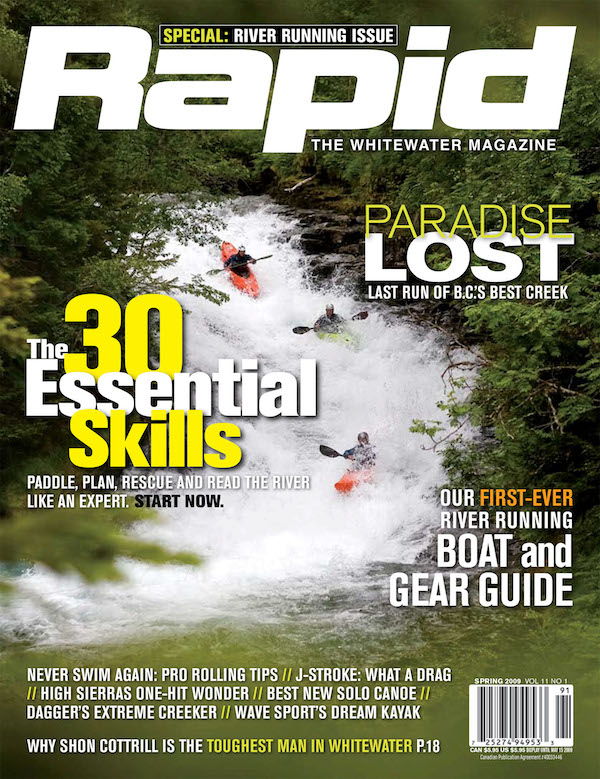 This article originally appeared in Rapid’s Spring 2009 issue.
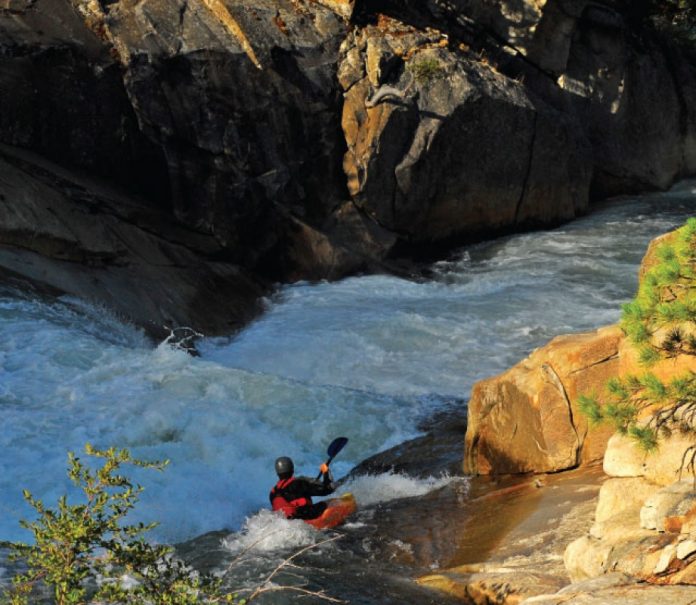
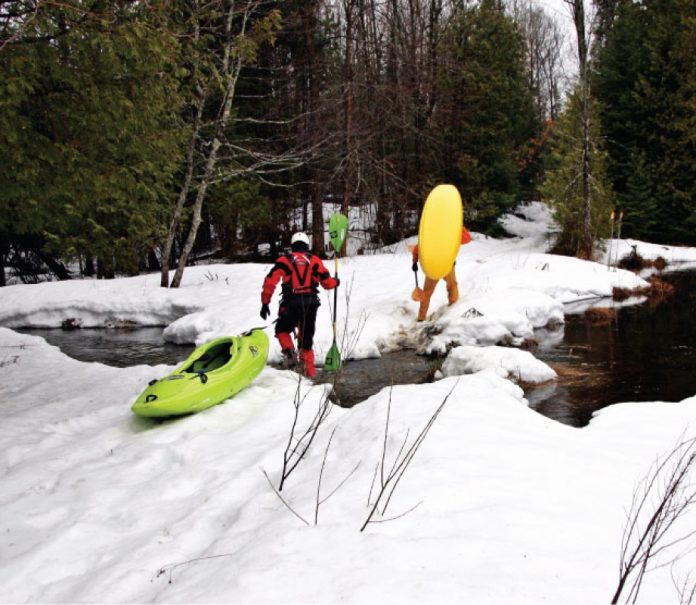
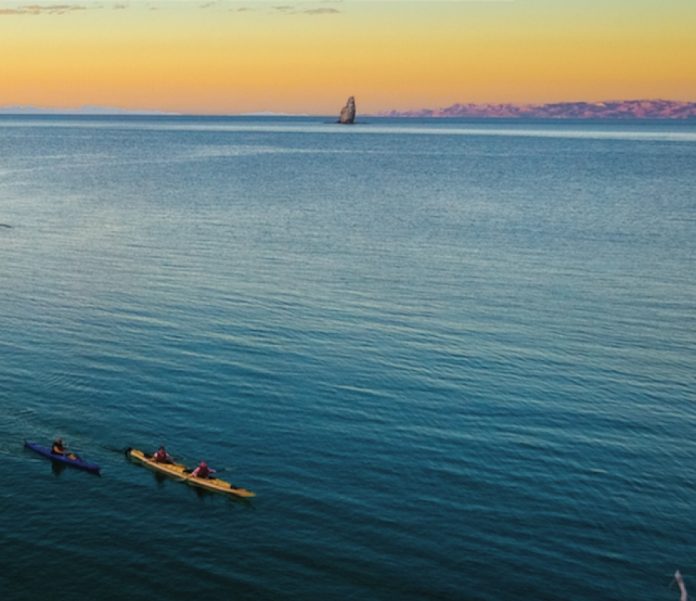
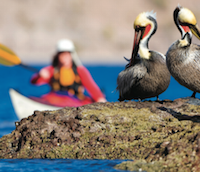 Destination trips are the most straightforward, where you launch and land in roughly the same place and paddle around for a week or so in between. popular destinations include three national marine parks with islands: Bahia de Los angeles—or Bay of L.A. — (1,013 km or 630 road miles from Tijuana), Bahia de Loreto (1,700 km or 1,100 miles) and Espiritu Santo (near La Paz, 2,414 km or 1,500 miles). Recently protected for their uniqueness, fragility and abundance of life, these parks also manage kayakers. Permits can be bought in the park office in the respective towns.
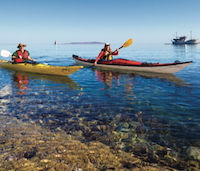 Expeditions commit serious time to travelling by sea. Paddling the length of the sea of Cortez often begins in unremarkable san Filipe. “The only reason people start at san Filipe is to say they did the whole thing,” declared expedition paddler Dan Kennedy after starting there three times.
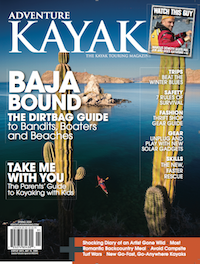 This article first appeared in the Spring 2009 issue of Adventure Kayak Magazine. For more great content, subscribe to Adventure Kayak’s print and digital editions