I met Shannon Litzenberger flying home from the world’s largest consumer paddlesports show. She was returning from a conference at a remote island retreat center.
Litzenberger is an award-winning contemporary dancer and choreographer. Cool. But she’s also a freelance strategist, policy thinker and leadership developer.
“If our collective task is to imagine and co-create a better world for future generations, what role does culture play in this project?” she asked me.
I shrugged. I hadn’t thought about the culture of the paddlesports business in a long time.
“The culture we abide by today—including the stories we live by, our normative behaviors, rituals, metaphors and codes of belonging—has produced the world we live in now,” she added.
I walked off flight AC1900 wondering how Litzenberger’s ideas on a culture of collective thriving and leadership could work in our world. If Litzenberger attended the Paddlesports Trade Coalition Colab in Oklahoma City, what leadership capacities would she help us develop to navigate the many intersecting crises we face today?
The real problem with paddlesports
I helped curate the opening panel discussion at the PTC Colab. I asked longtime paddling industry professionals what they thought our greatest successes and failures had been in the first 50 years. What should we keep doing? What should we leave behind?
I realized that during the early years, the culture of the paddlesports industry wasn’t too far from paddling culture. We were creating an industry, one new paddler at a time. Driving sales, as we say these days, went like this: Meet people at the water with a trailer full of boat and gear samples. Take them down a river, across a lake or along an ocean shoreline. As Litzenberger would say, “These sensory capacities—attuning with the world around us, paying attention so we might discover beauty, awe and inspiration—is what helps us all understand how to be in relationship with ourselves and our world in a good way.”
Boat orders wrote themselves.
Why we’re here. | Feature photo: Ryan Creary
For years, industry leaders gathered in Salt Lake City for Outdoor Retailer’s Summer Market. They didn’t gather around a table, per se, but there were enough carpet conversations among company owners to develop new ideas and plant seeds for the industry’s future.
Between sales meetings, fiercely independent-minded, highly competitive leaders of the top paddlesports brands and scrappy startup entrepreneurs discussed industry issues. Yet, the core culture remained virtually unchanged.
Today, we have MBAs parachuting in to maximize returns for shareholders or plum profits for a quick flip of the company. Companies who are experts in plastics manufacturing look at boats as new line items in revenue forecast spreadsheets. Meanwhile, the rest of the industry is forced to adapt, or feel like they should adapt, a business culture that never had any business in the business of paddlesports.
Selling more was a by-product of sharing what we all loved with more people. Investors understood the connection to the water and believed what we believed. Twenty years ago, nobody was hired into sales or marketing roles because they were expected to double revenue in two years. They were hired because they understood what paddlesports meant to customers.
“As soon as we foreground industry and background the experiences we are trying to bring to life, we screwed up.”
— Shannon Litzenberger
Revlon’s co-founder Charles Revson used to say, “In the factory we make cosmetics; in the store we sell hope.” The day the beauty industry stops selling hope is the day consumers start asking why they are spending $40 on tiny tubes of wax, oil and pigment.
“As soon as we foreground industry and background the experiences we are trying to bring to life, we screwed up,” says Litzenberger.
I don’t know what kind of paradigm-shifting changes will be tabled at the inaugural Paddlesports Trade Coalition event. But I do know we aren’t selling as many boats and boards as we were during the bonkers years of the pandemic.
Participation during lockdown grew because people connected with themselves and the natural world. And they bought boats, boards and all the fixings. They bought everything we could make. They didn’t care about color. They didn’t haggle on price.
Litzenberger asked me, “How would the paddling industry organize itself differently if all that was needed were simple invitations to experience beauty, awe and a connection to the elements?”
I don’t know how exactly, but the who behind any paradigm-shifting cultural change is easier to find. You’ll find the answer stuck to the bumpers of station wagons and pickup trucks anywhere there’s water.
“The world is run by those who show up.”
Scott MacGregor is the founder of Rapid Media.
This article was first published in the 2024 issue of Paddling Business. Subscribe to Paddling Magazine’s print and digital editions, or browse the archives.
A polar bear tastes the air when he sees us, trying to get our scent. | Feature photo: Frank Wolf
Instinct tells me to turn around. Urgently.
The worst-case scenario is a polar bear right behind me, I think, not believing it as I write in my diary by the fire. I look over my shoulder, and two piercingly black eyes in a creamy white face meet mine. For a moment, I wonder if I am dreaming. Twenty meters away, dinner-plate-sized paws pad slowly but purposefully toward me.
“Polar bears, polar bears and polar bears! That’s what you need to worry about,” said Nigel and Kristen Foster, the last people to kayak this route 20 years ago. My partner JF Marleau and I had pulled out of this trip four years previously when a group of four canoeists who had spent two weeks on the coast told us they saw three polar bears within 10 meters of their tent at night. Now, reinforced with a team of four, we are kayaking 1,000 kilometers through the remote Canadian Arctic, carrying food for 30 days between two isolated communities.
Our route follows the east side of Quebec’s Ungava Bay, home to the world’s largest tidal range, and a southern trace alongside Labrador’s dramatic Torngat Mountains. Inuit have traveled through this area for centuries, and many still hunt here. Polar bears thrive thanks to plentiful seals. A nearby pupping area fattens them in shortening, climate-changed winters to survive the lean, ice-free summers. Hundreds migrate to the northern tip of Nunavut and Labrador at this time of year, which is exactly where we are heading.
JF holds up a polar bear skull at the start of our trip. | Photo: Frank Wolf
JF and I meet Larry Chomyn and Frank Wolf in Montreal in early June and fly north to Kuujjuaq, where we jam into a rickety 12-seater. Boxes, bags and a kid’s bike cram the tiny space between the friendly pilots and us. A roar of engines lifts us airborne, and I peer down at an endless plateau of bare grey rock dotted with pockets of scrubby green vegetation and thousands of lakes. An Inuit man in front of me plays Candy Crush on his phone until neat rows of colorful box-shaped houses appear below. We land in the isolated village of Kanjiqsujuak, Quebec’s northernmost settlement.
Polar bear watch
It is sunny the next morning, but the sea is nowhere to be seen. The tide tables say it will be back at 1 p.m. In Ungava Bay, the ocean rises and falls the height of a six-story building each day, disappearing up to 10 kilometers away. Sometimes patience is the better part of valor.
When water oozes under our fully loaded kayaks at noon, we take a team selfie before pushing off into frigid water. Butterflies are partying in my stomach at the unknowns ahead.
The author sets off into a colorful sunrise in Ungava Bay. | Photo: Frank Wolf
“How low is my kayak in the water?” Larry asks. Two large drybags are strapped onto his back deck, and I can barely see his seam. I hope the 15 oatmeal breakfasts in one of them will survive; there are no villages or resupply points for the next month.
Enthusiasm, excitement and pent-up energy power us forward against a brisk headwind and a steep, choppy sea. When the current turns against us, Larry and I cut close to the rocky shore while JF and Frank take the direct line across a bay. We don’t have a plan beyond moving north. It is our first trip together, and no one wants to impose their leadership.
Rocky vistas give way to vast muddy plains as the tide drops, forcing us to paddle farther from the glacier-smoothed hillocks of the treeless tundra. My paddle hits the bottom repeatedly, and it feels like the sea is racing to leave us stranded. We debate camp options while the wind blows us backward. Paddling toward what we think is a gravel beach proves to be a rock shelf fronted by a two-kilometer-wide boulder-strewn plain.
After scanning the map, we head to an island. Scrambling and slipping over wet boulders is the warm-up for a 400-meter leg-burning steep, rocky ramp. After seven round trips of gear hauling, we pitch camp by ancient stone circles at the flattish summit. Remote trips like this are hard work on and off the water. It’s not always fun, but I relish the unbeatable feeling of being physically and mentally spent. Now I have time to scan the rocky plateau stretching away as far as I can see. Tan lower slopes turn to carpets of black lichen above the high tide line.
That night, JF wakes me for watch. His nose is like an ice pack as he kisses my cheek. Shivering, I layer up and pull my neck buff up over my mouth. It is midnight; I have two hours on lookout.
A bright orange line along the horizon sits below layers of slate grey clouds. Our tent silhouettes are obvious, but I worry a bear could creep up on us. I sit on our one camp chair under a flapping tarp, shoulders hunched against the cold, two shotguns at my feet. One contains six shots of lethal ammo, and the other contains bear bangers. Grabbing a couple of lichen-crusted rocks to pound together, I complete my defense. I am surprised to find peace and enjoyment in the alone time.
A new rhythm
We shift our day to the tidal rhythm, rising at 2 a.m. to launch nearer to high water. As the water level drops throughout the day, reefs force us ever outward, and we go around islands rather than risk dead ends.
After a week, a barely rippled sea under a pink sky dotted with cotton wool clouds welcomes the new day. We should make quick progress, but ice floes are common and photos slow us. Promising myself I am done with photos, another glinting, sculpted iceberg appears. We are approaching the northeast tip of continental Canada and drawing nearer to the broken-up ice pack. Onshore gusts are like opening the freezer door, cold air rushing through me. I wiggle my numb toes constantly and regret not bringing more warm clothes. A harp seal pops up its round, grey head behind JF, reminding us this is prime polar bear habitat. Small bergs look just like bear heads and we study them carefully.
JF and Larry pass an iceberg that likely made its way from Greenland. | Photo: Justine Curgenven
Crossing between fjords in the Torngat Mountains. | Photo: Justine Curgenven
Steep, rugged mountains line both sides of the breathtakingly beautiful McLellan Strait, which leads to the east coast. The following day, we approach the ice-choked narrow channel with anticipation, knowing the currents fly through at up to eight knots. Progress is almost impossible. Icebergs of all shapes and sizes fly toward us, and continuing would be like cycling the wrong way up a motorway. Pulling our kayaks up a rocky beach to wait out the tide, we explore a wide terrace.
Farther back is a bottle-shaped depression hewn from the ground. I gasp, recognizing the outline of an ancient sod house—an Inuit shelter. Walking gently inside, the remains of earthen walls reach up to my waist, their musty smell filling my nostrils. Reaching out, I can almost touch all three sides. I marvel at how people survived and thrived in such a small space in such a harsh world.
Some of our friends think we are brave for paddling in this cold, windy, polar bear-ridden land, but we are merely passing through with all our food, warm clothes and technology. The Inuit quietly lived here for centuries, taking gifts of land and sea when offered, hunkering down and eking out in times of scarcity. I aspire to such wisdom in my more contrived wilderness experiences and struggles.
Frank snaps a photo of the first polar bear we saw. | Photo: Justine Curgenven
Place of the spirits
We see our first bear the next morning. Larry points to Almaty Island, a few hundred meters away. The bear is sauntering purposefully over the rock, oblivious to us. I am struck by its size and majesty. Frank paddles in for a closer look. I follow behind, drawn magnetically to the powerful predator. About 100 meters away, we stop. What long leg fur, I think, like hairy flares. Finally, the bear sees us and turns, his nose held high and tongue out to taste us. He is imposing.
“It’s a male, probably four or five years old,” Frank shares. He pulls out his phone and enters the details on a bear tracking app he contributes to.
We see bears almost every other day after that. The next one is way high up on a ridge. It turns onto its belly to slide down a snow patch like a kid. I giggle. He moves on and disappears from view. We paddle around a corner looking for him, and a small ice floe catches my eye. It doesn’t move. Two black eyes and a shiny black nose give him away. A few days later, approaching a fjord called Bear Gut, another polar bear swims toward us, lifting his nose high to smell us.
After we pass him, I stop to film, and the bear swims around behind me, a few boat lengths away. As I concentrate on keeping my camera steady, he drops his head under the water and disappears. I hear Frank say, “aquatic stalking,” and I strongly sense I don’t want to find out what that means first-hand. I curse my slowly retracting camera lens before thrusting my paddle deep and pulling as hard as I can. We don’t see the bear again.
A polar bear tastes the air when he sees us, trying to get our scent. | Feature photo: Frank Wolf
The Torngats take their name from the Inuktitut word Tongait, meaning place of the spirits. I feel reverent amongst the steep, towering peaks that reach skyward, connected to the ancient energy. Sharp flanks and sinuous ridgelines are exposed, giving a rawness to these ancient rock piles. Every imperfection is laid bare like we’re seeing the skeleton of the Earth herself.
We are three-quarters of the way through our trip when the polar bear sneaks up on me. I have become complacent, focusing too much on diary writing and not looking around often enough. By the time I leap from my chair, the bear is two meters from me. The flare gun is at my feet, within reach, but I dare not look down to get it. Taking my focus off this bear could be my last mistake. Instead, I shout, “Go away! Go away! Go away!” The bear stops, his eyes locked on mine.
My brain whirrs. Can I grab the flare gun without looking down? Can I use the fire behind me? The two shotguns are five meters away—too far. There’s no time to regret my lack of preparation. I am strangely aware of the beauty and closeness of this magnificent creature while fearing for my life. I shout continuously: “Go away! Go away!”
The bear takes a slow step toward me. Instinct takes over, and I grab the nearest object—the lightweight camp chair I was sitting on. Holding one metal leg, I thrust toward the bear, swinging it wildly. “Go away! Go away!”
One of the campsites that a polar bear visited. | Photo: Frank Wolf
The bear lunges backward, moving his head away from impact. Even with the seriousness of the situation, it’s almost funny such a huge, powerful creature is scared of a one-pound chair. Still, I’m merely buying time. I’m desperately searching for my next move when a loud bang rings through the air. I later find out it’s Larry, quick to get out of the tent and fire a warning shot. The bear turns and bolts, knocking over the tripod of paddles holding our water filter. Relief floods me, and I lower my eyes and grab the flare gun.
Holding one metal leg, I thrust toward the bear, swinging it wildly. “Go away! Go away!”
As I look up, I see the bear halt, turn around and start back toward me. I point the flare gun at him. He’s five meters away but not paying me any attention this time. He starts sniffing the paddles. There’s another bang, and the bear bounds away 30 meters. I fire my flare just above his head, hoping to reinforce the warning, but it only seems to remind him of unfinished business. Before the flare even hits the ground, the bear stops, turning back around, eyes locked on me again. Head down, accelerating in my direction.
I spin around, desperately searching for another flare or another gun. I see JF behind me with a shotgun. Out of the corner of my eye, I see a blur of white and whip around. The bear has changed tack; he’s off to my side and charging at Larry and Frank, who are standing by their tent. My heart lurches. Frank doesn’t have a gun and runs behind the tent. The bear is a leap away from our teammates. Larry holds his ground and fires a bear banger with a loud crack. Stopping at the last possible moment, the bear U-turns rapidly and charges away over the tundra.
This time, he doesn’t come back.
JF poses besides a polar bear scratch pad at the former Inuit village of Killiniq. | Photo: Frank Wolf
After checking in with each other and ensuring the bear has gone, the others return to bed, and I am left alone again by the fire to finish my watch. Heavy feelings swirl with adrenaline: relief, excitement, guilt and resolve.
A few mornings later, we discuss the close call. There are many lessons. As the trip wore on without incident, our tents got too far from each other and we didn’t put our fence around them, expecting the person on watch to see a bear.
From now on, we will put the tents closer together and always use the bear fence. Each tent will have a gun, and we will be on high alert at all times. I’m happy everyone walked away from the incident, but I can’t shake a dull ache in my stomach, a heavy guilt that my inattention risked everyone’s lives, including the bear’s.
As we draw closer to our endpoint in Nain, everything feels tamer. In the Okak Islands, JF excitedly shouts “trees” and points at a few pockets of stunted conifers. Later, valleys are covered in lush green grass and bushes. It gets warmer; I no longer need a hot water bottle during night watch. I wander around in my thermals to dry them, realizing thin merino is no match for the probing proboscis of the suddenly plentiful mosquitos. The hardiest follow us hundreds of meters out to sea.
Cruising beside cliffs, the sleek black back of a minke whale emerges; the graceful arc of the fin is gone as quickly as it appeared. We see more black bears than polar bears, sometimes three in a day, their dishevelled fur highlighted by the sun. I notice how tiny they look in comparison.
Polar bear tracks in the garnet-rich sand of Iron Strand. | Photo: Frank Wolf
After 28 days, we start our last five-kilometer crossing to Nain on glassy seas. After so long with only the wind and waves, the piercing buzz of a helicopter jars my ears. It’s strange to be back in the bustle of even a small community. In four weeks, we’ve seen 10 polar bears, 14 black bears, dozens of caribou, a walrus and just five people. There aren’t many places in the world so isolated.
JF’s definition of a good adventure is one where we’re part of the food chain, and this one surely qualifies. I just hope never again to be quite so close to being the dish of the day.
Justine Curgenven is an award-winning filmmaker, a sea kayak guide, and a lover of wilderness and laughter. Her ambitious expeditions have placed her among the world’s most legendary paddlers. Find her online at cackletv.com.
This article was first published in Issue 72 of Paddling Magazine. Subscribe to Paddling Magazine’s print and digital editions, or browse the archives.
A polar bear tastes the air when he sees us, trying to get our scent. | Feature photo: Frank Wolf
Type 2 fun immersion. | Feature photo: Mustang Survival
For decades, Mustang Survival was the brand of life jacket you’d expect to find hanging in the boathouse at the cottage, stowed on a commercial fishing vessel, or aboard a Coast Guard icebreaker. The company’s life jackets and insulated floater coats were utilitarian, without the flash and features of other brands.
With a lineage stretching back over 50 years, it’s no surprise the familiar seahorse logo was most often associated with “frumpy, orange and safe,” a historical description acknowledged by Tyler Bazant, the company’s product designer for professional, defense and aerospace.
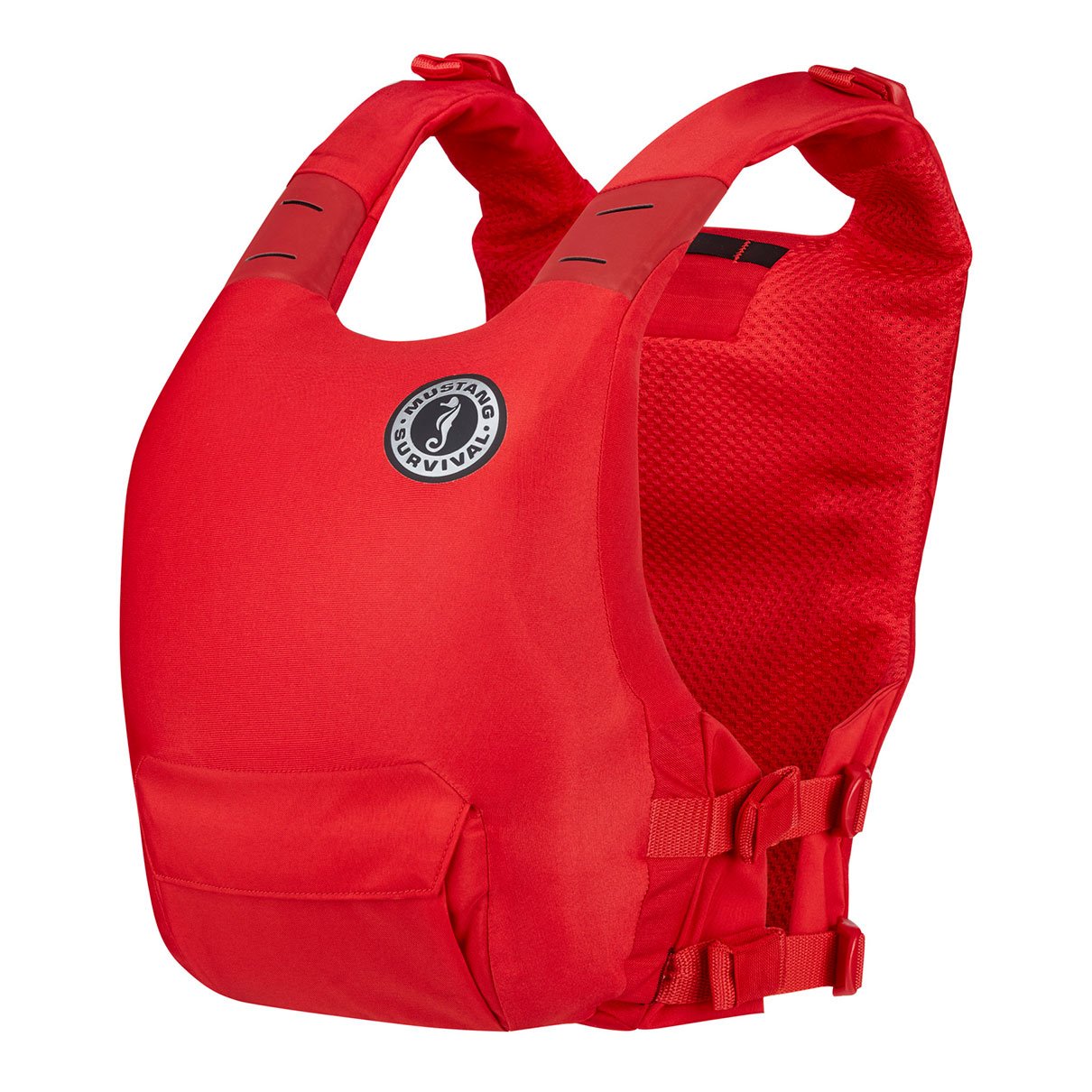
Mustang Khimera PFD. | Image: Mustang Survival
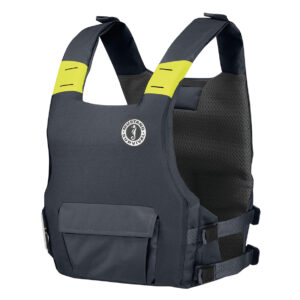
Yet, despite being designed for first responders, Mustang’s technology has been steadily making its way into the hands of everyday paddlers. As the company expands its offerings beyond commercial use, paddlers are appreciating the advanced safety features and innovation packed into Mustang’s gear, including unique life jackets such as the Khimera, a dual-flotation PFD combining foam and inflatable technology. First released in 2019, the Khimera evolved from the specialized demands of rescue swimmers seeking a vest that maximized mobility but didn’t skimp on floatation when needed. In short, it captured the same sweet spot demanded by standup paddleboarders and sea kayakers. The latter adoption marked a turning point for Mustang Survival.
“We woke up and realized we were a brand, not an engineering, design and manufacturing company,” says Bazant, who has worked with Mustang for over 20 years. “We realized we had this legacy lineage—this journey—and we’ve been leaning into it the last five years. Part of that has been focusing more on water sports. The Khimera is a product that’s born from that refocus.”
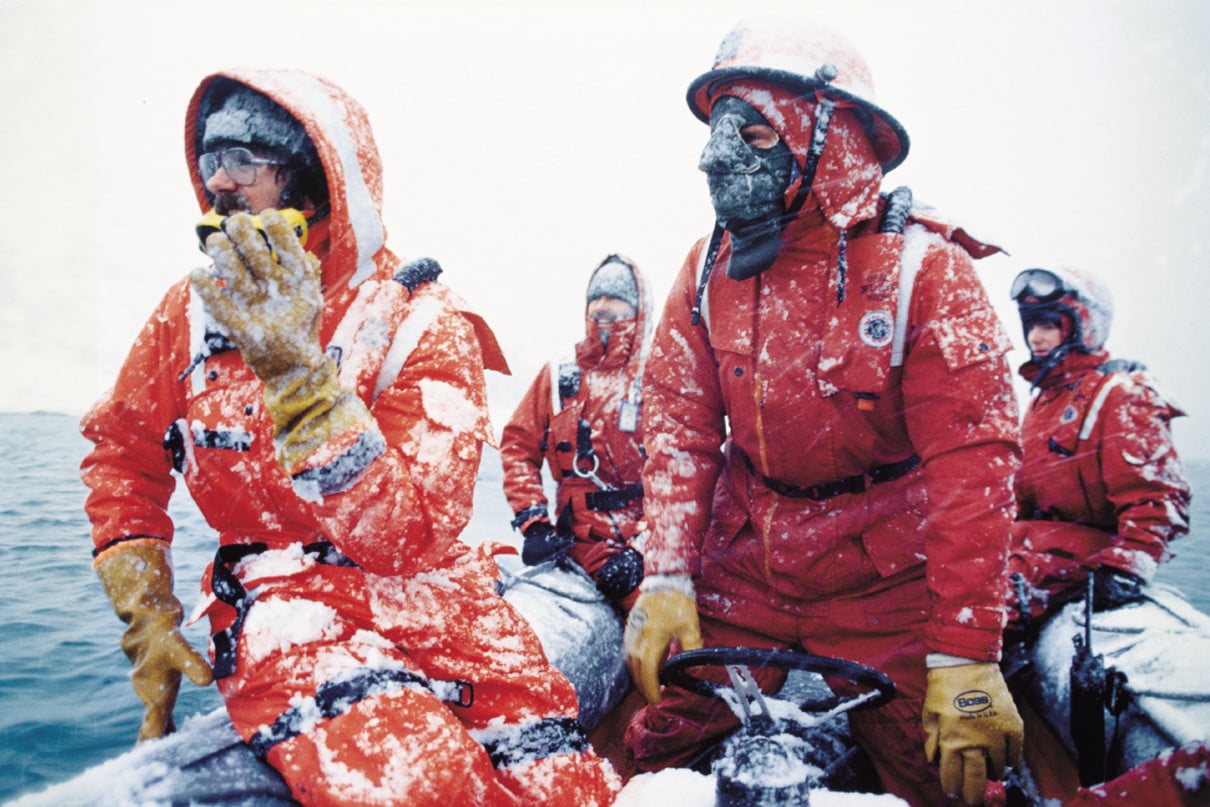
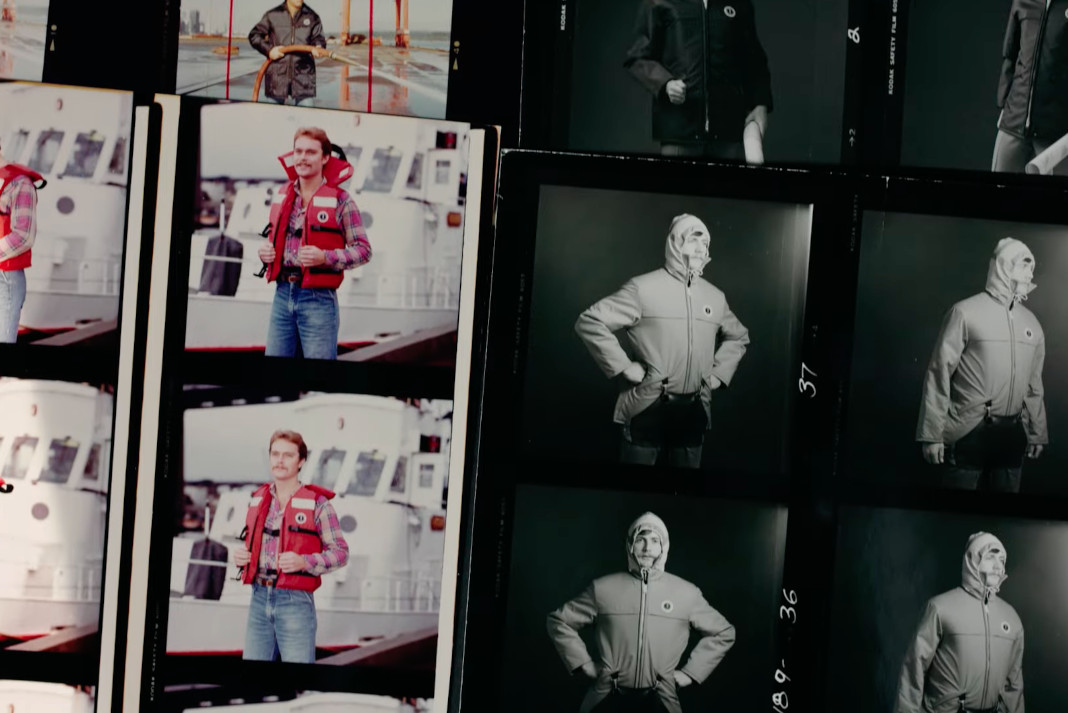
The pros donned in Mustang Survival gear in the 1980s. | Photo: Mustang Survival
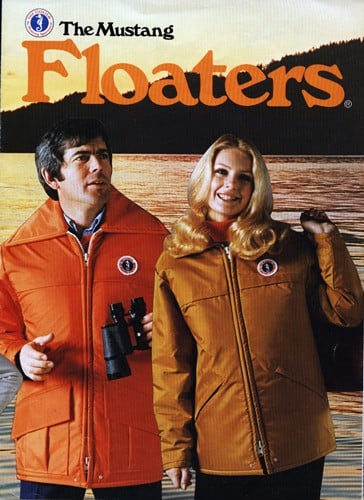
Mustang Survival was created “almost out of spite,” says Bazant. In the late 1960s, founder Irv Davies manufactured down jackets from a facility on Water Street in Vancouver, BC. He experimented with foam to cut the cost of down insulation. According to Bazant, the vendor selling him the foam said if you fell in the water wearing one of Davies’ jackets you’d float. The tease was a lightbulb moment for Davies. And so, the Mustang Floatjacket—a hybrid life jacket and insulated parka that’s standard issue for anyone working around icy water, from commercial fishermen on subarctic waters to oil rig workers, was born. “They still call them ‘Mustangs’ in the [Canadian] Coast Guard,” says Bazant, “and we still make them.”
Davies’ invention came about around the same time floatation devices were becoming standard for all boaters. Historically, “life was cheap,” wrote C.J. Brooks, a Navy captain and physician in the Canadian Forces who passed recently in October of 2024. “The drowning of a sailor or a fisherman was considered an occupational hazard.”
Upwards of 40,000 officers and passengers on Royal Navy vessels lost their lives in World War II because a personal issue life jacket did not exist, Brooks writes. It wasn’t until the 1960s that the U.S. Coast Guard started emphasizing the strong correlation between drowning deaths and lack of life jackets. Movement by the Coast Guard in the 1960s and ‘70s to legislate life jackets—and distinguish between life jackets (vests with a self-righting capacity) and more streamlined yet buoyant PFDs—kickstarted a global trend. Mustang Survival came along at the right moment.
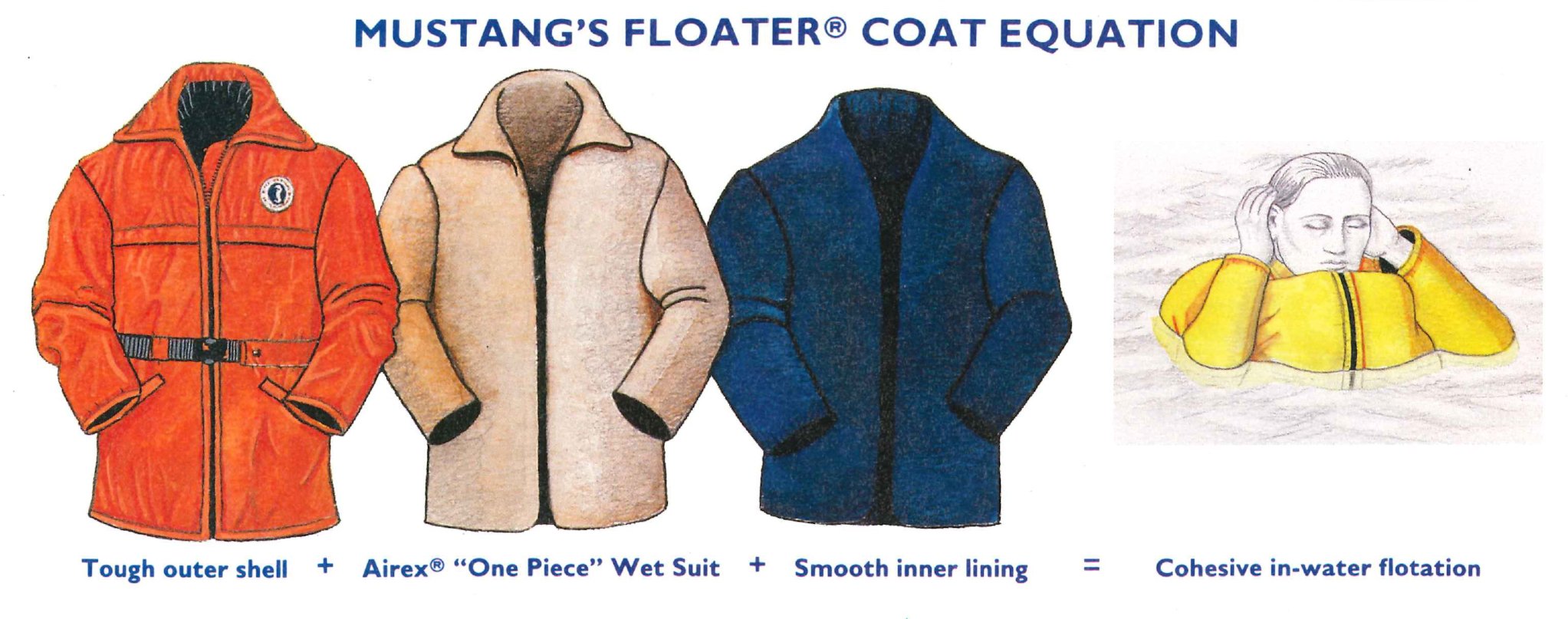
Archived diagram breaks down what made the Floater Coat a success. | Image: Mustang Survival
Finding the path to paddlers
Mustang’s roots are written into Bazant’s job title—professional, defense and aerospace. From its inception, the brand made a name for itself amongst professionals working in high-risk aquatic environments, including the Canadian and U.S. Coast Guard and military, law enforcement, Navy SEALS, and NASA. Research and development, including multiple iterations of prototypes, were par for the course. With so much testing and refinement, final products were rightfully recognized as gold standards of innovation. It was a tidy (and no doubt lucrative) space to occupy. But aside from clunky life jackets and drab PFDs that still turn up in cottage country, Bazant says Mustang missed out on key segments of recreational users—namely, paddlers.
“The nerd side of the business is very deep and long,” he laughs.
The tide began to change with the advent of inflatable life jackets. In the 1990s, Billabong, a popular surfing brand, commissioned Mustang to create streamlined, inflatable floatation bladders to help Hawaiian big wave surfer Shane Dorian survive epic wipeouts. Mustang engineers became recognized for their precise and durable radio-frequency welded seams. That was nearly three decades ago, about the same time the company created one of the first inflatable waist belts for paddlesports, which was met with mixed reception.
Full on winter paddling. | Photo: Mustang Survival
Chris Christie putting Mustang gear through winter paddling in B.C. | Photo: Marshal Chupa | Mustang Survival
“Paddlesports retailers looked at it, and they said, ‘What do we do with this?’” recalls Bazant. However, this “horrible bomb in the recreational sector” was embraced by the U.S. Navy, Bazant adds. “They asked us to add attachment points for a light and sea dye and made it the standard abandoned vessel pouch on every boat in the fleet.”
Fast-forward to the 2010s, and Mustang’s waist belt inflatable became popular with the expanding number of standup paddleboarders. Currently, the brand manufactures a pair of waist belt inflatables, including the tiny Minimalist and compact Essentialist belt packs, both of which provide up to 16.9 pounds of buoyancy and are approved by the U.S. Coast Guard and Transport Canada.
Images: Mustang Survival
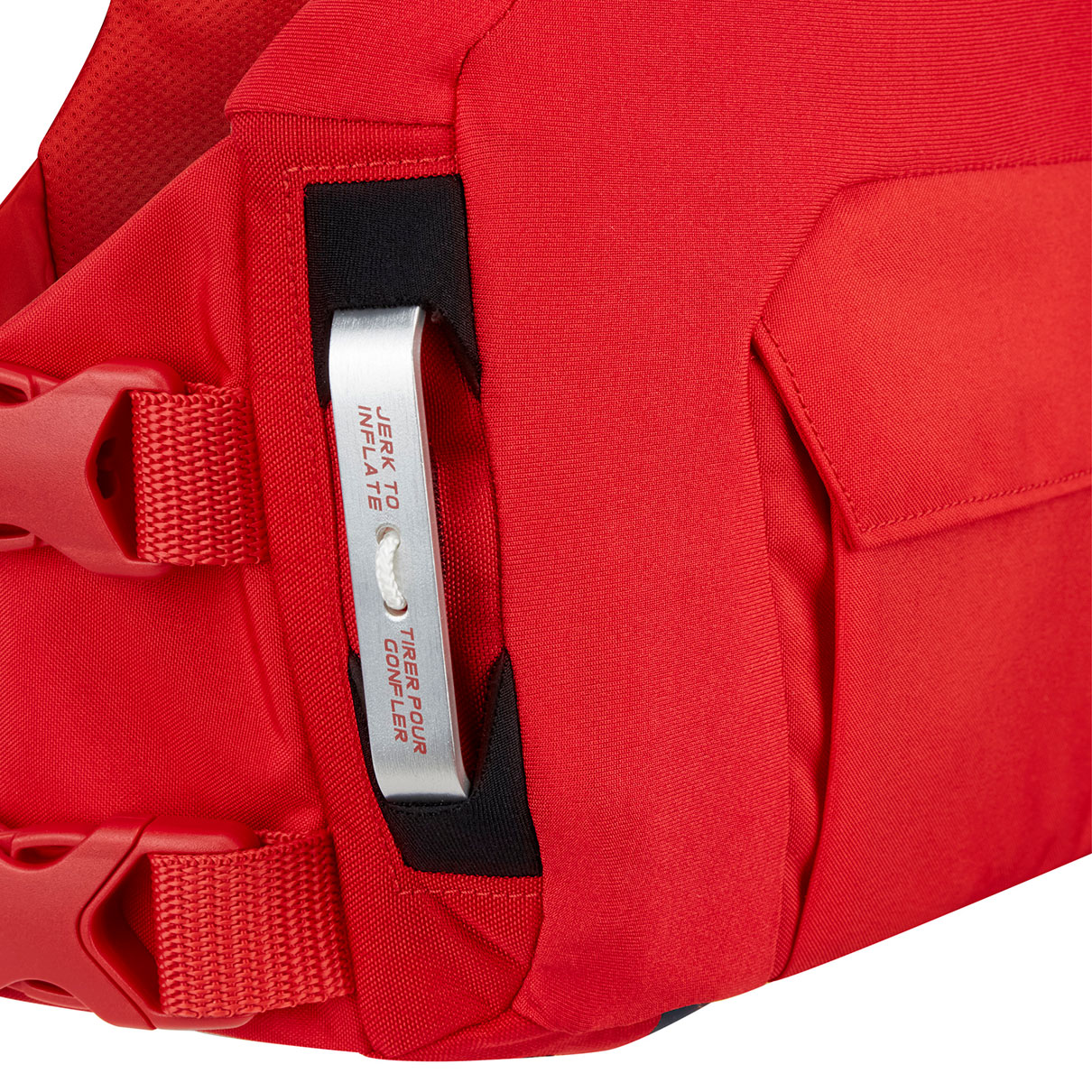
The Khimera’s inflation pull-tab. | Image: Courtesy Mustang Survival
The Khimera PFD inflated. | Image: Courtesy Mustang Survival
The Khimera ushers in the hybrid inflatable evolution
Despite their compact size and proven performance, inflatables can be a stretch for paddlers more familiar with foam PFDs. Enter the slim-fitting, PFD-shaped dual-floatation Khimera. Like most Mustang products, it has professional origins, starting as a rescue swimmer vest for first responders in helicopter rescues.
“They need to wear life jackets but don’t want it to be bulky because it’s hard to see when they’re going down the wire,” explains Dave Abt, the head of Mustang’s public safety and industrial business department. “The solution was to create a vest [known as the MRV170] that doesn’t restrict movement and provides additional floatation when it’s really needed. It was and still is the only vest in the market of its kind.”
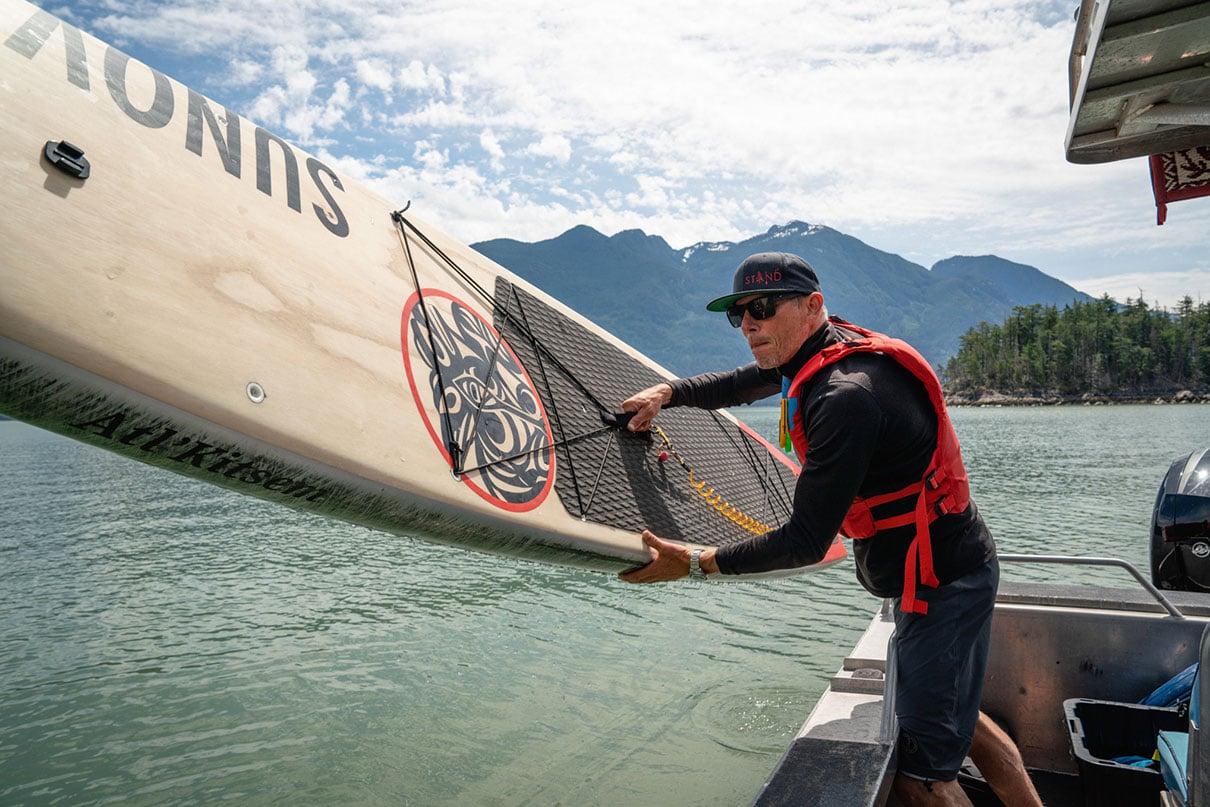
Expedition paddlers such as Norm Hann choose the Khimera for its lightweight, dual flotation design. | Photo: Mustang Survival
For the Khimera, “The technology stayed the same with small changes and some features removed for the rec market,” notes Abt. Mustang scaled back the flotation to 7.5 pounds of foam and 13 pounds of manually deployed inflation, which was plenty to achieve U.S. Coast Guard and Transport Canada certification.
Canadian expedition paddlers Norm Hann and Bruce Kirkby chose Khimeras for their daunting 50-kilometer crossing of the Hecate Strait, from British Columbia’s northern coast to Haida Gwaii, in June 2023. “We’re huge fans,” says Kirkby. “It’s a lightweight, dual-flotation PFD that we’ve used on expeditions, training and travel. The Khimera weighs almost nothing, which means no additional strain on the back, especially during long days. The dual floatation offers serious protection in all sea conditions.” The Khimera was also selected as one of the best life jackets for paddleboarders by Paddling Mag editors.
As much as Bazant hopes Mustang makes big strides in the paddlesports sector, he’s certain it won’t be at the expense of the brand’s emphasis on safety and innovation. He looks forward to more game-changing products like the Khimera, which bridge the gap between professional and recreational users, and employ high-tech and dependable air bladders to make safety as streamlined and comfortable as possible. “We’ve never been the cool brand,” he says. “We’re the reliable brand.”
“When the chips are down, pros come to us to use our equipment,” Bazant continues. “When you work in this space, it quickly becomes apparent performance is all that matters. You either deliver, or you don’t.”
Type 2 fun immersion. | Feature photo: Mustang Survival
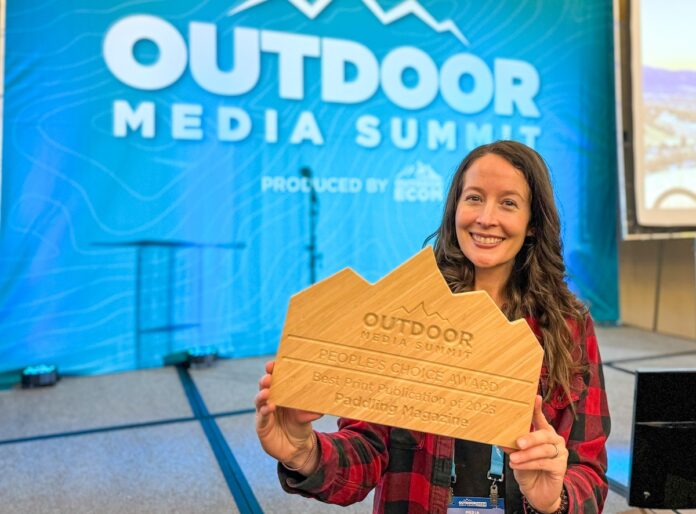
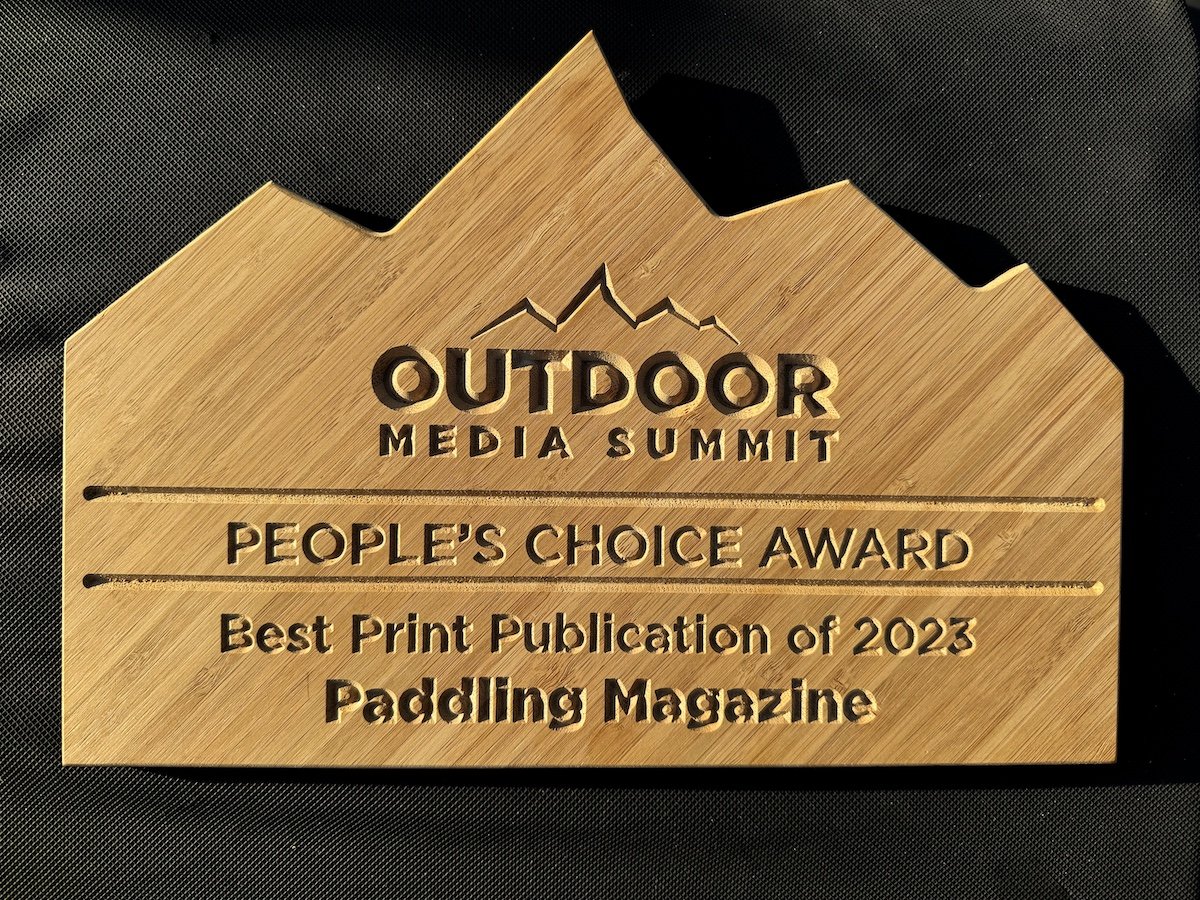
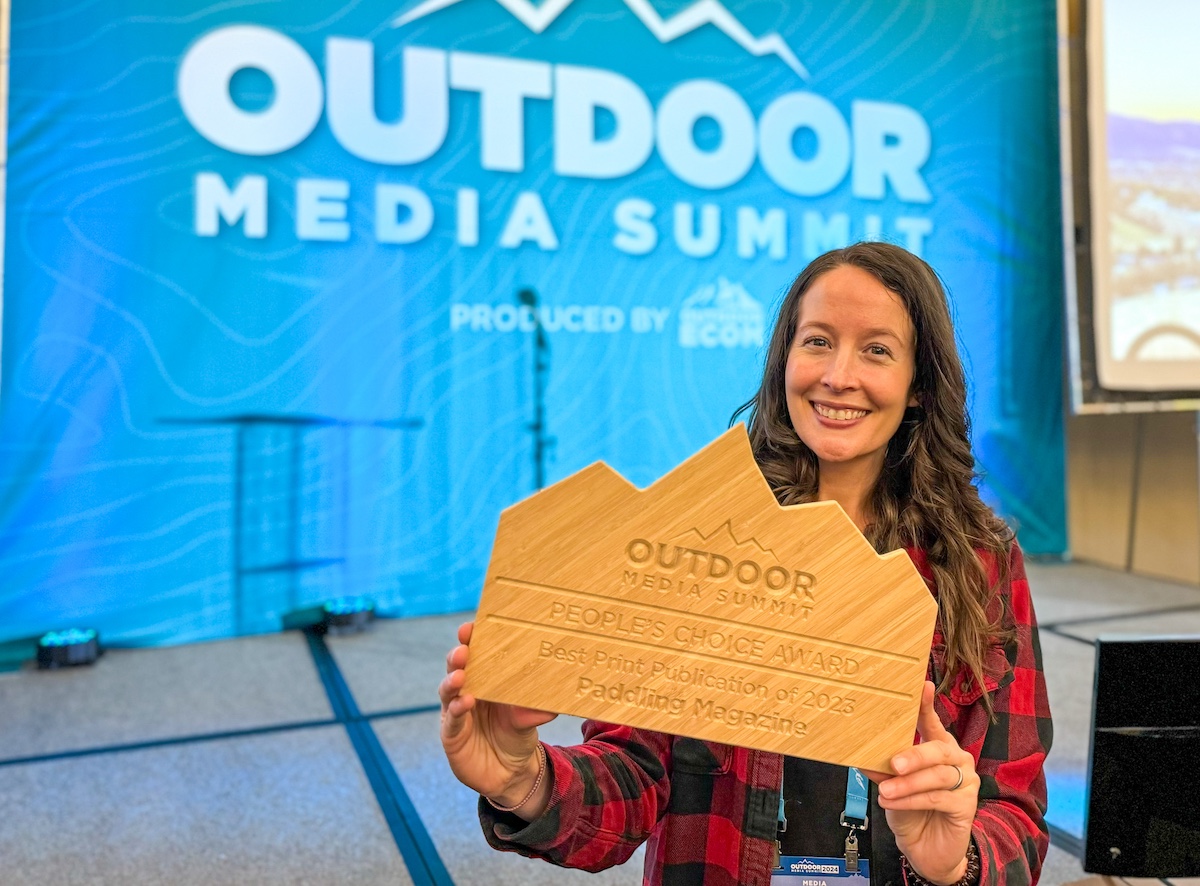
EIC Kaydi Pyette with the People's Choice Award for Best Print Publication.
Paddling Magazine is stoked to announce its win of the People’s Choice Award for Best Print Publication at the Outdoor Media Awards, held during the Outdoor Media Summit from October 14 to 16, 2024, in Missoula, Montana. Competing against legacy publications like Outside and Backpacker, this recognition underscores Paddling Magazine’s dedicated audience and excellence in outdoor media.
A huge thanks to our readers who voted for us and made this win possible!
The award was recieved on October 16, 2024, in Missoula, Montana, at the Outdoor Media Summit.
EIC Kaydi Pyette with the People’s Choice Award for Best Print Publication.
Editor-in-Chief Kaydi Pyette attended the event to accept the award on behalf of the Paddling Magazine team. “We’re incredibly grateful to our loyal readers, whose passion for paddling continues to inspire us,” said Pyette. “This award reflects the strength and enthusiasm of our community, and we are committed to continuing to deliver the stories that entertain, inform and inspire our readers to paddle forever.”
This is Paddling Magazine’s third major award in 2024, after receiving the Best Magazine: Special Interest and the Grand Prix awards at the National Magazine Awards in June.
“We’re incredibly grateful to our loyal readers, whose passion for paddling continues to inspire us.”
In addition to receiving the award, Pyette also spoke about the evolution and endurance of enthusiast print media on a panel discussion alongside editors from Ori Magazine and Adventure Journal. The panel explored how niche publications are navigating the digital age, keeping audiences engaged with compelling content and transforming how readers interact with media today.
The three-day Outdoor Media Summit offered a packed schedule of events, combining one-on-one meetings, breakout sessions and industry discussions. It kicked off with a product showcase, where participants visited brands including Old Town, Simms, NRS and Eddyline to preview the latest 2025 products. (We’ll tell you all about those products as soon as their embargoes lift!)
On day two, Field & Stream Editor-in-Chief Colin Kearns delivered an inspiring keynote detailing the revival of the 129-year-old print magazine and shared strategies for staying relevant and sharp in a competitive media landscape.
The annual summit serves as a platform for connecting outdoor media professionals, discussing industry trends and celebrating achievements, like Paddling Magazine’s award.
Paddling Magazine Subscription
If you’re not already a print magazine subscriber, you can dive deeper into the world of paddling with a subscription to Paddling Magazine. If you’re passionate about paddling adventures and value top-notch storytelling, subscribing is the perfect way to ensure you never miss out on the exclusive content of our biannual magazine. From thrilling expedition stories to expert tips and the latest gear reviews—Paddling Magazine is crafted for enthusiasts by enthusiasts.
Subscribe now and let us bring the adventure to your doorstep. If you love paddling, you’ll love Paddling Magazine.
Award-winning editorial features
Print issues delivered to your doorstep
Every page of every issue in our digital archive
First access to digital issues
Download our app to read stories anywhere, online or offline
On October 9th, 2024, Casey Bryant Jones received a text from brother-in-law, whitewater coach Joel Kowalski:
“Another big flare happened. Tomorrow night is supposed to be as big as the one this May!”
Casey Bryant Jones is a whitewater paddler who manages the Ottawa Kayak School at Wilderness Tours. In his spare time, he’s an adventure photographer and filmmaker. Bryant Jones has a string of epic whitewater shots under his belt from the Ottawa River to Kern River. Yet there was one shot that had remained an elusive lifelong dream: Kayaking rapids under the aurora borealis.
What is the aurora borealis?
This October, the National Atmospheric and Oceanic Administration (NOAA) issued a G4 Geomagnetic Storm Watch, sharing, “a coronal mass ejection (CME) is an eruption of solar material and magnetic fields. When they arrive at Earth, a geomagnetic storm can result. Watches at this level are very rare.”
The effects of a geomagnetic storm at this level include potential critical impacts to infrastructure and technology, and the aurora may be seen as far south as from Alabama to Northern California.
Particles from geomagnetic storms travel down the Earth’s magnetic field. When the particles interact with the gasses in our atmosphere, they sometimes produce light which appears to the human eye and cameras as the aurora borealis.
Large geomagnetic storms like the G4 storm this October are often produced by cornmeal mass ejection (CME), or plasma ejected from the sun traveling at high speeds. Generally the higher the solar wind speed, the more active and farther south the aurora is seen.
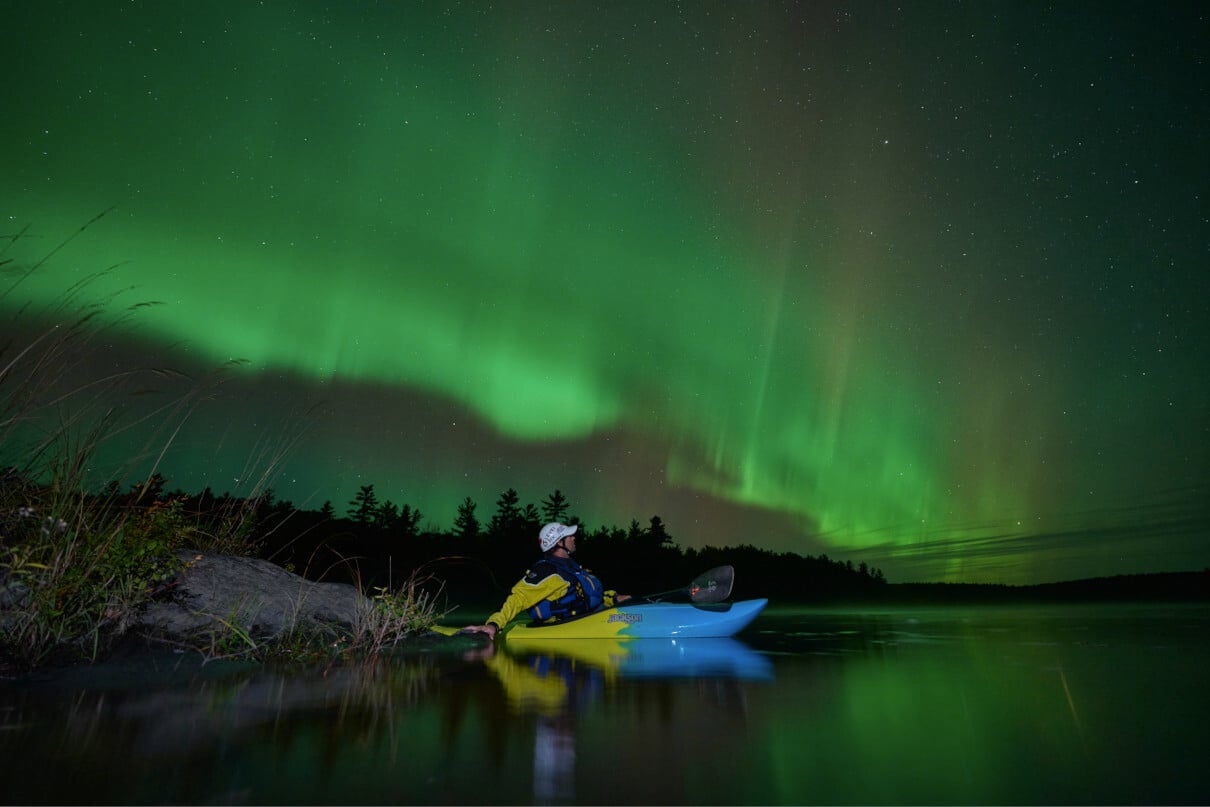
The Northern Lights on the Ottawa River over whitewater kayaker Joel Kowalski. Image Casey Bryant Jones | YouTube
How kayaker Casey Bryant Jones captured the Aurora Borealis on The Ottawa
Initially, the forecast had called for clouds but just a half hour before sunset the sky began to clear. Bryant Jones and Kowalski decided to go for it– this was their chance to whitewater kayak under the northern lights.
They launched from Bryant Jones’ home along the Ottawa River, within the National Whitewater Park which protects the Rocher Fendu Rapids. The National Whitewater Park is a part of the greater properties of Wilderness Tours and the Ottawa Kayak school, where Bryant Jones works as a manager. Here, Wilderness Tours has protected roughly 5,000 acres around the river.
A half-moon lit the way while Bryant Jones and Kowalski began their paddle.
“We knew that we would have to basically paddle one rapid from where we would be putting in and we would have two rapids after Garvin’s Chute as we weren’t going to run Garvin’s in the dark. In both cases, we took the most relaxed line,” Bryant Jones said.
“I’d never seen the Northern Lights, but it’s genuinely been something I’ve been interested in getting the opportunity to photograph for the better part of 15 years. It was really exciting.”
To chase his dream shot, Casey Bryant Jones needed to come prepared. Photographers often use a technique called long-exposure photography to capture images of the night sky.
Here’s what Bryant Jones packed to create his images of the aurora while whitewater kayaking:
K&F Concepts Travel Tripod
Sony A1 camera with Sigma 16-28 f2.8
Sony ZV-E1 camera with Sony 24-70 f2.8
DJI MIC2 for audio
GoPro 12
Sirui Carbon Travel Tripod
All in all, this came out to two dry bags worth of equipment in order to photograph the Northern Lights.
“You have to be thoughtful with how you pack it and thoughtful with where you place it inside the kayak as well,” Bryant Jones added.
If it seems like we’ve had more aurora borealis action recently than ever before, it may be because right now we are in a period of solar maximum. Solar activity is on an approximate 11-year cycle, and we are at the peak of that cycle and expected to remain in that peak until early 2026.
According to NOAA, particularly active regions on the sun tend to be repeatedly directed at the Earth from one solar rotation to the next, meaning if there was geomagnetic activity and aurora today, there might be aurora again in about 27 days.
There are a few ways to stay updated on the change of a major geomagnetic storm producing aurora in the near future:
The NOAA NWS Space Weather Prediction Center shares updates on space weatheron Facebook as updates are issued. Another great gauge of real-time aurora potential is to find a north-facing live camera near you. Live cameras can often be found in National Parks, and can be used as a gauge of whether you are currently able to see the aurora near you.
For nearly 40 years, Quebec manufacturer Rhéaume has carved a niche in the canoe industry, but you’d be forgiven for not recognizing the brand’s name. For much of its history, Rhéaume quietly crafted canoes for some of the industry’s most well-known brands instead of promoting its own name. More on that in a moment.
In the ’80s, it was a chance encounter that saw Rhéaume’s founder, furniture maker Alain Rhéaume, venture into the uncharted waters of canoe manufacturing.
“He met a couple of people who saw what he was doing with furniture and asked if he could build them a canoe,” says Rhéaume’s marketing manager, Benjamin Gonzalez Rosell. Without prior experience in canoe craftsmanship, Alain plunged into research, poring over every canoecraft book he could find. That first canoe was a revelation, marking Alain’s pivot from furniture to founding a canoe factory.
Initially, Rhéaume’s production was solely focused on cedar canoes. However, by 2010, the company recognized the shifting market demand toward lighter canoes and transitioned away from its cedar roots.
“People were looking for something more comfortable than a 75- to 80-pound canoe on their backs,” says Rosell. This led Rhéaume to venture into the composite business, which now makes up 90 percent of its manufacturing.
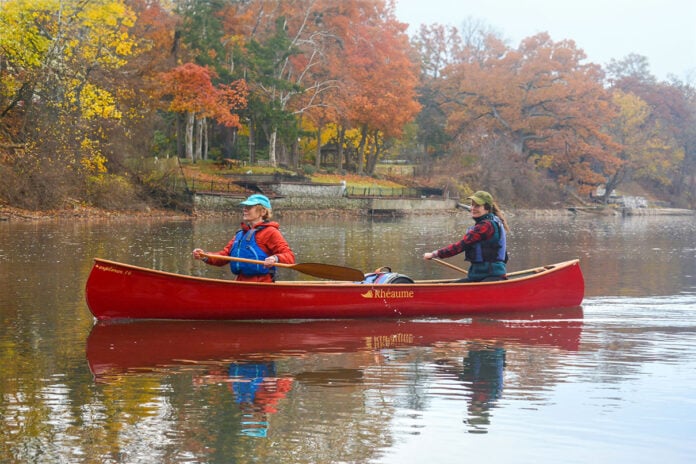
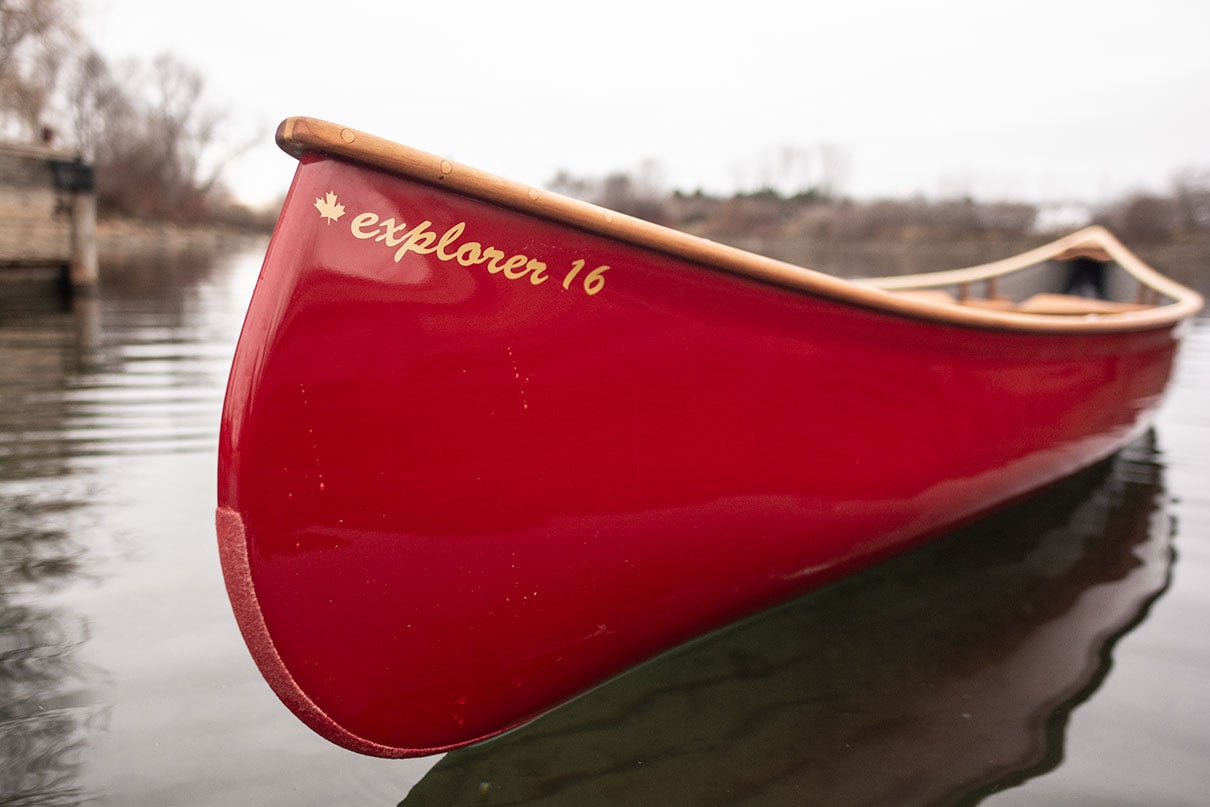
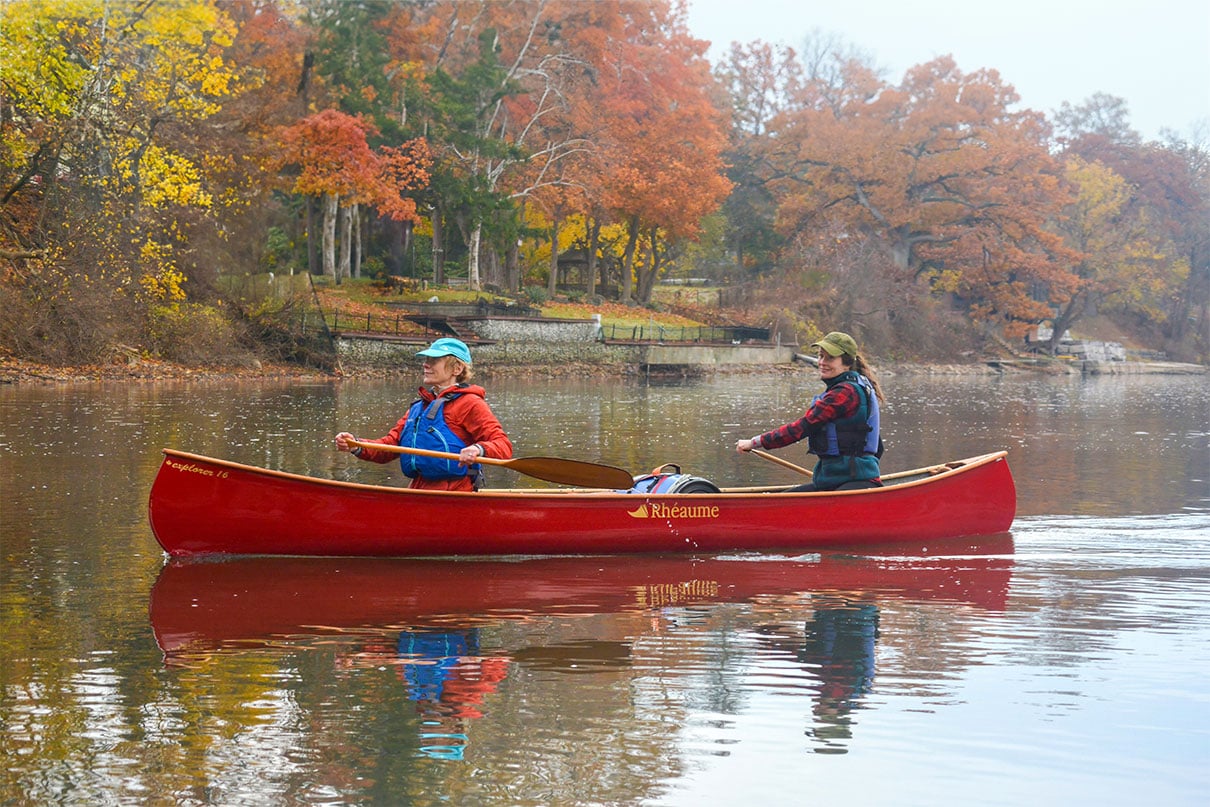
With a beam of 38 inches, the Explorer 16 offers reassuring stability for all paddlers. Developed from Rhéaume’s popular Huron model in red cedar, the Explorer 16 in Kevlar retains the classic features of the Huron while offering a weight and cost more paddlers will find accessible. | Photo: Kaydi Pyette
Rhéaume may already make your favorite canoe
Prior to the pandemic, Rosell estimates 95 percent of Rhéaume’s canoes were manufactured for other brands, sent across North America and Europe, and at various times sold under notable names such as Eddie Bauer, Old Town Canoe, L.L.Bean and American Trader.
“With the pandemic, people started contacting us directly to buy, and that’s how business has grown in the last couple of years,” Rosell says. He estimates 40 percent of the canoes are now sold directly to consumers under the Rhéaume brand name, while the remainder are still manufactured for other companies.
Why do so many legacy canoe brands knock at Rhéaume’s manufacturing facility door? “We are very meticulous with our process,” suggests Rosell, highlighting time-honored techniques and investment in quality automation. He adds founder Alain is still very much involved in the manufacturing cycle. “He supervises everything; he works with our crew so that they learn from him. He does all the quality assurance himself.”
Rhéaume’s operation moved to a new facility in St-Tite, Quebec, after a devastating fire in 2017 burned down the original factory. Today, the facility bustles with 15 to 20 full-time employees, producing 30 canoes a week.
At the heart of Rhéaume’s lineup of nine composite canoes is the bestselling Explorer 16. Its classic lines are drawn from its cedar predecessor, the Huron, which Alain designed in 1987. Though the Huron remains one of Rhéaume’s most popular cedar canoes, its transition to composite materials and reincarnation as the Explorer 16 has broadened its appeal—and shaved 30 pounds off its frame and $2,000 off its price tag, too.
Though it looks like a pretty cottage canoe, don’t let the Explorer’s beauty fool you—it’s a versatile canoe, ready to handle any lakewater challenges you throw its way and suitable for all sorts of adventures, from serene fishing to backcountry family trips. Before COVID, Rosell tells me the Explorer was most popular with the sportsman crowd but has since achieved new popularity with families.
Rhéaume’s family-friendly Explorer 16 is a charming and versatile lakewater companion. | Feature photo: Geoff Whitlock
Paddling the Explorer 16
On one of my day trips with the Explorer 16, my mom joins in the bow and immediately notes how stable it feels, its beamy 38-inch width quickly putting her at ease. Rosell says the Explorer is the most stable canoe in Rhéaume’s fleet. In addition to its width, the flat-bottom hull curves into generously rounded chines and provides excellent primary and secondary stability.
The beautifully curved bow and stern are roomy and provide lots of space for legs, kids, dogs, gear and anything else you can dream up. Combined with a stated 1,000-pound capacity, the Explorer is an ideal paddling companion to fill to the gunwales and venture off for a long weekend or more. Just watch out for rocks, please, I tell my mom, as I keep a cautious eye on preserving its immaculate cherry red finish.
An optimum all-rounder in its design, the Explorer tracks well thanks to a minimal rocker while maintaining good maneuverability. It offers an easy-paddling feeling canoeists of all experience levels will love, especially as it feels quick and light as it glides across the water.
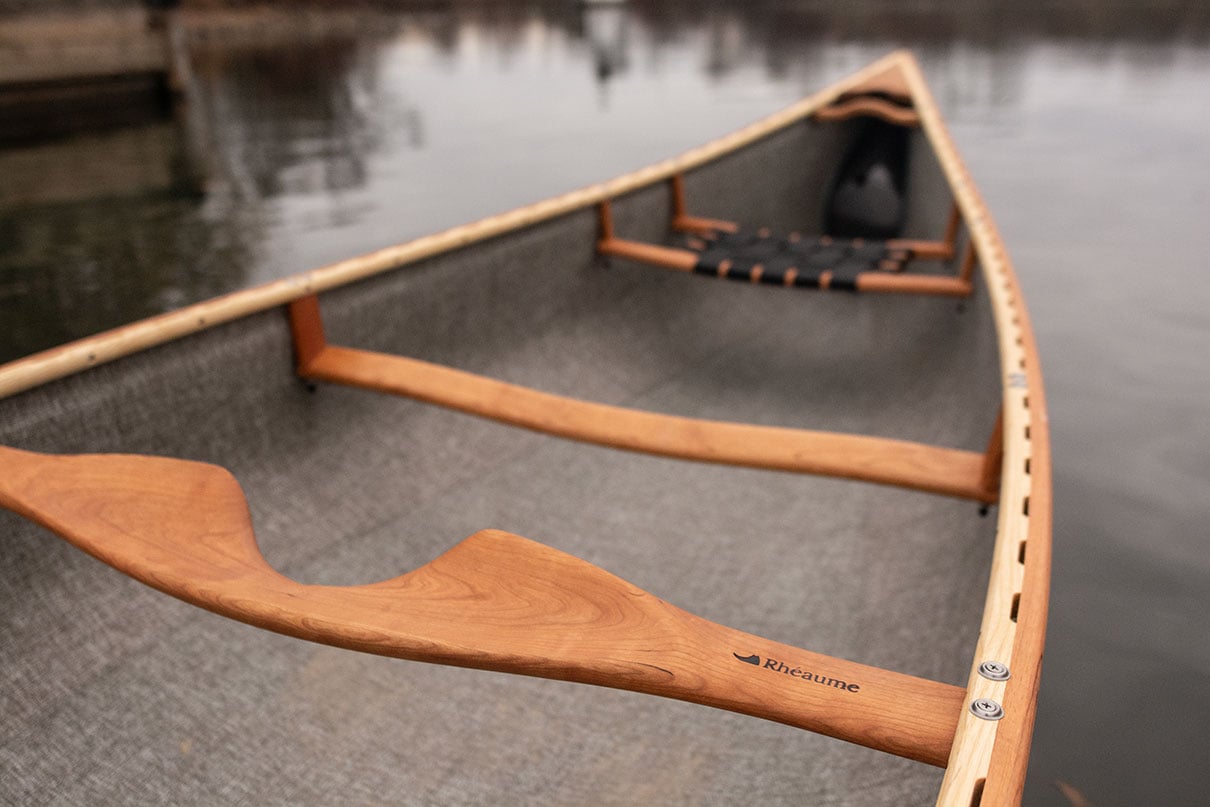
Our tester featured a Kevlar layup with a layer of basalt and innegra weave for increased durability, however, the Explorer 16 is also available in fiberglass and carbon. Given Rhéaume’s history in cedar canoe manufacturing, it’s no surprise the wood craftsmanship on the Explorer is exquisite. Its cherry trim adds elegance and warmth, and annual oiling would be a small effort to preserve its beauty.
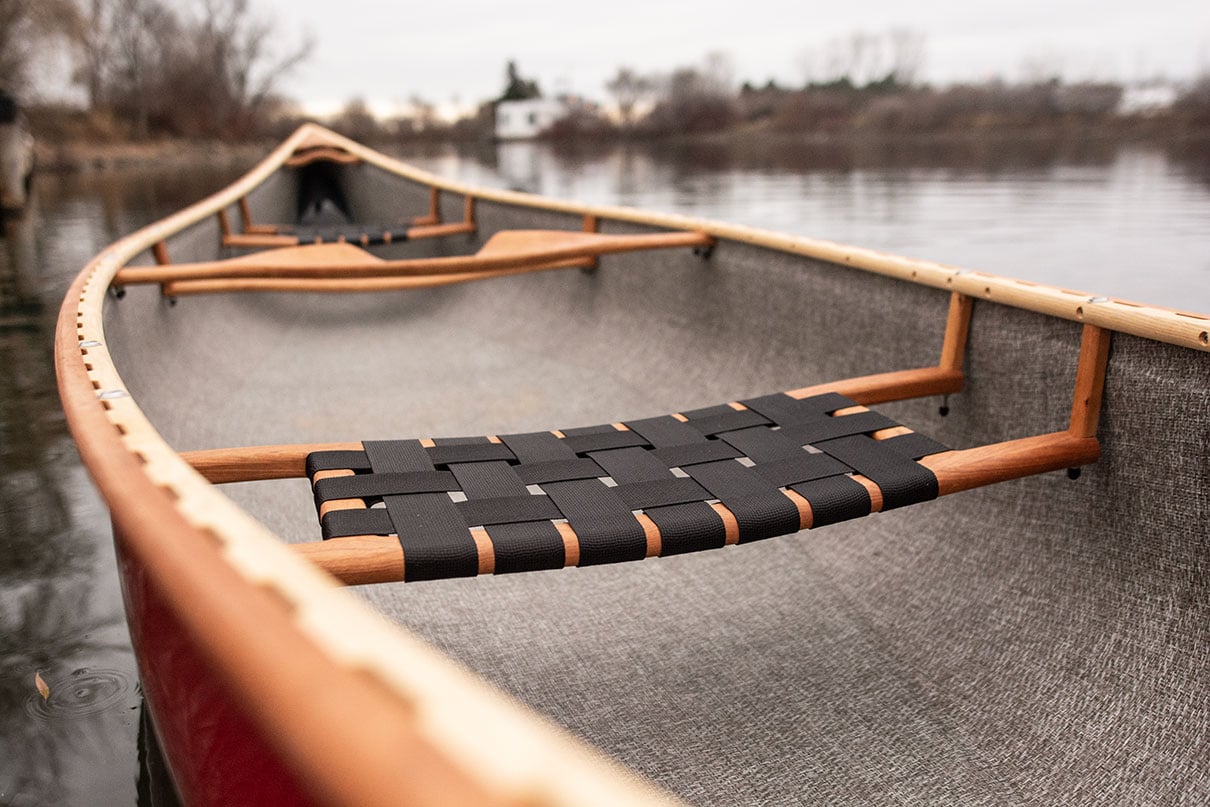
Our tester model featured Rhéaume’s standard and ergonomic webbed seats, but for an additional $300, trippers can opt for a sliding seat. The kneeling thwart on the Explorer 16 is a $100 upgrade. | Photo: Kaydi Pyette
The oiled cherry deep dish yoke is comfortable on the shoulders, contributing to an easy carry on long portages. | Photo: Kaydi Pyette
The Explorer 16 in Kevlar weighs between 40 and 42 pounds with cherry trim or 39 to 41 pounds with composite gunwales. Webbed seats, a deep dish carrying yoke and a kneeling thwart rounded out the outfitting on our loaner model. The Explorer is also available in a 14-foot version for day-trippers and soloists.
This article was first published in Issue 72 of Paddling Magazine. Subscribe to Paddling Magazine’s print and digital editions, or browse the archives.
Rhéaume’s family-friendly Explorer 16 is a charming and versatile lakewater companion. | Feature photo: Geoff Whitlock
Kneeling through rapids is an easy way to increase your stability in the canoe. | Feature Image: Colin Field
There is no better way to get on the water and get away from it all than in a canoe. Canoeing is simple, efficient and has a relatively low barrier to entry. And, once you have the basics down, you can go just about anywhere.
In this article, I’m going to go over the basic questions you might have when learning how to canoe. Like learning most things, however, reading about something is much different than doing it. Taking a lesson from a qualified instructor can make the learning process go more smoothly and will help give you confidence on the water.
How to launch a canoe
Where to sit in a canoe
Before you just jump into a canoe all willy-nilly, there are some things you should have figured out, like where the bow (front) of the boat is and where the stern (back) is. You should also figure out who’s sitting where. The easiest way to figure out where the bow of the boat is, is to look at the seats. The end that has the larger space between the end of the boat and the seat is the bow—if you try to sit in the rear seat as a front seat, you’ll see the issue very quickly as there won’t be much room for your legs.
Oh the places you’ll go once you learn how to canoe. | Image: Scott MacGregor
The majority of steering comes from the stern of the boat, so between you and your partner, you should probably put the more experienced paddler in the stern. In an ideal situation, the heavier of the two paddlers should be in the rear, but paddling experience can override this rule.
If you’re paddling solo, you’ll want to move forward in the boat. You want your weight somewhere closer to the middle of the boat, so the bow isn’t in the air being blown around by the wind. If you have a symmetrical canoe—which means the bow is the same shape as the stern—you can sit backwards on the bow seat and paddle the canoe “backwards.” This is sufficient to get your weight farther forward in the boat. Other times, you’ll need to sit closer to the yoke (centered on the canoe). It will depend on conditions and the boat itself.
Canoes are pretty stable once you’re in them, but it’s getting into them some people find tricky; that’s because while stepping in, your center of gravity is high. The lower you can get it to the bottom of the canoe, the more stable the boat becomes.
If you’re launching from a beach, it’s best to sit the canoe perpendicular to the shore. With the bow of the boat in the water, one person can stabilize the canoe from the stern as it rests on shore, while the bow paddler walks in the canoe up to the bow seat. Be sure to stay low and use the gunwales for support, with your feet close to the center line of the boat, then sit down. Once the bow paddler is seated, the stern paddler can push the boat until it floats, then step carefully into the boat and onto the stern seat.
Getting in a canoe from a dock or rocky shoreline is a little more difficult, but still quite easy if you are careful and methodical in your movements. Position the canoe parallel to the dock or shore. One person stabilizes the boat while the other steps into the canoe. While stepping in, remember to stay low. As you step in, remember to step into the center of the canoe one foot at a time.
If you’re doing either of these launches as a solo paddler, the actions are similar, but you don’t have the partner to stabilize for you. Be sure to reach to the far gunwale to help equalize your weight before stepping in and step one foot at a time into the center of the boat. It’s helpful to enter near the stern of the boat, where it’s narrower, and then move forward.
How do I get out of a canoe?
Getting out of a boat on a shallow beach is the same process as getting in, only in reverse. Paddle the boat into shore, perpendicular to the shoreline. The bow person steps out of the boat and stabilizes it for the stern paddler who, in turn, walks to the front of the boat, then steps out in the shallower water.
Getting out of a boat on a dock or rocky shoreline is also the reverse of getting in. One partner will stabilize the boat by grabbing the dock, while the other will stand up slowly with their hands on the gunwales and feet in the center of the boat. That person will step from the boat to the dock carefully and methodically. Then they’ll stabilize the boat while their partner exits.
As a solo paddler, you’ll need to stabilize the boat by grabbing the outer gunwale and the dock, slowly stand to a crouched position in the center of the boat, and then carefully step up and onto the dock.
Kneeling is an easy way to increase stability in your canoe. | Feature Image: Colin Field
Kneeling vs. sitting
Kneeling and sitting are about your only two options while in a canoe. And while sitting is the more comfortable of the two options, it isn’t always the best choice. Here’s why. When you’re sitting in a canoe, your center of gravity goes onto the seats, so it’s considerably higher than if you are kneeling. When you’re kneeling, your weight is on the bottom of the boat, essentially below the waterline. The higher your center of gravity is, the more likely you are to tip.
That said, few canoeists (probably only the ones on younger knees) can kneel all day. It’s okay to switch from one to the other during a long paddle; just remember that everything is more stable if you’re kneeling, so when you see some waves or technical paddling coming up, drop to your knees for an action stance.
It’s an easy DIY project to add kneeling pads to your paddling stations.
To properly hold a canoe paddle, you want one hand on the top grip—also called the butt of the paddle—and the other hand on the shaft, closer to the paddle’s blade. The butt end of the paddle will be shaped to fit your palm, while your bottom hand should grasp the shaft thumb-side up. If you’re paddling on the left side of the boat, your right hand will be on top of the paddle; if you’re paddling on the right side, your left hand will be on top.
How to paddle forward
With your hands in the proper position and with a slight bend in your elbows, rotate your torso in the direction of your top hand. Plant your paddle blade in the water, then punch your grip hand forward and down, creating a lever with your lower hand, while rotating your torso to put some bodyweight behind the punch. Your lower hand will guide the blade back, along the side of the canoe. Once the blade has passed your hip, slice it out of the water and return to your starting position.
Remember to keep the paddle vertical in the water—you want your grip hand to be out over the water. This technique harnesses the large and powerful muscles of your core versus the comparatively weak ones in your arms and shoulders. If your arms start to feel tired, it’s usually a sign you’re not employing the proper technique.
The most efficient way to paddle forward is for both canoeists to paddle in sync. This means the stern paddler will need to match the cadence of the bow paddler’s strokes, and the bow paddler will need to do their best to make smooth, consistent strokes. Paddlers should paddle on opposite sides of the canoe and communicate when they want to switch sides.
How to paddle backward
Guess what? Paddling backward is just like paddling forward, only in reverse. Why would you want to paddle backward? All kinds of reasons. Maybe you want to avoid something downstream. Maybe you just want to go backward for a bit. Give it a try and have it in your back pocket as yet another paddling skill.
Image: Scott MacGregor
How to steer a canoe
Steering a canoe is pretty easy once you have the right techniques dialed. As stated above, the stern paddler is mostly responsible for steering the canoe. The way many first-time canoeists will steer a canoe is by simply switching which side of the boat they are paddling on. After all, more strokes on one side of the boat will turn the boat in the other direction. However, this isn’t a very efficient way of steering your canoe.
The first canoe stroke you’ll want to learn is the J-stroke. This stroke is useful for both keeping your canoe on course and turning. If you and your canoeing partner are paddling on opposite sides of the boat in sync, in theory this should mean your canoe will travel in a straight line. However, if the stern paddler is stronger than the bow paddler, after every few strokes the canoe may start to turn away from the side the stern paddler is paddling on. Instead of switching sides to correct the direction of the boat, the stern paddler can use the J-stroke.
In essence, the J-stroke involves beginning a normal forward paddle stroke and then turning the power-face (the side of the blade facing the back of the canoe) away from the canoe. The easiest way to do this is to rotate the hand holding the top of the paddle so the thumb is pointing down. The blade can then be pried out away from the boat, depending on how much of a correction needs to be made.
The J-stroke can also be used to turn the canoe in a new direction. If the stern paddler is paddling on the left side of the canoe, the J-stroke will enable them to turn the canoe to the left. In this situation, if the stern paddler wished to turn the canoe to the right, in theory they could switch sides and perform the J-stroke on the right side of the boat. A much easier technique, however, is to perform a sweep stroke.
The sweep stroke is often used by solo paddlers, but a partial sweep stroke can also be useful to tandem paddlers. The stern paddler will plant their paddle out 90 degrees from their body and, using their core strength, will draw the paddle back in an arc through the water until it reaches the back of the boat. This will turn the boat away from the side the stern paddler is paddling on.
How to move your canoe sideways
By using draw and pry strokes, two paddlers can easily move their canoe directly sideways in still water. While the bow paddler uses a pry stroke, the stern paddler can use a draw stroke on the opposite side of the boat, or vice versa depending which direction you want to move.
Start a draw stroke by rotating your upper body to the side you’re paddling on. Plant the blade in the water, even with your hips. Keeping your hands stacked, and with the power-face of the blade facing the boat, draw the paddle into your hip. This motion will cause the boat to move toward the paddle.
A pry stroke is the opposite. The paddle starts beside the boat and is pushed away, causing the boat to move away from the paddle.
Paddling a canoe by yourself can be challenging, there’s no doubt about that. Paddling in a straight line is the biggest challenge. To avoid switching from side to side every other paddle stroke, you’ll need to learn some of the classic paddle strokes, like the J-stroke.
As previously mentioned, if you’re using a two-person canoe, you’ll also need to get your body weight more forward than normal. This can be accomplished by paddling the canoe stern-first, sitting backward on the bow seat, or sitting closer to the yoke.
Paddling a boat by yourself is a lifelong endeavor. You’ll slowly get better and the more time you spend at it, the more proficient you’ll become.
Advanced canoeing techniques/strokes
As you get better at paddling and learn more about paddling strokes, the world of paddling will open up to you. There are a lot of strokes you can work up to including the C-stroke and the low brace. You can read about some of the best canoe strokes to learn here: 7 Canoe Strokes That Will Make You A Better Paddler.
What to do if your canoe capsizes
Flipping happens, and that’s okay. | Image: Colin Field
Do canoes flip easily?
It’s surprisingly difficult to tip a canoe on flatwater. Once you’re in and are positioned with your center of gravity low, the canoe will be quite stable. If you can avoid grabbing the gunwales (which effectively raises your center of gravity), you should be fine. Don’t be afraid to try wiggling your hips to see how a canoe feels when it is tipping side to side. Counteract your lower body with your upper body and you’ll see you can tip a canoe quite far without flipping it.
How to not tip a canoe
Generally a canoe will capsize due to paddler error—someone stood up or grabbed the gunwales, or the canoe got turned sideways in some fast-flowing water.
If you’re concerned about tipping your canoe, you’ll need to spend some time in one to get over the fear. Canoes are surprisingly stable once you’re in them. Time spent in the boat will quickly reassure you that this isn’t some circus balancing act. Anyone can balance a canoe.
Follow these simple tips and you’ll have no trouble keeping your canoe upright. First, as stated earlier, kneel on the floor of the canoe, as this is the stablest position. Once you gain some confidence, you can sit on the seats and maintain stability. But it’s best to kneel if you feel nervous. From there, recall the old saying “loose hips save ships” (or something like that…), meaning if the boat tips one way, you want your core and upper body to remain upright and perpendicular to the waterline. Staying loose in your hips and relaxing will help ensure your canoe doesn’t tip.
If you do flip the canoe, not to worry. There are several ways to right a capsized canoe. If your canoe is free of gear, ensure it’s upside down. If you and your partner are strong swimmers, swim under the canoe, face each other and grab the gunwales on either side of the yoke. Tip the boat and lift one gunwale slightly to break the seal. On the count of three and with a strong kick, lift the boat into the air and flip it over. Once the canoe is upright again, you’ll be able to bail out any remaining water.
How to get into a canoe from the water
Getting back into the canoe from the water is the trickiest part and takes some practice. With your partner in the water, grab opposite sides of the canoe close to the middle of the boat. Both of you will counteract each other as you pull yourselves up and over the gunwales into the canoe.
Finding the smooth water through a well defined rapid. | Image: Colin Field
Canoeing on different bodies of water and in different conditions
How to canoe a river
One of the great joys of a canoe is exploring a river in one. But there are some things you’ll need to know to do so safely. In an ideal situation, you always know what’s downstream; is there a log jam, waterfalls, a hydro dam? These are things you need to know when you put-in on a river. You’ll also need to be actively aware of any hazards while paddling. The bow paddler should keep an eye out for rocks, downed trees, and logs and communicate the location of these hazards to the stern paddler so they can steer the canoe clear.
If you’re on a slow, meandering river, you can sometimes paddle back upstream to your vehicle. Otherwise, you will need to leave a second vehicle at the take-out or arrange a shuttle.
How to canoe rapids
Before heading out on any river, it’s important to know what kind of features are on your route. Some rivers might have short sections of fast-moving water with small rapids that can safely be navigated by novice canoeists. Others might have more serious rapids that inexperienced paddlers should not undertake on their own. Enlisting the company of an experienced paddler or, even better, taking a course, will ensure you learn all the techniques and safety elements associated with paddling whitewater.
That being said, there are some general tips that will help you navigate those smaller rapids. First off, you should be wearing your PFD (you should be already, but it bears repeating). You’ll also want to assume a kneeling position for greater stability. Next is reading the whitewater to find a clear path through the rapids. To do this, you’ll need to look for V’s in the water. A V that points upstream has a rock at its point, which you’ll want to avoid. A V pointing downstream shows a clear path—you’ll want to steer into the opening of the V. Keep an eye out for logs, downed trees, and any other hazards and give these a wide berth.
When going through the rapids, avoid grabbing the gunwales. Keep both hands on your paddle, and keep paddling—it’ll help you maintain your balance. If you somehow get stuck sideways up against a rock, be sure to lean into the rock to keep your canoe from flipping. You may be able to push yourself off the rock or you might have to get out. This situation can be much more serious in bigger whitewater which, again, is another reason to take a whitewater course before tackling any rivers with rapids.
Image: Kaydi Pyette
Image: Kaydi Pyette
How to canoe on a lake
If you’re looking for a quiet and serene experience, canoeing on a lake is ideal. Lakes provide the best place to learn to paddle a canoe and the best place to enjoy the true freedom a canoe represents. Of course, we’re not talking about the Great Lakes here; we’re talking about cottage-country lakes that are small and free of boat traffic and waves. This is a great place to practice your strokes and experiment with swaying the boat back and forth to test its (and your) stability.
There can still be hazards on a lake, such as rocks and downed trees, so it’s important to always be aware of your surroundings. It’s also a good idea to check for wind and weather warnings prior to heading out. And always wear a PFD!
How to canoe upstream
Most people don’t think paddling upstream is much fun, but sometimes it has to be done. If you have to do it, the thing to realize is that you want to be paddling directly into the current at all times. As soon as you start traveling to either side of the current, it’ll push your boat sideways and start sending you downstream. The stern paddler really needs to focus on the direction of the boat, while the bow paddler provides the majority of the power.
What it looks like to line a canoe through a rapid. | Image: Colin Field
If you just want to sit still and maybe make a few casts with a fishing rod, then you’ll need to anchor your canoe. River anchors between eight and 15 pounds work well. Two anchors, one dropped off the bow, the other off the stern, will help stabilize the boat and minimize drift. Use a quick-release knot to tie the anchors to your canoe grab handles or thwarts.
How to line a canoe
Sometimes you’ll find sections of river that are beyond your comfort zone to paddle. At these spots you have two options: portage the boat and all your gear, or line the canoe. Lining a canoe involves tying a rope to both the stern and the bow of the boat. With one paddler holding each rope, they walk along shore, gently guiding the canoe through the water. It’s a technique that gets easier with practice and can save you a ton of portaging pain.
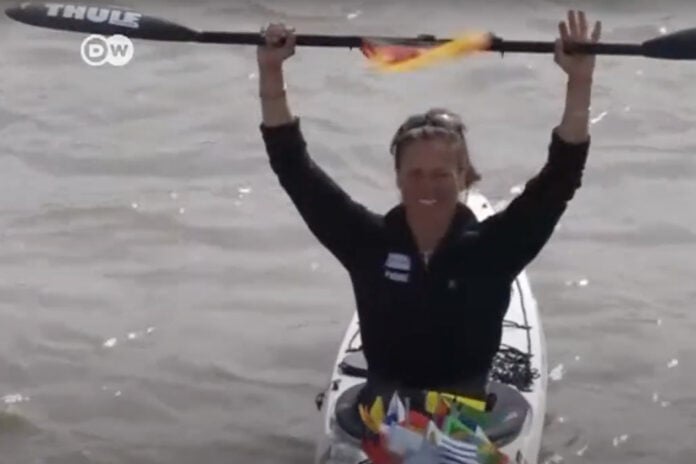
Freya Hoffmeister Circumnavigates South America. Featured photo: DW News | YouTube
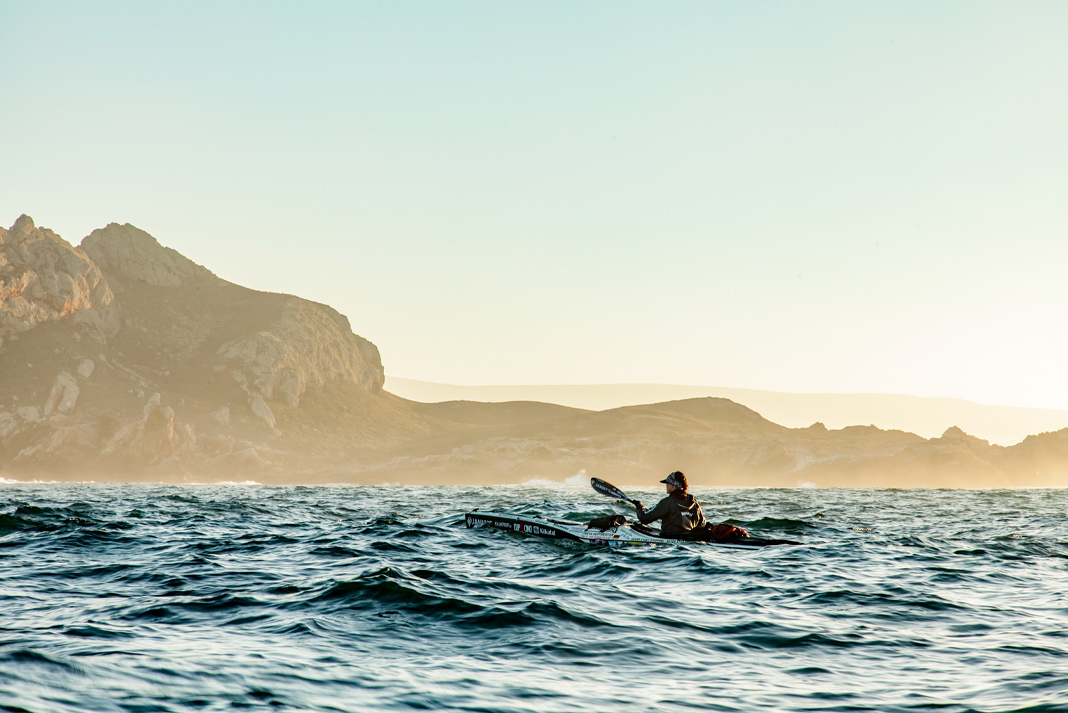
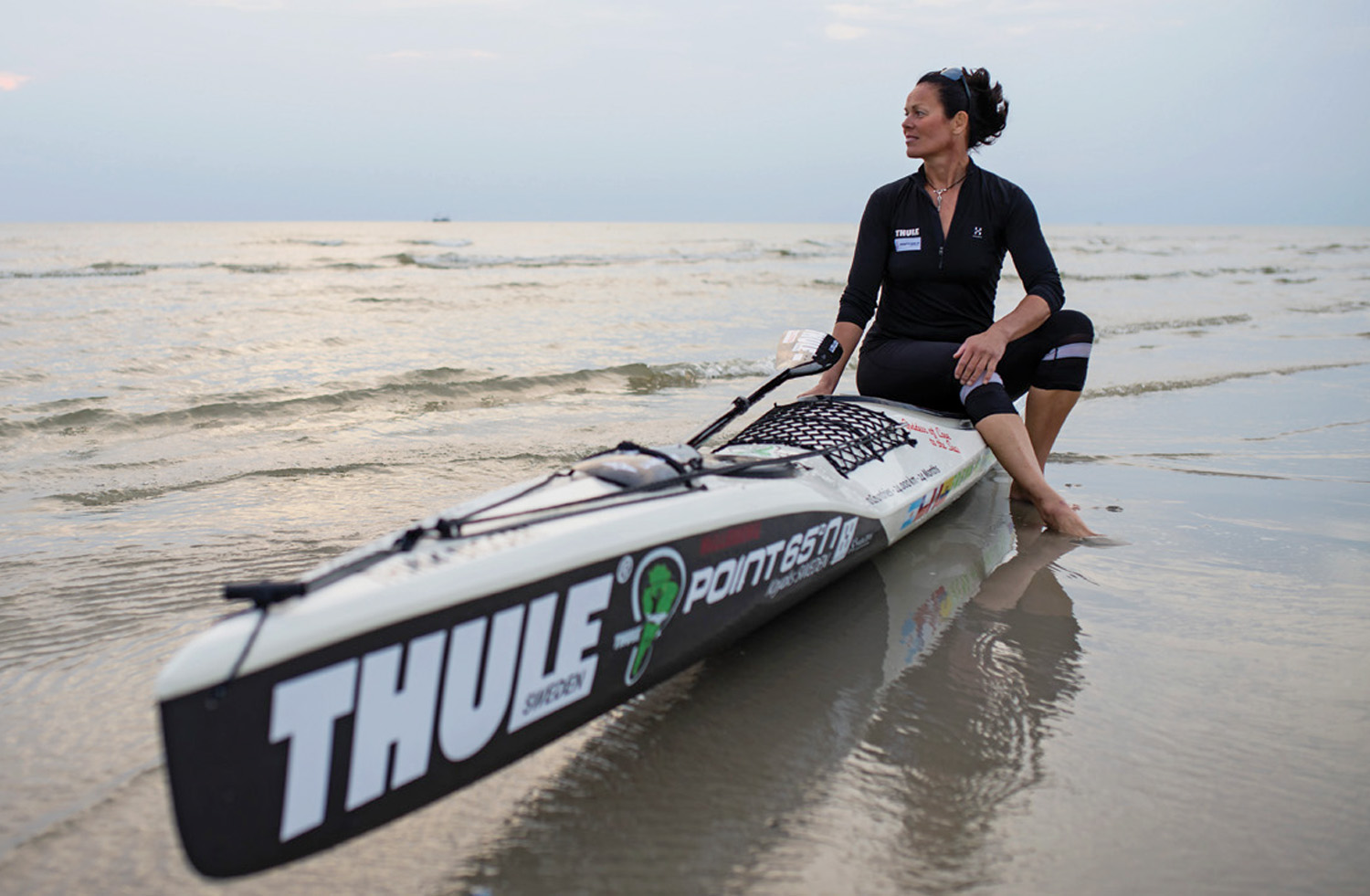
World class expedition kayaker Freya Hoffmeister is searching for two paddling partners to join her on the adventure of a lifetime this summer. For a month between May and September of 2025 you could join one of thegreatest kayak expeditions of all time— have you got what it takes?
As part of her North American continent circumnavigation, Hoffmeister will be paddling from New York to Labrador summer 2025 and is seeking companions for the journey.
Here’s what it takes to join a world class kayak expedition
Requirements include intermediate to advanced paddling skills, ability to paddle about 25-30 miles (40-50km) per day (25-31 miles) , willingness to paddle one of Hoffmeister’s Freya kayaks, ability to maintain a pace of five to six kilometers per hour, and ability to pee afloat according to Hoffmeister’spost on Facebook.
Additional requirements include “no grumpy faces”, occasionally paddling to music and singing, cooking your own meals as well as a small contribution to kayak transport logistics. Hoffmeister will handle the navigation, trip planning and written documentation of the journey.
Overall, Hoffmeister is looking for what anyone would want in an expedition teammate— someone with skills that match the route, with a positive attitude and willingness to work through discomfort, and a participatory team member rather than someone looking for a camp chef and guide.
While there were no obvious takers in the comments, the most common question on the Facebook posting was “how exactly does one pee while afloat?”
Answers ranged from pee funnels to simply peeing in your boat; from urine bottles to catheter solutions.
There’s no magic answer to how to pee from your sea kayak, but another expedition kayaker, Justine Curgenven, offers a few suggestions: pee on a sponge, use a funnel into a bottle, or raft up with a friend and pee between the two kayaks.
Circumnavigating North America
Freya Hoffmeister is no stranger to long expeditions—in fact, she is perhaps the most accomplished expedition sea kayaker in recorded history. Hoffmeister has circumnavigated Iceland, Australia, South America, and Ireland. While currently on the search for paddling teammates, in the past Hoffmeister has tackled a large portion of these expeditions solo and unsupported.
This most upcoming trip is just a small piece of her current mission: a circumnavigation of the North American continent. This 30,000-mile route will likely take 10-12 years in total to complete and began in March of 2017. Hoffmeister’s approach has been to tackle the north loop of the continent in the warmer half of the year, and the south loop of the continent in the cooler months.
With a pause in March 2020 during the onset of the coronavirus crisis, Hoffmeister’s journey is now back on track.
Currently, Hoffmeister has completed the western coast of the continent as well as a large portion of the Canadian Arctic. Future plans include expedition kayaking New York to Labrador summer 2025 and continuing where Hoffmeister left off at Ciudad del Carmen Mexico on the south loop in November 2024.
Hoffmeister advises paddlers looking to dive into the realm of big paddling expeditions to start small, paddle near home, and choose good paddling partners.
This isn’t the first time calls for expedition teammates have been made through Facebook— in November 2022,endurance paddler West Hansen shared “Teammates wanted for Northwest Passage kayak expedition: Must be able to sea kayak in very cold, turbulent waters for 12 to 20 hours at a stretch… Expedition will potentially take 4+ months… While venting is accommodated, whining won’t be tolerated. No pooping inside the tent, regardless of the weather.”
Much like Hoffmeister, skills on the water, positive attitude, and ability to handle your own bodily functions ranked as desirable expedition mate qualities.
A drysuit is probably the most expensive paddling item you’ll buy after your kayak or canoe. It’s also the only investment that will double the length of your paddling season.
Well worth it.
There is an old saying: buy it nice or buy it twice. Drysuits are that kind of purchase. Pricier suits will typically get you more features, better performance in extreme conditions and extra product support after your purchase. Not every paddler needs a top-tier suit, but every cold water paddler needs reliable immersion protection. As a rule of thumb, the American Canoe Association recommends immersion protection when the temperature of the water you’re paddling on is lower than 60°F (16°C).
We gathered the newest suits from six industry-leading brands and one dubious top seller from Amazon. Here’s how they measured up in function, fit, breathability, durability, comfort, waterproofness and weight.
Mustang Survival’s brand-new Quadra is a minimalist-style, multipurpose drysuit that performs well without bells and whistles and is priced at a beginner-friendly price.
Best suited to recreational paddlers, the men’s large Quadra offered a roomy and relaxed fit on our 6’2″, 200-pound tester. An adjustable external waistbelt helped keep the suit and extra fabric tucked in place. The waterproof and durable three-layer Marine Spec BP fabric and latex gaskets are the same as those found on other Mustang suits, and we know from experience they perform well in extended field tests. We especially love the heavy-duty Cordura panelling on the seat and knees. The Quadra’s lack of a relief zipper will be a deal-breaker for some, but totally okay for paddlers who are out on the water for shorter sessions and not wearing their drysuits all day.
Photo: Michael Hewis
If you like the style of this suit but long for a relief zip, upgrade to Mustang’s Hudson. The Hudson also boasts internal suspenders and removable internal foam knee pads, which are great for kneeling on rocky shores while loading your kayak and crawling around on raft frames. The Quadra is available in both men’s and women’s models.
The 7Figure drysuit is reliable and robust. It combines polyester’s performance with nylon’s durability, offering a breathable, lightweight shell made from recycled water bottles. The naturally hydrophobic polyester also reduces drying times off the water.
The sleek 7Figure manages to be fitted without being restrictive. The men’s large was well suited to our 6’2″, 180-pound tester, and is probably best for tall, leaner body types. There was no loose material around the waist, lower legs or wrists, so no need for cinching Velcro tabs. Less loose material also means less drag in the water.
Photo: Michael Hewis
When it comes to durability, the 7Figure adds tough nylon in the form of its bomber Devil’s Club material in high-wear areas like the seat, hips and knees. If you predict a lot of bushwhacking in your future, you’ll probably want to opt for Immersion Research’s burlier Devil’s Club drysuit.
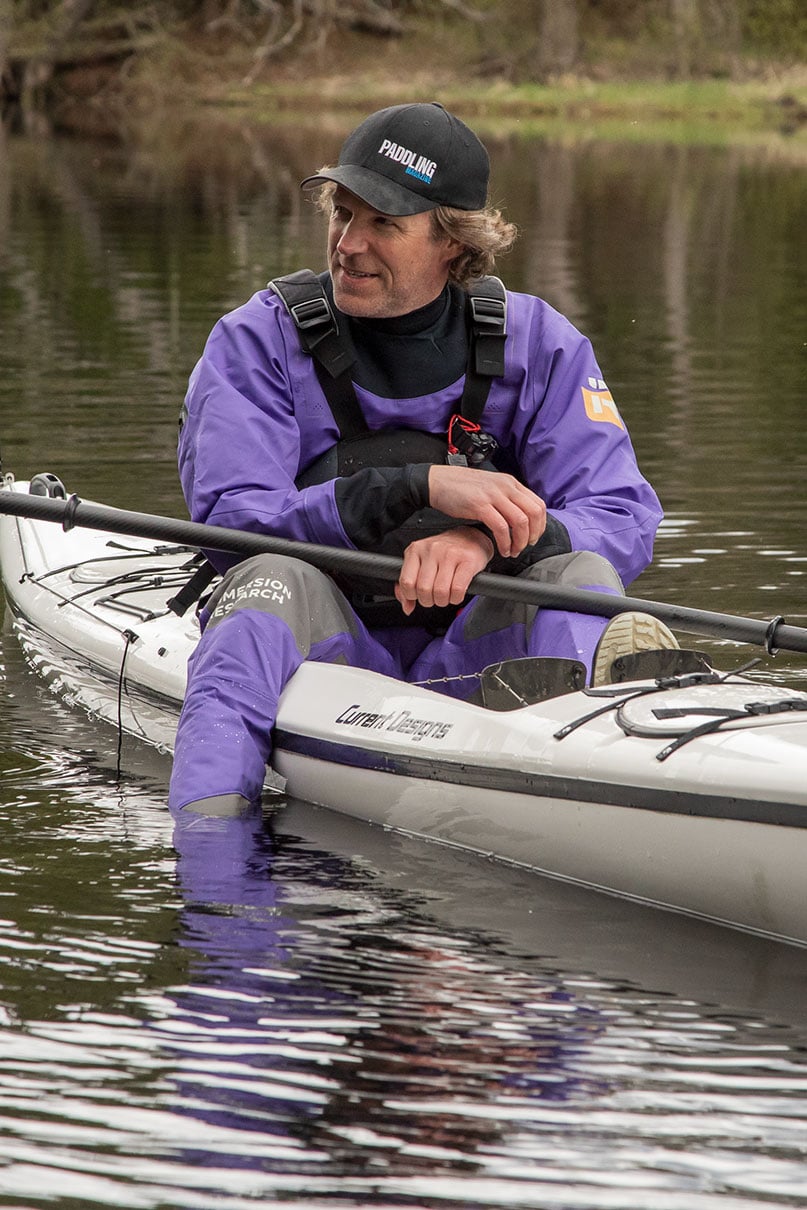
As for the feet on the 7Figure? They’re so thick on the sole that it feels like we could dance a jig at the put-in without developing pin holes, yet they’re still slick enough to slide into booties. We love them. And the Purple Drank color of our tester suit? Just perfect. Immersion Research is renowned for its one-year no-fault coverage with free repairs.
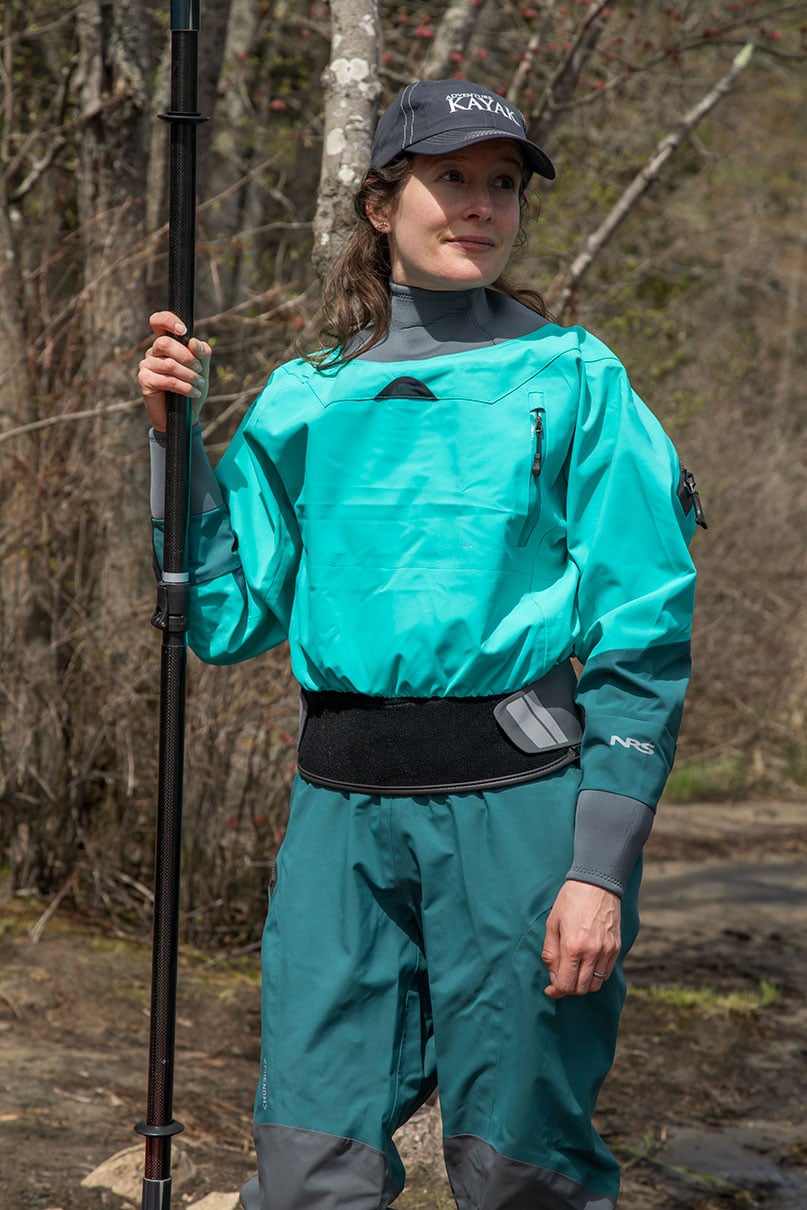
The NRS Phenom, constructed with Gore-Tex Pro fabric, is ideal for tackling the toughest river conditions, providing class V protection for hard chargers. Based on NRS’s bestselling Axiom, it boasts identical sweet features but now with back entry. We aren’t the only ones impressed with the Phenom—it won the award for best new apparel at the 2024 Paddling Magazine Industry Awards after being voted on by 38,000 consumers and retailers.
This sleek suit features latex neck and wrist gaskets, a five-inch-wide overskirt, Cordura panels at the ankles, and roomy integrated socks with elastic pant cuffs that easily pair with tall booties. As on the other whitewater-focused suits in this lineup, the volcano-style overcuffs cover more surface area from the wrist to the hand, reducing water contact with the gaskets underneath.
Photo: Michael Hewis
Our women’s medium loaner fit our 5’8″, 140-pound tester, though it took a bit of wiggling to get it over wide hips. We found the Phenom has a slightly more fitted feel compared to Kokatat’s women’s medium Icon, but only by the smallest margin.
Gore-Tex Pro promises long-lasting performance and is known for its best-in-class waterproof, windproof and breathable properties. During our early spring testing, the air was hot, and the water was cold. For high-output paddling and portaging, there’s nothing like it.
The Kokatat Icon was first developed with input from EJ and Dane Jackson and joined the brand’s regular lineup in 2013. A decade later, the Icon is still pushing the limits of performance.
The Icon has had some slick upgrades over the years. Most recently in 2023, Kokatat tweaked the leg pattern to provide more articulation for increased movement and improved comfort, as well as new drop-seat zipper routing for better in-boat comfort.
The Icon is almost identical to Kokatat’s classic Meridian but offers a rear-entry shoulder zip. While mastering the rear zip solo requires some yogi flexibility, many paddlers prefer it because it stays out of the way and reduces bulk on the chest.
Photo: Michael Hewis
The Icon we tested in a women’s medium was a little long in the leg but otherwise an ideal fit on our 5’5″, 150-pound model. Constructed with lightweight, rugged and durable Gore-Tex Pro material, the Icon also features an adjustable overskirt, Gore-Tex Pro socks, latex gaskets and neoprene punch-through over cuffs. Kokatat’s custom sizing option costs extra but is a solution for paddlers who don’t fit the brand’s standard measurements. Lengthen or shorten sleeves and legs, adjust the torso, change sock and gasket sizes, and even add more pockets.
While this is the priciest suit in our lineup, the longevity of Kokatat’s drysuits is legendary. Two Paddling Mag staffers have kept their Kokatat drysuits alive for more than 20 years.
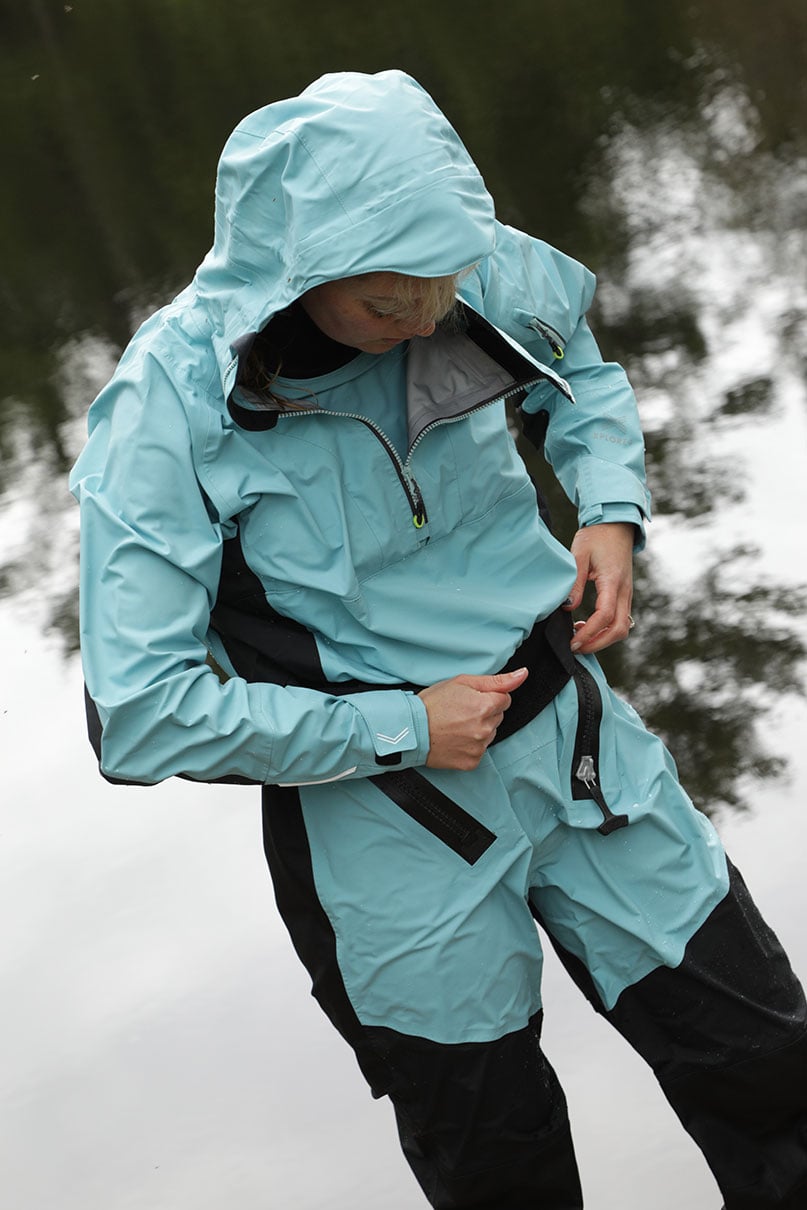
Avid sailors have trusted Gill Marine for 50 years. In the last decade, Gill has broadened its horizons to focus on all watersports, including paddling. So, while the versatile Verso was born from sailing, its foul weather cred also makes it well suited to kayaking, canoeing and paddleboarding.
This women’s-specific design of the Verso was released in fall 2023. The unique dual-purpose entry zip, stretching from upper thigh to mid back to upper thigh, makes for easy donning, doffing and pee breaks. The size eight suit seen here was tested by a 135-pound, 5’7″ model and offered a relaxed fit designed to accommodate thermal layers underneath with unrestricted movement. Velcro closures at the waist ensure everything stays in place.
Photo: Michael Hewis
The Verso is made with Gill’s exclusive Xplore+ three-layer waterproof and breathable fabric. The inner neoprene dry seal gaskets at the neck and cuffs effectively kept water out during swim tests.
The only hooded option in this lineup, the Verso’s hood offers excellent protection against rain and wind. We love the soft fleece inner chin guard and ventilation holes for when conditions truly suck. On the water, we found the stowed hood toggle can be a bit finicky to release. While a hooded design isn’t ideal for those who do most of their paddling wearing a helmet, for everyone else, the Versa is a versatile, budget-friendly design.
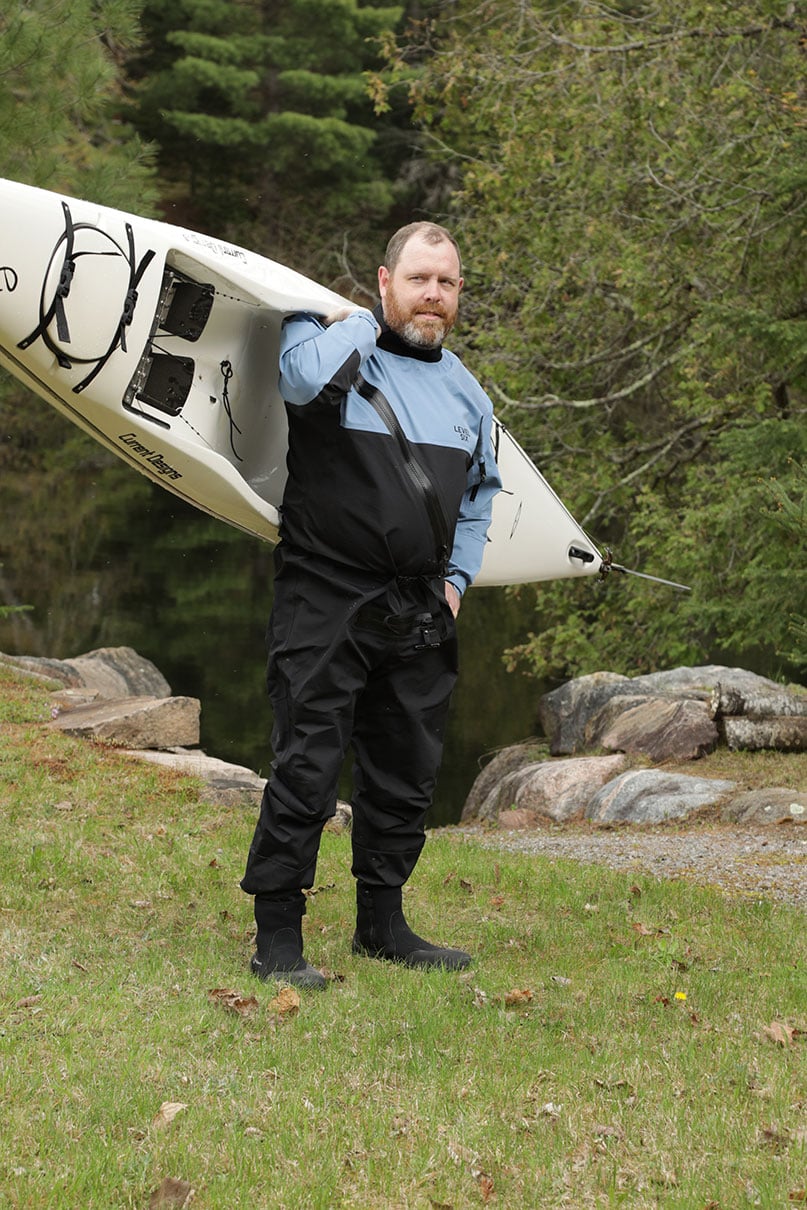
As the first “forever chemical” bans soon sweep the United States, the Loki from Level Six is the first drysuit on the market to be both PFAS-free and made from recycled materials.
The Loki is a latex- and neoprene-free version of Level Six’s Cronos. Released in spring 2024, the Loki was designed with recreational paddlers and shoulder-season canoe trippers in mind. Our extra-large men’s tester was a little long in the leg, but an otherwise good fit on our 5’11”, 220-pound model.
Photo: Michael Hewis
The team was quite taken with Loki’s Lycra gaskets, which are coated with polyurethane and covered by neoprene cinches. How waterproof the seal is depends on how tight the cinch is. Tighten it before rapids and loosen it for lengthy flatwater stretches. The gasket material is soft, supple and comfortable around the neck and wrists. It was designed with input from Level Six’s local fire department, which was looking for a more comfortable system first responders could wear all day.
Level Six is making waves for its early adoption of eliminating PFAS from its drywear to “protect our waterways, environment, health and factory workers.” The big question: Can PFAS-free drywear deliver high-performing, breathable suits? In our initial testing—and with adequate gasket cinching—the bone-dry Loki is living up to the hype.
“Well, it’s not as bad as I expected.” This was high praise for the Pro Ultra King-Q during the unboxing of our Amazon purchase.
On closer inspection, we had more than a few questions about materials and craftsmanship. First, the product information for the King-Q claims the suit is made of “abrasion-resistant nylon” but the tag inside the suit declares it’s polyester. And instead of being reinforced with Cordura or similar, the suit’s reinforced areas are simply another layer of polyester—in the chest and upper thighs but not the butt or knees. The webbing and buckles on the overskirt feel cheap, and the overskirt is just a couple inches deep.
As for the unisex fit? More suitable for a tall and leggy adolescent. Even our slimmest staff member couldn’t squeeze in.
Once inside out, we found the seam tape on the wrist gaskets and neck gasket—which doesn’t have a manufacturer stamp—was lifting. Pulling at the neck gasket seam to mimic the tension when putting the drysuit on, we could see the seam tape lifting farther and pulling away from the gasket.
And then there are the King-Q’s socks. Instead of fabric socks, this suit was fitted with glued and taped neoprene socks. Not only is neoprene not breathable—hello, sweaty feet—but the seams were lifting here, too. We predict this suit won’t last even a few outings without leaking, let alone a full season. And several of the reviews agree.
This article was first published in Issue 72 of Paddling Magazine. Subscribe to Paddling Magazine’s print and digital editions, or browse the archives.
Kayak touring, whitewater boating and canoe tripping are hard on gear. Invest in quality gear that will withstand your adventures. | Feature photo: Jeff Priest
Originating in the tidal waters of the Far North, the first kayaks were both works of creative ingenuity and tools of surgical precision. Fast forward a few thousand years and it seems not much has changed. Indigenous people used these sleek, enclosed boats for hunting and travel through icy seas. Today’s paddlers seek out a wide variety of waters on which to challenge themselves and their agile craft—from sheltered passages to rocky, wave-tossed coasts and everything in between.
Kayak design and materials have continued to evolve, with many different niches branching out of those early vessels. This means kayak touring has never been more diverse or accessible, but it also means we’ve never had more options to choose from. In North America, there are fine models available from both domestic and imported brands. Selecting a shortlist of the best kayaks for touring is no easy task. My goal with these top picks is to not only share what I believe are some of the finest options out there, but also provide you with some key considerations when making your choice.
The Explorer is a dependable companion in rougher waters. | Photo: Autumn Lachine
Nigel Denis Kayaks Explorer Specs
Length: 17’6”
Width: 21”
Weight: 58 lbs
Recommended Paddler Weight: 150–220 lbs
Price: $4,585 USD
Why I love it
When it comes to elite expedition kayaking, few boats rival the Nigel Dennis Explorer for proven performance, endurance and pedigree. When the going gets tough, the tough get this NDK classic.
The Explorer’s upswept bow and stern, narrow beam and clean, functional deck layout are informed by the classic British interpretation of traditional Greenland hunting kayaks. From this base DNA, designer and renowned expedition paddler, Nigel Dennis, refined the shape and layup to address the unique challenges of extended journeys on remote, exposed coastlines. The Explorer has been the kayak of choice for circumnavigations in some of the roughest and least accessible waters in the world: Britain, Ireland, Iceland, New Zealand, Antarctica, South Georgia Island and the Aleutian Islands. The boats are handmade in North Wales, using a resin-rich, field-repairable composite construction that’s built to withstand the abuse of expedition paddling. But the real reason I love the Explorer is this isn’t a one-trick pony—I’ve spent weeks in the saddle on self-supported kayak camping journeys on open waters, surfed heavy currents and overhead waves, and danced lightly among rock gardens on countless day trips. Whether I was out for an hour or a week, the boat felt responsive to my inputs, carving graceful turns and remaining speedy and stable in sloppy conditions.
Twenty-five years after it was first introduced, the Explorer continues to embody the spirit of venturing into the wild unknown. Its intuitive handling and composure in any conditions ensure all paddlers feel like great explorers.
Reasons to buy
You want a kayak that’s expedition-ready but still fun to paddle on shorter trips.
A hull and rocker profile made to maximize touring efficiency in rough waters.
Custom colors, hatches and layups, including weight-saving carbon/Kevlar.
Consider another if
Your camping kit includes items like a suitcase stove, barrel bag and multiple Dutch oven options.
You prefer a highly adjustable seat system to a minimalist cockpit.
Bottom line
Whether you are planning an expedition of your own, or just looking to cover some miles and play along the way, the Explorer is a dependable companion as you paddle into rougher waters. See the Explorer again on Paddling Mag’s list of the best kayaks.
The Stellar S14 G2’s versatile combo of speed, light weight, premium materials and tour-ability is hard to rival in the 14-foot class. | Photo: Kaydi Pyette
Stellar S14 G2 Specs
Length: 14’
Width: 24.4”
Depth: 13.6”
Weight: 38 lbs (Advantage)
Capacity: 342 lbs
MSRP: $3,495 USD (Advantage)
Why I love it
With all the performance and safety features of a full-size sea kayak finessed into a compact package, light touring kayaks excel at spontaneous day trips and weekend adventures on any waters. Awesome, right? The Stellar S14 G2 takes a great thing and makes it even better—a lightweight light touring kayak. Because anything “light” should be, well, light.
Stellar’s background in building Olympic rowing shells and fast surfskis is evident in the construction, design and speed of the S14. Available in three sizes and four sleek and stiff composite material options—ranging from 40 pounds to just 30 pounds—the S14 trims up to 30 percent off the weight of its lightest rivals. The shallow-V hull is optimized for speed and quick acceleration with a narrow, knife-like bow and minimal rocker to maximize waterline. Soft chines reduce drag and have a smooth, continuous feel, making it easy to initiate gentle edged turns. The S14 is unquestionably among the fastest 14-foot kayaks on the water, cruising at a steady four or five knots and easily keeping pace with longer touring kayaks. The cockpit is comfortably appointed for all-day tours and there’s ample space in the watertight hatches for packing camping essentials.
Fast and light doesn’t mean experts only. Stellar moved the widest part of the hull behind the cockpit for added volume and stability, making the S14 G2 a beginner-friendly light touring bullet.
Reasons to buy
You want an ultralight compact touring kayak you can solo carry and transport with ease.
Surf ski-inspired hull makes this 14-footer as fast as the average 16-foot touring kayak.
Adjustable skeg and wider beam for user-friendly tracking and stability.
Consider another if
Advanced composite construction is out of your budget.
You want a boat you can drag, drop and generally abuse (check out rotomolded plastic options instead).
Your idea of the perfect day tour involves heavy surf and rock gardens.
Bottom line
The Stellar S14 G2’s versatile combo of speed, light weight, premium materials and tour-ability is hard to rival in the 14-foot class.
The Wilderness Systems Tsunami remains popular 20 years after its launch thanks to features that meet new paddlers where they are without limiting where they can go. | Photo: Virginia Marshall
In 2004, Wilderness Systems released what has become one of the most well-traveled and best-selling touring kayak designs of all time, the Tsunami. Over 20 years—and numerous updates—later, the user-friendly Wilderness Systems Tsunami continues to be a top choice for those starting out in this sport.
This is a kayak that makes you feel capable and at ease from the moment you sit in it. Why is that special? Plenty of kayaks in the recreational touring market are designed to optimize stability, but many do so by simply offering wider and flatter hulls. The Tsunami pairs a shallow V hull with flared sidewalls for fearless stability without sabotaging touring efficiency. In other words, it feels very secure without feeling like a barge. The boat’s multi-chine hull profile has two defined edges in each chine that act like secondary and tertiary keels, lending the Tsunami its trademark tracking and predictable handling. New paddlers can point the kayak where they want to go, and it gets there.
That feeling is vital for first-timers, but just as valuable is the kayak’s capacity to grow with your skills. The Tsunami is a refreshing beginner kayak—one that inspires instant confidence while promoting more advanced skills like edging and bracing.
Reasons to buy
Plenty of stability to inspire confidence without limiting skill development.
Three sizes to choose from, with fully customizable outfitting.
Burly rotomolded polyethylene construction holds up to heavy use.
Consider another if
You are looking for a lightweight kayak that is easy to solo lift and carry.
Hull speed outweighs stability and predictability.
You feel more comfortable with the open deck of a sit-on-top kayak.
Bottom line
Beginner doesn’t mean basic; the Wilderness Systems Tsunami remains popular 20 years after its launch thanks to features that meet new paddlers where they are without limiting where they can go.
The shortest and lightest of Delta’s touring kayaks at 14 feet and just 45 pounds, it’s positioned as the easiest to own for paddlers balancing space, weight and cost. If you are looking for a compact touring kayak that can handle diverse waters and won’t break the bank, the Delta 14 is a superb solution at an exceptional value.
Available with a skeg or rudder, the 14 embraces Delta’s West Coast touring design ethos: user-friendly, efficient and more than capable of hauling all your gear. This diminutive kayak delivers crazy capacity—over 200 liters—and the large hatches make it dead easy to pack in the luxuries. The relatively long waterline assists with tracking and efficiency, making for satisfying cruising capabilities. Delta’s outfitting focuses on personalized comfort with a fore- and aft-adjustable seat. This ability to fine-tune the seating position means the 14 fits a wide range of paddlers well. While there’s inherent value in a kayak that’s versatile and easy to paddle (you’ll use it more), even more persuasive is Delta’s expertise in plastics thermoforming. Delta has been working with acrylic–ABS laminates for nearly 40 years—refining their designs and shaping process to optimize strength, weight and aesthetics.
Reasons to buy
You want to fool your friends into thinking you splurged on a composite kayak.
Moderate V-shaped hull and well-defined chines are beginner-friendly with good stability and predictable edging.
Less than two-thirds the cost as compared to other touring kayaks of a similar size and weight.
Consider another if
Rock-bottom pricing takes priority over comfort, performance and durability.
You are looking for a packable folding or inflatable kayak.
Bottom line
The Delta 14 is a downsized touring design that offers the look and feel of a composite boat at a fraction of the cost. Simply put, you won’t find a lighter, better-looking kayak at this price point.
Equally suited to world travelers and urban dwellers, the TRAK 2.0 epitomizes go-anywhere versatility. | Photo: Joel Clifton
TRAK 2.0 Specs
Length: 16’
Width: 22.5”
Weight: 44 lbs
Cockpit: 16.5” × 30.5”
Packed: 56 lbs
Size Packed: 41” × 19” × 9”
Payload Capacity: 350 lbs
MSRP: $3,850 USD
Why I love it
How can a folding boat that resembles an ultralight plane crash out of the bag and goes together in just 10 minutes look and paddle like a high-performance sea kayak? In a genre plagued by head-scratching assembly rituals and lacklustre paddling, the TRAK 2.0 is a slick and sporty standout.
The TRAK 2.0’s bow and stern frames use shock-corded aluminum poles and snap-in carbon fiber ribs for intuitive assembly. If you’ve ever pitched a tent, this step is simple. Next, the frames are fitted into the burly polyurethane skin. Every folding kayak requires some technique for tensioning the skin around the frame, and TRAK’s clever hydraulic jacks are the easiest system I’ve tested. The jacks also allow you to change on-water performance on the fly: pump the keel lever to adjust rocker for playful maneuverability or straight tracking; use the two side jacks to compensate for weathercocking by adding a slight side-to-side curve to the waterline. Once assembled, the TRAK 2.0’s drum-tight skin, full deck rigging and graceful lines mean it’s all but indistinguishable from a hard-shell kayak. The boat feels inspired by traditional skin-on-frame Greenland designs, with hard chines and a shallow-V hull that prioritizes carving and glide over initial stability.
TRAK 2.0’s rolling travel bag makes short work of international terminals and exotic ports, but it’s not a package you can simply throw over your shoulder when it suits. There are unquestionably lighter—and certainly cheaper—packable kayaks to choose from. But for go-anywhere capability that performs like a hard-shell kayak, there’s the TRAK 2.0.
Reasons to buy
You want a packable kayak that is also a superb general-purpose touring and ocean play kayak.
Expedition-ready bow and stern floats can be packed with tripping gear for multi-week adventures.
Comfort and capability rivalling your favorite hard-shell kayak.
The P&H Scorpio is a do-it-all, plastic touring and expedition kayak that’s built to last. | Photo: Adventure Kayak Staff
P&H Scorpio Specs
Models: LV | MV | HV
Length: 16’8” | 17’2” | 17’6”
Width: 20” | 23” | 24”
Weight: 60 | 64 | 68 lbs (CoreLite X)
MSRP: $2,599 USD
Why I love it
One of P&H Kayaks’ classic designs, the P&H Scorpio is a high-performance, full-size touring kayak with bombproof polyethylene construction and an affordable price tag. What’s not to love?
Manufactured at P&H’s factory in Great Britain, the Scorpio comes in two different types of construction: the brand’s proprietary CoreLite triple-layer polyethylene and a lighter and stiffer CoreLite X option. Both make for a heavy-duty kayak with much better rigidity and durability (i.e. it won’t dent on your roof rack or warp on a hot day) than standard PE plastics, with CoreLite X rivalling composites for overall stiffness. The Scorpio is also available in three sizes to fit a wide range of paddlers—a svelte LV option for smaller folks, standard MV and spacious HV that can accommodate paddlers up to 6’6”. The Scorpio combines a speedy, 17-foot shallow-V hull with rounded chines for responsive edging and superb secondary stability. Intermediate paddlers can expertly hold a deep edge for faster turns, while novice kayakers can feel confident easing the Scorpio into more challenging waters. P&H’s sturdy and adjustable outfitting makes it simple to dial in cockpit fit for even more dynamic handling and all-day comfort.
A quality plastic touring kayak is one that still looks and feels great 10 or even 20 years after you purchase it. That’s the difference between a well-made boat like the P&H Scorpio and other cheaper, lower spec plastic kayaks.
Reasons to buy
Premium P&H CoreLite X construction for a top-of-its-class rotomolded plastic kayak.
Expedition-ready with four watertight hatches and keyhole cockpit for a drier-sealing spray deck.
You dream of harnessing the wind and sailing your kayak. The Scorpio deck features a reinforced footing for P&H’s Code Zero sail system. A nifty Skudder—or skeg-rudder hybrid that aids steering control and crosswind sailing—comes standard.
Consider another if
A 17-foot sea kayak is too much boat for your needs—the P&H Virgo is a compact touring model for easy handling on short to medium journeys.
You need a lighter kayak for solo lifting and loading on your vehicle (consider thermoform plastic construction).
Low cost outweighs longevity and performance.
Bottom line
For a small premium, the P&H Scorpio is a do-it-all, plastic touring and expedition kayak that’s built to last.
Innovative design meets stylish personal expression in the Karla. | Photo: Owen Marshall
Current Designs Karla Specs
Length: 15’3”
Width: 21.5”
Depth: 11.5”
Weight: 52 lbs
MSRP: $3,995 USD
Why I love it
The Current Designs Karla is hands-down one of the most maneuverable and lively touring kayaks I’ve ever paddled. Her creator, Danish designer Jesper Kromann-Andersen, believes a kayak should respond as a natural extension of paddler input. I couldn’t agree more.
Intermediate and advanced paddlers would be hard-pressed to find a more intuitive kayak. Want to scribe turns and carve wave faces? Stay loose and avoid purling while surfing? Slalom through rock gardens and thread currents with graceful agility? Unlock more challenging rolls and balance braces? With her narrow beam, the most rocker of any Current Designs kayak and generous volume in the bow, Karla gives you the keys. And what’s more, she does so while remaining surprisingly efficient. Unlike some dedicated ocean play kayaks, Karla’s shallow-V hull is actually fun to paddle on day tours and quickly covers the distance between you and the waves. Current Designs enhances the boat’s wide-ranging appeal with a variety of composite lay-ups blending lightweight stiffness and strength. On bumpy waters, where a kayak’s secondary stability is what keeps it right side up, Karla feels rock-solid. Her hard chines are at home with any degree of edging.
Innovative design meets stylish personal expression in the Karla. Like Kromann-Andersen, I think kayak touring should always feel playful. That’s why I love this boat, and why it’s the kayak that spends the least time on my rack.
Reasons to buy
Generous rocker and bow volume surfs like a dream.
Three hatches, a deck pod, compass recess, skeg and surprising hull speed add versatility for touring.
Robust, well-placed cockpit elements create a positive fit for edging, bracing and rolling.
Consider another if
You want to slide over rocks and barnacles with a second thought (consider a plastic playboat instead).
Your local waters don’t offer rough water exposure and a more touring-focused kayak would better serve your need for speed (check out Karla’s big sisters, the Current Designs Prana and Sisu).
Bottom line
Karla puts a smile on your face, whether gaining confidence in the surf or messing about on calm water.
Kayak touring can look very different depending on where and how you paddle, but if you can only own one kayak, buy the boat that you will enjoy on the waters you paddle most of the time. For example, an expedition kayak probably isn’t the best choice if you mostly enjoy after-work jaunts on your local river. You also want a kayak design that you feel comfortable in, but doesn’t limit your ability to progress your skills.
If your local waters consist of sheltered bays, quiet rivers and inland lakes, look to a compact light touring kayak that is easy to store and transport and encourages you to get out more often. If you’re progressing into more exposed waters and currents, or dream of exploring wilderness coastlines, it may be time to invest in an ocean play design to develop your rough water skills or an expedition kayak capable of making those extended journeys. If you are new to the sport and staying upright and feeling stable are your priorities while you get the basics down, consider one of the many user-friendly kayaks geared more towards beginners. And if you want to travel with your kayak to exotic or hard-to-access locales—or simply need a boat that you can store in your closet—a packable or inflatable is going to be the best fit for your lifestyle and aspirations.
As you spend more time kayak touring, you are going to gain a better appreciation of where you want to go with the sport. What types of waters call to you? What parts of the experience of being in a kayak do you most enjoy? Just as your responses to these questions may change over time, your sense of the type of kayak you want to paddle may evolve as well.
The kayaks in this article were chosen through years of accumulated experience with numerous touring designs, as well as the input of our contributors and longtime editors through our extensive boat reviews.
Former Adventure Kayak editor Virginia Marshall.
Why trust us
Longtime Paddling contributor and former Adventure Kayak editor Virginia Marshall has paddled touring kayaks for 20 years, exploring coastlines on the Great Lakes, Atlantic and Pacific oceans and Tasman Sea. When she’s not writing about kayaking, she works as a sea kayak instructor trainer and wilderness guide.
Writer Virginia Marshall paddles the Current Designs Karla during a 20-day personal trip on Lake Superior. | Feature photo: Kaydi Pyette


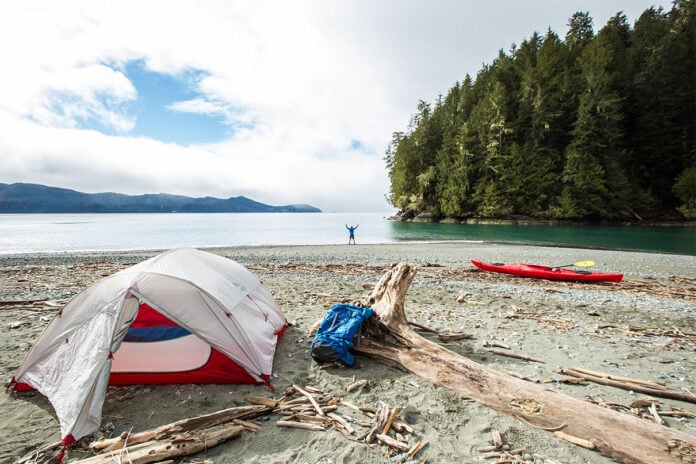
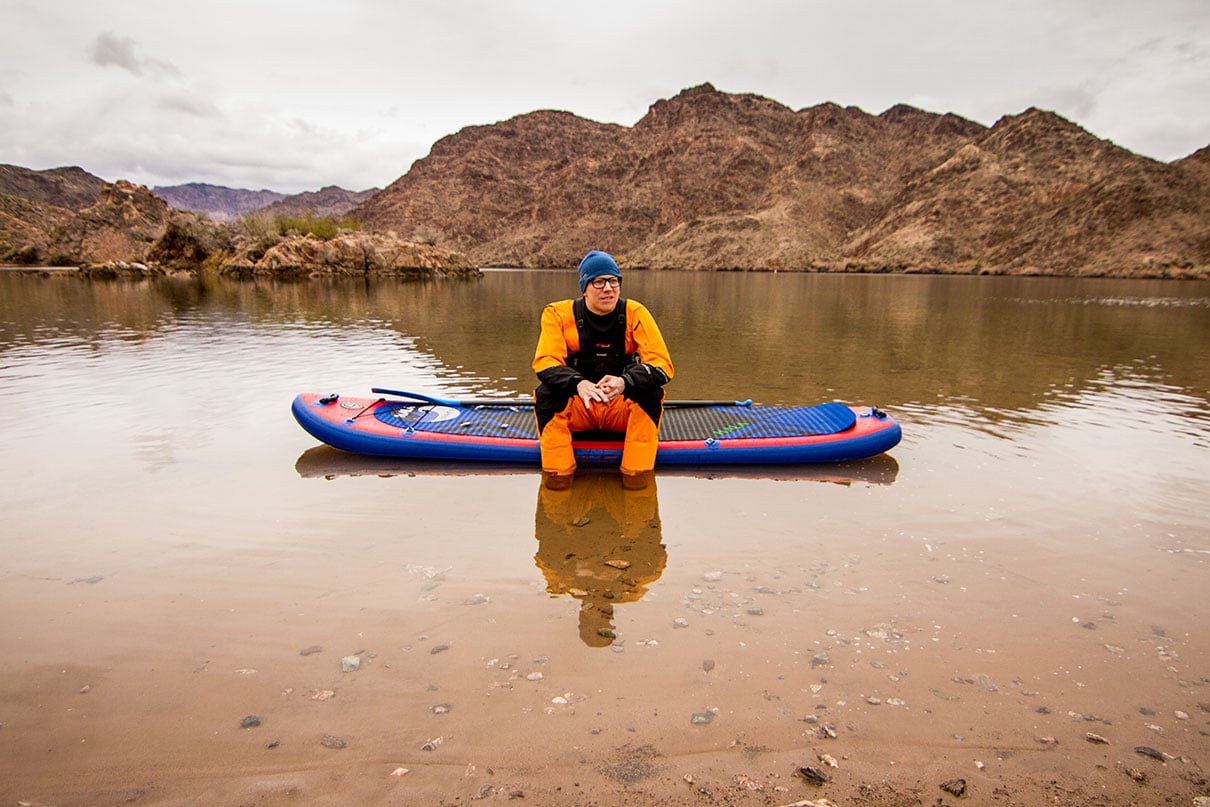
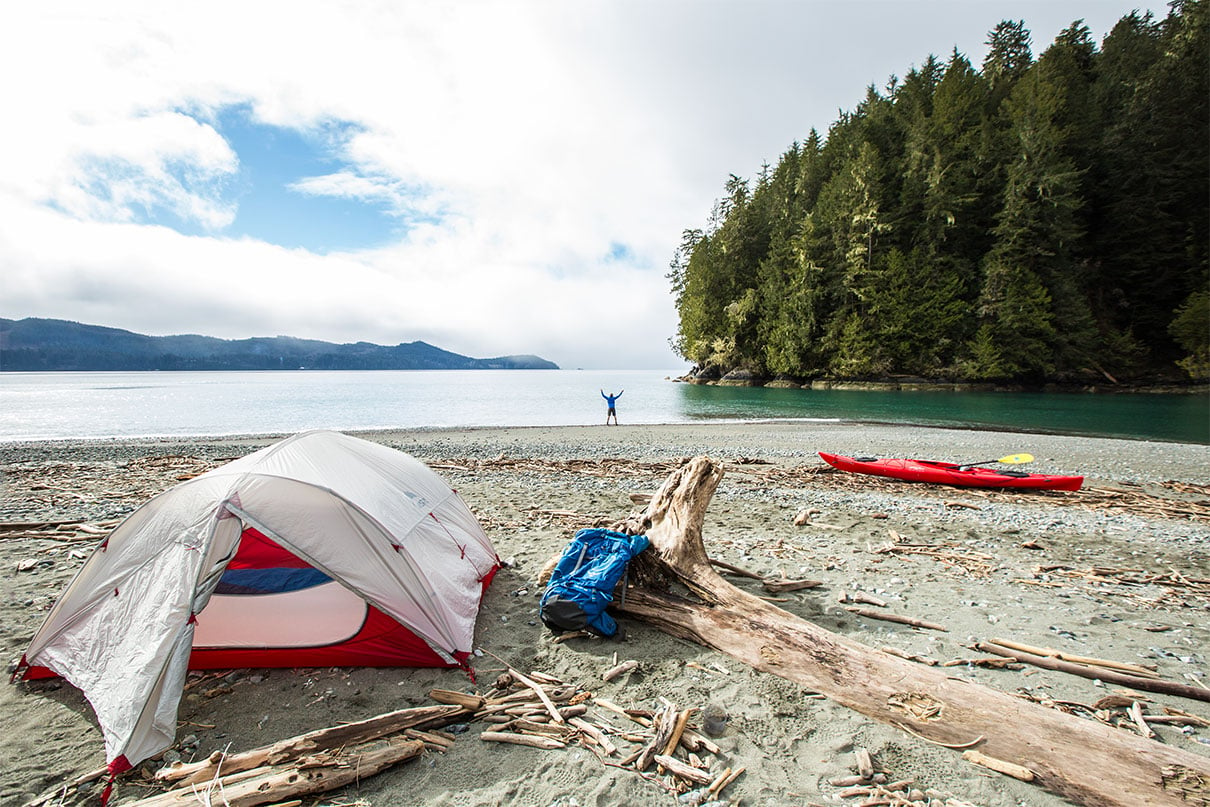
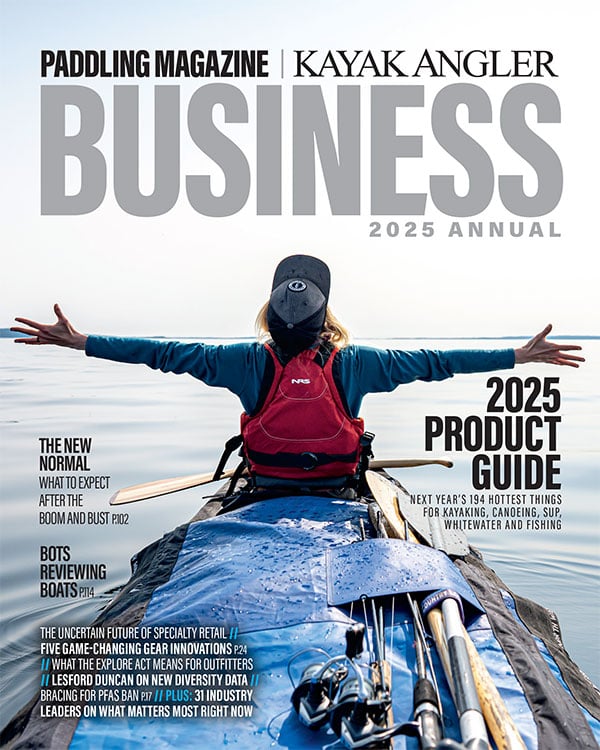 This article was first published in the 2024 issue of Paddling Business.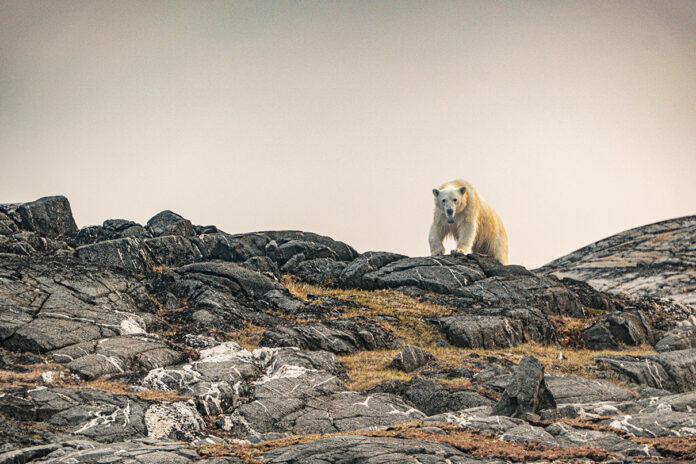
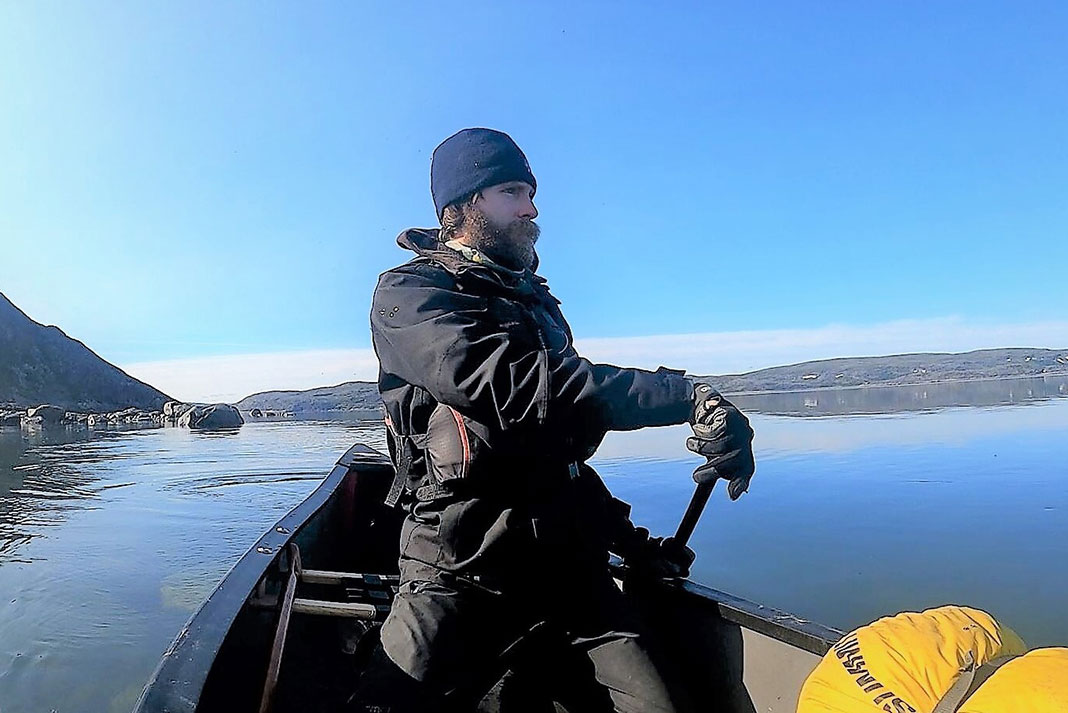
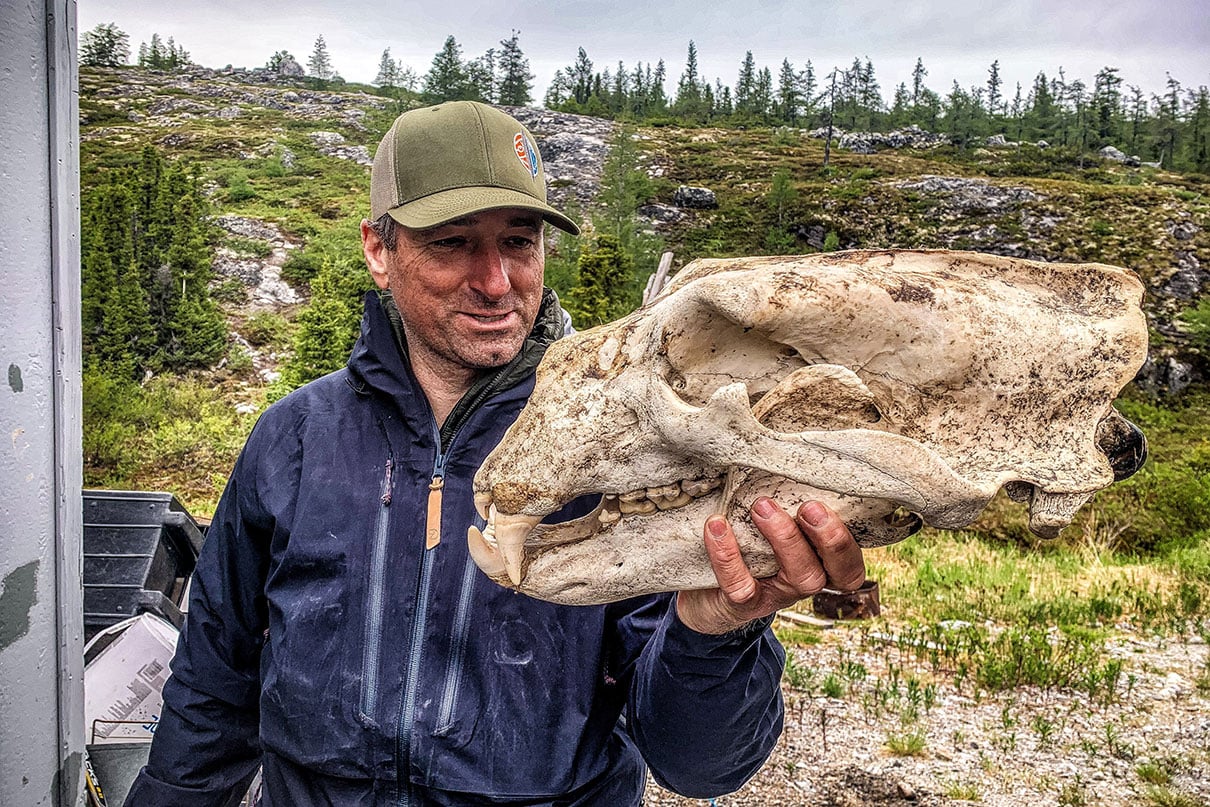
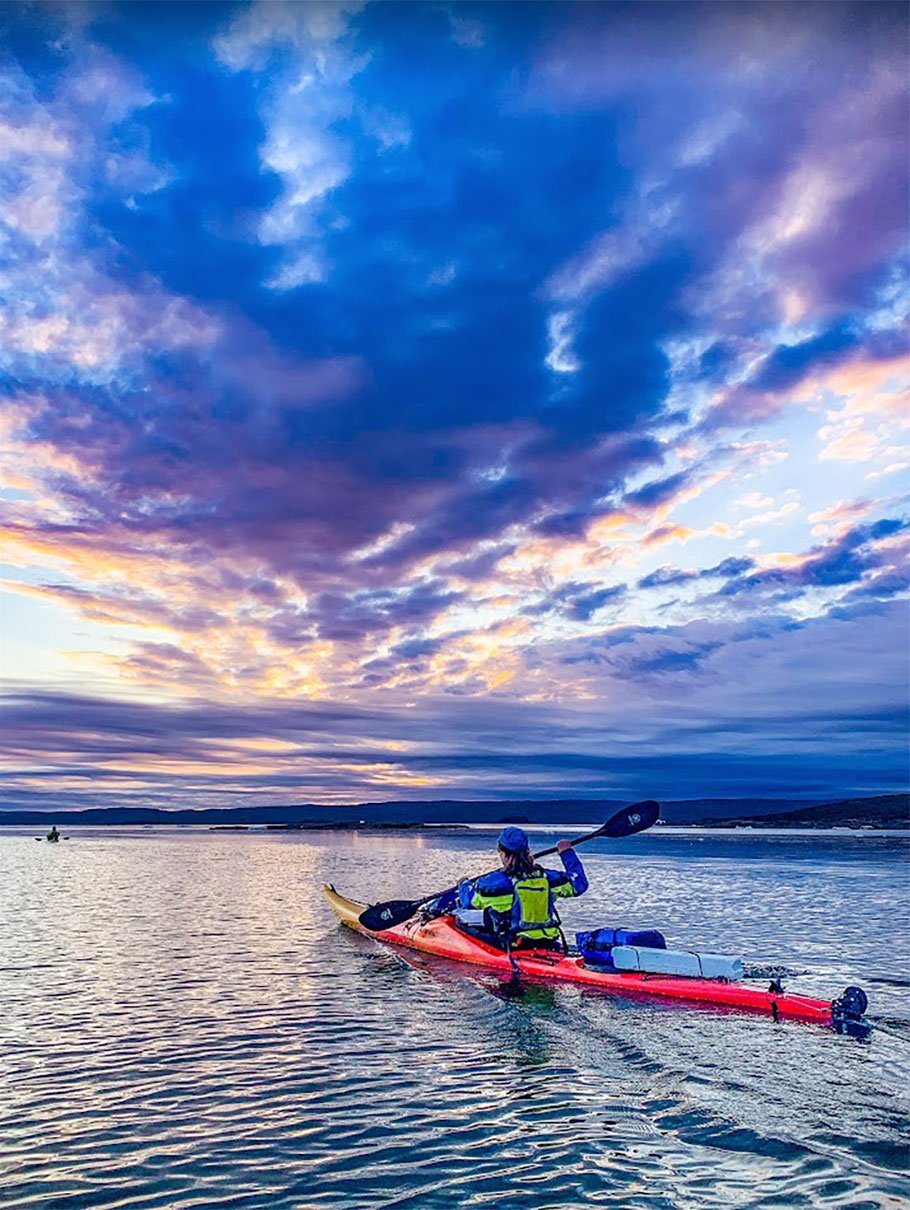
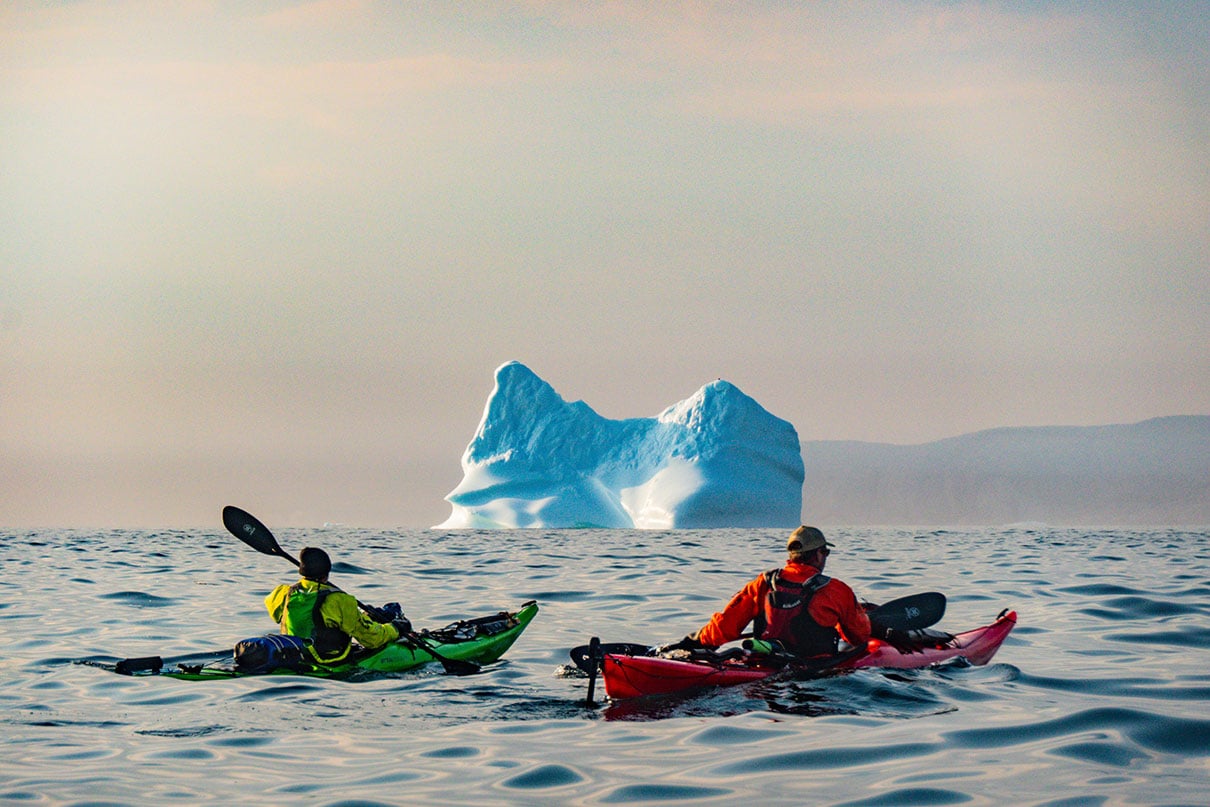
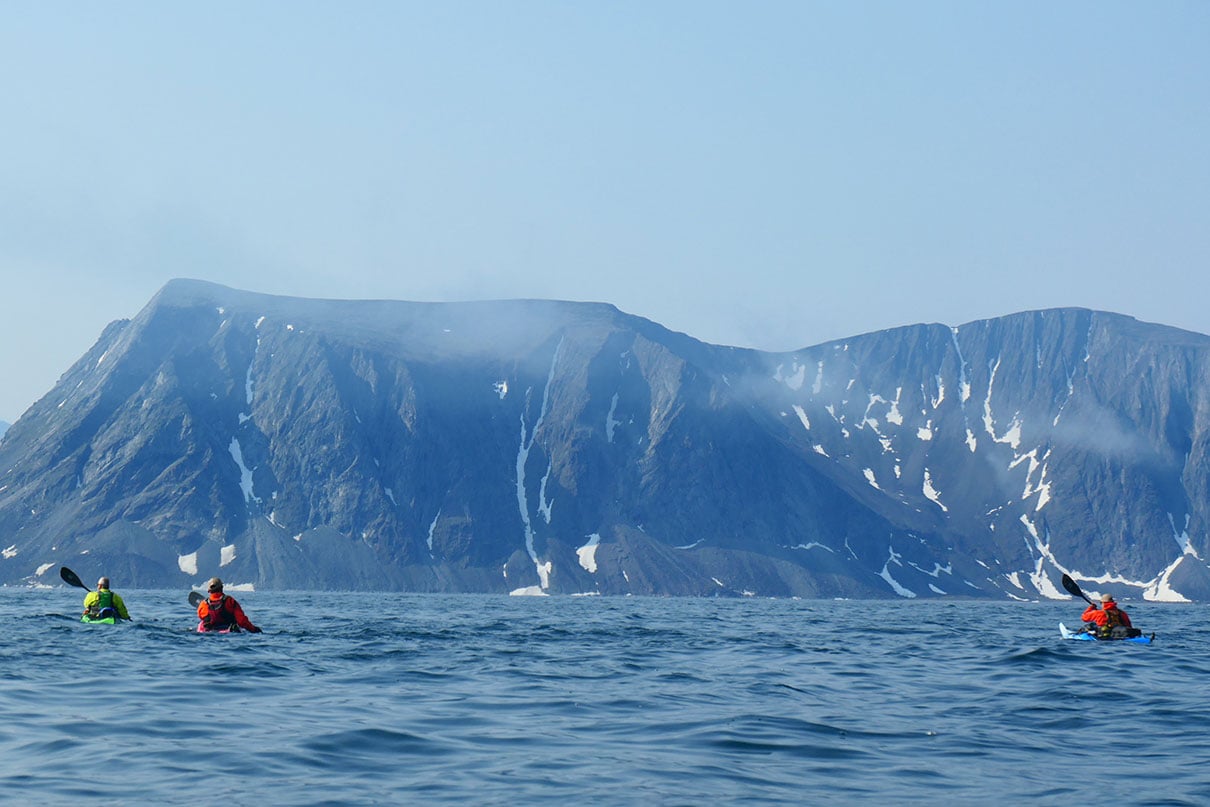
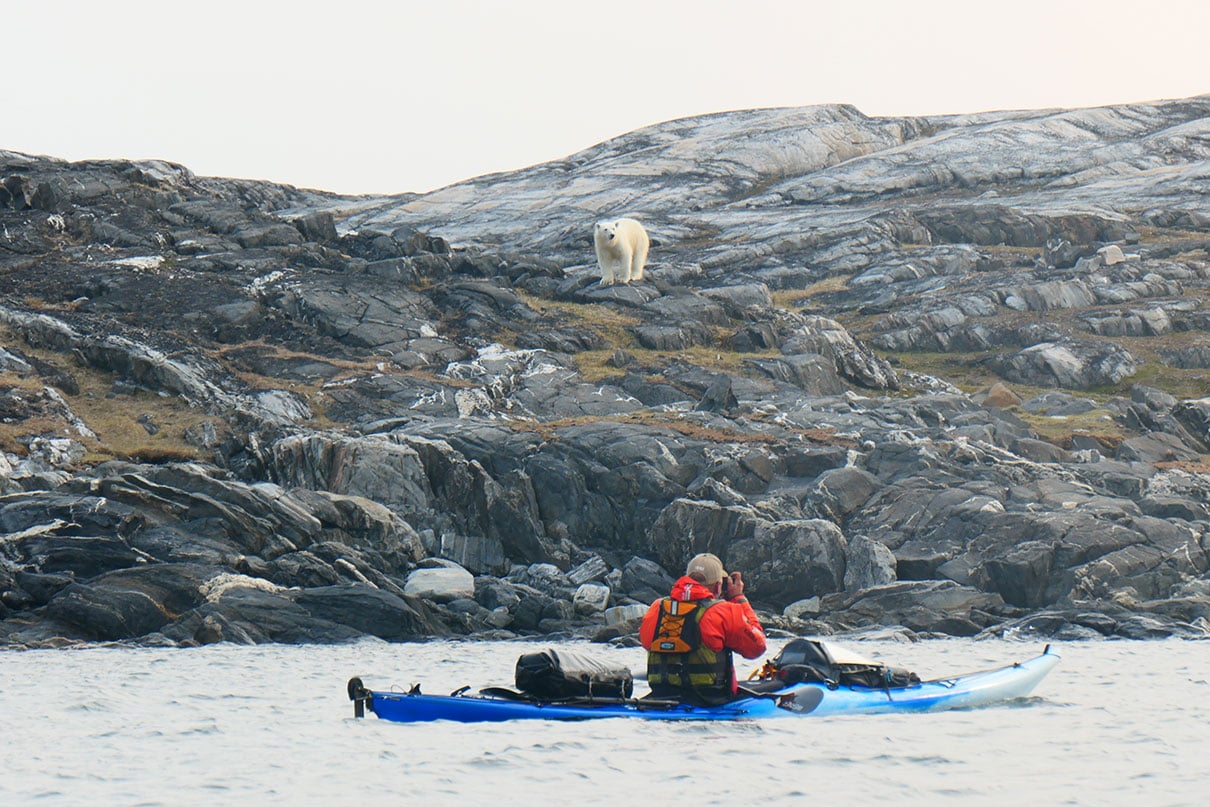
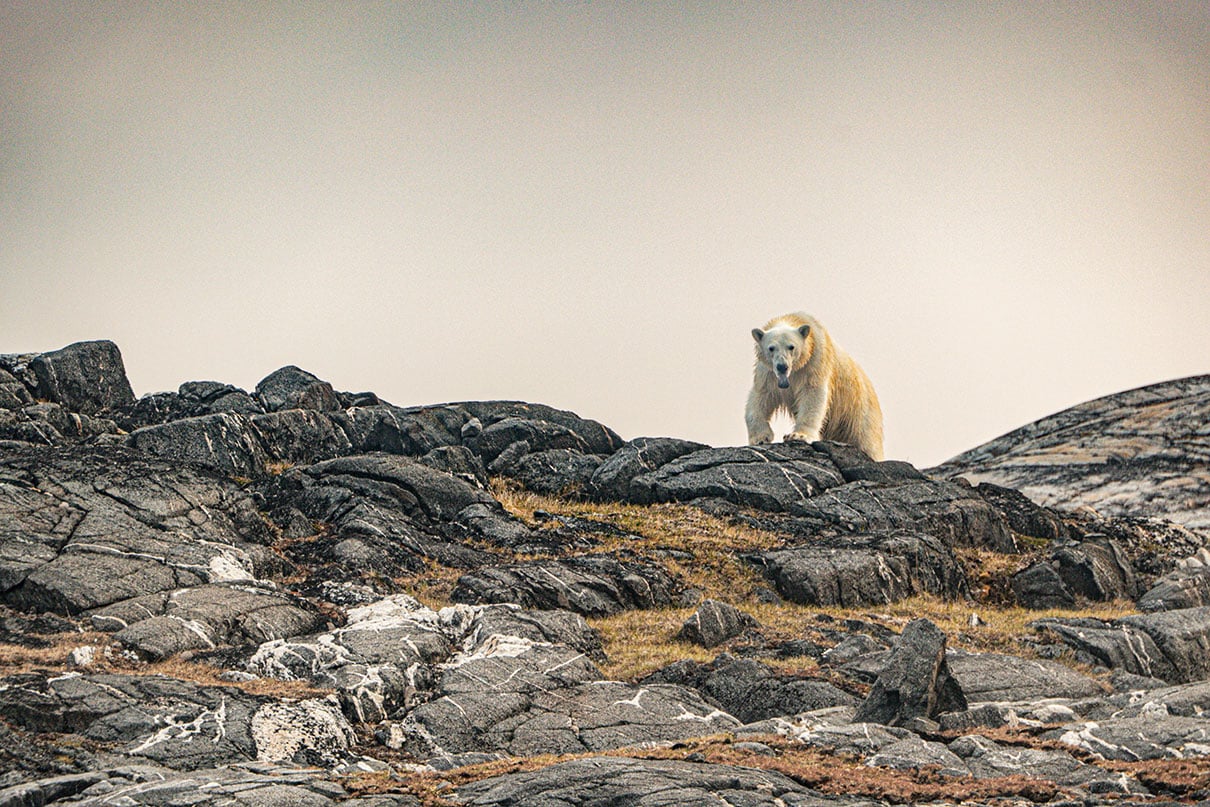
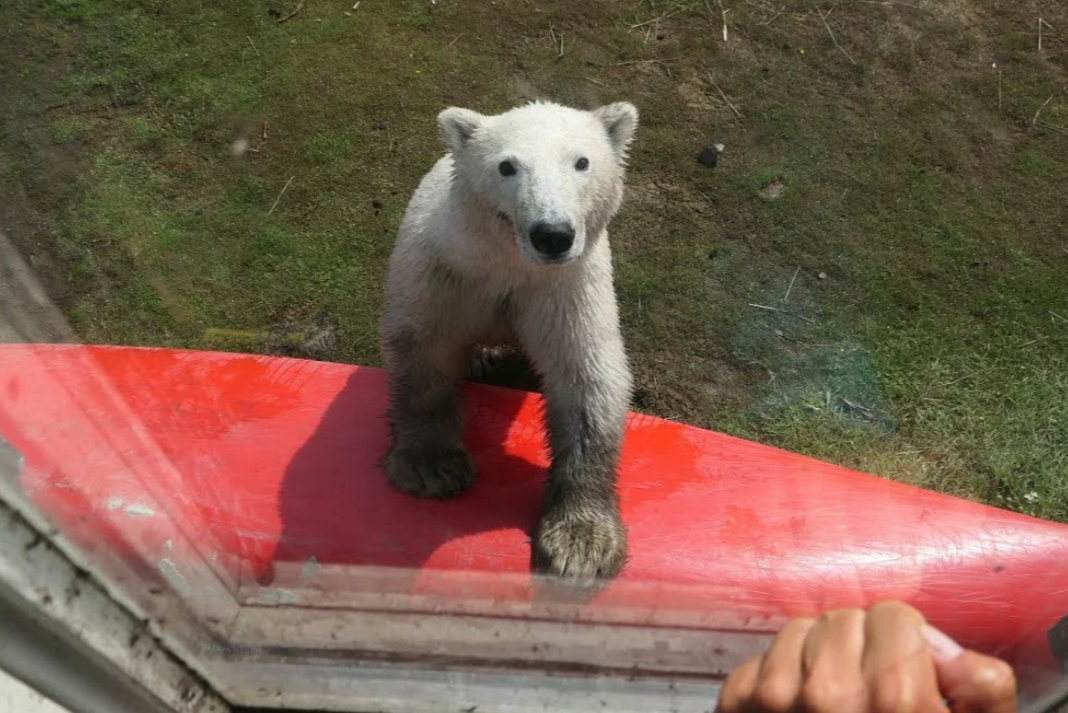
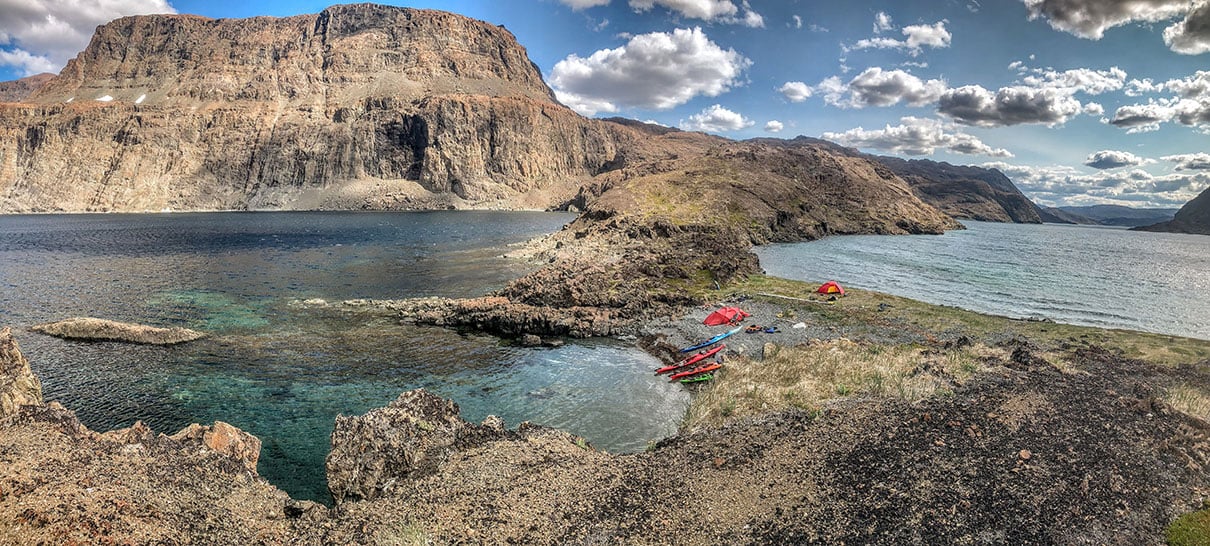
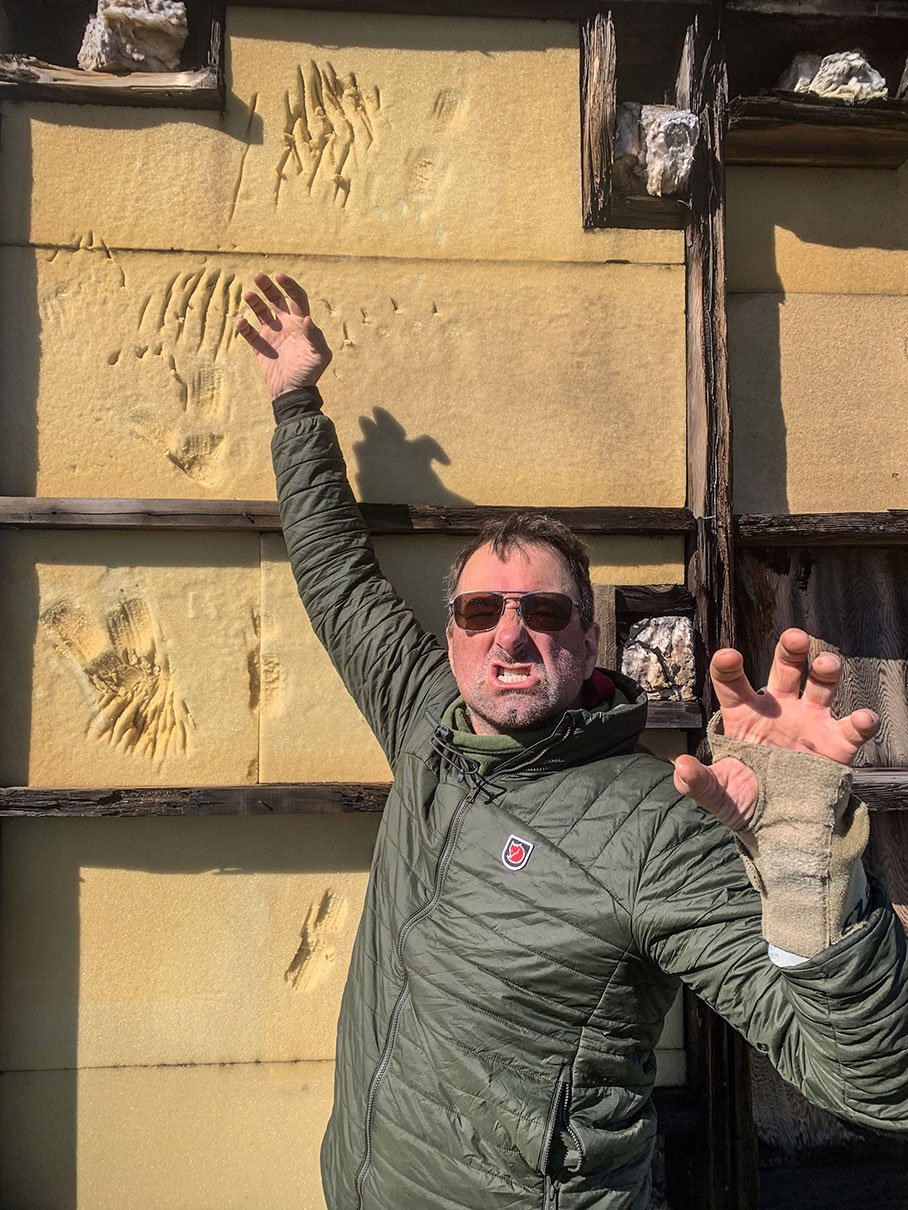
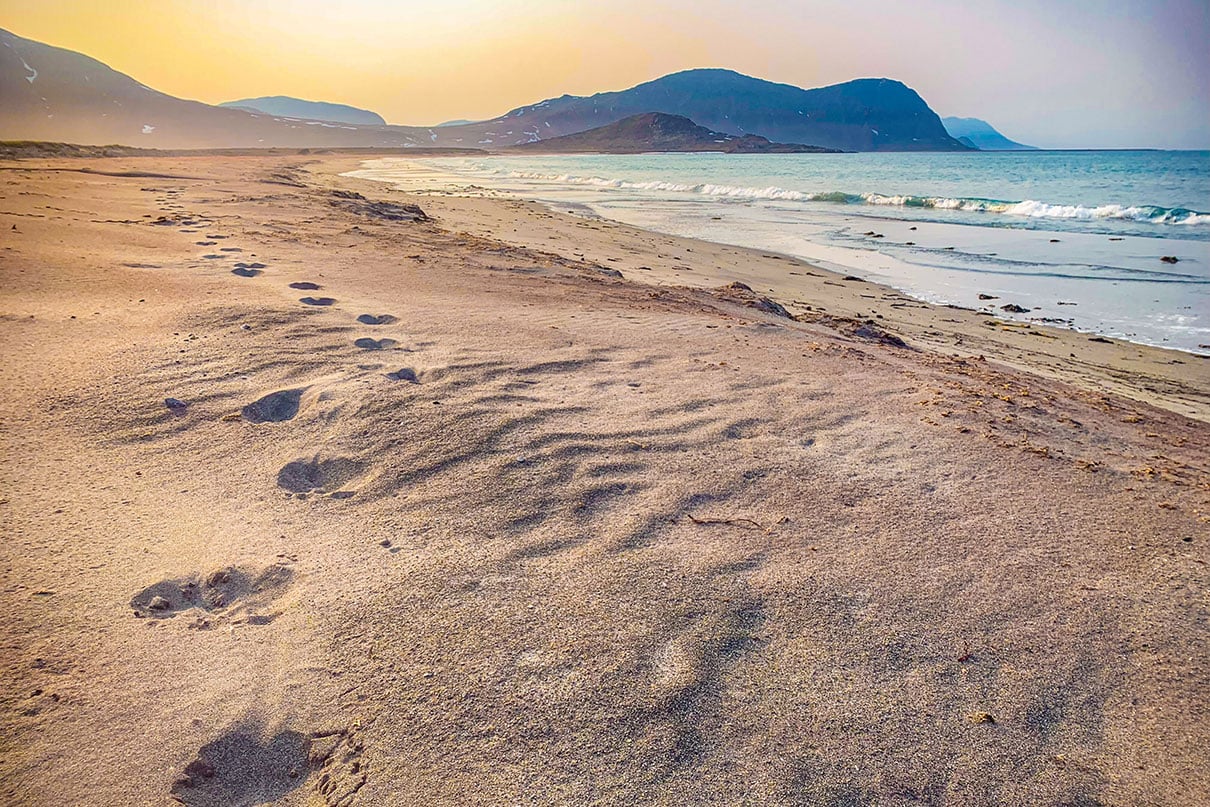
 This article was first published in Issue 72 of Paddling Magazine.