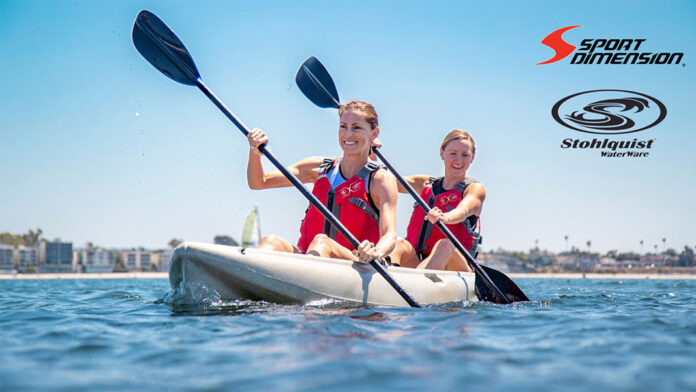
After a mere two and a half months out of production, Stohlquist is making a comeback, thanks to being acquired by the watersports company, Sport Dimension Inc.
Back in December, Stohlquist’s parent company, Aqualung Group, was acquired by the investment banking firm, Barings. Soon after, it was announced Stohlquist would cease operations, as Aqualung would no longer be pursuing sporting goods within North America. Stohqulist had been manufacturing paddlesports equipment—most notably PFDs—for 46 years. Word at the time was that there were several parties interested in purchasing Stohlquist, but it was unclear what Barings and Aqualung’s plans for the brand were going forward.
On April 25, Aqualung announced the sale of Stohlquist to Sport Dimension Inc., a company that’s been around since 1992 and is responsible for familiar names like Body Glove, JetPilot and Nautica. The acquisition happened quickly, with discussions between the two companies starting just over two months ago and a deal reached within three weeks of negotiations.
“It’s been a process, but we already cover a lot of the PFD life vest category in terms of general boating PFDs, wakeboarding PFDs,” explains Terrence Lin, director of marketing and communications at Sport Dimension. “I think the one category we didn’t cover is kayak and canoeing PFDs. So it was really a no-brainer for us to acquire Stohlquist, being that it’s been around for so long.”
Sport Dimension’s plans for the brand
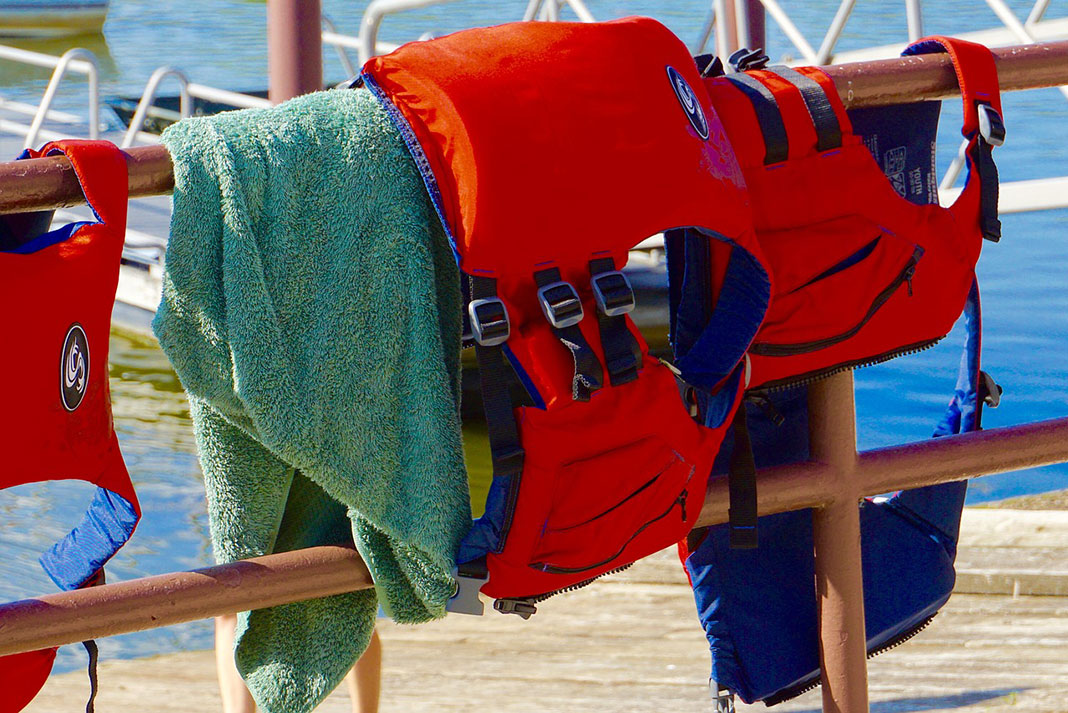
Paddlers can expect to continue to see Stohlquist PFDs lining the shelves of retail stores and available for order online—the last orders were fulfilled by Aqualung in March and Sport Dimension started shipping orders May 1. Product offerings will remain much the same through 2025, with possibly the addition of lower price-point items.
Feature photo: Courtesy Sport Dimension/Stohlquist
“I think that’s one thing we started to struggle with at Stohlquist under the Aqualung leadership, was that our prices started to go up and out of the price range that key accounts can be successful with,” comments Nick Rogers, Stohlquist brand manager. “So we’re looking to provide a little more differentiation there.”
Come 2026, they’ll start to change up the playbook, refreshing colors and styles.
“And then definitely come to market with as many new products as my product team has time for,” Rogers continues. “But we’re also going to be very intentional, we’re not just going to make changes to make changes.”
According to Rogers, thanks to Sport Dimension owning its own factories, Stohlquist will be able to get new products to market very quickly. The brand will also be able to leverage the capitalization its new parent company brings to the table.
“The Aqualung Group was highly challenged from that point of view,” says Rogers. “So in the customer’s previous mind of all the deficiencies they experienced with Aqualung—not getting the product, not getting it on time, being invoiced incorrectly—I think Sport Dimension has a high level of operational excellence that the customers are going to be very happy with.”
[ Paddling Buyer’s Guide: View Stohlquist PFDs ]
And while paddlers shouldn’t expect to see drywear added back into Stohlquist’s product lineup any time soon, the brand will be using its new connection to the neoprene experts at Body Glove to potentially introduce a neoprene line. Spitballing, Rogers mentions reintroducing John and Jane wetsuits, expanding booties and footwear, and bringing back the Seaboard watershoe and cold-weather paddling gloves.
Stohlquist seeks to build paddling partnerships
Meanwhile, Lin has big plans for marketing Stohlquist.
“I think in terms of marketing, Stohlquist wasn’t really doing much in investing in paddlers or people who were authentically tied to the community,” he says. “We want to invest in people who are able to represent the brand well and are able to create authentic storytelling for us. That lends more credibility to our products as a whole.”
This will largely take the form of working with paddlers and anglers who can become brand ambassadors.
Rogers explains his guiding principle going forward is to maintain the legacy of Jim Stohlquist, the brand’s founder—namely “making sure Stohlquist maintains that premium, best-in-class product.” Next on the agenda is making Stohlquist PFDs the top PFDs on the market.
“I’m excited for the challenge, but I’m very optimistic,” says Rogers. “Being surrounded by the excellent people at Sport Dimension and just seeing how well things operate—it’s empowering. I feel like we have a very, very good shot at achieving the goals we set forth.”
Feature image: Courtesy Sport Dimension/Stohlquist
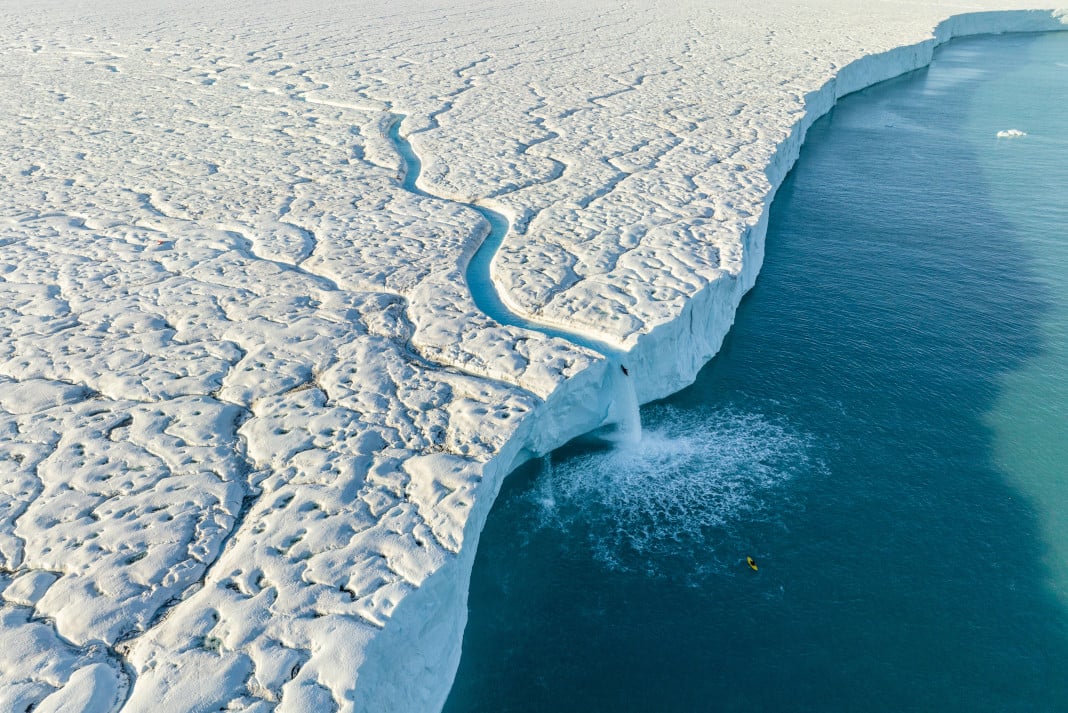
In November of 2023, footage emerged of whitewater kayaker Aniol Serrasolses taking a plunge unlike anything we’d ever seen. Deep in the Arctic, Serrasolses descended a 65-foot waterfall cascading off a shelf of ice. Of course, in the back of our minds, we could calculate running the waterfall was just one element to pull off this unique expedition.
In the short Red Bull documentary Kayaking down the Ice Wall, we now have the full story behind Serrasolses’s glacial waterfall mission.
Behind the Mission to Run a 65-Foot Glacial Waterfall
To reach the waterfall created by melting ice, Serrasolses and his team traveled within the Arctic Circle to the Norwegian archipelago of Svalbard. From the most northerly settlement on the globe, Longyearbyen, they boarded a research vessel and sailed for the Bråsvellbreen glacier.
Hoisting Serrasolses’s kayak atop Bråsvellbreen. Image: Red Bull / YouTube
When the team arrived, they were met with a towering, 100-mile-long frozen wall. Serrasolses and the crew watched in astonishment as calving ice fell into the ocean to produce tsunami-like waves. They cruised the perimeter of the escarpment, scouting for Serrasolses’s waterfall. The critical ingredients were volume and enough aeration in the pool to produce a soft landing for the five-story free fall.
The team found what Serrasolses called, “the most beautiful waterfall I had ever seen,” and had to figure their way, kayaks and all, up the ice wall. To do so, the research vessel pulled right along the edge, extending a series of ladders for expedition members to climb, and set up belays for the rest of the team.
Setting the ladder across one of more than 30 stream crossings. Image: Red Bull / YouTube
Where the expedition crew landed atop Bråsvellbreen was far from the waterfall Serrasolses would run. To reach it, they traveled across the glacier by foot. With a look more mountaineer than paddler, they employed crampons and ice axes. Serrasolses towed his boat while his support crew member Philip towed a ladder, which they utilized to cross some 30 glacial melt streams.
[ Find wild guided adventures in the Paddling Trip Guide ]
After seven hours of arctic trekking, the team arrived at the waterfall Serrasolses dubbed “Philip’s Ladder,” in gratitude for his team member’s effort. The rest, business as usual for Serrasolses.
Islands hold special appeal for paddlers. The best islands in the world for kayaking are alluring for their remoteness, great beaches, humbling headlands, unique wildlife and so much more. The mere sight of an island on a map—or, better yet, an island viewed across a watery expanse—leads us to dream and wonder what’s there.
Besides the tangible attractions, there’s simply something special about paddling a complete circle and the sense of fulfillment when you get back to where you started. This global list represents a mere fraction of the best islands for kayaking. It’s a place to get started, and a place to realize there’s never enough time to experience them all.
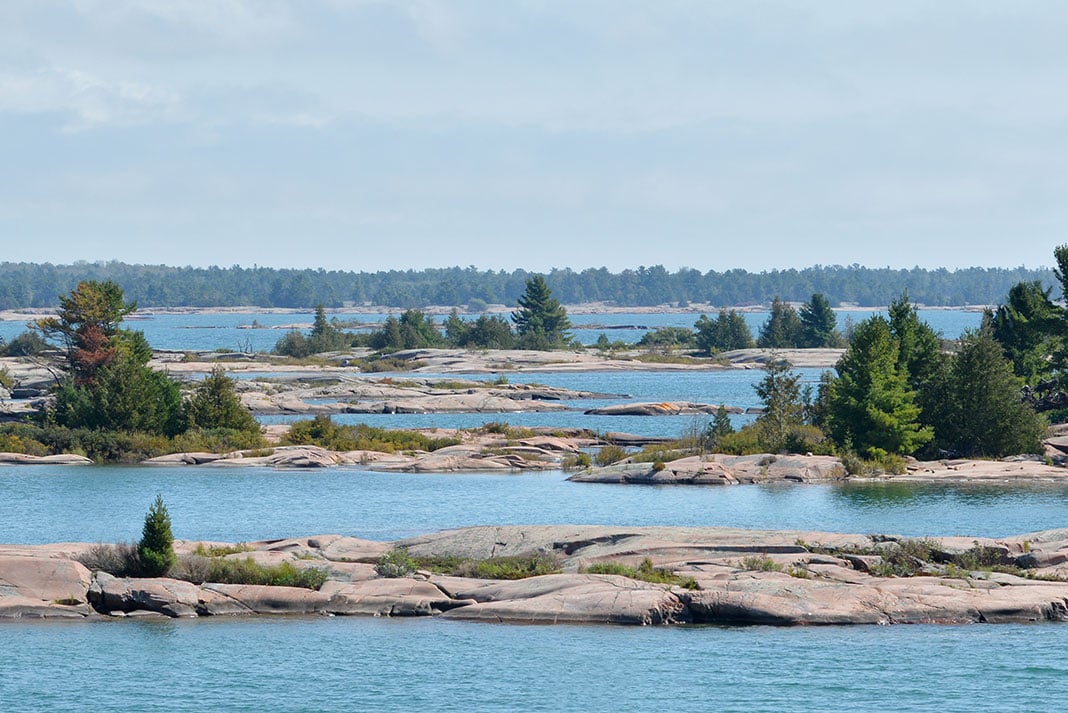
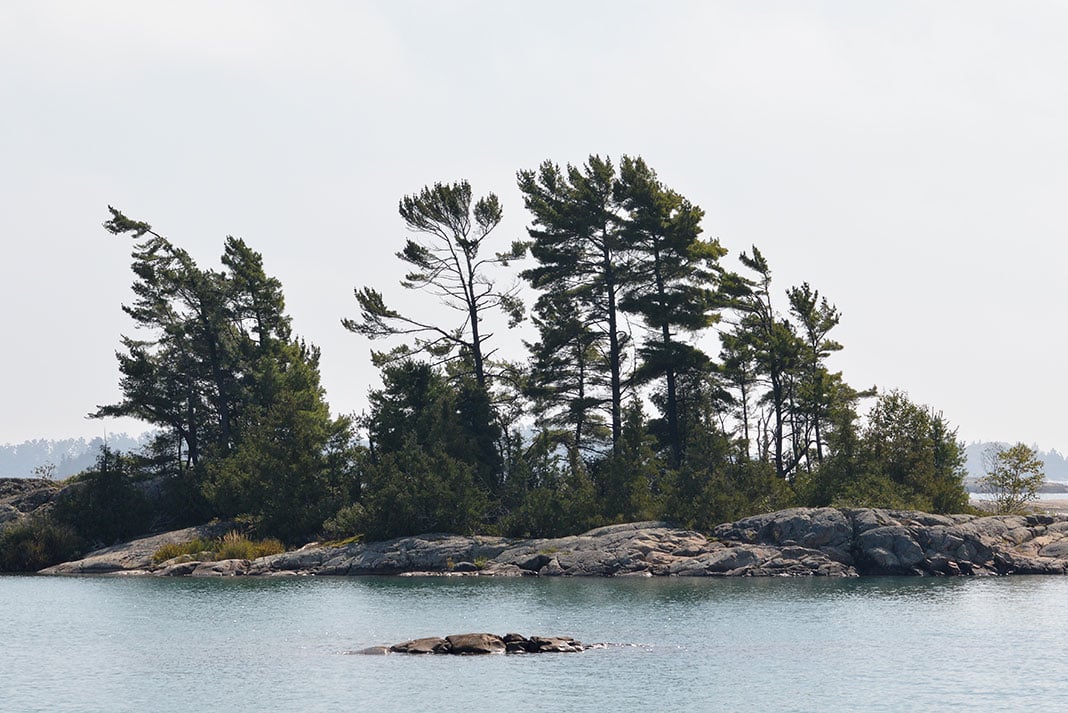
Located on the doorstep of Ontario’s beloved Killarney Provincial Park, Philip Edward Island is a classic Georgian Bay sea kayaking destination with a wide range of paddling options. Most trips begin from the Chikanishing River, where you will need an Ontario Parks permit to park your vehicle (backcountry camping permits are not required) at the launch.
It’s possible to explore the western edge of Philip Edward on a day trip, but watch the weather carefully to safely navigate stretches of open water. Better if you can set aside four to six days for a wilderness kayak trip to experience all of Philip Edward Island by paddling about 50 miles around its perimeter—an ideal Great Lakes sea kayaking trip for intermediate paddlers. Along the way you’ll experience countless glacier-polished offshore islands, reedy dead-end channels rich with fish, amphibians, birds and wildlife, amazing camping and more. Nearby Point Grondine Park, managed by local Indigenous people, offers a unique perspective on this ancient place.
2 Lake Superior National Marine Conservation Area, Ontario
An archipelago of more than 600 islands stretches from the Sibley Peninsula (aka the Sleeping Giant), east of Thunder Bay, to the Slate Islands in northern Lake Superior. Known as the Lake Superior National Marine Conservation Area, this is the largest expanse of protected freshwater in the world. You couldn’t imagine a better destination for sea kayaking.
Touring options range from novice-friendly day trips in the sheltered islands off the quaint village of Rossport; to multiday trips among the Slate Islands, a group of islands located about seven miles offshore that were created by an ancient meteor impact and feature unique geology, great fishing and a population of woodland caribou; to a wilderness expedition for experienced kayakers involving a 75-mile journey from Sibley to Rossport that includes many open water crossings, rugged scenery and outstanding solitude. All-inclusive guided tours are available in all cases.
Photo: Thomas K/Pexels
3 Grand Island, Michigan
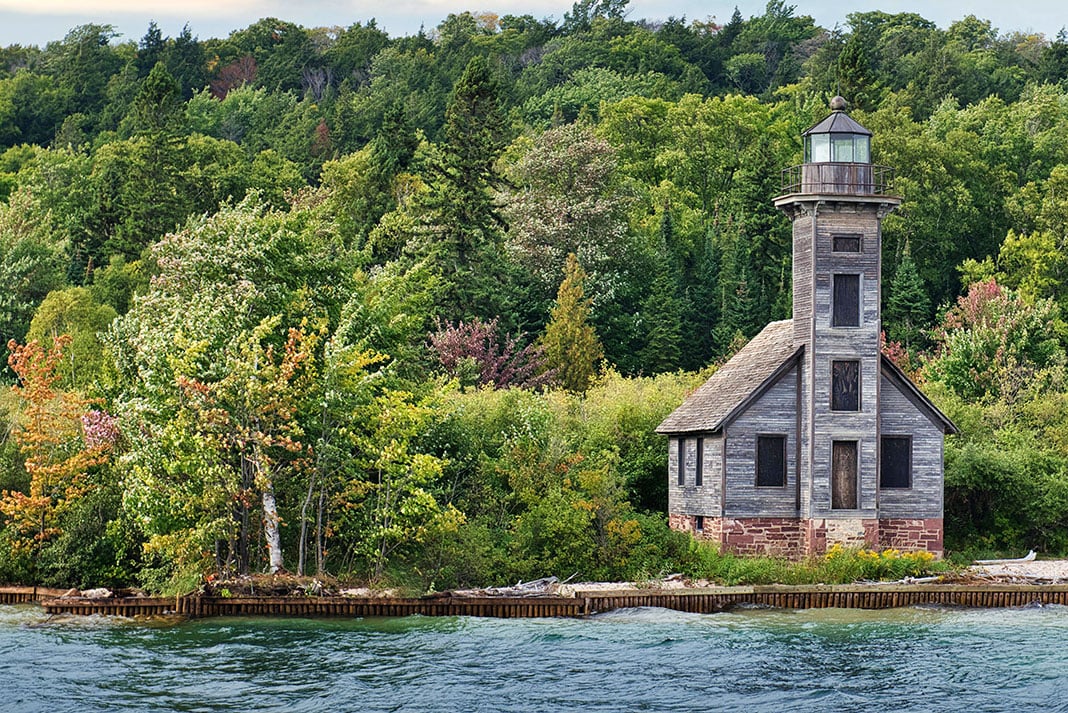
Located on Lake Superior in Michigan’s Upper Peninsula, Grand Island lives up to its name with great beaches, sea caves and backcountry campsites for weekend sea kayaking trips. Access the island from the community of Munising, located on highway M-28. It’s a short ferry ride to the island or a moderate crossing for experienced sea kayakers—just be sure to check the weather in advance. There are 21 designated campsites on the island, with reservations required between Memorial Day and Columbus Day. Local outfitters offer guided day and overnight kayak trips to Grand Island.
Photo: Lesly Derksen/Unsplash
4 Vancouver Island, British Columbia
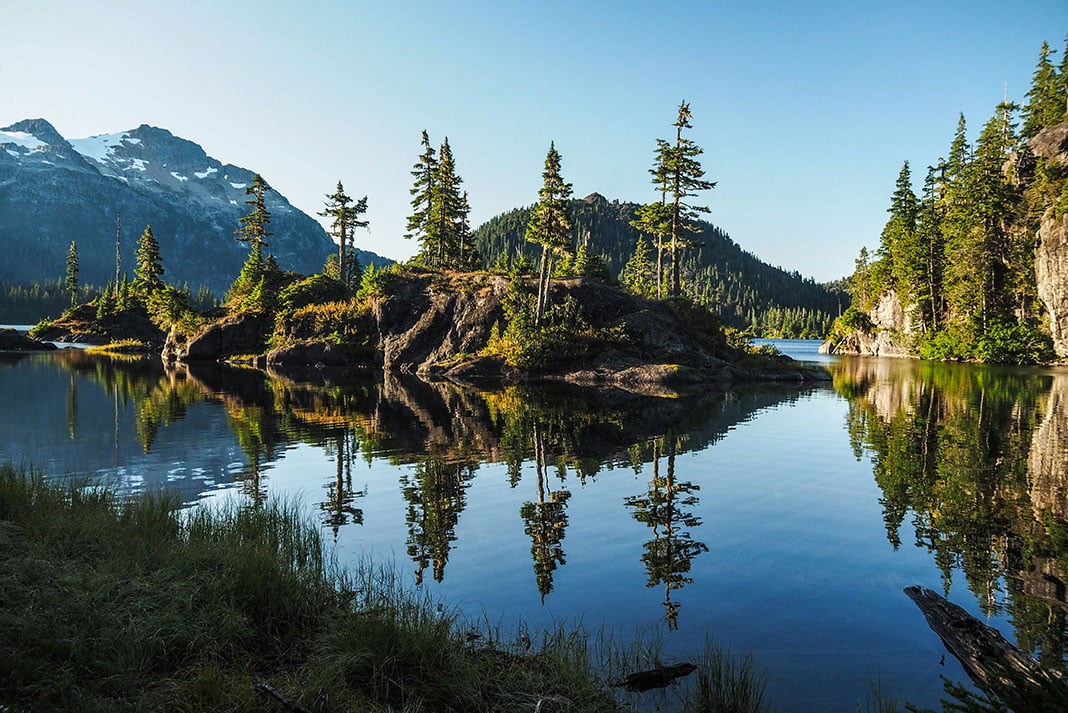
Vancouver Island is an iconic sea kayaking destination on the Pacific coast of British Columbia. With over 750 miles of coastline, the island features a little (or more accurately, a lot) of everything, including endless beaches and rugged headlands on the exposed west side, and tide-washed channels on the east side, which is part of the Inside Passage. The island is accessible by ferry, serviced by BC Ferries, or by air.
Whether you’re a beginner or advanced paddler, it’s hard to find a better introduction to Vancouver Island than Clayoquot Sound. This large, island-choked bay on the west side of the island has great options for day trips to old-growth cedar forests and multiday expeditions to remote surf-washed beaches, headlands and hot springs. The community of Tofino is the gateway to Clayoquot Sound, and is home to several sea kayak outfitters.
Photo: Graham Hobster/Pixabay
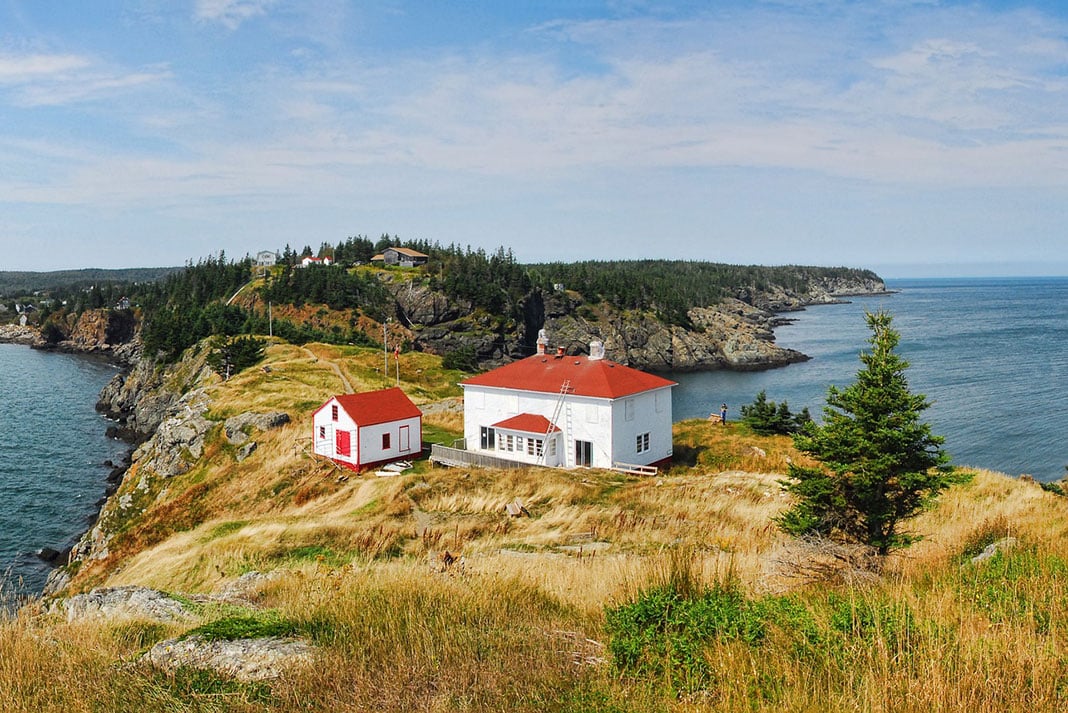
5 Grand Manan Island, New Brunswick
Located at the mouth of the Bay of Fundy, New Brunswick’s Grand Manan Island provides a unique perspective on one of the most dynamic marine environments in the world. An abundance of zooplankton forms the foundation of the food web, attracting four species of whales (including the exceedingly rare North Atlantic right whale), porpoises, dolphins, seals and more. Along the shoreline and above the water, bird-watchers can revel in adding many species of seabirds to their life list.
Of course, it’s all better from a kayak—and local tourism operators offer guided kayak trips at Grand Manan Island. The island is accessed by ferry, with plenty of options for accommodations and great food when you arrive.
Photo: Bradley Morris/Unsplash
6 Panhandle Islands, Alaska
A cluster of mountainous, fjord-carved islands in the Alaskan Panhandle makes up the north end of the Inside Passage. The towns of Juneau and Haines are gateways for experienced sea kayakers to encounter the misty passages, monstrous glaciers, majestic forests and incredible marine life of Chichagof and Admiralty islands. Farther south, the communities of Ketchikan and Sitka are starting points to explore Prince of Wales Island and Tongass National Forest. The Alaska kayak route options are practically endless, ranging from day trips to all-inclusive, guided adventures to epic wilderness expeditions.
7 Tybee Island, Georgia
Tybee Island is located near the border of South Carolina and Georgia, part of a sandy delta formed at the mouths of the Bull River and Tybee Creek, close to the city of Savannah. Tybee is a renowned winter destination for sea kayakers looking to develop their skills in rough, yet warm, waters, including surf and tidal currents. Outfitters provide rentals and certified instruction, as well as guided trips, to help you learn more about this unique coastal environment.
Photo: E Thorsen/Pixabay
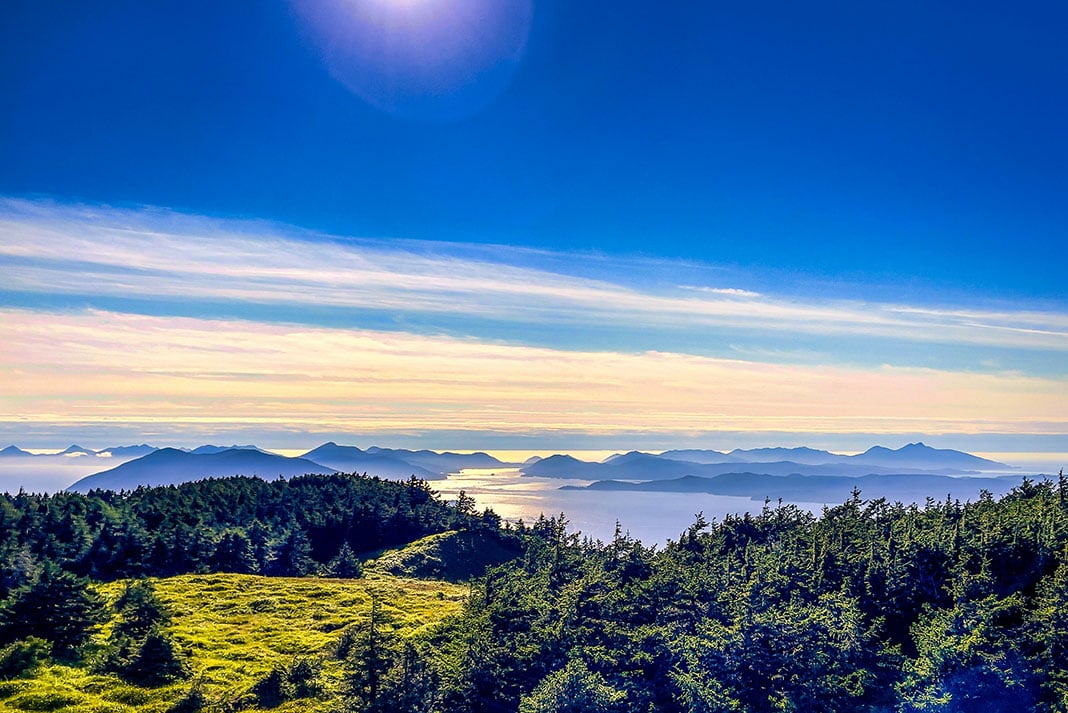
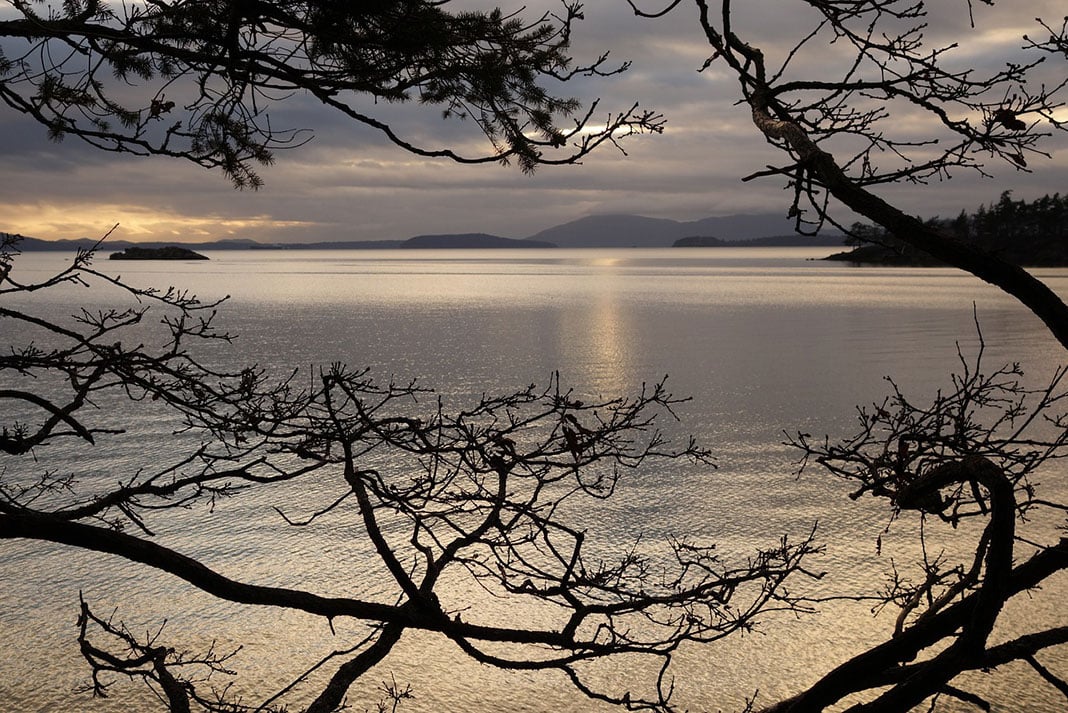
8 San Juan Islands, Washington
Washington’s San Juan Islands make up the southern end of the Inside Passage. The San Juans are noted for their temperate climate and moderate precipitation, offering a distinctive Mediterranean feel in the Pacific Northwest. Besides lush forests of unique arbutus trees, shell beaches and a laid-back vibe, the area is also home to seals and orca whales. Guided sea kayaking day trips and overnight adventures are available for novices and families.
Photo: Charles Jackson/Unsplash
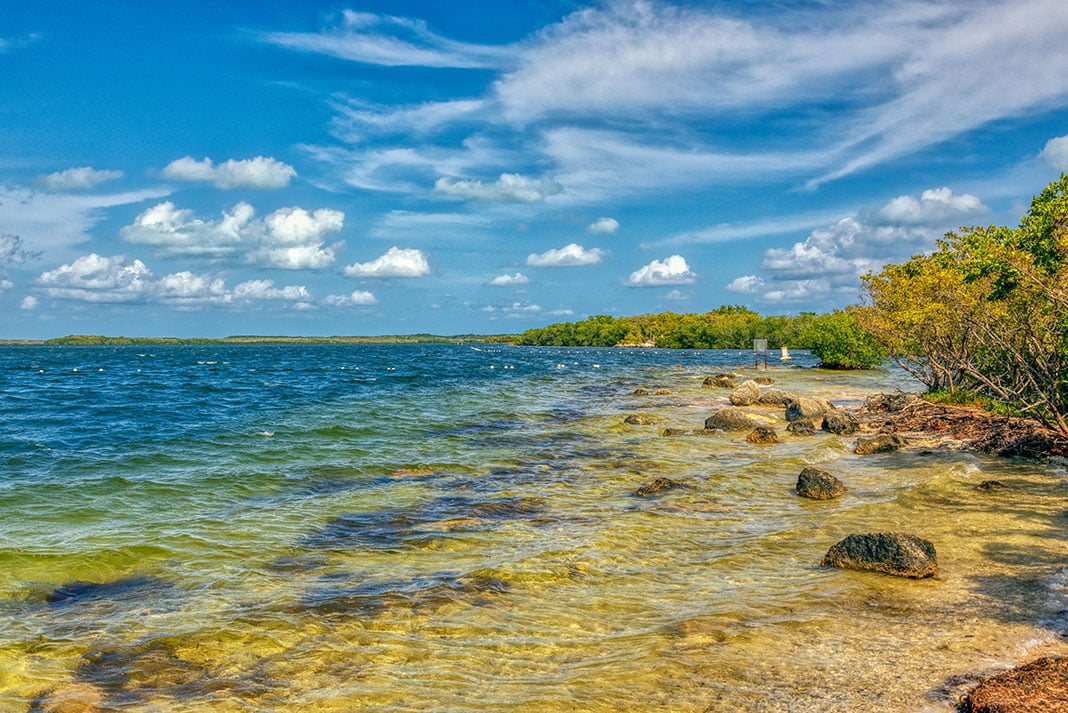
9 Florida Keys
Dry Tortugas National Park is an amazing place to kayak at the tip of Florida. Part of the famous Florida Keys, about 70 miles west of Key West, Dry Tortugas offers camping options on Garden Key, great paddling opportunities, world-class snorkeling, a historic fort and some of the best beaches in America. This marine park consists of seven magical islands, surrounded by aquamarine waters, incredible coral reefs and colorful fish.
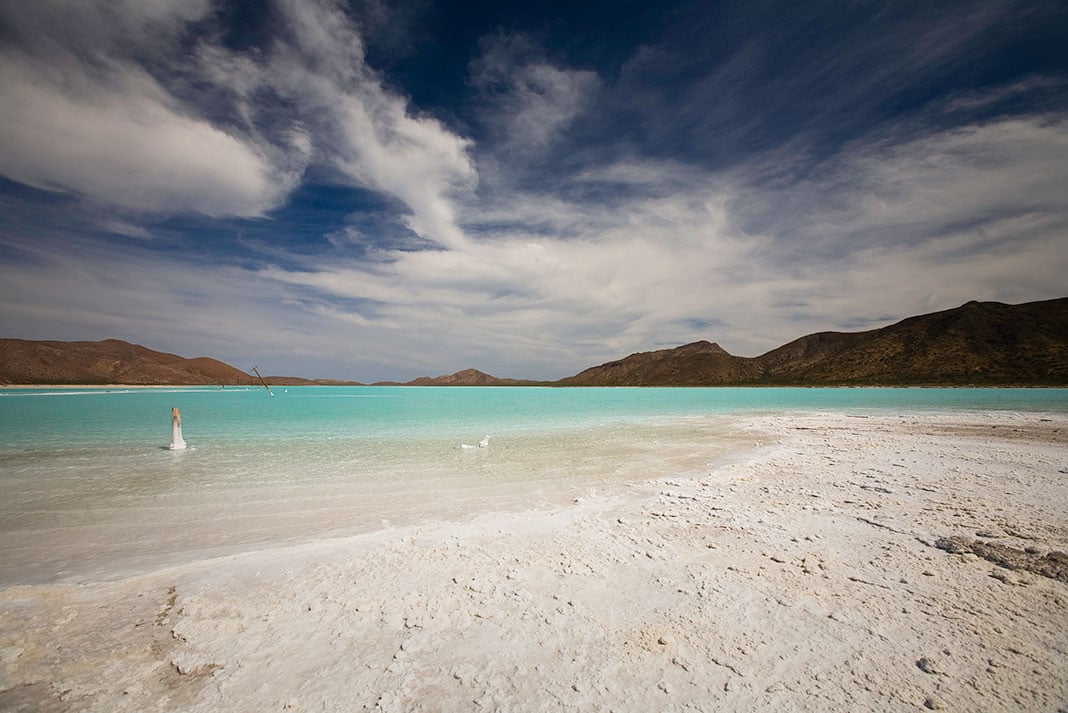
Carmen Island is located in the heart of Mexico’s Loreto Bay Marine Park, in the Sea of Cortez. Warm water, great beaches, and an incredible contrast of marine and desert ecosystems define a Baja sea kayaking trip. Paddlers may encounter plenty of wildlife in the sea and on land, including dolphins, blue whales, sea turtles and bighorn sheep. The shoreline is a stunning mix of beaches, sea caves and cliffs. Maximize your experience of this rich area—and simplify the logistics—by signing up for a guided trip.
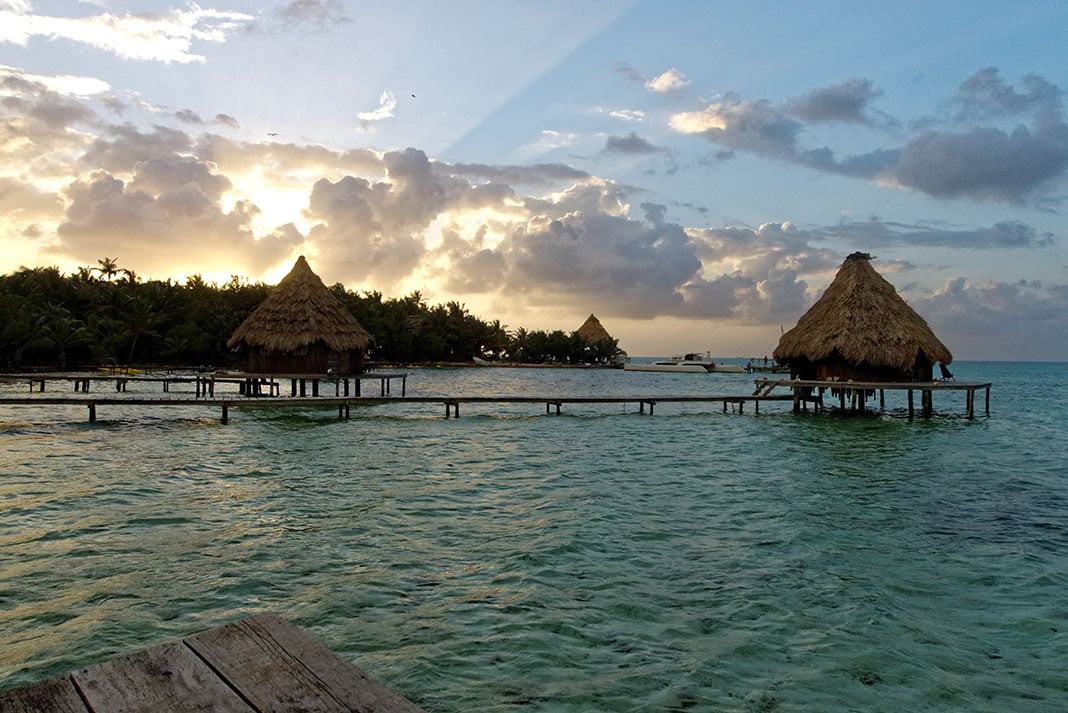
Belize is a kayaker’s dream, with over 450 islands, known as “cays,” pinpricking the Great Barrier Reef in the Caribbean Sea. Glover’s Reef is one of Belize’s best places to kayak, providing amazing options for kayak tours to explore other cays and short paddles to access world-class snorkeling sites. With incredible clear water, fantastic marine life and friendly people (including outfitters and guides), paddlers would be hard-pressed to find a better destination than Belize for a winter trip.
Photo: Nick Rickert/Unsplash
12 Exuma Cays, Bahamas
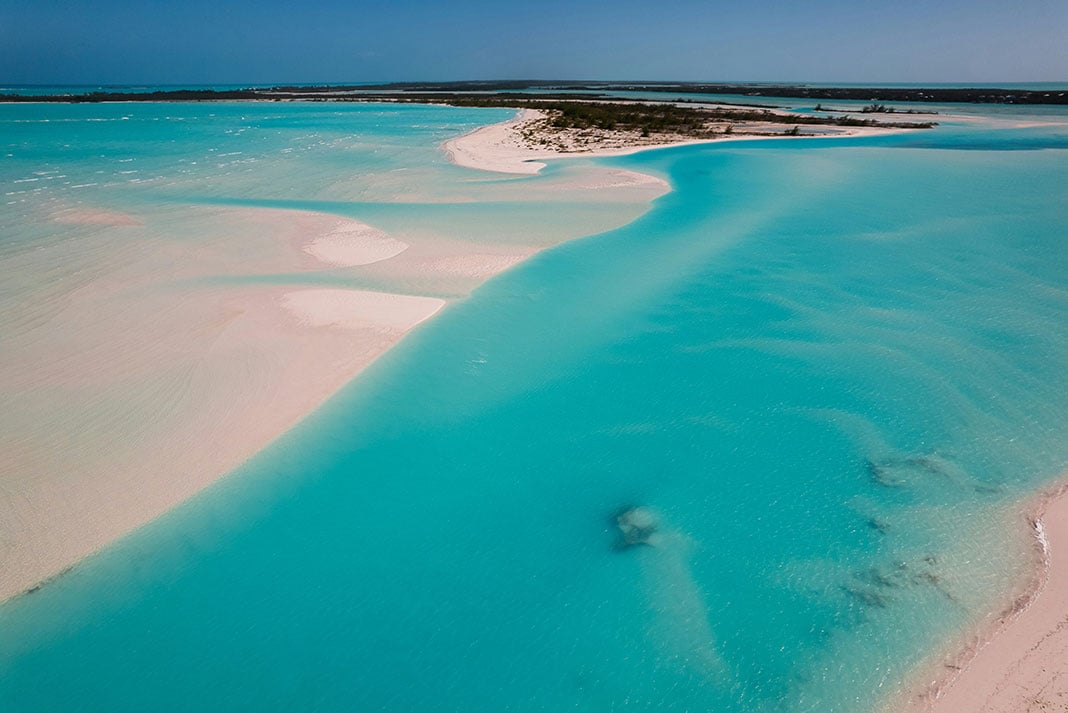
The Exuma Cays are made up of 365 islands and cays of various sizes, from tiny sand spits to Great Exuma, a strip of limestone and sand measuring about 40 miles in length. With so many islands to explore, each with its own charm, there’s plenty of variety when it comes to Bahamas kayaking. You can travel with a guide or rent from a local outfitter to plan island kayak trips with a mix of camping and lodge accommodations. The Bahamas are an ideal destination if you’re looking to combine paddling with snorkeling and time on some of the best beaches in the world.
Photo: Håkon Grimsted/Unsplash
13 Svalbard, Norway
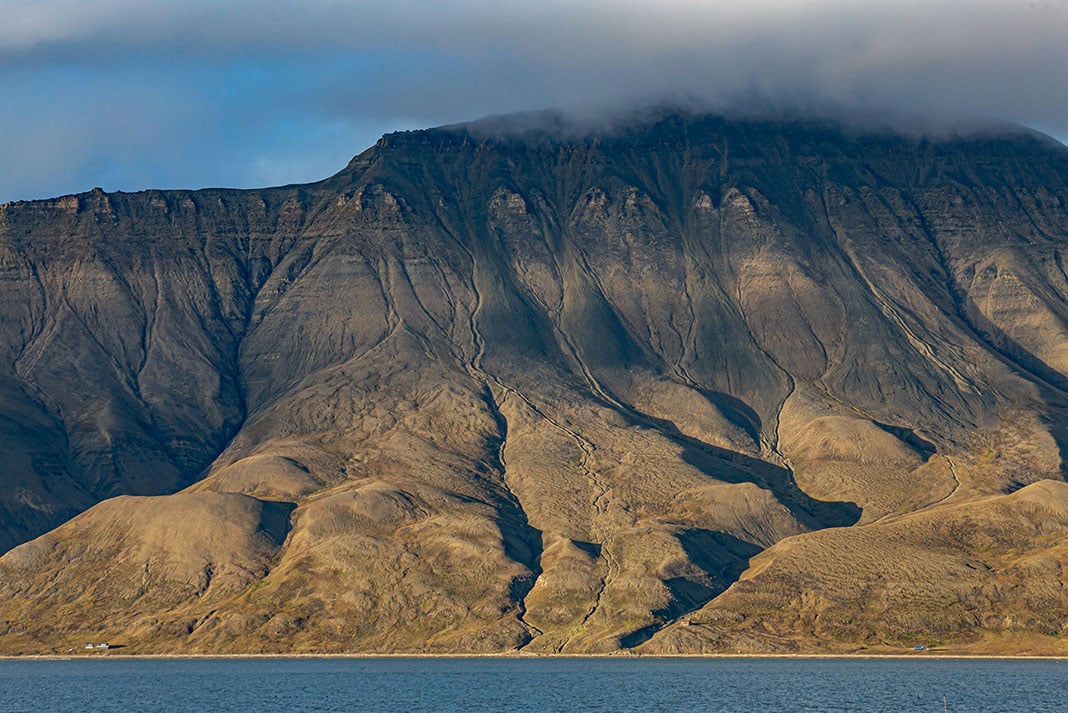
There aren’t many islands more remote than Svalbard, which translates from old Norse to “cold edge”—an apt name for a place of polar bears, pack ice and midnight sun. This Norwegian archipelago rises from the Atlantic north of 71 degrees latitude, featuring a rugged shoreline of barren rocks rising to jagged peaks. Svalbard is a bucket-list destination for paddlers who love to see the world from a kayak. You’ll definitely want to sign up for a guided trip to experience these polar waters, and kayaking features prominently on several adventure cruise options.
Feature photo: Lesly Derksen/Unsplash
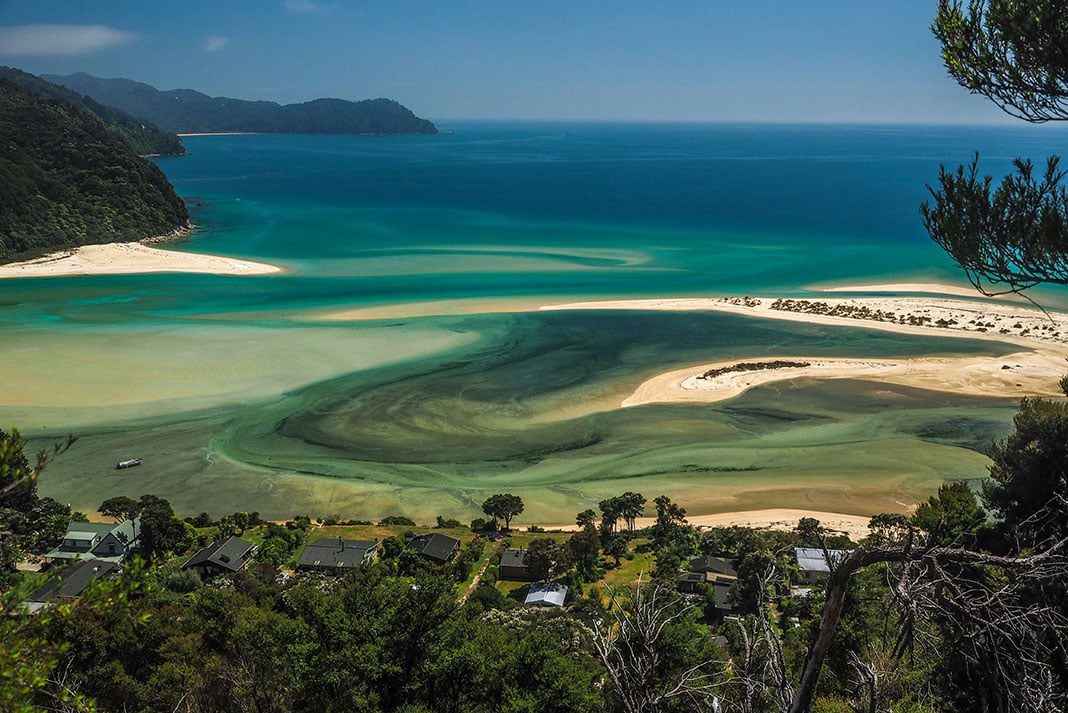
14 Abel Tasman National Park, New Zealand
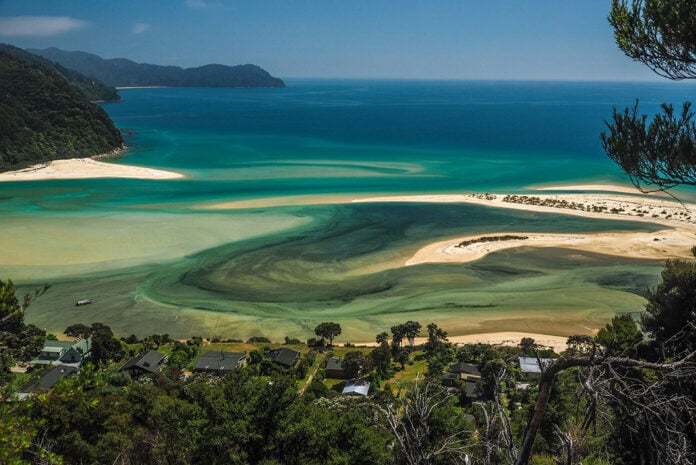
Abel Tasman National Park is located at the north end of New Zealand’s South Island—a bucket-list destination for adventurers of all types. Abel Tasman features some of New Zealand’s best kayaking, with expansive beaches and an incredible coastline that’s serviced by water taxis to allow DIY paddlers the opportunity to customize their own kayak trips, ranging from hours to days on the water.
Plenty of options for guided kayak trips in Abel Tasman are available as well, making the area suitable for paddlers of all skill levels. Besides kayaking, the park is a biodiversity hot spot with a rich array of seabirds (including little blue penguins—the world’s smallest species of penguin) and lush, tropical flora.
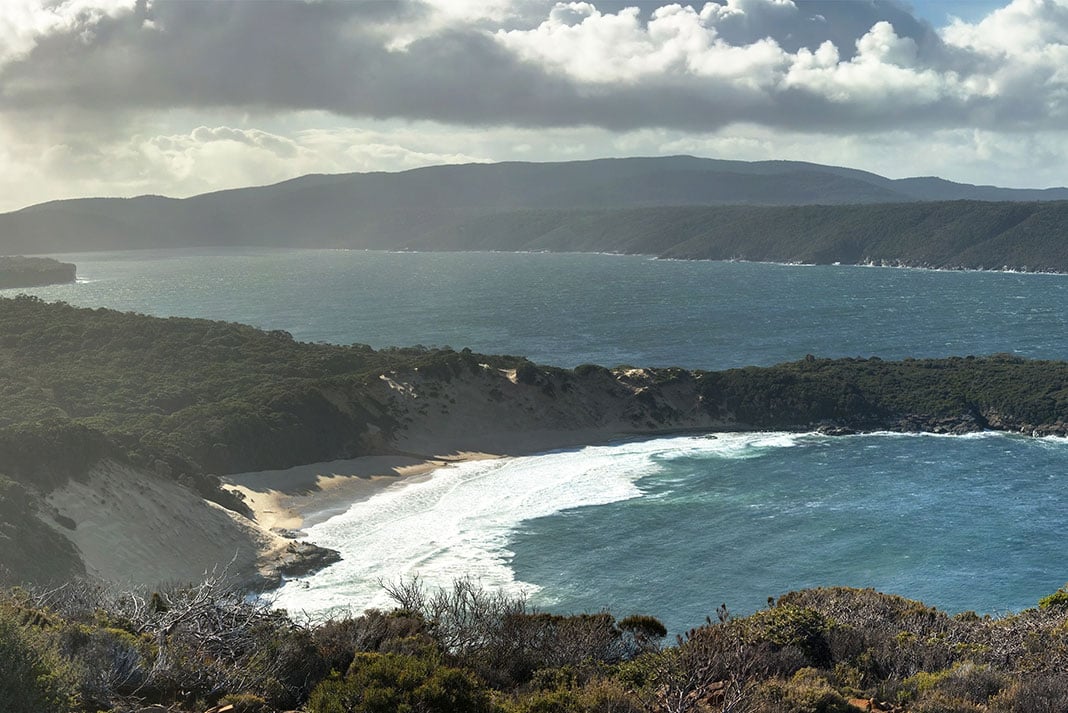
The Australian state of Tasmania provides a stark contrast of rocky cliffs and fine-sand beaches, especially on the Tasman Peninsula. This is truly a life-list destination for sea kayakers, with amazing paddling and the opportunity to see migrating humpback and southern right whales throughout the austral summer. Various options are available for guided day trips and luxurious multiday adventures.
Photo: Max Antonov/Unsplash
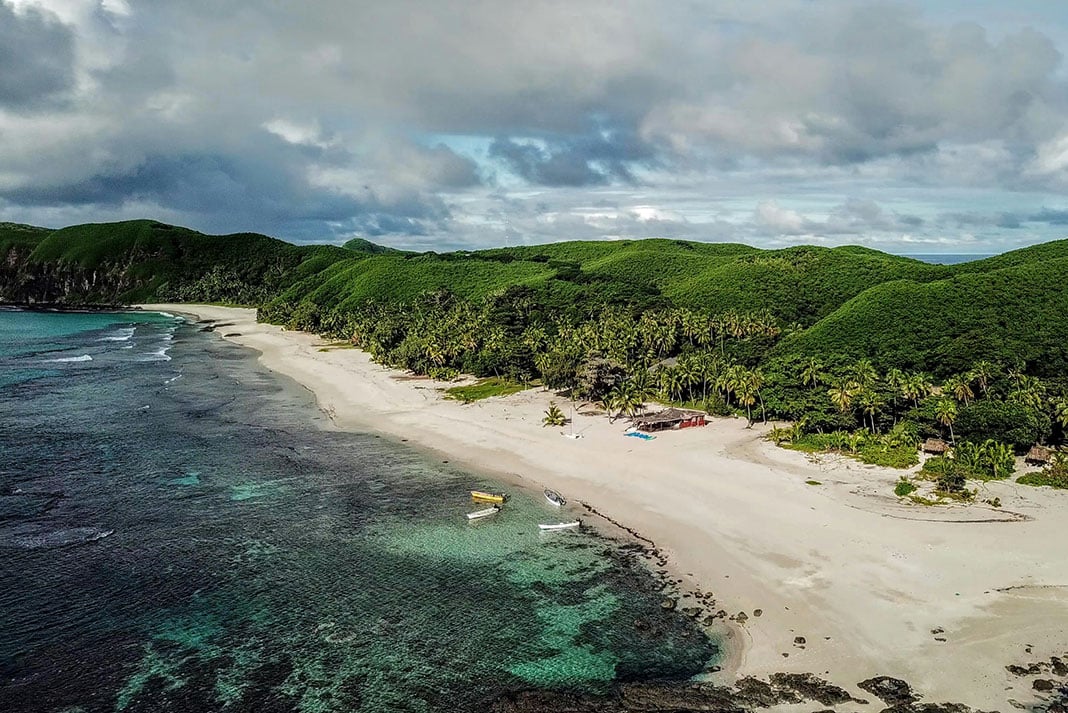
16 Yasawa Islands, Fiji
Home to the famous Blue Lagoon, the Yasawa Islands capture just about everything you’d expect from Fiji: 20 paradisiacal islands with palm-clad beaches, cerulean waters, incredible fish and wildlife below and above the sea, and friendly communities that live the wonder of “island time.” Paddling options range from resort-based day trips for recreational kayakers to expeditions with island-to-island crossings, up to 10 days in length.
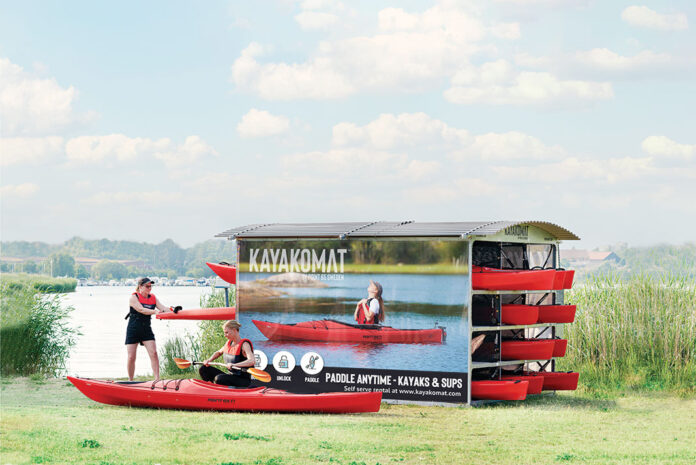
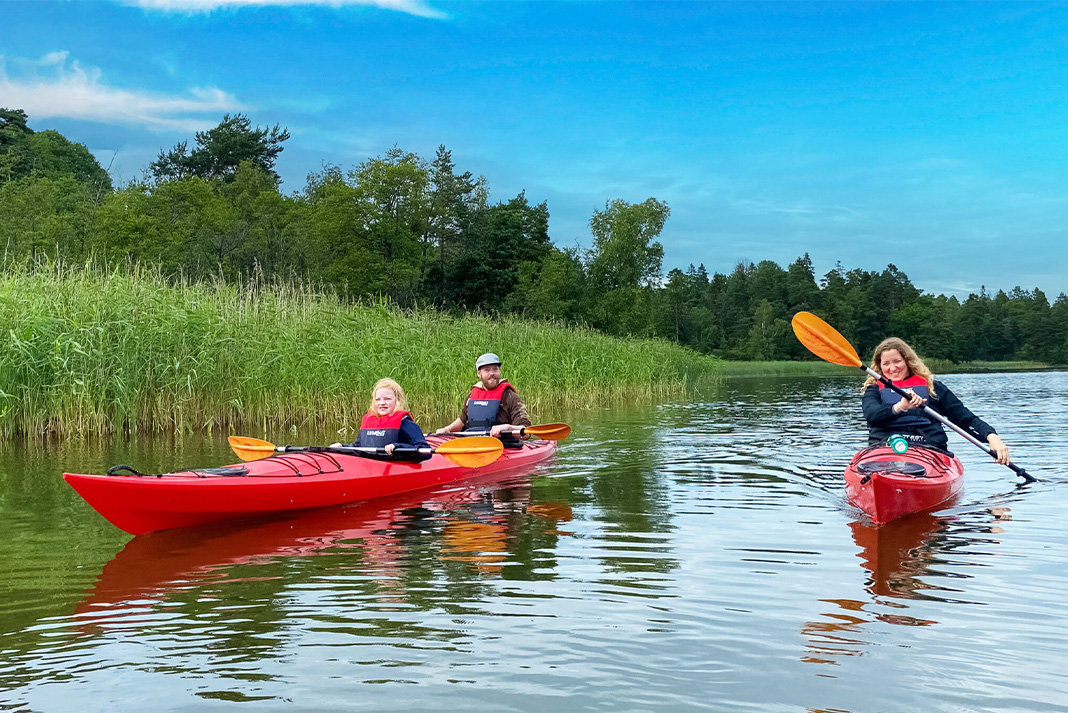
Kayak rental: there’s an app for that. | Feature photo: Kayakomat
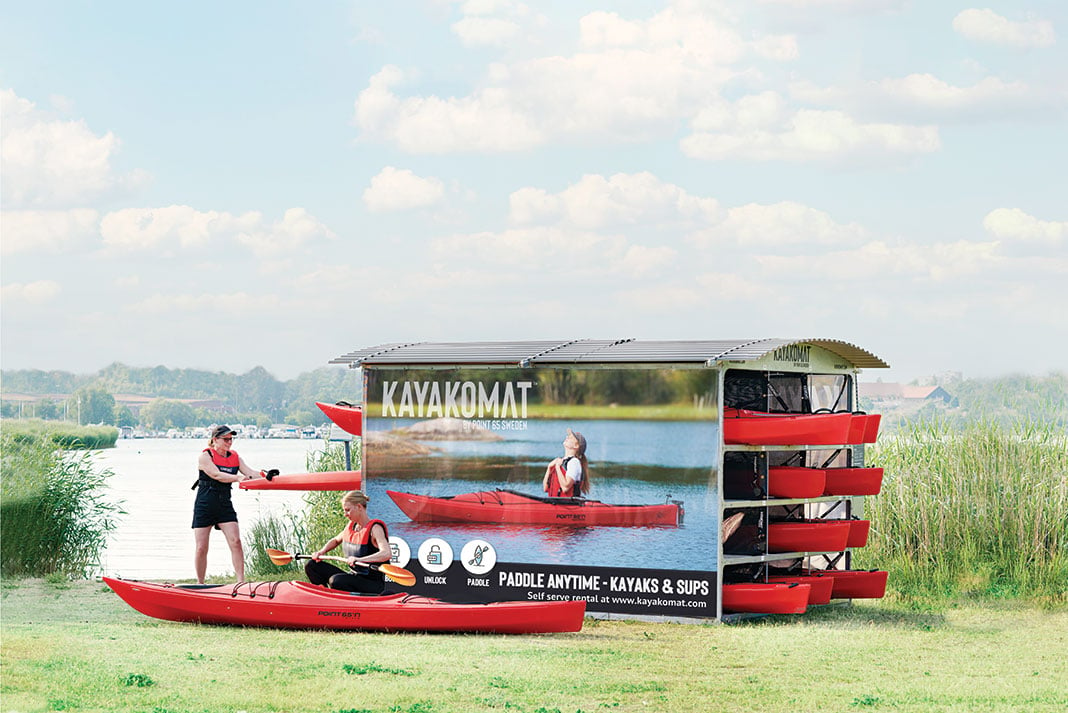
KAYAKOMAT, a subsidiary of Swedish kayak maker Point 65, has already dispensed 75,000 kayak and SUP rentals from automated kiosks this year, making it the biggest paddling livery on the planet.
So if you were wondering if the robots might one day take over the paddling business, maybe they already have.
“Having started KAYAKOMAT in 2021, we currently have about 250 stations in operation in eight countries, growing at a pace of three to six stations per week,” says Richard Öhman, Point 65 CEO and founder of KAYAKOMAT. “We expect to pass 600 stations this time next year.” While most of those stations are in Europe, Öhman’s robotic minions established a beachhead in Canada last summer, and if all goes to plan they’ll land on U.S. shores next year.
Kayak rental: there’s an app for that. | Feature photo: Kayakomat
Automated kayak and SUP rentals are already common in some parts of the United States. Upstate Kayak Rentals has a dozen automated locations in New York. PADL has 50 SUP vending stations across Florida. Rent.Fun has 41 automated kayak rental stands throughout the United States. But while KAYAKOMAT is already the world’s biggest paddlesports rental company, its American competition has a distinct side-hustle vibe. Take Whenever Watersports, whose motto is “Making watersports more accessible, one kiosk at a time.” So far they’re up to two.
How the service works
Still, there’s no denying the appeal of self-serve paddling kiosks. City, state and provincial parks in particular love the idea of providing a new recreational amenity with little to no staff involvement. That’s a big part of the pitch to investors, too. None of the 12 KAYAKOMAT affiliates in Canada owns the prime waterfront land where their kiosks are located. Instead they partner with parks or private campgrounds. Most don’t even pay rent, says Tim Rosadiuk, a Point 65 dealer in Alberta who manages KAYAKOMAT’s Canadian operations.
KAYAKOMAT is unique in that it supplies everything—the kiosks, phone app and technical support, plus boats and gear—to affiliate partners. The company’s Canadian affiliates pay a one-time fee of $6,000 Canadian ($4,500 USD) and purchase the kiosk for $3,600 Canadian ($2,700 USD). Operating costs come to about $15,000 Canadian ($11,300 USD) per year, including access to the smart lock system and smartphone enabled booking app, a quiver of 12 Point 65 kayaks or SUPs, and insurance purchased from a third-party provider.
[ Paddling Buyer’s Guide: View all Point 65 kayaks ]
There’s no line item for labor, of course. The robots handle that, with a little help from the human affiliate, who should plan to spend about four to eight hours a week wiping down kayaks, swabbing the kiosk and dealing with tech-challenged customers on the phone.
Rosadiuk purchases the boats wholesale from Point 65, then sells them to a third-party company that leases them to the affiliates. Affiliates get four brand-new boats from Point 65 each season (they pay shipping), and the used boats are sold into the local market with the proceeds split 50-50 between Rosadiuk and the operator. It’s kind of like credit default swaps, in the sense that nobody needs to understand exactly how it works as long as they’re all making money. And so far, they are. Rosadiuk says affiliates can expect to gross $20,000 to $40,000 Canadian ($15,000–$30,000 USD) per year.
Öhman says U.S. affiliates should expect a similar arrangement, though likely without a leasing company in the middle: An entrance fee of $5,000, monthly fees of $250 for software and $300 for hardware including boats, gear and smart locks, and insurance sold separately.
Start with safety, says Teresa Patterson, a kayak guide and livery manager in Fort Worth, Texas. “When we get our insurance, we have to be rescue trained. We have to verify we have the right number and size of life vests, and we have to verify we’re not going to put anybody on the water in questionable conditions,” she says. “All that goes out the window with these kiosks.”
Labor savings and free rent may give automated kiosks a big financial edge, Patterson says, but the humans still have one ace up their sleeves. “They absolutely can undercut us, but we make up for that in service. We’re going to make sure you feel protected and safe and completely catered to.”
That’s one thing the machines can’t do. Yet.
This article was first published in the 2024 issue of Paddling Business. Inside you’ll find the year’s hottest gear for canoeing, kayaking, whitewater and paddleboarding. Plus: how to beat the big box, forty years in the Four Corners, building the Paddlesports Trade Coalition and more. READ IT NOW »
Kayak rental: there’s an app for that. | Feature photo: Kayakomat
River trips bring home harrowing tales of whitewater sure, but let’s be honest, the most memorable part of every river trip is camp. The time spent with friends on sandy beaches, surrounded by canyon walls, listening to the white noise of churning water. And nothing quite says a night around the camp circle like the comfort of being tucked under a puffy.
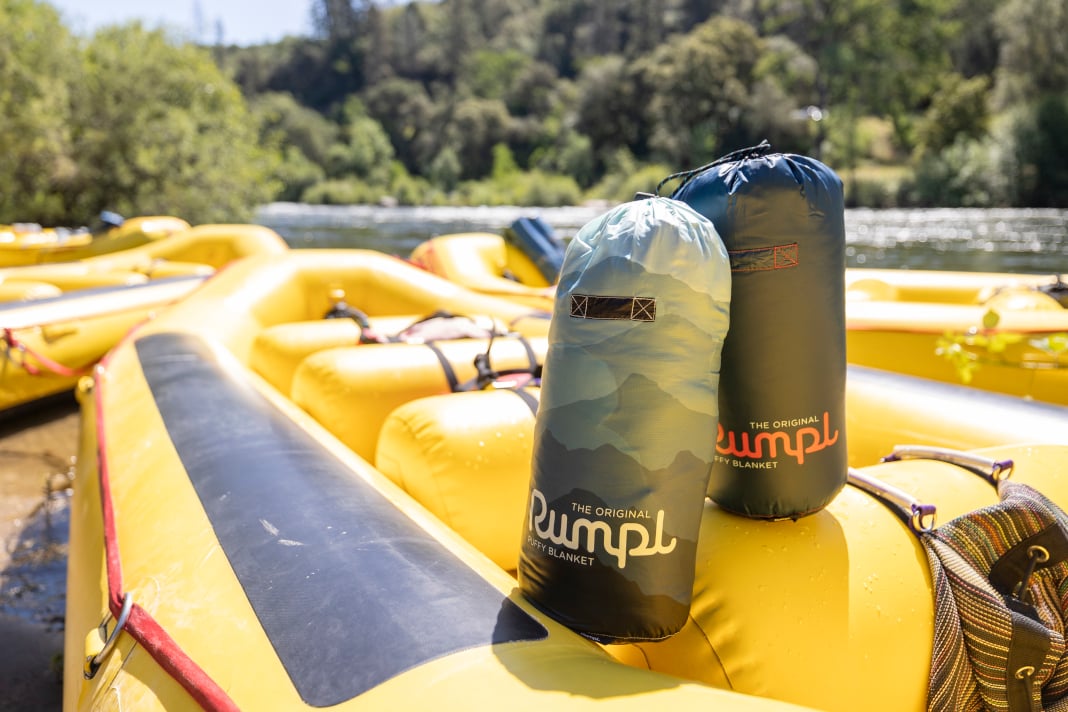
Storied rafting outfitter OARS and puffy blanket brand Rumpl caught on to the fact and launched a new brand partnership, with Rumpl as the exclusive blanket sponsor of OARS and OARS events starting this river season.
Feature Image: Courtesy OARS
Rumpl and OARS launch partnership
“The river has always provided a special sense of sanctuary, adventure and community for myself, so I’m personally excited to be working with a company as respected and experienced as OARS to amplify the benefits of Rumpl gear in those unique settings,” shared Josh Weichhand, Rumpl’s vice president of global brand marketing, in a recent press release.
The Rumpl brand was born out of the van life. They are most well known for their original, stuffable, puffy blanket, but they also produce quick-drying, sand-repelling towels made to go anywhere and puffy ponchos, among other cozy gear.
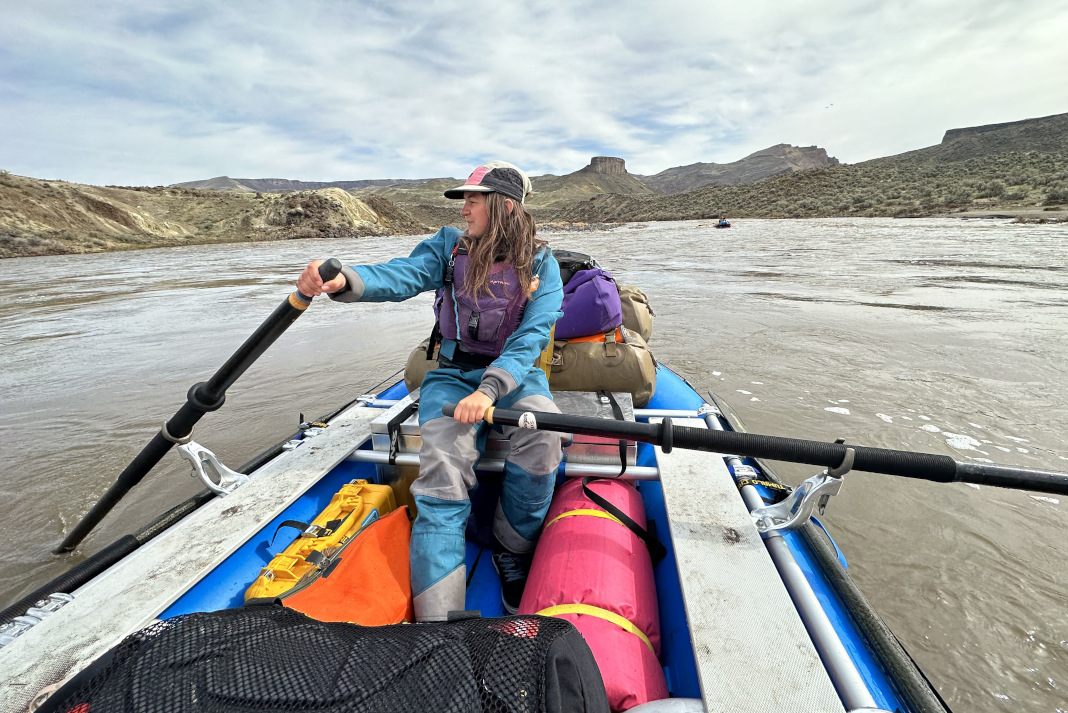
OARS, founded in 1969, offers 75 itineraries worldwide including classic multi-day trips such as the Grand Canyon, Middle Fork of the Salmon and Rogue. Now, right alongside a paddle and helmet, guests, guides and support staff will have their pick of Rumpl gear as creature comforts.
[ Find your next rafting journey in the Paddling Trip Guide ]
“Since the beginning, OARS has been proud of the company we keep, from our world-class guides to the people behind the scenes making each trip happen,” Steve Markle, vice president of sales and marketing for OARS, also shared in the press release. “We’re excited to welcome Rumpl into the fold—and provide our guests and crew with some cozy blankets to stay warm and comfortable in the wild places we love most.”
With the partnership, count on the OARS camp to be the life of the river this season and puffy ponchos trending among guide wardrobes.
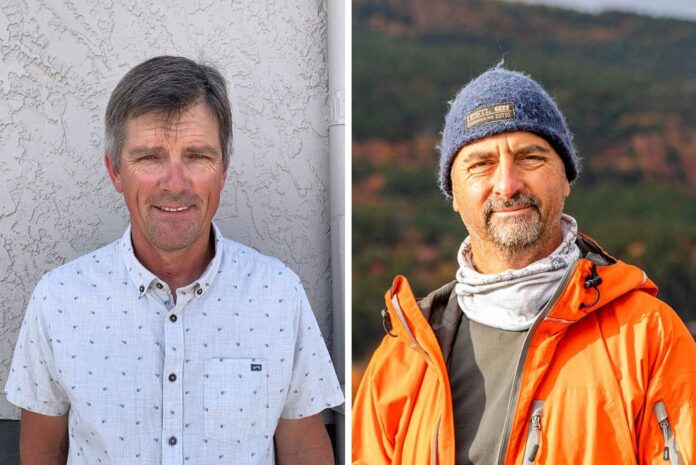
Oceanside, CA – May 22, 2024 – Hobie, the leader in innovative watercraft and adventure products, is proud to announce the hiring of Joel McBride as Vice President of Sales and James McBeath as Director of Marketing. With over 70 combined years of experience in adventure sports, these new hires bring a wealth of industry knowledge and a dynamic vision to Hobie’s leadership team. Joel and James will collaborate with both long-standing and new staff to elevate Hobie’s sales and marketing strategies to unprecedented heights.
Hobie Reshaping the Path Forward
The hiring of Joel and James mark the start of a new era for Hobie, one that sees the deepening connection of a legendary outdoor brand to today’s outdoor market place. These changes start with evolving sales programs and dynamic, modern marketing tactics.
Marty Pathak, President of Hobie, expressed his enthusiasm for the new hires: “We’re thrilled to welcome Joel and James to the Hobie family. Their combined experience and innovative thinking will be instrumental in driving our sales and marketing efforts to new levels. They bring a fresh perspective that aligns perfectly with our mission to deliver the best adventure products to our customers.”
About Joel McBride
Joel McBride is a paddle sports veteran with over 35 years of experience. Joel started at Wave Sport, a leading whitewater manufacturer, and helped it become a market leader. He then managed sales for all brands at Confluence, making him one of the top sales professionals in the industry. At Confluence, he played a key role in popularizing the Tarpon series of kayaks. Joel then moved to Pelican International, where his work with national accounts propelled the company to market dominance. Since joining Hobie two years ago, Joel has focused on enhancing Hobie’s presence in the fishing and recreational markets.
Joel McBride commented on his new role: “I’m excited for the changes being made at Hobie. Our goal is to strengthen our organization to provide increased dealer support and connect with our consumers as well. Hobie struggled with the post-pandemic slow down and, as a leading manufacturer, we have a long hill to climb. We are going to rebuild our sales force and our marketing program to bring Hobie back to the forefront of the outdoor markets. I look forward to working with our team to achieve these ambitious goals. “
About James McBeath
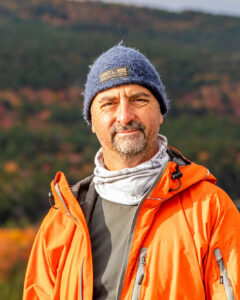
James McBeath brings over 35 years of experience in outdoor sports marketing. His career began with leading marketing agencies and professional sports teams like The Montreal Canadiens, The Carolina Hurricanes, and USA Hockey in the late 90s. Transitioning to paddle sports, James outdoor business adventures began with marketing for Liquid Skills Kayak School, Heliconia Press, and, in 2003, led the World Kayak initiative. In 2007 James became Jackson Kayak’s first Marketing Director. In that role he drove the brand to dominance in the whitewater market and spearheaded its growth into kayak fishing. James’ expertise spans customer support, brand management, product development, and more, making him a well-rounded lead for Hobie’s marketing team.
James McBeath shared his vision for Hobie’s marketing direction: “Joining Hobie is a tremendous opportunity. My focus will be on increasing brand awareness and engaging the marketplace with modern, consumer-reaching tactics. We have a strong foundation to build on, and I am eager to bring Hobie’s story to a wider audience.”
Joel and James will prioritize building out the sales force and dealer support systems, strengthening Hobie’s brands, increasing brand awareness, and engaging the marketplace with modern consumer-reaching tactics.
About Hobie
Since 1950, Hobie has been in the business of shaping a unique lifestyle based around fun, water, and quality products. From their headquarters in Oceanside, California, Hobie designs and manufactures an impressive collection of innovative watercraft that includes surfboards, kayaks, stand-up paddleboards, sailboats, and accessories, all aimed at making water adventures accessible and enjoyable for everyone.
Aqua Bound’s latest innovation is the Aerial paddle lineup, featuring Lam-Lok technology. This new development uses aramid thread to mechanically bond the paddle’s laminated blade layers, significantly boosting resistance to impact, abrasion and delamination, extending the paddle’s lifespan.
The Aerial lineup was released in the fall of 2023, and the Paddling Magazine team recently caught up with Brian Boyea, VP of Sales at Aqua Bound and Bending Branches, to learn more about the new technology.
“The coolest thing about this is the aramid thread we’re using to stitch the blades together,” said Boyea. While a typical composite paddle is held together by layers of fiberglass or carbon and bonded with resin, Lam-Lok adds something new.
“What we’ve done here is before that bonding process, we’re stitching this aramid thread into the edge of the blade,” says Boyea. “That stitching is going to do a couple of things for us. It’s going to help impact resistance and it’s going to give us quite a bit of strength and durability on that edge. It’s also going to prevent delamination.”
Durability has been the focus in developing these paddles. Aqua Bound consulted kayakers of all skill levels to identify common issues with current paddles, such as wear from frequent contact with rough surfaces.
Initially hand-stitched in prototyping, the Lam-Lok method was field-tested and found to be effective, with testers reporting exceptional durability of the prototypes even with extensive use. A specialized industrial sewing machine in now used for production.
In Aqua Bound’s testing, a typical composite blade ripped apart at 17 pounds of force. “Our final layup, where we have multiple layers of thread, ripped apart at 495 pounds of force,” adds Boyea.
The aramid thread is applied to dry fiberglass or carbon materials before resin application. The blade edges are stitched back and forth with more than 33 feet of aramid thread per paddle. According to a press release from Aqua Bound, in-house tests revealed the Aerial’s Lam-Lok technology provided five to 10 times better resistance to delamination and abrasion compared to other paddles on the market, including the brand’s own Whiskey and Tango models.
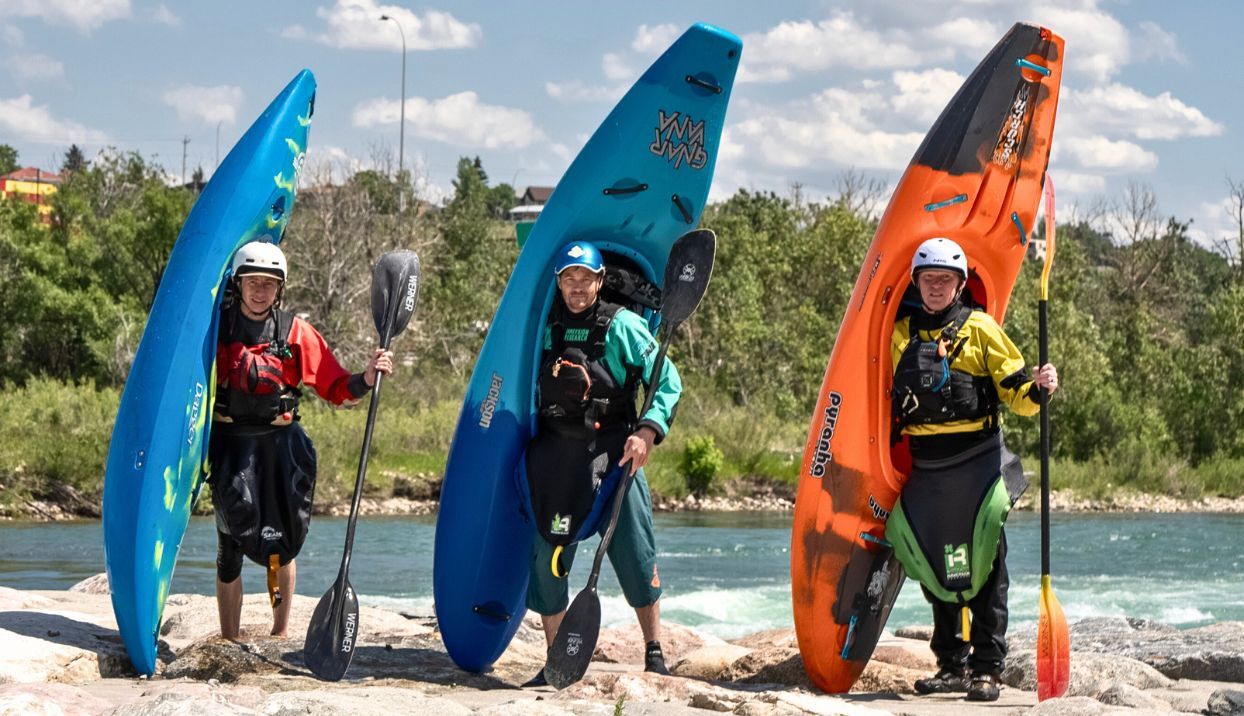
Everybody swims—it’s part of the sport, and whitewater kayaking is more of a team activity than we may credit it for. You want to strive to be a strong teammate on the river and know others have your back too. Among essential rescue techniques is the ability to wrangle a friend’s boat, and here to help is Simon Coward, owner of AQ Outdoors (AQ Outdoors is a paddling shop and school with locations in Calgary and Edmonton). The following is a transcript of Coward’s kayak rescue method of choice.
Timing your rescue to meet the kayak at the bottom of a rapid. | Image: AQ Outdoors
How to perform an effective kayak rescue in whitewater
Simon here from AQ Outdoors, just checking in with a little tutorial on some best practices and the easiest ways to rescue kayaks. Over the last 20-odd years of teaching and such I’ve made lots of mistakes, I’ve learned from others, and I’ve seen others make mistakes, and some do really great rescues.
Basics of rescuing a kayak
This is very much about how to keep it as simple as possible. We’re going to start in flatwater how we might address this. My personal preference is to not clip the boat and to get the boat upright as soon as possible. If I get the boat upright and it has float bags in it, it’s much easier to manipulate—whether you’re clipping it, pushing it or bumping it. Ideally we want the boat upright and empty. It’s very easy to rescue at that point but you don’t always get that good of a bounce, well we usually don’t because people are usually upside down.
[ Paddling Trip Guide: View classes at AQ Outdoors ]
After someone swims, the boat is going to be upside down and have a bit of water in it, right, so with this, the most common way I see people try and right the boat is essentially to lean across, grab the gunnel on the other side, push down with this hand and right the kayak. And that works, however, once you get into moving water and it’s a bit more dynamic, that becomes a lot harder. Especially with larger boats and smaller people, it becomes very difficult.
Simon Coward’s chosen method of righting a kayak. | Feature image: AQ Outdoors
A straightforward rescue technique
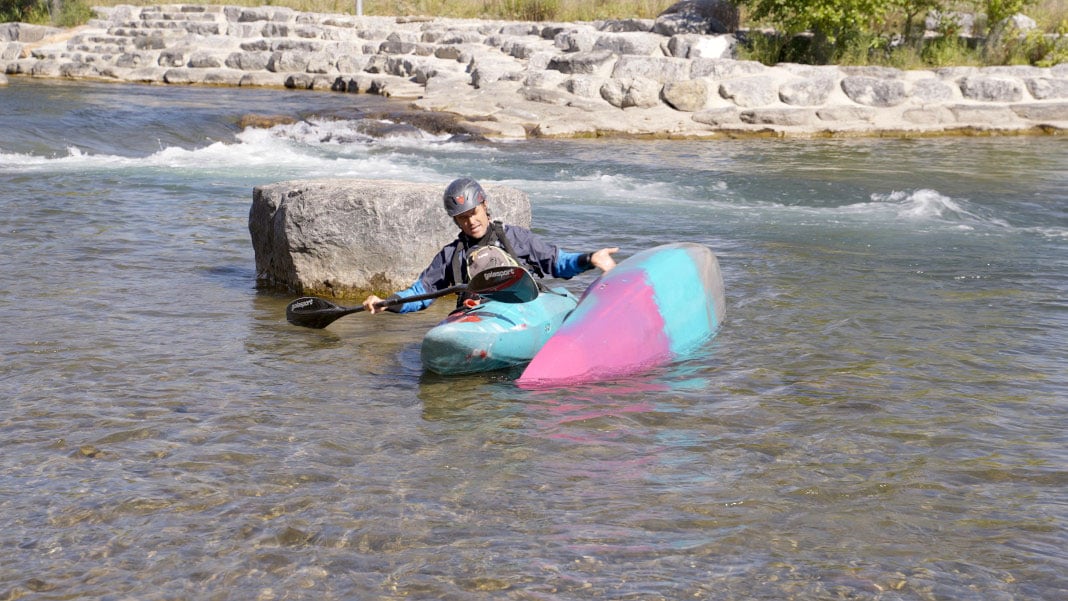
My preferred way of righting the boat if it is upside down, is just essentially to get alongside it, grab the inside gunnel, and slowly start to right it. Then, I lean away and push away. This way I actually have contact with my paddle the whole time—I don’t have to let go of it. And, it’s very quick and very easy to get the boat back upright again. Now we have a kayak, presuming there are float bags in the back, that’s very easy to push and manipulate and move around. It’s not always going to cooperate, sometimes it’s going to flip back over again.
So, super simple: get alongside it, grab, lean away, push the gunnel away, the boat’s right again and you’re off to the races.
A final push to right a fellow paddler’s kayak. | Image: AQ Outdoors
Rescuing a kayak in whitewater
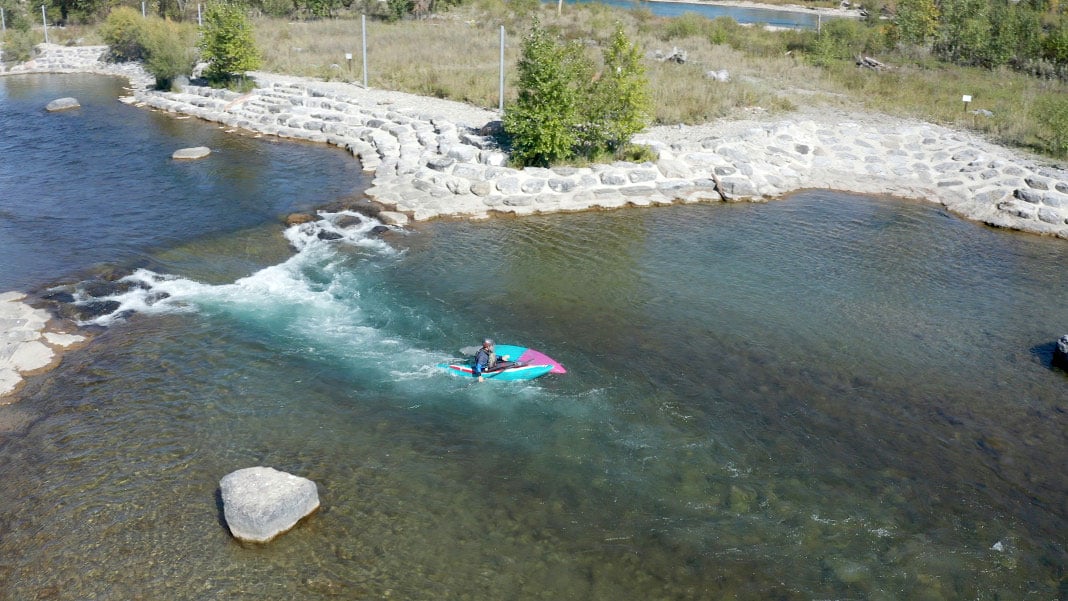
Okay so I’m presuming I’m running safety at the bottom of this little drop. We’ve got our swimmer out, and this boat’s coming down. The first thing to think about is timing. When am I going to go out and get myself to the boat? I pop out [of the eddy] and I get alongside it. Now I’m going to grab the inside of the kayak and then push. I can spin it [the direction I want it to go] then I push the boat [toward shore]. It’s going to spin. It almost flipped there but there’s not that much water in it so it stayed upright.
I haven’t had to clip the boat at all. So if there were any hazards I’m not at risk of flipping over and getting hung up. Basically I’ve got the boat to shore very quickly, very simply. Now I can get out, and I can empty the water out off the kayak and we can get the paddler back going again.
That’s it, a quick and simple way to rescue a whitewater kayak that doesn’t have a rider anymore. Obviously, it’s ideal that there are float bags in the back, but this method doesn’t require you to let go of your paddle. It doesn’t require you to clip onto the boat. It’s a quick flip push get it into the eddy and you’re off to the races.
AQ Outdoors offers retail and kayak instruction in Calgary and Edmonton. Learn more about their school and stores at AQOutdoors.com.
Simon Coward’s chosen method of righting a kayak. | Feature image: AQ Outdoors
Sometimes headlines can be deceiving. Rather than highlighting specific trips, our list of best paddling “trips” for this year showcases regions with multiple world-class options for canoeing, sea kayaking and whitewater paddling. The result, we believe, is anything but deceptive. This article provides a comprehensive rundown of the best destinations to paddle in 2025.
Of course, curating a “best-of” list doesn’t come without challenges—and biases. We focused on places north of the equator so you can plan great adventures for this year’s summer and fall. We also targeted many of the amazing North American paddling hotspots (including one in Paddling Magazine’s backyard) that we love, as well as a few international destinations that we’re dreaming about. It’s time to start planning your own best paddling trip for 2025.
For half a century, paddlers have been flocking to sign up for guided raft trips on the Ottawa River, in Canada’s National Capital Region. This anniversary is but one reason the Ottawa Valley is a renowned paddling epicenter that’s worthy of topping your list of dream destinations for 2024. Besides exciting whitewater rafting, you’ll also find great recreational kayaking options in view of Parliament Hill in downtown Ottawa.
The mighty Ottawa River, and the nearby Madawaska River, are also home to some of Canada’s best kayak schools and summer camps for kids and adults. You will rapidly discover why the Ottawa River has been instrumental in the development of freestyle kayaking and continues to serve as a proving ground for the world’s best paddlers.
The East Gate of Algonquin Provincial Park is located within a two-hour drive of the nation’s capital, providing great access to a vast network of lake-to-lake canoe trips along with whitewater canoe tripping on the Petawawa River.
Meanwhile, on the Quebec side of the Ottawa River, go paddleboarding on the Gatineau River at the picturesque village of Wakefield (30 minutes from downtown Ottawa) or reserve an island campsite at Parc regional du Poisson-Blanc (about a 90-minute drive from Ottawa) for an easy overnight canoe, kayak or SUP trip.
VIEW ALL ONTARIO & QUEBEC PADDLING TRIPS
Photo: Colin Field/Northwest Territories Tourism
2 Northwest Territories
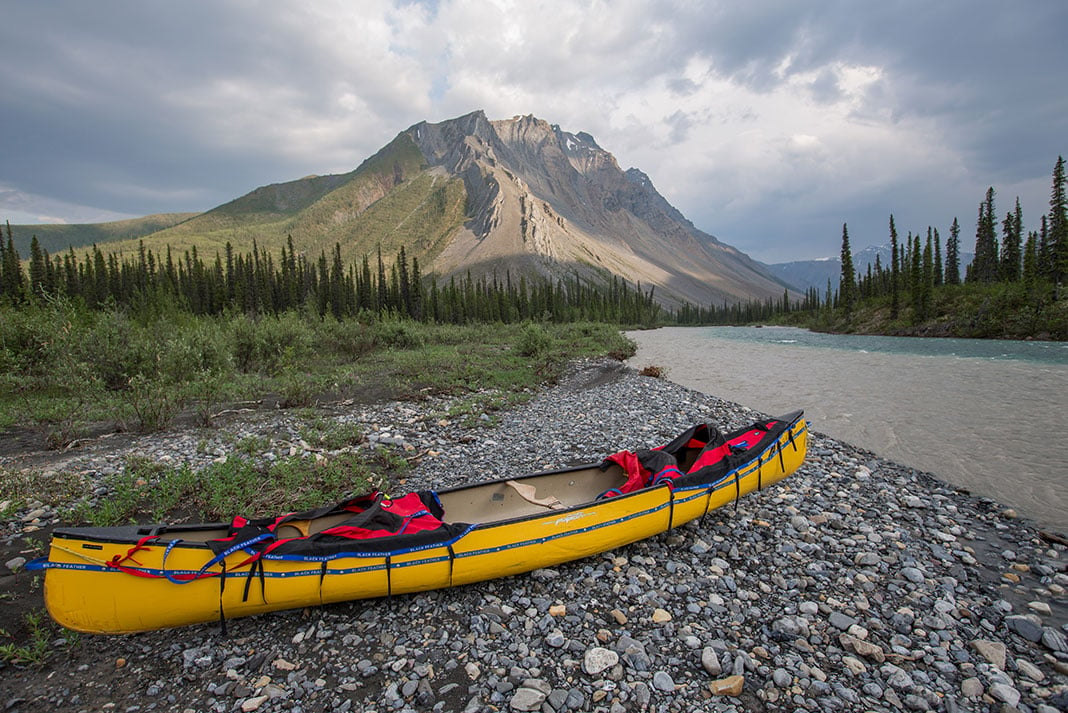
From whitewater canoe tripping in the legendary Barrenlands on waterways like the Coppermine River, whitewater rafting through the deep canyons of the South Nahanni River, or sea kayaking the remote shores of Great Slave Lake, it’s little wonder why Canada’s Northwest Territories (NWT) is a bucket-list destination for all types of paddlers.
A longtime commitment to adventure tourism has allowed the NWT to achieve a seemingly impossible balance of accessibility and remoteness: you can get to places like Yellowknife, Fort Simpson and Norman Wells on commercial flights, and a host of great outfitters will take it from there.
An incredible array of NWT guided paddling trips are available, from whitewater canoe expeditions for experienced paddlers to family-friendly raft and canoe trips in iconic destinations. NWT outfitters also offer canoe and gear rentals and trip planning services to help arrange floatplane charters to help make your dream a reality.
VIEW ALL NORTHWEST TERRITORIES PADDLING TRIPS
Photo: Destination Ontario
3 Northwestern Ontario
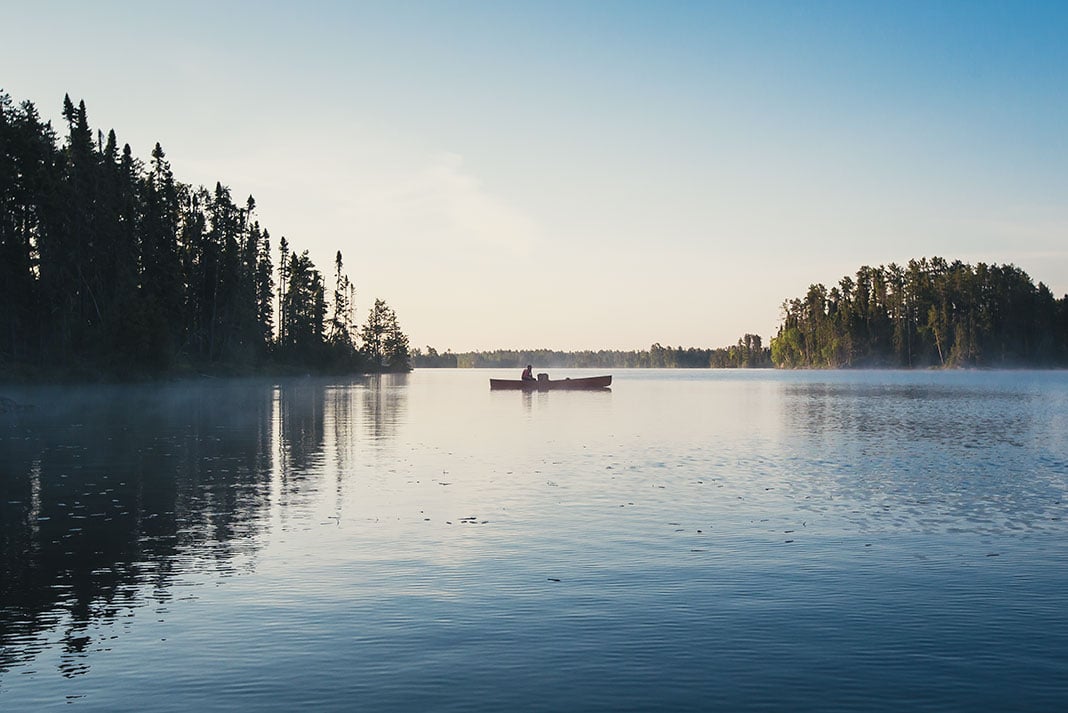
The vast region between Lake Superior, Hudson Bay, and the Manitoba and U.S. borders contains enough water and paddling routes to fill lifetimes. Northwestern Ontario is home to countless provincial parks that were seemingly purpose-built for paddlers. Quetico Provincial Park, a quick border crossing away from Minnesota’s Boundary Waters Canoe Area, gives a fantastic glimpse of the potential with thousands of kilometers of wilderness canoe routes.
Venture farther (and with the appropriate backcountry skills) and you’ll find the boreal wilds of Wabakimi, one of Ontario’s largest provincial parks, as well as the unique boreal-meets-prairies scenery of Woodland Caribou Provincial Park. Both of these immense protected areas feature endless canoe tripping on lakes and wild rivers. Farther beyond, rivers like the Winisk draw expert canoe trippers to the Arctic waters of Hudson Bay.
The big lakes of Wabakimi and Woodland Caribou are alluring to sea kayakers, too. But kayakers will be spoilt for choice when they consider the paddling prospects of Lake Nipigon, Lake of the Woods, and of course the massive expanse of the Lake Superior National Marine Conservation Area.
VIEW ALL NORTHWESTERN ONTARIO PADDLING TRIPS
Feature photo: Travel Alaska
4 Alaska
Alaska is a perennial destination on any outdoor adventure bucket list. The state shines for paddlers, with a well-established array of adventure tourism outfitters allowing just about everyone to experience the wilderness frontier safely and in comfort.
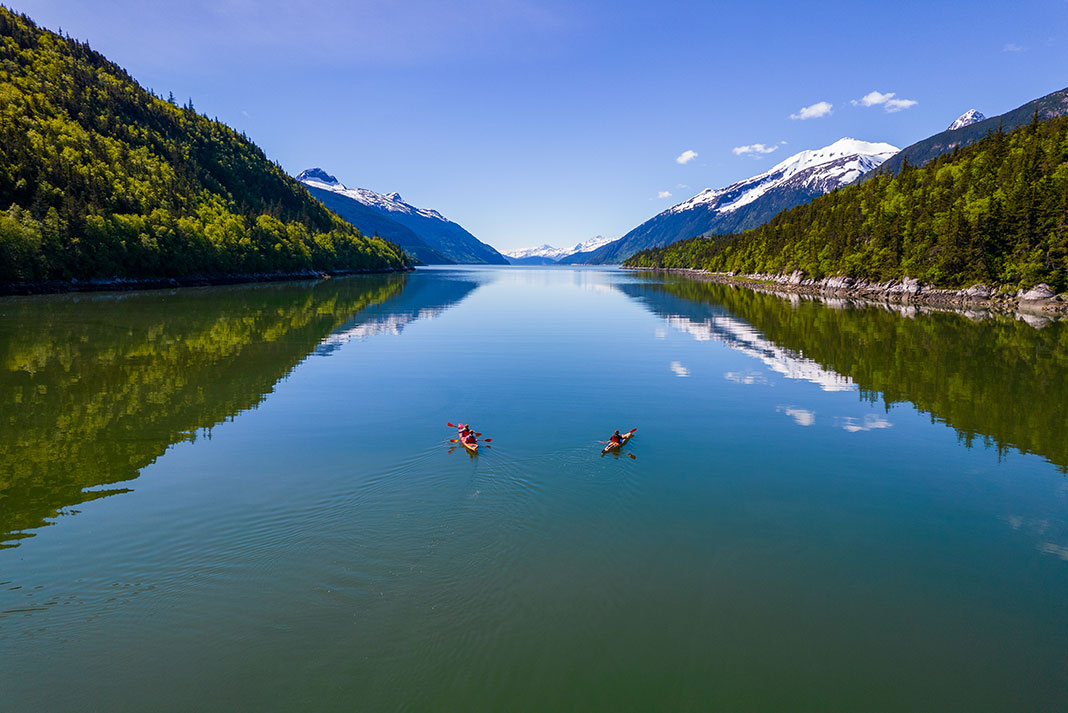
Sea kayaking in Alaska includes the deep, glacier-clad fjords of the northern Inside Passage, including Prince William Sound and Glacier Bay. These island-clogged waters feature iconic marine life like salmon and orcas, as well as jaw-dropping mountain views.
Plan a whitewater kayak trip near Anchorage for a more intimate view of the coastal range. Alaska whitewater rafting expeditions on the Alsek or Tatshenshini rivers, which flow through mountain-rimmed, glacier-clad corridors across the international border and into the Panhandle region, are truly trips of a lifetime. Or, venture into the deep wilderness of the interior for a canoe expedition on Alaska Wild and Scenic rivers like the Noatak, Koyukuk or Kobuk.
VIEW ALL ALASKA PADDLING TRIPS
Photo: Paul Vincent/Explore Minnesota
5 Minnesota
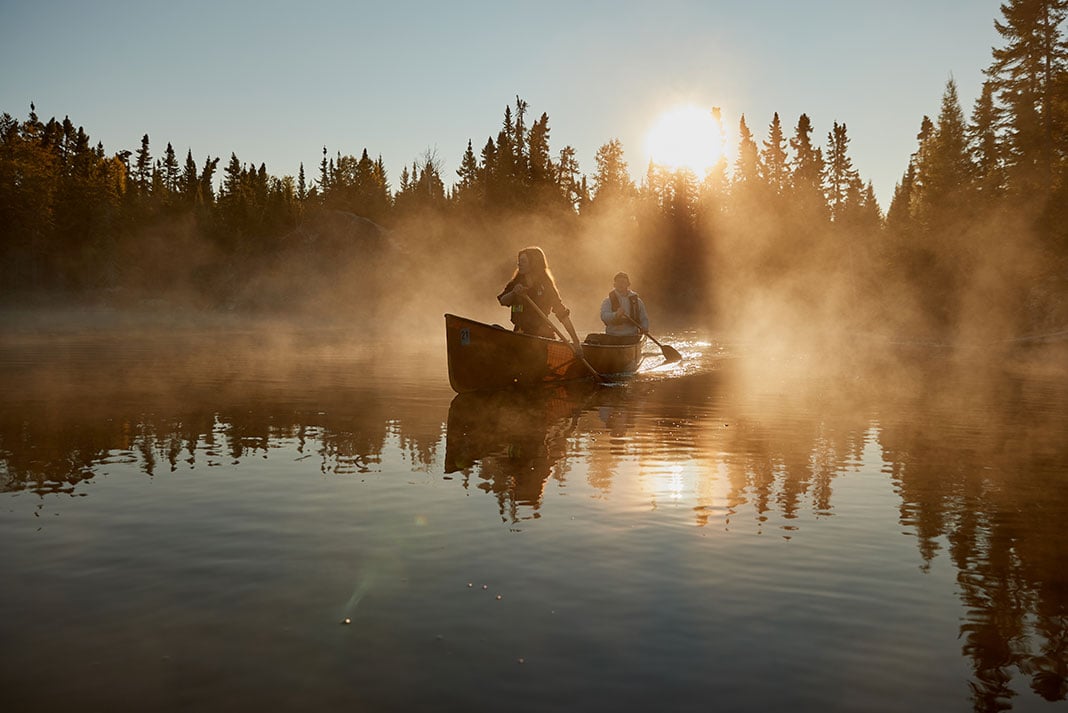
The Land of 10,000 Lakes is an obvious destination for where to go paddling in 2024. For starters, the immense Boundary Waters Canoe Area Wilderness makes Minnesota a canoeing epicenter. Supported by great outfitters in towns like Ely and Grand Marais, the Boundary Waters ranks among the top places to canoe in the world, with thousands of miles of route options. What’s more, the million-acre area abuts Ontario’s Quetico Provincial Park for trans-border canoe expeditions. Voyageurs National Park, with its headquarters in International Falls, Minnesota, is made up of mostly huge lakes that are perfect for multiday kayak trips.
Minnesota also fringes on Lake Superior’s northwestern coast, making it an ideal location to explore this inland sea by kayak. Day trips are available from Duluth and Grand Marais and you can also take the ferry to remote and mystical Isle Royale National Park to experience some of the finest freshwater sea kayaking in the world. If that’s not enough, Minnesota is home to the headwaters of the Mississippi River and the Twin Cities of Minneapolis-St. Paul offer some of the finest urban paddling in the world on countless lakes.
Over 150 years ago, American author Henry David Thoreau ventured into Maine’s North Woods by canoe with an Indigenous guide and shared his experiences in a journal that’s become an iconic piece of outdoors literature. The experience of canoe tripping in Maine hasn’t changed much since then—the state’s pristine rivers and remote Appalachian lakes have a reputation as the crowning jewels of the 740-mile Northern Forest Canoe Trail.
Maine also offers outstanding whitewater canoe tripping on the Allagash Wilderness Waterway, along with fine family paddling opportunities in wilderness areas like Rangeley Lakes. Not to be outdone, Acadia National Park is a dreamscape for sea kayaking in coastal Maine. Depending on their skill level, paddlers can explore secluded bays and visit historic lighthouses, or set out on overnight coastal tours into labyrinths of tide-washed granite islands.
VIEW ALL NEW ENGLAND PADDLING TRIPS
Photo: Visit Kitsap Peninsula
7 Washington
With a diverse geography spanning the Cascade Mountains to the Pacific coast, it’s no surprise Washington offers plenty of opportunities for paddlers. Make 2024 your summer to sea kayak the bucolic San Juan Islands, where you can join a local outfitter for a day tour or rent kayaks and set off on weekend to one-week trips in Puget Sound.
Washington also abounds with whitewater, making it a great destination for a road trip. Rivers like the Skykomish are popular all-season runs in the Seattle area. The White Salmon near Hood River allows you to take in the scenery of the fabulous Columbia River Gorge.
There are plenty of good destinations for canoeing as well, including Lake Chelan, a ribbon-like body of water immersed in the North Cascades, Lake Crescent in Olympic National Park, and Lake Wenatchee in the massive Okanogan-Wenatchee National Forest.
VIEW ALL WASHINGTON PADDLING TRIPS
Photo: Visit Wales
8 Wales, United Kingdom
Located on the west coast of Great Britain, Wales’ geography ranges from tide-washed coastal areas to the 3,500-foot-tall mountains of Snowdonia. For expert sea kayakers, a trip to paddle places like Anglesey is like experiencing Mecca: This is arguably the birthplace of modern British-style sea kayaking, where some of the finest paddlers have pitted their skills against immense tidal streams and surf. A wide variety of sea kayak skills courses are available for all levels of paddlers. Meanwhile, Pembrokeshire Coast National Park is renowned for its sea caves, hidden beaches and marine wildlife, making it another great destination for kayak touring.
For a mellower experience canoeists and recreational kayakers can paddle the smaller waters of Snowdonia National Park, including Llyn Padarn. Also in Snowdonia, the River Tryweryn with its class II to IV rapids is an example of the great opportunities for great whitewater kayaking in Wales. Finally, the River Wye is one of the U.K.’s longest waterways, with a rich human history ranging from ancient cave dwellings to Roman settlements and some of the country’s greatest biodiversity, including aquatic mammals and many species of birds. Canoeists can trace a 251-kilometer water trail along its entire course.
Photo: Image Bank Sweden
9 Scandinavia
Long summer days are but one attribute of paddling in Scandinavia. Between Sweden, Finland and Norway, there’s a huge array of experiences available for canoeing and kayaking. The Swedish backcountry offers multitudes of canoe routes amidst a classic landscape of lakes, rivers and boreal forest, with Pieljekaise National Park’s lakes and rivers reflecting the great opportunities for multiday trips in Swedish Lapland.
Not to be outdone, the Lakeland area in the central Finland interior features a similar landscape with multiple protected areas that are best explored by canoe, including Kolovesi National Park, Paijanne National Park and Linnansaari National Park, which is home to a unique population of freshwater ring seals.
Both Finland and Sweden offer outstanding sea kayaking, too. The fjords and islands of Norway’s Lofoten area, however, take coastal scenery to the next level with incredible seascapes and historic fishing villages clinging to the rocky shore. Globetrotting paddlers can go even farther by planning the trip of a lifetime to Svalbard, an extremely remote cluster of Norwegian Arctic islands home to glaciers, polar bears and reindeer.
VIEW ALL NORWAY PADDLING TRIPS
Photo: António Duarte
10 Portugal
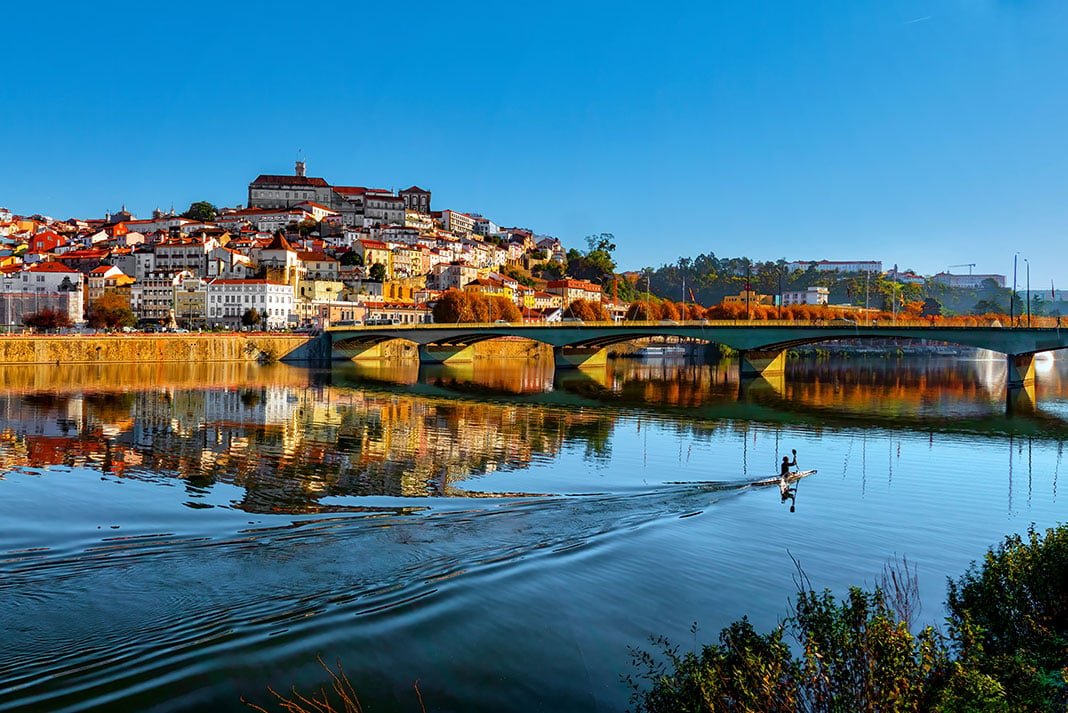
Portugal is an off-the-radar Mediterranean paddling destination that’s gaining recognition as one of Europe’s best places to kayak for its smooth-flowing rivers and idyllic pastoral scenery. The Douro River flows through a living picture postcard of sparsely forested hills, ancient homesteads and some of the planet’s best vineyards. The climate is mild, the people are friendly, and you can paddle inn to inn on guided canoe or kayak tours with local experts handling the logistics for a more immersive journey. Tributaries of the Douro, including the Mondego River, offer unique experiences on smaller watercourses with the same Old World feel.
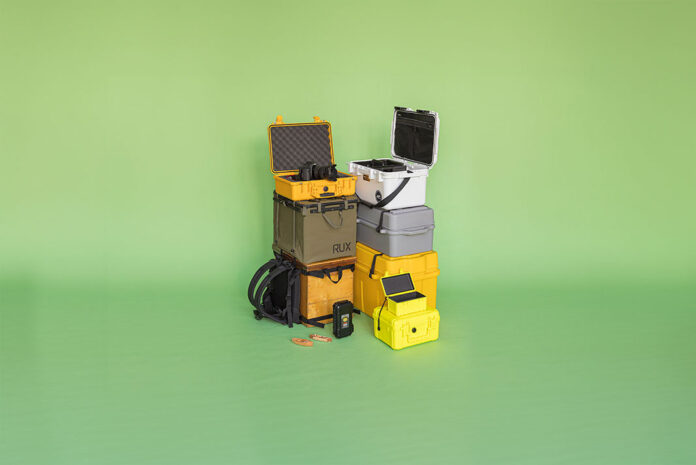
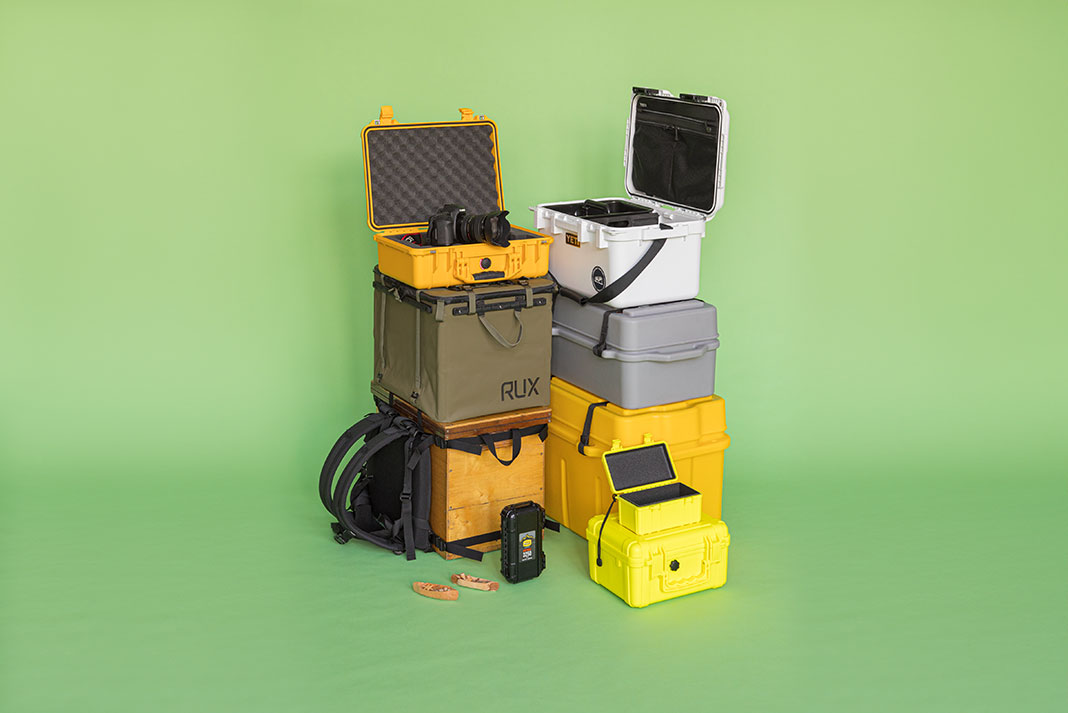
Settling on the right gear storage solution can make the difference between smooth paddling and a spoiled time on trip. Drybags are fantastic for shaping to spaces, but not always up to the rigors of a long canoe trip. Whether you’re looking to protect your phone, your camera, your camp kitchen or your whole kit—we’ve got you covered. Below, eight weather-proof gear boxes go head-to-head against the OG wooden wanigan for gear storage supremacy.
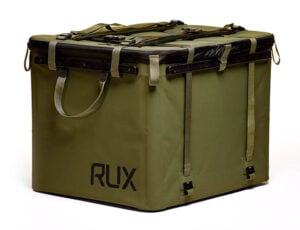
Meet the RUX 70L, a gear storage companion that’s neither quite a box nor a bag. Crafted from flexible, waterproof TPU-coated 840D nylon, it adapts to your needs with aluminum corner stays that work like magic slap bracelets. Need a stiff box? Done. Want it flat for storage? No problem. Set up might require a quick video tutorial the first time, but the 70L is worth it. Most suited to frontcountry camping and portage-free paddling, the built-in grab handles and removable backpack straps make it a breeze to carry, while its wide, rigid opening ensures easy access. The RUX 70L is lightweight, rugged and weatherproof, and the Paddling Mag staff were all quite taken with it—until we checked the price tag. For $369, a paddler could buy 30 large Rubbermaid bins at $11.99 each and organize the whole gear room, not just the camp kitchen.
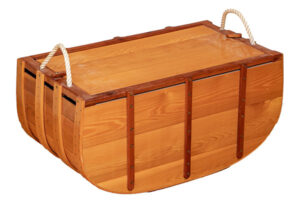
Meet the OG gear box, a timeless favorite that was the go-to for hardy voyageurs for a couple centuries. Still revered by trad trippers and canoe camp enthusiasts, many claim the wanigan is the real MVP on a trip. Need to haul food or oddly shaped essentials? It’s the go-to storage for cooking pots, large utensils, stove fuel, hatchet and bush saw. And the wanigan is not just mere storage, oh no—it moonlights as a makeshift bench or dining table for your wilderness feast. The wanigan pictured here weighs just under 10 pounds. It’s not featherlight, but fans swear by its durability and repairability. The classic wanigan is often DIY-ed with plywood and pine and is an affordable weekend project—for roughly $50, you too can tump around with a piece of history.
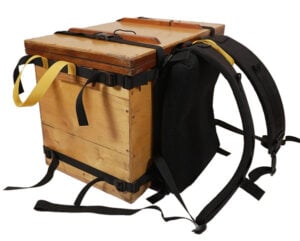
Portages can be a pain, but they don’t have to hurt. The new Wanigan Harness from Recreational Barrel Works offers a comfortable solution for carrying traditional wanigans, the NRS Canyon and Boulder dry boxes (below) and many hard-sided coolers. The modern Wanigan Harness features shoulder straps and a cushy foam back pad. The combination of the two prevents the gear box’s bottom edge from digging into the paddler’s back. Weighing just one pound, it’s lightweight but can carry up to 65 pounds. Designed for camps, outfitters and individuals alike, expect the top-tier quality RBW is known for. Fits gear boxes from 18 to 29 inches long, 12 to 17 inches wide, and 10 to 17 inches tall.
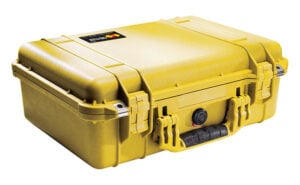
Pelican started in 1976 out of the California garage of founder Dave Parker when he began designing first aid kits. As the story goes, the durable and waterproof cases were a hit with divers, who tossed out the first aid supplies and used the cases to protect other valuables. From those humble beginnings, Pelican has become a go-to for military personnel, first responders and international river runners, protecting fragile equipment in the world’s harshest environments. Getting dropped, run over, submersed and facing TSA scrutiny unaccompanied is all in a day’s work for the waterproof and crushproof 1500 Case. The 1500 is an ideal size for photo and film enthusiasts toting multiple lenses. It is buoyant with up to 50 pounds and throws in a lifetime guarantee, too. Paddling Mag’s publisher has been using this eight-pound case for more than a decade.
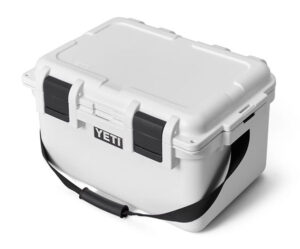
A favorite among rafters, campers, hunters and tailgaters, Yeti needs no introduction. Their LoadOut GoBox 30 is a fully submersible beast with tie-down points and lock ports for any wild escapade. Team it up with Yeti’s many accessories—cargo trays and gear compartments—for an organized interior. Yeti’s Pack Attic accessory nests in the lid with three large zippered compartments for stashing small items. Use the hefty hauler handle for one-hand carries. The GoBox 30 weighs 12 pounds and is ideal for stowing the camp kitchen or food. The smaller 15 size has just enough room for fragile essentials, while the burly 60 is a full-on gear locker. The only complaint from Yeti fans? The GoBox comes in just four colors: white, orange, black and tan.
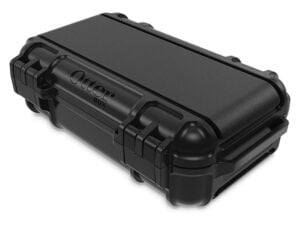
Perfectly sized for stowing a phone, cash and key fob while on the water, Otterbox’s Drybox 3250’s padded foam interior protected our editor’s valuables while bouncing around the cockpit on a 52-day kayak trip last summer. As for the polycarbonate case itself, Otterbox claims you can “beat the living daylights out of it”—and honestly, we tried. Weighs less than a pound and is waterproof up to 90 feet for 30 minutes. Paddling Mag’s designer has dreams of turning it into a mini fly fishing tackle box next.
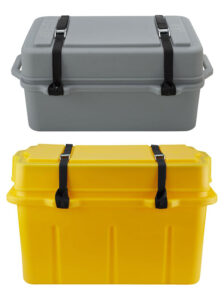
The NRS Canyon and its little brother, the Boulder, boast 3.6 and 1.6 cubic feet of roominess inside, respectively. These rain-defying gear boxes won’t win gold in a flip test, but they sure can keep things dry. Just snug the straps tight to ensure a secure lid fit, and then forget about rain and splashing. The Canyon weighs 13.5 pounds, while the Boulder weighs 8.8 pounds. There aren’t handles, but you can rig your own with straps fed through the holes on each end. These polyethylene cases are essentially modern wanigans and perfectly sized for stashing your camp kitchen gear or a week’s worth of food. They’re affordable sidekicks whether in your canoe, at camp or on the road in a truck bed. NRS advises against turning these gear boxes into seats, as the compression might mess with the foam weatherstripping in the lid. Opt for gray or yellow to suit your style.
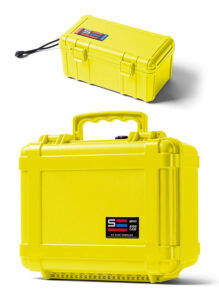
Waterproof and built to withstand the rigors of the most rugged adventures, S3 Cases’ gear boxes are built with tough injection molded ABS to keep your delicates safe. The one-pound T3500 model is perfectly sized to carry midsize items, like small medical kits, microphones, multiple cell phones and wallets, sunglasses, power banks and GPS units. The four-pound T6500 is more appropriate for storing large DSLR cameras, drones, laptops, and other compact and fragile equipment. Both models’ heavy-duty hinges and handle pins are extra tough and confidence-inspiring. Available in black, yellow and red at salamanderpaddlegear.com for paddlers in the United States and underwaterkineticscanada.com for paddlers in Canada.
This article was first published in the Spring 2024 issue of Paddling Magazine. Subscribe to Paddling Magazine’s print and digital editions, or browse the archives.




 This article was first published in the 2024 issue of Paddling Business. Inside you’ll find the year’s hottest gear for canoeing, kayaking, whitewater and paddleboarding. Plus: how to beat the big box, forty years in the Four Corners, building the Paddlesports Trade Coalition and more.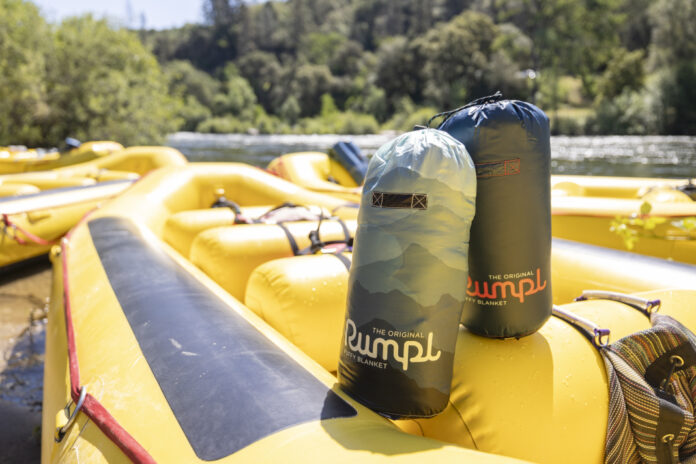
 About Joel McBride
 About James McBeath
 This article was first published in the Spring 2024 issue of Paddling Magazine.



