For paddlers living in the big city, paddling trips are often reserved for long weekends and vacations. Rather than make the regular trek north to Algonquin, one Ontario paddler took matters into his own hands, designing the perfect custom build for his neighborhood paddle.
Matt Morris’ Custom Canoe
Five years ago at his local park in Kitchener, Ontario, Matt Morris passed a small waterway along his local bike path and noticed a sign next to a lake. The sign clearly showed that there was no fishing allowed, no swimming allowed but below those messages was the image of a sailboat. Morris had never seen a boat on the small lake and decided to call the city and inquire about boating on the lake.
Not only, the city told him, was boating allowed, but it was encouraged.
“I said man, if I could design a boat to then tow behind my bicycle and enjoy this beautiful piece of water, why not?” shared Morris.
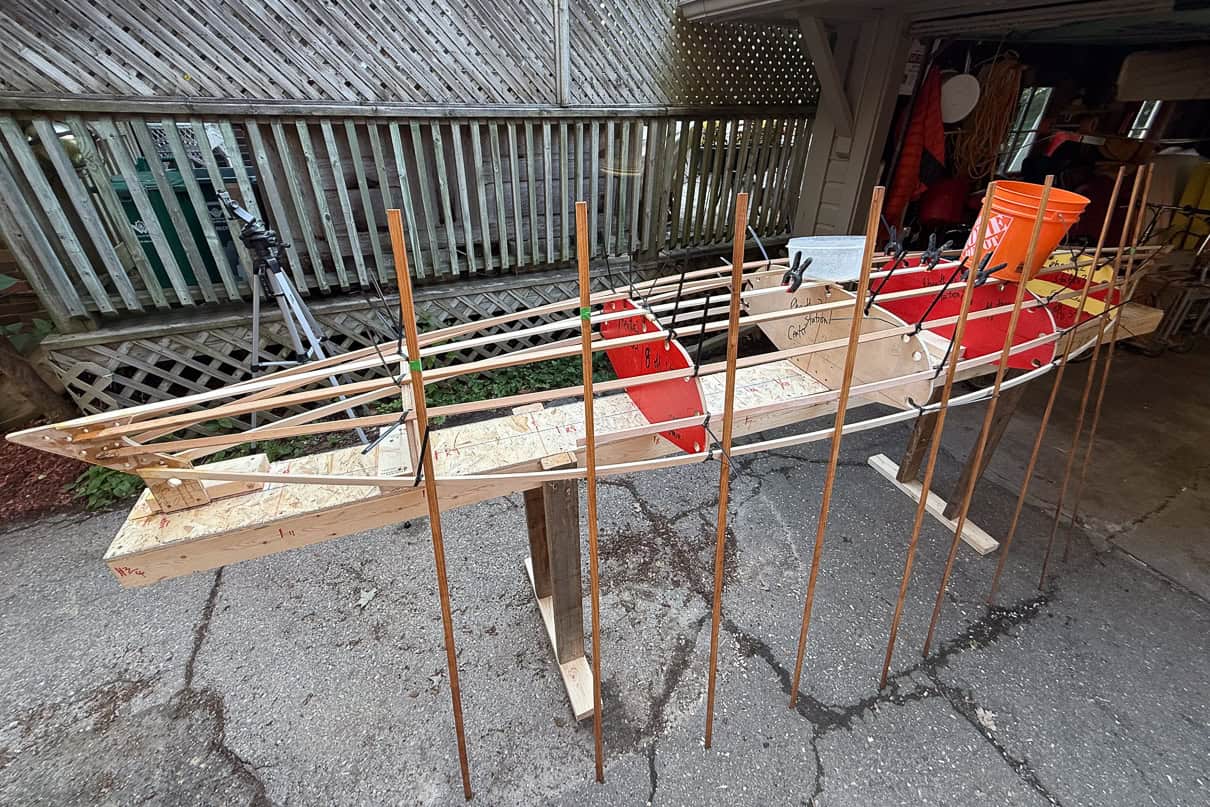
The construction of the Pheather 2. Image courtesy Matt Morris.
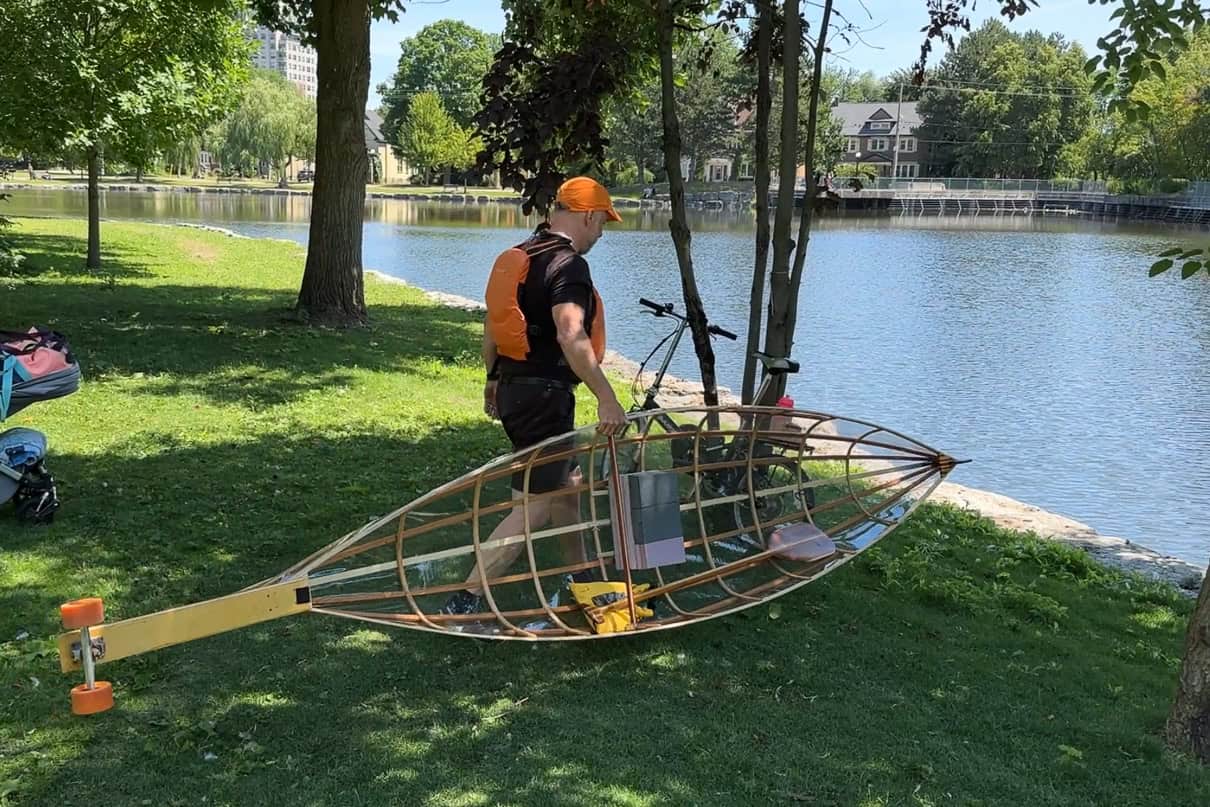
Morris then set to work, making two crafts designed for him to bike to the park and then paddle his local waterway before arriving at the Pheather 2, his most recent canoe. Designed to be lightweight and easy to transport, Morris tailored the Pheather 2 to his specific local paddle with the aim of getting out on the water as part of his lifestyle, rather than a rare trip.
In addition to keeping the boat lightweight and bike-ready, Morris also opted for a clear hull to give him a view of what’s happening beneath the surface.
“I now ride down the trail with a super light boat. I pop it on the water, go for a little paddle, and then ride home,” shared Morris. “I can do the whole thing in under an hour.
Morris also shared that in summer 2025, he was able to get out on the water 90 times.
Finding urban waters to paddle
While one may not typically think of a city as a place to paddle, that doesn’t mean it’s a place you can’t hop in a boat and take it for a spin. Morris shared that the biggest piece in him finding a local urban paddling route was to inquire about typically overlooked waterways, as you don’t know what’s allowed until you ask.
Even now as Morris is a regular paddler on his local urban lake, he shared that he’s often still asked by other park users if he’s allowed to paddle there.
Morris launches his custom canoe on his local waterway. Image courtesy Matt Morris.
“I’m now actually meeting with the city as they now redo our big park in Waterloo to explore ways of getting more people on the water, whether it be canoe rentals or paddle boats or whatever” said Morris. “To use the water in the core of a city is so often overlooked.”
As for paddlers seeking their own urban adventures, Morris recommends starting with being bold.
“Ask questions, call the city, get permission,” shared Morris. “If you have a canoe, go to the trouble of tying it to your car and driving the two kilometres or two miles down to the water and throw it in and see how it feels. You might be surprised at what a neat opportunity it is.”
Building a custom canoe for your custom local paddling route
For Morris, the biggest aspect of creating a canoe he could bike to his local urban lake was keeping the weight of the paddlecraft low. The Pheather 2 weighs just over 11 pounds.
“I really noticed the lightness of the lighter canoe,” shared Morris. “[It’s] much more enjoyable for the cycling part.”
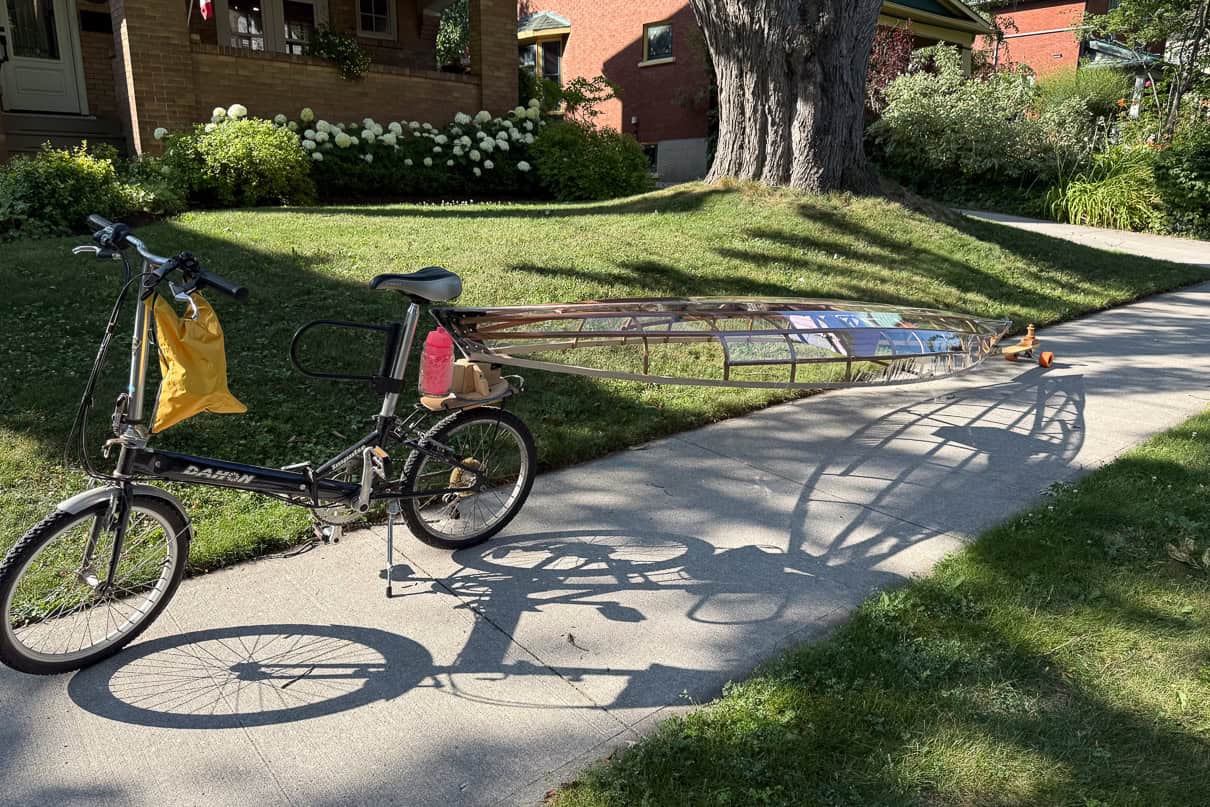
For Morris, the second biggest challenge was creating a mechanism to attach his canoe to his bike.
Morris’ custom canoe build attached to his bike. Image courtesy Matt Morris.
“There’s a number of ways to attach a canoe to wheels,” shared Morris. “I used longboard wheels, which I found very workable. There’s never an issue with stability.”
Morris added lights on to the back end of his setup for additional safety, and wears a PFD as he cycles. He secures his paddle to the inside of the canoe with a bungee, and his safety kit snaps on to his handlebars.
For the construction of the canoe, Morris used a mix of woods for his custom build, with maple from a tree cut down in the park he paddles in today, local Ash, mulberry from a park in Waterloo and, notably, pine from a porch at the house the band Supertramp used to stay at when they were in town.
“My boat is made partly with the pine that Supertramp walked on,” said Morris.
For the clear skin of the boat, Morris used vinyl.
The man, the myth, the legend. | Feature photo: Courtesy Cliff Jacobson
My friend Cliff Jacobson and I have a lot in common. We both worked as foresters, taught environmental science and led outdoor skills programs for youth. We’ve both published wilderness canoeing books and spent years presenting at outdoor shows. But let’s be clear: Cliff is one of a kind.
At 84, the renowned outdoor author still prances along a portage trail like a teenager at prom. He’s as small as a leprechaun, but tougher than Paul Bunyan. As saintly as Mother Teresa, but more opinionated than Muhammad Ali. His bestselling book, Canoeing Wild Rivers, remains the go-to resource for wilderness canoe expeditions. This is the guy who got married at Wilberforce Falls on the Hood River. How cool is that?
Cliff Jacobson on what’s changed for better and worse in 70 years of canoeing
Cliff discovered camping and canoeing at the age of 12 in a mouse-ridden Scout camp on amosquito-infested Michigan woodlot. The year was 1952. Tents were made of moldy canvas, not lightweight nylon, clanky aluminum Grumman canoes were the new thing, and camp clothes were trap-door union suits covered over by ratty wool sweaters and pants.
The man, the myth, the legend. | Feature photo: Courtesy Cliff Jacobson
From those humble beginnings, Cliff became a worldwide authority on wilderness paddling. He has sold nearly a million copies of his guidebooks and was crowned a Legend of Paddling by the ACA. Tripping gear has evolved, but Cliff still prefers old-school tubular PFDs, which “moved with your body like the folds of an accordion.” He believes freeze-dried foods taste just as bland as they did 35 years ago. And he uses a tump, carves a classic J-stroke, and remains enamored with vast wilderness.
Cliff’s last presentation was in March at Canoecopia, the world’s largest consumer paddlesports show, where he held the audience rapt one last time with his distinctive camp opinions and tall tales of wilderness wanderings.
His days on stage may be over, but Cliff isn’t going anywhere. He’ll keep paddling and championing the backcountry lifestyle. And yes, he’ll still cruise backroads in his little red roadster, top down, Tilley hat on.
The good, the bad & the grumbly
In his own words, Cliff Jacobson weighs in on what’s changed for better and worse in his 70 years on the water.
CANOES: “I love lightweight canoes. My lightest solo—a Bell Yellowstone solo—weighs just 28 pounds. My heaviest, a Northstar Phoenix, weighs 41 pounds. I’m 84. Lightweight canoes are marvelous.”
PADDLES: “Better paddles, by a long shot. What I would have given for a 12-degree bent shaft, carbon fiber paddle when I was young.”
DURABILITY: “Overrated. If you wrap the heaviest, most durable canoe, it’s a goner. It may fold back into shape and be ‘paddleable,’
but when you get home, you won’t want it. Better to buy a light canoe and take some lessons. Very good paddlers seldom seriously damage their canoes.”
RULES: “Regulations and permits have exploded. As John Muir would say, freedom of the hills isn’t so free and easy anymore.”
PLANNING: “In the early days, we would write to the Catholic parishes along our intended route for advice. We ordered stereo pairs of aerial photos and, by studying them, could determine the location and path of dicey portages. Planning took months; now it’s all online. And even the most obscure rivers have detailed trip guides. Good or bad? You be the judge.”
COOKWARE: “Remember the old Sigg pots and aluminum fuel bottles? Much better than the goofy little kits they sell today. Paddlers need $50 titanium cups like a hole in their canoe.”
WILDERNESS: “The huge caribou herds on the northern rivers are much smaller now. There was a feeling of deep remoteness when canoeing subarctic and Arctic rivers. This has been shattered with satellite phones, sat communicators and GPS units. Today, we rely more on things than skills.”
This article was published in Issue 74 of Paddling Magazine. Subscribe to Paddling Magazine’s print and digital editions, or browse the archives.
The man, the myth, the legend. | Feature photo: Courtesy Cliff Jacobson
No barrier to entry. | Feature photo: Kurt Gardner Photography
Last summer I took my family on a three-week trip. Getting our minivan to the take-out needed a shuttle. I called the only game in town and braced myself for the quote, sure it would be several hundred bucks.
“That’ll be eighteen twenty-six,” they said.
Seems awfully cheap—and oddly specific. Must be some sort of hourly rate, I thought. Then it dawned on me: $1,826! Did I accidentally ask for the floatplane charter?
That was just to get us on the water. Park fees totaled $500. And it could have been more. Car camping starts around $50 a night and climbs from there—for a square of dirt with pit toilets and noisy neighbors. That used to be the price of a motel.
Has kayaking gotten too expensive?
After the shuttle and permits, we still bought hundreds of dollars worth of freeze-dried food. Plus, a $400 satellite beacon with a monthly subscription for safety. But as a family vacation, it was still relatively affordable because I already owned all the equipment—kayaks, paddles, tents and other gear I’ve spent my whole adult life accumulating. I can take my kids because we bought all our equipment last century. I pity anyone who tries to start this sport from scratch in 2025. One of those fancy British fiberglass kayaks costs $6,000. Top-end drysuit: $2,400. Carbon fiber paddle: $580. Rescue PFD: $300. That’s $10,000 in equipment costs just to begin. Don’t have the equipment or the skills to go alone? The same trip guided was $28,000 for a family of four.
I look around at prices these days and wonder if my favorite pastime has become an unaffordable luxury.
No barrier to entry. | Feature photo: Kurt Gardner Photography
Another option used to be to send your kids to camp. Not at today’s prices! The hefty sum I once paid to send my daughter to a rustic sleepover camp for a month seems cheap now. This year the same session costs $7,000, after tax. I couldn’t even hope to earn that much while she was away. You’d never guess from the lineup of luxury SUVs on drop-off day that the whole experience boils down to a month living in a screened-in shack with no hydro or internet, swimming, singing songs and paddling.
My wife and I chose this camp because it was cheaper than the ones we used to go to. Her former camp still offers the 36-day backcountry rite of passage she fondly remembers from 30 years ago, except its cost has quadrupled to $21,645. My kids are SOL because we didn’t become hedge fund managers.
Maybe I’ve just reached the stage in life where I compare the price of everything to some bygone era when you could buy a candy bar for a nickel. But what’s happening in paddling reflects a larger trend squeezing people everywhere. Something, somewhere, is conspiring to jack up the prices of ordinary things. The promise of a nation, a wistful recent election speech said, is “hard work gets you a great life, with a beautiful house, on a safe street, under a proud flag.” And, one might add, enough money to go kayaking and to send your kids to summer camp. Yet the covenant is broken. These lives we feel are our birthright are suddenly out of reach for many, and it’s getting people riled up and placing blame.
Inflation is part of the cause, to be sure—now, add tariffs. Plus, undoubtedly, insurance. You can’t run a business these days without worrying about getting sued. A mountain guide friend complained a U.S. liability policy could cost him $50,000. It’s no different in the paddling world. Why else would camps cost so much when the kids sleep outdoors and paddle beat-up aluminum canoes?
My kids are SOL because we didn’t become hedge fund managers.
Another cost driver is how hyper-specialized and high-tech outdoor sports have become. When I first started paddling, outdoor gear was made from simple materials like metal and wood. There were no Gore-Tex drysuits. Now it’s carbon fiber everything, and there’s a different bike, ski, kayak, canoe, outfit and paddle for every specific occasion and condition. Take mountain biking, something I’ve wanted to get into but find totally inaccessible because the bikes cost $10,000, and YouTube keeps feeding me videos of riders doing backflips. The barrier to entry has become unattainable.
Like the SUV I want to buy but can’t afford to insure because it’s too likely to be stolen, I suspect these creeping costs are a sign we’re trying to prop up a recreational lifestyle that has become too rarefied and unsustainable and the bill is coming due.
We can’t fix all the root causes. But there is an easy solution: go back to the grassroots. Somewhere near you, there are regular people with regular jobs finding ways to keep doing the sport they love and making it accessible to others.
This year I joined my hometown paddling club, an organization I’d largely ignored until now, thinking I had to be completely self-sufficient with my suburban garage full of boats for every esoteric branch of the sport piquing my interest.
There’s a beautiful old boathouse by the harbor, full of watercraft and PFDs and paddles for everyone to share. Members volunteer to run events. Kids and adults ride there on bikes. You can paddle from spring through fall for only a few hundred bucks.
“You know, kayaking is a blue-collar sport,” one member pointed out to me the other day, who had been racing kayaks for 50 years. “Wealthy families go to their cottages for the summer. The kids who stay in town come to the club and become the best paddlers.”
I realized he wasn’t talking about summer camps and wilderness trips, fancy equipment and certification badges. He was talking about paddling. The elementally pure act of propelling yourself across water with a blade and human power—plus all the community that grows around the love of it, joining together to make it more affordable and accessible.
Paddling doesn’t need to be any more complicated or expensive than that.
Tim Shuff is a former editor of Adventure Kayak magazine.
This article was published in Issue 74 of Paddling Magazine. Subscribe to Paddling Magazine’s print and digital editions, or browse the archives.
No barrier to entry. | Feature photo: Kurt Gardner Photography
As much as I love the hands-on engagement and rewards of using old-school, tried-and-true navigation tools like magnetic compasses and paper maps, there’s something to be said for technology. But it took me a long time to admit that.
I’m not afraid of technology, but I’ve always preferred to avoid it. Thus, my adoption of navigation apps for my smartphone has been gradual. It started with the intro to navigation course I teach for natural environment students at my local college. The curriculum focuses on using handheld compasses and physical maps, but over time, there’s been more pressure to integrate technology.
Developing new lessons for “GPS-enabled navigation tools” forced me to learn different smartphone navigation apps. The experience has made me a reluctant convert. And, when I finally upgraded my personal smartphone last year, I truly appreciated just how handy, confidence-inspiring and evolved nav tech has become. Whether it’s used for crossing open water in the fog by sea kayak, bushwhacking between lakes on a wilderness canoe trip, trekking through trailless hills or just chasing my students through the bush, these are the apps that have earned an icon on my home screen.
Check with those who have local knowledge of man-made and natural hazards, e.g. low-head dams; sweepers, strainers and undercuts; tides and currents; and rocks and shoals.
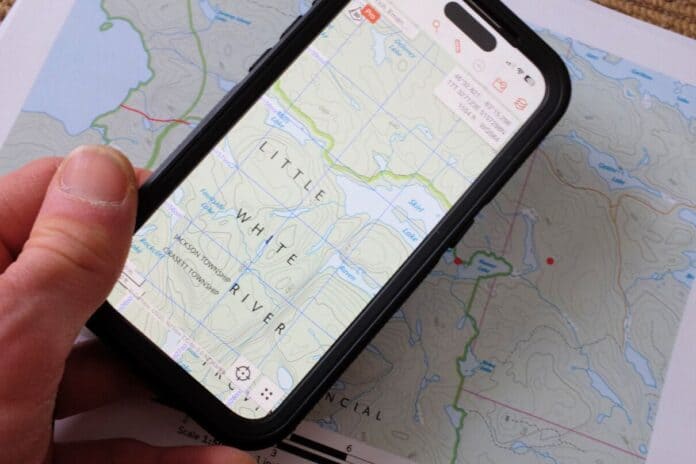
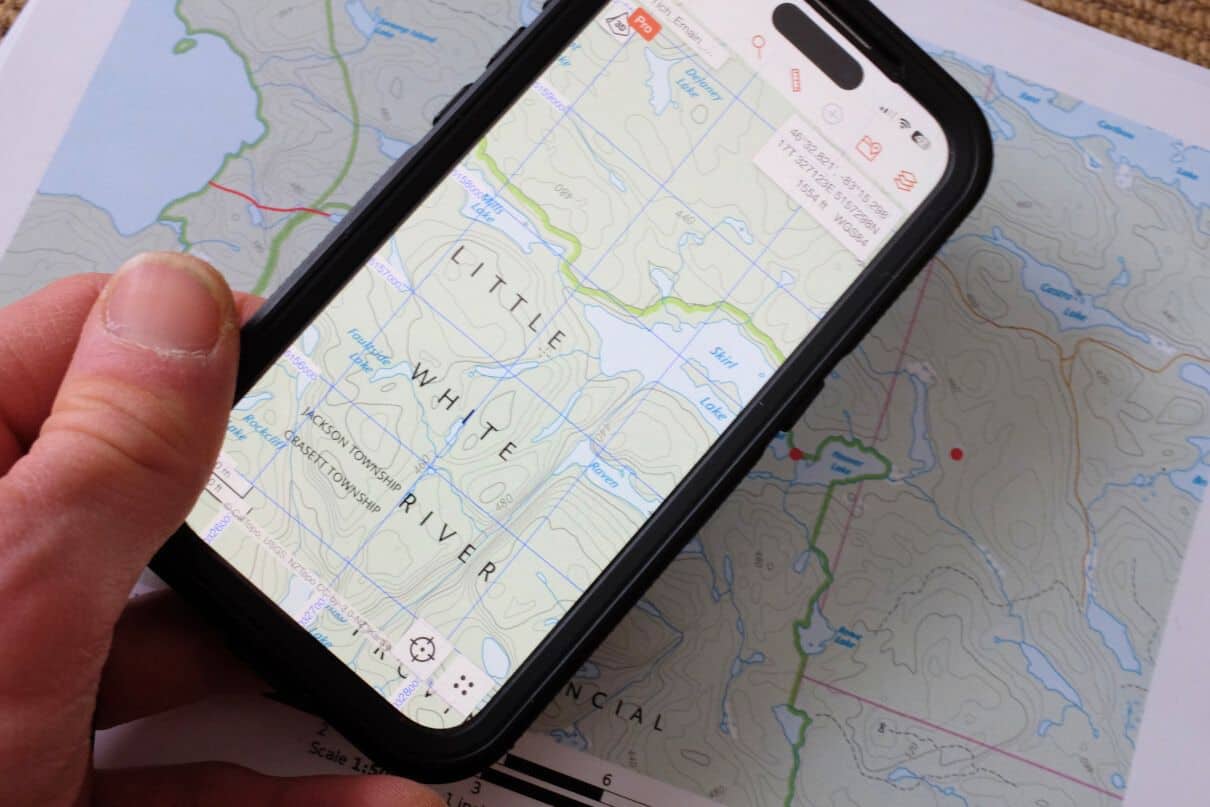
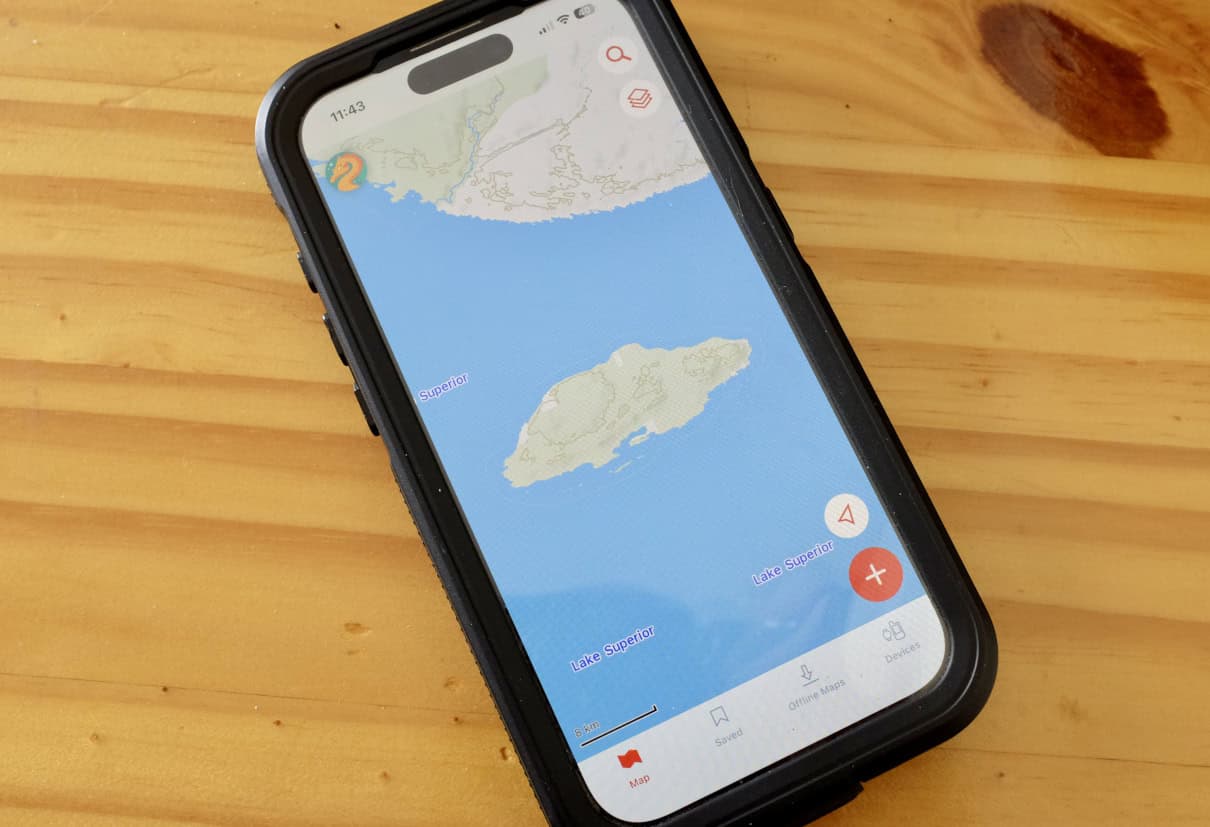
CalTopo has been my go-to route planning tool since a friend told me about the desktop version seven years ago. As its name implies, CalTopo gives you access to scanned topographic maps (at familiar scales of 1:50,000 and 1:24,000 in Canada and the U.S., respectively) for the entire world, and marine charts for the United States that make it a valuable boating app. Satellite imagery is also available to get real-world impressions of the lay of the land and water features, among other base map layers.
With the desktop version, it’s easy to plan a route, marking points of interest, measuring distances and bearings, as well as calculating slope — handy for predicting the level of difficulty of an unknown wilderness river. The maps can be exported to print as PDFs or used to navigate in the field using the mobile version, which uses your phone’s GPS to indicate your position and the direction you’re facing on the map. Just like a handheld GPS unit, you can also mark waypoints in the field, calculate distances and use the app to navigate from point to point.
I like CalTopo because it’s simple and intuitive for those familiar with paper versions of the base map layers it relies on. The basic version is free, and on the desktop platform you can save routes and print letter-sized maps. Upgrading to the Pro version allows you to print up to 48-by-96-inch map sheets. The free mobile version provides access to maps and pre-planned routes wherever cell service is available; the $20 US per year mobile subscription allows you to download maps for offline use (included within the Pro subscription).
Reasons to buy
Basic version is powerful and free
GPS integration is especially handy if you like old-school topographic maps or marine chart
Consider another if
You’re less interested in route planning
Bottom line
CalTopo is easy to use with a wide array of route-planning functions, which dovetail seamlessly into a GPS-enabled mobile app.
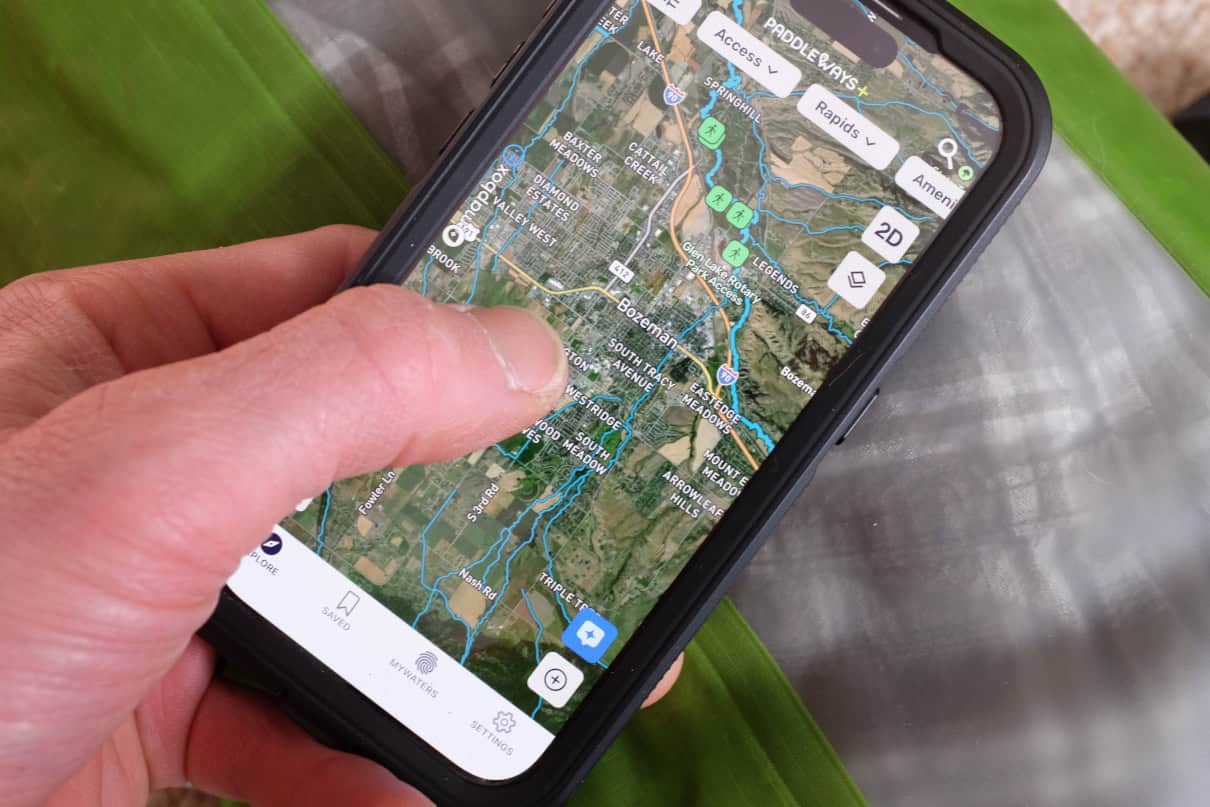
PaddleWays is a community-driven app that offers great intel for finding new places to paddle. It provides guidebook descriptions, paddler reviews and difficulty ratings of primarily river routes across the United States, along with planning tools like detailed maps, launch sites and flow gauges (with optimum levels). Once you’ve selected a route, you can measure distances in accurate river miles, highlight points of interest and set alerts for portages, campsites and rapids. It also allows you to see public and private lands.
Base map layers are the usual Satellite, Outdoor and Street map modes used in other navigation apps, viewable in 2D and 3D versions. Maps, GPS functions and details are available offline when you upgrade to the annual subscription. The app also helps you connect with other paddlers and local outfitters for recent data, shuttle services and permits. While PaddleWays is clearly focused on river paddlers, the ever-growing, user-driven database includes some lake and ocean routes for canoe trippers and touring kayakers.
Reasons to buy
Great for whitewater paddlers in the United States looking for an interactive tool, with key pieces of local knowledge
Social media functions allow you to connect with other boaters and outfitters
Consider another if
You are not a U.S. paddler
The majority of your paddling does not occur on rivers
Bottom line
An excellent interface for social boaters looking for rivers to paddle in the United States.
I use Avenza Maps in the navigation course I teach for first-year natural environment students. It’s the platform most commonly used in industry, with good crossover for paddlers and hikers. Avenza is quickly replacing handheld GPS units among resource professionals. It has all the same capacities of an advanced GPS unit with access to a huge database of map products, which can be purchased and downloaded for offline use.
Perhaps because my recreational use of Avenza came with the pressure to be able to explain and teach it to college students, I initially found the interface more confusing than the more basic CalTopo platform. But with practice, it became intuitive to use. For paddlers, it provides access to a wide array of maps, including government topographic maps and marine charts, as well as park maps and detailed “adventure” maps. This huge diversity of source material is one of Avenza’s strengths, along with GPS capabilities and a digital compass that’s accurate, intuitive and deals with the complications of magnetic declination.
Reasons to buy
Provides easy, cost-effective access to a vast array of maps, which can be accessed offline
Powerful GPS functionality
Consider another if
You’re a Luddite who would rather not learn a new smartphone application
Bottom line
With tons of maps and powerful functions, Avenza turns your smartphone into a serious navigational tool.
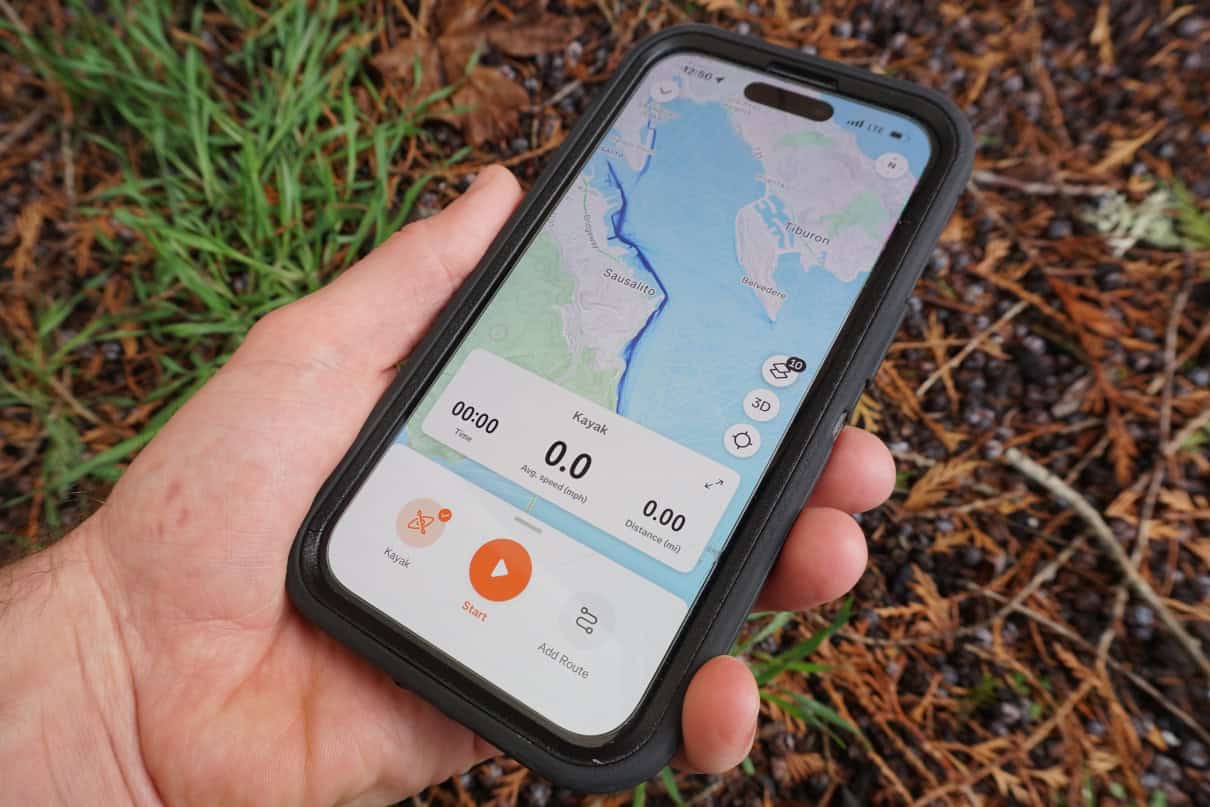
Unless you’ve been living under a rock, you’ve no doubt heard of (and have probably used) Strava for outdoor sports like running, cycling and nordic skiing. Strava is great for paddlers, too, especially if you love keeping track of your speed, distance and time on the water. The mapping feature is a great way to discover new routes, and also enables basic offline navigation by showing you where you are and where you are heading. Most importantly, Strava allows you to connect with like-minded enthusiasts with powerful social media components.
Once you’ve installed the app you can use your phone to track your activity and collect data, using its onboard GPS. However, many users pair Strava with a more streamlined, GPS-enabled fitness watch and use a separate app such as Garmin Connect or Apple Fitness to transfer activity details to the Strava app. Using a fitness watch also allows you to unlock some of Strava’s more advanced functions, such as tracking heart rate zones.
The free version of Strava is all I’ve ever needed, but a paid subscription gives you far more tools to analyze your workout stats and plan routes.
Reasons to buy
Great for fitness types and those with a competitive edge
Consider another if
You want detailed maps and navigation capabilities
Bottom line
An addictive, functional platform for adventure athletes.
Carry A Waterproof VHF Radio, Use Your Phone Only As A Backup
A handheld VHF marine band radio allows you to communicate with the Coast Guard and other boat traffic. Use Channel 16 only for hailing and emergencies. The radio should be waterproof, because it is virtually certain to get wet.
A cell phone, even if in a waterproof case or sealable bag, might not work, so don’t rely on it as the primary means of emergency communication.
As smartphones and app-based navigational tools have largely rendered handheld GPS units obsolete, tech giant Garmin has been forced to innovate with its own apps to make its devices even more powerful. Garmin Explore allows you to plan routes online or on a mobile device, mark waypoints, download relevant topographic and satellite maps and sync your data with other Garmin devices, such as a GPS unit or satellite communicator. The app works offline, making it very practical for wilderness paddlers, and, since it’s phone-based, it is far faster and easier to use for composing satellite messages and inputting other information.
The app also offers unlimited cloud storage to organize data, keep track of statistics and share your routes. The basic Garmin Explore app is free for Garmin customers. An expanded selection of maps for around the world, including high-resolution satellite imagery, is available with an Outdoor Maps+ subscription.
Reasons to buy
A free add-on to enhance your Garmin GPS, smartwatch or satellite communicator
Easy to use, excels offline and offers unlimited cloud-based storage
Consider another if
– You’re not an existing Garmin product owner
Bottom line
A great tool to make your Garmin navigation and communication devices even more useful.
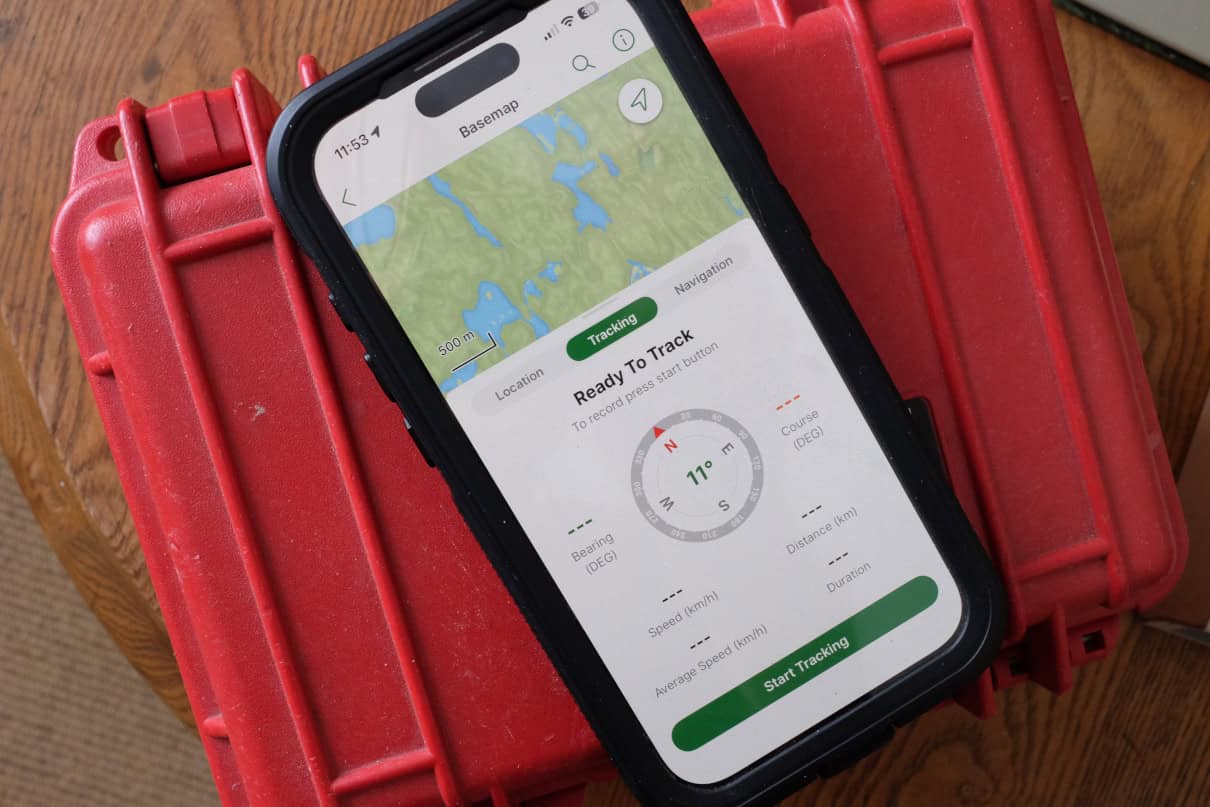
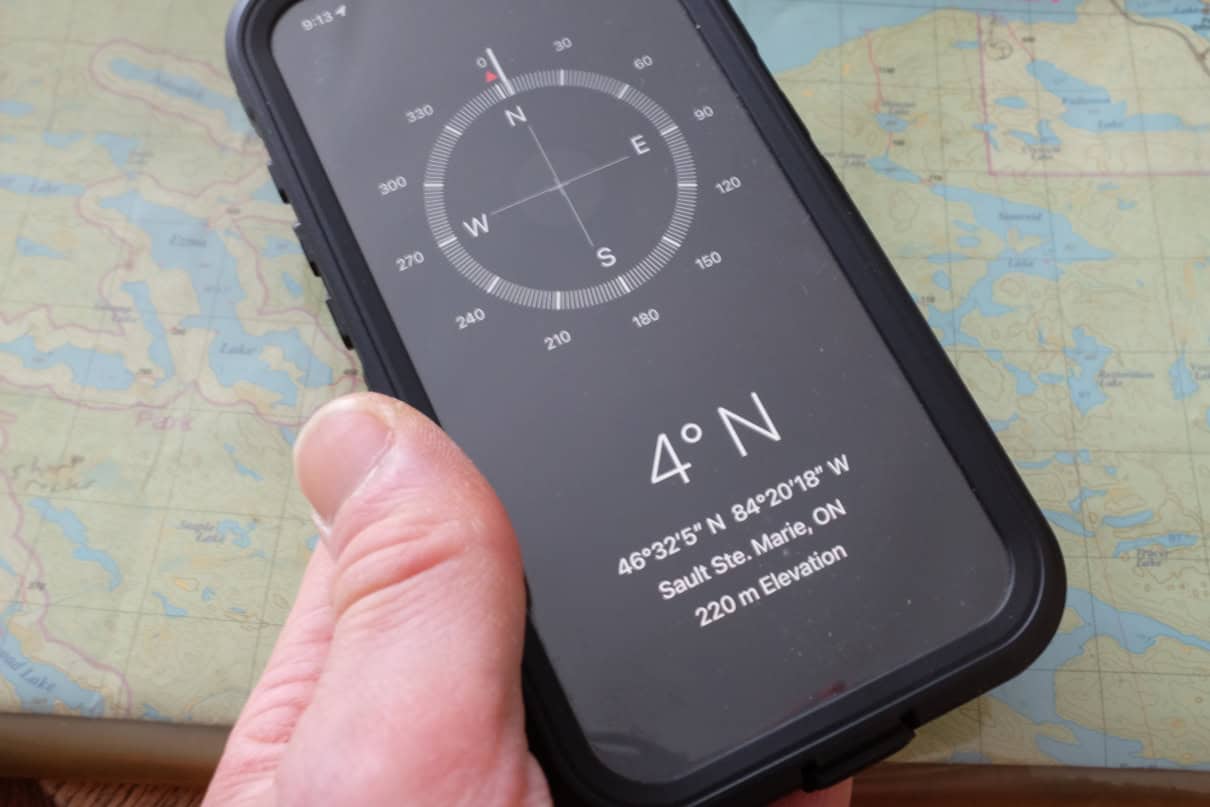
The compass app installed on every iPhone is accurate and handy. Teaching navigation to college students, I often deal with students arriving to class without their required old-school manual compass. As an alternative, I request they use the compass app on their phone, and, in my experience, iPhones outperform Androids (a compass app is not built in on some Android models but free downloads are available).
The iPhone compass is accurate in measuring magnetic bearings as well as true bearings that compensate for declination. It also allows you to follow a course. Much like a marine compass, the one built into every iPhone isn’t affected by tilt, so you can hold your phone out with a straight arm at eye level to take more precise sightings. What’s more, the iPhone compass also includes elevation and your location in latitude and longitude coordinates, which can be cross-referenced to identify your position on a map.
Reasons to buy
It’s free and available for iPhone users
A trustworthy backup for manual compasses
Consider another if
You’d rather disconnect in the outdoors
You are looking for a more powerful, GPS-enabled navigation app with mapping functions
Bottom line
Built in and ready to get you out of a jam — as long as your iPhone batteries have a charge.
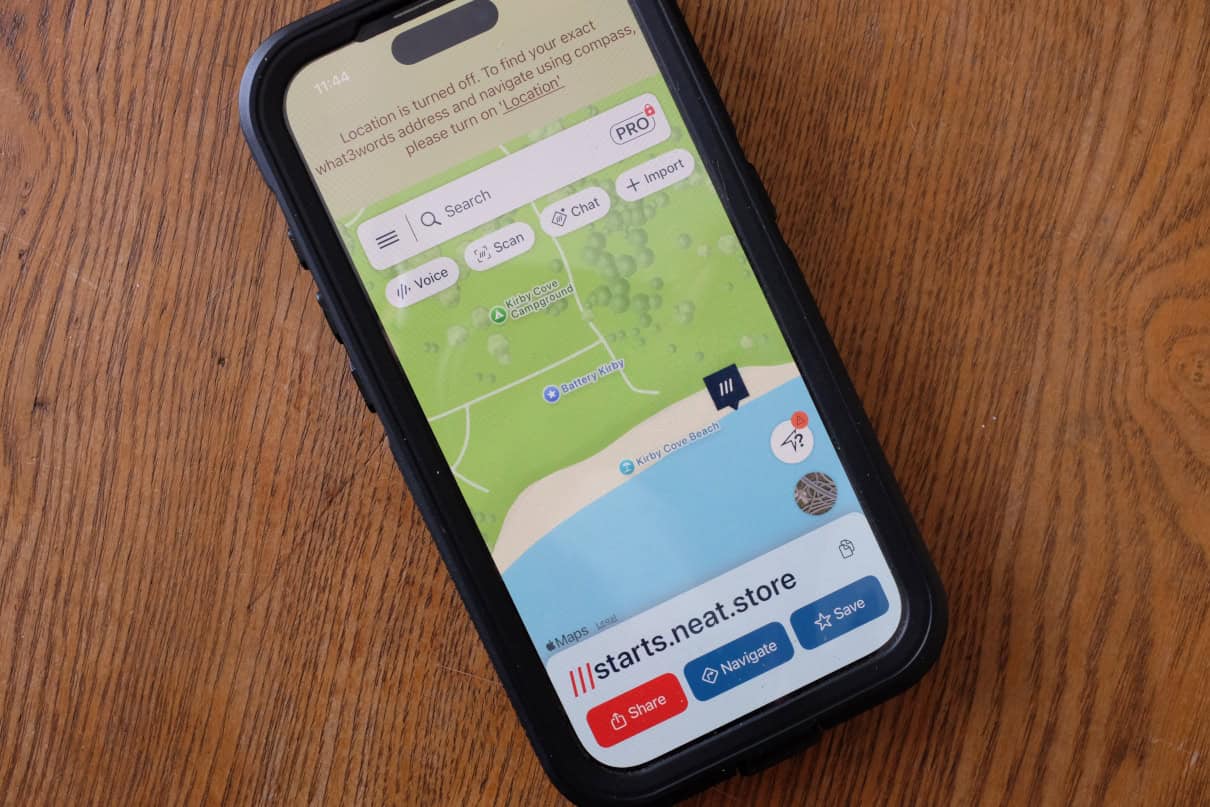
What3Words eliminates the confusing number salad of conventional latitude and longitude or UTM grid position references and replaces them with words. Essentially, the app divides the globe into 3-by-3-meter squares and assigns three unique words to each. These word-based coordinates can be used in other navigation apps, such as Avenza Maps, to communicate your position to others or input points of interest along a route.
Though it is not well used by some government agencies (such as the Canadian and U.S. coast guards), What3Words is increasingly becoming a go-to system for land-based search and rescue because of its simplicity. The app is free, and it works offline by using your phone’s internal GPS. Just remember, you’ll need a satellite communication device if you want to share your location when you’re outside of cell service.
Reasons to buy
Simple, free tool in case you get lost
Precise position finding (3-meter resolution)
Consider another if
You are looking for a more multi-functional navigation app
Bottom line
A free and nearly foolproof way to identify and share your position.
Check The Weather
Plan for changing weather conditions. Prepare for the worst case.
Don’t forget to check tide, currents, or river levels.
Things To Consider When Choosing Navigation Apps
The best piece of advice for choosing a navigation app — as it is for purchasing just about anything – is to try before you buy. Luckily, basic, free versions of all of the products featured here make it easy for you to test out the various interfaces before committing to making a purchase. Even then, some app developers allow the choice for monthly versus annual subscriptions. While it’s always cheaper to subscribe for a year, you could also try the product for a month before making a longer-term decision. Some apps also come with free trial periods for premium features — just be sure to mark your calendar with the date when fees kick in.
Like any piece of technology, there are pros and cons for each of the products we’ve highlighted. Consider how you will use a navigation app before committing to making a purchase. A big consideration is whether or not you need offline capabilities; with cell phone signals pushing further and further into the hinterlands, you may not need to worry about a product that supports true “wilderness” use.
Don’t discount the convenience of free apps, too. For example, the basic CalTopo platform is a great route planning tool that’s also easy to use in the field; What3Words is a free download that could save your life if you become lost; and the compass built into every iPhone is highly functional. It’s worth taking all of these products for a test drive so you know how they work in case you find yourself in a pinch.
How We Tested
I’ve been teaching outdoor navigation to college students for over a decade. Though I prefer hands-on, manual technology, it’s become apparent over time that navigation apps have solidified their role in making it easier to get around. Testing this technology has been equal parts fulfilling my responsibilities as an educator with my personal passion for outdoor adventure sports like sea kayaking, canoeing, trail running and backcountry skiing.
Why Trust Us
I’ve worked as a sea kayak and canoe guide, outdoor educator and environmental journalist for over 20 years. During that time I’ve seen the emergence of civilian GPS units, satellite communicators and development of smartphone apps that are rapidly making everything else obsolete. All the while, I’ve kept my magnetic compass and paper maps close while picking and choosing which are the best navigation apps to enhance my personal pursuits.
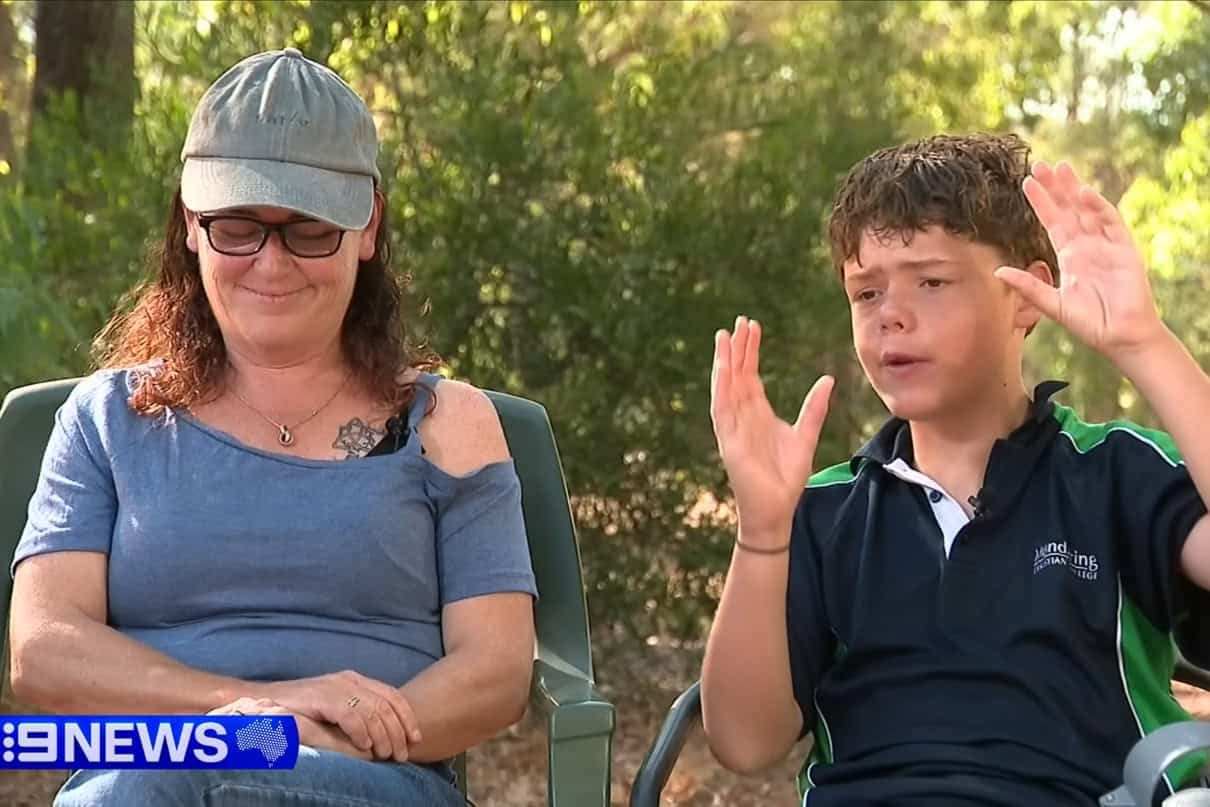
While kayaking and paddleboarding off the coast of Quindalup in Geographe Bay, a family of four was swept out to sea when conditions turned rough. As the situation turned dire, 13-year-old Austin Appelbee left his family and swam four hours through challenging conditions to sound the alarm.
“Not today” says teen hero who saved his family after a kayaking mishap
“I was scared, confused, frightened,” said Beau, Austin’s 12-year-old brother in an interview with ABC News Australia.
Clinging to a paddleboard 4 kilometers (2.5 miles) offshore, Joanne Appelbee, mother of Austin, Beau, and 8-year-old Grace, was forced to make the tough decision to ask her oldest, 13-year-old Austin, to leave his family to find help.
“I knew it’d be a long way… but the kayak kept on taking in water,” said Austin.
After first attempting to make it to shore with the kayak and with his life jacket on, Austin eventually left both behind to swim to shore as quickly as possible.
Hero teen Austin Appelbee recounts the swim to rescue his family through the choppy waters of Geographe Bay, Australia. Feature Image: ABC News Australia | YouTube
“I just said… not today, not today, not today,” shared Austin. “I have to keep on going.”
Austin recounted that the waves were massive, and that he used a mix of breast stroke, freestyle, and survival backstroke to reach shore. Upon reaching shore, he then sprinted 2 kilometers (1.3 miles) to reach a phone.
“I ran to the phone. I said ‘police, I need helicopters, I need planes, I need boats… my family is out at sea’,” shared Austin. “I was very calm about it.”
Rescuers praise efforts of 13-year-old Appelbee
Meanwhile, Appelbee’s family, all wearing life jackets, clung to the paddleboard and worked to stay together until help arrived.
“I didn’t know where they were, or how they were,” said Austin. “I thought they were dead. I had a lot of guilt in my heart… because you know, I thought ‘aw, man I wasn’t fast enough’.”
Rescue crews arrived on the scene to assist Joanne, Beau and Grace just after the sun had set.
“There’s no bigger word to describe you other than pride,” Joanne said to her son in an interview. “I’m speechless at his efforts but at the same time I knew he could do it.”
Just weeks before Austin failed his vacation swimming assessment; ABC News Australia reports that rescuers are urging his instructors to reconsider.
“He’s done really well,” said Paul Bresand, of Naturaliste Volunteer Marine Rescue. “Adult people couldn’t do that.”
Life jackets and staying together contributed to survival of rescued family
“He swam in, he reckons, the first two hours with a life jacket on,” Bresland told ABC News Australia. “And the brave fella thought he’s not going to make it with a life jacket on, so he ditched it, and he swam the next two hours without a life jacket.”
Austin’s swim and subsequent run and phone call resulted in a multi-agency search and rescue operation. Bresland also added that Austin’s description of the colour of the kayak and paddleboards aided in finding the family as soon as possible, and Joanne keeping the youngest two children with her and a paddleboard was key to their survival.
“This incident is a reminder that ocean conditions can change rapidly. Thankfully, all three people were wearing lifejackets, which contributed to their survival,” said Inspector James Bradley, South West District Office in a statement.
“The actions of the 13-year-old boy cannot be praised highly enough,” continued Bradley. “His determination and courage ultimately saved the lives of his mother and siblings.”
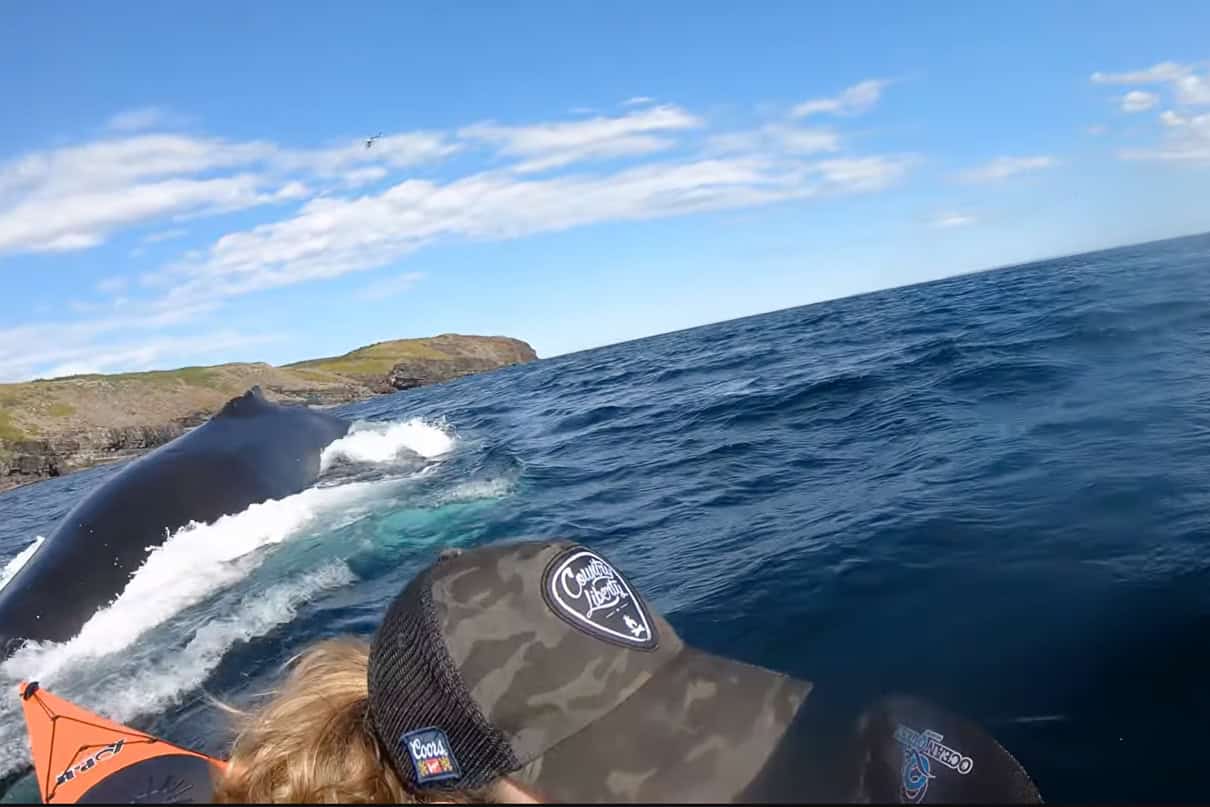
One paddler’s dream is another paddler’s nightmare, as demonstrated in a recent viral video in which two sea kayakers witness a humpback whale surfacing at close distance behind them off the coast of Newfoundland.
Coming face to fluke with a humpback whale
“My wife and I were sea kayaking off the coast of English Harbour, Newfoundland Labrador, Canada,” shared the paddler who submitted the video to Viral Hog. “We were not that comfortable with the aggressiveness of the feeding behavior. While attempting to get back to shore, we received the surprise of a lifetime.”
The video was originally shot on August 2, 2025. In the video, two kayakers can be seen rafted up when a humpback surfaces just behind the stern of the female paddlers sea kayak, while her husband, filming, repeated “Jesus”.
A humpback whale surfaces behind a sea kayaker in Newfoundland. Feature Image: Viral Hog | YouTube
“Okay, let’s get out of here,” said the paddler filming as the humpback dove beneath their kayaks.
As the paddlers adjust to leave the area, two humpbacks can be seen surfacing now off the bows of their kayaks. The duo began to make moves to get out of the humpback’s feeding grounds just as a humpback fluke, or tail, surfaced.
Humpbacks and kayakers
The waters off the coast of Newfoundland are home to the world’s largest population of feeding humpback whales between the months of April and October according to Newfoundland and Labrador Tourism. Capelin, a small forage fish found in northern oceans, are the primary prey that make up the diet of area humpbacks, reported Canadian Science Publishing Blog. Humpbacks in the North Atlantic hunt capelin using lunge feeding, a strategy in which the whale dives beneath a school of fish then uses its fluke (tail) to propel their body forward as they resurface, according to Nature Canada. Humpbacks in Newfoundland have been reported to feed and lunge in groups of two to five individuals.
While many kayakers dream of close encounters with whales, encounters at the proximity seen in this video of sea kayakers in Newfoundland is relatively uncommon, and not always a treat.
In February 2025, a packrafter was briefly engulfed by a feeding humpback whale. In this encounter, 19-year-old Adrian Simancas had been paddling without issue with his father, who caught the event on camera. A whale surfaced beneath Simancas, and both paddler and packraft briefly disappeared before surfacing moments later. Both Simancas and his father escaped without further incident.
Meanwhile in 2021, a pair of kayakers in Moss Landing, California had a humpback whale breach and, as it appears in the viral video, came crashing down directly beside the kayakers sending them into the water. The kayakers, luckily, came away from the incident unharmed.
Tripper in training on the Stikine River. | Feature photo: Jim Baird
Taking kids on a remote canoe trip is one of the most meaningful ways to introduce them to the wilderness. It’s a chance to build outdoor skills, confidence and family bonds far from screens and the noise of everyday life.
Some believe parenthood means the end of backcountry adventures, but that’s not true. Over the past six years, my family has completed numerous canoe trips—from Ontario’s French River to the mighty Stikine in Northern B.C. and Alaska, and the Teslin River in the Yukon.
I won’t pretend it’s easy. The stakes feel higher with kids, and you’ll worry more. But a bit of fear is healthy. It drives good preparation and awareness. Tripping with kids takes planning, patience and a sense of humor. But with the right approach, it’s unforgettable. Here are six tips to help make your family’s trips safe and enjoyable.
Tripper in training on the Stikine River. | Feature photo: Jim Baird
Jim Baird’s tips for remote canoe trips with young kids
1 Prioritize safety
Safety is the cornerstone of any successful trip, especially with kids. Start with properly fitted life jackets, and keep snacks accessible throughout the day to help dodge meltdowns. Customize a first-aid kit for children with items such as children’s ibuprofen, antihistamines and fun Band-Aids. Teach basic safety rules: no playing near the fire, stay within sight, and always wear your life jacket near the water. Establishing clear rules encourages independence while keeping everyone safe.
2 Pack smart
Overpack the essentials: extra clothing layers, quality rain gear, sun hats and lightweight sun shirts. Bring clamp-on umbrellas for sun and rain protection, and a satellite communicator like a Garmin InReach for emergencies beyond cell service and peace of mind. Bugs are almost guaranteed, so come prepared. A kid-sized bug shirt, family-sized bug shelter and repellants like Muskol Family & Kids (10 percent DEET) are helpful. A little 30 percent DEET behind the ears and along a kid’s hairline helps when bugs get particularly bad.
3 Choose a flexible route
Start small. Choose a route matching your child’s age, stamina and interests. You’ll cover far less ground than on an adult trip. Plan shorter paddling days with time to explore, and avoid campsites with hazards like cliffs or strong currents.
Know your exit strategies. Are there lodges, train tracks, ATV trails or motorboat access at any points along your route? Can a floatplane land if needed? Choose a route offering an exit strategy and store emergency contact numbers in your satellite communicator.
Emphasize the fun stuff—roasting marshmallows, spotting animals, exploring new places. Frame challenge as part of the adventure. If a portage is tough, celebrate the effort rather than the result.
Weather, water levels and kids’ moods can all shift unexpectedly, so build flexibility into your itinerary. Have buffer days and backup campsites mapped out so you can pull over early or take a day off if the weather is bad. On our Teslin River trip in the Yukon, it took four to five hours to break camp each morning with our three- and six-year-old along. We adjusted by waking up earlier and completing camp tasks before the kids woke up.
4 Set expectations
Kids thrive with structure and positive reinforcement. Before the trip, talk through what to expect, including paddling, portages, wildlife and camp chores. Emphasize the fun stuff—roasting marshmallows, spotting animals, exploring new places. Frame challenge as part of the adventure. If a portage is tough, celebrate the effort rather than the result.
5 Embrace the chaos
Staying upbeat and flexible goes a long way. Things will take longer than expected, and that’s okay. On our first trip with our eldest, we planned a multi-portage route in the backcountry. Two kilometers in, he had a full meltdown, so we stopped and camped at the first available spot. It wasn’t the trip we planned, but it was still magical. If everyone is warm, dry and safe, the memories will follow.
6 Know when to cut it short
Recognize when to pull the plug. If a child is sick or hurt, or if conditions turn dangerous, there’s no shame in cutting a trip short. You don’t need to push through the kind of adversity you tolerate on an adult expedition. When things go wrong, stay calm. Involve kids in age-appropriate problem-solving—it builds resilience and confidence. The point is to enjoy nature and each other, not to conquer the wilderness.
There are many ways of improving kayaking performance. The obvious one most paddlers go to first is simply paddling more. Unfortunately, or fortunately depending on how you look at it, the gains from this alone are limited and you quickly run out of time unless you are a professional athlete. One mode of training that most paddlers neglect or struggle to do well is strength training in the gym or at home. Smart strength training can have a huge impact on kayaking performance.
Whether you are a competitive paddler training for your next race, looking for adventure in whitewater or love the freedom of touring, you can improve your paddling experience with strength training. A well-planned kayak strength training program will help you paddle faster and longer, protect you from injury, allow you to get more out of yourself or just enjoy the journey more by not being as fatigued by the demands of paddling.
In this article, I’ll go over the fundamentals of strength training for kayaking so you can get started in designing a program that works for your goals and lifestyle.
Strength training both directly and indirectly improves your performance in the kayak. Let’s go over how this works.
Direct improvements: helping your muscles generate more force while kayaking
Direct improvements to your paddling come from an increase in the muscles’ ability to generate more force. This force production comes as a result of increases in muscle fibre size and neural activation. Force production—or how hard you pull on the paddle—is a key component of the power production equation, Power=f*v, where f is force and v is velocity or how fast you pull your paddle (aka stroke rate). By increasing either of these factors you can increase power and therefore your boat speed.
While you are not always paddling at your max power, having greater power production capacity also means you can power your boat up faster to catch that wave, make that eddy or get yourself out of a sticky situation.
Indirect improvements: providing you with greater resiliency to injury while kayaking
On the other hand, indirect improvements in the kayak from strength training come from improved core control, joint stability, and ligament and tendon strength, all of which make a paddler more resilient to injury. When a paddler has higher injury resilience they are able to train harder on the water and manage a higher training load which will result in increased performance. As a side note, improved core control can also have a direct impact on performance through improved transfer of power and maintaining good paddling technique longer as you start to fatigue.
While it is not black and white in terms of when you get direct and indirect performance improvements, generally indirect performance gains come in the early phases of training and you will be able to build your direct performance gains off this sounds platform in the future. The type of training required to obtain the direct performance gains is more advanced and demanding than the training required to obtain the indirect improvements. Regardless of ability, all paddlers can and should be doing some low-level strength work to get these indirect performance gains.
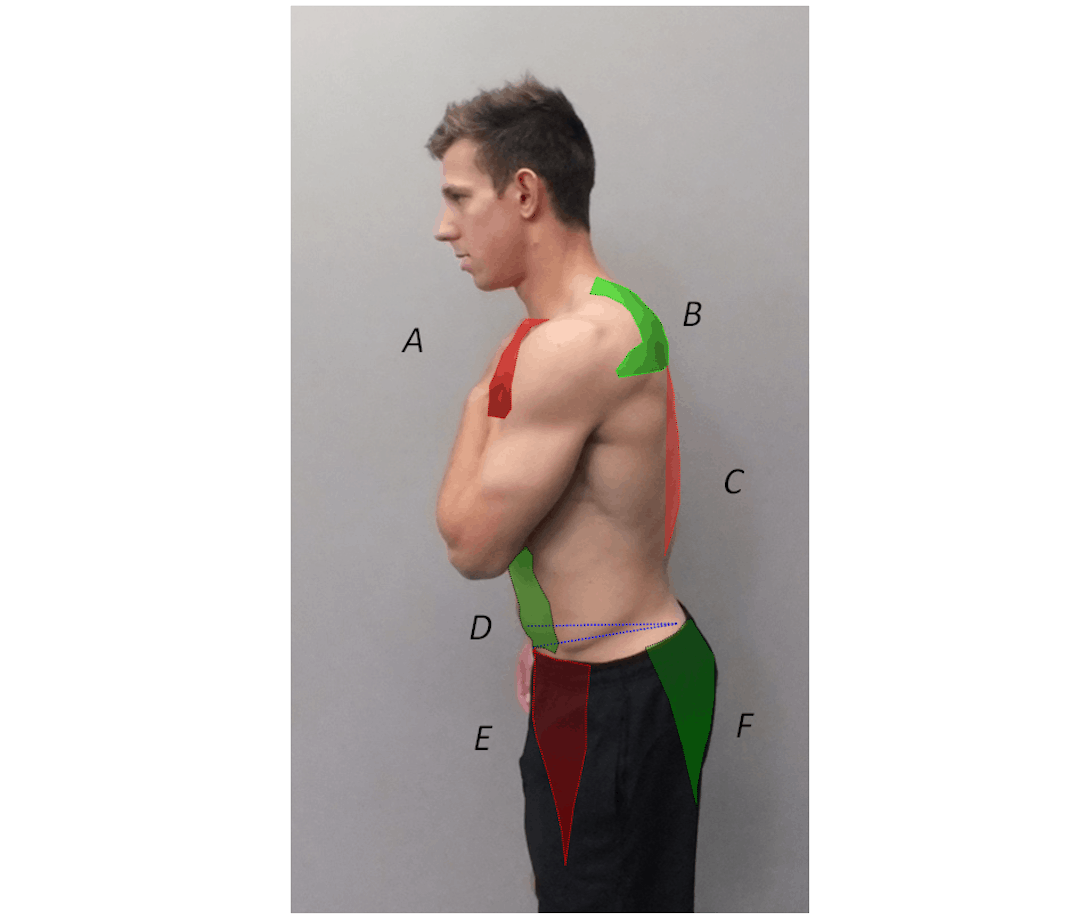
The nature of paddle sports and the modern lifestyle leaves many paddlers with some really tight and strong muscle groups (outlined in red above) and others that become weak and stretched (outlined in green). While there are hundreds of different exercises and plans you could do in the gym, for 95% of paddlers the best place they can put their attention initially is on strengthening these green areas while stretching and mobilizing the red areas. If you can do this then you will be taking a large step in the right direction.
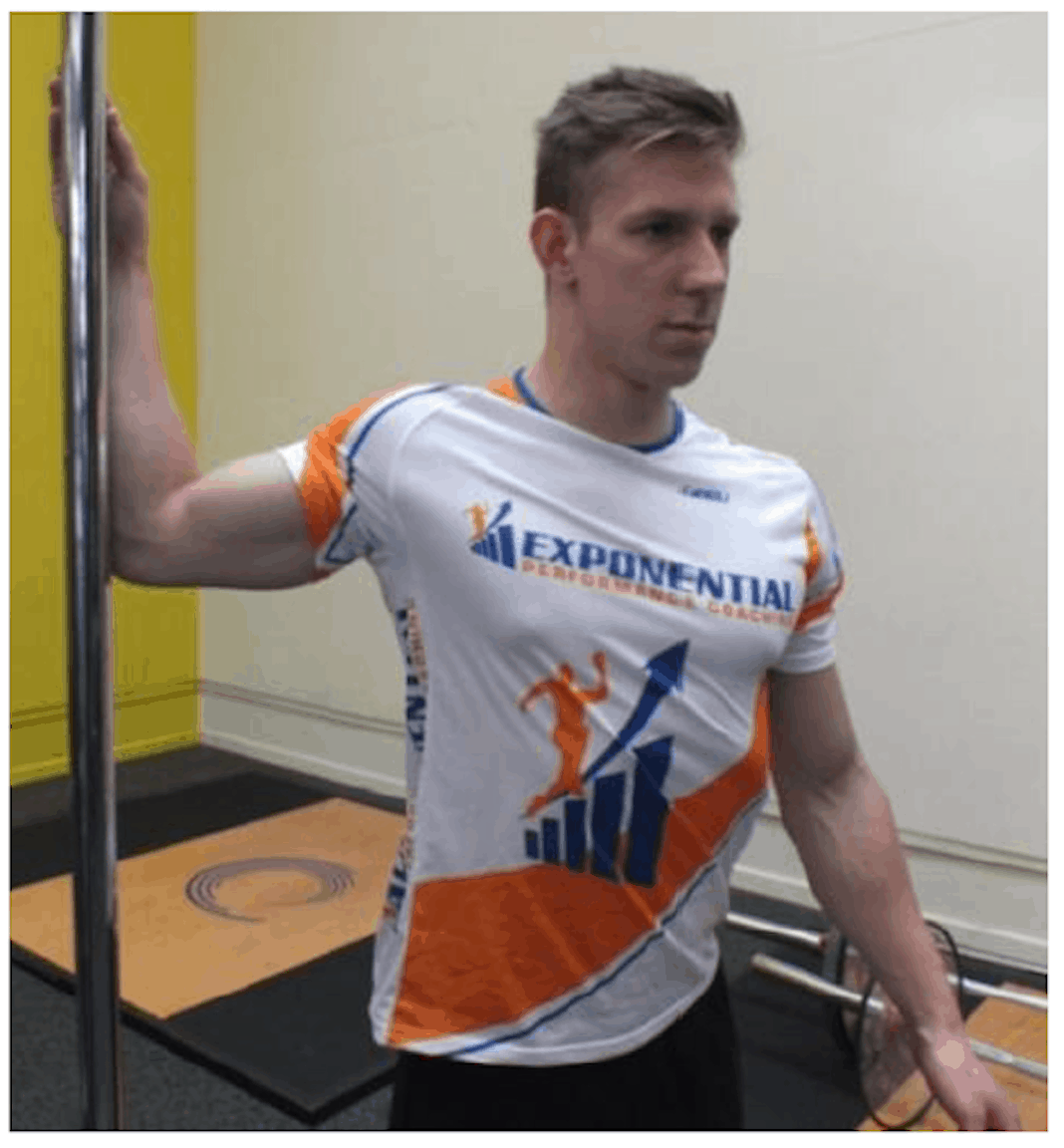
Ensure your elbow is slightly below your shoulder. Keep your back braced for a more effective stretch. Don’t “arch.” | Photo: Matty Graham
The pectoral muscles become extremely tight with training and life in general. Accordingly, paddlers should focus special attention on this area with their stretching and mobilization
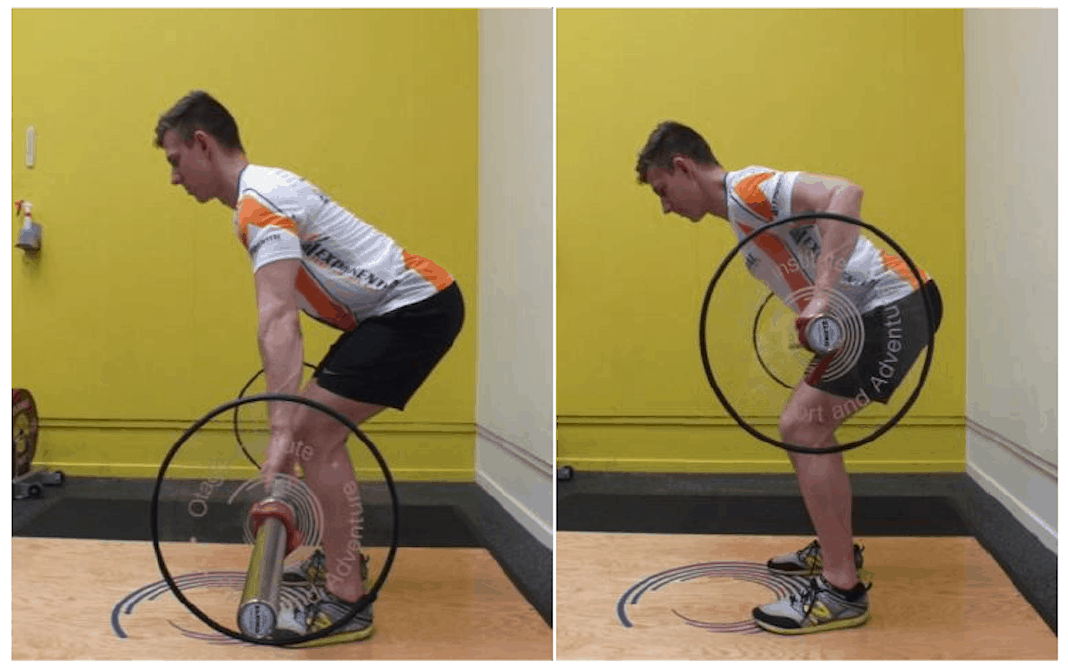
Because the strong pectoral muscle group is pulling the shoulders forward, the muscles of the upper back are under constant tension. This prolonged tension causes the muscles to atrophy (decrease in size) and “creep” (lengthening of the muscle fibre). This then leads to the muscles becoming weak and inactive. With this in mind your focus needs to be on performing pulling exercises such as the bent-over row, bench pull, and cable or seated rows to strengthen this area.
Always maintain a straight lower back and strong core to protect lower back. Pull the bar up the line of your quads, but not touching. Finish with the bar pulled into your belly button. | Photo: Matty Graham
Core muscles
Due to the kyphotic rounding of the shoulders, forward head posture and inactivity of many of the key core stabilizers, the erector muscles of the spine have to work overtime to keep it stable. This can lead to lower back pain and restricted movement, particularly rotation. Your strength training should focus on developing the surrounding core musculature to take some of this load off.
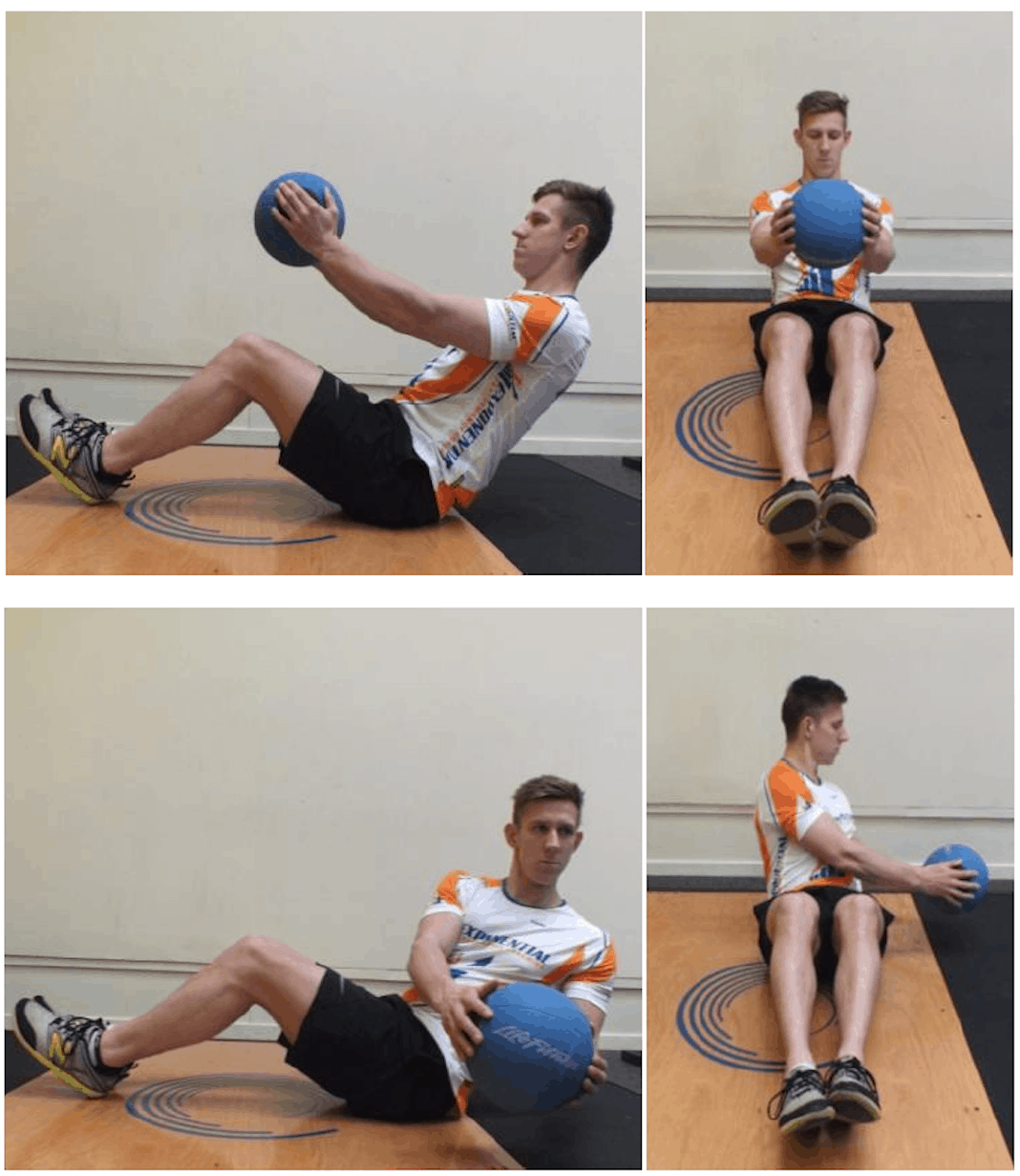
Maintain a straight back and neutral head position. Face the way the ball is travelling to maintain neutral head position. Rotate from side to side in a controlled movement. | Photo: Matty Graham
The core is the key link between the upper and lower body. For paddlers, it is critical for the transfer of power and stability. While the rectus abdominis (“six pack”) is often well-developed in paddlers, the more important, deep core stabilizers are typically inactive and overpowered by the more dominant rectus abdominis. Your attention should be focused on the development of these deep abdominal muscles to develop their activation and control.
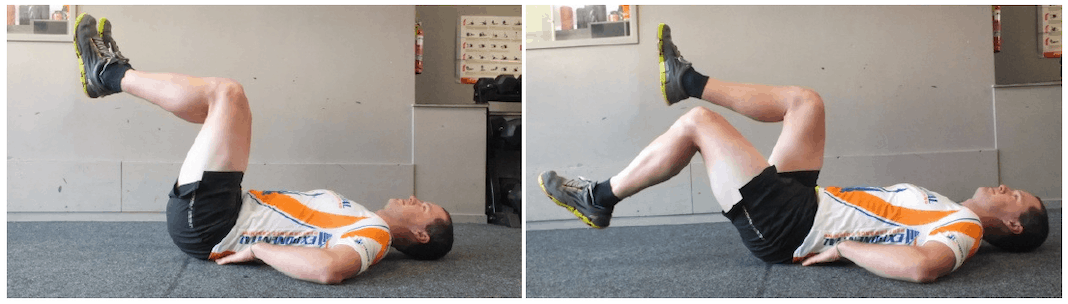
Lay on your back with both legs in the air at a 90° angle. Lower one leg slowly to the ground, stop when you start to feel your lower back lifting off the ground, then return your leg to the start position and repeat with the opposite leg. Focus on pushing your lower back to the ground by squeezing your abs. | Photo: Matty Graham
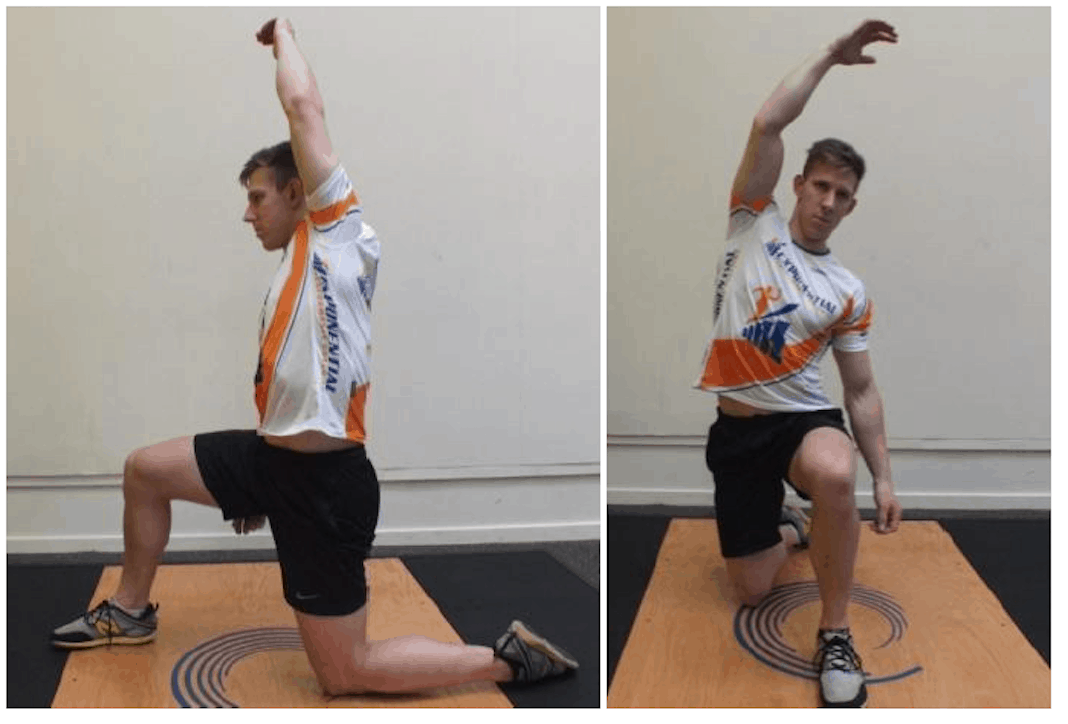
The seated position and leg drive involved in kayaking coupled with prolonged sitting in day-to-day life means that paddlers’ hip flexors become very strong and tight. This often leads to lower back pain and the feeling of tight hamstrings due to a tilted pelvis. Focused stretching of the hip flexors can go a long way towards minimizing these issues.
When you are stretching hips or quads, squeeze your glutes for a more effective stretch. Try to maintain a neutral back position. If you lean back too far you will not get an effective stretch. You can shift your weight around slightly to target different areas. | Photo: Matty Graham
Gluteal complex and hamstrings
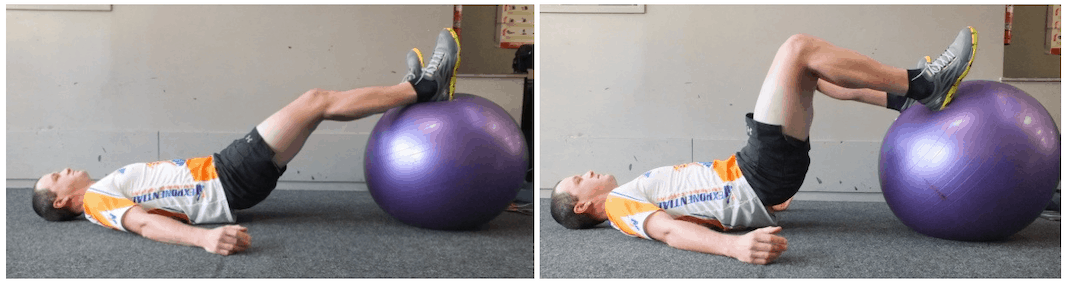
The muscles that form the gluteal complex and the hamstrings often become inactive and weak in kayakers. This affects postural control as well as power generation and transfer. Spending some time on developing the activation of these goes a long way.
Start with your feet on a Swiss Ball (SB) and your hips up off the ground. From this position activate your hamstrings and curl the ball in towards your butt. Focus on keeping your hips stable throughout the movement. | Photo: Matty Graham
Training phases
Introductory strength phase
During this introductory strength phase, select a weight you can comfortably lift for eight to 10 repetitions while holding good form at a controlled speed, for three to four sets. This will allow the rapid development of your strength, technique and stimulate some muscle growth in those weak green areas.
If you are new to strength training, then in the beginning, one session per week is going to be enough to see improvements
As your training progresses and your body adapts, increasing to two to three session per week will be required for you to continue getting optimal improvements.
Now that you have the knowledge, get into the gym and start your base strength development. This needs to be performed for six to eight weeks so your body develops the correct technique, structure and movement patterns to make the training you will perform in your next training phase as effective as possible.
Anatomical adaptation training phase
Now that you have completed some general introductory strength training, your body is ready to progress to the anatomical adaptation training phase. Over this training phase your focus still needs to be on refining your technique while you start to increase the amount of weight you lift. This training phase is really important to prepare your muscles, tendons and ligaments so they are able to cope with the next training phases.
During this training phase the focus is to stimulate some muscle hypertrophy, which is when your muscle fibres increase in size. A larger muscle has the potential to be a stronger muscle, so having some increase in muscle fibre size is beneficial.
Many endurance paddlers and multi-sport athletes worry about bulking up in the gym. These concerns are unnecessary as this training phase should coincide with the base endurance phase of your on-water training. The aerobic on-water training limits the amount of energy available for dramatic increases in muscle mass; therefore, endurance paddlers will not experience large gains in muscle mass.
During this training phase the load lifted is moderate (40-75% 1RM) at a moderate to high repetition range (2-5 sets x 10–20 reps, depending on the exercise) to expose the muscle to a large amount of accumulated load to “break down” the muscle fibres and trigger the hypertrophic response.
Once you have four to six weeks of anatomical adaptation training under your belt, you are ready to progress in to the maximal strength phase. Research indicates it is this phase of your strength training that will give you the biggest “direct gains” in your performance.
These performance gains are going to occur via increases in force production through an increase in neural activation. This means you will be activating more muscle fibres, more forcefully with each muscle contraction leading to a more powerful paddle stroke.
During this training phase, the weight lifted in the exercises is increased (85–95% 1RM) and the number of repetitions is decreased (5 sets x 3-6 reps). Because of the increased weight, the speed at which the exercises are performed naturally decreases, so you end up lifting a relatively heavy weight slowly.
During this phase of your training, aim to keep your gym sessions simple and limited to a few key exercises that are going to give you the biggest bang for your buck. Compound movements that use your prime movers such as the dead lift, bench pull, bench press and rotational exercises are key during these phases of your training.
Specific kayak strength exercises
Photo by: Matty Graham
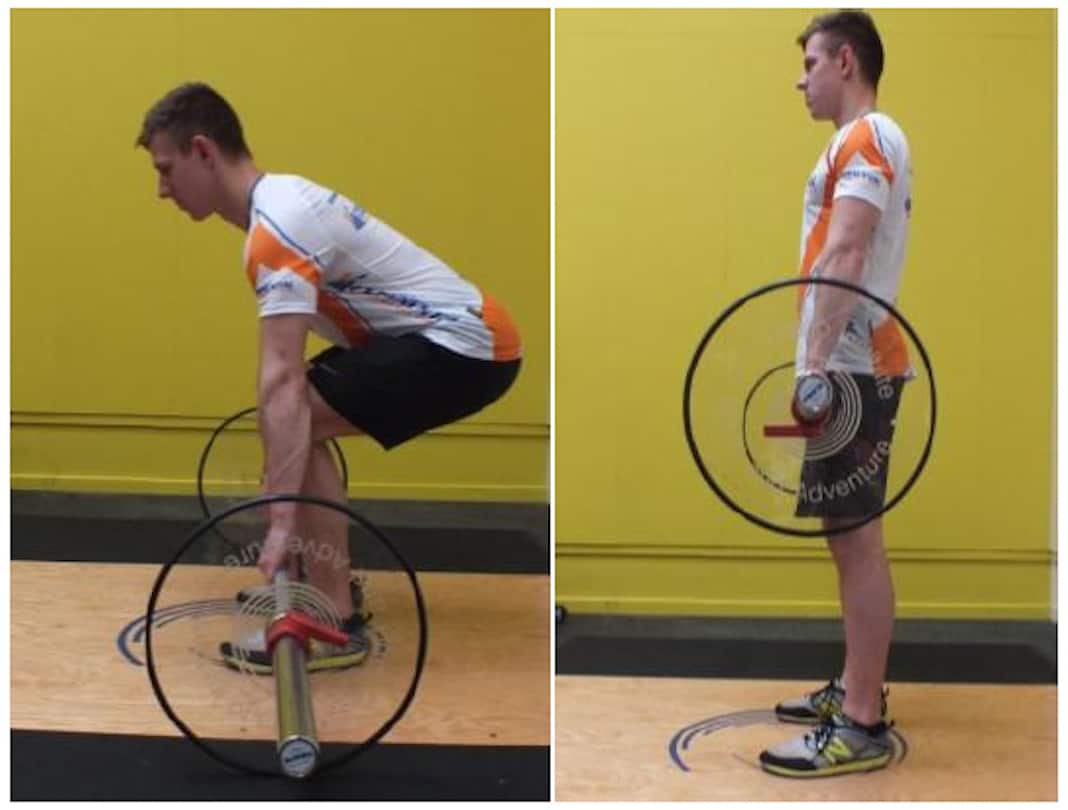
Bent-knee deadlift
Set your feet up under the barbell with your shins almost touching. Keep lower back straight in the set up, and throughout the movement. As you lift the bar, keep it as close to your legs as possible without touching on the way up. Try and open your knee and hip joints at the same time for maximum efficiency and injury resilience. Always lower the bar back down with the same technique used to lift (straight back), think of it as a “backwards lift.”
Photo by: Matty Graham
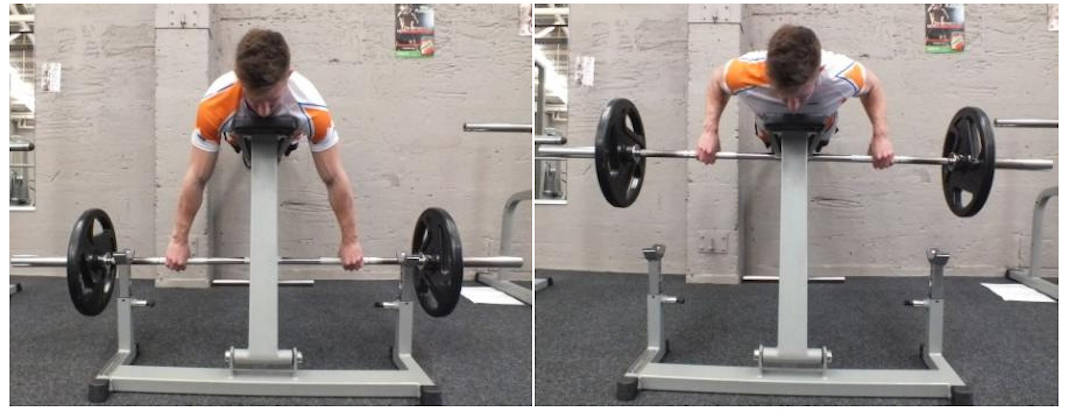
Lying barbell row
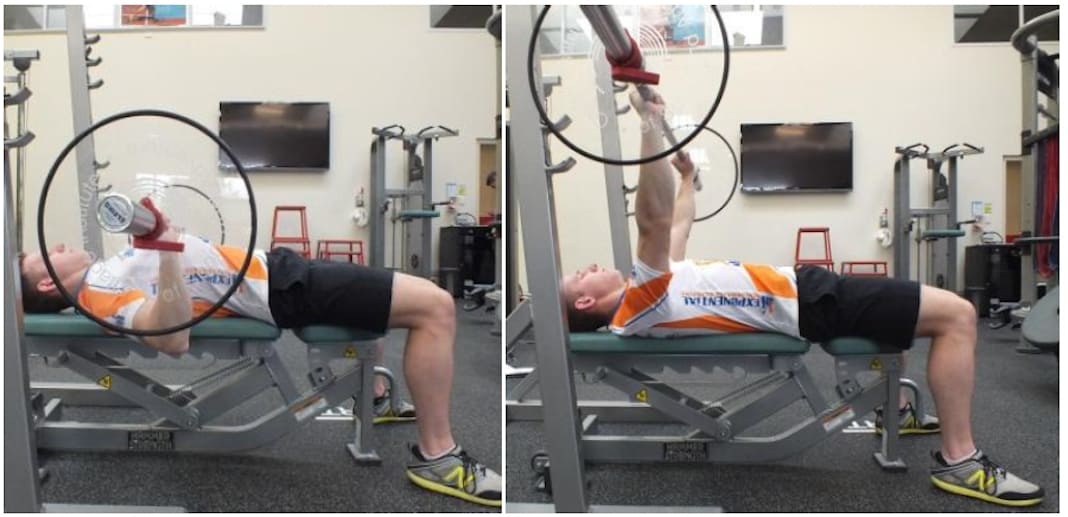
Squeeze your shoulder blades together. Try not to raise your chest off the bench. Similar to the bench press, your elbows should point away from your head. Pull the weight until it touches the bottom of the bench, then lower back down.
Photo by: Matty Graham
Bench press
Centre load directly over shoulders. As the weight comes down, push your elbows down your body towards your feet. The bar should touch your body between nipple line and sternum. Press the weight straight back up to start position in a fluid movement.
Photo by: Matty Graham
Cable cross pull
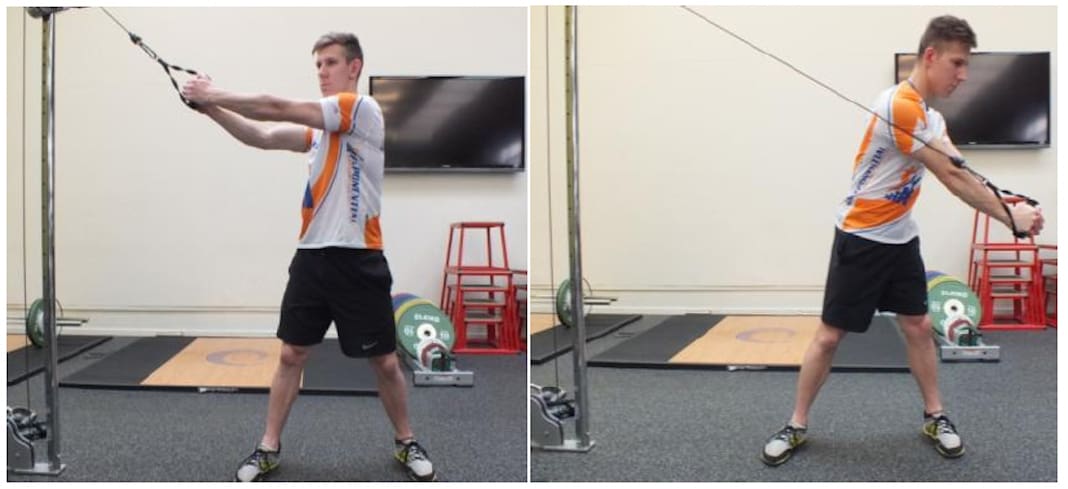
Set the cable up in a high position. Stand with your feet slightly wider than shoulder width apart and feet facing forwards. Twist your torso around to grip the handles. From this start position, rotate through your core moving your arms in an arch down to finish position. Retrace the arch with your arms back to the start position, controlling the movement with your core.
How many sessions should you have in your kayak strength training program?
The research in this area has found performance gains with a number of different sessions per week. Anywhere between two to four sessions in the gym per week is required for you to get good results from your strength training. How many times you train in the gym each week will vary depending on who you are, your training history, goals and your other training load.
I have found two sessions per week seems to works really well for most weekend warrior athletes who are balancing work, family and training. For those looking to take things up a notch and push the sharp end of the field, bumping this load up to three to four times per week on some weeks is required to get maximal results.
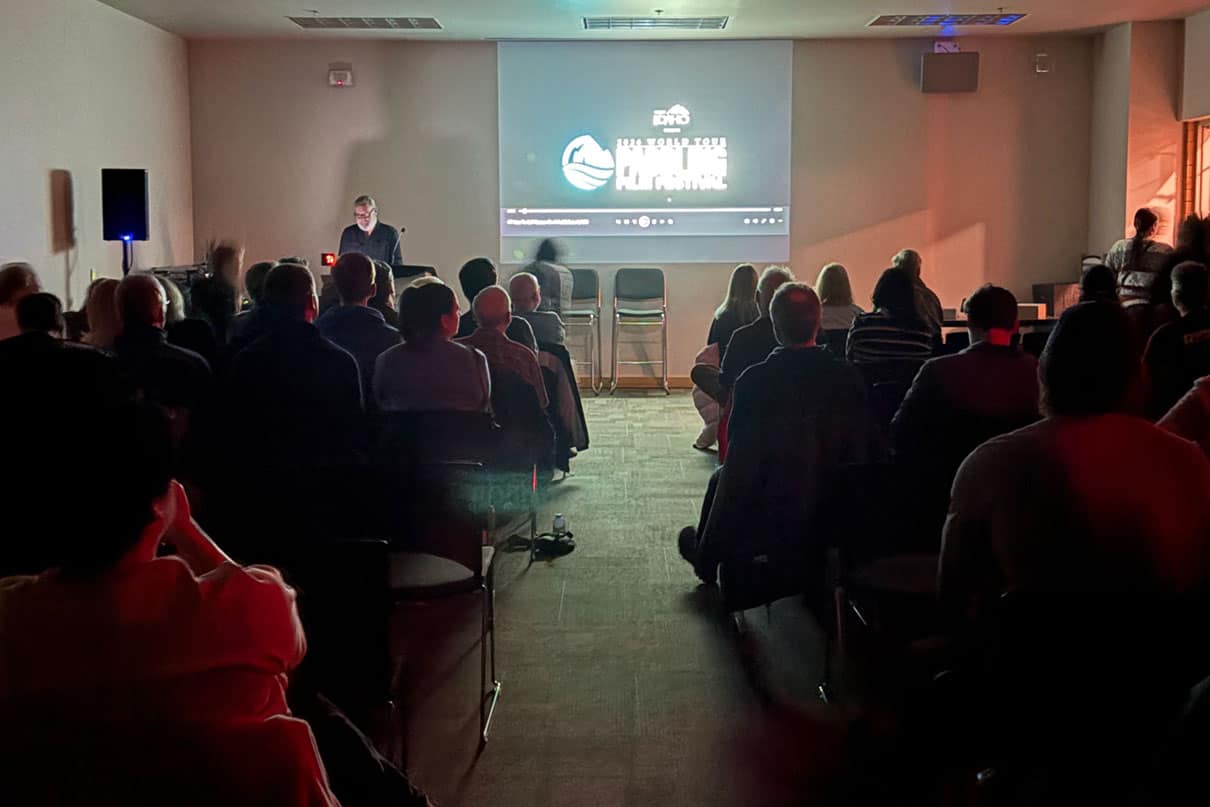
The 21st annual Paddling Film Festival World Tour kicked off at the Toronto International Boat Show on Thursday, January 22, 2026. Hosted by The Complete Paddler, the premiere event showcased the world’s best paddling films to a packed crowd—including a selection of this year’s award winners.
Proceeds from the screening support Project Canoe, a nonprofit providing at-risk youth with educational and therapeutic outdoor experiences, primarily through summer wilderness canoe trips.
Kelly McDowell kicks off the world premiere event.
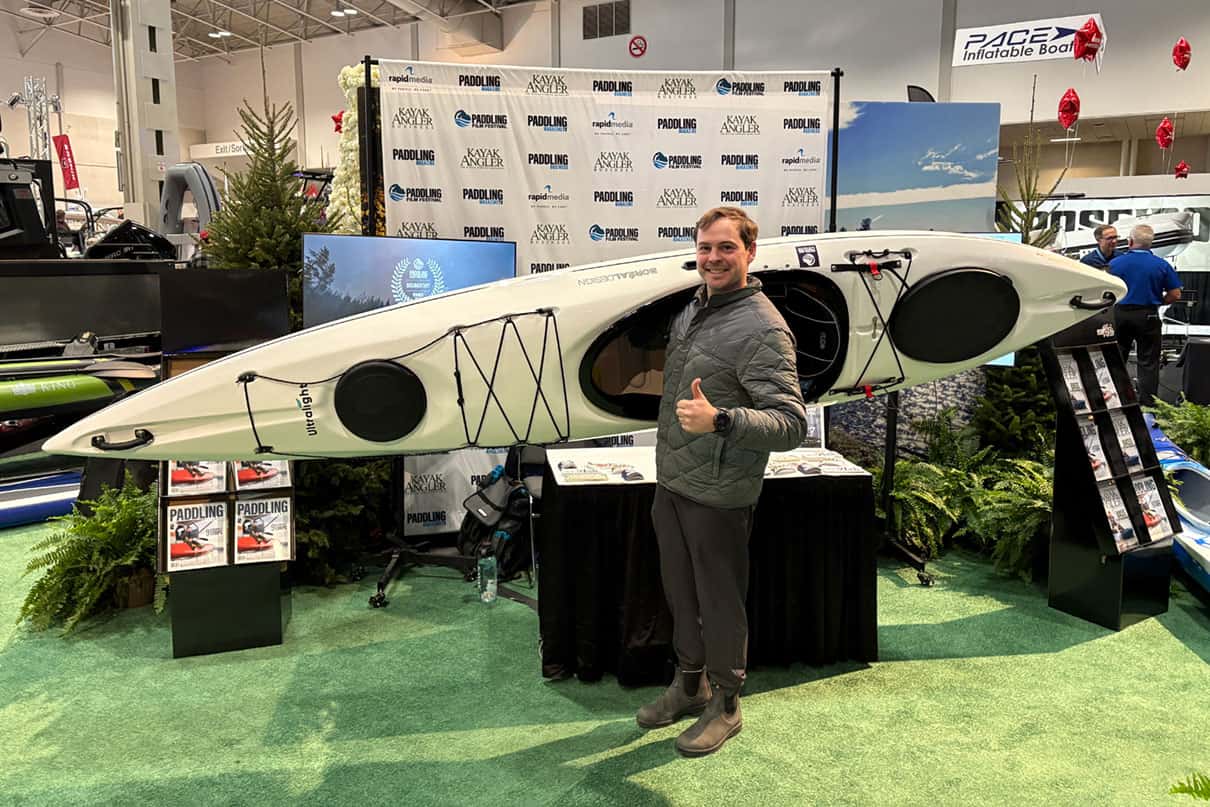
One lucky audience member won a kayak from Boreal Design.
Kelly McDowell, owner of The Complete Paddler, plans to run additional screenings of the festival at The Complete Paddler. Dates for these upcoming screenings will be posted to the Paddling Film Festival website.
Want to see the world’s best paddling films on the big screen? Find a World Tour screening near you. Read on to discover this year’s award winners and the World Tour shortlist.
2026 Paddling Film Festival Winners
FOLLOW THE WATER
A BAFFIN VACATION, LOVE ON ICE
WE STAND TOGETHER
Best Kayaking Film
FOLLOW THE WATER
Category sponsor: Matterhorn Protects
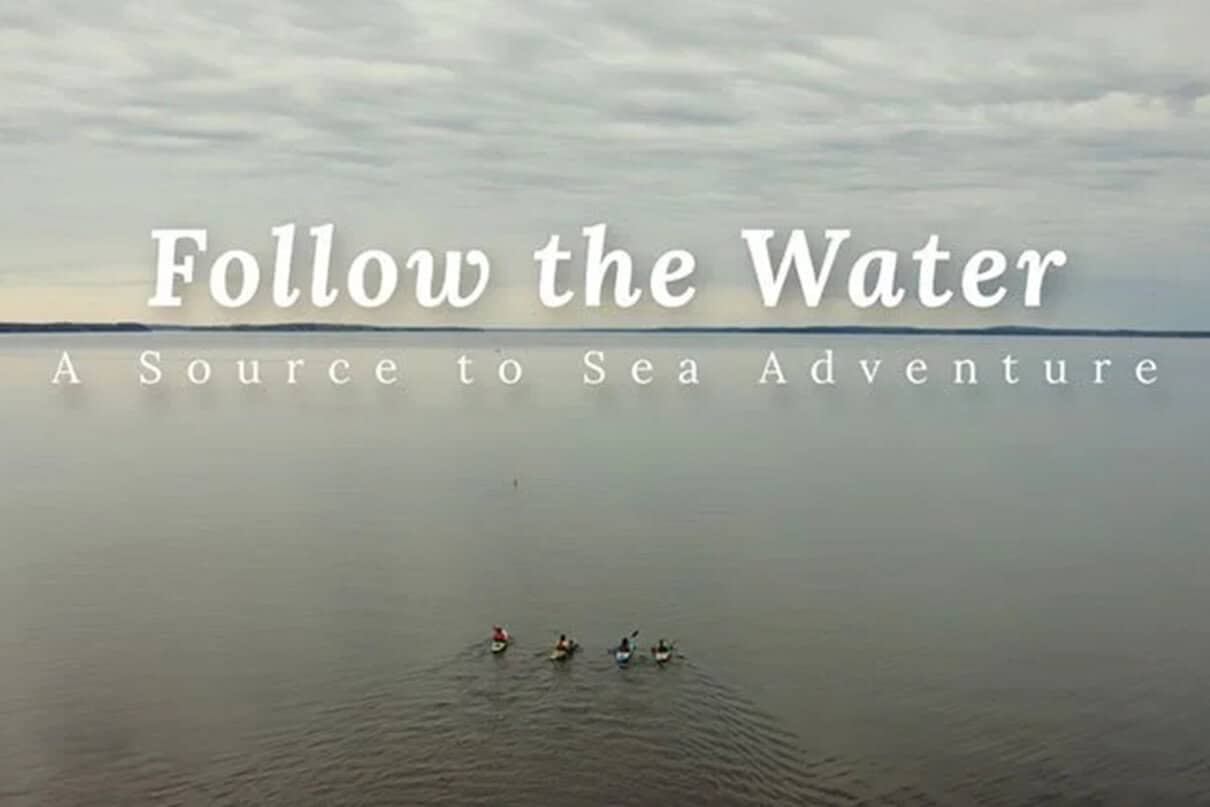
This short documentary follows a crew that embarks on a source-to-sea kayaking adventure. The goal was to find the source of the drinking water for Portland, Maine, then follow the water on its journey to the ocean. Along the way, the paddlers encountered many amazing people and organizations.
Director: Paul Friedman | Producers: Paul Friedman, Spencer Mendell
Best Adventure Travel Film
A BAFFIN VACATION, LOVE ON ICE
Category sponsor: Kokopelli
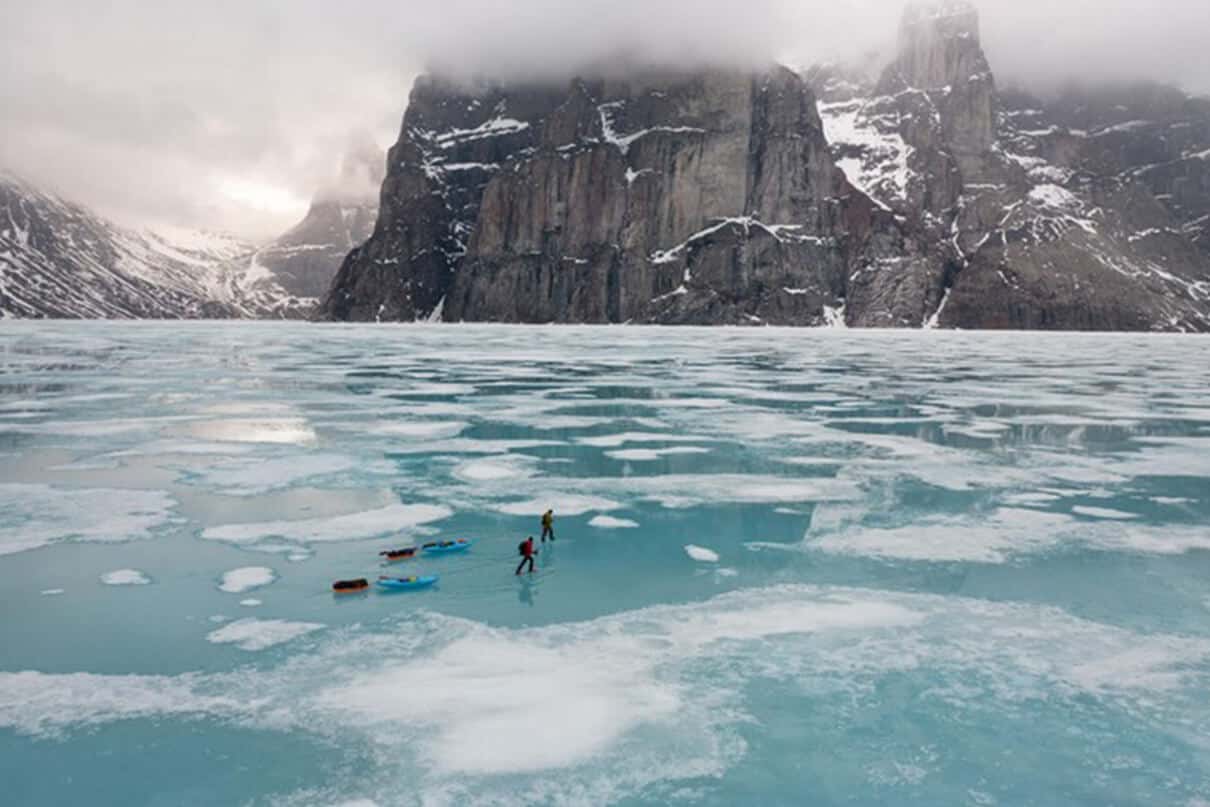
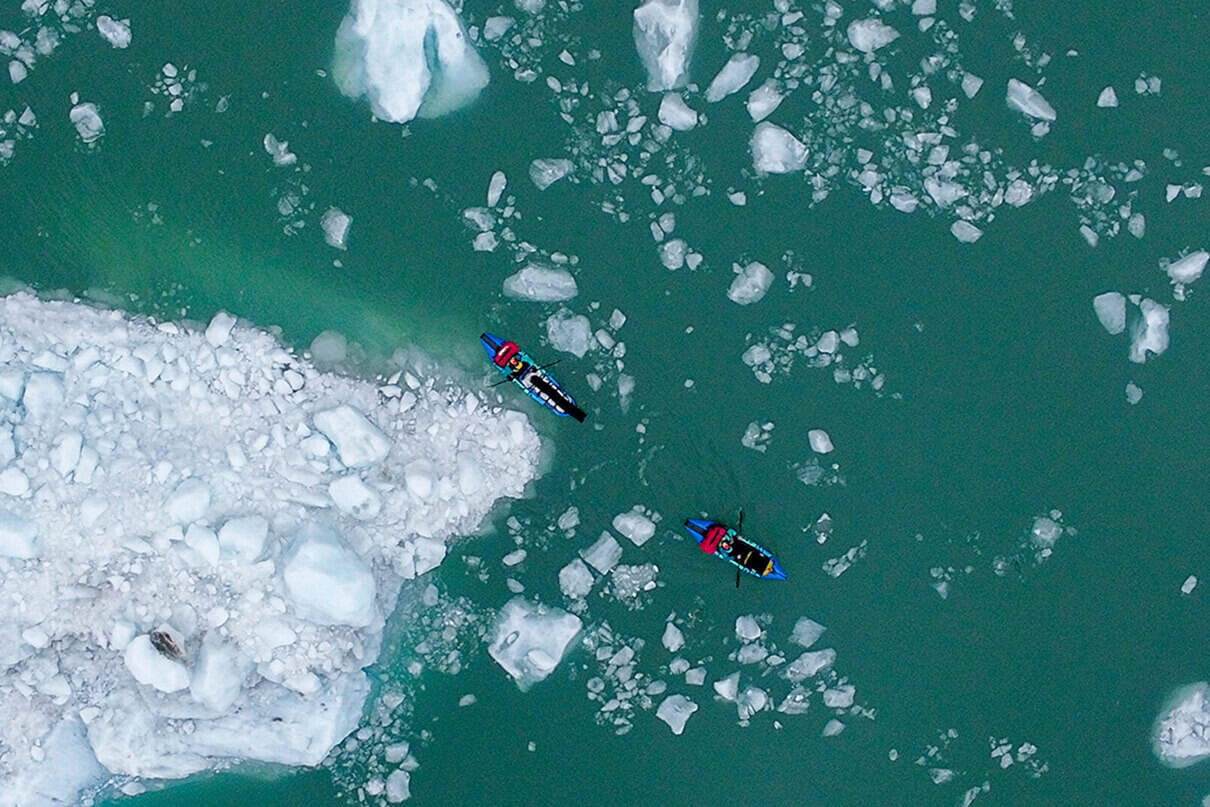
Join adventures Erik and Sarah on yet another epic Baffin Vacation as they kite ski north along the remote coastline of Baffin. Over their 69 day holiday, they ski mountains, climb an epic big wall, and cross a glacier in search of new rivers to whitewater kayak.
Directors: Rush Sturges, Skip Armstrong | Producers: Rush Sturges, Erik Boomer, Sarah McNair-Landry
Best Standup Paddleboarding Film
WE STAND TOGETHER
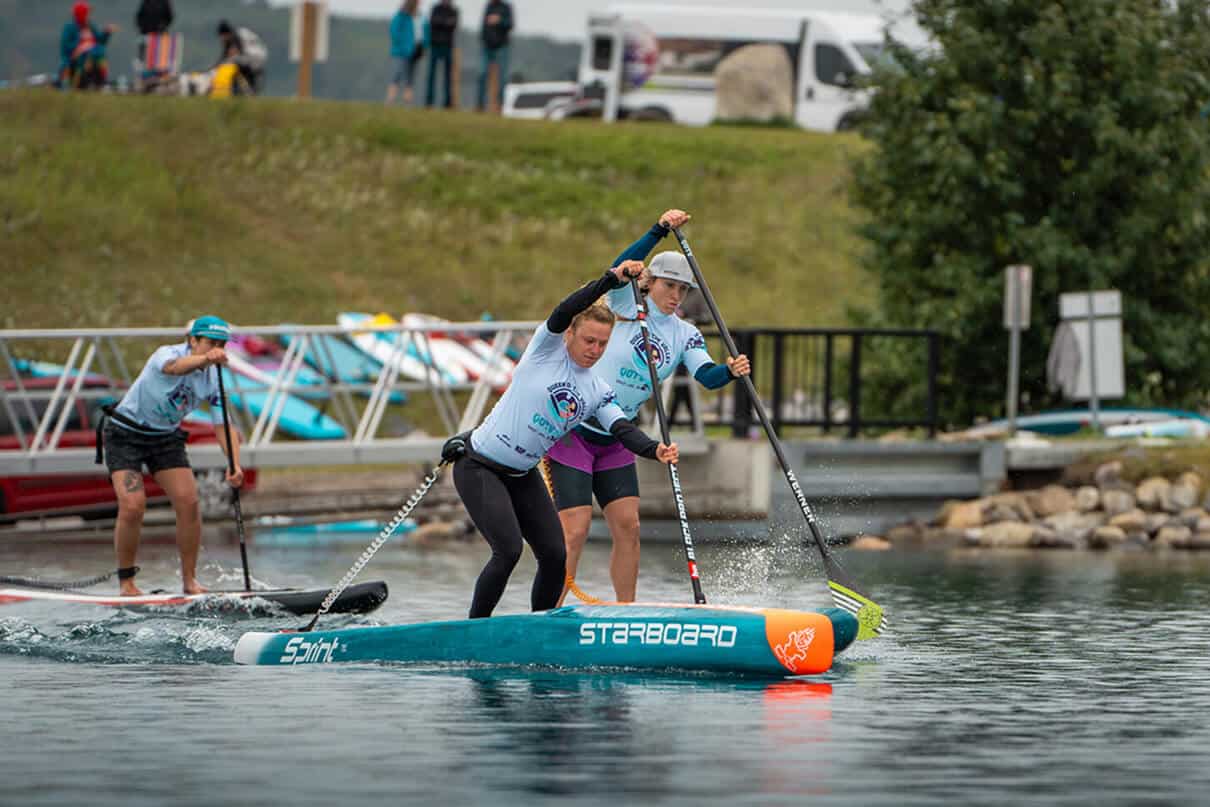
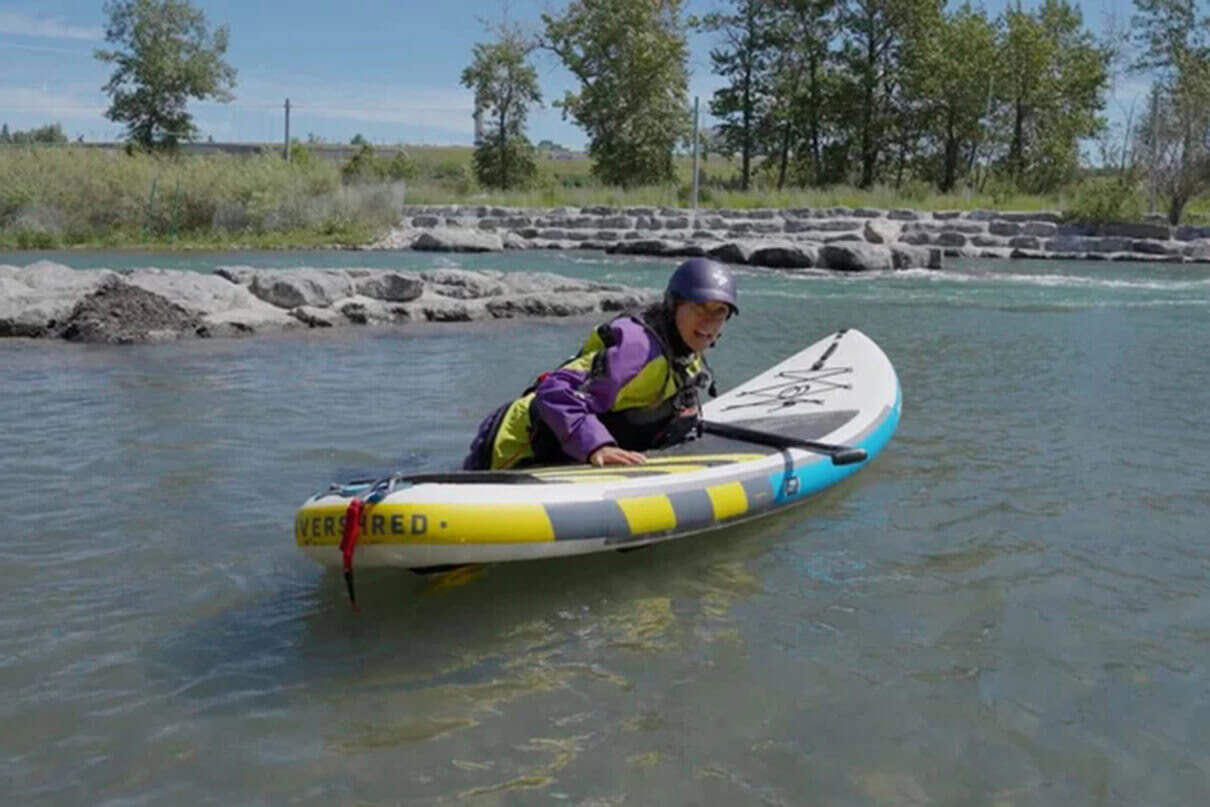
We Stand Together is a short documentary that highlights a remarkable group of women who have built one of the strongest, most supportive paddling events within the local paddleboarding community of Alberta.
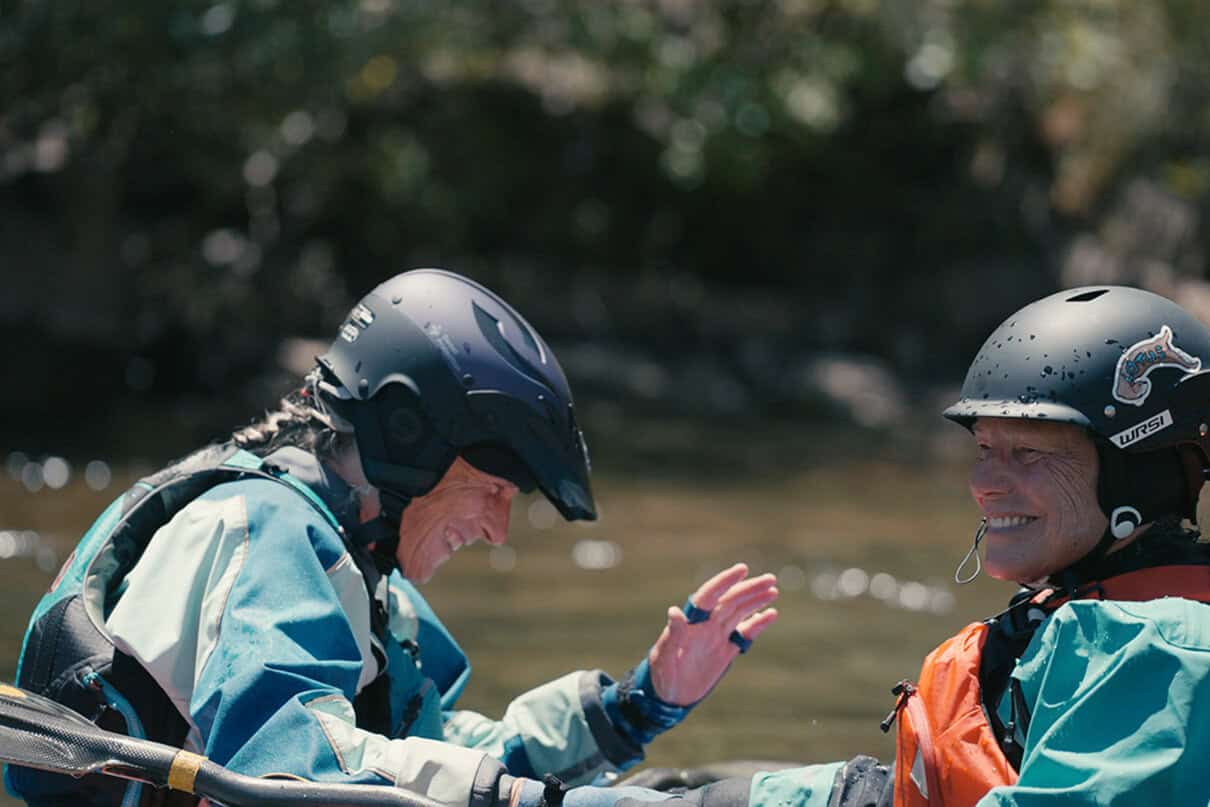
Whitewater is Elisha McArthur’s everything. Her passion, her happy place, her career. Then, she welcomed her daughter into the world. After Charlotte was born, Elisha struggled to balance her passion for whitewater with the demands of being a single mom. She had no precedent to follow and no way to know if both were possible. River Mamma, a short film by Sarah Hamilton, is a tribute to motherhood, honoring the strength it takes to nurture others while staying true to your own passions.
Director: Sarah Hamilton | Producers: Ashley Peel, Charlie Turnbull
Best Documentary Film
A LITTLE BIT DIFFERENT
Category sponsor: Canadian Canoe Museum
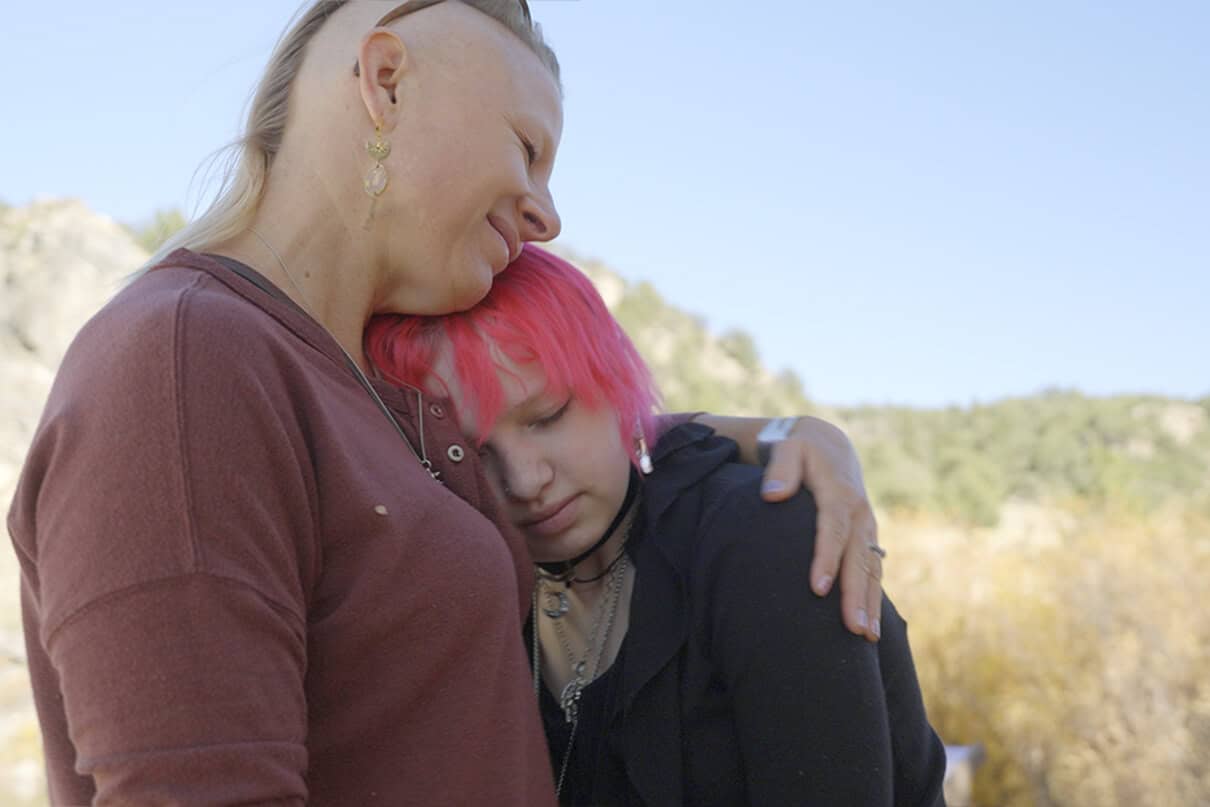
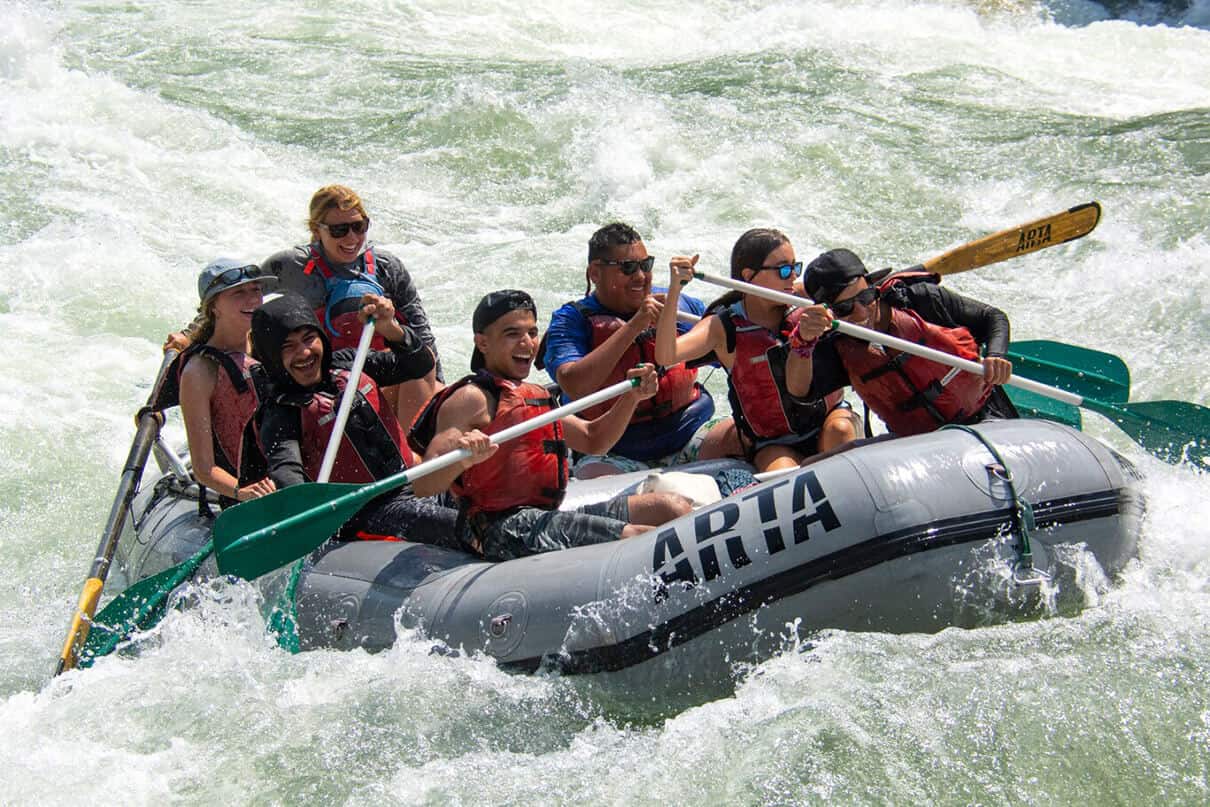
A Little Bit Different is a compelling documentary that follows a group of Afghan refugees and U.S. teens through a shared transformative river rafting expedition on the Main Salmon River in Idaho. This heartwarming film celebrates the diverse tapestry of shared human experiences and illustrates the impact of growth-focused outdoor adventure. As the group navigates challenges imposed by the river and explores the vast surrounding wilderness, they find solace and empowerment in the restorative power of nature and forge deep, authentic friendships along the way.
Director: Joshua Ballinger | Producers: Brett Hochmuth, Frank Anello
Best Canoeing Film
1,000 MILES TO TUK
Category sponsor: Esquif
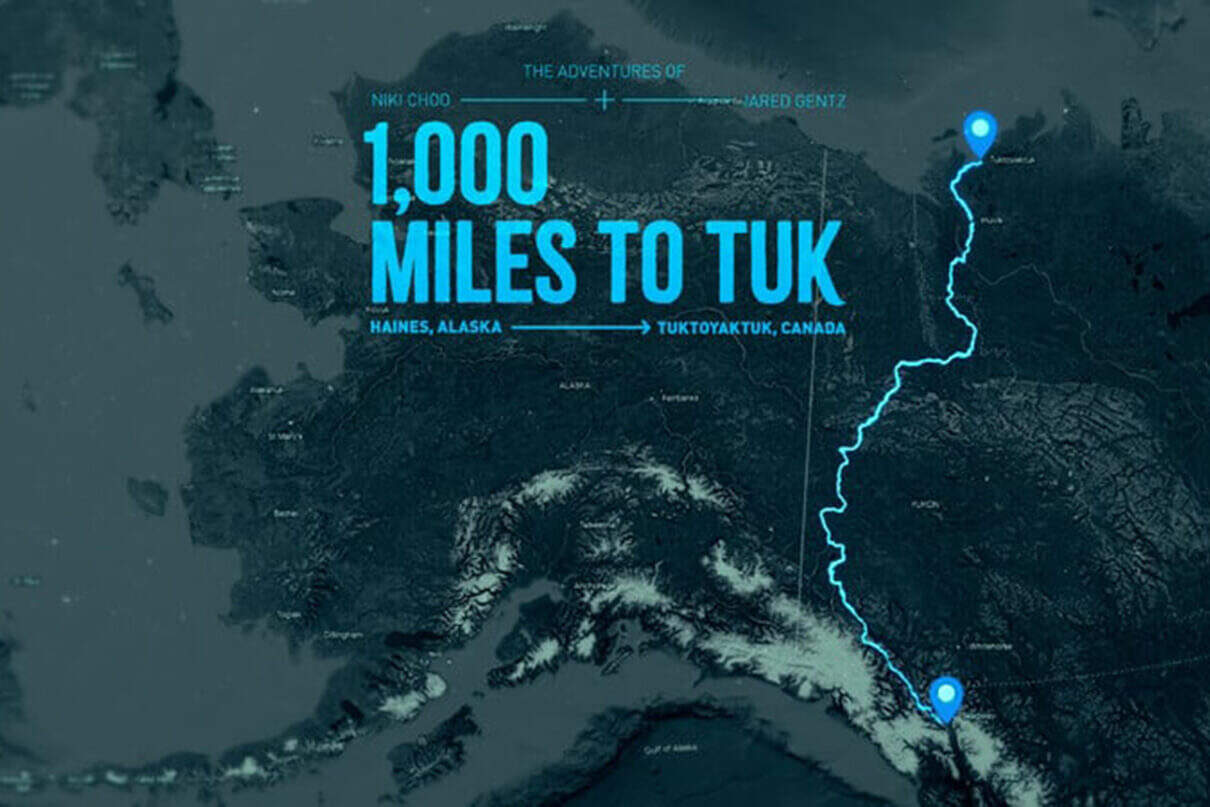
For over a decade, Niki Choo dreamed of a big canoe trip. When she finally meets the right partner, they take on a 1,000-mile journey from the Pacific to the Arctic testing their endurance, their bond and the limits of what’s possible.
Director: Whit Hassett
KAHUNA: EL CAMINO DE HIELO
HOW TO SELF-RESCUE ON A PADDLEBOARD
Best Environmental Paddling Film
KAHUNA: EL CAMINO DE HIELO
Kahuna team members Baptistin and Robin set themselves a new scientific exploration challenge in Patagonia. Leaving in January 2024 for 40 days of total autonomy (both food and logistics), they covered more than 650 kilometers on water and ice. The expedition descended the Rio Baker and crossed Pacific fjords in packrafts, before crossing part of the Campo de Hielo Sur, from where they brought back samples and data for Chilean glaciologists. The film is a portrait of endurance and extreme resilience, and bears witness to the ongoing melting and pollution of these isolated glacial sanctuaries.
Directors: Thomas Jarrey, Robin Villard | Producers: Baptistin Coutance, Vincent Lavrov
Best Instructional Film
HOW TO SELF-RESCUE ON A PADDLEBOARD
Category sponsor: Madawaska Kanu Centre
Watch this step-by-step guide to performing a self-rescue on a standup paddleboard. Self-rescue is a vital skill to ensure you can safely get back on your paddleboard and to shore in the event of a spill.
Director & Producer: Rylan McCarthy
BIG WATER THEORY
PATSO
Best Whitewater Film
BIG WATER THEORY
Category sponsor: Ottawa Valley Tourist Association
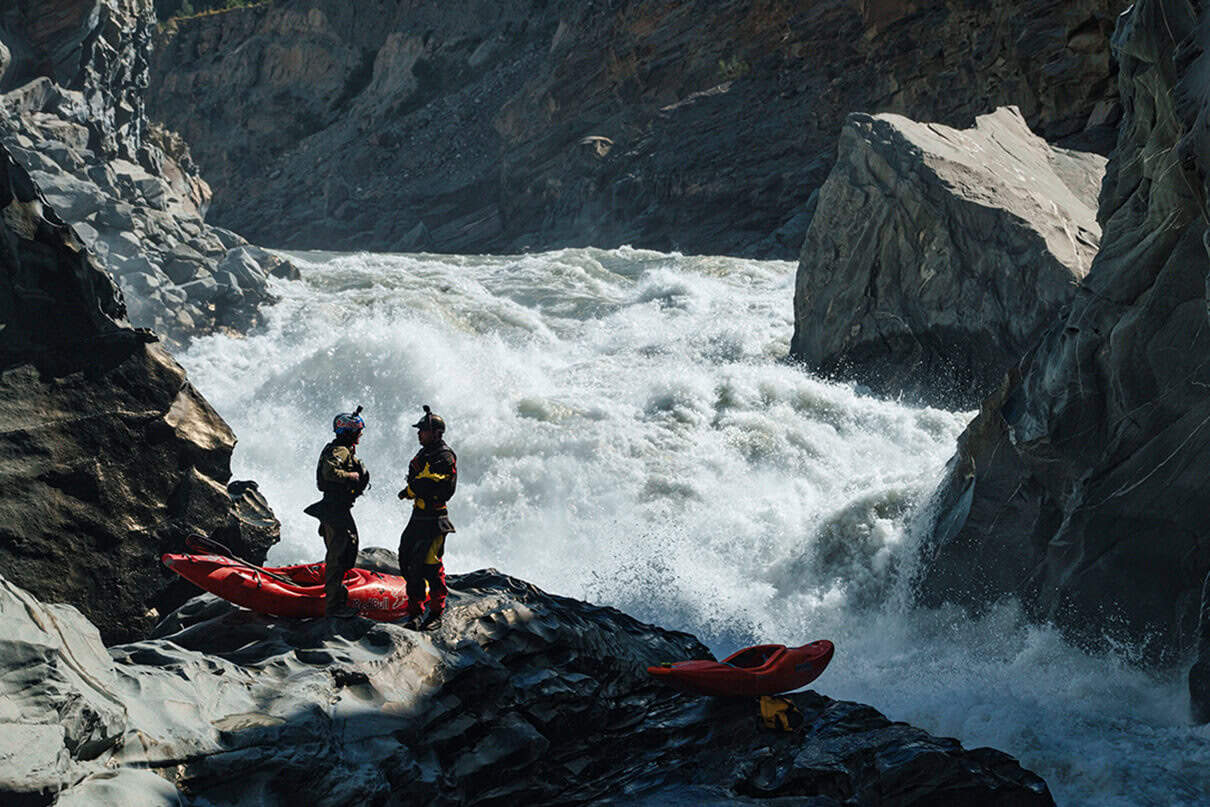
Follow French kayaker Nouria Newman and two childhood friends as they navigate one of the world’s most challenging sections of whitewater: the Rondu Gorge of the Indus River in Pakistan. This film documents the first integral descent of the Rondu by a woman, and offers a powerful look at the world of extreme kayaking.
Patso is a celebration of what is possible when we embrace the river community around us. Filmed on the South Fork of the American River in California.
Director & Producer: Greg Cairns
2026 Paddling Film Festival Shortlist
Find out which films are touring in this year’s Paddling Film Festival below.
1,000 Miles To Tuk
2025 International Whitewater Hall of Fame Inductees
A Baffin Vacation, Love On Ice
A Little Bit Different
A Non-Stop Endurance Challenge: The Brent Run
Big Water Theory
Follow The Water
Freeland: A Blackwater Story
Gabon Uncharted (Special Jury Mention)
Gauley Guide
Headwaters
How To Self-Rescue On A Paddleboard
Kahuna: El Camino de Hielo
Nocturne
Patso
River Mamma
Riverbound: The Storybook Has Just Begun
The 3100
The Celebration
The Next Adventure
The Shape Of Cedar
We Stand Together
Want to join in the fun and get the big screen experience? Find a World Tour event near you.
Prefer to watch these award-winning films from the comfort of your home? Stream all shortlisted films and more via Paddling Magazine TV, the premier streaming platform for paddling enthusiasts.
Thank you to our 2026 Paddling Film Festival World Tour partners who contribute to the energy and sustainability of the Paddling Film Festival. Without their support the World Tour would not be possible.
Govender rescues an endangered African penguin off the coast of Cape Town, South Africa. Feature Image: kirshia_ocean_educator | Instagram
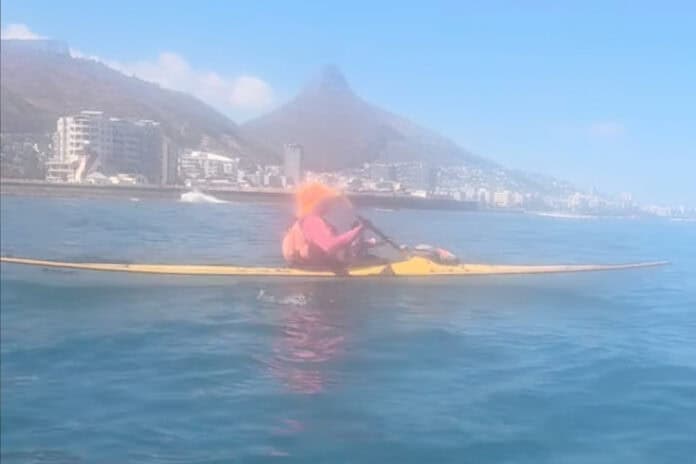
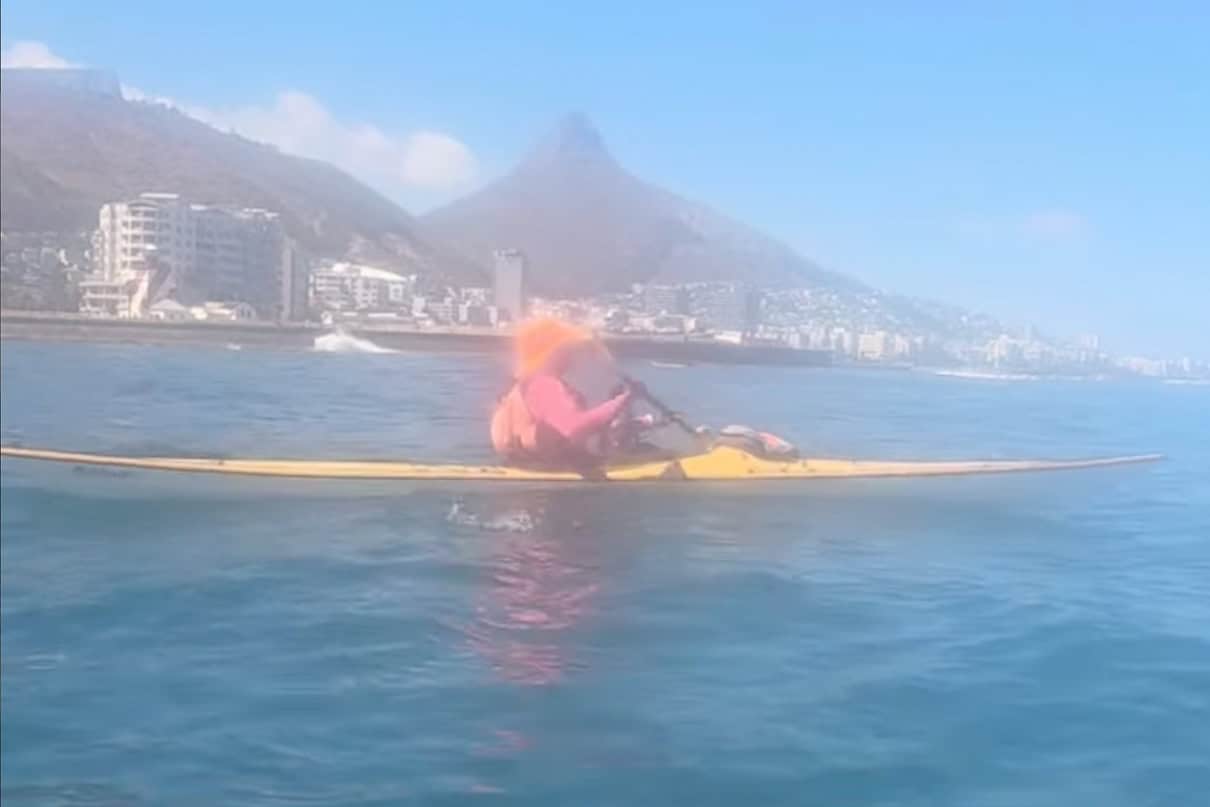
Marine biologist and trip leader Kirshia Govender was paddling with a group off Mouille Point in Cape Town, South Africa when she encountered an injured African penguin in the water. Govender then worked to help the penguin onto her spray deck and paddle the bird to safety at the Southern African Foundation for the Conservation of Coastal Birds (SANCCOB).
Kayaker and marine biologist rescues endangered African penguin off coast of Cape Town
Govender wrote on Instagram that a young African penguin surfaced on the return trip of their paddle and began circling the kayaks. Immediately, Govender recognized something was amiss with the penguin’s behavior, and moved closer to assess the penguin. It was shortly after that the penguin hopped up onto Govender’s kayak and into her arms, as can be seen in the video.
Govender rescues an endangered African penguin off the coast of Cape Town, South Africa. Feature Image: kirshia_ocean_educator | Instagram
With the penguin out of the water, Govender noticed the bird had a bite wound on its chest. The group then decided to take the penguin back to shore and to SANCCOB for specialized care.
SANCCOB is a nonprofit committed to reversing declining seabird populations, with an emphasis on critically endangered species, most especially the African penguin. Their goal is to rescue, rehabilitate and eventually release endangered seabird species. SANCCOB has an 80% success rate of releasing African penguins rehabilitated in their centres.
African penguins are considered a critically endangered species. One of the smallest species of penguin, these birds live on the rocky South African coast. According to SANCCOB, only an estimated one percent of the population of African penguins remains.
Rescued African penguin expected to be rehabilitated and released back into the wild
Govender shared on social media that it took about half an hour to paddle back to shore with her new feathery friend seated in her lap. Additionally, Govender wrote that she has worked with African penguins in the past and is familiar with their sharp beaks and nasty pecks, but didn’t experience any aggression from the penguin in her lap, who rested against her shoulder and seemed content.
In the video, Govender can be seen holding the penguin in her lap next to her PFD and on top of her spray deck, while talking encouragingly to both the penguin and her group of paddlers.
The penguin is now recovering at SANCCOB thanks to Govender’s rescue and according to a Travel News article, SANCCOB shared that the penguin will be released soon. SANCCOB also warned travelers that approaching wild birds can be dangerous.


 This article was published in Issue 74 of Paddling Magazine.