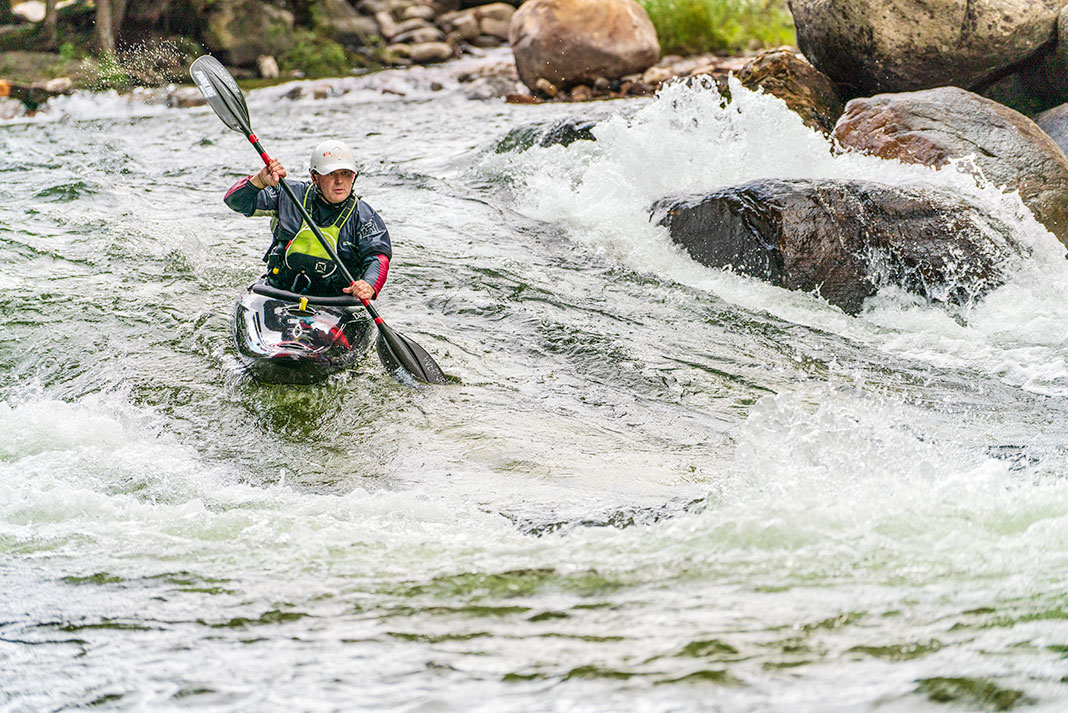
Forget circumnavigations and ocean crossings; the most hotly contested field in the paddling record books is based around floating in a gourd. On October 9, 2023, Steve Kueny of Missouri set a new record for the “longest journey by pumpkin.” Kueny completed the 39-mile voyage down the Missouri in his 1,293-pound gourd named Huckle Berry.
Steve Kueny Paddles To A New Record For “Longest Journey In A Pumpkin”
Kueny launched from Kansas City on a Monday at 7:30 a.m. and paddled the pumpkin 11 hours down the Missouri River. In the end, Kueny traveled 39 miles. A distance besting the previous record set just last year by another Missouri man, Duane Hansen, who paddled his 846-pound pumpkin 37.5 miles down the Missouri. Prior to Hansen, Rick Swenson made a 25-mile trip on the North Dakota and Minnesota border just in 2016.
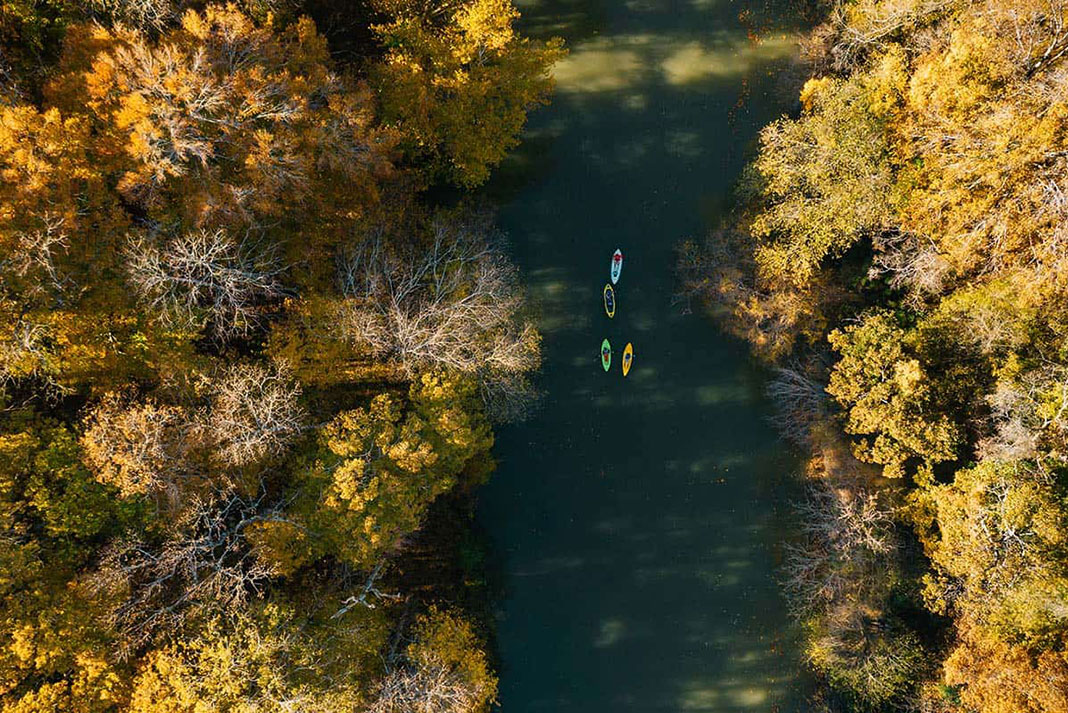
Kueny was joined on the water for the record-setting pumpkin paddle by the Paddle KC Paddling Club. For those curious how Kueny kept the pumpkin from tipping on the trip, a couple of sandbags were placed within the carved-out pumpkin to increase stability in his bobbing and nearly round paddle craft. Kueny also took another smart step in deciding how best to prepare Huckle Berry for the river journey.
“We test floated it before we carved it so we would know which end wanted to be up. Once we figured that out, we marked it, made the hole at the center,” Kueny told NPR affiliate KCUR-FM.
Perhaps even more impressive than paddling a half-ton pumpkin 39 miles is the fact that Kueny grew Huckle Berry himself. And according to USA Today, Kueny just started growing pumpkins in 2020 as a pandemic hobby. For only growing pumpkins a few years, Kueny certainly has a knack for gourd farming.
[ No pumpkin patch? Check out these recreational kayaks in the Paddling Buyer’s Guide. ]
For now, Kueny and Huckle Berry hold the title for the longest journey traveled in a pumpkin. But with the pace of the records being set, it’s just a matter of time before another pumpkin paddler breaks the 40-mile barrier.
Feature Image: Warson Media / KOLR10 & Fox49 YouTube
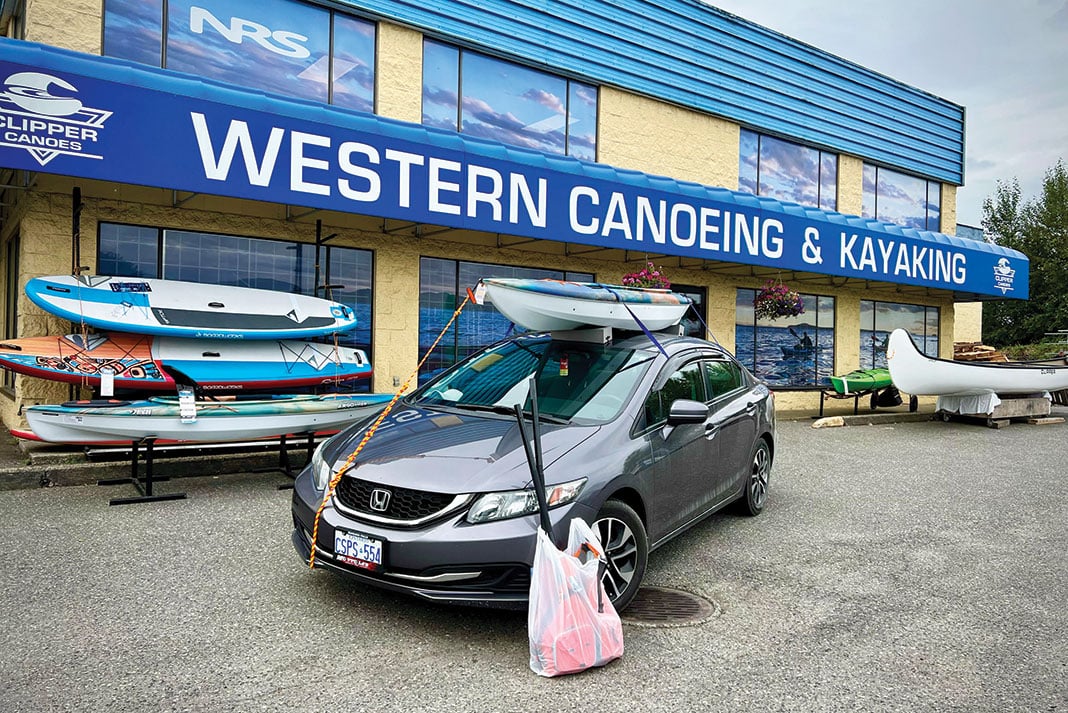
Can’t box this: Western Canoeing & Kayaking has found success matching specialty service with price-point kayaks. | Feature photo: Western Canoeing & Kayaking
During the height of the pandemic two years ago, Western Canoeing & Kayaking found itself in a conundrum familiar to specialty retailers all over the planet. Demand for boats and gear was off the charts, and supply channels were tapped out. It was nearly impossible for Western’s regular suppliers, including Confluence Outdoor, to fulfill their orders.
That’s when Confluence floated an intriguing proposition, says Western co-owner Ryan Bayes. Confluence had been the big fish of specialty paddlesports for more than two decades, hosting storied brands like Wilderness Systems and Dagger under its broad umbrella. But in 2019, recreational kayak giant Pelican International swallowed Confluence whole, making it the world’s biggest paddlesports manufacturer and a driving force in both specialty and big-box retail.
Western’s Confluence sales rep told Bayes the company’s specialty brands couldn’t keep pace with Pandemic demand, but Pelican—a brand synonymous with mass retailers and one Western would never have carried under normal circumstances—could put a truckload of boats on the road to British Columbia the next day.
Can’t box this: Western Canoeing & Kayaking has found success matching specialty service with price-point kayaks. | Feature photo: Western Canoeing & Kayaking
Bayes decided to go for it, a decision that helped float Western through the supply crunch when nearby stores, including the local Costco, had no boats to sell. The choice also cast new light on an evolving retail landscape—one in which specialty shops can beat kayak-slinging chain stores at their own game.
“We brought in most of Pelican’s premium line with nicer outfitting and better seats that are not distributed quite as broadly,” says Bayes, adding that the build quality of the Pelican models he chose to sell was much improved from those he’d seen in earlier years.
The local online paddling message boards at the time were full of comments about which stores had boats to sell. When Western received their shipment, one post was all it took to conjure a mad dash of buyers.
“We put a post up with pictures of us unloading a truck full of Pelican kayaks and a couple of hours later we had people here looking to buy them,” Bayes says. “Pelican probably has the strongest brand recognition. We know they aren’t top-of-the-line, but there are more Pelicans on the water than anything else.”
Two years on, Western is still carrying the brand, and by venturing into the Pelican catalog the store has revealed a successful strategy that many paddling shop owners may be loathe to acknowledge: Having these massively popular boats in your shop gets customers in the door.
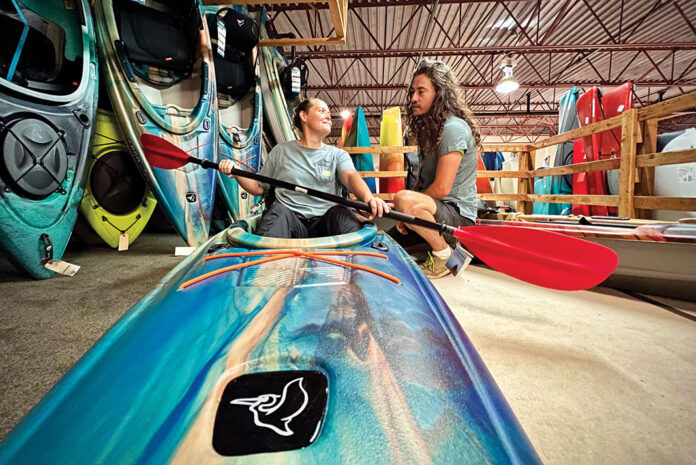
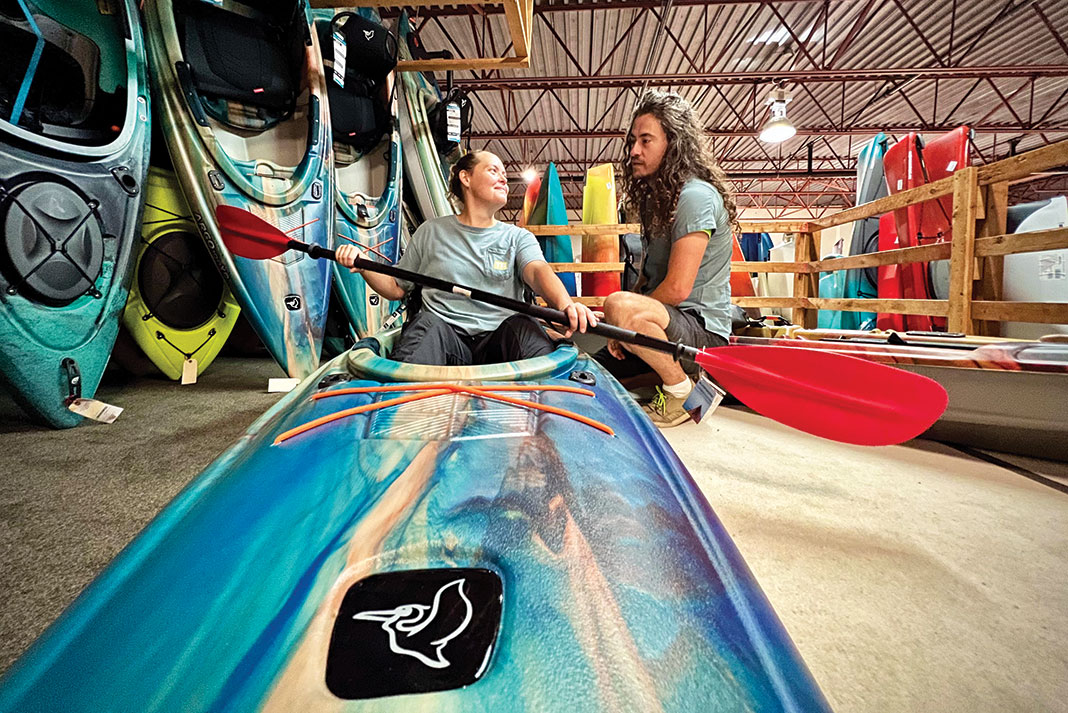
Spending time with Western’s knowledgeable sales staff is a wildly different experience from grabbing a kayak while shopping for bulk cheese.
In the United States alone, the online search volume for Pelican Kayaks is in the realm of 15,000 inquiries per month according to online keyword research tools. Wilderness Systems, also owned by Pelican, pulls around 4,400 inquiries monthly. That’s more than 127,000 more queries for Pelican every year, and those online searches bring customers to brick-and-mortar stores.
Are all the customers who walk through Western’s doors going to leave with a Pelican? Of course not. But the difference between grabbing a kayak while out shopping for bulk cheese, or spending time with with Bayes and his knowledgeable sales staff are two wildly
different experiences.
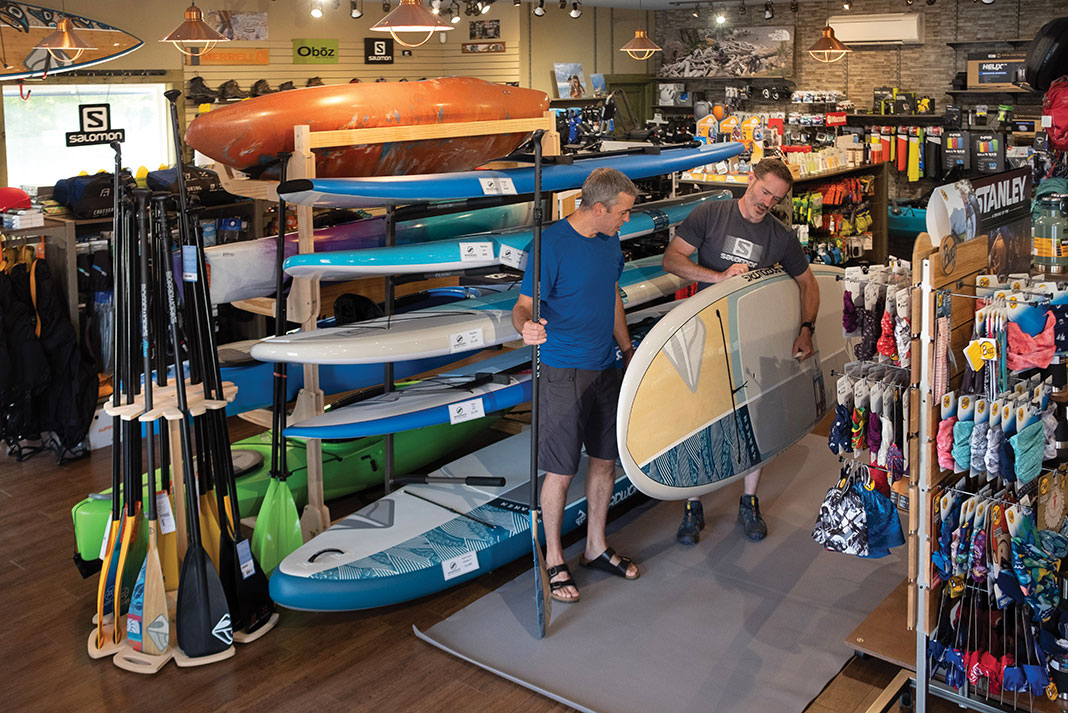
A customer leaves Western Canoeing & Kayaking with a Pelican kayak and accessories. | Photo: Western Canoeing & Kayaking
“Having Pelican in the store brings customers in that you get a chance to educate and steer in a direction that might suit them better. It’s a loss leader in a way,” Bayes says. “I had somebody come in and they were specifically looking for the cheapest Pelican Argo. After spending an hour with them looking at that boat and others they left with two Delta touring kayaks. That’s a $6,000 sale that came from having a price point that got someone through the door.”
Appealing to a broader market
Western isn’t the only specialty store selling Pelican. In Connecticut, Chris Burke at Indian River Marina and Kayak embraced the price-point brand after Pelican acquired Confluence.
“It’s a new endeavor for us, but it’s worked out well because we always have kayaks that range from $200 to $5,000,” Burke says. “We have to appeal to purchasers across the whole spectrum. Otherwise, you won’t have the sales volume you need to survive.”
Burke is now seeing return customers trade their price-point rec boats for mid-range models such as the Wilderness Systems Tsunami or Pungo. Some have even stepped up to composite Stellar touring kayaks. Both Burke and Bayes see any customer who comes to their shop in search of a Pelican represents an opportunity.
“We have the water right here,” Burke says, and that’s something the surrounding box stores simply can’t match. “Customers have the ability to demo any kayak we have in stock, and our level of knowledge across all of our product lines is far deeper than you’d ever get, at the likes of Dick’s or Costco,” he says.
[ Browse the widest selection of boats and gear in the Paddling Buyer’s Guide ]
One caveat both Burke and Bayes point to that would deter smaller shops from carrying low-price-point boats is the slim profit margin, especially once you factor in the shipping costs. Burke has the benefit of being within a day’s drive of Pelican’s Quebec factories, but even so, he says the shipping costs don’t pencil out for a mere 10 or 15 boats. Both he and Western are filling tractor trailers, receiving about 100 boats at a time from Pelican.
When it comes to volume and close margins, it’s tough to compete with the box stores Pelican is pumping full of low-priced product. At Indian River, though, Burke says they try to focus on what is within their control, not what isn’t.
“At the end of the day, everyone works for themselves,” he says. “Pelican’s doing what’s best for their business. We have to do what’s best for our business, and specialty retailers have to adapt. It’s up to us as small business owners to figure out how to differentiate
ourselves from other retailers and keep moving forward.”
Does keeping afloat as a paddle shop among mass retailers mean purchasing a truckload of cheap kayaks? Maybe. Maybe not. But in today’s market, landing a punch against retail giants may come down to fighting them at their own game.
This article was first published in the 2024 issue of Paddling Business. With next year’s hottest gear for canoeing, kayaking, whitewater, fishing and paddleboarding. Plus: The best and worst idea ever in kayak rentals; and 28 industry experts on inflation, interest rates, consolidation and the future of trade shows. READ IT NOW »
Can’t box this: Western Canoeing & Kayaking has found success matching specialty service with price-point kayaks. | Feature photo: Western Canoeing & Kayaking
The Red Bull Rampage is known as one of the most full-on free-ride mountain biking events in the world. KHS pro-team rider Bradon Sweeney decided his full-suspension bike just wasn’t extreme enough for the course. Before the 2023 event, the mountain biker dropped the Red Bull Rampage course in a kayak.
The Red Bull Rampage course drops as much as 600 feet within three-tenths of a mile. To put that in comparison to some of the steepest whitewater paddled in North America, the South Branch of the Feather in California plummets around 600 feet in a little over a half-mile.
Sweeney opted for what looks to be a Sun Dolphin Aruba recreational kayak as his boat of choice for the steep, no-flow run down the face of ochre cliffs in Virgin, Utah. The Sun Dolphin sports plenty of volume to create a large surface area and ride high on the sand. It also looks to have some round, forgiving edges. But it was an interesting kayak choice for the Red Bull Rampage course, considering the lack of rocker.
[ Find steep-creeking machines in the Paddling Buyer’s Guide ]
We would have recommended a boat design utilizing a rounded bow shape and tons of rocker for these steeps. We’d also encourage Sweeney to wear a life jacket, as we do for any paddling endeavor. In this case, for some padding as he’s rag-dolled across the desert rock.
Be prepared for paddling after dark with these illuminating products. | Feature photo: Michael Hewis
Lights serve many purposes on a kayak. If you’re a kayak angler and enjoy night fishing, a light can be helpful when changing tackle or unhooking a fish. If you’re paddling on a moonless night, a light will be indispensable in helping you find the take-out that you swore was just on the shoreline over there. More importantly, when paddling at night in areas trafficked by motorboats, a light can prevent a collision, alerting surrounding boaters to your presence. A light will also aid emergency services in locating you should you need rescuing.
In case the reasons above haven’t convinced you to carry a light, here’s another one: in many cases, it’s required by the U.S. Coast Guard (USCG). There are two lighting requirements “vessels under oars”—that’s you, kayakers—must abide by.
1 Navigation Lights
The Coast Guard requires kayaks out on the water between sunset and sunrise—and when paddling during times of restricted visibility, such as in fog or rain—to at minimum have an electric torch or lighted lantern with a white light on board which, in the Coast Guard’s own words, “shall be exhibited in sufficient time to prevent collision.” A flashlight will do in a pinch to fulfill this requirement, but having a light that can be affixed to your kayak and is meant for use on the water is a safer way to go.
VIEW ALL NAVIGATION LIGHTS
2 Visual Distress Signals
If you’re paddling between sunset and sunrise on U.S. coastal waters, the Great Lakes or territorial seas, you must also carry a USCG-approved nighttime visual distress signal (VDS). This requirement can be fulfilled by carrying three USCG-approved flares or a USCG-approved electric distress light that automatically flashes the international SOS distress signal.
Even if you don’t do a lot of paddling at night, it’s a good idea to bring a light source with you any time you go out for a paddle. Let’s say, for example, you head out on a paddle down a river and misjudge the distance, ending up at the take-out just as darkness is falling. In such a circumstance you’d probably be glad you brought a light with you, even though you hadn’t planned to be out after sunset. Not that this has happened to me before…
There are many kayak lights on the market suited to a variety of purposes, that are a range of sizes, and that have many different mounting options. Find our favorite lights for fulfilling Coast Guard requirements, lighting your way and having fun below.
VIEW ALL SAFETY LIGHTS & BEACONS
7 best kayak lights to see & be seen
Sirius Signal
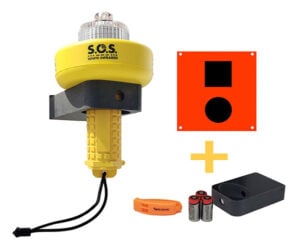
C-1004 SOS Distress Light, Storage Mount, Flag & Whistle
Many people still use flares to meet the USCG nighttime VDS requirement. But flares expire, making them wasteful both environmentally and financially. They also release harmful toxins into the waters we love. And how many videos titled “Flare Accident” have you seen? Sirius Signal offers a better way, an electronic visual distress signal that is Coast Guard compliant.
The C-1004 SOS eVDSD is easy to use—simply twist to begin transmitting the blindingly bright SOS signal—and stows easily in a drybag or hatch. Although light from the C-1004 doesn’t transmit as far as the light from most flares, a flare only emits light for minutes at most, while the C-1004 will transmit the SOS signal for hours. This kit from Sirius Signal also includes a storage mount that installs with a single screw, an orange distress flag and a whistle.
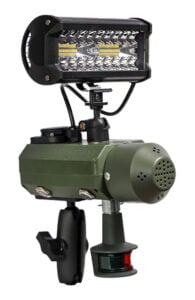
Basin Boat Lighting’s top priority is the safety of paddlers on the water and it shows in their feature-packed, no-nonsense lighting systems. The paddleBird is designed for kayaks and comes with either a one-inch RAM ball mount, or a seven- or 13-inch pole mount.
First up among its features is the 120-watt flood light—turn it on even during the day and you’ll have no doubt in its ability to light your way and alert boaters to your presence at night. Press another button to make the light flash—fulfilling USCG nighttime VDS requirements—and another to turn on the red/green navigation lights. Beware when pressing the fourth button, letting loose the 105-decibel horn, which is the same noise level as some rock concerts. We made the mistake of first testing the horn in the office, and everyone’s ears were ringing for the rest of the day.
The system can be operated using buttons on the paddleBird, a key fob—or a Bluetooth app, for an additional $8.99. The appBird gives you access to weather forecasts and, more importantly, an SOS mode that automatically flashes the light, blares the horn, and sends an alert to Basin Boat Lighting, who will then contact authorities and provide your exact GPS location.
Paddling at night is already a magical experience, gliding across placid waters beneath a sky studded with stars. The Spectrum P2 Lighting System from NOCQUA makes nighttime outings even more enchanting, lighting up the water beneath your kayak. The lights serve to not only make you more visible and rad-looking, they also attract marine life—probably a cooler experience on ocean waters than on inland lakes, unless you’re really into seeing smallmouth bass and minnows darting beneath your boat.
The light system is easy to set up, with two adjustable harnesses that strap around your kayak. Simply press a button—wired to a rechargeable battery pack—to choose from seven colors or have all the colors flash interchangeably in party mode. You can also select an SOS strobe, but note that the Spectrum P2 does not fulfill any USCG nighttime lighting requirements.
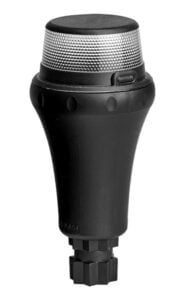
The RAILBLAZA Illuminate i360 keeps things simple with both its mounting system and light itself so you can easily add a white navigation light to your kayak when you need it. When you order, select the mount option that works best for your boat, whether it’s a rail or track mount.
Carry the pocket-sized light with you and clip it in the mount when needed. Press the button once for the navigation light, the brightest setting that will ensure you are seen on the water; a second time to dim the light, so you can unhook that fish or search your deck for your dropped phone; and a third time to engage flashing and attract attention.
Our hot tip? A strip of glow-in the-dark tape placed just below the on/off button is a great addition to help you locate the tiny button in the dark.
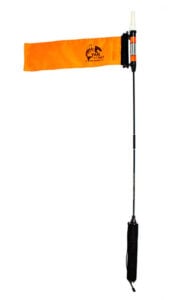
This collapsible pole and LED light from YakAttack is a great option for kayakers who are short on space but want a highly visible white navigation light. Deployed, the VISICarbon Pro is 48 inches tall, but packs down into a compact 14 inches and fits inside the included flag.
The foam base fits inside a flush mount or tubular rod holder, or can be mounted on track systems by unscrewing a rectangular plate on the bottom of the pole which slips into the track. Simply twist the light to turn on and off.
If you don’t want to mess around with permanent mounts, it doesn’t get much easier than using a suction cup to affix a light to your kayak. Plus, it’s satisfying to break the seal and pop it off. Or maybe that’s just us…
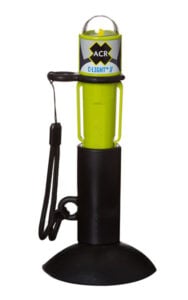
The Scotty 835 SEA-Light includes a fully removable ACR C-Light that can then be used as a flashlight around camp or when loading and unloading your kayak after sunset. The light turns on and off with a simple twist.
While the Kayalite looks similar to other lights on this list, its unique tension cable mounting system provides it a leg up in both ease of mounting and durability. A carabiner beneath the light attaches to an eyelet, deck loop or whatever you can find on the deck of your kayak. A bungee cord runs from the carabiner up the inside of the mast and out the side, which is then pulled tight and wrapped around a plastic cleat.
This system safely secures the light to your boat, while also allowing enough play that the light won’t snap off if hit with a paddle or when coming in contact with submerged structure during a roll. Twist the light to turn on both LEDs and ensure you’re seen when paddling after dark.
Cruise along on the flats. Then put her on edge and see how much fun you can have. | Feature photo: Colin Field
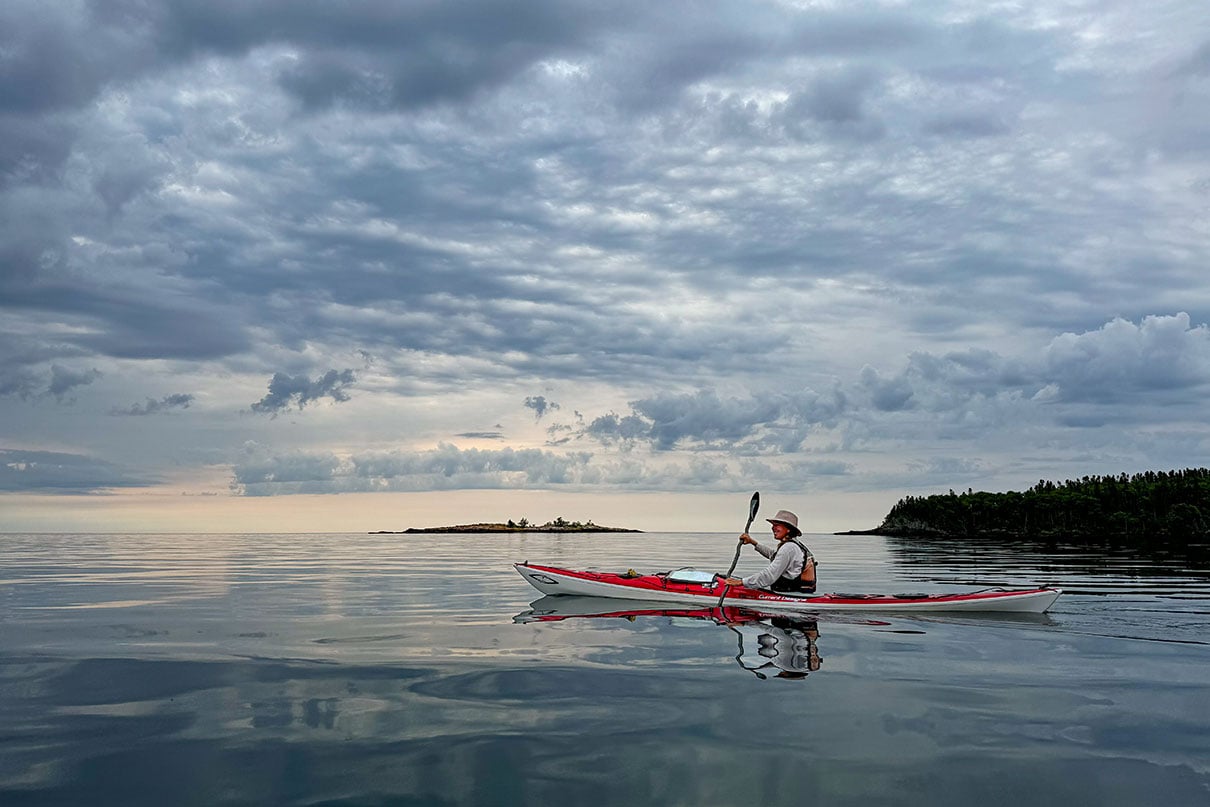
The Rödlöga,what Melker of Sweden mellifluously calls their “easy to maneuver and playful kayak,” is something of an optical illusion, a curious boat whose characteristics are not what they first appear to be.
A few years ago, I reviewed the Melker Ulvön, the company’s 17-foot fast touring kayak, which, although built for speed, was remarkably versatile and playful. That’s when I learned Northern Europe has become a hotbed of kayak innovation, where the stubby recreational kayak trend never blitzed the market like it did here and 80 percent of kayaks sold for exploring those brisk boreal coastlines are still serious, full-size touring boats. Now we are seeing that adventurous Scandinavian influence creeping into our kayak shops here. After a pandemic hiatus, Melker is back with a fresh shipment of its long boats for demo and retail in North America, and a new design for us to review, the Rödlöga.
On the water performance
While Melker bills its Ulvön as “a serious expedition boat with a playful character,” the Rödlöga is somewhat the opposite—or more accurately, just a shorter, more maneuverable version of the same clever set of design compromises: a playful kayak that is nonetheless surprisingly spacious and capable for short expeditions. Both kayaks blur the lines between categories in similar ways.
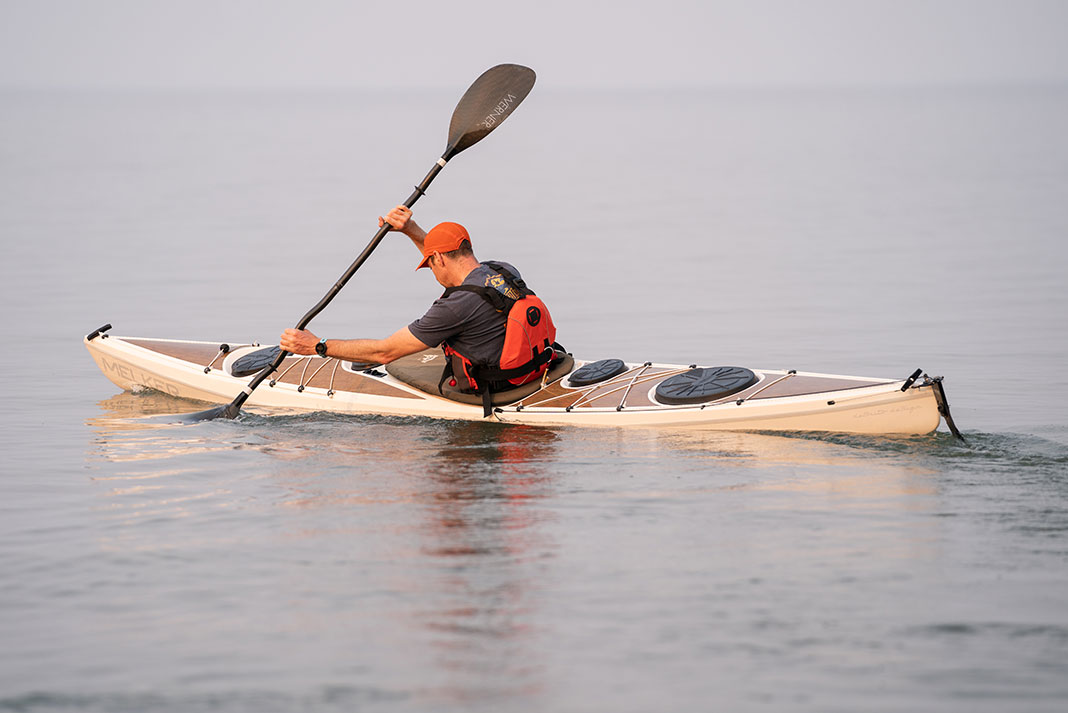
After reading that the Rödlöga was “designed with rougher water, currents, tides and surf waves in mind,” I expected it to paddle like other ocean playboats, twitchy with poor initial stability, just hankering to be put on edge, and skittish like a whitewater kayak, prioritizing fun and maneuverability over speed and tracking.
Cruise along on the flats. Then put her on edge and see how much fun you can have. | Feature photo: Colin Field
Yet on the first few strokes I was amazed at the stability, both a relaxing initial solidity and bomber secondary allowing the Rödlöga to be aggressively edged onto its moderately hard chine without ever feeling like it will accidentally go over the limit. I quickly learned the Rödlöga welcomes beginners and intermediates, albeit with some expert moves up its sleeve. Melker aptly calls it “the perfect kayak to help improve your paddling skills.”
Melker advertises the Rödlöga as having lots of rocker but the waterline nonetheless extends the full length of the boat, enhancing its speed and giving it a very typical touring kayak compromise between maneuverability and easy tracking. It’s on edge that you notice its exceptional agility. The rest of the time, the Rödlöga tracked so well I hardly bothered to use the skeg or the rudder (the fact that it comes with both indicates just how much this kayak aims to please everyone). It was only in a following sea that the rudder felt like a real advantage. In a crosswind I used the skeg to keep straight, but kept the rudder up so I didn’t have to bother steering with my feet.
Tripping capacity
The Rödlöga promo video undersells its trip-worthiness, claiming capacity for an overnight or maybe a weekend. The Swedes must be more into glamping, because I packed for an overnight and had loads of room to spare. With a fulsome 190 liters of storage, you could easily check out of civilization for a week. Swedish industrial designer Magnus de Brito crafted the deck with a shallow arch that extends right to the edge, where it drops nearly vertically to the chine, and a gradual taper to the bow and stern to maximize interior space. The resulting slightly boxy appearance gives the Rödlöga the look and feel of a classic West Coast expedition kayak. So much so that I forgot I was paddling a 21-inch-wide playboat until I checked the dimensions—and my GPS track, which showed me cruising faster than 7.5 kilometers an hour all day long through every possible condition.
So it was that the Rödlöga perplexed me over and over, revealing characteristics that caused me to do a double-take at its specifications, seeming to be one thing and then turning out to perform well at another: a rockered playboat that’s true and fast on the flats, a lithe and nimble day tripper with loads of capacity for long trips. That’s some kind of shapeshifting magic, Mr. de Brito.
It’s clear by now that the playboat billing is a bit misleading, at least insofar as it suggests “for experts only.” The Rödlöga is more spacious, practical and accessible than most kayaks you’d find in rock gardens or the surf zone, although it would excel there too.
The Rödlöga is better described as an all-arounder, a well-balanced design that’s capable of anything, for enthusiastic paddlers of all levels—a prime candidate for what skiers would call the quiver-of-one. All of the design characteristics of stability, speed, playfulness and capacity are combined like the spices in a dish by a master chef, to the point that it’s hard to pick out any one ingredient.
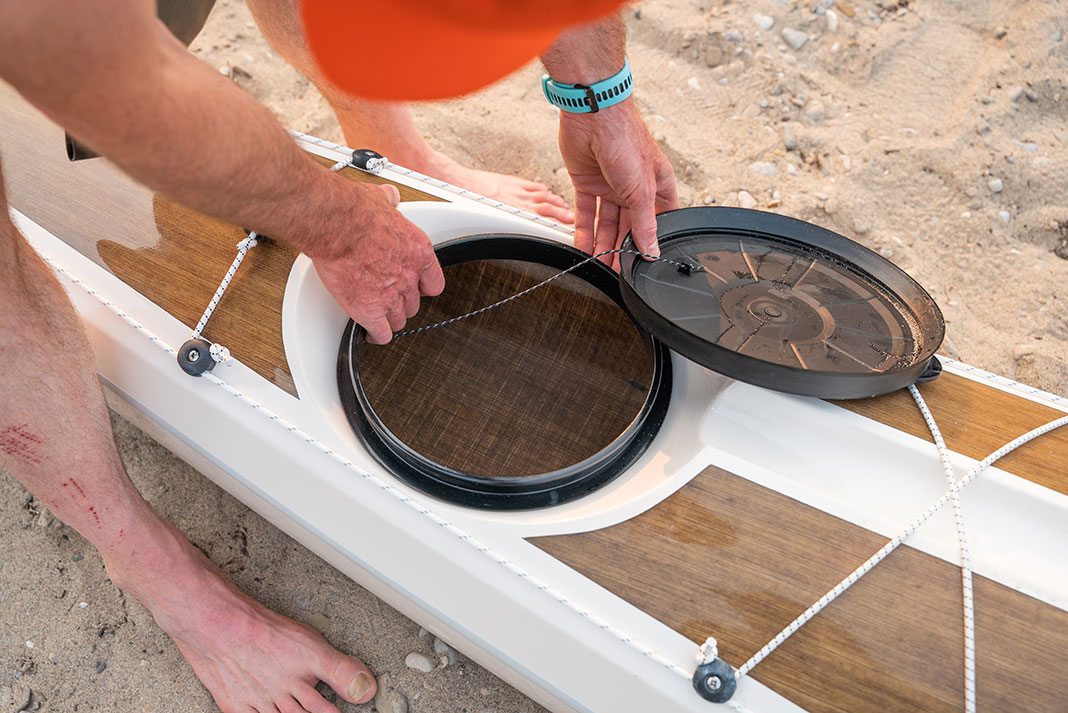
In addition to the spacious bow, stern and day hatches, a cute, softball-sized hatch perched in front of the cockpit fits a cell phone and an energy bar or two. A unique cutout on the front deck will cradle a pump or water bottle. The Kayaksport hatches proved to be a cinch to snap on and off one-handed and yet were completely waterproof, even when rolling and paddling in waves. | Photo: Colin Field
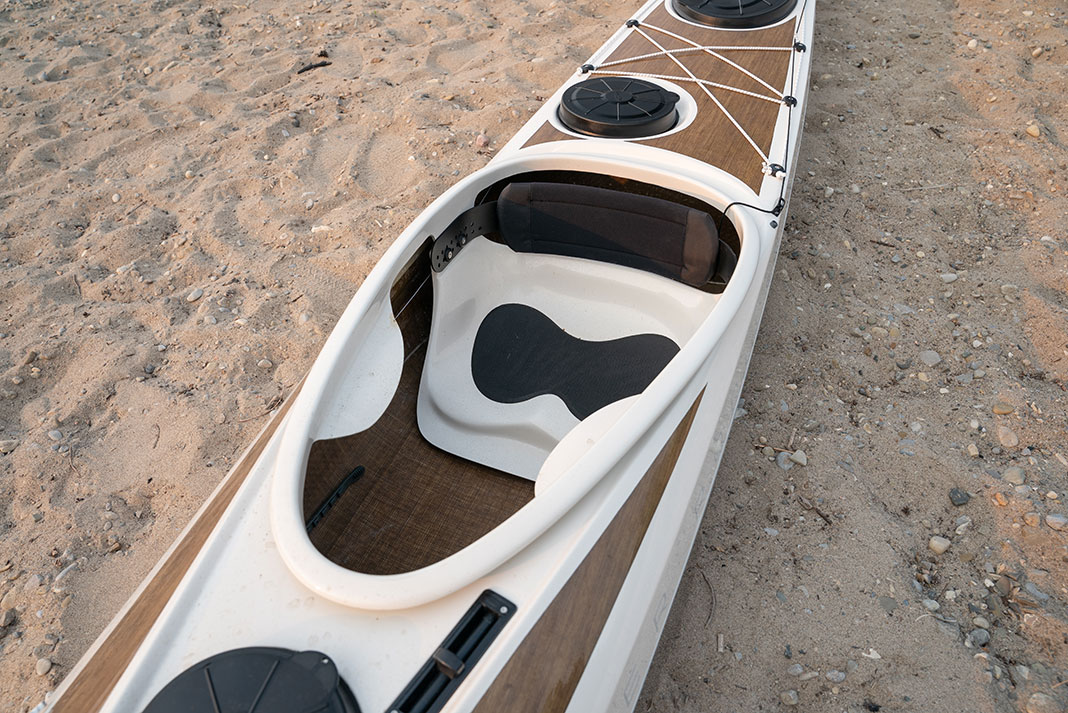
The fit is snug but comfortable, with contoured, padded braces for your thighs and a simple, firm bucket seat that’s the same width as the cockpit coaming, making the Rödlöga easy to edge and roll without any custom outfitting. Although fairly narrow, the cockpit provided plenty of room for my 34-inch inseam and size 13s. (This is the high-volume version. There’s also an LV that is 10 inches shorter and three quarters of an inch narrower, for smaller paddlers.) | Photo: Colin Field
Eco-conscious materials
In 2015, Melker Kayaks was founded in Hammarö, Sweden by entrepreneur Pelle Stafshede and co-founder Jonas Ernfors. Stafshede set out with the goal of making kayaks as sustainably as possible. Step one was moving kayak production away from the petroleum-based materials that the majority of commercially manufactured kayaks use.
“Our take on this industry is to really game change it,” Stafshede told Paddling Magazine at Canoecopia in spring of 2023. “We’ve been using plastic and fossil-based products for too long. Just look around and you’ll see.”
In search of a material that would accomplish sustainability without sacrificing performance, Stafshede and his kayak company experimented with biocomposite materials ranging from bamboo to coffee bean bags and kayaks spat out of 3D printers made from a mix of wood fiber and recycled plastic.
What has proven the winning regenerative material for Melker is a product close to what you’d find in a healthy serving of fiber in your cereal bowl—flax. In place of carbon or fiberglass, Melker’s composite layups use flax fiber currently sourced from Swiss company Bcomp. Flax is locally grown in Europe and, when used instead of carbon in Melker’s kayak construction, reduces greenhouse gas emissions by 85 percent, while maintaining a comparable stiffness and weight. With my rudder installed, my boat tipped my bathroom scale at 57 pounds, a shade heavier than the advertised 54, but similar to other kayaks in the category.
Kayaks aren’t the only performance watersport using flax in place of other composite materials. The surf industry has also seen a movement of board shapers building with the plant-based material. Looking at the hull of a Melker kayak, you’ll see the shiny gel-coat finish with little difference from the traditional composite builds of its touring brethren. On the deck however, Melker has no gel coat, showing off the weave of the dark flax fiber.
Stafshede’s bet on plant-based composites is paying out. In 2022, Melker announced the establishment of their first distribution hub in North America, just outside of Chicago. They’ve also begun distributing boats to retailers in Canada. And most recently Melker announced they were moving production from Estonia to Rindö, Sweden.
“When you conduct a life-cycle analysis of our type of products, the location of the manufacturing has a really big impact,” Stafshede explained of the need for the move to meet the goals of their green transition for the kayak industry. “The way we set up our efficient and modular production, it allows us to easily ramp up production in several locations and grow with actual demand. We expect the next location to be in North America as the reception of our kayaks has been very favorable.”
All this virtue and versatility comes at a premium—indeed Melker’s price in Canada has inflated 50 percent since I reviewed the Ulvön in 2019—but it’s still on par with comparable kayaks from other companies; that is, if you can call anything that’s not built out of plants comparable. With Melker, the eco benefits are a bonus, along with the unique “flax appeal” of the teak-colored material visible under the clear coat.
For any paddler looking for a medium-sized composite sea kayak with speedy touring chops and a playful streak under the deck, the winsome and eco-friendly Rödlöga should definitely make the shortlist.
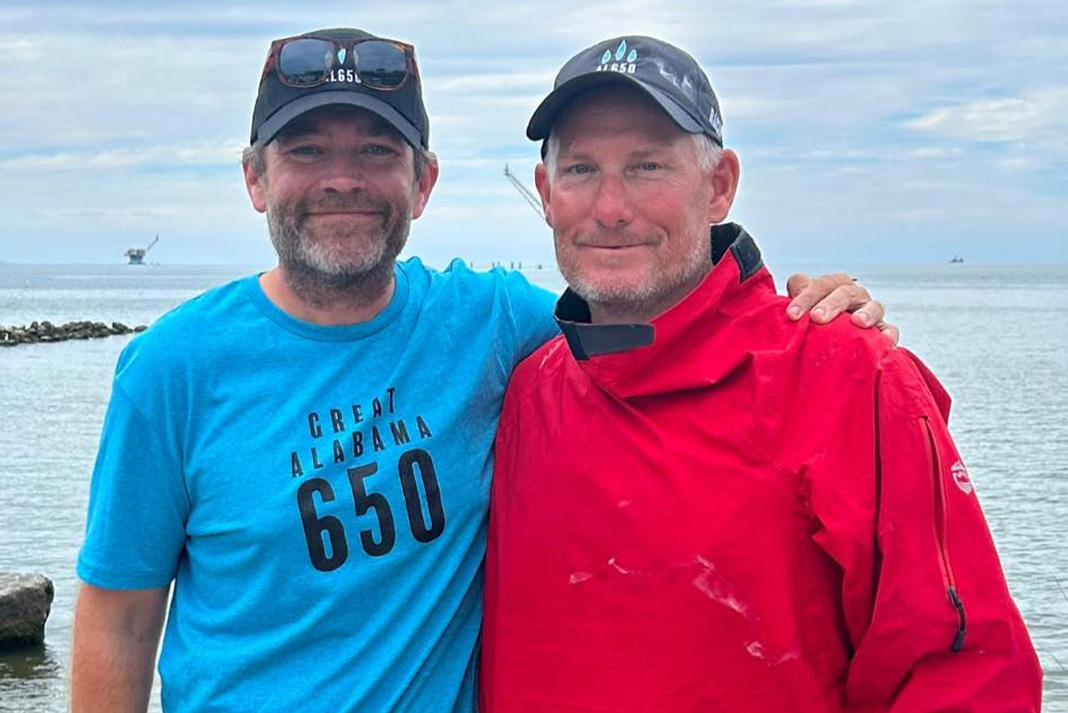
Winners of the 2023 Great Alabama 650:
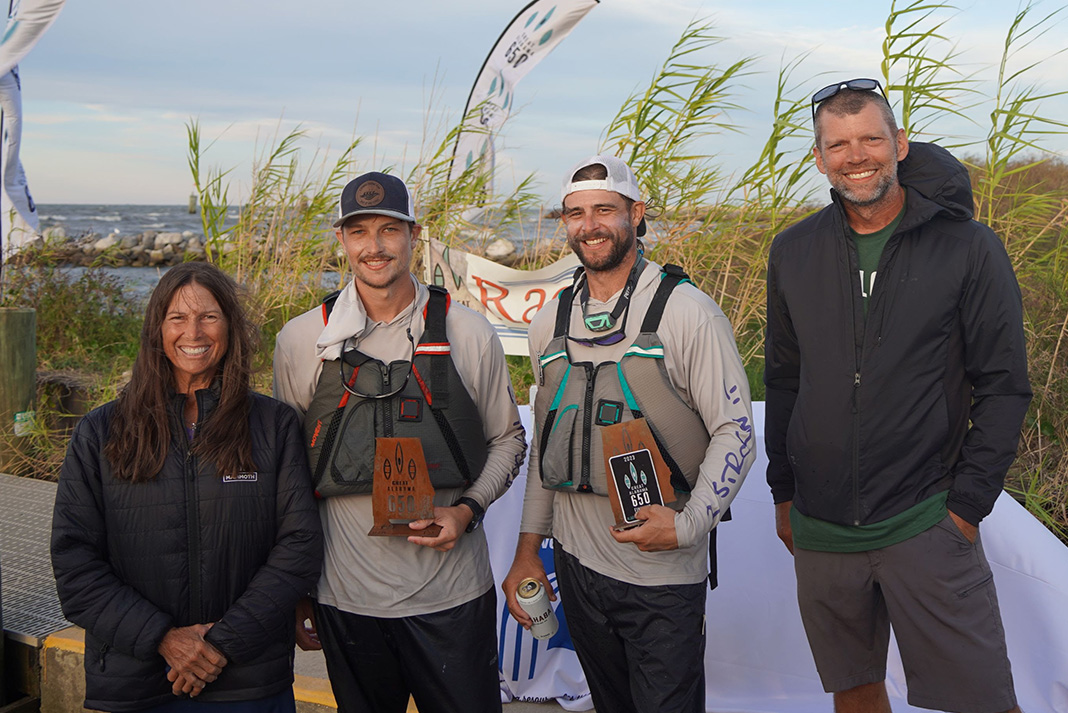
(L-R) Salli O’Donnell, Matt Taylor, Myles Sumerlin & Trey Reaves
Fort MORGAN, ALABAMA (October 13, 2023) — After an exhilarating and challenging nonstop 650-mile paddle race across the waterways of Alabama, the Great Alabama 650 reached its conclusion.
Over ten days, 11 boats from all over the world have completed the race after pushing their limits and showcasing remarkable determination. The Alabama Scenic River Trail organization sincerely congratulates all the participants for their remarkable achievements. Their incredible skill has inspired us all and shown off Alabama’s great water recreation opportunities to the world.
Overall Winner
Trey Reaves – 6 days 1 hour 31 minutes, Florence, AL, USA
Male Solo Winners
Trey Reaves – 6 days 1 hour 31 minutes, Florence, AL, USA
Bobby Johnson – 6 days 5 hours 50 minutes, Dunedin, FL, USA
Mirko Pruefer – 7 days 23 hours 12 minutes, Krauschwitz, Germany
Winners of the 2023 Great Alabama 650: (L-R) Salli O’Donnell, Matt Taylor, Myles Sumerlin & Trey Reaves
Finishers in the Male Solo Category
Chuck Scheidt – 7 days 23 hours 56 minutes, Corpus Christi, TX, USA
Brendan Forshee – 8 days, 3 hours, 11 minutes, Missouri, MO, USA
John Knippers – 8 days, 9 hours, 16 minutes, Langley, OK, USA
Brad Friesen – 9 days, 3 hours, 17 minutes, Winnipeg, MB, Canada
Christian Logan – 9 days 23 hours 40 minutes, Washington, MO, USA
Female Solo Winner
Salli O’Donnell – 6 days 6 hours 40 minutes, Fort Walton Beach, FL, USA
Tandem Category Winners
Matt Taylor, Myles Sumerlin – 7 days, 3 hours, 9 minutes, Brantley, AL, USA and Moss Point, MS, USA
Ryan Gillikin, Rod Price – 7 days 23 hours 39 minutes, Orlando, FL, USA and Bay Minette, AL, USA
3250 Club Achievement Award- Five-Time Finishers
Bobby Johnson – 6 days 5 hours 50 minutes, Dunedin, FL, USA
Salli O’Donnell – 6 days 6 hours 40 minutes, Fort Walton Beach, FL, USA
Paddleboard Finishes (Non-place finish, but 1st time ever record on the 650)
John Knippers – 8 days 8 hours 16 minutes, Langley, OK, USA
Brad Friesen – 9 days 2 hours 17 minutes, Winnipeg, MB, Canada
The Alabama Scenic River Trail, which runs the event, would like to extend heartfelt gratitude to all the volunteers and staff who worked tirelessly to ensure the seamless execution of this unforgettable race. Their dedication and hard work made the Great Alabama 650 a remarkable experience for all participants. Race Director Greg Wingo and his company ROAM Projects exceptional leadership played a pivotal role in the event’s success. Under his guidance, the Great Alabama 650 saw record performances and commanded the attention of paddlers worldwide. Sponsors of the event, stories and highlights from the course, as well as the official announcement of the 2024 Great Alabama 650 dates are listed below.
Stories of the 2023 Great Alabama 650
1st time an Alabamian Wins
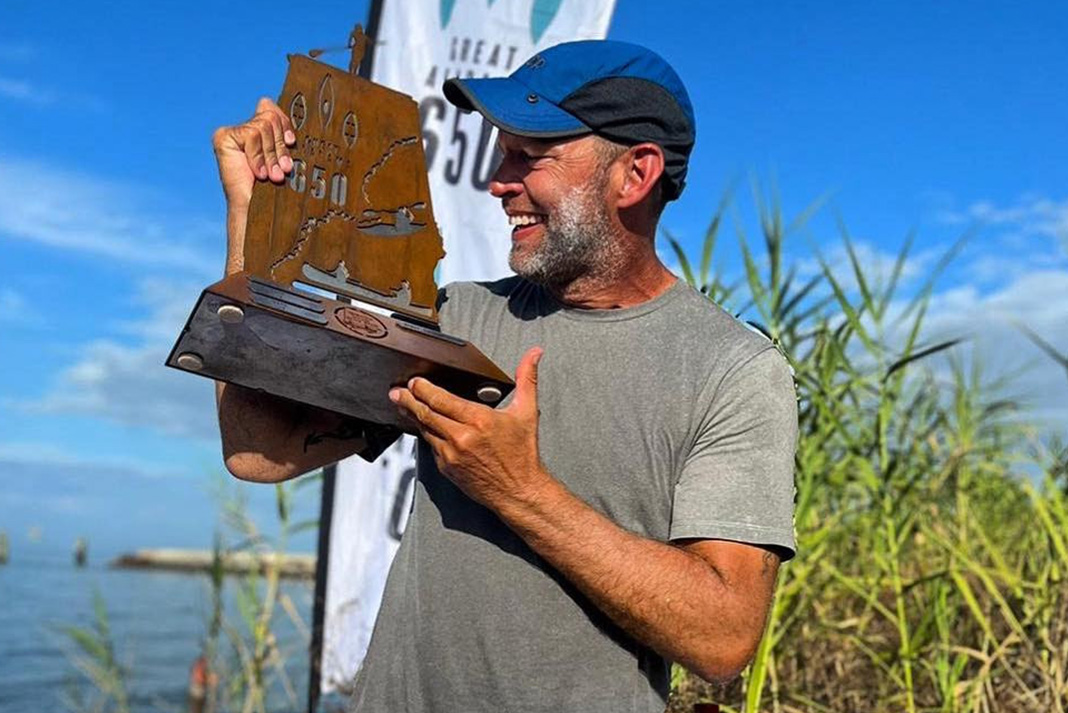
Trey Reaves a native of Florence, AL finished in 6 days 1 hour 31 minutes on Friday, October 6th. Trey is the first Alabamian to win the race.
3,250 Club Achievement Award
3250 is the accumulated distance of 5 completions of The Great Alabama Race. The award is made out of Coosa River Clay and was presented to Bobby Johnson and Salli O’Donnell upon their 2023 5th time finish.
Two 1st Ever Paddleboard Finishers
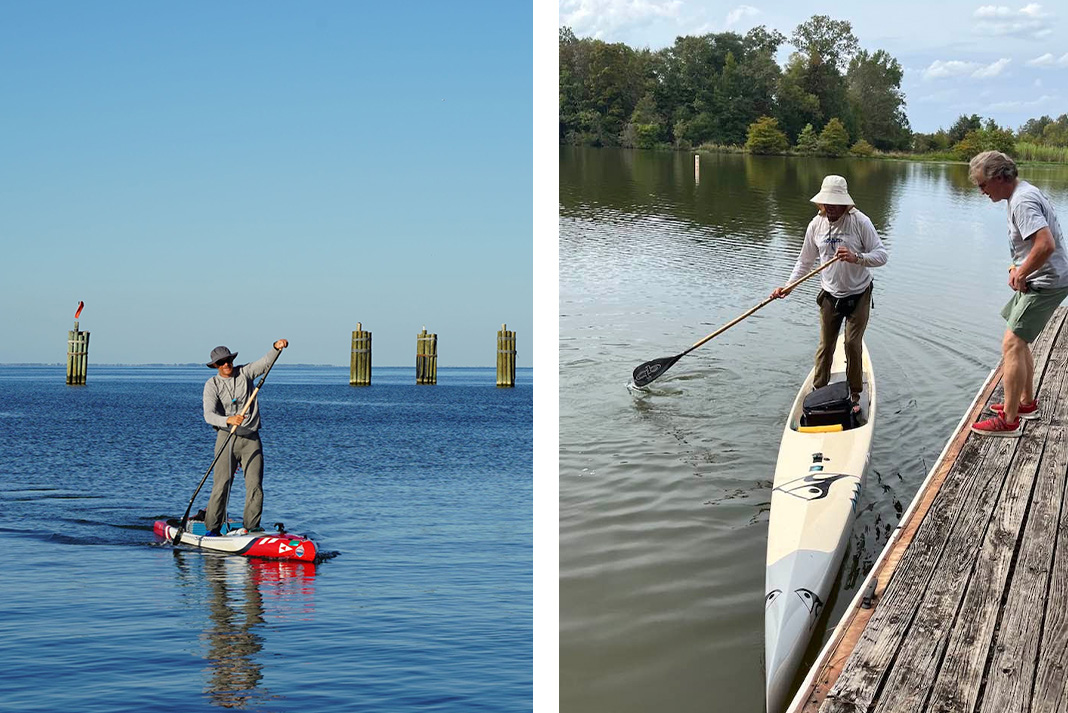
John Knippers (pictured right) from Langley, OK was the first to ever complete the 650 on a Stand-Up Paddleboard. Knippers was followed later by Brad Friesen (pictured above) from Winnipeg, MB, Canada who was the second.
Mirko Pruefer from Krauschwitz, Germany
Brad Friesen from Winnipeg, MB, Canada
International Competitors on the AL650
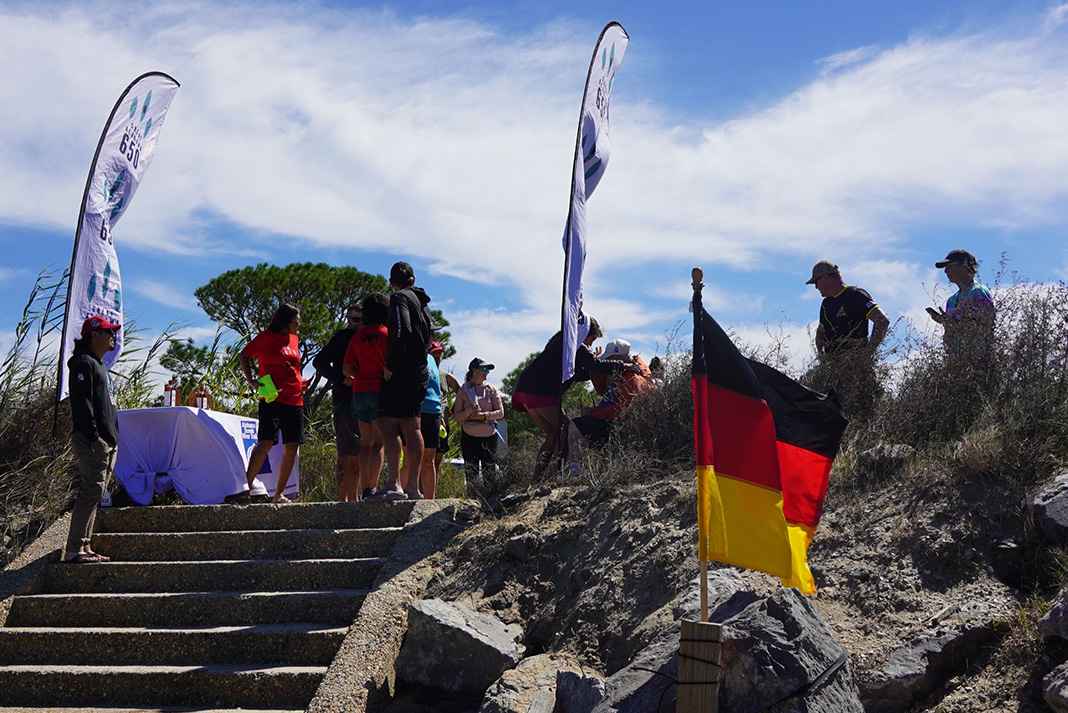
Mirko Pruefer from Krauschwitz, Germany and Brad Friesen from Winnipeg, MB, Canada both finished this year bringing international attention to the annual race.
Finishing: 20 Mins to Spare
Christian Logan of Washington, MO made it to Ft. Morgan with just 20 minutes to spare and was the final finisher of the 2023 Great Alabama 650.
Cat ‘Logan’ Rescued by Crew
Blaine Forshee, crew member and son for racer Brendan Forshee, found the kitten under his truck and the little guy stowed away for over 100 miles before Blaine was able to coax him out! Logan is now a member of the Forshee Family.
About The Alabama Scenic River Trail (ASRT)
The Alabama Scenic River Trail (ASRT) uses a network of members and outfitters to create, improve, and promote more than 6,500 miles of river trails.
ASRT connects adventurers with opportunities to explore and appreciate Alabama’s great waterways through unique experiences. Working primarily through community partnerships, ASRT promotes safe, fun, and welcoming paddling experiences across the state for people of all skill levels. Today we continue to grow our network and share the state’s unparalleled water recreation opportunities.
To learn more about the Great Alabama 650 and all of ASRT’s programs, please visit the Alabama Scenic River Trail’s website at www.alabamascenicrivertrail.com.
The modern tripping canoe is what sci-fi dreams of yore are made of. | Feature photo: Trustin Timber
There’s an ancient green 17-foot Old Town Tripper on the rack out back that, after countless river miles and more than a half-century of service, paddles just as well as she did new. The boat is a brute to portage thanks to its high weight and windage, but back in the day the vinyl/ABS Oltonar hull had many advantages over aluminum—the latter sticking to rocks, putting black stuff on everything and being cold to paddle on Arctic rivers—and cedar canvas, which was far from forgiving when crashing into rocks.
The good fairy: Features on our tripping canoe wishlist
Even then, there were features I wished it had. The vinyl on the outside was soft and would wear through with abrasion, so the fix there was Kevlar skid plates stuck to the stems with epoxy resin. To rig a sail, I glued a little mast step to the floor, added a couple of anchors for stays and a cleat on the rear thwart for the main sheet. And, because my partner had a twitchy lower back, we reset the front seat with a little forward cant and added a backrest from one of those twirly chairs you’d see in a fishing boat.
The modern tripping canoe is what sci-fi dreams of yore are made of. | Feature photo: Trustin Timber
With those minor modifications, that green boat has taken us beyond the many coastlines of our dreams. It has carried dogs and children, dried food, neighbors, firewood, Christmas boughs from waterside hemlocks, packs, wanigans, chunks of flotation and God knows what else. But thanks to being borne by the meditative cadence of 37 strokes a minute for days, sometimes weeks, on end, the big green canoe has absorbed its share of other daydreams and musings about what tripping canoes might have, in terms of qualities, accessories and accoutrements.
Back in the low-tech 70s, those musings coalesced into a short article for Canoe magazine entitled “Beam Me Up Scotty” which was all about the then sci-fi dream of satellite navigation—imagine knowing exactly where you are without looking at the map—and some kind of communication technology that would keep us connected to the home front and allow us to call for help in the event of a calamity. Now we have SPOT two-way satellite messengers, Garmin GPSs, satellite phones and, in many formerly remote areas, five-bar mobile phone service thanks to cell towers disguised (but not very well) as pine trees mingling in the forest. All that to say, paddling daydreams aside, it’s probably good to remember to be careful what we wish for.
Your wish is their command
It seems at every turn, the industry, like the good fairy, has delivered our every wish. Want a lightweight canoe? Enter carbon fiber and air-bagged epoxy construction. External loads on floatplanes are problematic? Enter packrafts and pack canoes. Not crazy about yoke portaging? Enter the portage cart. Speed an issue? Enter asymmetric hulls and the application of cool naval architecture below the waterline, leaving the sheer as smooth and romantic as ever. The only thing I might wish for now is a Bluetooth speaker in the sponsons. Or maybe photovoltaic skin powering a multitude of plugs that are strategically placed along the inwales for charging up our trip tech. But those too seem to be inevitably well on their way to us in the marketplace. Technologically, we are awash in an embarrassment of design and innovation riches when it comes to canoes.
On the social/environmental side, there are still things I wish tripping canoes had, simple things that seem to be in diminishing supply. For starters, as we gobble up arable and undeveloped land near our cities, through which so many delightful southern rivers flow, log the snot out of our wilderness parks, and mine the mountains and barrenlands, my wish is that our canoes always have undisturbed places to trip and clean water to float them.
Finally, as recreational paddlers turn in increasing numbers away from open canoes toward SUPs, kayaks and intense on-water adventures that get them home before dinner and back to the office by morning meetings, my wish is that our tripping canoes might have people to paddle them. Nothing takes us closer to the wild than a long canoe trip and that quality of every canoe is important because, as Henry David Thoreau reminded us, “in wildness is the preservation of the world.”
James Raffan’s Tumblehome column first appeared in the Spring 2006 issue of Canoeroots.
This article was first published in the 2023 Paddling Trip Guide. Subscribe to Paddling Magazine’s print and digital editions, or browse the archives.
The modern tripping canoe is what sci-fi dreams of yore are made of. | Feature photo: Trustin Timber
I blew out my flip flop; Stepped on a pop top; Cut my heel, had to cruise on back home. | Feature photo: Garrett Fache
Jimmy Buffett died yesterday.
When his box set Boats, Beaches, Bars & Ballads was released, I was pushing rubber down the Ottawa River and pouring tequila over ice crushed in a SealLine drybag with a rock. I was a two-day drive from the closest palm tree, still those four CDs were the soundtrack of my life as a river guide.
“Margaritaville,” released on February 14, 1977, became a state of mind for those of us “wastin’ away” on beaches and rivers. Buffett built a career around “Margaritaville,” an excuse for a life of low-key fun and escapism for those “growing older, but not up.”
“What seems like a simple ditty about getting blotto and mending a broken heart turns out to be a profound meditation on the often painful inertia of beach dwelling,” wrote Spin magazine about “Margaritaville.” “The tourists come and go, one group indistinguishable from the other. Waves crest and break whether somebody is there to witness it or not. Everything that means anything has already happened and you’re not even sure when.”
I blew out my flip flop; Stepped on a pop top; Cut my heel, had to cruise on back home. | Feature photo: Garrett Fache
The antidote to apathy
If you haven’t heard about Tim Urban’s motivational poster, The Life Calendar, let me explain why it’s so awesome. And why it’s not.
Imagine a giant sheet of white paper with 52 columns and 90 rows, which makes 4,680 little boxes. Urban is optimistic we will all live 90 years and so each box represents a week of our lives. Are you with me so far?
When you order the poster you enter your date of birth. It arrives in the mail with the weeks you’ve lived already shaded in. The rest you color in as you go. Motivating message: Life is short, don’t waste it.
You could use The Life Calendar in conjunction with our Paddling Trip Guide. Many of the 156 adventures in this issue are a week, two or three in duration. Urban suggests shading fun things in different colors. This way we can look back on our lives to see blocks of enjoyment.
[ Plan your next paddling adventure with the Paddling Trip Guide ]
Wastin’ in my own way
If you look at my last 25 years of magazine deadlines, trade shows and raising a family, there are too few fun boxes shaded in color; some years none at all. This doesn’t mean my life has sucked.
Lost in Tim Urban’s motivational model are mini-adventures. Mini-adventures are quick blasts of enjoyment and escape, too small to track on a stupid poster.
I checked Strava: I’ve logged 77 gravel, road and mountain bike rides so far this year. My Garmin watch says I skied 69 days. And, my river log says 27. So far I’ve had 173 fun times riding, skiing and paddling. But compared to my son Doug (he was a canoe and kayak guide all summer) and his clients, my poster looks empty, like I’ve just been wastin’ away—but not in the “Margaritaville” way.
Buffett once wrote, “I think it’s really a part of the human condition to have some fun. You’ve got to get away from whatever you do to make a living or other parts of your life that stress you out. I try to make it at least 50/50 fun to work and so far it’s worked out.”
I don’t know if work-life balance needs to be split evenly for true happiness, but I do know it’s five o’clock somewhere. I’m closing my laptop now and going for a paddle. Then to find my lost shaker of salt.
Carpe diem.
Scott MacGregor is the founder and publisher of Paddling Magazine.
This article was first published in the 2023 Paddling Trip Guide. Subscribe to Paddling Magazine’s print and digital editions, or browse the archives.
I blew out my flip flop; Stepped on a pop top; Cut my heel, had to cruise on back home. | Feature photo: Garrett Fache
Somehow, creek boat designs continue to evolve. Paddling steep, difficult whitewater has never looked or felt smoother with moves like leaning boofs and skipping out of drops. We have these next-evolution creek boats to thank for styling the steeps. The question is, which of these boats is right for you? Simon Coward, owner of AQ Outdoors (AQ Outdoors is a paddling shop and school with locations in Calgary and Edmonton), is here to share his thoughts on three of the best creek boat designs on the water today. The following is a transcript of his video review.
Feature Image: AQ Outdoors
3 Top Creekboats Go Head-To-Head
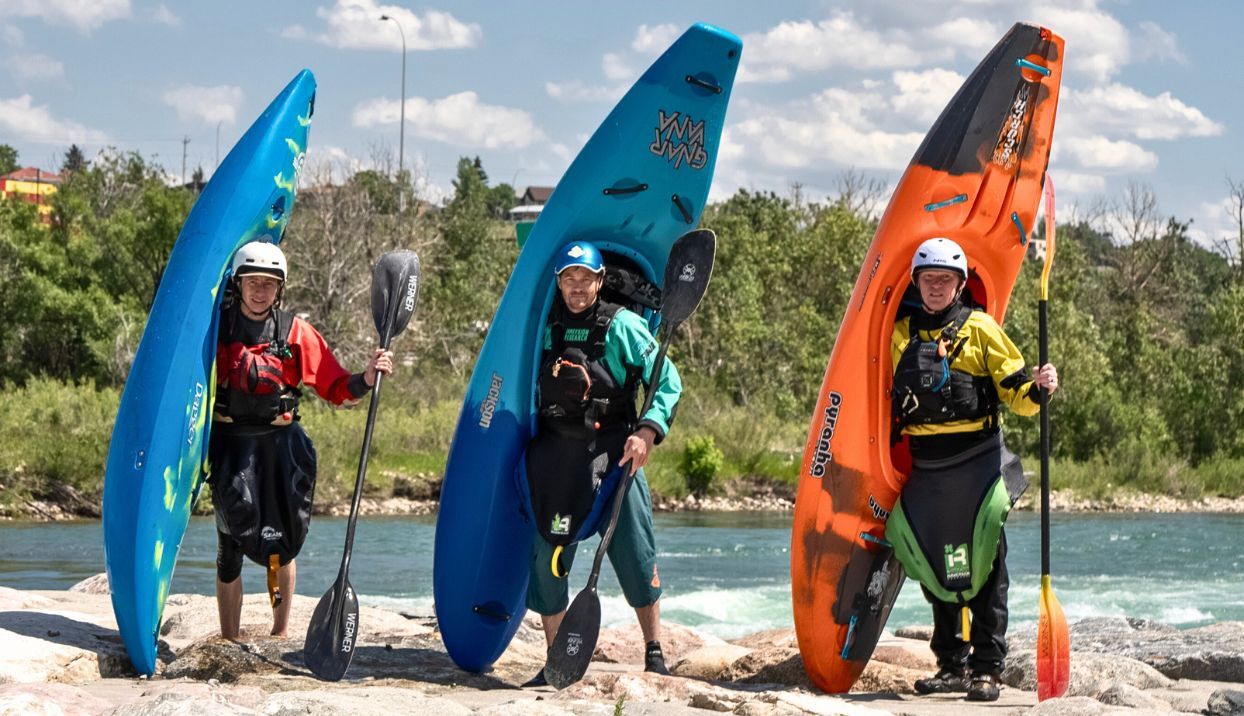
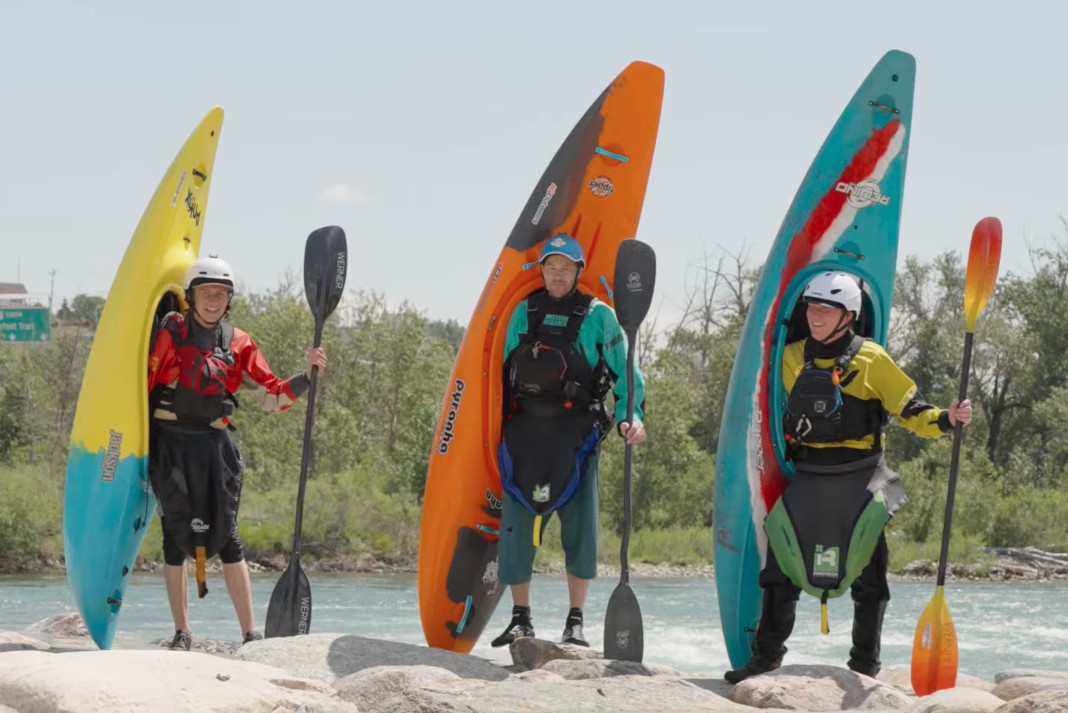
Simon from AQ Outdoors here and today we’re going to dive into a side-by-side comparison of the latest creek boat offerings from Jackson, Dagger and Pyranha.
If you’ve been looking for a new creek boat you’ve undoubtedly come across the Pyranha Scorch the Jackson Gnarvana and the Dagger Code. Before I get into our comparison of these top models I do want to note this isn’t a specs-driven analysis. I’ll be focusing primarily on personal experiences, suitability and on-water observations.
Today we’re using the medium-sized models with paddlers weighing between 135 and 175 pounds, standing at heights of 5’6” to about 5’ 10”.
Each boat brings its own unique flair to the highly rockered short waterline river running series. Pyranha opts for sharp edges and sleek lines. Jackson leans towards a rounded aesthetic. And Dagger opts for a sleek looking design and includes its industry-leading outfitting.
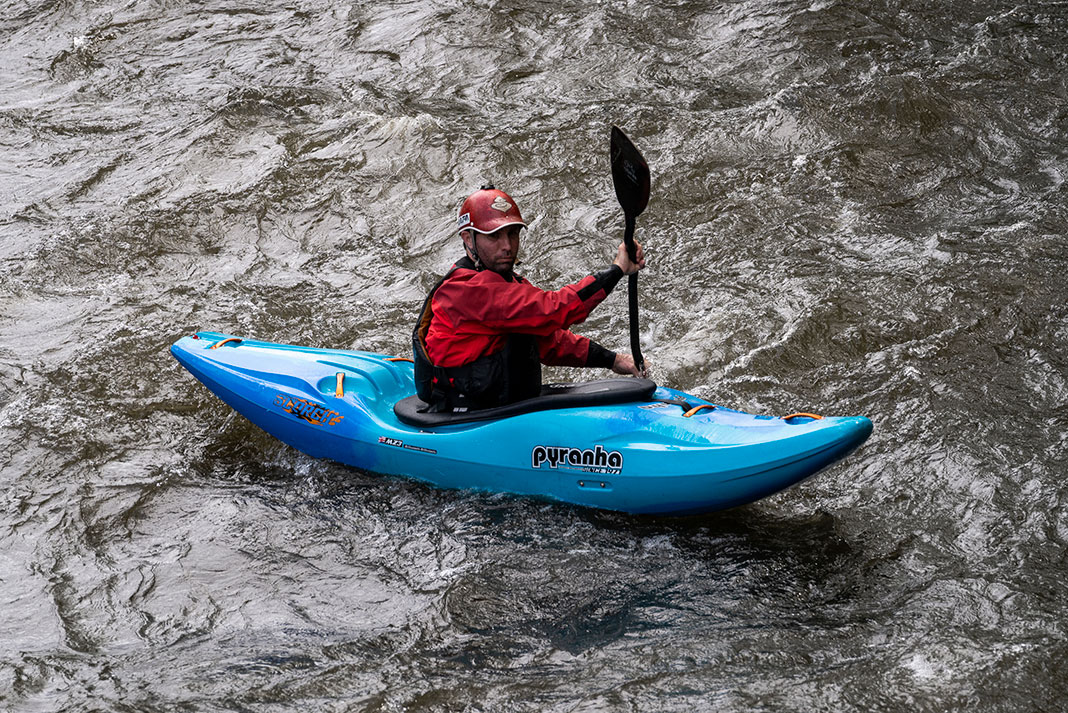
First up we have the Pyranha Scorch. To me, the Scorch feels like the best option for advanced paddlers who spend a bunch of time in their creek boat.
It tracks amazingly well, skips out of drops with ease, and accelerates quickly when you need it. With its ability for tracking and its speed, especially through boils and confused water, it would also be my top choice for big water paddling. However less experienced paddlers should note that turning can be challenging without advanced techniques and edge control.
It’s worth mentioning too that the Scorch carries that distinct Pyranha feel, characterized by unique edges and side walls. In our many years in education and retail we’ve learned that some people love that feeling and others really don’t.
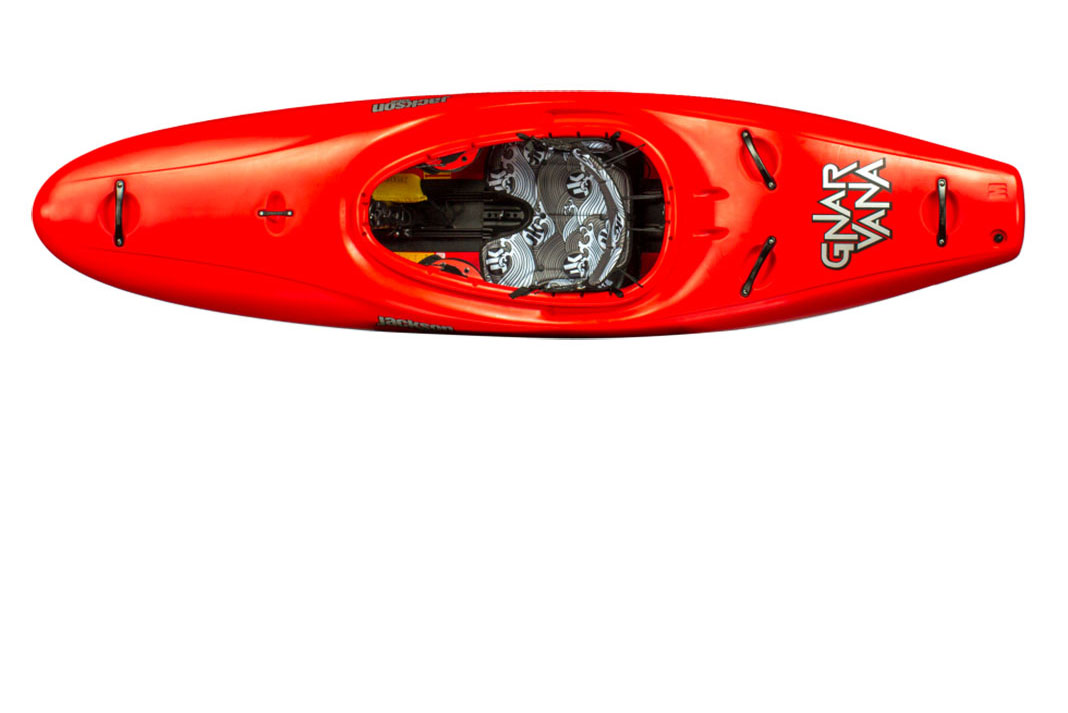
Jackson Gnarvana. Image: AQ Outdoors
Jackson Gnarvana
Next up we have the Jackson Gnarvana. As a middle-aged paddler who spends more time teaching than personal paddling, finding a creek boat that matches my skill level while providing a safety net was crucial.
The Jackson Gnarvana strikes a perfect balance for me. Despite my initial skepticism towards Jackson creek boats, the Gnarvana fully won me over. It feels like an oversized half slice—boasting excellent control and effortless edging.
The bulbous, and to be honest, kind of funny looking bow makes boofing and keeping the nose up so simple. Making it a top choice for small creeks. In fact it’s my favorite creek boat to date in these environments, in big water. However the Gnarvana may get pushed around more easily compared to the Scorch and the Code. It is also wide around the hips. Which means without proper outfitting it can feel a little challenging to have the boat move with you. Once outfitted however, this is easily resolved.
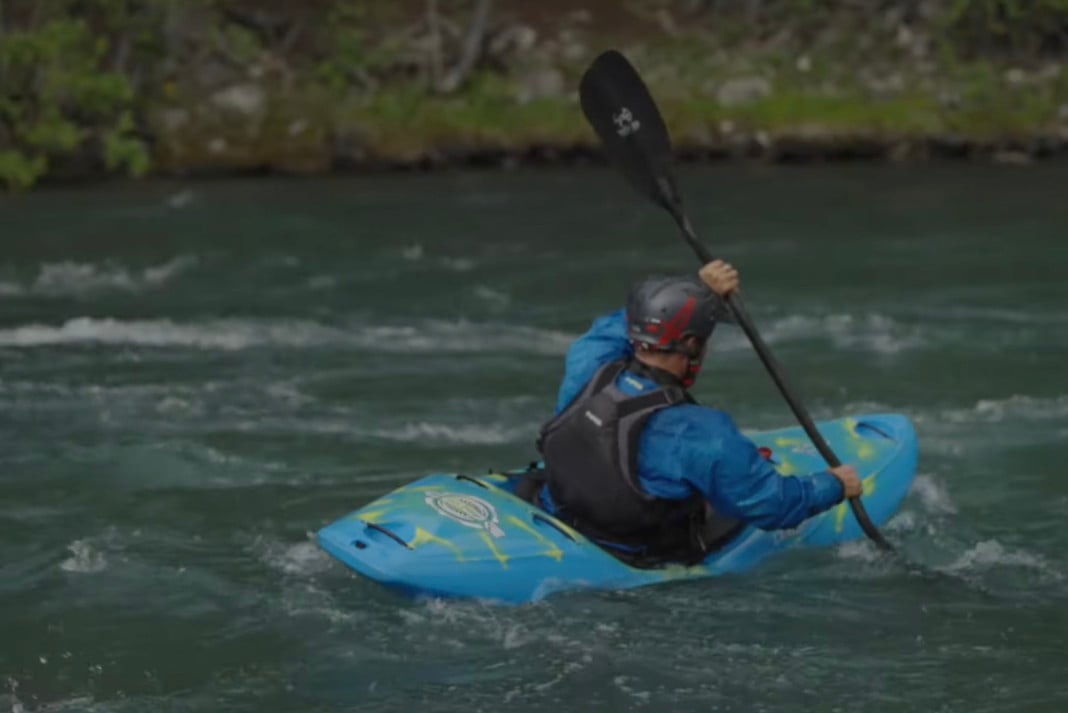
Dagger Code. Image: AQ Outdoors
Dagger Code
Last up we have the Dagger Code. As a prominent choice in our teaching program, the Code has proven itself to be an almost unflippable companion for intermediate paddlers.
I’ve witnessed the Code plow through many a hole with the paddling student looking on as if in an out-of-body experience—wondering when they’re going to flip. And somehow, against the laws of physics, they don’t.
In the paddling we’ve done in the Code, it’s hard to put a finger on why it’s such a great boat. I think it’s a combination of outfitting, ease of paddling, and its versatility that keep us putting people in this boat.
On courses and for personal paddling, in my opinion, the Code’s predictability and reliability for all levels of paddler, in all whitewater environments, make it a go-to option that does exactly what you’d expect.
AQ Outdoors offers retail and kayak instruction in Calgary and Edmonton. Learn more about their school and stores at AQOutdoors.com.



 This article was first published in the 2024 issue of Paddling Business. With next year’s hottest gear for canoeing, kayaking, whitewater, fishing and paddleboarding. Plus: The best and worst idea ever in kayak rentals; and 28 industry experts on inflation, interest rates, consolidation and the future of trade shows.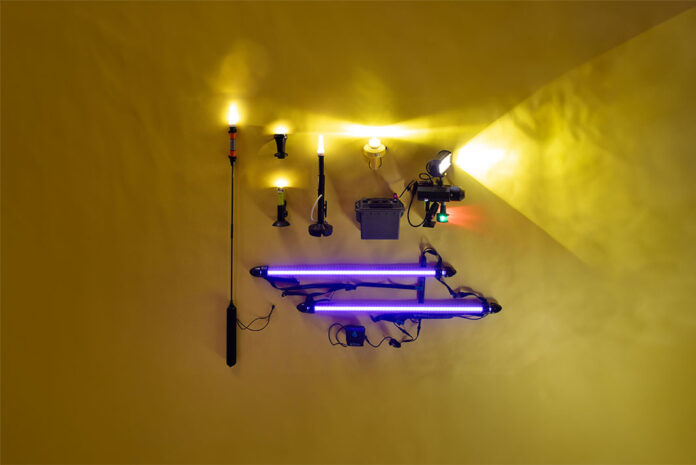

 Sirius Signal
 Basin Boat Lighting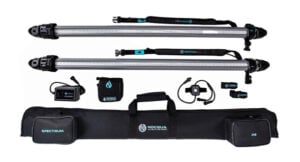
 RAILBLAZA
 YakAttack
 Scotty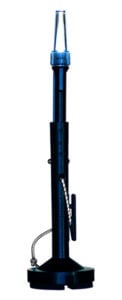

 This article was first published in the 2023 Paddling Trip Guide.

 Cat ‘Logan’ Rescued by Crew