Home Blog Page 70

First Look: The Dagger Vanguard Is The Result Of A 15-Year Evolution In Modern Longboats

Fifteen years ago, Dagger Kayaks redefined the long creek boat with the release of the Green Boat. Now the brand is attempting to reinvent the category once again. After four years of prototypes, the Dagger Vanguard 12.0 has finally made its way to the paddling public for spring 2023.

Dagger’s 15-Year Evolution In Longboats

When Dagger’s Green Boat was made, it was built for one thing: winning the namesake extreme race in the Southeast U.S.

In downriver whitewater races, a kayak over nine feet is categorized as a longboat. In whitewater races with a longboat class, it’s generally accepted that to have the fastest time on the river you’ll need to be piloting from the seat of one. Choosing to do so in extreme races, namely the Green Race, provides the potential to unlock speed. But not without the hazard of the length turning up the difficulty significantly.

Up until 2006, paddlers vying to win the Green Race were likely doing so in a Prijon Tornado, an old-school creek boat nearly 12 feet long. The Tornado had a long displacement hull, some rocker, and a half-decent amount of volume. The Tornado still somewhat resembled the creek boats being paddled in the mid-2000s. But modern designs were progressing, and the Tornado was looking its age, having been created in 1995, including because of its lack of safety features.

Then Pat Keller showed up to the Green Race in 2006 with the Dagger prototype that changed the game. The Green Boat certainly drew inspiration from the Tornado. But it was the first kayak purpose-built for winning an extreme race. It drew on design knowledge from other disciplines like slalom, as well as the latest creek boats of the time. Keller won, and the Green Boat instantly became the bar for the kayak design needed to win the race.

That said, when the Green Boat was envisioned, one of the hurdles was whether anyone outside a subculture of paddlers in the South would actually buy one. Dagger took their chances, and in 2008 the Green Boat was released in full production.
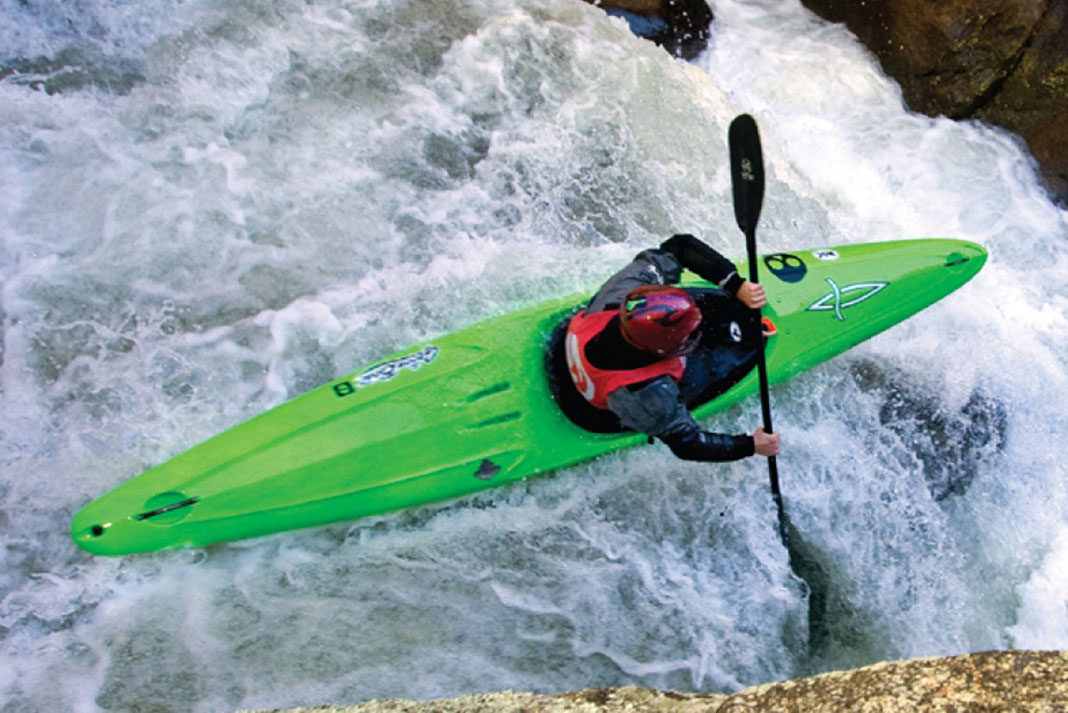
Today each major whitewater brand available in the U.S. has its take on a longboat. So it’s fitting now for Dagger to lead the field in releasing the second generation of the category. As the Vanguard was being developed, the brand had a new perspective in mind for what they hoped to accomplish with the design.

“One of the things we had in the back of our mind was how can we make this boat feel like an everyday creek boat a little bit more? How do we make it less of a transition from your regular creek boat into a longboat?” shares Snowy Robertson, kayak designer at Dagger.
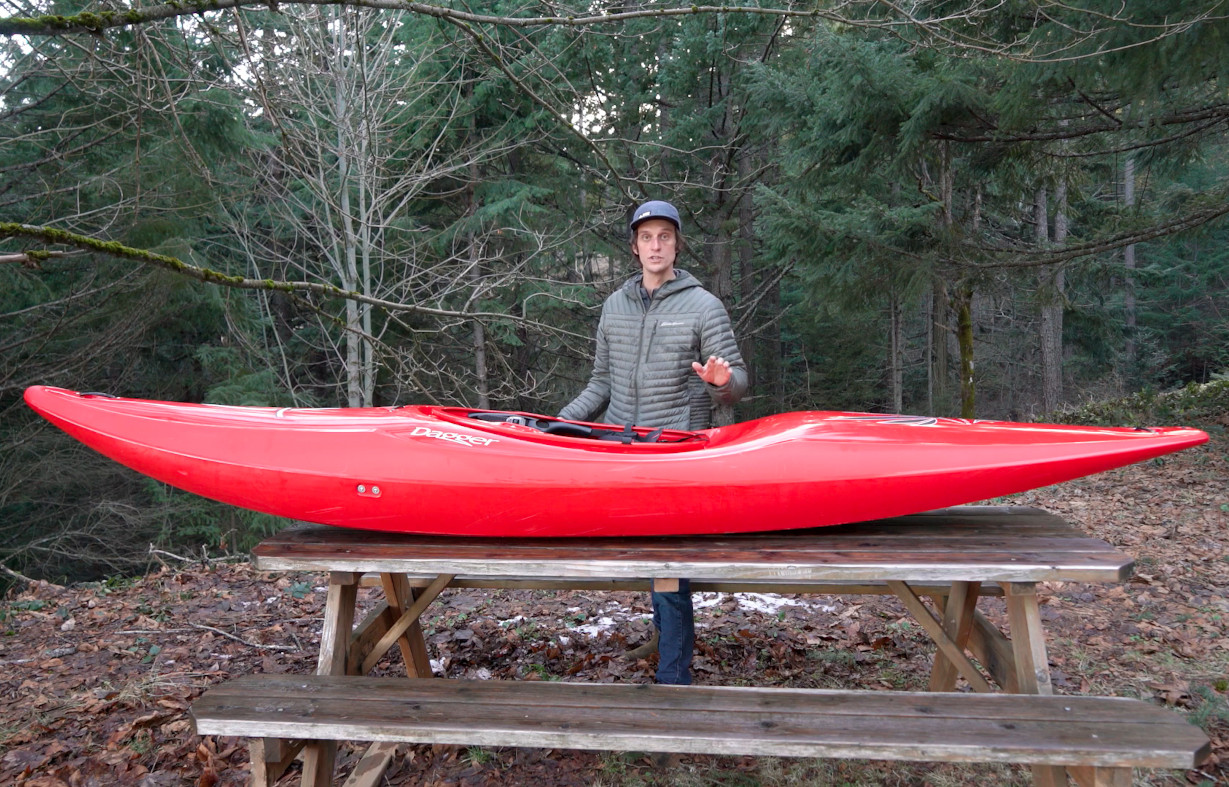
Todd Wells with Dagger Vanguard.
Todd Wells with the new Dagger Vanguard. | Image: Dagger Kayaks // YouTube

Developing The Dagger Vanguard 12.0

Asking this question took Robertson and the Dagger team on a journey to develop the Vanguard that began in 2019. The first prototype of the Vanguard was a 12-foot, six-inch speed machine—nine inches longer than the Green Boat. Robertson says the boat was fast on flatwater but cumbersome to drive in technical whitewater. So they changed course, pulling the length back to 12 feet, and looked toward current creek boats, including the Phantom and Code, and the characteristics that make them feel more effortless than ever in whitewater.

“We wanted to remove that percentage of extra effort,” says Robertson. “Nine-foot creek boats nowadays are highly maneuverable. We wanted to offer that in the longer package. We looked at getting more planing surface through the center section and more of a defined rail. You are also sitting up on the surface a bit more, rather than being down in the water as the Green Boat was.

“We’re definitely using less of that waterline, and so it’s slower through the flatwater,” Robertson explains. “But we found that you can be much more precise with where you place the boat, and the bow is much easier to keep on the surface. We honestly found that we were using less effort and being less fatigued than you would’ve been with our other longer boats, which were seemingly faster.”
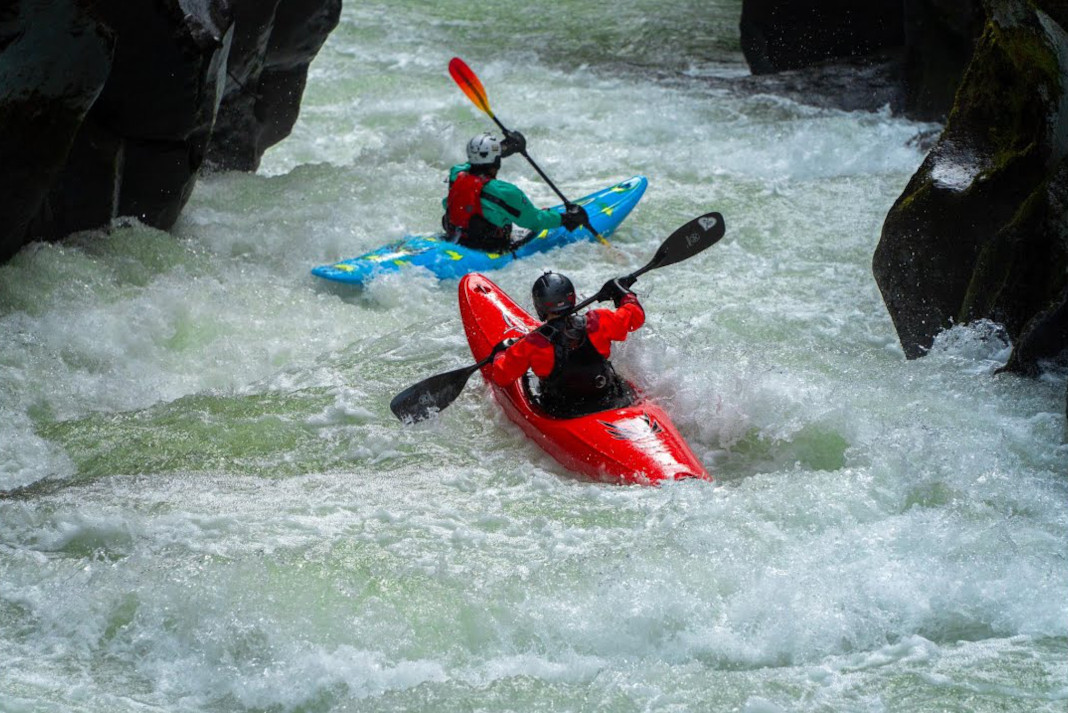
New Dagger Vanguard
Sage Donnelly and Adam Edwards paddling the Vanguard in the Pacific Northwest. Feature Image: Dagger Kayaks / YouTube

A Boat Built Beyond Race Day

Following Robertson and Dagger’s four-year R&D effort is the finalized Vanguard 12.0. In Dagger’s unveiling video, Team Manager Todd Wells walks through the features of the design Robertson discussed. He also notes the natural feeling cockpit, that the boat is capable of spinning from the center, and the tapered stern with reduced volume that frees it from the water, while also making it capable of some slicing—which other recent creek boats have moved toward.

[ Find the entire Dagger fleet in the Paddling Buyer’s Guide ]

What stands out most watching footage of athletes in the Vanguard is exactly what Robertson refers to: the ease of the Vanguard as a longboat. On a run like the Little White Salmon, the paddlers don’t look like they are laboriously driving a longboat. Instead, it seems like just another day on a classic section of steep, pushy class IV-V whitewater. In fact, last year Todd Wells won the Little White Salmon Race in the 12-foot prototype of the Vanguard, an event not known to harbor longboats on the roster. But Robertson says with the ease the Vanguard paddles compared to previous longboats, expect to see more on the starting line.

“This year will be even more telling of people stepping up and paddling longer boats on there because the style of the boat is just more comfortable and familiar in that whitewater,” says Robertson. “It’s a more manageable and approachable boat and will open up harder paddling scenarios in a 12-foot boat than we’ve ever thought possible.”

Dagger Vanguard 12.0 Specifications

Length: 12′ / 366 CM
Width: 25″ / 63.5 CM
Volume: 104 GAL / 393 L
Boat Weight: 60.5 LBS. / 27 KG
Paddler Weight: 120 – 280 LBS. / 54 – 127 KG

Find more info on the new Dagger Vanguard.
 

Win a Kayak: Old Town Sportsman PDL 120 Giveaway

Hot Takes From Freestyle Pros At The 2023 US Big Wave Event

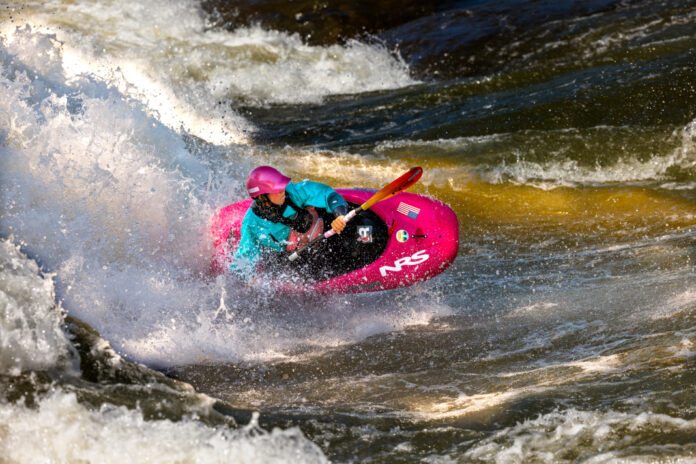
Makinley Kate Hargrove surfing at Good Wave, site of the US Team Trials.
Makinley Kate Hargrove surfing Good Wave. Feature Image: Rob Giersch

The 2023 ICF Canoe Freestyle World Championship will be returning to a big-wave venue this year, with high-flying whitewater athletes making their way to the RushSouth Whitewater Park in Georgia in October. Good Wave promises to be one of the most exciting features for a general viewing audience since the 2015 Worlds on Garburator on the Ottawa River.

But before we get to Worlds, U.S. athletes must vie for a spot to represent their flag. The 2023 U.S. Freestyle Team Trials will also give us a sneak peek at the feature and the caliber of performances we can expect to see from international competitors later this year. So far one factor appears evident: some athletes are showcasing their home river advantage.

Here’s what the pros are saying about Good Wave and how they see the action unfolding for U.S. selection March 11-12:

“The wave is very challenging and the water levels affect it a lot. For the men, Steven Wright and Mason Hargrove are looking really good. There’s a huge turnout for the ladies here and they’re all bringing their A-game. Most of my sessions we’ve had more ladies than men, it’s been awesome. For junior women, local girl Makinley Kate is killing it!”

Sage Donnelly

“The local Hargroves show consistency on the wave and Makinley Kate is one of the strongest ladies on the water, even in the senior class.”

Emily Jackson

“Good Wave is very fun but I’m finding it pretty difficult to get some of my favorite tricks that I thought always came easy to me like helixes and clean blunts. The challenge has been a great experience and really my goal here was to learn how to surf this wave.”

Elaine Campbell

“Good Wave is a very interesting feature and you honestly never know when the time is right to throw a trick. The bounce flurries and this makes it tricky to line up and throw your move which can easily result in you flushing off.”

Landon Miller


View this post on Instagram


A post shared by Jackson Kayak (@jackson.kayak)

“I think it’s going to be a very competitive competition all around, from the junior men’s to senior women to C1. I’m excited to see it unravel and who will claim those elusive Team USA spots.”

Mason Hargrove

“The wave is a great feature to really challenge every competitor. It doesn’t give up passes or air easily and the set up is quite hard. The venue as a whole is going to be amazing. Columbus, Georgia has really come up in the ranks. I think it’ll be one of the best Worlds events we have had, rivaling the 2009 Worlds in Thun, Switzerland.”

Adriene Levknecht

The competition kicks off Saturday, March 11 at 9 a.m. EST. Stay updated by following USA Freestyle Kayaking.


Feature Image: Makinley Kate Hargrove shows the aerial potential of Good Wave. | Photo: by Rob Giersch


California Kayaker Turns Snow-Buried Home Into Seal Launch (Video)

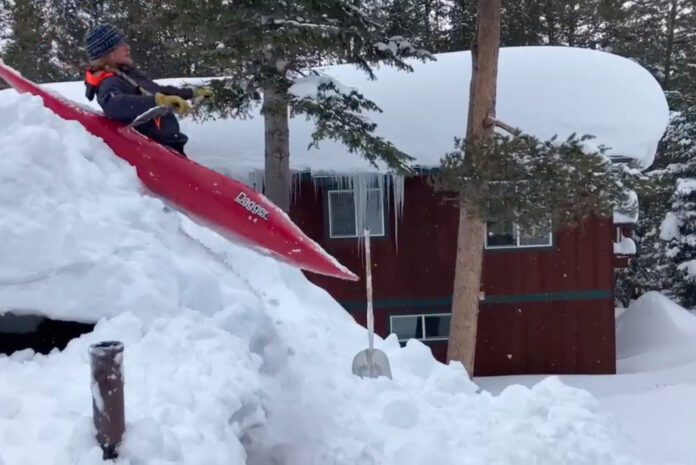
Kayaker launches off roof in snow-buried California.
Feature Image: Susan Kocher / Twitter


California’s Sierras are in the midst of an atmospheric river that has been pummeling the region with snow. In the past two weeks, the region has seen as much as 15 feet in places. And the Central Sierra Snow Lab on Donner Pass has measured more than 600 inches of cumulative snowfall for the 2022-2023 season.

While the exceptional snowpack is great news for spring runoff and reservoirs, paddlers digging their way out are trying to make the best of current circumstances. As South Lake Tahoe resident Susie Kocher shares in this video.


Bill Parks The Founder Of Northwest River Supplies Passes Away

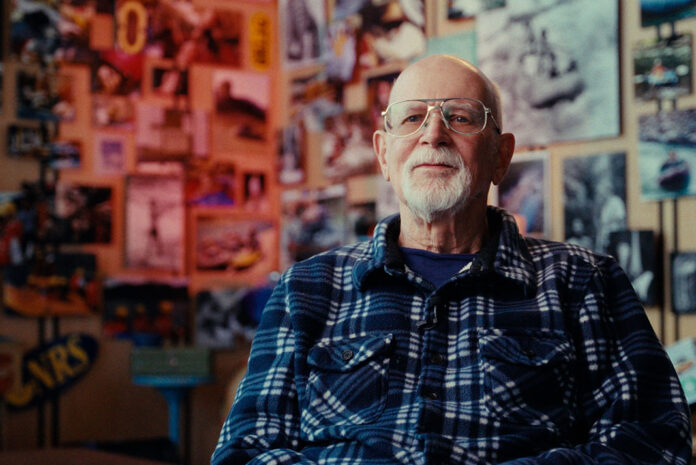
Bill Parks reflects on his journey at NRS
NRS founder Bill Parks on the past and present of the half-century-old river supply company. | Feature photo: Courtesy NRS

MOSCOW, IDAHO — On March 5, 2023, Bill Parks, the founder and president of Northwest River Supplies (NRS) passed away peacefully of natural causes at St. Luke’s Hospital in Boise, Idaho at the age of 88.

Bill Parks reflects on his journey at NRS
NRS founder Bill Parks on the past and present of the half-century-old river supply company. | Feature photo: Courtesy NRS

NRS released the following statement:

“It is with heavy hearts filled with fond memories, laughter, love and respect that we inform you all of the passing of Bill Parks. Bill was known as a businessman, river runner, and educator, but he was foremost a humanitarian. He leaves behind a 50-year legacy of serving customers and community, people and the planet, steadfast in his belief that business can be a force for good in the world.

“When first starting NRS, his business philosophy was considered unorthodox by many of his peers. While the prevailing theory of the time held that a business’s only responsibility was to produce profit for its shareholders, Bill believed that a company could aspire to have a positive impact on the lives of its customers and employees, and to be a force for good in the world. He wanted to start his own company, in part, to simply prove his ideas could work.

“It’s about the people at NRS now.” Bill Parks, Founder of Northwest River Supplies (1934 — 2023)

“In the spring of 1969, Bill found his way aboard a rafting trip through the Grand Canyon, an experience that would change his life—and the outdoor industry—forever. Bill became hooked on river running, bought a Montgomery Ward raft for $69, and talked his way onto any river trip he could find. He saw potential for the sport to grow, and potential for a company to supply that sport with quality gear and a commitment to service. In 1972, Bill took $2,000 of his personal savings, stocked an inventory of gear in his garage and started Northwest River Supplies, Inc.

“After founding NRS, Bill moved to Moscow, Idaho to join the faculty at the University of Idaho in the College of Business and Economics. He continued to build NRS while teaching full time, often hiring his students to assist customers, help out in the warehouse and fulfill orders.

“NRS grew to become a multi-million-dollar international company, and in 2013 Bill began taking steps to plan for a future without him. While he had received numerous offers from investors over the years, Bill decided to invest in what he believed in: the people. Bill helped finance a deal to transfer all NRS stock to the company’s workers, and in early 2014 NRS became 100% employee owned.

“Even in his final days, he was discussing business with NRS managers. His wife and best friend, Donna Holmes Parks was by his side until the end.

“Bill took pleasure in celebrating the NRS 50th Anniversary last year and reflecting on the company’s progress, saying, “I’m proud to say that NRS is truly led by its people. Sometimes you guys tell me that I’m important to the company, and I pretend to believe it. But it’s about the people at NRS now.’”

Learn more about Bill Parks: https://www.nrs.com/about/bill-parks/

About NRS

100% employee-owned, NRS is the world’s leading supplier of equipment and apparel for water recreation, safety and rescue. Founded in 1972 with a vision to create a better kind of company, NRS is dedicated to promoting the health and well-being of its customers, employees and community. For more information on NRS, visit www.nrs.com, email the company at service@nrs.com or call 877.677.4327.


Vanishing Trails: Canoeists Retrace Ancient Routes To Hudson Bay

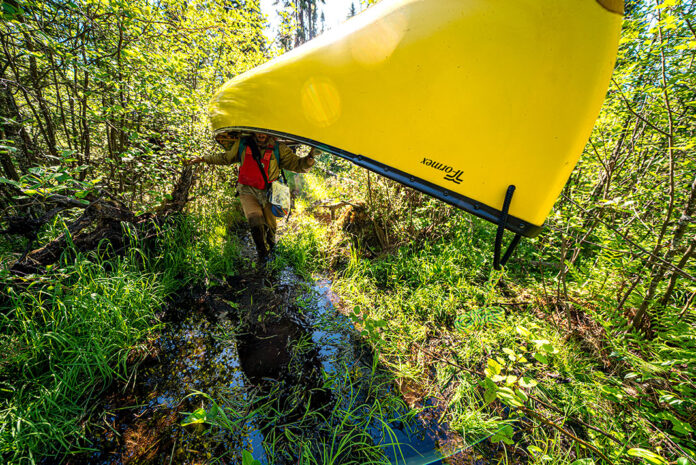
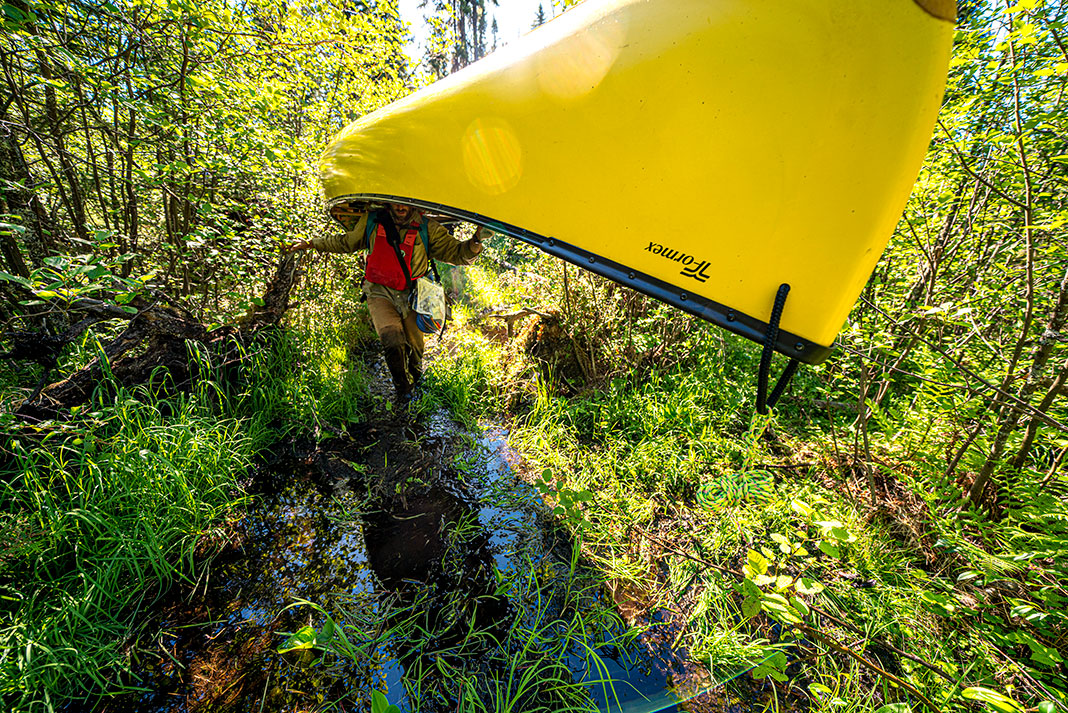
David Jackson carries yellow canoe along a swampy route to Hudson Bay
The second of three carries heading to the height-of-land crossover from the Eabmet River in the Albany watershed to the Marten Drinking River in the Attawapiskat Watershed. | Feature photo: David Jackson

The crackle of embers stirred sleep from my eyes and snapped the daze I had fallen into. I glanced left and noticed Leah had dozed off too, her face being bit by bugs. I looked out at the hazy mist of midnight along the Severn River, rolling a few more logs in the fire and adjusting my belt. The leather had three new holes, souvenirs marking the rigor of the old canoe routes that had led us here, to the Hudson Bay Lowlands.

I was to stay attentive, for earlier in the day we noticed polar bear tracks creeping in the shallows, stalking caribou, and it was just the two of us. I wiped some of the blackflies from Leah’s face, little smears of blood following, and urged her to the tent. We stood up together, two skinny figures at the end of a ragged journey. Strong yet weary of the gnawing hunger that wasn’t letting calories stick to our ribs.

Canoeists retrace ancient routes to Hudson Bay

We had traveled 1,200 kilometers over two months, facing all the joys and challenges a long canoe journey delivers in Northern Ontario. Hard rivers, gorgeous sunsets, a mix of beautiful and bad campsites, a standoff with a wolverine, enough walleye for two lifetimes, near misses with wildfires and, of course, bad bugs. We followed a route of vanishing trails, a fading network of once-bustling portages crisscrossing between watersheds. These thousand-year-old trails have all but faded back into the wild mosaic of the landscape.

David Jackson carries yellow canoe along a swampy route to Hudson Bay
The second of three carries heading to the height-of-land crossover from the Eabmet River in the Albany watershed to the Marten Drinking River in the Attawapiskat Watershed. | Feature photo: David Jackson

Fifty-eight days earlier, Leah and I had left the Pikitigushi River bridge east of Armstrong, Ontario, and paddled north. We began on the eastern edge of Wabakimi Provincial Park bound for the distant coastal Hudson Bay community of Fort Severn. When we started, we carried five packs weighing 600 pounds total, enough to deliver us to the polar bear-dense region without resupply.

Gathering stories, following trails

The route was not a conventional line for canoeing to Hudson Bay. Instead, it was a dream from my work as a photojournalist. While covering stories in the Nishnawbe Aski Nation communities found along these waterways, I often talked with the friends I made on assignments about the rivers and lakes at their doorsteps. I heard stories about where someone was born or about the journey the community of Nibinamik made when its residents took canoes loaded with their possessions and paddled and portaged from their former community of Landsdowne House 150 kilometers northwest to the Winisk River, where they settled.

I wondered about the trails they had taken and if those trails would still be there. I told my new friends I would return by paddle to visit them someday.

man starts a campfire with wood shavings on the Winisk River
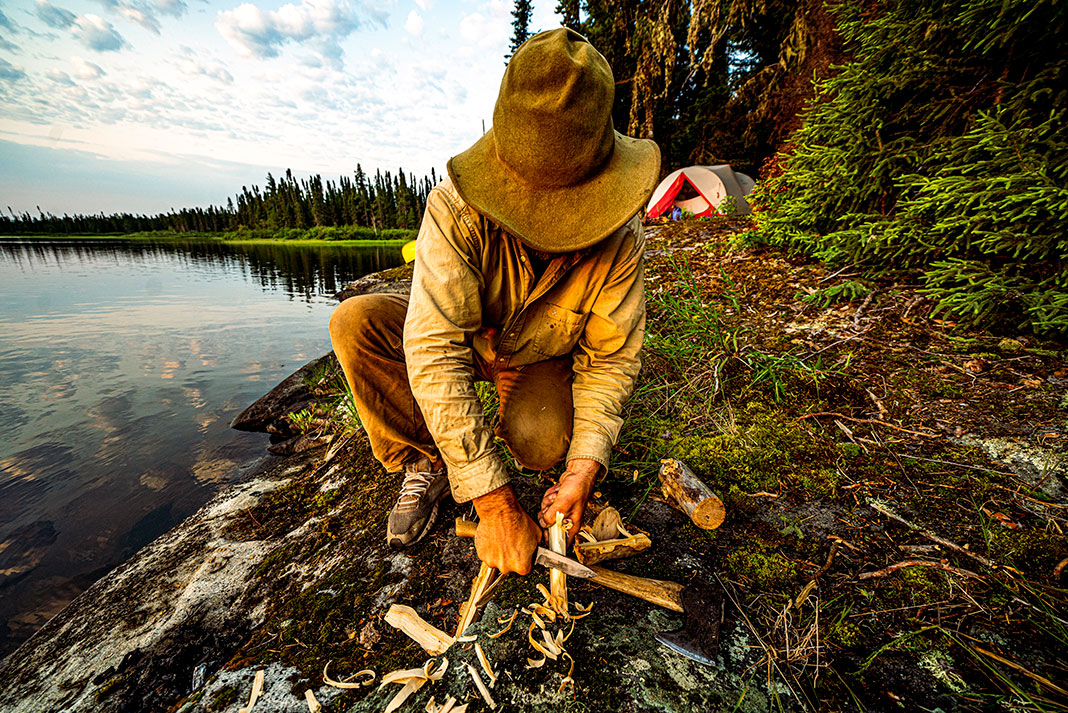
Wood shavings when there’s no bark on the Winisk River. | Photo: David Jackson

Back home, I studied the Canoe Atlas of the Little North to figure out how possible it was.

The line Leah and I drew went something like this: Whitesands, Fort Hope, Neskantaga, Nibinamik, Wunnimun Lake, Kingfisher Lake, Big Trout Lake, Wapekeka, and down into Fort Severn. The places in between are the traditional trails of the Nishnawbe, a series of carrying places often 8,000 years old. While we hoped to find joy and challenge, the portages were first eked out of the forest for hunting, seasonal migrations and to travel the complex land of muskeg, bedrock, water and stunted trees we now call Northern Ontario.

On each river we were challenged. The Marten Drinking River was dark and deep, with steep bouldery rapids and rock ledges covered in jack pine and spruce. Beside a rapid early in the morning, I made wood shavings in the misting rain, my hands aching in the cold, wishing there was birchbark closer to camp. Our little twig stove for boiling water sat beside a fireplace now grown-in with moss. We found these most everywhere we stopped.

We came to a gorge where we heard there was a long carry-around and all morning we searched. Paddling from the edge of a swamp to the brink of the rapid, which fell into a small canyon, we searched in vain for the faint trail to deliver us safely below. All we found were beaver trails and moose highways.

A search for signs of the past

If Nishnawbe had used this trail for thousands of years, and later the fur trade companies, there must be something that remained. At least, that’s what we told ourselves on the edge of the buggy spruce glade.

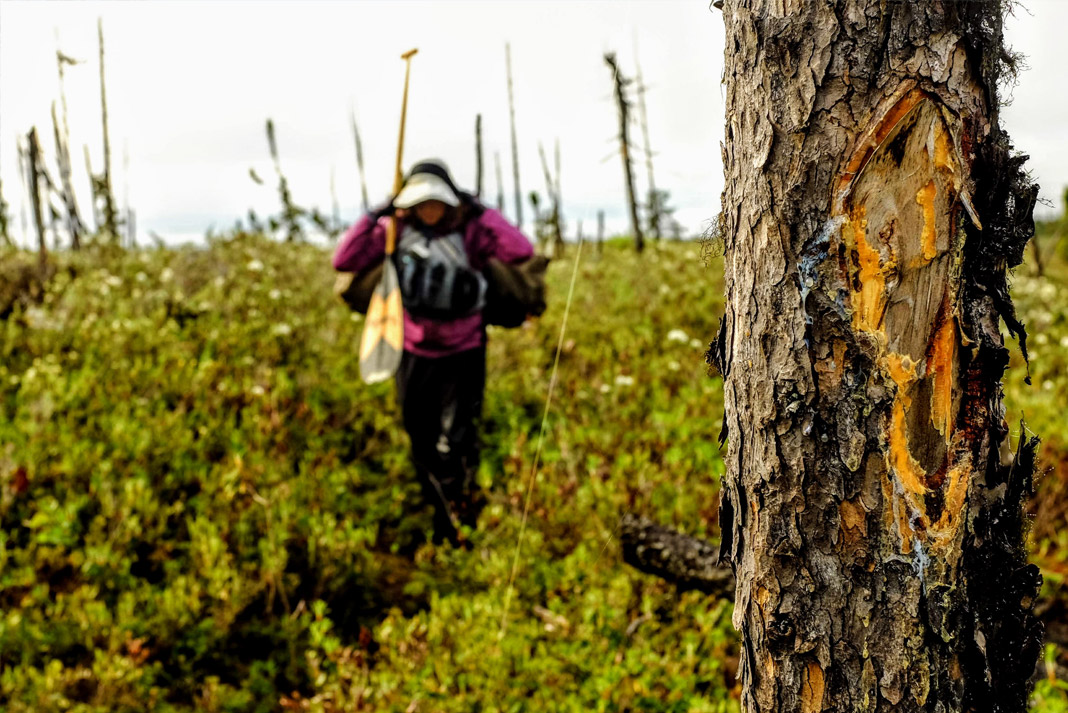
Descending into the gorge seemed reckless, so we reconsidered the first place we landed, in the corner of a swamp, a likely carrying place for a wooden canoe to land. Moving deliberately, scanning every scrape and butt end of a tree, my eyes settled on something I hadn’t noticed: a groove. If I looked at the trail, I missed it, but if I looked just above, I saw in my peripheral vision a faint trough in the deep moss, almost undetectable.

For hours we carefully retraced this faint hint of the past, following the trail of ghosts.

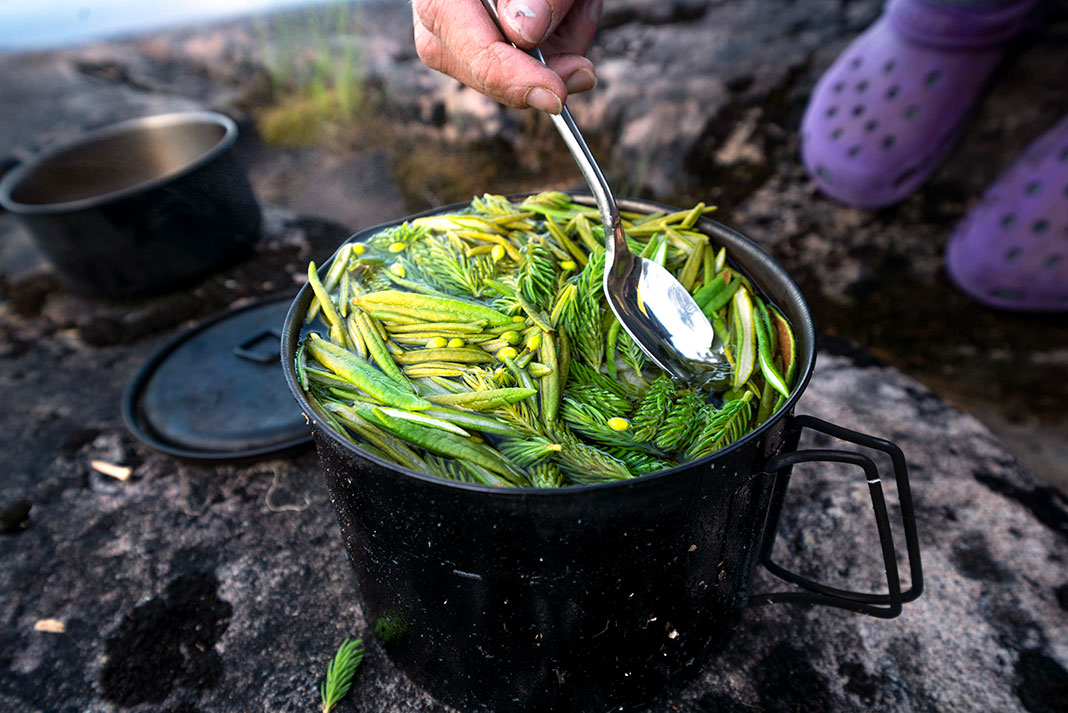
That evening, on the downstream side of the long, tedious carry, we drank spruce tip tea and talked about this beautiful river. If it were anywhere else in the province, it would be a summer highway of canoeists. Instead, these traveling corridors between watersheds, once the bloodline of the north, have all but disappeared into the boreal, gone with the winds and fire. For us, the journey is more important than our destination. The soul of a trip is in connecting the places in between.

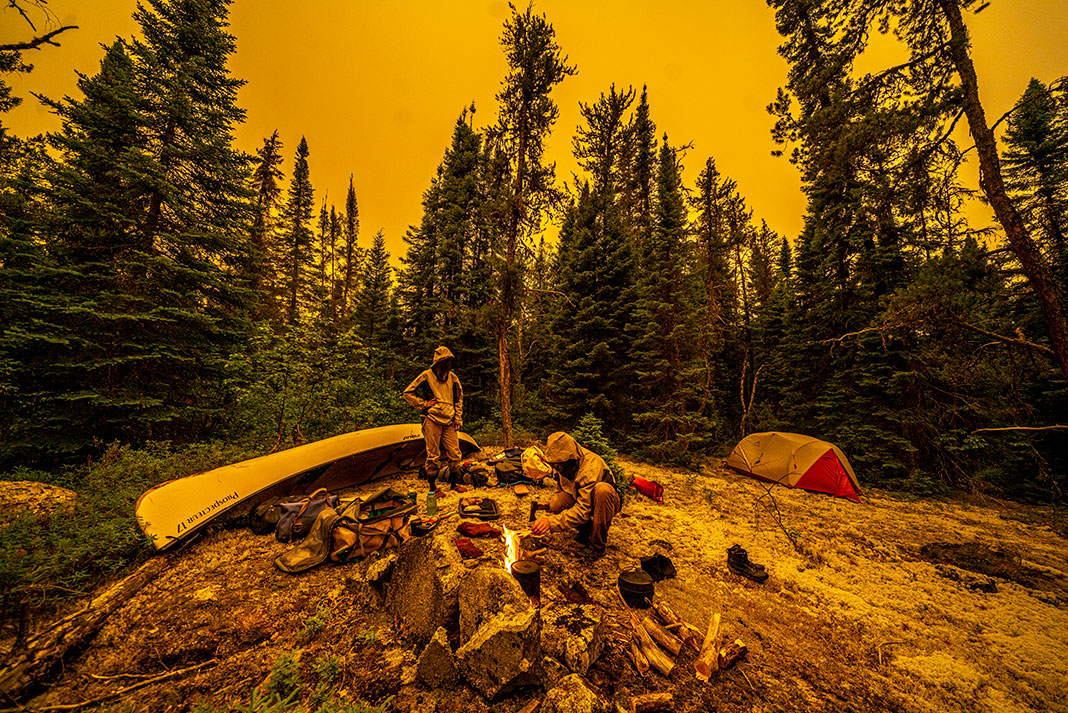
two people in bug jackets at a campsite along an ancient canoe to Hudson Bay with everything tinted yellow by the smoke of a nearby forest fire
In the final crossover of the trip to reach the Fawn River, we were stuck in a series of waterless creeks with a fire just a few kilometers away, creating a huge anxiety that we would be burned alive in those dry creeks surrounded by volatile jack pine. | Photo: David Jackson

Ten days later, we found ourselves in the middle of the crossover the Nibinamik people used in the 1970s when fleeing the turbulent times of Landsdowne House and marveled at their creativity. The route was little more than a succession of small heights of land on Winisk River tributaries as it crossed from the Attawapiskat River, but the going was convoluted. Lakes like Onisabaweigan appear as a shotgun blast on our map, and navigating was a nightmare. In some places, there were winter trappers’ trails; in most places, we were left with muskeg headwater lakes, dry boulder beds where a glacial stream once flowed, and never a rock or suitable campsite.

Embracing the timeless spirit of travel

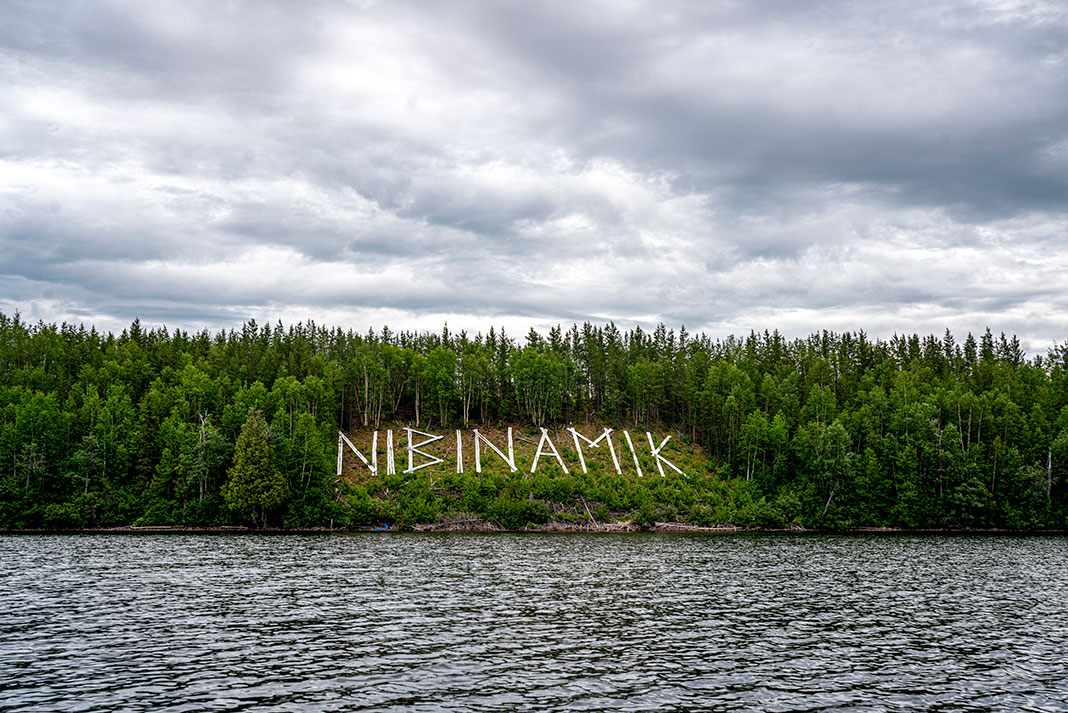
By the time we reached Nibinamik, we were beat down after a descent of Horley Creek. Nibinamik was locked down in Covid protocols like everywhere else on our journey. We could not stop, resupply or visit old friends. Still, passing by the giant wooden Nibinamik sign built into the town’s esker, made by the late Sam Beaver, we smiled at the Northern Hollywood homage.

Sprawled out on a bald rock island of Big Trout Lake, our tent in the spruce at the center, we luxuriated and swam in the cold, turquoise water. The lake reminded us of Lake Superior, except to the south we watched plumes of smoke rise from a forest fire we had narrowly skirted. What was supposed to be old trails through a network of creeks dividing the Asheweig and Fawn rivers was relentless portaging down 15 kilometers of dry creeks and over long out-of-use trails. Leah’s neck was a swollen war zone of blood and bites.

a woman's neck is covered in black fly bites during a canoe expedition to Hudson Bay
Vampires are real. | Photo: David Jackson

We understand why people don’t travel these ways anymore. Perhaps it’s too hard, the margins of joy too thin for people to devote months to. Busy schedules and limited holidays have encroached on what the essence of a canoe trip has always been—a process of reading the landscape by pack and paddle, a journey to uncover the story of river and lake.

These old canoe routes to Hudson Bay may mean nothing to a bucket list, but they mean everything to the spirit of traveling. Their intricacies represent a fundamental connection to the freedom we gain with time and patience. When we let a trail fade, we part ways with a story thousands of years in the making.

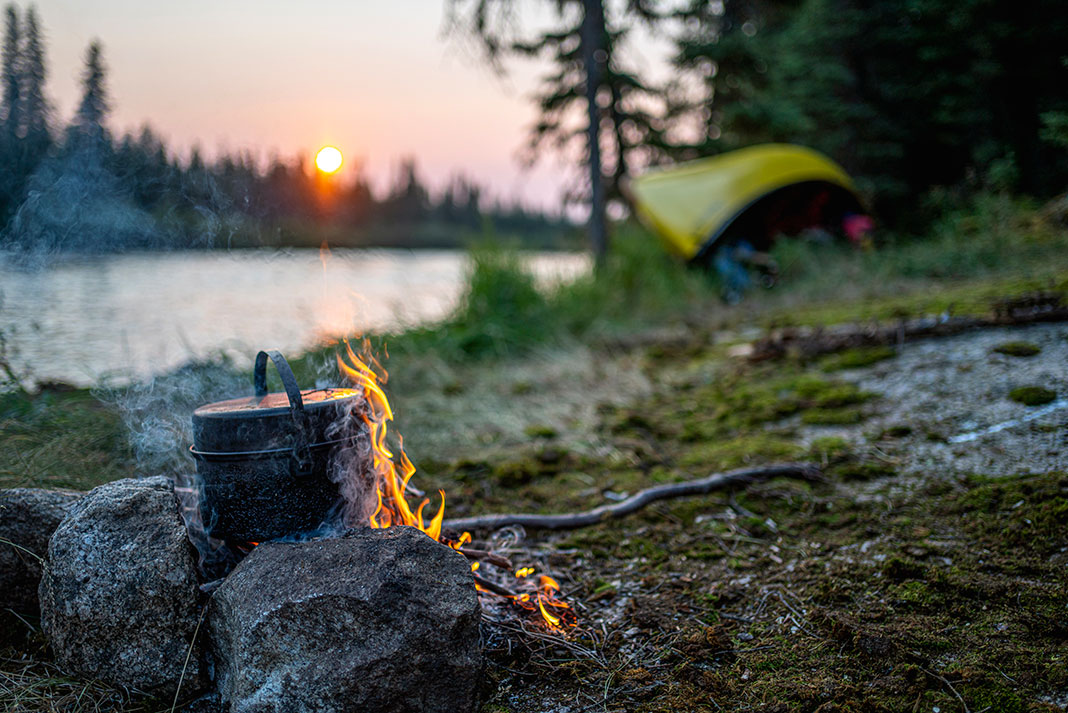
a covered pot sits on a campfire at dusk with beached yellow canoe and river behind
Life on the trail, Fawn River. | Photo: David Jackson

When I woke Leah on the banks of the Severn, we shivered against an icy wind not quite cold enough to knock the bugs down. The fire had become a smoldering heap of coals. I kicked at them, their glow mesmerizing my sleepless fog until Leah poured river water over them and steam rose fast to the grey sky. I placed my hand on Leah’s shoulder. We were to be in Fort Severn the following evening.

In time, our world would whisk back to planes, trains and automobiles as we made our way home. But for a moment, we felt the enormity of where the trails had brought us, and we wondered how many others had come this way. It’s hard to say who might next walk the lines we followed and if they will notice the signs we left. Maybe all trails fade someday. Yet, even when these old routes disappear further into the recesses of time, we will remember these vanishing trails that brought us so far.

David Jackson is a photojournalist who calls the north shore of Lake Superior home. Follow his adventures @davidjackson__.

Cover of Paddling Magazine issue 68This article was first published in the Fall 2022 issue of Paddling Magazine. Subscribe to Paddling Magazine’s print and digital editions, or browse the archives.

The second of three carries heading to the height-of-land crossover from the Eabmet River in the Albany watershed to the Marten Drinking River in the Attawapiskat Watershed. | Feature photo: David Jackson


Kayaker Completes Solo Unsupported Crossing Of South Atlantic Ocean

Richard Kohler completes unsupported crossing of Southern Atlantic Ocean
Feature Image: richardkohler.co.za/

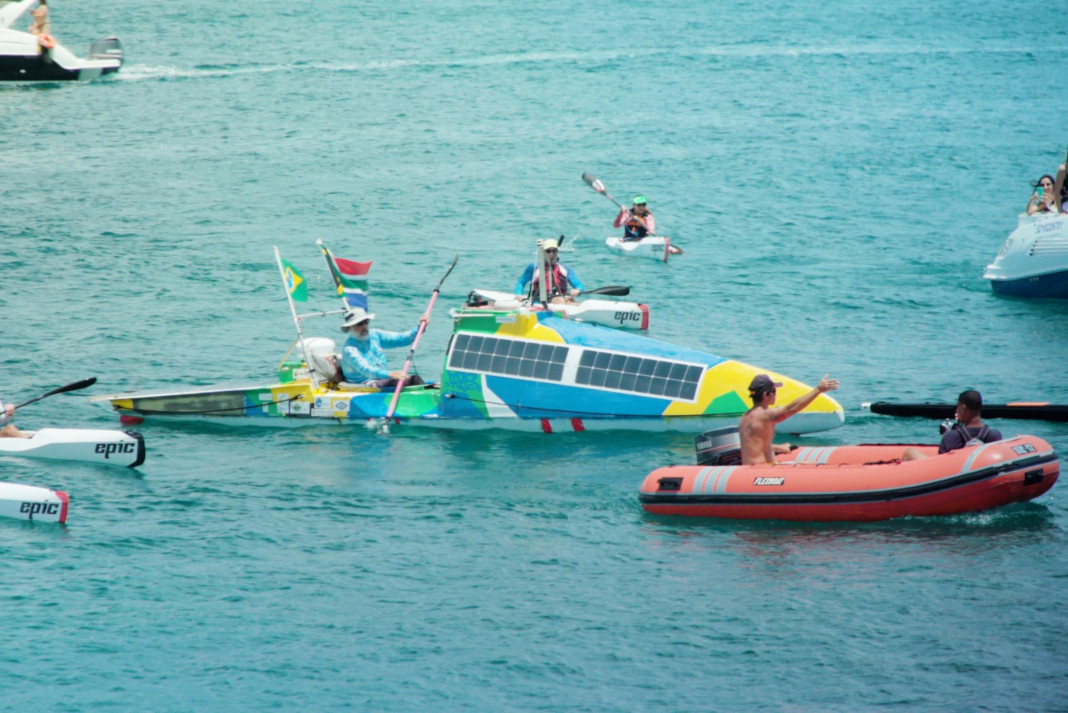
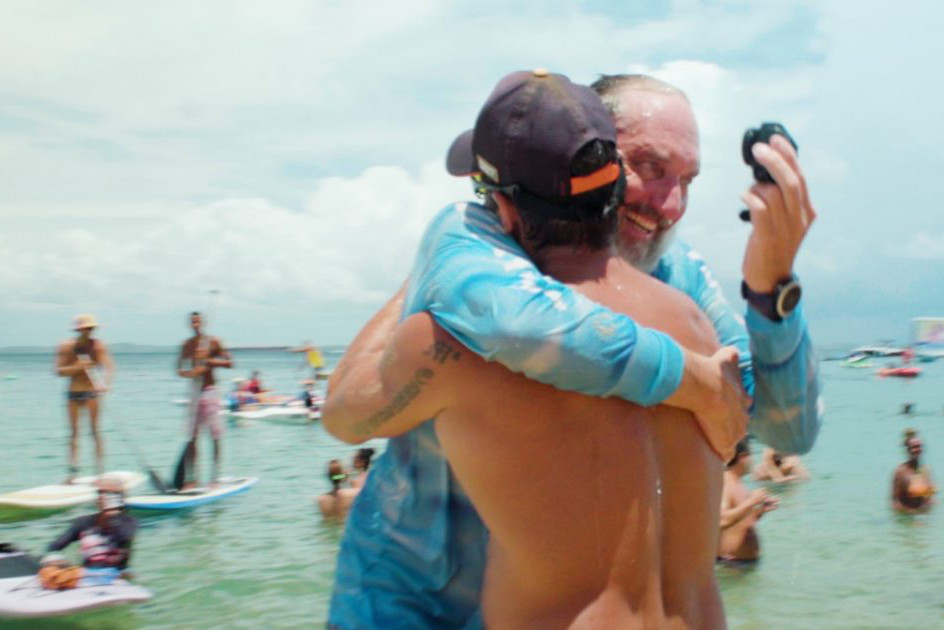
On February 19, 2023, kayaker Richard Kohler landed on the shore of Salvador, Brazil. Kohler completed a more than 4,000-mile, solo, unsupported kayak crossing of the South Atlantic Ocean in two months.

Richard Kohler completes unsupported crossing of Southern Atlantic Ocean
Feature Image: richardkohler.co.za/

“It’s been a dream of mine to cross an ocean alone. Paddling a kayak across the ocean has been a ten-year dream and the last five years of planning and execution. I am very relieved that I had what it takes for an adventure like this but also very grateful that it has come to an end,” Kohler said upon his arrival in Salvador, according to a press release on his website.

The South African began his expedition called Ocean X on December 18, 2022, from Granger Bay Harbour. Just 63 days later, he landed on the sandy beach of Porto Praia do Porto da Barra in Salvador, just inside the mouth of the Bay of All Saints.

These sorts of endeavors are nothing new to Kohler. The paddler, who turned 53 during his crossing was the first known person to kayak solo along the entire 3300 km South African coast. As well as the first person to solo SUP the length of the Breede River in South Africa. Kohler has also sailed the equivalent of three times around the world as a professional yachtsman.

Kohler’s unsupported kayak crossing of the South Atlantic was more than just for the record books. The kayaker also used the expedition as a fundraiser for Operation Smile, an organization operating in 34 countries to assist millions of children in receiving costly medical care. Kohler’s crossing raised 600,000 South African Rand for the organization.

Richard Kohler greeted in Brazil after crossing Atlantic by kayak.
Image: richardkohler.co.za/

“The crowning glory must be the phenomenal success of the fund raising for Operation Smile South Africa. We have raised over half a million Rand ensuring that more than a hundred children will receive corrective cleft surgery,” Kohler also stated in the press release on his site.

“The experience is one that I will cherish for the rest of my days, but more importantly I hope that my story has inspired others to dream and to act on their dreams. I would like to thank all my sponsors, supporters, followers, donators, my exceptional shore team and my family for getting me across the ocean.”


What Really Happens When Someone Drowns

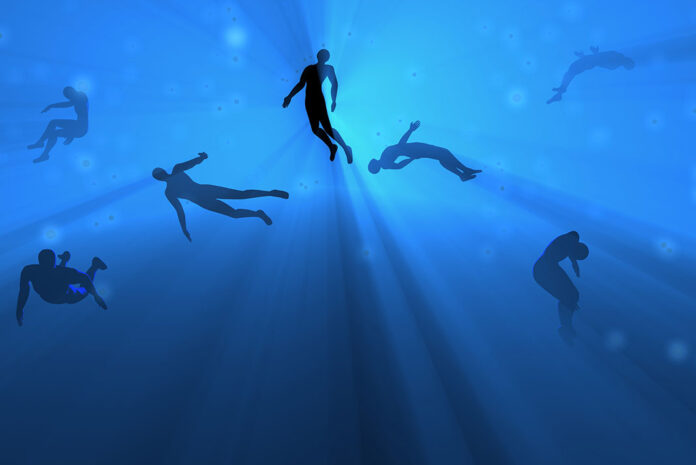
illustration looking up through the water at silhouetted bodies drowning
The steps of not drowning: Step 1, wear a life jacket. Step 2, never skip Step 1. | Feature photo: Adobe Stock

The World Health Organization defines drowning as “…the process of experiencing respiratory impairment from submersion or immersion in liquid.” Sounds simple, but you may share some common misconceptions about what really happens when someone drowns.

New York-based drowning death investigator Andrea Zaferes, who works with medical examiners and police around the world, says contrary to what most people believe, drowning victims’ lungs don’t fill up with water.

“It doesn’t take a significant amount of water to potentially cause injury,” Zaferes says. “Just 10 to 20 milliters per kilogram of body weight, with seawater being more potentially destructive than freshwater.”

Also, many more drowning victims are hospitalized and live, compared to those who die. In other words, “you can drown and still survive,” says Dr. Joost Bierens, a disaster medicine expert and drowning researcher with Vrije Universiteit Brussels.

While the following stages don’t always play out, and may not happen in sequence, they provide context for what paddlers could experience in a worst-case scenario.

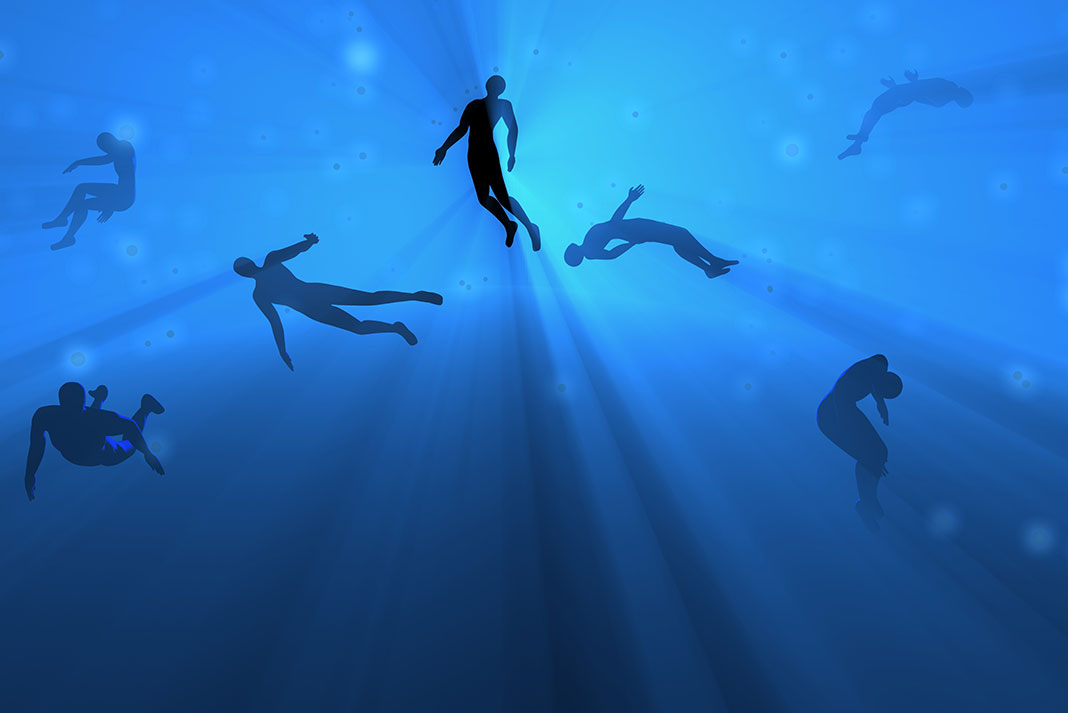
illustration looking up through the water at silhouetted bodies drowning
The steps of not drowning: Step 1, wear a life jacket. Step 2, never skip Step 1. | Feature photo: Adobe Stock

The steps of drowning

1 Cold shock

Immersion in cold water can overcome your intention to hold your breath. This is called cold shock and its symptoms include gasping, hyperventilation and increased heart rate. The response starts when immersed in water somewhere between 15 and 10°C. The first 30 seconds or so are the worst, but the shock subsides at around the two- or three-minute mark.

2 Stress or panic response

We’re talking about the kind of panic that stems from a paralyzing fear of drowning when suddenly confronted with cold water, rip current, or unexpected underwater objects. This impairs the ability to comfortably breathe. “Fall out of a kayak and have a foot entrapment with whitewater two feet above your head—who is not going to panic? Most folk will,” says Zaferes.

3 Breath-holding

Peoples’ ability to hold their breath differs widely and it’s possible to train yourself to lengthen breath-holding. In warm water, the average maximum breath-hold time is roughly 45 seconds. In coldwater, it’s much shorter.

Drowning by the numbers

Drowning is the third leading cause of unintentional injury death worldwide, accounting for 7% of all injury-related deaths.

Every year, an estimated 37,000 people around the world die by drowning.

After powerboats, the next most common type of watercraft in recreational boating-related fatalities in Canada between 2008 and 2017 was: 23% canoe; 7% kayak.

In the United States, kayaks are listed as the vessel type with the second-highest fatalities, behind open motorboats. Motorboats: 44%; kayaks: 15%.

In 2021, where cause of death was known, 81% of fatal boating accident victims drowned, according to the U.S. Coast Guard.

Of drowning victims with reported life jacket usage 83% were not wearing a life jacket.

Sources: World Health Organization, Drowning Prevention Research Centre, U.S. Coast Guard

4 Elevation of carbon dioxide in the blood

When we breathe in oxygen, our bodies produce carbon dioxide as a waste product. When we hold our breath, oxygen drops and CO2 builds up in our blood. This sends a signal to our brains to take another breath.

5 Breathing in water

At some point, our brains can no longer hold back the need to breathe. Water enters through our nose or mouth, or both.

6 Water in stomach

Some research suggests drowning victims swallow more water than they inhale, which increases the chances of vomiting while underwater or during resuscitation. The risk is you could breathe in your vomit, leading to pneumonia if you survive.

7 Water in lungs

When water enters our noses, it flows into our lungs. More precisely, it flows into microscopic air sacs, called alveoli. Alveoli are coated in a thin fatty layer allowing oxygen to easily pass into nearby blood vessels. When that coating encounters water, it washes away. This makes it harder for whatever oxygen remains in the lungs to reach the blood.

8 Oxygen deprivation

If your body’s oxygen levels drop low enough, your organs begin to shut down. You can lose consciousness and die, or have a cardiac arrest and die. Oxygen deprivation is the ultimate cause of death in drowning.

Cover of Paddling Magazine issue 68This article was first published in the Fall 2022 issue of Paddling Magazine. Subscribe to Paddling Magazine’s print and digital editions, or browse the archives.

The steps of not drowning: Step 1, wear a life jacket. Step 2, never skip Step 1. | Feature photo: Adobe Stock


Two Whitewater Greats Join Forces For Latest Project (Video)

Did Dane Jackson have his most successful year yet in 2022? He makes an argument for it in his recently released highlight reel. Jackson ups the creative ante for the project by teaming up with fellow whitewater paddler and musician Rush Sturges.

Sturges’ newest track, “Live or Die,” provides the score to Jackson’s visual paddling display. “Live or Die” is also available on Spotify for those looking to add to their shuttle drive playlist.


Never Turn Back

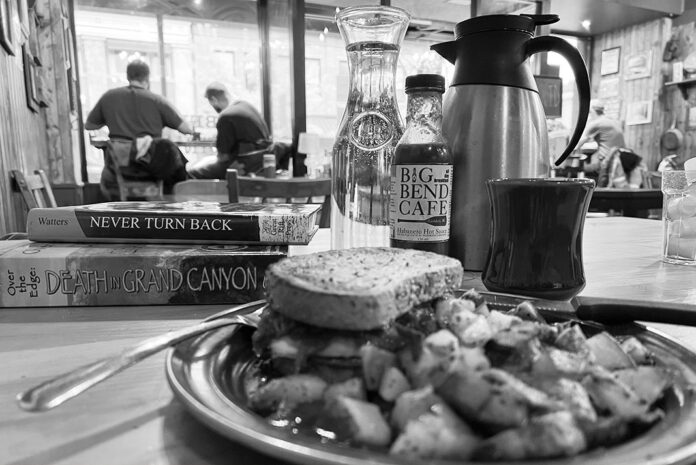
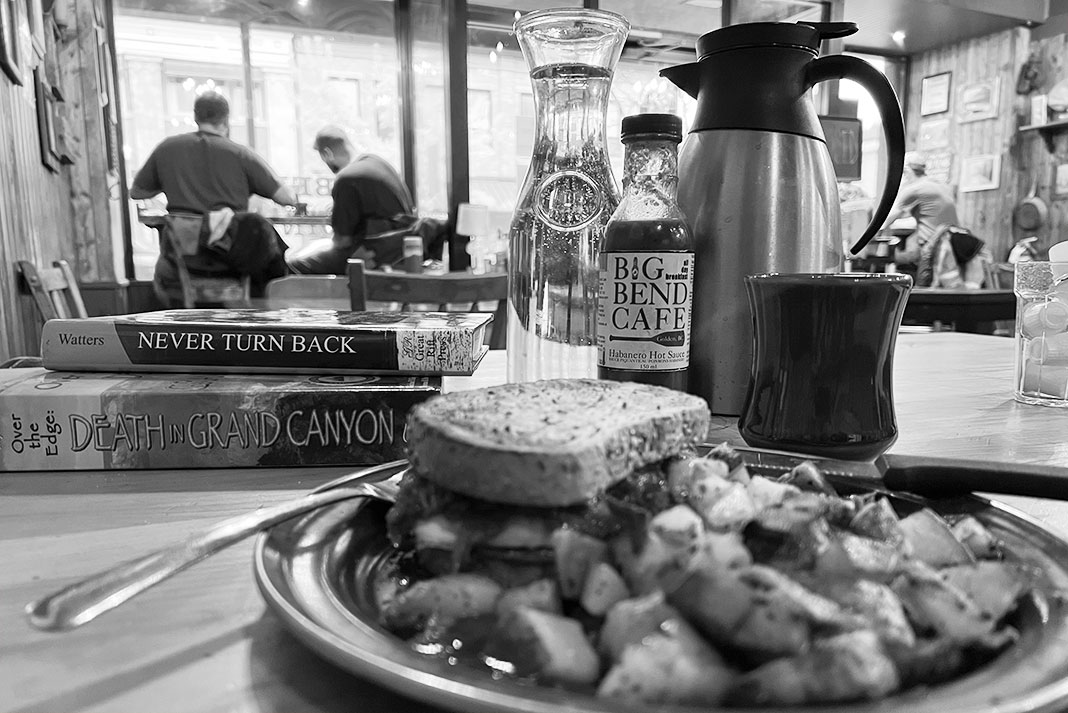
black and white photo of a lunch plate in a diner with a stack of paddling books and other people dining in the background
Whether rocky or smooth, never turn back on life’s winding course. | Feature photo: Scott MacGregor

I spent a lot of time this summer floating in eddies. Mostly alone. These were the same eddies of my mid-20s where I spent time hiding from answering the big questions.

Most authors of self-help books don’t like to use the word crisis. In Daniel J. Levinson’s best-selling version of the story, The Seasons of a Man’s Life, he argues these are not times of crisis, but rather “specific periods of personal development through which all human beings must pass.”

It’s good to know you’re not alone. Crisis or not.

Although, simply knowing about the stages through which we all must pass doesn’t make the way through any easier.

Never turn back

I’d met Stephi Walker a few years ago. At the time she was living the dream. Mid-20s, a fresh whitewater instructor and experienced wilderness guide bouncing from contract to contract, from country to country. This summer, Stephi was back in the Ottawa Valley where she carved into one of my eddies. I was happy for the company and to get out of my head.

She was back in town for a visit and to sell her car, a Toyota Matrix she’d left here three years ago. She had only a few days left before she flew home to Scotland, where she’d spent most of the Pandemic working for an environmental agency. She had a couple more rivers to paddle and a canoe trip planned. She hadn’t yet sold her car.

black and white photo of a lunch plate in a diner with a stack of paddling books and other people dining in the background
Just about the time you think you’ve figured life out, you get to do it all again—in midlife. | Feature photo: Scott MacGregor

“Sounds to me you have commitment issues,” I joked.

Selling the car meant cutting ties with her life here. Selling the Matrix meant moving further into the adult world, also known as settling down.

What does it mean to settle down?

Most people learn to paddle sometime in their 20s. You know, about the time we begin exploring all the possibilities of adult living. The world is full of adventure and wonderment. A time for keeping our options open and avoiding strong commitments.

Fun, right?

Except this is also when we are tasked with being more responsible, making sense of life and creating what Levinson calls a stable life structure.

Too much adventure and Levinson says life takes on an extremely transient, rootless quality.

Too much internal or societal pressure to settle down and “there is a danger of committing oneself too prematurely to a structure, without sufficient exploration of alternatives.”

By our early 30s, most of us are trying to work out the flaws and limitations of our chosen life paths. “Is this who I want to be?” we ask ourselves as we’re floating in eddies.

If we haven’t sorted it all out, annoying little voices scream in our heads, “If I am to change my life I must now make a start, for soon it will be too late.”

Just about the time you think you’ve figured it out, you get to do it all again—in midlife.

Pondering life at the Big Bend

Roddy MacIsaac is 67 years old. He owns the Big Bend Cafe where I drink coffee and write editorials. I usually order one of his all-day breakfasts, most of which are from his Grand Canyon guiding menu. Roddy tells me because of hip surgery, rehab and the Pandemic, he’s just returned from his first rafting trip in five long years. Roddy says he’s applied for another permit and invites me to join a spring run down the Main Channel of Idaho’s Salmon River.

When Roddy delivers me a BBQ pulled pork breakfast sandwich, he also drops on my table a copy of Never Turn Back, the life story of Walt Blackadar who, at age 49, made the first solo descent through Turnback Canyon on the Alsek River.

Forty-nine is about the age of the foreseeable second coming of the big question: What the hell am I going to do with my life? Call it a midlife crisis if you must.

As a physician, Blackadar was probably too busy to think about the life he really wanted. It’s no flashy sports car but first descents on remote rivers seems a legit way to rejuvenate himself and enrich his life.

We all feel at least some bits and pieces of a midlife transition, says Levinson. Our happiness depends on how much we let things like money, career, family and legacy chip away at us as we settle into full-fledged adulthood.

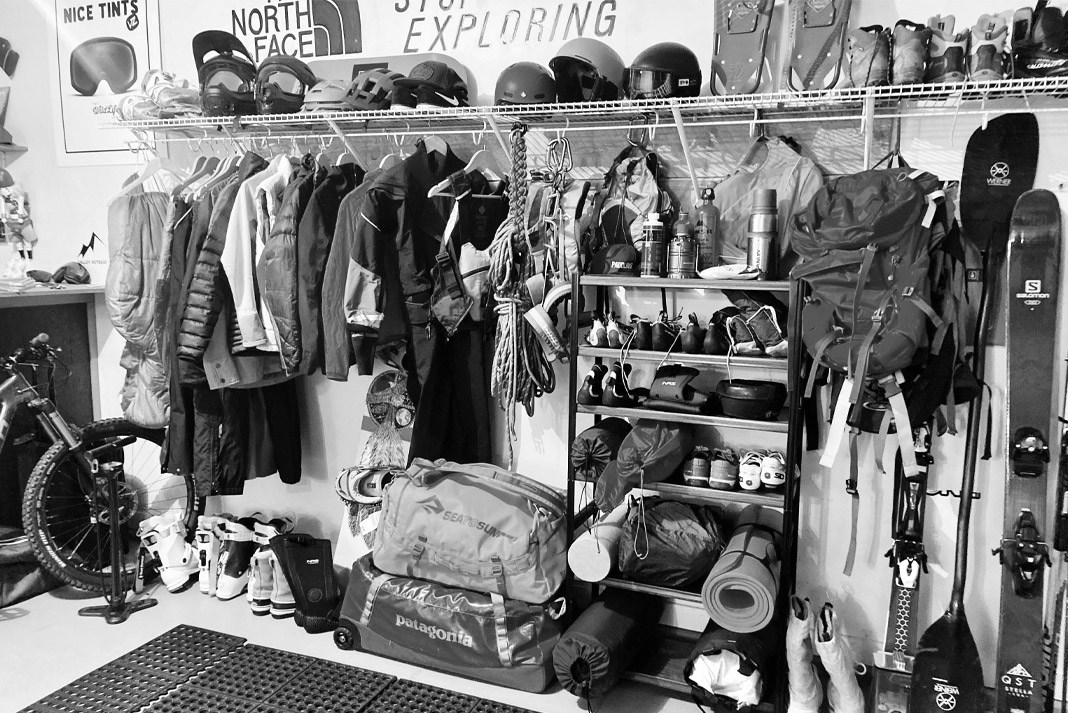
Roddy is older than me and seems less tyrannized by the ambitions and illusions of youth. He told me he’s cut back to four days a week at the restaurant. He seems content puttering around his property and playing in his gear shed. He says he wants to raft and ski deep into his 70s.

According to Levinson, a developmental crisis only occurs when we wake up to find our present life intolerable and we feel unable to form a better one. To form a better life, we first need to see a better life.

I know some people go to therapy. But floating the Main Channel of the Salmon in June looks pretty good to me.

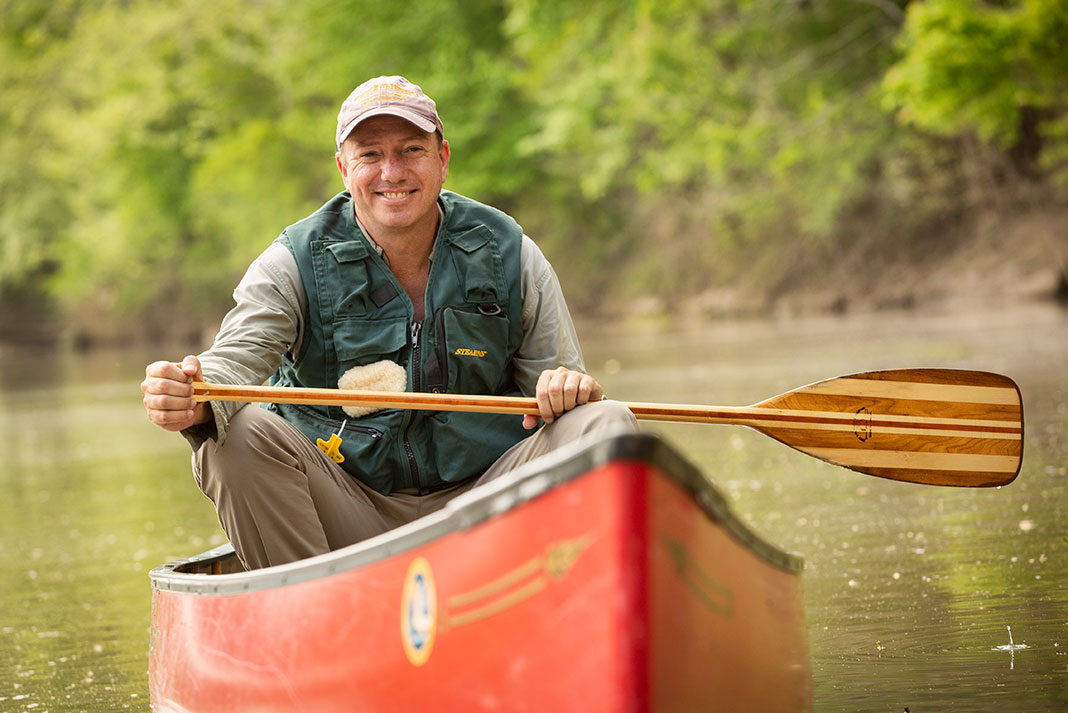
Scott MacGregor is the founder and publisher of Paddling Magazine. Stephi didn’t sell her car and is currently on a ship sailing to Antarctica.

Cover of Paddling Magazine issue 68This article was first published in the Fall 2022 issue of Paddling Magazine. Subscribe to Paddling Magazine’s print and digital editions, or browse the archives.

Feature photo: Scott MacGregor