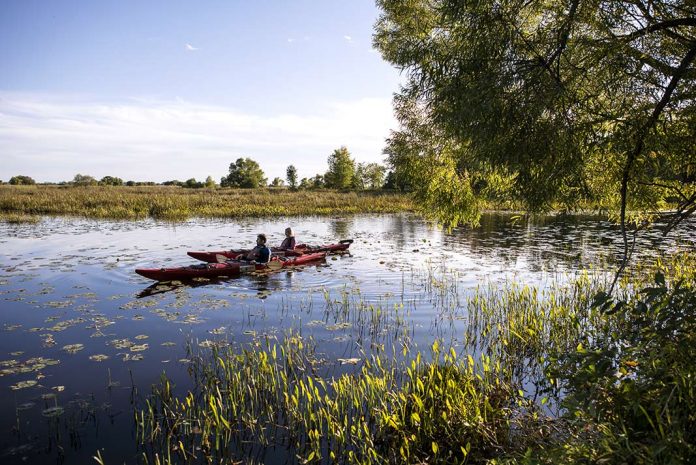
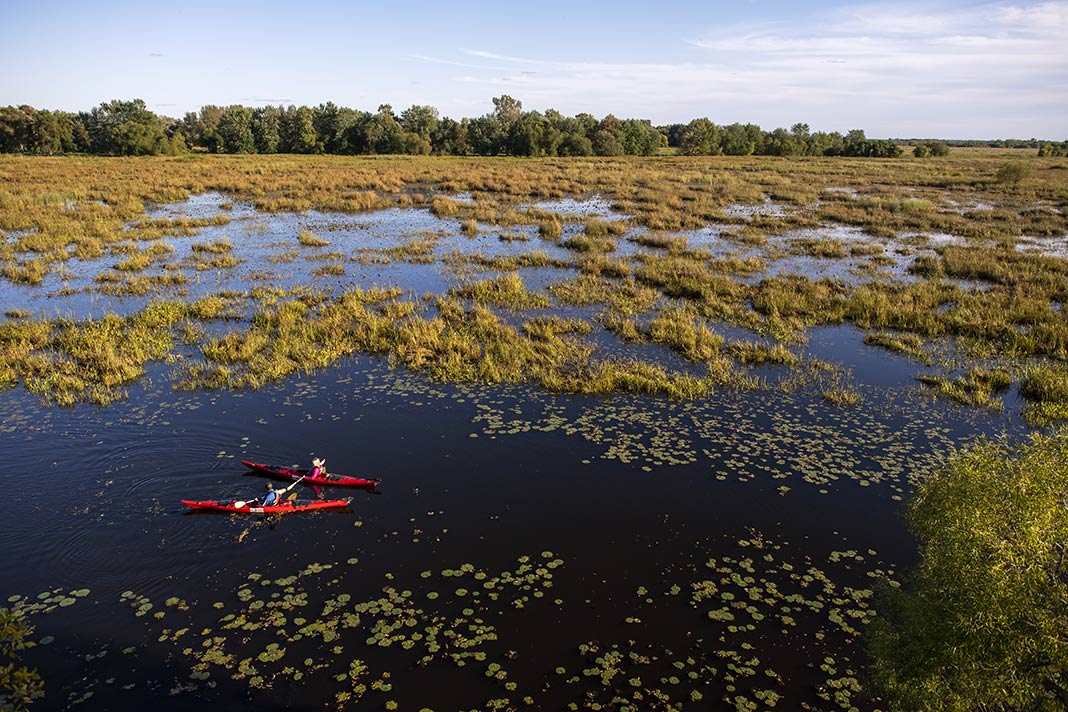
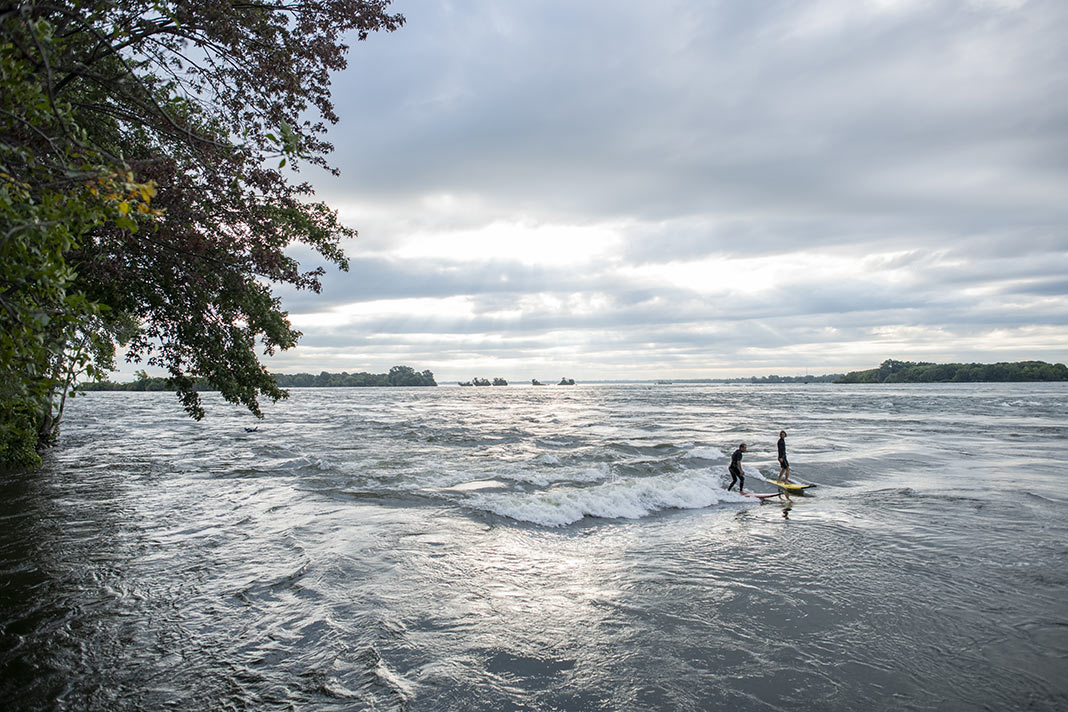
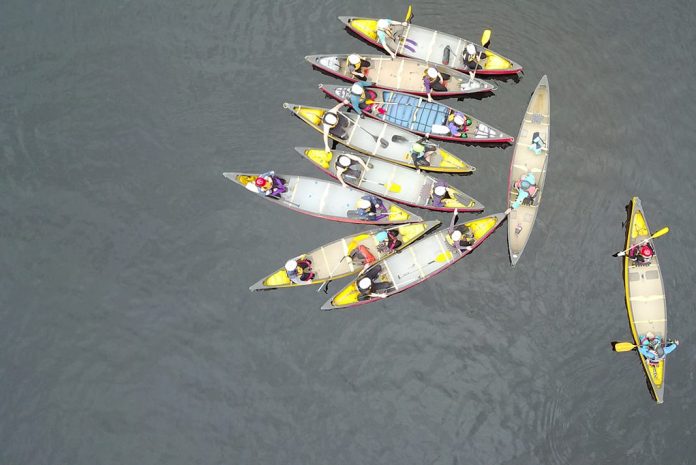
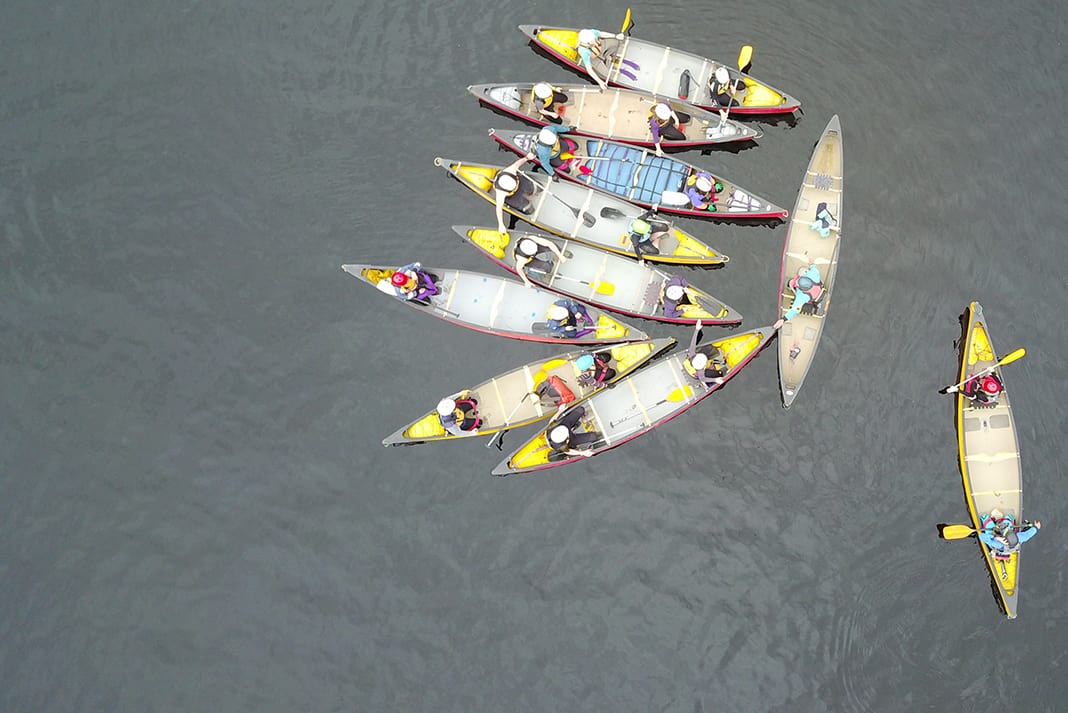
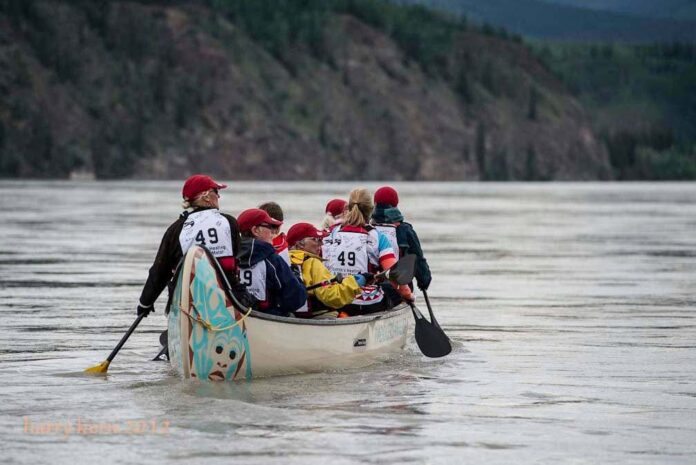
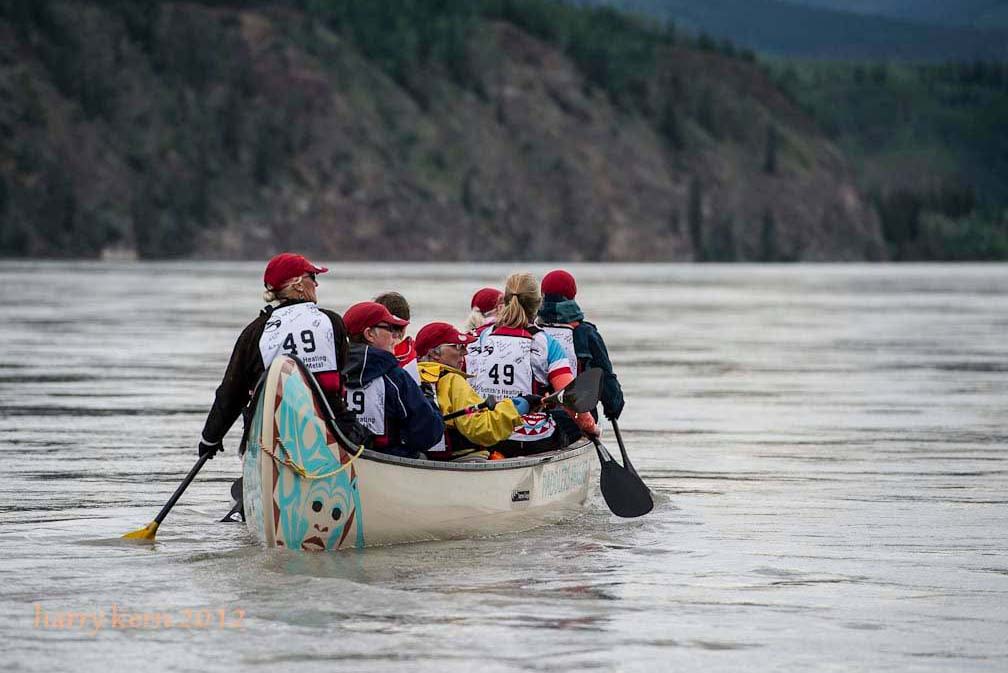
Enthusiasm for the Yukon River Quest is at an all-time high this year, with a record-setting field of 119 teams currently registered. That doesn’t surprise anyone, says board president, Deb Bartlette, considering the 2020 race was a no-go due to the pandemic and 2021 was cancelled due to flooding.
“I get emails every day from paddlers about how excited they are to actually be able to come back, or to come to the Yukon for the first time and to be able to race this year,” says Bartlette.
[ Discover the best gear of the year in the Paddling Buyer’s Guide ]
When the race starts on June 22, 257 paddlers will represent 13 countries, including Australia, Austria, Belgium, Canada, Estonia, France, Germany, Ireland, New Zealand, Sweden, Switzerland, the United Kingdom and the U.S.A. They’re racing for a purse of $59,000, under slightly different circumstances than in previous years.
Photo: Yukon River Quest
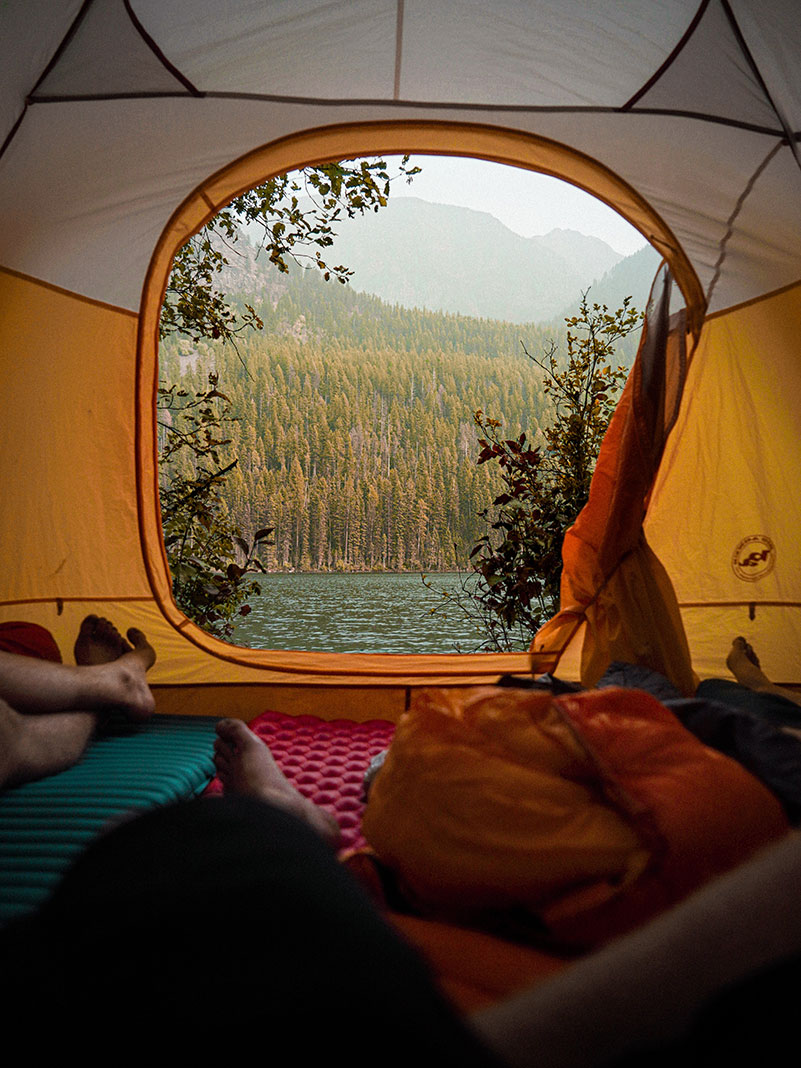
Photo: Yukon River Quest
Changes to the 2022 edition of the race include the following:
Due to higher water levels creating less shoreline access, there will be two start times, at 9 a.m. and 12 p.m. on June 22.
There are two checkpoints at Carmacks this year, at Coalmine Campground and the Bridge Site (the old YG campground). The Bridge Site will accommodate solo and tandem canoes and kayaks.
There is a new checkpoint at Minto Resort, replacing the former checkpoint at Coffee Creek.
This is the first time the race will have two road-accessible layover checkpoints.
Teams must take a mandatory 10-hour layover at the Carmacks and Minto checkpoints, but teams may divide those hours as they see fit.
[ Plan your next adventure with the Paddling Trip Guide ]
This year’s race is officially dedicated to long-time paddler, Ingrid Wilcox, who died of cancer in 2021. It also remembers race stalwarts Robert Carlin “Buckwheat” Donahue Jr., Linda Rapp, Shelley Gellatly, and Bob Daffe.
Water levels are currently being monitored to assess risk. Any changes to final race format will be made and relayed to racers by June 10.
The Awards Ceremony will be an outdoor event at Fort Herchmer, behind the Commissioner’s House in Dawson City.
At any indoor locations along the race route, or places where people are in close quarters, masks are strongly recommended.
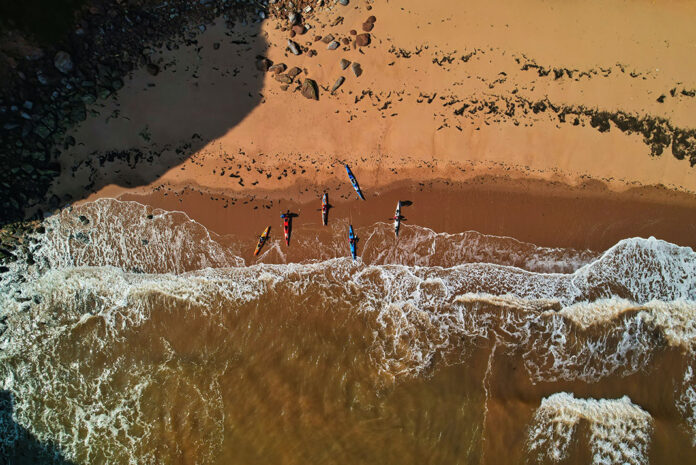
Photo: Yukon River Quest
To follow along from June 22 to June 25, view the Race Tracker link at www.yukonriverquest.com, or check in for updates on YRQ’s Facebook and Instagram pages.
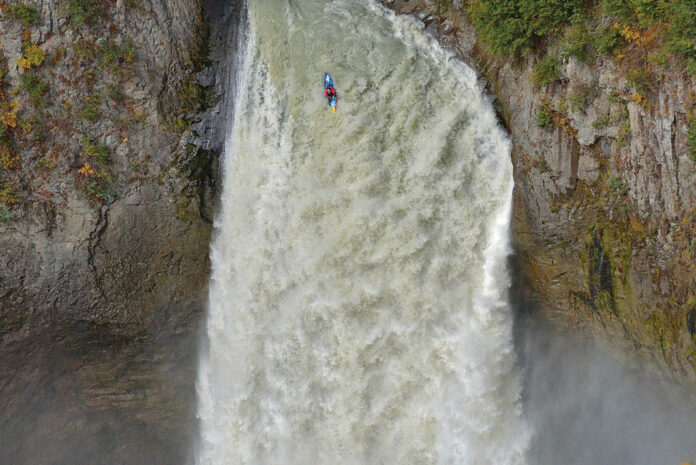
Paddler Aniol Serrasoles was only four years old when TLC’s breakout hit “Don’t go chasing waterfalls” spent seven weeks at number one on the Billboard Top 100. | Feature photo: Steve Rogers
If you have spent any time in the whitewater world, you’ve undoubtedly heard rallying cries to “Go bigger!” and “Step it up!” Boundary-pushing mantras of bravado like this pervade the sport, from professionals facing un-run rapids, to friends pushing each other over their first drop. All this enthusiasm is fun, but what’s the ultimate cost when it pushes beginners away from whitewater kayaking?
Why going bigger makes the whitewater world smaller
As a river runner for nearly four decades, it’s exciting to see the sport evolve with new skills and challenges. But the consequences of what happens when beginners and intermediates think in clichés are disturbing.
Whitewater kayaking is one of the smallest adventure sports there is. The Nantahala Outdoor Center estimates there are roughly 40,000 regular whitewater kayakers in the U.S., defined as people who own a kayak and paddle once a year. Compare that to 20 million skiers and two million rock climbers and you realize just how small our clan really is.
Compared to 20 million skiers and two million rock climbers, the roughly 40,000 U.S. whitewater kayakers are a tiny clan. | Photo: Paul Edney/Pixabay
Mantras are a poor substitute for mentorship
One reason for our minority is the huge attrition coming from bad experiences. Plenty of people think kayaking looks fun and they try it out. However, they are set up for failure by expecting success with little preparation, and dealing with fear using artificial bravado.
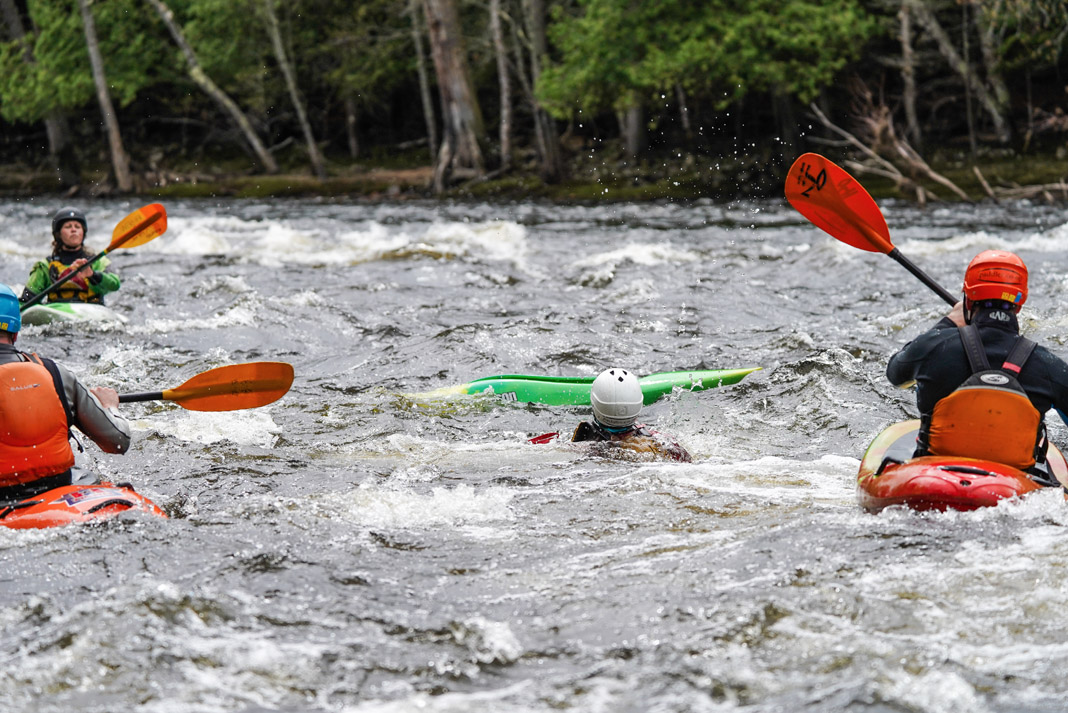
Consider the guy whose friends take him on the local run (“Dude, it’s easy!”). He flips, flails upside down, gasping and scared. He has no skills but they say, “Get back on the horse!”
Or the anxious intermediate woman looking at her first class IV. She doesn’t have confidence but her friends urge her, “Step it up!”
For every person I know who paddled whitewater for a season, many more have told me they got scared and quit. No wonder our sport is so small.
These mantras are part of the problem. You don’t deal with fear by denying it. You don’t get confident or improve skills by acting with false bravado under peer pressure.
These same clichés undermine a person’s sense of belonging. Countless times paddlers have confessed to me, “I’m not a real paddler—I only do class II.” Instead of feeling joy and accomplishment, the default attitudes pervading our sport make people feel insecure and dissatisfied.
That’s the sound of the future of our sport washing away. Whitewater kayaking can survive without class V daredevils, it can’t survive without beginners and intermediates.
Don’t let the default clichés of whitewater kayaking make your world smaller. | Photo: Timothy Reid/Pexels
Whitewater paddling has more to offer beginners
Fast progression to bigger and more difficult rapids isn’t everyone’s goal. That assumption takes a rich sport and narrows it to one dimension. Idolizing hard whitewater leaves out what the vast majority of whitewater paddlers do—catching a nice eddy, surfing a beautiful wave, and just enjoying a day on the river.
Water carries infinite beauty and moods, and our sport includes all of them. There are days bouncing down rapids shouting with friends, times listening to the rain fall on the water, or watching otters play—a million things the magic of rivers give us that don’t involve “stepping it up.” Don’t let the default clichés make your world smaller.
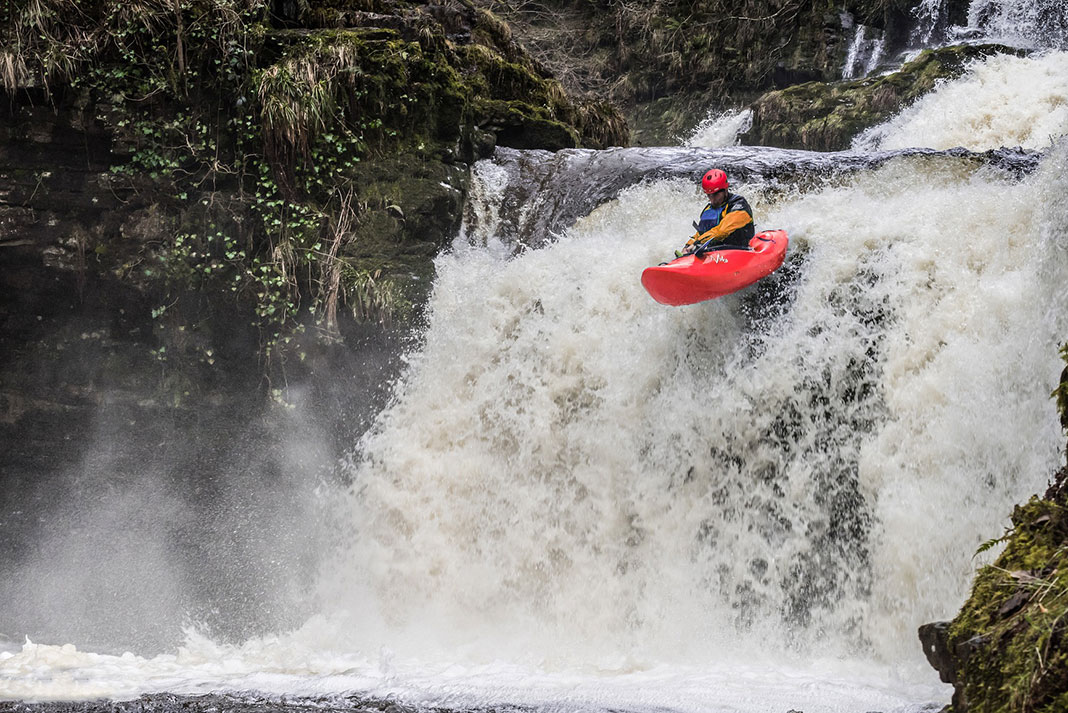
Nobody should think they aren’t a real paddler because they don’t chase big rapids or waterfalls. If you have a paddle in your hands and you are in your boat, once you push off into the river you are a real paddler. Go explore.
This article was first published in the Fall 2015 issue of Rapid Magazine. Subscribe to Paddling Magazine’s print and digital editions, or browse the archives.
Paddler Aniol Serrasoles was only four years old when TLC’s breakout hit “Don’t go chasing waterfalls” spent seven weeks at number one on the Billboard Top 100. | Feature photo: Steve Rogers
It should come as no surprise that an island city like Montreal boasts an abundance of exceptional opportunities to kayak and canoe—especially since Montreal sits at the confluence of two mighty rivers: the St. Lawrence and the Ottawa, which converge just west of the city at Lake of Two Mountains. The combined currents of these rivers splinter around the islands of Montreal and Laval, creating the Riviere des Prairies and the Riviere-des-Mille-Îles, as well as the famous Lachine Rapids of the St. Lawrence.
Travel just an hour or so outside the city and you can very quickly discover more lively rivers and many beautiful highland lakes. With such an immense variety of waters, kayaking in Montreal ranges from tranquil touring among bird-filled wetlands to kayak surfing on the St. Lawrence and whitewater kayaking descents of the region’s exciting rivers. Get started planning your paddling adventure today with these top places to kayak in Montreal.
[This article is part of our 24 Adventurous Things To Do In Montreal series. Learn more about where to hike, bike, paddle and sightsee around Quebec’s largest city.]
For some of the very best sea kayaking around Montreal, head to this beautiful national park in east Montreal just a few kilometers from the city’s Old Port. Situated right in the middle of the St. Lawrence, five closely-knit, vehicle-free islands make up Parc National des Îles-de-Boucherville, offering a peaceful escape from the noise of the city with green spaces and leafy channels teeming with birds and aquatic life. Explore the lush grasses of Chenal du Courant’s expansive marsh and watch for busy beavers and ubiquitous deer—two marked water trails make it easy for visiting kayakers to navigate between the various channels.
You can rent kayaks, canoes and SUPs at Grosbois Visitors Centre or the park Rental Centre. If you have your own equipment, use the launch at the Rental Centre. And if a day in paradise doesn’t seem like enough, not to worry. Campsites and Ready-to-Camp tents on Îles Grosbois make it easy for kayak campers to linger longer.
The “River of a Thousand Islands” flows gently across the top of Laval, forming an island-studded waterway that’s perfectly suited to leisurely exploration by kayak. In the Laval borough of Saint-Rose, launch from Parc de la Riviere-des-Mille-Îles, which encompasses some 20 islands scattered across the largest protected wildlife area in the metropolitan district—a pleasant labyrinth of water and vegetation just 30 minutes from downtown Montreal. The verdant wetlands, shady forest canopy and abundance of statuesque blue herons, sunbathing turtles and flotillas of geese and ducks make this river feel more like kayaking in the bayou than paddling in the city. Kayak, canoe and SUP rentals are available by the hour or day, and four self-guided paddling circuits keep navigation simple.
Oka National Park
Located on the mainland shore of Lake of Two Mountains just west of Montreal, Parc National d’Oka is a favorite escape from the hustle and bustle of the city. This is the place for a relaxing day at the beach, where you can paddle along 7 km of fine sand, or for a wildlife-filled tour of the vast marsh at Grande Baie. Oka also offers camping, trails, unique historic buildings and a rich cultural heritage. Kayak, canoe and SUP rentals are available in the park by the hour, half-day or full day. If you have your own equipment, launch at the La Crête boat ramp or from the main swimming beach.
Riviere des Prairies
Flowing between the islands of Montreal and Laval, the Riviere des Prairies offers a relaxing urban kayaking experience in the heart of the metropolitan area. Here, you can enjoy stretches of natural shoreline and an intimate view of the city’s finest waterfront homes. Consistent current and occasional swifts make this river best suited to downstream kayak journeys. Take advantage of two kayaker-friendly launch sites and a shuttle service on the Gouin Route of the river to plan a one-way trip from Beausejour Park to Sophie-Barat Nautical Site. Easy access, on-site kayak rentals and a unique bike back option along the adjacent bicycle path make for a fun, simple day of kayaking around Montreal.
For a unique perspective of the city, combine a leisurely kayaking tour of the historic Lachine Canal with all the food, culture and architecture you can handle in Old Montreal. Completed in 1825, the canal bypassed the treacherous Lachine Rapids of the St. Lawrence, allowing 19th century merchants to make Montreal one of the main hubs of North American trade. In its heyday, nearly 15,000 ships used the narrow canal each year, but with the completion of the much larger St. Lawrence Seaway in 1959, the Lachine Canal fell into disuse. Today, it is managed by Parks Canada as a national historic site, allowing kayakers and other pleasure boaters to traverse 14 kilometers from the Old Port of Montreal to Lake Saint-Louis. The canal is punctuated by five restored locks and a linear park lines its banks, making for easy options to rest, picnic or shorten your journey.
Kayaking near Montreal
Sorel Islands
The Sorel Islands–Lac Saint-Pierre Biosphere is one of the most ecologically diverse places to kayak near Montreal. Less than an hour down the St. Lawrence from the city, a dense archipelago of 103 islands stretches across the river at the western end of Lac Saint-Pierre. The Sorel Islands are the St. Lawrence’s largest archipelago and home to 50 percent of the river’s wetlands, making it an internationally significant waterfowl staging area. This is a bird-watcher’s paradise, as the islands also serve as North America’s largest heron nesting area.
The Société d’Aménagement de la Baie Lavallière (SABL) is responsible for the largest managed marsh in North America. This non-profit organization has set up two boat ramps that allow kayakers to launch and explore Baie de Lavallière and the Sorel Islands’ vast mosaic of hidden channels, maple swamps and wild wetlands. The eastern islands remain completely natural and undeveloped, home only to bird-filled marshes and secret, kayak-sized passages.
Across the St. Lawrence on Montreal’s South Shore, the historic Chambly Canal invites kayakers to travel back in time while enjoying a peaceful day in nature just 35 minutes from the city. Built in 1843 to bypass the thundering rapids of the lower Richelieu River and serve as a link between the St. Lawrence River and Lake Champlain, today the 19-km-long Chambly Canal National Historic Site is managed by Parks Canada as a recreational waterway. The canal’s 9 locks, eight of which are still operated manually by hand crank—as well as swing, rolling and lift bridges—set the pace for your kayaking excursion. Natural, grassy banks and towpaths make for easy launching and landing so you can enjoy a picnic or stretch your legs.
Riviere du Nord, Val-David
Set in a picturesque valley in the Laurentian Mountains just one hour north of Montreal, the charming village of Val-David seems conceived for the enjoyment of outdoor enthusiasts. At the foot of the mountains, the Riviere du Nord flows a gentle 7 km path through the village before reaching Lac Raymond, paralleled along its green banks by the P’tit Train du Nord cycle path. For a thoroughly relaxing half-day excursion, kayakers can paddle downstream to the lake and then pedal or hike back to their starting point.
Mont Tremblant National Park
It’s hard to believe this huge national park is within such easy reach of the city. Less than two hours north of Montreal, the forested mountains, sparkling lakes and rushing rivers of Parc National du Mont Tremblant offer some of the best kayaking near Montreal, along with an incredible variety of other outdoor activities. Kayaking in the park ranges from easy sojourns on mountain lakes and kayak camping at beautiful backcountry sites, to exciting whitewater descents of the Diable and L’Assomption Rivers. Portage trails allow kayakers to skirt around the rapids, putting these one- to two-day river trips within the grasp of intermediate paddlers. Kayak rentals are available at the park.
Rushing out of the Laurentian Mountains north of Mont Tremblant, the Riviere Rouge flows over 200 km south to the Ottawa River. It’s a river of many different moods, at turns meandering gently through bucolic rural landscapes and dashing violently through thick forest and steep-walled valleys. Where the current is calm, shallow sandbars and vast shoreline beaches invite leisurely paddle-swim-picnic excursions.
Classic flatwater kayaking routes depart from the villages of L’Ascension or Labelle—two hours north of Montreal—and finish at L’Annonciation (Riviere-Rouge) or La Conception, respectively. Here the Rouge River offers peaceful paddling, warm water, incredible sand point beaches and cliffs, and even a historic covered bridge. Most kayakers plan a downriver trip of 6 to 30 km, with numerous convenient take-out options to shorten the journey. Plan a half to full day for either section, depending on your distance of choice.
Located in Montreal’s LaSalle borough, the Parc des Rapides offers terrific park-and-play access to the famous Lachine Rapids of the St. Lawrence River. Experienced kayakers can connect with local surfers and paddlers for beta on the best surf waves, such as Big Joe, Gaétan, and the Pyramidal. If you’re more of a novice or intermediate kayaker, it’s highly recommended that you book a lesson with LaSalle’s whitewater and surf experts, KSF (Kayak Sans Frontieres) for your first foray into the rapids. They can get you started on beginner-friendly Guy’s Wave and help you progress into the larger rapids.
Habitat 67 Wave
This popular urban surf wave is named for the architecturally unmistakable apartment complex that towers above it. Built for Montreal’s World Exposition of 1967, the buildings resemble a Jenga tower of stacked cubes, making for a distracting backdrop between surf sessions. Habitat 67 Wave is accessible from Parc de Dieppe, located on a splinter of land between Montreal’s Old Port and the twin islands of Île Sainte-Hélène and Île Notre-Dame. Interestingly, these large islands were also built for Expo ‘67—from the debris excavated during construction of Montreal’s subway system!
Just an hour’s drive west up the Ottawa River from Montreal, the fast and furious Riviere Rouge is renowned for adrenaline-pumping whitewater kayaking and rafting. In its final 10 kilometers, the river enters a canyon and drops precipitously toward its confluence with the Ottawa—a cathartic spill of rapids and falls that have made the Rouge one of Quebec’s most popular whitewater rivers.
Ranging from moderate class II-III rapids to heart-pounding drops and continuous class III-IV rapids, the Rouge attracts both novice and expert whitewater kayakers. Early in the season, you can brave the high water of Harrington Canyon, while summer offers challenging descents of the rambunctious Seven Sisters section. Beautiful scenery, sandy beaches and surf waves make this an unforgettable kayaking destination. If it’s your first time paddling the river, book a lesson with local paddling school ABV Kayak. Located at Grenville-sur-la-Rouge, they offer beginner to advanced courses, one and two-day packages, equipment rental and riverside camping.
Kayak courses Montreal
Boreal River Adventures
Learn to paddle the powerful rapids of the Ottawa River at Gatineau in a single day with this unique, introductory 4.5-hour workshop from Boreal River Adventures. Paddling in a stable kayaraft (inflatable kayak-raft hybrid), you’ll learn whitewater skills and safety concepts while challenging the class II rapids of the Ottawa. This course is offered at Parc Moussette in Gatineau, 2 hours west of Montreal. Boreal River Rescue also offers whitewater rescue and wilderness first aid courses for kayakers.
The city’s oldest and best-known paddling school, KSF offers SUP and whitewater kayak lessons Montreal-style—you’ll follow a step-by-step progression to take you from flatwater to the advanced level surf waves of the Lachine Rapids. Based right at Rapids Park on the riverfront in LaSalle, KSF’s kayak program is divided into five 3- to 6-hour courses so you can learn safely and at your own pace.
Based on the waterfront in Verdun, NAVI offers introductory 3-hour sea kayaking lessons (plus rentals and tours) on the St. Lawrence River below the Lachine Rapids.
Location: 6500 Blvd LaSalle, Verdun, Montreal Phone: 514-800-0481 Website: www.espacenavi.ca/en/
KLN (Kayak Latins du Nord)
If you’re serious about sea kayaking, KLN offers day courses and outings, surf and current clinics, and Paddle Canada courses from beginner to expert in and around Montreal. Instruction is led by a top-level sea kayak coach, with courses and private coaching available in English, French and Spanish.
Familiarize yourself with paddling before setting off on the Rivière des Prairies. The GUEPE organization offers 1-hour training plus 1-hour single kayak rental packages at Parc Beauséjour on the river’s Gouin Route.
Location: 6891 Blvd Gouin Ouest, Montreal Phone: 514-713-6829 Website: www.parcoursgouin.ca/
Parc de la Riviere-des-Milles-Îles
All summer long, the Eco-Park offers 2.5-hour kayak lessons in co-operation with MEC. Learn the basics, practice your skills and receive a gift certificate for a free kayak rental in the park at the end of your lesson.
Located within the Lachine Canal National Historic Site just across from the famous Atwater Market, the nautical center offers 2-hour introductory sea kayaking courses (plus rentals and tours on the canal).
Location: 2727 Rue Saint-Patrick, Montreal Phone: 514-842-1306 Website: www.aventuresh2o.ca/
ABV Kayak
Experience the thrill of challenging the Rouge River’s famous rapids by whitewater kayak with beginner to advanced course offerings from this kayak school located at the powerful rapids of the lower Rouge. One and two-day packages, equipment rental and riverside camping are available.
Location: 1199 Chemin de la Rivière Rouge, Grenville-sur-la-Rouge Phone: 888-844-5292 Website: www.abvkayak.com/en/
Montreal kayak tours
NAVI
Based on the waterfront in Verdun, NAVI offers 2- and 3-hour, beginner-friendly sea kayaking tours on the St. Lawrence River below the Lachine Rapids. Choose from an easy tour to Rock Island; a more challenging descent to the southern tip of Île-des-Soeurs, including a few small rapids; or a full moon night paddle to enjoy the magic of Montreal after dark.
Location: 6500 Blvd LaSalle, Verdun, Montreal Phone: 514-800-0481 Website: www.espacenavi.ca/en/
Parc de la Riviere-des-Milles-Îles
At dusk every Friday and Saturday through summer, park staff offer a naturalist-guided, twilight outing in the archipelago of the Riviere-des-Milles-Îles. These 2.5-hour sea kayak tours are a great chance to see some little-known wildlife hiding on and around the islands—including beavers, turtles, bats and great blue herons.
Located within the Lachine Canal National Historic Site just across from the famous Atwater Market, the nautical center offers 3-hour interpretive tours of the canal and Montreal’s Old Port. Your guide will share the fascinating history of the Lachine Canal while you enjoy a new perspective of the city. Choose from a morning tour through the St-Gabriel Locks to the Old Port, or a sunset kayak and brewery tour.
Location: 2727 Rue Saint-Patrick, Montreal Phone: 514-842-1306 Website: www.aventuresh2o.ca/
Excursions Kayakalo
Excursions Kayakalo, based in Sorel-Tracy, offers guided sea kayak tours of the Sorel Islands, the Boucherville Islands and the Rivière-des-Mille-îles. The tours are flexible and can be adapted to a variety of interests. Basic kayak techniques are taught, and all equipment is provided.
Location: 2786 Chenal du Moine, Sainte-Anne de Sorel Phone: 450-880-1654 Website: www.kayakalo.com/
[ Plan your next paddling adventure with the Paddling Trip Guide ]
Nerrivik Aventures
Based just east of Montreal, Nerrivik Aventures is a sea kayaking outfitter specializing in day trips and multi-day tours on the St. Lawrence from the Boucherville Islands to the Sorel–Lac Saint-Pierre archipelago. Guided trips to the lakes of Mont-Tremblant National Park are also offered. Develop your kayaking technique and learn about the river and region’s natural and cultural history on a custom excursion with Nerrivik’s experienced guides.
Based right at Rapids Park on the riverfront in LaSalle, KSF offers surfboard, paddleboard, touring kayak and whitewater kayak rentals, as well as all the necessary gear and equipment to play in the water.
Based on the waterfront in Verdun, NAVI offers single and double sea kayak and recreational kayak rentals on the St. Lawrence River below the Lachine Rapids.
Location: 6500 Blvd LaSalle, Verdun, Montreal Phone: 514-800-0481 Website: www.espacenavi.ca/en/
GUEPE Nautical Sites
Two-hour rental packages on the Rivière des Prairies include kayak rental and bike transport, so you can paddle the river from Parc Beauséjour to Sophie-Barat nautical site and return by bicycle.
Location: 6891 Blvd Gouin Ouest, Montreal Phone: 514-713-6829 Website: www.parcoursgouin.ca/
Parc de la Riviere-des-Milles-Îles
Montreal’s largest kayak rental center, the Eco-Park offers 3-hour and daily rentals of single and tandem kayaks, as well as canoes and SUPs.
Situated in a peaceful park-like setting on the banks of the Riviere-des-Milles-Îles, this center rents single and tandem recreational kayaks, fishing kayaks, SUPs and canoes. Cabin rentals and a pick-your-own orchard are also located on-site.
Located within the Lachine Canal National Historic Site just across from the famous Atwater Market, the nautical centre rents single and tandem sea kayaks, as well as pedal-powered sit-on-top kayaks. Half-hour, 1- and 2-hour rentals available.
Location: 2727 Rue Saint-Patrick, Montreal Phone: 514-842-1306 Website: www.aventuresh2o.ca/
Montreal’s huge go-to store for kayaks and paddling equipment offers 3-day and 7-day kayak rental from their downtown location (roof rack rental also available).
Location: 8267 Blvd St-Laurent, Montreal Phone: 514-381-4399 Website: www.depotpleinair.com/
Montreal’s oldest and best-known paddling school, KSF also operates an on-site surf boutique and online store selling kayak, SUP and surf equipment and apparel.
[ See the largest selection of boats and gear in the Paddling Buyer’s Guide ]
Boutique Boréal Design
Makers of fiberglass and plastic sea kayaks, recreational kayaks and fishing kayaks, Boréal Design’s South Shore boutique offers a try-before-you-buy program, as well as a full range of paddling accessories and apparel from top brands.
Montreal’s huge go-to store for kayaks, paddling equipment, camping gear, outdoor apparel and more.
Location: 8267 Blvd St-Laurent, Montreal Phone: 514-381-4399 Website: www.depotpleinair.com/
La Cordée
Quebec outdoor retail chain La Cordée operates a flagship store just north of the Old Port and steps to the St. Lawrence. Purchase whitewater, sea and recreational kayaks; paddling equipment and apparel; camping gear and much more. If you’re in Laval, there’s also a La Cordée location here.
Location: 2159 Rue Sainte-Catherine Est, Montreal Phone: 514-528-3546 Website: www.lacordee.com/en/
MEC Montreal
Outdoor retail chain MEC operates Laval and South Shore locations in addition to their main Montreal store just north of Mont Royal, stocking everything you need to get on the water or out into the wilderness.
Location: 8989 Blvd de l’Acadie, Montreal Phone: 514-788-5878 Website: www.mec.ca
SAIL
With locations in Laval and the South Shore (Brossard), outdoor retail chain SAIL carries kayak, paddlesports, camping and outdoor equipment and apparel.
Location: 2850 Ave. Jacques-Bureau, Laval Phone: 450-688-6768 Website: www.sail.ca/en/
The birds and the bees. | Feature photo: Scott MacGregor
Every paddler knows—there’s nothing like going on a multi-day trip to really get to know someone. Tripping together can work out beautifully and cement lifelong friendships or can lead to dramatic disasters when personalities collide under challenging conditions. Here are some key questions to discuss with your tripping partners before setting out on a canoe trip together.
What are your trip goals? Do you want to be on the water before the crack of dawn for a long day of record-setting paddling? Are you looking forward to relaxing mornings in camp followed by a leisurely jaunt to the next bay? Gourmet meals or lightweight freeze dried fare? Lengthy consensus decision-making or dictatorial efficiency from a single group leader?
It’s time to have the talk—not the birds and bees, but rather some pressing questions about canoe trip compatibility. | Feature photo: Scott MacGregor
2 Experience
How well do you know each other? What skill sets and range of experience exist in the group? Who has first aid training? Does everyone know how to perform basic assisted and self-rescues? Is the intended route a good fit for the group? Taking an inexperienced paddler for their first wilderness trip can be a rewarding experience for all involved, but should be done thoughtfully. There always will be paddlers of varying speeds, skills and energy levels—can you put your egos on hold to support each other?
Do you have compatible levels of risk tolerance, and the experience and judgment to make sound decisions?
3 Trip route and pace
Do you want an easily accessible front country trip or remote wilderness route? Big crossings or sheltered bays? What is the potential cost of shuttles, float planes, ferries and camping? Given each paddler’s experience and current fitness levels, is your trip route realistic? Is your idea of fun paddling for 15 kilometers or 50 kilometers a day? Does your route have alternate take-outs in case of injury or inclement weather?
4 Decision making and risk tolerance
How is your group going to make decisions, both on shore and on the water? How will you manage risks such as large crossings or surf landings? Do you have compatible levels of risk tolerance, and the experience and judgment to make sound decisions?
[ Plan your next paddling adventure with the Paddling Trip Guide ]
Some personality quirks are best managed with advance warning. | Photo: Joe Pohle/Unsplash
5 Daily routine
Navigation, setting up camp, cooking, doing dishes, collecting firewood—how will daily tasks be divided? Will your group have a chore rotation or just go with the flow each day? Take into account people’s strengths or preferences, go it solo, or divide tasks equally among everyone?
6 Health concerns
Do any group members have health conditions that the others should know about? Food allergies? Nagging shoulder injuries? Critical medication? A tendency to become “hangry”? Share key information so you can support each other when it counts.
7 Secret phobias, pet peeves and essential needs
Do you secretly suffer from crippling ranidaphobia (fear of frogs)? Does it drive you crazy when people don’t stay out of the kitchen while you’re making dinner? Is it dangerous to talk to you before your morning coffee? Some personality quirks are best managed with advance warning!
Regular check-ins, feedback and conflict resolutionWill you have regular check-ins throughout the trip? How will you give each other feedback or resolve potential conflict? Do you relish a no-holds barred debate or do you prefer gentle “I feel” statements? Regular opportunities for honest check-ins will go far towards keeping your trip running smoothly.
It’s time to have the talk—not the birds and bees, but rather some pressing questions about canoe trip compatibility. | Feature photo: Scott MacGregor
For big water kayakers, the year is not segmented by regular seasons. Spring is generally replaced with “stakeout” season, a term first coined several years ago by Pat Camblin in reference to someone literally surveying–or “staking out”–a wave.
“Stakeout is one of the best seasons of the year,” claims Dane Jackson in his most recent video. Jackson is referring to the annual pilgrimage to eastern Canada to paddle some of the biggest paddle-able rapids and waves on the planet. “Whether you get to surf the biggest and baddest waves, or just simply run the biggest whitewater. There is never a dull day,” he says.
In the video, Jackson checks out the Mistassibi River in central Quebec at rowdy flows. Watch how he gets on.
Ocean sea kayaking trips that take place in areas that are subject to significant tidal current activity require consultation of that area’s tidal current atlas to establish the times of slack, maximum flood and maximum ebb, regardless of whether your goal is to play in currents or avoid their effects.
[ Paddling Buyer’s Guide: View all sea kayaks designed for surf ]
What are tidal currents?
The vertical motion of tides raising and lowering near the shower creates currents, which move horizontally depending on whether the tide is coming in or out. As the tide comes in, the current moves toward the shore and is called flood current. As the tide goes out, the current moves away from the shore and is called ebb current.
Slack (or the “turn”) is the time when a tidal current reverses its direction and turns to flow in the opposite direction. | Photo: Red Zeppelin/Unsplash
Slack (or the “turn”) is the time when a tidal current reverses its direction and turns to flow in the opposite direction. This is the time when currents will be minimal or nonexistent and the water is at its calmest for safe travel. Information in the tidal current atlas will also provide you with the time of maximum flood and maximum ebb, and their respective speeds, in knots.
Finding slack, maximum flood and maximum ebb in this manner is relatively straightforward. To estimate what the current will be doing between these times, however, is not as easy as you might think.The cycle of tidal currents is such that a flood or ebb current lasts approximately 6.5 hours. A tidal current accelerates from slack (zero) to maximum speed over approximately three hours. The current then begins to slow again, heading toward the next slack, and this deceleration also takes about three hours.
Common sense might lead you to expect this acceleration and deceleration to progress in a nice logical, linear way from slack to maximum flow and back again. But this isn’t the case. To predict flows between maximum and slack, you need to use the Rule of Thirds.
[ Paddling Trip Guide: View all sea kayaking instruction and skills clinics ]
Using the Rule of Thirds
The Rule of Thirds breaks each half of the flood or ebb tide into three one-hour segments and states that the current reaches approximately 50 percent of its maximum speed in the first hour, 90 percent in the second hour, and 100 percent in the third hour. The current then decelerates to slack in the same order.
You should use the Rule of Thirds as a rule of thumb only. Do your homework, study guidebooks and seek out local knowledge. | Photo: Santiago Ospina/Unsplash
The Rule of Thirds shows that it’s important to travel close to the exact time of slack if you want to avoid paddling in current, because the speed accelerates quickly after the tide turns. It also shows that if you want to play in the current, it’s best to choose a maximum speed that you’re comfortable paddling in, because the current will be running at more than 90 percent of that speed for much of the time.
You should use the Rule of Thirds as a rule of thumb only. Do your homework, study guidebooks and seek out local knowledge, because current speed is far from the sole indicator of a tidal current’s potential for danger. Bottom geography, wind, water depth and shorelines all contribute mightily.
Also, big storms can disrupt the flows of tidal currents and reduce the accuracy of current table predictions. So let the final word rest with a visual appraisal on the scene. If the math works out but the current looks bad, trust your eyes and make decisions accordingly.
If you have a tidal passage that floods at a maximum of 10 knots at 3 pm, you can assume the following pattern. The same formula holds true for ebb tide currents.
Hour zero (12 pm): 0% slack, turning to flood = about 0 knots
Hour one (1 pm): 50% increasing speed = about 5 knots
Hour two (2 pm): 90% increasing speed = about 9 knots
Hour three (3 pm): 100% maximum flood = about 10 knots
Hour four (4 pm): 90% decreasing speed = about 9 knots
Hour five (5 pm): 50% decreasing speed = about 5 knots
Hour six (6 pm): 0% slack, turning to ebb = about 0 knots
This article was first published in Adventure Kayak’s Fall 2008 issue. Subscribe to Paddling Magazine’s print and digital editions here, or browse the archives here.
Alex Matthews is the author ofSea Kayaking: Rough Waters, from which this article was adapted, published by the Heliconia Press.
Big storms can disrupt the flows of tidal currents and reduce the accuracy of current table predictions. | Feature photo: Red Zeppelin/Unsplash
Immerse yourself in wild nature on a Tofino camping trip. | Photo courtesy of: Destination BC // Ben Giesbrecht
The town of Tofino on the west coast of Vancouver Island is a dream destination for paddlers, outdoor enthusiasts and nature lovers. Embrace the outdoors and stay at a Tofino campground when you visit this world-class vacation destination. There are many options for camping in Tofino, whether you’re looking for an oceanfront campsite for your tent, campervan or RV; a family-friendly campground with great amenities; a base camp location for kayak tours; or wilderness camping for a kayak trip. Or, if you desire something more luxurious, check out glamping in Tofino.
Tofino is surrounded by the beaches, old-growth forests and the Pacific Ocean, making it the perfect location for an outdoors vacation. | Photo courtesy of: Destination BC // Yuri Choufour
The drive on Highway 4 from Nanaimo to Tofino takes about three hours, with many stunning views along the way. It makes for a perfect long weekend or weeklong vacation from Vancouver. But the best is yet to come: At the Pacific coast you’ll find endless beaches, wilderness islands and old-growth trees—as well as great Tofino camping and services like kayak outfitters, outdoor shops and excellent casual and upscale dining. Located about 45 minutes south of Tofino, the town of Ucluelet is a quieter, up-and-coming tourist hub; camping in Ucluelet is a great option for those looking for a bit less traffic.
Be sure to bring your kayak or SUP, or reserve a rental kayak or paddleboard for these great paddler-friendly Tofino campsites. You’ll love the easy access to world-class paddling destinations and quiet vibes of these places to camp.
Green Point Campground
The only campground in Pacific Rim National Park is located midway between Tofino and Ucluelet on Highway 4, with sheltered, private drive-in campsites located a short distance from spectacular Long Beach on the Pacific Ocean. There are 94 drive-in sites open to tent camping and RVs. Book one of 20 walk-in sites if you’re looking for a more primitive camping experience. The campground is open from March to October and makes an excellent base camp for paddlers looking to explore the wild Pacific coast. Reservations are recommended.
This fun and quirky campground 35 km from Tofino is popular among surfers, located a five-minute drive from Long Beach and the famous waves of Pacific Rim National Park. Seventy-five campsites with picnic tables and fire pits are set in the forest. RV hookups are available. No camping gear? No problem—this Tofino campground offers tent and sleeping bag rentals. There are washrooms and showers, as well as a sauna and hot tub for relaxing and soaking after a day at the beach. The campground also offers surfboard and wetsuit rentals and beginner instruction, as well as basic supplies. Reserve your Long Beach campsite online.
The Ucluelet Campground is off the beaten track, providing peace and quiet along with good access to a sheltered harbour for kayaking and paddleboarding. The campground features 125 sites for tents and RVs, with electrical hookups available. Premium semi-private forest sites are also available for the ultimate in seclusion. This picturesque campground is replete with ocean and mountain vistas, ranking it among the most beautiful places to camp in the Tofino area. Check availability and reserve your campsite online.
All of the above campgrounds provide worthy accommodations for adventurous families, but the fun attractions at these next two places make them the best for family camping in Tofino.
Long Beach Golf Course and Campground
This rainforest campground near Tofino includes close encounters with nature, easy access to great paddling destinations and fantastic golf—a sweeping 36-hole course for enthusiasts and an 18-hole mini-course for kids. There are 76 tent campsites and six electrical RV sites available, with a popular Tofino Mexican food restaurant located on site. Book your campsite online.
Crystal Cove Beach Resort
This great family campground offers resort-style cabin accommodations and RV camping for a more luxurious experience. The resort has 10 fully equipped RV camping trailers available for rent, with space for the entire family. The campground is located steps from the quiet waters of MacKenzie Beach, which offers great kayaking, standup paddleboarding and swimming. Sixty sites are available for RVs, all equipped with 30-amp electrical hookups, free WiFi and hot showers. Advanced reservations are available.
Most visitors come to Tofino for the beaches. If you too love sea and sand (what paddler doesn’t?) here’s a preview of the best beach campsites in Tofino.
Bella Pacifica
This private campground is located within minutes of Tofino on Vancouver Island’s Pacific coast. Many of the 187 sites are located next to MacKenzie Beach, which offers sheltered conditions for kayaking and standup paddleboarding. Reservations are recommended.
Wya Point is a private beach campground near Ucluelet, with accommodations ranging from tent campsites to RV spots, yurts and luxury cabins. Fourteen yurts are located right next to a secluded beach, providing a great Tofino glamping option with several sizes available. Wya Point is dog-friendly and provides surf lessons, whale-watching tours and more. WiFi, showers and flush toilets are available. Book online.
Tofino is the starting point for some of the best kayaking on Vancouver Island. Here’s a sample of the many great kayak campsites located near Tofino on the spectacular Pacific Ocean coast.
Lone Cone Campground
You can take a water taxi from Tofino to this unique campground on Meares Island, or paddle there yourself (best for kayakers with an understanding of tides and currents). With no vehicle access, expect plenty of solitude in the 25-site campground (several campsites are pre-equipped with tents, sleeping bags and sleeping mattresses. The campground also has a hostel with private rooms and dorm accommodations. Lone Cone is a great campground for adventure travellers, with sandy beaches and hiking trails. Book your site online.
A favorite of intermediate-level sea kayakers, this island in Clayoquot Sound is located only a short paddle from Tofino and offers a great introduction to wild camping. A large beach is available for free camping, just be sure to pack out your waste and be respectful of wildlife.
If you’re looking for a more glamorous camping experience, you’ll find several fantastic options for luxury camping in Tofino.
Mussel Beach Private Getaway
This luxurious oceanfront camping spot is located in Ucluelet. Mussel Beach offers a wilderness glamping experience, with five unique seaside huts available for rent. Paddlers, you can practically launch from your cabin door and explore the coastline of Barkley Sound. The campground is quiet, located eight km from Highway 4. With limited availability you’re best to reserve your glamping hut in advance online.
Clayoquot Wilderness Resort’s luxury camping accommodations are nestled in deep green forests with views of the Pacific Ocean. Deluxe canvas tents feature king-size beds, bathrooms and showers, with options available to sleep from four to eight guests. This Tofino glamping resort offers kayaking, standup paddleboarding and many more guided adventures in the spectacular UNESCO-designated Clayoquot Sound Biosphere Reserve. Check availability and make a reservation online.
Stay in a unique geodesic dome at WILDPOD Glamping, located in Tofino. Six oceanfront domes are available for your luxury camping experience. Fall asleep to the sound of the tide and wake up refreshed, ready for adventure in one of Vancouver Island’s greatest outdoor destinations.
Free camping is rare in the Tofino area and that’s not a bad thing—you’re far better off enjoying the comforts and services of a designated campground. Paddlers have it lucky. Along with the Tofino kayak campsite at Vargas Island, skilled kayakers able to plan for the tides and currents can access a free campsite on Meares Island. Be sure to practice minimal impact camping and leave the site clean for future visitors.
Meares Island
Tofino kayakers will find a medium-sized campsite on the north side of Meares Island at Ritchie Bay. This free, sandy beach campsite has access to fresh water; be sure to treat the water before drinking.
There’s a free campsite on the north side of Kennedy Lake, accessible by vehicles by way of Kennedy Lake Road. The eight-km gravel road heads northeast from Highway 4, just south of Tofino. There are no services, but paddlers can launch from the beach camping area onto a large freshwater lake.
RV Camping and Campervans in Tofino
Tofino is an iconic road trip destination, with plenty of options for campervan and RV camping when you arrive. Here’s a taste of the best RV camping in Tofino.
Surf Grove
Surf Grove is located just south of Tofino, near the renowned waves and sand beach of Cox Bay. The campground features 130 RV and campervan sites with 30-amp electrical service. There’s water, sewer service and a sani-dump for longer term stays. No RV? No problem! Twenty Surf Grove campsites come fully equipped with rental RVs. In case the name didn’t give it away, Surf Grove is a great place to learn to ride ocean waves. Special camping and instruction packages are available, and there’s an on-site surf shack for rentals. Book online for your RV campsite.
Wild Pacific Camp caters to RVs exclusively. Located close to Ucluelet, this intimate campground boasts six full-service RV sites surrounded by nature, including towering rainforest trees and Pacific Ocean views. The campground maintains a kayak and SUP launch on Spring Cove and provides access to several great hiking trails. What’s more, it’s only a 20-minute walk to Ucluelet. View a map of the campground online.
Need camping gear? Vancouver Island is home to well-equipped camping retailers in Victoria, Nanaimo and Campbell River. Check in with the knowledgeable and friendly staff at these local outfitters if you’re shopping for gear closer to Tofino.
Storm Light Outfitters
Your local source of camping gear is Storm Light Outfitters (390 Main St, 250-725-3342). This small Tofino shop is big on service and local knowledge, with camping gear and apparel from some of the best outdoor brands—a good choice if you forgot a few items or need an entire camping kit.
Tofino Paddler’s Inn
Check out the small retail shop at the Tofino Paddler’s Inn (320 Main St, 250-725-4222) if you’re looking for kayak and standup paddleboard gear and accessories. Operating in conjunction with Tofino Sea Kayaking, you’ll find all the guide-recommended gear for your Tofino kayak camping trip.
Immerse yourself in wild nature on a Tofino camping trip. | Photo courtesy of: Destination BC // Ben Giesbrecht
Canoeing legend Reg Blomfield introduces a handful of suave tips and tricks in this entertaining short film.
Dated 1934-1935, the classic clip and shows Blomfield executing open canoe skills with excellent precision. He works the flip, the double flip, and walking the gunnel on Stoney Lake, Ontario.
Of course, we do recommend you try these for yourself—if you’re up to the challenge—but be sure to throw on a life jacket before you do!
Have you ever waved at bystanders on the river’s edge and wondered what they were saying about you? Well, now you know.
This hilarious video captures two advanced whitewater kayakers running Cumberland Falls—sometimes referred to as the “Niagara of the South”—in southeastern Kentucky. It becomes quickly apparent that the non-paddling folks behind the camera are equal part impressed and appalled. Catch the full commentary here.
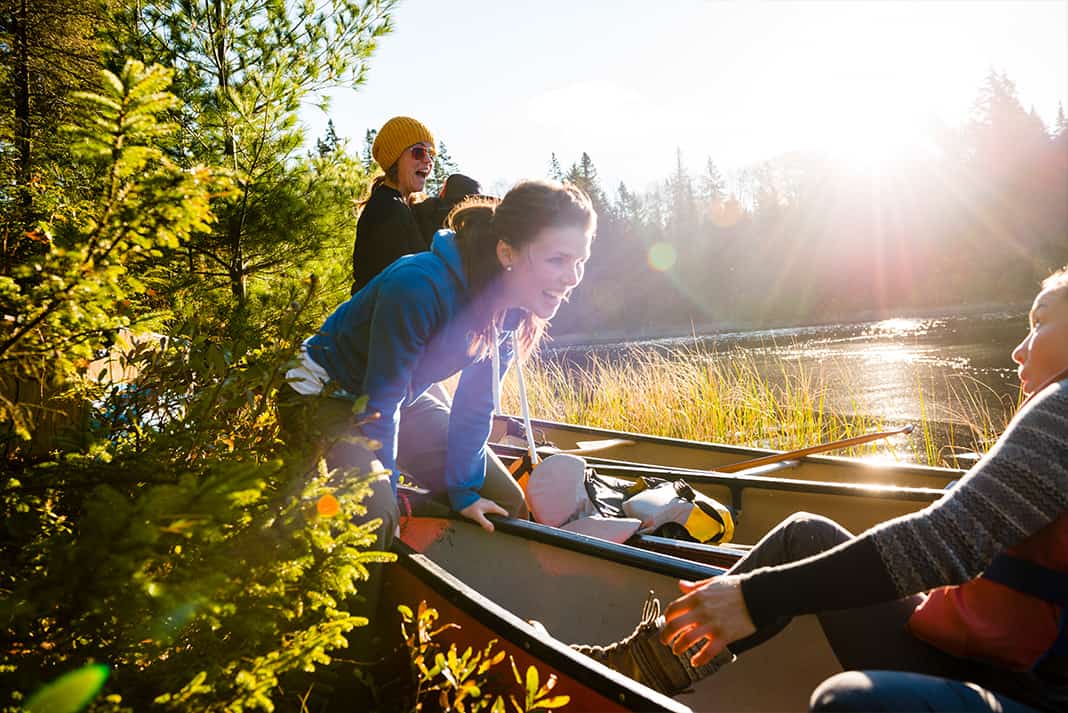
The most comfortable canoe seats on the market | Photo: Ontario Tourism
Comfort was of utmost concern on a backcountry trip with my 70-year-old mother-in-law two summers ago. It was her very first wilderness trip and, while she was game for adventure, her back ached with the unfamiliar motion of paddling even during the short trip to the campsite. How nice it would have been to know which were the best canoe seats and accessories we could get to help her paddle without pain.
Comfort is a growing consideration for an increasing number of backcountry traveling Boomers, the largest demographic of paddling participants. Though aftermarket seat options have long been a mainstay of the recreational paddling crowd, trippers avoid them—and with good reason.
For casual canoeists, the comfort of a canoe seat can outweigh on-the-water paddling performance. | Feature photo: Ontario Tourism
While the support of a comfortable high-back seat sounds nice, all too often it crucially affects mobility and torso rotation, encouraging poor paddling form and losing stroke power as the seat shifts and slides against the boat’s hardware. Plus, it’s one more item to portage.
None of these factors are deal breakers for toodling around outside the cottage for an afternoon, but it’s unacceptable for those who have 30 miles to make by sunset. Fortunately, most outings fall somewhere in between these extremes. One of these seat styles might be right for you—or it could be the cushy trump card you use to convince a non-paddler to get on the water for the first—or second—time.
4 best canoe seats and accessories for comfort
1 Aluminum frames
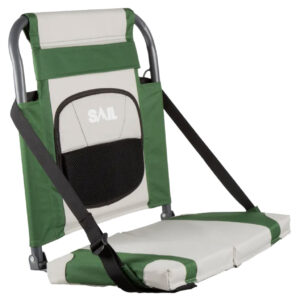
A classic for sportsmen and others for whom the canoe is just a vehicle to pursue another passion. This three-pound, high-back folding aluminum frame style guarantees relaxation while the cushion—senselessly thick at two inches—feels luxurious.
The trade-off for the support this burly recliner provides is it’s near impossible to rotate and take a proper stroke unless I lean well forward. And say goodbye to drifting under any low hanging limbs. The seat cushion takes hours to dry if saturated. The generically named Sit-Back Canoe Seat is branded by retailer Sail for $49, but the same seat is also sold and branded by GCI and Woods.
Best for: Anglers, photographers or lily dippers who are on the water to relax, take some shots or cast a line.
[ Paddling Buyer’s Guide: View all canoeing accessories ]
2 Wood frames
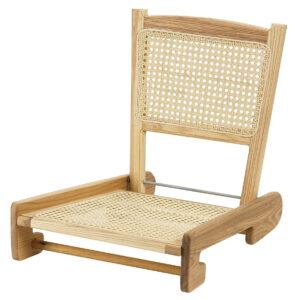
Do you think paddling aesthetics peaked during the courting canoe era at the turn of the 20th century? Then grab your parasol and gramophone because this is the seat style for you. Wooden seats come in a variety of shapes, hardwoods and finishes to please the discerning traditionalist. Generally, expect this classy and attractive folding style to be among the heavier options.
The five-pound Folding Canoe Chair from Harmony will have any paddler feeling like royalty, though it does raise your center of gravity an inch. This model easily clasps onto a bench-style seat, but extended use might see it rub and mar the finish on the existing bench seat. A big plus of wooden chairs is water just wipes off.
Best for: Courting-era canoe enthusiasts and other classy folk.
[ Plan your next canoeing adventure with the Paddling Trip Guide ]
3 Fabric seats
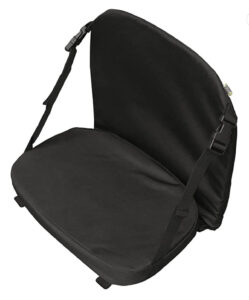
There’s a multitude of fabric seats, some of which offer canoeists the best of both comfort and form. The basic idea is the same—adjustable webbing tensions the seat’s backrest against the seat cushion, just like on your favorite fireside camp chair.
On the Premium Padded Canoe Seat from Pelican, available for $45, the seat back remains low enough to allow for torso rotation while providing some lumbar support. Look for this style of seat to also feature straps, crucial for securing to the bench seat of the canoe. Many seats in this versatile style can also pair with kayak and stadium seating.
Best for: Day trippers looking for a compromise between comfort and efficiency.
A little foam may not look like much, but it can offer just the right amount of comfort without ever affecting mobility. Just look to the marathon paddling scene to see this in action. Closed cell foam pads from a quarter-inch to one-inch-thick are the unsung heroes for many distance paddlers who may spend days at a time in their boats. And foam pads are just a couple dollars at your local outdoor store. Some paddlers even permanently affix the foam directly to their tractor-style seats, which has the added benefit of eliminating any shifting between pad and seat. For lumbar support, some marathon canoeists tie the ends of a piece of webbing to a canoe’s footrest. The webbing has been measured and cut so it rests firmly against the lumbar back when pulled up into place.
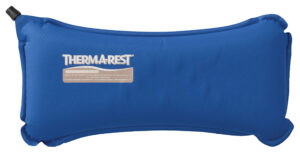
It’s a simple, low-cost solution for tired backs on long portage-free races, like the Yukon River Quest. There’s a myriad of thicker cushions or small inflatable pillows available, like this $29 Travel Pillow from Therma-A-Rest, which are another budget option for recreational paddlers looking for that sitting-on-a-cloud feeling. Be warned though: the cushier the pad, the less power transferred from paddle stoke into forward momentum and the higher your center of gravity—perhaps leading new paddlers to describe your ultra-stable, 33-inch-wide tripping canoe as “tippy.”
Best for: Trippers, expedition paddlers and everyone else who prioritizes efficiency but needs some cushion.
This article was first published in Issue 58 of Paddling Magazine. Subscribe to Paddling Magazine’s print and digital editions, or browse the archives.
For casual canoeists, the comfort of a canoe seat can outweigh on-the-water paddling performance. | Feature photo: Ontario Tourism


 This article was first published in the Fall 2015 issue of Rapid Magazine.