Whitewater kayakers are no strangers to injury. Many of us have experienced a dislocated shoulder, a broken bone, a sprain, or a concussion on the water–or know someone who has.
Folks who’ve endured injury also know that the aftermath can often be more traumatic and burdensome than the injury itself. Elite freestyle kayaker Brooke Hess perhaps knows this better than anyone–after suffering not one, but two, life-altering injuries in the past 5 years.
The newest film from NRS and Western Pictures, Brainwaves, is a story about the highs of kayaking, the lows of injury, and the internalized mental struggle that occupies the space in between.
Where it started
In 2017, Hess was absolutely killing it; she was strong, confident, and performing better than ever. In January of that year, she spent a month training in Uganda for Unleashed competition and landed her best dry-head airscrew yet in the process. From Stakeout to Unleashed to Montréal Eau Vive, she stood on multiple podiums beside her friends and paddling idols.
But when she returned to Uganda to train for the next Unleashed competition, her competitive streak came to a sudden halt. She contracted an undiagnosed severe digestive illness. Unable to hold down almost all foods, she lost a whopping 20 lbs in mere weeks.
After returning to the US and adjusting to her new restricted diet and lifestyle, she struggled to grapple with the loss of kayaking. “I had an unhealthy amount of FOMO, it wasn’t helping my body heal,” Hess wrote in a Duct Tape Diaries blog post. “I eventually turned off all social media in an effort to ease the negative feelings. I didn’t want to see photos, videos, or anything relating to kayaking.”
In her third-year post stomach illness, Hess suffered a nasty concussion. She took a nasty hit to the head on the landing of 30-foot Huka Falls in New Zealand. Things took another turn for the worse.
Hess hides an ongoing battle that few people know about. Behind her fun-loving spirit and ambitious character, she is plagued by depression. This Mental Health Awareness month, she’s ready to share her story with the world.
Nature has a way of making us feel very small sometimes, and no creature makes that point more dramatically than the mighty whale. After all, what better way to put life’s problems in perspective than watching a huge marine mammal go about its daily business? Whale watching is even more impressive from the seat of a kayak, so visit these hotspots and get a viewing experience you won’t soon forget.
SPECIES: Beluga, Minke, Finback, Blue, Humpback SEASON: July to mid-September
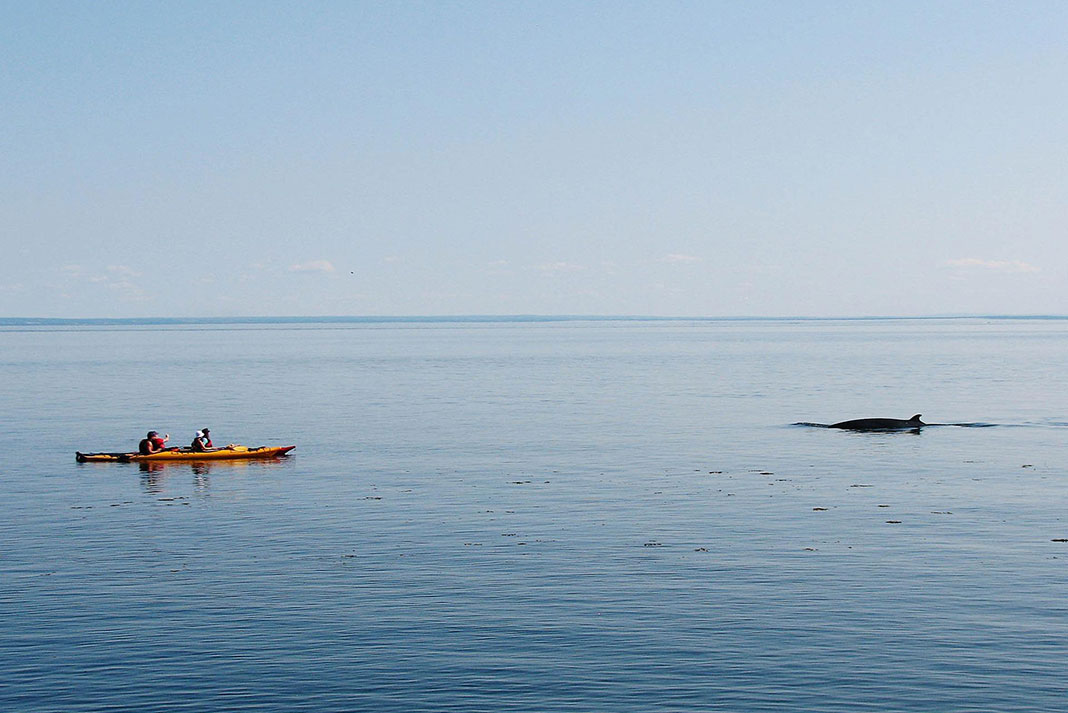
The Saguenay St. Lawrence National Marine Park protects two distinct components: the Saguenay Fjord with steep walled cliffs, brackish water, strong currents, 15-foot tides and ghostly white beluga whales; and the St. Lawrence River estuary with ice cold saltwater, 13-foot tides and minke, blue, finback and humpback whales.
The St. Lawrence River estuary is an excellent spot to kayak with minke, blue, finback and humpback whales. | Photo: LPerron/Pixabay
Camp at Marine Paradise near Les Escoumins and daytrip along the St. Lawrence coast toward Les Bergeronnes (22 km) and Tadoussac (40 km), or explore the fjord from Anse de Roche. Several companies provide guided trips. Due to tidal conditions and currents, only experienced paddlers should venture on their own.
Every winter, 18,000 gray whales head from the Bering Sea to birthing lagoons in Mexico. In March and April they truck north again, hugging the shore to protect their young from hungry great white sharks and orca. The Three Capes—Cape Meares, Cape Lookout and Cape Kiwanda—protrude into their path. During peak migration, 30 whales go by every hour.
There are no guided trips: this is exposed coastal paddling. For Meares, launch at Oceanside and paddle north; for Lookout, launch at Cape Lookout State Park and head south; for Kiwanda, launch at Pacific City and head north. Kiwanda is the friendliest; Cape Lookout, with a challenging launch and tide rips, is the most advanced.
—Neil Schulman
3 Bay Of Fundy, New Brunswick
SPECIES: Finback, Humpback, Minke, Right SEASON: Mid-August to October
Begin your day with a half-hour ferry ride to Deer Island at the mouth of the Bay of Fundy. En route to Campobello Island’s picturesque East Quoddy Head Lighthouse, paddle among small islands sheltering perfect lunch stops.
[ Plan your next wildlife viewing kayak adventure with the Paddling Trip Guide ]
Monstrous finback, playful humpback and diminutive minke whales feed in these waters and up close encounters aren’t uncommon. If you are really lucky, you may even see an endangered North Atlantic right whale—gentle giants whose global population numbers just 470 individuals.
After a break on Campobello, it’s back to Deer Island for the 5 p.m. ferry back to the mainland.
—Doug Scott
4 Johnstone Strait, British Columbia
SPECIES: Orca, Humpback, Minke SEASON: July to early September
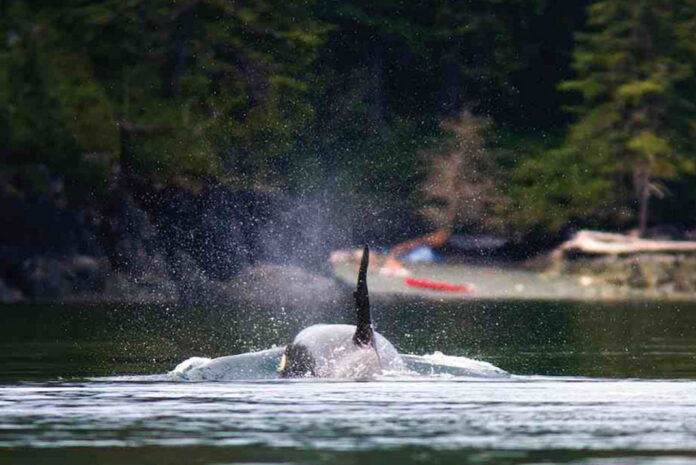
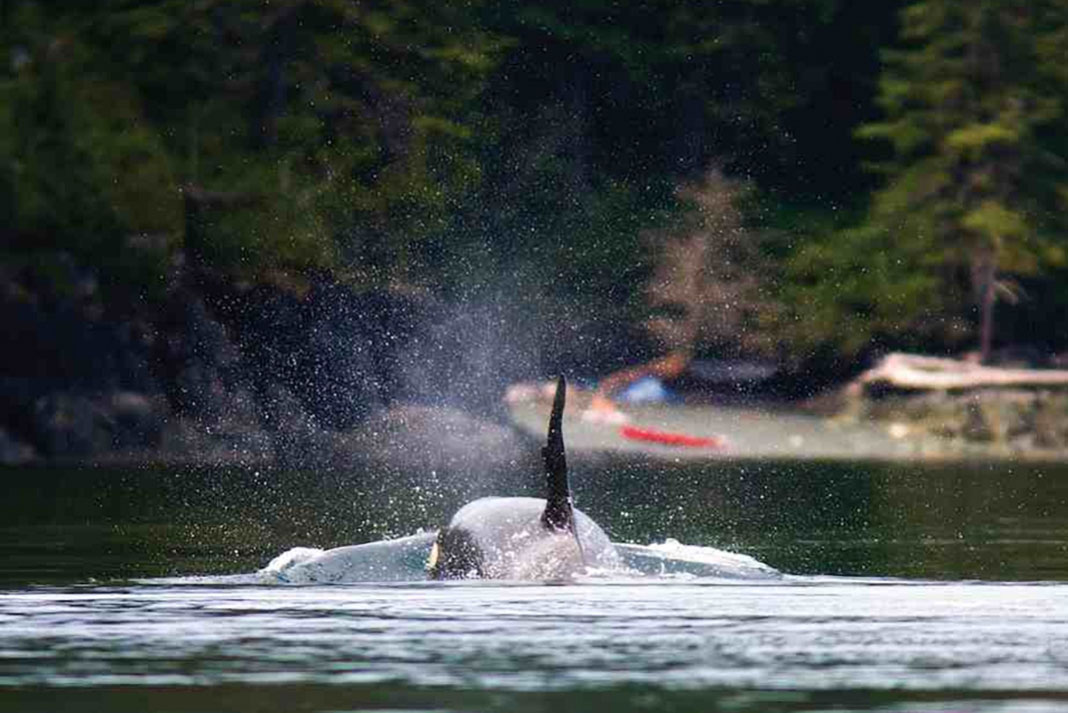
Johnstone Strait, along the northeast inside passage of Vancouver Island, is the preeminent location in North America for viewing orcas, or killer whales. During the summer salmon run, some 200 resident orcas pursue the spawning fish through the two-mile-wide strait. Launch at Telegraph Cove, where you can rent kayaks or join a guided trip from veteran outfitters like Sea Kayak Adventures and North Island Kayak.
Johnstone Strait is the preeminent location in North America for kayaking with orcas, or killer whales. | Feature photo: Gary Luhm
To maximize sightings, paddle a half-day east to Kaikash Creek, keeping inside the kelp line to avoid disturbing the whales. Set up camp here for prime viewing near the Robson Bight Ecological Reserve, a no-paddle zone famous for its orca rubbing beach.
This article was first published in the Spring 2015 issue of Adventure Kayak. Subscribe to Paddling Magazine’s print and digital editions, or browse the archives.
Johnstone Strait is the preeminent location in North America for kayaking with orcas, or killer whales. | Feature photo: Gary Luhm
On May 7-15, 2022, multi-disciplinary paddler Chev Dixon will embark on a two-part, 300-mile exploration of the Hudson Valley Estuary using only human-powered equipment–running, hiking, cycling, paddleboarding and kayaking.
Dixon’s journey will start on land in New York City (NYC) and, on foot, he will travel to Albany. Next, the challenge circles back to the NYC Battery by river (paddleboarding and kayaking).
Dixon will be the first person to accomplish this journey using these different forms of human-powered transportation.
[ View all Guided River Trips in the Paddling Trip Guide ]
The mission of the expedition is to encourage and inspire inner-city youth to be active, challenge themselves and explore the great outdoors. In addition, Dixon wishes to promote local adventures and challenges without traveling too far.
2022 Carolina Cup Technical Sprint Champions Connor Baxter and April Zilg – Robert B Butler
WRIGHTSVILLE BEACH, NORTH CAROLINA, USA – Crossing the finish line just four seconds ahead of four-time champion Danny Ching of California, Australian Michael Booth seized his third title in the grueling 13.2-mile Carolina Cup Graveyard Race.
Meanwhile, North Carolina’s April Zilg powered to her second consecutive Graveyard Race victory with an almost one-minute margin over internationally ranked elite paddlers Kimberly Barnes of Florida and Candice Appleby of California.
Michael Booth, Australia, 2018, 2019, 2022 Carolina Cup Graveyard Race Champion – Robert B Butler
“It feels amazing and surreal to come back and repeat the Carolina Cup win on the actual Graveyard course,” said Zilg. “In 2021, the course was modified due to severe weather conditions. I am usually happy and prevail in very challenging conditions. This year was challenging for me because the conditions were better, and that’s not usually my strong suit. So, I knew that it was going to be a very tough race. But it went well.”
[ View all Canoes in the Paddling Buyer’s Guide ]
Attracting amateur and professional athletes from the South Pacific, Asia, Central America, South America, Hawaii, Europe, Canada, and the United States, Carolina Cup is one of the largest and most prominent paddle sporting events globally. Organized by the Wrightsville Beach Paddle Club and presented by Kona Brewing Company, five days of exhibitions, demos, clinics, and races were based at Blockade Runner Beach Resort, April 27-May 1, 2022.
April Zilg, NC/USA, 2021 and 2022 Carolina Cup Graveyard Race Champion – Robert B Butler
This year, the International Canoe Federation and Carolina Cup partnered to have the Technical Sprint and Graveyard Race serve as pre-qualifiers for the ICF World Series in Poland. Four ICF world champions competed in the 2022 Carolina Cup races – Connor Baxter, Michael Booth, Noic Garioud, and Ty Judson.
[ Plan your next adventure with the Paddling Trip Guide ]
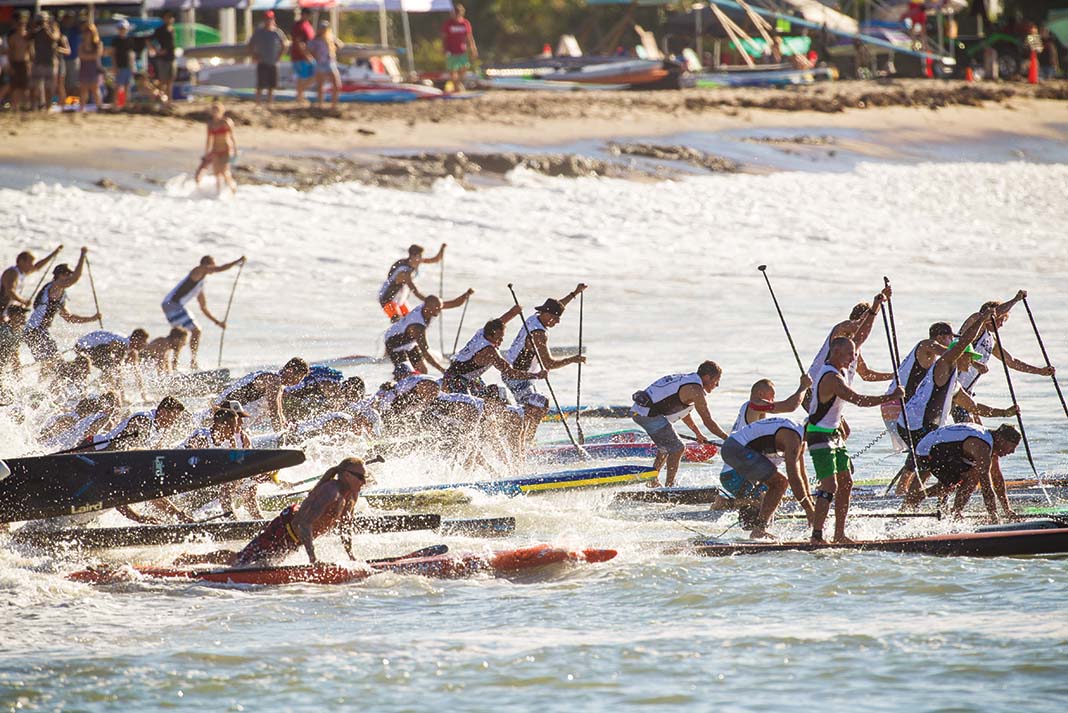
Hawaii’s Connor Baxter and North Carolina’s April Zilg won their second consecutive Carolina Cup Technical Race this weekend. Technical races are on an oceanfront course entering and exiting the surf and testing all the paddler’s skills in one event, including surfing, speed, and steering capabilities.
“For spectators, the Technical Sprint is the most exciting event for SUP when it comes to ocean racing,” said Event Manager and announcer Dan Gavere. “Unlike 2021, we had both elite and recreational racers in the Technical Sprint this year, and I believe it will continue to grow.”
2022 Carolina Cup Technical Sprint Champions Connor Baxter and April Zilg – Robert B Butler
The Technical Sprint Top Finishers
Men’s Division:
Connor Baxter, Hawaii, USA
Noic Garioud, New Caledonia
David Leao, Brazil
Shuri Araki, Japan
Ty Judson, Australia
Michael Booth, Australia
Daniel Hasulyo, Hungary/Thailand
Eri Tenorio, Brazil
[ Browse the widest selection of boats and gear in the Paddling Buyer’s Guide ]
Women’s Division:
April Zilg, North Carolina, USA
Candice Appleby, California, USA
Abby Baker, California, USA
Juliette DuHaime, Argentina
Susan Krupa McCune, California, USA
With environmental issues top-of-mind to most watersport athletes, Carolina Cup attendees were attracted to an exhibit by Mechanical Engineering students from North Carolina State University. “We are introducing our new sand removal technology,” said NCSU student Edward Byers, CEO of a senior project design team. “It’s an air-power shower that uses a light mist and air to remove sand. The AirWave uses less than 1-percent of the water; it’s cheaper to operate than a traditional beach shower; and it allows people to go inside or get in their car and not be soaking wet and uncomfortable.”
“The positive impact on the environment in water conservation and a reduction in wastewater could be significant,” said Mary Baggett, co-owner of Blockade Runner Beach Resort.
Complete lists of Carolina Cup race results with age groups and divisions are available at these links:
SUP yoda says, fast if you don’t care about being fast you can only be. Hrmmm. | Photo: Michael Yoshida
When I discovered the SUP racing scene, I thought, “This is going to be a breeze.” I figured most racers wouldn’t be experienced paddlers, with decades of recreational canoeing and kayaking under their belts like me. Add to that my cardio fitness as a marathoner and Ironman and I assumed I’d pretty much own the podium.
I’m ashamed now to have approached the sport with such hubris. I got my ass whupped, and wounded pride had me wondering, “What is the secret to winning a SUP race?”
Standup paddleboarding is widely considered relaxing, but it didn’t start out that way for me. Being naturally competitive, it wasn’t long after I started before I wanted to see how fast I could go.
At my last SUP race, I stormed off the finish line and threw my paddle on the ground.
“How’d it go?” my wife asked.
“Terrible,” I said. “I don’t know why I even bother. I’m never doing this again.”
SUP’s unique challenges befit a ninja warrior: Being stable enough to stand on due to relatively wide and flat hulls, SUPs are inherently slow and inefficient as racing craft. The hull speed limit of a paddleboard is governed by a law of rapidly diminishing returns that sees you enduring a long and painful race, expending 100-percent effort and rarely gaining or losing much ground against other racers once the starting sprint has shaken out. To be a good paddleboard racer, you need the musculature of an MMA fighter, the balance of a gymnast and the mental fortitude of a yogi.
Then there’s me.
SUP yoda says, fast if you don’t care about being fast you can only be. Hrmmm. | Feature photo: Michael Yoshida
“Come on in, the water’s fine!”
Many SUP racers are boardsports veterans who’ve spent more years balancing on a surfboard or windsurfer. When the water gets rough, or you need to nimbly walk to the back of your board to kick it around a buoy turn, these guys and gals dance on water while I straggle in like a wet rat after multiple dunkings.
I’ve had a race announcer introduce me as “the official water quality tester.” Truly.
The good paddleboard racers who didn’t grow up surfing generally come out of competitive paddlesports; sprint canoe and kayak jocks who spent decades hitting the gym and learning how to really paddle fast. Altogether different than my lollygagging around quiet bays on backcountry trips.
Most of the races I go to are dominated by honest-to-God Olympians. One Olympian in particular, Larry Cain, is the 1984 Olympic gold medalist in sprint canoeing. He lives in my neck of the woods and is today one of the world’s top SUP racers, despite being in his fifties. He’s instantly identifiable at local races as the speck ahead in the distance.
Seeking help from a SUP racing master
Sick of SUP racing driving me to tears, childlike temper tantrums and various phases of self-flagellation—blaming myself, blaming my equipment, blaming the wind, blaming everything—I decided to eat some humble pie, put my head down and train with a little help from the master himself.
I joined Larry’s online coaching service through which he dispenses not only challenging weekly training plans, but also valuable advice with insight into his phenomenal success and longevity as a competitive paddler. It boils down to a zen-like paradox: you can only be fast if you don’t care about being fast. Thanks, Buddha.
Larry has had his share of setbacks. Among his friends he was the slowest to master the racing canoe as a teenager. He would routinely push off the dock and endure the embarrassment of testing the water quality himself. He hasn’t won or placed in every race, yet something else has kept him competing for four decades. A pure love of paddling.
[ Paddling Buyer’s Guide: View all racing & training paddleboards ]
“There’s no place I’d rather be than out on the water,” he said. “I’ve had some amazing days out there this past year. I’ve paddled up the river until it was frozen and I was out on Lake Ontario all winter. I’ve been out there every day in the spring. I’ve seen the seasons change and ice form on my board and then my board gets so hot I could fry an egg. Every single day is different and every single day it’s a gift to be out there.”
What matters is attitude—on the board, and in life, something I have a lot to learn about. It’s no surprise Larry is a much more positive person than me in general. Nor does he have time for people who want to throw a hissy fit because things didn’t go their way on race day.
SUP racing is a privilege to participate in
In a post on his PaddleMonster coaching forum, he writes, “I am a firm believer that as adults we should all be mature enough to leave the medals and ribbons to kids’ races. We shouldn’t need something like that to tell us when we’ve done a good job or make us feel recognized for our accomplishments. It pains me to see grown adults behave like little kids when they don’t get a medal or a ribbon for placing. I have to turn away.”
“It pains me to see grown adults behave like little kids
when they don’t get a medal or a ribbon for placing.”
I felt a burning shame reading this, imagining that he was picturing my finish line antics. I’m embarrassed to admit to my expectations of podium glory, when guys like Larry have truly earned it by grinding out miles every day, in all seasons, for years, motivated more by the joys of being on the water than by the hope of some hardware bling at the finish line.
“Sport is such a wonderful thing and, especially as adults, a true privilege to participate in,” writes Larry. “We should be doing it for how it makes us feel, how it helps our health, because it’s fun and because it helps us meet and hang out with great, like-minded people. We should be able to set our own deeply personal goals and strive to accomplish them; goals that are based on performance and not placing, and derive personal satisfaction from the journey we take towards achieving those goals, without the need for outside recognition and a trophy we can put on our mantle.”
I have no better words to express the life lessons the frustrations of paddleboard racing have taught me. I’ve copied them into my journal and highlighted them, as something to remember when I wake up in the morning and head to the water.
Yes, paddleboard racing is tough, and I may never win a medal. But I’ll keep doing it at least until these lessons fully sink in, and probably much longer, just for the love of it.
This article originally appeared in Paddling Magazine Issue 65. Subscribe to Paddling Magazine’s print and digital editions here, or download the Paddling Magazine app and browse the digital archives here.
SUP yoda says, fast if you don’t care about being fast you can only be. Hrmmm. | Feature photo: Michael Yoshida
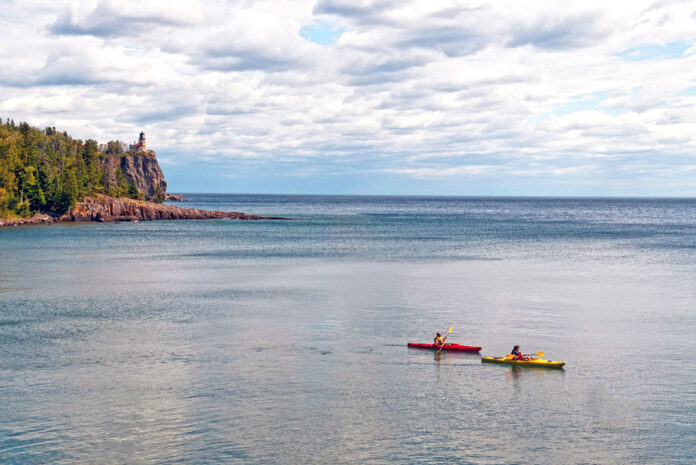
Behold awe-inspiring sights on Lake Superior. | Photo: Courtesy Explore Minnesota
Minnesota is celebrated as the Land of 10,000 Lakes. With such an abundance of water, it’s no wonder it’s atop bucket lists for many of America’s canoe and kayak enthusiasts. You’ll find plenty of options for kayak and canoe rentals in Minnesota for all levels of paddlers.
In addition to highlighting 10 great places to paddle, this article will help you find nearby outfitters for all your rental and guiding needs.
[ View all paddling trips in Minnesota in the Paddling Trip Guide ]
Mississippi River
The headwaters of America’s greatest waterway take shape in Minnesota. These Mississippi River canoe outfitters will get you set up for adventures at the source of the river.
Take it slow on the famed Mississippi River. | Photo: Courtesy Explore Minnesota
University of Minnesota
University of Minnesota canoe rentals are offered through the Recreation and Wellness division of the Minneapolis campus. Canoes and canoe-tripping gear (including portage packs and drybags) are available for rent, as are standup paddleboards. The University of Minnesota also rents camping gear, including tents, sleeping bags, water filters and camp kitchen equipment, for multiday trips. Requests can be submitted online and pickups made Monday through Saturday.
Itasca Sports
Itasca Sports caters to paddlers and anglers in Chippewa National Forest and at Itasca State Park, the source of the Mississippi River in central Minnesota. Providing cano,ekayak, paddleboard, pedal boat and bike rentals. In addition rentals, paddle fit classes are also available.
Clear Waters Outfitting
Clear Waters Outfitting is located on the banks of the Mississippi in Clearwater and provides canoe and fishing kayak rentals for single- and multi-day river trips, as well as retail sales and instruction. Clear Waters offers several unique services, including kayak fishing outfitting (with expert guides) and instructional classes such as standup paddleboard basics and yoga.
Twin Cities Kayaking is your go-to source for kayak rentals in Minnesota, especially if you’re looking for an urban paddling experience on the Mississippi River while spending time in Minneapolis and St. Paul. The company rents single and tandem kayaks. It also offers guided day trips.
Find your peace on the St. Croix River. | Photo: Courtesy Explore Minnesota
St. Croix River
The St. Croix is a National Scenic River that flows between Wisconsin and Minnesota, ultimately draining into the Mississippi. This wild river captures all that paddling in Minnesota has to offer, and it’s no surprise there are plenty of outfitters. If you’re searching for canoe rentals on the St. Croix River, look no further.
Taylors Falls Canoe & Kayak Rentals
Taylors Falls Canoe & Kayak Rentals services Interstate State Park and Wildwood RV Park & Campground. Free car shuttles are provided with canoe and kayak rentals.
At 195 miles long, you’re sure to find what you’re looking for on the Red Lake River. | Photo: Courtesy Explore Minnesota
Red Lake River
The Red Lake River is a state water trail in northwestern Minnesota. The landscape here is a mix of wilderness wetlands and farm fields, making it a haven for birds and waterfowl. There are 195 river miles to explore between the Lower Red Lake Dam at Highway 89 and the Red River of the North, near the North Dakota border.
Oliver’s Canoe Outfitters
Oliver’s Canoe Outfitters provides canoe rentals, vehicle shuttles and local knowledge of the Red Lake River in Polk County, from Red Lake Falls to Fisher.
The iconic Boundary Waters Canoe Area is a canoe tripper’s dream. | Photo: Paul Vincent
Boundary Waters
Northern Minnesota’s Boundary Waters Canoe Area Wilderness is one of the world’s preeminent canoeing destinations. Regardless of where you enter this 1.1-million-acre watery dreamscape you’re sure to find plenty of rental options. Outfitters that offer canoe rentals in the Boundary Waters can also provide you with local knowledge and logistical support to make your trip memorable. Several outfitters also offer kayak rentals for Boundary Waters paddling, too.
Boundary Waters Outfitters
This Ely-based outfitter has offered Boundary Waters canoe rentals and trip planning since 1939. Boundary Waters Outfitters features lightweight canoes and great trip planning advice for all levels of paddlers, whether you’re looking for a short trip or a longer wilderness expedition.
Hungry Jack Outfitters
Hungry Jack Outfitters specializes in the Boundary Waters canoe routes of the Gunflint Trail, west of Grand Marais. Check them out for ultralight Boundary Water canoe rentals, and complete and partial canoe trip outfitting featuring the latest outdoor gear. The company offers rental packages specific to solo paddlers as well as groups. They also rent kayaks.
North Country Canoe Outfitters
This Boundary Waters canoe outfitter is located in Ely, the gateway to the wilderness. North Country Canoe Outfitters provides full outfitting for canoe trippers of all skill and experience levels. You’ll find a range of options, including the Ultralight Gold package which includes the finest in backcountry canoe tripping gear. The company boasts over 35 years experience.
Piragis Northwoods Company
Piragis Northwoods Company is one of the vibrant businesses that makes downtown Ely such a great place to visit. From its Main Street location, Piragis offers canoe and kayak rentals, outfitting and sales—along with an impressive second-story bookstore featuring many outdoor titles. Piragis is popular for its theme-based guided canoe trips, including fishing trips and family trips.
Contact Canoe Country Outfitters for personalized service in Ely. This long-time company provides canoe rentals and full outfitting for the Boundary Waters and neighboring Quetico Provincial Park. The outfitter also operates a campground with cabins on Moose Lake, an access point to the wilderness, providing a convenient way to start and finish your Boundary Waters canoe trip.
Sawbill Canoe Outfitters
Located on the Sawbill Trail, west of Highway 61, Sawbill Canoe Outfitters provides Boundary Waters canoe rentals for the northeastern portion of the wilderness area. The company offers lightweight Kevlar canoes and great camping gear, as well as expert route-planning advice. Sawbill has mapped out 11 suggested itineraries to help you make sense of the overwhelming abundance of Boundary Waters canoe routes.
Gunflint Northwoods Outfitters
As its name suggests, this canoe rental company services the Gunflint Trail portion of the BWCAW. Gunflint Northwoods Outfitters offers canoe rentals and canoe trip outfitting as well as lodging in Minnesota’s quiet North Woods.
Ely Outfitting Company
The Ely Outfitting Company provides a wide range of services, including canoe rentals and guided canoe trips, as well as wilderness outfitting and vehicle shuttles for self-guided adventures in the Boundary Waters. Two- to eight-day guided trips are offered, with many custom route options available to cater to long-distance trippers, families, anglers and more.
Behold awe-inspiring sights on Lake Superior. | Photo: Courtesy Explore Minnesota
Lake Superior
Travelers get a glimpse of Minnesota’s spectacular Lake Superior coastline while driving Highway 61 north of Duluth. But to truly experience the Inland Sea, you’re best to get on the water. Go with a professional guide, or make sure you have the skills, knowledge and equipment to paddle safely.
Stone Harbor Wilderness Supply
Based in Grand Marais, Stone Harbor Wilderness Supply offers Lake Superior sea kayak rentals for single and tandem paddlers. The company also provides canoe rentals for those planning to explore the Boundary Waters and guided trips throughout the region. Lake Superior guided day trips begin at Stone Harbor. Options include half- and full-day tours, as well as a sunset paddle to capture the magical moments when the sky flares and the sun dips below Minnesota’s Sawtooth Mountains.
Day Tripper of Duluth
Looking for a fun way to experience the Lake Superior waterfront in Duluth? Day Tripper of Duluth provides kayak day tours throughout the Duluth and North Shore region, including the Two Harbors Tour, evening paddles in Duluth’s historic Glensheen neighborhood and even (conditions permitting) a unique iceberg kayak tour.
The journey begins on the Rum River. | Photo: Chris Gibbs // @cgibbsphoto
Rum River
The Rum River flows gently between Lake Mille Lacs and the Mississippi River at Anoka, just northwest of Minneapolis. The river provides several options for easy float trips for canoeists and kayakers of all levels.
Country Camping Canoe & Tube
Country Camping in Isanti is your go-to outfitter for a fun and easy outing on the Rum River. Tours are open to the public Sunday through Friday—but you must register online in advance. You can rent a canoe or a single or tandem sit-on-top kayak with all the necessary safety gear and embark on a two-hour Rum River tour. On-site camping is also available.
What wildlife will you discover on the Crow Wing River? | Photo: Courtesy Explore Minnesota
Crow Wing River
The Crow Wing is another tributary of the mighty Mississippi River, offering canoeing and kayaking opportunities in central Minnesota. The Crow Wing is an outstanding waterway for viewing wildlife ranging from turtles and bobcats to beaver and black bear, all of which enjoy the peaceful calm of the river valley. This crystal-clear waterway joins the Mississippi at Crow Wing State Park.
Easy Riders Bicycle and Sportshop
Easy Riders Bicycle and Sportshop in Brainerd provides canoe and kayak rentals for the Crow Wing River. Make sure to bring your own PFD.
Gloege’s Canoe & Kayak Outfitting
Based in Sebeka, Gloege’s Canoe & Kayak Outfitting services the Crow Wing River with canoe and kayak rentals and local knowledge. Gloege’s provides several recommended routes, ranging from a fast and fun day trip to multiday canoe camping trips on both the Crow Wing and the nearby Shell River.
Find solitude where you least expect it on the Cannon River. | Photo: Courtesy Cannon Valley Trail
Cannon River
The Cannon River flows over 100 miles from Shields Lake to the Mississippi River at Red Wing. It offers a diversity of paddling opportunities, flowing through a landscape of bluffs, farmland and wooded areas. The river includes a few rapids as well as low-head dams, which paddlers must approach cautiously and portage around.
Cannon Falls Canoe and Bike Rental
Cannon Falls Canoe and Bike Rental provides canoe and kayak rentals for a great eight-mile section of the Cannon River, from Cannon Falls to Miesville Ravine Park. This section of smooth-flowing river takes about two hours to paddle, and includes secluded sandbars for swimming and picnic lunches. The company provides pick-ups as late as 7 p.m.
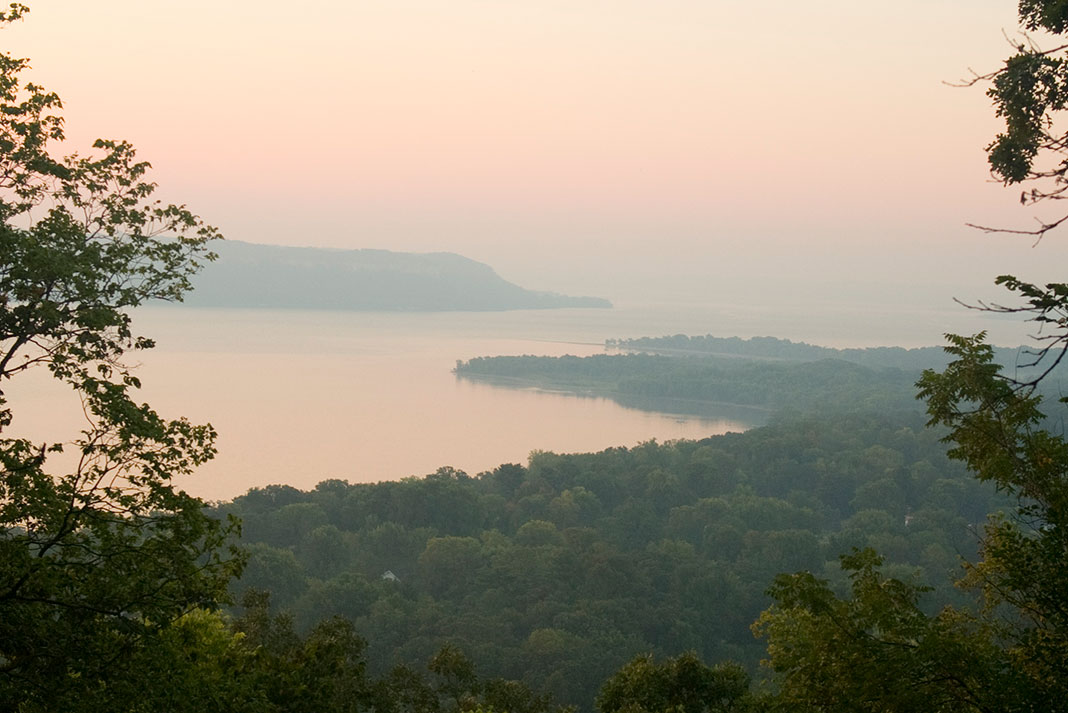
Peace abounds on the Minnesota River. | Photo: Courtesy Explore Minnesota
Minnesota River
This 332-mile-long waterway drains a large chunk of central Minnesota west of the Twin Cities, ultimately feeding into the Mississippi River. Like many Midwest rivers, the Minnesota carves a green corridor of lush forests through the quintessential farmscape of the American Midwest.
Bent River Outfitter
Bent River Outfitter in Mankato offers kayak and SUP float trips on the Minnesota River for paddlers of all levels. Check out their full moon tours for a unique experience. Bent River also provides a full-service outdoors store on the waterfront in Mankato’s historic downtown.
Enter a natural oasis on the Root River. | Photo: Ryan Taylor
Root River
The Root River flows through the rocky landscape of southeastern Minnesota’s Driftless Area, before draining into the Mississippi River. The Driftless Area missed out on the scouring effects of the Ice Age and features prominent limestone geology and cold-water springs, which create perfect conditions for trout species. The Root River valley is also an oasis for wildlife, including deer and bald eagles.
River Rats Outfitters
River Rats Outfitters provides friendly services for paddlers along the entire Root River in southeastern Minnesota. The company offers canoe and kayak rentals with 2.5- and four-hour itineraries on the Root River, near its base in Lanesboro. Guiding services are also available for anglers who wish to cast for trout, smallmouth bass, walleye and sauger.
Earlier this year, Pyranha Kayaks released its highly-anticipated Ripper 2. The new half-slice kayak is an evolution of its popular predecessor, the OG Ripper.
When directly comparing the two kayak designs, the Ripper 2 has more bow rocker, a slightly wider hull, and a lower volume tail with softer sidewalls. It’s possible to see a side-by-side comparison in the diagram provided by Pyranha below.
There’s been a prevalent buzz on social media when it comes to all things Ripper 2. This excitement has been exacerbated by Pyraha’s slow reveal of information (and the odd tongue-in-cheek comment) surrounding the much-coveted model. “Others have tried, but ultimately, only we could improve on the original Ripper,” the team claimed in a recent Facebook post.
It comes as no surprise that many paddlers are eager to get their feet with this new toy. But while the industry continues to grapple with production and supply chain delays, only a select few paddlers have theirs in hand. Team Pyranha Bren Orton is one of those select few. We’d highly recommend taking a solid 1 minute and 25 seconds out of your day to watch Orton tear up the river (see what we did there?) in his dreamy new half-slice.
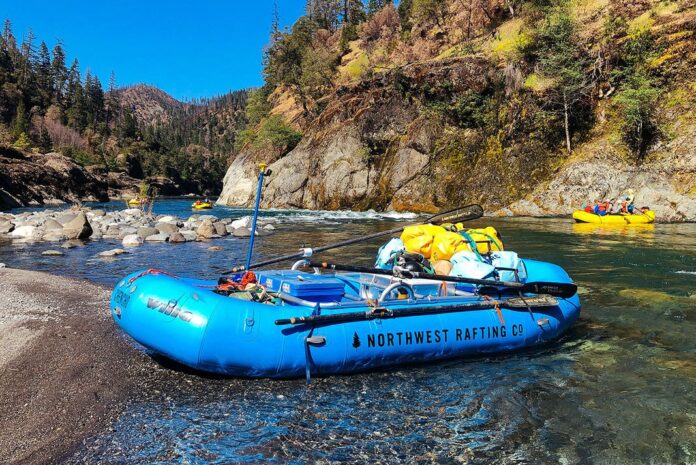
Lafayette, CA – April 20, 2022 – Wing Inflatables, founded by paddler Bill Wing and legendary for its durable American-made whitewater rafts, has re-issued its heritage ‘Wing Raft Blue.’ Staying committed to whitewater sports and recognizing and celebrating the surge in recreational activities, Wing Inflatables has brought back their successful original recipe for this now-famous colorway. The same color of fabric made the rafts so distinctive when the company started in the early 90s.
Andrew Branagh, CEO of the Wing Group, passionately shares:
“Wing Inflatables is honoring a rich and deep history by bringing back the original recipe for the color blue that we have been known for. A Wing raft today is defining the industry. It has modern construction techniques, ever-evolving fabric, and is still 100% American-made in Arcata, California. We bring a deep link by staying true to our roots and our historical commitment to the rafter. We are investing in the color, affectionally known as Wing Raft Blue, and we couldn’t be more thrilled about this special release.”
Matt Runyan, Quality Manager and GM of Manufacturing Engineering, adds: “Wing Inflatables is recognized as the premium quality fabricator of polyurethane rafts in the world. Adding to this claim is the fact that several of the largest river outfitters operating in the US have come home to Wing and polyurethane – forsaking the less expensive rafts for Wing’s durability and longevity.”
While certain models will be built for the summer of 2022, the rafts in ‘Wing Raft Blue’ can be made to order.
The Big Gear Show has continued to show strength in numbers on both the retail registrations front, as well as with exhibitor booth sales. Currently, over 200 retail businesses, representing more than 900 stores have registered, eclipsing the total number of retailers that attended the 2021 event.
These pre-registered retail businesses span 42 states with 85% of retailers representing diverse regions in the northeast, southeast, midwest, and western United States. 90% of the registered retail attendees are key decision makers, such as shop owners, presidents or buyers from top names like Peak Sports, Great Outdoor Shop, River Sport Outfitters, Worldwide Cyclery, Topanga Creek Outpost, Moosejaw, CrawDaddy Outdoors and others. The full list of registered retail businesses is here.
Exhibitor booth sales have also reached a milestone; twice as many exhibitors have registered for exhibit space compared to this time last year. Top bike brands include SRAM, Pinarello, Tern, Diamondback, Magnum, Quietkat, Scott, POC Sports, Yakima, TRP. Top paddle and outdoor registered for the 2022 show include Astral, Johnson Outdoors, (Old Town, Ocean Kayak), Thule as well as Black Diamond, COSTA, KEEN, Mountain Hardwear and Petzl.. The full exhibitor list is here.
“At this point last year, we had half the number of brands registered and we’re seeing increases in all categories including cycling, paddlesports and even subcategories of outdoor like climb and overland,” said Sutton Bacon, founder of The Big Gear Show. “To think that we’ve already eclipsed last year’s final retailer attendance numbers, and it’s not even May yet, is a sign that these industries want to gather at the nation’s newest and best experiential, outdoor trade show for 2022.”
Deer Valley Resort will once again play host to The Big Gear Show’s fully outdoor format, which offers world-class product demos in an active lifestyle utopia. Park City’s Deer Valley Resort is just 35 minutes from the new Salt Lake City International Airport.
About The Big Gear Show
The Big Gear Show delivers a new model of B2B event designed for specialty retailers, produced by specialty retailers. The event is all outdoors, in the elements, featuring brands and
gear that get customers outdoors. The show is in its second year and the 2022 event will take place August 2-3, at Deer Valley Resort in Park City, Utah.
Last week Werner Paddles debuted a nine-minute tribute film to the folks who make some of the finest paddles in the industry in suburban Seattle. The project, four years in the making, is an homage to the “all the team members who work hard every day to put Werner Paddles in the hands of paddlers around the world.”
The film, titled We Are Werner, also provides a look inside a state-of-the-art production facility running full tilt to meet booming demand. Paddling Business chatted with Werner’s Marketing and Sales Director Taylor Robertson about the new film, the extended Werner family, and the challenges of staffing a paddle factory in Seattle’s white-hot labor market.
Jeff Moag: What was the impetus for making this video now?
Taylor Robertson: It’s actually been in the works for four years, and Covid kind of shut it down for two and a half years. This was the first available time slot that we were able to come in and film.
The impetus really was to pay tribute to the people behind the paddles. Our team is the key component of our business, and we wanted to show that our paddles are indeed made right here in Monroe, Washington, with care and attention to detail. I think it’s important that Werner is at ground zero for the outdoors, with Seattle being such an outdoor town with so many different waterways.
JM: I scouted the factory location on Google Earth, and it looks like you’re right at the main drop on the Skykomish, what is it, Boulder Drop?
TR: Yeah, we’ve got the Skykomish right out the door, and then a number of us are able to get out of work in the afternoon and go paddle Robe Canyon on the Stillaguamish, which is the most popular Class V run in the area. It’s just myself and some of our engineers paddling at that level, but we’re really trying to get more of our employees out on the water and bring their families out too. We threw a big party to celebrate the movie. We had close to 100 people last Thursday night and our staff was able to show their families where they work.
JM: Was that the red carpet premiere?
TR: It was. Before we sent it out to social media or anything else, we showed it to our staff. Based on the cheering and the yelling whenever a different employee came up on screen, everybody loved it. It was just a really good event and really good for camaraderie.
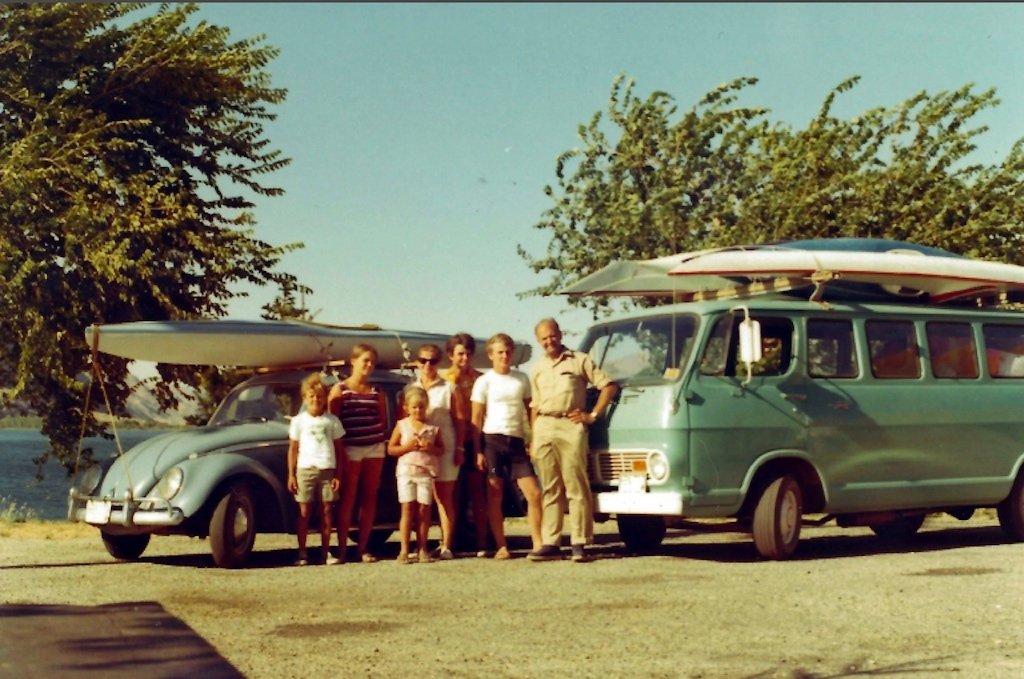
JM: It’s interesting you mention families, because Werner and Martha Furrer founded the company, and his first name is on every stick that goes out the door.
August 1, 2970. Kayaking was the Furrer family vacation. (L to R: Bruce, family friend Beth, youngest sibling Melinda, Martha, Erich, Werner Jr and Werner Sr) | Photo Courtesy Werner
TR: At one point the whole Furrer family was working here — Werner Sr., Erich, Werner Jr. and Bruce. Bruce is still our president and sole owner, but the new family is what you see in this video. We are the ones now bringing Werner paddles to life and keeping the Werner family alive.
JM: How big is that family now? How many people do you have on payroll?
TR: Right now, we’re hovering right around 70. We have more women working here than men, and it’s a very diverse group of people.
JM: Hiring has been incredibly difficult during this pandemic, and that’s true whether you’re running a restaurant or a paddle factory. It’s no secret that Werner had some real challenges with staffing at the height of the pandemic. How are you working through that?
TR: There’s really no way to sugarcoat it. It was tough. And geographically we are in a hotbed of big business — we have Boeing, Amazon, Microsoft. So the hiring environment here is very difficult. We’ve really tried to sell our Werner family culture. We have a great benefits program, we offer competitive pay, and we’re continuing to adjust and listen to our employees.
JM: Did you have to raise wages and add benefits in order to re-staff after the first wave of the pandemic?
TR: We’ve always had amazing benefits. My wife is a teacher and I have a better health and dental plan than she gets. So we’ve always had good benefits and we continue to adjust as the labor market adjusts. You have to right now. If you don’t, you’re going to be left in the dust.
JM: To that end, is the film a recruitment video to a certain extent?
TR: The idea was always to pay tribute to the people behind the paddles. When we started the project there was no labor shortage, so it wasn’t necessarily intended to become a recruiting video. I think it works as a good brand video, though. It really humanizes the handcrafted aspect of our paddles, and brings the location to life.
JM: For almost everyone in paddlesports, the last couple of years have been both feast and famine at the same time: everybody wants to buy your stuff, and you just can’t make enough to meet the demand. Tell me how that played out for Werner.
TR: From a strategic position, integrity is everything. And one thing we did not want to do is get in a position of overpromising and not delivering. I would rather be upfront and not get into a position where our partners and their customers are waiting on an empty promise.
One of the other constraints is sourcing materials. It’s always in the back of your mind, and it’s something that you sometimes have no control over.
JM: In the film there’s a scene where a woman says she’s packing 400 paddles a day. Are you back up to pre-COVID production levels?
TR: I should pass on this question, because I don’t have the numbers in front of me and so much has changed. It’s really hard to compare to last year, and even more difficult to compare to 2019.
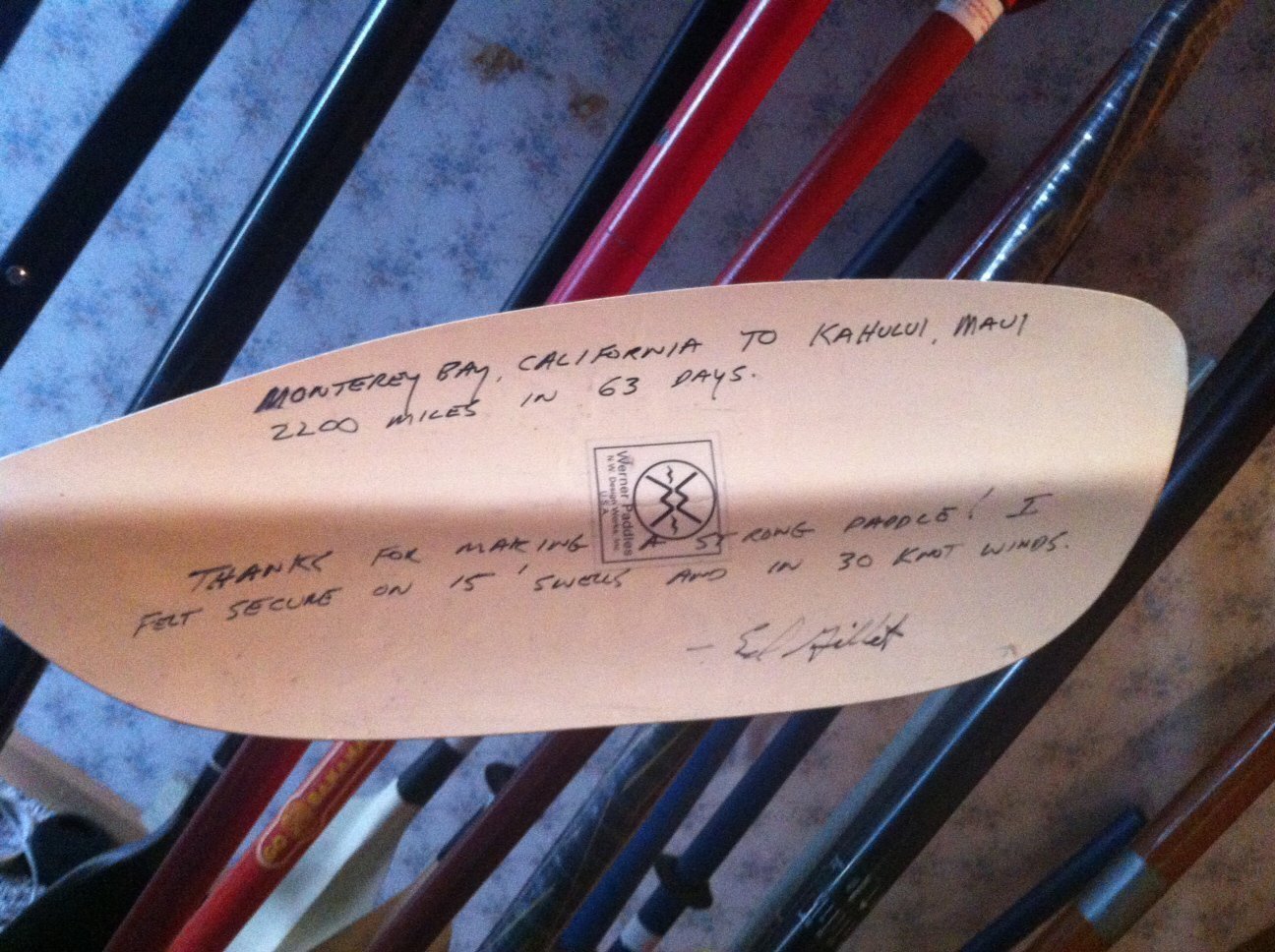
The paddle Ed Gillet used on his historic expedition 2,200 miles from California to Hawaii | Photo Courtesy Werner
JM: Let me put it another way. At this point in time are you able to meet your demand?
TR: A good way to answer that is we’re at the mercy of our labor market and sourcing. I don’t know of any company who isn’t. We would love to be making many, many more paddles, but we can only build as many as those two elements will allow.
JM: Just before this call I was leafing through your history page, and I stopped on an image of Ed Gillet’s paddle — the guy who paddled to Hawaii back in 1987 — and he’s the most understated guy in the world. He signed it with a note saying something like ‘this paddle gave me total confidence in 15-foot seas and 40-knot winds.’ How important is it for Werner to maintain that legacy of quality even as you’ve got people lining up to buy every single stick you can pump out of that factory?
TR: It’s funny you bring that up, because the exact same paddle he used is hanging up in our showroom here about 20 feet from where I sit. And it’s my favorite paddle here, because he actually used the thing to paddle from Monterey to Hawaii.
On that note of quality, I’ll go back to integrity being everything. We’re not going to cut corners to push out more product. Everything this company was built upon is providing the best experience on and off the water, and we want to maintain that reputation for bomber reliability that we’ve worked many, many years to establish.
JM: Last question. The film seems pretty candid and unscripted. Is there a blooper roll in the works?
TR: You know, I had Ben Stookesberry working on that. We spent many nights editing this film, and it came to a point where he went back on the road. He just put it on the Grand Canyon, so there’s potential for that to come down the tube later.
JM: Speaking of keeping it in the family, I love that you had Ben and Chris Korbulic make the film. It’s not their usual extreme expedition genre, but Werner has been sponsoring their paddling shenanigans since day one.
TR: Right, and something worth mentioning is that what the public has seen for so many years is our team. That’s the front-facing portion in every discipline, whether it’s our touring, canoeing or whitewater athletes like Ben and Chris. So it was important with this film to show the back end — where Werner paddles come from, and the people who make them.