A woman paddleboarding at a Florida spring experienced an uncomfortably close encounter with an alligator. In a recent interview, the paddleboarder claimed that the “gator” in question tried snapping at her board, just moments before the camera started rolling.
“This gator comes out of nowhere and it comes in between the two kayaks and straight for my paddleboard and then he opened his mouth and almost bit my paddleboard,” Vicky Baker said in an interview with News 6.
Baker can be seen swatting at the alligator with her paddle in an attempt to nudge it out of her way. Unsurprisingly, the large reptile retaliated with a warning hiss.
Though both parties came away from the incident unharmed, Baker suspects the alligator may have previously been fed by humans and may pose a threat to others on the water. She made sure to alert park rangers to the situation before leaving the park.
After decades of exploring, where do the boldest sea kayakers, whitewater boaters and canoe trippers fantasize about paddling? That’s the question that inspired Paddling Magazine to query some of our long-time contributors and favorite nomadic aquaphiles to ask after their dream destinations, most challenging expeditions and what a life of exploration really means anyways.
In this series of profiles, these exceptional water-wanderers share their top trips, best advice and biggest blunders. And whether their ambitious journeys were taken in the name of discovery, education, environment or glory, these legends affirm what we already know: There’s far more to explore by paddle than anyone could fit in a lifetime—but don’t let that stop you from trying.
[ Plan your next adventure with the Paddling Trip Guide ]
Amy and Dave Freeman have traveled more than 30,000 miles by kayak, canoe and dogsled through some of the world’s wildest places, from the Amazon to the Arctic. The couple is known for mixing tripping with advocacy for Minnesota’s Boundary Waters Canoe Area Wilderness (BWCA), which is threatened by a proposed nearby sulfide-ore mine. The Freemans paddled a petition canoe carrying thousands of signatures 101 days from Ely, Minnesota, to Washington, D.C, and later spent 365 consecutive days in the BWCA, highlighting this unique and fragile region.
Location: Sailboat on the ocean or BWCA
Occupation: Wilderness guides and advocates
Current Project: Sailing on a several-month journey
from Grenada back to the U.S.
Doing what they love is their day job. | Photo: Nate Ptacek
Q&A with Amy Freeman
1My favorite paddling destination I’d like to return to is…
the British Columbia coast. We kayaked the Inside Passage in 2010 and it felt like we barely scratched
the surface.
2My biggest pet peeve is…
when people call sea kayaks “sit-in” kayaks.
3My biggest blunder was…
leaving my sprayskirt in my kayak overnight on a Lake Superior trip in October. In the morning, it was frozen solid.
4Our most challenging expedition was…
a three-year, 12,000-mile journey across North America by canoe, sea kayak and dogsled and it taught us if we break things into small steps, we can do anything.
5One thing Dave will never do again is…
pack oatmeal for breakfast every day for a multi-month trip.
Q&A with Dave Freeman
1
One destination I dream of returning to is…
the Yukon’s Peel River Watershed. This location still captivates me because the vast mountain-studded wilderness is raw and wild, and the whitewater canoeing is excellent.
2One place I dream of paddling but haven’t yet is…
Greenland. I want to paddle here because it seems like the ultimate place to kayak with icebergs, fjords and glaciers galore.
3My biggest pet peeve is…
watching people paddle with a bent shaft facing the wrong way.
to travel slowly because when you travel by kayak, canoe or dogsled, the land speaks to you and that was from Leeroy, a Dene Elder who lives on Great Bear Lake.
5The best paddling companions are…
positive, hard-working and caring.
6My best advice for young paddlers is…
have fun and try to find more experienced paddlers who can help you progress more quickly and with less drama.
“And don’t be afraid to dream big,” adds Dave. “If you have a big trip in mind, start planning and saving, sharpen your skills and go for it. For the last 25 years, my job has been to paddle and explore wild places and share those wild places with people. There are lots of ways to make it work, but if you love to paddle and spend time outside, then, with a little creativity, some penny pinching and a healthy dose of grit, you can get paid to paddle and explore.”
7Happiness is…
doing what you love.
8What scares me most is…
that the lakes, rivers, oceans and wild spaces we love to paddle and explore will not remain for future generations.
This article was first published in Paddling Magazine Issue 64. Subscribe to Paddling Magazine’s print and digital editions here, or download the Paddling Magazine app and browse the digital archives here.
Doing what they love is their day job. | Photo: Nate Ptacek
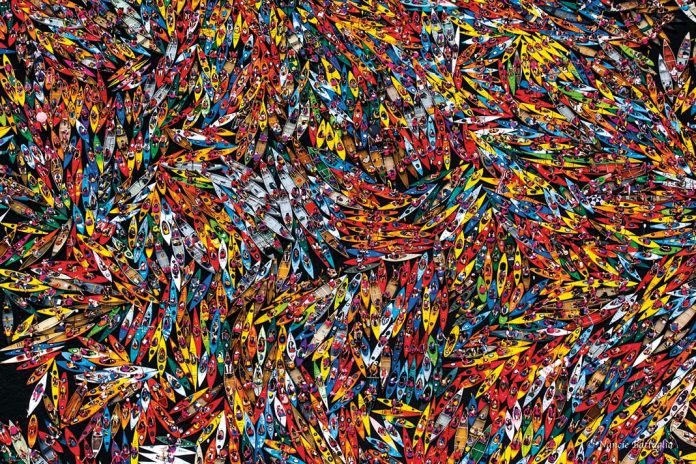
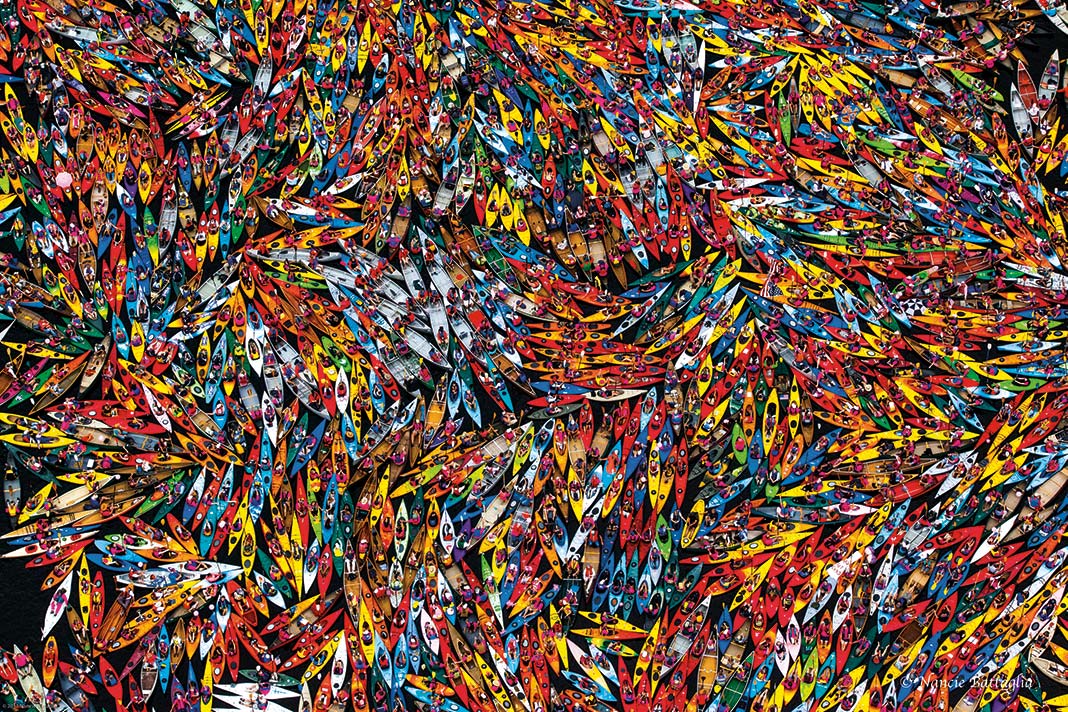
Lots of butts in boats. For now. | Photo: Nancie Battaglia
Leading up to the release of this magazine, I’m on the phone a lot. My reason for dialing is to find all the new products for the 2022 Product Guide and Paddling Magazine Industry Awards. But most of my time on these calls ends up being about industry stuff. This year, it was the Covid-19 effect on the paddlesports industry. You’ll feel this angst and optimism throughout the following pages. What is going to happen next is everyone’s concern. And anyone’s guess.
This tragic and wildly disruptive pandemic ended up being a gift to paddlesports. It may not feel like it after the most stressful year ever, but from an industry growth perspective, we couldn’t buy what we were just given. For two reasons: We could probably never afford it, and we’ve never been able to get our shit together long enough to charge in any meaningful direction.
For as long as I’ve been putting colored ink on paper, there have been small groups of paddlers with big ideas. I used to attend the annual Whitewater Symposium, which brought together manufacturers, business owners, paddlers and other whitewater enthusiasts to grow the industry. The last one was held in Bend, Oregon, back in the fall of 2013.
I was also a board member of TAPS, the Trade Association of Paddlesports, a nonprofit supporting the paddling industry in North America. At Outdoor Retailer Summer Market in Salt Lake City, the Paddlesports Industry Unification Workgroup rolled out its draft action plan to create the Paddlesports Industry Association. The hope was to combine TAPS and the Professional Paddlesports Association into a new, stronger industry group. That was back in 2006. Propaddling.com, the association’s website address, now directs to Hostmonster.com, where you can buy the domain and start all over again.
Most recently, a gang of owners, executives and managers of leading paddlesports brands almost formed the Paddlesports Industry Coalition. It was to rally support for Paddlesports Retailer because, at the time, we believed paddlesports needed its own show.
I don’t know if we will ever successfully pull together brands, retailers, outfitters, schools and liveries to form a coalition with the mission of growing paddlesports participation to support the industry. And, even if we did, I wonder if we could gather a budget large enough to educate the North American public about the joys of canoeing, kayaking and paddleboarding. Thanks to Covid, we didn’t have to.
Where the industry will be in 10 years will have less to do with the effects of Covid-19 and more to do with what we do right now. If we do nothing, we’ll piss away the 30 to 40 percent increase in participants we were just gifted. The general feeling is, if we do nothing, in 10 years, we’ll be right back to pre-2020 sales numbers. Probably worse.
All these new paddlers came from somewhere. Golf courses, movie theaters, Disney World and every international vacation destination not visited in the last 18 months. These other sport and travel industries already have their shit together. They have boards, associations, divisions, departments and budgets. They want their mindshare and market share back, plus more. They want to make up for lost time and money. Disney alone will spend billions to put butts in boats—the Jungle Cruise, Frozen’s Viking ships and Captain Jack Sparrow’s Black Pearl.
Lots of butts in boats. For now. | Photo: Nancie Battaglia
We can’t take this boom for granted. We can’t sit back and assume this interest in the outdoors will continue. Pandemic sales will only drive more organic sales for so long.
Where paddlesports will be in 10 years is going to be determined by how well we convert this influx of consumers to paddlers. This is something we can do. We just need to keep them on the water often enough to form strong habits. Habits will lead to lifestyle adjustments and then to self-identification. Canoeing, kayaking and paddleboarding will no longer be something they do; it will become who they are. Like us. I’d rather rock a life jacket tan over stupid mouse ears any day of the week.
Scott MacGregor is the founder and publisher of Paddling Business.
This article was first published in the 2022 issue of Paddling Business. Inside you’ll find the year’s hottest gear for canoeing, kayaking, whitewater and paddleboarding. Plus: Industry leaders on surviving COVID, the dirty little secret of pro deals, brand consolidation and more. READ IT NOW »
Lots of butts in boats. For now. | Photo: Nancie Battaglia
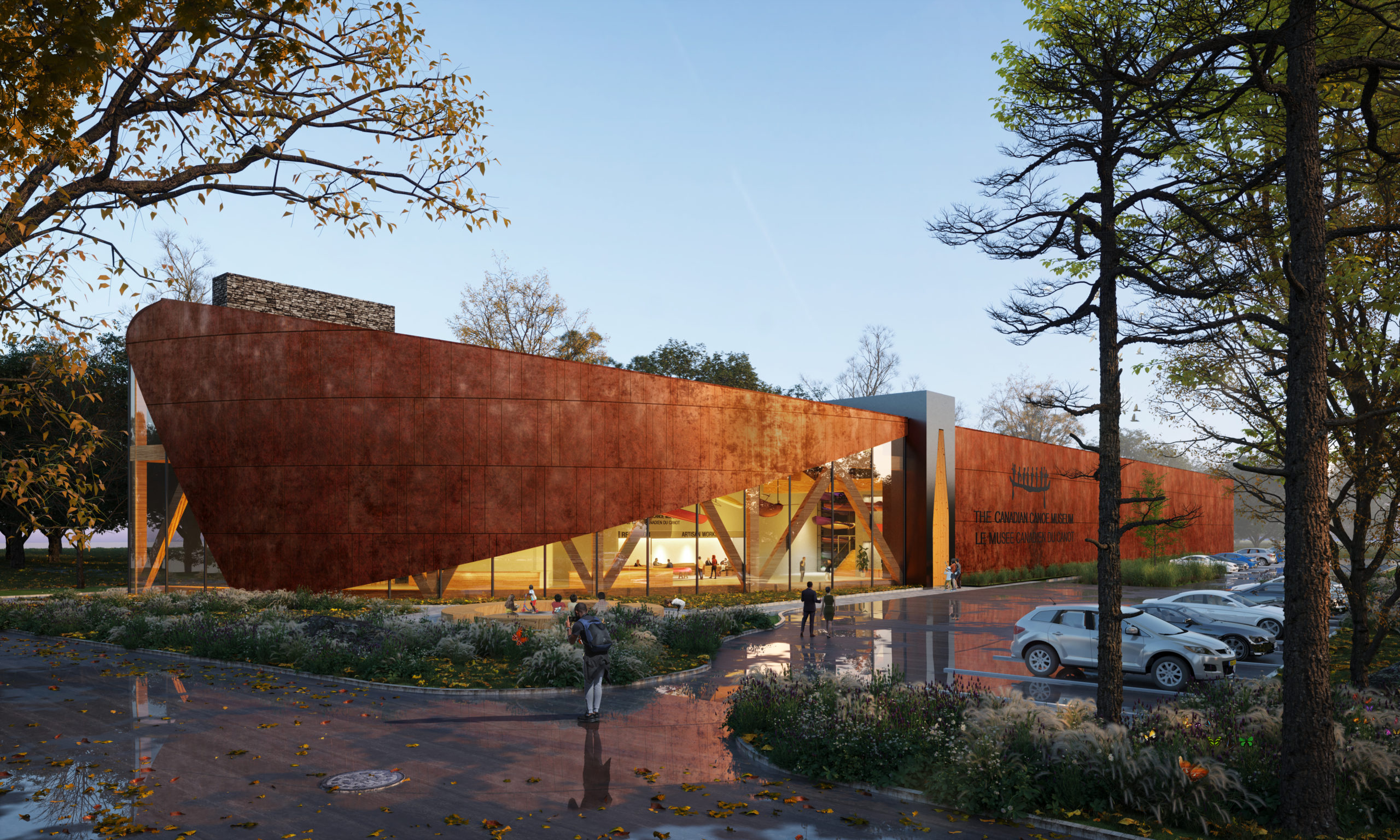
The Canadian Canoe Museum’s unique curved façade and use of weathered steel make for an impressive view from the street. | Photo: The Canadian Canoe Museum
Building to begin in October
Photo: The Canadian Canoe Museum
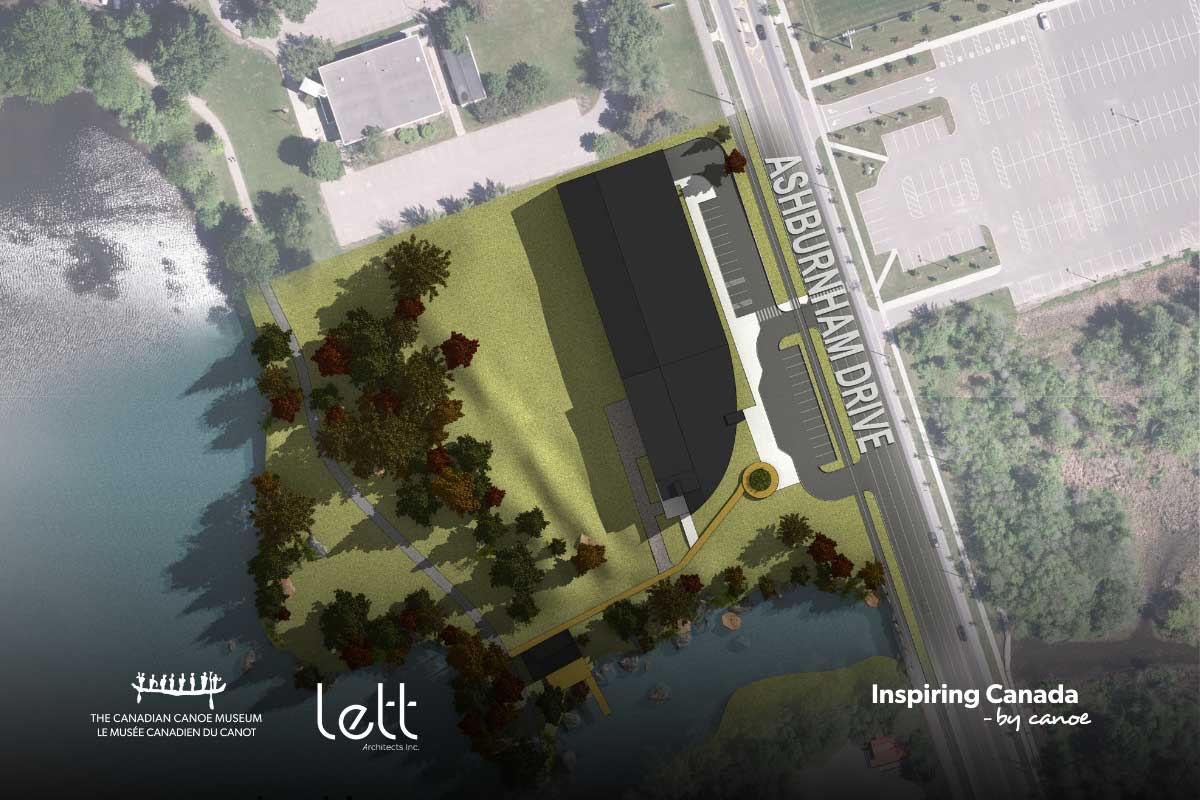
The Canadian Canoe Museum (CCM) today announced that on September 22, 2021 it completed the purchase of Johnson Property, from the City of Peterborough. The land at 2077 Ashburnham Drive in Peterborough, ON is the site where it will build its new world-class museum slated for completion in 2023.
City Council approved the direction to proceed with the sale of the land in January 2021. The sale was subject to a number of conditions including rezoning, project validation and confirmation of site appropriateness, all of which have been met to the satisfaction of both CCM and the city. CCM paid $1.575M for the five acres of land.
CCM intends to sell its current property at 910 Monaghan Road to help fund the project in addition to a fundraising campaign that has raised just over 82 per cent of the $40M needed to complete the overall project.
The Canadian Canoe Museum’s unique curved façade and use of weathered steel make for an impressive view from the street. | Photo: The Canadian Canoe Museum
Having completed project validation, CCM is now moving into contract for continued design and construction of the new facility. The Museum marked the occasion by signing a CCDC30 Integrated Project Delivery (IPD) contract on September 27, 2021 with Chandos Construction Ltd. and Lett Architects Inc., valued at $27,363,383.00. This agreement allows for the commencement of design services and construction work associated with the building of the new museum on the Johnson Property.
“Canadian Canoe Museum is thrilled to have completed these critical milestones so that we may commence with construction as planned in October,” said Carolyn Hyslop, executive director, Canadian Canoe Museum. “Our project team is working at lightning speed to stay on schedule so that we may be ready to open the new museum in 2023.”
The new museum will enable CCM to house 100 per cent of its collection in a building that meets Class A conservation standards, directly on the water, which allows for increased on-water and in-person programming while being a key cultural tourism driver in what will become a vibrant community hub on the Peterborough waterfront.
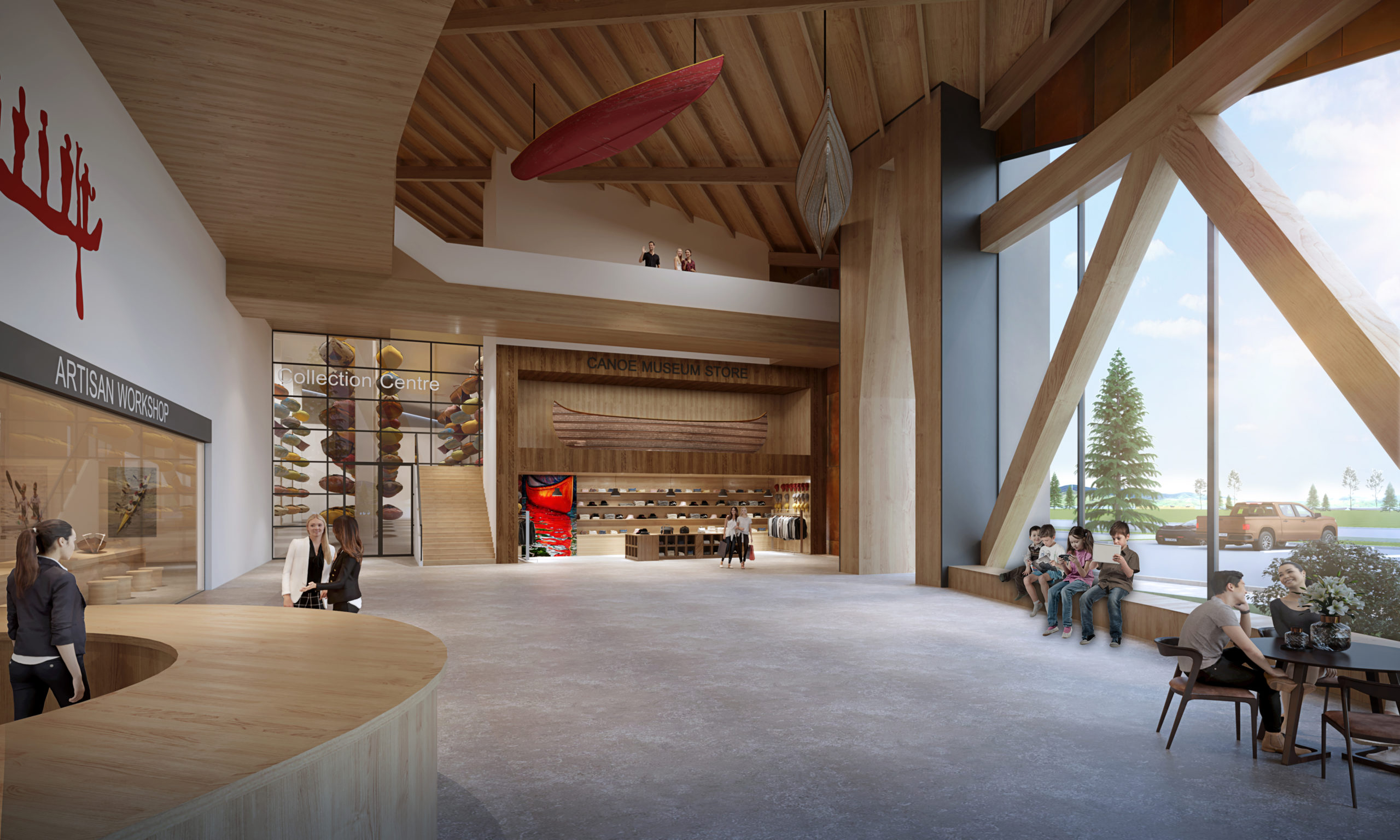
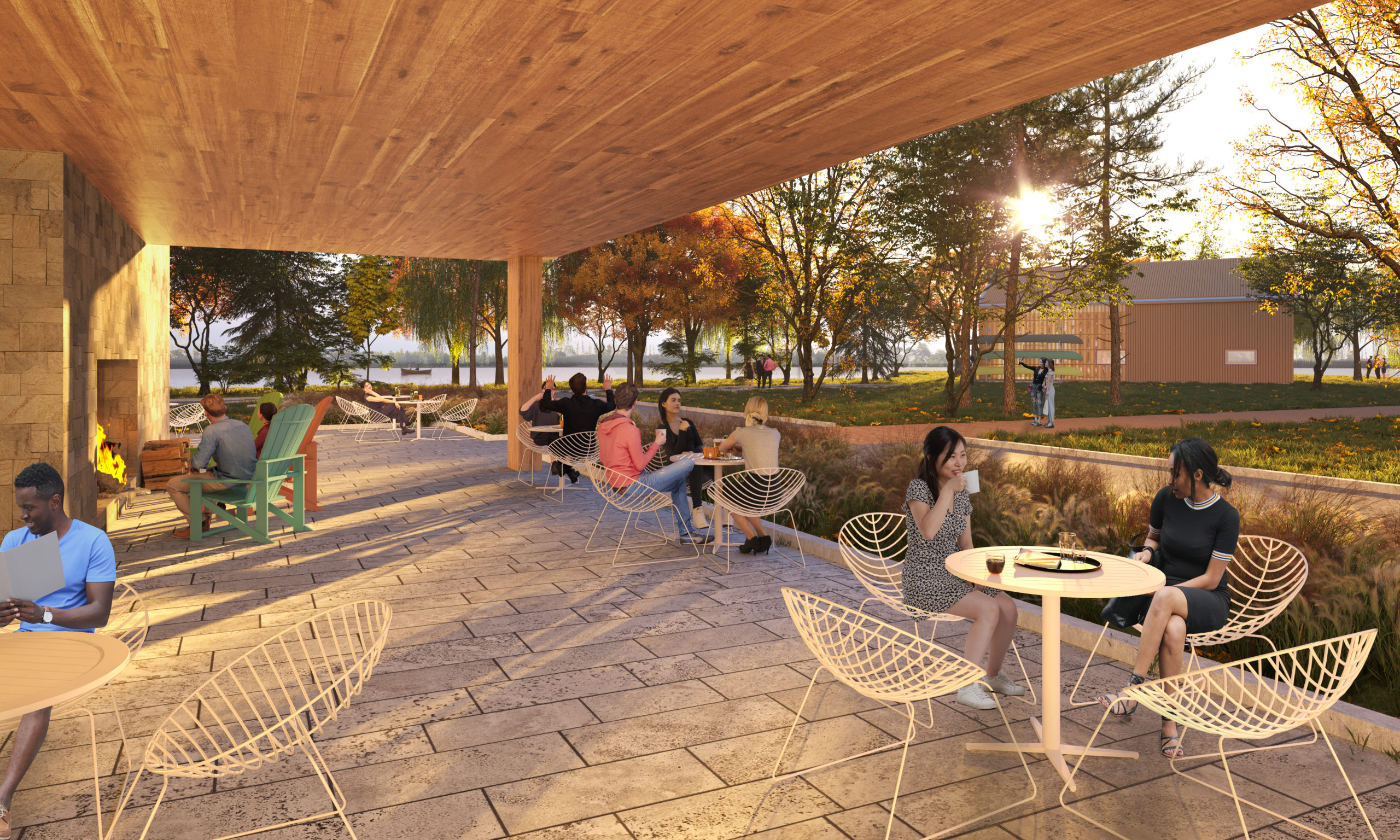
From the entrance of the Museum looking south, visitors experience the impressive, curved façade of the building and get a glimpse of the large fireplace in the café lounge. | Photo: The Canadian Canoe Museum
“I am pleased to see the completion of this transaction for the property that will be the future home of The Canadian Canoe Museum. I am very much looking forward to the building of this exciting project in Peterborough’s Ashburnham Ward,” said Councillor Gary Baldwin, City Council’s representative on The Canadian Canoe Museum Board.
Distinctively, the new museum build is employing an IPD approach where people, systems, business structures and practices are integrated into a concurrent process, from design to fabrication and construction, in order to maximize efficiency and accelerate schedules. IPD is a relatively new process which takes a values-based approach to construction, assembling key project partners to the table from the start to work simultaneously to design, plan and execute together. It is an integrative and collaborative, team-based project delivery method.
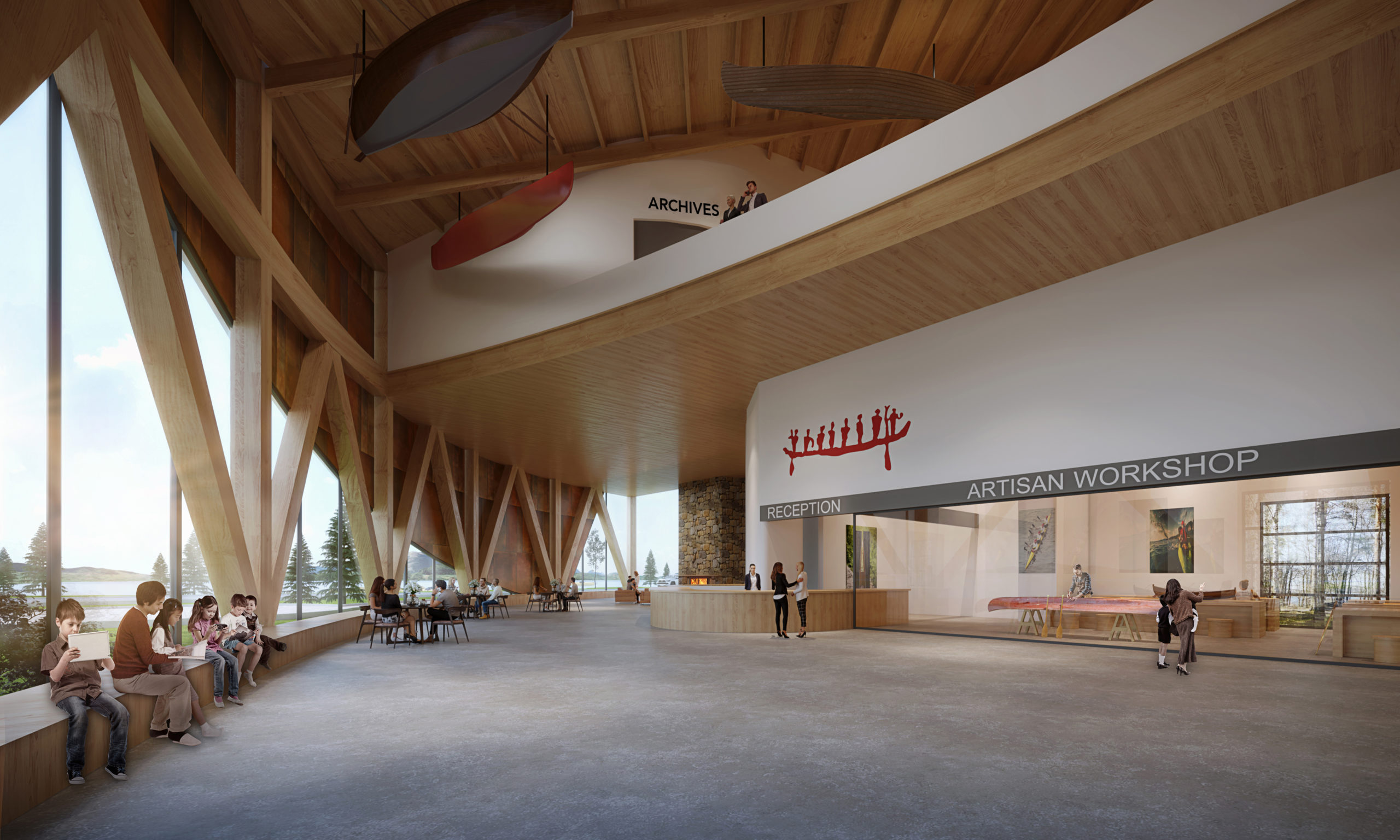
The public atrium of the Canadian Canoe Museum features soaring double-high ceilings and beautiful exposed mass timber elements as well as views into the Museum’s Collection Centre.. | Photo: The Canadian Canoe Museum
Hyslop extends CCM’s gratitude to all of its partners, donors, supporters and community members who are making the journey to the water’s edge possible. The project has received foundational financial support from municipal, provincial and federal governments, and the Weston Family Foundation.
Johnson Property is situated on Little Lake, north of Beavermead Park and south of the Parks Canada-Trent Severn Waterway head offices. The new canoe museum will be built on a flat portion of the property, away from the floodplain, on the open land along Ashburnham Drive so as to preserve the existing trail, shoreline and natural waterfront.
The public terrace directly off the Museum’s café offers scenic lakefront views and a large fireplace for the public to enjoy. | Photo: The Canadian Canoe Museum
With a world-class collection as a catalyst, The Canadian Canoe Museum inspires connection, curiosity and new understanding. In partnership with individuals, groups and communities – locally, provincially and nationally – we work to experience and explore all that our collection can inspire. This sees students opening their minds in our galleries; community members connecting through artisanry; people of all ages getting on the water and learning to paddle; and exhibitions and events that spark conversation and collaboration.
For further information: Caroline Spivak
Profile Communications Corp. Caroline@Profilecoms.com
416.371.9740
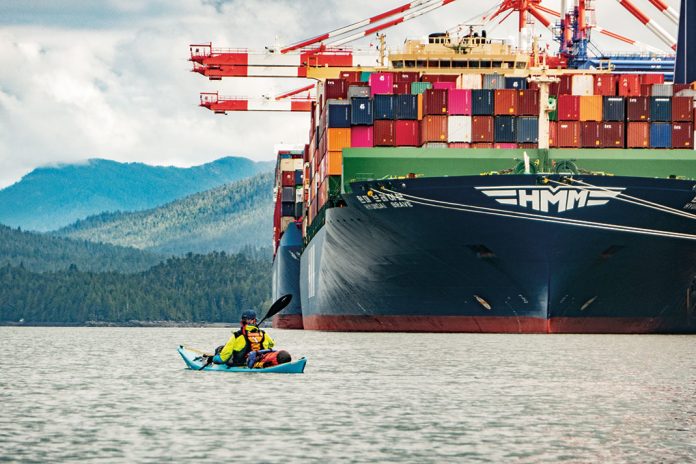
Supply chain disruptions left few businesses untouched during the 2020 and 2021 seasons. | Photo: Frank Wolf
The Effect of Covid on Paddlesports
With nobody being able to get inventory, the model of selling a million items and making a dollar apiece is a losing model right now. So the one good thing is that it’s really evened the playing field to where prices haven’t been a huge issue. —Brian DeFouw, Confluence Ski and Paddle, Denver, Colorado
I’m reminded of the old adage, it’s easier to keep a customer than it is to make a customer. Right now we have this tremendous opportunity to make more customers. They’re coming to us. —Dale Williams, Sea Kayak USA
Our store is 10,000 square feet and we didn’t have one boat on the shelf. We didn’t have one paddle. We didn’t have one PFD. Everything was gone. —Kelly McDowell, The Complete Paddler, Toronto, Ontario
Our hope is the influx of Covid-related new paddlers breeds a future generation of enthusiasts. While we hear of many companies pulling back their programming and marketing efforts because there’s little current need for promotion, we feel like this is the time to keep our foot on the gas. —Tom Stewart, General Manager, Aquabatics Edmonton, Edmonton, Alberta
Over the last pandemic year, we have seen tremendous new interest in our sport. Our focus in the industry should be on how we retain this growth through the next year and beyond. We should work together to convince these new paddlers of the ease of access to the water and the lifetime of enjoyment that can be had through this human-powered sport. —Jeff Turner, Kokatat, Arcata, California
The customer buying process has changed in ways that will certainly outlive the pandemic.The digital experience is more important now than ever before. Brands and dealers must work together to make sure customers have a content-rich, authentic and community-informed brand experience on their digital device, even after the world has fully reopened. —Scott Holley, President, Eddyline Kayaks, Burlington, Washington
We are truly excited to see such an increase in people wanting to learn, to appreciate our natural world and being forced to slow down a bit. I feel it has been good for our souls to get back to basics, and paddling is a basic thing. —Brian Henry, Ocean River Sports Adventures, Victoria, British Columbia
What’s in the box?
The consumer who walks into the big box and says, “Hey, there’s a $179 kayak. I’m already here buying a jockstrap and a basketball, so why not?” Those are the people who end up saying they hate kayaking, because they tried it once and it was terrible. —Dave Lindo, OKC Kayak, Oklahoma City
“If people vote, they’ve been voting low cost. I’ve always said there’s 10 times more beginners with not very much money than the 10 percent that have a lot of money.” —Tim Niemier, designer of the Origami Paddler
“The most expensive boat is the $300 boat you paddle once. Because it’s not how much the boat costs, it’s dollars per paddle. So the better the boat—the more comfortable and lighter and suited to what you want to do—the cheaper the boat is going to be over time.”—Darren Bush, Rutabaga Paddlesports, Madison, Wisconsin
Selling through big box is a double-edged sword. Getting in front of the customer is good, though I’d suggest the race to the bottom with pricing is the long-term problem. —Morgan Goldie, North Water, Vancouver, British Columbia
Retail versus online
We price-match the online retailers and it’s still not enough. We’re the same price or cheaper, we have a longer warranty and we gave you all this great service. But at the end of the day, people still feel like they’ve won somehow by not buying at the brick and mortar. —Dave Lindo, OKC Kayak, Oklahoma City
On trade shows
Trade shows have traditionally been about the manufactures communicating and working with retailers. They are now a sold-out joke focusing on anything and everything except that relationship. —Brian DeFouw, Confluence Kayak and Ski, Denver, Colorado
We should have a code of ethics around booth size and cost. The idea that we go to these trade shows and build McMansions—I mean, we’re talking about spending a quarter million dollars on a booth—is absolutely pointless. I cannot think of a stupider thing for the outdoor industry to do. —John Weld, Immersion Research, Confluence, Pennsylvania
The need for in-person human connection has never been greater than it is now. Not only have we been starved of that connection, we’ve experienced the shared trauma of the past year in isolation (pandemic, political divides, confronting staggering inequalities and inequities). I’m very much looking forward to seeing our friends in the industry and our dealers and celebrating our survival.—Scott Holley, President, Eddyline Kayaks, Burlington, Wash.
The pandemic has made me think every other year is a good balance between in-person trade shows and online interaction and in person interaction. The savings of time and money are too important to ignore with online interactions as a viable option. —Morten Fogh, Owner, Fogh Marine, Toronto, Ontario
The advancement of digital tools and virtual events has provided some welcome relief from excessive travel and allowed for continuous connection. That said, the benefit of people
together at shows, on the water, and otherwise can’t be forgotten. I am very excited to connect with people and share an experience in person again.—Alex Sherbinow, Marketing Manager, Johnson Outdoors Watercraft, Old Town, Maine
We’ve found good old-fashioned phone calls to potential partners to be just as effective as trade shows. Granted, there is something to be said for in-person relationship building, as well as the ability to show and tell new products, but is it worth the price of exhibiting at a show? I’m not so sure. —Meg McCall, Founder & CEO, Angle Oar, San Luis Obispo, California
In the past, trade shows were the place to be in order to generate brand awareness and meet and greet retailers and media. Now, with direct to consumer digital marketing, most of the awareness and consumer activation can be done much quicker and easier online, meeting the consumer where they live. I think the key moving forward is understanding the value-add of a physical show and how to digitize the event to leverage it with the consumer. —Corey Cooper, CEO, BOTE, Destin, Florida
Covid and the future
My hope is the reason for this increase in demand is that more people are going outdoors, and this means we’re competing with other industries, not just each other. We’re actually taking some of the money that might be going into electronics or expensive vacations. —Dale Williams, Sea Kayak USA
I’m looking at the Covid boom in the most optimistic way. I remember an America when I was growing up in the ‘70s and ‘80s, that as a country had a very different relation with the outdoors. People just did stuff outdoors on weekends—canoeing, hiking, backpacking. We’re thinking again about outdoor recreation as a part of our culture, which is something I thought was gone forever, but maybe not.—John Weld, Immersion Research, Confluence, Pennsylvania
The biggest change in the specialty retail game?
Coming up with ways to compete with larger retailers online. This has been an eight-plus year project, and using a content marketing strategy we are really starting to compete with larger retailers that have much bigger marketing budgets. —Simon Coward, Aquabatics Calgary, Calgary, Alberta
Lack of business-wide innovation by legacy brands on sales channel and product approach. This has opened the door for disruptor and
challenger brands who can ride coattails on product design, source cheap manufacturing, and focus all efforts on performance marketing
to convert direct to consumer. The industry should embrace it and change. Evolve or die.—Corey Cooper, CEO, BOTE, Destin, Florida
One innovative way your business adjusted to Covid inventory shortages?
In 2020, we repurposed our large rental fleet to be a pre-buy loaner program. It allowed us to presell boats that were not going to be available until late season, and get consumers a boat to use for the season. This closed a lot of boat sales for us and has become a rewarding talking point for customers who benefited from this flexibility. —Simon Coward, Aquabatics Calgary, Calgary, Alberta
We raised prices slightly and stopped all discounts until I can get product. —Rick Pasturczak, Alpine Accessories, Lake in the Hills, Illinois
Pro deals, good or evil?
As long as pro deals are kept strictly for industry staff and ambassadors they work great. The problem comes when they are made available to people on the fringes who are not actively involved in growing paddlesports or selling products. This devalues pro deal programs and undercuts retail store revenues. The perfect pro deal program would look similar to what many brands have now, just on a shorter leash. —Simon Coward, Aquabatics Calgary, Calgary, Alberta
In paddlesports it’s a moot point because they haven’t done pro deals in a year. You’re not going to get a discount on a boat they can’t make enough of. —Darren Bush, Rutabaga Paddlesports, Madison, Wisconsin
Bad. Everyone knows if you are a real pro you have connections for deals. Pro deals are for fake pros and posers and do not benefit a manufacturer or retailer. —Brian DeFouw, Confluence Kayak and Ski, Denver, Colorado
Every pro-purchase program out there is a profit center for that business. They’re selling that product for more than they’re selling to me for. —Todd Frank, The Trail Head and Trail Head River Sports, Missoula, Montana
Wild Cards
With overseas shipping and even domestic costs and capacity reaching unprecedented levels, now may be the time for a more localized approach to paddlesports manufacturing and distribution. —Tom Stewart, General Manager, Aquabatics Edmonton, Edmonton, Alberta
How do we help new kayak owners to understand weather and kayak safety? For example, many people associate flatwater with safe conditions and waves with dangerous conditions, but flatwater can be very dangerous with a strong offshore breeze. —Morten Fogh, Owner, Fogh Marine, Toronto, Ontario
I have seen a real paradigm shift in a positive way that has been driven by brands moving direct to consumers. Brands who focus on direct-to-consumer can spend more money on digital marketing because they can convert directly on a transaction. The old thought process was that this cannibalizes brick and mortar retail sales, but we have seen the inverse. The more we can spend on brand awareness and convert directly, the more this benefits our specialty retailer game because consumers still want to see and touch things… the rising tide lifts all ships.—Corey Cooper, CEO, BOTE, Destin, Florida
As a specialty retailer, my joke with vendors is “I’m the low-volume, high-maintenance guy that you have to deal with.” But what I bring to the table is authenticity. People come into our store to see what good products look like. —Todd Frank, The Trail Head and Trail Head River Sports, Missoula, Montana
You have to be smart, you have to bring passion and you have to take risks. That’s why it’s so tough to make it as an independent retailer in any sports specialty, whether it’s bikes or climbing or paddlesports. It’s a tough business. —Kelly McDowell, The Complete Paddler, Toronto, Ontario
The next game-changing innovation in paddlesports is _______?
The best moments in paddlesports are the moments where your tools dissolve into an absence of awareness and you are present with the water below and the sky above. The best innovations in paddlesports are the ones making the instruments of paddling unnoticeable. —Scott Holley, President, Eddyline Kayaks, Burlington, Washington
Local resources for the family day trip. —Amy Isaikina, Harvest Foodworks, Frankville, Ontario
Shipping boats on time? —Brian DeFouw, Confluence Ski and Paddle, Denver, Colorado
Supply chain disruptions left few businesses untouched during the 2020 and 2021 seasons. | Photo: Frank Wolf
What is the biggest challenge facing your business today?
Shipping costs, especially globally. —Meg McCall, Founder & CEO, Angle Oar, San Luis Obispo, California
Has it been harder to get and keep staff in the Covid era?
We outsource most services and operate online only. The future is now. —Julian Kidd, Owner, Green Water Sports, Miami, Florida
Has consolidation caused paddlesports to lose its soul?
With recent acquisitions and mergers I worry about there becoming a monopoly in kayak manufacturing and, to a lesser degree, paddle manufacturing. —Meg McCall, Founder & CEO, Angle Oar, San Luis Obispo, California
We’ve seen private equity come in and decimate
a brand, all in the name of dollar signs, but we’ve also seen the opposite—brands are rejuvenated and their spirit and passion continues on. If the right brands are consolidated by the right buyers, we expect the sport to benefit as a whole. —Julian Kidd, Owner, Green Water Sports, Miami, Florida
One thing you learned about retail at the start of your career that holds true today.
Getting information or gear from someone with knowledge gives you the best advantage when making a purchase or plan. —Amy Isaikina, Harvest Foodworks, Frankville, Ontario
Retailers are at the heart of the success for any brand.There’s a lot that can be communicated digitally, but the personal service and expertise of a local shop employee is invaluable. —Alex Sherbinow, Marketing Manager, Johnson Outdoors Watercraft, Old Town, Maine
. . . and one piece of industry wisdom that no longer holds true?
For our business, it’s the idea of “pre-booking” next year’s season. We’ve scaled our business in the direct to consumer channel and focused the lens on product and marketing to be driven by our customer data. We now use a predictive direct-to-consumer sales model to forecast next year’s numbers. —Corey Cooper, CEO, BOTE, Destin, Florida
This article was first published in the 2022 issue of Paddling Business. Inside you’ll find the year’s hottest gear for canoeing, kayaking, whitewater and paddleboarding. Plus: Industry leaders on surviving COVID, the dirty little secret of pro deals, brand consolidation and more. READ IT NOW »
Supply chain disruptions left few businesses untouched during the 2020 and 2021 seasons. | Photo: Frank Wolf
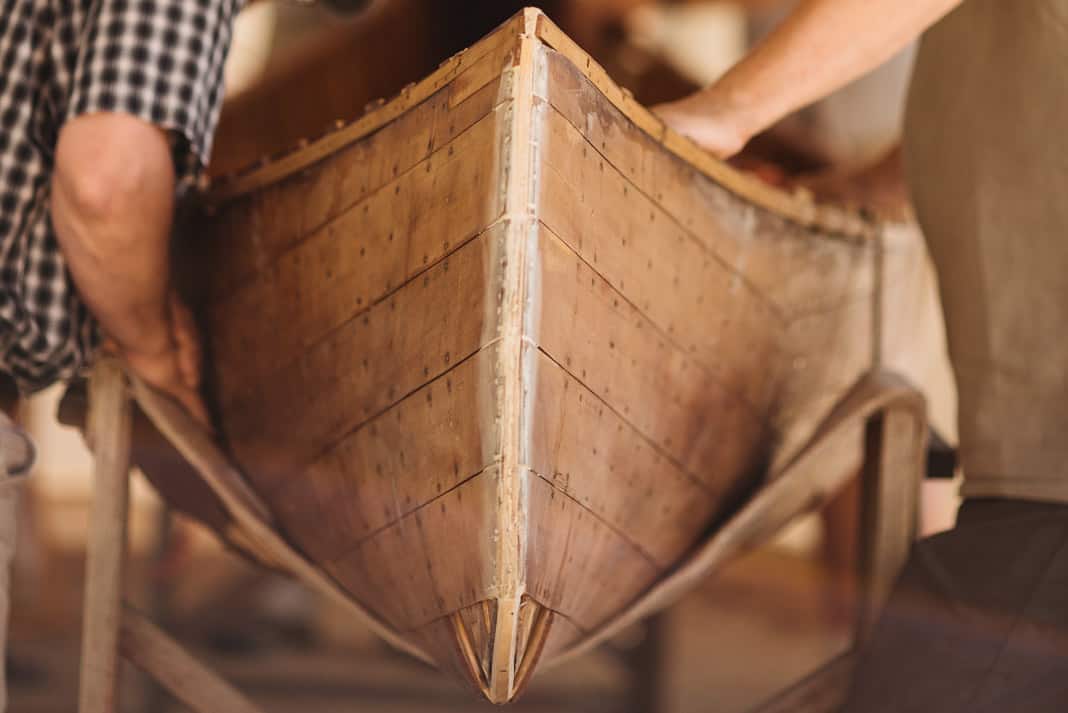
Piano technician George Klassen found himself with spare time on his hands during the early stages of the pandemic. Inspired by images of hand-built cedar strip canoes he saw on Facebook marketplace, he decided to use his two months off work to try and build his own canoe—with a twist.
The choice of canoe material will determine your paddling destinations and dreams. | Photo: flickr.com/MathewIngram
The material a canoe is made of affects performance, durability, weight, aesthetics, and price. Choosing a canoe is a matter of weighing the pros and cons. When considering price, think long-term investment. The canoe you buy today will last many decades.
The question of what is the best canoe material comes down to what you are going to use the canoe for, how much maintenance you want to invest in, where you’ll be storing your canoe and how much you want to spend, among other considerations. Find out more about the different canoe material types below, and weigh the advantages and disadvantages of each for yourself.
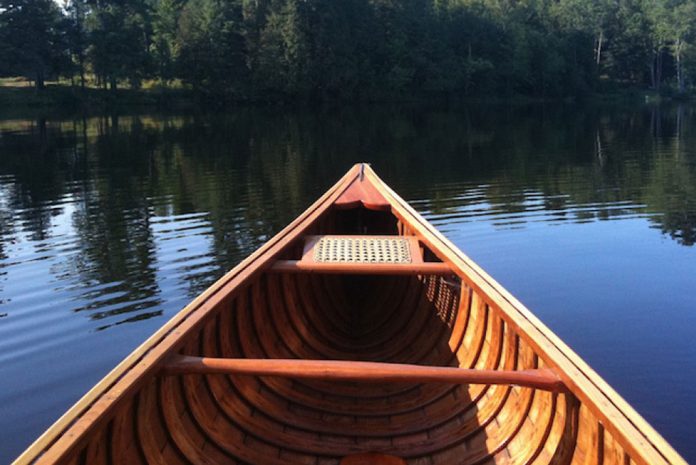
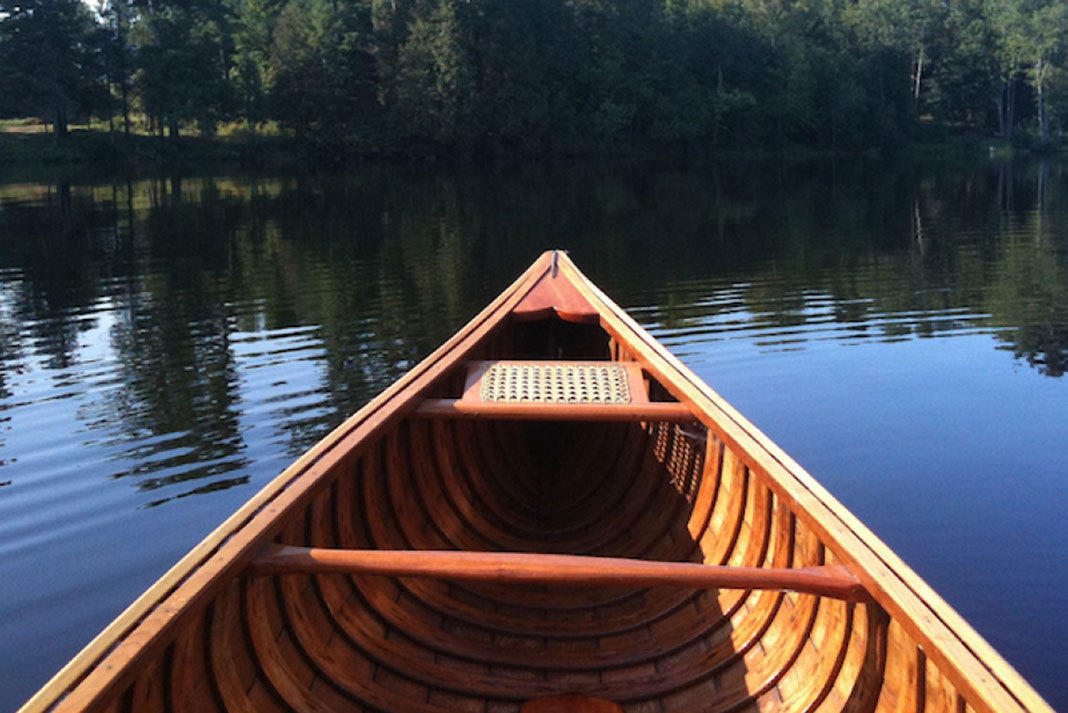
Though the history of wooden canoes dates back centuries, they’re hardly a thing of the past. Even with space-age materials available today, you can’t beat the feel and aesthetics of wood on water.
Most cedar strip and wood and canvas canoes today are handmade by DIYers. The rest are custom-made by woodworkers, and their high price reflects it. Yet, with indoor storage and a small amount of yearly maintenance, your canoe will be a legacy for your grandkids to enjoy.
Wooden canoes are universally aesthetically pleasing. | Photo: flickr.com/MathewIngram
Pros: The aesthetics, quiet paddling and luxurious feel. With just a few woodworking tools, $1,000-worth of materials and a hell of a lot of patience, you can build your own piece of history.
Cons: If you don’t build your own, it’ll cost you—a lot. Regular TLC and weight are potential deterrents.
Best Use: Voyageurs, family and cottage and anyone mad for trad.
Composites
Manufacturers have long favored the mainstays of the composite scene—fiberglass, aramid (Kevlar and Twaron, etc.) and carbon—in their quest to bring the triumvirate of canoe virtues to paddlers: durable, lightweight and inexpensive.
It used to be that you could have two of those characteristics, but not all three. That has begun to change as manufacturers experiment with a variety of new fabrics and resins. The composite canoe category includes the widest range of specs, from $999 cheapskates to $3,500 featherweights. Some manufacturers are now offering composites as river runners and wilderness tripping alternatives to Royalex.
Souris River Quetico 17 canoe in Kevlar. | Photo: Kaydi Pyette
Pros: Exceptional strength to weight ratios. Performance-oriented shapes. Low maintenance.
Cons: Labor-intensive processes and premium materials simply cost more. Generally, lighter means less durable.
Best For: Lakewater trippers, racers and magazine editors who don’t want to lift heavy things.
The popularity of recreational canoeing is credited by many historians to the mass-produced aluminum Grumman canoe of the ‘70s, which took paddling out of the domain of the handy and wealthy, putting it into the hands of the people.
Noble history aside, manufacturing options have come a long way since riveting sheets of aluminum together. Still today, some outfitters, camps and duck hunters prefer its durability.
Pros: Lasts forever. Relatively inexpensive.
Cons: Heavy, cold and noisy. Aesthetically as pleasing as a B52 bomber.
Many less expensive canoes are made by heating and spinning plastic pellets inside a mold inside a giant oven. Historically, this construction method didn’t allow for sharp and narrow entry lines of more performance-oriented designs.
However, it’s an inexpensive process creating durable canoes. Expect your plastic canoe to be dragged to the shore and then slide over rocks without complaint.
The Old Town Penobscot 164 canoe in polyethylene. | Photo: Joel Clifton
Pros: Inexpensive. Colorful. Virtually no maintenance required.
Cons: Susceptible to sun damage. Lack of rigidity can lead to poor performance over time. Heavy.
Best For: Recreational paddlers and rambunctious kids. Perfect for a cottage.
Softshell
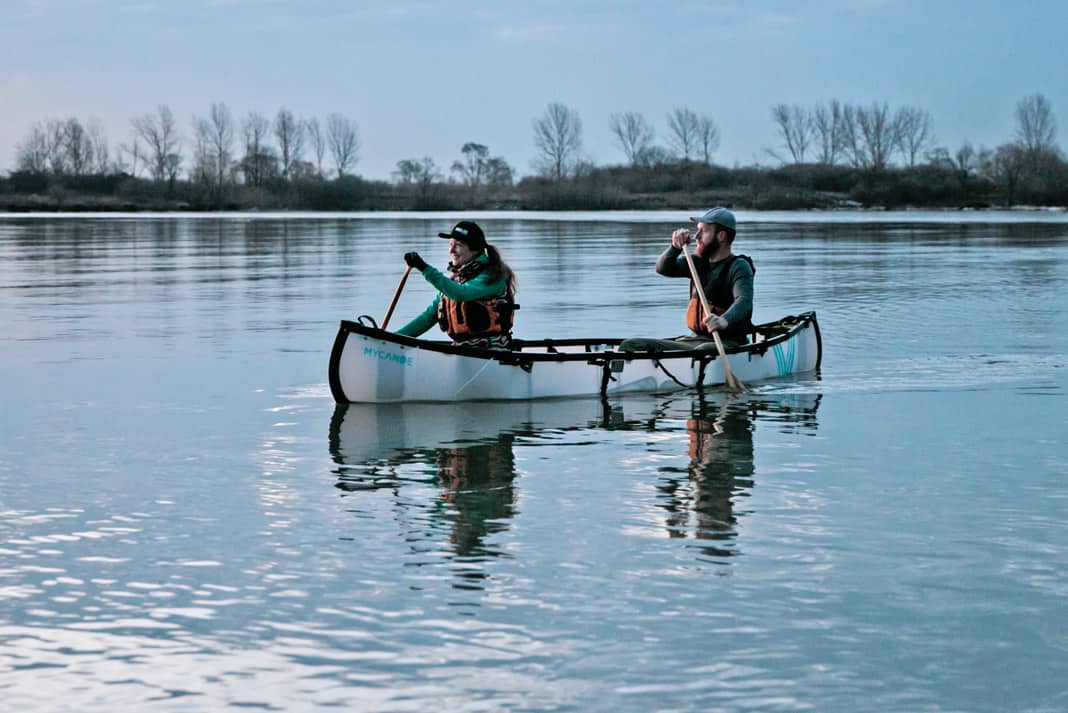
Travel canoes are made of durable and flexible reinforced fabrics like PVC, polyester and nylon. Some require setting up an internal structure, giving form to the fabric, while others are completely inflatable. Many will pleasantly surprise you with their durability, performance and price. Some models are rated for class IV whitewater.
MyCanoe Plus recreational folding canoe. | Photo: Joel Clifton
Pros: Fit your canoe in your closet and trunk, or check it on your charter flight. Often lightweight.
Cons: Some assembly required.
Best For: Remote expeditions and city slickers strapped for space.
After decades of exploring, where do the boldest sea kayakers, whitewater boaters and canoe trippers fantasize about paddling? That’s the question that inspired Paddling Magazine to query some of our long-time contributors and favorite nomadic aquaphiles to ask after their dream destinations, most challenging expeditions and what a life of exploration really means anyways.
In this series of profiles, these exceptional water-wanderers share their top trips, best advice and biggest blunders. And whether their ambitious journeys were taken in the name of discovery, education, environment or glory, these legends affirm what we already know: There’s far more to explore by paddle than anyone could fit in a lifetime—but don’t let that stop you from trying.
[ Plan your next adventure with the Paddling Trip Guide ]
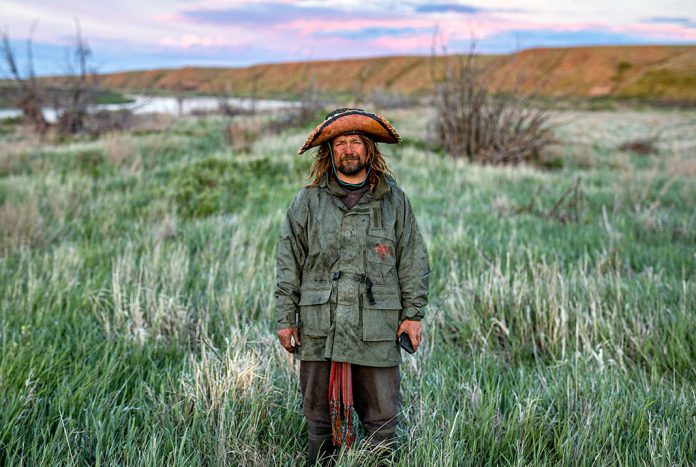
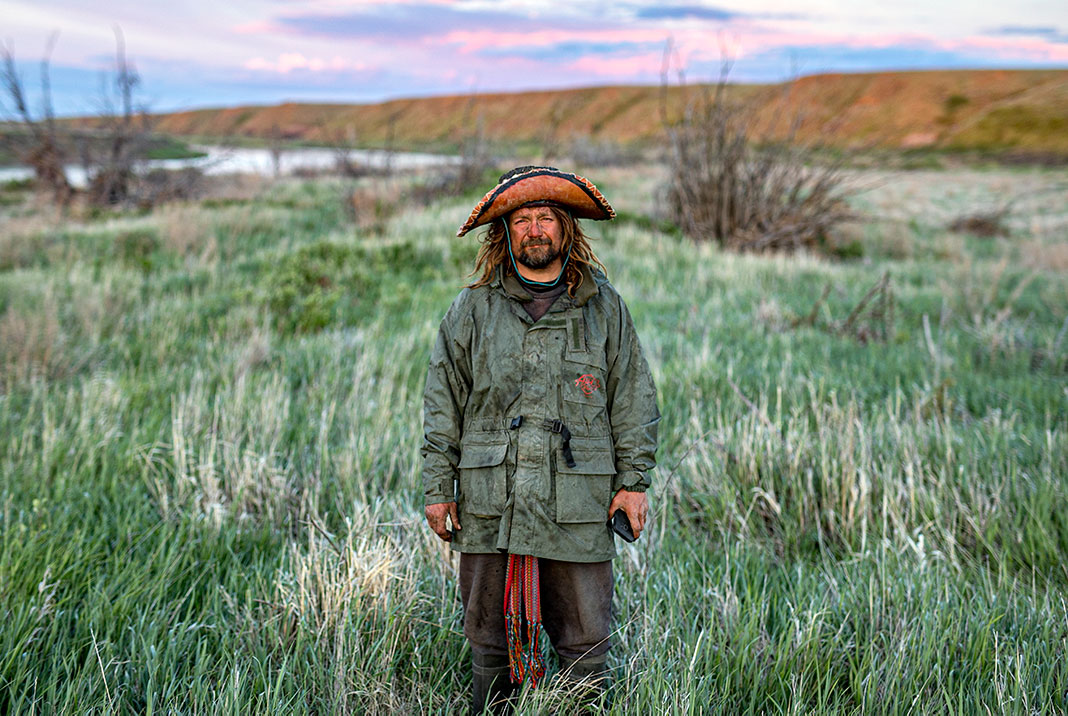
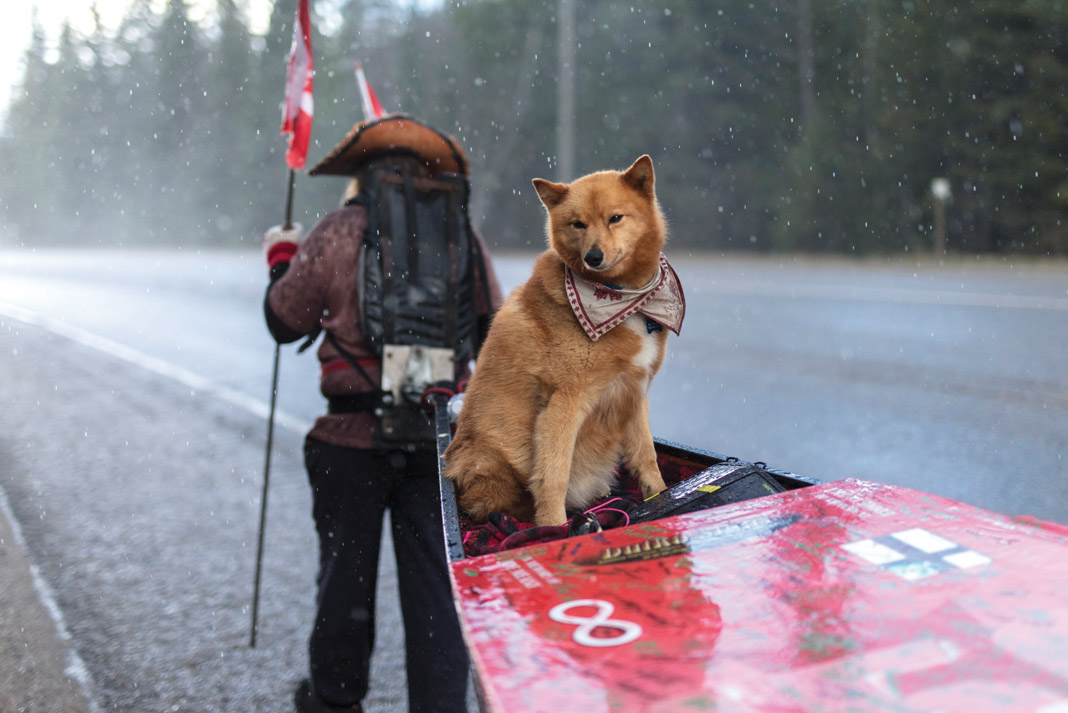
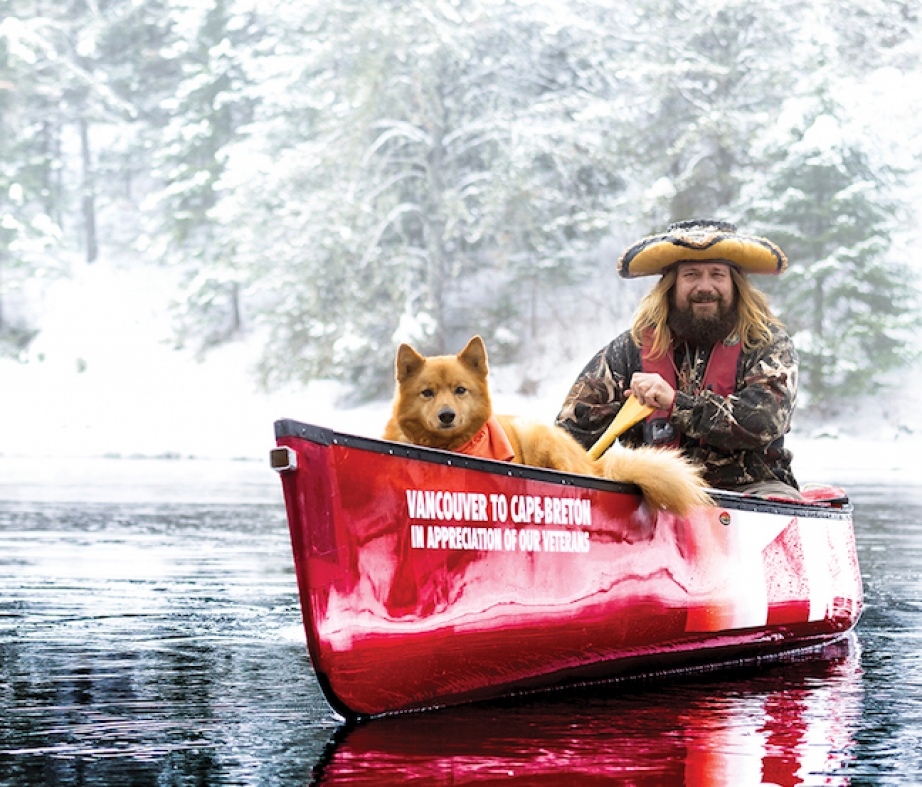
Three-time cross-Canada paddler Mike Ranta is usually spotted under the broad brim of his trademark birchbark hat with canine friend Spitzii by his side. His 5,000-mile continent-crossing trips raised funds for youth, veterans and first responders, highlighting the country’s interconnectedness and canoe heritage along the way.
Location: Killarney, Ontario
Occupation: Paddle maker
Latest Project: At press time, Ranta was putting the finishing touches on the world’s biggest canoe paddle. Named the Big Dipper, the 110-foot-long, 15-foot-tall paddle will reside on the shores of Georgian Bay in Killarney, Ontario.
Modern day voyageur.| Photo: David Jackson
Q & A with Mike Ranta
1 The one place I dream of returning to is…
Lake Superior. This location captivates the soul. Its vastness is humbling, and you get a true sense of well-being.
2One place I dream of paddling but haven’t yet is…
Great Bear Lake in the Northwest Territories. I’d love to circumnavigate it. I love the isolation.
3One thing I can’t live without is…
my best friend, campsite soldier and bear scarer—my pup Spitzii!
Mike and his trusty companion Spitzii. | Photo: David Jackson
4My biggest pet peeve is…
Spitzii farting in the tent.
5The greatest advice I ever got was…
“stay in control cause if you ain’t in control, you’re in trouble,” and that was from an old friend, Bobby Davidson.
8The hardest part about making your dream trip happen is…
mustering up the courage to take the first steps. The second hardest thing is to stop making more trips—I haven’t figured that out.
After quitting his job in the oil industry and selling everything he owned in 2011, Ranta paddled 130 days from Rocky Mountain House, Alberta, to Montreal, Quebec, retracing the route of the 1967 Voyageur Canoe Pageant. Three years later, Ranta and Spitzii departed from Vancouver and paddled for 214 days intending to break the world record for the longest single-season solo canoe trip. They made it as far as Tatamagouche, Nova Scotia, just 93 miles short of the goal. The following year, in 2015, Ranta and Spitzii once again departed from Vancouver and 200 days later made it to Dominion Beach, Cape Breton, claiming the record. Two years later, to celebrate the 150th anniversary of the Canadian confederation, Ranta attempted to do it again (read here: Mike Ranta’s Third Cross-Canada Trip).
Mike Ranta on a winter training paddle. | Photo: Alan Poelman
9My best advice to young paddlers is…
enjoy the small things.
10Happiness is…
solitude. Sitting with my bare feet in the water and listening to the symphony of nature.
11My most challenging trip was…
paddling from Killarney, Ontario, to James Bay and back. It taught me patience and how to travel up wild rivers.
12What scares me most while tripping is…
weather. Big storms and wild winds are our biggest dangers.
13My favorite camp meal is…
fish and beans. Spitzii’s too!
14The true gift of big trips is…
the people you meet along the way.
This article was first published in Paddling Magazine Issue 64. Subscribe to Paddling Magazine’s print and digital editions here, or download the Paddling Magazine app and browse the digital archives here.
“I hate sand. It’s coarse and rough and irritating, and it gets everywhere.” —Anakin Skywalker, and 50 percent of sea kayakers everywhere. | Photo: Ron Watts
I hand Maria a sandwich. Gazing at fog-shrouded islands and emerald-green peaks, she munches away.
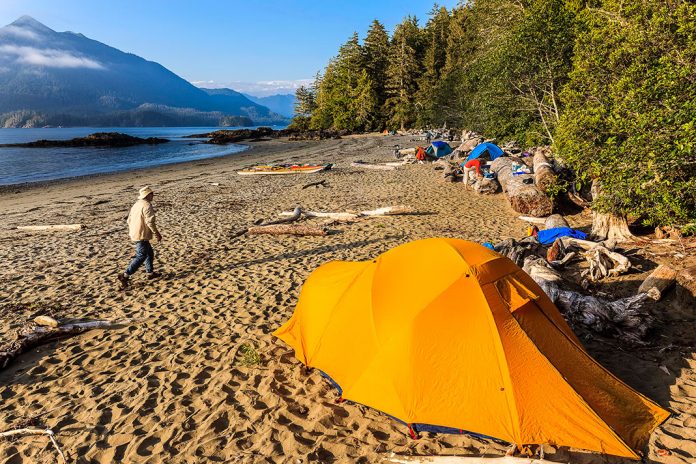
“Less sand next time,” she says as if sand is a condiment I’ve added, like Dijon mustard. We’re on day seven of an outer coast trip camping on wide beaches with afternoon northwesterlies. Sand is seasoning everything.
Paddlers have a complicated relationship with sand. It finds its way into sleeping bags, sandwiches, eyes, camera housings and places best not mentioned in the pages of this family magazine.
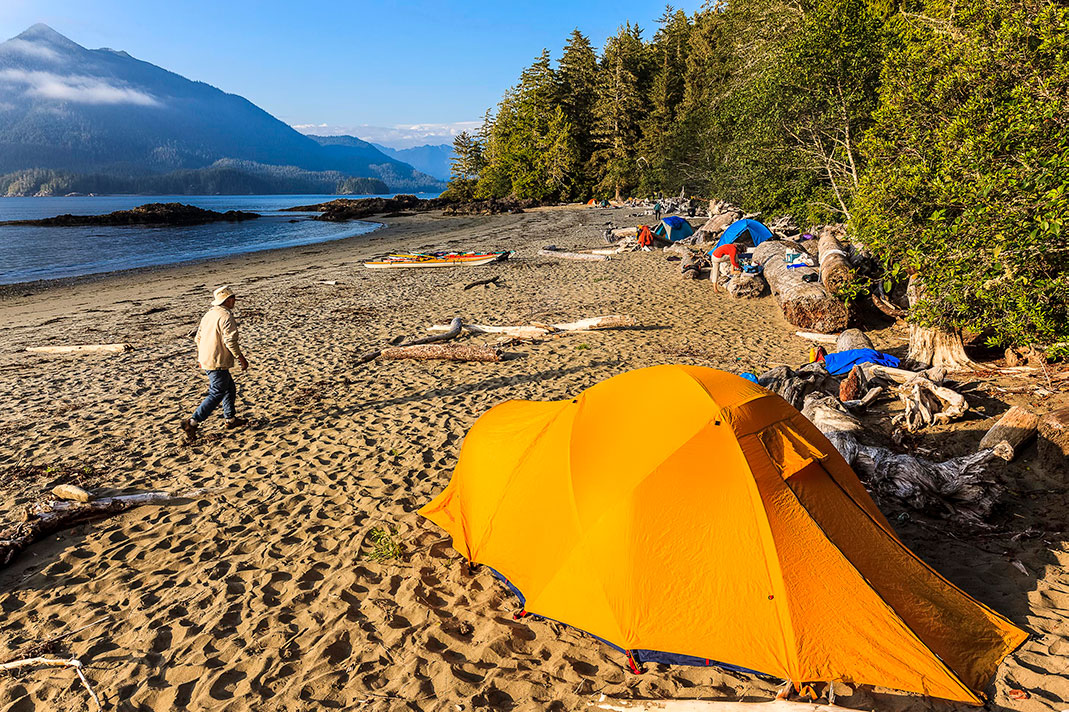
Some hate sand with the fervor of holy warriors, while others manage it like an engineering puzzle. And still others see a gritty heaven. More than rudders versus skegs, a sea kayaker’s relationship with sand reveals all you need to know about their paddling personality.
One friend of mine stayed meticulously sand-free for two solid weeks of beach camping. He carefully double-bagged his drybags inside zipped Ikea bags, armored himself with pants and shoes on the beach, and always entered his tent on the leeward side. When we cleaned out our hatches at the end of the trip, his were still sparkling clean. The rest of us needed a Shop-Vac.
Die-hard sand avoiders will do anything to evade camping on the beach, even if it means humping their gear over giant logs and thrashing through dense coastal thickets to some tiny, not-really-flat spot in the forest. One new couple I paddled with got in a shouting match over the choice between flat sand or lumpy forest ground. They didn’t last long.
Another friend reliably reverts to childhood when we land. After stripping off PFD, sprayskirt and helmet, shoes inevitably follow. Then there will be a strange sand jig followed by the sand Olympics, with long jumping, dune rolling and feet burying.
“I hate sand. It’s coarse and rough and irritating, and it gets everywhere.” —Anakin Skywalker, and 50 percent of sea kayakers everywhere. | Photo: Ron Watts
Numerous are the fairweather sand lovers—those who favor the wide open beaches on calm dry days but pivot to grumbling as soon as the wind blows it around or when it gets damp and sticks to their gear. Then you can expect they’ll want to move camp to some gravelly inlet where we’d have to wear shoes in camp.
And don’t forget the sand nerds. In the tropics, one friend made certain I knew that majestic white sand was so soft and fine because it was coral nibbled, digested and pooped out the exhaust pipe of a parrotfish. Others peered at the grains to source their geologic content or—I’m guilty of this one—made everyone guess where the next night’s high tide will be.
I’m firmly in the sand lover category, though less competitive about it than my sand Olympics friend. I love barefoot wandering, easy flops onto a soft surface, and that each morning, tracks will tell me which critters checked out my tent. The drysuit neck gasket rash and sand taking up residence in my kit is a price I’m willing to pay.
As much as I love beaches, there’s another reason for my laissez-faire attitude. Sand always wins. On one photography trip in an exquisite set of dunes, I set up my tent to have a clean spot to manage camera gear. Within an hour, there was an entire dune ecosystem inside the tent, which ended up back in the bag. And sooner or later on every trip, something will slip off a beach log into the sand and get either coated or lost. I just hope it will be a tent stake or a fork instead of my last contact lens. But the beach giveth, as well as taketh away. I’ve found multi-tools, books, food and even coffee on the lam from its previous owner.
I love barefoot wandering, easy flops onto a soft surface, and that each morning, tracks will tell me which critters checked out my tent.
To ease the post-trip transition from sand creature to civilized human, as soon as I get home, I subject everything to a multi-tub waterboarding routine before hanging it up to dry. The first tub usually has enough sand to sell for construction fill. But when I unfold my tarp again this season, you know what I’ll find anyway.
[ Paddling Trip Guide: View all paddling trips in the Pacific Northwest ]
Sand is part of what I love most about sea kayaking. The rugged beauty of the West Coast, with its massive sea arches, caves, crinkly headlands and secret coves, is only possible because the sea is relentless enough to pulverize rocks into those tiny bits that get in my everything.
There are no rock gardens without surf, and surf and sand are inseparable. Although I suppose you could try introducing some parrotfish to eat the rocks and poop them out, if that’s your sort of thing.
This article was first published in Paddling Magazine Issue 64. Subscribe to Paddling Magazine’s print and digital editions here, or download the Paddling Magazine app and browse the digital archives here.
Neil Schulman removes sand from his kayaking gear, cameras and computer keyboard in Portland, Oregon.
“I hate sand. It’s coarse and rough and irritating, and it gets everywhere.” —Anakin Skywalker, and 50 percent of sea kayakers everywhere. | Feature photo: Ron Watts
Whether we’re loading up a cooler or cramming supplies into a dry bag that’s one size too small—we seasoned campers have come to realize that the more space we have to fill, the more non-necessities we will inevitably pack.
These seven creative camping food hacks will help trim down your cooking prep time and your bag size—without sacrificing flavor or substance. Check them out.



 This article was first published in the 2022 issue of Paddling Business. Inside you’ll find the year’s hottest gear for canoeing, kayaking, whitewater and paddleboarding. Plus: Industry leaders on surviving COVID, the dirty little secret of pro deals, brand consolidation and more.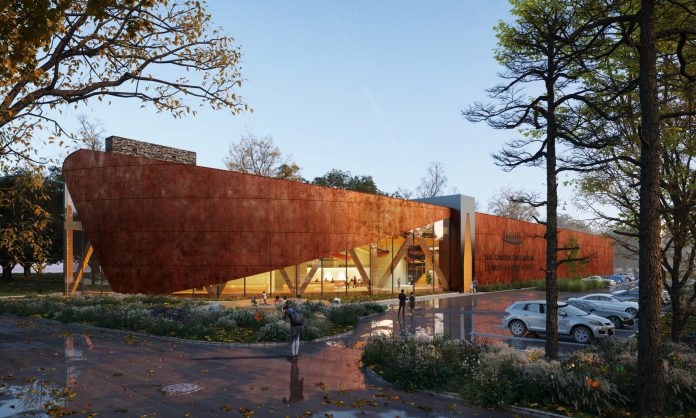
 I’m reminded of the old adage, it’s easier to keep a customer than it is to make a customer. Right now we have this tremendous opportunity to make more customers. They’re coming to us. —Dale Williams, Sea Kayak USA
 Over the last pandemic year, we have seen tremendous new interest in our sport. Our focus in the industry should be on how we retain this growth through the next year and beyond. We should work together to convince these new paddlers of the ease of access to the water and the lifetime of enjoyment that can be had through this human-powered sport. —Jeff Turner, Kokatat, Arcata, California
 We are truly excited to see such an increase in people wanting to learn, to appreciate our natural world and being forced to slow down a bit. I feel it has been good for our souls to get back to basics, and paddling is a basic thing. —Brian Henry, Ocean River Sports Adventures, Victoria, British Columbia
 “If people vote, they’ve been voting low cost. I’ve always said there’s 10 times more beginners with not very much money than the 10 percent that have a lot of money.” —Tim Niemier, designer of the Origami Paddler
 The need for in-person human connection has never been greater than it is now. Not only have we been starved of that connection, we’ve experienced the shared trauma of the past year in isolation (pandemic, political divides, confronting staggering inequalities and inequities). I’m very much looking forward to seeing our friends in the industry and our dealers and celebrating our survival.—Scott Holley, President, Eddyline Kayaks, Burlington, Wash.
 The advancement of digital tools and virtual events has provided some welcome relief from excessive travel and allowed for continuous connection. That said, the benefit of people
 In paddlesports it’s a moot point because they haven’t done pro deals in a year. You’re not going to get a discount on a boat they can’t make enough of. —Darren Bush, Rutabaga Paddlesports, Madison, Wisconsin
 Every pro-purchase program out there is a profit center for that business. They’re selling that product for more than they’re selling to me for. —Todd Frank, The Trail Head and Trail Head River Sports, Missoula, Montana
 With overseas shipping and even domestic costs and capacity reaching unprecedented levels, now may be the time for a more localized approach to paddlesports manufacturing and distribution. —Tom Stewart, General Manager, Aquabatics Edmonton, Edmonton, Alberta
 I have seen a real paradigm shift in a positive way that has been driven by brands moving direct to consumers. Brands who focus on direct-to-consumer can spend more money on digital marketing because they can convert directly on a transaction. The old thought process was that this cannibalizes brick and mortar retail sales, but we have seen the inverse. The more we can spend on brand awareness and convert directly, the more this benefits our specialty retailer game because consumers still want to see and touch things… the rising tide lifts all ships.—Corey Cooper, CEO, BOTE, Destin, Florida
 You have to be smart, you have to bring passion and you have to take risks. That’s why it’s so tough to make it as an independent retailer in any sports specialty, whether it’s bikes or climbing or paddlesports. It’s a tough business. —Kelly McDowell, The Complete Paddler, Toronto, Ontario
 With recent acquisitions and mergers I worry about there becoming a monopoly in kayak manufacturing and, to a lesser degree, paddle manufacturing. —Meg McCall, Founder & CEO, Angle Oar, San Luis Obispo, California
 Getting information or gear from someone with knowledge gives you the best advantage when making a purchase or plan. —Amy Isaikina, Harvest Foodworks, Frankville, Ontario