Home Blog Page 124

9 Non-Essentials You Must Bring On Your Next Canoe Trip

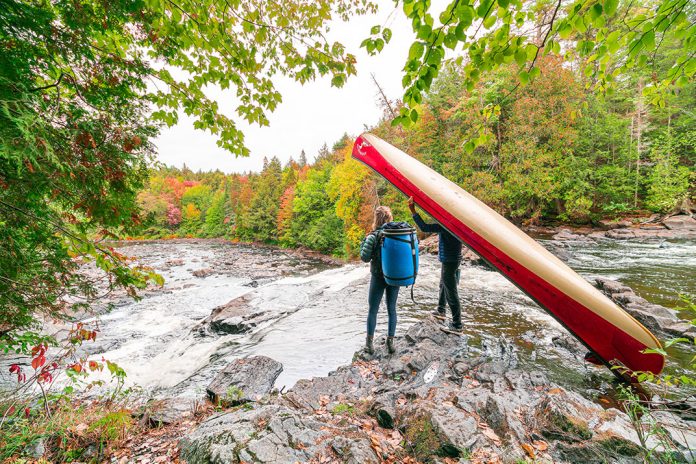
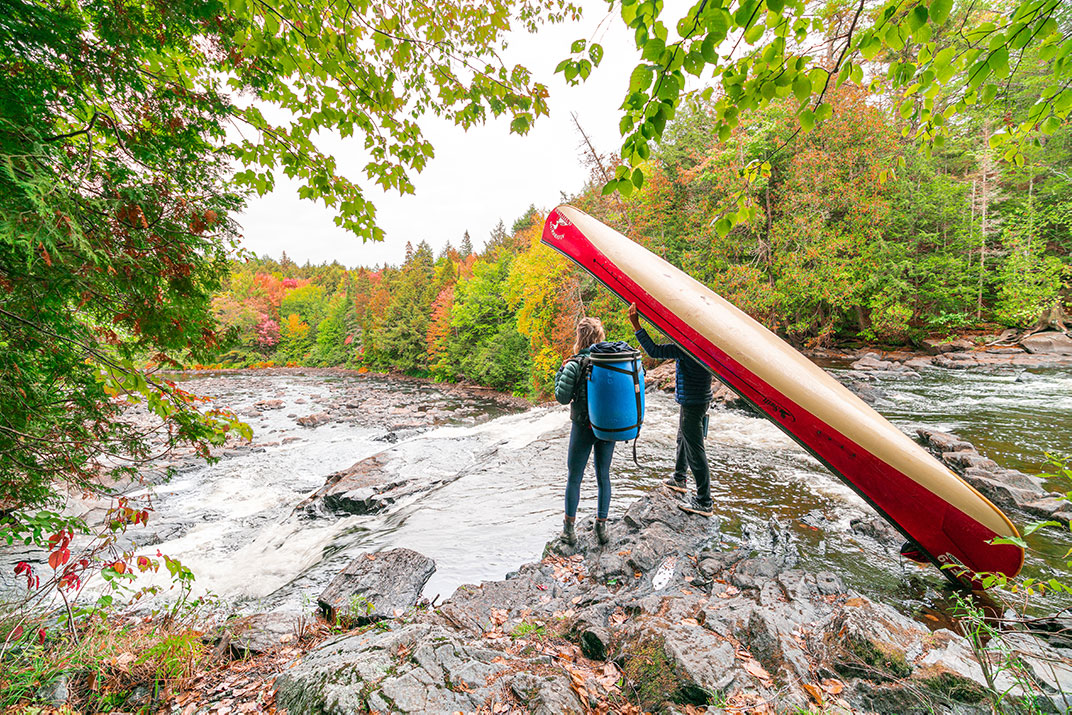
Two people standing at top of waterfall, one with canoe and other with blue barrel.
Gear you don't have to, but should bring. | Photo: Karam Nwilati

When Elena Wood and Karam Nwilati set off on a three-week trip in a rental canoe nicknamed Truffle, it was their first big trip, and “neither one of us really knew exactly what we were doing,” she says. The duo turned the adventure into a short film, which is as much an ode to their learning curve as the Algonquin Park wilderness they explore.

Throughout the documentary, the duo good-naturedly gripes about the weight of their gear as they double-carry portages and pine for pizza but say they wouldn’t change a thing—except to bring more peanut butter. Here are their top picks for the best of the non-essential essentials they carried. —Eds
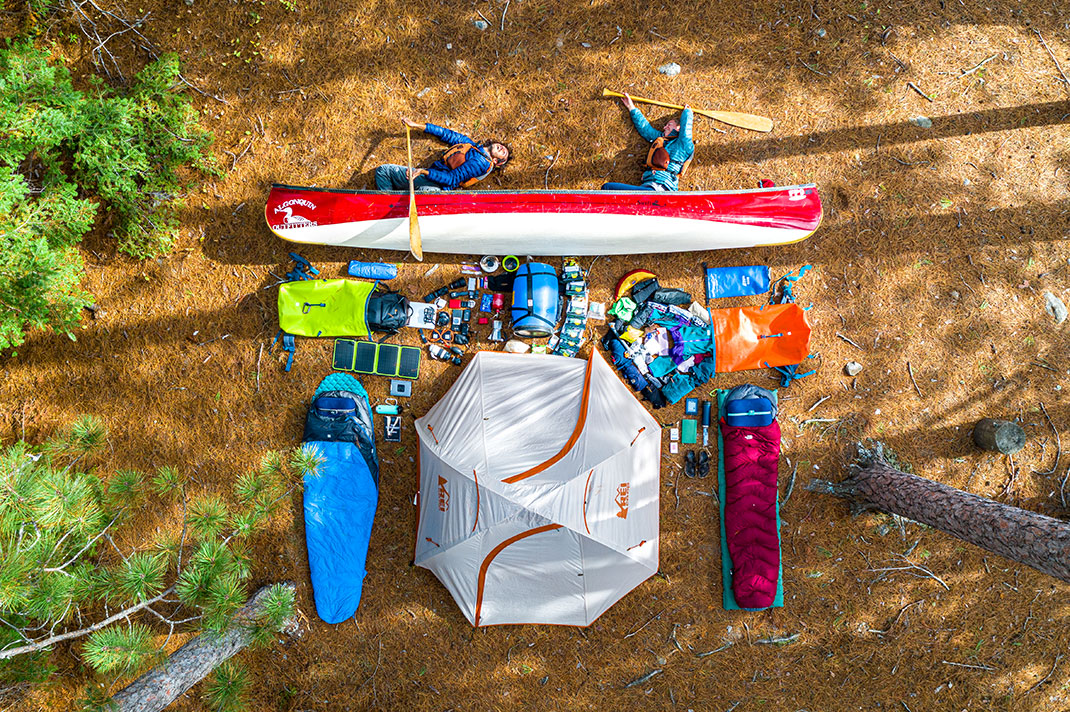

Overhead shot of campsite with gear all laid out.
This shot was taken the old-fashioned way—hanging a camera from a branch and hoping for the best. | Photo: Karam Nwilati

Karam & Elena’s essential non-essentials

1Hammock

A big part of slow travel is precisely that, slowing down. And there’s no better way to slow down than snuggling up in sleeping bags in a hammock overlooking a wilderness lake, 30 miles from the closest road.

BUY ON AMAZON BUY AT WALMART

2E-reader

Paper books smell, feel and read differently. But on a multi-week trip, pack an e-reader—just preferably not a Kindle because we don’t like Amazon. Pre-download as many books as your heart desires, or just Dune in my case, to optimize your hammock time.

BUY ON AMAZON BUY AT WALMART

[ View all canoe gear and accessories in the Paddling Buyer’s Guide ]

3

Dehydrated meals

Our Harvest Foodworks dinners were an absolute highlight. The just-add-water meals rehydrate in about 10 minutes, which is a blessing after a long day. Plus, they’re all completely vegetarian.

BUY ON AMAZON BUY AT WALMART

4
MIZU Water Filters

These babies are the bomb! Fill up the bottle, close the lid, which contains a filter, and you can immediately drink via the straw. None of the fussiness about waiting a certain amount of time with chemical treatment or needing an additional pump—just water on demand. Perfect for staying hydrated on the water.

BUY ON AMAZON

5

Film gear

Our camera gear weighed 22 pounds. I shot our documentary on the Sony Alpha 7RII with four lenses: 16-35mm, 70-200mm, 50mm, and 24-70mm. We also had a lot of accessories: Gorillapod tripod, intervalometer for time-lapses, on-camera mic, extra batteries and a battery pack. We didn’t have a drone—I took the first shot in this article by throwing a rope over a branch and then pulling my camera up while facing down.

6 Solar panels 

Recharging film equipment was essential. With the Goal Zero Nomad 28 Plus in full sunlight, we could directly recharge mics, camera batteries and a laptop used for file transfers.
BUY ON AMAZON BUY AT WALMART

Two people standing at top of waterfall, one with canoe and other with blue barrel.
Gear you don’t have to, but should bring. | Photo: Karam Nwilati

7 Menstrual cup

Fifty-one percent of the population menstruates, but unless you’re on an all-women trip, the topic is taboo around most campfires. Elena wants to lessen the stigma around periods and give women more information about options to camp at ease. “Reusable cups aren’t for everyone, but they are comfortable, only need to be emptied twice a day, and are easy to clean with boiled water. And, since they’re zero-waste, they’re perfect for longer canoe trips,” she says.

BUY ON AMAZON BUY AT WALMART

8 Dear Diary 

My diary comes everywhere. Setting out on our trip, we already knew we wanted to make a film of our adventure, so I wrote detailed entries to remember every little fact, emotion and meal. The accuracy with which I could recall a specific feeling or smell from the trip when writing the video script was purely due to my diary keeping. Reading it over puts me back amongst the lakes and loons.

BUY ON AMAZON BUY AT WALMART

[ Plan your next paddling adventure with the Paddling Trip Guide ]

9 Analog camera

Whereas I focused on catching moments on video, Elena—who has much less patience with filming—prefers to point and shoot, capturing quick snaps. Photos on film are raw and untouched, totally different from the digital footage we would later cut and edit. Bonus: wait a year before developing the film so you can re-live the adventure.

BUY ON AMAZON BUY AT WALMART


Other canoeing accessories we recommend

In addition to Karam and Elena’s list, there are a few more canoe trip accessories you should consider adding to your gear closet. These might not be as fun as those listed above and are in no way essential, but they will move your canoe trip from great to awesome in short order.

Drybags

Drybags are game-changers for canoeists. You can store electronics, extra sets of water treatment and matches, ID, maps and books. They are also great for packing a day kit with lunch and sunscreen, and their straps can be hooked onto the gunwales or thwarts of a canoe for secure placement and easy access.

They come in a range of sizes and shapes to suit everything you want to protect from your beloved DSLR camera to your daily medications. Never have to worry about your gear getting rained on again.

LEARN MORE BUY ON AMAZON BUY FROM WALMART

Canoe rack

Show your canoe some love with a canoe rack to call home when it’s not cruising lakes and rivers. It is no secret that proper storage of a canoe can extend the boat’s life by decades.

LEARN MORE BUY ON AMAZON BUY FROM WALMART

Emergency communication device

Increase your ability to stay safe and in touch on long and remote canoe trips with electronics like a satellite phone or satellite messenger. Even though canoe trips are a great time to get away from constantly being plugged in, having a means of communication just in case is great investment in your well-being, even if it stays happily stored in a drybag for the duration of your expedition.

LEARN MORE BUY ON AMAZON BUY FROM WALMART

Canoe mounts

Can you picture yourself relaxing in your canoe waiting for a fish to bite with a cup of hot coffee in hand? Make your canoeing activities simpler with a mount. Mount functions range from holding your paddle to your fishing rod to your cup of coffee, and allow you to simplify and worry less about your different possessions falling out of the boat when not in use.

LEARN MORE BUY ON AMAZON BUY FROM WALMART

Canoe cart

Canoe carts can be a serious luxury when transporting your boat. They are relatively small given their large utility, can fit in the trunk, and have sturdy wheels designed for roots and rocky trails. If you are unable or not interested in putting your canoe on your back, a canoe cart is a great option for getting your boat to the water.

Some adventurers also use canoe carts on long expeditions to make endless portages more bearable.

LEARN MORE BUY ON AMAZON BUY FROM WALMART
This article was first published in Paddling Magazine Issue 63. Subscribe to Paddling Magazine’s print and digital editions here, or browse the digital archives here.


This shot was taken the old-fashioned way—hanging a camera from a branch and hoping for the best. | Photo: Karam Nwilati
Whitewater Kayakers Save Moose Calf From Drowning (Video)

Ben Clark and Scott Linton were paddling on the Sheep River in Southwestern Alberta when they spotted the unexpected.

The two experienced whitewater kayakers were taking a rest-stop after navigating the technical rapids upstream, when they noticed a moose calf curled up on a cliff shelf opposite them—just barely above river level. 

The calf spotted the kayakers almost simultaneously. It stood up, lost its footing, and helplessly fell into the fast-moving water below.

The Sheep River is primarily glacier-fed and can reach frigidly low temperatures during springtime. Cold water aside, Clark knew full well that the calf, if unhelped, was headed straight towards one of the larger rapids on the river. A swim through it could prove fatal.

The duo knew they needed to act fast. “We jumped out of the boats and went into rescue mode at the same time trying to keep an eye out for mama,” Clark recalled.

[ Plan your next paddling adventure with the Paddling Trip Guide ]

In late spring, cow moose with young calves are very protective and are known to attack humans who come too close.

Linton waded out into the river while holding onto a throw rope and managed to grab the calf from the flow. With assistance from Clark, he brought the calf to the river’s edge and began to rub it’s body to retain its warmth.

Linton and Clark were quick to leave the scene after their rescue success. “The calf walked up into the sun and started to call for mom so we got the heck outta there,” said Clark.

Footage credit: Ben Clark// @theleagueofbeautifulminds

Mustang Survival Announces Acquisition of Ocean Rodeo Dry Wear

Mustang Survival
Mustang Survival Logo

Burnaby, BC – Mustang Survival®, the North American brand known for innovative solutions for the most demanding marine environments, is excited to announce the acquisition of the Ocean Rodeo Dry Wear business.  The innovative dry wear solutions for action watersports and commercial marine will be merged into the already impressive Mustang Survival Recreation and Professional dry wear assortment.

California based Wing Group, a leading manufacturer of inflatable sponsons, small combat craft, whitewater rafting solutions, life rafts, and marine doors and windows, facilitated the recently closed acquisition of Ocean Rodeo Dry Wear with the sole purpose of building on its recreational portfolio.  The move deepens the dry wear product offering as Mustang Survival works to its global marketplace presence.

The amalgamation of Ocean Rodeo Dry Wear with Mustang Survival will immediately enhance its offerings in Recreational dry wear.  In addition, Mustang Survival acquires interest in an impressive portfolio of intellectual property that the team of designers, developers, and engineers at Mustang Survival will be able to utilize in a larger way as the trusted leader in innovative dry wear solutions from off-shore sailing, kayak angling, paddling, and commercial marine. The acquisition and Mustang Survival’s push into Recreation watersports will be paired with a huge investment in grass roots marketing and winning with communities.

Commenting on the announcement, Mustang Survival President, Jason Leggatt, highlights the opportunities it creates. “At the core, Mustang Survival and Ocean Rodeo have a deep shared commitment to technology and innovation.  Our dry wear solutions are tried and tested in the deep cold of the Pacific Northwest and we know what it takes to build world-class, premium dry wear solutions for the most demanding consumers in the world.  This acquisition will be a catalyst that drives us forward to achieving our vision of being a worldwide watersports brand in active dry wear.”

The Wing Group led by President and CEO Andrew Branagh has been expanding its core product offering and reach with acquisitions aligned with its values and mission.  Speaking about the acquisition, “Ocean Rodeo represented an incredible opportunity to become more relevant in the active watersports market. Combining the Mustang Survival Brand, DNA and product, together with Ocean Rodeo technology we can now offer a full assortment of dry wear solutions to increase the commercial appeal to a broader selection of customers”.

Mustang Survival is currently working with all Ocean Rodeo Dry Wear customers and suppliers to develop a smooth business transition. Product will be showcased and sold via the Mustang Survival website, and all customer service and operations of the business will be handled by Mustang Survival teams going forward.

About Mustang Survival

Established in 1967 by Irv Davies, the inventor of the world’s first Floater™ Coat, Mustang Survival has been designing and manufacturing lifesaving solutions for more than 50 years.  Through constant innovation and inspired technical solutions, Mustang Survival strives to bolster performance, encourage exploration, and inspire adventure in the marine environment. We are committed to the protection and enhancement of those who push themselves to extremes whether for work, duty, or to escape the daily grind.  Headquartered in Burnaby, BC, Canada, Mustang Survival has more than 250 associates across the US and Canada.  For more information, please visit www.mustangsurvival.com.

Mustang Survival. Saving lives since 1967.

About The Wing Group

The Wing Group is privately owned and led by President and CEO Andrew Branagh and includes Wing Inflatables, Henshaw Inflatables, Patten Company, FabTek Industries and Mustang Survival.  The Wing Group is the industry leader in manufacturing sponsons, inflatable craft, and much more.  For over 30 years Wing’s first in the field innovative use of polyurethane and pioneering new technology have led to the development of sponsons and boats that are lighter, last longer, look better and outperform our competition.  The Wing Group has built an unparalleled reputation for providing professional inflatables solutions whether for a private yacht management company requiring an expeditionary craft, a military detachment operating a fixed-wing airframe requiring automatically deployed personnel life rafts, or a special forces unit that depends on the best performing combat rubber raiding craft.

Nepal’s Legendary Karnali River Is A Kayaker’s Dream

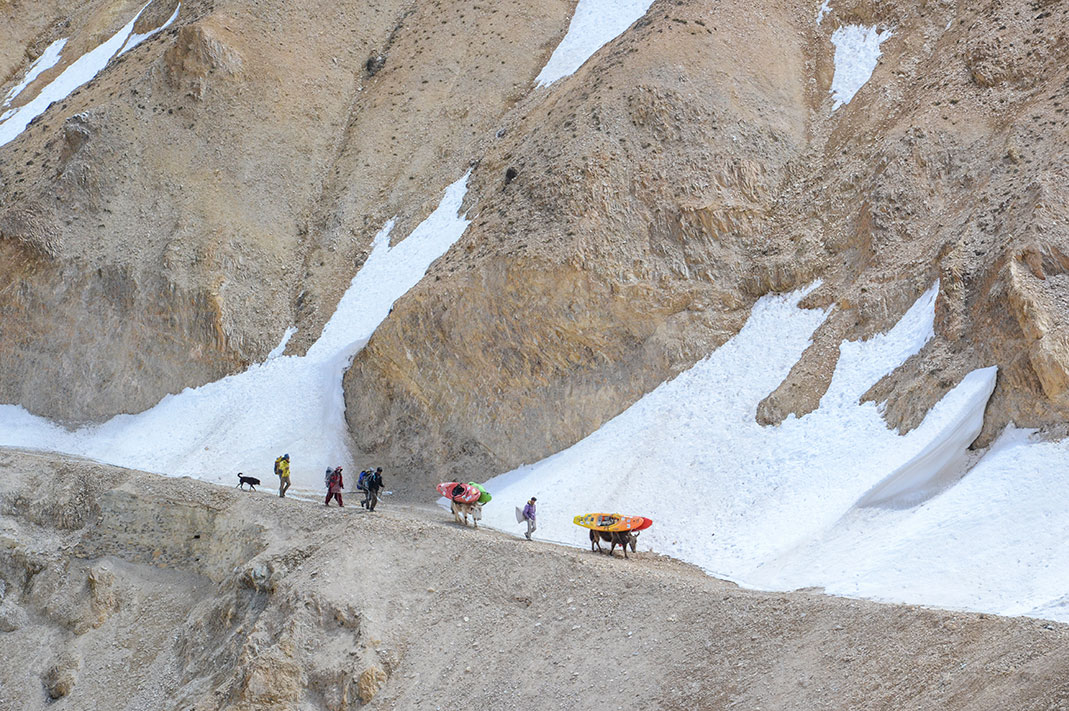
Four people, a dog, and two yaks carrying whitewater kayaks, walking along a narrow path on the side of a mountain with snow.
The Karnali River is the last major undammed river in Nepal. | Photos: Mikel Sarasola

Due to the increasing frequency and pressure of development and dams, some expedition kayakers are shifting their sights to rivers that won’t be runnable forever. This is the era of last descents.

Nepal’s Karnali is a river of both religious significance and kayaking legend, and one that has been under the shadow of proposed hydroelectric development for years. It falls from the sacred Mount Kailash in southwestern Tibet and flows south from the Tibetan plateau, cutting through the Himalayas before draining into India’s Sharda River, and eventually contributing to the mighty Ganges.

[ Plan your next kayak expedition with the Paddling Trip Guide ]

Since the upper section was first run in 1999 by Scott Lindgren, the Karnali has become a classic Nepali river for kayakers, known for its big volume, glacial-fed whitewater and expedition potential. As decades of rumors about a hydropower dam turned into diggers and dump trucks on the Karnali’s shores in 2018, Spanish kayaker Mikel Sarasola seized his chance to paddle it and capture Nepal’s last free-flowing river in a film.

Four people standing with bags and a kayak paddle, with snow-covered mountains in background.
The journey begins. | Photo: Mikel Sarasola

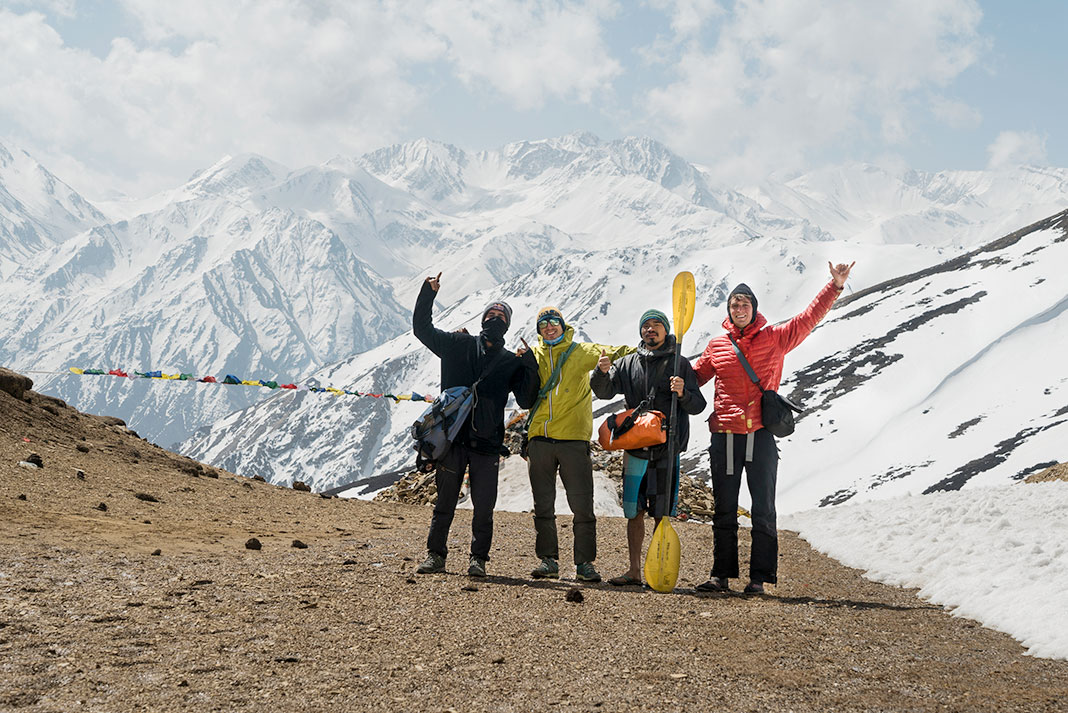
Joined by fellow Spaniard Aniol Serrasolses, American Todd Wells and Nepali kayaker Surjan Tamang, the team flew to the mountain-nestled town of Simikot. They hired porters to help transport boats and gear to the put-in 60 miles away, which included crossing a 14,700-foot snow-covered mountain pass.

“At that altitude, and with only four porters, it was just not enough for all the equipment we were carrying,” says Sarasola. “Luckily for us, we were able to use two yaks. It took us a bit to fit our boats on the yaks, but they helped a lot.”

Putting on the river at Hilsa, a small town on the border between Nepal and Tibet, the team started at 12,000 feet of elevation. They navigated the class IV to V sections of Shiva’s Gorge and Ganesh Gorge, which challenged the group with must-make moves and tough lines. “Big boulders, full of siphons and vertical walls is what we found,” says Sarasola. Surrounded by 20,000-foot-plus peaks, these sections were a highlight of the trip. During the nine-day, 250-mile self-supported mission, the team descended 11,000 feet.

Four people, a dog, and two yaks carrying whitewater kayaks, walking along a narrow path on the side of a mountain with snow.
Enlisting the help of yaks for the ‘yaks. | Photo: Mikel Sarasola

During the expedition, access roads were being built to start construction, and the massive hydroelectric project was never far from the paddlers’ thoughts. Three hydropower dams are planned for the Karnali River’s main stem, with another couple dozen proposed on tributary streams throughout the watershed. Since the expedition, construction progress has been slow and controversial, in part because of politics with neighboring India, the potential buyer of the generated power.

“We wanted to paddle the river to understand the resources and value of the Karnali watershed and to tell the story of the Karnali as it was,” says Sarasola. The Nepal River Conservation Trust Foundation supported the trip. Sarasola hopes his new film, The Tears Of Shiva, will show the world the beauty of the valley and what the hydropower project would destroy. “We know our film won’t make a change by itself, but it supports the many initiatives happening that can lead to a change for Nepal and its politics in terms of hydropower construction. This film was a chance to give a voice to the local people,” he says.

The film delivers a combination of kayaker POV of the whitewater and a yak’s-eye-view of the remote villages, harsh Himalayan landscapes and hardy locals. It also explores the development of hydropower in Nepal and the massive environmental and economic changes transforming the river system will bring. In January 2021, The Kathmandu Post reported that construction started on a tunnel to divert water to build a dam on the Karnali.

Mount Kailash is the source of the Karnali and neighboring Indus and is revered as one of the world’s holiest places by Buddhists and Hindus. In Hinduism, the mountain is recognized as the home of the deity Shiva.

“We felt like we were paddling on the tears of Shiva,” says Sarasola referring to the name of the film and emotions on the expedition. A last descent is not something to be celebrated, he says. With perspective and footage of what soon may be flooded, plugged, drained and diverted in a political chess game surrounding energy production, gratitude replaced celebration at the end of the trip, as the team said farewell to one of the best multi-day runs in the world.

This article was first published in Paddling Magazine Issue 63. Subscribe to Paddling Magazine’s print and digital editions here, or browse the digital archives here.


Contribute to the protection of Nepal’s rivers by supporting The Nepal River Conservation Trust.

Ojibway Artist Patrick Hunter Teams up with Canada Canoe Paddles for a One-of-a-Kind Art Series

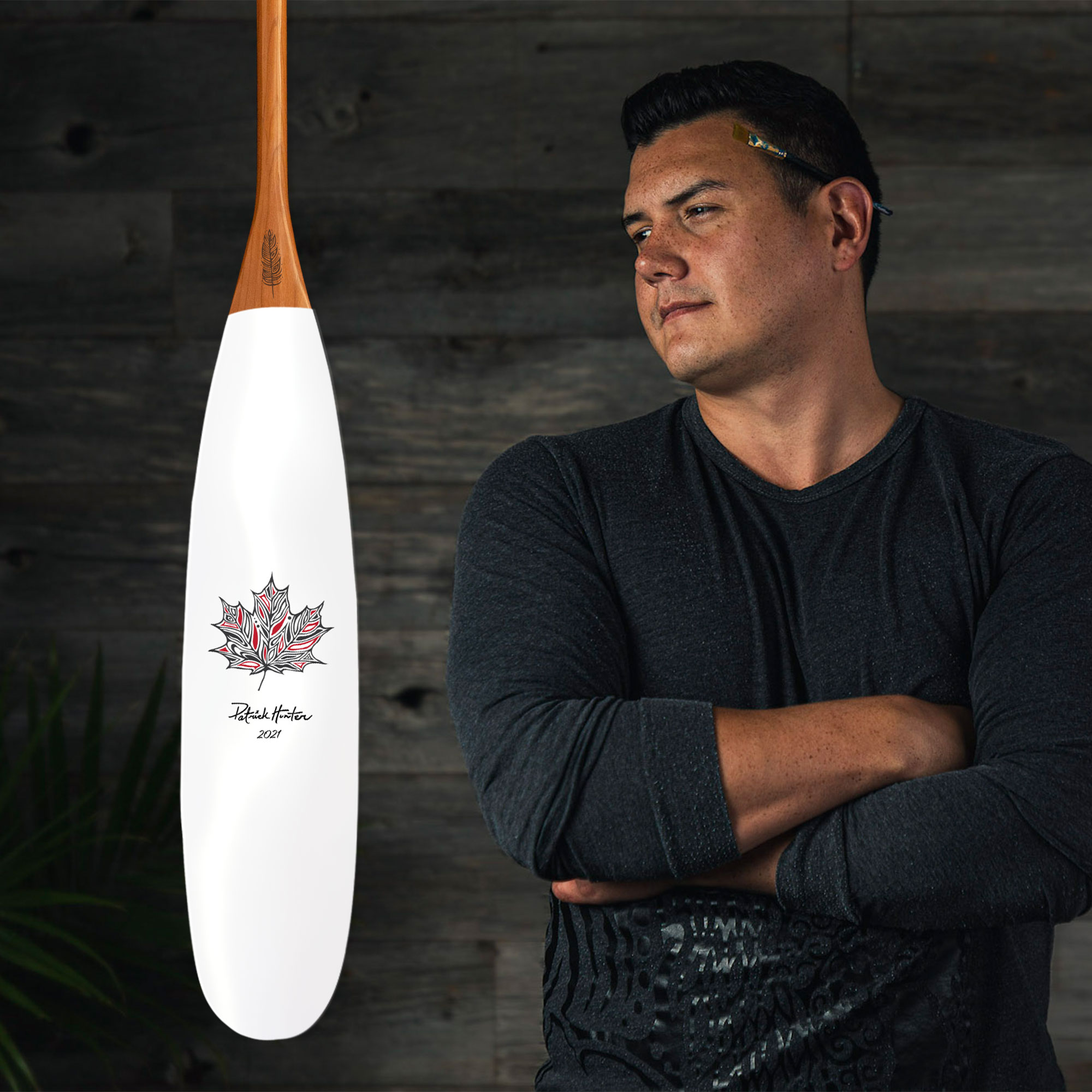
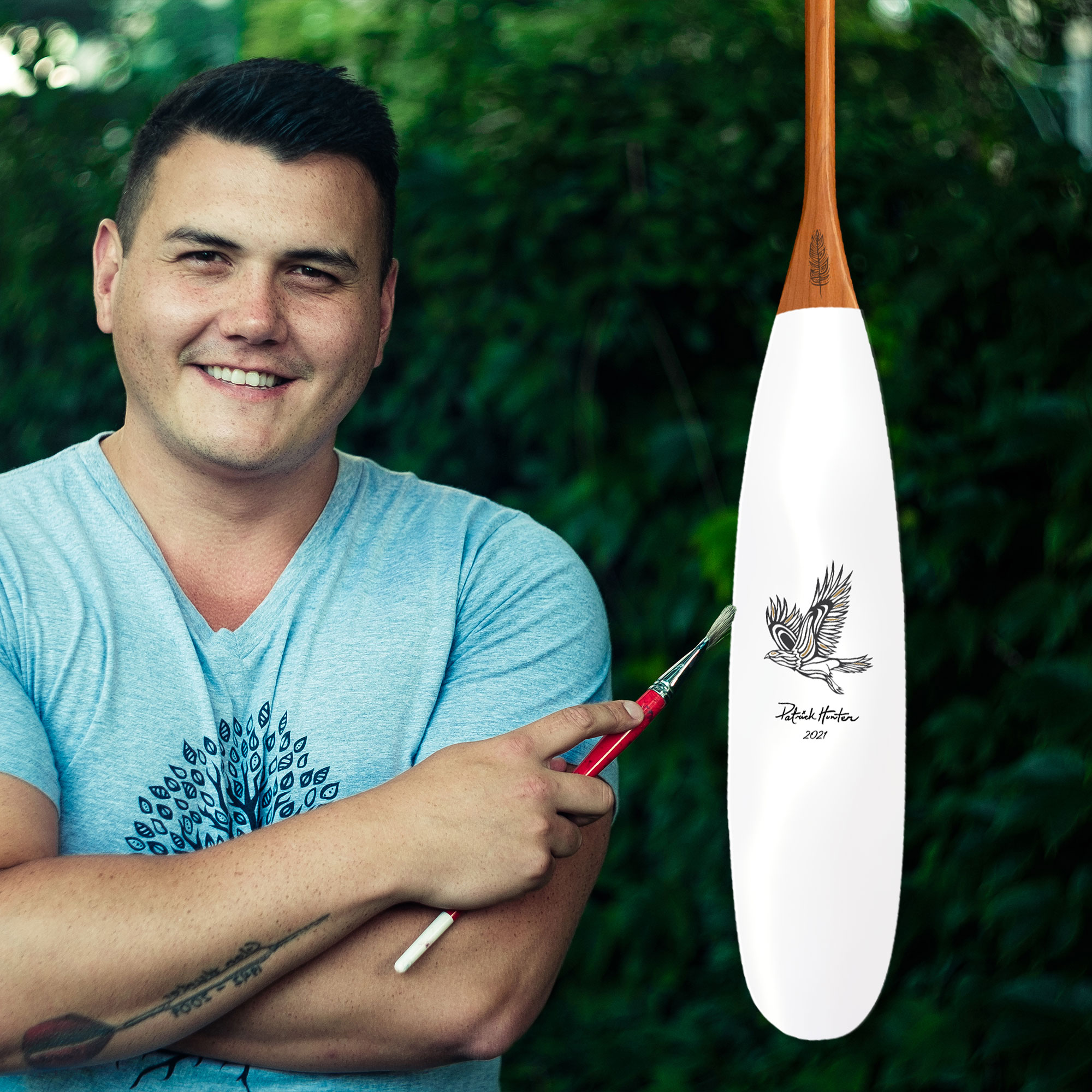
June is Canada’s National Indigenous History Month and Ojibway artist Patrick Hunter is marking this year’s event with the launch of a first time ever collection of artisan canoe paddles.

Patrick Hunter is a 2 Spirit Ojibway artist best known for his paintings in the Woodland Art style who is also making a name for himself in the corporate world through collaborations with RBC and BMO Banks, Ernst & Young, West Elm, Staples, eBay, CTV and the Chicago Blackhawks to name a few.

“There’s an Indigenous story of people, culture and rich history that I’m trying to share with Canadians through my art” says Hunter as inspiration for his work.

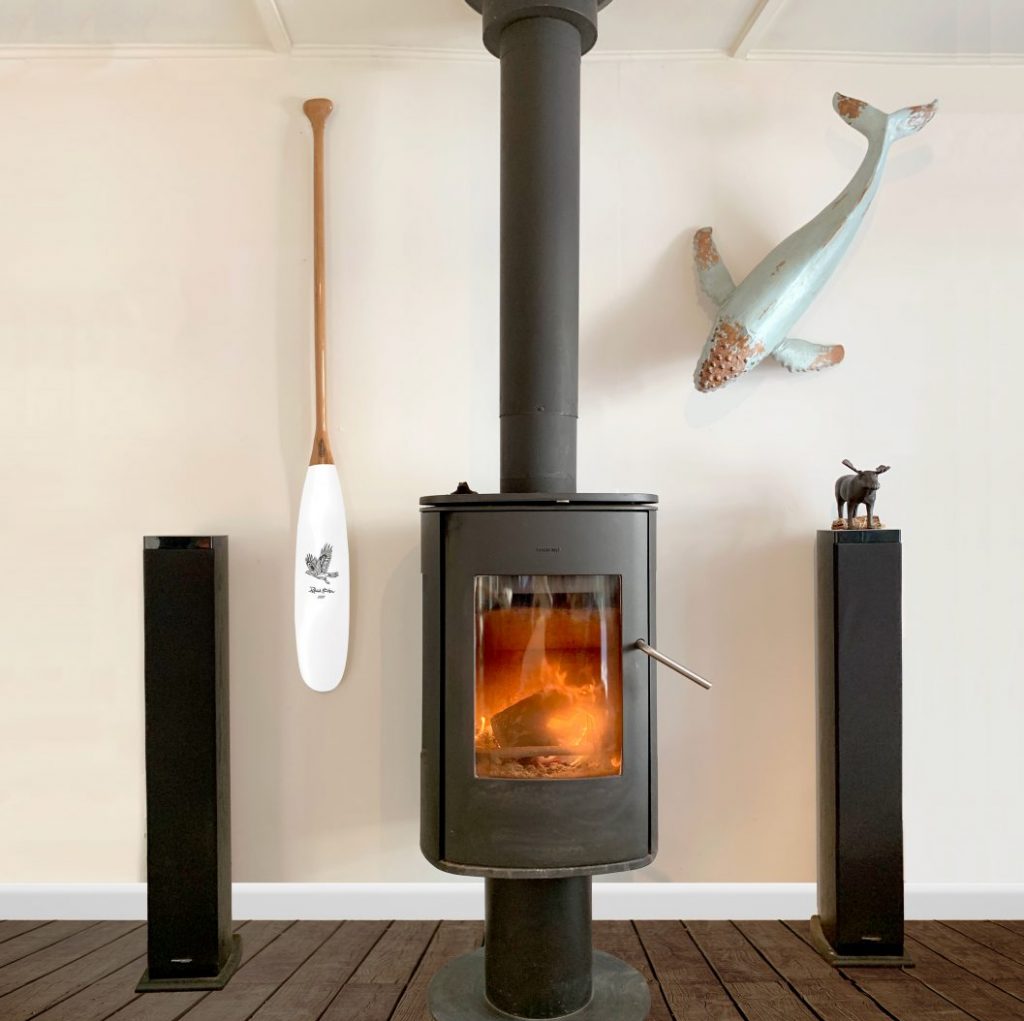
Hunter was approached by Canada Canoe Paddles, a Toronto based company that partners with iconic Canadian brands like the CBC, The Tragically Hip and the Hudson’s Bay Company to create artisanal canoe paddles for display in cottages, cabins, homes and offices. “It is commonly acknowledged that Canadians are born with a paddle in their hands” remarks company founder Mario Zeskoski and even our late Prime Minister Pierre Trudeau identified its special role when he noted “paddling a canoe is a source of enrichment and inner renewal.”

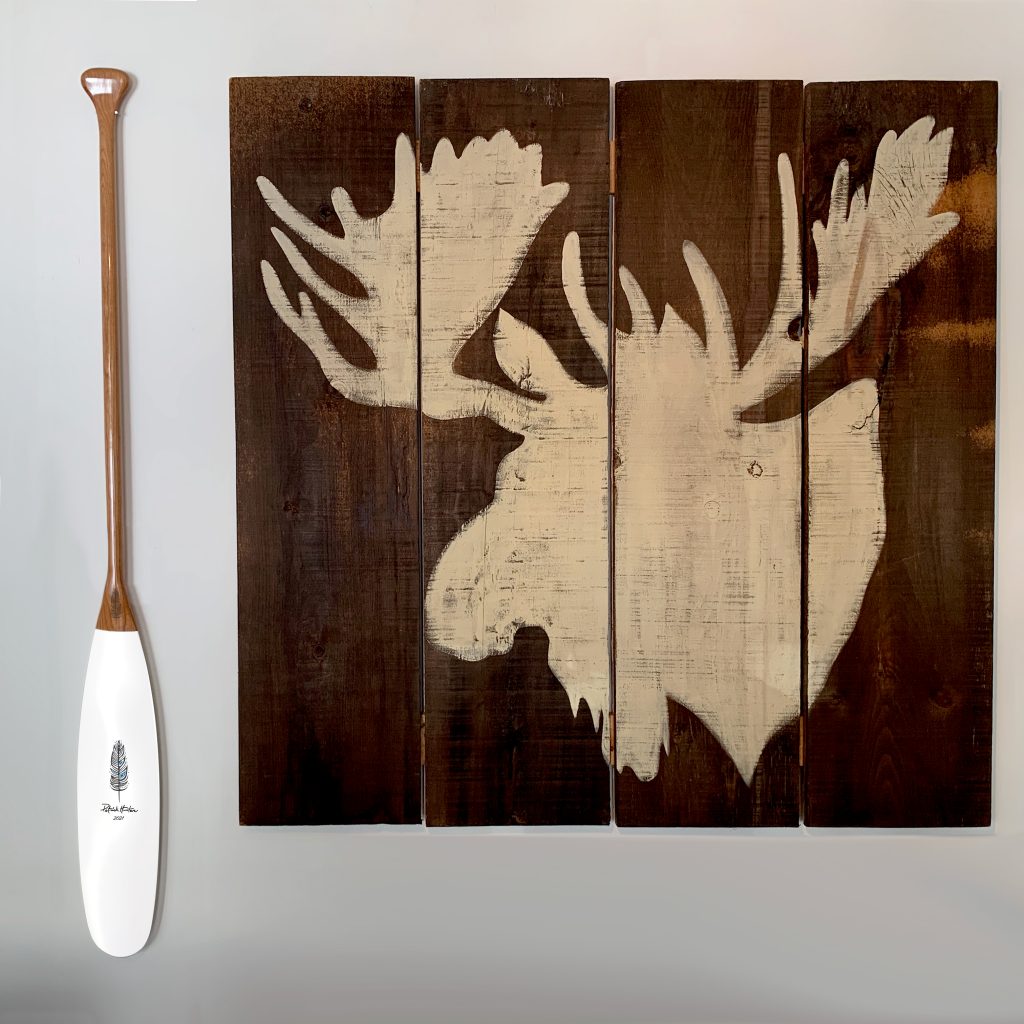
“Working with Patrick on an Indigenous paddle series seemed like the perfect way to showcase his work and provide Canadians with a unique artistic expression of the native lands we all call home” says Zeskoski. The canoe paddle became Hunter’s canvas upon which his art would would come to life.

The art collaboration will consist of four canoe paddle designs featuring Canadian themes done in Hunter’s Woodland Art style. “When I paint, I look into my subject matter to not only see its inner composition but also its spiritual side” says Hunter who was inspired by viewing original works of painter Norval Morrisseau in his hometown of Red Lake.

The paddles will be sold as a limited edition series individually numbered from 1 to 300. “Once they’re sold, they’re gone” says Zeskoski, “making them a special addition to anyone’s cottage or home whether you’re a paddler, outdoor enthusiast or someone who just appreciates the beauty of Canada’s wilderness as seen through a different lens”.

A portion of the proceeds will go to Hunter’s workshop initiative where he provides new generations the confidence they need to pick up a paintbrush. “Seeing how people react to what I create brings me the greatest joy and drives me to continue growing as an artist and a voice for Indigenous culture” says Hunter. “I look forward to making new acquaintances through my art as I continue on my creative journey”.

The Patrick Hunter Canoe Paddle collection is available now for pre-release sale at canadacanoepaddles.ca.

About Canada Canoe Paddles

Canada Canoe Paddles is a Toronto-based company (est. 2021) that was borne out of the desire to celebrate the canoe paddle’s storied past and the special place that it holds for Canadians. Whether going to camp as a kid, family outings in provincial parks or more ambitious portage trips, the trusty canoe paddle was always there. The association with other iconic Canadian brands and imagery was a way to elevate the canoe paddle from a means of propulsion to a decorative artform to adorn the walls of cottages, cabins, homes and offices.

“With the pandemic, people have not been able to travel, go camping or get to their out of city retreats so the canoe paddle represented a bit of a pick me up boost and visual reminder that outdoor adventure would soon make a return” says Canada Canoe Paddle founder Zeskoski.

Canada Canoe Paddles first collaboration in 2021 was with The Tragically Hip that comprised two paddle designs. A Limited Edition series consisting of 300 paddles sold out in just 34 hours. A Legacy paddle design is still available and continues to get picked up online by The Hip fans as well as Canadian music enthusiasts.

The partnership with Patrick Hunter is the latest Canada Canoe Paddle venture that utilizes the artist’s Indigenous drawings on a limited series collection. “We are grateful for the opportunity to play a role in Patrick’s artistic journey and help raise awareness of Indigenous culture in Canada” says Zeskoski.

Canada Canoe Paddles will continue looking to work with other brands, corporations and individuals for whom the noble canoe paddle is synonymous with ties to Canada, the outdoors and the indomitable spirit of adventure. To learn more, visit https://paddlepromotions.ca.

Patrick Hunter Bio

Patrick Hunter is a 2 Spirit Ojibway artist best known for his paintings in the Woodland Art style who is also making a name for himself in the corporate world through collaborations with RBC and BMO Banks, Ernst & Young, West Elm, Staples, eBay, CTV and the Chicago Blackhawks to name a few. “There’s an Indigenous story of people, culture and rich history that I’m trying to share with Canadians through my art” says Hunter as inspiration for his work.

Hunter’s introduction to the Woodland Art form began in his community of Red Lake, ON in high school. “Indigenous works were just so celebrated in my community and everywhere you looked. When I learned what the symbolism was, I felt more connected to my culture and that maybe it would be something I could one day be good at”.

In 2007, Hunter assisted in the early development of Shingwauk University in Sault Ste. Marie, ON, the first accredited University from a First Nations worldview. In 2008, Hunter attended Sault College where he flourished in the 3-year graphic design program. Hunter found his fit and embraced a two-term role as the President of the Indigenous Students Council which provided programming and advocacy for Indigenous students at the college.

Hunter made the move to Toronto in 2011 to begin a career as a graphic designer. Here he began to find his calling and fully commit to the kind of art he wanted to create. “I learned early on that designing the things I wanted to see brought to life gave me so much more joy than trying to interpret an employer’s point of view. When you design from the heart, that’s what resonates with people.”

To date, Patrick Hunter has had many collaborations in various forms with: eBay Canada, RBC & BMO Banks, EGALE Canada, STAPLES Promotional Products, Global Affairs Canada, the Prince’s Trust Canada, ROGERS, the Canadian Gay & Lesbian Chamber of Commerce, EY, Toronto City Hall, Village Media, Ontario Trillium Foundation, Harbourfront Centre, Tapestry Opera, SIGG North America, Evergreen Brickworks, West Elm, CTV’s “Cardinal”, CBC, the Metro Toronto Convention Centre, 5Rivers Publishing, Massey College, Bruce Power, Camp OOCH, Sault College, Algoma University, Red Lake Regional Heritage Centre, Timeraiser, Pure Gold Mining, Organization of Canadian Nuclear Industries, and the Red Lake Lions Club.

His works can be viewed in buildings around Toronto such as at CBC Headquarters, Toronto City Hall, TD & BMO banks, The Prince’s Trust Canada, Rogers Headquarters, and the Ontario Trillium Foundation. “I think it’s important for companies today to realize the land they are on was once another culture’s territory. Public acknowledgments of that fact are such a great first step towards being on the right side of history.”

Patrick currently resides in Toronto, but still makes regular journeys home to Red Lake to stay inspired, be with family and teach art classes to the next generation of Woodland artists.


Mid-Season Price Hikes Roil Kayak Market

Mid-season price hikes.

Remember those foggy college years when you passed the sleepy hours between paddling trips in stuffy lecture halls? One of those days, a professor strode to the blackboard and clacked out two words: “Supply” and “Demand,” then spun with a flourish and launched into an hour-long lecture. The details may be fuzzy after all these years, but that doesn’t matter. All you really need to know was right there on the board: When supply is limited and demand abundant, prices will rise.

All these years later we’re getting a real-life laboratory in supply and demand, courtesy of a global supply chain knocked on its keister by Covid-19. With demand for boats far outstripping production capacity—and with manufacturers themselves paying through the nose for materials, labor and shipping—what do you suppose happens next?

Class?

That’s right. Price increases. Not just regular price increases, either. Mid-season increases.

Earlier this year, Riot, Big Adventure and Soul Waterman announced mid-season increases. Hobie raised prices after an ownership change in January. Confluence Outdoor, which earlier in the year added a transportation surcharge, in May announced a price bump effective June 1. Other brands that have so far resisted mid-season increases have told retailers to expect higher prices in 2022.

[ Find the best boats and gear of the year in the online Paddling Buyer’s Guide ]

In this wild pandemic year, price increases reverberate in different ways. With demand holding steady, consumers are willing to pay more for the boat they want—or in some cases, any boat at all. That’s made price increases a little easier to swallow as they make their way down the chain from manufacturers to dealers and finally consumers.

Demand is so high that many consumers have pre-ordered boats through specialty retailer. They’ve put down deposits to reserve a certain boat at a given price, or in some cases, they’ve paid in full months in advance. That leaves retailers in a quandary. They can either tell their pre-order customers that the price has gone up, or eat the difference. Most are eating.

“If I made a commitment to a customer to deliver the product at a price, and they paid me for it up front, I’m not going to go back to him and say you’ve got to pay me more,” says Todd Frank, Owner of The Trail Head and Trail Head River Sports in Missoula, Montana. The best he can do is gently let his customers know he’s absorbing the difference, and hope that translates into loyalty down the line.

Brian DeFouw, head buyer at Confluence Kayak and Ski in Denver, says the generally modest increases from most brands are tolerable, even overdue. “Boats are really a low margin item and they should have been going up in price for the last 10 years and they really have stayed pretty stagnant,” he says. “The margins have decreased, but the retails have stayed pretty consistent.”

Now that the invisible hand of the market has its fat thumb on the demand side of the scale, there’s finally some room for prices to increase—as long as manufacturers can come through with the supply. Not all of them have.

The price hike is a nuisance, but in this season of rampant demand and scarce supply, the delivery delays rankle more. And if the big guy across town is taking deliveries before you’ve received an ETA on your own order? Let DeFouw tell you how that feels.

“I find out REI has got all the product that we’ve been waiting for, and I’ve got customers canceling,” he told Paddling Business on May 19. “If you compare our order next to what REI takes, how could you not fulfill the little baby specialty orders next to the massive numbers they’re sending to the box stores?”

Late deliveries can impact a retailer’s bottom line, especially in this year of pre-ordered—and pre-paid—boat sales. Frank says he took pre-orders on four boats from one company that didn’t deliver on schedule, and then raised prices. “One couple decided to leave the money with us and hold their place in line, so I won’t make any money on that because the price is going to go up. We refunded the other two, and paid the credit card fees on the front end to take the deposit and then again when we refunded their money,” he said. “So we lost about five percent on the transaction.”

Manufacturers are dealing with supply-related frustrations of their own, says Sea Kayaks USA owner Dale Williams. As a longtime importer of U.K.-made NDK sea kayaks, he gets it from both sides. He commiserates with NDK owner Nigel Dennis about skyrocketing materials costs—resin is up 60 percent this year—and a supply chain ravaged by both COVID-19 and Brexit. When NDK announced a modest mid-season increase to compensate, Williams decided not to pass it on.

“My customers are dealers, and I made a price commitment to them that I’m going to honor,” he says, adding that he’s used to fluctuations—sometimes for better, others for worse—because he buys in pounds and sells in dollars.

Williams has already warned retailers that prices will increase in August when the preseason begins. That’s just simple economics.

“I think the manufacturers are having the heyday of their lives,” he said. “They’re in this golden age for manufacturers where they have more demand than they have supply. If you’re at capacity, you have to choose who is going to get the product based on what they’re willing to pay. So the price is going to go up.”

The Surprisingly Tasty History Of Bannock, The Classic Camping Cuisine

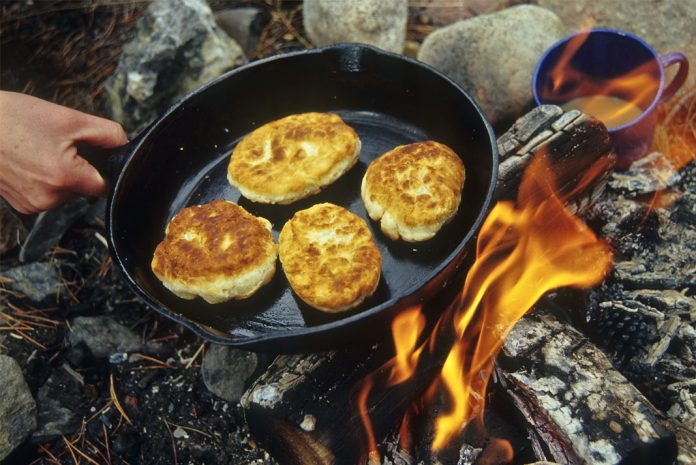
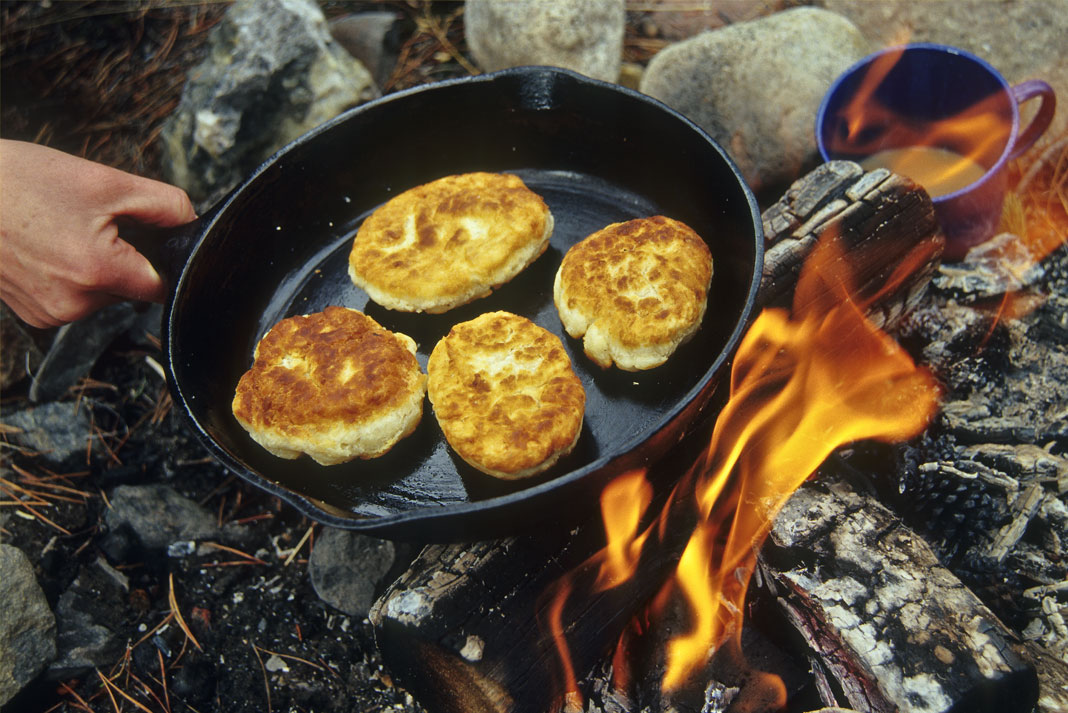
Pan of bannock being held over a fire.
Don’t panic; we have bannock! | Photo: Cathie Archbould

To identify a hardened wilderness canoe tripper, I watch how someone paddles a J-stroke, lifts a canoe and whether they use a tump. But I can also rather reliably tell whether someone is a seasoned pro or a greenhorn newbie by merely noting what kind of bread they eat on trip.

Kevin Callan’s Basic Bannock 

Ingredients:

½ cup white flour

½ cup whole wheat flour

1 tsp baking powder

3 tbsp powdered milk

½ tsp salt


Directions:

Mix all dry ingredients and add water slowly until dough is slightly sticky. Separate into three to four patties and fry in an oiled frying pan over moderate heat until both sides are golden brown.

Bagels are popular amongst weekend warriors, tortillas are for graduates of weeklong trips—but when a canoeist regularly makes bannock, well, you’re pretty much guaranteed they’ve spent quality time in the bush.

Making a morning batch of bannock is common on my trips. I love watching a loaf’s golden-brown top take shape, and the glorious sweet smell when I hand out the first steaming chunk is pure bliss—even if it does contain a few dead mosquitoes. Store-bought bread becomes moldy or stale by day five or six. Made daily, bannock can keep you stocked with fresh bread for a whole summer.

I spice things up now and then—cajun bannock, cinnamon bannock, lemon and dill bannock, s’more bannock—but the main ingredients remain the same. Flour, baking powder, powdered milk and salt. It’s dense when baked and fluffy when fried.

Modern-day trippers love this no-fuss recipe for the same reason it’s been a staple of wilderness wanderers for centuries. It’s stable, quick and easy to make. Bannock is also a hefty source of carbohydrates. A fist-sized serving offers roughly 310 calories and is adaptable to any mealtime. Smother in jam for breakfast, layer with hard cheese for lunch, or dip in a bowl of hot stew for dinner. Yum.

Most Indigenous nations across North America have some traditional version of bannock. The Inuit call it palauga, it’s luskinikn to the Mi’kmaq, while the Ojibway nation calls it ba’wezhiganag. Before European contact, unleavened bannock was made from the starches derived from ground maize, roots and bulbs, and lichens and mosses. It was cooked on flat rocks over the fire, twisted around a green stick or heated in cooking pits.

It’s believed Scottish fur traders introduced modern bannock to North America during the 18th and 19th centuries. Called bannuch, Gaelic for morsel, it was first made of barley and oats; wheat flour was later introduced. Bannock soon became a staple for trappers, prospectors, voyageurs, and First Nations groups. Today, gourmet bannock baking is big business and a staple at many Indigenous-owned restaurants.

Pan of bannock being held over a fire.
Don’t panic; we have bannock! | Photo: Cathie Archbould

The simple four ingredient recipe has remained much the same for wilderness wanderers, however. When made by canoe tripping enthusiasts traipsing from lake to lake for weeks on end, it’s now most often fried in a cast-iron skillet, baked in a reflector oven or wrapped around a green stick the old-fashioned way.

[ Paddling Buyer’s Guide: View all camp kitchen and cooking accessories ]

Just remember, never slice a piece for your fellow campers. You can’t cut bannock; that’s bad luck. Instead, tear off chunks and hand them around, steaming hot, the way it’s always been done.

This article was first published in Paddling Magazine Issue 63. Subscribe to Paddling Magazine’s print and digital editions here, or browse the digital archives here.


Kevin Callan is the author of 18 books, including the bestselling The Happy Camper and his popular paddling guides.

Don’t panic; we have bannock! | Photo: Cathie Archbould

Top 8 Scariest Paddling Rescue Videos Of All Time

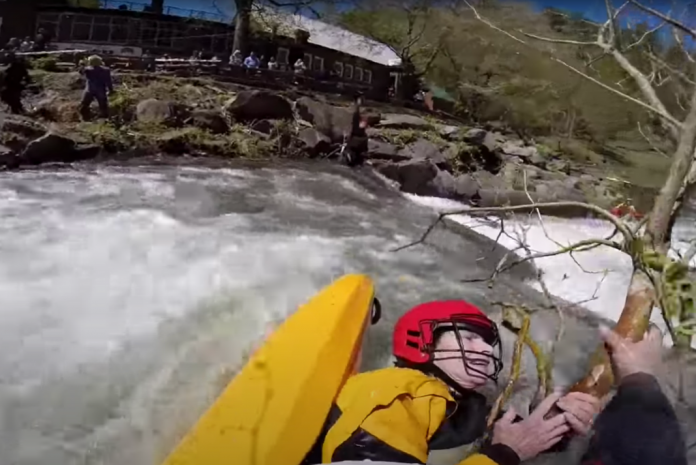
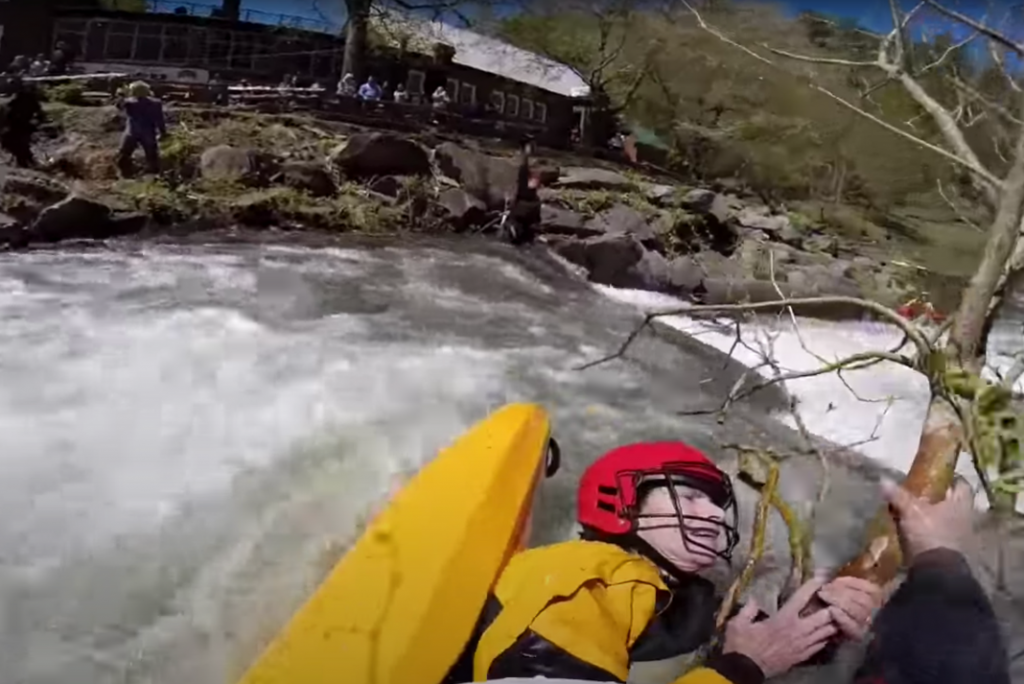
kayaker-tree-rescue

As proven by the undying popularity of horror movies, we humans often get an odd thrill out of watching terrifying events—it’s how we’re wired. Especially when those incidents are relatable and close-to-home.

These videos also serve as a learning opportunity. Unlike Hollywood horror, the dangers of water are real. Watching rescues allows us the chance to stop and reevaluate our own safety tool kit. Do we have appropriate training and equipment? Would we have done anything differently? How could that situation have been avoided?

Did we miss any great videos? Leave a comment below or send us a message on Instagram or Facebook.

8. Canoe Pinned Sideways With Father And Son Inside
father-and-son-canoe-pin

An experienced canoeist was out tandem paddling with his nine-year-old son on a local class 2 section of river, when things took a sudden unexpected turn. Quite literally.
Watch the video »

7. Kayaker Trapped In A Strainer On The Cheoah Riverkayaker-tree-rescue

A kayaker became trapped in a strainer (a dangerous fallen or low hanging tree) and held on for survival, while her safety team got to work.
Watch the video »

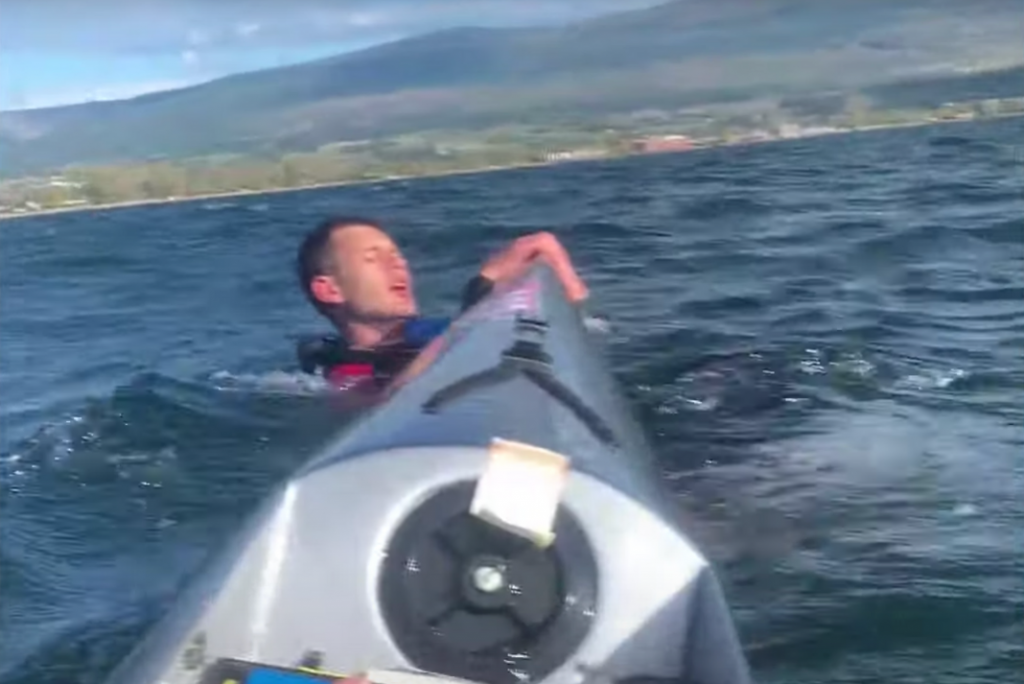
6. Capsized Kayaker Is Rescued From Okanagan Lake
capsized-kayaker-rescued-from-okanagan-lake

A music teacher from B.C. noticed a fellow kayaker had capsized and become stranded. As she approached him, she learned he was close to hypothermic. What happened next was paramount to his survival.
Watch the video »

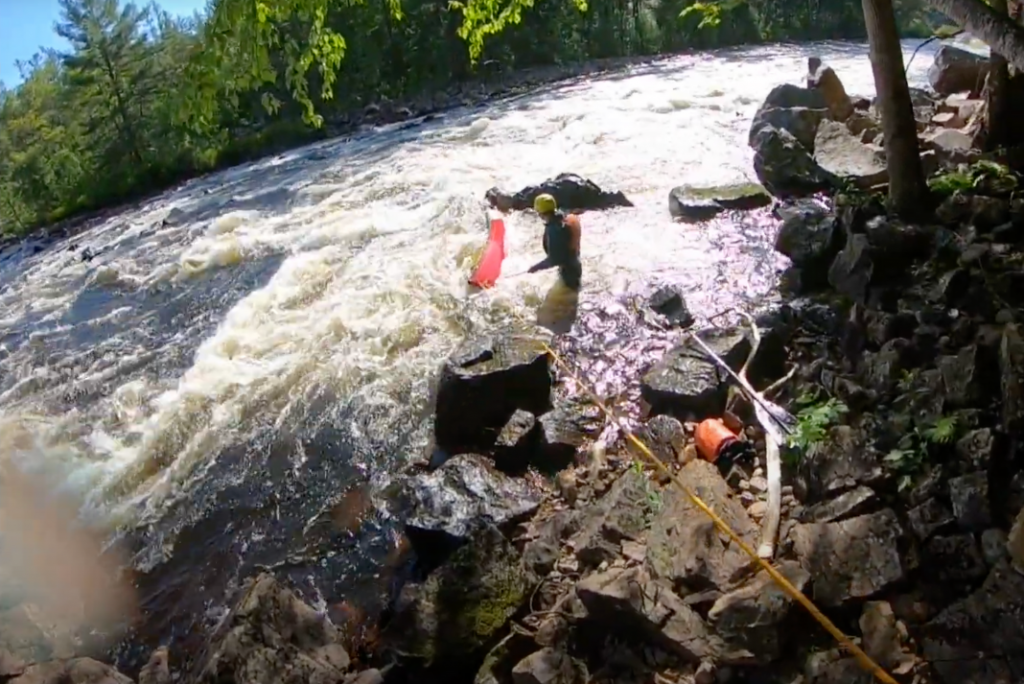
5. Canoe Pin Rescue On Remote River
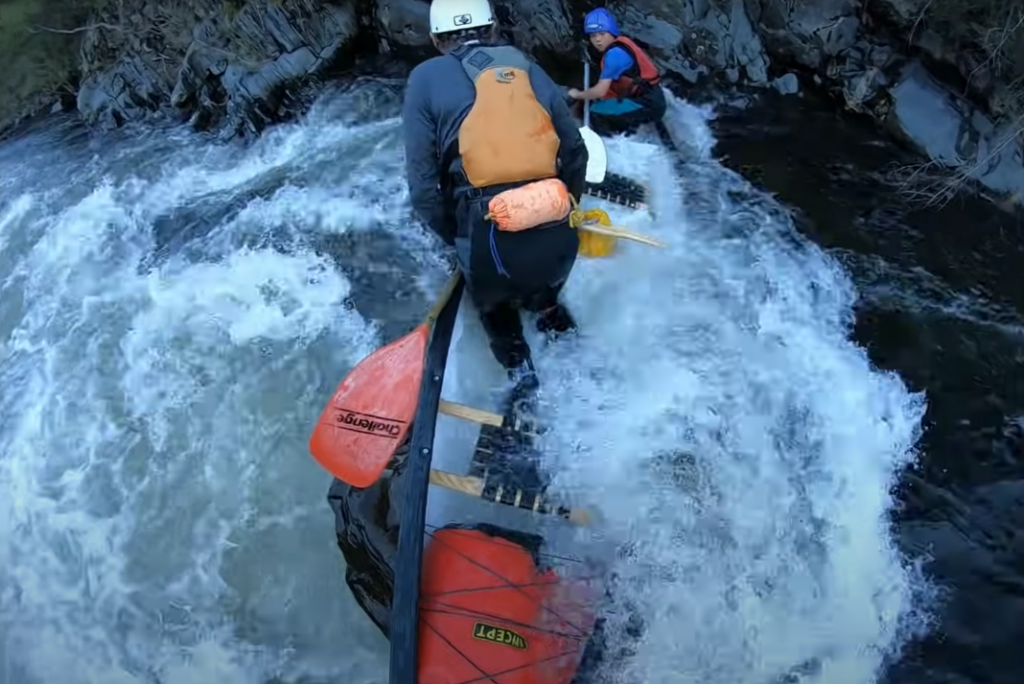
Canoe pinned on Petawawa river in Ontario

When two tandem canoeists entered one of the Petewawa River’s more challenging rapids, they didn’t expect they would be stuck in that same rapid for three hours.
Watch the video »

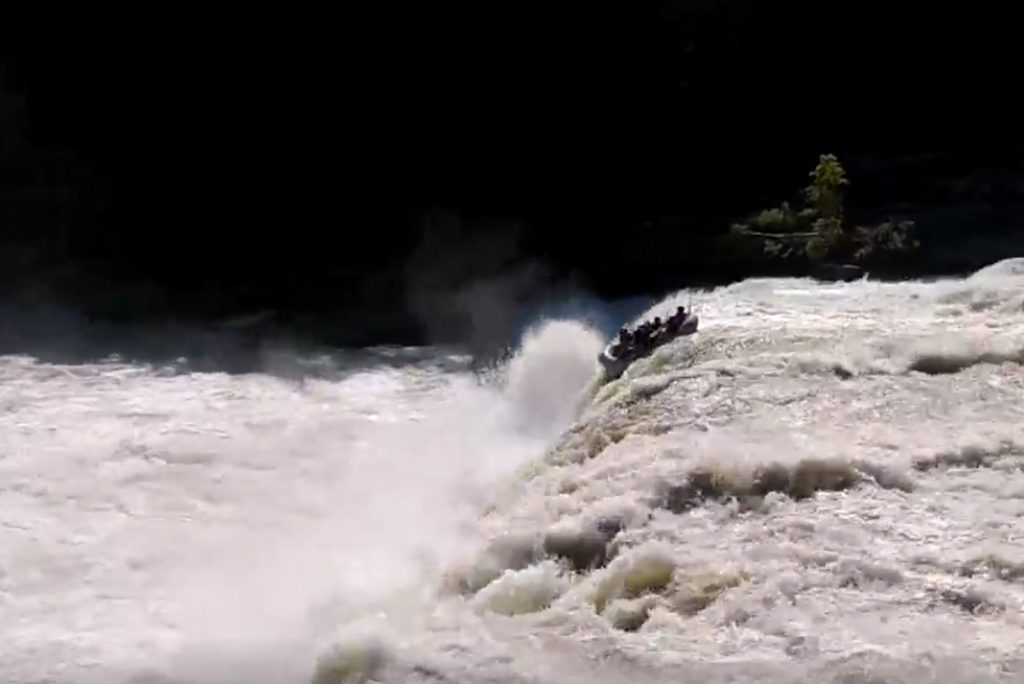
4. Raft Accidentally Plunges Over Waterfall
Raft Accident

The inexperienced rafters were using a rented raft, missed a turn and passed several other signs warning them not to proceed.
Watch the video »

3. Dane Jackson Rescues A Kayaker Stuck In A Cave
dane jackson rescues kayaker from a cave

Dane Jackson discovered a kayaker stuck in a cave behind a powerful waterfall. What he did next, well, it certainly wasn’t by-the-book. We can guarantee you’ve not seen a rescue like this one before.
Watch the video »

2. Terrifying Kayaker Pin At Three Amigos

This paddler was caught in an unlikely undercut that became a hazard at low water. Her team managed to extract her in 3.5 minutes. Read the full incident report on American Whitewater here.
Watch the video »

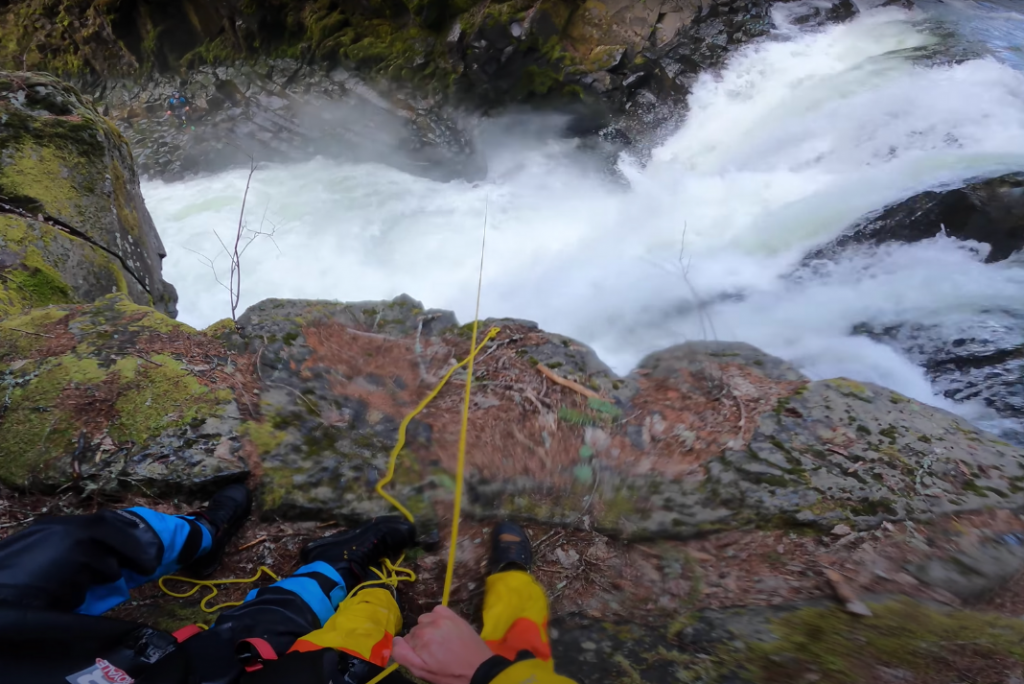
1. Kayaker Saved After Swimming Over A 60-Foot Waterfall

Two experienced kayakers set out to paddle a 20-foot waterfall that leads into a 60-foot waterfall. One kayaker swam on the first drop and found himself clinging to a wall in the water, just above the second massive waterfall. In this tense rescue, there was no room for error.
Watch the video »

Navigating A Love-Hate Relationship With Emergency Communications Technology

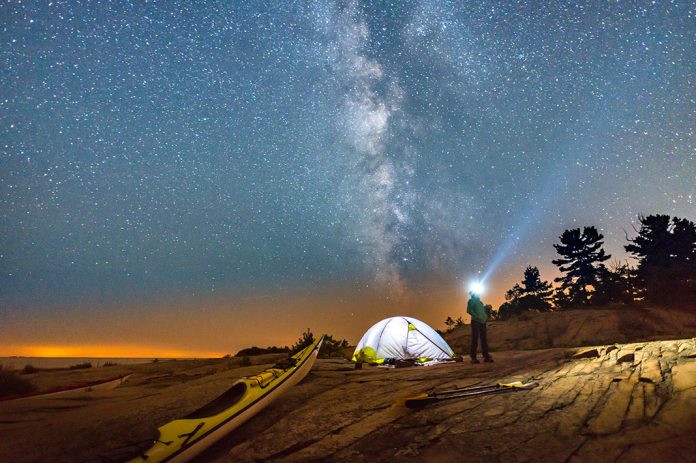
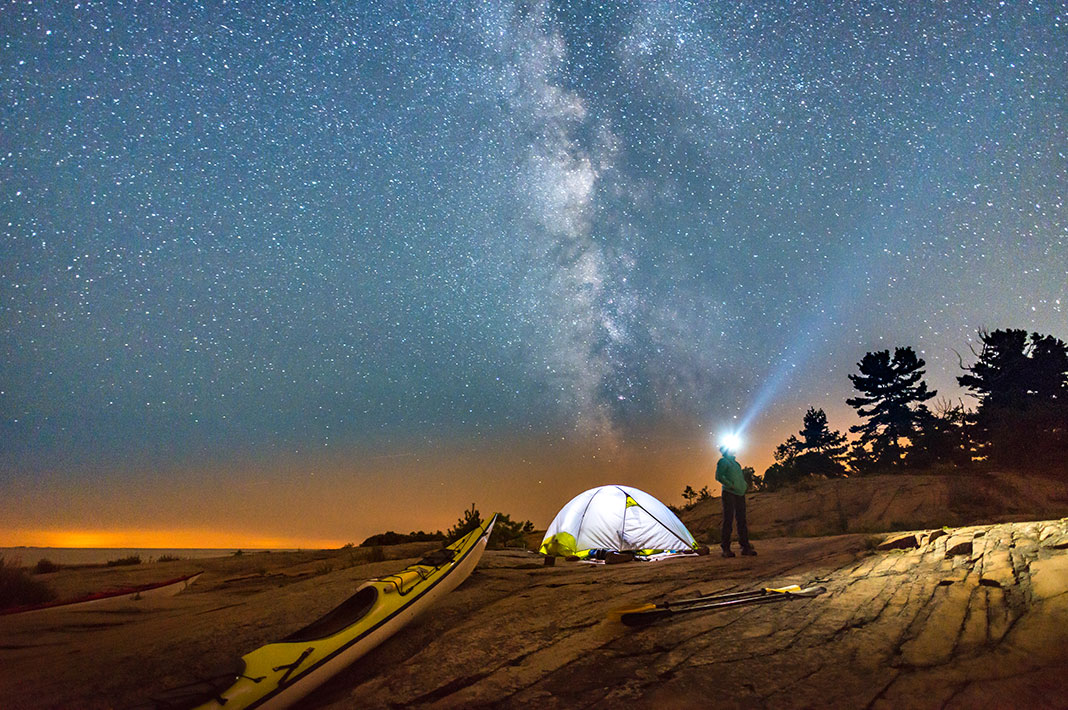
Person standing beside tent and kayak pulled up on shore, with headlight on, and Milky Way overhead.
Disconnect to reconnect. | Photo: JP Danko

Each spring, I realize how fast time scrolls by when an outfitter friend recruits me to instruct his sea kayak guides’ training course on Lake Superior. I inevitably assume the role of an old codger. How things have changed since my glory days.

When I started guiding 20 years ago, adventure tourism was booming. My favorite recollections portray the nascent industry as fly-by-night. I was still a teenager, leading greenhorn adults on wilderness trips without any emergency communication technology. On sea kayak trips, if you raided the gear room early, you’d score an oversized, non-waterproof VHF marine radio with a sketchy battery and limited range. The plan if things went sideways was implicit: deal with it on your own.

I was longing for those simpler days last winter when a friend and I set off on a 10-day snowshoe and toboggan trip on the frozen waterways of canoe country, just as the world descended into the chaos of the pandemic. Each evening my partner fired up his InReach satellite communicator and the messages rolled in from his girlfriend: lockdowns and border closures, numbers of infections and professional sports seasons abruptly canceled—illusions of an apocalypse so far removed from the reality of our existence.

Person standing beside tent and kayak pulled up on shore, with headlight on, and Milky Way overhead.
Disconnect to reconnect. | Photo: JP Danko

During the days, my mind wandered and I was easily distracted—worrying about the portents of the diminishing number of jet contrails in the bluebird sky rather than celebrating the glorious sunshine and certain arrival of spring. I came home thinking I was done with satellite communicators. How’s that for assuming responsibility for my actions?

Globalstar’s SPOT holds the distinction of being the first pocket-sized consumer satellite communication device. Previously, some wilderness adventurers carried personal locator beacons, all-or-nothing emergency locators like those used in aircraft. The first-generation SPOT came on the market in 2007 and allowed users to send generic “I’m OK” messages to a circle of friends or summon rescue with an SOS button.

InReach launched in 2011, adding two-way communication technology for actual conversations and the ability to make off-grid updates to social media feeds. Garmin eventually took over the brand. Both devices direct distress calls to an international dispatch center that in turn calls upon regional rescue professions to respond; the latest technology verifies the nature of the incident and affords a short, second-chance window should outdoor enthusiasts wish to call the rescue off. As of last fall, InReach and SPOT devices were responsible for more than 12,000 rescues over 14 years. Many, no doubt, were legitimate life-threatening emergencies. But the stat makes me wonder: how many people died in misadventures before the advent of these devices?

[ Browse all emergency signalling devices in the Paddling Buyer’s Guide ]

Like anti-lock brakes or “indestructible” plastic whitewater canoes, satellite communicators and navigation apps impart peace of mind—and, sometimes, a false sense of security.

Last October, an Indiana man ventured into Minnesota’s Boundary Waters Canoe Area on a solo canoe trip—his first visit to the million-acre wilderness area—renting an InReach device from a local outfitter for $10 per day. The 34-year-old was less than 24 hours into a weeklong trip when an early blast of winter exposed his startling degree of unpreparedness. He issued a distress message and search and rescue professionals arrived that night, pushing through a snowstorm and freezing temperatures, to extract him from the wilderness. In an interview, the paddler blamed his hypothermia on a “poor choice of gloves.” He added, “It got so cold, my cellphone shut down on me.”

Of such a scenario, a friend of mine would say, “Stupid oughta hurt.”

To me, that sounds harsh, but it speaks to a critical opportunity lost. When experienced responsibly, so-called “natural consequences”—like being cold, wet, bug-bitten and exhausted—make the outdoors a great place to learn humility. However, a society that’s become more accustomed to instantly gleaning information from YouTube and Google emphasizes the fact expertise and good judgment take time to develop. Pressing SOS offloads the consequences of one’s choices and actions on someone else.

Pressing SOS offloads the consequences of one’s choices and actions on someone else.

Such self-reliance—ironically, a YouTube catchphrase—is overshadowed in marketing campaigns targeting our natural fear of injury and death.

In a press release celebrating InReach’s 5,000th rescue last fall, a Garmin representative said, “If anything happens…you’re still connected to emergency responders, friends and family.”

Admittedly, I’m also terrified of dying alone, but this sort of connection, I’ve come to realize, is exactly what I set off into the wilderness to escape.

Three summers ago, my partner and I set off on our longest paddling trip yet: A 56-day journey in subarctic Quebec’s Ungava Peninsula. I pride myself in traveling self-supported; we packed all our provisions for the entire trip. Yet, I couldn’t help but feel as though we were tethered to society by our InReach device. At times, I took joy in composing pithy 160-character messages to update our Facebook page. More often, I felt frustrated by endless weather forecasts and friendly advice issued by relatives in the outside world—besides wrestling with my usual impatience with technology: slow Bluetooth connections and half-typed messages, mysteriously deleted.

After six weeks of hard travel, we crossed the treeline where the winds became relentless. I realized technology was staunching our senses as we stared at the screen expectantly, seeking an external source of hope as our tent billowed around us. The feeling of dependence reminded me of early environmentalist Howard Zahniser, who drafted the U.S. Wilderness Act in the early 1960s. To experience wild places, Zahniser wrote, “is to know profound humility, to recognize one’s littleness, to sense dependence and interdependence, indebtedness, and responsibility.” I grieve this loss.

Sometimes, I wonder how I would’ve responded two decades ago had a client suffered a heart attack, broken leg, appendicitis or any number of accidents on one of my early guided trips. What made it acceptable back then to travel without reliable communications? Clearly, the baseline has shifted.

Indirectly, I pose this question to the latest cohort of wilderness professionals when we discuss various accident scenarios in the kayak guides course. Their default solution to what once would’ve been the hardest problem is simple: Hit SOS.

This article was first published in Paddling Magazine Issue 63. Subscribe to Paddling Magazine’s print and digital editions here, or browse the digital archives here.


Conor Mihell is a sea kayak guide, award-winning travel journalist and, once upon a time, was a Rapid Media intern.

Disconnect to reconnect.| Photo: JP Danko

Canoe Pin Rescue On Ontario’s Petawawa River (Video)

Two tandem open-boat canoeists were out for a paddle on the Petawawa River in Ontario’s Algonquin Park, when they ran into trouble.

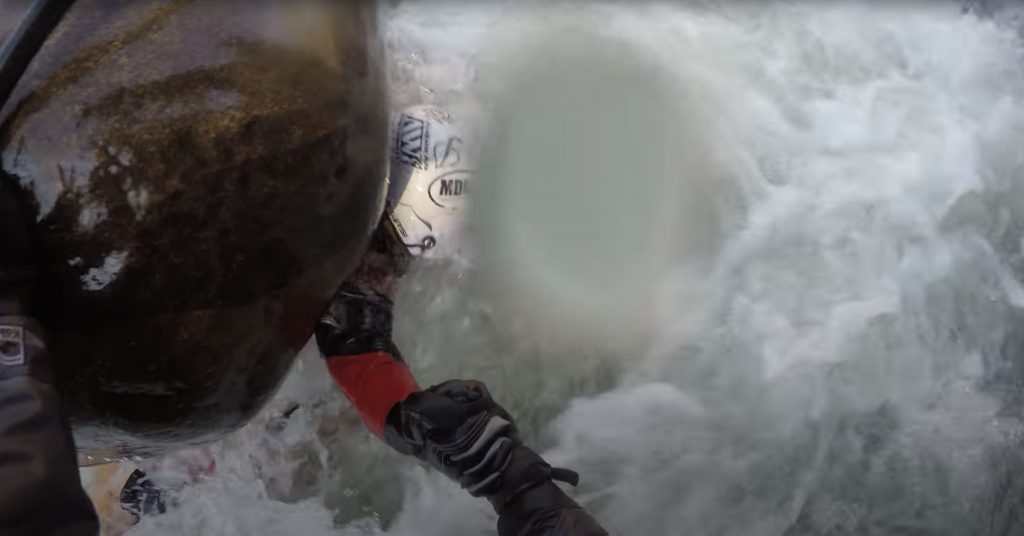
Gary Ataman and Iori Miller entered one of the more challenging rapids on the river—named “Crooked Chute”—when, moments later, their canoe became pinned and wrapped on a semi-submerged rock.

In the video review of the events, the commentator states that the plan had been to sneak past the big wave trains on the right side of the river. The “uh oh” we hear from the stern paddler, as the paddlers diverge off their intended course and towards the rock, suggests things didn’t go to plan.

Moments later, both paddlers are in the water, desperately hanging on to the canoe as it inevitably fills with water and becomes further  stuck against the rock. “Pull, pull!” the rear paddler shouts to the other, nearest the river bank.

Once the bow paddler has his footing on the river bank, he desperately pulls the rope attached to the front of the canoe in an effort to free the boat. “It’s buckling, let’s let go” the other paddler shouts, as they realize they need to stop and reassess.

[ Paddling Buyer’s Guide: See all Canoes ]

The commentator then proceeds to explain how they managed to get the canoe out of the water using their pin kit to conduct a “Z Drag” to recover the canoe. Despite a successful rescue attempt (surprisingly, the boat had minimal damage and the folds popped straight back out), it took the crew over three and a half hours to recover the canoe.

The video, produced by the Wilderness Canoe Association, highlights the importance of being prepared for the worst-case scenario. Make sure to carry the appropriate safety gear and equipment, and have adequate knowledge of the area, and the appropriate skill set for the class of water you are accessing.