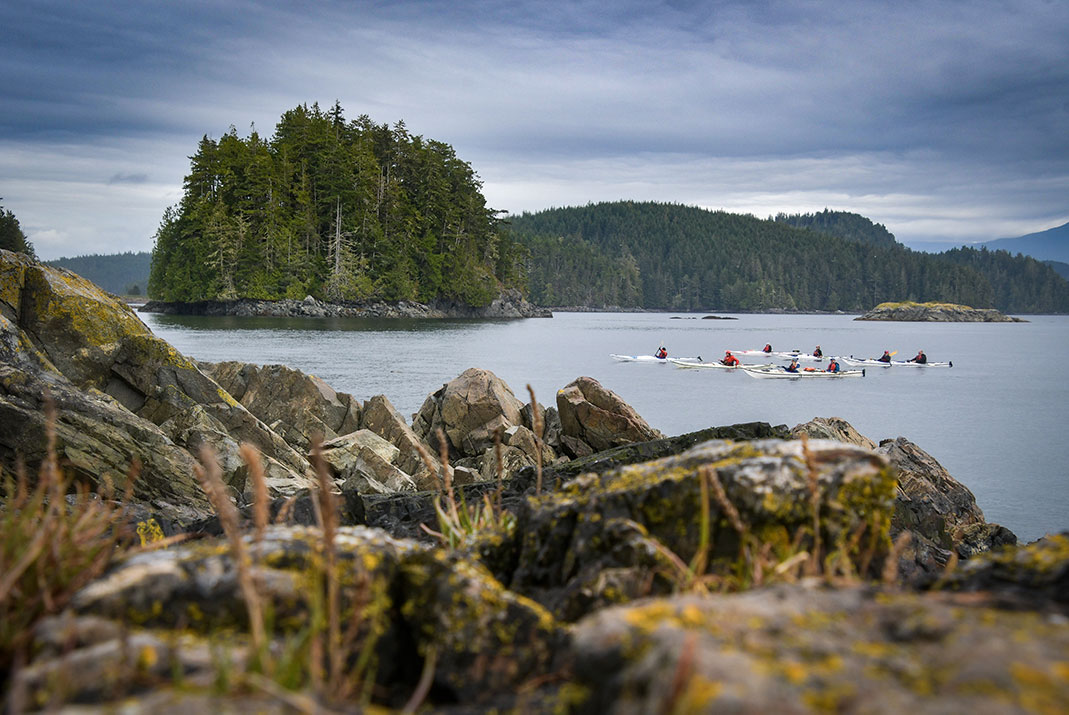
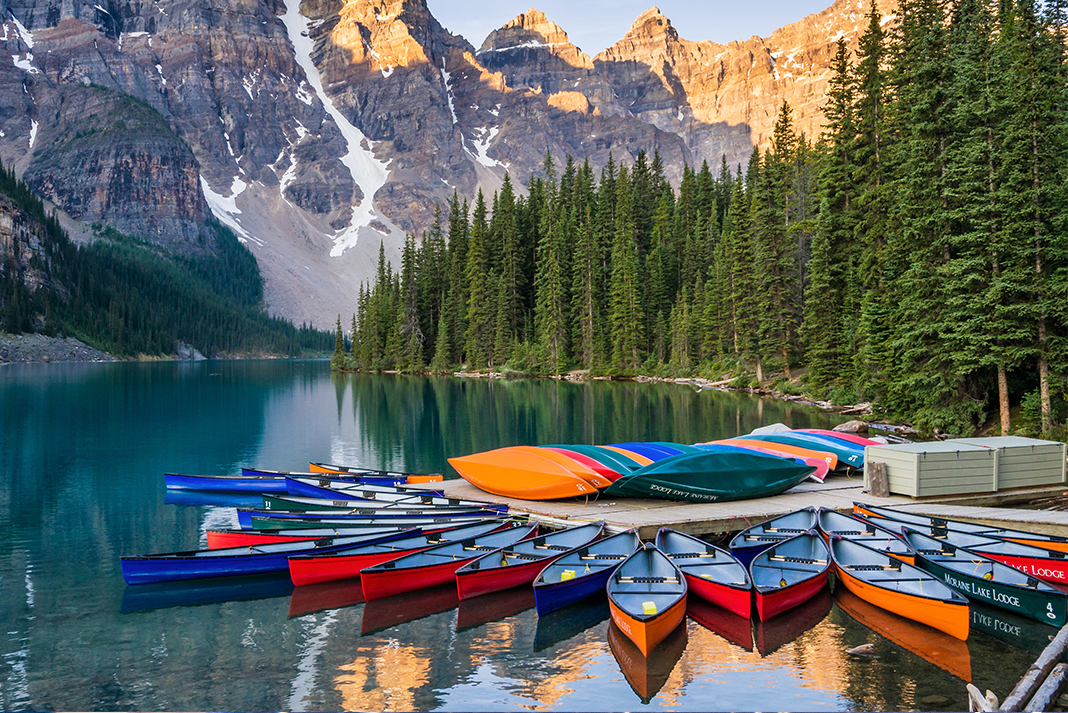
Cape LaHave Adventures,
LaHave Islands, Nova Scotia.
Photo: Tourism Nova Scotia / Patrick Rojo
“When something goes wrong, you have to keep flying the airplane,” says Darren Bush, owner of Rutabaga Paddlesports in Madison, Wisconsin, and host of the annual Canoecopia show. “You either hit the ground hard or you hit the ground soft, but either way, you have to work the problem.”
In March of 2020, when Covid first hit North America in force, Bush found himself at the controls of the world’s biggest consumer paddling show as it sped into the eye of the pandemic storm. Exhibitors were already setting up when he decided to cancel the show rather than risk it becoming a super-spreader event. The last-minute cancellation was a massive financial risk, not unlike a pilot steering a doomed plane away from a residential neighborhood.
We all know the story that followed: Stay-at-home orders, shuttered businesses, a new and frightening reality as the virus spread unchecked around the world. And then, unexpectedly to most, an outdoor recreation boom fueled by cooped-up people seeking social distance. Participation surged in recreational activities like cycling, hiking and paddling. Demand for gear soared, and the pandemic-ravaged supply chain couldn’t keep up. According to market research group NPD, sales across watersports shot up 27 percent in 2020 compared to 2019.
Paddlesports sales shot up 30 percent last summer, and more people were getting on the water than ever before. | Photo: Rob Faubert
Looking back 18 months later, it bears repeating how unexpected the post-Covid boom was. In March 2020, specialty retailers like Rutabaga couldn’t have predicted the insatiable appetite for paddling that would follow the lockdown, let alone their businesses would out-perform large chain stores that were seemingly much better equipped and financed to weather the storm. Specialty retailers didn’t only survive. Most thrived through the most chaotic year in recent history, simply by what Bush describes as flying the plane.
“Being a smaller specialty retail dealer with no corporate pressures, we can react quicker than big box stores and online retailers,” says John Nemjo, founder and president of Mountainman Outdoor Supply Company, a paddling shop of 28 years in the Adirondacks. “We were able to adjust almost on a daily basis based on what we were seeing.”
Nemjo had the luxury of trusting his gut, and his gut told him demand for outdoor gear would rebound as millions of stir-crazy Americans sought fresh air and social distance.
Barren racks and shelves were a common sight in paddling shops during the summer of 2020. | Photo: Courtesy The Complete Paddler
“Our sales never hit anywhere near zero, and within weeks we saw higher-than-average sales,” he says. So when his suppliers told him other retailers were canceling orders, Nemjo pounced. As other businesses back-paddled at the top of the metaphorical rapid, Mountainman went all forward, increasing product orders as others canceled theirs. “We took a chance as we have done over the years, and once again, it paid off,” Nemjo says. “We had boats no one else had. It paid huge dividends to our business that will carry on for years.” Customers came from as far away as Oklahoma to buy boats from Nemjo’s store in upstate New York.
While not every specialty store had the foresight or resources to double down on inventory at the outset of the lockdown, many were still able to navigate the uncertainty better than large retailers whose executives didn’t have their fingers on the pulse of paddlesports.
“The key to succeeding during the pandemic seems to have been understanding the needs of the customer base through difficult times and the ability to stay in step with evolving circumstances.”
Robert Stoky of Florida Bay Outfitters in the upper Florida Keys was cautious in the beginning. He reduced some boat orders, and some of the inventory he ordered was delayed. Stoky responded by shifting his retail focus to soft goods and accessories and emphasizing tours and lessons. The business thrived, even with paddlecraft sales going from approximately 80 percent of pre-pandemic sales to 50 percent since. Stoky recognized that in a destination location like the Florida Keys, people were just as eager for rentals and outings as they were for paddling gear. The key to succeeding during the pandemic seems to have been understanding the needs of the customer base through difficult times and the ability to stay in step with evolving circumstances.
Kelly McDowell can attest to this, though the situation he faced as president of The Complete Paddler in Toronto differed from what Stoky experienced in Florida. Shelter-in-place orders were generally stricter in Canada than in the U.S., and McDowell’s retail season began with a two-month total lockdown. Rentals and instruction weren’t an option for McDowell—not only were instructors hard to come by due to liability and insurance concerns, but he’d sold off its rental fleet the previous fall and couldn’t replace it.
Like Nemjo, McDowell was confident demand would rebound. So while MEC and other big retailers canceled boat orders, McDowell snapped them up. Then he got creative. Though his doors were locked by government order from March into May, he kept the phone lines open, scheduling curbside pickups for eager paddlers. He would deposit boats one at a time on the patch of grass in front of his store, spray them down with disinfectant, and then wave through the locked door as grateful customers loaded their new boat and drove away. Some were regular customers of The Complete Paddler, but others were coming straight from big box retailers that had canceled their orders when McDowell doubled down. “We should have been crushed by those stores,” he says. “But they fell down, and the small independents could react quickly and service those customers.”
When retail stores were finally allowed to reopen in Toronto—if they observed certain Covid-related restrictions—McDowell wasted no time. “I was here until 10 at night installing the new plexiglass barriers myself, and we opened the next morning,” McDowell says. “When we opened on May 19th, we saw an increase like we’ve never seen before. It was insane. We had to limit the amount of people that were in the store. They were lining up to get in.”
“Covid knocked the usually steady balance of supply and demand so far out of whack that big retail’s biggest advantages—price and volume—became less significant.”
Between his early adoption of curbside sales and getting his doors open as soon as legally allowed, he believes running a small business with the ability to deftly change policies gave him an edge over larger rivals. For all the built-in advantages large chain retailers enjoy, it’s a lot easier to dead-stick a Cessna than a jumbo jet—especially when the pilot knows the airspace.
It wasn’t all down to pilot skill though. Covid knocked the usually steady balance of supply and demand so far out of whack big retail’s biggest advantages—price and volume—became less significant.
“One of the most interesting things we’ve faced this season is that with nobody being able to get inventory, the model of selling a million items and making a dollar apiece is a losing model right now,” says Brian DeFouw, chief buyer at Confluence Ski and Paddle in Denver. “So the one good thing is that it’s evened the playing field to where prices haven’t been a huge issue.”
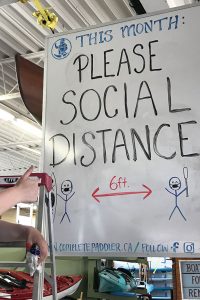
New public health protocols | Photo: Courtesy The Complete Paddler
How long this leveling will last is anyone’s guess. While specialty retailers may have outmaneuvered their larger rivals going into the pandemic storm, big box retailers still managed to come through just fine. The Outdoor Industry Association estimates recreational kayaking was the fastest-growing paddlesports segment in 2020, increasing 14 percent. The bulk of those sales are price-point boats carried by box stores, which indicates while the big boys may have faced a slow start and limited inventory, they still sold plenty of boats.
The NPD similarly reports watersports sales at athletic specialty and sporting goods stores increased 34 percent in 2020 from 2019, while sales at outdoor specialty stores increased 21 percent. Dick’s Sporting Goods reported a nearly 10 percent increase in same-store sales at the financial close of 2020. While that figure doesn’t break out paddlesports sales specifically, it’s an indicator the sporting goods warehouse is coming out the other side of the pandemic in good shape.
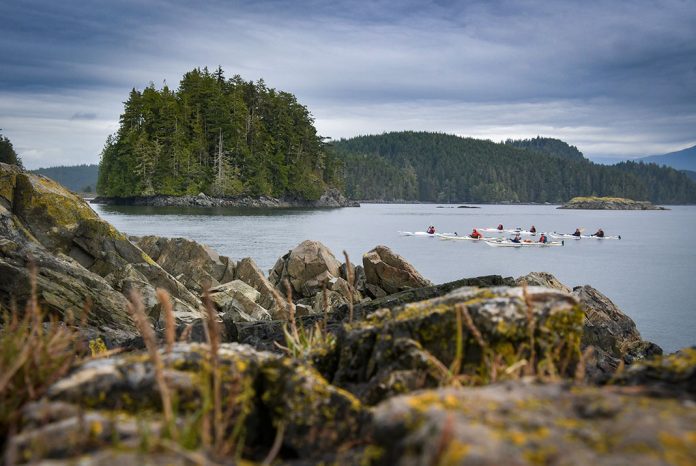
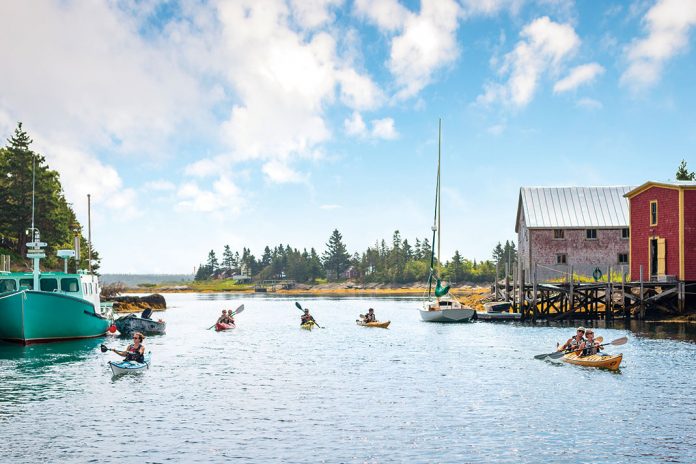
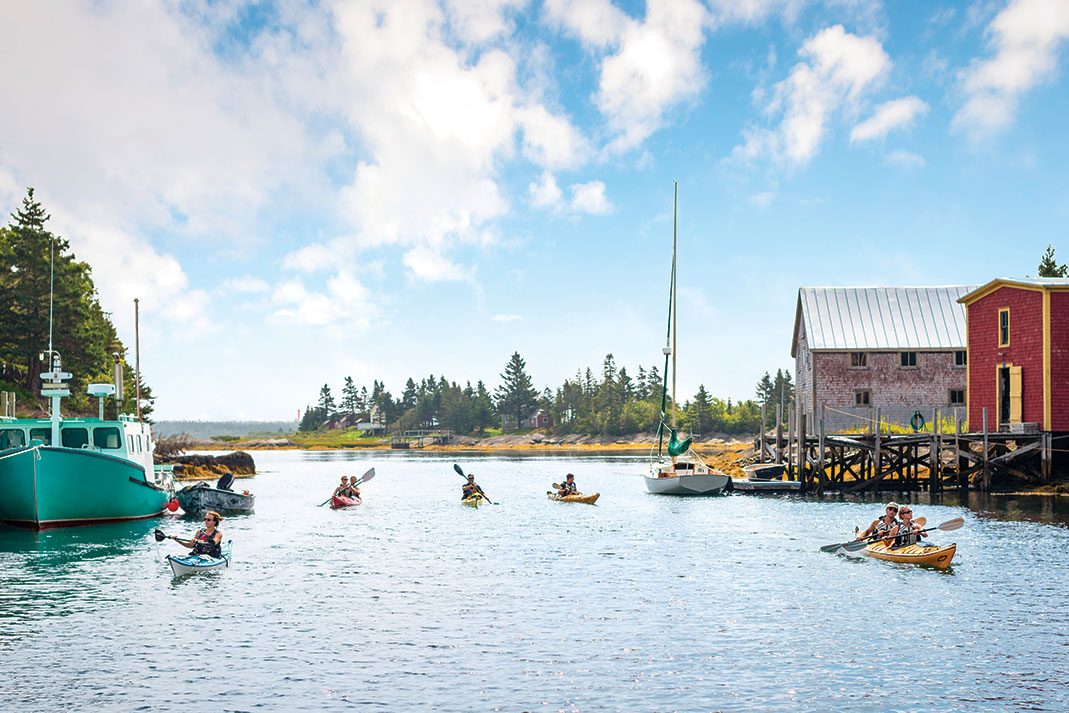
Cape LaHave Adventures, LaHave Islands, Nova Scotia.| Photo: Tourism Nova Scotia / Patrick Rojo
For big box, the pandemic was a blip. To specialty retailers, it was an affirmation of what they already knew: The value paddling shops bring to their communities is as much about the services they provide as the specific gear they carry. Bush says the pandemic sharpened his conviction that a sale should be more than a transaction. Even after 30 years working in paddling retail, the lockdown taught him new ways of connecting with customers he plans to stick with long after things return to normal, whatever that is.
“We are still scheduling people for car rack installs, boat pickups, test paddles—all things we did for social distancing and workflow. It turns out people like it,” says Bush, who after canceling Canoecopia went on to have one of his best years in business. Some of this comes down to his flexibility and knowledge of the industry, but Bush says the secret of his smooth landing is still the customer experience.
“You have your boat picked out, and when you get there, we have it unwrapped. And we are installing your car rack. And while we are doing this, we are talking about paddles and life jackets. It’s very curated. By the time we
are done, their boat is loaded on the car, they are ready to go and they are stoked. It’s changed the experience, and it’s changed it for the better.”
This article was first published in the 2022 issue of Paddling Business. Inside you’ll find the year’s hottest gear for canoeing, kayaking, whitewater and paddleboarding. Plus: Industry leaders on surviving COVID, the dirty little secret of pro deals, brand consolidation and more. READ IT NOW »
Cape LaHave Adventures, LaHave Islands, Nova Scotia. | Photo: Tourism Nova Scotia / Patrick Rojo
“Adventure is a state of mind, a spirit of trying something new and leaving your comfort zone. If this is true, then adventure can be can found everywhere, every day, and it is up to us to seek it out.” —Alastair Humphreys. Nick Troutman on Homestake Creek, Colorado. | Photo: Dane Jackson
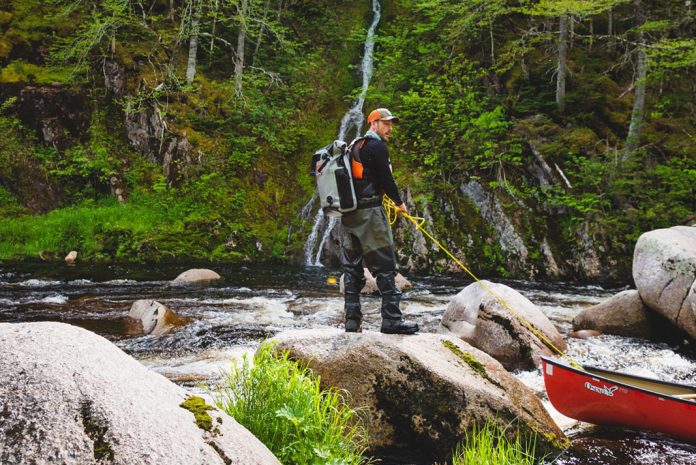
There’s a thin blue line a dozen miles from my house on satellite photos. It is insignificant enough it doesn’t even have a name on Google Maps. In these stay-close-to-home days, even the most insignificant lines on the map take on significance. I’ve passed by this little stream countless times over the years with only idle curiosity about where it goes. It was not until it finally occurred to me to investigate the stream’s fly fishing potential did I realize it as a beautiful little spring whitewater creek.
Twenty years with this insignificant stream in my backyard, and this was the spring I was going to run it.
[ Find your next adventure in the Paddling Trip Guide ]
The only real difference between an adventure and an activity is knowledge of the outcome. An activity is predictable—enjoyable on all levels, but it usually goes by a script with little variation. A mountain bike ride on the trails down my road is a repeat of the hundreds of other times I’ve ridden the same routes. My local kayak run is an activity. I know each rapid, eddyline and the push to expect from the current at every water level. The river itself has become a script of sorts, with little variation.
Fun? Absolutely. An adventure? Not any more.
Staying close to home for so long has me hungry for something unknown. Or, at least, an unknown I can explore and overcome on my own, rather than the macro unknowns of the coming months.
Most formal definitions of the word adventure sound like this: To engage in a daring or risky activity. Every definition includes something about risk. But risk can refer to the uncertainty of the outcome, not necessarily danger to life or limb. I’ve lost interest in the latter. For me, adventure is any time I push off with the perspective, “well, we’ll see how this goes.”
“Adventure is a state of mind, a spirit of trying something new and leaving your comfort zone. If this is true, then adventure can be can found everywhere, every day, and it is up to us to seek it out.” —Alastair Humphreys. Nick Troutman on Homestake Creek, Colorado. | Photo: Dane Jackson
So it was with my solo spring creek run this year. The creek is tiny—20 feet across—a flow of perhaps 16 cubic feet per second. It drops away from the road in a beautiful 15-foot cascading waterfall and then easy pool-drop rapids, meandering deeper into nowhere. I brought a topo map and tried to follow along, but quickly gave up hope with the countless bends and new beaver ponds and dams not on the map.
I was a couple of hours in before I looked at my watch and started to wonder how much farther it was to the only other access point, where I’d left my truck. I didn’t know where I was, but at least I knew where I was going.
I passed some unexpected sights, including a stretch of swifts pinched between vertical rock walls—a mini canyon a half-kilometer long. Another section of flat oxbow bends dumped into a rock amphitheater with smooth sloping walls in a perfect bowl, where the river exited in a perfect little four-foot drop.
In the end, it was a long day of more than seven hours. Way more than I expected. But almost all runnable, easy rapids and lots of beaver dams and flatwater.
By the end, I was getting anxious to find the take-out. The last hour was tension-filled, each rapid more worrisome rather than enjoyable. I was tired and doubting whether I’d somehow missed my stop. Of course, the backroad bridge finally came into view. Micro adventure concluded.
Would I do it again? Unlikely. But that’s not the point, is it?
A little backyard creek had provided a brief foray into something unknown. Big or small, new or little-explored, opportunity for adventure is everywhere.
This article was first published in Paddling Magazine Issue 64. Subscribe to Paddling Magazine’s print and digital editions here, or download the Paddling Magazine app and browse the digital archives here.
Jeff Jackson is a professor of outdoor education at Algonquin College near the banks of the Ottawa River and some unnamed spring creek.
“Adventure is a state of mind, a spirit of trying something new and leaving your comfort zone. If this is true, then adventure can be can found everywhere, every day, and it is up to us to seek it out.” —Alastair Humphreys. Nick Troutman on Homestake Creek, Colorado. |Photo: Dane Jackson
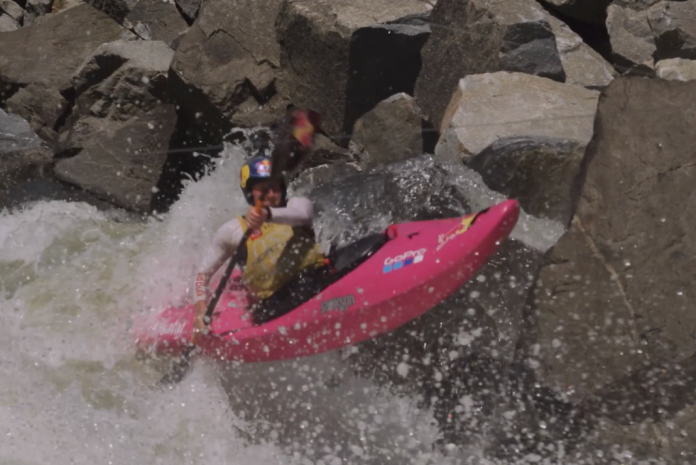
When the world’s best whitewater kayakers come together to race down some of the planet’s burliest rapids, you know you’re in for a good show.
The IX North Fork Championship did not disappoint. This summer’s event—informally coined “The Return”—felt monumental to athletes, spectators and organizers alike. Not only did we see the transition in event organization for James and Regan Byrd to the Voorhees family, but we also saw more female athletes representing than ever before.
To add a fresh layer of excitement, a huge boulder dropped into the meat of the infamous “Jacob’s Ladder” rapid, where the final races are held. As the event organizers put it, the hardest rapid got even harder.
“I think what we watch on Jacob’s Ladder, not just this NFC but all of NFCs—but especially this year with that new energy from being gone—is the harmony of the boat, the water and athleticism,” said Ryan Bailey, NFC Emcee & Banks, Idaho local.
Pre-pandemic, the Trump administration was the topic that could quickly cause a fracture in cohesive group dynamics on trip; COVID-19 could be the new polarizing topic. | Photo: Brendan Kowtecky
In May 2020, Steve Markle, vice president of sales and marketing for American rafting and sea kayaking outfitter OARS, was faced with the task of processing thousands of trip cancellations.
“It was a very challenging time. We didn’t know what the future looked like,” he recalls. A year later, OARS is on the verge of an unprecedented season. For the first time in nearly two decades, it’s nearly sold-out of its multiday trips in the western United States.
“The enthusiasm for booking guided outdoor activities is off the charts,” says Markle. “People realize a guided paddling trip might be one of the best possible options for vacationing during a pandemic.”
During the pandemic, the interest in paddlesports grew exponentially. By June 2020, dollar sales of canoes, kayaks and paddleboards in the United States had increased by 56 percent compared to June 2019, reaching $172 million in sales, according to market research group NDP. Money people would normally earmark for a holiday was being invested into getting on the water. Now, with vaccines rolling out, this interest is translating to holidays.
Based on an analysis of Google searches before and during the pandemic, the World Travel & Tourism Council predicts adventure travel will be the first sector to make a full recovery. And according to a 2020 study conducted by the Adventure Travel Trade Association (ATTA), adventure travel is likely to recover three to four years earlier than mass travel.
It could be the allure of fresh air, the introduction of more flexible cancellation policies, or the fact adventure travelers are generally less risk-averse. However, even as multiday water trips are experiencing a surge in popularity, they’re not the same carefree days in the wilderness they once were.
Pre-pandemic, the Trump administration was the topic that could quickly cause a fracture in cohesive group dynamics on trip; COVID-19 could be the new polarizing topic. | Photo: Brendan Kowtecky
The most obvious change is to health and safety procedures. Although being well-versed in risk management has always been part of the job description for outfitters, it’s now at the forefront, with group sizes reduced and mask-wearing enforced. For its part, OARS created a comprehensive 32-page COVID-19 health and safety document, which Markle describes as “modest.”
Improved health and safety procedures are the most superficial changes. The true effects of the pandemic are likely going to be felt for years to come. Jobs in tourism—which just over a year ago was perceived as a secure and growing industry, contributing $2.9 trillion to the global economy—is now a precarious career choice. Even with outfitters experiencing a high volume of bookings for 2021, an outbreak or lockdown could mean a massive loss of income for kayaking guides, who are often employed seasonally and paid per trip.
While government wage subsidy programs have helped outfitters like British Columbia’s Spirit of the West Adventures keep staff on payroll, co-owner Rick Snowdon believes the skills gap will be felt in a few years.
“It’s not something that’s affected us yet, but it’s going to become apparent when guided trips pick back up,” he says. “We’re going to be scrambling to find qualified guides. There’ll be a training gap due to the pandemic forcing people into other professions.”
Along with the challenges have come opportunities. In the last year, the social justice movement has given rise to groups like the Black Travel Alliance, holding outfitters accountable for improving diversity outdoors through their marketing and hiring practices. There’s also increased focus on environmental sustainability, with the climate crisis remaining at the forefront of travelers’ minds. While many outfitters are banking on open air as the top-selling feature, Adventure Travel Trade Association CEO Shannon Stowell believes the sector’s rapid recovery is because of something else.
“Adventure travel is passion driven,” he says. “Kayakers, birders and cyclists are people who partly define who they are by those activities. It gives me a lot of hope for the strength of recovery.”
This article was first published in Paddling Magazine Issue 64. Subscribe to Paddling Magazine’s print and digital editions here, or download the Paddling Magazine app and browse the digital archives here.
Pre-pandemic, the Trump administration was the topic that could quickly cause a fracture in cohesive group dynamics on trip; COVID-19 could be the new polarizing topic. | Photo: Brendan Kowtecky
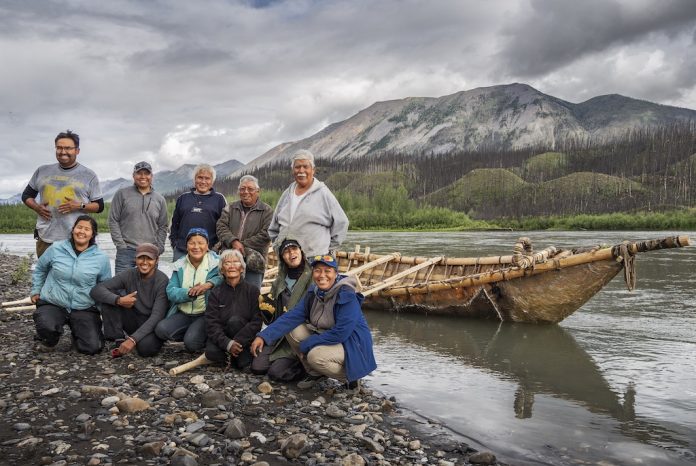
Traditional mooseskin canoe on the shore of the Nahanni River in the Northwest Territories while filming Nahanni: River of Forgiveness | Photo: John Bingham
It had been more than 100 years since a mooseskin boat had been down the Nahanni River.
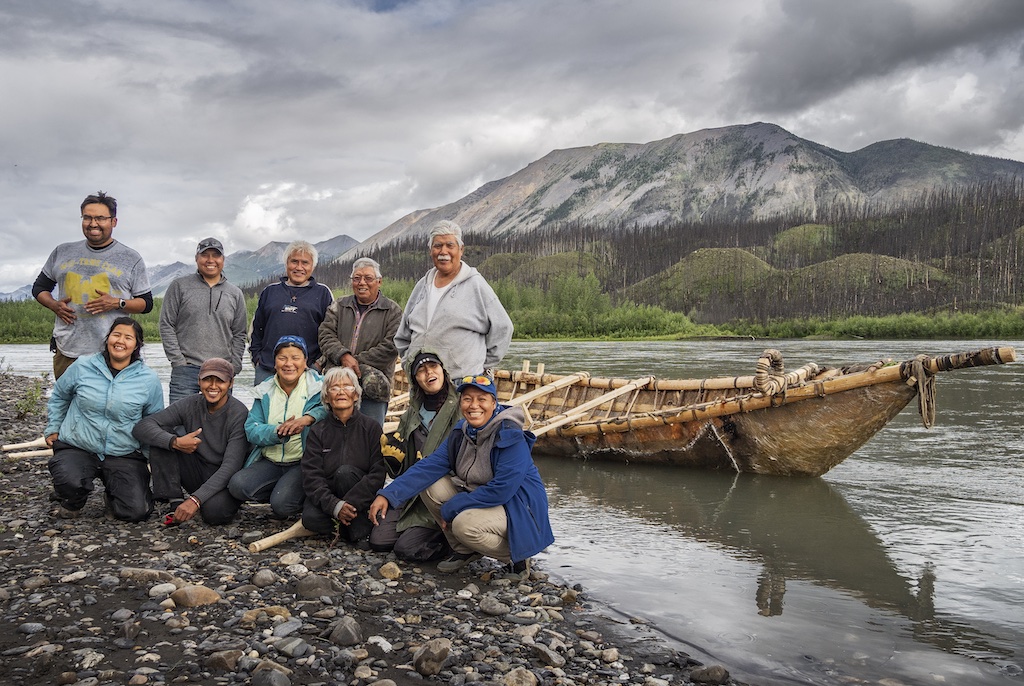
To bring the tradition back to life, 12 Dene explorers gathered at Bunny Bar on Na’ha Dehé, the remote Nahanni River, in Canada’s Northwest Territories. Over several days at the campsite, the group harvested materials and sewed and sawed, creating a 36-foot traditional boat out of spruce, sinew and seven moose hides.
The 500-kilometer journey from Bunny Bar to the town of Fort Simpson was made in 2018. It was an expedition made to revive traditional skills, inspire a new generation of youth, and honor Dene ancestors, who have lived in the Mackenzie Mountain range for tens of thousands of years. This photo was taken after the mooseskin boat rolled into the water for the first time.
Accompanying the Dene was a team of documentary filmmakers and river guides. Everyone was thrilled to see the mooseskin boat launch and move gracefully through the water. Leon, on the 20-foot rudder oar, was happy with how well it handled: “We could pretty much go wherever we wanted,” he said.
Traditional mooseskin boat on the shore of the Nahanni River in the Northwest Territories during the filming of feature length documentary, Nahanni: River of Forgiveness. | Photo: John Bingham
The day after launching brought the group to Gahnihthah, one of the most sacred sites in Denendeh, the land of the Dene. Gahnihthah, also known as Rabbit Kettle Hot Springs is the largest tufa mound in Canada. A place of many legends, it is said to be the birthplace of Yamoria, a mythic Dene hero and spiritual figure who established Dene laws. Mineral rich, warm water bubbles up from deep in the earth, spills over the edge of the pool and flows down the mound leaving mineral deposits called tufa, a porous rock composed of calcium carbonate.
Five days of travel brought the mooseskin boat to Virginia Falls. At 96 meters tall, Virginia Falls is almost twice the height of Niagara Falls. The Dene call this place Nailicho or “Big Falling Water.” A century ago, portaging the boat around the falls may have taken up to a week and was accomplished by rolling the canoe along a series of logs on a slipway. The trail is now protected as part of Nahanni National Park Reserve. So, for the very first time, a helicopter descended to lift the mooseskin boat into the blue and transport it around the falls.
“If I was a mooseskin boat, I’d be happy flying through the air,” observed Herb Norwegian, Grand Chief of the Dehcho First Nations at the time. “The ancestors would think this is a very spiritual experience.”
The mooseskin boat touched down a few kilometers later at Marengo Creek, skipping the rapids of the Nahanni’s Fourth Canyon due to concerns about the durability of some of the moose hides. The crew spent three days portaging down the old-fashioned way.
When the team reached Marengo Creek, the water level had dropped dramatically, and team member Ricky found the boat high and dry on shore. As he peeled back the tarp, his worst fear came true—in drying out, a hide had given out and he was staring at some major holes. The boat could not be repaired here and starting over was impossible. That night in the tents, with a new moon in the night sky, the mood was dark.
The decision was made to get the mooseskin boat downriver to Nahanni Butte as quickly as possible for repair. The guides reported they had 16 rubber sponsons—red floaties—that could be lashed together around the boat so it could be towed to the community of Nahanni Butte where the Dene could fix it. The boat was slowly towed hundreds of kilometers through some of the most magnificent territory, including class III rapids, through incredible geological formations like the Gate, and past canyon walls towering over a 1,000 meters high.
The Dene repaired the boat in Nahanni Butte the best they could. And then they finished the journey, paddling another three days to Fort Simpson.
A hundred people were on the beach to welcome them home, curious to touch the boat of the ancestors. The Dene never gave up. They nurtured the spirit of the boat so it could convey its message of hope to the Dene and to Indigenous people across Canada and around the world.
Geoff Bowie is the director of the feature length, award-winning documentary, Nahanni: The River of Forgiveness. The film is available on CBC’s documentary Channel. Watch the trailer below. Discover the award-winning interactive story at riverofforgiveness.com.
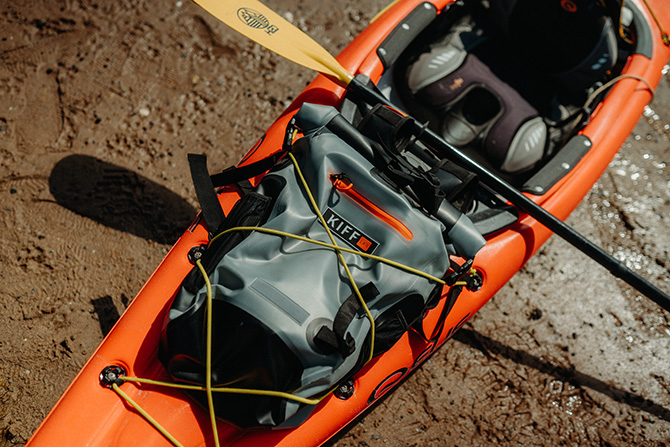
Kifflab’s TuziGazi35 may have been manufactured to have minimal environmental impact, but it was also built tough for all seasons. If you want to protect your gear from the elements, this is the pack for you.
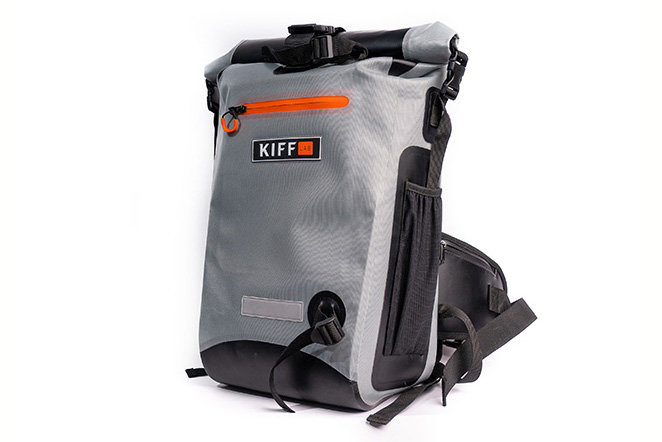
The TuziGazi35 is a quality rolltop dry backpack made of advanced material called Thermoplastic Polyurethane (TPU). TPU is one of the strongest materials in the market – yet it is lightweight, recyclable and biodegradable within 5 years. The outer bag is ripstop nylon, which is made from recycled materials such as plastic bottles, industrial plastic and waste fabric. The production process is a lot less harmful to the environment than traditional nylon production. Even the tags on the bags are made from recycled paper/cardboard materials.
Small Internal zip pocket to keep phone/keys/wallet dry
Two mesh pockets on either side suitable for 1L bottles
Quick close buckles
Top carry handle
Very easy-to-clean material
Easy access emergency whistle
Reflective strip on front side
Photo Courtesy of Kifflab
The TuziGazi range is named after two great rivers, Mhlathuze and Mzingazi, which flow into one of the largest natural harbours in the world and Kifflab was born out of experiences between friends who love the outdoors and grew up in the Richards Bay area. They have created their own outdoor brand that focuses on the technical capabilities of outdoor gear with an ethos built around social responsibility, believing that the world needs more innovative and environmentally conscious products. Their mission is to create a positive impact in every choice, every material, and every item they produce, and they looked for suppliers and manufacturers whose values were compatible with their own.
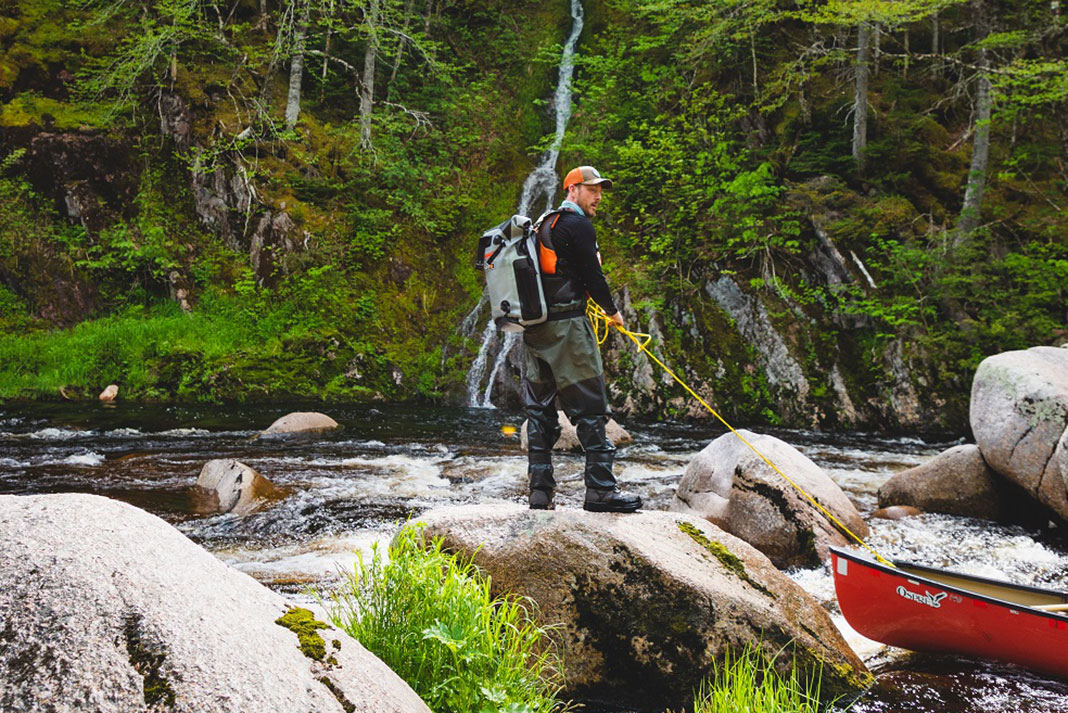
The TuziGazi35 is not only eco-friendly, it’s also extremely tough and waterproof, while being light and adventure-safe. Grant of Kifflab says, “We hope our product inspires people to go out and have the same adventures that we enjoy.”
Photo Courtesy of Kifflab
About Kifflab
Kifflab’s head office is based in Halifax, Nova Scotia, Canada and there are fulfillment centres in South Africa and United Kingdom. For more information, visit the website www.kifflab.com and Grant can be contacted via info@kifflab.com.
Kifflab – designing technical outdoor products with a social conscience.
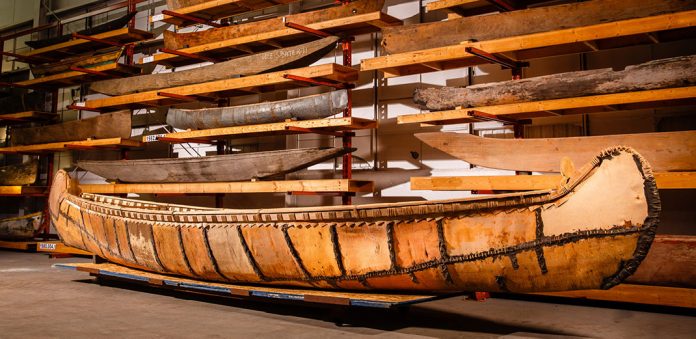
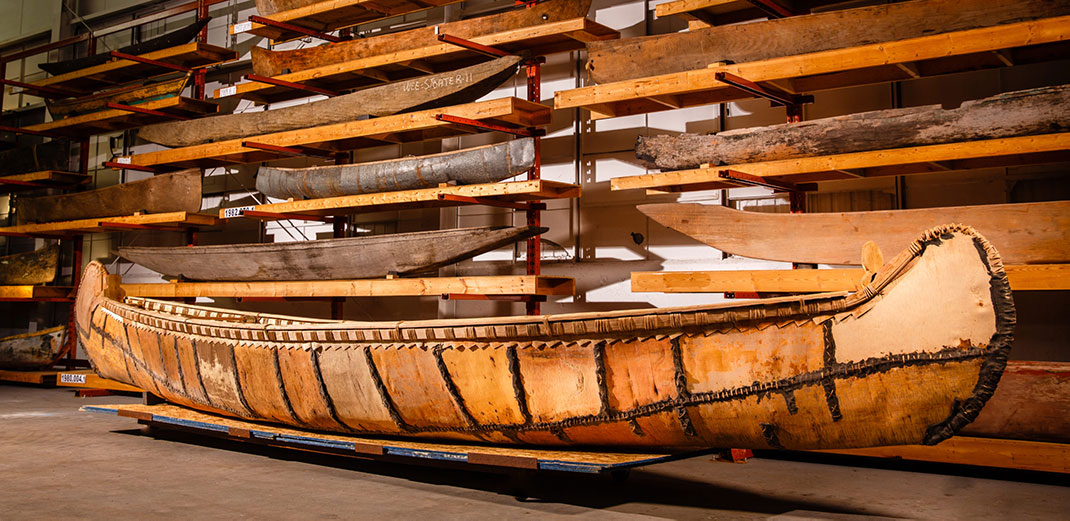
Kokomis Tchiman, a 26-foot long birchbark canoe built by Marcel Labelle, Métis elder and canoe-builder from the Mattawa Ontario region, sits on display in the Canadian Canoe Museum’s collection storage centre. Photo by Fusionriver Photography. | Courtesy of the Canadian Canoe Museum.
PETERBOROUGH, ON, August 25, 2021 – Visitors to the new Canadian Canoe Museum (CCM) will see and hear languages and voices from Indigenous communities the moment they step into the museum, thanks to funding from TD Bank Group.
The new home for the CCM, set to break ground this fall and open in 2023, will feature a 17,000 square foot exhibition gallery that will share the history and enduring relevance of the canoe and kayak.
With a significant gift of $500,000 over five years from TD, the Museum will work directly with individuals in eight Indigenous communities. The funding also enables the CCM to hire an emerging Indigenous museum professional. These actions will help ensure that knowledges, perspectives, and voices from Indigenous communities are directly represented in the exhibitions and educational programming.
“The CCM has a deep commitment to collaborative relations with the Indigenous communities of origin across Turtle Island (Canada) for the watercraft in the Museum’s collection,” explains curator Jeremy Ward.
As part of this work, the CCM is hiring people from eight different Indigenous communities to support language-related projects that will create content for the new exhibits and support collections care. Building outwards from relations with Curve Lake, Hiawatha, Alderville and Scugog – local Michi Saagig First Nations on whose territory the CCM resides – the Museum will work with Inuit communities in northern Labrador and Nunavik, Mi’kmaq in the east and the Haida Gwaii Museum in the west. In each community, the Museum’s team will gather knowledge about canoes and kayaks, their roles in resource harvesting, changes caused by settlement, and the resurgence of Indigenous watercraft-making and use as part of community healing.
Kokomis Tchiman, a 26-foot long birchbark canoe built by Marcel Labelle, Métis elder and canoe-builder from the Mattawa Ontario region, sits on display in the Canadian Canoe Museum’s collection storage centre. Photo by Fusionriver Photography. | Courtesy of the Canadian Canoe Museum.
Ward elaborates, “All work supports languages from Indigenous communities, whether by recording vocabulary about canoes in Anishnaabemowin, interviews conducted by fluent Haida speakers with language learners, or translating conversations from Michif or Inuktitut, ensuring Indigenous People can speak their truths in their own language, and voice.”
The Michi Saagig dialect of Anishnaabemowin will be used throughout the Museum and within its exhibits alongside English and French, and other languages from Indigenous communities will feature in relation to specific watercraft.
Anne Taylor, the CCM’s Language Advisor for local Williams Treaties communities, emphasizes the importance of having Michi Saagiig Anishinaabemowin incorporated throughout the exhibits: “CCM ezhinkaadeg yaamgad omaa Michi Saagiig. Wgii kendaanaawaa Michi Saagiig anishinaabe nake ge zhi aabjitoowaad aki minwaa ziibiisan ge gchi nibi ji mno bimaadziwad. Michi Saagiig anishinaabemowin mshkowziimgad miidash nake ezhi giidgoyang. Pane aabjitooyang iw zhiibiisan ge gchi nibi iw pii gooji zhaayang miigo ji mno taagwak iw anishinaabemwin ge ji miinigid giw e bi yaawaad. Mii iw anishinaabewin ge tamgak iw gaa bi zhiwebak minwaa niw aanso kejanan minwaa niw mno bmaadziwnan.”
[Translation: “The Canadian Canoe Museum sits in Michi Saagiig territory. The Michi Saagiig Anishinaabeg have been thriving on the lands and waters within their territory for countless generations. It is imperative that Michi Saagiig Anishinaabemowin occupy a place of honour and respect within the Museum, as Anishinaabemowin contains the history, stories and traditions of these lands and waters and the Michi Saagiig people, who continue to thrive and travel the same water routes as countless generations before.”]
The CCM looks forward to honouring this responsibility with the First Nations that host the Museum on their territory, and with many other Indigenous Nations across Turtle Island (Canada).
“We are extremely proud to support the Canadian Canoe Museum through the TD Ready Commitment, the Bank’s global corporate citizenship platform,” said Doris Bear, Vice President, Indigenous Banking at TD Bank Group. “By supporting programming that elevates language and voices from Indigenous communities, and working together with local community members, we are ensuring the history, knowledge, and the accomplishments of Indigenous Peoples are carried forward. Initiatives like this one that elevate the language and culture of Indigenous Peoples are an important step as we collectively work towards Truth and Reconciliation as Canadians.”
Funding for the CCM’s Indigenous Languages Program marks the largest investment made to date by TD Bank Group through TD Ready Commitment program in the Peterborough region.
For more information about the new museum or the CCM’s collaborative relations work with Indigenous communities visit canoemuseum.ca/collaborative-relations.
About The Canadian Canoe Museum (CCM)
With a world-class collection as a catalyst, The Canadian Canoe Museum inspires connection, curiosity and new understanding. In partnership with individuals, groups and communities – locally, provincially and nationally – we work to experience and explore all that our collection can inspire. This sees students opening their minds in our galleries; community members connecting through artisanry; people of all ages getting on the water and learning to paddle; and exhibitions and events that spark conversation and collaboration.
About the New Museum
The Canadian Canoe Museum is building a new home for its world-class collection along the water’s edge in Peterborough, ON. The new museum will be located on a five-acre site in Peterborough, ON that will provide stunning west-facing views of Little Lake, a connection to the Trans Canada Trail, and is surrounded by public parks. It will become a vibrant community space for outdoor activities and the Museum’s canoeing and outdoor programs and events.
The Canadian Canoe Museum has a unique opportunity to create a new cultural destination that will inspire visitors to learn about Canada’s collective history and reinforce our connections to land, water and one another – all through the unique lens of the iconic canoe. Learn more at canoemuseum.ca/new-museum.
For further information or interview requests, please contact: Rachelia Giardino Marketing & Social Media Specialist rachelia.giardino@canoemuseum.ca 705.748.9153 ext. 216
Kokomis Tchiman, a 26-foot long birchbark canoe built by Marcel Labelle, Métis elder and canoe-builder from the Mattawa Ontario region, sits on display in the Canadian Canoe Museum’s collection storage centre. Photo by Fusionriver Photography. | Photo courtesy of the Canadian Canoe Museum.
As paddlers, we always prepare for those worst-case scenarios, while simultaneously hoping for enjoyable, drama-free days on the water. The memories we make are usually the endearing kind.
But when those scary, bad days do happen, you can bet the internet will hear about it. YouTube channel “World List” is all about finding “funny, crazy, scary, sad and sometimes chilling information” and compiling it into one easily digestible list.
In a recent video, World List compiled 10 of the scariest kayaking incidents of all time into 12 action-packed minutes. From otters attacking senior boaters, to kayakers being killed by gunfire mid-expedition, this video really has a lot of shocking stories to tell.
[ Browse all Kayaking, Canoeing and SUP Trips in the Paddling Trip Guide ]
Do you believe all the stories told here? Are there any that have been missed off this list? Comment your thoughts below.
When it’s time for adventure, you know who wants to join. Whether or not your pup is a natural water dog, a canine life jacket is a wise choice. Not all dogs are natural-born swimmers, and even good swimmers can get tired. A PFD promises peace of mind and can keep an accident from turning into a tragedy.
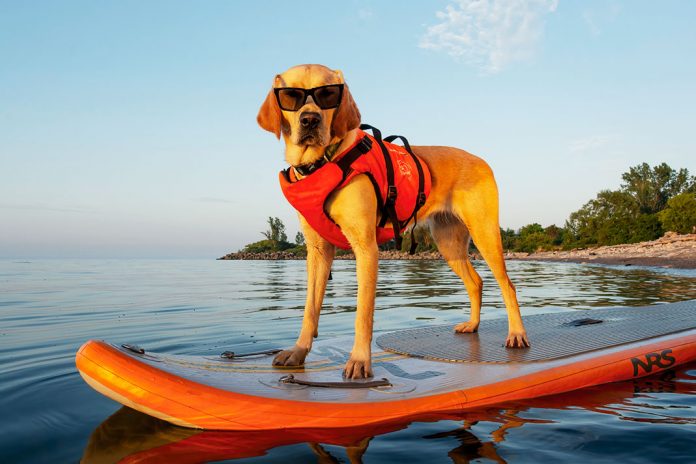
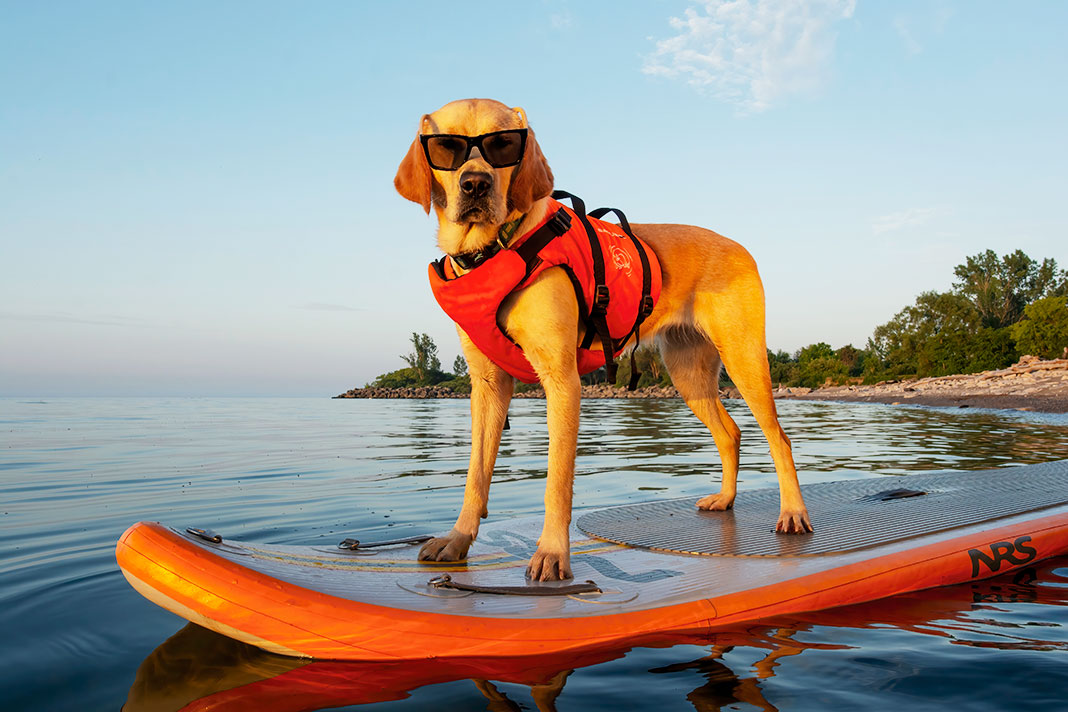
Waterdog mode activate! | Photo: Kaydi Pyette
Do dogs need life jackets?
While many dogs are great swimmers, even the best doggy paddlers can’t swim forever. A dog who ends up in the water during an upset may panic, especially in current, waves or cold water, or just become exhausted trying to swim back to shore. Dogs can get tired and drown just like people—each year, thousands of dogs drown in pools in the United States, according to PetMD.
While even water-loving dogs should be equipped with life jackets, flotation is even more important for young puppies and senior dogs, flat-nosed breeds like pugs and bulldogs, and short-legged breeds like dachshunds, as well as dogs with health or mobility issues.
What to look for when buying a dog life jacket
There is no official coast guard standard for dog PFDs, so buyers need to research and opt for a reputable brand. One essential feature to look for is a handle on the top of the life jacket to hoist the dog back on board if they jump or fall off. A foam panel or thick straps under the chest and belly will help support the dog while lifting them.
High-viz colors help your dog stay visible to motorboaters in the water and some vests feature reflective material for even more visibility. For a dog more prone to sinking than floating, choose a life jacket with a chin float feature to help keep his head above water.
How to measure a dog for a life jacket
As with humans, the best life jacket is the one you wear. A dog’s life jacket needs to be functional, fit well, and comfortable to wear in and around the water.
First, weigh your dog to ensure they are within the weight ratings of a given size and brand of life jacket. Next, measure the circumference of your dog’s neck and the widest part of their chest and match those measurements with the appropriate size PFD. A properly fitting life jacket may look a little smaller than expected on your dog—ideally, the foam stops at the end of the pup’s rib cage or has a high cut at the rear.
“A common pitfall we see a lot is owners buy vests too large. It’s fine when the dog is standing, but when they sit down, it jabs into their hindquarters and the dog can’t sit back comfortably,” advises Steve Wagner, owner of Salus Marine Wear. He recommends the sit test when trying on a vest to ensure there’s space between the end of the vest and the dog’s hips so the dog can sit on the board or in the boat. A dog should also be able to lay down comfortably and relieve himself while wearing the life jacket.
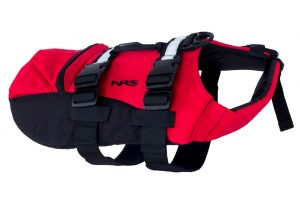
This budget-friendly and simple design fits snug and secure without interfering with the dog’s normal activities. NRS uses their heaviest 1000-denier Cordura shell on the Canine Flotation Device (CFD), so it’s tough enough to withstand years of abuse. Features five adjustment points at the waist and neck, supportive belly straps, grab handle and a rugged leash ring, so you can use the vest as a walking harness or attach a strobe light. Includes reflective safety tape for extra visibility and a zippered pocket to stow a leash or poop bags.
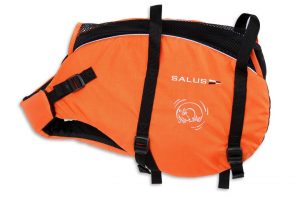
The Skippy stands apart for its flotation placement—it wraps the belly, chest and sides in buoyancy where it can do the most good at and under the waterline, and puts mesh on the back of the life jacket for better breathability. Salus also added two grab handles on their larger vests so paddlers can lift their larger pooches back on board with both hands—necessary for a waterlogged Newfoundlander. Reflective trim, a mesh stash pocket, and tummy-saver padding will help protect active dogs.
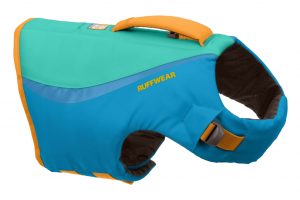
Fashionable and functional, Ruffwear’s recently updated and brightly colored Float Coats will make your pup the belle of the beach. Soft, flexible foam provides excellent flotation and a plush, comfortable fit, while dirt and dog grime wipes off easily. Includes thoughtful details like a solid handle to lift dogs out of the water, a leash clip-in point under the handle and reflective trim to boost visibility in low-light conditions.
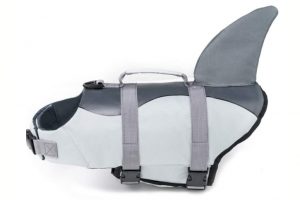
This trendy style is sold by a least a dozen brands on Amazon. While the shark-dog gag is a hit at the poolside cabana, in real life, the dorsal fin is prone to flopping over like a captive orca’s in Free Willy. This full-coverage style tends to hit the dog’s hindquarters and dig in when sitting. However, it does offer warmth during cool and blustery paddles.
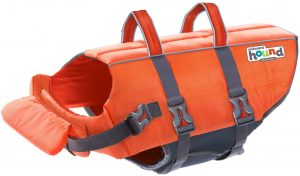
The Granby Jacket’s chin float is perfect for a new swimmer still figuring out how to keep his head above water. This full-coverage jacket from Outward Hound offers top dual grab handles, neoprene belly band, three adjustable straps and reflective accents for better visibility. Outward Hound also makes a neoprene jacket with more insulation and less foam for strong swimmers in cold water environments.
This article was first published in Paddling Magazine Issue 64. Subscribe to Paddling Magazine’s print and digital editions here, or download the Paddling Magazine app and browse the digital archives here.
Ask the right questions, buy the right canoe. | Guy Mayer // Flickr
Maybe you want to buy a used canoe instead of a new one because you are on a budget. Or perhaps you think you won’t use your canoe enough to warrant a brand new one, or you just aren’t sure what to buy.
Whatever your reason, when buying a used canoe you must understand that not all canoes are created equal. Much like buying a used car, you need to figure out where to search, what model to buy, and what to specifically look for and avoid. Read on to find out what to look for when buying a used canoe.
Before you take a look at the used market, it’s a good idea to familiarize yourself with the common canoe brands you’re likely to come across. This is also a great resource when you find a used boat—you can read up on its specs, find out what it sells for new and discover what others think of it via reviews.
Understanding the wide variety of different materials used to construct canoes and the different issues that can affect each is important in your buying process.
Many of the red flags described below are not the end of the world or even a reason to not purchase. They are simply common attributes of used canoes you should be aware of, and with time and effort can be repaired.
Compared to wooden canoes, aluminum canoes are extremely low maintenance. First produced after World War II by the Grumman Aircraft Company, aluminum canoes are very durable, but also heavy, noisy and downright frigid on cold days.
They are often on the less expensive side and a good fit for casual day trips on flatwater or as a boat to have at the cottage. Their weight makes them challenging to portage.
You get what you see with aluminum canoes. Doug Chapman from Canadian Quetico Outfitters says having a good look at the number of dents on the canoe can give you a general idea if it has been well taken care of.
Leaks are easiest to identify with some pressure in the boat, so make sure you not only test paddle an aluminum canoe but bring along some gear. Sit in the seats and use your hands to check that the thwarts are secure.
Composite canoes
Composite canoes are made with materials like glass fiber, aramid or carbon fiber being laid in a mold and mixed with resins to produce a canoe hull. Composite canoes tend to be very light and stiff.
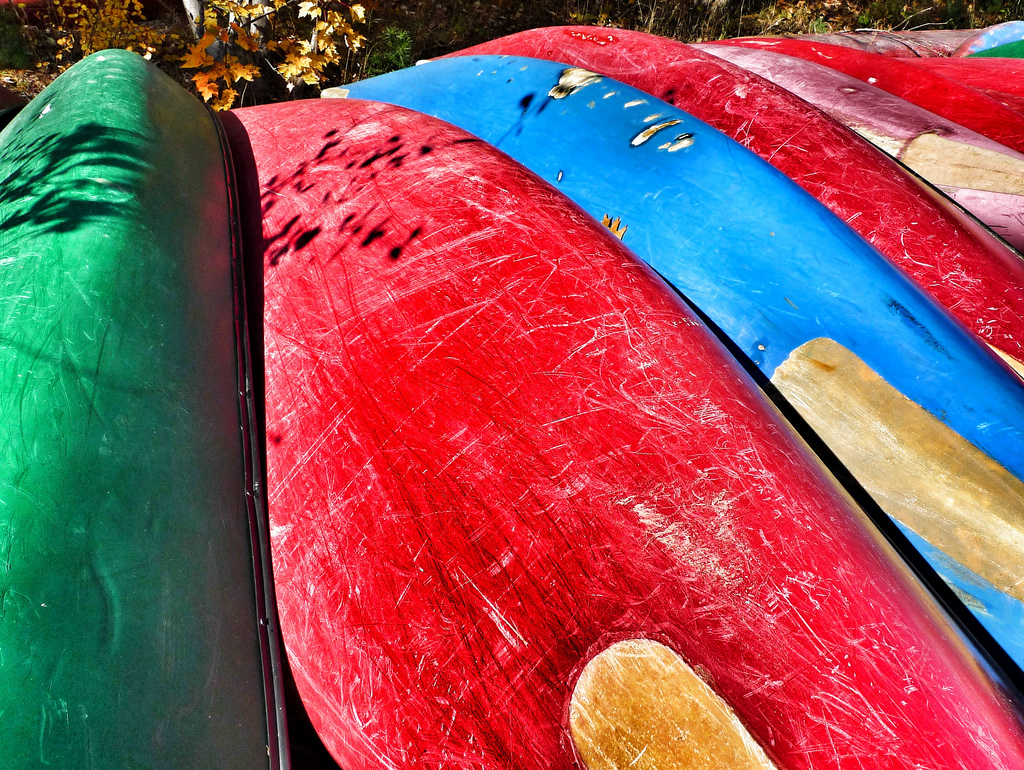
Used composite canoes will very likely have scratches on the hull, even if the owner was extremely careful. Most scratches are probably just cosmetic, but be wary of deep scratches or cracking that goes through the gel coat.
This can expose the fabric underneath, compromise the integrity of the canoe and require restorative work. Another concern for composite canoes is oil canning, which is when the hull bends and flexes while paddling instead of remaining rigid.
Kevlar canoes (Aramid composites)
Aramid composite canoes (Kevlar/Twaron) are stiff and light canoes composed with layers of fabric, cloth and resin. They are lighter but less strong than fiberglass composites. Their light weight makes them a good fit for canoe trips with lots of portaging.
One thing to watch out for with aramid canoes is float tanks that retain water. If you pick the canoe up and place it on your shoulders and notice it feels unbalanced—or you hear water sloshing around inside—this may be the cause. Aramid canoes will also fade to brown in the sun, which can give you an idea of where it was stored and the extent of the boat’s sun exposure.
Fiberglass canoes
Fiberglass composites are stiff, strong and efficient canoes. They can be good for whitewater, have sharp entry and exit lines, and stand up well to abrasion.
Fiberglass composite canoe quality greatly varies. For every good fiberglass canoe on the market, there are dozens of very poor quality counterparts. There is a range of construction processes—be particularly wary of home-built fiberglass.
Gordon Baker of Algonquin Outfitters says a good weight for a 16-foot fiberglass canoe is around 60 pounds. If it is closer to 80 or 90 pounds, this could reflect its lesser quality.
Carbon fiber canoes
Canoes with carbon fiber are extremely light, but also extremely expensive. Carbon fiber can be added in small sections on a canoe to strengthen without increasing the weight too significantly or can be applied as full layers mixed with other fabrics. Pure carbon canoes are designed for racing and can be slightly less durable than aramid.
Major cracks or scratches that expose fabric are not a good sign, but similar to other kinds of composites, surface scratches are almost unavoidable.
Royalex canoes
This has long been the canoe material of choice for whitewater paddling and long canoe trips. Royalex canoes are tough, durable and can stand up to heavy impact.
Royalex manufacturer PolyOne ceased production of the popular material in 2013, but Esquif Canoes began producing a similar material called T-Formex. You can still find used Royalex canoes for sale, but it is becoming more difficult as owners are holding onto them.
When examining a Royalex canoe, look for creases or wrinkles running up and down the hull, which can indicate if it has been wrapped and then punched out.
If there are new-looking skid plates, take a look at the boat from the inside to determine if they may be hiding damage. Also look for big dents, which can affect efficiency in the water. Scratches or scrapes become a bigger problem if they are worn through the colour layer to the underlying ABS.
Royalex canoes can also become brittle and develop soft chines from the sun over time. If you can take a look under the deck plates, it is possible to determine the true colour of the canoe and if it has spent considerable time fading outside in the sun. They are also susceptible to oil canning.
Wooden canoes
Wooden canoes are beautiful, glide quietly on the water and many have a rich history behind them. They are often heavy, and despite their past use as expedition canoes, are not generally the choice of modern trippers.
Many people who buy wooden canoes like the connection to nature through natural materials and enjoy the process of increased maintenance they require.
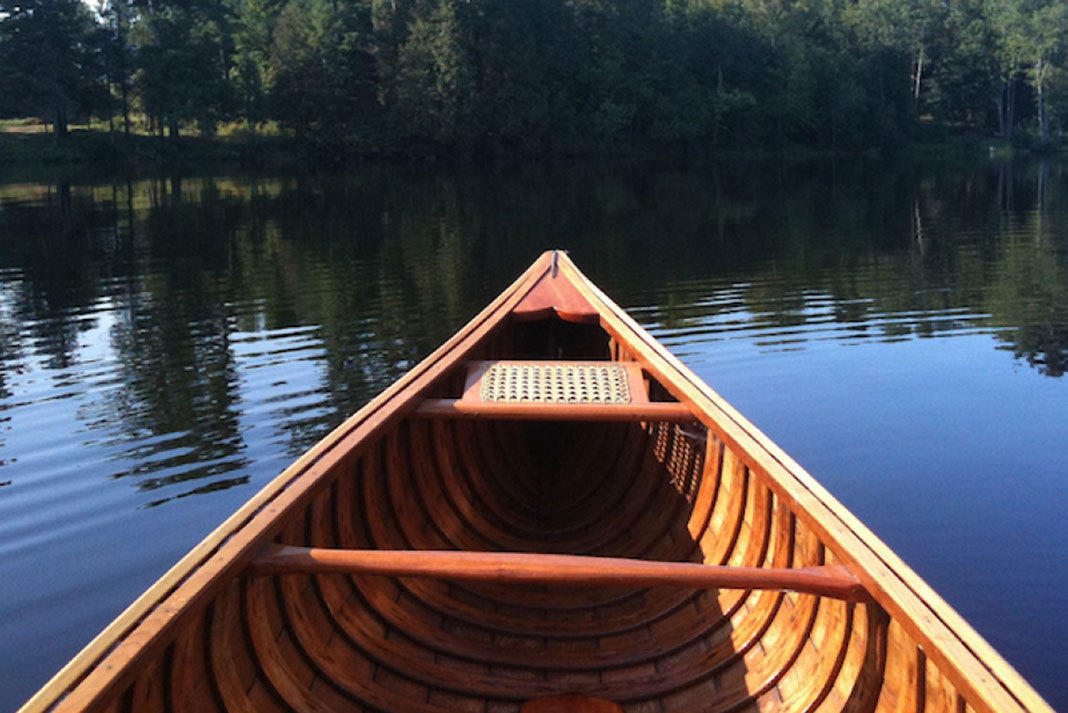
When looking at a used wooden canoe, look for signs of water damage and rot, typically found under deck plates and where the gunwales come together at the bow and stern.
Anyone can put in the time and effort to learn how to repair these parts of a wooden canoe, but the process is more involved and specialized than repairs on some other kinds of boats.
Mike Elliott of Kettle River Canoes has restored 200 wood-canvas canoes in the last 13 years and can count on one hand the number without rot. He says rot often occurs in parts of the canoes where water collects and fungus beings to grow, like the ends of the canoes and the undersides of outwales.
Rotting wood will be soft and show signs of crumbling away. Many wood-canvas canoes you will find for sale are around 40 years old, and the canvas may be in less than ideal condition.
A canvas that needs to be replaced will show cracks or paint flaking when the waterproof filler dries out over time. You may also see the canvas pulling away and rotting around the canoe’s brass stem bands.
Plastic canoes
The majority of plastic canoes are made of some form of polyethylene. Plastic canoes can be strong, heavy and are often less rigid and expensive than a composite or wooden canoe. Plastic canoes are very low maintenance and can handle being dragged to the shore and sliding over rocks.
A common problem with plastic canoes is oil canning, especially with less expensive plastics or from being left out in the sun. It is more common with used plastic canoes, but they can even show oil canning when new.
Plastic has a tendency to get brittle, especially from sun exposure, so make sure to find out how it has been stored. Another thing to look for is the surface of the plastic peeling or appearing fuzzy from use, a feature that can lead to drag in the water.
Look at the online classifieds like Craigslist or Kijiji to see what used canoes are for sale (and don’t forget the free sections of each site!). Often more canoes show up in the spring or the fall when canoeists are unloading their boats to get ready for the coming season.
Remember, just like buying a car from a private seller, you should ask lots of questions (see next section). Expand your search radius beyond the online classifieds in your immediate area; research nearby communities where paddling is especially popular. The perfect boat is worth traveling for.
Canoe rentals and outfitters
Many outfitters sell off a portion of their rental canoes each year. Ted East from Ontario’s Killarney Outfitters says they repair and sell many of their used canoes each fall as they rotate their fleet.
Other outfitters have one-day sales or sell from spring through to the fall. These rental fleet sales may not be advertised so call canoe outfitters in your area to check. Sometimes you can put your name on a list for a particular canoe or model.
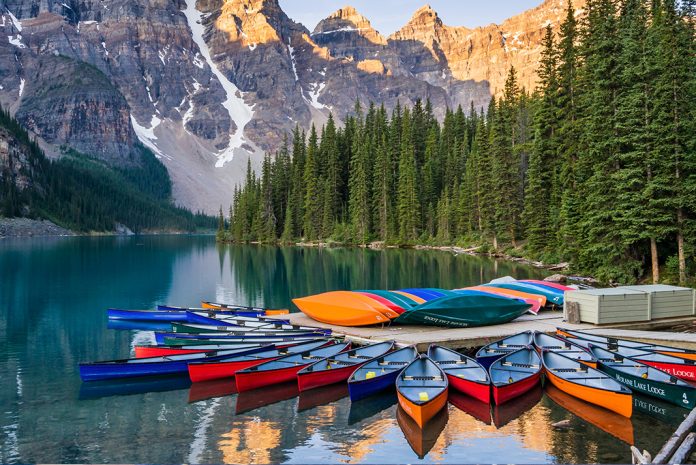
Pretty little canoes, standing in a row, bom bom bom. | Photo: Flickr user Dave Mitchell
Other places to buy a used canoe: Garage sales, Facebook groups and more
You can also find used canoes at garage sales in paddling communities, Facebook groups, gear swaps, the local pennysaver (a free community periodical), and local canoe clubs and associations. Keep your eyes open everywhere you go because canoes turn up in the craziest places. We’ve bought used canoes at the end of farmers’ lanes and from ads posted in grocery stores. Remember, you don’t know it’s for sale unless you ask. And anything is probably for sale for the right price.
How much does a used canoe cost?
If you’re looking for a used canoe price guide, you should know that there isn’t a set price range for used canoes. It depends on the age, model, materials, how well it has been taken care of over its lifetime and what kind of canoeing you plan to do. The first thing you should do is find out how much the used canoe you are considering sells for brand new.
Canoes hold their value well if taken care of and don’t depreciate at the rapid rate cars do. With the new price in hand, factor in how the used canoe has been stored, how old it is, what kind of red flags you have identified and how many are on the market.
Algonquin Outfitters explains on their website that they often hear from people searching for a light Kevlar canoe for $300. Considering the $3,000 to $4,000 price tag for a brand new Kevlar canoe, a $300 one would likely be in rough shape. They advise that the lower the price of a used canoe, the more attention it will require from you.
At Trailhead Paddle Shack, canoes sold off from the rental and demo fleet after one season of use are generally marked down 35% from their new price depending on condition.
Canoe depreciation explained
East says a brand new canoe costing $3,500 could decrease in value about $1,000 during the first few years.
If a canoe isn’t damaged, the value can remain around $2,000 to $2,500 for the next five to six years, and after 15 to 20 years can have a forever price of $700 to $1,000 if it is still in decent shape.
Jeremy Ward at the Canadian Canoe Museum says you may be able to pick up an old wooden canoe for around $100—or even for free—and pay between $2,000 to $2,500 to have it completely restored by a professional.
However, once restored you may not be able to sell the canoe for the same amount you put into it. But for many buying wooden canoes, the pull isn’t about the resale value but instead the special quality of these boats and the sentiment they acquire over the years. At the other end of the spectrum, an old beater canoe can be bought for $100, and used aluminum canoes can fall anywhere between $150 to $700 depending on the condition.
While all the above is an important part of how to buy a used canoe, try to avoid making price the determining factor. When many people hold onto their canoes for 15 to 20 years, making sure it is the best fit for you is the top priority.
What kind of canoeing will you do?
The question of what to consider when buying a used canoe also comes down to what kind of canoeing you will be doing. In our annual Paddling Buyer’s Guide, we group canoes into six general categories: lakewater or touring, expedition, racing or training, recreational, sportsman and whitewater.
There is a common belief that a canoe is a canoe and that one canoe can do it all. Although this is true to some degree, it is also true that for each compromise there is a sacrifice in performance. A narrower canoe will be less stable.
Are you racing or going fishing? Are you going for a few hours or a few weeks? Will you be portaging or slamming down rocky whitewater rivers? Let’s first look a little deeper at the most popular canoe categories, and then we’ll cover a few other important things you need to consider.
Lakewater or touring canoes
Lakewater and touring canoes are designed for lakes and are sturdy and easy to control. They are great for canoe trips that pass through many lakes, especially with materials like ultralight aramids and carbon composites that can make multiple portages more enjoyable. They are often slightly longer and narrower than recreational canoes.
Expedition canoes
Expedition canoes are 18 to 20 feet long, typically have more depth in their bows, and are capable of fitting more gear for long trips. They have moderate rocker and are sometimes fitted with sprayskirts.
Racing or training canoes
Racing canoes are designed for maximum speed and performance. They are narrow, have straight tracking and very rigid hulls. They are generally 18 to 20 feet in length with very limited room inside for gear and are often made of extremely light materials like carbon.
Recreational canoes
Similar to lakewater or touring canoes, recreational canoes are stable and easy to maneuver but are often slightly wider and shorter at a length of 13 to 16 feet. They are a good fit for short day trips and use at the cottage.
Sportsman canoes
The stable sportsman canoes are popular with anglers and hunters, especially those looking for greater access than motorboats provide. They are stable, have medium to high gear capacity and many have square sterns for attaching outboard motors. They range from 16 to 18 feet in length.
Whitewater canoes
Whitewater canoes have a short waterline and lots of rocker, allowing greater maneuverability and quick turning. They are designed for one or two paddlers and some come equipped with whitewater-specific outfitting like sprayskirts and flotation bags.
How to decide on a solo or tandem canoe
Solo canoes
If rounding up fellow paddlers is tricky or you just enjoy your own company, buy a solo canoe. Why? Why not. Solo canoes are built specifically to be paddled by one person.
Typically they are shorter in length, around 14 feet. As a solo paddler, you probably have less gear and need less capacity within the canoe. Because they’re usually shorter and lighter, solo canoes are also easier to portage. Learn how to self-rescue from a solo canoe here.
Tandem and solo canoes
If you will be paddling mostly tandem and sometimes solo, look for a symmetrical canoe. This means it is shaped the same at both ends and can be paddled both ways.
Most are set up so you can paddle solo from the bow seat facing backward, placing you closer to the center of the canoe. Trust us, it works better this way. Give it a try.
Tandem canoes
If you’ll only be paddling tandem, you will have a great deal more choice when searching for your used canoe. Tandem canoes are commonly 16 feet long.
Some are shorter and some longer, but 16-foot canoes are the length of a hull that two paddlers can comfortably paddle and maximize hull speed. Going longer or shorter will depend on other factors like carrying capacity and weight. More on this below.
Cheap used canoes: good or bad idea?
People frequently tell us they are looking for a cheap used canoe. Cheap more often than not ends up meaning heavy.
If you asked the same people 800 yards into their third portage of the day, they would happily spend more money for a canoe that weighs less.
Buy a used canoe for the paddling you most often do
Your used canoe needs to match the kind of paddling you will most frequently be doing. If you are going on lengthy trips in the wilderness, you need something longer with more capacity for gear. Do you plan to take the whole family paddling? You will need something stable.
Want to run rapids? A small whitewater boat with generous rocker is the best bet. In short, buy your used canoe based on how you are going to use it.
There is nothing better than getting on the water and pursuing your adventures in a canoe. | Feature Photo: Flickr user Guy Mayer
What to ask before buying your next used canoe
Found a prospective boat and wondering how to actually go about buying it? No matter where you find a used canoe, you should be ready with a few important questions. Your goal is to understand the state of the canoe, if it has been properly looked after, if it has been repaired, how old it is and what it’s made of.
How and where has the canoe been stored?
This is a key question because improper storage has the potential to affect the performance and therefore the value of a canoe. Indoor storage is preferable, but outdoor storage isn’t a deal breaker.
A few seasons in the shade is no big deal, but the sun is the enemy. Prolonged sunbathing can bleach gel coats and warp plastic hulls.
Ideally, the used canoe has been stored upside down in a dry place. The weight of a canoe should be spread over racks to prevent hull deformity, something most common in plastic boats but possible for other materials too.
If the canoe has been hung by its deckplates, thwarts or carrying handles, keep in mind this can stress those parts of the boat. Ask if the canoe was stored with a tarp directly on top. If a tarp isn’t suspended above, it can trap moisture, potentially rotting the wooden part of any canoe, most commonly the gunwales.
How old is the canoe?
If the owner has no idea, locate the boat’s model number found in the hull and review it against the company catalogs. While this may not provide an exact date, it can give you a possible production window.
Have you done any repairs?
Ask what was repaired and have the seller point them out to you on the canoe. Also ask who did them and exactly what kind of damage warranted the fix to give you an idea of how the canoe has been treated.
There are a hundred reasons someone may want to sell a canoe. Maybe their partner finds the canoe too tippy. Perhaps they have had a few children since acquiring the canoe and now it’s too small. Their reasons for not wanting the boat may end up becoming your reasons too. Avoid buying the wrong used canoe by having this chat upfront.
What trips have you done in this canoe?
Asking this can give you a sense of how much use the canoe has had and what kind of paddling it is good for.
Test-paddling a used canoe
Since you are buying a used canoe as opposed to a brand new boat, you need to take it for a test paddle to really understand its condition. The most important thing about test paddling a canoe is to treat it the way you will once it is yours.
If you are testing a tripping canoe to take on long expeditions, bring all the gear you expect to travel with and place it in the canoe. A canoe for whitewater should be tested in rapids and a canoe that will take you on portage-heavy trips needs to go for a walk.
Keep an eye out for any leaks. Sit in the seats and test the yoke to ensure stability. Hold the gunwales to see if they are secure. Look for oil canning. Paddle straight into waves and see if water flares off the sides of the bow or lands in the lap of the paddler in front. Ted East has a reliable technique for testing canoe stability. He places the canoe in shallow water with his paddle blade in the water touching the ground for support while he leans to the sides to see how much weight it takes to move water over the gunwales.
Inspecting a used canoe for damage
The last step in this used canoe buying guide is checking the canoe over for wear and damage. Many signs of wear and tear on a used canoe can be fixed with some TLC and a willingness to learn. Remember—you aren’t buying a brand new product, so don’t write off a used canoe because of some imperfections.
You can paint, re-canvas, add new skid plates, redo gunwales, tighten or replace seats, yokes and thwarts, repair broken ribs and rivets, and patch holes. Many replacement parts are not expensive; new canoe seats and yokes can be bought for under $100 each.
Superficial scratches on a canoe aren’t always a cause for concern. Many boats, especially whitewater and tripping canoes and those made of composites, can have surface scratches but still be in great shape. Even small holes are pretty straightforward to patch.
A wealth of resources exist online and in print for repairing each kind of canoe, and by taking advantage of these you can potentially get a lower price on a used canoe. Many canoe manufacturers and outdoor stores will sell repair kits tailored for specific canoe materials. Significant damage, like large holes that compromise the seaworthiness of the used canoe, or major structural damage, may mean a much more expensive undertaking for a home repair or professional restoration.
There is nothing better than getting on the water and pursuing your adventures in a canoe. | Feature Photo: Flickr user Guy Mayer


 This article was first published in the 2022 issue of Paddling Business. Inside you’ll find the year’s hottest gear for canoeing, kayaking, whitewater and paddleboarding. Plus: Industry leaders on surviving COVID, the dirty little secret of pro deals, brand consolidation and more. READ IT NOW »