Home Blog Page 134

Learn & Explore On These Amazing Tours In Algonquin Park

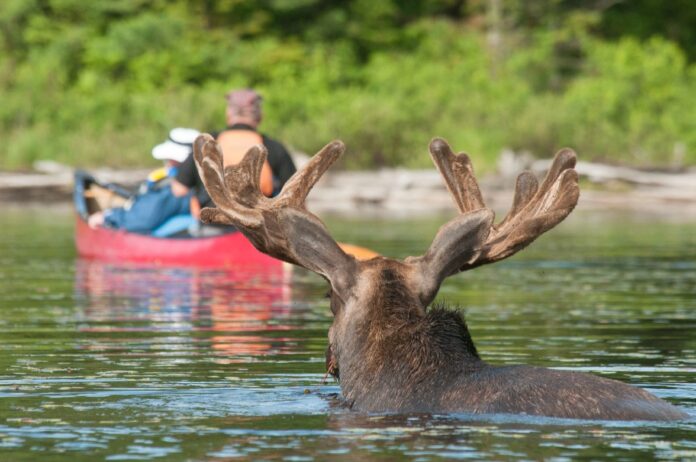
two kayakers in Algonquin Park watch wildlife with a moose swimming nearby
Wildlife watching on. | Photo: Destination Ontario
Get closer than you imagined possible to Algonquin Park moose, photograph the park’s most stunning autumn scenes, or discover cultural treasures hidden deep in the forest. These Algonquin tours highlight the very best of the park, whether you choose a guided Algonquin canoe trip or a park bus tour. You’ll be amazed by how much you can see and learn on an Algonquin Park day trip!

[This article is part of the Ultimate Algonquin Park Travel Guide 2021Find all the resources you need to plan an adventure-filled trip to Algonquin Park.]


Algonquin canoe tours

To experience the real magic of Algonquin Park, you need to get off the highway and onto the park’s lakes and streams. Enhance your Algonquin canoe tour by choosing a themed day trip based on your interests—wildlife watching, artists in the park, fishing and more. These Algonquin Park guided canoe day tours are a great introduction to paddling in the park and are perfect for first-timers! Canoes, paddles, safety equipment, park permits and shore lunch (full-day trips) are provided.

Algonquin Canoe Trip Sampler

Enjoy a one-day backcountry experience in Algonquin Park with Algonquin Outfitters, starting at their Oxtongue Lake store. This full-day, guided experience is ideal for active people wanting an enjoyable day on the water or a taste of what canoe tripping in Algonquin Park is all about. You’ll see beautiful scenery and learn fundamental paddling, portaging and safety skills. 

Find out more.

Discover Algonquin Canoe Tripping

Take the mystery out of Algonquin Park canoe tripping with this personalized, full-day canoe tour. Algonquin Bound’s experienced guides will teach you essential canoe tripping skills and share their knowledge of Algonquin Park’s fascinating natural and cultural history. Algonquin Bound offers this canoe day trip from their three distinct locations: start at Canoe Lake or Smoke Lake near the park’s West Gate, tour the quieter lakes and rivers around Shall Lake near the East Gate, or visit the spectacular Barron Canyon on Algonquin Park’s east side.

Find out more.

Canoe Lake Cultural Tour

Beginning at the Canoe Lake access point, Algonquin Adventure Tours six-hour guided canoe tour explores the cultural heart of Algonquin Park. After an orientation to Algonquin Park and essential canoeing skills, you’ll paddle across Canoe Lake and learn about historical points of interest along the way, from ruins of a century-old town site to possibly the most debated gravesite in Canada—that of celebrated landscape artist, Tom Thomson, who died here in 1917 under mysterious circumstances. This canoe day trip also includes a short hike to a scenic lookout, shore lunch and—depending on season—swimming, cliff jumping, wild berry picking or fall colors viewing.

Find out more.

Hailstorm Creek Wildlife Watching Tour

Explore Algonquin Park’s Hailstorm Creek Nature Reserve and enjoy some of the best scenery and wildlife viewing in Algonquin Park with the assistance of an experienced Algonquin Outfitters canoe trip guide. This unique half-day experience allows day-trippers to explore Lake Opeongo’s wild and remote Hailstorm Creek without having to worry about paddling on the big lake. Algonquin Outfitters’ water taxi transports paddlers and canoes (or kayaks) from their Opeongo base to the heart of Algonquin Park in just 20 minutes and returns later to pick you up. Moose, beaver, heron and loon are abundant in this scenic wetland. 

Find out more.

[ Paddling Trip Guide: View all canoe trips and tours in Algonquin ]

Intro to Algonquin Canoe Tour

Head to The Portage Store on Canoe Lake to meet your guide for this one-day introduction to Algonquin Park canoe culture. After instruction and orientation, explore Canoe Lake while watching for wildlife and learning about historical points of interest along the way. This guided Algonquin Park canoe day trip includes a tasty shoreline lunch.

Find out more.

Algonquin Bass & Trout Fishing Canoe Tour

Departing at sunrise with the morning mist (and the morning bite!), this three-hour canoe tour travels with Algonquin Adventure Tours founder to his preferred fishing spots, where you’ll learn expert tips for catching Algonquin Park’s world-famous lake and brook trout. Fishing success rate on this guided trip is 90 percent. Anglers travel in a custom fishing canoe outfitted with a silent, electric trolling motor, top-quality fishing gear and electronic fish finders. Every tour begins with a delicious breakfast of local bakery pastries and freshly brewed organic coffee.

Find out more.


Algonquin photo tours

Whether you’re an avid photographer looking to expand your knowledge of wildlife and landscape photography, or a novice shutterbug wanting to capture quintessential images from your time in the park, there is a perfect Algonquin Park photo tour for you. Bring your camera and prepare to be inspired!


View this post on Instagram


A post shared by Jesse & Susan (@followmenorth)

Algonquin Wildlife & Landscape Photography Experience

Gain a deeper knowledge of your camera’s functions and capabilities while developing your own creative vision on a sunrise-to-sunset Algonquin photo tour. Led by a local duo who shoot professionally in Algonquin Park, Follow Me North Photography workshops are all about guiding fellow photographers into Algonquin and teaching the how-to’s of wildlife and landscape photography. Tailored to your specific photography goals, these coaching tours are offered one-on-one or in small groups and visit exclusive locations in the park not included on most tours.

Combine Follow Me North’s full-day Algonquin Park Photo Guided Tour with a post-shoot photo editing session in their Muskoka studio for the complete experience. 

Find out more.

Algonquin Backcountry Adventure: Cameras & Canoes

If you’re looking to photograph Algonquin Park moose and other wildlife in their natural habitat, this is the Algonquin photo tour for you! The full-day Cameras & Canoes Photography Adventure is lead by professional photographer, instructor and local “animal-whisperer” Helen Grose, in partnership with Algonquin Outfitters.

Your Algonquin photography adventure begins with a water taxi ride from Algonquin Outfitters’ Lake Opeongo store to one of the park’s best locations for viewing moose. Here, you’ll slip into canoes to explore a backcountry wetland filled with wildlife. Photograph moose, loons, beavers and the beautiful scenery from your canoe, while getting individualized photography instruction and back-of-camera critique.

Find out more.

Algonquin Fall Colors Photo Workshop

Capture peak fall colors in Algonquin Park with the help of award-winning landscape and wildlife photographer, instructor and Algonquin specialist, Rob Stimpson. Participants on this full-day Fall Foliage Algonquin photo tour meet in the village of Dwight near the park’s West Gate and explore on foot to photograph the sensational fall colors of Algonquin Park. Shoot iconic waterfalls and whimsical river scenes, while learning the art of composition, color, lens selection and effective camera settings.

Find out more.

Algonquin Astrophotography Workshop

Muskoka wildlife and astrophotographer, Wesley Liikane, better known as Cowboy With A Camera, is an expert at shooting the dark, star-filled skies of Algonquin Park. Learn how to photograph the night sky, the Milky Way, northern lights and even meteor showers on this hands-on, after-dark Algonquin photo tour. 

Find out more.


View this post on Instagram


A post shared by Jesse & Susan (@followmenorth)

Algonquin Winter Wonderland Photo Workshop

Follow Me North Photography loves Algonquin in every season, and they’re confident you’ll agree after journeying to Algonquin Park for their Winter Wonderland Photography Workshop. Imagine snowshoeing to vast, icy waterfalls, observing moose, beavers, pine martens and otters co-existing in a white powdered vista, and hiking to locations crystallized by the morning frost—all with a camera in hand and new skills to practice. 

This landscape and wildlife photography workshop is tailor-made for adventurous photographers from all photography backgrounds. Book the full weekend photo workshop, or join for a single-day trip.

Find out more.

Algonquin Electric Canoe Photography Tour

Short on time but keen on photographing Algonquin Park’s wilderness vistas and wild inhabitants? Join Algonquin Adventure Tours founder and avid photographer, Stuart Letovsky, for three hours of fascinating Algonquin Park history, spectacular vistas and connecting with nature on beautiful Canoe Lake. This top-rated Algonquin photo tour travels in a custom canoe outfitted with an eco-friendly, silent electric motor, so you can see more of the park and increase your chances of up-close wildlife encounters while leaving your hands free for photography.

Find out more.


Algonquin driving and bus tours

An Algonquin Park bus tour or driving tour can be a great introduction to the park for first-time visitors. Highway 60 traverses Algonquin from east to west, a twisting two-lane road that winds through nearly 60 km of amazing scenery, past sparkling lakes and vibrant forest. 

Departing from Toronto, most bus tours arrive at the park in three to four hours and make several stops throughout the day at some of Algonquin Park’s top attractions. Many tours include time for easy, optional hikes on scenic lookout trails. There are even adventurous Algonquin bus tours for active travelers that include canoeing excursions, swimming in a pristine lake and longer hikes.

Algonquin Park Hiking and Canoeing Day Tour

Spend a full day exploring Canada’s oldest provincial park on this active bus tour with Toronto-based adventure company, Travelling Chicken Adventure Tours. Your first stop will be a short hike to the beautiful Ragged Falls, followed by lunch and two hours of canoeing and swimming at Canoe Lake. Finish the day with a steeper 2-km hike to a magnificent view overlooking several hundred square kilometers of Algonquin Park. This small group driving tour uses a 15-passenger van and is led by a knowledgeable tour guide with plenty of local experience.

Find out more.


View this post on Instagram


A post shared by Parkbus (@parkbus)

Toronto to Algonquin Park Tour with ParkBus

ParkBus provides transportation for independent backcountry travelers and day-trippers in Algonquin Park. Travel from Toronto to Algonquin aboard a coach bus, with scheduled stops at popular park attractions such as Oxtongue Lake, Canoe Lake, Lake of Two Rivers, Pog Lake/Whitefish Campground and Lake Opeongo. The bus returns through the park picking up passengers at the same stops 2.5 to 5.5 hours after drop-off, during which time you can enjoy a day hike, rent a canoe at Algonquin Outfitters or The Portage Store and paddle from their docks, or rent bikes to ride the Old Railway Bicycle Trail at Mew Lake.

Looking for a fun, social Algonquin Park experience with fellow nature lovers? Check out ParkBus ActiveDays for upcoming guided group day tours in Algonquin.

Find out more.

Algonquin Park Fall Colors Hiking/Bus Tour

Hike in the breathtaking scenery of Algonquin Park during the fall season as trees such as maples, birch and beech turn vibrant shades of crimson, orange and gold. Traveling round-trip from Toronto aboard a deluxe bus, this 12-hour day trip includes a visit to the world-class Algonquin Park Visitors Centre and two optional hikes on an easy wetland trail (1.2 km) and the moderate (2.2 km) Lookout Trail.

Find out more.

Algonquin Park Day Tour for Active Travelers

This convenient Algonquin Park day trip from Toronto is designed for active travelers who are looking for an action-packed day out in nature. This top-rated, small group tour travels by van and includes plenty of time at each stop for enjoying all that Algonquin Park has to offer. Hike to the cascading waters of Ragged Falls, learn to paddle your own canoe, swim in Canoe Lake and even go cliff jumping (if you dare!). This tour offers the most hiking, with a challenging 5-km loop on the gorgeous Booth’s Rock Trail, visiting secret swimming holes and a jaw-dropping lookout.

Find out more.

Algonquin Park Snowshoeing Day Tour

Experience the magic of winter in Algonquin Park on this small group day tour with Travelling Chicken Adventure Tours. Journey from Toronto in a 12-passenger van to Algonquin Park, where your guide will provide snowshoes so you can hike in the deep, fluffy snow without sinking. Explore Ragged Falls and a second Algonquin Park trail of your choice, while admiring the breathtaking beauty of the snow-covered park.

Find out more.


Wildlife watching on. | Photo: Destination Ontario
25 Charming Cottage And Cabin Rentals Near Algonquin Park

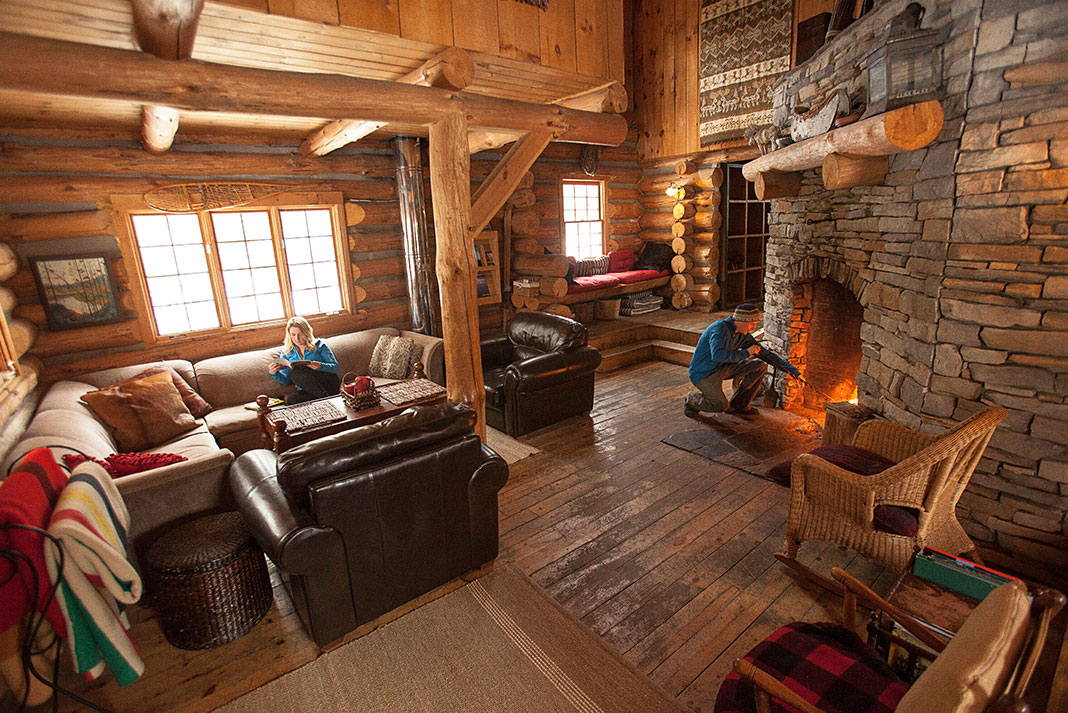
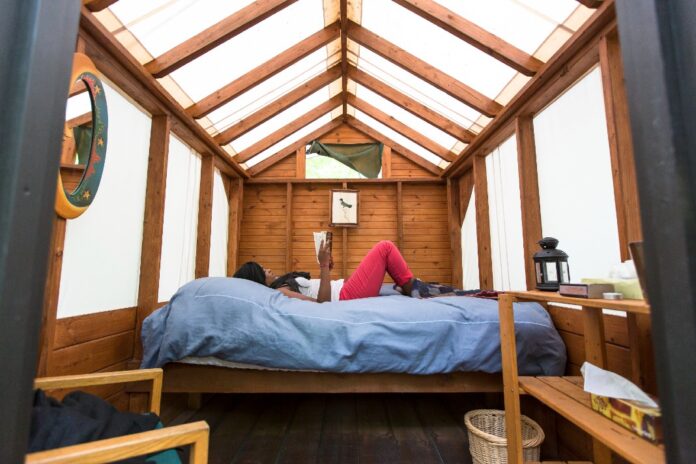
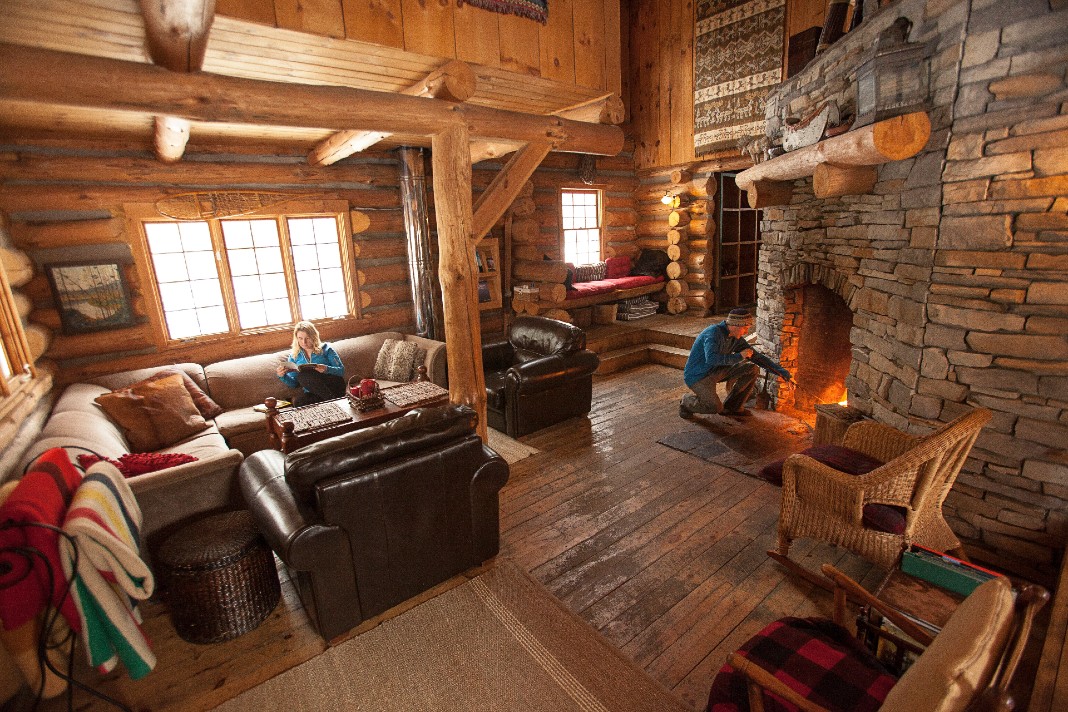
woman reads in the interior of a bright cabin in Algonquin Park
#FantasyCabinAlgonquin | Photo: Destination Ontario

Algonquin Park is one of the most popular camping destinations in the world, but for those who prefer a few more comforts, a diverse selection of cozy Algonquin rental cabins and cottages await your stay. Rent a restored Algonquin log cabin for an authentic heritage experience in the park’s interior, or choose a modern Algonquin cottage rental for a family staycation everyone will love.

Read on to discover vacation rentals, classic cottage resorts and one-of-a-kind Algonquin cabin rentals—whether you’re after an off-grid getaway or something more deluxe, these stunning properties make inviting and convenient bases for exploring the park’s breathtaking natural beauty.

[This article is part of the Ultimate Algonquin Park Travel Guide 2021Find all the resources you need to plan an adventure-filled trip to Algonquin Park.]


Algonquin Ranger Cabins

Situated inside Algonquin Park, Ranger Cabins are rustic wooden cabins with limited amenities—most have no electricity, indoor bathrooms or running water! These are authentic, ranger-built heritage cabins restored by the park for rental use. Many can only be reached by canoe, however five Ranger Cabins are also accessible by vehicle, giving casual visitors an Algonquin rental with a unique opportunity to soak up a bit of park history.

Brent Ranger Cabins

Located on a peninsula jutting out from the north shore of Cedar Lake, the Brent Ranger Cabin and smaller Deputy Ranger Cabin are nestled among red and white pine with a scenic view of the lake. The main log cabin has four bedrooms (sleeps 10), a living room with a wood-burning stone fireplace and a kitchen. Modern conveniences include propane stove and fridge, solar lights, bunks with mattresses and vault toilets a short walk away.

Constructed in 1932 from pine logs available on-site, the Brent Deputy Ranger Cabin is an intimate one-room cabin that sleeps two and offers an outdoor kitchen with propane stove and solar fridge, picnic table and gorgeous lakeside deck. Cedar Lake is found on the less-visited north side of Algonquin Park, accessible from Highway 17.

Reserve your stay

Kiosk Ranger Cabin

In the northwest corner of Algonquin park, Kioshkokwi Lake—also known as Kiosk—is an ideal base for exploring the beautiful large lakes and winding, trout-filled rivers located in this area of the park. The original Kiosk Ranger Cabin was constructed in 1927, and then relocated and rebuilt on its present site beside Kioshkokwi Lake in 1936, with electricity installed in 1956. Today, mature white pine trees shade this two-bedroom waterfront log cabin with five-star sunset views. The cabin is equipped with a sitting area, electric fridge, stove and heat, running cold water and toilets a short walk away. 

Reserve your stay


View this post on Instagram


A post shared by EmilySarah (@mle.sarah.25)

Rain Lake Ranger Cabin

Accessed from the village of Kearney, on the west side of the park, this waterfront Algonquin log cabin enjoys a long view down Rain Lake from its secluded forest site. The Rain Lake Ranger Cabin features two bedrooms, a screened porch and propane-powered fridge, stove, lights and heater. Composting toilets are located nearby, and are shared with a handful of jump-off campsites used by paddlers heading into the park’s interior. From the cabin, visitors can canoe and fish on Rain Lake, portage farther into the park or take a hike on the Western Uplands Backpacking Trail.

Reserve your stay

[ Paddling Trip Guide: View all canoe and kayak trips in Algonquin ]

Algonquin log cabins

Wolf Den Nature Retreat

The Wolf Den Nature Retreat offers beautiful log cabins situated on the Oxtongue River, just a few minutes’ paddle from Oxtongue Lake. Conveniently located 9 km from Algonquin’s West Gate, these self-contained, fully equipped eco-cabins are perfect for couples, families or friends, with one to three bedrooms and gorgeous square-log construction. Across Highway 60, family hostel-style cabins share kitchen and lounge facilities in the Wolf Den’s main lodge. These are ideal for solo travelers and shoestring vacations—as well as being a fun, unique way to meet other outdoor enthusiasts and share stories about your experiences in the park.

Learn more | Reserve your stay

Interior of cabin with fireplace and couches
Photo: Destination Ontario

Algonquin Log Cabin at Voyageur Quest

Voyageur Quest combines unique off-grid accommodations, exceptional outdoor guides and outstanding local cuisine to create award-winning Algonquin Park experiences from their location on Kawawaymog Lake at the park’s northwest corner. Book a stay at their Algonquin Log Cabin to enjoy rustic ambience, delicious gourmet meals and a peaceful wilderness setting with daily guided excursions on foot and by canoe. Hike to spectacular forest viewpoints, enjoy a misty morning paddle on Surprise Lake and bask in the cabin’s sauna. Or choose an adventure package that combines a log cabin stay with backcountry canoe camping.

Learn more | Reserve your stay

Hay Lake Lodge & Cottages

Situated on the quiet east side of Algonquin Park, just a 15-minute drive from the village of Whitney and the park’s East Gate, Hay Lake is a peaceful place to disconnect from the city and reconnect with nature. Hay Lake Lodge offers five traditional Algonquin log cabins, well spaced along the shore of this lovely 16-kilometer-long lake. Each of the lakefront cabins features all the modern amenities of a fully equipped cottage, with one-, two- or four-bedroom layouts. Guests can paddle complimentary canoes and kayaks into adjoining lakes or up Hay Creek into the Algonquin Park interior.

Learn more | Reserve your stay

The Singin’ Ranger’s Log Cabin

Perfect for cabin lovers, aspiring off-gridders, eco-friendly travelers and Algonquin Park adventurers, this hand-built log tiny home is tucked among a private acre of trees just five minutes from the park’s East Gate and walking distance to the village of Whitney. The cabin is a labor of love for its owner/builder, Adam, who constructed it out of trees he felled on the property. High ceilings, ample natural light, and solar-powered electricity and hot water for showers make this cabin a comfortable as well as eco-conscious space. Amenities include a cozy loft (sleeps two), vintage Algonquin Park library, indoor composting toilet, propane stovetop and mini fridge/freezer. Adam is a former Algonquin Park backcountry ranger and hosts an outdoor campfire concert in the evening as part of your Airbnb experience.

Learn more | Reserve your stay


Algonquin waterfront cabin rentals

Limberlost Forest Cottages

Conveniently located a short drive to the West Gate of Algonquin Park and to downtown Huntsville, Limberlost Forest & Wildlife Reserve is also a stunning destination in its own right. Established in the early 1900s as a premier recreational resort, today Limberlost is a publicly accessible, private, year-round wilderness haven with 20 pristine lakes and more than 10,000 unspoiled acres of mixed forest. The reserve offers scenic canoe routes and an extensive four-season trail network, as well as 12 lakefront cabin and cottage rentals. Choose from rustic log camping cabins, traditional family cottages or luxurious private lodges—all steps from the water, canoes and kayaks included. And they’re pet-friendly!

Learn more | Reserve your stay

Algonquin Cottages at Voyageur Quest

Located on Kawawaymog Lake at the park’s northwest corner, Voyageur Quest’s private Algonquin Cottage Rentals offer all of the best outdoor activities combined with full 21st-century amenities. Well-equipped kitchens, running water, indoor washrooms, hot showers and electric lights make these off-grid, solar-powered cottages comfortable for everyone. The cottages include use of canoes, kayaks and SUPs to paddle right from the dock into Algonquin Park.

Perched on a tiny island in the middle of Kawawaymog Lake, the Algonquin Island Retreat is a cozy, paddle-in cabin perfect for couples looking for a private escape. Families enjoy the Manitou and Lost Dog Cottage, while the Nipissing Cottage Outpost is ideal for larger groups with ample docks, decks and an out-of-this-world floating sauna.

Learn more | Reserve your stay


View this post on Instagram


A post shared by Caroline Topperman (@styleontheside)

Killarney Lodge

Nestled on a pine-clad peninsula just off Highway 60 in the heart of Algonquin Park, Killarney Lodge boasts both a fabulous lakeside location and an elegant, rustic ambience. Each of the lodge’s secluded log and pine cabins includes a personal canoe and a waterfront porch with intimate views of Lake of Two Rivers. Explore paddle-and-portage routes, cycle the Old Railway Bike Trail and enjoy casual or ambitious hikes—all right from your cabin door. 

Learn more | Reserve your stay


View this post on Instagram


A post shared by Bartlett Lodge (@bartlett_lodge)

Bartlett Lodge

An Algonquin Park landmark since 1917, Bartlett Lodge is an oasis of luxury and fascinating history set amid the wild beauty of Algonquin’s Cache Lake. Whether your idea of the perfect vacation is a lakeside deck and a comfy reading chair, or an ambitious paddle-and-portage adventure to a remote lake, Bartlett’s cozy log cabins ensure you’ll end each day in comfort. Located near the mid-point of the Highway 60 corridor, guests park their vehicles at Cache Lake and board Bartlett’s freighter canoe for the short ride to their shoreside cabins. Private one-, two- and three-bedroom Algonquin cabin rentals are available.

Learn more | Reserve your stay


View this post on Instagram


A post shared by Arowhon Pines (@arowhonpines)

Arowhon Pines in Algonquin

Hidden in the heart of Algonquin Park’s backcountry, yet accessible by dirt road from the Highway 60 corridor, Arowhon Pines offers luxury without compromising on location. Experience Algonquin’s world-famous lakes, trails, wildlife and tranquility while “un-roughing” it with a king-size bed and fireside lounge chair. Private and shared lakefront log cabins feature one, two, three, four or more bedrooms. Paddle complimentary canoes, kayaks or SUPs through the portage-free chain of lakes north to Teepee, Littledoe and Tom Thomson lakes. Spend a morning hiking the lodge’s trail system, try your hand at sailing on Little Joe Lake or simply sit back in a Muskoka chair and take in the resplendent fall colors from your private deck.

Learn more | Reserve your stay


Algonquin waterfront cottage Airbnbs

Otter Haven at Otter Lake

This newly renovated retreat on the shore of small, motor-free Otter Lake is pretty much our vision of the perfect Algonquin cottage—900 square feet of cottage comfort with a just-right rustic flare and idyllic lake views from the spotless living areas and cozy sleeping loft. Otter Haven sleeps four to six across three bedrooms and features a fully equipped kitchen, propane fireplace, air conditioning and peaceful outdoor lounge area. Take the complimentary kayaks for a tour around the lake, and swim from the cottage’s sand beach, dock or floating platform. Otter Haven is located a short drive from Huntsville, close enough to Algonquin to spend your days adventuring in the park and your evenings enjoying a lakeside campfire at the cottage.

Learn more | Reserve your stay

Staycation Cottage at Lake of Bays

Tucked in a quiet location on Dwight Bay, this unpretentious lakeside cottage is just 15 minutes from the West Gate of Algonquin Park and five minutes from the village of Dwight—home to a locally famous bakery and other amenities. With two bedrooms (sleeps five), wireless Internet, fully equipped kitchen, 150 feet of private waterfront and spectacular sunsets from the dock, this Algonquin rental is perfect for a low-key family staycation on the park’s periphery.

Learn more | Reserve your stay


View this post on Instagram


A post shared by ROSE-EH CHALET (@rose.eh.chalet)

Rose-Eh-Chalet, Bancroft

For a seriously serene Algonquin cottage rental close to the park’s southern panhandle, this newly updated, three-bedroom (sleeps five to six) beauty boasts gorgeous lake views from every window. Nestled in hardwood forest, the Rose-Eh-Chalet may look like your average rustic A-frame chalet, but step inside and you’ll be treated to a well-appointed kitchen, delightfully bright and cozy living areas flooded with natural light, and spa-like bathroom with rain head shower and pebble floors. The cottage’s outdoor spaces are just as lovely—a spacious deck with wood-burning fireplace and cheerful string lights, and a to-die-for dock with canoe and kayaks at the ready. Algonquin Park’s scenic High Falls and York River are a short drive away, but the cottage’s crystal-clear, no-motor lake invites you to stay right where you are.

Learn more | Reserve your stay

Camp Bongopix Cabins

With a rustic, sociable vibe and five retro-themed cabins by the water, Camp Bongopix offers a fun (and sometimes rowdy) cottage atmosphere for younger adults. These quirky one- and two-bedroom cabins are pet-friendly so you can bring your pooch (or adventure cat) to Algonquin Park. If it’s raining, play retro video games (there’s no WiFi) or sample the inventory of board games, VHS tapes and vinyl records. Each cabin includes a retro kitchen, bathroom and outdoor fire-pit. Grab a complimentary canoe to paddle across Galeairy Lake into Algonquin Park, and don’t miss the free campfire jam every Saturday night. Located on the Madawaska River near the village of Whitney, Camp Bongopix cabins are a five-minute drive from the East Gate of Algonquin Park and close to the park’s superb visitor center, logging museum and popular hiking trails.

Learn more | Reserve your stay


Algonquin pet-friendly rentals


View this post on Instagram


A post shared by ROSE-EH CHALET (@rose.eh.chalet)

Rose-Eh-Chalet, Bancroft

If the Rose-Eh-Chalet (see above) sounds like your perfect Algonquin cottage rental, you can add pet-friendly to this Insta-worthy Airbnb’s list of charms. Pups (and people) enjoy the chalet’s peaceful forest setting and spacious grassy yard, and Carfrae Lake’s impossibly blue, loon-filled waters.

Learn more | Reserve your stay

Limberlost Forest Cottages

An Algonquin cottage rental at Limberlost Forest & Wildlife Reserve is both pet-friendly and conveniently located a short drive to the West Gate of Algonquin Park or downtown Huntsville. Fido will love the easy canoe routes and more than 70 km of scenic hiking and biking trails. The reserve offers 12 lakefront cottages and log chalets to choose from—all steps from the water, canoes and kayaks included.

Learn more | Reserve your stay

Oxtongue Lake Cottages

Located on the shores of Oxtongue Lake, just 10 km from the West Gate of Algonquin Park, Oxtongue Lake Cottages is a pet-friendly, family resort with one-, two- and three-bedroom beachfront cottage rentals. Each of the 12 lake-view cottages offers something special, from rustic log charm to tasteful modern décor, and all are situated steps from the resort’s lovely sand beach and grassy kids’ play area. Use of canoes and kayaks is included; explore the lake or make the half-day round-trip paddle up the Oxtongue River to Ragged Falls.

Learn more | Reserve your stay

Adventure Lodge Algonquin

The nine cozy log cabins and cottages at Adventure Lodge Algonquin create a romantic setting for this couples-only, pet-friendly retreat on the eastern edge of the park. Guests enjoy a Jacuzzi and wood-burning fireplace in each cabin, with all-inclusive gourmet breakfasts and dinners served right to your door. The Adventure Lodge is just a 10-minute walk from the town of Whitney, and an even quicker drive to the East Gate of Algonquin Park. Use of canoes and kayaks to explore the adjacent Madawaska River and Galeairy Lake is included with your stay.  

Learn more | Reserve your stay

Blue Moon Retreat

Adults and well-behaved pets are invited to relax and reconnect at this small cottage resort on undeveloped Purdy Lake, 30 minutes from south Algonquin Park. Blue Moon Retreat offers four comfortably appointed one- and two-bedroom cottages nestled in almost 12 acres of forested land with 800 feet of shoreline and unspoiled views of the lake from their private decks. Complimentary canoes and kayaks invite a tour of Purdy Lake’s clear waters, and a nature trail around the property is perfect for morning and evening dog walks. 

Learn more | Reserve your stay


Algonquin waterfront cottage resorts

Blue Spruce Resort

Just minutes from Algonquin’s West Gate, this fully equipped housekeeping resort boasts comfortable lakeside cottage rentals and a superb, on-site trail network for hiking or cross-country skiing/snowshoeing. With cozy, wood-burning fireplaces and lake views, the Algonquin cottages here are perfect for a couples getaway or a family vacation. Situated on Oxtongue Lake, Blue Spruce Resort guests enjoy use of the resort’s canoes, kayaks and paddleboards to tour the lake or make the half-day trip to spectacular Ragged Falls on the Oxtongue River. Algonquin Outfitters is just next-door if you’re planning a longer paddling adventure in the park. 

Learn more | Reserve your stay

Cloverleaf Cottages Resort

Also on Oxtongue Lake, Cloverleaf Cottages offers a traditional, family-oriented Algonquin resort experience with 13 beachfront and lake-view rental cottages to choose from. Enjoy a 450-foot sand beach, paddle to Ragged Falls or head into the park along Highway 60. Canoe and Smoke lakes access points, as well as the Whiskey Rapids and Hardwood Lookout trails, are nearby. All cottages include use of canoes and kayaks, and have wireless Internet and satellite television for those rainy days.

Learn more | Reserve your stay


View this post on Instagram


A post shared by Melissa Barrett (@melissab_justme)

The Pines Cottage Resort

Yet another option on popular Oxtongue Lake, the 10 cozy cottages and sandy swimming beach at The Pines Cottage Resort are ideal for family staycations on the edge of Algonquin Park. Children’s play area, programming for kids, and free use of canoes and kayaks make these fully equipped housekeeping cottages an easy option for busy families.

Learn more | Reserve your stay


View this post on Instagram


A post shared by Greg McGuire (@xrox6)

White Birches Cottages

Nestled right on the shores of Oxtongue Lake, the 11 beachfront cottages at White Birches enjoy cool lake breezes from the resort’s grassy lawns. Lakefront living doesn’t get much closer than this Algonquin cottage rental. Each of these simple white-clapboard cottages is equipped with a full kitchen, picnic table, campfire area, WiFi, and use of canoes and kayaks. Choose from one- or two-bedroom layouts.

Learn more | Reserve your stay


View this post on Instagram


A post shared by Pine Grove Point (@pgpcampground)

Pine Grove Point

Situated on the shores of Benoir Lake at the southern tip of Algonquin Park, Pine Grove Point cottage resort and campground is just five minutes from the park’s Kingscote Lake access, and a perfect departure point for day trips to the spectacular High Falls. Guests can launch canoes right from Pine Grove Point’s dock and paddle up the scenic York River to the falls. Pine Grove Point offers a family-oriented camping and cottage resort experience, including four self-catering rental cottages, a sandy swimming beach, children’s playground, canoe and kayak rentals, restaurant, ice cream bar and camper’s store.

Learn more | Reserve your stay


#FantasyCabinAlgonquin | Photo: Destination Ontario

Video: Clear Kayaking With Manatees In Florida

With their ponderous bulk and graceful slow-motion swimming manatees are among the most captivating marine creatures to encounter in the wild. Tourists flock to kayak and canoe among these gentle giants in places like the Crystal River National Wildlife Refuge in Florida, where manatees migrate to spend the winter months in clear spring-fed waters.

[ Plan your next Florida paddling adventure with the Paddling Trip Guide ]

Manatee viewing in Florida

“It’s almost that time of year in Florida when the Manatees start grouping up & moving into warmer waters. Making it an ideal time to go kayaking in crystal clear spring waters,” declares the YouTube video caption from See Through Canoes.

Nobody gets a clearer or more unobstructed manatee viewing experience than in this completely transparent canoe-kayak hybrid, which takes the idea of a glass-bottom boat to a whole new level. Even the manatees seem to wonder if the boat is there at all as they nudge the clear hull before swimming away.

Protect the endangered manatee

If this video makes you want to hop in a clear kayak and see a manatee for yourself, make sure to book with one of the reputable tour operators located throughout Florida. Most importantly, always follow the rules and regulations in place to protect these magnificent marine mammals.


Video: Hilarious Real One-Star Reviews Of National Parks

We’ve all been to places that didn’t quite live up to the hype (we’re looking at you cafe in New York City claiming to serve the “world’s best coffee”). But as outdoors lovers, we like to think that’s usually reserved for man-made spectacles or at the very least natural attractions that have been spoiled by crowds. There’s no way anyone could find a natural wonder like the Grand Canyon underwhelming… right?

[ Paddling Trip Guide: View all paddling trips to five-star destinations ]

This hilarious video showcasing some completely real one-star reviews given to America’s National Parks proves that it doesn’t matter how magnificent, unique or pristine a place is—there’s someone out there who’s used their special talent to find something to criticize.

“Grand Canyon? More like Mediocre Canyon,” wrote Jennifer L. about the world-class paddling destination, not to mention one of the seven wonders of the world. We’d love to know what things in life Jennifer thinks better suit the label “grand.” Probably her original sense of humor.

“Looks like it might fall over at any time. It doesn’t look anything like the license plate,” wrote Derek N. about the Delicate Arch in Utah. We’ll allow that Derek has a point with this one. License plate artwork is also our preferred standard against which to measure all outdoor scenery, and we have to admit the real-life arch just isn’t quite monochrome enough for our liking.

Watch the video for more incredibly funny one-star reviews. Then take to the internet and search out one-star reviews of some of your favorite places. We’re willing to bet you won’t be disappointed with what you find.

SUP Racing Gets One Step Closer To the Olympics—Hopefully

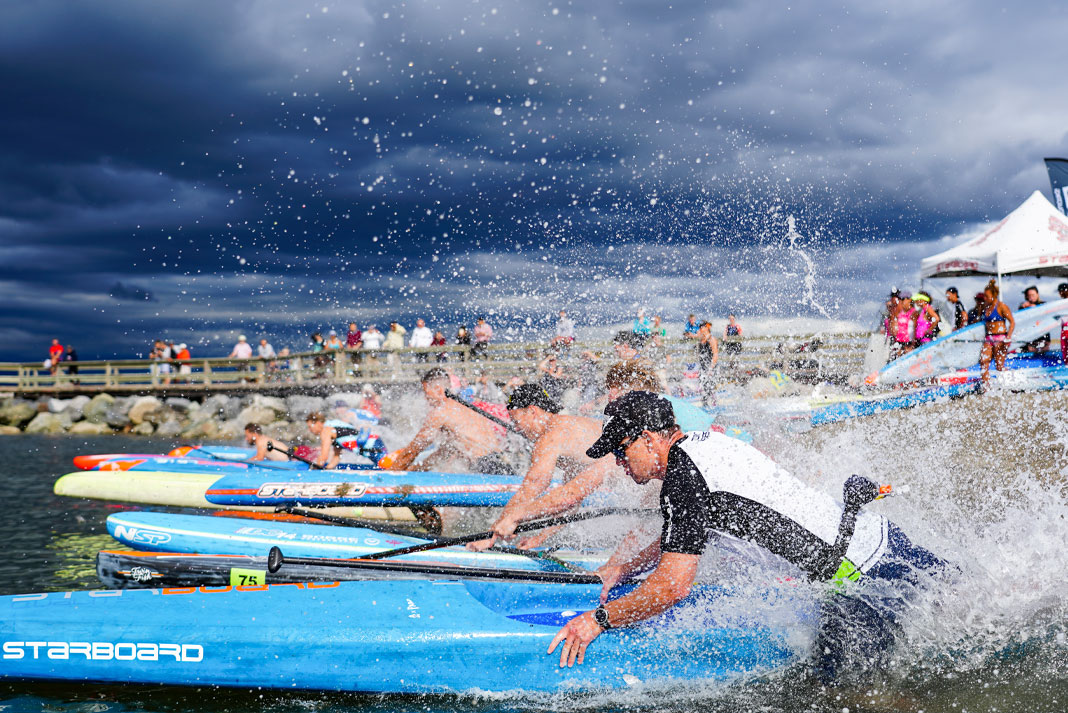
Paddlers on paddleboards lying on their boards and kicking up a spray of water.
Let the games begin. | Photo: Lech Dolecki

When the International Court of Arbitration for Sport (CAS) handed down a ruling in August 2020, standup paddleboard racers worldwide expected it to be a turning point. For nearly five years, two governing bodies had been squabbling over who should control the sport at the international level—the Switzerland-based International Canoe Federation (ICF) or the America-based International Surf Association (ISA). Each organization believed it could do the best job of governing SUP and creating an international framework to expand paddling’s fastest growing sport.

“My initial take on it was, ‘It’s finally over. We have a decision,’” said Tamás Buday Jr., a former sprint canoe Olympian for Team Canada who now races SUP and won a master’s world championship in 2019. “Going back and forth between the two major organizations was just harmful to the sport.”

Both the ISA and ICF have a long history of governing their respective disciplines. The infighting over whether paddleboarding is a surf-based sport or a canoe and kayak-based sport has only led to confusion. Both organizations run events dubbed world championships, which makes for a boxing-style system without a unified world champion. Both federations also have ideas about what standard race lengths and rules should be, which has created the Wild West of racing.

While a SUP Olympic program might not matter much to the average recreational paddleboarder, its inclusion would mean press, prestige and higher pay for athletes, which could raise the profile of the sport and make it more competitive.

Some paddlers believe the tug-of-war over who has authority delayed SUP’s inclusion as a new sport in the next Olympic Games. Its inclusion was floated as a possible addition alongside sport climbing, skateboarding and surfing—all of which will debut at the rescheduled 2020 Olympics. However, without an official governing body, the International Olympic Committee (IOC) had no one to work with.

Many racers hope the CAS’s August ruling will end the discord so they can focus on paddling, not politics. “The CAS Panel has decided the ISA shall be the International Federation governing and administrating the sport of SUP at Olympic level, but has dismissed ISA’s request to be recognized as the sole governing body of SUP at the world level,” the decision read. “The ICF remains entitled to conduct all types of SUP activities outside of the Olympic movement.” So, both the ISA and ICF can hold standup paddling events worldwide, but the ISA is to govern at the Olympic level.

“At the end of this long and difficult paddle, we are both relieved and gratified by this important decision by CAS,” said ISA President Fernando Aguerre in an online statement. “The global SUP community can now look forward with clarity in continuing the building of an exciting future for SUP and its athletes.”

Paddlers on paddleboards lying on their boards and kicking up a spray of water.
Let the games begin. | Photo: Lech Dolecki

Aguerre began discussions with the IOC to feature SUP at the Paris 2024 Olympic Games after the CAS decision was made. Ultimately, the December deadline for inclusion was too tight. The next possibility is the 2028 Olympics in Los Angeles.

ICF President José Perurena also declared the CAS verdict as a win stating: “We are pleased and feel vindicated that the Court of Arbitration for Sport has recognized the important role the International Canoe Federation has played in the development of standup paddling and that it is free to continue this role worldwide.”

[ Paddling Trip Guide: View all paddling races and events ]

With the 2021 racing season quickly approaching, the ICF will hold its next SUP World Championships in Balatonfüred in Hungary in June 2021. With a verdict on Olympic governance declared, racers hope the ICF and ISA will move past the conflict to collaborate on a pathway to the ultimate podium.

“Regarding the longterm future, we are working with athletes, event organizers and national federations to put together an events calendar convenient to everyone involved, including the ISA,” says ICF communications manager Ross Solly. “We are hopeful that as two members of the Olympic family, we will be able to have fruitful discussions which will help SUP continue to grow as a sport.”

This article was first published in Paddling Magazine Issue 63. Subscribe to Paddling Magazine’s print and digital editions here, or browse the digital archives here.

Let the games begin. | Photo: Lech Dolecki

Ultimate Algonquin Provincial Park Travel Guide

Photo: Destination Ontario

Algonquin Park is just a few hours’ drive from Ontario’s largest urban centres, yet this celebrated outdoor recreation and adventure destination feels worlds away from the hustle and bustle of Toronto and Ottawa.

You don’t have to be a rugged outdoors person to experience the majestic lakes, serene forests and abundant wildlife of this iconic park. Algonquin’s diverse hiking trails, canoe routes, visitor attractions and winter recreation opportunities are easily accessible from the park’s scenic central artery, Highway 60.

Whenever you choose to visit, each season offers something special in Algonquin Park. Spring boasts peak wildlife viewing, summer is the most popular season in the park, fall colours are spectacular and winter is the quietest time of year, when dazzling white snows blanket park forests and frozen lakes.

With a wonderful range of accommodations—from campgrounds to luxury lakeside suites—Algonquin Park is a perfect staycation destination for travelers of all types.


Things to do in Algonquin Park

Photo: Destination Ontario
Recharge in Algonquin’s natural beauty. | Photo courtesy of: Destination Ontario

Camping in Algonquin Park

Looking to experience the magic of an overnight visit to Algonquin Provincial Park for yourself? Camping is one of Algonquin Park’s most popular activities, and camping opportunities are grouped into two main categories: drive-to campgrounds and backcountry campsites. Algonquin offers over 1,300 developed campsites accessible to vehicle and RV campers, as well as more than 1,900 canoe camping and backpacking sites spread across the park’s vast interior.

Drive to campgrounds in Algonquin Park

Each of Algonquin Park’s 11 developed campgrounds is situated beside an unspoiled lake and nestled amid the park’s famous hardwood and pine forests. Services vary by campground, with camping experiences for tent, RV and yurt campers. Eight of the park’s vehicle-accessible campgrounds are centrally located along Algonquin’s popular Highway 60 corridor. The lightly traveled north side of the park offers two developed campgrounds, while visitors to the east side of Algonquin will find one option for vehicle camping there. Learn more about the most Breathtaking Campgrounds in Algonquin Park.

Photo: Destination Ontario
Find the solitude you are craving. | Photo courtesy of: Destination Ontario

Backcountry camping in Algonquin Park

Experience Algonquin Park at its most rugged and wild—enter the backcountry by paddle and portage to sample a vast landscape of maple hills, rocky ridges, spruce bogs and thousands of lakes, ponds and streams. Additionally, Algonquin has three backpacking trails that await those seeking seclusion in the park on foot. Learn more about the best backcountry camping areas and how to Plan Your Dream Algonquin Backcountry Camping Trip.


View this post on Instagram


A post shared by Ish + Gopi (@travellusionists)

Hiking in Algonquin Park

Hiking trails in Algonquin Park run the gamut from easy rambles for first-time hikers, to demanding multi-day circuits for the most ambitious backpackers. Along the park’s Highway 60 corridor, you’ll find 14 interpretive hiking trails exploring different aspects of Algonquin Park’s diverse landscapes, geology, ecology, history, plants and animals.

Day hiking trails in Algonquin Park range from less than 1 kilometre to 11 kilometres in length. The park’s three backpacking trail networks offer a total of 140 kilometres of backcountry hiking.


View this post on Instagram


A post shared by Sophie Newton (@sophiejnewt)

For a terrific introduction to hiking in Algonquin Park, don’t miss these top trails:

Lookout Trail – This moderate, 1.9-km trail is relatively steep and rugged but affords the hiker with a magnificent view of several hundred square kilometers of Algonquin Park. Especially gorgeous in the fall when the park’s hardwood forests blaze with color.

Barron Canyon Trail ­– Located amid pine forests on Algonquin Park’s east side, this moderate, 1.5-km trail leads to and runs along the north rim of the spectacular 100-meter-deep Barron Canyon. The interpretive trail guide explains the formation and history of the canyon.

Track and Tower Trail – For a longer day hike with a spectacular lookout as your reward, lace up your boots and tackle this moderate, 7.7-km looped trail.

Visit Ontario Parks to discover more hiking trails in Algonquin Park.

Photo: Destination Ontario
Paddling is the best way to experience Algonquin. | Photo courtesy of: Destination Ontario

Canoeing in Algonquin Park

Whether you have single day or a whole week, canoeing in Algonquin Park is the definitive way to experience this iconic destination. Paddle around a misty lake at dawn, or venture deep into the park’s interior by paddle and portage. The longer your trip and the more portages you cross, the fewer other park visitors you’ll see.

First time paddling a canoe? Not to worry—many of the best Algonquin canoe routes are also offered as guided canoe trips by experienced park outfitters.

Alternatively, Algonquin Park Canoe Rentals are available at popular backcountry access points to make your journey from parking lot to paddling route quick and easy. Many outfitters also offer delivery to other access points or even right to your Algonquin Park campground. Shuttle service, camping equipment rental and full outfitting packages for self-guided canoe trips are also available.


View this post on Instagram


A post shared by . (@salman.gsamar)

With over 2,000 kilometres of canoe routes, the paddling possibilities in Algonquin Park are almost infinite. Take the guesswork out of planning—discover the Best Canoe Routes and Trips in Algonquin Park for paddlers of every ability and appetite.

Photo: Destination Ontario
Experience incredible trout, bass and splake fishing. | Photo courtesy of: Destination Ontario

Fishing in Algonquin Park

No less than 54 different species of fish have been recorded in Algonquin Park, but it’s the world-class trout fishing that draws many anglers from across Ontario and beyond. Algonquin is home to the highest concentration of native brook (speckled) trout lakes in the world.

Algonquin’s outstanding fisheries owe their existence to the park’s rare combination of headwater lakes and rivers, seclusion and protection from development. Many of Algonquin Park’s more than 1,500 lakes and 1,200 kilometres of streams and rivers lie in the backcountry, and see only a small number of anglers each year. Lakes along the Highway 60 corridor, where fishing pressure is higher, have special regulations to ensure their populations are not overfished.

Photo: Destination Ontario
Feel the thrill of catching a big (or small) one. | Photo courtesy of: Destination Ontario

Anyone can enjoy an Algonquin Park fishing trip—whether you’re a first-time fisher feeling the tug of summer smallmouth on your line, or an avid angler targeting wary brook trout in secret backcountry streams. Learn more about Algonquin Park Fishing: Everything You Need to Know.

Winter activities in Algonquin Park

Winter is a special time of year in Algonquin Park, when frosty temperatures and heavy snowfall bring solitude to park trails. Spectacular winter vistas and intimate wildlife encounters reward warmly dressed photographers, while enthusiasts of winter activities will find plenty to do and explore. Highway 60 is ploughed and sanded all winter and many trails are available for winter visitors.

Cross-country skiing

Three Algonquin Park ski trail networks offer over 110 kilometers of some of Ontario’s best cross-country (Nordic) skiing. These trails are groomed and trackset on a regular basis throughout the winter season, and feature warming cabins equipped with woodstoves. Backcountry skiers will also find an ungroomed trail network for wilderness skiing adventures. Ski rentals are available from Algonquin Outfitters locations in Huntsville and Oxtongue Lake (Dwight).

Photo: Destination Ontario
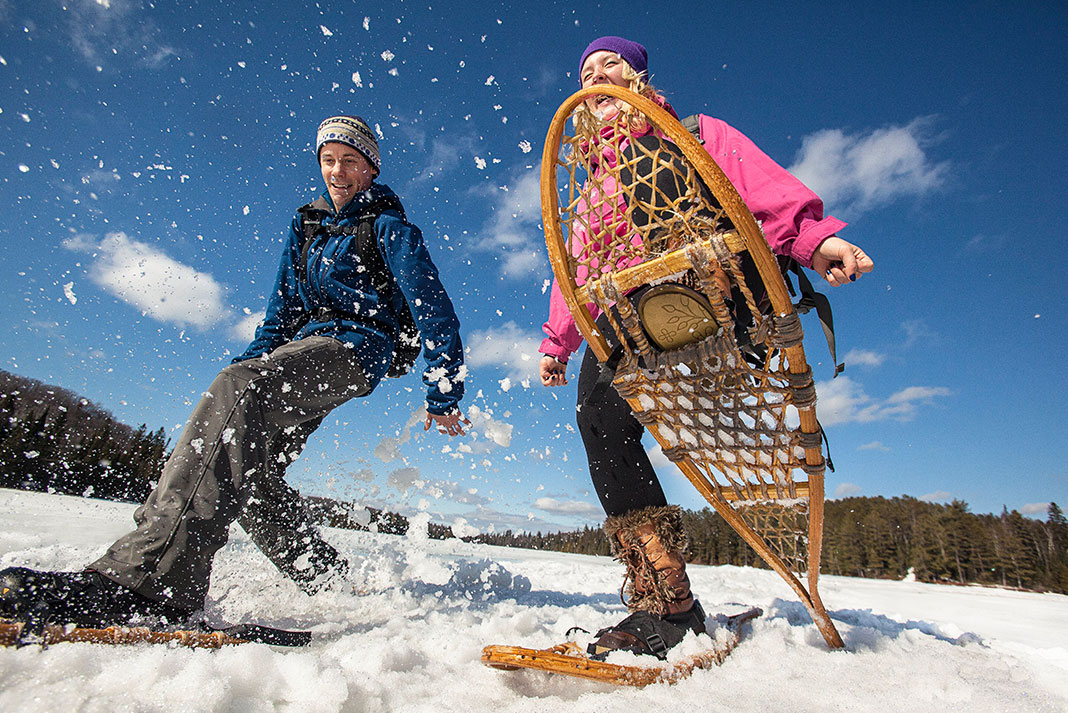
Explore Algonquin on snowshoes. | Photo courtesy of: Destination Ontario

Snowshoeing

Snowshoeing enthusiasts can go virtually anywhere within the park except on cross-country ski trails. Try one of the short hiking trails along the Highway 60 corridor for an easy winter outing. Snowshoe rentals are available from Algonquin Outfitters locations in Huntsville and Oxtongue Lake.

Fat biking

Algonquin Park’s Old Railway Bike Trail is groomed approximately 12 km from Pog Lake to Cache Lake throughout the winter as a multi-use recreation trail that is popular for fat biking. Fat bike rentals are available in Huntsville at Algonquin Outfitters.

Dogsledding

Dogsledding opportunities, offered by commercial operators, are available in two locations in the park—the Sunday Lake Dogsled Trail network accessed from Highway 60, and the North Algonquin Dogsled Trail accessible from the town of South River on Highway 11.

Winter camping

Algonquin Park offers a variety of winter camping experiences, including backcountry camping and developed vehicle, RV and heated yurt camping at Mew Lake Campground.

Visit Ontario Parks to learn more about winter recreation in Algonquin Park.

Day trips and tours in Algonquin Park

Get closer than you imagined possible to Algonquin Park moose, photograph the park’s most stunning autumn scenes, or discover cultural treasures hidden deep in the forest. From Algonquin canoe tours to photography workshops, driving and bus tours, you’ll be amazed by how much you can see and learn on an Algonquin Park day trip.

Algonquin Park canoe tours

Join a guided Algonquin Park canoe tour for a great introduction to paddling in the park. Perfect for first-timers, these day trips include canoes, paddles, safety equipment, park permits and a tasty shore lunch. Enhance your Algonquin canoe tour by choosing a themed day trip based on your interests—wildlife watching, artists in the park, fishing and more.

Algonquin Park photography tours

Whether you’re an avid photographer looking to expand your knowledge of wildlife and landscape photography, or a novice shutterbug wanting to capture quintessential images from your time in the park, there is an Algonquin Park photo tour that is sure to develop your skills.

Algonquin Park driving and bus tours

An Algonquin Park bus tour or driving tour can be a great introduction to the park for first-time visitors. Highway 60 traverses Algonquin from east to west, a twisting two-lane road that winds through nearly 60 kilometres of amazing scenery, past sparkling lakes and vibrant forest.

Photo: Destination Ontario
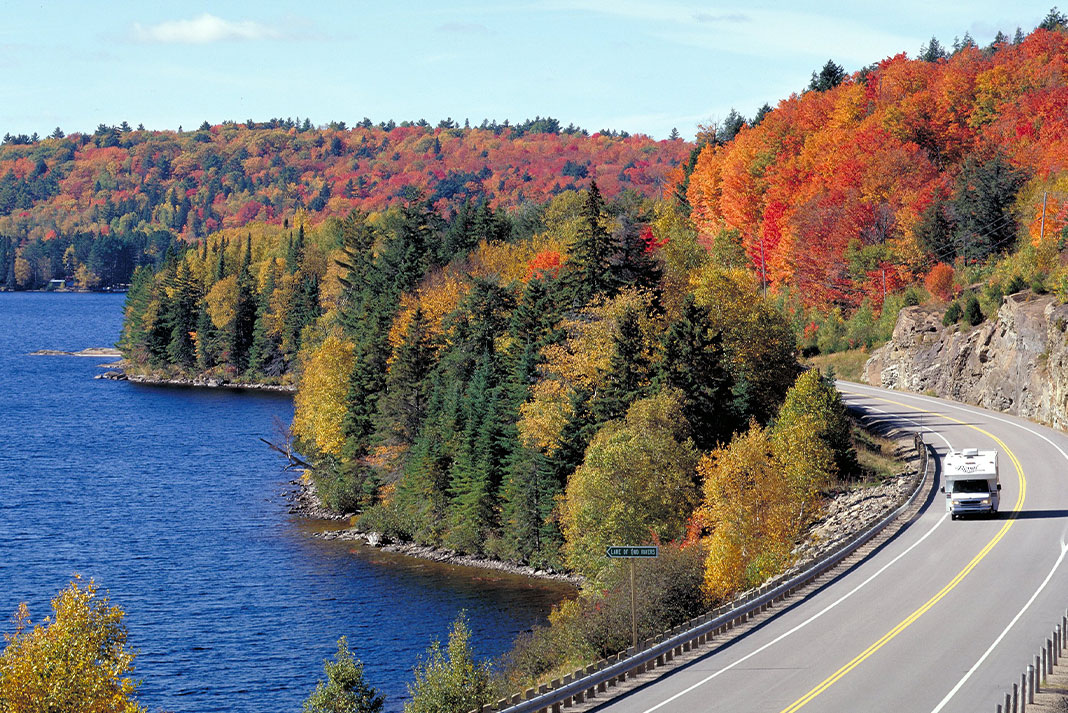
Autumn is a spectacular time to visit Algonquin. | Photo courtesy of: Destination Ontario

Most bus tours make several stops throughout the day at some of Algonquin Park’s top attractions. Many tours include time for easy, optional hikes on scenic lookout trails. There are even adventurous Algonquin bus tours for active travellers that include canoeing excursions, swimming in a pristine lake and longer hikes.

Discover 17 Of The Best Guided Tours In Algonquin Park.

Multi-day tours in Algonquin Park

Experience the beauty and tranquility of Algonquin Park’s wild interior on a guided multi-day tour of the park with an esteemed local outfitter. Learn paddling, portaging and camping skills while traveling one of Algonquin’s spectacular backcountry canoe routes on a guided multi-day canoe trip.

In winter, a lodge-based tour offers an immersive yet comfortable snow-season experience. For the ultimate winter adventure, join a multi-day dogsledding tour across the frozen backcountry, staying in rustic winter camps.


Places to visit in Algonquin Park

Photo: Destination Ontario
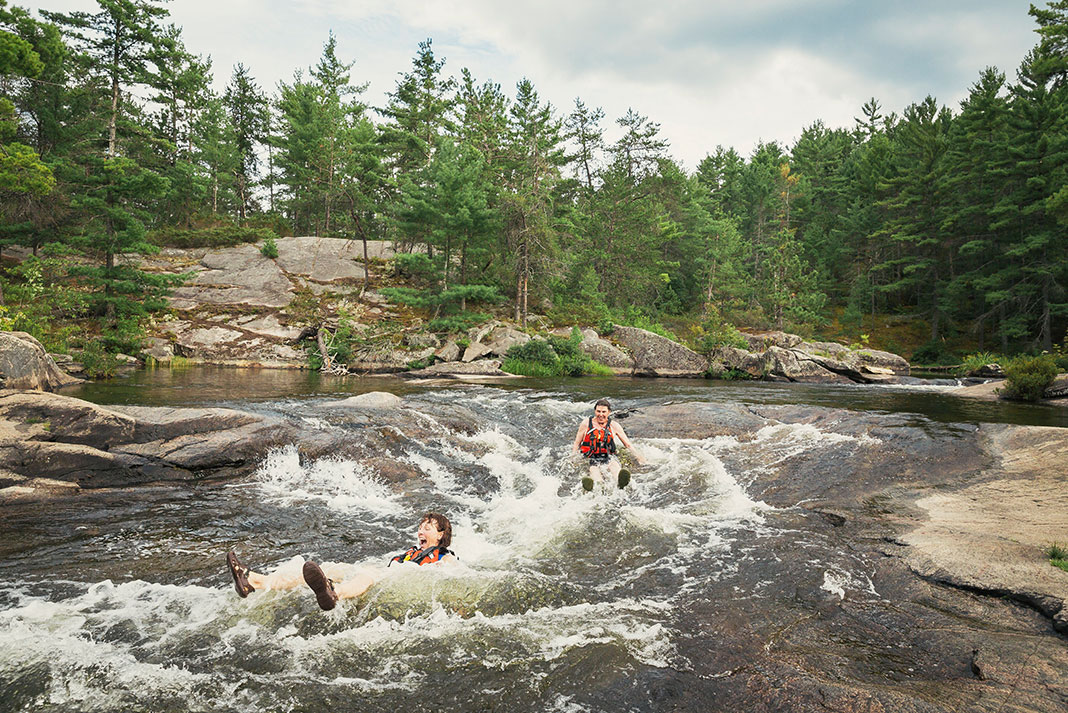
Wet’n’wild in Algonquin. | Photo courtesy of: Destination Ontario

Algonquin High Falls

Take a wild ride on a natural water slide! Algonquin Park’s High Falls is the perfect place to cool off on a hot day. Pack your swimsuit and a picnic lunch for an exciting afternoon of sliding and splashing down this natural rock water slide.

The High Falls water slide is located on the eastern edge of Algonquin Park, accessible from Barron Canyon Road and Achray Access Point on Grand Lake. There are a number of ways that hikers, canoeists, kayakers and paddleboarders can reach the slide, including an easy walking trail or a short paddle down Stratton Lake. Interior backpacking and canoeing campsites near the falls invite a longer stay.

Plan your visit to Algonquin Park’s #1 Waterslide.

Photo: Destination Ontario
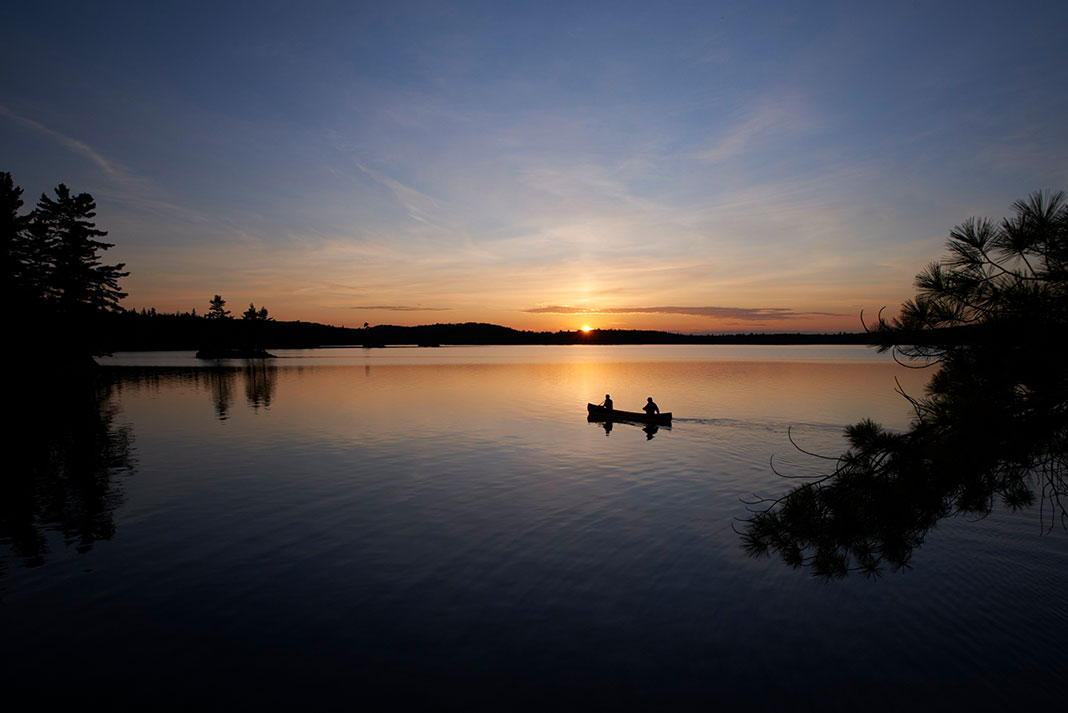
Experience magical sunrise or sunset paddles. | Photo courtesy of: Destination Ontario

Algonquin Park lakes

With more than 1,500 lakes to choose from, shortlisting Algonquin Park’s finest lakes is no easy task. Sandy beaches, perfect rock points, unbelievable fishing, stellar swimming holes and private island camping—Algonquin Park lakes have it all.

To create this bucket list of 21 Stunning Lakes in Algonquin Park, we factored in each lake’s exceptional scenic value, as well as its ease of access for paddlers and hikers, and what else you can see in the surrounding area. We also selected lakes with above-average campsites, so you can spend as much time soaking up those lakefront views as you like.

Barron Canyon

Algonquin Park’s Barron Canyon is so jaw-droppingly beautiful, it’s well worth seeing from every angle. For a brief period after the end of the last ice age, the Barron River carried the entire outflow from Lake Aggasiz (the precursor of today’s Great Lakes) and a spectacular canyon was cut by this tremendous flow of water.

To experience the 100-meter-deep canyon from its depths, paddle up the Barron River from eastern Algonquin’s Squirrel Rapids access point. Towering white pines on the gorge’s rim appear like toy trees from this vantage point. This 1-day canoe trip requires two short portages and is suitable for both novice and expert paddlers.

Retrace your paddle strokes back to your vehicle, and then hike the Barron Canyon Trail to catch the equally breathtaking view from the top. This moderate, 1.5-km trail runs along the north rim of the canyon beside precipitous cliff tops—watch your step.

Algonquin Park backcountry

The best way to experience Algonquin Park’s vast backcountry is by undertaking a multi-day trip into the park’s interior, staying at canoe campsites, backpacking campsites or one of a handful of backcountry ranger cabins within the park.

Explore some of the Best Canoe Routes in Algonquin Park for backcountry trips ranging from 2 to 7 days.

And find your perfect backcountry campsite in the Guide To Planning A Backcountry Camping Trip In Algonquin.


Where to stay in Algonquin Park

Camping in Algonquin Park

Together, Algonquin Park’s 11 developed campgrounds offer more than 1,300 campsites accessible to tent, vehicle and RV campers. Algonquin Park campgrounds are located beside lovely lakes, with a wide range of amenities including electrical hook-up, comfort stations with hot showers, swimming beaches and even yurt rentals. Eight of the park’s vehicle-accessible campgrounds are centrally located along Algonquin’s popular Highway 60 corridor. Learn more about Camping in Algonquin Park: 9 Breathtaking Campgrounds.

Hotels near Algonquin Park

A diverse selection of comfortable and affordable hotels is located within minutes of Algonquin Park’s west, east and southern access points. Algonquin inns and hotels are ideal for those wanting modern amenities and comforts while enjoying easy access to Algonquin Park’s outdoor recreation opportunities. Plus, many hotels offer the convenience of a room or fully equipped suite that is steps from the shops and restaurants of the region’s welcoming communities. Discover 13 Algonquin Hotels For People Who Don’t Want To Camp.


View this post on Instagram


A post shared by ROSE-EH CHALET (@rose.eh.chalet)

Algonquin Park cottages & cabins

Rent a restored Algonquin log cabin for an authentic heritage experience in the park’s interior, or choose a modern Algonquin cottage rental for a family staycation everyone will love. Whether you’re after an off-grid getaway or something more deluxe, these stunning properties make inviting and convenient bases for exploring the park’s breathtaking natural beauty. Find 25 Charming Cottage And Cabin Rentals Near Algonquin Park.

Photo: Destination Ontario
Stay in rustic to classic lodges and resorts. | Photo courtesy of: Destination Ontario

Algonquin Park lodges & resorts

An Algonquin lodge stay offers flexibility for couples, friends, families and solo travellers. Book an all-inclusive package where every detail of your experience is exquisitely crafted. Or go independent—exploring the scores of trails, lakes and attractions just a short drive from your doorstep, and then returning to your peaceful refuge to recharge for the next adventure. Choose from a wide variety of lodges and resorts located within the park’s boundaries or on its periphery. Base yourself at an Algonquin lodge or resort for a true holiday feel with a comfortable cocktail of rustic luxury and wilderness vibes. Discover 19 Rustic to Classic Lodges and Resorts Near Algonquin Park.


Algonquin Park weather

Weather in Algonquin Park varies greatly depending on which season you are planning to visit. During peak summer season (late June through early September), Algonquin Park enjoys hot, humid days, warm nights and plenty of sunshine. Afternoon thunderstorms can bring heavy rain, but are usually short-lived. The average daily high is 20–30°C.

Spring (May–June) is generally cooler and wetter, while fall (mid-September through October) offers a mix of bright sunshine, chilly rains and crisp nights.

If you are planning to paddle during your visit, water temperature is just as important a consideration as air temperature. In summer, Algonquin lakes are a comfortable swimming temperature, while water temperature in spring and fall is dangerously cold.

Winter (December–March) can be a magical time to visit Algonquin Park—for those equipped for frigid weather. In February, the coldest month in the park, the average daily high is just -10°C and overnight temperatures can drop below -30°C.

Photo: Destination Ontario
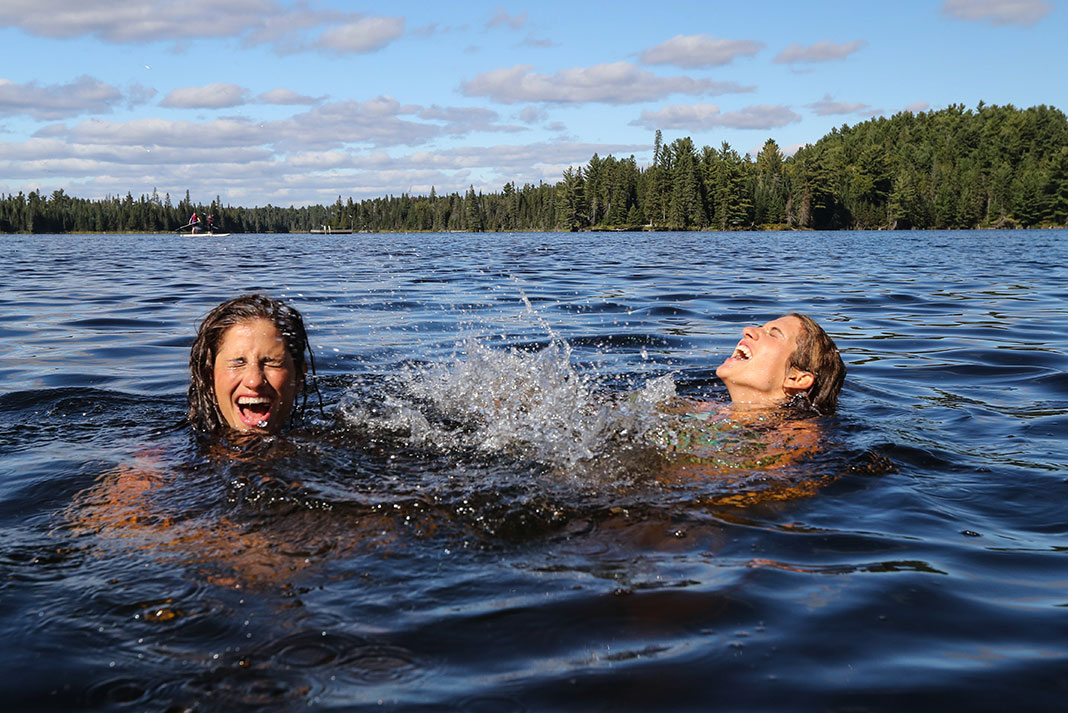
It’s time to unplug and really ‘LOL – laugh out loud’. | Photo courtesy of: Destination Ontario

Algonquin 14-day, 7-day and hourly weather forecast

Get hourly, weekend, 7-day and 14-day weather forecasts for Algonquin Park at The Weather Network. Their forecast also includes a handy Bug Activity Report—so you can avoid visiting the park when biting insects are at peak activity.

Environment Canada offers two Algonquin Park forecasts: one for Lake of Two Rivers along the Highway 60 corridor, and one for Brent access point in the northern portion of the park.

For detailed weather trends, conditions and webcams in Algonquin Park visit the Friends of Algonquin Park.

Algonquin ice-out history

Over 50 years of record keeping in Algonquin Park show the average ice-out on Lake Opeongo—the park’s largest lake and usually the last to open up in the spring—is April 28, with dates ranging from late March to mid-May some years. Algonquin “Ice-out” refers to the day when a boat can travel the length of Lake Opeongo unimpeded by ice.

Generally, lakes on the lower and warmer east side of the park, and those with substantial water flow, are the first to shed their ice cover. The last lakes to melt are those in the higher elevation areas of the west side of Algonquin and the park’s largest lakes.

For current ice conditions in Algonquin Park and Algonquin Ice-out history, visit the Friends of Algonquin Park.


Getting to Algonquin Park

Toronto to Algonquin Park

Algonquin Park’s West Gate is the closest park entrance to Toronto, located some 260 km (160 miles) north of the city.

Traveling by car, the most direct route is a 3-hour drive on Highway 400/Highway 11 north to the Huntsville area, and then east on Highway 60 to the West Gate park entrance.

The best way to get to Algonquin Park from Toronto without a car is to travel by bus. Parkbus offers one-way and return service from Toronto to popular locations along the park’s Highway 60 corridor. Travel is aboard a coach bus and takes around 4 hours to reach the West Gate. Find pricing and a detailed schedule here.

There are no options for air travel from Toronto directly to Algonquin Park.

Ottawa to Algonquin Park

Algonquin Park’s East Gate offers the closest entry point to the park’s popular Highway 60 corridor from Ottawa, a distance of 240 km (150 miles).

Most travellers from Ottawa arrive by car via Highway 417/Highway 60 West to the East Gate park entrance—a 2-hour and 45-minute drive. The eastern edge of the park is also popular with visitors from Ottawa. To reach Algonquin’s Achray/Grand Lake access point by car, drive 208 km (130 miles) on Highway 417/17 West to the Petawawa area and continue west on Barron Canyon Road.

The best way to get to Algonquin Park from Ottawa without a car is to travel by bus. Parkbus offers one-way and return service from Ottawa to popular locations along the park’s Highway 60 corridor. Travel is aboard a mid-size coach bus and takes around 3 hours and 40 minutes to reach Algonquin’s Lake Opeongo access point. Find pricing and a detailed schedule here.

There are no options for air travel from Ottawa directly to Algonquin Park.


Wildlife in Algonquin Park


View this post on Instagram


A post shared by Jesse & Susan (@followmenorth)

Bears in Algonquin Park

Although black bears are reasonably common in Algonquin Park, with the population thought to be around 2,000, bears are normally shy of humans and you will have to be very lucky to see one. However, careless food storage or improper disposal of garbage may attract bears looking for an easy meal, leading to “problem” bears that can become persistent and destructive nuisances. As a visitor camping in bear country, you have a responsibility to follow black bear safety rules and to know what to do if you encounter a bear.

Moose in Algonquin Park

For many visitors to Algonquin Park, seeing a moose is at the top of their park wish lists. Fortunately, Algonquin’s long-legged mascot is one of the most commonly seen large mammals in the park. In spring, moose are attracted to roadsides along Highway 60 to feed on the new sprouting plants in the ditches and open areas. Increase your chances of seeing moose by concentrating on low-lying, wet areas such as bogs, ponds and beaver meadows, and visiting these areas in the early morning and evening. Spotting a moose from your canoe while exploring some of the park’s waterways is a highlight of any visit.

Birding in Algonquin Park

With over 270 bird species recorded in Algonquin, there is no shortage of bird watching opportunities. For those wishing to learn more about the biology and ecology of 77 of the most striking birds that you can expect to find in Algonquin Park, pick up a copy of the Birds of Algonquin Provincial Park. Order this publication from The Friends of Algonquin Park or purchase it at various locations within the park.


Algonquin park maps

Every Algonquin Park visitor wants to experience the park’s iconic lakes, trails and campgrounds, but Algonquin’s sprawling geography makes it challenging to know where to start. Add to its immense size the fact that only a small fraction of the park is accessible from the main Highway 60 corridor, and a detailed, easy-to-use Algonquin Park map becomes just as essential as a good pair of hiking boots.

Google Maps and other mapping apps can give you a general idea of where to find Algonquin Park access points and specific attractions, but aren’t suitable for navigating in the backcountry. To explore on the ground, find the best maps by reading Don’t Get Lost In The Woods: A Guide To Algonquin Park Maps.

Algonquin Park Fishing: Everything You Need to Know

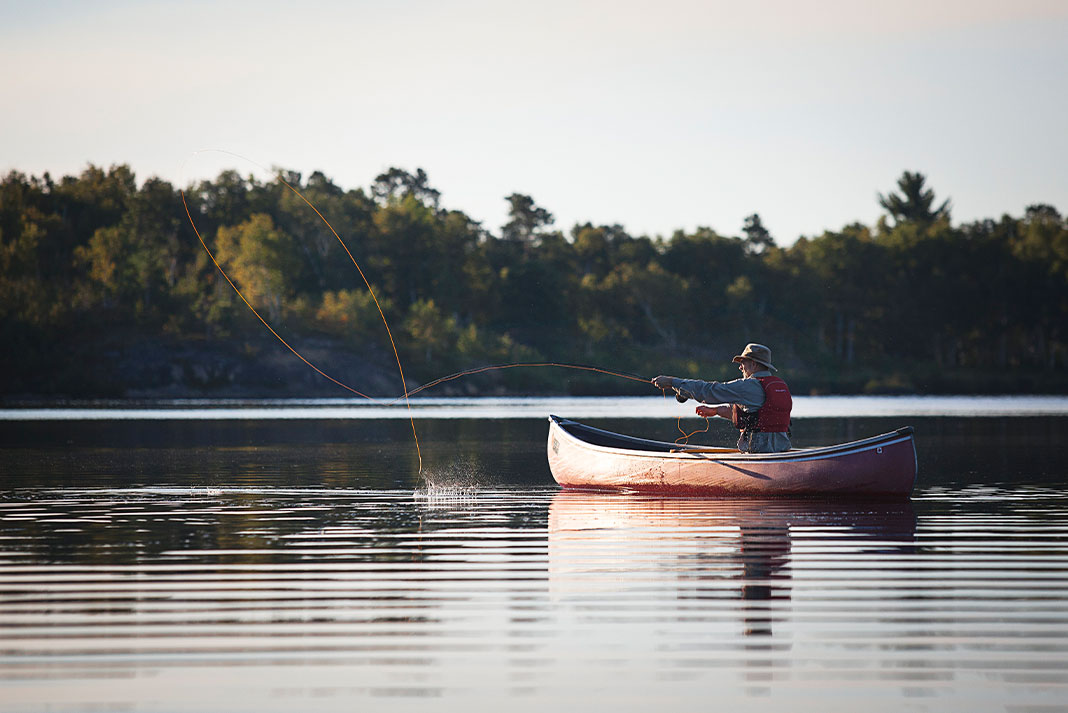
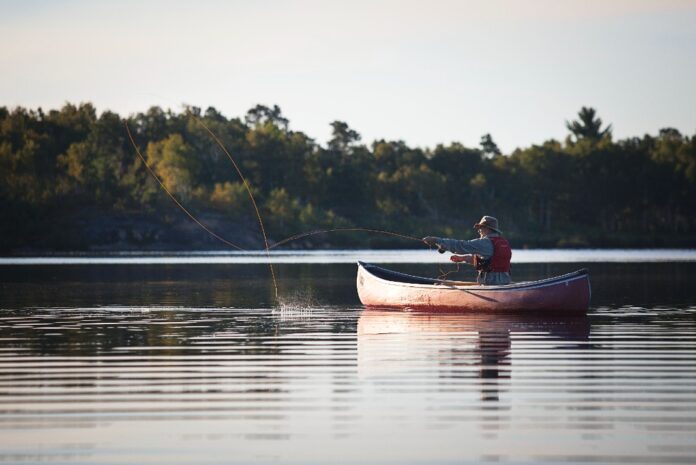
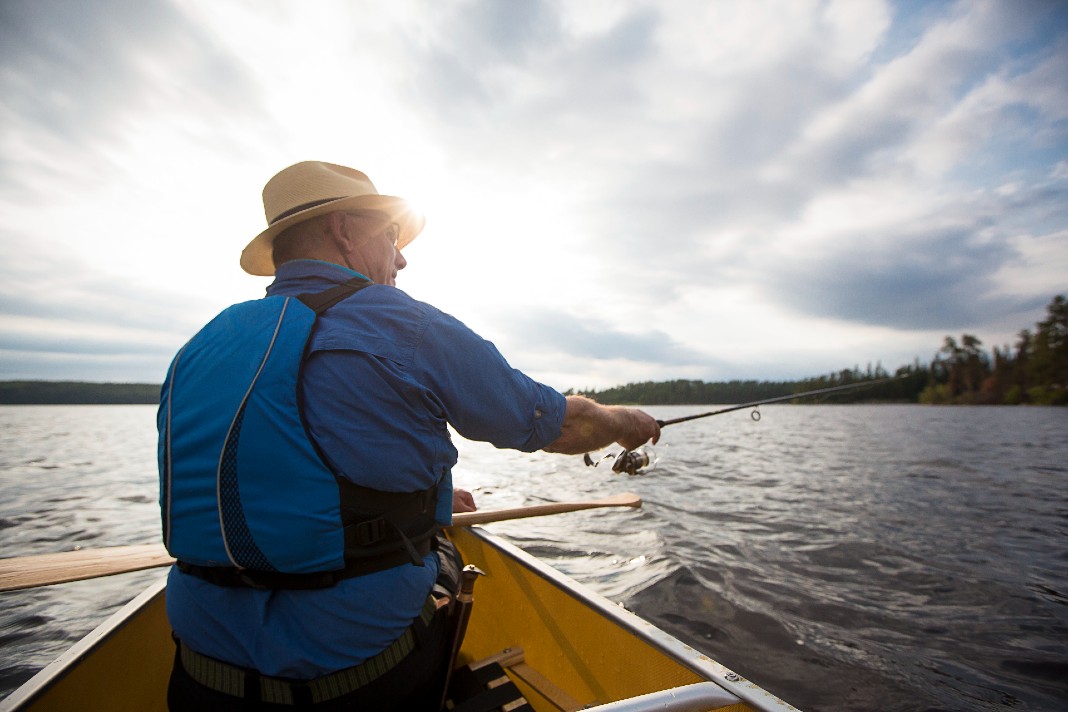
An angler fishes from a canoe in Algonquin Park
Incredible fishing awaits in Algonquin. | Photo courtesy of: Destination Ontario

The same ingredients that make Algonquin Park an incredibly diverse haven for fish also make the park an outstanding destination for anglers. Algonquin offers a rare combination of headwater lakes and rivers, seclusion and protection from development. Many of the park’s more than 1,500 lakes and 1,200 kilometres of streams and rivers lie in the undisturbed backcountry, and see only a small number of anglers each year. Lakes along the Highway 60 corridor, where fishing pressure is higher, have special regulations to ensure their populations are not overfished.

No less than 54 different species of fish have been recorded in Algonquin Park, but it’s the world-class trout fishing that draws many anglers from across Ontario and beyond. Algonquin is home to over 25 percent of Ontario’s remaining native brook trout lakes and streams—the highest concentration found anywhere in the world—and about 10 percent of the province’s native lake trout lakes.


View this post on Instagram


A post shared by Tighe Mclaughlin (@tighemclaughlin)

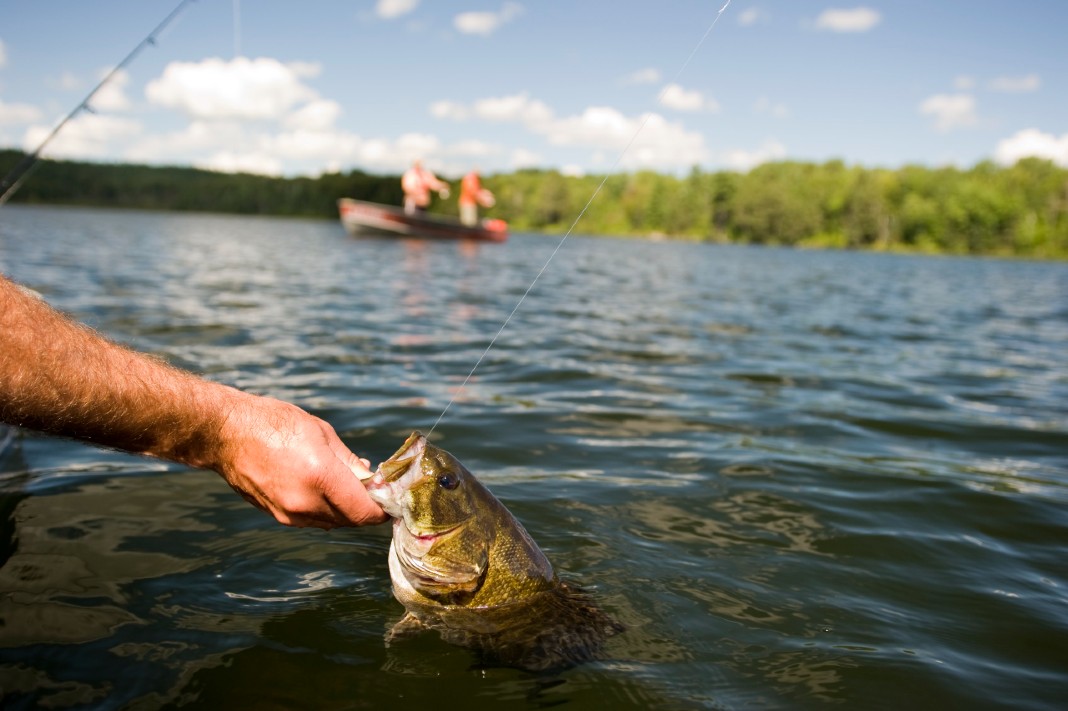
The Algonquin Park fishing season opens on the last Saturday in April and ends September 30th. Spring offers the best Algonquin fishing opportunities for lake and brook (also known as speckled) trout, when these cold-water fish are found closer to the surface. Bass season opens in late June, and both largemouth bass and smallmouth bass are popular summer targets. Other Algonquin game fish include walleye, northern pike and muskellunge. Many experienced anglers say the best fishing is found deep in the heart of Algonquin Park’s backcountry, accessible only by paddling and portaging the park’s fantastic canoe routes.

Everyone can enjoy Algonquin Park fishing trips—whether you’re a first-time fisher feeling the tug of summer smallmouth on your line, or an avid angler targeting wary brook trout in secret backcountry streams.

[This article is part of the Ultimate Algonquin Park Travel Guide 2021. Find all the resources you need to plan an adventure-filled trip to Algonquin Park.]


Fishing from canoe in the sun in Algonquin Park
Ontario residents over 65 years do not require a fishing license. | Photo courtesy of: Destination Ontario

Algonquin Park fishing license

Most people fishing in Algonquin Park need to purchase and carry a provincial Outdoors Card and Ontario Recreational Fishing License. Ontario residents under 18 and over 65 years of age do not require a fishing license. Prior to your trip, be sure to check the current Ontario Recreational Fishing Regulations Summary to ensure all specific rules are followed.

Ontario Outdoors Cards and Recreational Fishing Licenses are available for purchase online or in Algonquin Park at the West Gate, East Gate, Canoe Lake Access Point and Lake Opeongo Access Point. Learn more about Ontario fishing license requirements and fees here

Canadian residents are provided four opportunities throughout the year to fish without having to purchase a license: Ontario Family Day weekend (February), Mother’s Day weekend (May), Father’s Day weekend (June) and Ontario Family Fishing Week (July). Find upcoming license-free family fishing dates here.

If you are just getting started in the world of fishing, check out Ontario’s Learn to Fish Guide for a host of helpful tips and techniques on everything from tackle and equipment to species identification and fishing responsibly.

Fishing in Algonquin Park with artificial lures
Algonquin Park promotes the use of artificial lures; live baitfish are prohibited. | Photo courtesy of: Destination Ontario

Algonquin Park fishing rules

Algonquin Park is a very special fishery and thus has special fishing regulations to ensure the protection of the park’s fragile and irreplaceable native fisheries. These restrictions include: 

  • Possession, capture or use of live baitfish is prohibited in Algonquin Park
  • Possession of any amphibian or reptile—such as frogs or salamanders—is prohibited at all times
  • No fishing within 100 meters of any dam in Algonquin Park
  • No winter fishing in Algonquin Park (designated fish sanctuary from December 1 to late April)
  • Harvested fish should be packaged individually in clear plastic. A large patch of skin must be left on all fish fillets for identification purposes.

Worms are permitted as bait in Algonquin Park, but anglers are encouraged to dispose of unused worms in garbage containers (not on the ground) as worms are not native to Algonquin Park and may negatively impact soil communities.

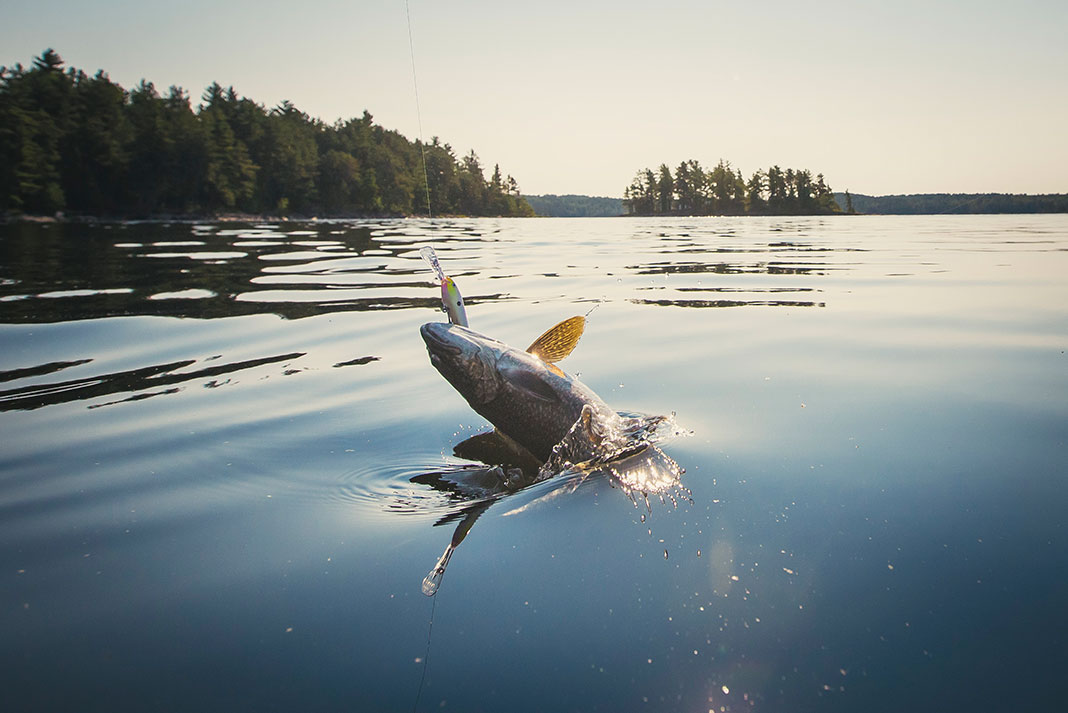
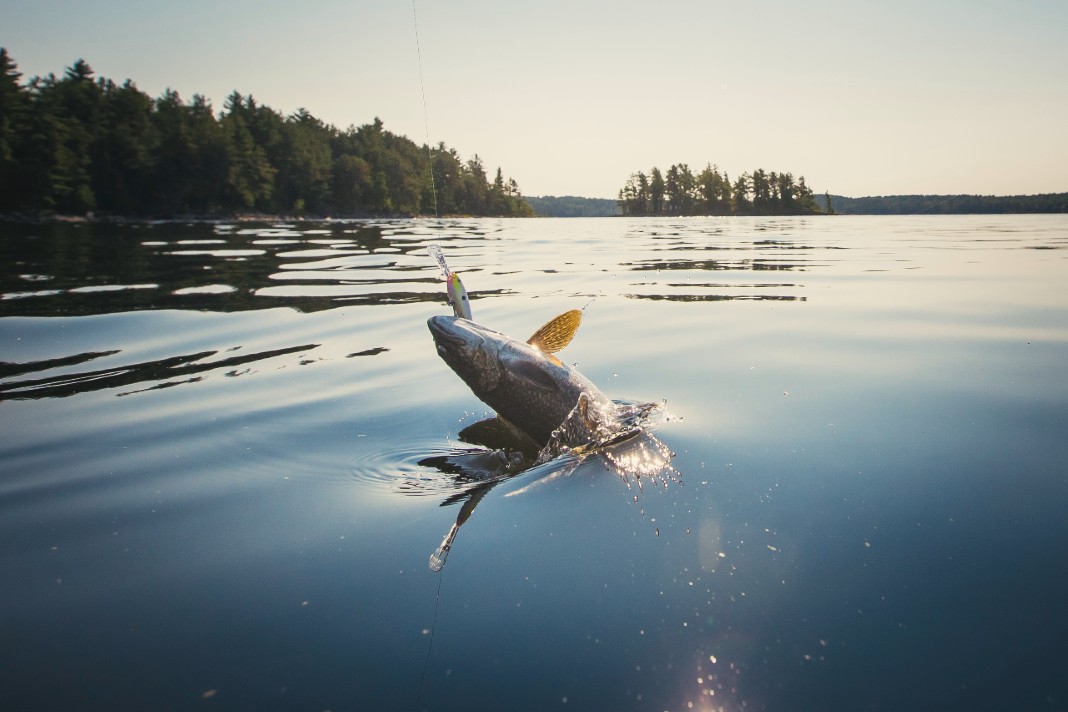
A fish jumps in a Lake in Algonquin Park
Voluntary catch-and-release lakes are positively impacting Algonquin’s trout fishery. | Photo courtesy of: Destination Ontario

Several excellent speckled (brook) trout lakes have been established where only artificial lures may be used and lower catch limits apply. Slot size limits and designated voluntary catch-and-release lakes are also having positive effects on the Algonquin Park fishery. A recent trout fishing survey showed that conscientious park anglers were releasing over 60 percent of the fish they caught.

These special Algonquin Park fishing regulations are in addition to all applicable provincial regulations—see the Ontario Fishing Regulations Summary for more details. Algonquin is located within Ontario’s Fisheries Management Zone 15; refer to the summary for zone-wide seasons and limits, as well as species exceptions and waterbody exceptions.


Ice fishing in Algonquin

Algonquin Park is a designated fish sanctuary during the winter months, ensuring the park’s fish populations continue to thrive for future generations. Since fishing in the park is closed from December 1st through late April, ice fishing Algonquin Park is effectively prohibited.


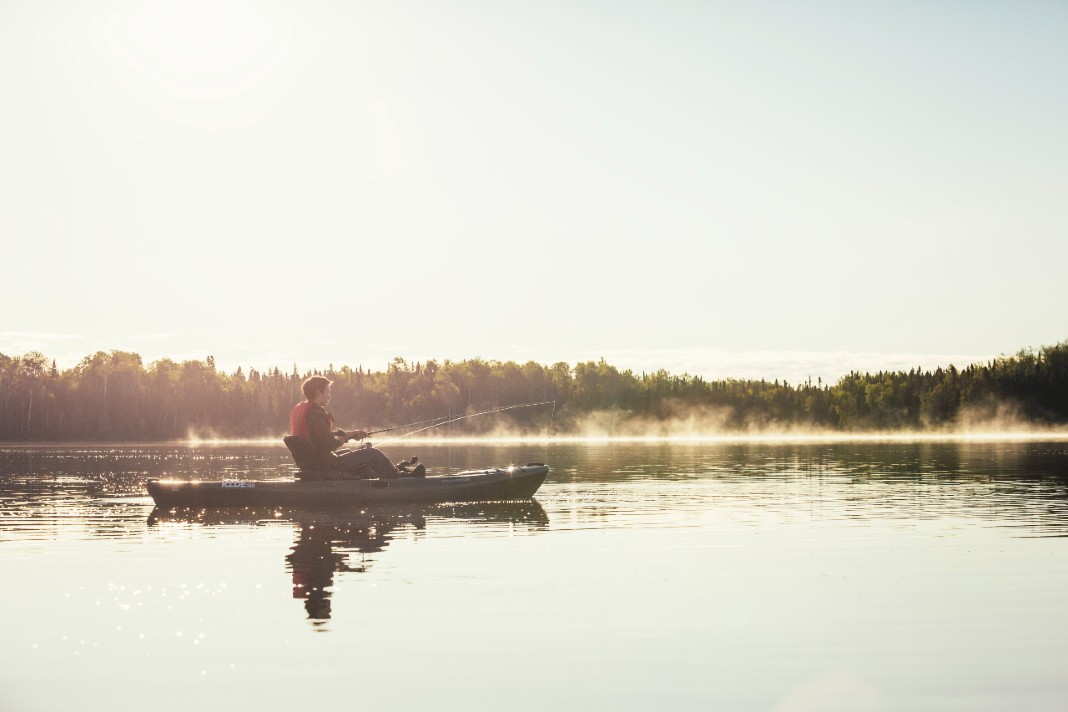
Kayak fishing in Algonquin Park
Algonquin Park fishing is excellent all summer long. | Photo courtesy of: Destination Ontario

Algonquin Park best fishing spots

There are good fishing opportunities just about everywhere in Algonquin Park. Ask park staff or drop by a local outfitter like Algonquin Bound or Algonquin Outfitters to find out what’s hot and get expert advice to increase your fishing success. 

The quieter lakes near the park’s East Gate are always a good bet, but there are just as many hidden gems near Algonquin’s West Gate and Sand Lake Gate. Canoe-in-only interior lakes offer the absolute best brook trout fishing in Algonquin Park. If you are unwilling or unable to travel into the park’s interior, most road-access lakes in Algonquin Park offer fantastic smallmouth bass and lake trout fishing. 

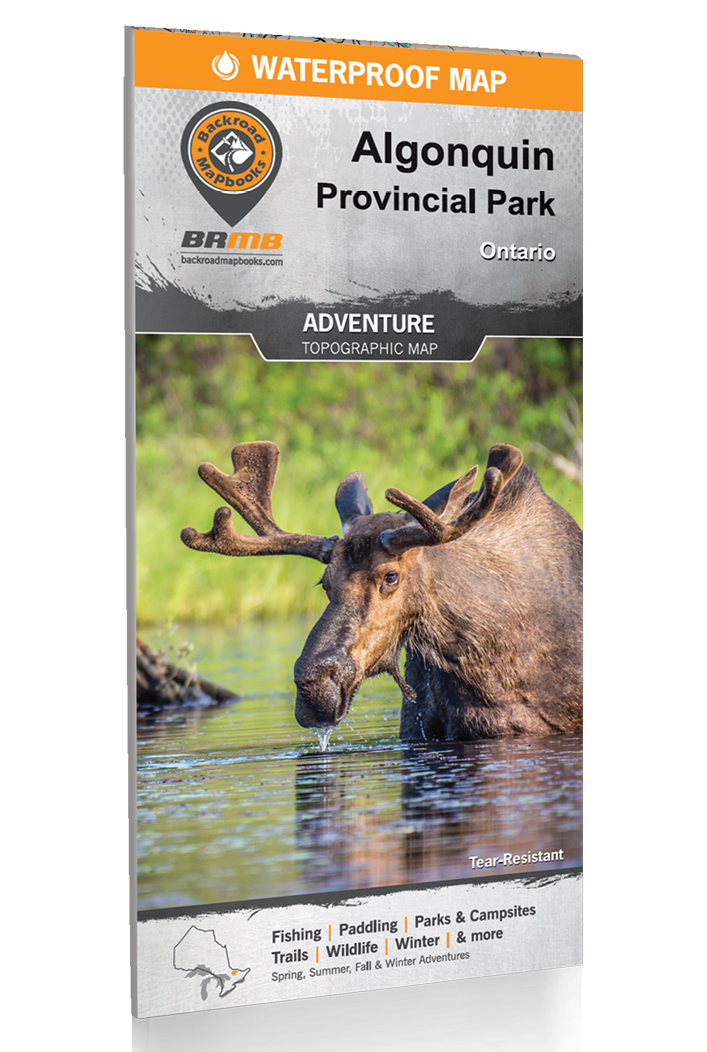
Check out Jeff’s Algonquin Map or Backroad Mapbooks’ Algonquin Park Topographic Adventure Map—both maps indicate which fish species you will find in Algonquin Park lakes, and are a must if you are canoeing into the backcountry to fish. 

Hold a bass in an Ontario lake
Canoeists compete with powerboat anglers for Canoe Lake’s smallmouth bass. | Photo courtesy of: Destination Ontario

Fishing Algonquin’s Canoe Lake

Algonquin Park’s busiest lake, Canoe Lake is home to smallmouth bass and lake trout, as well as hundreds of eager paddlers on sunny summer weekends. Canoe Lake is also open to boats with motors of 20 horsepower or less, so it experiences more fishing pressure than no-motor lakes. Access is from Highway 60 near KM 14, at the Canoe Lake Access Point. The Canoe Lake permit office sells fishing licenses and has fishing rods, reels and tackle boxes available for free loan as part of Ontario’s Tackle-Share program

Fishing Algonquin’s Smoke Lake

Just across Highway 60 from Canoe Lake, Algonquin’s Smoke Lake is also patrolled by “smallies” and “lakers”. Algonquin Park smallmouth bass have a reputation as a hard-fighting sportfish; these feisty football-shaped fish gravitate to underwater drop-offs and rocky shoals or shorelines. Like its neighbour, Smoke Lake has a 20-horsepower motor limit and is another of Algonquin’s busier cottage lakes. Portage south into Ragged Lake to target the same species with less fishing pressure.

Fishing Algonquin’s Lake of Two Rivers

Lying right alongside Highway 60 between KM 32–35, Lake of Two Rivers is one of Algonquin Park’s most accessible lakes. Stay at Lake of Two Rivers Campground or Killarney Lodge and fish for lake trout and smallmouth bass. Troll for lakers near the surface in spring (May to June)—as the water warms, the fish go deeper. Boats with motors up to 20 horsepower are permitted on Lake of Two Rivers.

Fishing Algonquin’s Pog Lake

Just downstream from Lake of Two Rivers along the Madawaska River system, Pog Lake’s small size makes it easy to fish the whole lake from the Pog Lake Campground. You can even borrow free fishing rods, reels and tackle from the campground office as part of the Tackle-Share program, making Pog Lake a great destination for first-time anglers. Test your luck for smallmouth bass or lake trout.

Fishing Algonquin’s North Tea Lake

In the northwest corner of Algonquin Park, accessible from the Kawawaymog Lake Access Point and a short paddle down the Amable du Fond River, North Tea Lake boasts loads of portage-free paddling, nearly 70 gorgeous backcountry campsites and tons of great fishing. North Tea Lake’s two distinct arms are home to lake trout and brook trout, as well as smallmouth bass. Trout season opens on the fourth Saturday in April, with the best fishing generally being in May or June. Boats with motors up to 10 horsepower are permitted on North Tea Lake.

Fishing Algonquin’s Cache Lake

Cache Lake is another of Algonquin Park’s popular Highway 60 lakes, found south of the highway near KM 24. Summer camps, a lodge and cottages dot the shores and islands, but Cache Lake’s numerous small bays nevertheless offer rewarding fishing for smallmouth bass and lake trout. Boats with motors up to 20 horsepower are permitted.

Fishing by canoe in Algonquin Park
Northern Pike are a toothy adversary for Algonquin anglers. | Photo courtesy of: Destination Ontario

Fishing Algonquin’s Booth Lake

In eastern Algonquin, Booth Lake is accessed from the park’s Shall Lake Access Point, north of the village of Madawaska. Regarded as one of the most picturesque Algonquin Park interior lakes, Booth Lake is among the park’s best, easily accessible lakes for anglers. The lake’s varied shoreline of sand beaches, rock points, many bays and extensive wetlands is mirrored by a great diversity of fish species.

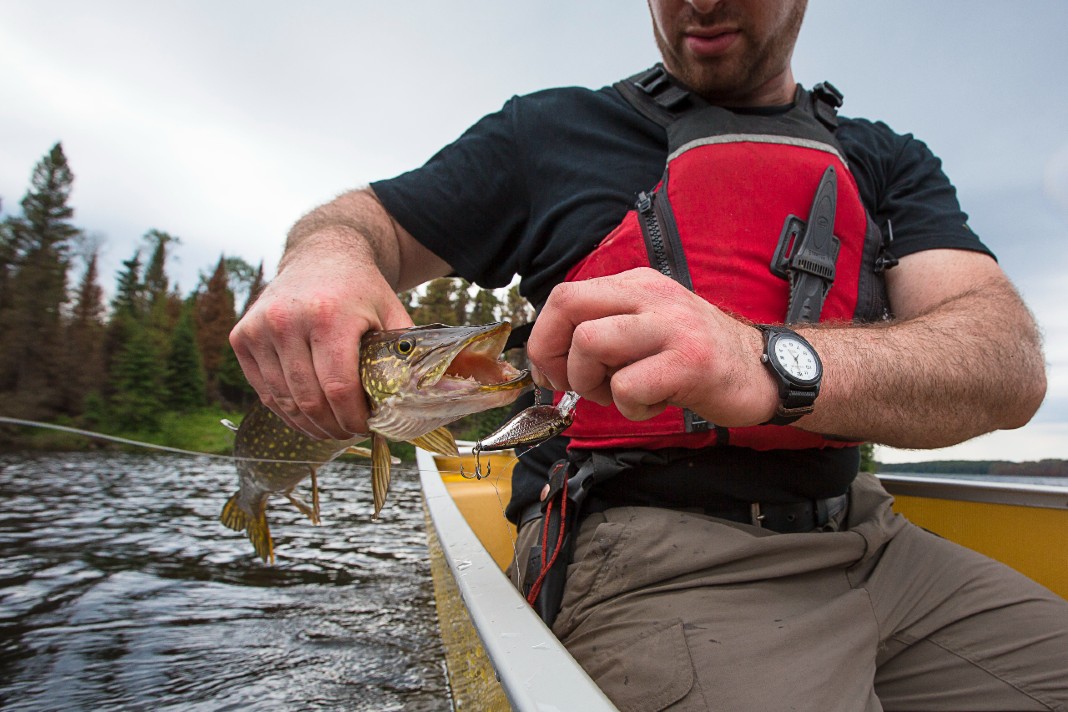
Booth Lake is one of Algonquin Park’s top destinations for lake trout fishing, and the upper reaches of the Opeongo River just north of the lake offer excellent brook trout habitat. Plus, the rocky shorelines of Booth and the smaller lakes en route—Crotch Lake, Farm Lake and Kitty Lake—are perfect for smallmouth bass and northern pike. Northern pike are an aggressive, fast-striking fish with a relatively limited range inside Algonquin Park. Identified by their long slender bodies with large mouths and sharp teeth, pike can often be found in the calm, weedy bays of Booth Lake or Shall Lake.

Fishing Algonquin’s Radiant Lake

A relatively recent addition to the Algonquin Park fishery, walleye (also known as pickerel) are found primarily in the northern part of the park. Anglers in pursuit of this elusive sportfish should head to Algonquin’s Brent/Cedar Lake Access Point. While you can troll for walleye in this large lake, paddling and portaging down the rapid-choked Petawawa River to Radiant Lake offers greater seclusion. Base yourself at a backcountry campsite on Radiant to fish this lake, the Petawawa River and smaller pickerel lakes downstream. Walleye season opens on the third Saturday in May and continues through November, with the best fishing in late May and early June.

Fishing Algonquin’s Sunday Lake and Sproule Lake

Each year, Algonquin Park fisheries management stocks thousands of fish into dozens of lakes. Stocked fish are either a native strain of brook trout or splake. A fast-growing hybrid produced by crossing female lake trout and male brook trout, splake are specifically used to provide Put-Grow-Take fisheries in lakes that will not support populations of either parent fish.

Nestled in the hills southwest of Lake Opeongo and north of Highway 60, Sunday Lake and Sproule Lake are two small, adjacent interior lakes stocked with splake that can be found to 50 cm (20 inches). Access is easy from the lightly used Sunday Lake Access Point, off Highway 60 near KM 40. A handful of backcountry campsites on both lakes provide splake anglers with an ideal basecamp.

Fishing Algonquin’s Carcajou Lake

Brook trout—or “Specks”—are among the most sought-after game fish in North America, and the chief draw for experienced Algonquin Park anglers. Speckled trout are extremely sensitive to invasive species and pollution, making the remote, clean interior lakes of Algonquin Park a critical refuge for naturally reproducing brood stocks of these beautiful fish. Found in both streams and lakes, brook trout are widespread throughout Algonquin but can be elusive to catch.

The best Algonquin Park fishing for brook trout is found in the park’s isolated interior—both the northwestern corner of Algonquin and the east side of the park are good bets. For an excellent early season trip (May through early June), start at the Achray/Grand Lake Access Point in east Algonquin, paddle out of Carcajou Bay into the Spectacle Lakes and then portage, paddle and fish your way north to Carcajou Lake. Each of the small lakes en route offers fine opportunities for brook trout, and the interior campsites at Carcajou Lake entice anglers to spend a few nights deep in the park before returning to Grand Lake.


Guided fishing trips in Algonquin

Excited to fish Algonquin Park but not sure where to start? Booking a guided private or group fishing trip is a sure-fire way to get on the fish while learning more about Algonquin’s unique ecosystems and the fish that inhabit them. Experienced fishing guides will show you their secret fishing holes, share their favourite fishing gear, and teach you how to fish Algonquin-style.

[ Paddling Trip Guide: View all paddling trips in Algonquin ]

Guided half-day, day trips and multi-day Algonquin Park fishing trips can be catered to every level of experience, from newbie angler to master fly fisher. If you’re after Algonquin’s world-famous brook trout, a wilderness canoe trip into Algonquin’s backcountry is the best way—and in most cases the only way—to access the park’s great trout fishing lakes and rivers. Your guide will plan the route, take care of logistics and prepare meals so you can spend more time fishing!

Campfire cooked fish on a bed of pine boughs
Enjoy fresh-caught fish cooked over the campfire. | Photo courtesy of: Destination Ontario

Based in the northwest corner of Algonquin Park on Kawawaymog Lake, Voyageur Quest offers guided trout fishing canoe trips in the spring (late April to early June). Learn how to fish for trout and how to travel in Algonquin’s backcountry on a 3-day, all-inclusive guided canoe trip. This private adventure is perfect for those interested in doing their own trout fishing canoe trips in the future.


View this post on Instagram


A post shared by Jeff Jackson (@jeffjacksonmrbk)

Specializing in the rivers and lakes of eastern Algonquin Park, Algonquin Fly Fishing is the region’s premium guide service offering unique, customized fly fishing adventures. Hike or paddle into one of Algonquin Park’s native brook trout lakes, learn to fly fish in just a couple of hours, or float one of the park’s big whitewater rivers from the comfort of a fully outfitted oar rig raft. Enjoy outstanding fishing for walleye and lunker smallmouth bass all summer long. All-inclusive guided adventures include canoe camping, raft trips and kayak fishing, from half-day to multi-day. Algonquin Fly Fishing guided experiences are suitable for beginner and advanced anglers.

Join Algonquin Adventure Tours for guided trout and bass fishing canoe trips from 3 hours to 3 days or more. Offered daily from May 1st to September 30th, their 3-hour Algonquin Park sunrise fishing trip is perfect for one or two anglers. Take to the park’s misty morning waters in a customized fishing canoe equipped with electric motor and fish finder. Lead by lifetime fisherman and Algonquin Adventure Tours’ founder, this intimate adventure targets trout or bass depending on season and angler’s preference.

Groups, families and individuals looking for a longer Algonquin Park fishing trip can check out Algonquin Adventure Tours’ 3-, 4- and 5-day guided canoe camping safari trips. These trips enjoy a 90-percent success rate for fishing (and moose-spotting!) in Algonquin Park. Algonquin Adventure Tours trips are suitable for first-time canoeists, campers and anglers. Rental fishing rods are available for trip guests.


Incredible fishing awaits in Algonquin. | Photo courtesy of: Destination Ontario

Hobie Cat Company Sold To Investment Group (Exclusive)

Hobie Kayaks sold to investment group
Hobie Sale to Investment Group

The Hobie Cat Company, a pioneer and market-leader in pedal-drive kayaks, was sold in January to an investment group led by Taso Sofikitis with other senior officials of Detroit-based Maynards Industries. Terms of the sale were not disclosed.

Sofikitis now serves as Hobie Chairman, and the investors have brought on a new CFO and COO to complement Hobie’s core leadership team, which otherwise remains intact. “The existing management team has over 150 years of experience with the Hobie brand and the surrounding paddling and watersports industries,” according to a company statement released exclusively to Paddling Business.

The new owners’ immediate priority will be to fill a backlog of orders built up during the Coronavirus pandemic. Hobie has announced 65 new open factory positions at its headquarters in Oceanside, California, with the goal of ramping up production to fulfill inventory needs as quickly as possible.

“Our initial focuses are to efficiently increase production while maintaining employee safety,” Sofikitis said. He pledged to continue Hobie’s rich history of innovation.

“The Hobie story is unique and we feel a deep sense of responsibility to build and grow this legacy,” Sofikitis said. “In addition, the company’s growth is rooted in innovation and by extension the future is limitless.”

[ Discover the best gear of the year from Hobie in the online Paddling Buyer’s Guide ] 

Sofikitis made his fortune in the industrial auction business, but says he and his partners view Hobie as a long-term investment. “We believe the outdoor recreational consumer products industry represents an opportunity that not only excites us as active individuals, but also promises near- and long-term growth in the booming kayak fishing market, improvement in product distribution processes, and expansion of the brand’s global reach,” he said in the statement, provided in response to written questions from Paddling Business.

The company says specialty retailers can expect the same quality of product and commitment to research, development and innovation that has always been prioritized at Hobie. “Primary enhancements will include a larger investment in production efficiencies, product development, and the overall business, focusing on continuing to deliver product to our dealers,” according to the statement.

Reaction from retailers who spoke to Paddling Business ranged from skeptical to guardedly optimistic. Oklahoma City Kayak owner Dave Lindo said that from his perspective, the true test of the new leadership will be how Hobie partners with specialty stores like his in an era of industry consolidation and competition from big box and direct sales. That’s on top of the immediate question of how soon Hobie can fill orders.

In a January 19 bulletin to dealers announcing the sale, the company’s new leadership acknowledged delivery delays caused by production shutdowns and other pandemic-related challenges at the Oceanside facility.

“First, we are dedicated to delivering your orders, as quickly as we possibly can. We know we are behind, and we are exploring all options to get this done without compromising quality,” Sofikitis and fellow investors Mike Suzuki and Aaron Stewardson wrote in the January 19 letter. The acquisition was finalized on January 25.

The three describe themselves in the dealer bulletin as a small private team of entrepreneurs who have known each other since high school. All hold leadership roles in the Maynards group of companies, an international enterprise whose core businesses include industrial liquidation auctions and financial services. Sofikitis, based in Michigan, is the Maynard group’s chairman, CEO and majority shareholder. Suzuki is president of Maynards Industries USA, based in Phoenix, Arizona. Stewardson is Chief Operating Officer at Maynards Industries, based in Vancouver.

According to Maynards’ websites and his LinkedIn profile, Sofikitis has managed more than $1 billion in sales projects worldwide, including auctioning the industrial equipment from 24 shuttered GM and Chrysler plants.

While the new ownership team has yet to work in the paddlesports market specifically, their expertise spans equipment, machinery, automotive, education and high-performance sport (Sofikitis played on the University of Alabama at Huntsville’s NCAA Div II championship hockey team). Their stated game plan is to stick with the formula underpinning Hobie’s success in the surf, sail and paddlesports industries. “Hobie is committed to leading the team with the same principles that led Hobie Alter over 70 years ago: quality, innovation, values-driven business, and fun,” according to the company statement.

Founder Hobart “Hobie” Alter was an iconic figure in surfing and sailing who died in 2014. Alter started the company out of his father’s California garage, where he began shaping balsa surfboards as a teenager in 1950. In his mid-twenties, he revolutionized the surf industry with new fiberglass and foam core boards. In his thirties, he upended the sailing industry with his iconic Hobie Cat, which quickly became the world’s most popular sailing catamaran. Private investors have owned Hobie Cat Company for the past 25 years.

The company’s tradition of innovation carried into the kayak business with the 1997 introduction of the Hobie Mirage Drive. The patented pedal-drive system made Hobie the undisputed leader in high-end pedal kayaks for a generation, with iconic models such as the Mirage Outback, introduced in 2001, and the Pro Angler in 2009. The Mirage Drive patent expired in 2017, leading to new competition from lower-priced overseas brands.

Mike Ong, owner of Southwind Kayak and SUP Center in Laguna Beach, California, said that Hobie’s best defense is a good offense.

“Once you lose your patent and people can copy you, you need to innovate,” said the longtime Hobie dealer who transitioned from retail to rentals last year.

Sofikitis signaled Hobie will do just that under his ownership.

“Our engineering and design teams are fired up and already working to develop new Hobie experiences for 2022, 2023, and beyond,” he said. “We’re inspired by and committed to carrying on our founder Hobie Alter’s example as a legendary innovator who made watersports accessible to the masses while keeping fun his guiding principle.”

Meet Kokatat’s Newest Brand Ambassador

Antoinette Lee Toscano - Team River Runner (TRR)

As a new national brand ambassador for Kokatat, whitewater paddler Antoinette Lee Toscano says she’s happy to see many in the paddling community embracing diversity, even if there’s still a long way to go.

“I am thrilled. And not just for myself, I’m thrilled I can be a mirror for some boys and girls to see this is possible in their own lives,” she says.

Toscano is a former IT exec, contributor at Paddling Magazine and Culturs magazine, the producer of WhitewaterTV and co-founder of Diversify Whitewater. Toscano joined Kokatat’s ambassador team on February 26, on the heels of being named a Badfish SUP team rider earlier this year.

On a mission to create a more inclusive paddling community for everyone, Toscano says representation is crucial to attracting new paddlers from minority communities. Representation is also vital to making everyone feel welcome in adventure sports, as the lack of existing diversity can be perceived as exclusive and unwelcoming.

“Representation matters. In mirror marketing, a phrase I created from a style used in children’s book writing, I see myself represented because I see people who look like me. Maybe they’re women; maybe they’re a person of color. I can see my own life and what’s possible for me,” she says. “But if I never see someone who looks like me in advertisements or in brand representatives, then I only ever see through window marketing. I can only see what someone else’s life looks like and what’s possible for them.”

Toscano points out that in being a brand ambassador for Kokatat and Badfish SUP, she’s representing more groups than the BIPOC community. She’s also a veteran, and at 53, she’s part of a demographic not often tapped to be in front of the camera in the outdoor adventure industry.

“Amongst the various groups I represent, I also represent the middle age group. It used to be when you turn 50, everyone expected you to get in your rocking chair and be a grandma. I’m certainly not ready to be in anybody’s rocking chair,” she says. “As a person of color and someone older than 25, I am not your typical poster girl for a brand ambassadorship or to be a paddle team member. And generally, when advertisers are looking for a person of color to appear in marketing messages, I am not who they look for. They’re not looking for someone who’s 5’5” and built like Wilma Flintstone.” Toscano is a former competitive bodybuilder and powerlifter, and represented the United States Army while assigned to the 10th Mountain Division as an Air Assault qualified Expert Field Medic in Fort Drum, New York.

“We are very excited to have Antoinette as a Kokatat Ambassador,” says Lisa Kincaid, Kokatat’s Promotional Marketing Manager. “Antoinette and fellow co-founder Lily Durkee introduced more than 100 people to paddlesports in 2020 through free Diversify Whitewater paddling skills events. In 2021, they will train hundreds more at regional events around the nation. We felt that her passion as a kayaker, fisherwoman and standup paddleboarder inspires others to take up paddlesports.”

In February, Kokatat also welcomed Ugandan paddler Sadat Kawawa as a Global Team Member. Kokatat’s addition of Kawawa and Toscano as representatives is underscored by the announcements coming during Black History Month.

“I’m proud to be a part of the Kokatat Global Ambassador Team and hope other Black men and boys around the world will see me and know that paddlesports are possible for them too,” said Kawawa in a statement. He also shared the news in a video on Toscano’s XOTV channel WhitewaterTV.

Toscano recently profiled Kawawa on WhitewaterTV and connected Kokatat with him. “I watched him in Red Bull’s The Way Of The Wild Card and, though Kawawa was a stranger to me, I knew I needed to interview him,” she says.

“Sadat had been on our radar for a while, but thanks to our partners at Diversify Whitewater, we learned he was in the market for partnerships and we moved quickly,” said Kincaid in Kokatat’s press release.

“The little media coverage of Sadat prior said to me that he probably just did not have a platform or opportunity to say, ‘Please consider me for your brand.’ He just didn’t have a way of getting in front of enough companies to notice him. I think that happens a lot to athletes of color,” says Toscano, adding she’s stoked to have played a role in bringing more awareness to Kawawa.

“There’s not enough of us: images of dark-skinned people of color represented in marketing messages as brand ambassadors and the like. And that’s unfortunate because it leaves a lot of boys and girls of color unable to see themselves in that adventure sport,” says Toscano. “The adventure sports community has been welcoming and supportive to me, and I want other people of color to have this same experience—the joy of the wild, a sense of accomplishment, and meeting new people. Representation in media, industry and in ambassadorships is part of that.”

Nisa Meineke Joins The Big Gear Show as Marketing and Project Director

Photo Courtesy of Courtesy of Deer Valley Resort

PARK CITY, UTAH – The Big Gear Show is proud to announce the hire of Nisa Meineke, who will serve as the show’s Marketing and Project Director. Nisa brings a decade of digital marketing, brand strategy and project management experience in the cycling and outdoor markets to the newly-created role.

The Big Gear Show is North America’s first ever open-air trade fair, expo and demo, taking place August 3-5, 2021 in the world-class mountain sport mecca of Park City, Utah. An invitation-only event, 500 leading retail buyers from the outdoor, cycling and paddle communities will be joining The Big Gear Show’s testing and buying experience.

“I’m very humbled to have this incredible opportunity.”

“I’m very humbled to have this incredible opportunity to build what I view as the future of doing business and community gathering within the outdoor, bike and paddle specialty markets,” Meineke said. “Our retailers and brands are operating through significant challenges that could lead to incredible growth opportunities. Innovative solutions are needed for brands and buyers, and The Big Gear Show’s time is now.”

In this pivotal role, Meineke will be leading the multi-channel, educational content resources and marketing and show logistics. Additionally, she is responsible for community growth and engagement, which is already well underway among the specialty retailers and brands who have signed on for the show. She brings years of experience from brands like Diamondback Bicycles, Smith Optics, Dew Tour, and has supported several leading specialty brands with multi-channel content and digital campaigns.

“Nisa brings a depth of experience, relationships, and creative solutions to our core team that further enables us to serve our incredible retail buyers and exhibiting manufacturers,” said Sutton Bacon, founder of The Big Gear Show. “The Big Gear Show is 100-percent retailer centric. Our goal is to deliver business success and fun not only in our open-air format but also through our tailored education and resources that are already bringing value to our community. I am confident that Nisa will deliver excellence and service to our stakeholders and community before, during, and after The Big Gear Show.”

To learn more about the Utah-based Big Gear Show, visit thebiggearshow.com and to request information and an invitation, please reach out to Lance Camisasca, Bike Show Director, or Kenji Harotunian, Outdoor and Paddle Show Director.

ABOUT THE BIG GEAR SHOW:

The Big Gear Show is North America’s first open-air trade show taking place in Park City, Utah, August 3-5, 2021. The show is built by and for retailers and offers an integrated, best-in-class demo-driven buying experience serving a curated group of 500 hand-selected retailers and hundreds of brands across the outdoor, cycling and paddle communities. The Big Gear Show is endorsed and co-presented by the Grassroots Outdoor Alliance, National Bicycle Dealers Association and People For Bikes. There is simply no better place to discover new brands and products and drive your specialty business forward.