Home Blog Page 155

Boat Review: Nova Craft Prospector 17 TuffStuff Expedition

Happy canoeists on river
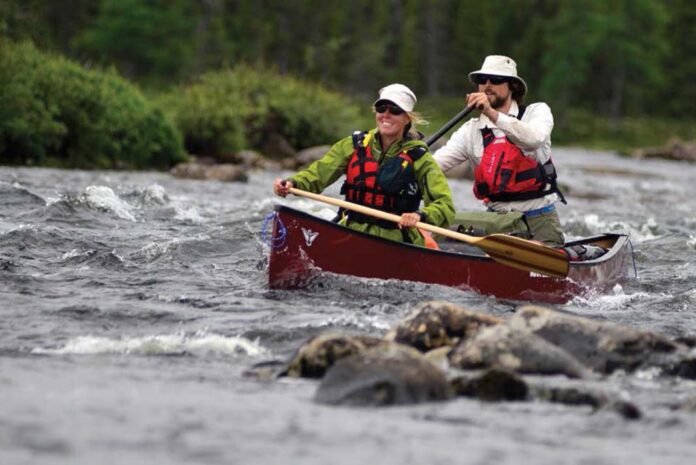
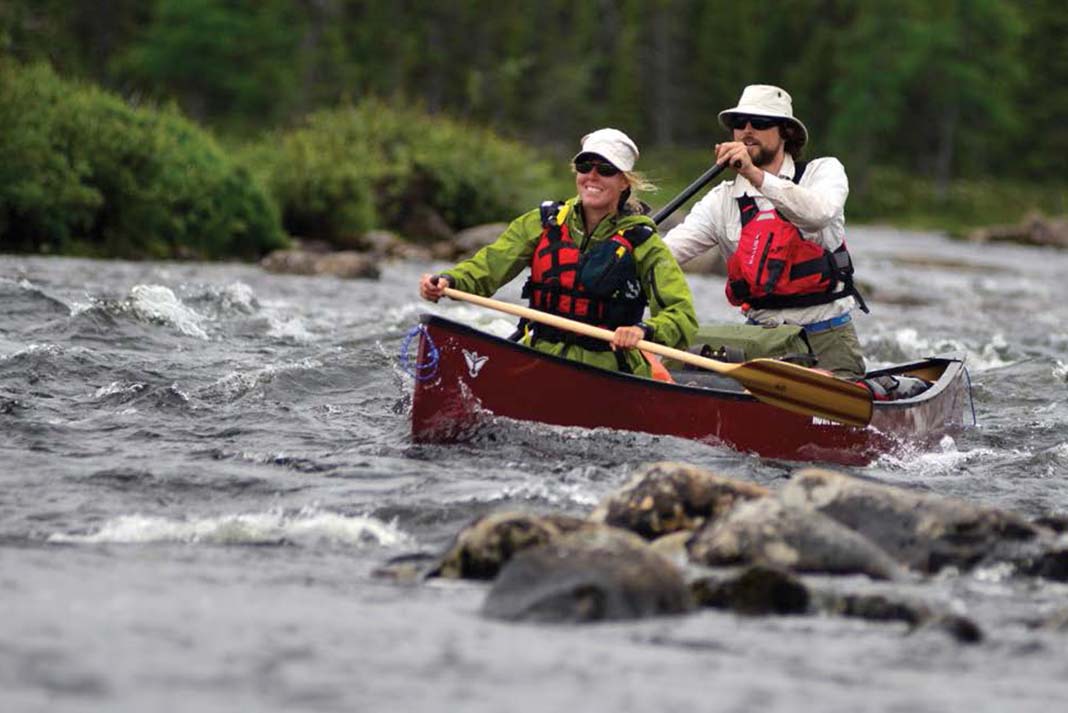
Test drive. Day 19, on the Rellot River.| Photo: Conor Mihell

The title of our six-week wilderness adventure in northern Quebec last summer should be A Tale of Two Prospectors. Our friends paddled one of the original river trippers, a 17-foot cedar-canvas Chestnut Prospector from veteran builder Headwaters Canoe Company. Meanwhile, Jon and I put the new Nova Craft Prospector 17 TuffStuff Expedition through perhaps the most rigorous boat review in Paddling Magazine history.

Nova Craft Prospector 17 TuffStuff Expedition Specs
Length: 17’
Width: 36”
Weight: 63 lbs
Max Capacity: 1,200 lbs
MSRP: $3,159 CAD
[ Paddling Buyer’s Guide: See the Nova Craft Prospector 17 canoe ]

Nova Craft’s Prospector 17 is expedition‑ready

Our plans for a remote trip in the untracked wilds of Nunavik—traversing winding rivers, sprawling lakes, four watersheds, the thunderous rapids of the mighty Nastapoka River, and even a stretch of tidal Hudson Bay coast—demanded a capable and reliable craft. Fortunately, Nova Craft owner Tim Miller was eager for the opportunity to prove the TuffStuff Prospector is just that. A shiny new, cranberry-red Nova Craft Prospector 17 arrived on our doorstep a few weeks before departure.

Nova Craft debuted their TuffStuff material in late 2014. The sturdy composite—a proprietary blend of Innegra and basalt finished with gel coat—is Nova Craft’s unequivocal answer to the what-will-we-do-without-Royalex question. Boat testers immediately set about beating the new boats down bony backyard runs in an effort to discover the limits of TuffStuff’s toughness (read a review of the TuffStuff Prospector 16). But the tougher-still Expedition lay-up—which adds a reinforcing layer of fibers, optional skid plates and an extra five pounds—begged for an actual, hard-assed, rocks-rapids-and-portages wilderness trip. In other words, a proper expedition.

[ Plan your next canoe expedition with the Paddling Trip Guide ]

No need to walk on eggshells

In shallow headwater rapids, collisions with unseen rocks reverberated through the rigid hull, but left only a slight scuff on the skid plates. By day seven, our Nova Craft Prospector 17 showed many light scratches and two gouges through the gel coat—injury resulting from some less-than-gentle wading—exposing the undamaged composite fibers but in no way compromising the integrity of the hull. Five weeks of tripping later, the scars remained purely superficial and easily touched up at home.

While Jon and I could casually slide our Prospector into the alders for loading and unloading, or scooch it over the odd beaver dam or rock bar, our friends’ cedar-canvas canoe had to be treated with kid gloves on every landing and lift-over. Canvas that springs a leak can be field-repaired, but it’s not something you want to make a habit of on an extended trip. We piloted the TuffStuff exactly as we would a Royalex hull; our trad trip-mates paddled theirs like a fine china teacup.

The right material is a weighty concern

Aside from its durability, the other tremendous advantage of TuffStuff is its very manageable weight. Tipping the scales at just 63 pounds, our 17-footer is 25 percent lighter than most comparably-sized whitewater tripping canoes, which means I could carry it at least 50 percent further on portages.

On the water, our friends’ hefty wooden canoe is improbably buoyant; its gracefully re-curved ends ride several inches higher than our Nova Craft Prospector 17, and its deeply rounded belly swallows gear with nary a dent in freeboard. In contrast, when our Prospector 17 is loaded with 700 pounds of paddlers, packs and food barrels, the choppy waves that prevail on our route’s shallow, wind-tossed northern lakes slap at our gunwales, even as our trip-mates bob imperviously ahead.

As log drivers and new paddlers know, however, round equals tippy. Our Prospector’s shallow-arch hull gives it much greater initial stability, especially when empty, so it’s just as capable in the hands of novices or on micro-adventures as it is on once-in-a-lifetime wilderness expeditions.
TEST DRIVE, DAY 19, RELLOT RIVER.| PHOTO: CONOR MIHELL
[ Paddling Buyer’s Guide: See all Nova Craft canoes ]

Get Tuff with the Nova Craft Prospector 17

The original Prospector canoes, crafted from steam-bent cedar and stretched canvas, embody the elemental qualities of their resourceful namesakes. The Nova Craft Prospector 17 TuffStuff Expedition employs state-of-the-art materials and a shape revised for today’s travelers, but the name continues to conjure visions of exploration and challenge, of seeking fate and fortune in the wild unknown.
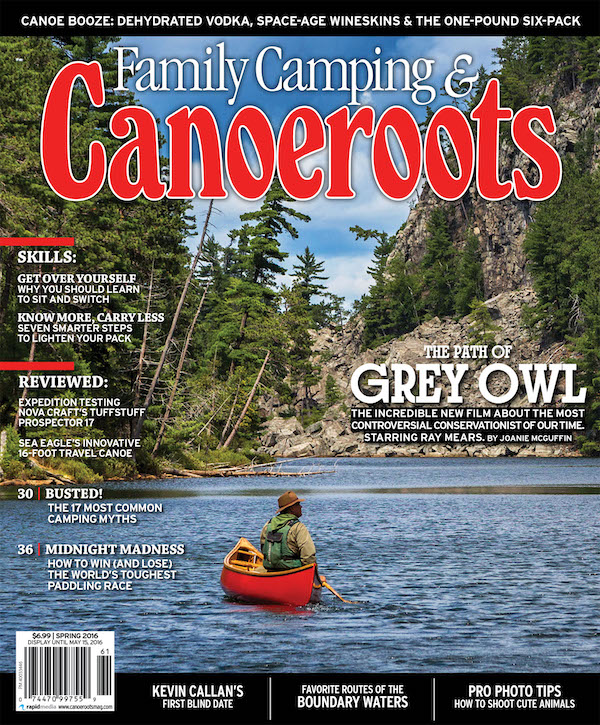


This article originally appeared in Canoeroots
Spring 2016 issue.

Subscribe to Paddling Magazine and get 25 years of digital magazine archives including our legacy titles: Rapid, Adventure Kayak and Canoeroots.
Boat Review: Wenonah Minnesota II

WENONAH MINNESOTA II | Feature Photo: Kaydi Pyette
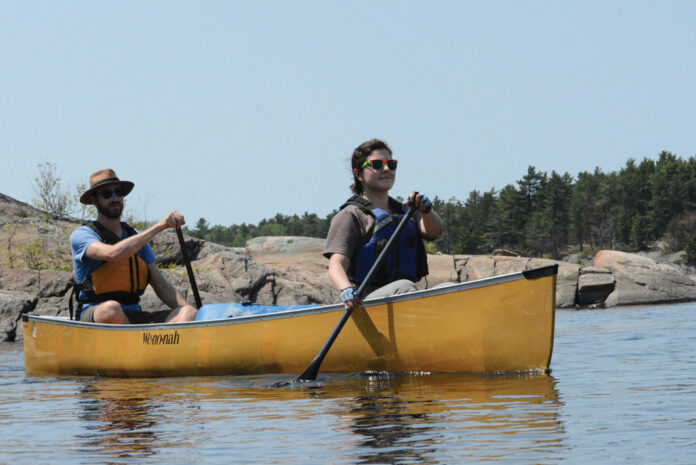
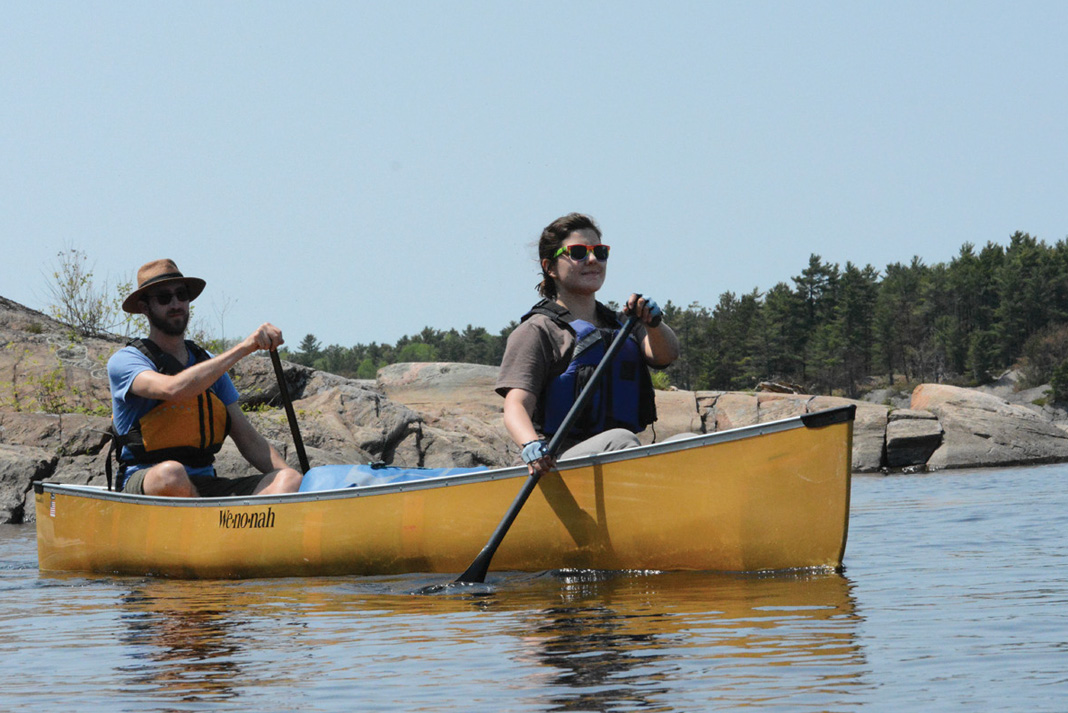
Performance touring in the Wenonah Minnesota II. | Photo: Kaydi Pyette

One weekend this spring a group of Paddling Magazine diehards planned to take a quick backcountry canoe trip to fly across the portage trails for a few days. Our ride for this ambitious 60-kilometer weekend route was the sleek and speedy Wenonah Minnesota II—one of our top picks for best lightweight canoe.

Wenonah Minnesota II Specs
Length: 18’6”
Width: 35”
Volume: 13.5”
Weight: 42 lbs
Material: Ultralight layup
MSRP: $2,699
www.wenonah.com

The Minnesota II is a racer at heart

Late to the put-in on Saturday morning, Geoff and I set off an hour behind our friends. We caught up in half the time, our Minnesota II easily outstripping the Prospectors our friends paddled.

[ Paddling Buyer’s Guide: See all lakewater & touring canoes ]

Right away I could tell the Minnesota II is a design any glide-junkie will fall in love with. Shallower and narrower than the average tripper, the Minnesota II’s roots are in the Gene Jensen-designed Whitewater II, a go-fast downriver racer.

“There’s been many changes and improvements to the design since,” says Wenonah Canoe vice president Bill Kueper. The tweaks may have turned a race boat into a touring-friendly model, but paddlers can still feel Jensen in the Minnesota II’s minimal rocker, sharp lines and unbeatable cruising.

“Jensen was famous for his pursuit of tracking and efficiency,” adds Kueper, and we found the Minnesota II has stayed true to those straight-tracking and performance-focused dreams. With a standard bucket seat and foot brace for the stern the design favors a sit-and-switch stroke, but can be paddled any style. Since its release in 1987, the Minnesota II has become Wenonah’s second most popular design, falling in just behind the more newbie-friendly Spirit II.

An extra-strong and speedy canoe

Despite tipping the scales at a mere 42 pounds in Wenonah’s Ultralight lay-up, the Minnesota II surprised me with its durability. After missing the portage in a maze of channels and with a burly rapid ahead, our group decided to bushwhack downriver.

Everyone wanted the airy Minnesota II for this trail-less portage—our friends’ repainted fiberglass canoes were easily twice the weight. By way of a game of rock-scissors-paper, Geoff won. While tramping up a steep slope a mat of moss gave way sending both paddler and canoe careening onto rocks below. Despite landing between a rock and 250-pound Geoff, the Minnesota II was no worse for wear, with just a couple surface scratches. It can certainly take abuse not normally associated with a lay-up termed Ultralight.

Downstream and back again

Despite boasting exactly zero inches of rocker, the Minnesota II handled well in the straightforward class I and II rapids we ran, feeling more responsive than its 18.5-foot length should allow.

WENONAH MINNESOTA II | Feature Photo: Kaydi Pyette
WENONAH
MINNESOTA II | Feature Photo: Kaydi Pyette

Paddling in mid-May in a high water year, as we headed back upstream we fought a slow but constant current. The Minnesota II dove ahead on line each time. When the river narrowed we dug in to grunt up swifts.

Get wild with the Wenonah Minnesota II

Minnesota II devotees include all types of paddlers. Some families purchase it for its gear hauling capacity and older paddlers love it for its light weight and efficiency. However, the Wenonah Minnesota II is truly at home in the Boundary Waters and Quetico, a workhorse for paddlers who favor its handling on big lakes and weight on lengthy portages. For anyone who dreams of weeks spent crossing the vast expanses of canoe country, I’m not sure you could find a more suitable design.

[ Plan your next adventure in the Boundary Waters Canoe Area with the Paddling Trip Guide ]

“It’s my boat of choice,” confides Wenonah’s Kueper. “It gets me as far away as quickly as possible. There’s no playing the cake-walk for campsites. I’m looking for pristine wilderness and solitude—this is a boat that facilitates that on water and on the portage.”


This article originally appeared in the Canoeroots
Summer/Fall 2016 issue.

Subscribe to Paddling Magazine and get 25 years of digital magazine archives including our legacy titles: Rapid, Adventure Kayak and Canoeroots.
Go Faster With The Kayak Forward Stroke

Ninety-nine percent of the time you spend in your sea kayak is devoted to paddling forward. With a cadence of 50 full stroke cycles each minute, a paddler makes 3,000 strokes every hour. This means that small improvements in your kayak forward stroke technique add up to large improvements in overall progress.

Peer Review
“Think of torso rotation in three parts: an active phase, a passive phase and a pause. Thinking in these terms will help you avoid carrying the blade in the water beyond your hip, and help you plant the blade far enough forward.”

– Nigel Foster, BCU level 5 coach, St. Petersburg, FL

“Rotation starts at the sit bones. Most paddlers lock their pelvis into a forward-only position during the forward stroke, rotating from just the belly button up. This doesn’t engage all of the core muscles. Use a slippery seat pan that allows your hips to slide when rotating.”

– Shawna Franklin, BCU level 4 coach, Orcas Island, WA

“During the catch phase, emphasize forward stroke expert and sprint coach Dan Henderson’s advice: Save the rotation. Make sure the blade is fully submerged before any body rotation begins. Too many paddlers rotate as they stab the paddle into the water, creating an air pocket that reduces power and efficiency.”

– Leon Sommé, BCU level 4 coach, Orcas Island, WA

“Check your rotation by watching your top hand during the power phase. This hand should maintain a consistent height across your kayak, as opposed to dropping down toward your deck.”

– Meaghan Hennessy, BCU level 3 coach and Paddle Canada level 2 instructor trainer, Vancouver, BC

Moving forward with a high-angle stroke

Stroke technique isn’t just about going faster. A more efficient stroke might propel you at the same speed, but it will get you to the beach with less fatigue, muscle strain and joint pain, saving energy for those times when you need to paddle faster or longer.

The high angle forward stroke described here is one of the most recognised forms of forward paddling technique used on the sea. I do, however, encourage every paddler to develop a variety of forward paddling styles; this enables adaptations to be made for environmental conditions.

High angle is the most efficient forward paddling style. It gives you maximum speed in your sea kayak and, when done well, maximizes the use of your larger body muscle groups. However, it requires good posture, balance, body rotation and appropriately conditioned muscle groups for comfortable paddling day in, day out.

How to complete a kayak forward stroke

1) Catch Phase

  • Body posture upright with no forward bobbing.
  • Arm extended for maximum reach.
  • Relaxed top hand prevents wrist strain, 
improves circulation and reach.
  • Maximum reach gained through good 
torso rotation.
  • Paddle entering water cleanly and near 
vertical, like spearing a fish.
  • Power put on paddle immediately.

2) Power Phase

  • Unwind rotation of body for power.
  • Push foot peg on the same side as paddle blade for power transfer through core muscles.
  • Knees/thighs relaxed in kayak to allow power transfer.
  • Paddle stays at a high angle so the blade tracks near vertically alongside the kayak.
  • Paddle is held away from body throughout to maximize rotation.
  • Top hand guides and pushes paddle to prepare for next catch phase and stays about level with eyes.

3) Blade Exit

  • Blade exits at or just before hip.
  • As blade exits it is sliced out with no scooping of water.
  • Top hand is high and body is in position for final rotation for the next catch.
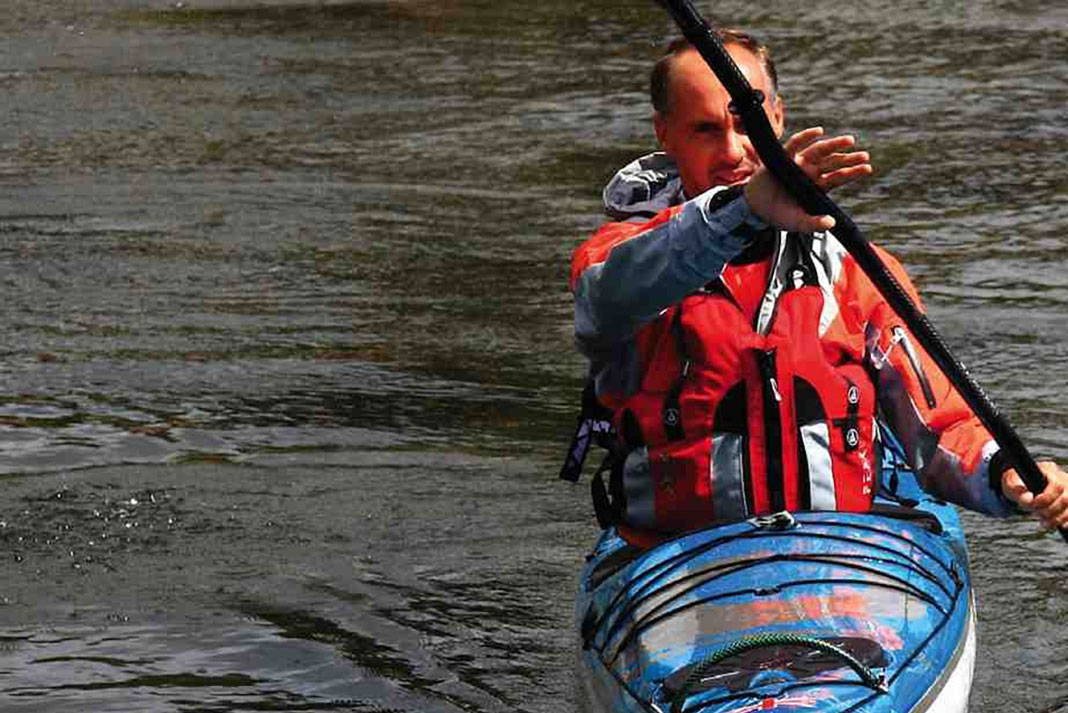
Man in a kayak prepares to demonstrate the kayak forward stroke
Photo: Doug Cooper

Final tip for the kayak forward stroke

Many kayakers hold their paddles too close to their bodies when performing forward strokes, preventing full rotation and control. Pretend you have a beach ball between you and your paddle to avoid your paddle coming too close.

Happy paddling!


Feature Video: Paddle farther with less effort. James Roberts and Dympna Hayes of Parry Sound’s Ontario Sea Kayak Centre share their top tips for going the distance without getting tired.


Secrets To Kayaking The Ozarks In Missouri

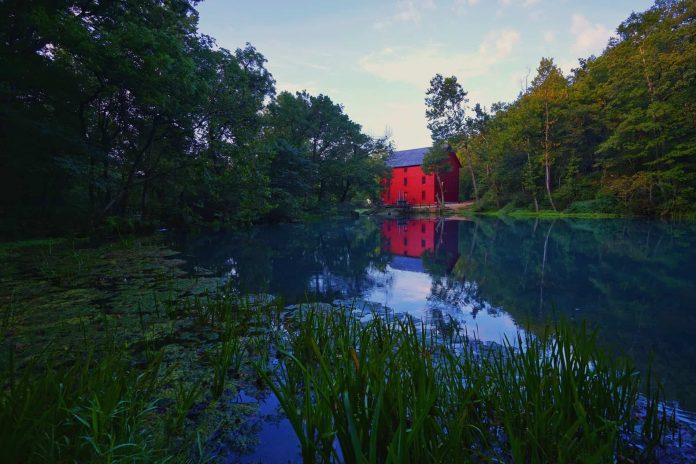
The scenic Alley Mill is located in the Ozark National Scenic Riverways and now operates as a museum. | Photo: Courtesy VisitMO.com

In a little-known corner of Missouri, in the almost unheard-of Ozarks, there’s a hilly region of oak and pine woodland hiding some of America’s best-kept secret kayaking rivers. Taking a paddle through the Ozark Mountains is full of mystery and delight.

Kayaking is a dream in Missouri’s Ozarks

Picture plunging sinkholes, limestone caves, underground streams, and many freshwater springs bursting year-round from cliffs. In fact, there are so many springs, they seem to have run out of names. There are multiple Boiling Springs, Round Springs, Cave Springs, Ebb and Flow Springs.

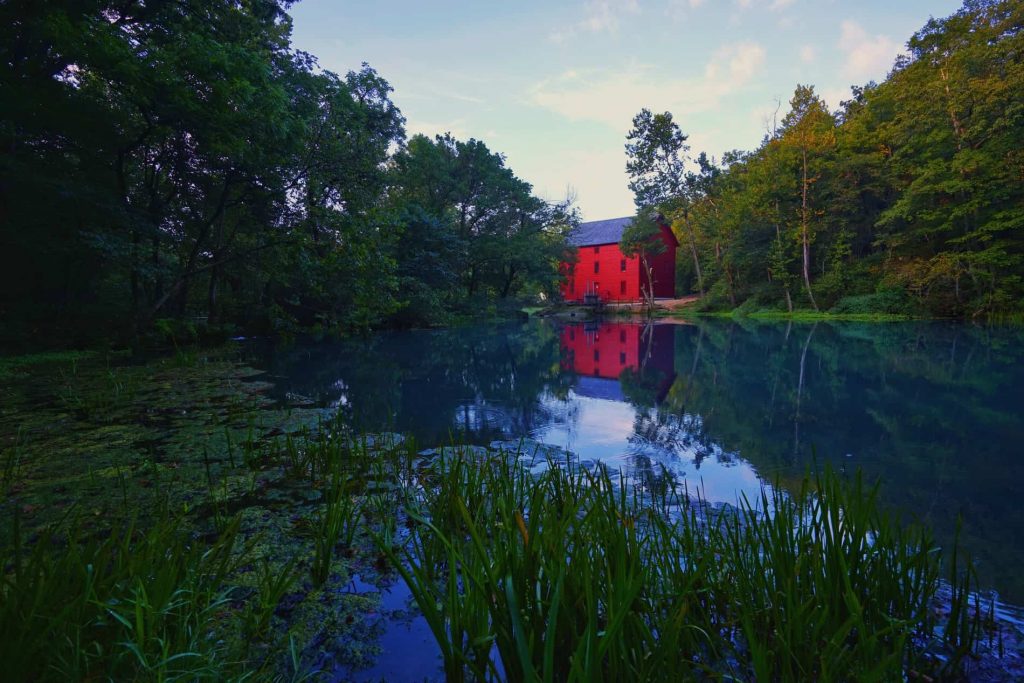
The scenic Alley Mill is located in the Ozark National Scenic Riverways and now operates as a museum. | Photo: Courtesy VisitMO.com
The scenic Alley Mill is located in the Ozark National Scenic Riverways and now operates
as a museum. | Feature Photo: Courtesy VisitMO.com
[ Paddling Buyer’s Guide: see all kayaks ]

While there are several regions across the Ozarks with fantastic year-round kayaking opportunities, the eastern region in Missouri is particularly suited for a first-time kayaking visit.

The class I to II waters run cool and clear throughout the year, including the sweltering summers. And with two rivers protected by a national park, plus another designated as a Wild and Scenic River, you’ll find plenty to paddle, whether for a day or a week.

Shuttle

Many riverside outfitters and rental companies offer shuttle services, plus maps and more info. Visit the Ozark National Scenic Riverways and Eleven Point National Scenic River for more info.

Don’t Miss

There’s more than just kayaking at ONSR. Two highlights include a ranger-led lantern tour of Round Spring Cave and descending the stairs into the gaping Devil’s Well, a karst window where a sinkhole swallows a creek.

Diversions

While much of the Ozark Trail is still under construction in other parts of Missouri, a completed section passes through ONSR. Specifically, shorter hikes can be found near Round Spring or in the nearby Echo Bluff State Park and Current River State Park.

Learn More

For a guide to more than 40 of the Ozarks’ greatest paddling adventures, in Missouri and Arkansas, check out Paddling the Ozarks by Mike Bezemek.

Guide to kayaking the Ozarks in Missouri

If you have a half day:

The Jacks Fork in Ozark National Scenic Riverways (ONSR) offers a pair of seven-mile class I to II sections above and below Alley Spring. Shuttles are easy using MO-106.

[ Plan your next paddling adventure with the Paddling Trip Guide ]

The upper run, starting at Bay Creek access off County Road 106-425, is more remote and begins in a narrow bluff-lined valley. Typically, this run has smaller crowds and lower flows once the trees leaf out, which may require some dragging past riffles. Below Alley Spring, which boosts the flow, is the more typical summer run, with a take-out at Buttin Rock Access near the bridge in the town of Eminence, Missouri.

If you have a full day:

Head over to the Current River, also in ONSR, and focus on one of the roughly 10-mile class I to II runs above or below the river access at Pulltite Campground, reached via Highway EE off MO-19. For the upper run, start at Akers Ferry, reached via Highway KK from MO-19.

This run includes kayaking past Cave Spring, unique in the Ozarks, where groundwater discharges from a river-level cave—due to White Nose Syndrome, which is fatal to bats, the cave is currently closed to entry. To extend this run, start three miles farther upstream at Welch Spring, where you can visit the ruins of a historic hospital. For the lower 10-mile run, start at Pulltite, visit the landmark logging cabin up the spring branch, and take out at Round Spring access (just off MO-19).

If you have a weekend:

Head to the Eleven Point National Scenic River, one of the original eight protected in the 1968 Wild and Scenic Rivers Act. The 19 miles from Greer Crossing to Riverton are perfect for a two- or three-day trip. Near the put-in, Greer Springs is the second-largest spring in the Ozarks, discharging an average of 360 cfs.

Along the way, enjoy the mysterious vibes of the Eleven Point, like the recurring river-level fogs, the forested bluffs of the Irish Wilderness where a whole community vanished during the Civil War, and the abandoned mill sites at Turner and Boze Springs.

If you have a full week:

You’re what Ozarkers call lucky. Combine everything above but know most kayaking runs can be extended upstream or downstream—sometimes for dozens of miles. In 1926, acclaimed naturalist Aldo Leopold floated for two weeks on the lower Current River, from Van Buren to Doniphan. On the trip he became so enamored with Missouri, he returned three years later and bought a riverside cabin.

If you want more rivers to explore, all you need to do is pick a direction and drive over rolling ridges and valleys for about an hour. Here’s a hint: North Fork White.

This article was first published in Issue 58 of Paddling Magazine. Subscribe to Paddling Magazine’s print and digital editions, or browse the archives.


Boat Review: Pyranha JED Kayak

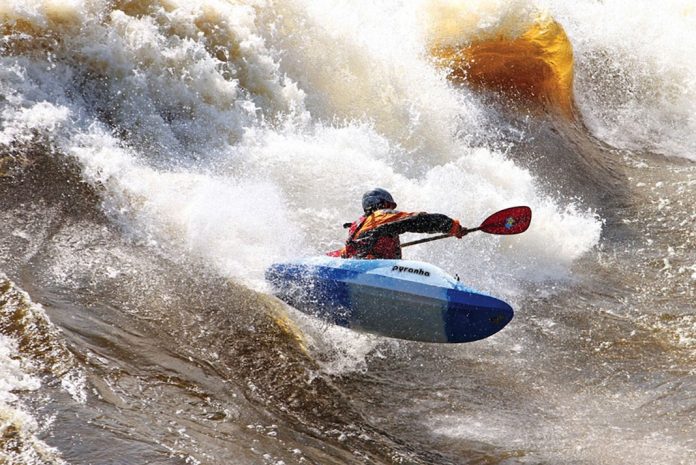
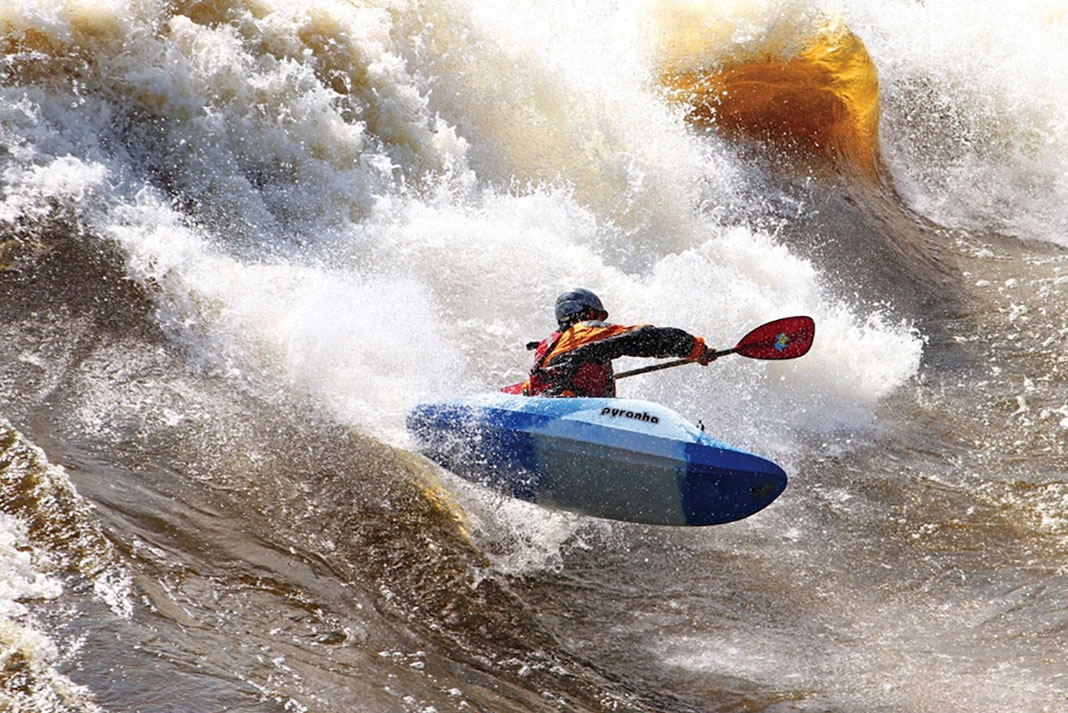
Man paddles the Pyranha JED kayak on the Ottawa River's Buseater rapid
Going big on Buseater. | Feature Photo: Mike Kobzik

It takes fuel, oxygen and a spark to make fire. While we don’t know if Robert Peerson provided one or all three of these elements when he made the move to Pyranha’s design team last year, we are sure that their latest freestyle creation, the Pyranha JED, is pure fire.

Pyranha JED Specs
(Small / Medium / Large)
Length: 5’9” / 5’11” / 6’1”
Width: 24.7” / 25.5” / 26.5”
Volume: 47 / 55 / 62 U.S. gal
Weight: 30.8 lbs
Weight Range: 90-150 / 120-200 / 175-240 lbs
MSRP: $1,159
www.pyranha.com
[ Paddling Buyer’s Guide: See the Pyranha JED kayak ]

The Pyranha JED takes shape

The first thing that stands out about this boat is the V hull in the rear two thirds of the stern. Skeptical that this would be a good thing (aren’t V hulls for sea kayaks and ocean liners?) we were very pleasantly surprised at the lightning quick edge-to-edge transitions on waves and the ability to land moves with no worry of the dreaded stern ender-to-flush combo.

Another feature that clearly sets the Pyranha JED apart from its predecessor, the Pyranha Molan, is the shape of the rails. When engaged, the edges bite hard and rip across a wave. Coupled with the V hull stern, however, they also release with ease allowing you to get airborne or clean spin yourself dizzy.

Peerson says the rise from the planing surface to the rails is gradual and places the rails higher on the JED to keep them from tripping up. He explains, “This transitions into the stern hull’s pronounced V shape, having the same forgiving effect while also helping the paddler to edge and rail the hull.”

Speedy progressive rocker

The JED distances itself even further from the Molan by having a full progressive rocker, giving it plenty of speed on a wave. The key to maximizing your airtime in this boat is using an edge-release technique as opposed to the butt-bounce that favors kick-rockered boats like the Molan.

The slicey bow and stern make for easy initiation of vertical moves and feel well balanced when cartwheeling. Ample volume around the cockpit—along with an included, removable IR overthruster—provides gravity-breaking pop for loops and puts your knees high, helping keep your torso in an aggressive forward position.

Man paddles the Pyranha JED kayak on the Ottawa River's Buseater rapid
Going big on Buseater. | Feature Photo: Mike Kobzik

Get playful on the flats

While the speed of the Pyranha JED is impressive on a wave, it’s less so when running the river. This is easy enough to overcome by making use of small waves and holes to move around the flats. Playing on a flooded Ottawa River, we were happy to find that we weren’t constantly stern squirting unintentionally.

When we did find ourselves hull to the sky, the JED was very easy to roll. Pyranha’s Connect 30 outfitting features aggressive thigh braces, a ratcheting backband and foam foot blocks. While we found the backband sat lower than we would have liked, given the overall comfort, this was quickly forgotten.

[ Paddling Buyer’s Guide: See all Pyranha kayaks ]

Get an edge with the Pyranha JED kayak

If you are thinking about stepping up to a new freestyle ride, the Pyranha JED should be on your list. With the medium size available now and small and large versions ready for summer, we expect it won’t be long before you see them blazing a wave near you.

This article was first published in the Early Summer 2012 issue of Adventure Kayak Magazine. Subscribe to Paddling Magazine’s print and digital editions, or browse the archives.


Video review of the Pyranha JED kayak:


Boat Review: Delta 16 Kayak

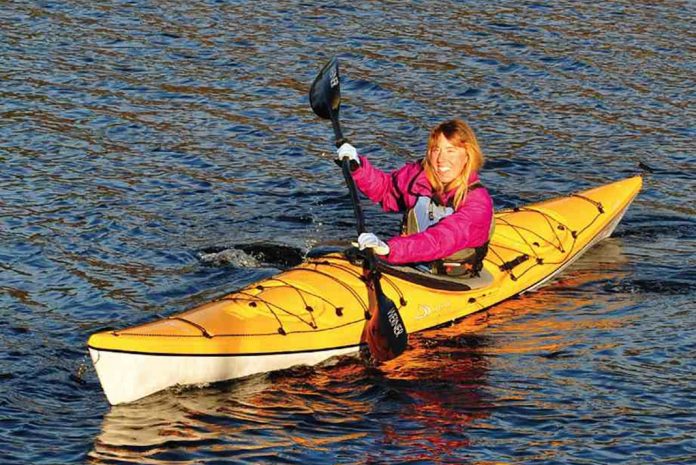
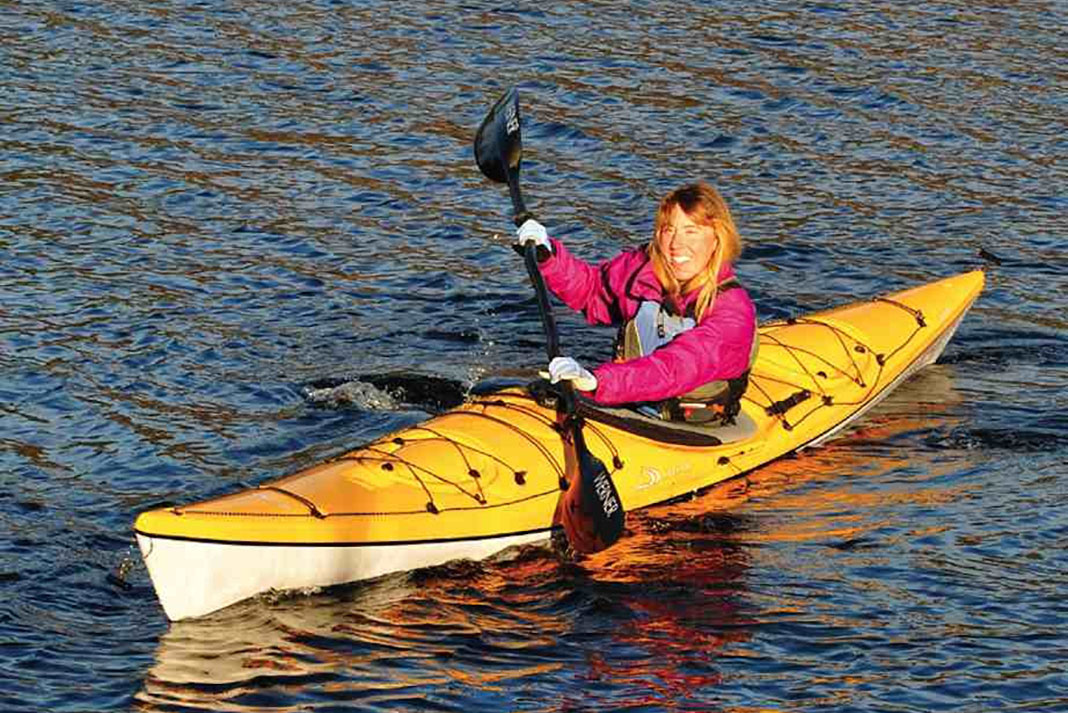
Woman paddles a Delta 16 kayak
Feature Photo: Stephanie Park

When Delta Kayaks launched in 2005, its lineup of exclusively thermoformed plastic kayaks was quickly recognized as being among the finest. The company’s latest offering, the Delta 16 kayak, continues to vault this lofty reputation.

Delta 16 Kayak Specs
Length: 16’
Width: 22”
Weight: 50 lbs
Maximum Weight: 275 lbs
MSRP: $2,350 USD or $2,495 CAD
www.deltakayaks.com
[ Paddling Buyer’s Guide: See the Delta 16 kayak ]

The Delta 16 is a high-capacity kayak

Delta’s wizardry with the thermal forming process stems from over 30 years’ experience stretching plastic for other industries. Under the direction of kayak industry veteran Mark Hall, Delta boats leave the factory with smooth lines, impeccable detailing and a high gloss finish to rival any quadruple-clear-coated sports car. All this at considerably less cost, and less weight even, than comparable composite kayaks.

Delta says the 16 caters to paddlers “who have been waiting for a full-figured British style design with more dry storage typical of North American designs.” At 16 feet long and 22 inches wide, the Delta 16 feels sporty but packs an impressive 55 gallons dry storage into three voluminous hatches—50 percent more than many similarly proportioned Brit boats.

[ Plan your next sea kayaking & touring adventure with the Paddling Trip Guide ]

An elegant touring kayak for intermediates

While some aspects of the design are informed by the Atlantic approach—the shallow-V, soft chined hull and optional skeg, for example—the Delta 16 kayak shows a healthy dose of Delta’s West Coast roots, albeit in a trimmer package than the standard Pacific tourer. The front and rear decks are high to aid expedition capacity, a rudder comes standard and the seat is outfitted with an adjustable-height backrest.

Even with the front deck pod (more on that below), the cockpit is comfortable for paddlers up to six feet tall. Trimming on the fly is easy with the sliding seat. Hip padding is non-existent so smaller paddlers should invest in Delta’s optional hip pad fit kit, or an hour shaping custom inserts.

Woman paddles a Delta 16 kayak
Feature Photo: Stephanie Park

The Delta 16 moves the day hatch from behind the cockpit to the front deck for easier, drier access. Even better, it’s watertight and roomy enough for more than just a PB&J sandwich, easily swallowing a paddling jacket, SLR camera or even 10-liter dry bag.

On-water acceleration is quick for a 16-foot boat, thanks to a sharp entry point low on the bow. Combined with moderate rocker, the hull tracks well even without deploying the skeg or rudder.

With a light paddler and empty hatches, the Delta 16 sits quite high in the water, but adding some payload increases primary stability. Edging feels confident and releases the 16’s sporty side. I threw it on edge for a low brace turn and was surprised to find myself quickly facing back the way I came.

Delta Kayaks’ attention to detail

Unique hatch covers use quarter-turn locking knobs, bungees and integrated rubber rim gaskets for a seal that’s dry and user-friendly, even with numb fingers.

Standard features reflect Delta’s commitment to detailing: self-rescue straps and easy-draining curved bulkhead behind the cockpit, full decklines and leashed hatches.

The optional skeg is deployed with a string to eliminate cable kink. Molded-in cable routings are rudder ready.

[ Paddling Buyer’s Guide: See all Delta kayaks ]

Go far with the Delta 16 kayak

The Delta 16 kayak combines some of the latest great ideas in sea kayak design with the tried-and-true characteristics of an elegant tourer. It’s best suited to intermediate paddlers who want a light, nimble kayak that still knows how to go the distance.

This article was first published in the Early Summer 2011 issue of Adventure Kayak Magazine. Subscribe to Paddling Magazine’s print and digital editions, or browse the archives.


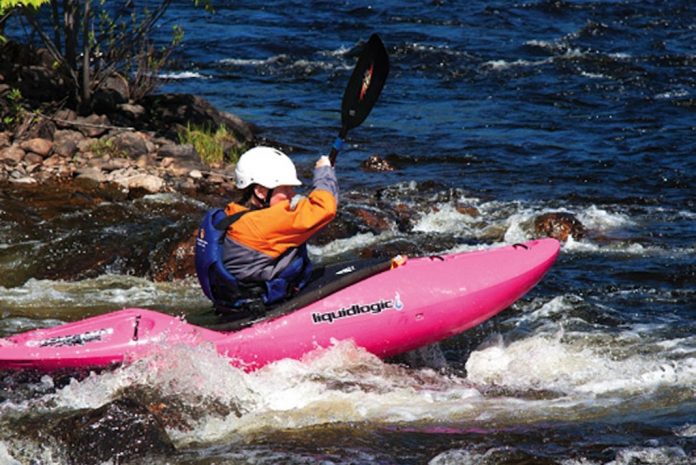
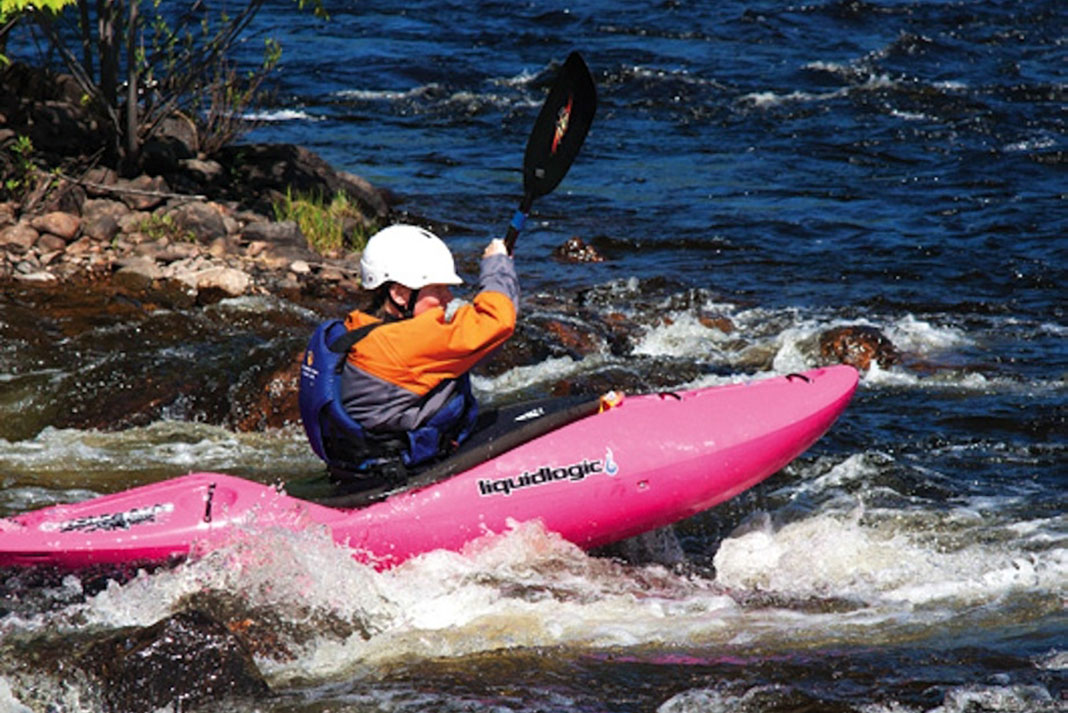
Boat Review: Liquidlogic Stomper Kayak

Woman paddles through rapids in a Liquidlogic Stomper kayak
Feature Photo: Michael Mechan

When Liquidlogic launched a campaign during the winter of 2011 called “Automatic for the People” asking paddlers what they wanted to see added to the company’s 2012 line-up, the response was overwhelming: a flat hull creek boat. Several months later (after leaving the Jefe and Remix alone for a few nights together) the Liquidlogic Stomper was born.

Designer Shane Benedict says, “All these people had different passions and different concepts but the number one thing they wanted was a flat hull creek boat.” Will the Stomper be the true love paddlers have been looking for?

Liquidlogic Stomper
80 / 90 Specs
Length: 8’2” / 8’5”
Width: 26” / 27”
Volume: 80 / 90 U.S. gal
Weight: 46 / 49 lbs
Weight Range: 110-210 / 170-270 lbs
MSRP: $1,099
www.liquidlogickayaks.com

The Liquidlogic Stomper is a nice ride

If you want a comfortable boat, you want the Stomper. Liquidlogic’s super plush Bad Ass Outfitting hugs your curves in all the right places. The upgraded backband system sits low on your back and flips up to allow unparalleled access to the stern for extra cargo.

While other boats we’ve tested relied on speed and edging to get you around the river, the Liquidlogic Stomper is all about spinning and riding over anything. This boat is by far the most rockered in the group, making it a boofing machine. It slides over rocks, skips over holes and flies off ledges without needing to be moving at Mach 1.

[ Plan your next whitewater kayak adventure with the Paddling Trip Guide ]

Softer edges require a sure touch

Add to the rocker profile a semi-planing hull and very soft, wide, chamfered edges and the Stomper is easy to maneuver mid-rapid. You can flirt all you want with boily crosscurrents and waves without much thought and still be forgiven—those edges just won’t catch.

The tradeoff to softer edges is that you can’t carve out of holes as easily as in a boat with harder rails. You also need to be very aggressive to avoid spinning out on eddylines. Keeping your weight forward and charging hard is the key to snapping the Stomper into those tiny eddies.

Woman paddles through rapids in a Liquidlogic Stomper kayak
Feature Photo: Michael Mechan

A hard-driving creek boat

The Liquidlogic Stomper isn’t really built for play and leans hard toward the creeking side of things. Surfing waves, it tends to noodle around rather than carve. We found the Stomper had less primary stability than any of the other boats in the shootout—a result of the semi-planing hull’s narrower footprint. Lean the boat over to the side, however, and you’ll find bomber secondary stability.

[ Paddling Buyer’s Guide: See all Liquidlogic kayaks ]

Don’t tread lightly with the Liquidlogic Stomper

Our testers agreed, while some of the features of the Liquidlogic Stomper are a plus for beginners—like not having any edges to catch and the ease with which it maneuvers around—it is better suited for advanced paddlers looking to charge tight, technical rivers, slide down rocks and boof everything in sight. If you’re tired of playing around, take a Stomper for a romp.

This article was first published in the Summer/Fall 2012 issue of Rapid Magazine. Subscribe to Paddling Magazine’s print and digital editions, or browse the archives.


Pyranha Loki Kayak Review

Man paddles in a Pyranha Loki kayak
Feature Photo: Jo-Anne Caldwell

Remember when splats and squirts were paddling moves, not something that happens after a night of too many tacos and beer? If you miss those days of controlled verticality—or have no idea what we’re talking about—then try paddling the Pyranha Loki playboat.

Pyranha Loki Specs
Small / Medium / Large
Length: 7’1” / 7’1.5” / 7’2”
Width: 23” / 23.5” / 24”
Volume: 39 / 49 / 59 U.S. gal
Weight: 30 / 33 / 34 lbs
Weight Range: 88-154 / 125-198 / 175-243 lbs
MSRP: $1,199
www.pyranha.com
[ Paddling Buyer’s Guide: See the Pyranha Loki kayak ]

Pyranha’s Loki is a smooth operator

The profile of this slicey, rounded-hull playboat is what you’ll notice first—it’s two and a half inches narrower and a foot longer than its cousin JED, with less volume.

“Our goal was to create a boat where its connection to the river was more important than its ability to take off from it,” says Pyranha designer Graham Mackereth. Paddlers had been requesting a slicey, old-school design similar to Pyranha’s I series, he adds. “With the Loki we’ve taken advantage of a more modern hull shape and added length to slow down some moves. The satisfaction comes from how smoothly you can make the move, not how many you can pack into a minute.”

Loki has plenty of tricks in store

Where flat-bottomed aerial boats tend to bounce around on waves, the hull shape of the Loki makes for a smooth glide of a ride. It isn’t as picky as a full-on playboat when it comes to wave selection, happily nestling into green waves that its spuddier cousins can’t. Long and easy-to-engage edges allow predictable carving across the face of a wave and, with good technique, you can throw the long stern through the air for huge water-spraying blunts.

Hole riding in the Loki is a smooth and controlled experience. The hull stays settled on the water during side surfs and spins. The boat’s length allows for slow rotation cartwheels, giving you time to keep your torso in the lead. Keep the depth of the hole in mind as the Loki’s extra few inches of length and low-volume ends slice deeper than short, high-volume aerial designs.

Man paddles in a Pyranha Loki kayak
Feature Photo: Jo-Anne Caldwell

Lock in tight and roll with ease

The Loki is also a capable downriver boat. Its rocker profile keeps its ends high out of the water allowing for effortless, mid-rapid direction changes. In bigger water, stay aggressively forward as large waves can lift the bow up, sink the low-volume stern and leave you in an unintentional stall or ender. Luckily, the narrow width and flat stern create a profile that makes rolling upright a breeze.

The Loki is equipped with Pyranha’s awesome Connect 30 outfitting system. Aggressive thigh braces and a wide, high-riding back band are linked with a silky-smooth, durable ratcheting system that keeps you locked in place. With size 10 feet tucked into the skinny bow there’s some wiggle room, but a low-profile booty is needed for comfort.

[ Paddling Buyer’s Guide: See all Pyranha kayaks ]

Get vertical with the Pyranha Loki

Paddling the Pyranha Loki is like adding play spots and mischief to your local river, opening up the possibility of controlled verticality with every eddyline, rock or small wave you find. Its design features make classic moves—like squirts, pirouettes, splats and cartwheels—easier as well as more stable and fun than in a creek boat or freestyle kayak. The Loki will spice up your local class II–IV run, just like adding hot sauce to your tacos, but without having to worry about fallout the morning after.

This article was first published in the Spring 2013 issue of Rapid Magazine. Subscribe to Paddling Magazine’s print and digital editions, or browse the archives.


Pyranha Loki Test Ride Video:


Boat Review: Azul Sultan Kayak

Promotional image of the Azul Sultan kayak
Feature Photo: Paddling Staff

Based on the Calypso’s unique performance-oriented design, the Azul Sultan kayak brings these same attributes to larger paddlers or paddlers looking for added storage capacity and sea worthiness for extended expeditions.

Azul Sultan Specs
(fiberglass)
Length: 17’10”
Width: 21.25”
Cockpit: 16.5” × 30”
Weight: 58 lbs
MSRP: $3,350
[ Paddling Buyer’s Guide: See all sea kayaks for larger adults ]

The Azul Sultan kayak has substance

The Azul Sultan measures just under eighteen feet long and is quite narrow at 21.5 inches. The Sultan is available in fiberglass, Kevlar or carbon layups and while Azul’s specs show the fiberglass weighing 58 lbs, word from the factory is that they have it down closer to 50 lbs.

Storage space to spare

In addition to increased volume the Azul Sultan kayak has large eighteen inch bow and stern hatches and an eight inch round day hatch all with watertight Valley urethane covers. Azul has further increased the useable space in the Sultan’s hatches by contouring the bulkheads into the cockpit area.

[ Plan your next sea kayaking & touring adventure with the Paddling Trip Guide ]

The larger sized hatch in the bow is a pleasure for stuffing and storing gear that could otherwise only go in the larger stern compartment. We appreciated the convenience of a day hatch for keeping things organized and quick at hand on extended trips or day outings. To complete the outfitting Azul includes full bungee deck rigging and perimeter grab lines.

A proper fit is key

Inside the Sultan, we enjoyed the long cockpit allowing even our tallest paddlers the ability to take out his 36-inch legs while still seated. The seat and thigh brace configuration didn’t seem to fit any of our test paddlers without some additional foam modification. It was simply a matter of either raising the seating position, which not all paddlers were necessarily into, or padding down the thigh braces for a more egonomic fit. Ensuring a proper fit is a must in any boat, especially one like the Sultan where much of your control and enjoyment is from being part of the boat rather than just sitting in it.

A retractable skeg is controlled on the left side by a simple rope and cleat system. The skeg springs down (and up if you happen to scrub it on something) and you control the running depth by cleating it off.

[ Paddling Buyer’s Guide: See all sea kayaks with skegs ]

The Azul Sultan rides high

The Azul Sultan is one of those kayaks that seems to be about the same speed as the one you’re in, until it suddenly leaves you in its dust. The Sultan’s large volume rides high and rolls with the water. This is both unnerving for some and a dream boat for more experienced paddlers. The long waterline and narrow beam produces a boat that accelerates quickly and maintains its speed with ease.

The single hard chine makes small adjustments in direction a quick snap of your hips at the end of a forward stroke. The long waterline of the Sultan that produces great forward speed means you have to aggressively tilt and sweep this boat around for a complete change in direction.

Without the retractable skeg, lighter paddlers in an empty Sultan will notice that it weathercocks quite easily, there’s simply lots of boat for the wind to catch and not enough boat deep in the water to keep it going straight. Dropping the skeg halfway, more gear and/or a heavier paddler fixes this problem immediately.

Who should paddle the Azul Sultan kayak?

Experienced heavier paddlers looking for a larger volume sea kayak with a hard chine British feel will love the Sultan. The Azul Sultan kayak is an ideal guide’s boat capable of big water and getting to where you need to be quickly. In the words of an old friend and professional sea kayak guide who happens to have a Sultan of his own, “Ah mon ami, c’est moi dancing bebe!”

This article was first published in the Fall 2001 issue of Adventure Kayak Magazine. Subscribe to Paddling Magazine’s print and digital editions, or browse the archives.


Boat Review: Nova Craft Bob Special

Man and woman paddle in a Nova Craft Bob Special canoe
Feature Photo: Kaydi Pyette

It was way back in 1905 when the Chestnut Canoe Company first introduced what would become one of the most popular and enduring canoe designs of all time—the 50-Pound-Special. A dozen canoe companies now produce their own versions of the 110-year-old timeless classic, yet I had never had the honor of paddling one. That was until this spring, when a Nova Craft Bob Special was delivered to the Paddling Magazine office.

Nova Craft Bob Special Specs
Length: 15’ max
Width: 35”
Capacity: 800 lbs
Weight: 40 lbs
MSRP: $2,599 (as tested)
[ Paddling Buyer’s Guide: See the Nova Craft Bob Special canoe ]

Origin of the iconic Bobs Special canoe

First made by New Brunswick’s Chestnut Canoe Company, the Bobs Special was first marketed as the 50-Pound Special. Its selling feature, aside from remarkable stability due to its wide beam, was its 50-pound weight—10 pounds lighter than boats of a similar size at the time.

When transmitting orders, the Chestnut Canoe Company’s telegraph code for the boat was BOBS. It here the mystery unfolds.

“The code BOBS was a salute to a beloved, senior British commander in the Boer Wars, Lord Frederick Roberts,” says Roger MacGregor, author of When the Chestnut was in Flower, a history of the Chestnut Canoe Company.

Roberts’ nickname? Bobs.

Bobs your uncle

Five-foot-three and sporting a truly excellent mustache throughout much of his life, Lord Roberts was one of the most successful commanders of the 19th century. He served in the British Army from 1851 until he retired in 1904, at the age of 72.

The Chestnut Canoe Company got many of their canoe model names from high-spirited characters on both sides of the South African Boer Wars. “These people became iconic and legendary in their own way,” says Jeremy Ward, curator at the Canadian Canoe Museum. Paul Kruger and Piet Cronje are two other wartime leaders whose tactics inspired model names.

More than a hundred years after it was first manufactured, the Bobs Special maintains its popularity. “They’re tubby little things and people adore them, whether 50 or 55 pounds,” says Ward. “It’s a boat for idyllic times.”

Man and woman paddle in a Nova Craft Bob Special canoe
Feature Photo: Kaydi Pyette

Bringing the Bobs Special back

In 1979, the Chestnut Canoe Company closed up shop. Nine years later, Tim Miller, owner of Nova Craft Canoe, took a stab at creating his version of the popular design.

According to Miller, the only major change to the original design was to create a fuller bow to allow for a drier ride in rough water. Miller also tweaked the name from Bobs to Bob. And of course, Nova Craft isn’t building their Bob Special out of cedar and canvas. Our test model is an Aramid Lite material. Not as authentic perhaps, but 10 pounds lighter than the original is okay with me.

[ Paddling Buyer’s Guide: See all Nova Craft canoes ]

Once the ice on the river finally broke up, I unwrapped and launched my Nova Craft Bob Special.

A stable and stalwart canoe

Miller attributes the design’s popularity to its versatility. “Today the Bob Special is a really good all-arounder; it’s a good day tripper for a couple to putz around the lake for the afternoon, it’s a nice solo for going out fishing and a good weekender for couples who travel light.” Even the late Canadian Prime Minister Pierre Elliott Trudeau soloed his very own Bobs Special.

Adding to its charm, the Bob Special is remarkably stable thanks to its 35-inch width and shallow-arch hull. This stability has made it a favorite amongst photographers, anglers and parents with young, active children.

At only 15 feet long, for me the Bob is a solo or very light weekend tripper. Nova Craft claims a capacity of 800 pounds, so it will easily float my Dutch ovens—the problem is finding the room to put them. Serious tandem trippers unwilling to strip down should consider a lengthier Nova Craft model, such as the Prospector or something from their Cruiser series.

The Bob comes standard with Nova Craft’s black aluminum gunwales, comfortable ash seats with nylon lacing, as well as ash carry handles and yoke. Nova Craft will custom build you one in a variety of other materials, including fiberglass, Royalex, Aramid, Spectra and Nova Craft’s own Blue Steel, ranging in weight from 60 pounds down to only 40 pounds.

Choose your own Nova Craft Bob Special

The Nova Craft Bob Special is a classic design in modern materials. As a tip of the hat to the old war commander and Mr. Trudeau in his buckskins, I’d recommend trimming your Bob Special in the more authentic ash gunwales.

This article was first published in the Early Summer 2014 issue of Canoeroots Magazine. Subscribe to Paddling Magazine’s print and digital editions, or browse the archives.