Home Blog Page 164

Canoe Review: Old Town Penobscot 164

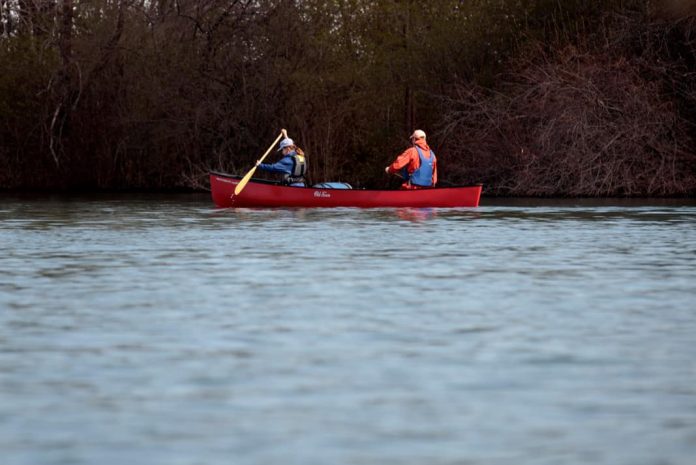
From flatwater tripping to running class III rivers, the versatile Penobscot can do it all. | Photo: Joel Clifton

My day trip paddling Old Town’s Penobscot 164 across the city’s outer harbor to a nearby park was a typical outing for this design. Billed as Old Town’s “sleek, nimble tripping canoe for solo or tandem paddlers,” this all-around touring canoe is large enough for most overnight trips yet short enough to serve as a solo tripper for skilled paddlers. It’s also perfect for spontaneous day trips like mine.

Old Town Penobscot 164 Specs
Length: 16’4”
Width: 37.5”
Weight: 75 lbs
Capacity: 1,250 lbs
MSRP: $1,200 USD
www.oldtowncanoe.com

Slick in more ways than one

A digital camera and a daypack of snacks were about all my friend and I carried, making the Penob’s roomy, shallow-arch hull seem conspicuously empty. Loading up with packs for a weekend or a week would surely be better, if only because it would have given our feet something to brace against.

The early season waters of the lake were frigid, so I occasionally dropped to my knees for security, although there was really no need since the rounded cross-section gives the hull loads of secondary stability. Then I would find myself gradually sliding forward until my butt fell off the seat, and I’d have to sit up and splay my legs out against the gunwales to hold my position.

“This boat is, um…slick,” I remarked to my friend.

“You know I was just going to say the same thing!” he laughed. “My feet keep sliding around.”

Old Town continues its line of tough and affordable poly canoes

The Penobscot 164 has been around for nearly as long as I have. First manufactured in 1980 as a Royalex canoe, the Penobscot 16, was then released in a polyethylene version, which we all know as the Discovery 164.
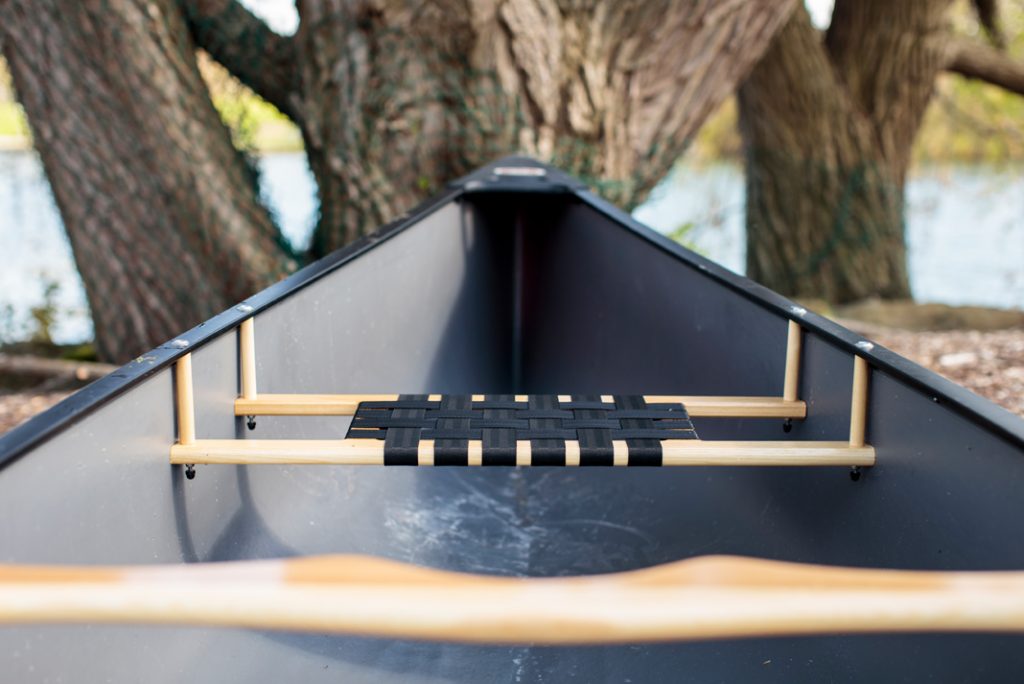
A shallow-arch hull gives high secondary stability, a smooth and dry ride through waves and whitewater-capable performance, while straight rocker and plumb ends contribute to speed and tracking. Photos: Joel Clifton

For decades, Old Town would establish a design in Royalex and then remake it in a much more budget-friendly—albeit heavier—polyethylene version. Now Royalex is no more and polyethylene is the only material Old Town uses.

The poly version has been renamed the Penobscot 164 and the Discovery moniker has been passed along to the company’s line of flatter-bottomed recreational canoes. The company has said it won’t be building with any other materials for now, such as the T-Formex Esquif Canoes has marketed to replace Royalex.

Polyethylene has heft, to be sure. The Penobscot 164 is advertised at 75 pounds; our loaner tipped the bathroom scale at 79. Some similar designs manufactured in T-Formex are lighter, but not all. Esquif’s Prospecteur 16 is a svelte 65 pounds, but Mad River’s Explorer 16 logs in at 77. Both canoes are four inches shorter. And a glance at the $1,200 price tag makes Old Town’s appeal crystal clear and affirms the company’s choice to stick with its proven polyethylene.

Sales rep Scott Phillips notes that Old Town has been making three-layer polyethylene canoes for about a quarter century. The middle layer is a foam core, very similar to Royalex.

“There’s a lot of polyethylene canoes that are a single layer or two-layer without the foam core, so it’s not as stiff. Most companies aren’t building them in three layers.” The outer layer is also thicker and more abrasion-resistant than Royalex was, says Phillips, making the material very popular with outfitters. Old Town guarantees its hulls and decks for life.
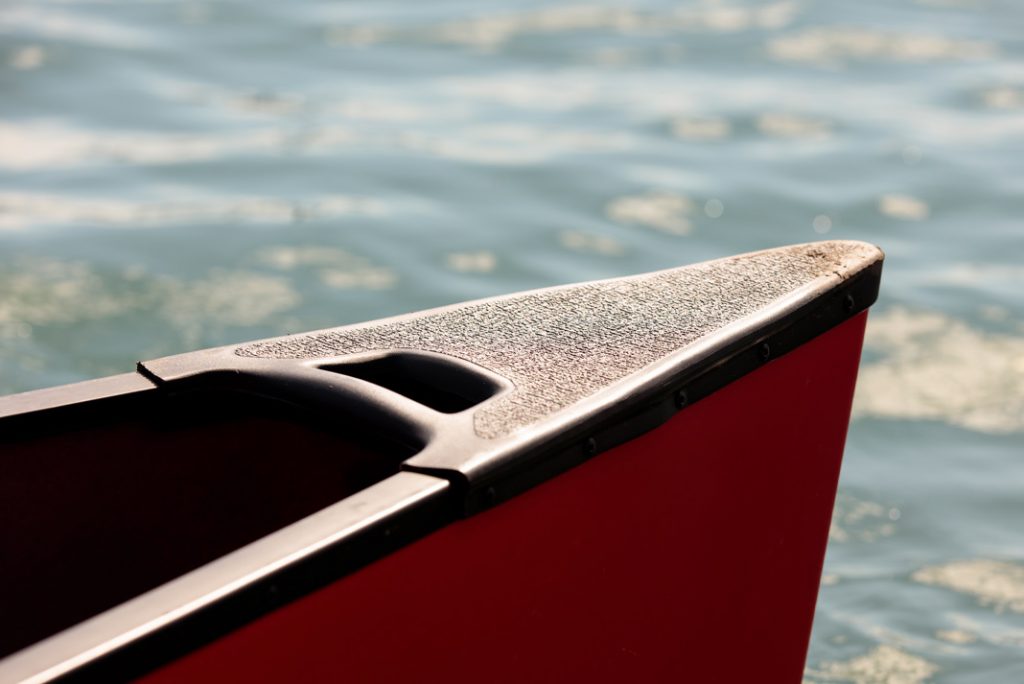
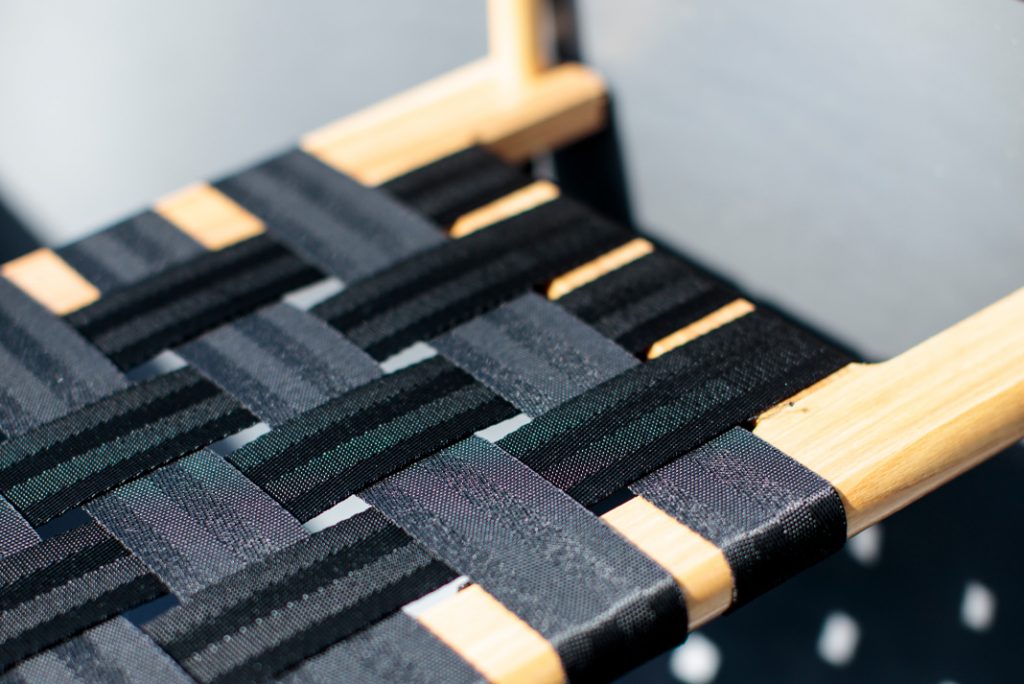
The three-layer, foam core construction adds rigidity, allowing the Penobscot 164 to hold its graceful, curved form without the support of ribs or any other internal stiffeners one might see in cheaper or thinner plastic canoes. The Penobscot’s smooth hull makes it super easy to load—there’s nothing for a pack or barrel to get hung up on. Additional rigidity comes from the plastic-covered aluminum gunwales, which are offset aesthetically by the more traditional ash wood seats and thwarts.

The Penobscot 164 is at home on glassy lakes and in rougher waters

Out on the open lake, it occurred to my friend and me that we had never before canoed together. But it didn’t matter. We fell into a comfortable rhythm and the stiff cross-breeze and choppy waves didn’t bother us a bit. Even without its one-ton-rated load, the 164 plied a true course for our destination beach.

Our journey was briefly interrupted by a harbor patrol boat cutting across our right-of-way with a friendly wave and a two-foot wake. Again, I took to my knees. The Penobscot is an interesting combination of a relatively flat rocker and plumb ends, to maximize waterline length for speed and tracking without the need for a keel, according to Old Town. Its rounded cross section makes it capable in whitewater and amenable to being put on edge for quick turning for catching eddies, or trying to avoid being swamped by motor boats. A couple of quick draws spun the canoe head-on to the coming wave train, and we bobbed through without shipping a drop.

I use the Penobscot in most of my paddling because it’s just such a great all-around design, whether it’s out for a day cruise or going on a short trip

Scott Phillips confirmed in conversation what I felt in those waves and read in many five-star online reviews: while the Penobscot 164 is easy to paddle and tracks straight for long distance paddling, it’s also versatile and capable in whitewater up to Class III.

“I use the Penobscot in most of my paddling because it’s just such a great all-around design, whether it’s out for a day cruise or going on a short trip,” said Phillips. “Heck, I’ve even used them on moose hunts before!” For a multi-day expedition, I might have selected its larger sibling, the Penobscot 174, which is the longest canoe Old Town makes nowadays.

My friend and I ended our paddle with a rapid acceleration and the traditional call of “Ramming speed!” that heralds the boisterous arrival of any plastic or metal canoe upon an untracked beach. The Penobscot 164 skidded to a stop across the sand and gravel without a scratch.

With a time-tested, all-around design, a durable and proven material, and an accessible price point, the Penobscot 164 is indeed a slick offering.


From flatwater tripping to running class III rivers, the versatile Penobscot can do it all. | Feature Photo: Joel Clifton
 

Boat Review: Elie’s Sound 120 XE Kayak

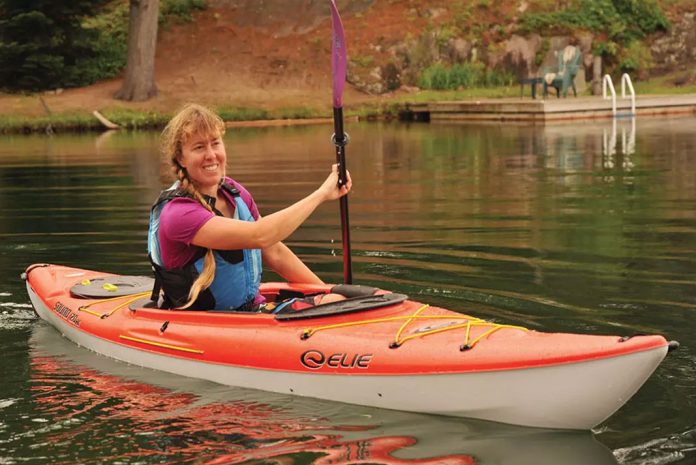
Woman paddling the Elie Sound 120 XE kayak

Where do you paddle? If you answer, “Smaller lakes, ponds and gentle rivers,” or any other sheltered waters, the Elie Sound 120 XE kayak is made for you.

Elie Sound 120 XE Specs
Length: 12’
Width: 28”
Weight: 50 lbs
Max capacity: 325 lbs
Front hatch: 12.2 gal
Rear hatch: 20.3 gal
MSRP:  $699 USD / $849 CAD
www.eliesport.com

There’s a reason that 10-to-12-foot recreational boats like the Sound 120 take the lion’s share of kayak sales. Not all of us have the opportunity—or the desire—to embark on multi-day kayak trips or paddle exposed ocean and Great Lakes shorelines. Many paddlers prefer to spend their time exploring quieter waters closer to home.

In the hyper-competitive field of beginner-friendly, sit-inside rec kayaks, the Sound 120 XE offers an attractive balance of comfort, performance and price. The Sound is easy to paddle, easy to store and transport, and easy on the wallet.

Getting the measure of Elie’s Sound 120 XE

Comfort and fit

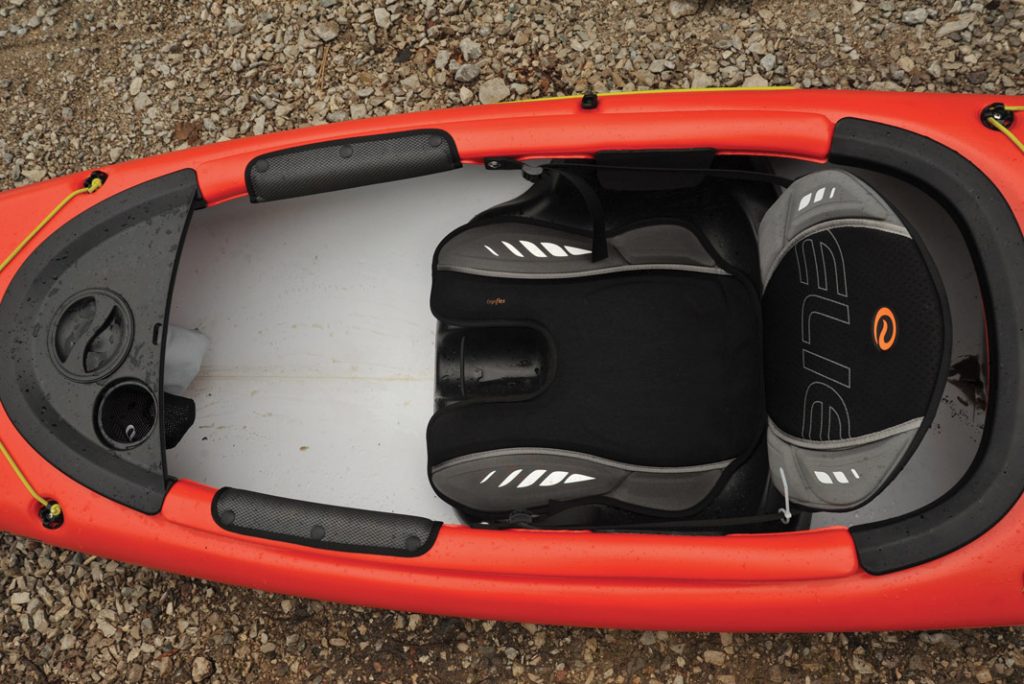
Let’s look at comfort first. Elie’s design team gave the Sound 120 a super-spacious, open cockpit for maximum versatility and peace of mind for new paddlers.

At over 50 inches long and 23 inches wide, the cockpit opening has an airy feel that makes getting in and out of the kayak a breeze, even for larger and longer-legged paddlers.

On the other end of the scale, the Sound 120 accommodates smaller paddlers equally well, thanks to Elie’s deluxe Ergoflex seating system. The padded seat features thigh risers for all-day comfort, and an adjustable backrest that’s supportive without promoting lazy posture or getting in the way during reentries. I also appreciated the knee pads, which wrap the coaming where the paddler’s inner knees contact the boat. This is a critical point of contact for edging and stabilizing the kayak, and one that’s all too often overlooked in recreational designs.

Below the deck

The generously-sized footrests adjust with a simple pull-push movement that I found easier to use than conventional pinch-and-slide pedals. No mention of the Sound’s outfitting is complete without a nod to the cockpit table, which resembles a dashboard integrated into the forward coaming.

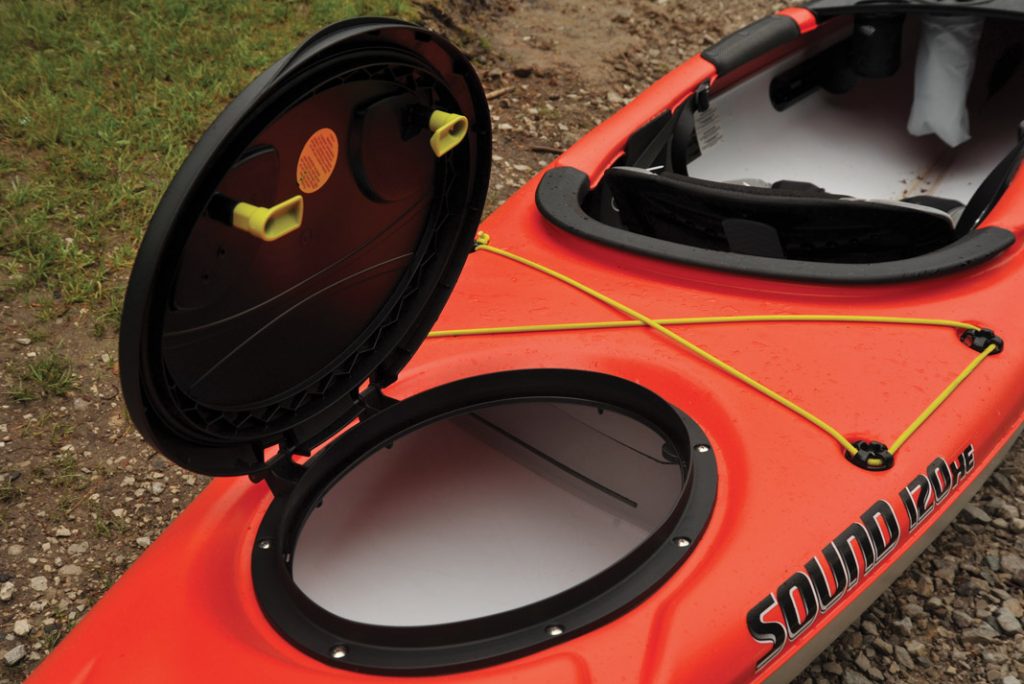
Within the dashboard, paddlers will find a four-inch, screwtop lid. Elie euphemistically calls this a “day hatch”—in reality, it gives access to a small dry bag that’s just big enough for snacks and sunscreen.

Also incorporated into the table is a cup holder, which is perfectly sized for my travel mug of morning coffee. As an ardently minimalist sea kayaker, I’m a little embarrassed to admit how much I enjoyed this last feature.

The Sound 120 combines a 28-inch beam with medium-hard chines and a shallow-V hull to give novice paddlers an impregnable sense of initial stability.

This hull shape means that as skills develop, paddlers are rewarded with surprisingly nimble on-edge performance. Instead of the added complexity, weight and cost of a skeg or rudder, the Sound 120 features a durable, plastic keel extension to enhance tracking.

Acceleration and glide benefit from Elie’s proprietary Poly-XR material, a three-layer plastic that uses resin in the top sheet for a thermoformed hull that is lighter and stiffer than standard rotomolded polyethylene.

Storage and safety

For those aspiring to kayak camping the Sound 120 has adequate capacity for an overnight adventure.

My ginormous Pelican SLR camera case slips behind the seat with room left over for water bottles and throw rope. The large Quick-Lock stern hatch accesses ample dry storage for tent, clothes and a compact sleeping kit.

I would like to see Elie add a front bulkhead to the Sound and its sister, the Strait 120. It’s not about storage, although a hatch up front can be handy for smaller items. While this feature has traditionally been omitted from the 12-foot-and-under rec market, a handful of progressive manufacturers like Delta, Eddyline, Current Designs and Feelfree—to name a few—recognize that these boats could very well get taken out of their protected waters and into rougher seas. A bulkhead provides an important safety benefit by integrating bow flotation in these compact kayaks.

Summing up the Sound 120 XE

Whether you’re an early morning coffee cruiser, cottage puppy paddler or weekend birder-boater, the Elie Sound 120 XE is a spacious, stable and versatile vehicle on the waters where most of us spend most of our time paddling.

This article was first published in Issue 51 of Paddling Magazine. Subscribe to Paddling Magazine’s print and digital editions, or browse the archives.


Exclusive: Eric Jackson Launches New Kayak Brand

Apex Watercraft logo

In an exclusive interview with Paddling Magazine, Eric Jackson, founder and former president of Jackson Kayak, revealed he is launching Apex Watercraft, a new brand making carbon composite kayaks. EJ is playing details close to the chest still, and there is lots of info he was not ready to confirm by phone. Apex Watercraft’s “About Us” page on Facebook confirms it will be making high-performance fishing kayaks.

“From now on, the appearance of a high-performance fishing kayak will change, what it feels like will change, what you bring with you on the water will change… Through a minimalist approach, fishermen will make more casts and catch more fish. The experience of catching a fish will be amplified by the texture and feel of the boat, the craftsmanship and the ethos behind the company,” the statement reads.

Apex Watercraft kayaks to be available for purchase soon

We caught EJ on the phone at the FLW bass boat fishing tournament in Texas. Here’s what he told us: In terms of a timeline, Apex’s carbon composite kayaks will be ready to purchase this spring, with limited production initially. Boats will be 100 percent made in the U.S., with manufacturing taking place in Warren County in Tennessee, just a few miles from Jackson Kayak’s facility. And Apex Watercraft has come together in the last few months.

The launch of Apex Watercraft comes on the heels of EJ’s December 3, 2019 announcement via Facebook that he was stepping down as president of Jackson Kayak.

“Apex is not competing with Jackson,” EJ clarifies. “I will still be an ambassador for Jackson; I paddle Jackson whitewater kayaks and Jackson fishing kayaks.” EJ’s daughter and son, Emily and Dane, will continue with their roles at Jackson.

Carving a new lane in a changing industry

EJ’s December announcement was one of several major industry shakeups during Fall 2019, which included consolidations and acquisitions. Among them, Jackson Kayak, Orion Coolers, Orion Kennels and Blue Sky Boatworks announced on November 3 that they were consolidating under one core brand, Jackson Adventures.

[ Discover the year’s best boats in the Paddling Buyer’s Guide. ]

EJ sees the industry’s turbulent waters as an opportunity. “This is the right time for Apex,” he says. “The kayak industry just went through a lot of changes. I think it’s the right time to try something different, the opposite of a big conglomerate.” As the sole owner of Apex—EJ received some startup funding from a bank—“I don’t have outside investment and can make every decision on my own. I think a small and nimble company can navigate the industry better right now than the big brands.”

EJ wasn’t looking to start another company when he decided to step down from his role as president at Jackson Kayak, which he calls “one of the hardest decisions I’ve ever made.”

“I put my heart and soul into the business. Prior to the announcement, there was a good 30 days of high stress, but it was the right thing to do,” he says. However, he quickly decided he needed to figure out how to “channel my energy—being an athlete and fisherman is not enough for me. I want to be involved in the industry.”

EJ had come up with the concept of Apex prior, “but it wasn’t the right place for it. Other people [at Jackson] didn’t want to make composites. It made my next step pretty easy because I had conceptualized a lot of this.”

“It’s been balls to the wall from the time I stepped down,” he adds. “I wanted to hit this season and for this to be a 2020 project, not a 2021 project. The timeline I’m on is the impossible timeline. There was no retirement. This is the opposite of being retired.”

Getting Apex Watercraft off the ground (and into the drink)

Currently, apexwatercraft.com is a holding page, but EJ plans to launch the website soon, where he will introduce Apex’s team members. There’s no crossover between the Jackson team and Apex team, he says, but promises some of the Apex team will be familiar faces to the paddling industry.

When we spoke, EJ was writing Apex Watercraft’s first blog post, focusing on the meaning behind the new brand’s logo. The arrow-focused logo is inspired by a pendant EJ’s wife gave him in 1998, and he’s worn ever since. He says the pendant represents the Norse rune for victory and competition, and he won 11 competitions in a row after receiving it.

“Apex allows me to build from the ground up again,” says EJ. “While I’m a small piece of the puzzle, my objective is to be a caretaker of the industry. And the industry needs some variety. I think this is going to be an inflection point—Apex is going to shake things up,” he adds.

When further details about Apex Watercraft are revealed, paddlingmag.com will have them. Check back regularly.

Tim’s Wilderness Rules

Two hands clink camping mugs in front of a lake during a pink and purple sunset
Cheers to a perfect weekend... or wilderness boot camp. | Photo: Caleb Gringas

As my wife and kids know all too well, I’ve got a complicated set of rules for how I expect people to behave in the backcountry. They’ve joked if I wrote my rules down, they would fill a book. It’s not a bad idea. Then if we invite anyone to join us—although, for some reason, this rarely happens—I can assign them some required reading beforehand. Here’s what I’d want them to know.

Social distancing

Social distancing has been a part of my wilderness etiquette forever. We go on paddling trips to get away from people. When encountering another group, acknowledgment of the mutual awareness of each others’ presence with a polite nod or a wave is appropriate. Do not ignore, but do not approach. Remain aloof. On a portage trail, exchange pleasantries. Comparing maps and sharing route information is allowed. Never deviate from the route or linger near someone else’s campsite to make idle chit chat. Groups ahead of us must be overtaken. Yes Dear, it is a race.

Campsite etiquette

Do not visit, walk through, camp on or near an occupied campsite. You should not pass close enough to a person’s campsite to see anything should they happen to be naked (skinny-dipping is an essential part of the wilderness experience). Wave politely and pretend to look away. Once or twice, when I was packing up to leave my campsite, someone else landed and started unloading their stuff. The horror! Just because we sometimes have to share nature with other people doesn’t mean we can’t all work together to maintain the illusion we don’t.

Packing

Travel light. No towels, you can air dry. No cotton. No pillows. The group must share one tube of toothpaste. Always bring and wear as few clothes as possible. However, if you don’t have at least one more layer to put on if it gets colder, you didn’t pack enough. If you end the trip with one layer you never wore, you packed too much.

Pack up your bedding in the morning before leaving the tent for a swim. Yes, the morning swim is mandatory. Put your paddling clothes on when you wake up if it’s a traveling day. Fit all your clothes in one stuff sack. Don’t leave clothes lying around.

Pack heavy pots on the bottom of the food pack. Marshmallows (two per serving), crackers and fruit go on top. Food should be nutritious. Yes to coffee and yes to chocolate but no juice crystals. No Pop-Tarts. Distribute weight evenly, side to side and bow to stern; never mind, loading the boat is my job. Always portage with as few trips as possible.

Campsite furniture

Here is a small miracle: whenever stringing up a clothesline or hanging up your gravity water filter, look up at the nearest tree and you’ll find a convenient nail! How does this happen? Who travels the wilderness with a hammer and nails? Not anyone I know. You nail people are troglodytes. And I think you left some garbage in the fire pit, too. Only build kitchen tables on the coast, where milled lumber occurs naturally. A kitchen table without nails, built on the beach with the lumber you find there, qualifies as no-trace camping. Storms will wash it away.

There shouldn’t be furniture on inland campsites, except government-issue picnic tables—and logs for sitting around the fire pit. And while we’re on the subject of beaches, we only camp on sand if there are no alternatives.

Paddling technique

Paddle in sync with your partner. Only open your mouth to talk if you can paddle at the same time. I’m looking at you, kids. If you’re in a canoe, no switching sides to steer unless you’re a marathon racer. Use the J-stroke, with the proper wrist-injuring technique, grip thumb pointing down. Unless you’re in whitewater, then you can do it the easy way and call it the river J. Never rub the gunwales with the paddle shaft (unless in whitewater—see river J).

Paddling a solo canoe with a two-bladed paddle is more efficient, but don’t do it. That’s not canoeing. It’s the same as a single-bladed paddling of a kayak if that’s even a thing (I hope not). No motors are allowed, obviously, except for the car, the water taxi and the floatplane—whatever mode of transport you use to get to the wilderness. But beyond that, no motors. If I see you paddling properly, wearing the right sort of clothes, and without a motor, I may be inclined to paddle a little bit closer, just a bit, and say hello.

“Going to the bathroom”

It is okay to poo beside the water below the high-tide line. But only in saltwater. And only in remote areas. In busy areas and freshwater areas, bury it deep in the forest. Far from the water. Under mineral soil. Burying toilet paper is okay. Don’t pack it out; this isn’t the Grand Canyon. Burn it, sure, as long as it actually burns.

Contrary to what some people believe, toilet paper is not like a Christmas decoration.

Contrary to what some people believe, toilet paper is not like a Christmas decoration, to be strung amongst the trees. If there is any evidence that anybody, ever, has relieved themselves on my campsite, I don’t want to camp there. Unless there is a toilet.

Protecting the water

Do not spill little bits of oatmeal into the lake, thinking they will disappear; they won’t. Do not get dish soap in the lake. It’s irresponsible to lather up on land and jump into the lake. The ocean is different. Almost anything goes. You can use soap in the ocean, but you don’t need to. Wash dishes straight in cold seawater, right on the beach. Scrub them with sand, just like I do my bum—no toilet paper required—but in a different location, please. Food scraps and everything else will wash away and be eaten by crabs. I love the ocean. The ocean is a wilderness garburator, but don’t throw garbage in it.

Breaking the rules

Wilderness is supposed to be wild—inherently anti-law, anti-civilization, anti-order, a land of chaos and disorder. If it weren’t okay to break the rules in the wilderness once in a while, then it wouldn’t be wilderness, would it? Just don’t break my rules. Unless you’re me.

If you want to break a rule, ask first what the actual intent and purpose of the rule is, and if you can live with the consequences of not just breaking it, but of everybody breaking it. Most importantly, make sure you follow the rules in place to preserve the illusion of a rule-free experience for the person who comes after you. It’s not a free country, but if we work together, we can make it feel like one.

Tim Shuff is the former editor of Adventure Kayak magazine.

This article was first published in Paddling Magazine Issue 62. Subscribe to Paddling Magazine’s print and digital editions here, or browse the archives here.


Cheers to a perfect weekend… or wilderness boot camp. | Photo: Caleb Gringas

Why A Good Ash Canoe Paddle Is Going To Be Hard To Find

several wooden and ash canoe paddles lined up
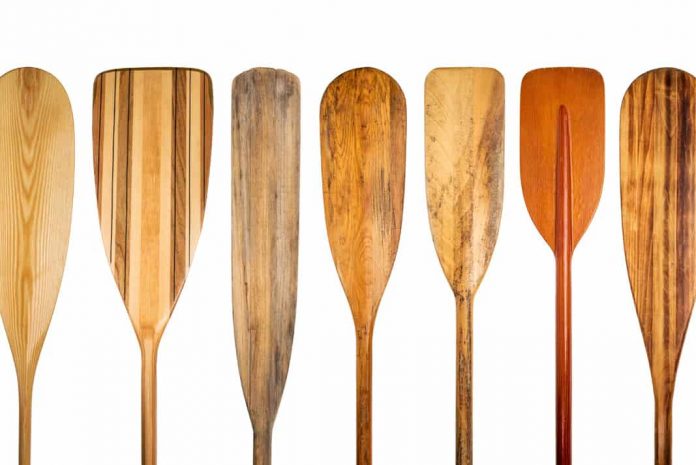
Fear not, canoeists. Paddles are manufactured in more hardwoods than just ash. Photo: istockphoto.com/marekuliasz

The ash canoe paddle is facing extinction. Due to the devastating effects of the emerald ash borer beetle on North America’s ash forests, paddle manufacturers may soon have to find a new favorite wood from which to manufacture paddles. The emerald ash borer (EAB) was inadvertently introduced to North America in 1990. The insect hid inside unfinished packing crates and pallets used to transport products imported from Asia.

[ View all wood canoe paddles in the Paddling Buyer’s Guide ]

Emerald Ash Borer

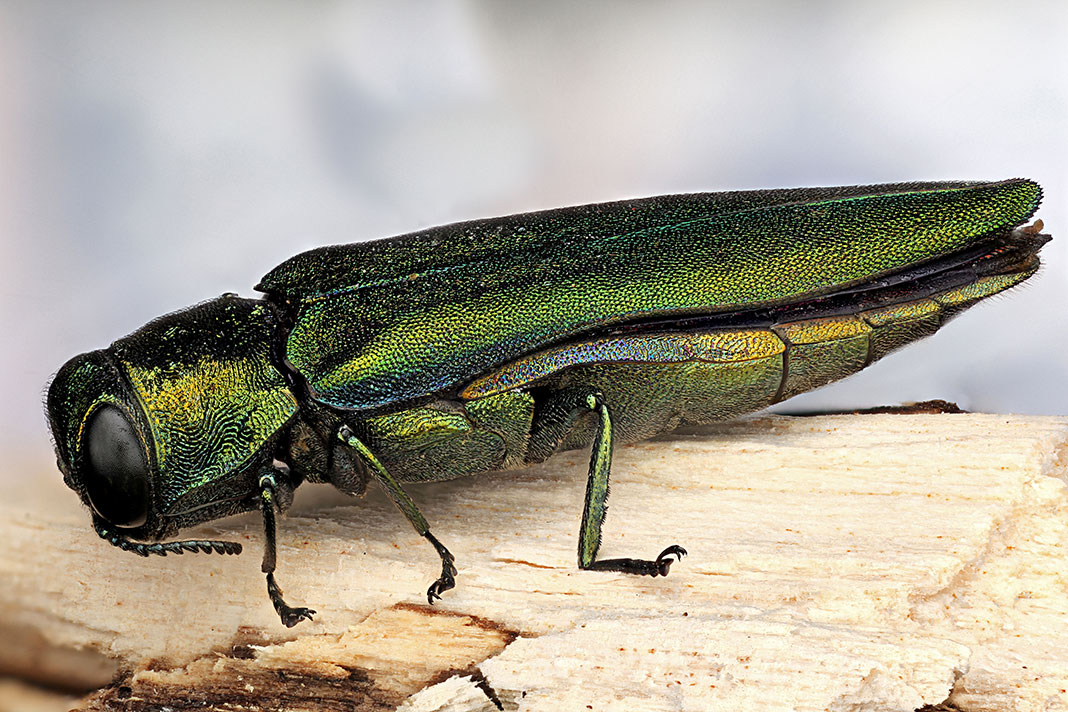
Just over a half-inch in length and strikingly iridescent, this green beetle has spread throughout the entire 65 species of ash trees on the North American continent. Capable of flight, the EAB extends its range of destruction by an average of 100 miles annually. The EAB is now found throughout the entire range of the temperate forest, from as far north as Thunder Bay, Ontario, as far west as Colorado, as far south as Texas and east to the Atlantic coast.

Why ash canoe paddles are so popular

According to Canadian and American forest agencies, of the nine billion ash trees in North America at least 500 million have perished from the EAB so far. Current estimates from these agencies suggest in spite of the work being done to save the ash trees, in as little as five or six years, commercial paddle manufacturers will be forced to find alternate sources of wood.

Ash is one of the most plentiful hardwoods and a favorite of paddlers. Generally, the ash paddle seems to be somewhere in between maple and cherry in terms of durability and beauty, yet it’s the least expensive of the three.

As well as its high strength-to-weight ratio and elasticity, ash has an extremely high impact strength and split resistance. It’s the material of choice for many canoe builders for seat frames, gunwales, thwarts, carrying yokes and decking.

What is the impact of the depleting ash used for canoe paddle

The economic impact of this destruction is estimated to be in the tens of billions of dollars. The future financial effects of lost timber production could easily exceed $100 billion. In addition to the economic impact, there will be a substantial environmental void left by the loss of the ash trees.

To infest a tree, the female EAB lays eggs in the fissures and cracks of the bark of the ash tree. Two weeks later the eggs hatch and tiny larvae chew through the bark and into the sapwood.

Larvae build feeding chambers in parts of the tree responsible for providing the leaves with the water and nutrients from its roots needed for photosynthesis production. Eventually, these larvae disrupt the flow of nutrients and water required by the leaves, which leads to the death of the tree.

An average infestation will kill a large mature tree in about three years. A heavy infestation or an infestation of a young tree can kill in as little as one year. When the life cycle of the insect is complete, the adult will eat its way back out through the bark then fly off to its next victim, mate and continue the process.

There are no widely known predators to control the EAB population in North America. Woodpeckers provide some help but offer little hope of controlling the population.

The other losses

In years past, we have seen other destructive insects and diseases plague domestic hardwoods. A hundred years ago, the great chestnut blight wiped out the American chestnut.

Eighty years ago, butternut fungus all but destroyed the butternut tree, leaving it on the endangered species list in Ontario and almost commercially unviable on the rest of the continent.

Fifty years ago, Dutch Elm Disease decimated North America’s elm population. However, there is little doubt the EAB is the most destructive and costly insect ever to invade North America.

Today, we still have an adequate supply of North American hardwoods. Aspen, birch, maple, oak, cherry and the like still populate the majority of North America, so wood products will continue to be manufactured even though the iconic ash beavertail may go the way of the dodo bird.

Only time will tell whether this invasive species can be contained. In the meantime, hang your ash beavertail on the wall. It may be a rare artifact someday.

This article was first published in Issue 57 of Paddling Magazine. Subscribe to Paddling Magazine’s print and digital editions, or browse the archives.


Fear not, canoeists. Paddles are manufactured in more hardwoods than just ash. | Feature Photo: istockphoto.com/marekuliasz


10 Best SUP Apps For Adventurous Paddleboarders

In our Internet age there is a wide range of paddling-related apps and websites to help you navigate, train and connect with others on and off the water. Check out these SUP apps for navigation, entertainment and training to level up your paddleboarding experience.

[ Paddling Buyer’s Guide: See All Paddleboards ]

1. Paddle Monster

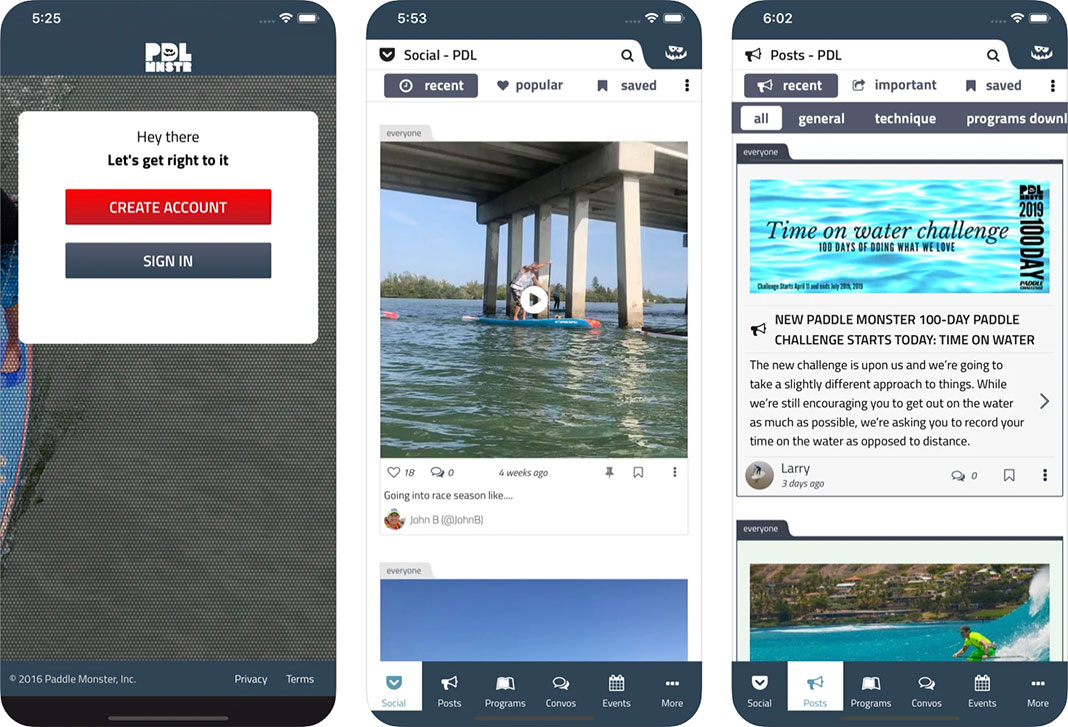
Paddle Monster is an active SUP racing community, with training and technique videos as well as on- and off-water strength and conditioning workouts. World-class paddlers and coaches Larry Cain, Seychelle and Travis Grant offer customized training programs and direct feedback to develop skills. Rub shoulders with other Paddle Monsters, including big names like SUP pro Connor Baxter, by posting your paddle workouts and photos in the feed.

Screenshot of sample screens from the Paddle Monster app
Sample screens from the Paddle Monster app.

BEST FOR: Competitive paddlers and social butterflies.

Subscriptions start at $10 per month | www.paddlemonster.com

2. Paddling Magazine

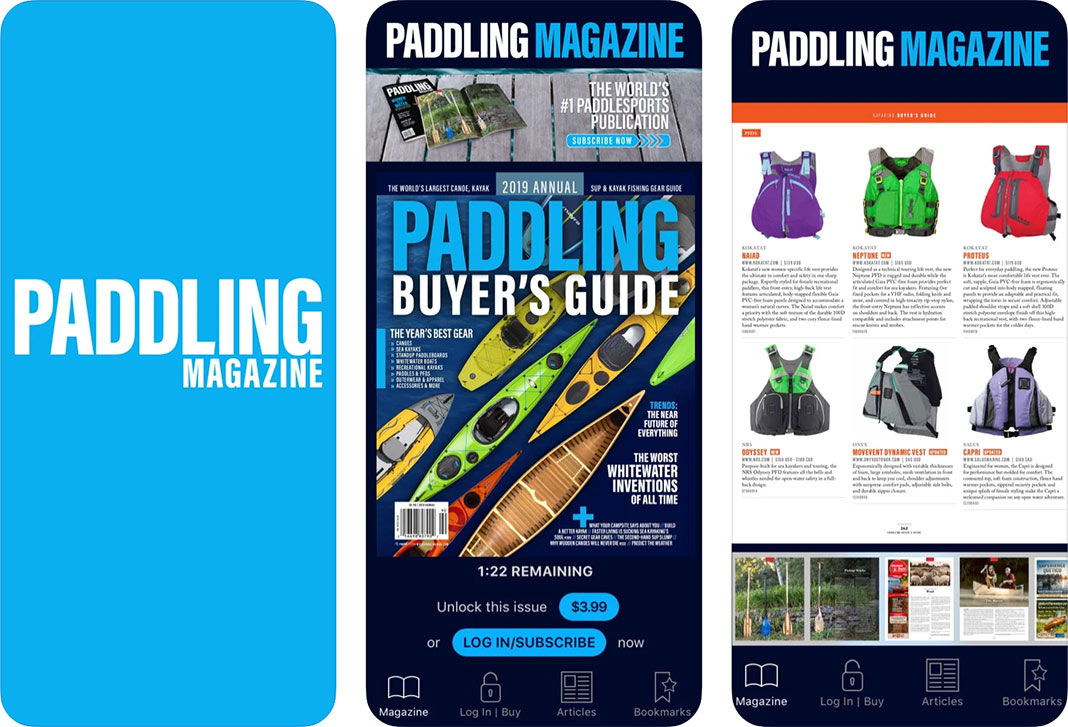
The redesigned Paddling Magazine app will keep you connected to the water even while on land. Get the latest news, trends, gear, reviews and adventures from the paddling industry. Read new and archived issues of Paddling Magazine and catch amazing photography, personalities and stories covering SUP, canoeing, kayaking and whitewater.

Screenshot of sample screens from the Paddling Magazine app
Sample screens from the Paddling Magazine app.

BEST FOR: Day-trippers, expedition paddlers, campers, racers, boaters, lily dippers and anyone who can sound out small words or likes pretty pictures.

Free | www.paddlingmag.com

3. Motionize SUP

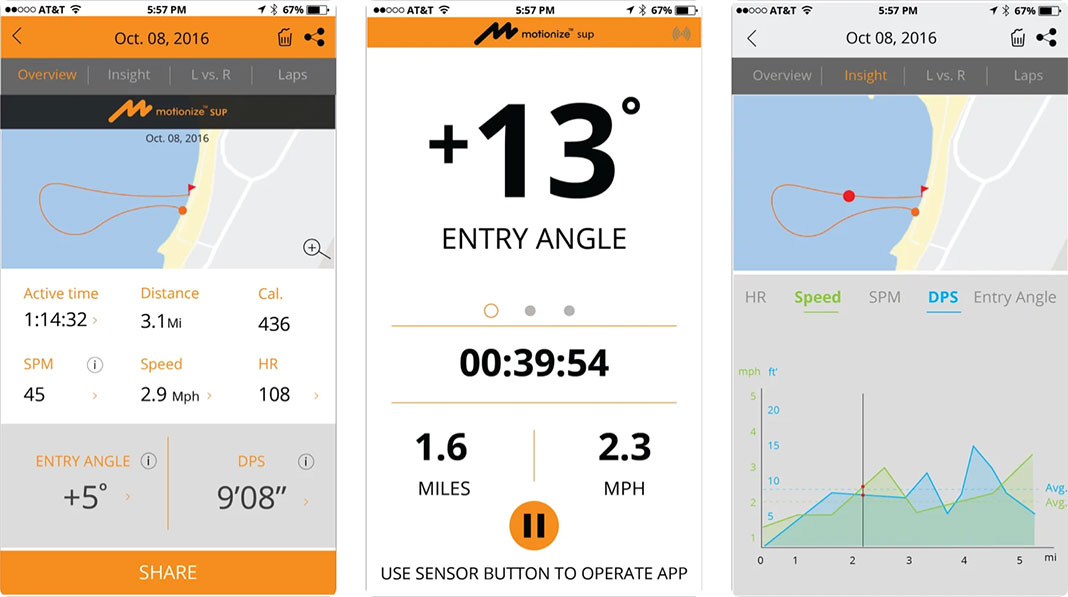
Paired with the SUPerior paddle sensor ($99), the Motionize SUP app provides real time feedback to improve your stroke. Receive live audio cues and view metrics, including entry angle, stroke count and distance per stroke while paddling. This app aids in making adjustments on the fly to improve efficiency and optimize your performance.

Screenshot of sample screens from the Motionize SUP app
Sample screens from the Motionize SUP app.

BEST FOR: Athletes and skill development.

Free | www.motionizeme.com

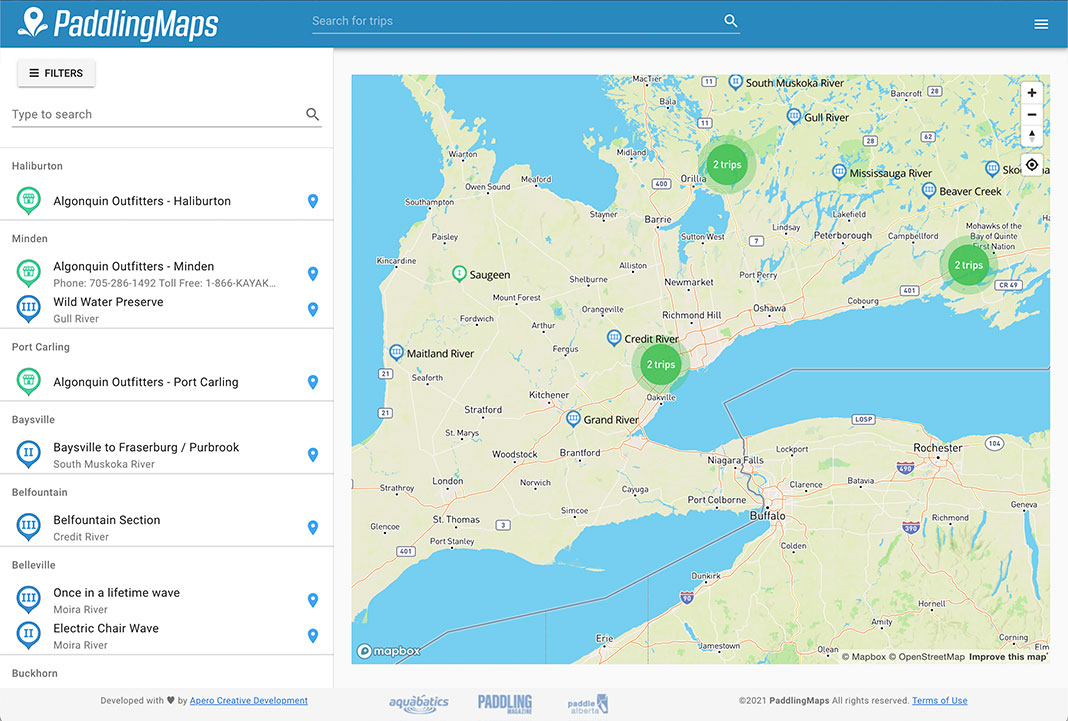
4. Paddling Maps

This newly launched user-generated database includes all the route information you could possibly desire for your next paddling trip, including flows, rapids, hazards, campsites, directions and the nearest services. There are 250 routes listed and more are being added every day. Find your next park and play spot, river run or flatwater paddling trip with Paddling Maps.

Screenshot of Paddling Maps website
Sample screenshot from paddlingmaps.com.

BEST FOR: Paddlers looking for new routes and river runs.

Free | www.paddlingmaps.com

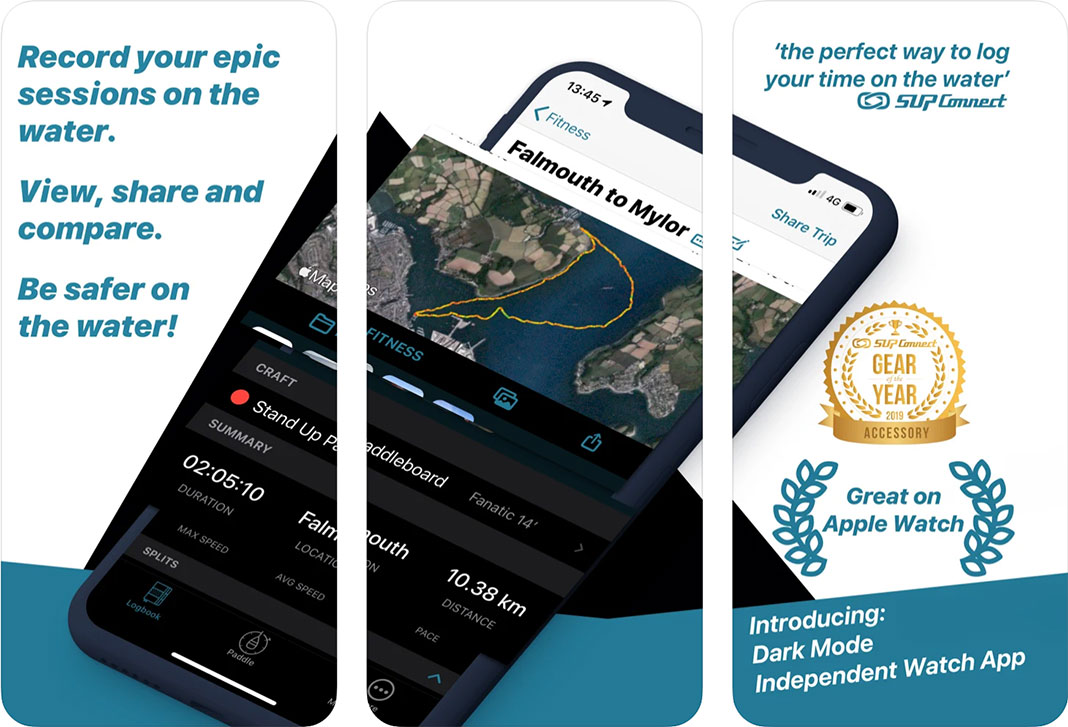
5. Paddle Logger

The Paddle Logger app is all functionality and no fluff, used for recording time spent on the water. Start the timer to begin logging metrics such as date, time, duration, distance, average speed, max speed and location. Separate fun versus fitness paddles, and add notes to individual sessions. After paddling, view the tracked route on a map, which includes a visual of the speed data captured.

Screenshot of sample screens from the Paddle Logger app
Sample screens from the Paddle Logger app.

BEST FOR: Minimalist data geeks.

Free | www.paddlelogger.com

6. Windy

With comprehensive forecasting layers, the Windy app is like having tiny meteorologist in your pocket. Consult Windy for wind speed and direction, wave swell data, temperature, visibility, currents and water temperature to check if conditions are safe. The animated map dynamically displays current and forecasted conditions in such a user friendly manner even the average land-lubber can comprehend.

Screenshot of sample screens from the Windy app
Sample screens from the Windy app.

BEST FOR: Big-water paddleboarders.

Free | www.windy.com

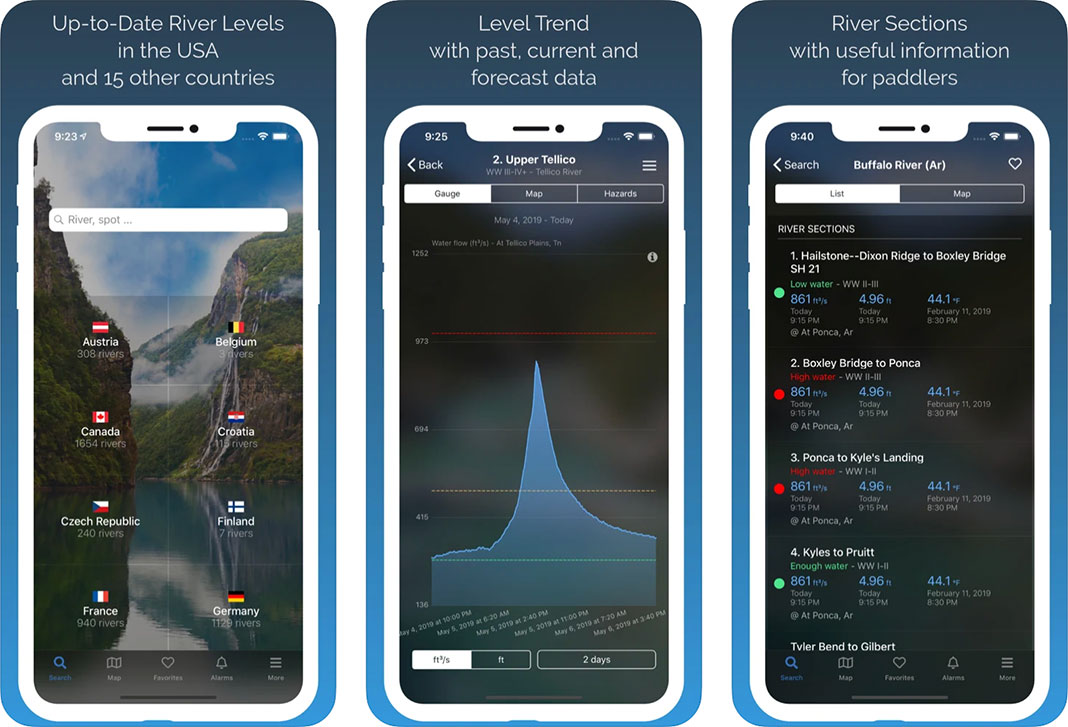
7. RiverApp – River Levels

Before you head out on your whitewater board, consult RiverApp for water levels by searching for gauges and flows rates on over 8,900 North American rivers. Users can also report hazards through the app, like strainers or access issues. Best of all, set up notifications for when a specified river level is reached—ding, ding, your standing wave is in.

Screenshot of sample screens from the RiverApp - River Levels app
Sample screens from the RiverApp – River Levels app.

Best For: River rats.

Free | www.riverapp.net

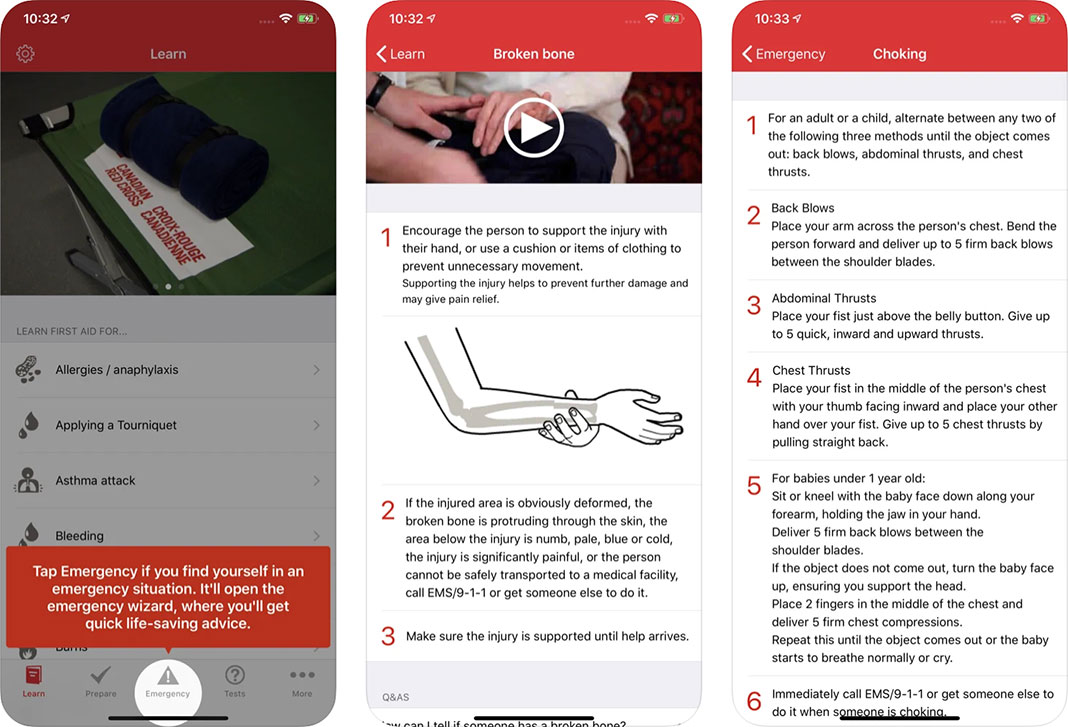
8. Be Ready

This Red Cross-sponsored app contains step-by-step support for common medical emergencies arising while on the water, such as hypothermia or heat stroke, allergies, stings and bites. Be Ready will supplement your first aid knowledge and qualifications with an on hand reference for response and water safety.

Screenshot of sample screens from the Red Cross - Be Ready app
Sample screens from the Be Ready app.

BEST FOR: Anyone who breaths or bleeds, or has friends who do.

Free | www.redcross.ca

9. Maps.me

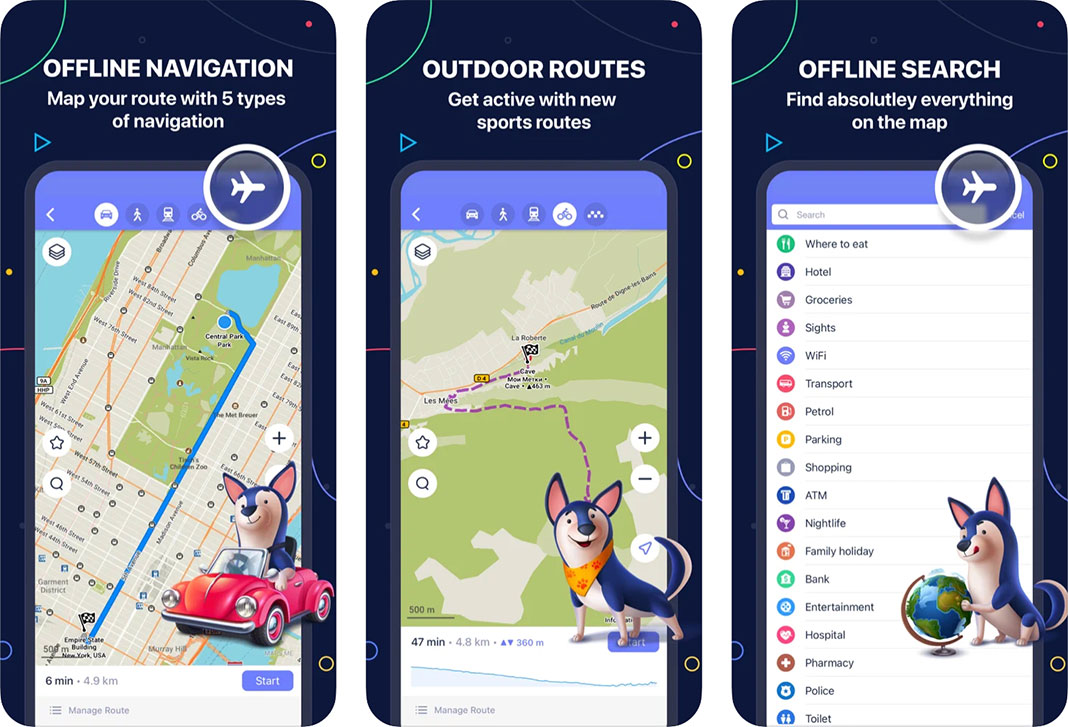
Offering offline maps of the whole world, Maps.me is perfect for paddlers who travel. Even offline, Maps.me can track your progress, offer turn-by-turn navigation and search functionality. With more than 90 million downloads, Maps are updated by OpenStreetMap contributors daily. Campsites, grocery stores, hiking trails and other points of interest are searchable and marked on maps.

Screenshot of sample screens from the Maps.Me app
Sample screens from the Maps.me app.

BEST FOR: Travelling paddlers on the move.

Free | maps.me

10. GeoSUP

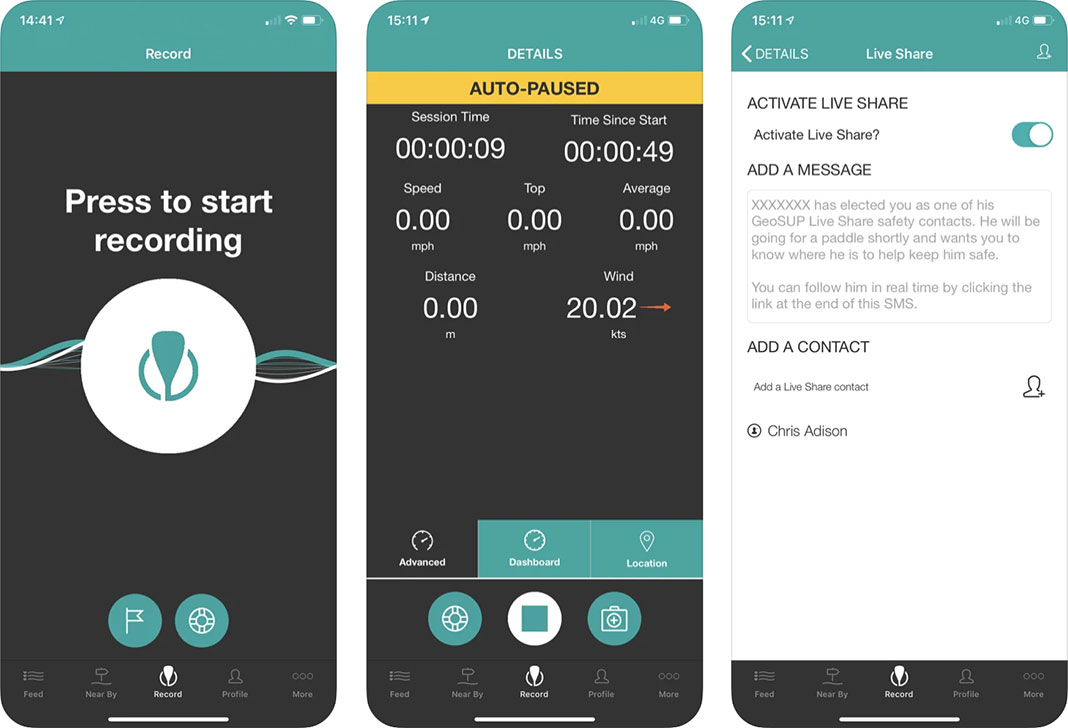
GeoSUP combines tracking and analyzing SUP performance with social sharing. On the water, this SUP app will map a route, gather speed and distance information and log wind data. Recorded trip sessions can be submitted to the app database, which includes geo-tagged photos and videos and will appear on a paddle log feed for all users. GeoSUP is a resource for a global network of user-added paddle routes and a tool for comparing performance to other paddlers logging sessions.

Screenshot of sample screens from the GeoSUP app
Sample screens from the GeoSUP app.

BEST FOR: Those lamenting that Strava doesn’t have a large paddleboarding community.

$6.99 | www.geosup.com

This article was first published in Issue 54 of Paddling Magazine. Subscribe to Paddling Magazine’s print and digital editions, or browse the archives.


Boat Review: The Easky 15 By Venture Kayaks

Man paddling in the Easky 15 sea kayak from Venture Kayaks
Boat Review: The Easky 15 by Venture Kayaks | Photo: Victoria Bowman

The Easky 15 is a handy touring boat from Venture Kayaks, owned by P&H and Pyranha, leading makers of sea and whitewater kayaks. Drawing from British sea kayak design, the Easky blends modern comfort and ample storage space with traditional sea kayak performance, making it perfect for day trippers and overnighters alike.

With the Easky, P&H’s veteran sea kayak designers worked to fit the most important features of a sea kayak into the affordable package. The design features hatches that are actually dry, a seat you can park your butt in for a whole day, and solid on-water performance. The Easky 15 is the real deal, not just a rec kayak dressed up in sea kayak accoutrements that blow out on the first wave.

Venture Easky 15 Specs
Length: 15’
Width: 23.5”
Volume: 86 gal
Front hatch: 12.2 gal
Rear hatch: 20.3 gal
Weight: 50 lbs
MSRP:  $1,295 USD
[ Paddling Buyer’s Guide: See All Venture Kayaks ]

The Easky 15 is a beginner-friendly boat with an alter ego

The Easky has a roomy, non-claustrophobia-inducing cockpit, lots of features for recreational uses that you don’t find on high-end kayaks, like a paddle park so you can drift and take pictures, mounting locations for fishing rod holders, an on-deck storage pod and a Flip Top backrest that can be extended for mid back support.

Then the Easky flashes its hardcore alter ego—whitewater-style moulded thigh braces that give a positive lock on that otherwise loose-fitting cockpit; a carveable hard-chine hull; watertight foam bulkheads and the same rubber Kajaksport hatches found on P&H’s premium lineup. All this gives the Easky respectable speed, nimble manoeuvrability and rough-water capability.

Edge carving in the Easky 15 takes effort—primary and secondary stability lean to the recreational side of the design spectrum—but the performance is there if you push it.

The Easky comes in 13 and 17 models too. The 17 is an expedition touring kayak with a cargo capacity that’s unmatched in its price category. The 13, with wider dimensions, is more for short-distance, recreational use. The 15 is the just-right size for day touring and short overnighters, the friendliest length offering true sea kayak performance. It’s available with either a skeg (as tested) or a rudder, and is also available in an LV (low-volume) version that is shallower and one inch narrower, for women and other smaller paddlers weighing 150 pounds or less.

Features of note for the Easky 15

Screen_Shot_2015-06-26_at_12.27.04_PM.png

Convertible

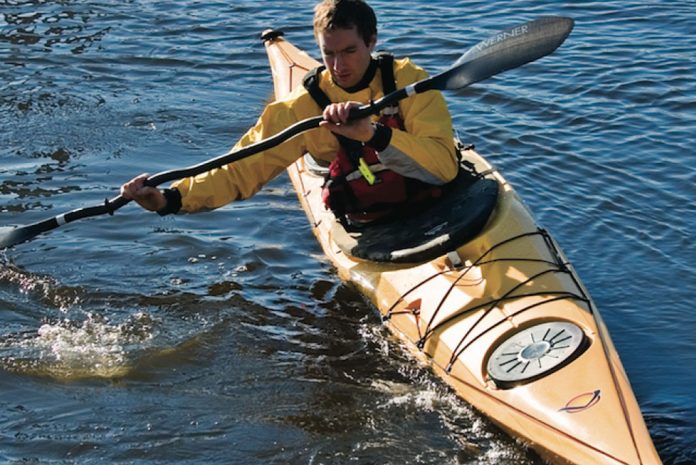
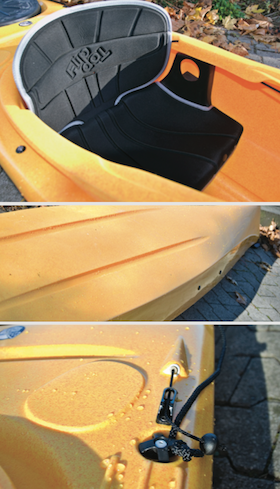
The Flip Top seat offers two height options. Aggressive, moulded and padded whitewater-style thigh braces provide the necessary boat control for edging and include a ratchet for easy backband adjustment.

Groovy

The Easky hull is constructed of light-weight single-layer polyethylene that is less rigid than the multi-layer plastic found in its P&H cousins, so Venture stiffens the hull with parallel ridges. The shallow-arch bottom provides rock solid primary stability while the hard chine lends manoeuvrability on edge.

It’s in the mould

Moulded-in features include: flat areas behind the seat for flush-mount fishing rod holders, anti-slip handrests for entering and exiting, a locking bar, a recess for a paddle shaft outrigger on the rear deck, full perimeter deck-lines and deck bungees, a paddle holder on the front deck and a divot for the pod—a front-deck-mounted dry storage compartment that now comes standard. The skeg operates with a shock cord and a string to eliminate cable kink, with the control behind the cockpit.

4 Pro Tips For Painless Canoe Portaging

two women portaging heavy canoe
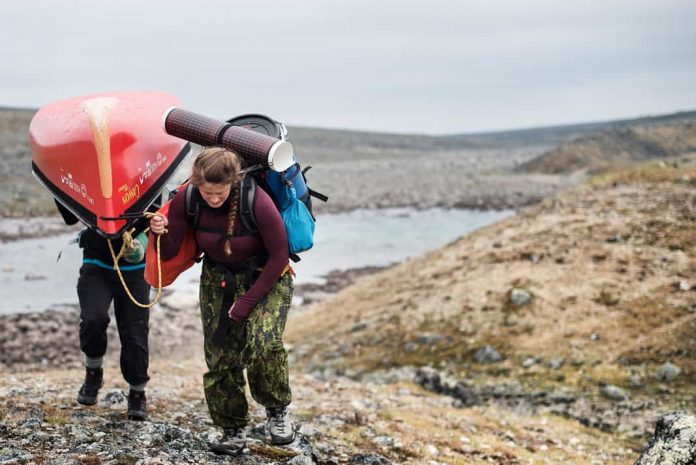
"Girl, you gotta carry that weight, carry that weight a long time" - The Beatles and your trip guide | Photo: Francois Leger-Savard

Feature Photo: Francois Leger-Savard

While there are a few masochists who love a long portage, for many folks portaging is a means for getting to the next lake, rather than a treasured pastime in itself.

Even the lightest boats are heavy when carried far enough, and I’m guaranteed to be swarmed by bugs the second the canoe is on my shoulders. With sweat dripping down into my eyes and a blackfly at my ear, I’ve certainly found myself thinking, “There’s got to be a better way.”

Well, there isn’t. Not really. But these four experts weigh in on how to help lessen the pain.

1. Manage Your Gear

Becky Mason, Instructor And Guide

woman with a hat smiling
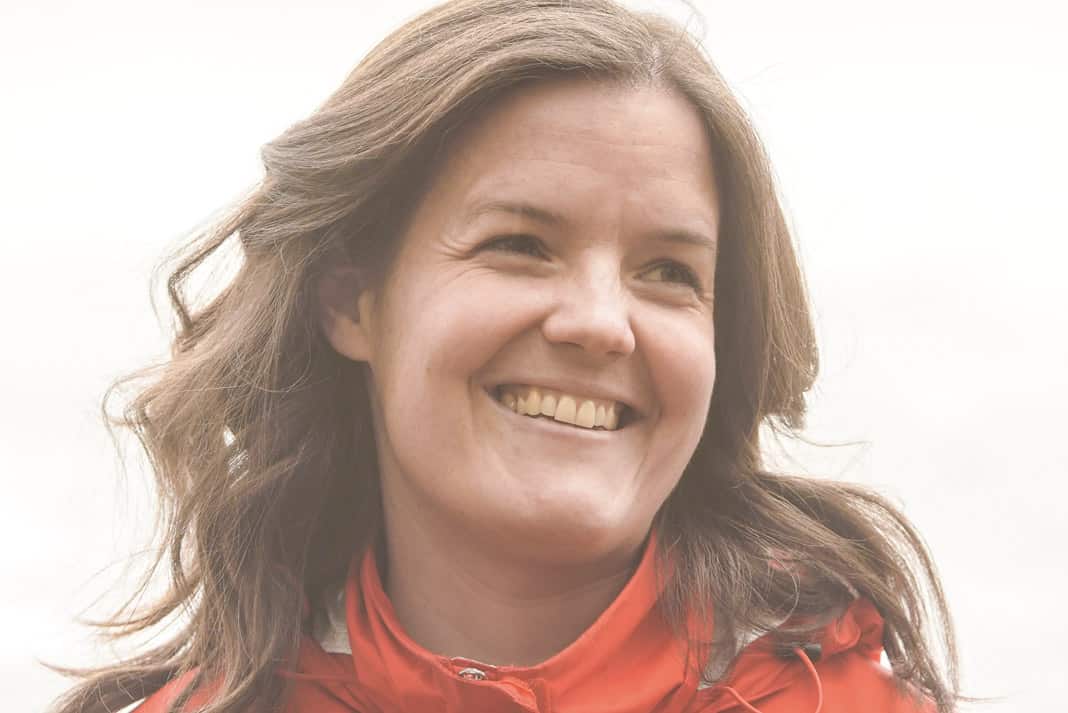
Becky Mason.

Before you get to the takeout, store or tie in all your loose items, keeping water bottles packed but accessible. When you land, pile all of your gear and canoe in one place, well off the trail to leave room for others. Help each other load up.

[ Plan your next paddling adventure with the Paddling Trip Guide ]

Done the same way every time this becomes a system—a routine of who carries what and who does the critical final sweep at both ends of the trail. Ask anyone who has spent a lot of time on longer trips and they’ll have a sad story of the person who realized they forgot something three portages back. Trust me, you don’t want to be that person.

2. Conquer Distance

Frank Wolf, Explorer

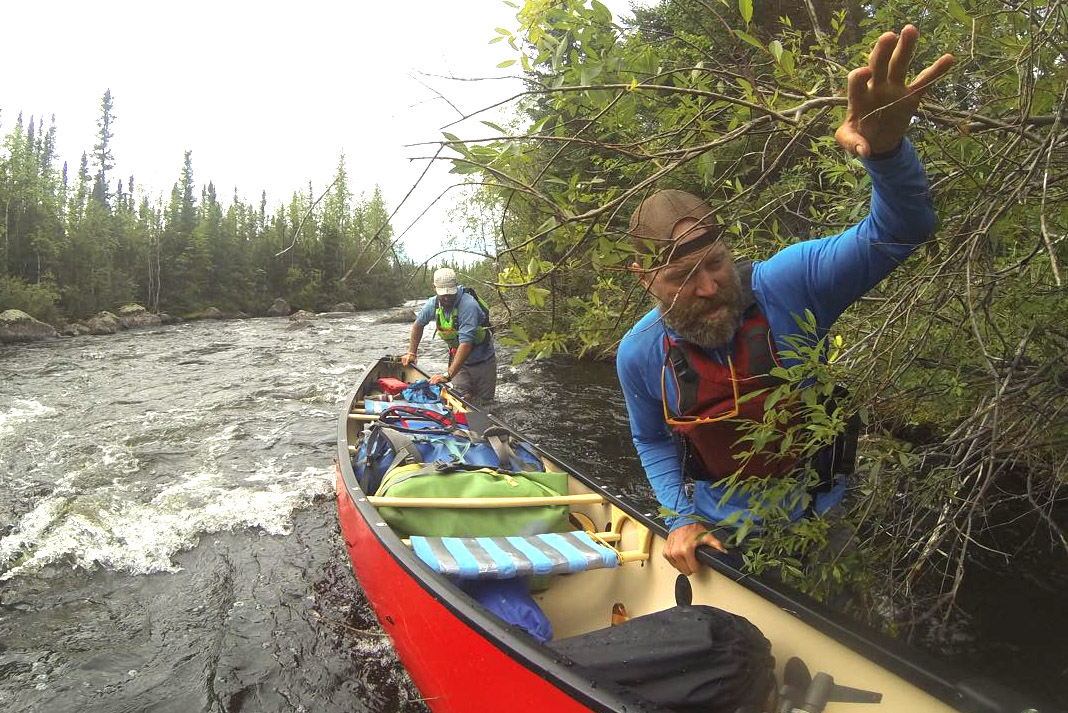
men portaging a canoe down a rapid
Frank Wolf.

My strategy is to keep it moving. Don’t stop, just get to the end as efficiently as possible. I trot with the canoe and don’t stop on portages less than three kilometers. There’s always going to be some pain, so get it over with instead of prolonging it.

In the Arctic barren grounds, I will clip the bowline to my PFD tow belt and drag the unloaded canoe over the open terrain. A plastic hull slides easily over heather, low bushes and rock, and takes all the weight off my back and shoulders.

3. Carry The Weight

Lyn Elliott, Parks Canada Officer

woman smiling
Lyn Elliot.

You need to find the sweet spot. It’s a mystical place the voyageurs talked about where the weight of your load propels you forward and your feet just have to keep up. I didn’t know it really existed until I was carrying a 70-pound barrel with 14 days of food.

I had been taking it in 500-meter to one-kilometer stints, and then I leaned forward and found the sweet spot. I took the barrel 10 kilometers to Northern Saskatchewan’s Rendezvous Lake in one go.

4. Relieve Aching Shoulders

Cliff Jacobson, Author And Guide

man wearing hat smiling
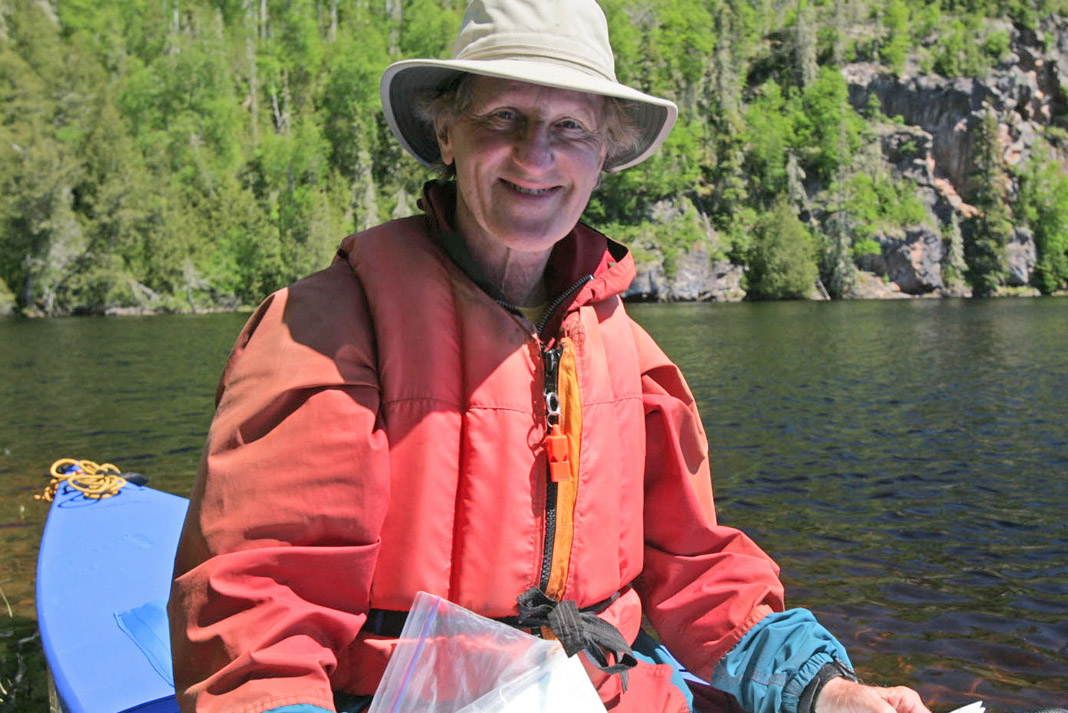
Cliff Jacobson.

If you want a painless portaging experience, best get an ultralight canoe. Failing that, fit your yoke with thick pads. Drop one arm occasionally as you portage—this transfers the weight of the canoe to the other shoulder, and feels a bit like a break.

If you tire during a portage, don’t set your canoe on the ground. Instead, rest the bow on a horizontal tree limb, stern touching the ground. After you’ve rested you can just walk under the yoke and go again.

Watch here for more tips on how to portage:

This article was first published in Issue 54 of Paddling Magazine. Subscribe to Paddling Magazine’s print and digital editions, or browse the archives.


“Girl, you gotta carry that weight, carry that weight a long time” – The Beatles, and your trip guide | Feature Photo: Francois Leger-Savard

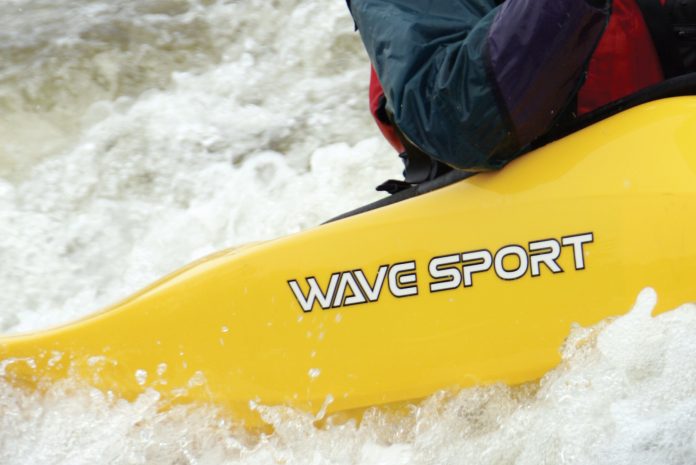
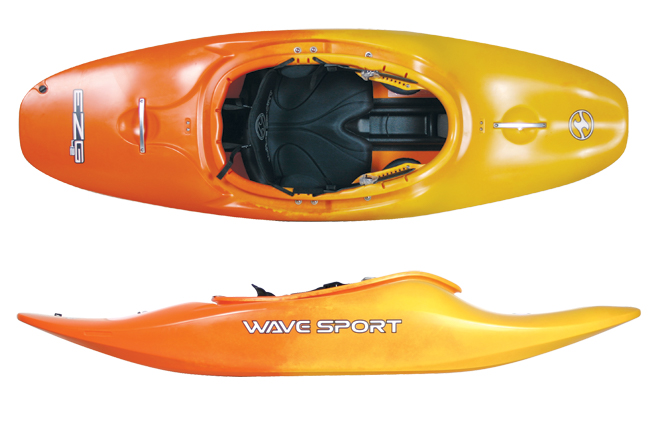
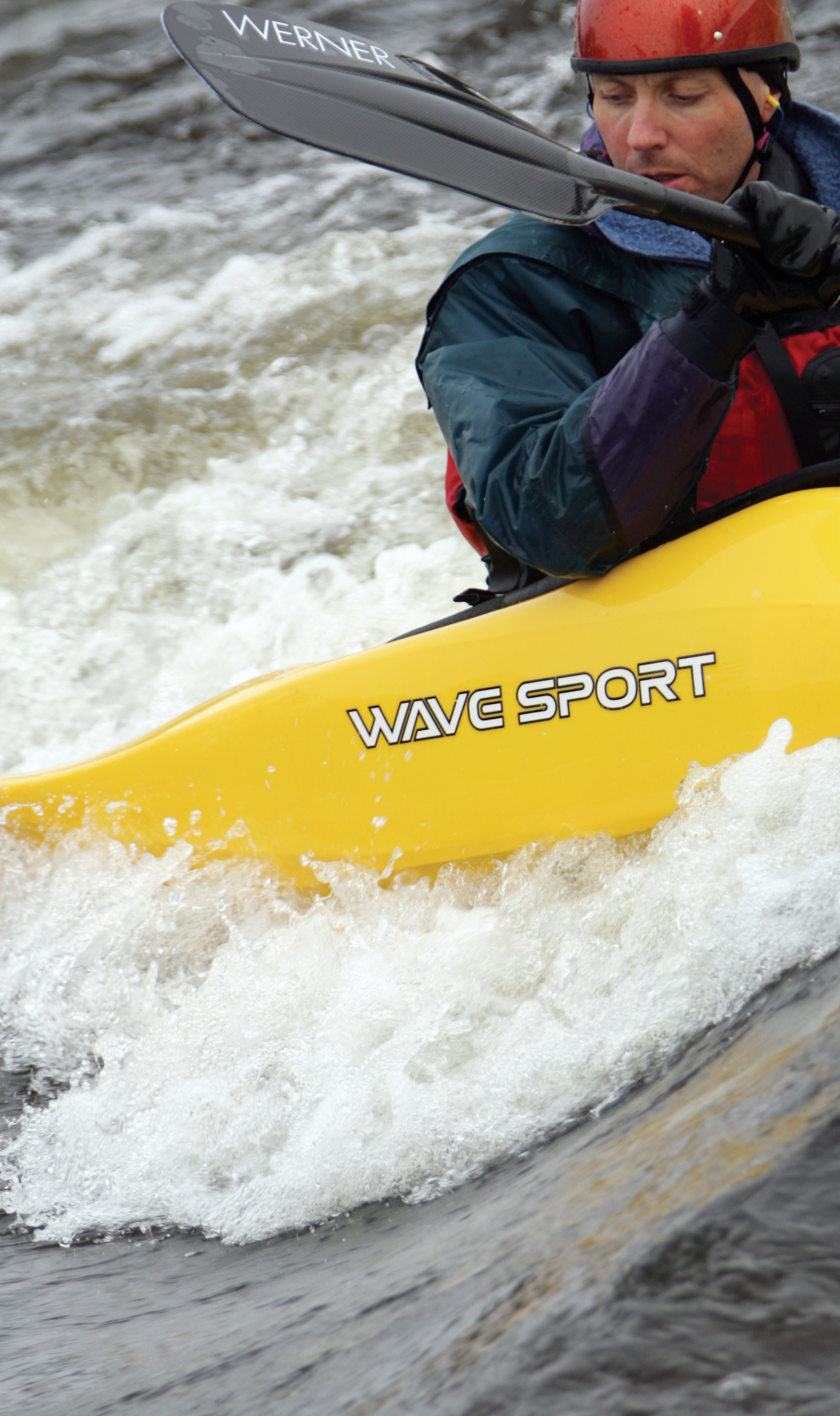
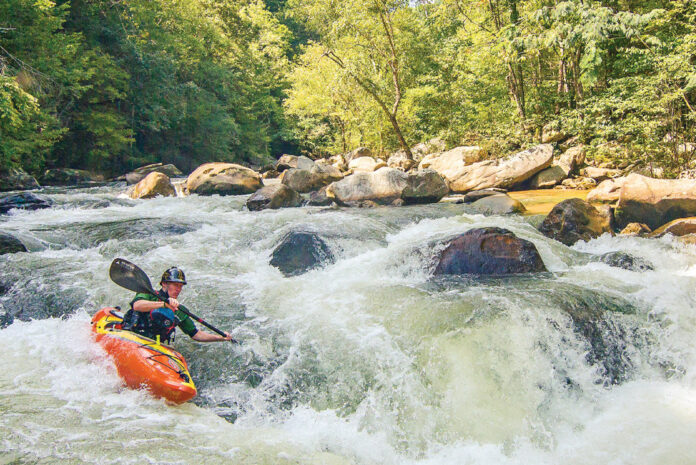
Boat Review: WaveSport’s EZG Kayak

WaveSport EZG kayak boat review

The new WaveSport EZG is supposed to be—as you might guess from its name—a cross between the popular river-play EZ and the freestyler ZG (Zero Gravity). However, you can’t tell how a boat paddles by its name alone.

In fact, the EZG is a tasty mix of the last three WaveSport designs: the EZ, ZG and the Ace or Siren (we’ll pretend the Transformer didn’t happen).

WaveSport EZG kayak boat review

WaveSport EZG Specs
Models: 42 / 50 / 60
Length: 6’6” / 6’7” / 6’9”
Width: 24” / 25” / 25.75”
Volume: 42 / 50 / 60 gal
Weight: 31 / 32 / 33 lbs
Paddler weight: 80-140 / 130-190 / 180-240 lbs
MSRP:  $1,349 CAD / $999 USD

The WaveSport EZG gets the mixture right

The EZG doesn’t knock the EZ off its best-all-around-boat coaster for river runners and beginner paddlers, but let’s use the EZ—a boat almost everyone has paddled—as a baseline. Take the EZ and add two shots of the hottest cartwheeling boats, the Ace and Siren. Their narrow bows and sterns pivot anywhere on the river. They’re great at blunts and backstabs on waves and they blast around in holes. But what the Ace needed was a true flat bottom for spinning and six inches less length. So into the blender they go.

EZG balances performance and fun

The EZG comes out with a shorter length and different hull profile than the EZ. It loses a bit of the latter’s speed and glide and the rock-solid stable platform, but has more slice and edge-to-edge carve. The EZG doesn’t lock into a front or side surf like the EZ; it reacts quicker to paddler input and requires a balanced and active paddling style. Overall, the WaveSport EZG is more performance oriented.

Now we have a sportier EZ with slicey ends. Great, except the EZ doesn’t bounce, and these days all river playboats bounce. So WaveSport incorporated bounce from the ZG hull for big aerial moves. The EZG is also lighter (they’ve replaced the adjustable foot outfitting with a foam block) and the back band is WaveSport’s best yet.

[ Plan your next adventure with the Paddling Trip Guide ]
WaveSport EZG kayak boat review

Fits paddlers of all sizes

WaveSport also got the sizing right for the EZGs. The 42 is truly low enough volume for smaller paddlers to toss around, whereas the Siren really wasn’t. The mid-sized 50 fits a 170-pound six-footer comfortably, and beyond that there’s still the 60.

The WaveSport EZG is ready to run

Launch the EZG into a river and you have a refreshing summertime treat—a boat that not only bounces but surfs, cartwheels and plays eddylines like the sweet sound of a steel drum. Think of the blended WaveSport EZG not as a river runner, but as the all-river playboat.

Boat Review: Dagger Katana Kayak

SLICE THROUGH THIN BLUE LINES | PHOTO: NICK GRAGTMANS

We’ve learned over seventeen years of boat testing that testers are biased by first impressions, comparing all boats to their own personal boat or the first new boat they paddled that day. That is why it is so important as a tester to rotate through the boats and get back in them. The boat I kept coming back to was Dagger’s Katana kayak.

Dagger Katana 9.7 / 10.4 Specs
Length: 9’7” / 10’4”
Width: 25.75” / 27.25”
Cockpit length: 35.5” / 37”
Cockpit width: 20” / 20.5”
Deck height: 13.5” / 15”
Volume: 79 / 104 gal
Weight: 46 / 56 lbs
Paddler weight: 100-210 / 155‑285 lbs
Max capacity: 225 / 300 lbs
MSRP:  $1,105 USD / $1,165 CAD
www.dagger.com

Unsheathing the Dagger Katana

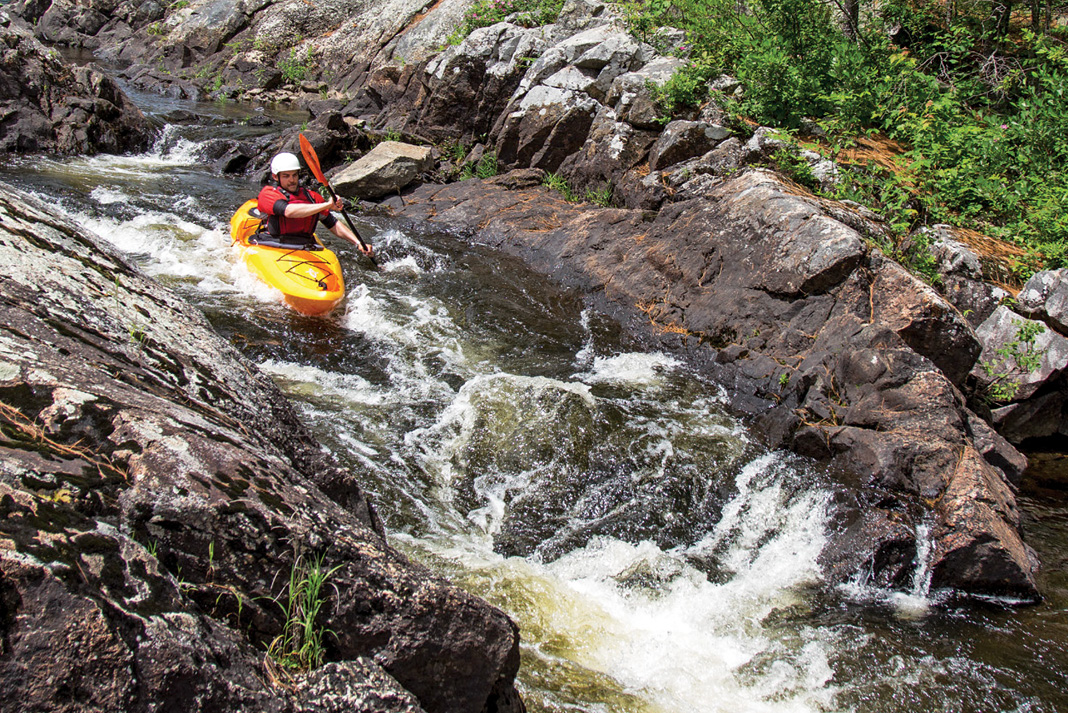
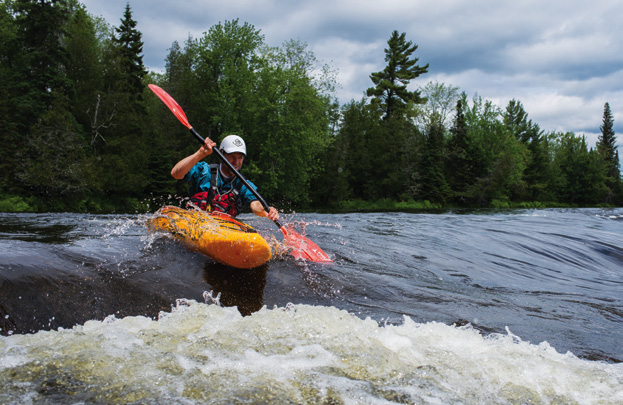
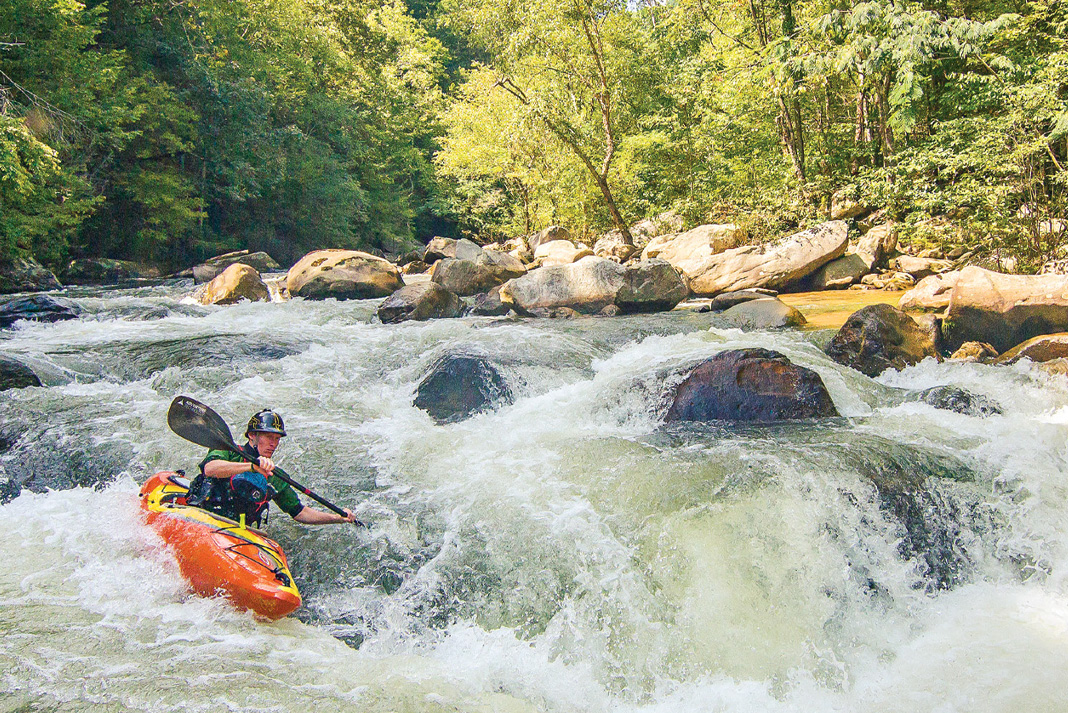
Borrowing features from both touring and whitewater design, the Katana enters Dagger’s lineup as a crossover boat—it can be used in any conditions from flatwater to Class III+ whitewater. “We like to refer to the Katana as the lifestyle boat,” says Chris Gragtmans, Team Dagger’s manager. “It can be enjoyed by advanced to expert paddlers who want to do the Grand Canyon, the middle Salmon or any local run you want to turn into an overnighter.” He adds that beginner-intermediate paddlers like for its confidence inspiring stability in both flatwater and whitewater.

[ Paddling Buyer’s Guide: See All Crossover Kayaks ]

The Katana is tops in stability

The Katana, available in 9.7 and 10.4 models, is without question the most stable kayak in Dagger’s line up. On a stability scale it would be damn near the end that is unflippable. I was shocked at the specification charts; on the water I was sure the Katana was way wider than the rest, but it’s not—only the thickness of a pen wider than the Ethos and Fusion and narrower than the Rogue. How do they make it so stable? The secret is more volume and lots of flare and depth. As you keep tilting it over there keeps being more and more boat to roll on to.

Dagger Kayaks Katana 10 | Photo: Rapid Staff

The Katana provides a refined and comfortable ride

The Katana 10.4 had the longest cockpit, which meant I could sit down in the seat and still fold my 36-inch beanpole legs inside. In the flats, I could pull my knees up for a stretch. The most difficult part of my whole day was stretching my dry, rubber-randed skirt to fit. I should have rounded up some larger crossover skirts for this review.

Inside, the outfitting is all whitewater business featuring Dagger’s Contour Ergo outfitting with Leg Lifter seat adjust, ratcheting back band and contoured hip pads. The Katana ships with a bag of extra foamy bits and pieces that are still riding around in the back of truck, we didn’t need so much as a wafer-thin shim.

Dagger Kayaks Katana 10 | Photo: Rapid Staff

Like WaveSport and Pyranha, Dagger uses a full foot bulkhead on rails like in a creek boat. What’s the big deal about this? You can push anywhere on it and your feet won’t slip off and potentially get trapped behind like they can with rec boat style foot pegs. Even better, the foot brace assembly can be removed in seconds, allowing more gear to be stored up in bow.

Instead of a foam pillar running the full length of the bow, Dagger uses a short plastic brace that holds the front of the seat. In front of that there is nothing except plenty of room for your feet.

SLICE THROUGH THIN BLUE LINES | PHOTO: NICK GRAGTMANS

Dagger and WaveSport do such a nice job with the finishing touches. Things like drain plugs behind the cockpit and recessed skeg cleats are subtle but appreciated touches. I filled the cute zippered glove box compartment with sunscreen, bug dope and Snickers bars. And, the Katana hatch was the easiest on and off and didn’t take on a drop of water.

We can’t stay away from the Dagger Katana

I had to keep coming back to the Katana because I liked it so much. I’d switch into the Ethos or the Fusion and be excited for a while about their more playful whitewater performance. Then I’d come back to my happy place in the Katana. For me, as soon as I start packing gear it’s less about paddling and more about the adventure. Maybe it’s because I’m 44, maybe it’s because I’d otherwise be doing this trip in a canoe, or maybe it’s because I already have a barn full of boats that boof, bounce and carve. Sometimes it’s nice to just pack a hammock and enjoy the river.


Screen_Shot_2015-07-07_at_3.09.09_PM.png

This article first appeared in the Fall 2015 issue of Rapid Magazine.

Subscribe to Paddling Magazine and get 25 years of digital magazine archives including our legacy titles: Rapid, Adventure Kayak and Canoeroots.