Home Blog Page 173

Exploring An Arctic Eden By Paddle Before It’s Too Late

Is the future of the Arctic National Wildlife Refuge the future of Alaskan oil? | Photo: Peter Mather

In September 2019, the United States government finalized plans to allow oil and gas drilling in the heart of Alaska’s Arctic National Wildlife Refuge. The Refuge is a 16-million-acre mountain and coastal wilderness tucked in the northeastern corner of the state, nestled between the peaks of the Brooks Mountains and the icy Arctic Ocean.

Dozens of rivers flow north from the mountains, through coastal plains and empty into the Arctic Ocean. It’s a paddler’s dream. It’s also home to an estimated 7.7 billion barrels of oil, which has made it a hotly contested area since first receiving protection in 1980.

Is the future of the Arctic National Wildlife Refuge the future of Alaskan oil? | Photo: Peter Mather

I’ve been lucky to paddle the coastline of the Refuge during two month-long trips in short Arctic summers. Once in a folding sea kayak and once in a folding canoe. In between dodging shifting ice flows and grizzly bears, I saw an abundance of wildlife like I’d never seen—and I’ve been paddling in the Arctic for more than 25 years. Caribou herds span the horizon, migratory birds gather from six continents, and I’ve even caught a glimpse of elusive wolves and lynx.

[ Plan your next paddling adventure with the Paddling Trip Guide ]

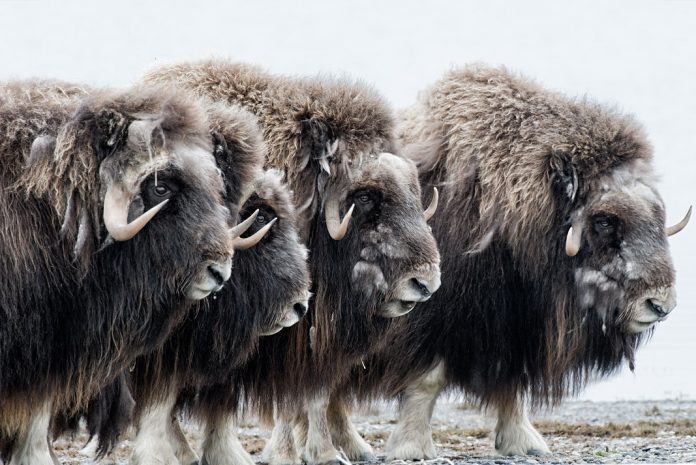
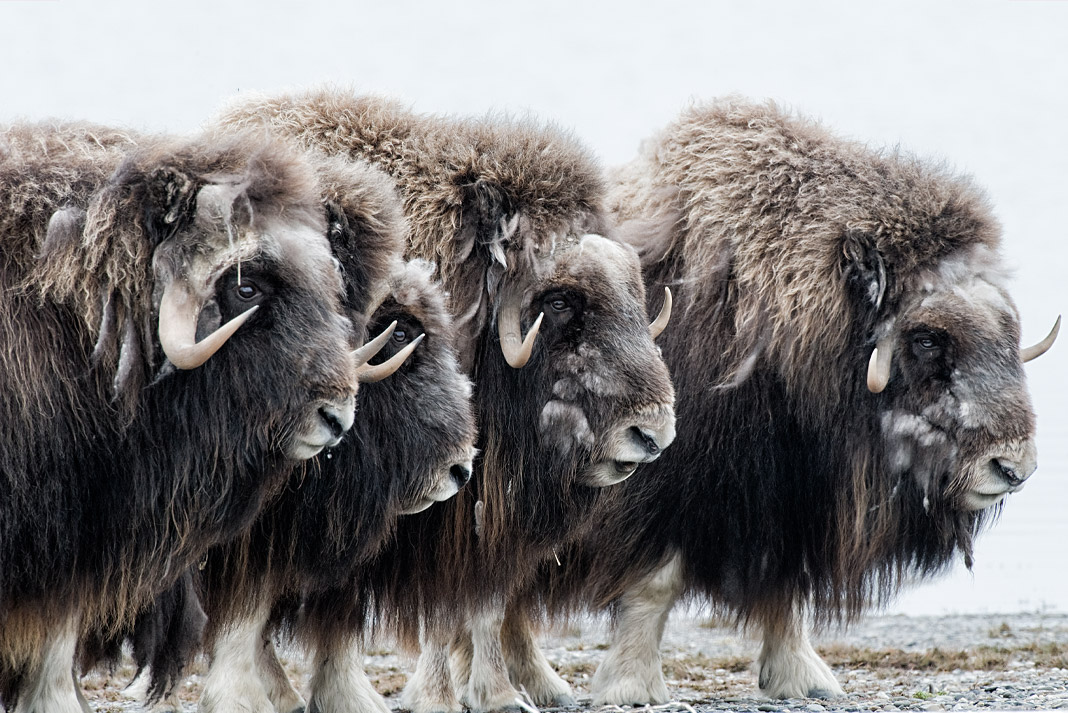
While paddling in a haze of white fog, which is so defining of this Arctic Ocean landscape, we spotted seven small black dots on a spit in the distance. This kicked off a heated debate as to whether the black dots were a herd of musk oxen or eider ducks. Without trees or structures, we lacked reference to give perspective to their size. If they were ducks, it would take us 20 minutes to paddle to the spit. If they were musk oxen, we would be paddling for an hour and a half.

I’m glad it was a long paddle.

There are less than 300 of the shaggy creatures calling the coastal plain of the Refuge home. This prairie landscape interspersed with thousands of small ponds also serves as the calving and nursing grounds of the 200,000-strong Porcupine Caribou herd. The herd’s range extends into Canada’s Yukon and Northwest Territories (NWT), and twice a year the herd journeys 1,500 miles on the world’s longest on-land migration. It’s the only Canadian barren-ground caribou group not in a drastic decline but is at risk of disturbance from oil and gas development.

The Gwich’in First Nations people of the Yukon, Alaska and NWT have depended on the caribou for their physical and cultural sustenance for thousands of years. They are caribou people and have spent the past 40 years fighting for the protection of these calving grounds. Gwich’in elders and caribou biologists believe development in this sensitive area is a threat to the survival of the caribou. For the Gwich’in, this is more than an environmental issue—it is also a human rights issue with their way of life at stake. The Gwich’in and conservation groups continue to fight for the Refuge’s protection, lobbying oil companies to withdraw interest from the area and hoping for a new president in 2020, who may revert the Arctic National Wildlife Refuge into a refuge for wildlife once more.

Peter Mather is a fellow in the International League of Conservation Photographers and a long-time contributor to Paddling Magazine.

Is the future of the Arctic National Wildlife Refuge the future of Alaskan oil? | Featured photo: Peter Mather

Dark headlines around SUP racing hide its bright future

The competitive spirit of SUP is alive and well, with new races starting up and multi-disciplinary races more popular than ever. | Photo: Limelight Muskoka

Recent SUP racing headlines suggest a sport in crisis. In June, Detroit-area racers were crushed when their beloved OABI race—named after the 6.5-mile, Once-Around-Belle-Isle circuit—was called off with less than two months notice. The six-year-old summer beach party with live music drew about 200 racers a year and was the picture of a regional race done right. But the businesses behind it wanted to pull out and find a buyer, according to Harrison Withers, one of the local paddlers who tried unsuccessfully to take over the event.

In March, the venerable Pacific Paddle Games (PPG) in Dana Point, California, one of the top three races on the pro circuit, was abruptly canceled—well, officially postponed—until at least 2020. This was SUP racing’s flagship, whose predecessor, the Battle of the Paddle, fostered the sport from 2008 to 2014. The PPG had seen declining participation, and last spring American Media Inc. bought the PPG’s organizer, SUP The Mag, along with several sister publications. The new ownership swiftly axed the event, with rumors attributing the decision to lackluster profits.

Meanwhile, on the international stage, SUP has a shot at inclusion in the 2024 or 2028 Olympics. This breakout is overshadowed by an ongoing feud over whether the governing body of canoeing or surfing should represent the sport.

Fortunately, these bleak stories say more about what happens when profit and politics mix than anything about SUP racing overall. The competitive spirit of SUP is alive and well, with new races starting up and standout events selling out faster than ever. Plus, a change to the worldwide racer rankings could provide new recognition and motivation for amateur racers.

SUP Racer, the online publication launching the Paddle League World Rankings back in 2013, announced a major revamp last summer. Starting in 2020, it will amend the ranking system to include hundreds of smaller races and more than 3,000 paddlers—encompassing most of the world’s enthusiasts.

“It’ll include all tours, leagues, series and federations that meet a minimum threshold,” says publisher Christopher Parker.

Amateurs can expect to see their names listed alongside the pros, a potential motivator for the masses, according to Parker, who says the fact amateurs and pros compete side-by-side makes SUP, “like the Boston Marathon of the ocean.”

Of course, SUP has a long way to go to match marathon running’s popularity. The Outdoor Industry Association recently reported 3.5 million people paddleboarding in the U.S.—a country with 60 million runners. Fewer than half of those paddlers own a board, and they average 6.3 paddling days a year. The subset training regularly and racing is a tiny percentage.

[ See the largest selection of paddleboards in the Paddling Buyer’s Guide ]

Organizing SUP races drawing only tens or hundreds of entrants is a labor of love by volunteers and organizers with day jobs, clearly not for businesses looking to make a tidy profit. But the grassroots still rocks. Plenty of dedicated individuals run local races just because they are racers themselves who want to give something back, or create more of what they love in the world. Athletes like John Batson, a medical doctor who started the Low Country Boil Paddle Battle this year in his home of Hilton Head Island, South Carolina. There were some hiccups, including Hurricane Dorian causing the race to be postponed by a week.

SUP is an artificial distinction; it’s just a family of paddlers. “Still, everything went great and we had 70 competitors,” said Batson. “Not bad for a first go-round.” His recipe for success combined, “Low entry fee, good race shirts, and meaningful trophies,”—like Olukai sandals and local art. “There is no reason a place like this should not have a world-class paddle race.” Olukai is now signed on as a title sponsor for 2020.

Referencing OABI’s demise, “I think we are seeing a shift towards more events on the calendar as communities try to cater to their local markets,” says Derek Schrotter, organizer of the Eastern Canadian SUP Championships as well as a weekly race series in southern Ontario. “These mid- to large-size events seem to be in contraction while smaller grassroots programs are growing.”

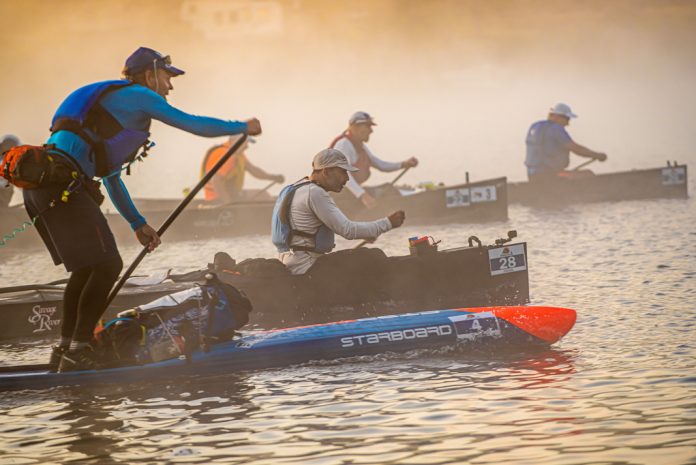
If numbers at races like the PPG are declining, participants may not be dropping out of the sport, just moving on to fresh events like Batson’s, or ticking off bucket-list races like the 444-mile Yukon River Quest—which sold out in a record 12 hours this year—or the 31-mile Chattajack race down the Tennessee River in Chattanooga. All of these are multi-class paddle races, open to everything from recreational canoes to surf skis. No matter what you paddle, you’re embraced by the community. SUP is an artificial distinction; it’s just a family of paddlers. Racers come back year after year and shift between boat classes, says Batson.

Race director Ben Friberg has seen Chattajack grow from 30 racers in 2012—mostly friends and friends of friends—to 650 today, and the sell-out time roughly halves each year. Last May, despite opening online at midnight, Chattajack filled up in six hours and amassed a waitlist of 200. People come for the spectacular Tennessee River Gorge location and a vibe catering to the experience of what Friberg calls “the blue-collar paddler,” someone with a day job and who trains five days a week to compete with their friends.

“We focus on creating a fun race experience for people. I want it to be a family reunion, but at the same time, I want it to be where people are going to push themselves,” says Friberg. “We drive one another to be healthier, eat cleaner, train smarter… All this equates to creating stoke.”

[ Plan your next SUP adventure with the Paddling Trip Guide ]

If stoke came in a bottle, its eternal source would be the weekly race series in towns and cities like Oakville, Ontario, where Schrotter’s Tuesday Night Race League draws 30 or 40 paddlers a week. Like Friberg, Schrotter sums up success in one word, an intangible spirit that fades away when an event becomes a commercial endeavor: fun.

Maybe SUP Racer’s online World Rankings will propel even more interest in the sport, when everyday paddlers can battle their way up the global leaderboard, but “personally as a racer, I do not care about World Rankings or things like that,” says Schrotter. “The 30-40 minutes of a race is the least important part. The sense of community is what makes the events memorable.”

Back in Detroit last August, the community lived on. Harrison Withers was one of 20 paddlers to line up on the old OABI start line on the appointed date. They’d unofficially gathered through word of mouth and Facebook posts, careful not to speak the defunct event’s trademarked name or incur any liability by raising the attention of authorities. But they still raced. Somebody finished first, but it didn’t really matter who. Then they gathered at a local establishment to share stories and laugh, just like they always had and maybe always will.

Tim Shuff is a firefighter by day and a freelance writer by night. He’s a former editor of Adventure Kayak magazine and based in Toronto, Ontario.

The competitive spirit of SUP is alive and well, with new races starting up and multi-disciplinary races more popular than ever. | Featured photo: Limelight Muskoka


Conquering fear and first descents in Patagonia

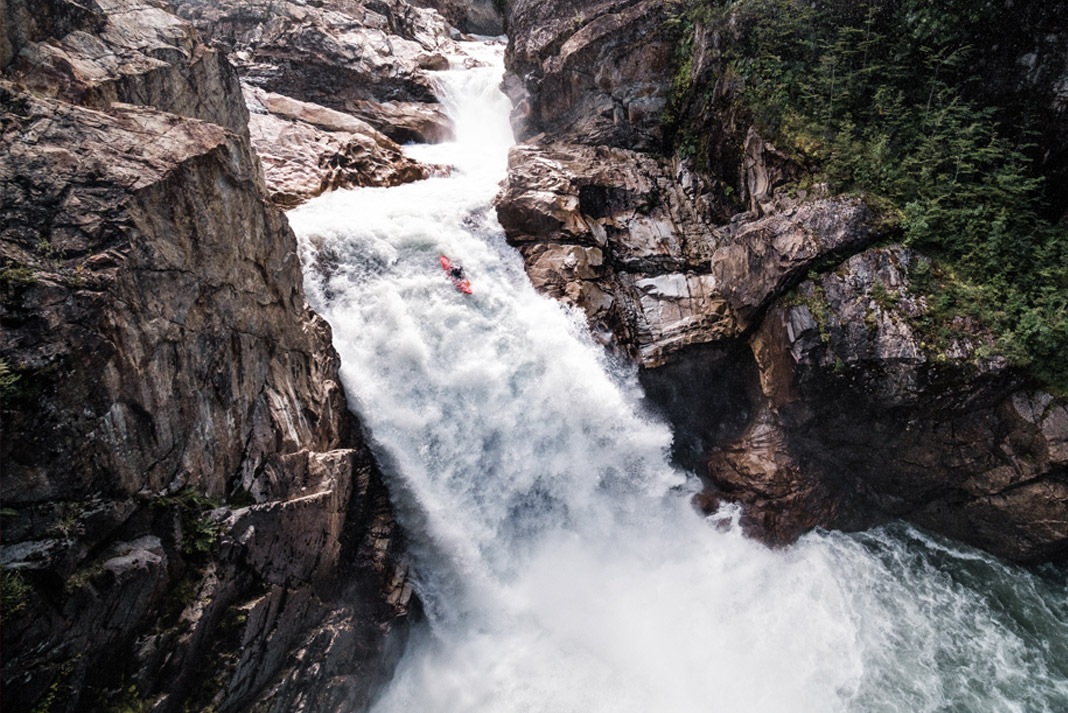
Nouria Newman on the Engano River in Patagonia, Chile. | Photo: Erik Boomer / Red Bull Content Pool

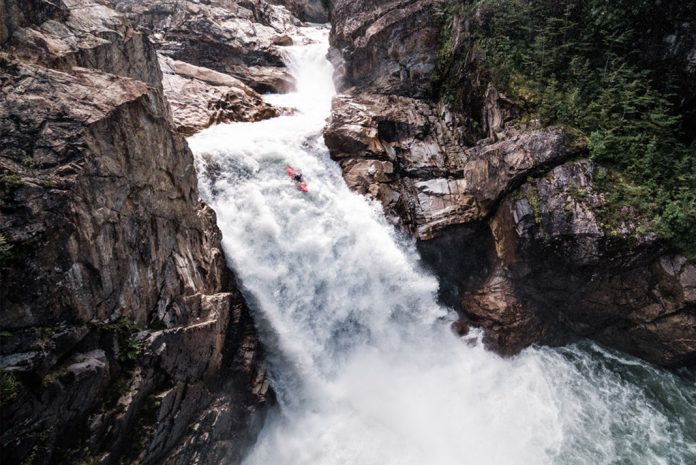
This morning, Ben and I remained silent. There wasn’t much to say, or maybe we just couldn’t find the right words. Some things are better left unsaid. We are tired, scared and very aware this is not the headspace to be entering Chile’s infamous Pascua Canyon.

We had been traveling together through South America for almost three months. Our journey started on the Argentinian side of the Andes with a complicated high-water descent of the Rio Tunuyan. Then we crossed the border to Chile and headed south to complete the first descent of the Rio Ano Nuevo, and the Patagonia Triple Crown: the Rio Baker, the Bravo and the Pascua, which had been attempted in 2017 by a team led by Evan Garcia.

In the last couple years, I have been lucky to paddle with expedition kayaker Ben Stookesberry and learn from him. He’s a mentor, adventure partner and good friend. Our journeys have had their ups—successful first descents, delicious picnics and marginal dance moves. And downs—four-day portages, honest grinch time, broken gear, lost drone, bad lines, savage bushwhacks and injuries, to name a few.

But this was the lowest.

This morning I woke up with the worst hangover of my life. Coffee has no taste and I struggle to eat my oatmeal. This is the end of our trip. Our good friend Erik Boomer has left after joining us for a month of exploratory kayaking. Our team lost not only its best dancer and asado aficionado but also the optimist of the group.

Ben and I could have called it and just done easy laps on the Rio Baker and the Futaleufu. But we decided to give this trip a last push. We drove south until there was no more road, all the way to the very end of the Carretera Austral. We wanted to try to paddle the Rio Pascua and see if it was as scary as everyone says. It was. And here we are, right where we thought we wanted to be.

We spent four days bushwhacking and paddling flatwater with 100-pound loaded creek boats in heavy headwinds to get here. On the way, we portaged around the gnarliest whitewater I have ever seen. Watching from the shore, I could not stop imagining what it would be like to drop into one of those monster rapids. It is quite something to feel like you are in a rainstorm standing 100 feet above river level, to hear the roar, and see hydraulics bigger than houses. It is humbling and terrifying.

I cannot stop thinking about all the water in the box canyon we are going to paddle.

Nouria Newman on the Engano River in Patagonia, Chile. | Photo: Erik Boomer / Red Bull Content Pool
Nouria Newman on the Engano River in Patagonia, Chile | Photo: Erik Boomer / Red Bull Content Pool

By the hour, our confidence drops. Doubt settles in. The what ifs keep popping up. On the second big portage we realize the water line is almost at the trees. “I am no fucking hydrologist, but this river is fucking high,” Ben says.

I was just as scared but turning around isn’t an option. Not yet.

If the Pascua weren’t hard and scary we wouldn’t be there, I say. We agree to check the first rapids of the canyon before making our final decision. Whether we will paddle through or hike out, we have to see for ourselves. And that’s what we will do as soon as we finish our breakfast.

What if it is too high? What if there is a death hole in the middle of the canyon? What if we are not good enough?

Coffee now cold, it’s time to get going. What Ben doesn’t know is today is March 13, and it’s a special day for me. On this day four years ago, I lost one of my best friends to the river.

Today I am hungover, not from any alcohol but life. I am sad but also incredibly grateful to still be here, chugging cold coffee, scared and overwhelmed. I want to crawl into a ball and cry. I want to tell Ben, but I can’t. It is not the time or the place.

Instead, I tell him two days later with a warm cup of coffee in hand after we successfully paddle out.

Nouria Newman started paddling at the age of four in the French Alps and is one of the world’s most accomplished kayakers.

Nouria Newman on the Engano River in Patagonia, Chile. | Featured photo: Erik Boomer / Red Bull Content Pool

Why the job of the professional river guide will never die

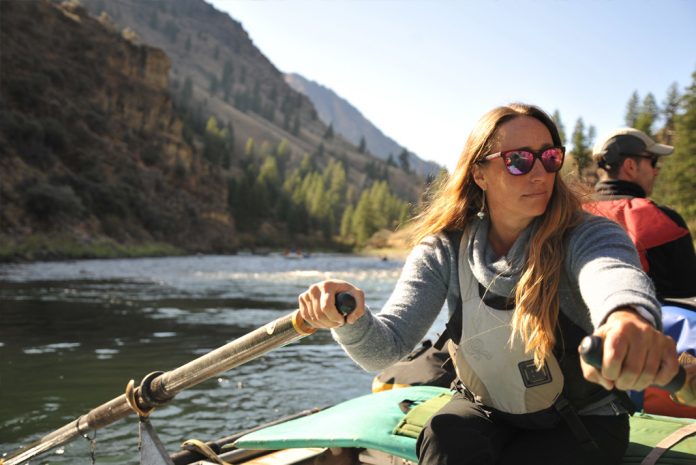
River guides like ARTA’s Billie Prosser are the voice of the canyon. | Photo: Virginia Marshall

Impassable Canyon. The name conjures a rocky defile so steep, no trails penetrate its shadowy depths. Just the sight of it turned Lewis and Clark on their heels. The canyon’s granite ramparts tower more than a vertical mile above the boulder-choked rapids of the Middle Fork of the Salmon—as if the sheer walls of Yosemite have been transplanted to central Idaho.

“This canyon is in the heart of the Idaho Batholith,” ARTA (American River Touring Association) lead guide, Billie Prosser, tells the spellbound passengers aboard her 18-foot oar rig. I nod and smile in what I hope is a convincing simulacrum of understanding. Fortunately, Prosser saves me, dispensing interpretive nuggets with the same quiet competence and measured pace with which she rows the technical low-water rapids of the Middle Fork in mid-September.

These north-flowing, sparklingly clear waters follow a natural fault line, she continues, carving a front-row seat to the state’s spectacular geology. Tens of millions of years ago, colliding tectonic plates shoveled prehistoric seafloor sediments deep into the earth’s crust, then thrust the rock skyward. We are looking at the cooled cores of powerful, dinosaur-era volcanoes. I’d been thinking, “If these walls could talk…” Now they are, thanks to Prosser.

Too often, when I’m exploring somewhere new, my guide is of the paperback or spiral-bound variety. Joining Prosser and her ARTA colleagues—Idaho river managers Tanner Welch and Tess Howell, and assistant guide, Abby Hudson—for this trip, I realize what I’ve been missing: the human connection. It’s a familiarity and affinity for a place—whether it be a river, range or coast—that professional guides cultivate through years of observing, studying and inhabiting these environments. It’s visceral and highly individual, and it sure as hell isn’t something you can buy on Amazon.

Several miles into the upper canyon, we pull ashore at a spacious bench shaded by Ponderosa pines and follow Prosser up a narrow footpath. She climbs past yellow-flowering sagebrush to the base of an overhanging cliff and waits while our eyes find a panel of human and animal figures, painted rusty red on the smooth stone. We learn these pictographs were made some 500 to 1,000 years ago by the Tukudeka (or Sheepeater) people, a resourceful and reclusive band of Shoshoni who once thrived in the craggiest canyons and most remote ranges of the Sawtooth Mountains.

As a bald eagle turns lazy circles in the thermals over our heads, we speculate about the drawings’ possible meaning. Then Prosser shares an illustrative experience she had while rowing with a Zuni elder on the Colorado River in Arizona. At a petroglyph site she had puzzled over on previous trips, the elder demystified the complex pattern of pecking and etching: “It is a map of the Grand Canyon.”

True, it wasn’t the map of the canyon Prosser and her fellow river guides knew like the backs of their sun-beaten hands. It didn’t reflect the same ways of relating to the land and water as those handed down by Western explorers, geographers and cartographers. The petroglyph map was cryptic, Prosser mused, only because modern river runners have inherited a different form of literacy.

Below Big Creek, the walls of Impassable Canyon close in for the final 20-mile run to the Middle Fork’s confluence with the Main Salmon. Later, we will pitch our last camp on a white sand beach and watch a full moon drape dazzling white light over the granite ridges. Right now, however, the sun is flaring warm and welcome above the canyon rim. Beyond the next bend, Veil Falls billows like a beaded curtain in the breeze.

I have yet to crack the spine on my 382-page The Middle Fork—A Guide. Instead, I’m reading the river. I’m listening to my companions’ stories. I’m watching Prosser articulate the subtle tapestry of currents with the dip of an oar, the book’s mile-by-mile map sheets long forgotten in my drybag.

Virginia Marshall is a former editor of Rapid and Adventure Kayak magazines.

River guides like ARTA’s Billie Prosser are the voice of the canyon. | Featured photo: Virginia Marshall

Rob Thompson is making the world’s first marine plastic recycled kayaks

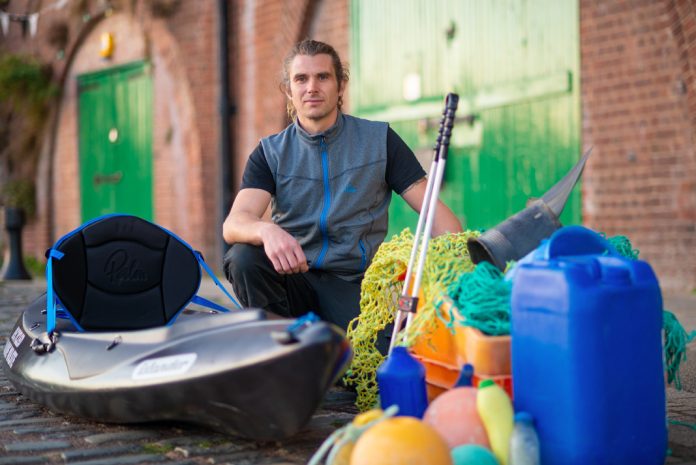
Rob Thompson is cleaning up the ocean, one kayak at a time—literally. | Photo: Courtesy Odyssey Innovations

The idea came to Rob Thompson on the coast of Cornwall, in southwest England. Staring at the bulging bags of trash he and his friends had collected from a remote cove, and then at the plastic kayaks they’d used to reach it, Thompson experienced what he calls “a bit of a Eureka moment.”

The avid diver had been organizing cleanups for years, helping to remove tons of plastic from the seabed and remote beaches like this one. So much, in fact, he didn’t know what to do with it all. Just chucking it in the bin didn’t feel right, and his first idea—to recycle ocean plastic into beach toys and Frisbees—had a fatal flaw. “We kept finding those things on the beaches when we did our cleanups,” he says. “I didn’t want to make something that would become part of the problem.”

The key was to turn the rubbish into something people would treasure, which is where the kayaks come in. “We got to the end of the cleanup and we had our bags full of plastic and the kayaks sitting next to them and I thought, ‘Ah, that’s it!’ We can actually make kayaks out of the plastic we collect, and then use them to get out and recover more marine plastic.”

Thompson is telling me this over Skype. He’s sitting at his kitchen counter, which doubles as world headquarters for his one-man startup, Odyssey Innovations. He looks like a young Richard Branson, with a broad smile and long blond hair, but he’s a conservationist, not a business tycoon. “I never got ‘round to writing a business plan,” he admits.

Thompson came to the recycling game with no experience in manufacturing, no knowledge of chemistry or engineering. He wasn’t even much of a kayaker. But he was very, very persistent.

When recyclers in the U.K. turned him away, saying it was impossible to make kayak-grade plastic from beach trash, Thompson looked farther afield. He found a company in Denmark with the required technology, and then he discovered an abundant source of high-quality plastic in the abandoned fishing nets littering the ocean.

With his diving friends, he recovered nets from the wreck of the Conqueror, a trawler that ran aground in 1977 with her tackle on deck and 250 tons of mackerel in her holds. “The shipwreck was completely disintegrated, just broken-up plates on the seabed. But the only damage to the nets is where they had rubbed against those metal plates,” he says.

The pristine state of the nets was a stark reminder of how incredibly persistent plastic waste can be, but Thompson also recognized an opportunity. Here was a ready supply of high-quality plastic that, once cleaned of sand and mackerel bits and processed in the Danish facility, could be used to make kayaks.

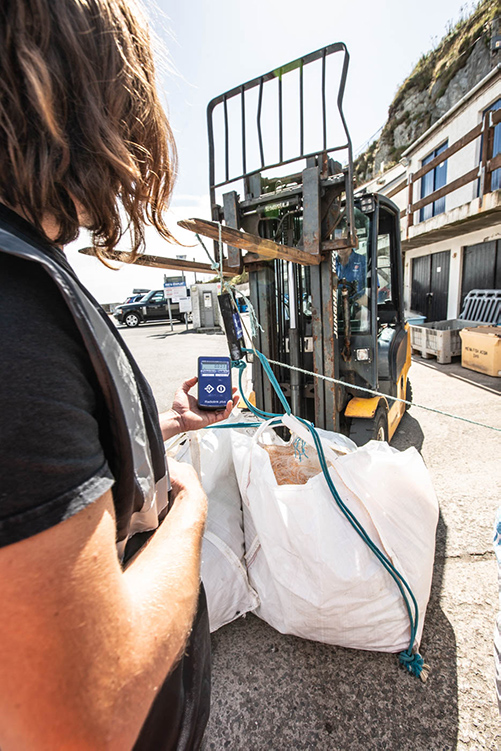
It takes one 20-kilo bag of marine plastic to make a kayak. | Photo: Clare James
Marine plastic is recycled to make a kayak. | Photo: Clare James

“Once I got the mix working right for rotomolding, I approached Palm and said, ‘Fancy giving this a go?’” Thompson says. Best known in North America for drysuits and technical paddling gear, Palm Equipment also makes Islander, Dagger and Wilderness Systems kayaks for sale throughout Europe. Marketing director Paul Robertson took the call.

“When Rob came to us, he was essentially offering the Holy Grail—a material we could use in the same molds we’re already using, at the same temperatures, and get the same sort of product,” he says.

The company had been experimenting with recycled plastic kayaks for a decade, but those boats were made using fresh off-cuts from new plastic. Thompson proposed they mold kayaks from material that had been lost at sea for years, sometimes decades.

When the first 20-kilo bag of recycled plastic arrived, Robertson poured it into a Dagger RPM mold. Then he took the upcycled classic to the river, bashing ends in shallow wave holes, bouncing down manky rapids and hucking the odd waterfall. Long before the boat finally succumbed to the abuse, Robertson was convinced.

The recycled polyethylene worked, and while Robertson wouldn’t recommend it for a state-of-the-art creek boat, it was perfect for the Islander line of recreational kayaks. The company’s Paradise single-seater and Paradise II double were the world’s first marine recycled kayaks when they debuted in January 2019. This season, Islander plans to make two more recycled models available, the Calypso and Fiesta.

Thompson has given some kayaks to beach cleanup groups, while others have been sold online and through Islander’s network of retailers. Many go to liveries interested in putting their environmental credentials front-and-center, Robertson says. “We sent boats to a livery in Spain that allows you to take a kayak out free of charge, providing you come back with a bag full of rubbish.”

[ See the largest selection of boats and gear in the Paddling Buyer’s Guide ]

Thompson aims to sell about 250 recycled marine kayaks this year, funneling the modest profits back into his fledgling organization. Last year the group removed approximately 130,000 pounds of plastic from the ocean and is on track to double the haul this year. The material has been reborn as all manner of things, including the stages for the Glastonbury Music Festival. Only a fraction makes its way into kayaks.

The kayaks are available only in flat black, due to the unique formulation and UV protection additives used in the recycled plastic. The sit-on-tops start at $555 USD and can currently be shipped anywhere in the world—except North America and China, due to licensing agreements. This may soon change as Thompson is in talks now with a U.S.-based manufacturer to bring the recycling process stateside.

Rob Thompson is cleaning up the ocean, one kayak at a time—literally. | Photo: Courtesy Odyssey Innovations

Kevin Callan on how to win paddling’s greatest debates

Battle Royale
Canoe versus kayak? Oh, put a cup in it. | Photo: Gabriel Rivett-Carnac

On a quiet Saturday morning over tea and toast, I typed out a question on Facebook. “What are the top paddling debates?” I asked my friends. Before noon, I had over 200 responses. By dinner there were 400 replies, and more than 600 greeted me the next morning.

I had touched a chord.

People love a good debate and waxing on about their opinions. It was no surprise to me the most hotly contested replies on my post centered on the vessel itself. You know how this goes—clashing over canoe versus kayak, new aramid technology versus traditional cedar canvas, keel versus no keel, and solo versus tandem.

Then came the paddle wars: bent shaft or straight? J-stroke or goon? Single blade or double? A close third was camp gear—tents versus hammocks, down sleeping bag or synthetic, stuff your tent or roll it, water filters or chemical treatments, groundsheet inside the tent or outside.

No technique, tradition or personal preference was off limits. For every person celebrating the efficiency of single-carry portages, someone was heralding the safety of doubling. How is the word portage pronounced, anyway? How about comfortable canoe packs versus cavernous barrels? One lone voice cried out for a return to measuring in rods instead of meters but was unanimously ignored. Lifestyle choices were also disputed—dogs or no dogs, bushcraft versus survival, fish fry versus catch and release, and bathing suits versus skinny dipping.

It was my girlfriend who added in the controversy on skinny dipping. Interesting!

Some debates I was less familiar with—DivaCup versus tampons, orange pekoe versus spruce tea, squat versus She-Wee. And some oddities too—cat hole versus carrying out, two-ply versus surrounding vegetation, real beer versus IPA, weed versus liquor, whisky versus whiskey, bringing a less fit friend versus bear spray, true experts versus social media wannabes.

To me, it reads like a long list of conversation starters for my next backcountry campfire with friends. Some paddlers didn’t appreciate the thread, however. One was turned off by the abundance of booze talk. Another used the thread as an opportunity to knock a competitor’s brand. One gentleman opposed the entire posting. He would have much rather read what all paddlers have in common, with a rallying cry to band together for our common good, rather than read the banter.

“I realize why these topics of debate are popular for writers like you, Kevin. I get it. They work. People read them,” he wrote. “That’s cool, but it adds nothing of benefit to our community. I hope you will consider doing a well-thought-out article on what we all have in common and why it is important for us to stick together.”

I commend his point. I’ve listened to too many paddlers who feel the need to preach their views rather than exchange them. Who cares what your canoe is made of, or how you propel it forward, as long as you paddle. Skinny dip if you like, just be thoughtful of others while doing so. And does it really matter if you pack whisky or whiskey, as long as you bring enough to share?

All the same, bouncing ideas off one another about boats, bow saws and bug repellents keeps us talking. It connects us around what we have in common—our much bigger and collective passion for getting on the water—and keeps us learning, even if we don’t always agree. It doesn’t matter to me whether you squat or use a She-Wee. What matters is we enjoy those choices on trip and hopefully intrigue a few others to come out and play in the woods as well… So long as they stuff their tent, not roll it. That’s just plain silly.

Kevin Callan is the author of 18 books, including the best-selling The Happy Camper and a popular series of paddling guides.

Canoe versus kayak? Oh, put a cup in it. | Featured photo: Gabriel Rivett-Carnac

Why Mike Ranta is busy building the world’s largest canoe paddle

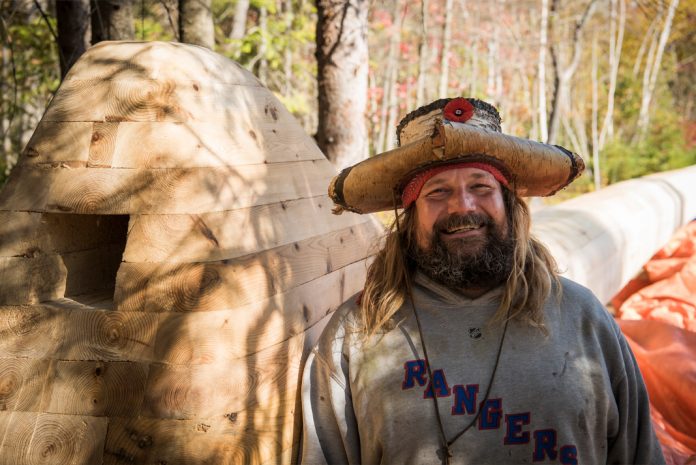
once complete in July 2020, Mike Ranta’s Big Dipper blade will beat the current record for the world’s largest canoe paddle, which is just 60 feet long and resides near Golden, British Columbia. | Photo: Clay Dolan

When Mike Ranta dreams, he dreams big. During the past year, the two-time cross-Canada canoeist has been building the world’s biggest canoe paddle.

He calls it the Big Dipper.

“I was aiming for 100 feet, and then I threw on an extra 10 or so,” Ranta says of the 110-foot-long, 15-foot-tall paddle he’s building in the tiny town of Killarney, Ontario. Originally from Atikokan, Ontario, expedition paddler Ranta spent hundreds of hours building in 2019—except for a six-week hiatus in the summer to paddle from Fort McMurray, Alberta, to Yellowknife, Northwest Territories.

To create the paddle, Ranta sawed and fastened 350 boards and beams to build sections of the paddle that were later fastened together. He estimates he used more than 1,000 bolts and five gallons of Titebond glue. Once complete, he expects the Big Dipper will weigh more than three tons. The paddle is now partially assembled, with shaft and blade together. Ranta notes he was only out by about a quarter of an inch in his measurements—pretty impressive for an amateur woodworking paddle maker on a project of this size.

To complicate the build, Ranta left a hollow down the butt end of the paddle and into the shaft to create a time capsule that will be sealed for 200 years. “I tell people to put something in there the size of their heart,” explains Ranta. The capsule is currently open for submissions (thebigdipper.ca).

The idea for the paddle started to carve its way into Ranta’s mind nearly 15 years ago, but he struggled to find a town and purpose where the monolith could exist. When Ranta arrived in Killarney, Ontario, on the shore of Georgian Bay, during his third attempt at crossing Canada by canoe, it all clicked. When Killarney was founded in 1820, it was known as Shebahonaning, meaning safe canoe passage.

Once complete, the paddle will adorn a small bluff along Georgian’s Bay beautiful rocky coast, set in front of Killarney Mountain Lodge’s newly constructed log convention center—also the largest of its kind in the world. The Big Dipper’s unveiling will celebrate the town’s 200th anniversary and add to its reputation as a premier canoeing destination.

“It wasn’t a Dragon’s Den moment by any means,” says Ranta about his agreement with Holden Rhodes, the owner of Killarney Mountain Lodge resort. “I was like, ‘Hey man, want to build the world’s biggest paddle?’ and the rest is history.”

[ Paddling Buyer’s Guide: See all regular size canoe paddles ]

“You’ll be able to see it from the lodge, from the lake, maybe even from space,” adds Ranta.

The project hasn’t come without learning curves. The biggest issue for Ranta has been his allergy to cedar dust, a serious problem when sanding a 110-foot-long cedar canoe paddle. The paddle was also nearly ruined during a late October storm when the wind blew the shaft off oversized sawhorses. Luckily, there were no injuries to person or paddle.

In many ways, the project is not so different than Ranta’s massive canoe trips, with similar endurance and commitment needed. “When you first start, it’s hard to see the end,” he says. “Some people can’t fathom something that will take a year to complete.”

The Big Dipper will be sanded, stained and erected in time for the Canada Day weekend celebrations scheduled for July 2020. “Everyone is invited,” says Ranta.  

Writer David Jackson paddled alongside Mike Ranta from the coast of British Columbia to Killarney, Ontario, in 2017.

Once complete in July 2020, Mike Ranta’s Big Dipper blade will beat
the current record for the world’s largest canoe paddle, which is just 60 feet long and resides near Golden, British Columbia. | Featured photo: Clay Dolan

7 Things You Didn’t Know About Bows

Betcha Didn’t Know About...Bows
You’re doing it wrong. | Photo: istockphoto.com/m-gucci
  • Bow paddlers are unfairly maligned—referred to as bow meat, deadweight and worse. In an effective flatwater tandem team, the bow paddler is the engine, setting cadence and providing power. To aid steering, bow paddlers should know pry, sweep, draw and cross-bow draw strokes. Learn the techniques here.
  • More than 100 hours of research and testing at UC Berkeley proves there’s a right way to tie your shoelaces. Most kids learn to tie their laces in a weak bow. To find out if you’ve tied the strong or weak version of this knot, sharply pull at the laces at the base of the knot. A weak knot will orient the bow so it’s parallel to the shoe’s tongue, while a strong knot will orient the bow perpendicular to the tongue. If you’ve tied the weak version, you can tie a strong knot by wrapping the shoelace around in the opposite direction when creating the bow’s loop.
  • Sharp and narrow bow lines improve a canoe’s speed and efficiency but make it slice through waves rather than ride up and over them. A canoe with a blunt, wider bow will handle waves and rapids more efficiently. The former is popular in racing designs; the later is popular with whitewater boaters. There’s a whole spectrum in between.
  • A bowtie manufacturer in California made the world’s largest bowtie. It used 250 yards of black and white polka-dot fabric and stands seven feet tall and 15 feet wide—roughly the size of a great white shark.
  • Traditional tandem hull designs have a symmetrical bow and stern and can be easily paddled solo by a paddler sitting reverse in the bow. Modern asymmetrical hulls pair a fine-entry bow with fuller stern and widest point of the hull aft of center. The fine entry lines on the bow aid efficiency while a fuller stern keeps the stern from sinking lower in the water as speed increases.
  • Bow sales surged in popularity following the success of the $1.45 billion Hunger Games franchise, thanks to bow-and-arrow-wielding heroine Katniss Everdeen. The Archery Trade Association estimates 9.9 percent of Americans participated in archery sports in 2015, the year the final Hunger Games film was released.
  • Q: What goes tick-tock, bow-wow, tick-tock, bow-wow?
    A: A watch dog.

You’re doing it wrong. | Photo: istockphoto.com/m-gucci

How Alaska’s Most Iconic Paddling Paradise Escaped Extinction

Gold Mine

I’m lounging on a gravel bar, drinking a beer after a long day on the river and a long search for camp. The Tatshenshini River rushes by snow-capped mountains for another 70 miles to the Gulf of Alaska. The whole time I’m thinking, “What a crappy place for a mine.”

From 1988 to 1993, the Tatshenshini and Alsek rivers—two of the wildest and most gorgeous rivers in North America—teetered between remaining wild rivers and becoming piles of toxic rubble. Thanks to people I’ve never met, this is now one of the largest protected areas in the world.

In the ‘80s, mining company Geddes Resources Limited claimed it found $5 billion of copper under Windy Craggy Mountain, up Tats Creek in the British Columbia portion of the Tatshenshini River. Windy Craggy was in unprotected land ringed by Glacier Bay, Wrangell-St. Elias, and Kluane national parks in the Alaska-Yukon-British Columbia corner. Geddes proposed digging out the mountain into the world’s largest open-pit copper mine, piling the tailings on a glacier, piping the slurry to Haines, Alaska, and selling it in Japan. They would chew 50 million tons of rock off the mountain every day for 15 years.

At the time, the odds seemed against the rivers. The economy wasn’t great and Geddes promised jobs. Few people had even seen the remote river. The fight started with local river runners, climbers, bear biologists and wilderness lovers in Haines and Whitehorse, then spread to Victoria and Juneau. Then it went from state, provincial and territory capitals to Ottawa and Washington, D.C. International conservation groups took up the cause. When Al Gore was elected Vice President in 1992, the writing was on the wall, since the pipeline would require a treaty. In 1993, British Columbia denied the mine leases and designated Tatshenshini Provincial Park, creating a four-park complex protecting the entire Alsek-Tatshenshini basin.

Drinking my beer on our gravel bar in the park, I think back to my young adulthood during the campaign. The summer after the proposal, when I was a Forest Service seasonal, I heard about the Windy Craggy Mine. It was one of many schemes flitting in and out of the Alaska consciousness, part of the region’s ongoing struggle to balance industrial-scale extraction, tourism, sustainable fisheries, stunning beauty and pristine ecology. Two years later, I was working at a river conservation group. There was a massive poster on the wall, showing rafters floating past icebergs below giant mountains. It was from the campaign against the mine: I’d paddle through the same scene a few days below our gravel bar camp. Back in ‘92, the outfit I worked for was starting to work on a book called How to Save a River. Much of it could have been based on the Tatshenshini campaign. Some was.

Three decades later, the idea of digging up a mountain next to three national parks and piling toxic tailings on a melting glacier draining into a salmon-bearing river is ridiculous. The Tat has achieved river-trip-of-a-lifetime status, with permits as coveted as the Grand Canyon and the Middle Fork of the Salmon. It took five years to get ours. Outfitters in Haines and Whitehorse base their business on the Tat and other nearby rivers. Fifteen years of copper became 30 years and counting of ecotourism, plus the enduring though harder to quantify value of scenery, grizzly bears, salmon and not having to clean up toxic sludge.

As part of our trip prep, we poured over maps and practiced river rescue. I gave myself another task—I found the old coffee-table book the Tatshenshini Wild campaign produced in the early ‘90s, and I read it cover to cover.

[ Plan your next adventure with the Paddling Trip Guide ]

I’m forever indebted to the river runners, climbers, biologists and others who put their oars, crampons and paddles aside in the ‘80s to write articles, review studies, appeal permits and trek from Haines and Whitehorse to Victoria, Ottawa, and D.C., time and again. On the drive to the put-in, our shuttle driver rattled off the names of locals who had been part of the campaign.

Behind every river we run today are the stories of people who fought hard to protect those places, years, decades or centuries ago. On the Grand Canyon, it’s names we know well: Martin Litton and David Brower. More often, it’s just hard-working locals. On the Tat, the only names most people recognize are Gore’s and maybe conservation photographer Robert Glenn Ketchum. So, let’s hear it for Ric Careless, Michael Down, David Evans, Heather Hamilton, Stephen Herrero, and more I’ll never know.

Neil Schulman writes and paddles from Portland, Oregon.

Rollin’, rollin’, rollin’ on the river. | Featured photo: Neil Schulman

Wood-canvas canoes are tougher than you think

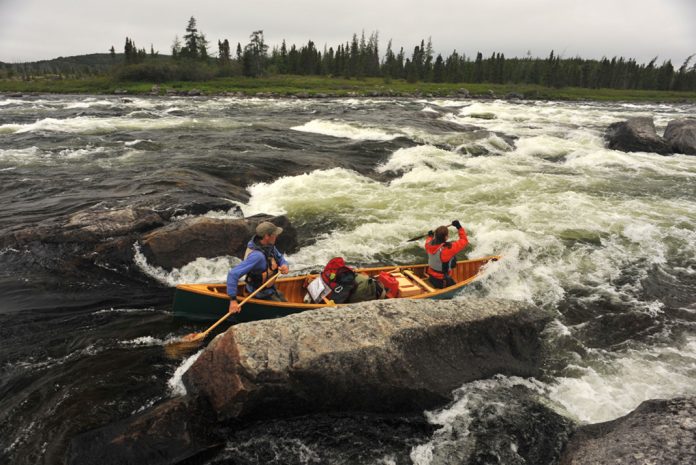
There’s no time to hesitate in the rapids of this steep, shallow, unnamed river, deep in the wilderness of northern Quebec. But my wife Kim and I did just that, second-guessing our line in a narrow chute and coming to a sudden stop on a rounded rock, with the current racing by. The mid-section of our canoe bowed inwards and our packs crested the gunwales, just as I catapulted from the stern in a desperate effort to avoid wrapping around the boulder. Such a moment would be a harrowing near-miss in a plastic canoe, but we’re two weeks into a 45-day trip—paddling a gorgeous wood-canvas canoe.

Later, when I relate this story to Hugh Stewart, the craftsman who built my beloved Headwaters 17-foot Prospector, he merely shrugs. Maybe we should’ve scouted the rapid better, he intones.

[ Paddling Buyer’s Guide: See all canoes ]

Stewart has spent a lifetime combatting the fragility myth of wood-canvas canoes. His passion for Canadian history and his extensive travels throughout the Far North demonstrate canoes like mine were designed for hard use—long before the space age and its so-called indestructible canoes. Aesthetics are one thing, but wood-canvas canoes are particularly easy to maintain on the trail and meant to be rebuilt. My Prospector has been through thousands of kilometers of hard wilderness travel, including powerful whitewater rivers and shallow streams, its hull kept up with a small repair kit and a bit of know-how.

That night in northern Quebec, I flipped the canoe and inspected the canvas—something I habitually do almost every day. Impacts with rocks can rub through the waterproof filler or may puncture or cut the skin altogether. Stewart notes that most damage often occurs when a partially-floating canoe rubs onshore over a lunch break or while its paddlers inspect a rapid or portage trail.

The antidote to worn or torn canvas is a contact adhesive—Ambroid is the traditional staple, but since this hobby store glue was discontinued, it has been replaced with generic contact cement or butyrate (also known as airplane dope, used in the construction of fabric-covered aircraft). Simply smearing a little on the canvas plasticizes the filler and waterproofs thin spots.

Larger tears require contact adhesive and a patch; a piece of cotton bandana cut to cover the hole and saturated with glue works well. Long-lasting repairs require dry canvas, so wait until the canoe has time to dry at the end of the day. “Burning on a patch” is a quick method of repairing torn canvas on a wet canoe: smear adhesive on the canoe and light it on fire, promptly drying the canvas. Then cut and apply a patch. Contact adhesive dries quickly and the canoe will be serviceable in mere minutes.

Occasionally, impact with a rock will fracture the canoe’s planking; a hard hit may even break ribs—you’ll know when this happens because it sounds like gunfire. Often this sort of damage is merely cosmetic. But sometimes it requires immediate attention—like last summer, on the coast of Hudson Bay, when powerful winds cartwheeled a friend’s brand-new canoe across the bouldery tide flats, leaving its innards a splintery mess.

[ Plan your next adventure with the Paddling Trip Guide ]

The repair was daunting, but we had plenty of time to work on it while the wind continued to blow. We started by carefully pushing and levering the broken cedar frame into a facsimile of its original shape. Then, I emptied my repair kit of the squares of tin I pre-cut at home (scraps of galvanized heating duct work well) to shore-up busted planking (the longitudinal strips of wood that comprise the hull), wedging the metal between the ribs. Broken ribs are usually strong enough to maintain a canoe’s shape, but if necessary, they can later be reinforced with a piece of wood spanning the break—a repair best done at home.

Stewart’s stepsons once completed an impressive field repair using lengths of split saplings to reinforce broken gunwales and a piece of birchbark to patch a massive tear in the canvas—salvaging a canoe that was wrapped around a rock on Quebec’s Moisie River.

The beauty is, back in the workshop, a well-used or badly damaged wood-canvas canoe can be fully restored, its canvas stripped to replace broken parts and rebuilt to look and function like new.

Conor Mihell is an award-winning environmental and adventure travel writer based in Sault Ste. Marie, Ontario. He disappears into the wilds of Nunavik each summer in his wood-canvas canoe.

Is wood-canvas the toughest expedition canoe you’ve never paddled? Maybe, says writer Conor Mihell. | Featured photo: Virginia Marshall