Home Blog Page 176

SPOT Introduces the New SPOT X Jeep® Edition 2-Way Satellite Messenger

SPOT Introduces The New SPOT X Jeep® Edition 2-Way Satellite Messenger

MISSISSAUGA, Ontario–(BUSINESS WIRE)–Globalstar Canada Satellite Co., a wholly owned subsidiary of Globalstar Inc. (NYSE MKT: GSAT) and a leader in satellite messaging and emergency notification technologies, today announced the launch of an exclusive SPOT X™ Jeep®Edition 2-way satellite messenger. This newest product launch comes after SPOT recently entered a licensing deal with the Jeep brand.

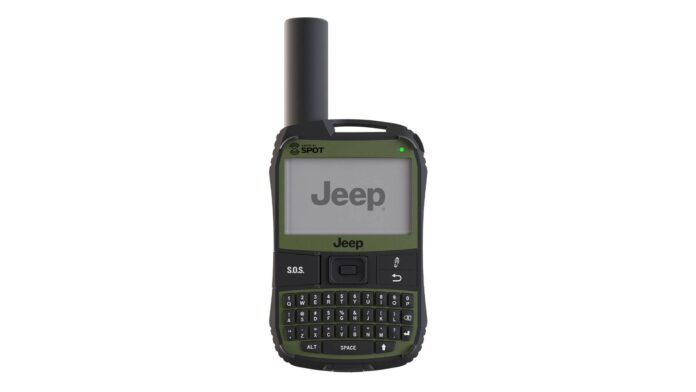
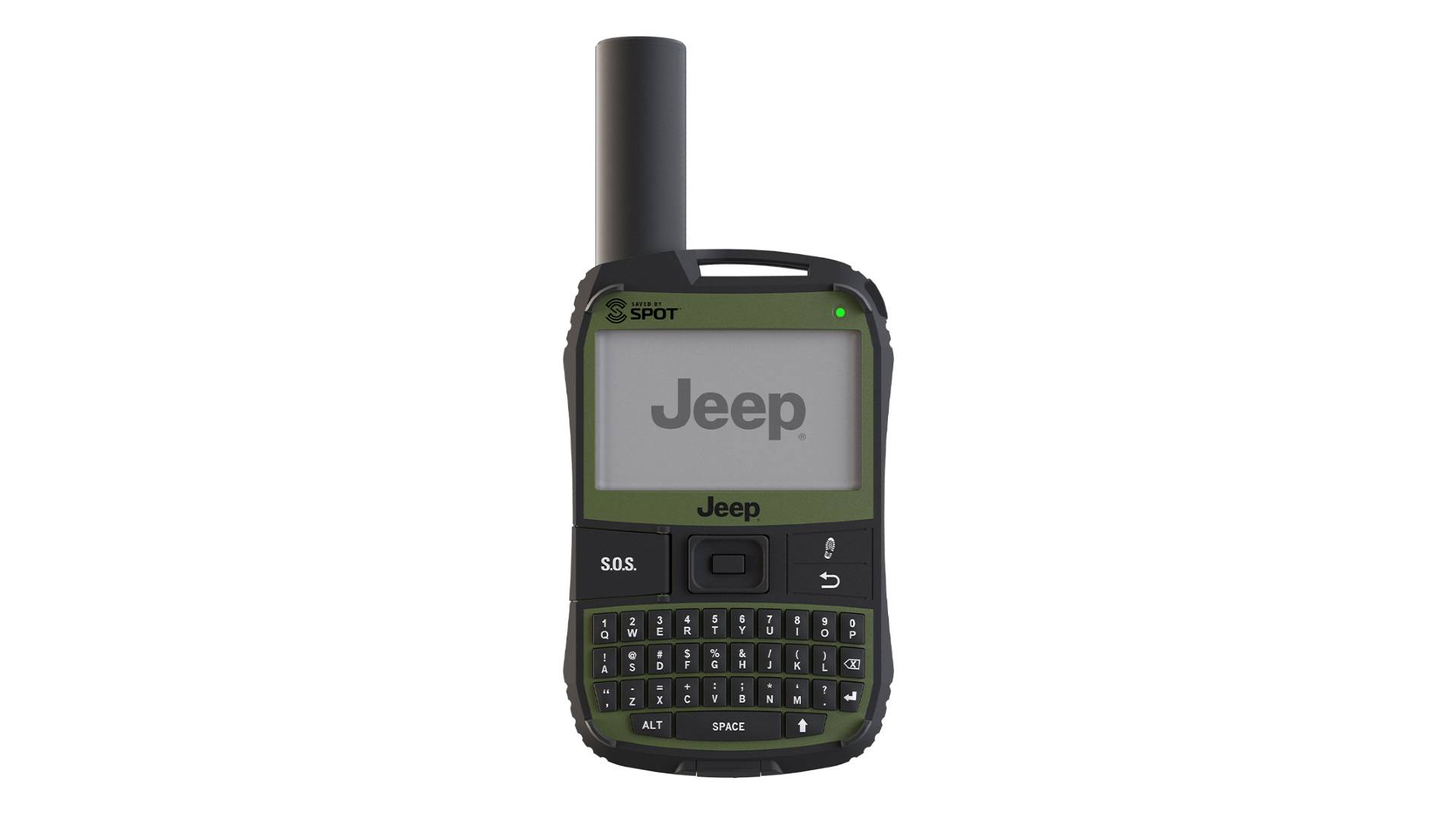
The SPOT X Jeep Edition offers 2-way message capabilities with an on-board backlit display and Qwerty keyboard, GPS location tracking, and direct communication with emergency services in one portable, lightweight device. The new Jeep Edition combines the capabilities SPOT is known for with Jeep branding. The SPOT X Jeep Edition is the latest product introduction to the award-winning SPOT family of devices, providing affordable, off the grid messaging and tracking. Through a direct connection to the GEOS International Emergency Coordination Center, SPOT has triggered over 7,000 rescues around the globe.


SPOT Introduces The New SPOT X Jeep® Edition 2-Way Satellite Messenger


Key Features of the SPOT X Jeep Edition:

  • Bluetooth wireless technology allows pairing option to perform device functions using the SPOT X app
  • Send and receive messages with family and friends when beyond cellular range
  • S.O.S. emergency notification and direct 2-way messaging with 24/7 Search and Rescue services
  • Check-In “OK” with the push of a single button directly to pre-set contacts
  • Navigation: Built-in compass and programmable waypoints
  • Rechargeable lithium battery averaging a life of 10 days when tracking in 10-minute intervals
  • GPS Tracking and SPOT Mapping interface to Share your Adventures

Pricing and Availability:

The SPOT X Jeep Edition will be available online at FindMeSPOT.ca. The device retails for $389.99 CAD with several annual service plans available, beginning at $11.95 USD per month. More pricing and product details are available at FindMeSPOT.ca/Jeep.

About Globalstar, Inc.

Globalstar is a leading provider of customizable satellite IoT solutions for customers around the world in industries such as government, oil and gas, emergency management, transportation, maritime and outdoor recreation. As a pioneer of mobile satellite voice and data services, Globalstar allows businesses to streamline operations via the Globalstar Satellite Network by connecting people to their devices, supplying personal safety and communication and automating data to more easily monitor and manage mobile assets. The Company’s product portfolio includes the industry-acclaimed SmartOne asset tracking products, Commercial IoT satellite transmitters and Duplex satellite data modems, the innovative Sat-Fi2 satellite wireless IP hotspot and the SPOT® product line of personal safety, asset and communication devices, all offered with a variety of data service plans. For more information regarding Globalstar Canada Satellite Co., please visit globalstar.ca.

About SPOT

SPOT LLC, a subsidiary of Globalstar, Inc., provides affordable satellite communication and tracking devices for recreational and business use. SPOT messaging devices use both the GPS satellite network and the Globalstar Satellite Network to transmit and receive text messages and GPS coordinates. Since 2007, SPOT has provided peace of mind by allowing customers to remain in contact with family, friends and co-workers, completely independent of cellular coverage and has helped initiate over 7,000 rescues worldwide. For more information, visit FindMeSPOT.ca. Note that all SPOT products described in this press release are the products of SPOT LLC, which is not affiliated in any manner with Spot Image of Toulouse, France or Spot Image Corporation of Chantilly, Virginia. SPOT Connect is a trademark of Spot LLC. All other trademarks are the property of their respective owners.

About Jeep

Built on more than 75 years of legendary heritage, Jeep is the authentic SUV with class-leading capability, craftsmanship and versatility for people who seek extraordinary journeys. The Jeep brand delivers an open invitation to live life to the fullest by offering a full line of vehicles that continue to provide owners with a sense of security to handle any journey with confidence.

The Jeep vehicle lineup consists of the Cherokee, Compass, Gladiator, Grand Cherokee, Renegade and Wrangler. To meet consumer demand around the world, all Jeep models sold outside North America are available in both left- and right-hand drive configurations and with gasoline and diesel powertrain options. Jeep is part of the portfolio of brands offered by global automaker Fiat Chrysler Automobiles. For more information regarding FCA (NYSE: FCAU/ MTA: FCA), please visit www.fcagroup.com.

Media Contact:
Caroline McGrath
CMM Communications Inc. for Globalstar Canada Satellite Co.
caroline@cmm-communications.com
+1-416-972-1642

7 Stages of Gear Addiction

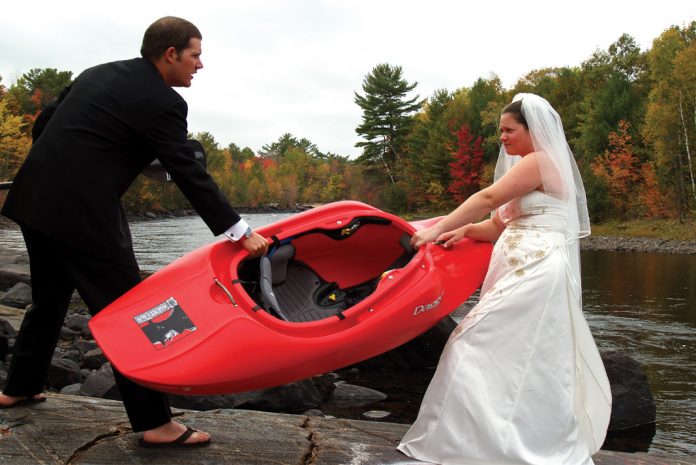
husband and wife fight over a kayak at wedding
Successful interventions can help an addict’s loved ones express their feelings constructively. Photo: Dan Caldwell

You know you’re living with a gear disorder when you exhibit one or more of the following traits: You feel you cannot face life without your gear; you cannot control your use of gear; you are proud of excessive use of gear, despite harm to your health and other parts of your life; you lie about your use, especially about how much you are using it; you give up friends, family and activities you once enjoyed; you cannot recognize the problems with your behavior.

These are signs of the sixth stage of a gear addiction. Sound familiar?

Most people develop gear disorders of all kinds before reaching adulthood. The alpine ski trade associations know if children are riding chairlifts by the age of 11, they contribute exponentially more to the ski gear industry’s bottom line throughout their lifetimes. This is why grade five students ski for free at most resorts across the country. Hey kids, want some candy?

Other outdoor industry studies suggest the same, and anecdotally we know this to be true for paddling.

Stage one of a gear use disorder, the initiation stage, generally happens during the reckless teen and college years—mostly out of curiosity and because friends and family are doing it. This is a great time for creating lifelong addictions of all kinds. The prefrontal cortex part of the brain, responsible for decision making and controlling impulses, has not fully developed. This makes 40-foot waterfalls and $1,000 drysuits seem totally reasonable. Why not, right?

[ Paddling Buyer’s Guide: View all technical outerwear ]

Stage two is the experimentation stage. Gear use in this second stage is a social activity associated with fun, unwinding and a general lack of consequences. You are fleetingly aware of the risks but think to yourself, I can stop using my gear if I want to. You think, my gear doesn’t control me, I control my gear. Delusion begins here.

During stage three, gear use becomes more frequent. You may not be able to use it every day, but patterns develop, like say, using gear every weekend. At stage three, you may begin to miss work or school. Gear use becomes an excuse to miss family functions like weddings, or gear is worn to weddings when an opportunity for use exists before or afterward. In advanced cases, you might wear it to your own wedding. You may already have your local gear dealer on speed dial. And gear use has become intricately tied to escaping negative emotions or unpleasant situations.

Gear addiction, say some, becomes a real problem at stage four when you begin to change your circle of friends. Here your behavior almost certainly changes, becoming noticeably more chill, often late for appointments and more likely to be naked in public places before and after use.

Stage five dependence leads to the serious gear use disorder of full-on stage six addiction, see above.

As the editor-in-chief of paddling’s largest gear guide, I say heavy gear use is not a disorder at all, but it’s the activities of kayaking, paddleboarding, kayak fishing and canoeing we are addicted to.

But I would say that, wouldn’t I?

No matter, if you are reading this, it’s probably too late to regain control over your life and your bank account. Sorry, not sorry. You’ve surely already been through the endless pages of the best paddling gear in the Paddling Buyer’s Guide.

With other addictions, stage seven is treatment. Treatment would be to stop doing it. Professionals would recommend an initial cold turkey detox period followed by intense behavioral therapy and some expensive pharmaceuticals.

Gear addition, the way I see it, is only a problem when you’re not using. For which there are therapy sessions and groups we can attend. In the cold winter regions, addicts flock to warm community pools for help. When the water is not stiff, such groups gather on lakes and rivers everywhere. Check your national paddling association or local club for regularly scheduled meetings.

Scott MacGregor is the founder and publisher of Paddling Magazine.

Successful interventions can help an addict’s loved ones express their feelings constructively. Featured photo: Dan Caldwell

Video: Surviving COVID-19 For Sea Kayakers

“In 2020 we had big plans,” writes filmmaker Tom Vetterl. “Several expeditions and trainings were in the making, I wanted to start my BCU education to become a sea kayak guide, there were lots of ideas for new films in the pipeline, a full 2020 schedule.”

Unfortunately, like so many others, his plans came crashing down due to the COVID-19 crisis. “All plans are cancelled or at least on hold, especially friends with businesses are struggling,” he writes.

But, sea kayakers are resilient, he says. “We never bust our heads in the sand! With this film, me and my friends from Moryak Premium Sea Kayaking, Expedition Paddler and ISKGA, want to encourage everyone to stay optimistic, make plans and concentrate on what can be done! Take online classes, plan your next expedition, reach out to friends and support your community, read books, learn something new, be creative! We hope everyone is doing well out there, and we cannot wait to get back on the waters with you.”


You’ll Be Surprised By The Beautiful Paddling Experiences Lake Powell Offers

Kayaks with canyon walls on either side
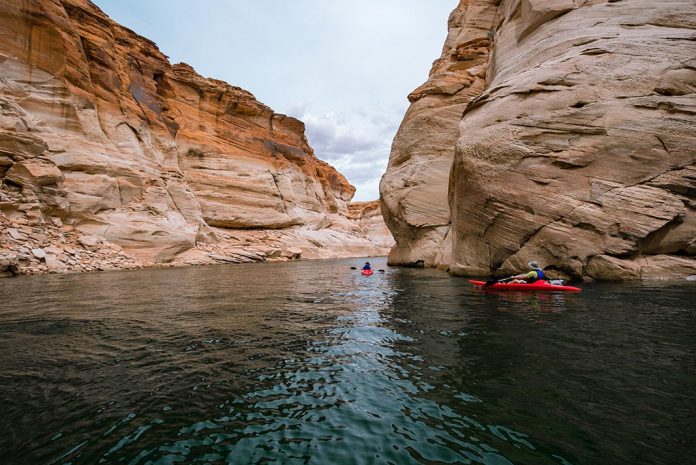
There's beautiful natural scenery to be enjoyed on Lake Powell.

Paddling on Lake Powell is a lesson in embracing contradiction. Behind a controversial dam, a massive reservoir winds like a ribbon through 150 miles of remarkable desert canyons. Of course, being located in one of the driest regions in the U.S., the reservoir is typically half full. The watercrafts of choice, in high season, are speedboats and houseboats which bounce waves between cliffs in the main channel. Many Southwestern paddlers hate Lake Powell so much, they call it Reservoir Powell, and refuse to even consider paddling there. BUT WAIT.

Other paddlers explore stunning side canyons, take overnight trips to remote bays, and even paddle across the entire reservoir. In recent years, Lake Powell has developed a growing paddling scene among dedicated locals and awestruck visitors. And those paddlers, including skeptics, who give the reservoir a chance often come away pleasantly surprised.

Kayak and SUP rentals at Lake Powell

The town of Page, Arizona, near Glen Canyon Dam, serves as regional hub for paddling at the southern end of the reservoir. Three companies offer rentals. For those new to paddleboarding, check out rentals from Lake Powell Paddleboards and Kayaks. For kayak rentals, check out Kayak Lake Powell and Hidden Canyon Kayak.

For those seeking a more remote experience, the Hite Outpost is now operating on the north end of the reservoir, offering kayak and SUP rentals, plus an updated campground.

Kayak and SUP tours of Lake Powell

The three companies based in Page, listed above, each offer a variety of tours. The most common are half-day trips by kayak or SUP into the narrowing slot of Antelope Canyon or to Lone Rock Canyon in Wahweap Bay. Full-day and overnight trips will often motor paddlers and boats to more distant places, like Labyrinth Canyon and Padre Bay. At North Lake Powell, the new Hite Outpost plans to start offering tours in 2021.

[ Paddling Trip Guide: View all kayak and SUP tours in the U.S. ]

Side canyons: The best place for paddling at Lake Powell

For most paddlers, Lake Powell is all about exploring side canyons. A great introduction to this experience is Antelope Canyon at the southern end of the reservoir, near Page. This is the lowest extremity of the famous Antelope slot canyon in the Navajo Nation.

To reach this side canyon, paddlers launch from Antelope Marina and paddle west for a mile on the main channel. Go early in the morning if you want to avoid the wakes from boat traffic in the main channel. Depending on reservoir level, water typically reaches two miles back into the narrowing Antelope Canyon. After that, you can hike another two miles through the twisty slot canyon that’s known as Lower Antelope Canyon, which is accessible only to small watercraft. Due to the risk of flash floods, do not explore slot canyons during thunderstorms.

Another popular and user-friendly area is northern Wahweap Bay, where you can paddle into Lone Rock Canyon. Further away, paddling at North Lake Powell offers a remote experience far from the southern scene.

Places to kayak and SUP near Lake Powell

The section of Colorado River between Glen Canyon and Lees Ferry goes by several names, including the Backhaul and Horseshoe Bend section. The run offers the final 15 miles of the Colorado River through Glen Canyon that’s not flooded by the reservoir. The water runs clear and cold, about 50 degrees Fahrenheit, from outlet pipes at the bottom of the dam. Since there’s no road access, paddlers and boats must be hauled upstream on a motorboat from Lees Ferry by Wilderness River Adventures.

Best time of year to visit Lake Powell

You can paddle at Lake Powell any time of year. Summer is hot and busy, but it’s still a nice way to cool off. Winter offers a nearly empty experience but expect cold temperatures and cold water.

The shoulder seasons, when the reservoir is less busy, can offer a good window for many paddlers. These windows will vary each season, given shifting weather patterns, so check conditions at Page, Arizona, before you go. For fall, target roughly late-September to early-November. During spring, consider March to early-May.

What to pack to kayak and SUP Lake Powell

Other than a party boater tossing you a beer (not likely, but also not impossible) prepare like you’re going desert hiking. An approved PFD must be worn by each paddler. Bring plenty of drinking water, food, sunscreen, a sun hat, a sun shirt, a sun dial—did I mention it’s very sunny out there?

That said, take some extra layers or splash jacket in case air temperatures drop and winds rise. Given the potential for waves, be prepared for possible immersion—water temperatures are colder during shoulder seasons and warm substantially during the summer.

Important things to know

The surface elevation of the reservoir is typically around 3,600 feet. Weather can appear with little warning. Be prepared for building clouds, rising winds, frequent waves and sudden thunderstorms. If this happens while paddling, head to shore and wait until conditions improve.

Access to the marina launch ramps in Glen Canyon National Recreation Area requires a $30 entrance fee per vehicle which is good for seven days.


Mike Bezemek is author and photographer of Paddling the John Wesley Powell Route: Exploring the Green and Colorado Rivers. The book combines a condensed retelling of the dramatic 1869 expedition with color photos and a trip guide to the 1,000-mile Powell Route, which includes Lake Powell.

Stay Warm & Dry With This Guide To Using, Buying & Maintaining A Drysuit

Man in orange whitewater kayak with yellow and black drysuit
Wearing a drysuit isn't just about comfort—it's also essential to your safety on cold water.

What is a drysuit? Simply put, a drysuit is a specialized piece of paddlesports clothing. Drysuits provide a high level of protection from cold water immersion and a broad range of comfort in all but the hottest weather. For many paddlers, good drysuits are money well spent—the best investment you can make in safety and comfort paddling.

When to use a drysuit

A drysuit is appropriate to use anytime the water temperature is cold enough that you would be at risk of hypothermia if you went for a swim. This might sound extreme, but it really isn’t. Summertime water temperatures are cold enough in much of North America to warrant a drysuit for sea kayaking or whitewater boating. Water conducts heat away from your body 25 times faster than air. This means that even cool water temperatures can be dangerous if you don’t dress appropriately.

Many people choose neoprene wetsuits for cold water protection, but drysuits are more effective. Drysuits offer better protection from cold water immersion and a broader comfort range in warm weather. Any way you slice it, drysuits are a secret weapon for paddling comfort and safety.

How does a drysuit work?

Drysuits work by preventing cold water from touching your skin. If water can’t contact your skin, you won’t be subject to the rapid cooling effects of H20. Drysuits accomplish this feat by sealing your body inside a watertight envelope. The suit itself is made of waterproof materials, neck, wrist and foot openings are sealed with super-tight latex gaskets, and entry is provided by a waterproof zipper. Different suits use slightly different materials and closures, but the general concept is the same—water stays out, you stay warm.

The drysuit doesn’t offer any insulation itself, but anything under the suit will stay (mostly) dry. This means you have the option of increasing or decreasing insulation under the suit to adapt to different water and air temperatures. The ability to vary insulation to meet different conditions is the key reason that drysuits are so versatile.

Buying a drysuit

Common features

All drysuits have a few features in common. The most obvious of these are latex wrist and neck gaskets that seal tightly against your skin and limit the amount of moisture that can enter the suit. Many suits have latex or fabric socks at the feet rather than gaskets. These are much easier to use than ankle gaskets and keep your feet warmer.

A second common feature is some kind of closure. You need to be able to get into and out of the suit somehow and designers have hit on a few angles that work well. When you start looking at suits, one of the main decisions you’ll need to make is what type of entry you prefer. It is definitely worth trying on different suits with different zipper placement to figure out what works best for you.

Here are a few of the main types of entry design.

Types of drysuits

Font-zip drysuits

Front-zip drysuits place the entry zipper across the chest of the drysuit beginning at the upper right shoulder and angling downward toward the waist on the left. The advantage of the front-zip entry is that it is the easiest configuration to zip closed by yourself. With a little practice, most paddlers can zip the suit all the way closed at the top and reach the zipper tab to open the suit at the end of the day.

The disadvantage of front-zip suits is that they place the bulky zipper right across your chest where it can be uncomfortable. They also tend to be less dry on the boat than rear-zip suits since any sprayskirt tunnel incorporated into the design will need to be penetrated by a flap that allows the zipper to be opened and closed.

Rear-zip

Rear-zip suits open and close across the back of the shoulders. This design places the zipper away from the chest. The advantage is that there are no penetrations through the sprayskirt tunnel on the suit. A drier sprayskirt tunnel means a drier boat, so rear-zip designs are popular with whitewater kayakers and rough water sea kayakers.

Rear-zip suits work great once you’re zipped inside, but they can be tricky to close. Depending on how flexible you are, you may not be able to zip the suit closed by yourself. This isn’t a problem if you’re spending a day out on the river with friends, but it might be an obstacle to wearing the suit on solo adventures.

Two-piece

There are a few suits on the market that mate together top and bottom. The idea is that you can use the top section separately as a drytop if you don’t need the full protection of your drysuit. The most common of these systems use a conventional drytop with a double tunnel and a specialized set of paddling bib pants that have a matching tunnel. The two tunnels are rolled together and tucked inside the tunnel of a neoprene sprayskirt for security.

The drytop/bib drysuit option is versatile, but it doesn’t provide nearly the amount of protection that a true drysuit does. In practice, the roll closure is difficult to keep sealed and some amount of water does enter the suit if you swim. This means this kind of system doesn’t really function as a true drysuit. If you already have a good drytop, adding a set of bibs can stretch your season and improve your safety, but a dedicated drysuit will function better.

There are some drysuits on the market that place a waterproof zipper between the top and bottom of the suit. This allows the top of the suit to be worn as a drytop by itself, or to be combined with the drysuit bottoms to create a full suit. The use of a waterproof zipper creates a truly dry closure between the two halves of the suit. If you’re looking for the versatility of one suit that can be worn as a drysuit or a drytop, this is the most secure option.

Semi-drysuits

One last type of suit worth mentioning is the semi-drysuit. These suits typically have all the features of conventional drysuits but replace the dry latex neck gasket with a neoprene closure. This closure isn’t as dry as a latex gasket but can be adjusted for comfort and ventilation. The thinking is that if you capsize and come out of your kayak, your head and neck will quickly be above water, so you won’t get that much water in through the looser neck opening.

Semi-drysuits can be a good option for expedition canoeing, where you’re unlikely to put your head underwater if you flip. They also might be the right choice for someone paddling in very hot air conditions and cold water. Some folks have sensitivity to latex and aren’t able to wear a suit with a neck gasket. In these circumstances a semi-drysuit could be a good choice. Just remember that it won’t keep you as dry as a true drysuit. For most folks, a true drysuit is the best option.

Drysuit materials

Drysuit fabrics and zippers are the two main areas of variation between models and manufacturers.

Fabrics

Years ago, drysuits were built from urethane coated nylon fabrics that didn’t breathe. Water couldn’t get in, but your perspiration couldn’t get out. This meant that in warm conditions you would stew in the suit. Back in the non-breathable days, drysuits were really only an option if the water and the air temperatures were freezing.

It took the advent of breathable fabrics to make truly versatile drysuits possible. The best known of these is Gore-Tex, which is a family of fabrics made from ePTFE (expanded polytetrafluoroethylene). Other common breathable fabrics are produced by laminating breathable urethane coatings to a variety of face fabrics. Both Gore-Tex and proprietary waterproof breathable fabrics are proven, effective options in drysuit materials.

Breathable fabrics allow some moisture to escape from the inside of the fabric to the outside. All work best when the environment on the inside of the suit is warmer and more humid than the outside air. If the outer fabric of your suit gets soaked, it won’t breathe as well. In practice, this means that even breathable suits can get a little sweaty when you’re working hard. Even so, they are much more comfortable than non-breathable suits. So much so that it’s become difficult to find a suit made from non-breathable coated fabrics. The breathable suits just work better.

As far as fabrics go, Gore-Tex has a strong reputation as a durable, breathable material for drysuits. WL Gore even goes so far as to back their materials with a robust warranty that covers delamination. This means that Gore-Tex suits are among the most durable and strongly backed options on the market.

The downside of Gore-Tex is cost, which can be considerably higher than the cost of other effective fabrics. Many quality manufacturers choose alternatives to Gore-Tex for their suits and most companies that build Gore-Tex suits offer a lower-cost alternative in a proprietary fabric. Fabric alone shouldn’t necessarily dictate which suit you choose. There are lots of good options out there in a wide range of materials.

Zippers

Drysuits require waterproof zippers. The two types available are metal and plastic. The metal waterproof zipper has long been considered the best, driest option, but in recent years new waterproof plastic zippers have come onto the market and are giving the metal option a run for its money. At this point it would be difficult to say whether metal or plastic waterproof zippers are truly superior. A quality drysuit manufacturer will choose the zipper that is best matched to the design of the suit. Both metal and plastic options are effective.

Special features

These days, drysuits come standard with a wide range of specialty features. The most common of these are double tunnels and relief zippers, but there are a few more worth considering.

Double tunnel

Double tunnel drysuits have a fabric tunnel sewn into the suit that goes over the top of the tunnel on your sprayskirt. This tunnel snugs up tight with a velcro closure and dramatically limits the amount of water than can get into your kayak between your body and your sprayskirt. Whitewater kayakers will prefer this option as will sea kayakers who venture out into the rough stuff.

Relief zips

Once considered a luxury, relief zips are now standard on a range of drysuits. They are worth every penny of extra cost that they add to a suit. Simply put, a relief zip makes it possible to answer the call of nature without completely removing your suit. This means you’ll stay warmer and will be more likely to hydrate properly. Men’s suits have a relief zipper at the front. Women’s suits feature a zipper around the edge of the seat.

Socks

Another option that is rapidly becoming standard issue, socks are definitely worth having. It’s much easier to slide your feet in and out of socks than it is to force them through ankle gaskets. Better still, wool socks inside waterproof socks, inside the fully-sealed drysuit stay toasty warm and dry.

The two main types of socks are latex and fabric. Fabric socks breathe a bit and keep your feet a little drier. Latex socks are a little more durable and don’t bunch up inside your booties or water shoes. Both options work well and can be repaired or replaced if needed.

Pockets

Sleeve pockets, chest pockets, thigh pockets. There are lots of options out there. Some pockets can be custom added to suits. Others come standard as part of a specialty suit design.

Reinforced wear areas

Heavy-duty fabrics on seat and knees are a good idea, especially for whitewater kayakers who will be scouting and portaging in rugged terrain. Many suits come with this feature as standard. Others offer it as a custom option.

Hoods

Specialty sea kayaking drysuits frequently feature a hood that can be deployed to keep the rain off your head and block the wind.

How should a drysuit fit?

Your drysuit should fit comfortably over whatever insulating layers you plan to wear. It’s important for the suit to fit when you’re seated in your kayak. You don’t want it to bind when you sit upright or when you set up for a roll. Common fit problems include a suit being too short in the torso so that it binds in the crotch, a suit being too tight across the shoulders so that it limits mobility for rolls, and a suit being too tight around the waist, which causes limited mobility all around.

How tight should a drysuit neck seal be?

Speaking of tight, how about that neck gasket? New suits with new gaskets can fit so tight your face will turn red. Not good! You want the gasket to be just tight enough to keep water out of your suit without cutting off circulation. If the gasket is too tight, you’ll need to make an adjustment.

Over time, neck gaskets stretch out a bit and become more comfortable. A good trick for loosening your neck gasket is to stretch it over an oversized object like a mixing bowl. Leave the bowl in place for several days and try on the suit again. In most cases the gasket will stretch enough to fit properly. Don’t be afraid to try this several times before moving on to more drastic measures.

If you can’t get your neck gasket to fit comfortably by stretching, you can cut the gasket down to create a looser fit. This is a tricky process and if you do it incorrectly you could tear the gasket. Check with the manufacturer of your suit for tips before you resort to cutting your neck gasket.

How much does a drysuit cost?

Depending on features and materials, drysuits range from about $500 to well over $1,000. Many of the most popular models sell for $800 to $1,000. This is obviously a considerable outlay in cash for a piece of clothing. On the other hand, the versatility and comfort that a drysuit provides is unmatched. When it comes to comfort and safety, drysuits are worth the investment.

Where to buy a drysuit

If you’re lucky enough to have a serious paddling store in your hometown, pay them a visit. Buying a drysuit from your local shop is a great way to ensure you’ll end up with a suit that fits and has the features you need for your local waters. Chances are, the folks at the shop will have tried one or more suits themselves and will be able to offer up an educated opinion on what will work best for you.

If you don’t have a local connection, you can search out suits on the web. Our Paddling Buyer’s Guide is a great place to start. It compares a range of suits from top manufacturers and provides links for online shopping.

[ See all drysuits in the Paddling Buyer’s Guide ]

Where to rent a drysuit

Depending on where you live, you may be able to rent a drysuit from a local paddling shop. Some manufacturers also provide rental services as a way for you to take their products for an extended test drive. A few specialty retailers and schools will ship a drysuit to you anywhere in the country. A web search for kayak drysuit rental will be your best bet in finding a drysuit to rent.

How to use a drysuit

What to wear under a drysuit

What you wear under a drysuit will dictate how comfortable you are in and out of the water. You can read our complete guide on What To Wear Kayaking for the nitty-gritty of how to stay comfortable in a full range of conditions.

The basics of layering under a drysuit come down to moisture management and insulation. You’ll want to wear a wicking base layer to help move moisture away from your skin and toward the outer fabric of the suit. In warm weather, this wicking base layer may be the only thing you wear under your drysuit. In colder conditions, you’ll want to wear a layer of wicking fleece over the top of this base layer.

Wicking fleece works better than conventional fleece inside a drysuit. It is woven in a way that draws moisture from the inside of the fabric toward the outer fabric face. This active wicking process works with your body heat to move perspiration away from your skin so you’ll feel drier, warmer and more comfortable. In some cases, wicking fleece is so effective you might choose to wear it alone, next-to-skin rather than layering over a thinner base layer.

You can layer under a drysuit with any appropriate wicking clothes from your conventional outdoor closet, but specialized paddling layers work better. These clothes are cut to move seams away from armpits or waist where they might chafe while paddling. They typically have longer tails and higher waists to prevent gapping while seated. You can even buy a one-piece fleece suit to wear under your drysuit for low-bulk, gap-free insulation.

What you shouldn’t wear under a drysuit is anything that absorbs moisture and is slow to dry. Cotton is out. Merino wool works but is slower to dry than synthetics.

Avoid wearing rings, watches or other jewelry that could damage latex wrist gaskets. You’ll want to remove all these items before trying on any drysuit.

How to put a drysuit on

The easiest way to put on a drysuit is feet, waist, hands, head. Find a padded, clean surface to stand on. A chair can help. Slide your feet into the legs and fully down into the drysuit’s socks. Next, pull the suit up to your waist. Slide your hands into the arms and get them fully through the wrist gaskets one at a time. Now comes the tricky part. Grasp the neck gasket with both hands and pull outward to expand the gasket. Duck your head into the suit and under the gasket and press through the gasket until it drops below your chin. You’re in! Zip the zipper and you’re ready to go.

How do you get a drysuit off?

To remove a drysuit, reverse the steps mentioned above. Open the zipper. Grasp the neck gasket with your hands and pull outward to stretch the gasket. Pull the gasket over your head and duck your head out of the body of the suit. Pull your hands out of the wrist gaskets. It is usually easiest to pull these gaskets inside out. Once your hands are out, the suit can be removed like a pair of pants.

Taking care of your drysuit

Repair

All our tools wear with time. Drysuits are no exception. Latex gaskets degrade with time and must be replaced. Waterproof fabrics can develop pinhole leaks that need to be patched. The best manufacturers offer repair services that will get your suit back up and running when it comes time for scheduled maintenance.

How long should a drysuit last?

The lifespan of a drysuit has a bit to do with materials, but more to do with how you care for the suit. Gaskets deteriorate with age and with frequent use may need to be replaced every three to five years. Waterproof fabrics can develop small pinholes over time. Fabric socks are prone to this problem because of the wear and tear they endure inside paddling shoes. A quality manufacturer can test your suit for leaks and make repairs for a modest cost.

What’s the maximum lifespan of a drysuit? A long time. 10 years isn’t uncommon, particularly if the suit is well-maintained. Longer is possible.

How to dry out a drysuit

It’s a good idea to dry your drysuit after each use. This prevents destructive mildew from forming on the fabric. Rinse your suit in fresh water if you’ve been paddling in the sea. Hang the suit out of the direct sun to dry. You may need to turn the suit inside out to ensure it dries completely.

How to clean a drysuit

If your drysuit is grungy, or if the outer fabric isn’t beading water anymore, it’s time for a clean. Follow the manufacturer’s recommendations when cleaning your drysuit. In most cases, it’s recommended that you use a front-loading machine or a top-loader without an agitator. Use a technical soap, not conventional laundry detergent. Detergents will destroy the Durable Water Repellent (DWR) treatment on the face fabric of the suit. Hang the suit to dry.

If you need to restore your suit’s DWR, use a spray-on treatment. You can’t put your suit in the dryer (it would destroy the gaskets), so you’ll want to use a hand iron to complete the DWR treatment. Details of how to do this correctly can be found on the manufacturer’s website.

How to store a drysuit

Store your drysuit in a cool, dry place out of the sun. UV radiation breaks down drysuit gaskets so the more time they spend in the dark the better. It’s okay to store your suit in a duffel bag or hanging over a stout hanger. There isn’t a particular way the suit needs to be folded.

Follow the recommendations from the manufacturer about what to do with your suit’s zippers. Some zippers should be stored slightly open, while others should be zipped up tight. Proper storage will ensure the zipper remains waterproof for the life of the suit.

Don’t compress your suit or store it in a hot place. This can cause the latex gaskets to become sticky and make them adhere to themselves. Once this happens, the gaskets usually tear and need to be replaced.

How do you change a drysuit gasket?

Changing a drysuit gasket can be tricky. It’s definitely something that is within reach of a skilled DIY paddler, but it’s worth doing some careful research before you dig into the project.

The basic process involves cutting away the old gasket where it meets the fabric of the suit. The opening is then stretched over an oversized object (PVC pipe sections are commonly used). The surface of the old gasket is prepped and a new gasket is stretched over it and glued in place with Aquaseal. When the sealant is cured, the repair is complete.

Replacing a gasket isn’t difficult, but it can get messy. If you’re going to try this on your own, be sure to do a little homework ahead of time. If you don’t feel like tackling this project at home, you can send your suit in to the manufacturer for a professional gasket replacement.


 

A Paddler’s Guide to Social Distancing

Paddlers guide to coronavirus

Iced in with nowhere to go? As more states and provinces recommend people work from home, stay home from school, cancel paddling events and practice social distancing, many are starting to feel cabin fever—especially since open water is still weeks away for northern regions.

Not to fear. Paddling Magazine has you covered with a list of suggestions to keep you calm, busy and feeling inspired.

Favorite Podcasts for Paddlers

Keep adventure on your mind with this list of 16 podcasts paddlers and adventurous souls are sure to love.

Favorite Books for Paddlers

Get our list of eight books every paddler should read (but probably hasn’t) here.

Crossword for Whitewater Kayakers


Need a clue? Consult the Best River Lingo List.

Favorite Movies for Paddlers

Watch the most recent viral paddling videos on Paddlingmag.com here.

Practice Yoga

Stay bendy and ready for paddling season with these poses specific to keeping your paddling muscles loose and limber.

Dream Up Your Next Trip

Use the online Paddling Trip Guide to dream up your next big adventure, or Paddling Maps to discover new routes local to you.

Wish List Gear

Browse the best new gear for 2020 on the online Paddling Buyer’s Guide, then organize your gear closet to make room for more.

Go Paddling and Get Outside

Go paddling. Take a walk in the woods. Just be extra safe while doing it. Time in nature makes us happier, healthier and more creative—it’s not just in your mind, time outside benefits us on a physiological level. Here’s why. 

Main image: Image by Alain Audet from Pixabay

Camping and Glacier Kayaking By Helicopter

Picture this. You pack everything for your camping and kayaking trip into a helicopter in Vancouver, British Columbia. The helicopter then takes you through the mountains giving you some of the nicest views you can possibly find on your way to your first campsite. The helicopter lands on an island on a lake that is so remote, no one has ever seen it. You spend a few days here before taking the scenic route back, making a quick pit-stop to paddle the waters of a glacier. Does it get much better than this?

For those looking for an epic and unique travel experience to pad those Instagram accounts, you might be interested in trying out a camping and glacier kayaking trip by helicopter.

[ Plan your next paddling adventure with the Paddling Trip Guide ]

Compass Heli Tours is a company based in Abbotsford, BC that does a variety of unique experiences by helicopter. How much fishing pressure do you think a lake gets when one of the only ways to access it is a helicopter? Not much.

While the environmentally friendly side of me says that this shouldn’t be a thing, I can’t help but think about how cool this experience would be. Maybe when electric helicopters become more prominent it will be a little easier to fully support this idea.

This company does everything from basic sightseeing tours (that really aren’t so basic) all the way to the extraordinary camping and kayaking trips that are featured in the above video.

[ Paddling Buyer’s Guide: See all inflatable kayaks ]

The only downside is the price tag that comes along with these adventures. A simple tour of Abbotsford starts at $500 and packages then increase to over $7,000 for the overnight camping adventures. While these are some hefty prices to pay for an overnight trip, it’s hard not to appreciate how epic a trip like this would really be.

Video: Insane Whitewater Canoeing Down The Grand Canyon

Most paddlers who run self-supported trips down the Colorado River would be looking to bring a combination of rafts and kayaks. That isn’t the case for this group who decided to run the river in tandem canoes, which included regular Paddling Magazine contributors Caleb Roberts and Willa Mason. This is believed to be the first tandem canoe descent of the Canyon. And watching the video, it’s not surprising why.

This entertaining capture of their 26-day wild ride down the Colorado makes one wonder why they would have ever decided to bring canoes on this trip in the first place. Watching as they crash through the big waves of the fast-flowing river you will find yourself wondering how they made it through some of the waves that they hit.

“I had the grand pleasure of boating down the Colorado River this past January for 26 days with seven other friends. A trip that all of us decided to do in proper Canadian style by taking tandem canoes and doing the river as a self-support canoe trip,” says videographer Roberts.

Though there are many sets of rapids along this river, the group claims to have only capsized 11 times between the two canoes. Each time they were able to self-rescue. This is a success. The capsizing section in the video also happens to be our favorite part of this short film. We feel it perfectly captures the fun that can be had when a group of friends set out to achieve what may seem to be unattainable.

Getting visits from more than five million people per year, the Grand Canyon is no doubt a tourist hot spot. Featuring endless hiking, biking, and paddling opportunities, outdoor enthusiasts flock to the Grand Canyon for its stunning views.

[ Plan your next paddling adventure with the Paddling Trip Guide ]

If you are looking to paddle the Colorado River that flows through the stunning canyon walls, you either need to pair up with a company that runs commercial trips down the river, or apply for a permit if you are looking to do a self-supported trip.

Coronavirus Updates: Everything you need to know about how COVID-19 is affecting the paddlesports industry

Rendering of virus
How coronavirus will affect 2020 paddling events.

As more states and provinces declare emergencies and people practice social distancing due to the spread of COVID-19, the ripples are being felt across the paddling world.

Here are the latest updates:

March 19: The Yukon River Quest has cancelled the longest annual canoe and kayak race in the world for 2020. World SUP Cup in Germany is cancelled and will return in 2021.

March 18: Old Town Canoes and Kayaks is suspending operations at its Old Town, Maine, location until April 5. All Ontario Provincial Parks are closed, including for day use and backcountry use until April 30. All MEC retail locations closed until March 30. The Yukon 1000 is postponed until 2021.

March 17: SUP’s Carolina Cup postponed until November,

March 15: All 162 REI locations closed until March 27.

March 13: Banff Mountain Film Festival screenings suspended.

Canoecopia Cancelled

March 12: In the evening on March 12, 2020, Paddling Magazine reached Canoecopia organizer and Rutabaga Paddlesports owner Darren Bush who confirmed the annual Canoecopia show has been canceled, less than 24 hours before it was set to open.

From March 13 to 15, 2020, paddling enthusiasts were set to descend on Canoecopia in Madison, Wisconsin, the largest paddlesports consumer event in the world, featuring more than 50,000 square feet of boats and gear and 180 educational seminars and clinics. In a year without the coronavirus concerns, 15,000 to 20,000 people could be expected to come through the doors.

“We had to call it, there’s just too much at stake”

“We had to call it, there’s just too much at stake,” said Bush. “We saw the COVID-19 develop so rapidly, we decided to do the right and safe thing. The paddling community is so supportive, I’m confident we’ll recover quickly. We wanted our customers and staff to be safe, full stop.”

Bush said it was too soon to say whether the event was being postponed or outright canceled for the year. However, Canoecopia tickets purchased for 2020 will be honored in 2021, according to the Canoecopia website. An official announcement hasn’t been made at the time of writing, but will be located here.

Prior to Bush’s statement, Canoecopia organizers noted, “About a dozen [exhibitors] have had to pull out due to travel restrictions from the corporate office or from government agencies.”

“If you are concerned, especially if you are from a high-risk group, have family members who are high-risk, consider staying home this year,” it continued. On March 12, Wisconsin Department of Health Services announced an additional two cases of COVID-19 in the state, bringing the total to eight confirmed cases.

Canoecopia’s Facebook post on the subject has several comments from attendees stating they had canceled their travel plans.

Nova Craft was among the exhibitors who declined to attend Canoecopia, releasing this statement via Facebook on Thursday, March 12:

Presenter and guidebook author, Kevin Callan, also canceled his attendance on March 11, 2020, in the wake of a request from his employer to avoid out of country travel to conferences. He hopes some tech-savvy folks at Canoecopia will be able to video conference him in. Presenter Camper Christina also canceled her attendance.

Ontario Backcountry Canoe Symposium Cancelled

The coronavirus outbreak is affecting other gatherings as well, with the Ontario Backcountry Canoe Symposium announcing it is canceling their April gathering in Ontario.

Banff Mountain Film Festival Suspended

As of March 13th, all Banff Mountain Film Festival screenings in the United States have been suspended.

Outdoor Retailer Coronavirus Update

Many in the outdoor industry are waiting to see how the coronavirus might affect the summer tradeshow season. A statement from Outdoor Retailer on March 4, 2020, said organizers were monitoring how the outbreak might affect the June 23-25 tradeshow in Denver, Colorado, but did not “forsee any changes at this time.”

The Big Gear Show Coronavirus Update

The Big Gear Show’s Kenji Karoutunian told Snewsnet.com on March 4 that:
“There are questions coming in from retailers and we’re addressing those; mostly, people just want to know what the plan is, what to tell staff and families. We’re trying to communicate to them that we’re on top of it, we’re gathering info from the city of Salt Lake, the CDC, the various regional jurisdictions. We have retailers registered in 38 states for BGS, so watching things carefully is important. But we’re trying to send out a more level-headed, factual kind of communication.”

Concerned paddlers can get updates and advice for preventing illness from the CDC here and the Government of Canada.

Is your paddling event being postponed or canceled due to the coronavirus outbreak? Send us a tip at editor [at] paddlingmag [dot] com.

Plan For Adventure With This Guide To Whitewater Rafting In Colorado

Blue raft full of people
There's a whitewater rafting trip close at hand no matter where in Colorado you're headed. | Photo by: Bill Wilson // Flickr

Colorado is home to some of the most popular whitewater rafting in the world. With over 150 named rivers, one of which being the mighty Colorado that carved the Grand Canyon, and rapids that range from family-friendly to dangerous, it’s no wonder the Centennial State has gained so much attention among avid rafters and vacationers alike.

If you’re thinking about going whitewater rafting in Colorado, check out the most popular rivers, best guided rafting companies, important points about safety and general trip planning information below.

Best whitewater rafting in Colorado

The following rivers and areas of the state will give you a good jumping-off point for figuring out where exactly you want to go rafting in Colorado. Ranging from short, exciting trips the whole family can enjoy to extreme, full-day journeys, you’re sure to find a river and trip that suits you.

Arkansas River

Performance Tours – The Arkansas River provides some of the best get-your-heart-pumping whitewater rafting in the state. The Numbers section is a particularly popular one among avid rafters. Although Performance Tours doesn’t state that you need previous whitewater experience for their half-day tour of this area, it would probably be wise as you will be paddling hard over class IV and V rapids continuously. This trip is recommended for people age 16+ and starts at $85 per person.

Royal Gorge Rafting – With half- and full-day options available, Royal Gorge Rafting offers tours of the world-famous Royal Gorge along the Arkansas. Thrill-seekers will navigate rapids ranging from class III to V as they whiz by steep canyon walls and under the tallest suspension bridge in the world. The minimum age for this trip is 13 to 16+ (depending on water conditions) and starts at $89 per person.

Breckenridge

Performance Tours – For another exciting tour through Performance Outfitters, check out the Browns Canyon National Monument Three-Quarter-Day trip. Before departing on your adventure, you’ll enjoy a provided lunch before hitting the class III rapids. This trip is acceptable for ages 7+ ($110 each) and first-time adults ($115 each).

Breckenridge Whitewater Rafting – Although the Blue River has a short season for rafting, this Breckenridge Whitewater Rafting trip is just minutes from town. The Blue River offers intermediate rafting and incredible views of the Gore Range along the way, making it a great family-friendly trip on the water. Prices start at $66 per person (ages 5+).

Buena Vista

The Adventure Company – For a more personalized experience rafting the popular Numbers section of the Arkansas River, check out the options The Adventure Company offers. Choose from a half, three-quarter or full day on the water, as well as a small group (one to five people), medium group (six to nine people) or large group (10+ people). Prices start at $86 for half-day trips and 14 is the minimum age suggested to navigate these class IV rapids. First-timers in good health and veteran rafters are both welcome.

American Adventure Expeditions – Another great outfitter for Browns Canyon trips based in the Buena Vista area is American Adventure Expeditions. Whether you choose the half-day or full-day option, you’ll enjoy intermediate rapids mixed with calm stretches, where you can take in the awesome views of the Rocky Mountains. Half-day trips start at $79 per person for ages 7+. This trip is perfect for first-time rafters and families.

Clear Creek

Colorado Adventure Center – No matter what level of difficulty you’re looking for on Clear Creek, Colorado Adventure Center has it. For hardcore adventure-seekers, try out a half-day trip down the most extreme, technical stretch of the river. Be ready to get wet on this fast, wild ride through class IV and V rapids. This tour is recommended for ages 16+ with prior whitewater experience, strong swimming abilities and good physical health. Prices begin at $79 per person.

Adventures in Whitewater – For a more relaxed adventure on Clear Creek, check out the Beginner’s Bonanza Tour through Adventures in Whitewater. The class III rapids are great fun for the whole family along this calmer six-mile stretch of river. Enjoy an in-person look at the gold rush days as you raft past as well. This three-hour tour is $49 per person and kids age 6 and up can enjoy the ride.

Colorado River

Adventures in Whitewater – Departing from Kremmling, CO, Adventures in Whitewater’s half-day (four-hour) float trip is perfect for the entire family. You’ll tackle class II and III rapids that are exciting and fun, but not overly difficult and technical. According to their website, children weighing a minimum of 30 pounds can join in on the fun, with their tickets starting at $54 and adults at $59.

Timberline Tours – For another fun, family-friendly raft trip on the Colorado, head to the popular Vail area with Timberline Tours. This 4.5-hour float includes class II rapids and plenty of great scenery along the way. Prices for children (6 and under) start at $55 each and $105 per adult (13 and older).

Colorado Springs

Raft Masters – Looking for a multi-night rafting trip? Plenty can be found from numerous outfitters around the state, including Raft Masters. Their two-day, family-friendly trip will take you through an easy class II and III section of the Arkansas River known as the Bighorn Sheep Canyon. Your guides will even set up camp for you and make your dinner! Children must weigh at least 50 pounds and prices for both children and adults are $399 per person. This trip begins in Canon City, about an hour and 15 minutes southwest of Colorado Springs.

Echo Canyon Rafting – For something a little more adrenaline-inducing for intermediate to experienced whitewater rafters, check out the Royal Gorge tour through Echo Canyon Rafting. One of the most popular whitewater rafting locations in the state, the vertigo-inducing cliff walls and class III and IV rapids on this section of the Arkansas River are sure to thrill anyone. This trip is recommended for ages 14+ (dependent on water conditions) and starts at $89 for half-day and $149 for full-day.

Denver

Geo Tours – For a manageable, but fun, trip on nearby Clear Creek, look into the Mountain Lion tour through Denver’s Geo Tours. First-time paddlers will get their feet (and everything else!) wet with class III rapids, navigating Castle Falls, Dizzy Lizzy Rapid and even one called Twister Rapid. Children 50 pounds and above are accepted and half-day prices begin at $49 per child and $55 per adult.

Denver Adventures – For a super adventurous trip on Clear Creek through the Rocky Mountains, head out with Denver Adventures. Dive right into the class IV rapids on this relentless trip through the mountains. This tour is for experienced rafters only and available only during times of optimal water levels, so be sure to check in before you plan or book your trip. Call 303-984-6151 for prices.

Estes Park

Rapid Transit Rafting – What could be better than a whitewater rafting trip? Getting to take a peek at the sights of Rocky Mountain National Park on the way to your launch site! Colorado Wilderness Rides & Guides offers a full-day experience on the Colorado River’s class II and III rapids. Pass by some old miner’s cabins, look for bald eagles, and stop for lunch along your route. This is a great trip for families and prices start at $120 per person.

Colorado Wilderness Rides & Guides – For a more intense trip, head out on Clear Creek for a half-day trip with Colorado Wilderness Rides & Guides. You’ll navigate class II, III and IV rapids, with the majority being the latter two. This tour is available to people aged 15+ and open to ambitious first-timers and experienced rafters alike. Call 720-897-1210 for prices.

Idaho Springs

Rocky Mountain Whitewater Rafting – If you’re looking for a calmer trip on Clear Creek, check out the beginner trip from Rocky Mountain Whitewater Rafting. The class II and III rapids are thrilling and fun enough to keep everyone entertained without being too scary as you float past an old gold mine and mill, and look for bighorn sheep along the way. This trip is available to kids and adults age 5 and over. Prices begin at $49 per child and $58 per adult.

AVA – For an all-day adventure on some of Colorado’s best whitewater, look into the Phoenix Full-Day trip from Ava. Travel down 20 miles of non-stop Clear Creek class IV and V rapids (don’t worry, you’ll get a break for lunch near Idaho Springs). This trip is open to people aged 15+, but it is noted that you should be in good physical condition due to the length and strenuousness of the paddle.

Glenwood Springs

Defiance Rafting – Looking for a beginner-friendly, but adrenaline-inducing Colorado whitewater rafting trip through another popular rafting area in the state? Join Defiance Rafting on their Glenwood Canyon half-day tour, navigating class III and IV rapids. This trip is open to guests 50 pounds and above. Children start at $49 and adults (13+) are $59. Price includes snacks and drinks.

Whitewater Rafting LLC – For an even more intense whitewater experience, raft the Shoshone Rapids with Whitewater Rafting LLC. This tour only lasts about two hours, but you will be paddling your heart out the entire time… twice over! Once you get through Shoshone, Tombstone, The Maneater and more, you’ll shuttle back and go a second time on an even more challenging route. Rapids range from class III to IV, depending on the season, and the tour is available for ages 5+, though it is recommended for fit individuals due to the constant paddling and having to help carry the raft a short ways. Prices start at $45 per child and $50 per adult.

White River

Although at this time there do not appear to be any outfitters offering guided trips on the White River in the northwestern part of Colorado, this guide from Colorado Mesa University is an excellent resource in planning your own whitewater rafting trip. It includes obstacles to look out for, shuttling options, maps and more. Rapids on the South Fork of the river range from class III to IV, so you should be an experienced rafter in good physical condition, a strong swimmer, and capable of self-rescue before attempting your trip.

What to wear whitewater rafting in Colorado

Although some outfitters suggest bathing suits as being acceptable attire on whitewater rafting trips, it may be a better idea to rent a neoprene wetsuit and booties as the water temperatures range between 48 and 65°F and you WILL get wet. Here are some other items to wear/bring with you on your adventure.

  • Towel
  • Sunscreen
  • Sunglasses (with a band to prevent losing them)
  • Warm/dry clothes to change into afterward
  • Water shoes or sandals with straps (again, to prevent losing them during your trip) or tennis shoes you don’t mind getting wet
  • Quick-drying shorts and t-shirt (no cotton clothing)

Many tour companies will offer paddling jackets for rent or include them in the price of your tour.

When is whitewater rafting season in Colorado?

The answer to the question of when to go whitewater rafting in Colorado depends on what kind of trip you are looking for. In general, the rafting season runs from May through September. Springtime is perhaps a better time for those with previous whitewater rafting experience to visit as the snowmelt on the mountains makes for higher water levels and increased flow in rivers.

The water levels become much more manageable in the summer, making it a better time for beginners or families with children to go. The season typically wraps up around Labor Day but, depending on water levels, can last into October. This River Runners article offers more detailed information on typical water conditions by month. Be sure to check with your outfitter of choice before planning your trip.

How much is whitewater rafting in Colorado?

The above-mentioned tours offer a wide array of options, giving you a good idea of what to expect to pay for a rafting trip. In general, tours run between $50 and $150 per person. Prices are dependent on a number of factors, including the length of trip, difficulty, age of the participant and location. Keep in mind these prices may or may not include things such as snacks and paddle jackets, which may cost extra.

How dangerous is whitewater rafting in Colorado?

With above-average incidents of whitewater rafting deaths in the early season of 2019, there has been some speculation about the safety of the activity in general and the precautions Colorado outfitters are taking on their guided tours. However, the majority of the deaths last year were individuals going out on their own; only a handful happened on outfitted trips. Likely, these incidents were caused by the wet winter and spring Colorado experienced, increasing the water levels of the rivers more than usual.

If you’re more of a numbers person, here are some general whitewater statistics to consider. Between six and 10 deaths occur for each 2.5 million user days on guided tours according to American Whitewater. This is one death for every 250,000 to 400,000 person visits. Interestingly, 30% of these are due to heart conditions and heart attacks, which is why it is always emphasized that you be in good health when choosing to participate in a whitewater rafting trip.

Here are some things to keep in mind when choosing the whitewater trip that is right (and safe) for you and your group:

  • If you are inexperienced and/or have children in your group, choose a trip with lower-class rapids (III and under)
  • Always check water conditions with your outfitter of choice before your trip to make sure they will be safe for everyone in your party
  • Choose a reputable company with experienced guides that have lots of knowledge of and experience on the river you are rafting. Look for a company whose guides are certified in CPR and First Aid. Guides should provide safety briefings before you embark on the water.
  • PFDs should be provided by all tour companies, with most offering helmets as well
  • A good outfitter will raise the age limits based on water levels and conditions. They will also be able to help you ascertain which river, section, trip offering, etc. is right for you or your group. (i.e. lower-class rapids for families with young kids). It is also wise to look into a company’s safety record, years in business, safety certifications, and guide training procedures when possible. Licensing and safety inspections are conducted yearly by state forest rangers.

Whether you’re looking for a “splashy fun” whitewater adventure to experience with the family or a challenging, relentless run down one of Colorado’s most popular rivers, you’re sure to find the whitewater trip of a lifetime in the Centennial State!


There’s a whitewater rafting trip close at hand no matter where in Colorado you’re headed. | Feature photo: Bill Wilson/Flickr