Home Blog Page 178

Guide to Canoeing and Kayaking in Kentucky

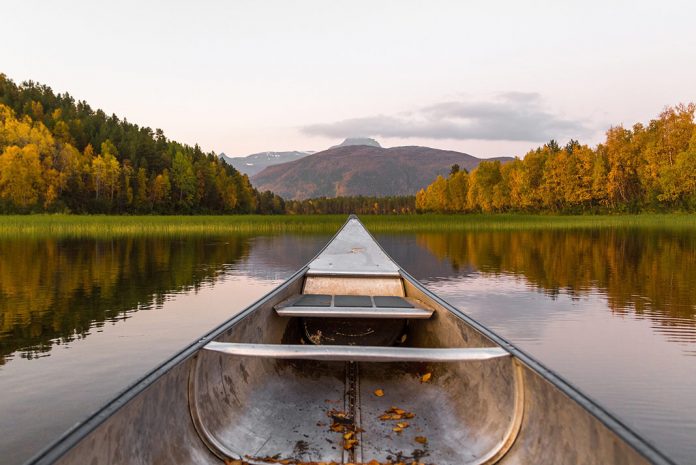
View from the stern of a canoe on a lake, with mountains in background
No matter your experience level, there’s a paddling experience for everyone in Kentucky. | Feature photo: Sorbyphoto/Pixabay

Canoeing and kayaking in Kentucky is a treat no matter where you go. Whether you’re into kayak fishing, touring or laidback recreational paddling, with so many miles of river Kentucky has options to keep you exploring for a lifetime. If you’re visiting and don’t quite have that much time to enjoy, here are a few of the best places to kayak and canoe in Kentucky.


Best Canoeing and Kayaking in Kentucky

Louisville

Louisville is a unique place for paddling. The Ohio River is centrally located and has an amazing array of shorter day trip opportunities for paddlers of all experience levels. There are also many other worthwhile paddling destinations within a short drive from the city.

Parklands is an interesting canoeing/kayaking spot to check out in Louisville. It has four parks, all of which are connected by one central trail. Parklands is also home to the 60-mile-long Floyds Fork Creek.

Nolin River is another great option to explore if you have time for a bit longer drive from Louisville; the put-in spot is about an hour from downtown. The river provides views of unique rock formations, and a good blend of relaxing float time and gentle rapids to keep things from getting too slow.

Louisville Tours and Rentals

Nachand Canoe & Kayak

Half-day rentals for single or double kayaks, or three-person canoes are $35 to $55. Full-day rentals are $60 to $95.

Phone: 502-753-9271
Website: www.nachandkayaks.com

Blue Moon Canoe & Kayak

Half- and full-day rentals for canoes and kayaks are $55 to $75. This includes the shuttle to and from the put-in and take-out points. $7 for shuttle service only.

Phone: 502-753-9942
Website: www.bluemooncanoeky.com

Louisville Kayak Company

Centrally located in Louisville. Tour packages and day rentals.

Website: www.louisvillekayakcompany.com

Bowling Green

Drakes Creek is a popular area to kayak and canoe if you’re near Bowling Green, Kentucky. Tourism Kentucky has a useful website with information on paddling Drakes. This is a great area for a day trip—just be ready to disconnect for the day, because there are many spots on Drakes Creek that have poor cell reception.

Visit Bowling Green is an online resource for some of the best kayaking and canoeing areas in Kentucky, and includes information on Warren County Blueways, a picturesque spot for paddlers and anglers.

Bowling Green Tours and Rentals

Drakes Creek Canoe

Seasonal rentals and shuttle service.

Website: www.drakescreekcanoe.com

Lincoln Trail Outfitters

Recreational kayaks for $40 to $60 for half- and full-day rentals. Fishing kayaks for $60 to 80.

Phone: 270-246-5501
Website: www.lincolntrailoutfitters.com

Shanty Hollow Rentals

Seasonal. $40 to $60 per day with launch drop-off and pick-up included.

Phone: 270-392-9981
Website: www.facebook.com/pg/shantyhollowrentals1

Lexington

Canoeing and kayaking near Kentucky’s second-largest city is by no means second rate. From pastoral river scenes to lush state parks, the Lexington area has plenty of great put-ins to explore.

Lexington Tours and Rentals

Three Trees Kayak and RV Campground

Located 40 minutes outside of Lexington, this is a great home base for paddling adventures in the area. Three Trees has kayak rentals for $20 to $35. It’s located on the Kentucky River, and is one mile from Fort Boonesborough State Park, which is a great place to experience historic Kentucky scenery.

Phone: 859-749-3227
Website: www.threetreeskayak.com

Central Kentucky Kayaking

Located about 30 minutes from Lexington in Paris, Kentucky, Central Kentucky Kayaking operates seasonally starting in May. They run rentals mainly on Stoner Creek, giving paddlers long stretches of river to take in the beautiful horse farms and forests of Kentucky.

Phone: 859-457-0388
Website: www.centralkentuckykayaking.com

Canoe Kentucky

Canoe Kentucky offers a variety of tour opportunities for all experience levels in Frankfort, a 45-minute drive from Lexington. Elkhorn Creek is a popular spot, and Canoe Kentucky has half- and full-day tours ranging from $45 for a solo kayak to $150 for a five-person raft.

Phone: 502-227-4492
Website: www.canoeky.com


Kentucky Cave Kayaking

One of the best paddling adventures in Kentucky is cave kayaking. Mammoth Caves and Red River Gorge are the best spots to find this otherworldly experience. Both offer unique guided tours.

Thrillsville takes you through the caves under Red River Gorge by headlamp, where you’ll hear the history of the cavern and the story of why it flooded. Tours are a shorter experience at one hour; however, there are many other activities at Thrillsville to make for an action-packed day.


View this post on Instagram


A post shared by SUP Kentucky (@supkentucky)

Mammoth Caves is a Kentucky classic, a national park with nearly 12 miles of cave trail, 70+ miles of surface trail, 13 campsites, and boundless exploring for everyone. Recently, a 330 million-year-old shark jaw was found in one of the caves, but don’t worry—there are no sharks today! Paddlers have 30 miles on the Green and Nolin Rivers to fish, explore, camp on islands and floodplains, and enjoy some of the best kayaking and canoeing in Kentucky.

The National Parks Service has an extensive Mammoth Caves website, which features three rental companies: Cave Country Canoe, Green River Canoeing, Inc. and Mammoth Cave Canoe and Kayak.


Best Places to Kayak Fish in Kentucky

There’s plenty on tap for kayak fishing in Kentucky, as the state is home to a variety of fish, including bass, bluegill, perch, crappie, muskellunge and catfish, along with over 100 other species. Alongside the areas mentioned here, most of the Kentucky river system is home to plentiful fishing, and there are many opportunities for exploration.

Tom Wallace Lake in Jefferson Memorial Forest is home to beautiful scenery and great paddling, and is regularly stocked with fish. It’s only a 30-minute drive from downtown Louisville, and is a gorgeous example of Kentucky’s kayak fishing. If you’re heading here, Nachand Canoe & Kayak is a popular option for rentals.

The Lower Barren River is in Bowling Green, and boasts an array of boat access for kayak anglers. Kentucky Tourism recommends kayak fishing in Drakes Creek for its biodiversity and scenic surroundings. Close to Bowling Green, there are several rental options in the Drakes Creek area.
[ Paddling Trip Guide: See all fishing trips in the United States ]


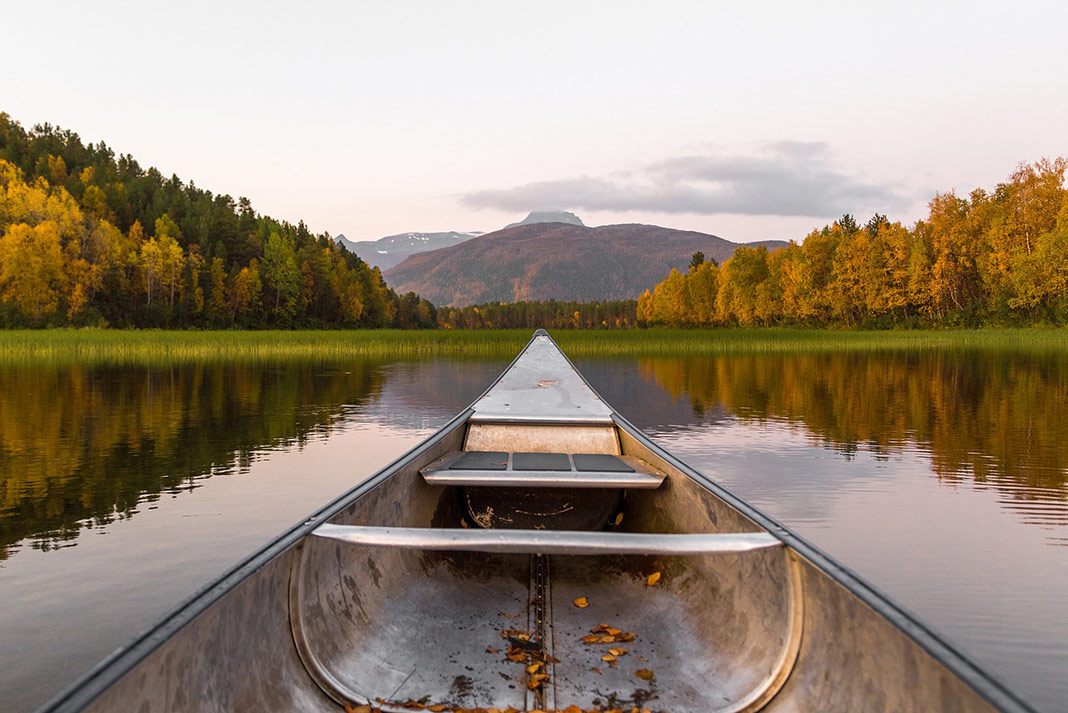
View from the stern of a canoe on a lake, with mountains in background
No matter your experience level, there’s a paddling experience for everyone in Kentucky. | Feature photo: Sorbyphoto/Pixabay
Best Canoe Trips in Kentucky

Multi-day paddling trips are common in Kentucky, and there are many options to suit your experience level and timeline.

In Louisville, the Ohio River is wide and calm for the most part, and is a popular area for local paddlers. If you’re looking for a multi-day trip, you can launch in Louisville and take three or four days to make the journey to Cincinnati.

Other overnight trips in Kentucky include:

  • 17-Mile Upper Cumberland (two days)
  • Blue Heron to Hwy 927 (two to three days)
  • Leatherwood Ford to Blue Heron (two to three days)

The above routes are available as guided tours from Sheltowee Trace Adventure Resort. Other routes include:

  • Kentucky Lake to Lake Barkley
  • Green River through Mammoth Cave National Park
  • Station Camp to Blue Heron
[ Paddling Trip Guide: Browse canoe trips in the United States ]

Kentucky Kayaking Laws

You are not required to have a boating license in Kentucky to operate a non-motorized vessel.

Fishing licences are not required in state parks; however, across the state of Kentucky, creel and size restrictions apply in and out of state parks. While it’s not a law, submitting a float plan is a great idea to give those you’re leaving on shore a starting place to look should you be delayed coming off the water.

No matter your experience level, there’s a paddling experience for everyone in Kentucky. | Feature photo: Sorbyphoto/Pixabay


New SPOT Mapping Provides Advanced Navigation and Tracking Services

New SPOT Mapping Provides Advanced Navigation And Tracking Services For All SPOT Business And Recreational Users

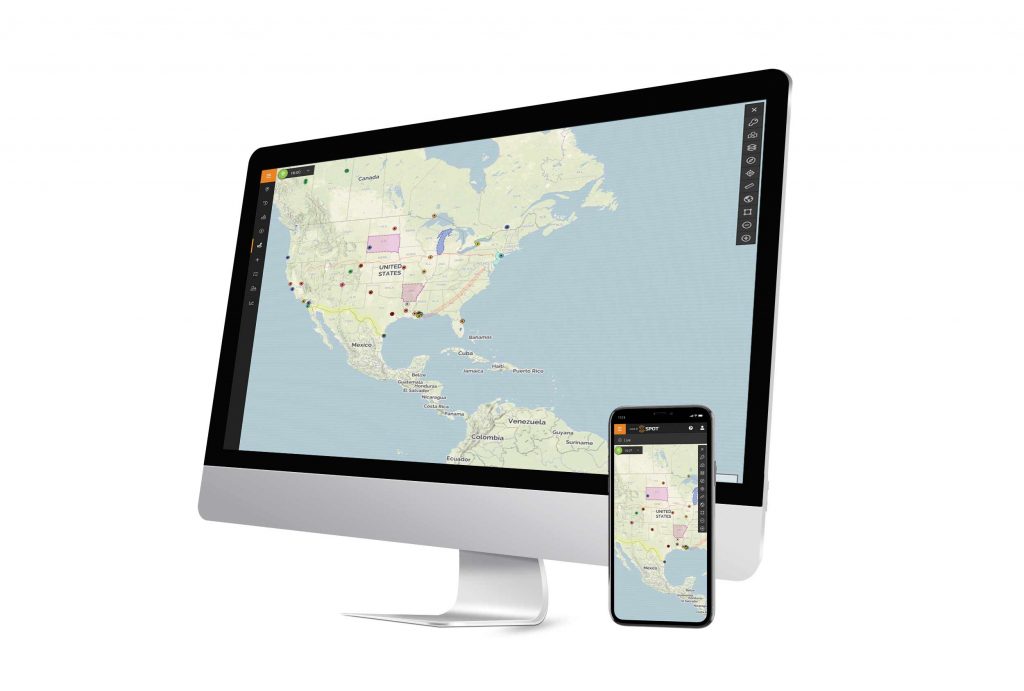
Globalstar Canada Satellite Co., a wholly owned subsidiary of Globalstar Inc. (NYSE MKT: GSAT) and a leader in satellite messaging and emergency notification technologies, today announced new SPOT Mapping services available on all active SPOT service plans and across all SPOT devices. SPOT Mapping is an affordable, easy-to-use, multilingual tool for mapping and managing workers and sharing positions from outdoor journeys, providing peace of mind when the unexpected happens.

SPOT Mapping includes mobile responsive and sharable maps, longer data storage, and various map displays, including satellite, road and terrain options. Users also have the option to view maps in live or history mode, for tracking in real-time or to review previous trips or asset locations.
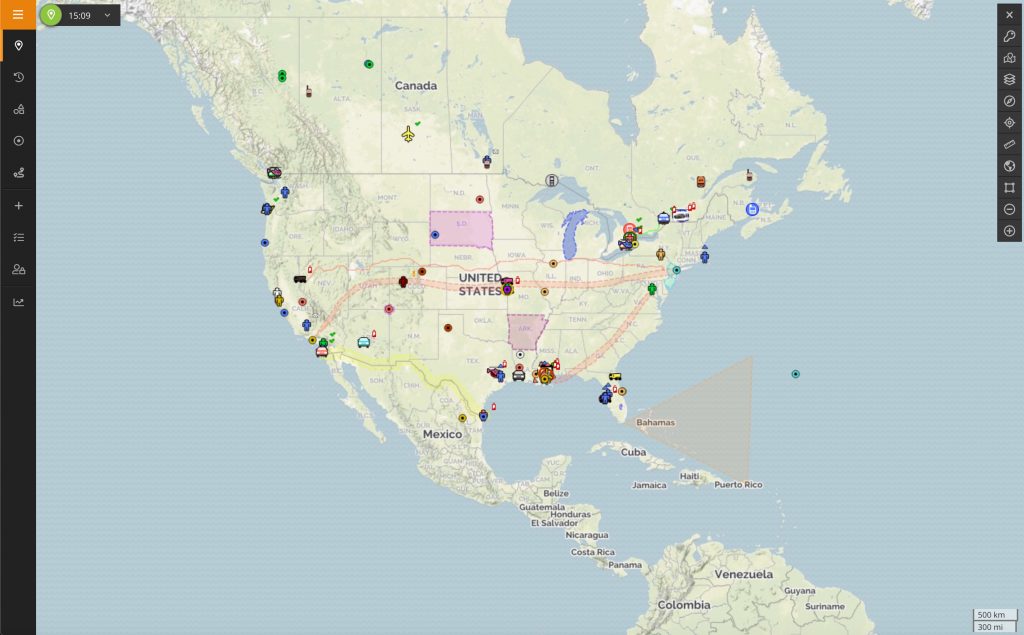
“We have consistently listened to our customer’s feedback and worked diligently to offer a new enhanced mapping experience,” said Dave Kagan, CEO of Globalstar. “SPOT is proud to have initiated more than 7,000 rescues worldwide and our hope is that our mapping platform brings a new level of visuals and features to keep outdoor adventures safer and more informative than ever.”

SPOT Mapping is now included on all active service plans for the SPOT X, the SPOT Gen 3, the SPOT Trace, and SPOT legacy products. The basic level covers up to five SPOT devices and includes three years of mapping history, as well as an active shared views feature. Users also have the option to upgrade to SPOT Mapping Premium or Enterprise tiers starting at $25.00 USD per year, which includes advanced features such as GeoFence to help manage people and assets independent of the availability of terrestrial communication networks. These levels include increased shared views and position history, unlimited contacts, advanced custom icons and more. For more information on SPOT Mapping Basic, Premium and Enterprise tiers click here.
Powered by the second generation Globalstar Satellite Network, the SPOT family of satellite communication devices provides affordable messaging and tracking for businesses and outdoor enthusiasts around the world. Through a direct connection to the GEOS International Emergency Coordination Center, SPOT has triggered more than 7,000 rescues and counting over the last ten years. More than 30% of worldwide rescues have taken place in Canada.

About SPOT LLC

SPOT LLC, a subsidiary of Globalstar, Inc., provides affordable satellite communication and tracking devices for recreational and business use. SPOT messaging devices use both the GPS satellite network and the Globalstar Satellite Network to transmit and receive text messages and GPS coordinates. Since 2007, SPOT has provided peace of mind by allowing customers to remain in contact with family, friends and co-workers, completely independent of cellular coverage and has helped initiate more than 7,000 rescues worldwide. For more information, visit FindMeSPOT.com.

Note that all SPOT products described in this press release are the products of SPOT LLC, which is not affiliated in any manner with Spot Image of Toulouse, France or Spot Image Corporation of Chantilly, Virginia. SPOT Connect is a trademark of Spot LLC. All other trademarks are the property of their respective owners.

About Globalstar, Inc.

Globalstar is a leading provider of customizable satellite IoT solutions for customers around the world in industries such as government, oil and gas, emergency management, transportation, maritime and outdoor recreation. As a pioneer of mobile satellite voice and data services, Globalstar allows businesses to streamline operations via the Globalstar Satellite Network by connecting people to their devices, supplying personal safety and communication and automating data to more easily monitor and manage mobile assets.

The Company’s product portfolio includes the industry-acclaimed SmartOne asset tracking products, Commercial IoT satellite transmitters and Duplex satellite data modems, the innovative Sat-Fi2 satellite wireless IP hotspot and the SPOT® product line of personal safety, asset and communication devices, all offered with a variety of data service plans. For more information regarding Globalstar Canada Satellite Co., please visit www.globalstar.ca.

SEND Crew Descends Zambezi River

The SEND crew is at it again with an epic video of their descent of the Zambezi River in Africa. The Zambezi River is the fourth-longest river in Africa that has some gnarly whitewater that flows into the Indian Ocean.

This video comes with no lack of surfing, flipping, boofing and everything else you want to see in an epic whitewater highlight reel. Outside of the SEND crew’s amazing talent on the water, they never disappoint in capturing great footage and making solid edits. There are some unique perspectives in this video that will leave you wondering how they got up so close.

Going through the comments in the video, everyone seems to be most intrigued by Dane Jackson’s pistol flip on Rapid 5 which is also known as Stairway to Heaven.

The Zambezi River also has a number of commercial rafting trips that descend this river. Some of the raft guides describe Stairway To Heaven as a similar feeling to dropping off a two-story building to give you a little perspective to its impressive size.

Kokatat announces major expansion of production and warehouse facility

ARCATA, California — Kokatat, the manufacturer of high-performance paddling gear, is undertaking a significant expansion of its manufacturing and warehouse capabilities – a move that will generate an estimated 30 new engineering and production jobs at its northwestern California headquarters.

Kokatat’s expansion includes an additional 7,500 square feet of production space and 3,000 additional square feet of warehouse and shipping. All told, the additional space will increase the footprint of Kokatat’s headquarters by 40 percent, which currently occupies about 26,250 square feet.

“By growing our space and team here in Arcata, we will be able to better support the growth we’ve seen in both our outdoor sports and government business sectors,” said Jeff Turner, Kokatat’s Director of Sales. “More than 90 percent of our annual revenues are generated by the garments we make here in Arcata. Our commitment to domestic manufacturing is vital to our continued growth.”

Kokatat has been firmly committed to domestic manufacturing beginning with founder and president Steve O’Meara, who recognized from the company’s founding in 1971 that keeping production local was required to control quality and continually develop the finest and driest paddling apparel in the world.

“We’ve proven for 50 years that keeping our production in the United States allows us to adhere to the highest levels of quality and functionality,” said Turner. “This expansion allows us to deepen our devotion to making the best paddling gear available.”

About Kokatat Inc.

Kokatat has been manufacturing paddling gear in Arcata, California, for almost 50 years. At a time when many technical apparel brands were moving manufacturing offshore, Kokatat continued to invest in infrastructure in the United States. Kokatat founder Steve O’Meara was committed to the development of the finest and driest paddling apparel in the world and recognized the need to control and continually evolve the development of our dry wear.

In the early days, Kokatat worked closely with W.L. Gore & Associates, makers of GORE-TEX®, to refine the sewing and sealing techniques required for full immersion suits and tops. Today, our hands-on approach to manufacturing continues to set the standard in paddling apparel. Into the water with Kokatat! Learn more at kokatat.com.

Why Paddling Is More Important Than Grammar

Kate MacGregor Illustration from camp
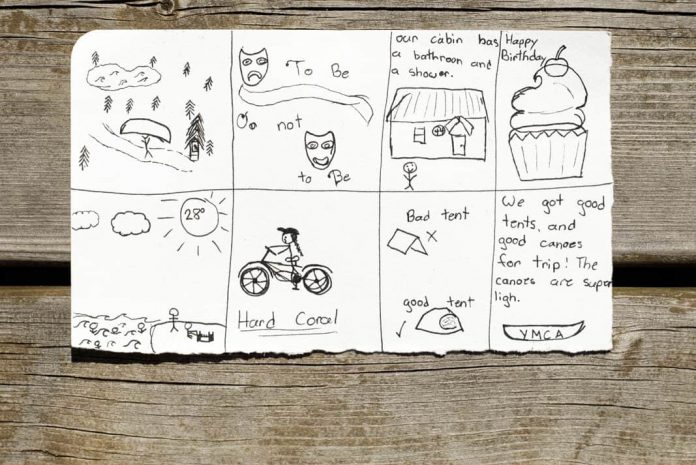
ummer camp teaches you how to be hard coral. | Illustration: Kate MacGregor

Millions of people around the world rely on Grammarly every day. This handy piece of cloudware has impregnated itself into all my computer applications. According to Grammarly, its application helps students achieve academic goals. Professionals use Grammarly to provide expert help with their writing in a variety of fields, such as law, healthcare, academia, marketing, engineering and, as it turns out, paddlesports journalism.

Today there is such a thing as parenting guilt. It comes in all forms. Working too much. Not being able to afford to give your child any extras. Your child’s diet may be awful. There is only so much time in the day. No matter how hard we try as parents, something can always be done better. And, as you can see in the above illustration from my daughter, Kate, I let spelling fall through the cracks.

There was this 800m portoge. The tral was so bad because there wasn’t a tral.

Kate is at a summer camp for the entire month of July. Grammarly hasn’t yet figured out a way for their AI-powered algorithms to flag issues created with a pencil in the hands of a 13-year-old ponytailed girl sitting cross-legged on the top bunk. In the accompanying letter, Kate wrote, “I just got back from trip. There was this 800m portoge. The tral was so bad because there wasn’t a tral. We couldn’t get threw it. We had to take a different route. I can carrie a canoe by my self. The last two days where so much fun!!! Next year I want to do double trad.”

Double trad at her camp means she would like to do two five-day canoe trips, one per two-week session.

Kate and I could have read together more. I could have conducted daily spelling bees. We could have sat together at the kitchen table on Saturday mornings rewriting class assignments. Instead, we made up skits, played ukulele, rode bikes, paddled rivers, camped and skied.

The way I see it, Kate has the rest of her life to learn to spell, or not. Millions of professionals pay $11.66/month to Grammarly so they can do something else on Saturday mornings. Something else, in my opinion, should be inspiring ambition, creativity and a love for adventure.

I don’t remember spelling tests when I was a raft guide and ski patroller.

What will Kate end up doing when she grows up? Maybe she’ll travel the world guiding clients down wild rivers. I’ve already offered to split on an apartment in Whistler if she wants a gap year. She will be fine; I don’t remember spelling tests when I was a raft guide and ski patroller.

I failed with grammar and spelling with Kate’s older brother too.

Last summer around the campfire on the final night of our 11-day canoe trip down the Broken Skull River in Canada’s Northwest Territories, Doug asked me, “I don’t know what I should do. Should I be a camp counselor, raft guide or a wilderness canoe guide for Black Feather?”

“Yes,” I told him, pride replacing any feelings of parental guilt.

Mr. Walker was my grade 11 English teacher. He was a wizard with words but no fortune-telling psychic with a crystal ball. If he could have seen the future, he would have invested his pension in Grammarly and not bothered me so much with the nitty-gritty rules governing the English language. In my mind, he should have spent more time inspiring ambition or fostering creativity and a love of words and adventure. Walker suggested I look at engineering, at that time the only university program not requiring a further English credit.

[ Plan your next paddling adventure with the Paddling Trip Guide ]

I imagine someday bumping into Walker in the produce aisle of my hometown supermarket. He’d say he’s retired and then politely ask me what I ended up doing. I’d tell him for the last 20 years I’ve been the publisher and editor-in-chief of magazines. I imagine him staring down at fresh lettuce running his finger through his beard and muttering something like, “Well, I’ll be damned. Didn’t see that coming.”

Scott MacGregor is the founder and publisher of Paddling Magazine. If u can reed ths… Go paddling.

Summer camp teaches you how to be hard coral. | Illustration: Kate MacGregor

Guide To Kayaking In New York City

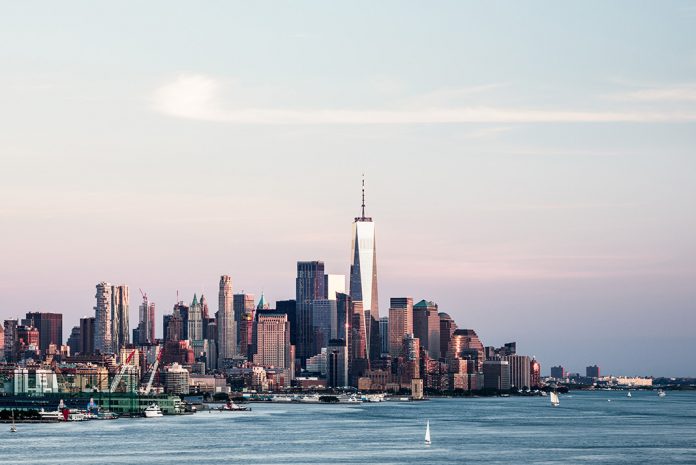
New York skyline from the Hudson River
Kayaking the Hudson River will give you a unique view of the New York City skyline.

New York City is known for many things: Broadway theatre, world-wide cuisine, the Statue of Liberty and a bustling night-life, to name a few. But kayaking? You might be surprised and wonder, “Can you kayak in NYC?” The answer is yes!

If paddling is something you make a point to do no matter where you go, or if you just want to be able to tell people, “I kayaked in the Big Apple,” this guide will give you all the information you need to know to make it happen.

[ Paddling Trip Guide: View all kayaking trips in the United States ]

Where to go kayaking in NYC

So, where can you kayak in NYC? The Hudson River hosts many of the kayaking opportunities in the city, but you can find some quieter areas too. And, because many residents don’t own cars, let alone kayaks, you can find rentals at most of the launching sites.

The Hudson River

Flowing straight through the city and opening up into the busy New York Harbor, the Hudson River seems more home to sailboats, cargo ships and motorboats than any paddle-propelled watercraft. So much so that you may wonder, “Is it legal to kayak the Hudson River?” Again, the answer is yes. In fact, paddling in both of these areas has skyrocketed in popularity with local kayakers in recent years.

People of all skill levels can enjoy paddling the Hudson. For beginners, it is highly recommended to have a guide the first time. If you have previous kayaking experience, you will still want to make yourself aware of certain safety precautions, conditions of the river and the large amount of boat traffic it receives.

As the Hudson River flows into the Atlantic Ocean, it is important to be aware of changing tidal conditions. Weather is an important factor in planning your excursion too. Waters can get very choppy during rain and storms, which also creates reduced visibility situations. These conditions make it even harder for larger boats to see kayakers, creating a potentially dangerous situation.

Speaking of boats, as implied above, the Hudson River and Port of New York are very busy areas. You will need to be aware of not only motorboat traffic, but large commercial ships and barges as well. You should be especially cautious at ferry terminals.

Here are a few more important safety tips:

  • Never try to “outrun” another boat; always wait.
  • Make your intentions clear to other boaters and never assume they see you.
  • When possible, especially in high-traffic areas, approach other boats at right angles to increase the chance of the other boater seeing you.
  • Avoid paddling at nighttime. If you do, make sure to mount a light on your kayak.
  • Angle your rig into the wake of other boats to minimize your chances of capsizing.
  • If you are new to kayaking the Hudson River in the city, it’s worth noting that the Battery area can be especially chaotic.

The Hudson River in New York City is part of the greater Hudson River Greenway Water Trail, which spans 256 miles (412 kilometres) in length and offers more than 100 access sites. In NYC alone you can find at least nine launch sites, over half of them located within Hudson River Park. You can find a full list and map of launch sites on the water trail’s website.

Upper New York Bay

How does the unique experience of visiting the Statue of Liberty via kayak sound? If you’re feeling adventurous, you can head out from Midtown for a four-hour, round-trip paddle to do just that. Manhattan Kayak offers guided tours, but you will be required to pass their Kayak 1-2-3 classes (three sessions) before heading out on this tour due to the rough nature of the waters surrounding the island.

Marine Park

If you’re looking for a sanctuary within the city, don’t pass up a visit to Marine Park. Many claim this 530-acre park in Brooklyn looks more like the Florida Everglades than a typical city park. You can explore the calm creeks and salt marshes of the park from Gerritsen Inlet. If you’re feeling a little more adventurous, you can paddle straight out to the ocean or the Rockaways.

Can you kayak in Central Park?

Unfortunately, there are no longer any opportunities to go kayaking in Central Park. The Loeb Boathouse used to offer kayaks for rent, but in recent years has done away with them and currently only offers rowboats for rent.

There is also a decommissioned reservoir within the park, but there is no boating (or fishing or swimming, for that matter) allowed there either.

Free kayaking in NYC

No boat, no permit, no problem! You may be surprised to learn that there are tons of places around the city that offer free kayaking.

Check out the list below to enjoy no-cost kayaking in the Big Apple.

Brooklyn Bridge Park Boathouse

Red Hook Boaters

North Brooklyn Boat Club

Hudson River Park

L.I.C. Community Boathouse

Kayak Staten Island

Kayak rentals in NYC

In addition to the locations listed above, you can also find reasonably priced kayak rentals at the following outfitters for the opportunity to explore the waters of NYC on your own.

Manhattan Kayak

For beginners, $10 grants you 45 minutes to play around in the calmer waters of Intrepid Bay. Or, try the Skyline Kayak Adventure or New York After Dark tour. Manhattan Kayak also offers group classes and private lessons, as well as guided tours for intermediate paddlers and up who have passed required prerequisites.

Wheel Fun Rentals

Wheel Fun Rentals is a franchise business, so you can find several different locations to rent kayaks from around the city, including two in Brooklyn and one in Flushing. Check out the latter for a leisurely paddle on North Meadow Lake. You can rent a single kayak starting at $16/hr.

Best kayaking near NYC

If you’re looking for something a little more relaxing and remote, there are plenty of other paddling options nearby in the beautiful state of New York.

Cold Spring

For views of the beautiful Hudson Highlands, head an hour and 15 minutes up the river to Cold Spring, NY. Constitution Marsh, Foundry Cove, and Bannerman Castle are all great places to explore. Hudson River Expeditions offers rentals starting at $25/hr for a single kayak. They also offer tours in the area, including moonlight paddles and a four-hour afternoon excursion that includes lunch.

It is also worth noting that while you’re in the Northern Hudson River area, there are plenty of opportunities for overnight trips. The Hudson River Greenway Water Trail has provided campsites along the river about every 15 miles so you can enjoy as much time on the water as you like.

Breakneck Pond

Head about an hour north of the city for a calm paddle on Breakneck Pond, located within Harriman State Park (the state’s second-largest). This 64-acre pond has recently been cleaned up after years of abuse, as well as damage from when Superstorm Sandy hit the area in 2012. Unfortunately, fishing is not allowed on this pond, but you can still enjoy some wildlife viewing and birdwatching.

Esopus Creek

Although a bit farther drive at around two hours north of the city, Esposus Creek is the place to go if you’re seeking some thrills. Located in the Catskill Mountains, you can find class II, III and IV rapids along this creek to get your heart pumping. There are launch points off of Route 28 in Phoenicia and Allaben, NY to get you started. It is also worth noting that the farther north you go on the creek, the more of a challenge you will find.

[ Need footwear, a UV-protective shirt or a windbreaker for your kayaking trip? View all paddling apparel in the Paddling Buyer’s Guide ]

New York kayak laws

To ensure you have the best experience kayaking NYC, let’s go over some commonly asked questions about rules and regulations.

Do you need a permit to kayak in NY?

Being such a busy city and wanting to ensure the safety of all of its water-loving citizens, the Big Apple requires you obtain a permit if you’re planning to use any of the kayak and canoe (as well as power and sailboat) launch facilities in the city. Kayakers are allowed to launch at any NYC Parks designated launch sites so long as they have a permit. (Permits are $15.)

Do you have to register a kayak in NY?

According to the state’s Department of Environmental Conservation site, “watercraft without a motor do not need to be registered.”

Do you have to wear a life jacket in a kayak in New York?

In New York state, all boaters (including kayakers) must wear a PFD from November 1 through May 1. All children under the age of 12 are required to wear a Coast Guard-approved PFD at all times.

For a complete list of rules within New York City, please head over to the NYC Parks page.

NYC has a variety of activities for people with all manner of interests, but the fun doesn’t end at the water’s edge. Whether you are looking for amazing views of the skyline or a slower-paced experience nearby, you are sure to find a kayaking trip in the Big Apple that’s right for you.

8 Things You Don’t Know About Getting Lost, But Should

“Shortcuts make long delays.”—Pippin to Frodo Baggins, authorities on the subject. | Photo: istockphoto.com/ ninjaMonkeyStudio
  1. According to a research study by Smokymountains.com, wilderness travelers most often get lost due to leaving the trail (41 percent), bad weather (17 percent) and falling off the trail (16 percent). The search for a lost hiker or hunter averages 10 hours.
  2. There’s an estimated 50,000 search and rescue missions in the U.S. each year, and 40 percent occur in national parks. Of those cases, day hikers made up 42 percent of SAR missions from 2004 to 2014. That’s almost four times the number of overnight backpackers needing rescue, the next closest group at 13 percent. Day-trippers are especially vulnerable when lost because they are often traveling without layers, shelter and food.
  3. For centuries, scientists tried to explain how animals migrate without getting lost. Magnetoreception—the ability to sense Earth’s magnetic field—has become an increasingly popular theory. It explains how monarch butterflies are capable of following routes so long their great-grandchildren complete the journey, and how bar-tailed godwits depart Alaska and fly for eight days and nights over featureless water before arriving in New Zealand, 7,000 miles away.
    lego man
    “Shortcuts make long delays.”—Pippin to Frodo Baggins, authorities
    on the subject.
    | Photo: istockphoto.com/
    ninjaMonkeyStudio
  4. In 1923, a collie mix traveled 2,800 miles on his own back home to Oregon after he was lost while his owners visited family in Illinois. When Bobbie The Wonder Dog died years later, more than 200 people attended his funeral and celebrity canine Rin Tin Tin lay a wreath at his grave.
  5. If lost, remember the mnemonic STOP. Stop—sit down and don’t panic. Think—what do you know about your situation and location? Observe—gather information that can help you figure out where you are. Plan—consider possible courses of action, and choose one. Often staying put is the best bet for being found.
  6. No film has inspired as much misplaced anxiety about being lost in space as 2013 box office hit, Gravity, starring Sandra Bullock untethered from a space station. Of the 536 astronauts and more than 200 spacewalks, no human has ever been lost in space.
  7. Getting lost isn’t always bad. In 1947, a shepherd went in search of a lost goat in the hills near the Dead Sea. He found a cave he’d never seen before and inside were clay pots containing old scrolls. Scholars declare the 2,000-year-old Dead Sea Scrolls the most significant manuscript find of all time.
  8. According to the U.S. National Park Service, even day-trippers should carry a navigation system, sun protection, insulation, illumination, first aid kit, fire making supplies, a small repair kit, food, hydration and an emergency shelter. Always leave a detailed plan of your route with someone you trust.

“Shortcuts make long delays.”—Pippin to Frodo Baggins, authorities
on the subject. | Photo: istockphoto.com/ ninjaMonkeyStudio

How To Plan For Your Next Virtual Canoe Trip

Kids with VR helmets
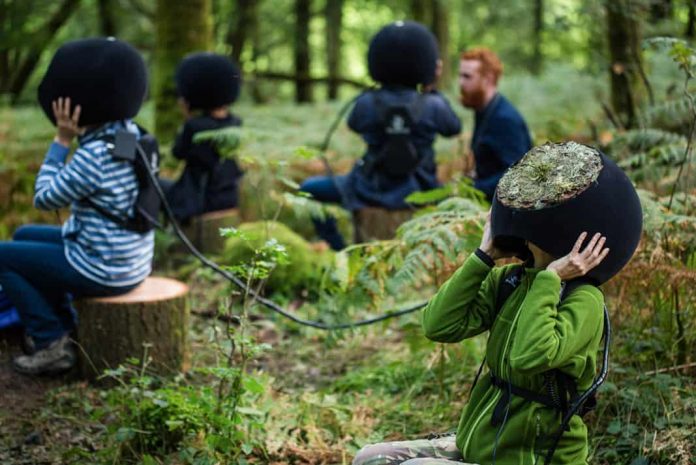
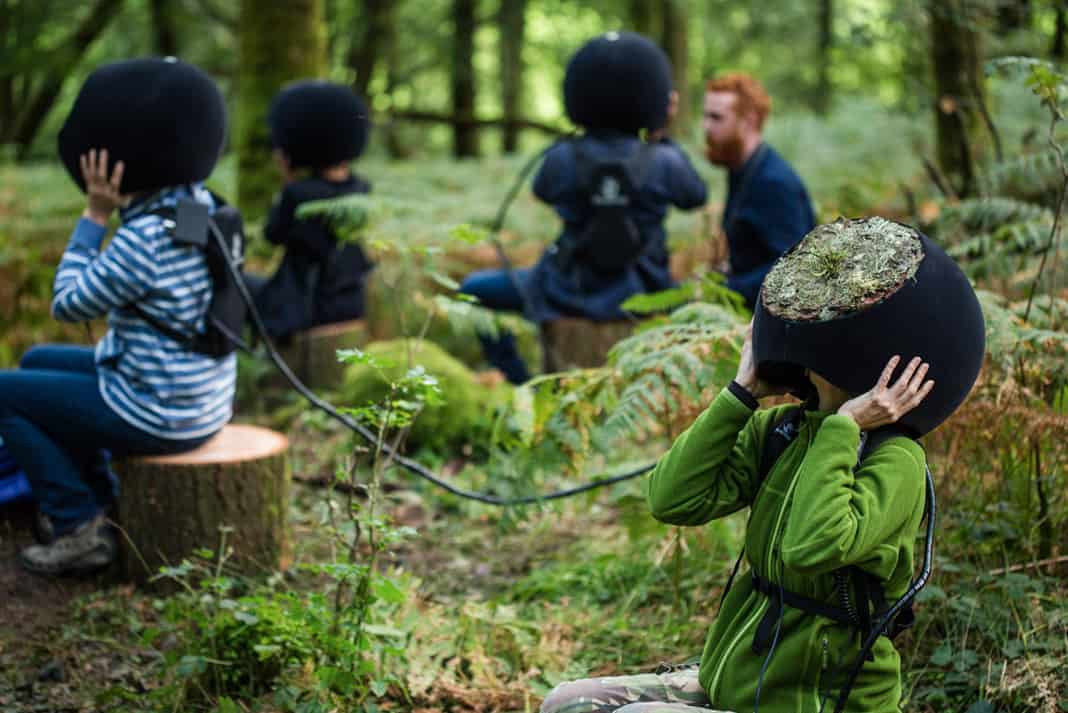
Award-winning virtual reality experience creators, Marshmallow Laser Feast uses technology to help repair connections with nature. | Photo: Courtesy Marshmallow Laser Feast

If you dream of going to the moon, first try New York City’s Meatpacking District. Last year, an out-of-this-world virtual reality (VR) experience was unleashed in anticipation of the 50-year anniversary of the Apollo 11 mission. Wearing a flight suit, VR headset and gravity-offload harness developed in partnership with NASA to simulate lunar leaping, users experience an immersive and interactive lunar landing. Astronauts say it’s just like the real thing. Living more than 238,000 miles away, it’s the closest most of us will get.

Kids with VR helmets
Award-winning virtual reality experience creators, Marshmallow Laser Feast uses technology to help repair connections with nature. | Photo: Courtesy Marshmallow Laser Feast

And that’s the idea. The project uses VR “to democratize experiences, events, cultural moments typically reserved for the elite few,” says Samsung’s Zach Overton, which partnered with NASA on the project. While only 12 men have ever walked on the moon, Overton said, “We feel like it should be something everybody can experience.”

Last fall, while creating the annual Paddling Buyer’s Guide, I asked a handful of canoeing industry leaders to pontificate about the future of their passion.

“Ten years from now, I fear multi-day wilderness tripping will be a thing of the past and virtual reality canoe trips will be all the rage,” boldly predicted regular columnist and former director of the Canadian Canoe Museum, James Raffan. Raffan’s prediction nettled me. Is there value in a virtual wilderness experience? Without the prep, bugs, sweat and clean-up, isn’t the experience fundamentally changed? Could this really be the future?

Nah.

And yet, for many of the planet’s three billion urbanites who lack access to wild spaces due to geography, economy and other factors, virtual reality could be the closest they get to wilderness. Those benefits are small but still tangible—we’ve written about the positive effects even a virtual nature “experience” on a smartphone app can have on mood and stress levels.

Visual media is powerful. David Attenborough-narrated nature documentaries made many fall in love with places we have never been. Bill Mason’s films inspired many to pick up a paddle. Could an even more immersive experience make someone genuinely fall in love with canoe tripping and the wilderness?

The whimsically named Marshmallow Laser Feast (MLF) is a London, U.K.-based multimedia design studio taking this idea a step further. They aim to use technology to help people re-connect with nature. Their 2015 installation, “Through the Eyes of the Animal,” used a 360-degree virtual experience to help visitors explore a forest through the eyes of animals and insects. Via haptics, headsets and sound, visitors could fly through the forest as a laser-eyed owl, feel a frog’s ribbit run down their back, and buzz along a carbon dioxide trail as a mosquito.

The company’s 2018 project highlights the invisible connection of humans and plants through breath. With the help of breath and heart sensors monitoring the user in real-time, as well as sound, scents, headsets and wind machines, the 20-minute-long untethered experience explores oxygen exchange inside a forest of giant Sequoia trees. The designers hope it will spark conversation about conservation.

Every day we see apocalyptic headlines heralding the sixth great extinction, polar ice caps melting, and oceanic garbage patches the size of large states. MLF’s artistry taps into our collective sense of wonder about the natural world and uses it to inspire, instead of bleak messaging which discourages so many.

“Our hope is you’ll probably start caring a little more about a mosquito or an owl, or the forest itself,” MLF’s director said in an interview with CNN. Through lightweight AI goggles or an app on a smartphone, “you could understand the language birds are singing, see plants photosynthesizing, or watch oxygen enter your lungs. All things we learn about at a young age. Soon we’ll be able to create a true understanding of the invisible parts of our world.”

[ Visit the Paddling Buyer’s Guide for the boats and gear that will give you the real paddling experience ]

It’s just one example of the many ways technology could be used to enhance—instead of erode—our connection to nature. Just like a virtual trip to the moon can expand our awe about the universe, instead of diminishing it. With more than three billion smartphone users around the planet, now is the time for technology to help inspire conversations and solutions for wild places.

Maybe James Raffan is right. Maybe virtual reality canoe trips will be all the rage in the near future. It could be one small step for man, and hopefully a giant leap for us all.

Kaydi Pyette is the editor of Paddling Magazine.

Award-winning virtual reality experience creators, Marshmallow Laser Feast uses technology to help repair connections with nature. Photo: Courtesy Marshmallow Laser Feast

Esquif Canoes Announces Changes in US Distribution and Marketing

FOR IMMEDIATE RELEASE February 4, 2020
Contact: Jacques Chasse

Industry veteran David Hadden joins Esquif team in business development role

FRAMPTON, QUEBEC. – Esquif Canoes announced Tuesday that David Hadden will join the company in the newly-created role of Director of Business Development.

Esquif owner Jacques Chasse is enthusiastic about the addition, and what it means for the company moving forward. “David has been a fixture in the paddlesport industry for 20+ years with experience at several of the major paddlesports brands. I am impressed with his business skills, but also his passion for paddlesports and the outdoors”.

Hadden is excited to return to his “canoe roots” and work with a company that shares his ethics and excitement for life on the water. The paddle sport industry has struggled recently due to a changing retail environment and a lack of innovation. “Paddles sports and specifically canoeing is still one of the best and most affordable outdoor activities, but the business model is broken. Esquif with proprietary technology and a reduced footprint is perfectly positioned to grow and succeed in the new outdoor marketplace while offering innovative product that offers the best consumer experience.” Chasse confirmed that the company is growing and will launch 5 new models this spring. “Our new canoe designs are designed to offer the best experiences for those seeking solitude or those wanting to explore in pairs or small groups.

Paddler owned and paddler run, Esquif has based its existence on the right mix of work and fun and this culture drew Hadden the team. “I’m looking forward to focusing more on the things I enjoy in business: product innovation, working with top accounts, engagement with the customer, and introducing a new generation of outdoor and water enthusiasts to nature and the outdoors. We are going to make canoeing fun again!

About Esquif Canoe

First established in 1997, Esquif Canoes is a North American manufacturer of canoes based in Frampton, Quebec. A leader in the global paddlesports industry, Esquif manufacturers one of the industry’s largest assortment of canoes appealing to paddlers, adventurers, anglers and sportsmen of all ages. Esquif, driven by passion and the desire to innovate; run by paddlers who want to share the sport of canoeing to a future generation of outdoor enthusiasts.


Dropping The Biggest Waterfalls For The Least Likes

kayak going over waterfall
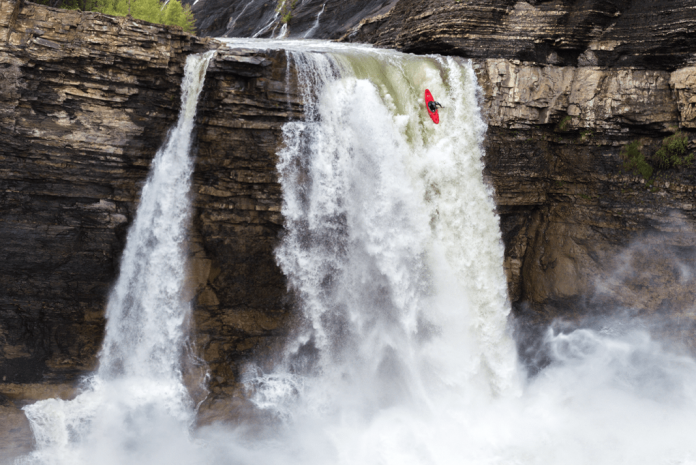
Knox Hammack on Alberta's 98-foot-tall Ram Falls. | Photo: Lachie Carracher

Over the last two years, the West-Coast-based Torryd quartet has made a name for themselves running some of the world’s tallest waterfall descents. Trent McCrerey, Knox Hammack, Edward Muggridge and Liam Fournier are a tight group who met at World Class Kayak Academy, a traveling high school for students who earn credits while paddling around the world.

I’ve been lucky to paddle with the lads, and they’ve lived on my couch more often than not. It’s a pleasure to join the team on a mission—I have spent hundreds of hours on the road with the gang, rap blasting and truck loaded with boats in search of perfect water levels on the world’s largest runnable stouts.

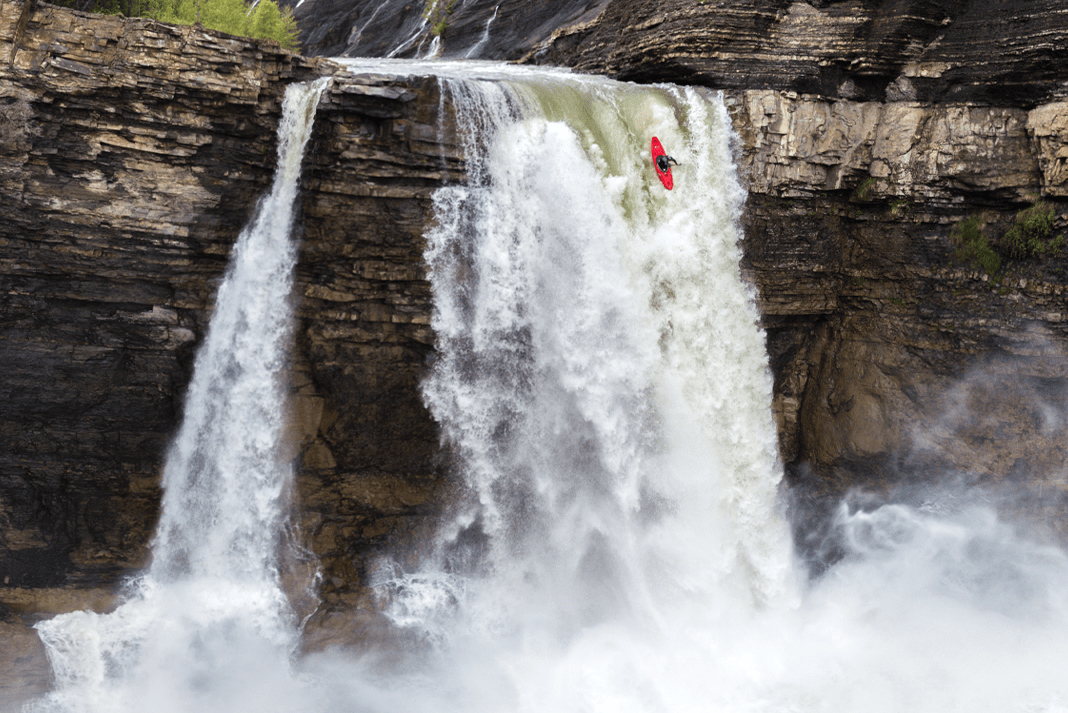
Alberta’s Ram Falls, pictured here, was first run in 2012. Last July, we loaded up the truck and made the 20-hour drive from our place in Squamish, British Columbia, deep into the Rocky Mountains. There Edward styled 98-foot-tall Ram Falls alongside Aniol Serrasolses.

Muggridge is not the only one of the Torryd boys to step up to drop 100-plus feet. During the last 12 months, Knox Hammack laced up and styled 128-foot-tall Big Banana Falls in Mexico, and then 189-foot Palouse Falls in Washington state. It was the first successful Palouse descent since Tyler Bradt descended the drop a decade ago setting a new world record.

Of course, it’s not always smooth sailing for the crew. Trent, Edward and I drove 30 hours last August to paddle Alexandra Falls in the Northwest Territories. Edward was one of the first to attempt the 105-foot falls. He broke his tibia and fibula on impact, taking him off the water and his feet for the next six months.

kayak going over waterfall
Knox Hammack on Alberta’s 98-foot-tall Ram Falls. | Photo: Lachie Carracher

This July, almost a year to the day after Torryd’s first Ram decent, and following the hype of Knox’s new Palouse descent, the Torryd boys loaded up again and returned to Ram Falls. Hopes were high for near-perfect flows.

Trent and Knox geared up first and though nerves were raw, both lads had stunning lines. Knox even ran the Ram twice. The trip had no media plan until I jumped on last minute—they were just going to use GoPros. No photographers were present when Knox ran Big Banana either. These boys are doing it for love, not the attention.

Not only are the Torryd boys cutting their own path and bringing fresh style to the scene, but despite having run some of the world’s tallest waterfalls, they’ve kept a low-key vibe in a scene where paddlers are increasingly saying “look at me” on social media.

A former Australian Geographic Young Adventurer of the Year, Lachie Carracher has devoted his life to following rivers around the world.

Knox Hammack on Alberta’s 98-foot-tall Ram Falls. | Photo: Lachie Carracher