Home Blog Page 180

Trips: Kayak in Victoria, British Columbia

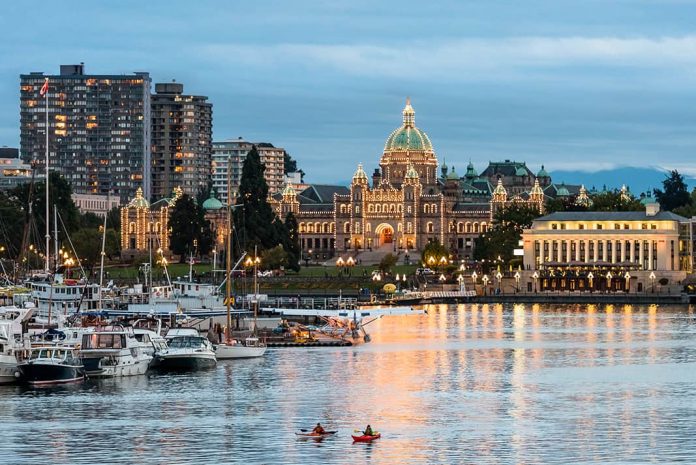
Two kayakers in Victoria BC
Victoria has been named the most romantic city in Canada and one of the 15 friendliest cities in the world. | Photo: Destination BC/Reuben Krabbe

Few coastlines in Canada can boast year-round paddling, but one such place is Vancouver Island and the historic provincial capital nestled in its southern tip. Victoria is among the most paddler-friendly—and cyclist-friendly, pedestrian-friendly and, well, just friendly—small cities in the world. “Most visitors stroll the waterfront walkway and comment on how pretty a city it is,” writes The Wild Coast guidebook author, John Kimantas. “Little do they know how much better it gets on the water.”

Whether it’s urban paddling with a uniquely Victorian charm—watching horse-drawn carriages and double-decker buses ply the flower-filled streets, or taking afternoon tea post-paddle at the grand Empress Hotel—picnicking at a historic lighthouse, or venturing offshore to the wild Trial Islands, you might need a whole year just to see everything the City of Gardens has to offer.

Where to Go

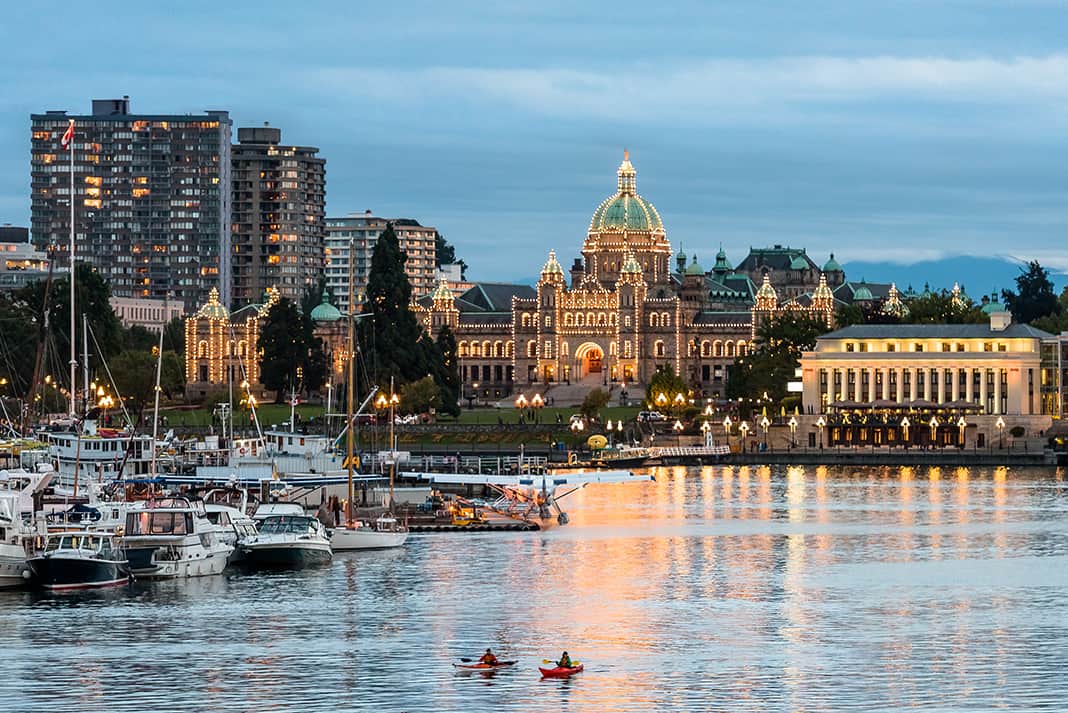
Two kayakers in Victoria BC
Victoria has been named the most romantic city in Canada and one of the 15 friendliest cities in the world. | Photo: Destination BC/Reuben Krabbe

If you Want to go guided

With nearly four decades of experience in Victoria, Ocean River Sports (www.oceanriver.com) leads kayak and paddleboard tours of the Harbour and surrounding waterways, as well as a popular, shuttle boat-assisted exploration of Discovery and Chatham islands.

[ Plan your next paddling adventure with the Paddling Trip Guide ]

Spend the day kayaking and hiking around this wild and scenic archipelago, watching for resident seals, sea lions and whales.

If you’re Into lighthouses

Launch from Fleming Bay for a half-day tour to the scenic picnicking beaches at Fort Rodd Hill and adjacent Fisgard Lighthouse National Historic Site. Built in 1860, this stately light station was the first on Canada’s west coast and is now open to the public.

If you Want to paddle and dine

Weave your way past the sailboats, seaplanes, fishing boats and ferries of Victoria’s beautiful-but-bustling Inner Harbour. Not dressed for tea? For fish ‘n’ chips with a twist, grab a seat at funky Red Fish Blue Fish, which serves up sustainably sourced seafood from a cargo container-turned-kitchen on the Broughton Street Pier. Victoria Kayak (www.victoriakayak.com) rents boats and runs harbor tours from the adjacent docks.

If you’re Looking for wildlife

For sightings of river otters, harbor seals, eagles and herons, explore the leafy, park-lined Gorge Waterway that snakes north from Victoria’s Upper Harbour.

Approach Tillicum Narrows—where the channel squeezes to just 30 feet wide—at slack tide to avoid impassable tidal rapids.

Victoria has been named the most romantic city in Canada and one of the 15 friendliest cities in the world. | Photo: Destination BC/Reuben Krabbe

SEND Crew Was Born To Be Wild

The SEND crew released their latest video aptly named, Born to be Wild. It serves as a reminder to live life to the fullest. Before watching this video we want to warn you that there are some graphic shots in the video of injuries sustained while paddling.

The video starts with a voiceover talking about how humans were born to travel and the changing role of the kayak over the years. “Nowadays, the kayak’s role has changed, but it is still used out of need—as a tool to help satisfy our inner curiosity and desire to explore,” says Adrian Mattern.

“In a time where technology has allowed man to stand on the moon, it is humbling to reach places on this planet that few humans have ever been,” adds Bren Orton.

The video talks about the challenges in the sport and includes some graphic clips from Bren Orton’s accident on Alexandra Falls in the Northwest Territories. Bren goes on to say, “There is no good without bad. All we can do is be thankful the good times outnumber the bad, and be grateful for what they truly are. A reminder to live life to the fullest.”

Life should not be a journey to the grave with the intention of arriving safely in a pretty and well preseved body

This is something that everyone can relate to, no matter what you are doing in life. This video was released on December 31, 2019, ending the year with a true bang. We are excited to see what 2020 will bring for the SEND crew.

The video ends with this great Hunter S. Thompson quote: “Life should not be a journey to the grave with the intention of arriving safely in a pretty and well-preserved body, but rather to skid in broadside in a cloud of smoke, thoroughly used up, totally worn out, and loudly proclaiming, ‘Wow! What a ride!'”

2019 World Tour Aqua-Bound People’s Choice Award Winner

The Passage | Photo: Nate Dappen

PALMER RAPIDS, ON – The 2019 tour season marked the 14th year Paddling Film Festival audiences were able to redeem a free digital subscription to Rapid Media’s paddling magazines and cast a ballot for their favorite film from the World Tour’s 25 feature films. After touring in 135 cities around the globe, 21,681 paddlers cast their ballots and Nate Dappen’s film The Passage was voted as the Paddling Film Festival World Tour Aqua-Bound 2019 People’s Choice Award winner.

The Passage – Official Trailer from Day’s Edge Productions on Vimeo.

About The Passage

“In 1974, my 20-year-old parents and uncle Andy built their own canoes, launched them into the Pacific, and became some of the first people in modern history to canoe from Washington to Alaska up the Inside Passage,” says filmmaker Nate Dappen.

“My brother and I grew up paddling those wooden canoes in the Virginia rivers and the 1974 adventure became legend in our family. It’s shaped who we’ve become, how we view our parents, and how our parents view themselves,” he adds.  In the summer of 2017, Dappen and his family renovated the original canoes and set out with their parents to complete their 1974 journey. The Passage is a story about the dreams of aging brothers, fathers and sons, and the wild places that define us.

CREDITS:

Director: Nate Dappen
Writers: Nate Dappen, Neil Losin
Producers: Nate Dappen, Neil Losin


About The Director

Nate Dappen co-owns an award-winning documentary production company called Day’s Edge Productions where he specializes in telling stories about science, nature, conservation and adventure. His images, films, books and other projects have been featured by organizations like National Geographic, The Washington Post, Scientific American, The World Wildlife Fund and many others. He was a Collegiate Scholar of the North American Nature Photography Association, am a Fellow National Member of the Explorers Club and an Affiliate Member of the International League of Conservation Photographers. He graduated from the University of Colorado Boulder in 2005 where he studied photography and biology. In 2012, Nate got his PhD in biology before starting Day’s Edge Productions with Neil Losin. Since then, Nate has been a full-time documentary filmmaker. When he’s not on the road, he lives in Ocean Beach San Diego where he spends his free time surfing with his wife, Amanda and hanging out with his two dogs, Moose and Mola.


Go behind the scenes of the film and learn more about the journey in the feature story from the Fall 2018 issue of Paddling Magazine.


Photo: Nate Dappen

Boreal to Barrenlands – Q&A With Crossing Labrador Documentary Filmmaker

On July 15, 2019, a team of four set out in canoes to cross Labrador, one of Canada’s last remaining wilderness frontiers. Their expedition took them through three ecosystems and across two regional heights-of-land for a total of 670 kilometers in 35 days. The team was comprised of Noah Booth, Alex Traynor, Chris Giard and Dave Greene.

Labrador was having one of its rainiest summers on record, meaning the group faced rain 28 of the 35 days, with temperatures averaging 11 degrees Celcius.

Labrador is known for its challenging terrain and relentlessness bugs, but it is also known as having some of the most pristine landscapes in Canada. “There are so many places we got to see that would be national parks if they were closer to civilization,” says Noah Booth of Northern Scavenger.

On March 3, 2020 Noah Booth and Alex Traynor released their documentary, Boreal to Barrenlands – Crossing Labrador, to highlight their trip and followed it up with a video series on their Youtube channel.

Why Labrador?

Noah had been flying into Goose Bay, Labrador quite frequently with work and after seeing the vast wilderness from the sky, he couldn’t help but wonder what it would be like to do a trip in this area. Reading books like Lure of the Labrador Wild by Dillon Wallace and Great Heart by John West Davidson and John Rugge gave the final push to plan a trip here.

How long did it take to prepare for this trip?

We were preparing for more than six months leading up to the trip. Weekly conference calls made sure we were able to divide up tasks among the team and get the information that we needed for this trip. We had a real mix of skill sets on the team and bringing them all together made the perfect team.

I had never done a trip of this length before and I would say one of the most unique things for me was how we divided up food. Each team member prepared nine days worth of food for four guys ensuring each meal had a minimum of 4,000 calories (1,000 per person).

The meal system on the trip was to rotate on a food schedule. You would start by cooking dinner and you would then be on breakfast and lunch the following day. Starting at dinner allowed you to prepare any bannock that you wanted to make for lunch the following day at night to remove the need to have a fire at lunch the following day. When it was your turn on breakfast, you were the first out of the tent in the morning and you would get the fire, breakfast and coffee ready before waking up the rest of the team. Once you completed your cycle, you were off cooking duties for three days.

What was the most challenging aspect of the trip?

The most challenging part of this trip was keeping mentally focused. They physical part of this type of trip can be done by many, but when you layer that with being constantly wet, cold and being swarmed by bugs, it gets really difficult to focus on the tasks and stay positive.

We relied on humor to get us through and sometimes just laughing at how difficult a situation is helps you to get through that moment.

To add to this, we had a lot of challenges you wouldn’t always be able to anticipate going into a trip like this. The first being when Noah got severely sick for seven days to the point where he was barely eating or drinking. Another being when Dave lost a tooth and we were getting worried about an infection setting in, and finally when Chris and I managed to perfectly wrap a canoe around a rock. These three things happened in a span of four days and we managed to capture them all on film.

What was the most challenging aspect of filming on the expedition?

We definitely have a passion for filming that levels close to our passion for doing these remote backcountry trips. It is usually the best footage that ends up being the most difficult to film. That really difficult portage that you are on gets harder when you need to run ahead of the group to get the shot and then run back to get the packs that you left behind.

At the same time, sometimes it is just what you need as a distraction. Going back to how we relied heavily on humor to get us through the tough times, sometimes just knowing that you are going to capture this difficult moment on camera makes it worth getting through.

The final thing I would add is the team dynamics in filming a trip. Not everyone wants to have a camera in their face the whole time, or sometimes filming would hold the group up. I wish I could have caught the number of eye rolls I got while holding the camera on this trip.

How much video did you film versus the runtime of final film?

We ended up with about 33 hours of footage coming out of this trip and we wanted to make sure we made the most of it. This is why we decided to go with both a documentary-style film that recaps our trip in under an hour, as well as an in-depth video series that viewers into the day-in-day-out of this trip. For those that just want to see the highlights of the trip, the documentary is perfect for that audience, but for those who really want to know what it was like, the video series will be the deeper dive.

I once had a friend ask me after a trip, “who has to do the editing?” and I had to explain that Noah and I usually fight over who gets to do it. Having both a documentary and a video series allowed us each to have a project to work out and in the end, provided more content for the viewers.

The editing process takes time and you really need to enjoy doing it. We start by going through every minute of footage looking for all the best audio and video clips and slowly work it down from there. The documentary was a little more difficult because there is so much good footage you need to cut from the finished product. Knowing that the cut footage would still get used in the video series made this part a little easier to accept.

What’s the next adventure?

Our next adventure is still in the works. It definitely won’t be nearly as long, but we are just seeking a good story.


Featured Photo: Alex Traynor (Northern Scavenger)

Pelican Acquires Confluence Outdoor

Pelican acquires Confluence.

On December 16, 2019, Pelican International Inc. announced the acquisition of Confluence Outdoors LLC assets. With this acquisition, Pelican now offers the most comprehensive lineup of paddlesports equipment in the industry, from premium brands to more accessible products.

Many industry insiders reacted with surprise to the news of the acquisition. Based in Laval, Quebec, Pelican is a 50-year veteran of the industry, providing recreational paddlesports products at affordable prices. Confluence Outdoors is the parent company of premier brands Wilderness Systems, Perception, Dagger, Mad River Canoe, Harmony Gear, and Boardworks, and based in Greenville, South Carolina.

“Combining the strengths of Pelican and Confluence will create a company that can better serve retailers, and ultimately better serve consumers,” says Pelican’s communications director Elizabeth Rivas. “The paddlesports industry is very niche, and Confluence came to be considered a very good opportunity for Pelican to expand. Our complementary aspects are undeniable.”

[See the best gear of the year in the online Paddling Buyer’s Guide.]

“Pelican and Confluence are the ideal fit,” confirmed Todd King, vice-president of marketing at Confluence Outdoor, in the initial press release. “It’s the optimal union of two industry leaders poised to drive innovation and serve consumers better than ever before.”

According to Rivas, Confluence approached Pelican about the acquisition in March 2019. “It was perfect timing for us,” Rivas adds. Pelican is a privately-owned company, and will not publicly disclose the price of the acquisition.

“This is not a take-over, a start-over or a play on some elusive financial drivers,” says Rivas, adding that this is the first acquisition for Pelican International Inc. “The paddlesports market has become saturated with too many suppliers and consumer confusion is prevalent. When markets reach this level, it is inevitable consolidation will occur, as we have witnessed in the recent months in paddlesports.”

Industry shakeups in Fall 2019 included Hemisphere Design Works shuttering its factory,Bonafide Kayaks and Big Adventures merging, and consolidation of Jackson Kayak, Orion Coolers, Orion Kennels and Blue Sky Boatworks.

With the acquisition announcement made, management can now get down to work. “Now that it is official, we will take the time to plan an integration process that will be spread out through 12 to 18 months,” says Rivas.

The beginning of 2020 will be devoted to assessing how the company can best leverage its potential, she says. “We are developing a brand strategy that will best serve retailers and our consumers. Specialty is a vital part of this strategy. At this point, making assumptions on distribution is supposition, and Pelican understands the importance of brand differentiation and premium brands.”

She continues: “With Confluence’s well known and established brands, Pelican has no intention of reinventing the Confluence wheel and altering premium brands. Our goal is to utilize core competencies of all the brands and optimize the total of our knowledge and expertise together. We will continue to be two different entities but within a complementary portfolio.”

Areas of overlap will be “optimized” to make choice “easy for dealers and the consumer,” says Rivas.

With the acquisition, Pelican now has more than 800 employees. “We need everyone currently employed to continue working and supporting our business and brands; going forward, the expectation is business as usual,” says Rivas.

Pelican will now also have unprecedented reach. “We are now the only company to offer consumers a comprehensive selection of products across all price points and features. This will allow consumer progression and serve the development of a passion for paddlesports wherever a consumer is on their journey,” says Rivas.

See more Paddling Business industry news here.


Pelican International Inc. Acquires Confluence Outdoor LLC Assets

December 16, 2019 — Pelican International Inc. announced the acquisition of substantially all Confluence Outdoors LLC assets, located in Greenville, South Carolina. With this acquisition, the company now offers the most comprehensive assortment of paddle sports equipment in the industry, from premium brands to more accessible and reliable products.

“The entire Pelican team, my brother Christian and I, are thrilled to welcome the Confluence team in the Pelican family. The combination of the two businesses will produce by far the largest and most comprehensive group in the paddle sports space. This paddle sports powerhouse will offer, under the best brands, a complete line-up of products spanning all paddle sports categories, catering to the needs of all types of consumers. As always, our primary focus is the satisfaction of our products’ users,” said Antoine Élie, cofounder of Pelican International.

[See the best gear of the year in the online Paddling Buyer’s Guide.]

“The acquisition aims to capitalize on the strengths and capabilities of two synergistic businesses and brands, from the products that make their success to the people that make them shine, in a consolidating and globalizing industry. With more than 800 employees in three manufacturing sites strategically located in North America, an improved distribution network and a strong commitment to innovation, the momentum behind both brands is stronger than ever. Starting today, our team members, retailers and paddle sports enthusiasts from all backgrounds will be put at the forefront of our strategy in order to unlock our full potential and to continue to execute our growth plan,” stated Danick Lavoie, president and CEO of Pelican International.

“Pelican and Confluence are the ideal fit. It’s the optimal union of two industry leaders poised to drive innovation and serve consumers better than ever before. This is very powerful as a force for good for the industry and consumers in general,” mentioned Todd King, vice-president of marketing at Confluence Outdoor.

Reed Smith LLP served as legal counsel to Pelican, and Nexsen Pruet, LLC served as legal counsel to Confluence, in the transaction.

About Pelican International

Pelican International is a world leader in the design and manufacture of kayaks, standup paddle boards, canoes, pedal boats, and fishing boats. For over 50 years, we have leveraged our mastery of thermoforming to deliver durable, quality products at affordable prices. A commitment to innovation, investment in state-of-the-art technology and rigorous quality control standards are the cornerstones of our business philosophy. Our guiding principle is simple and enduring: to bring quality products within reach of all outdoor enthusiasts.

[See Pelican products in the online Paddling Buyer’s Guide.]

We are committed to protecting the environment and minimizing our ecological footprint. Our initial plant, located in Laval, Quebec, Canada, recycles over 99% of the excess material produced in its manufacturing processes and is equipped with specially designed ducts that redirect heated air from their moulding ovens to heat the facility during the fall and winter months. Proud to be one of Canada’s best-managed companies since 2014, all our employees care about our customers and they sincerely hope all boaters will wear a personal flotation device at all times when on or near the water.

About Confluence Outdoor

Confluence Outdoor is a portfolio of six premier watersport brands including Wilderness Systems, Perception, Dagger, Mad River Canoe, Harmony Gear, and Boardworks. With a full collection of kayaks, canoes, surf and stand-up paddleboards, and a wide range of paddle sports accessories—ranging from touring and recreational to high-performance fishing and whitewater products, the Confluence brands cater to all levels of watersport enthusiasts.

6 Of The Best Lake Ontario Beaches For Paddling

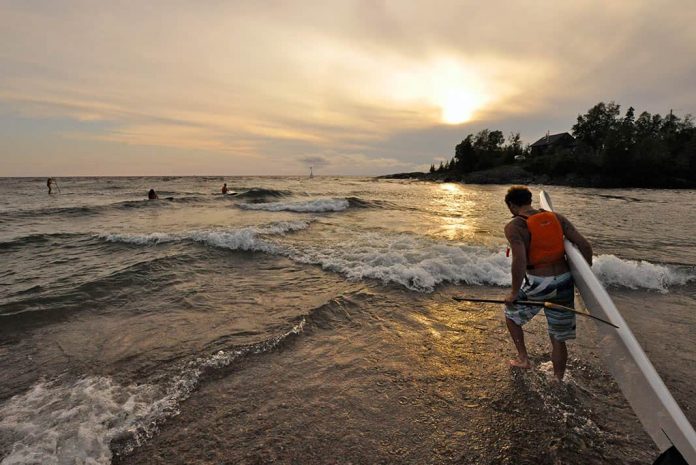
Man walking with SUP into the water
Discover the best Lake Ontario beaches for paddlers. | Photo by: Ontario Tourism

Everyone knows Lake Ontario is a Great Lake. But the capitalization that goes along with that designation can obscure the fact it’s also just a plain old great lake. Here are six of the best Lake Ontario beaches, perfect for launching a canoe, kayak or SUP. There are rentals available near all the beaches.

It won’t be long before you understand exactly what makes Lake Ontario so great.

Big Sandy Bay, Kingston

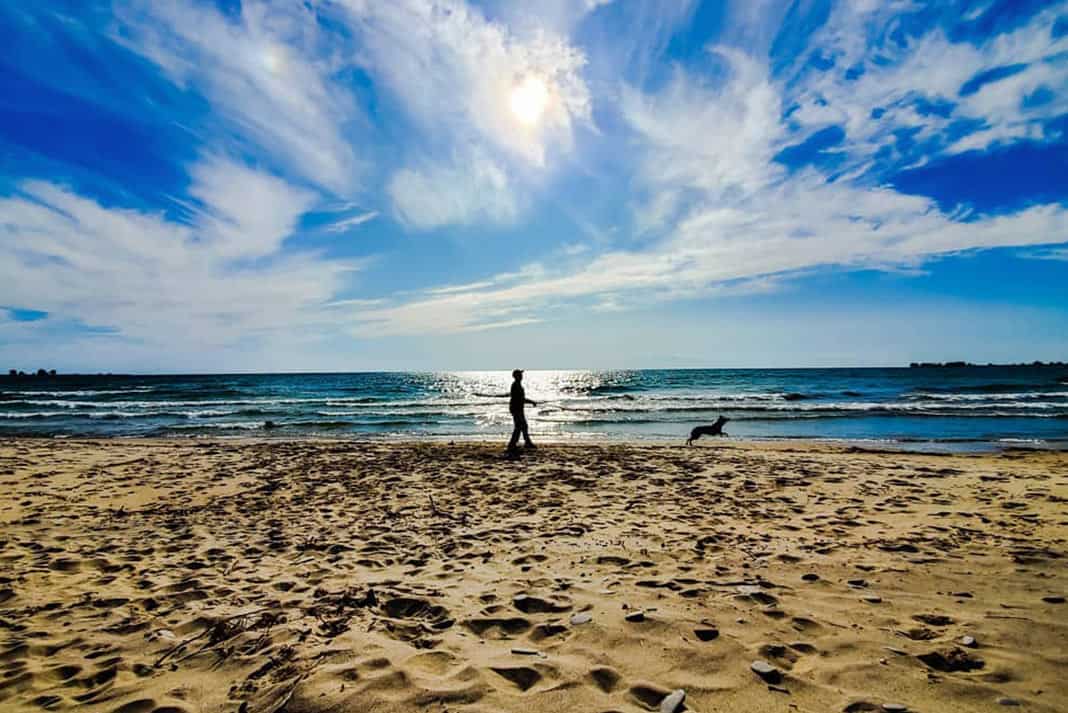
Man and dog walking on beach with water in background
Worth the walk through a wooded trail. | Photo by: @my_favourite_dj_is_a_tanner

The name says it all. Velvety Big Sandy Bay beach looks out onto Lake Ontario from the southwest corner of Wolfe Island. The approach isn’t so much convenient as it is appropriate for a day spent enjoying nature.

The beach waits at the end of a 1.3-kilometer trail winding through a 400-hectare wooded conservation area. The beach was closed in 2019 due to high water levels, which leaves you all the more reason to get out there and enjoy it when the waters recede this spring.

If you want to leave your car behind (and thus get a $2 discount on the $10 entry fee for adults) you can either roll your bicycle onto the ferry from Kingston or be a foot passenger and then hop on the Big Sandy Bus (running on weekends and holidays since 2018) when you land at the Marysville Dock on Wolfe Island. The free ferry ride takes 20 minutes and leaves every hour from Kingston’s dock. Rent watercraft from Ahoye Rentals.

Sandbanks Beach (Day Use Area), Prince Edward County

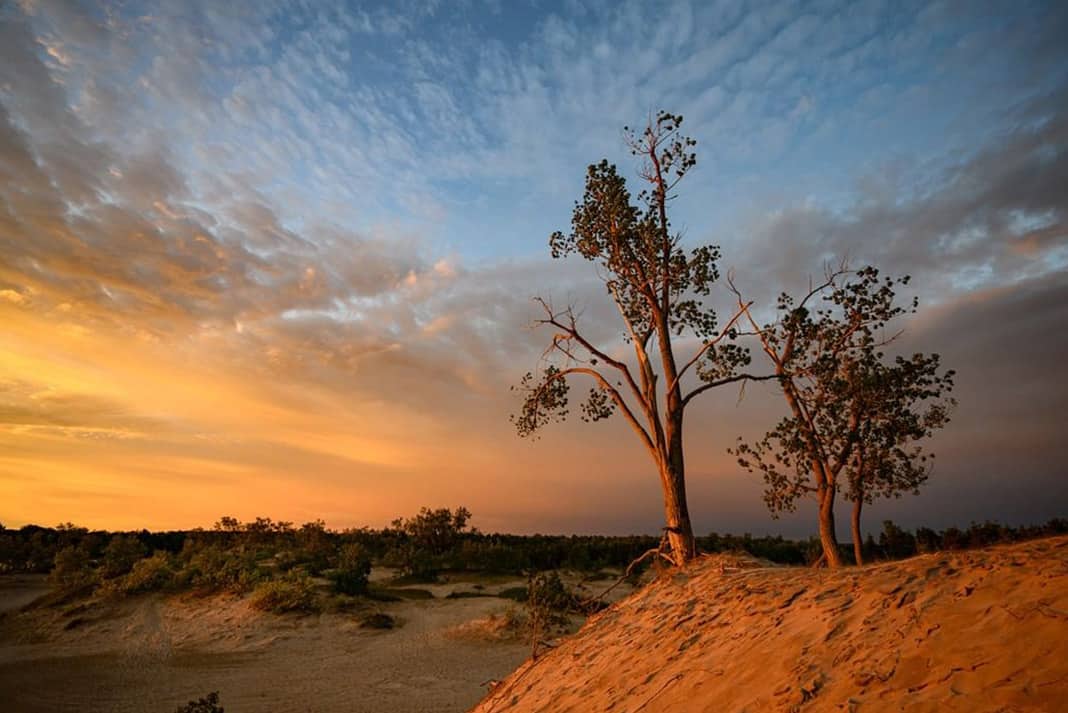
Trees growing out of a sand dune
Like nowhere else on earth. | Photo by: @cangeo

Being home to the world’s largest freshwater sand bar and dune system is as big a deal as it sounds. The wildly undulating landscape behind Sandbanks Beach is exotic and waiting to be explored. Head inland anywhere along the beach and you’ll pass through steep-sided dune formations and end up on the shores of the warm and welcoming West Lake.

The shoreline and dune sandwich offers plenty of bang for your park admission buck. The rest of the park has hundreds of campsites, but none are near the dunes, which keeps the dunes from being too busy.

Park admission: $12.25 – $21 per car load for day use permits. Rent locally at West Lake Watersports.

Victoria Beach, Cobourg

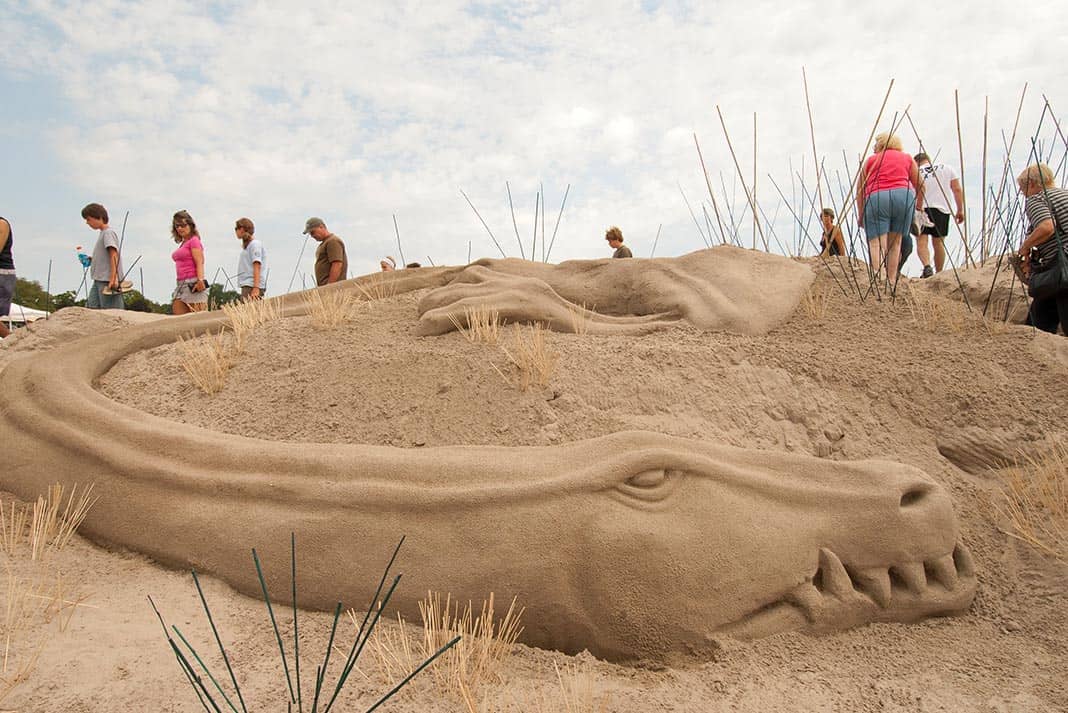
Alligator made in the sand with people walking in background
Bring a shovel, a bucket, and lots of imagination. | Photo by: Ontario Tourism

Victoria Beach is so central to this historic town that even the locals usually just call it Cobourg Beach. It’s a one-kilometer stretch of impressively clean and white sand that abuts the charming downtown district. It’s the perfect place for sandcastles, and the perfect time is the first Saturday of every August when the Cobourg Sandcastle Festival takes shape. Check out the master class for inspiration and then enter ($5 per person) the amateur category, if you think you’ll dig it.

Find watercraft rentals at Green Canoe Outfitters.

Get directions to Cobourg Beach.

Bluffer’s Beach, East Toronto

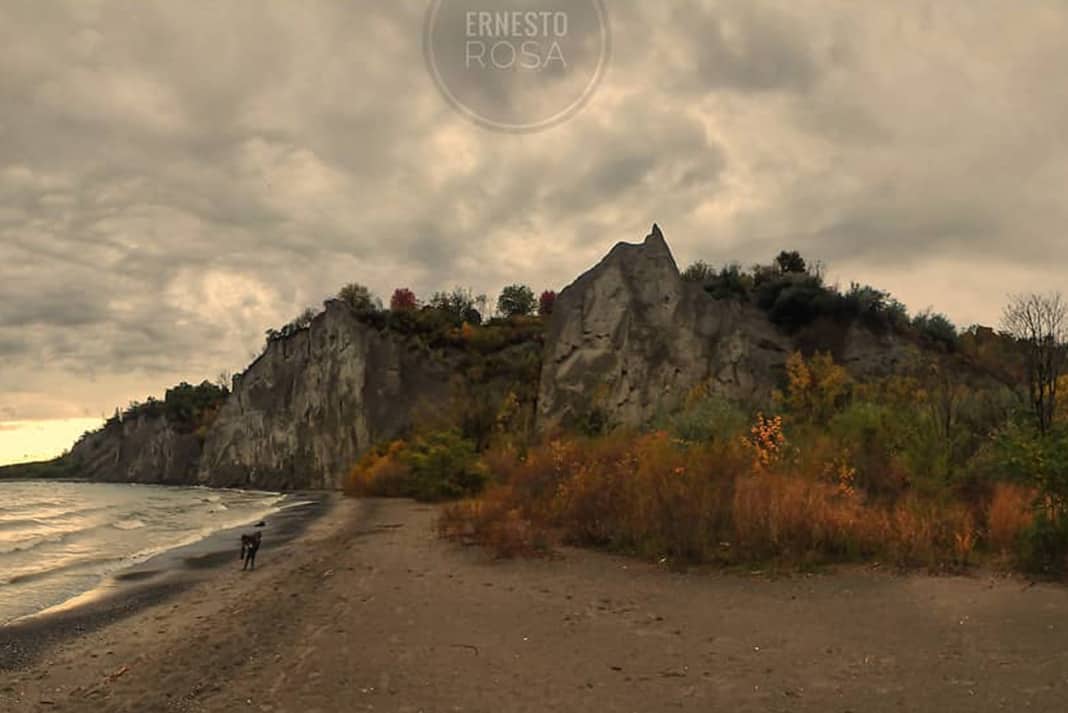
Water at the edge of cliffs
Serenity in the city. | Photo by: @ezy_osy

At the bottom of Brimley Road a wide, deep, flat beach arcs gently under the towering Scarborough Bluffs that top out at 90 meters. It’s a setting that often easily overwhelms the limited parking available, so take advantage of the new TTC bus that leaves from Kennedy Station every 15 minutes on weekends and holidays, from spring to October.

The wide beach to the east of the marina has more real estate and softer sand, but search out Bluff Lookout Beach to the west for a smaller beach where the nearly vertical bluffs drop right down to the beach as dramatically eroded landforms. Access is free and amenities include change rooms and showers. Find local SUP rentals at Surf the Greats.

Get directions to Bluffer’s Park Beach.

[ Paddling Trip Guide: See all paddling trips in Ontario ]

Hanlan’s Point Beach, Toronto Islands

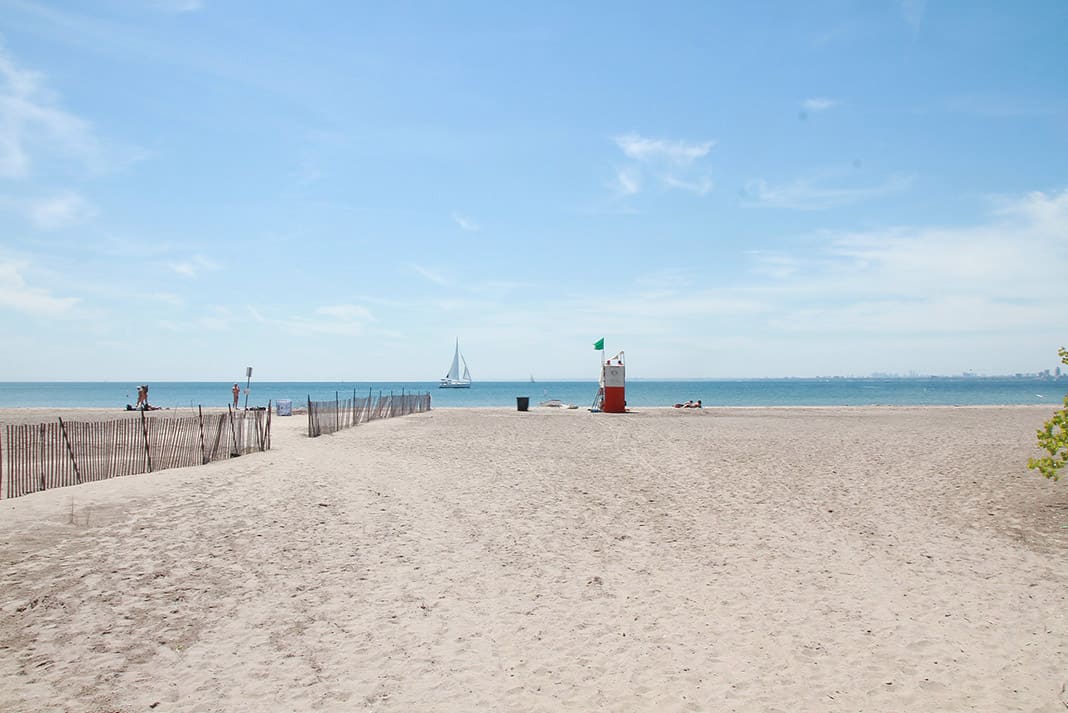
Light sand beach with water and sailboat in background
The south end of Hanlan’s Point Beach is more exposed, in more ways than one. | Photo by: Joseph Morris

Hanlan’s Point Beach makes up the west-facing rim of Toronto’s boomerang-shaped Centre Island. Most visitors stick to the island’s interior, but those who poke through the treeline to the west emerge onto a scene that might take them by surprise if they haven’t been previously debriefed.

Hanlan’s Point Beach is one of two officially clothing-optional beaches in Canada (the other one is Wreck Beach in Vancouver). Nudity isn’t the order of the day for the entire beach. It’s divided into zones, with bathing-suited sun bathers being given the northern end to act conventionally. The western exposure makes it a great place to watch sunsets, the Labour Day airshow and, depending on the time of month, a full moon.

Ferries to Hanlan’s Point leave from the downtown Jack Layton Terminal every 30 minutes. Rent from the Toronto Islands Boathouse.

Get directions to Hanlan’s Point Beach.

Fifty Point Beach, Hamilton

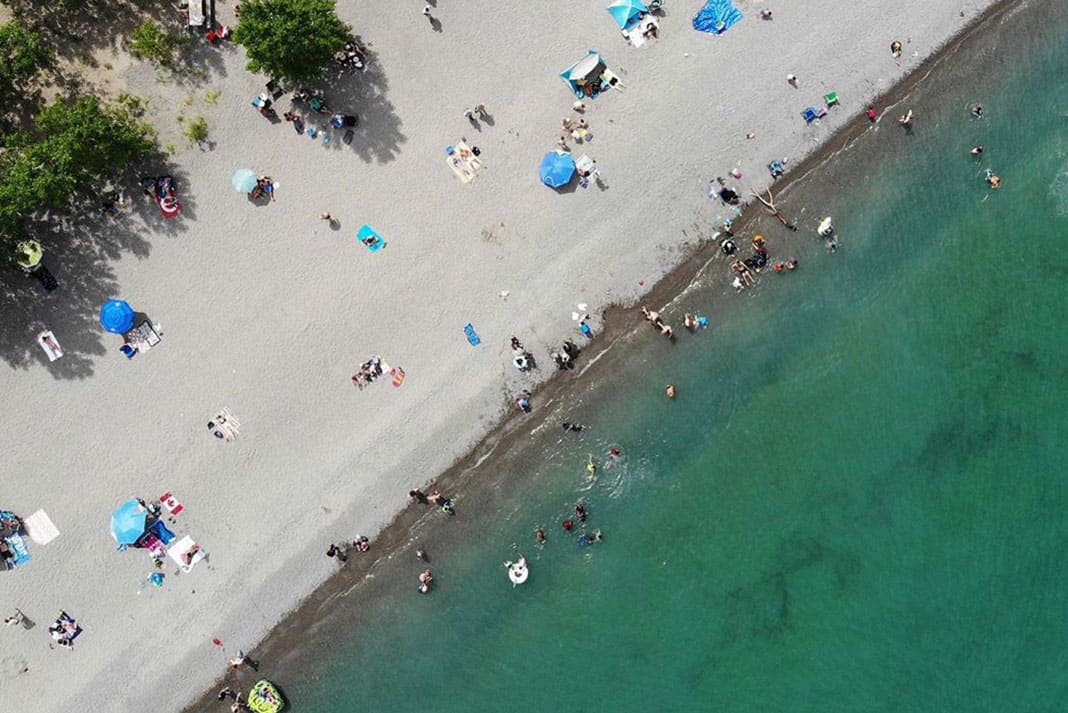
Overhead shot of beach with umbrellas and people walking on it
The “South Shore” just has a nice ring to it. | Photo by: @yasser.qorashi

Fifty Point Beach is the jewel of an 80-hectare conservation area on the eastern border of Hamilton. Picnic, boat, swim, stroll, fish, bike—it’s all on the itinerary here, with camping accommodations available. The beach sits in a cove that’s largely protected from prevailing westerlies, so most days the waters are calm and the wind is light.

Facilities include change rooms in the beachouse. Get there from the Fifty Road exit on the Queen Elizabeth Way. Entrance fees are $15 per car plus $5 per passenger over five years of age. Or $5 per person for those walking or biking in. Rent a SUP to explore from SUP Hamilton.

6 Things You Didn’t Know About GORP

Q: Why can’t you be friends with bags of trail mix? A: They drive everyone nuts. | Photo: istockphoto.com/dlinca

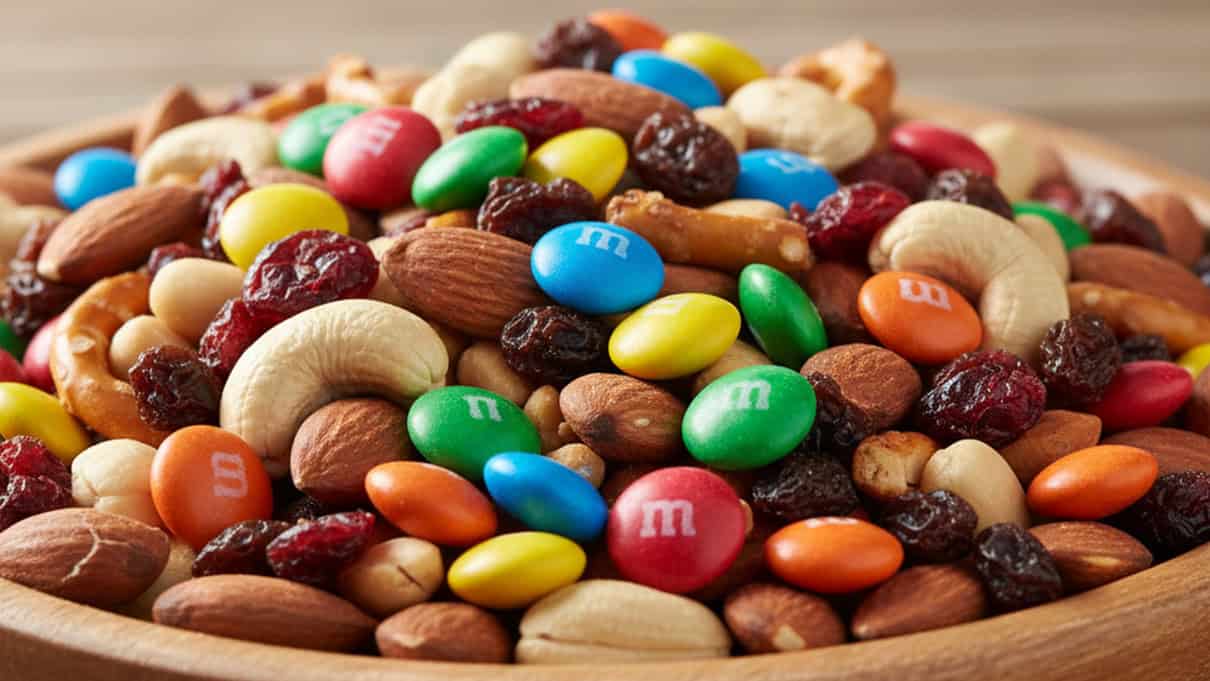
Also known as trail mix, gorp is a favorite adventure snack because it’s lightweight, nutritious and provides a quick energy boost from carbs and sustained energy from fats. The average 150-gram cup of gorp boasts 693 calories and 44 grams of fat. 

The combination of nuts, raisins and chocolate as a trail snack dates to the 1910s, when American travel writer Horace Kephart recommended it in his popular camping guide, Camping and Woodcraft. However, the backpacker’s acronym for Good Old Raisins and Peanuts—or Granola, Oats, Raisins, and Peanuts, depending on who you ask—didn’t catch on until the late ‘60s.

The most famous raisins of all time are undoubtedly The California Raisins, a fictional rhythm and blues band created for a 1986 Sun-Maid commercial. The California Raisins launched a $7.5 million advertising campaign by singing, “I Heard It Through The Grapevine.” They went on to release four albums, score a Billboard Hot 100 hit, and earn an Emmy nomination. Not bad for a bunch of dried grapes brought to life through the magic of Claymation.

Q: Why can’t you be friends with bags of trail mix? A: They drive everyone nuts. | Photo: istockphoto.com/dlinca

Meanwhile, the most famous peanuts reside within a weekly American comic strip by Charles M. Schulz, which ran from 1950 until 2000. Featuring Charlie Brown and friends, Peanuts is said to be one of the most popular and influential comic strips ever created, and—with 17,897 strips published in all—some claim it’s the longest story ever told by one person.

Though some call the peanut the king of nuts, it’s actually a legume. A legume is a pod with seeds that will start to open on its own as it becomes ready for harvesting. With nuts, a hard outer shell protects a single seed—the part we call the nut—and it does not open on its own.

Boy’s Life magazine ranked 35 trail mix ingredients from best to worst—the top contenders were Reese’s Pieces, cashews, banana chips, Chex cereal, and granola. Candied orange peel, coconut and popcorn rounded out the bottom. Use this information to inspire your own unique gorp creation on National Trail Mix Day, August 31.

Ultimate trail mix

Trail mix is the classic backcountry trip snack. Make it your own and ensure you will eat it by skipping the prepackaged variety and adding in healthy and scrumptious ingredients. Our favourite additions?

Ingredients:

  • Brazil nuts
  • Yogurt-covered raisins
  • A dark chocolate bar cut into pieces
  • Skor bar chunks
  • Slices of dried mango
  • Roasted almonds
  • Dried apples
  • Peanut-butter M&Ms
  • Cashews
  • Peanuts
  • Chocolate-covered goji berries

Trips: Kayak In San Diego, California

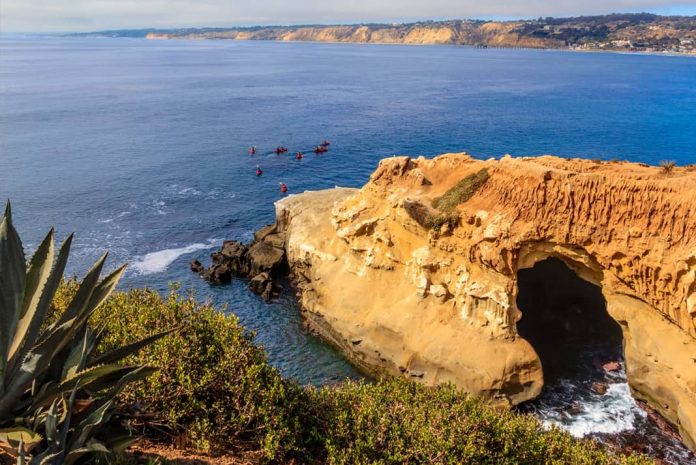
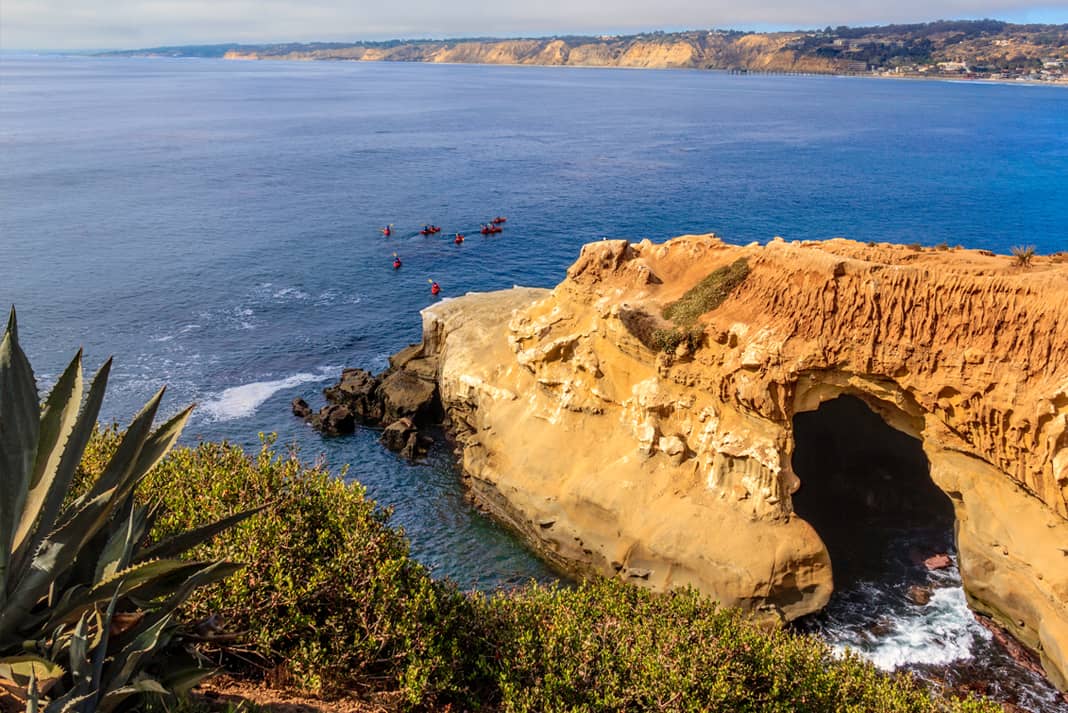
The La Jolla Ecological Reserve is filled with marine life, sea caves and excitement. | Photo: istockphoto.com/Ron and Patty Thomas

San Diego’s 70 miles of varied coastline offer something to entice every inclination of kayaker and paddleboarder. Expect warm, calmer waters in summer and fall, and breezier, cooler conditions during winter and spring, with sunshine and great paddling year-round.

Harboring an underwater ecological reserve, La Jolla Shores is popular with local paddlers and guided tours. The lovely beach here makes for an ideal launching point from which to explore the area’s famed sea caves, kelp forests and sea lion colonies.

[ Plan your next kayak trip with the Paddling Trip Guide ]

More outfitters and rental shacks congregate around the parks and sands of Mission Bay, where paddlers can thread among the estuary’s islands and bridges—a world away from the amusement parks and clamor of adjacent Mission Beach.

Across from downtown, Coronado Island is home to some of the country’s top-rated beaches. It’s a pretty sweet spot for paddlers too—surfers catch gentle waves just off the sparkling west-facing sands; sunsets illuminate skyline views on the island’s sheltered eastern shore.

Where to Go

The La Jolla Ecological Reserve is filled with marine life, sea caves and excitement. | Photo: istockphoto.com/Ron and Patty Thomas

If you Want to Go Guided

Join a two-hour guided tour with La Jolla Kayak (www.lajollakayak.com) or San Diego Bike & Kayak Tours (www.bikeandkayaktours.com) to gain entry to the seven sea caves that pocket La Jolla’s sandstone sea cliffs.

[ See the largest selection of boats and gear in the Paddling Buyer’s Guide ]

When conditions are calm, you can paddle right into these cavernous chambers. Opt for their combination kayak and snorkel tours to swim with harmless leopard sharks, brilliant orange Garibaldi, sea turtles and curious sea lions.

If you’re Craving waves

The scores of surf shops and schools fronting Mission Beach hint at the reliable waves that roll ashore on these golden sands. To surf the sublime beaches and emerald waves of Coronado Island, head for Coronado Central Beach or Silver Strand State Beach. In La Jolla Shores, paddle out with the locals on either side of Scripps Pier.

If you Want to paddle into the sunset

Head to Mission Bay for calm water sunset cruising, and make a few new friends while you’re there. Along with boat and board rentals, lessons and tours, Aqua Adventures (www.aqua-adventures.com) hosts free sunset social paddles twice a week. They can also connect you with a lively community of local fitness paddlers and racers.

The La Jolla Ecological Reserve is filled with marine life, sea caves and excitement. | Photo: istockphoto.com/Ron and Patty Thomas

Rafa Ortiz Trades Kayak For Inflatable Lobster To Drop 70-Foot Waterfall

In the world of extreme whitewater kayaking, pro athletes are always looking for new ways to push their limits. In most cases, this would mean finding a bigger waterfall or a new gnarly set of rapids to drop.

This isn’t the case for pro kayaker Rafa Ortiz. For someone who has already accomplished so much in his career, including being one of the few people to drop Palouse Falls (57.6m), the tallest waterfall ever dropped by kayakers, he is now looking for new ways to push this sport.

“Outlet Falls is a 70-foot waterfall that has never been done before in a pool toy, and for me, it is a natural progression of the sport,” says Ortiz. “I want to be part of this evolution.”

Pool toys were not his only venture into the uncommon of the sport. Another video done in partnership with GoPro, Ortiz can be seen dropping a 50-foot waterfall after being set completely on fire.

Ortiz continues to entertain with his creativity and this humorous video is nothing shy of that. “I’m supposed to do homework…… instead I watch a dude jump waterfalls with an inflatable lobster,” wrote Youtube commenter MILTOS.

At Paddling Magazine, we hope to eventually have a wide selection of inflatable invertebrates available in our Paddling Buyer’s Guide. However, we do not recommend you try to drop a waterfall with them.

What will be next? | Featured Video: Courtesy of Red Bull