Home Blog Page 180

Why You Should Plan Your Paddleboarding Trip To Montreal, Quebec

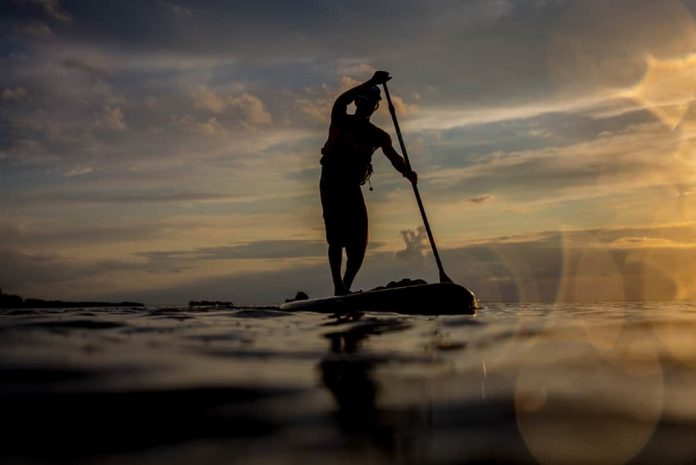
SUP in Montreal, QC
Seeing Canada's second most populous city in a new light. | Photo: Mike Hitelman

Montreal is on a big island. Which means there are many different places and ways to access water. The city may be best known for its cool urban culture, for its bistros and bars and bands and boutiques, but it’s surrounded by the steady flow of the St. Lawrence River.

When you need a break from all those beautiful people, and all that exhilarating noise, make a beeline for the shoreline and hop on a SUP.
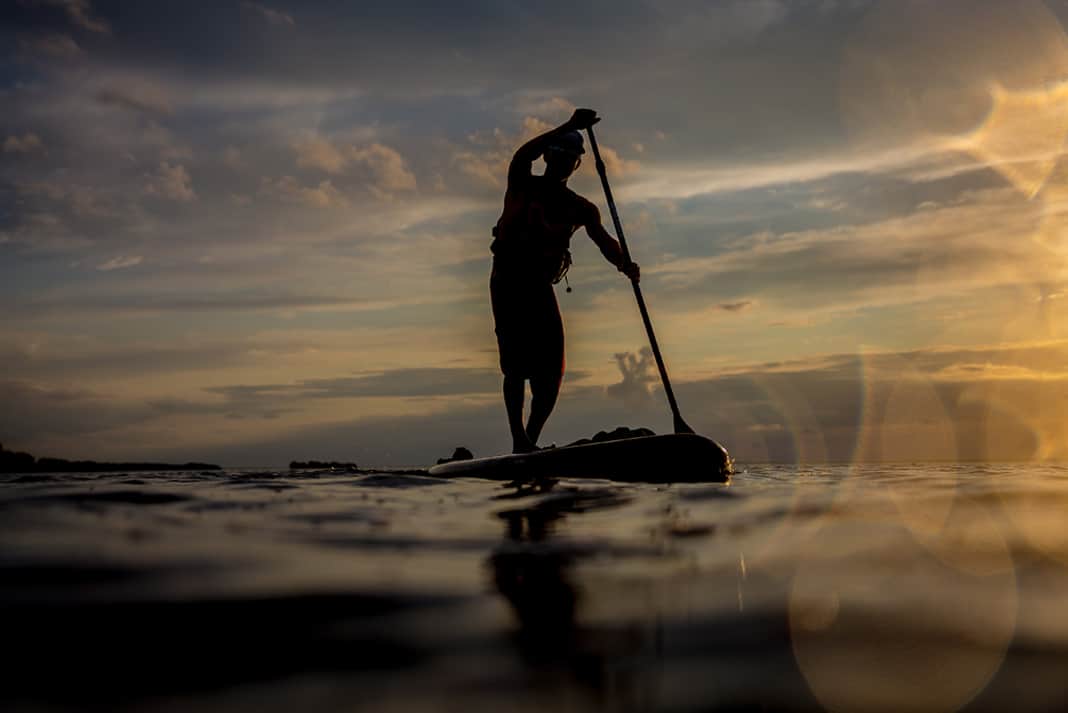
SUP in Montreal, QC
Seeing Canada’s second most populous city in a new light. | Photo: Mike Hitelman

“Montreal is located where it is because of the rapids, because the boats the Europeans arrived in couldn’t travel farther upstream,” says Hugo Lavictoire, a former competitive kayaker who started KSF (Kayak Sans Frontiers) in 1995.

“When I arrived, I wasn’t planning to live in any city, but I fell in love with everything you can do here.” KSF, which has grown over the years into one of Canada’s biggest river sports outfitters, with lessons, rentals and a shop, added river surfing to its repertoire in 2003 and SUP in 2007.

If you can’t BYOB (bring your own boards), they’ll supply the stoke you need to see the city in a new light.

[ Paddling Buyer’s Guide: See all paddleboards ]
Stay
The Hotel Bonaventure, near the St. Lawrence in the dense downtown, has an oasis of a rooftop patio with a heated pool, hot tub and lush gardens with 50-year-old trees. hotelbonaventure.com
Drink
Docked near the lively Atwater Market, Canal Lounge—a glassed-in boat—morphs from daytime café to cocktails at night. Open from late May to mid-October. canallounge.com
When To Go
Unlike other rivers in Canada, the standing waves on the St. Lawrence last pretty much year-round, with changing features as water levels fluctuate. Bring a thick wetsuit for winter surf.
Diversions
Although you can’t swim there, the Clock Tower Beach in Montreal’s Old Port features fine sand, chairs, umbrella and mist if you want a break from being in the water.
Snack
Billed as a food truck without wheels, Café September Surf, near the Lachine Canal, is great for grabbing a bite and talking surfing with locals between sessions.
septembersurf.com


If you have a half day:

The highlight of Montreal for a rookie river surfer is Guy’s Wave, a gentle bunny bump in LaSalle, in the west end of the city. KSF’s top SUP coach Pierre-Philippe Loiselle, who grew up across the river, calls this stretch of the St. Lawrence his sanctuary.

“It’s a place where things feel real,” he says, “and you’re almost part of the ecosystem.”Take a lesson with Loiselle and soak up the ambiance of the chill shoreline park where surfers lounge and picnic between runs.

If you have a day:

Walking through the trees to Lac des Régates on Île Notre-Dame, an artificial island on the St. Lawrence near Old Montreal, enveloped by the calls of red-winged blackbirds, it feels like you’re in a tropical jungle. Josiane O’Rourke, a SUP yoga instructor with KSF, enhances the sense of escape. “Go with the flow,” she advises. “This is about finding balance—on a SUP and within yourself.” Afterward, hit Guy’s Wave, or the nearby Habitat 67 wave for advanced surfers.

If you have a weekend:

The Lachine Canal, built nearly 200 years ago to bypass the rapids of the same name, has long ceased serving as an industrial artery. Today, lined by paths and parks, it’s a sweet ribbon of flatwater for recreational paddling. Launch near the Atwater Market, which is full of gourmet merchants, and enjoy the people watching. For a longer one-way trip, put-in on the St. Lawrence upstream from LaSalle and ride the current back toward the city center. And then surf!

If you have a week:

To earn your playtime in Montreal, start with a multi-day paddle from Ottawa. You’ll need to do your homework and have stamina: the route is roughly 160 kilometers, mostly on the Ottawa River, and there’s a major dam to bypass at Carillon, plus rapids on your approach to Montreal.

[ Plan your next SUP adventure with the Paddling Trip Guide ]

But several paddleboarders have made the trip, including one who continued on to New York City the following year. Most of the trip will be calm, and once you arrive, round out your week with some SUP surfing adrenaline.

Seeing Canada’s second-most populous city in a new light. | Photo: Mike Hitelman
Kayak Review: Pyranha 12R Whitewater Longboat

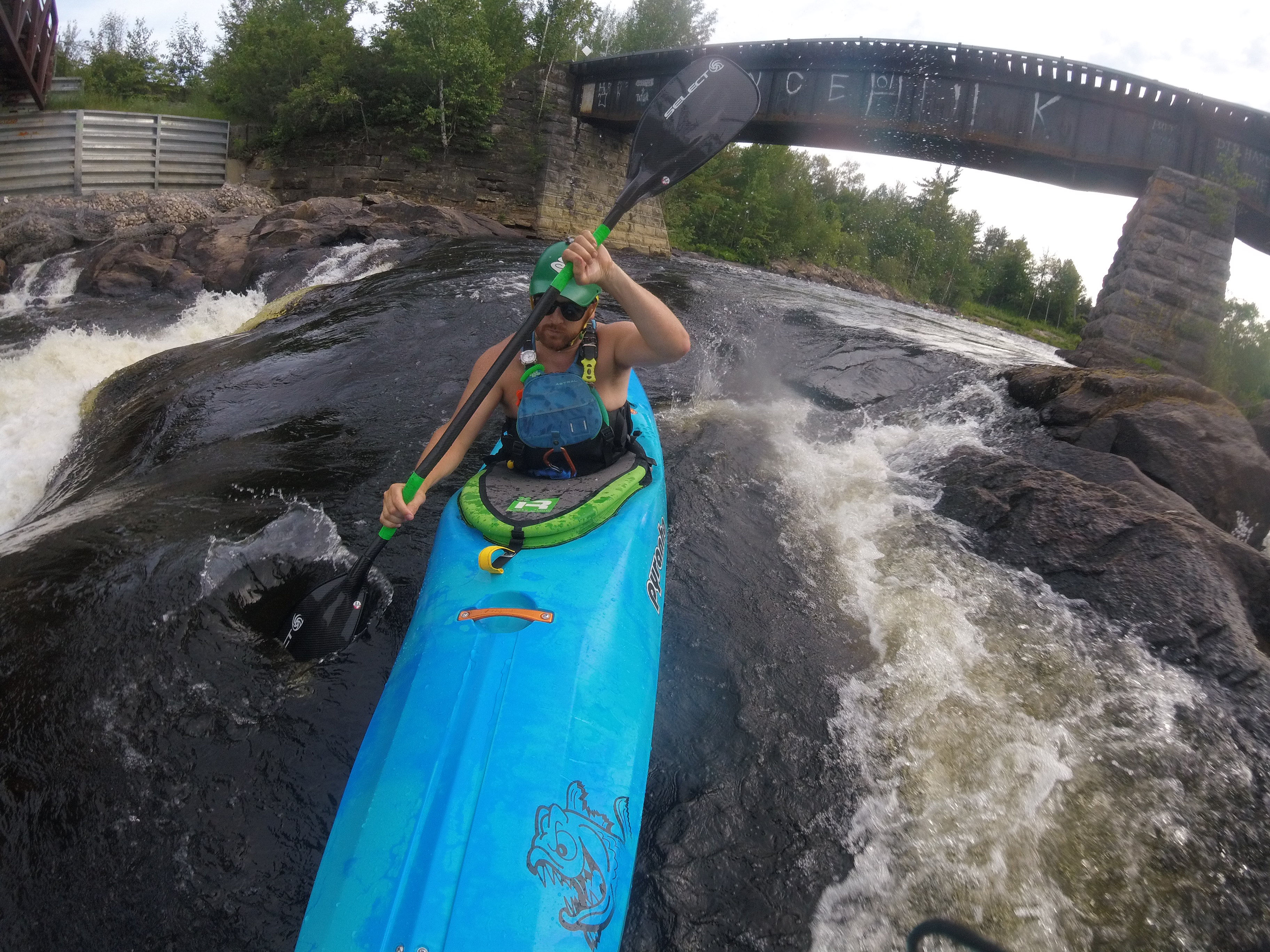
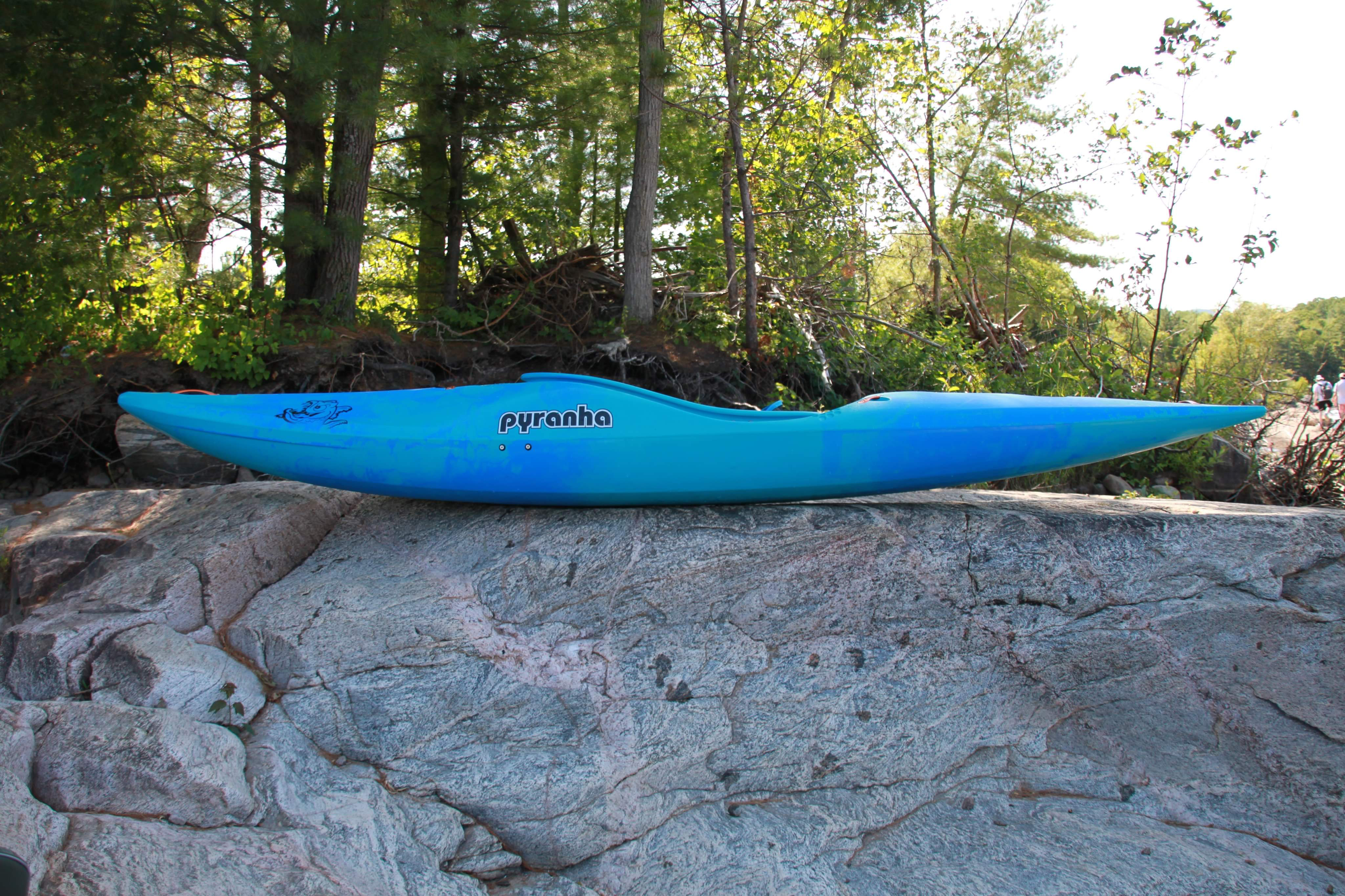
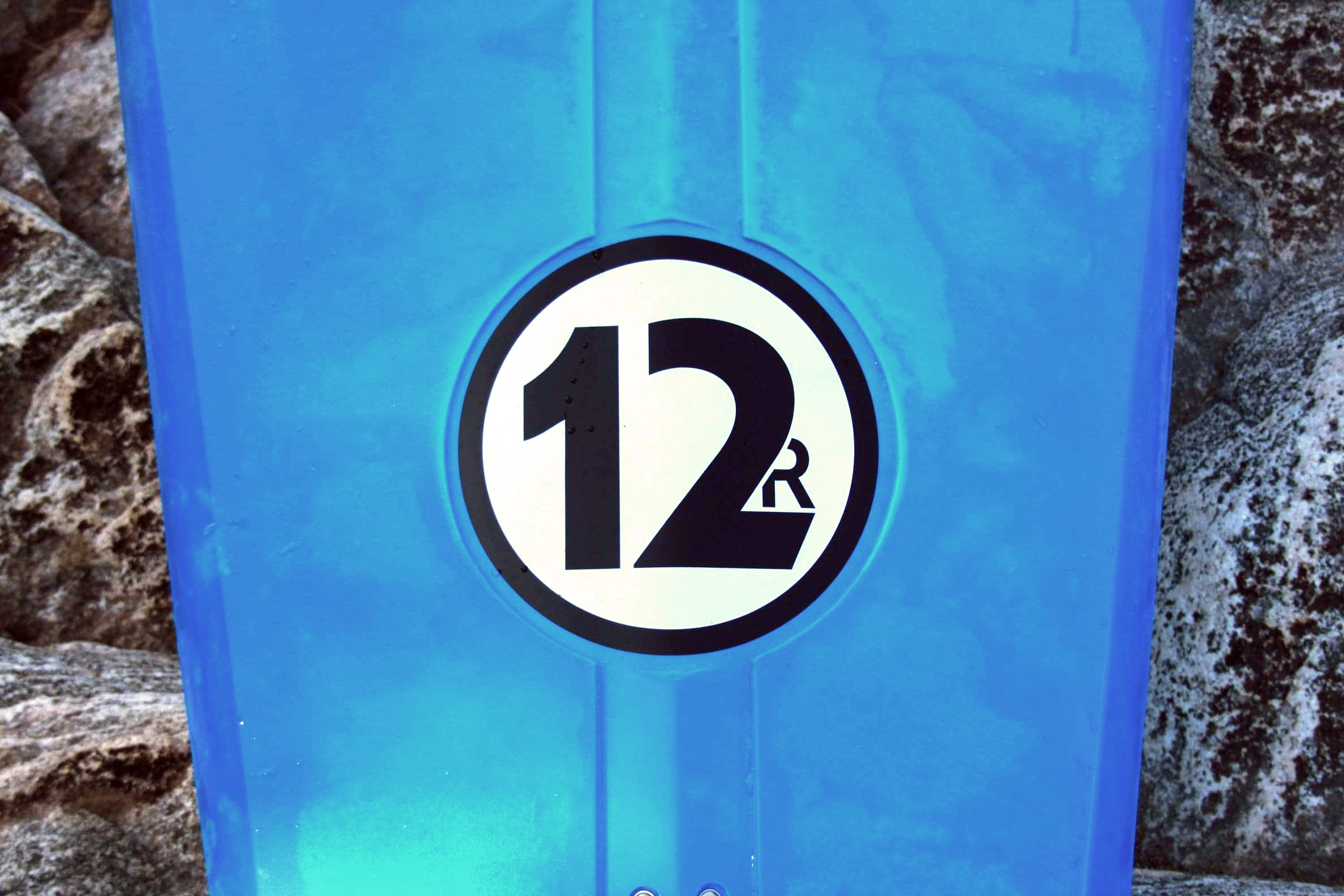
Pyranha’s new 12R
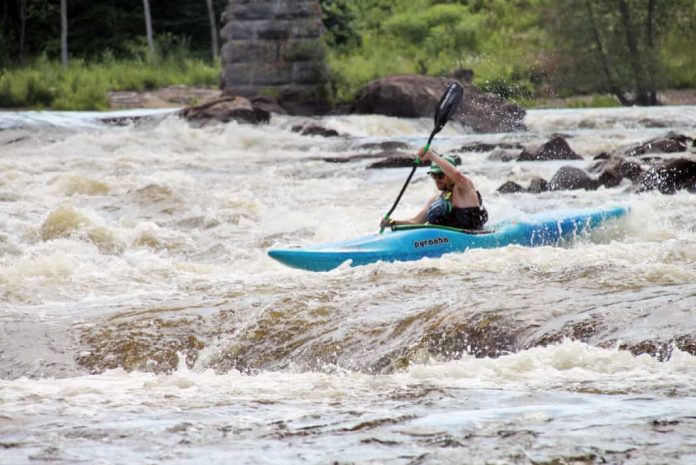
This one goes to 12. | Photo: Phil Kompass

I first heard about Pyranha’s 12R on April 1, 2017. I was soon disappointed to learn the launch of the new longboat was only an April Fool’s Day joke. I wasn’t the only one. For years, some of the U.S.-based Pyranha crew wanted to make a longboat based on the 9R, but they couldn’t convince owner Graham Mackereth to invest in the cost of a mold for such a seemingly niche market.

Pyranha 12R Specs
Length: 12 ft 
Width: 24.5 in 
Volume: 
102 gal 
Weight: 
57 lbs 
MSRP: 
$1,339
pyranha.com

More than half a year later, the team took to Kickstarter. What had jokingly been referred to as the “mythical unicorn of longboats” was suddenly a real possibility if Pyranha pre-sold enough of them. The first day, 60 people signed up. Within three weeks, one hundred 12Rs had been pre-ordered, and the boat moved into production for delivery in the summer of 2018.

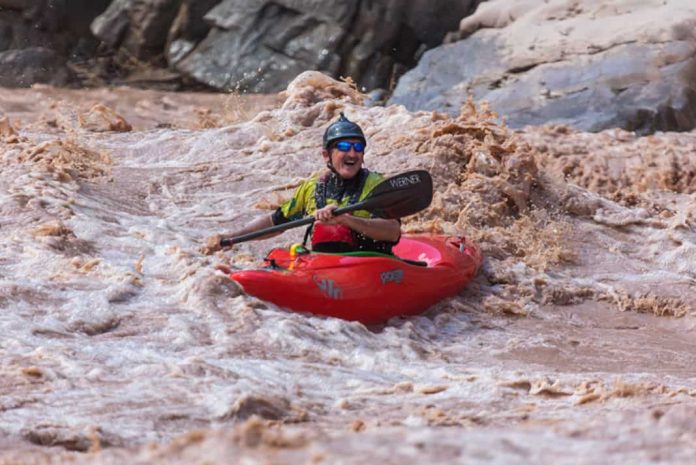
Longboats aren’t just for the speed-hungry racing niche. These big boats are designed for big fun—they go ultra-fast and are equally at home tackling huge rapids or holding many days’ worth of gear. I already own a longboat, a Liquidlogic Stinger XP. As soon as I heard about the Pyranha 12R, I was intrigued and knew I wanted to paddle it and compare.

I caught my first glimpse of a 12R in the fall of 2018 at the annual Movember Whitewater Classic men’s health fundraising race on the Ottawa River. This was shortly after the 12R dominated the field at the23rd annual Green Race in North Carolina, taking third place and five of the top 10 spots. When the editorial team at Paddling Magazine hinted they’d be getting a loaner to review, well, I’m pretty sure I started drooling then and there.

The Pyranha 12R shares the longboat race category with the Dagger Greenboat, Liquidlogic Stinger and Jackson Karma UL. All four have very similar specs, with the 12R coming in at the second-longest (12 feet), second-widest (24.5 inches), highest volume (102 gallons), and the heaviest (57 pounds).

Pyranha’s updated Stout 2 outfitting features improved comfort, ergonomics and overall adjustability, and is easily customized. | Photos: Graham Kent

As I already have a few Pyranha kayaks and am familiar with the outfitting, getting the 12R river-ready was quick and easy. The 12R comes standard with Pyranha’s Stout 2 outfitting, which features upgraded hip pads and thigh grips. First, I installed the peel-and-stick foam pad for the full plate footrest. Then, I adjusted the footrest, added the two included seat shims, and added hip shims to fit. My favorite part of Pyranha’s outfitting pack—besides the Angry Fish Sponge—is the peel-and-stick foam pads and foam roll, which I use for adding padding where my kneecaps contact the hull. Why don’t all the brands come with this stuff?

[ See the largest selection of boats and gear in the Paddling Buyer’s Guide ]

In just 10 minutes, the boat was comfortable and fit me like a glove. The only thing I would change, as I have done in my 9R and Ripper, is add a large foam wedge to the footrest for a more relaxed ankle position.

The 12R, like its hugely successful Pyranha 9R inspiration, has a Swede form hull design, meaning the widest part of the hull is behind the paddler. This gives the boat numerous advantages over a symmetrical design on the river, including improved tracking, quicker turning when on edge, and a more efficient stroke due to the narrower width at the cockpit. It also increases downriver speed by displacing water efficiently and minimizing drag.

Despite both boats having almost identical specs, I was surprised by how different the 12R handled compared to my Stinger on the water. After a few laps down my local run, I felt like I had the boat dialed in.


The 12R is exceptionally stable; I was able to edge the boat enough to get my kidney into the water without needing a paddle for support or feeling like I was going to tip over. On flatwater, the 12R didn’t feel as fast as the Stinger, but with its slightly wider width and shorter waterline as a result of its shorter length and increased rocker, I am not surprised. And, of course, flatwater speed has little to do with how quickly it will go downriver.

Paddling through rapids, I found despite significant bow rocker, wave deflectors, ample volume and a sloped deck, the bow didn’t rise out of the water after plunging through a wave or hole as quickly as I thought it should. This might be a disadvantage of the Swede-form shape—with the center of buoyancey behind the paddler, the stern has leverage to hold the bow under when coming down the face of a wave or hole. I just needed a change in my paddling style.

I generally choose the straightest line down a rapid while avoiding the largest features, and crash my way down, plowing through anything in my path. The 12R has a much more defined edge and more continuous rocker and is much more agile because of it. I can rapidly change direction and carve a turn on edge. Using this to my advantage, I simply adjusted my line, edging the boat to weave around features to keep the bow dry. The maneuverability of the 12R also made catching eddies—something I don’t even bother trying in my Stinger—easy and fun.

Paddling the Pyranha 12Rwas a blast. If #fastisfun has the mantra of the nine-foot creek race category, then #fasterisfunner with the 12-footers.

This one goes to 12. | Photo: Phil Kompass

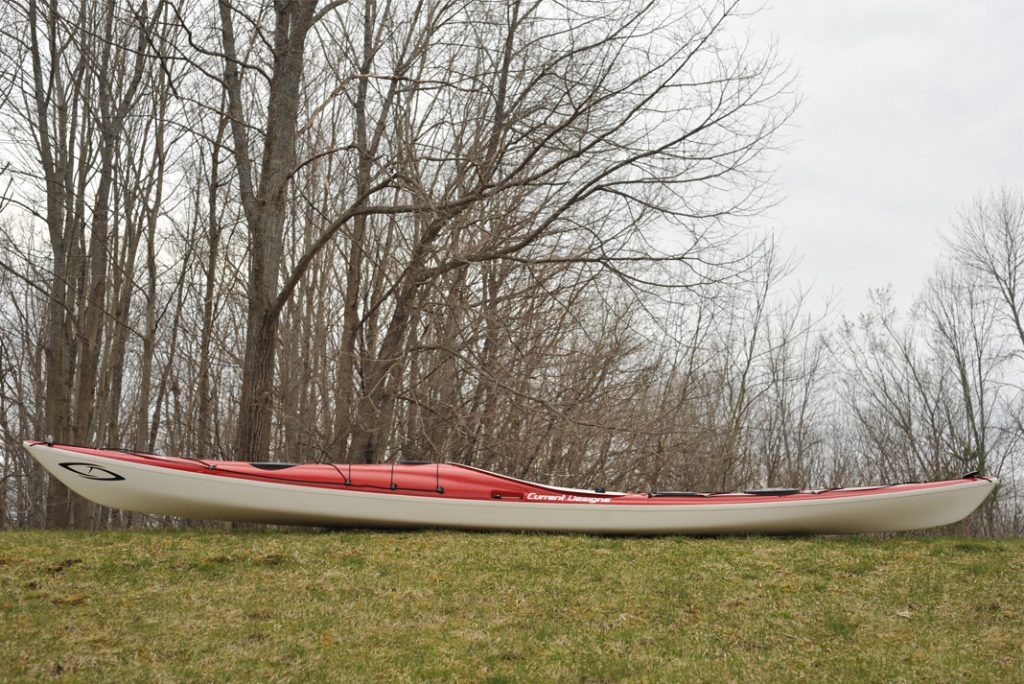
Sea Kayak: Current Designs’ Karla Review

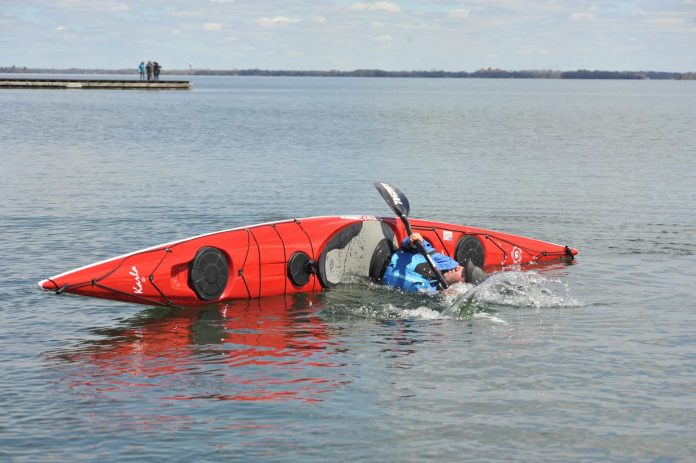
It isn’t just experts and rolling junkies who will enjoy this boat; the Karla is an outstanding companion for aspiring paddlers to develop skills and gain confidence. | Photo: Owen Marshall

Three years ago, when I first inquired about the enigmatic designer behind Current Designs’ emerging family of Danish-style touring kayaks, CD vice president Bill Kueper prefaced an introduction to his collaborator in Denmark with one word: janteloven.

Current Designs Karla
Length 15 ft 3 in
Width 
21.5 in 

Depth 11.5 in 
Weight 52 lbs
MSRP $3,599 USD 
cdkayak.com

Translated from Danish, janteloven means law of Jante, and represents a set of deeply entrenched social norms eschewing personal glory in favor of self-effacing Scandinavian modesty.

So while you won’t find Jesper Kromann-Andersen boasting about his accomplishments, the 48-year-old designer is less rigid when it comes to another of Jante’s tenets: Don’t do things out of the ordinary. His three collaborations with Current Designs—the Prana (released in 2015), the Sisu (2016) and, most recently, the Karla—are powerhouses of innovative design and stylish personal expression. Social protocol aside, the trio cements Kromann-Andersen among the greats of sea kayak design.

Playful Karla has the most rocker of any Current Designs kayak. Added volume in the bow prevents diving when surfing and maximizes maneuverability. | Photos: Virginia Marshall

At the time of its launch, the 17-foot Prana had the most rocker of any kayak in the Current Designs line-up, making it an agile touring companion with plenty of responsiveness for playing along the way. At 16 feet, the Sisu featured still more rocker and a hybrid hull profile optimized for lively performance in surf and moving water.

The Karla amps it up again, with an even more aggressive rocker profile than the Sisu, as well as a slightly shorter and narrower hull. Kromann-Andersen also added volume in the bow, so his newest creation surfs like a dream and displays nimble prowess in the heaviest waters.

Topside, the Karla sports the same four-hatch configuration and sweeping deck contours as her siblings. This bow-to-stern shaping is not only stylish, it increases stiffness throughout, provides clearance for paddle strokes, and creates space for a positive fit in the knee area—all while keeping overall deck height low.

The cockpit outfitting also shares the Danish simplicity of the other two boats. Instead of the copious adjustments found in many North American kayaks, Current Designs uses robust, well-placed elements that fit correctly the moment you slip into the cockpit. Two sizes—standard and LV, or low volume—ensure a snug, sporty fit for just about anyone. We demoed the LV, which shaves less than an inch of depth—if you’re over six feet tall or 180 pounds, try the standard Karla.

What do you get when you combine compact dimensions, superb secondary stability and just-right cockpit outfitting? A comfortable resting spot. | Photos: Virginia Marshall

Intermediate and advanced paddlers would be hard-pressed to find a more intuitive kayak. Kromann-Andersen’s design process begins with careful consideration of water flow dynamics, desired handling characteristics and paddler integration. Intuition, experience and innovation then guide the time-honored progression of testing in the sea and refining the shape. A kayak must respond, he says, as a natural extension of paddler input.

In the Karla, this translates to one of the most maneuverable sea kayaks I’ve ever paddled. Want to scribe turns and carve wave faces? Stay loose and avoid purling while surfing? Slalom through rock gardens and thread currents with graceful agility? Unlock more challenging rolls and balance braces? Karla gives you the keys. And what’s more, it does so while remaining surprisingly efficient. Unlike some dedicated ocean play kayaks, the Karla is fun to paddle on day tours and quickly covers the distance between you and the waves.

TThree hatches, a deck pod, compass recess, skeg and surprising hull speed mean the Karla can tour as well as surf. | Photos: Virginia Marshall
Three hatches, a deck pod, compass recess, skeg and surprising hull speed mean the Karla can tour as well as surf. | Photos: Virginia Marshall

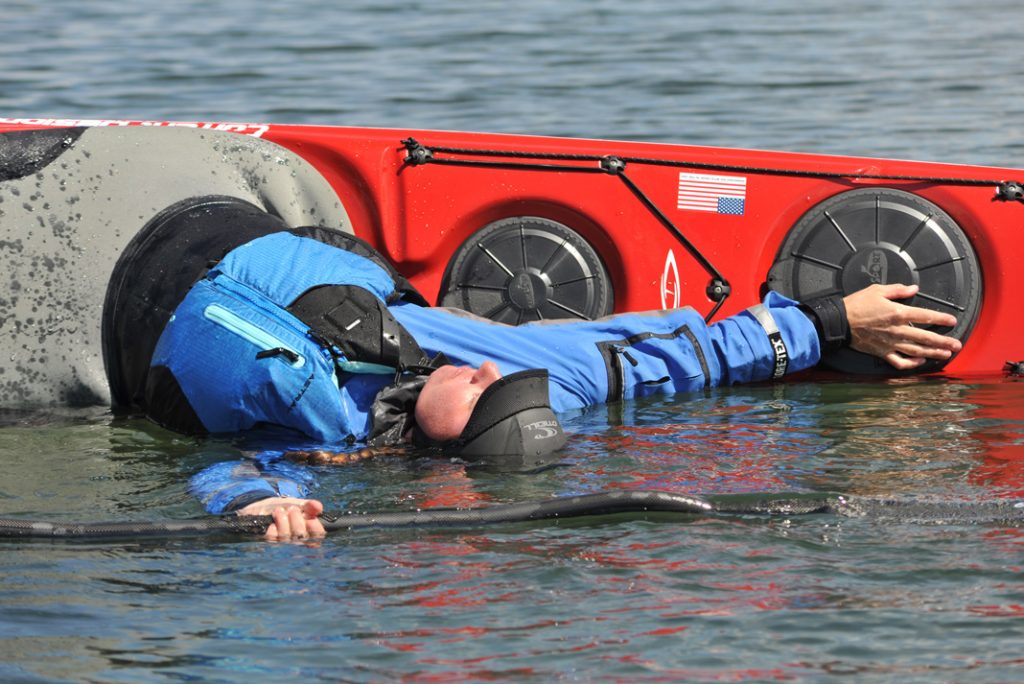
A narrow beam and shallow-V hull purposely trade a degree of initial stability for exceptional edge control. On bumpy waters, where a kayak’s secondary stability is what keeps it right side up, the Karla feels rock-solid. Its hard chines are at home with any degree of edging. I found it second only to ultra-low-volume Greenland kayaks for restful, body-on-the-water stability.

But it isn’t just experts and rolling junkies who will enjoy this boat; the Karla is also an outstanding companion for aspiring paddlers to develop skills and gain confidence in the surf zone or while messing about on calm water. Get comfortable on edge, and the Karla will make anyone feel like a superstar.

Current Designs enhances the Karla’s wide-ranging appeal with a variety of composite layups. The standard fiberglass construction offers a classic blend of lightweight stiffness and strength, while the Kevlar option brings the weight down to just 48 pounds. A third option, which CD calls their Heavy Water layup, reinforces the hull with an extra five pounds of glass and resin to withstand the abuse of regular rock gardening. All of Current Designs’ laminates are vacuum-bagged, a process minimizing unnecessary weight and yielding a flawless finish inside and out.

Five years after Kueper and his team first laid eyes on the elegant CAD drawings of an accomplished Danish designer, Jesper Kromann-Andersen and his trio of playful, punchy kayaks are attracting global attention. But perhaps acclaim and janteloven aren’t mutually exclusive—after all, the Karla and her siblings elevate all paddlers.


It isn’t just experts and rolling junkies who will enjoy this boat; the Karla is an outstanding companion for aspiring paddlers to develop skills and gain confidence. | Feature photo: Owen Marshall


How the most unlikely adventurer became one of the world’s most inspirational athletes

Lonnie Bedwell during a 2018 descent of the Colorado River. Photo: James Martin/Google Maps

As a young man serving as a U.S. Navy submariner in the first Gulf War, Petty Officer Lonnie Bedwell never imagined he would become one of the world’s most inspirational adventure athletes. He also never thought he’d lose his eyesight, blinded by a shotgun blast in a freak hunting accident in 1997, three years after he retired from the military. “It left me in the dark,” says Bedwell, now 53. “Totally in the dark.”

At the time, Bedwell was a 31-year-old single parent with three daughters, settling into civilian life in southwestern Indiana after nine years at sea. It became obvious he could no longer continue his job at a power plant. He went from 180 pounds to 130. Walking was a challenge; without eyesight, his balance suffered. “What would my girls think?” Bedwell wondered. “From that point forward, I had to redefine my life.”

Bedwell speaks in the measured tone of a quintessential Midwesterner; no doubt this calm, steady demeanor played a huge role in his recovery. With the encouragement of his daughters, Bedwell resumed yard chores. Soon he was operating a chainsaw. For work he “got to building houses”—framing, heating, wiring, drywall and roofing—“anything from the ground up, excluding finishing work,” he says. “I realized I could do things.”

When his youngest daughter graduated from high school, Bedwell had more time for new activities. He took up adaptive alpine skiing in the winter of 2011. He was introduced to kayaking at a pool session a year later. In the summer of 2012, Bedwell participated in Outtasight, a program for vision-impaired and blind veterans on the Yellowstone River in Montana. The clinic was organized by Team River Runner, a non-profit introducing veterans to adventure sports.

After the clinic, Team River Runner executive director Joe Mornini asked Bedwell if he would like to be the first blind person to paddle the Grand Canyon. The invitation “instilled a dream,” recalls Bedwell. Mornini encouraged Bedwell to perfect his kayak roll, challenging him to complete 1,000 rolls, and get more experience on the river.

Rolling was easy. Friends gave Bedwell a kayak and gear and he practiced in a pond, completing 100 rolls on his first day. But whitewater is hard to find in the Midwest. Bedwell traveled to North Carolina and practiced on the Pigeon River and at the U.S. National Whitewater Center in Charlotte. Back in Indiana, he quit counting at 1,500 rolls.

Lonnie Bedwell during a 2018 descent of the Colorado River. Photo: James Martin/Google Maps
Lonnie Bedwell during a 2018 descent of the Colorado River.
Photo: James Martin/Google Maps

With only 14 days of river experience, Bedwell and a team of guides attempted the Grand Canyon in 2013. To navigate whitewater Bedwell relies on voice commands from two or three expert kayakers. “The guy in front of me is always at 12 o’clock to my boat,” explains Bedwell, who gained international fame for his successful Grand Canyon descent and has since returned to run the Colorado River three times, most recently in 2018. “He’s like my beacon. It’s amazing how much you can hear.”

Bedwell insists his other senses haven’t improved to compensate for his lack of vision. “But you focus on what you hear and what the river is doing. Blind paddlers are reactive paddlers in a proactive sport.”

He describes the typical commands from his guide, heard over the roar of class IV whitewater: “Turn right. Give me a 2 o’clock bow angle. Hold that angle! Hold that angle! Now line back up on me. Charge!”

Recently, Bedwell was the subject of the award-winning documentary Feel of Vision, which captured his efforts to paddle up to class III water unguided, along with his commitment to Team River Runner and personal mission to introduce “as many people as I can” to the freedom of paddlesports, including veterans and youth.

Through it all, Bedwell always acknowledges the volunteers who have made his experiences possible. “Kayaking is the most independent thing I’ve done since losing my eyesight,” he says. “But sometimes you wish you could see the river, the rapids and what you’ve done. That’s the hardest part.”

Feel of Vision Trailer from Blueline on Vimeo.

Kenji Haroutunian Joins The Big Gear Show Team

Keni Haroutunian Joins Big Gear Show

The Big Gear Show (BGS), a new outdoor industry trade show focused on hardgoods, with an emphasis on paddling, cycling, climbing, and camping gear, announced January 14, 2020, the appointment of Kenji Haroutunian to be its outdoor show director.

Haroutunian joins long-time Interbike show director Lance Camisasca and Paddlesports Retailer show director Charles Conner to complete The Big Gear Show’s leadership team.

Haroutunian has over thirty years of experience in the outdoor recreation industry. From 2007-2015, he served as group show director for the Nielsen Sports Outdoor Group (now Emerald Expositions), leading Outdoor Retailer, Fly Fishing Retailer, and numerous ancillary events. He has also contributed to a variety of initiatives that have sharpened his acumen for a new events model, including Outdoor PressCamp, FOJT Climb Smart, Outdoor Media Summit, the Inclusivity Luncheon, and Outside Experience. Haroutunian is committed to growing access and inclusion to the outdoors and is board director for Access Fund, Friends of Joshua Tree, and the California Outdoor Recreation Partnership.

[Discover the best gear of the year in the online Paddling Buyer’s Guide.]

“Kenji’s appointment solidifies our team. We now have the former show directors of Interbike, Outdoor Retailer, and Paddlesports Retailer all working toward a shared vision for The Big Gear Show. No other show team in the industry brings as much experience and expertise to the table. With these new hires on board, we’re confident we will grow The Big Gear Show into the world’s premier hardgoods show.” commented Sutton Bacon, the show’s co-founder.

The Big Gear Show will be held in Salt Lake City’s Calvin L. Rampton Salt Palace Convention Center July 22-25, 2020. The show’s first three days will be reserved exclusively for retailer attendees, but uniquely the final day, Saturday, July 25, will be open to the general public.

“I am truly excited to be part of The Big Gear Show,” said Haroutunian. “Having an experienced team of retailers conceive and produce a fresh treatment for today’s ‘B2Both’ audience is a great opportunity to put learnings into practice with people I’ve known, worked with and respected for decades. The Big Gear Show brings the outdoor experience back to the center of the production—it allows a new platform to come to life focused on core activities that highlight innovation and discovery, while actively promoting healthy and responsible outdoor recreation.”

About The Big Gear Show

The Big Gear Show is the outdoor industry’s first-ever national B2B2C gear show ‘for retailers, by retailers.’ The show takes place July 22-25, 2020 in Salt Lake City, Utah. The show provides exclusive outdoor and on-site demo opportunities for paddling, cycling, climbing and camping, an expansive marketplace, and an unsurpassed cultural experience for exhibitors, retailers, media and industry advocates alike. For more information, visit www.thebiggearshow.com or contact info@thebiggearshow.com.

How to save our wild places from being loved to death

Take only photos, leave only Likes. | Photo: David Jackson

I can only describe it like a zombie apocalypse.” Those are the words of Brad Bogle, as told to the Globe and Mail newspaper.

Bogle’s parents operate a family farm an hour’s drive west of the city I call home. The farm fields opened to the public each season when the sunflowers were in bloom. Over several weeks in July and August a few thousand tourists would visit and bask amongst the sunny faces.

Last summer, a tagged social media post featuring the estimated 1.4 million sunflower plants went viral. Then all hell broke loose. Enter the zombies.

On one bright and sunny Saturday, an estimated 7,000 tourists showed up in search of the perfect sunflower selfie. The Bogles knew something was up when the first minivan arrived at 5:45 a.m. Soon the onsite parking overflowed. The selfie-seekers parked on the country road—then out on the highway—some hiked from a kilometer away shortcutting and trespassing into the fields. People brought tripods and selfie-sticks. There were drones. One man portaged a stepladder deep into the field.

The local cops were called to direct traffic and control the crowd. The sunflower crop was damaged in the melee. The sunflower fields didn’t open to the public this year—the Bogles claim they’re now closed forever.

A selfie-sticking horde ruining the very thing it seeks seems to be a uniquely 21st-century cautionary tale. And it’s one we increasingly hear about.

Last fall, the Jackson Hole Travel and Tourism Board set a precedent by asking visitors to stop geotagging photographs on social media to protect the state’s forests and lakes after insta-fame and the resulting heavy use damaged remote trails in the Grand Tetons.

Crowds and congestion inaccessible wild spaces is a growing concern in many places, but it seems nowhere more so than in national parks.

“Technology, successful marketing, and international tourism have brought a surge in visitation unlike anything seen before,” reads a November 2018 article in The Guardian, noting the U.S. National Park Services estimates annual visitation peaked at 330.9 million.

Take only photos, leave only Likes. | Photo: David Jackson

Some of the most popular U.S. parks experience two- to three-hour delays to enter, animal sightings cause gridlock and fender benders. Backcountry pit toilets overflow and close due to “extreme overuse.” Glacier National Park rangers have broken up fist fights over parking spots.

On a much smaller—and far less apocalyptic—level, I see this at a handful of my favorite backcountry launches where there is an ever-growing throng of paddlers. It’s terrific to see more people enjoying the outdoors, but worrisome to watch the cumulative destruction in the backcountry—trails widening and unofficial ones appearing, trees scarred from axes, feces improperly disposed of, and candy bar wrappers. Increased usage inevitably affects fragile ecosystems—and also the visitor experience if solitude is what they seek.

[ Plan your next paddling adventure with the Paddling Trip Guide ]

While some American and Canadian national parks have considered adopting a reservation system for entry to lessen the load on park infrastructures and the environment, others advocate for avoiding busy areas already operating at maximum capacity, and instead traveling only lesser-known routes. Some even argue the best way to protect the wild places we cherish is to avoid them entirely—of course, for those who are happiest outside, that’s not much of an option at all.

With an increasing number of people paddling in wild and semi-wild places, it makes following leave no trace principles even more critical. And because today’s popularity spikes are so often tied to social media, some adventurers have suggested adopting an eighth leave no trace principle: consider the potential impacts rapidly increased use can have on wild places and to be mindful of when posting images to social media. Just as Jackson Hole’s Travel and Tourism Board recommends. It’s the best way to keep your own zombie apocalypse at bay.

Kaydi Pyette is the editor of Paddling Magazine. She loves sunflowers but zombie movies really freak her out.

Take only photos, leave only Likes. | Photo: David Jackson

Trips: Kayak in Victoria, British Columbia

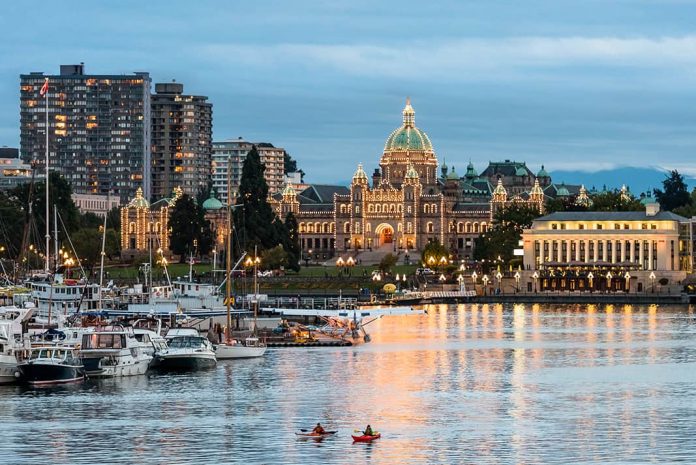
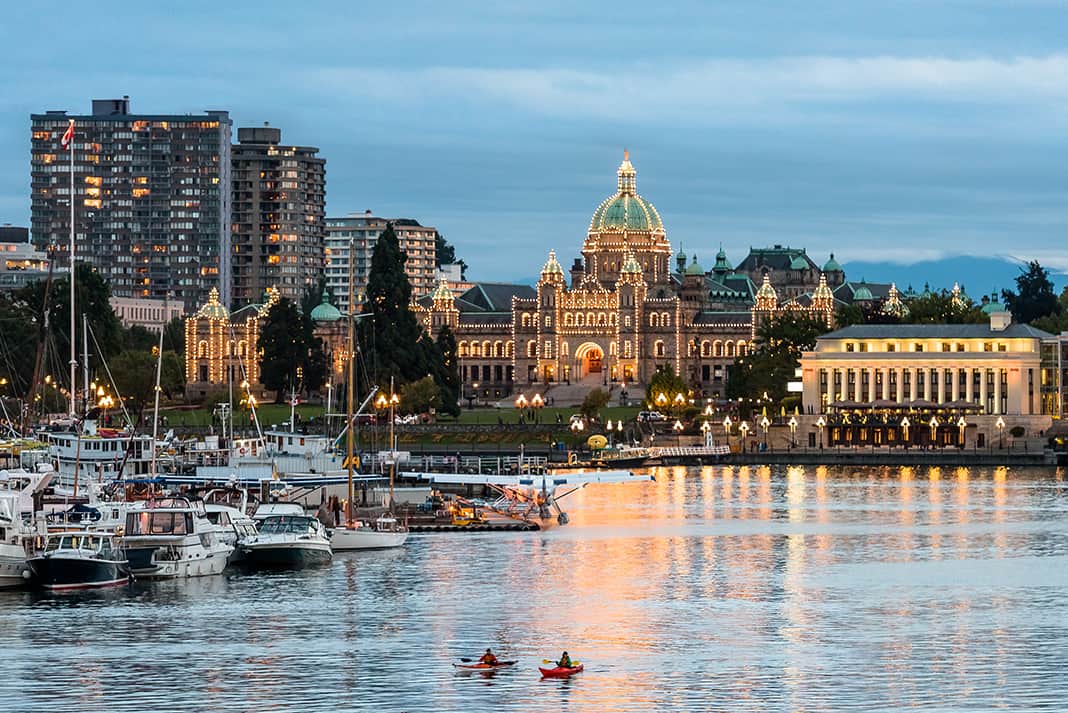
Two kayakers in Victoria BC
Victoria has been named the most romantic city in Canada and one of the 15 friendliest cities in the world. | Photo: Destination BC/Reuben Krabbe

Few coastlines in Canada can boast year-round paddling, but one such place is Vancouver Island and the historic provincial capital nestled in its southern tip. Victoria is among the most paddler-friendly—and cyclist-friendly, pedestrian-friendly and, well, just friendly—small cities in the world. “Most visitors stroll the waterfront walkway and comment on how pretty a city it is,” writes The Wild Coast guidebook author, John Kimantas. “Little do they know how much better it gets on the water.”

Whether it’s urban paddling with a uniquely Victorian charm—watching horse-drawn carriages and double-decker buses ply the flower-filled streets, or taking afternoon tea post-paddle at the grand Empress Hotel—picnicking at a historic lighthouse, or venturing offshore to the wild Trial Islands, you might need a whole year just to see everything the City of Gardens has to offer.

Where to Go

Two kayakers in Victoria BC
Victoria has been named the most romantic city in Canada and one of the 15 friendliest cities in the world. | Photo: Destination BC/Reuben Krabbe

If you Want to go guided

With nearly four decades of experience in Victoria, Ocean River Sports (www.oceanriver.com) leads kayak and paddleboard tours of the Harbour and surrounding waterways, as well as a popular, shuttle boat-assisted exploration of Discovery and Chatham islands.

[ Plan your next paddling adventure with the Paddling Trip Guide ]

Spend the day kayaking and hiking around this wild and scenic archipelago, watching for resident seals, sea lions and whales.

If you’re Into lighthouses

Launch from Fleming Bay for a half-day tour to the scenic picnicking beaches at Fort Rodd Hill and adjacent Fisgard Lighthouse National Historic Site. Built in 1860, this stately light station was the first on Canada’s west coast and is now open to the public.

If you Want to paddle and dine

Weave your way past the sailboats, seaplanes, fishing boats and ferries of Victoria’s beautiful-but-bustling Inner Harbour. Not dressed for tea? For fish ‘n’ chips with a twist, grab a seat at funky Red Fish Blue Fish, which serves up sustainably sourced seafood from a cargo container-turned-kitchen on the Broughton Street Pier. Victoria Kayak (www.victoriakayak.com) rents boats and runs harbor tours from the adjacent docks.

If you’re Looking for wildlife

For sightings of river otters, harbor seals, eagles and herons, explore the leafy, park-lined Gorge Waterway that snakes north from Victoria’s Upper Harbour.

Approach Tillicum Narrows—where the channel squeezes to just 30 feet wide—at slack tide to avoid impassable tidal rapids.

Victoria has been named the most romantic city in Canada and one of the 15 friendliest cities in the world. | Photo: Destination BC/Reuben Krabbe

SEND Crew Was Born To Be Wild

The SEND crew released their latest video aptly named, Born to be Wild. It serves as a reminder to live life to the fullest. Before watching this video we want to warn you that there are some graphic shots in the video of injuries sustained while paddling.

The video starts with a voiceover talking about how humans were born to travel and the changing role of the kayak over the years. “Nowadays, the kayak’s role has changed, but it is still used out of need—as a tool to help satisfy our inner curiosity and desire to explore,” says Adrian Mattern.

“In a time where technology has allowed man to stand on the moon, it is humbling to reach places on this planet that few humans have ever been,” adds Bren Orton.

The video talks about the challenges in the sport and includes some graphic clips from Bren Orton’s accident on Alexandra Falls in the Northwest Territories. Bren goes on to say, “There is no good without bad. All we can do is be thankful the good times outnumber the bad, and be grateful for what they truly are. A reminder to live life to the fullest.”

Life should not be a journey to the grave with the intention of arriving safely in a pretty and well preseved body

This is something that everyone can relate to, no matter what you are doing in life. This video was released on December 31, 2019, ending the year with a true bang. We are excited to see what 2020 will bring for the SEND crew.

The video ends with this great Hunter S. Thompson quote: “Life should not be a journey to the grave with the intention of arriving safely in a pretty and well-preserved body, but rather to skid in broadside in a cloud of smoke, thoroughly used up, totally worn out, and loudly proclaiming, ‘Wow! What a ride!'”

2019 World Tour Aqua-Bound People’s Choice Award Winner

The Passage | Photo: Nate Dappen

PALMER RAPIDS, ON – The 2019 tour season marked the 14th year Paddling Film Festival audiences were able to redeem a free digital subscription to Rapid Media’s paddling magazines and cast a ballot for their favorite film from the World Tour’s 25 feature films. After touring in 135 cities around the globe, 21,681 paddlers cast their ballots and Nate Dappen’s film The Passage was voted as the Paddling Film Festival World Tour Aqua-Bound 2019 People’s Choice Award winner.

The Passage – Official Trailer from Day’s Edge Productions on Vimeo.

About The Passage

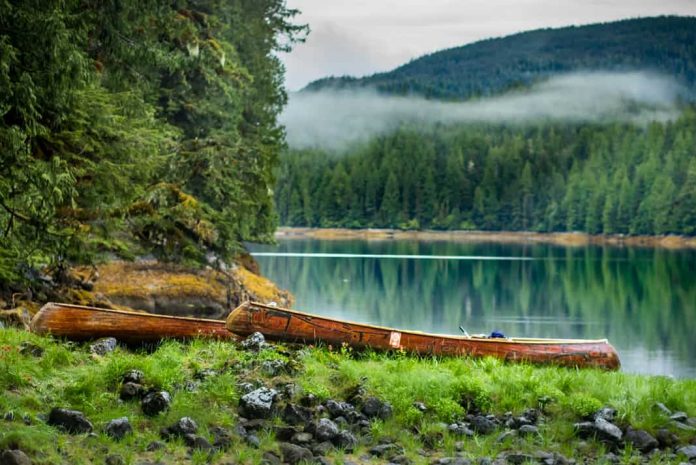
“In 1974, my 20-year-old parents and uncle Andy built their own canoes, launched them into the Pacific, and became some of the first people in modern history to canoe from Washington to Alaska up the Inside Passage,” says filmmaker Nate Dappen.

“My brother and I grew up paddling those wooden canoes in the Virginia rivers and the 1974 adventure became legend in our family. It’s shaped who we’ve become, how we view our parents, and how our parents view themselves,” he adds.  In the summer of 2017, Dappen and his family renovated the original canoes and set out with their parents to complete their 1974 journey. The Passage is a story about the dreams of aging brothers, fathers and sons, and the wild places that define us.

CREDITS:

Director: Nate Dappen
Writers: Nate Dappen, Neil Losin
Producers: Nate Dappen, Neil Losin


About The Director

Nate Dappen co-owns an award-winning documentary production company called Day’s Edge Productions where he specializes in telling stories about science, nature, conservation and adventure. His images, films, books and other projects have been featured by organizations like National Geographic, The Washington Post, Scientific American, The World Wildlife Fund and many others. He was a Collegiate Scholar of the North American Nature Photography Association, am a Fellow National Member of the Explorers Club and an Affiliate Member of the International League of Conservation Photographers. He graduated from the University of Colorado Boulder in 2005 where he studied photography and biology. In 2012, Nate got his PhD in biology before starting Day’s Edge Productions with Neil Losin. Since then, Nate has been a full-time documentary filmmaker. When he’s not on the road, he lives in Ocean Beach San Diego where he spends his free time surfing with his wife, Amanda and hanging out with his two dogs, Moose and Mola.


Go behind the scenes of the film and learn more about the journey in the feature story from the Fall 2018 issue of Paddling Magazine.


Photo: Nate Dappen

Boreal to Barrenlands – Q&A With Crossing Labrador Documentary Filmmaker

On July 15, 2019, a team of four set out in canoes to cross Labrador, one of Canada’s last remaining wilderness frontiers. Their expedition took them through three ecosystems and across two regional heights-of-land for a total of 670 kilometers in 35 days. The team was comprised of Noah Booth, Alex Traynor, Chris Giard and Dave Greene.

Labrador was having one of its rainiest summers on record, meaning the group faced rain 28 of the 35 days, with temperatures averaging 11 degrees Celcius.

Labrador is known for its challenging terrain and relentlessness bugs, but it is also known as having some of the most pristine landscapes in Canada. “There are so many places we got to see that would be national parks if they were closer to civilization,” says Noah Booth of Northern Scavenger.

On March 3, 2020 Noah Booth and Alex Traynor released their documentary, Boreal to Barrenlands – Crossing Labrador, to highlight their trip and followed it up with a video series on their Youtube channel.

Why Labrador?

Noah had been flying into Goose Bay, Labrador quite frequently with work and after seeing the vast wilderness from the sky, he couldn’t help but wonder what it would be like to do a trip in this area. Reading books like Lure of the Labrador Wild by Dillon Wallace and Great Heart by John West Davidson and John Rugge gave the final push to plan a trip here.

How long did it take to prepare for this trip?

We were preparing for more than six months leading up to the trip. Weekly conference calls made sure we were able to divide up tasks among the team and get the information that we needed for this trip. We had a real mix of skill sets on the team and bringing them all together made the perfect team.

I had never done a trip of this length before and I would say one of the most unique things for me was how we divided up food. Each team member prepared nine days worth of food for four guys ensuring each meal had a minimum of 4,000 calories (1,000 per person).

The meal system on the trip was to rotate on a food schedule. You would start by cooking dinner and you would then be on breakfast and lunch the following day. Starting at dinner allowed you to prepare any bannock that you wanted to make for lunch the following day at night to remove the need to have a fire at lunch the following day. When it was your turn on breakfast, you were the first out of the tent in the morning and you would get the fire, breakfast and coffee ready before waking up the rest of the team. Once you completed your cycle, you were off cooking duties for three days.

What was the most challenging aspect of the trip?

The most challenging part of this trip was keeping mentally focused. They physical part of this type of trip can be done by many, but when you layer that with being constantly wet, cold and being swarmed by bugs, it gets really difficult to focus on the tasks and stay positive.

We relied on humor to get us through and sometimes just laughing at how difficult a situation is helps you to get through that moment.

To add to this, we had a lot of challenges you wouldn’t always be able to anticipate going into a trip like this. The first being when Noah got severely sick for seven days to the point where he was barely eating or drinking. Another being when Dave lost a tooth and we were getting worried about an infection setting in, and finally when Chris and I managed to perfectly wrap a canoe around a rock. These three things happened in a span of four days and we managed to capture them all on film.

What was the most challenging aspect of filming on the expedition?

We definitely have a passion for filming that levels close to our passion for doing these remote backcountry trips. It is usually the best footage that ends up being the most difficult to film. That really difficult portage that you are on gets harder when you need to run ahead of the group to get the shot and then run back to get the packs that you left behind.

At the same time, sometimes it is just what you need as a distraction. Going back to how we relied heavily on humor to get us through the tough times, sometimes just knowing that you are going to capture this difficult moment on camera makes it worth getting through.

The final thing I would add is the team dynamics in filming a trip. Not everyone wants to have a camera in their face the whole time, or sometimes filming would hold the group up. I wish I could have caught the number of eye rolls I got while holding the camera on this trip.

How much video did you film versus the runtime of final film?

We ended up with about 33 hours of footage coming out of this trip and we wanted to make sure we made the most of it. This is why we decided to go with both a documentary-style film that recaps our trip in under an hour, as well as an in-depth video series that viewers into the day-in-day-out of this trip. For those that just want to see the highlights of the trip, the documentary is perfect for that audience, but for those who really want to know what it was like, the video series will be the deeper dive.

I once had a friend ask me after a trip, “who has to do the editing?” and I had to explain that Noah and I usually fight over who gets to do it. Having both a documentary and a video series allowed us each to have a project to work out and in the end, provided more content for the viewers.

The editing process takes time and you really need to enjoy doing it. We start by going through every minute of footage looking for all the best audio and video clips and slowly work it down from there. The documentary was a little more difficult because there is so much good footage you need to cut from the finished product. Knowing that the cut footage would still get used in the video series made this part a little easier to accept.

What’s the next adventure?

Our next adventure is still in the works. It definitely won’t be nearly as long, but we are just seeking a good story.

Featured Photo: Alex Traynor (Northern Scavenger)