Home Blog Page 185

Whitewater Safari Near The Zambezi River

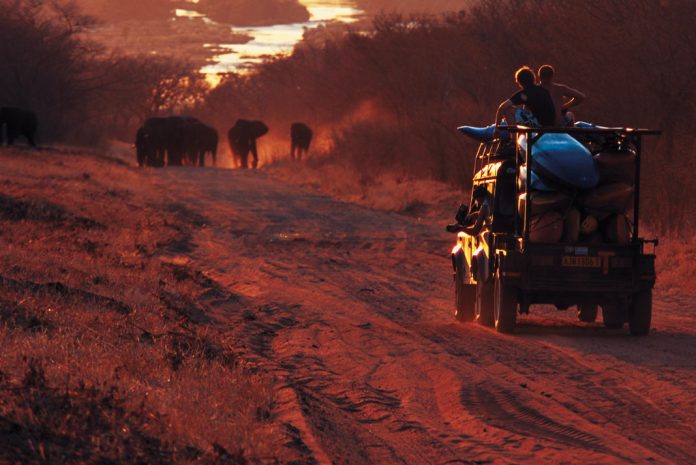
Photo and text by Michael Neumann Near the Zambezi River, Zambia

It was a dream trip. We paddled the Zambezi every day, from rapid Number Three down to Number 23. Every day, for an entire week.

After a day of spectacular high-volume rapids, we relaxed on our shuttle back to our hotel. Even along the Zambezi, an elephant crossing is not so common.

They moved quickly. Too fast for my tripmate and filmmaker Olaf Obsommer, who’s always sleeping like a baby once an engine gets started.

It’s an old picture—probably 2002. I had one of the first digital cameras with me as a second body, but for this shot, I trusted the old-fashioned way.

Film on my good old Fuji Velvia 50. I shot many pictures during my time traveling the world in a kayak, but if I had to pick just one shot from that decade, this picture is it.

Featured Photo: Michael Neumann

Gear Up For Long Miles: 10 Essentials For Your Next Canoeing Epic

PHOTO: Adobe Stock
PHOTO: Adobe Stock

You can’t be mentally prepared for a canoeing epic until you’ve got all the right gear together. The word “epic” can mean different things to different paddlers, but fortunately, aside from a couple of items, most of the packing list is remarkably similar whether you’re paddling away for a four-day weekend or for the summer.

Knowing what gear you need to be comfortable, happy and safe on the water can put your mind at ease. And while it may take a few trips to customize your kit to your liking, some necessities should be on everyone’s packing list. Here are 10 of those essentials for your next canoeing epic.


View this post on Instagram


A post shared by Bending Branches (@bending_branches) on

Expedition Paddle

There’s a lot of thought that goes into choosing your daily power source. Durability is the most critical factor for expedition paddles. Match the blade to the route—if you are bouncing off rocks on a river, look for a burlier paddle design with a reinforced tip and maybe even a fiberglass-reinforced blade. The average tripper takes 25 strokes a minute, so weight quickly becomes a factor. The lighter the paddle, the easier it is on your body to paddle all day, but weight considerations are often secondary to durability in a remote location. Most expedition paddles are made of wood, but there are also options made in carbon and composite blends. Carbon fiber paddles are typically lighter than wood paddles, but also more rigid—which can be hard on joints over time. No matter what you choose as your primary paddle, remember always to pack a spare. Learn more about how to select the perfect paddle here.

[ Find canoe expedition paddles in the Paddling Buyer’s Guide ]


View this post on Instagram


A post shared by Level Six (@levelsix) on

Barrels and Harness

Many trippers think barrels are the ultimate way to pack your gear on a canoe trip. Barrels typically come in 30- or 60-liter sizes, and if you’re on a canoe trip of any serious length you’ll want one. Closed properly, barrels are entirely waterproof—even if they end up in the water and are bashed around a bunch. While big PVC dry bags are a popular alternative to barrels for many trippers, many of these bags don’t remain bone dry inside during a prolonged swim. And it’s only a matter of time until someone—or something—pokes a hole in it.

Not only can you cram lots of gear inside a barrel, but it can protect delicate items, like the loaf of bread you’re saving for day eight. The barrel also gets bonus points for being relatively small-animal proof.

However, even with all those benefits stated, portaging a barrel sucks. If you’re going to do any portaging, you’ll need to put your barrel in a carrying harness. There are many harnesses on the market and it’s worth trying out your options with a packed barrel to get sizing and comfort right. Harnesses range from strictly utilitarian designs with webbing and a bit of padding to backpacker-inspired systems that are thoughtfully designed to help you cover miles in comfort. The most comfortable harnesses may cost you more than the barrel itself, but 10 steps into a three-mile portage all those pennies will feel like money well spent.

[ Find barrels and harnesses in the Paddling Buyer’s Guide ]


View this post on Instagram


A post shared by Gaia GPS (@gaiagps) on

Navigation

In the old days, there was a single choice for navigation: a map and a compass. And today, if you know how to use them, that’s still all you need. Even for those who like to adopt new technologies, a map in a waterproof case is essential to have as a backup so if the batteries die in all your devices or they get waterlogged, you’re not up the creek. Nowadays, the number of electronic devices and gadgets that can keep you on track in the wilderness feels countless. The most affordable option might be downloading an offline mapping app, like Gaia (www.gaiagps.com), to turn your smartphone into a navigation and tracking tool, even in areas without cell phone signal. Or, you can invest in a GPS device. Be sure to look for one that is waterproof, reliable and durable, and get familiar with using it. For lengthy trips, you’ll also want to have some way to charge batteries or carry extra batteries. Whether you choose a time-honored method or a high tech one, be sure to practice using your navigation system before you go.

[ Find navigation tools in the Paddling Buyer’s Guide ]


View this post on Instagram


A post shared by Sea to Summit (@seatosummitgear) on

Medical Kit

Don’t leave home without one. Trippers should always have a fully-stocked wilderness first-aid kit on hand, customized to match the length and hazards of your trip. At the minimum, every fully stocked first-aid kit needs to include items to manage bleeding, burns, wound care, musculoskeletal injuries, drugs to manage common ailments, and any prescription medications. A small reference guide is also valuable. A wilderness first aid course is an excellent investment for anyone spending time in remote areas.

The items included in a kit on an epic canoe trip are not fundamentally different than what a paddler would bring in a weekend first-aid kit, but you’ll likely want more of everything—especially of the most commonly used items, like BandAids and moleskin. Always replace what you take out. Check expiry dates on any medicine regularly and replace when needed. Discover the essentials for your own DIY first aid kit here.

[ Find safety essentials in the Paddling Buyer’s Guide ]


View this post on Instagram


A post shared by Scotty Fishing & Outdoors 🇨🇦🎣🦀 (@scottyproducts) on

Safety Gear

Staying safe on the water is key to having a good time. The law often requires canoeists have a throw bag, a whistle and a PFD. Some regions require paddlers to have a flashlight, a reboarding device and a bilge pump. No matter what the law says you need, having the right equipment for any emergency will bring peace of mind and could save your life. Regardless of where you are paddling, an extra throw bag is always a good idea. For those paddling in whitewater, a helmet, river knife, and pin kit—and the knowledge to use it—are essential. Learn more about safety essentials here.

[ Find safety essentials in the Paddling Buyer’s Guide ]


View this post on Instagram


A post shared by Gorilla Glue (@thegorillagluecompany) on

In-Field Repair Tools & Materials

There’s an old saying, that if it moves and it shouldn’t, use duct tape. If it doesn’t move but should, use WD-40. While the WD may not come in handy on a canoe trip, a roll of good-quality duct tape almost certainly will. As will some zip ties, a good utility knife, and pliers. What you pack in your canoe trip toolbox depends on the tools you’re comfortable using, but something always seems to break on trip. Establishing a general repair kit if a great idea, and should include the items needed to fix a tear in the tent or a hole in an inflatable mattress, as well as the essentials for cleaning a stove. River trippers may opt for some spare bolts to assist with a thwart repair, and Gorilla tape can be used to repair hull damage in a pinch. You can never be prepared for everything, but a robust tool bag, some spare materials and a healthy dose of creativity will go a long way.

[ Find repair tools in the Paddling Buyer’s Guide ]


View this post on Instagram


A post shared by inReach (@delormegps) on

Communication Device

These days you’re never really alone in the wilderness. Satellite communication devices have become so affordable and user-friendly in recent years that many paddlers on long weekend trips in semi-wilderness areas bring them just for the peace of mind they offer. There are a variety of satellite communication devices, which generally fall into either the category of one-way communicators or two-way communicators. One-way communicators allow you to send messages out. This can range from basic communicators like a PLB or EPIRP, which send a distress signal and GPS coordinates if activated, to more versatile devices which can do the same in addition to sending multiple pre-programmed messages, like “All is well.”

Two-way devices can receive communications as well as send them. This allows for a paddler needing help to be much more specific in their request, or even to receive updates on logistics during a longer trip. With the prices of two-way communication devices, like the Delorme InReach and Spot GenX, dropping to just a few hundred dollars plus an annual subscription fee, it’s difficult to justify not having one along.

Guided trips sometimes bring a satellite phone, which is too pricey and bulky for the average personal trip.

Whether you want to text updates your mom along the way or just have the peace of mind of being able to call for emergency assistance, staying safe and in touch has never been easier. These days, the conventional wisdom is if having technology in the backcountry bothers you, leave it in your pack and forget about it—until you need it.

[ Find communication devices in the Paddling Buyer’s Guide ]


View this post on Instagram


A post shared by Level Six (@levelsix) on

Technical Outerwear

Nothing is worse than trying to enjoy the river but constantly worrying about whether you’re going to dump. Immersion gear can be a hefty investment, but a necessary safety item depending on where you’re paddling. Consider water temperature, air temperature and amount of whitewater you’ll encounter. According to the ACA, when paddling where the water temperature is 60 degrees Fahrenheit or colder, a wetsuit is a must and a drysuit is highly recommended. This is also the case if the combined air and water temperatures are below 120 degrees Fahrenheit. Typically, only paddlers on whitewater expeditions and paddling in northern latitudes or during winter will wear a drysuit all trip. Wetsuits are a less comfortable option for adventures on cold rivers and cost about a fifth of the price of a drysuit. Protective technical outerwear for lengthy trips in less frigid temperatures can include splash tops and drytops, paired with a tested layering system.

[ Find technical outerwear in the Paddling Buyer’s Guide ]


View this post on Instagram


A post shared by Sea to Summit (@seatosummitgear) on

Camp Chair

It’s arguable whether a camp chair is essential, but my lower back often tells me it is. After a long day on the water, sitting down to make dinner on a couple of crooked rocks or wet dirt sucks. And when you arrive at camp and everyone else has a camp chair, you’ll regret not bringing your own. There are many lightweight, compact options available—some have three legs, some have four, some are merely padded canvas pads with webbing support. It’s worth thinking about what kind of terrain you’ll be on—giant pebble beaches, sandy shoreline, or muddy bogs—and consider how the legs of your chair will function on the terrain. Whatever chair you choose, it’s a small piece of luxury worth every extra gram.

[ Find camping gear in the Paddling Buyer’s Guide ]


View this post on Instagram


A post shared by Sea to Summit (@seatosummitgear) on

Waterproof Day Bag 

Keeping everything organized is tricky when living in a canoe. There are things you need throughout the day, things you don’t, things that can handle getting a little wet, and things that can’t. Having the right bag for the task often simplifies things. I keep a clear 15-liter dry bag close at hand as a day bag for things I’ll need throughout my paddle, like sunscreen, snacks and a raincoat. With a little forethought when packing in the morning, this means I don’t have to delve into my other packs or my barrel until it’s time to make camp.


[ Find dry bags in the Paddling Buyer’s Guide ]


[ Discover more essentials on the ultimate canoe trip checklist here ]


Learning To Dress for Immersion—The Hard Way

As a United States Coast Guard nonprofit grant recipient, the Water Sports Sports Foundation produces paddling safety outreach materials and distributes them through boating and paddling media providers.

Paddlesports currently has an inordinately high rate of accidents and deaths that for the past five years has been increasing, while power boating stats have been decreasing during the same period.

The goal is to create heightened public awareness of safer paddling, including what to wear kayaking, to make paddlesports safer and ultimately reduce the total number of paddlesports-related deaths annually.


Salty Jefferson talks about dressing for immersion
Image: Water Sports Foundation/YouTube

Speaker 1: What a beautiful lake! You know what else is beautiful?

Speaker 2: What?

Speaker 1: These new jean shorts. I can’t wait to go paddling in them tomorrow!

Speaker 2: They do look stretchy.

Salty Jefferson: I learned that lesson the hard way.

Speaker 2: Paddling legend, Salty Jefferson?

Salty Jefferson: Back in my day, my buddy Dan and I lived in denim. From the pool hall, to the dance floor, to our greatest paddling adventures. One spring day, denim almost did us in. We were paddling a stretch of river we had never been on before, when we suddenly hear a rumble in the distance. Before we knew it we were over the waterfall. I was wearing neoprene underneath my denim. Dan…was not. He died of hyPOTH-ermia that day.

Speaker 2: Hypothermia?

Salty Jefferson: Point is: when you’re on the water, dress to be in the water.

Dress For Immersion, Not Air Temperature
  • Your body loses heat much faster when immersed in cold water than it does when dry.
  • Avoid cotton clothing like t-shirts and jeans; they retain water and accelerate cooling when wet. Synthetic fabrics, or wool, are generally a better choice. If the water is very cold (60° fahrenheit or less), you should wear a wetsuit or drysuit.


10 Tips To Survive On A Family Canoe Trip

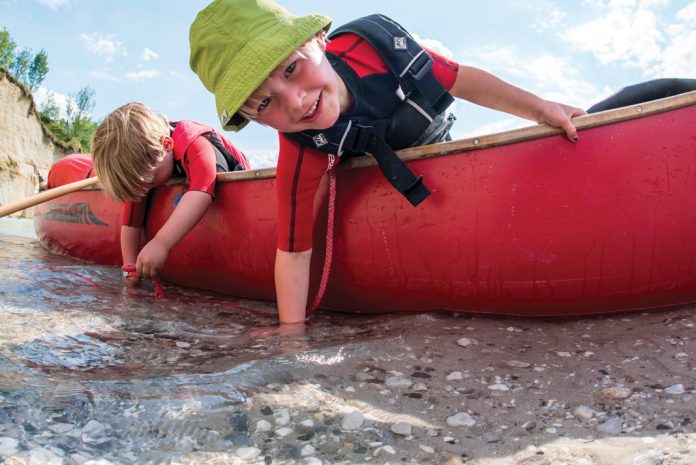
two kids in a canoe that has been beached playing with the water underneath them
Thou shalt not squeal. | Photo: Michael Neumann

The logistics were uncomplicated, the distance short, the lake paddling easy, and the views stunning—our two-family, canoe-camping trip in Grand Teton National Park seemed like a masterstroke of family adventure engineering. By that first afternoon, though, I was plucking leeches out from between my screaming six-year-old daughter’s toes.

Parents who love the outdoors quickly learn a maxim about parenting outside: Everything gets harder—but not impossible. Use these 10 tips to nurture your kids’ passion for the outdoors while sharing your favorite pastime.

1. Moderate your canoe trip goals

Whether getting to your destination or setting up camp, managing young kids doubles the time required to get anything done.

Especially on your maiden voyage, plan short distances. Think five kilometers and no portages. This gives you an easy exit if the weather (or everything) goes south. Slowly increase mileage and difficulty.

2. PFD mandatory

Most states require lifejackets on kids by law when on water, but it’s also a smart safety protocol to wear PFDs whenever playing near or at the water’s edge. The best way to encourage this behavior is to model it yourself.

3. Canoe to someplace really cool

Imagine how differently a child will react to having to sit still on a monotonous paddle across a big lake, versus exploring hidden coves and nosing the canoe up to the pool at the base of a waterfall.

Play to what excites your kids—they’re more interested in swimming, games and splashing around in a frog-filled swamp than appreciating a scenic vista.

4. Keep canoe trip essentials handy

Organize your boat with snacks, drinks, sunblock, and sun hats, clothing layers, bug repellent, umbrellas, games, fishing poles and super-soaker squirt guns that are quickly accessible in a dry box or cooler.

5. Feed the kids

When kids are unhappy outdoors, 99 percent of the time, they’re just hungry. Watch kids for cues like grumpiness, silence and glassy stares.

If not hanger, the other most likely culprits are being thirsty, tired, too hot or too cold.

6. Designate a safe zone

Before releasing kids to run wild at a campsite, an experienced adult should scout for hazards like snakes and poison ivy and mark a boundary the kids must stay within.

On a five-day, family sea-kayaking trip in Glacier Bay, we quickly abandoned one potential camp after finding fresh brown bear tracks and scat. Explain the safety rules to kids at the outset.

7. Put ‘em to work

Having children help with age-appropriate tasks, like pitching tents, paddling and building a campfire, can excite them and make them feel more invested in the activity.

With supervision, they can do it safely, and you’ll teach them a skill they can take off your hands next time.

8. Freedom to roam

On our Tetons canoe trip, the kids—ranging in age from four to eight—wanted to take canoes paddling on their own. So we let them. Crazy? No. We kept a couple of boats on shore in case we needed to reach the kids quickly, and let them paddle on flat lakewater on a windless evening, wearing their PFDs. They didn’t care that they were less than 100 feet away; they had a blast paddling in circles.

9. Bring a friend on the family canoe trip

Especially with teenagers, bringing a friend keeps them (read: everyone) happier. The hidden benefit for parents: It’s not cool to whine about anything in front of your friends.

10. Promise a reward

Who doesn’t look forward to a favorite dinner or an ice cream post-trip? Let the kids know what awaits them if they’re cooperative on the trip’s last day, and you’ll have a loyal crew for the journey back to civilization.

Michael Lanza’s family has paddled flatwater and whitewater all over the U.S. Lanza writes about his adventures at www.thebigoutside.com and in his book Before They’re Gone—A Family’s Year-Long Quest to Explore America’s Most Endangered National Parks.

Nouria Newman’s Scary Experience On Solo Expedition In India

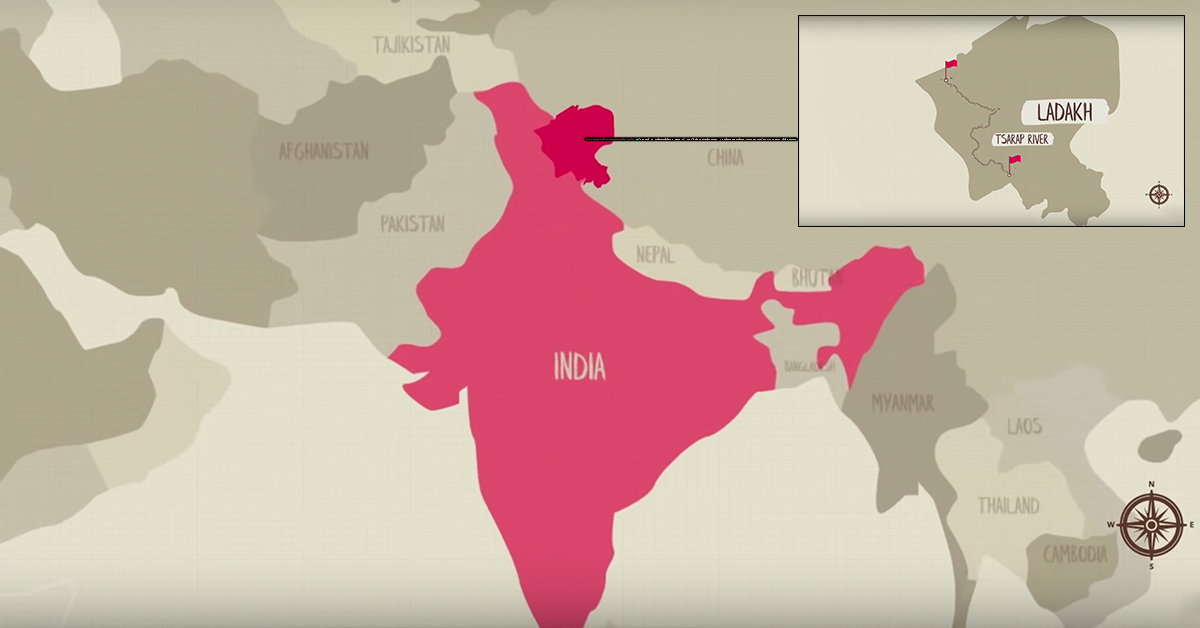
In 2018, kayaking world champion Nouria Newman set out on a solo kayak expedition in the Ladakh region of India. On this trip, she paddled the Indus River, one of the mightiest rivers in Asia, which travels through one of the most scarcely populated regions.

After getting a ride in on some sketchy mountain roads, she is dropped off at a put-in to the Tsarap River. She is now alone and ready to start her seven-day journey downstream.

Map of Newman’s route for her solo expedition in India | Photo: Courtesy of Red Bull

Her first day went smoothly and she was enjoying her time in these isolated regions, finding an abandoned village that she turned into her camp for the evening.

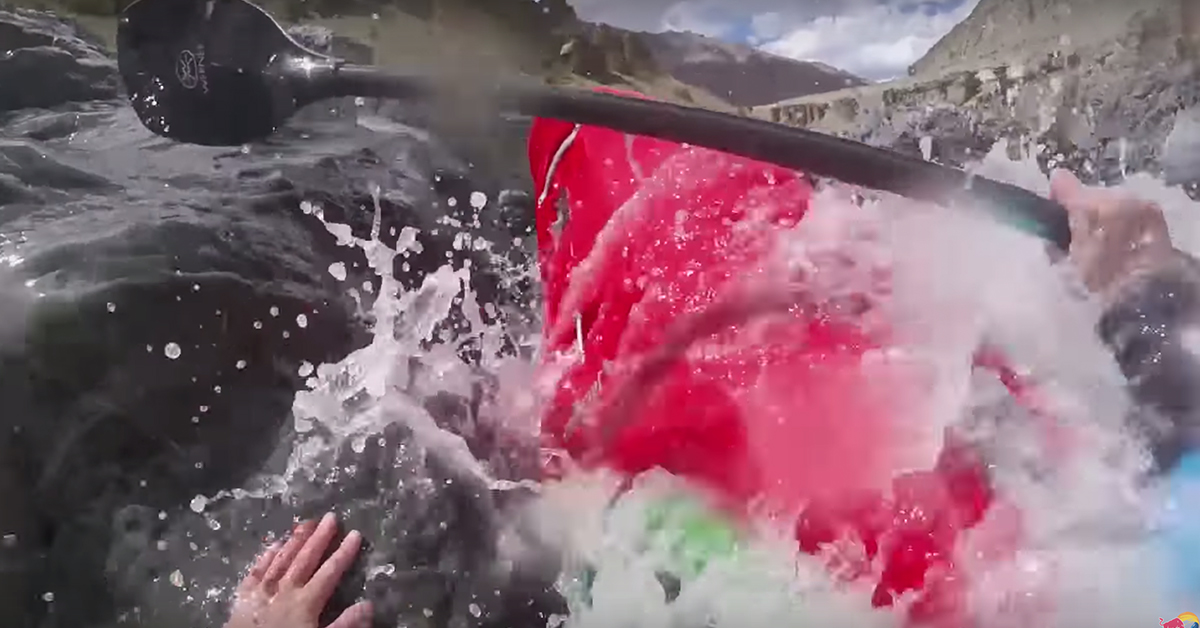
Day two was where things started to get interesting. The river started to pick up and Newman found herself in some larger sets of rapids. Partway down one of the larger sets, she gets pinned on a rock forcing her to exit her boat.

Nouria Newman pinned on a rock in India
Nouria Newman is pinned on a rock on her solo trip in India | Photo: Courtesy of Red Bull

After what appears to be a struggle to stay above the water while exiting her boat, she frees herself and floats downriver chasing after her kayak.

Nouria admits in the video she did not scout that set of rapids which is what caused her to get into this situation. She says she knows she was lucky to make it out of that alive. After collecting all of her gear from the river she says “I’m cold, I’m scared, it’s time to keep going.”

After getting back on the river, she enjoys the remainder of her paddle downstream. She is thankful when the local hiking trails appear back along the side of the river. An added comfort despite the lack of people in the area.

At the end of her expedition, she had covered a total distance of 375 kilometers, paddling three different rivers, including the Tsarap River, Zanskar River, and Indus River, finishing in Baima Village.

A 27-Hour, Non-Stop Sea Kayak Expedition From Cuba To Florida

Three paddlers
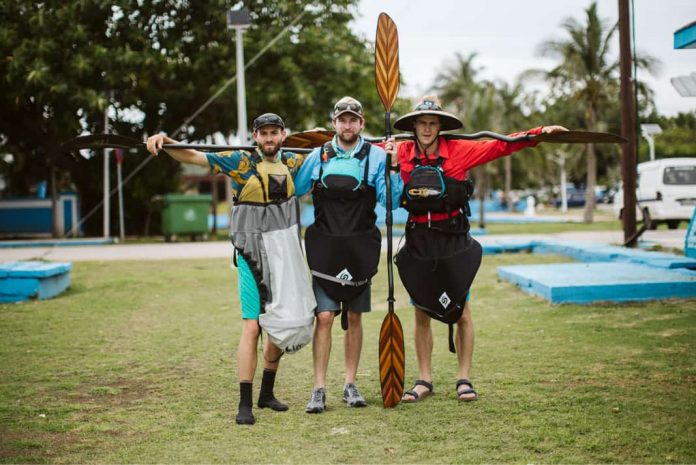
American filmmakers Andy Cochrane, Luke Walker and Wyatt Roscoe followed in the wake of Cuban refugees across the Straits of Florida in 2018. | Photo: Johnie Gall

More than 200 kilometers of open water comprise the Straits of Florida between Cuba and Key West—a long, dangerous crossing for a few adventurous sea kayakers, much less the untold number of asylum-seekers who have made desperate attempts at freedom in homemade rafts. In May 2018, American filmmakers Wyatt Roscoe, Luke Walker and Andy Cochrane sought “the rare chance to experience what so many Cuban refugees had endured before us.”

Their short documentary, The Crossing, captures a grueling 27-hour, non-stop expedition from Cuba to Florida in single sea kayaks. It also sheds light on yet another politically charged segment of the southern border of the United States.

“The entire purpose of the trip was to learn,” says Cochrane, 31. “We could go paddle anywhere, but this crossing has huge historical significance because of the thousands of refugees. Our paddle was just an attempt to learn what we could about what others have done before us.”

Research included visiting the Mel Fisher Maritime Museum in Key West, Florida, whose collection of jury-rigged rafts put Roscoe, Walker and Cochrane’s adventure in stark perspective. The paddlers also hired endurance athlete Magda Boulet to prepare for the crossing; training consisted of lifting weights, paddling, running and adjusting diets and sleep regimes. “It paid off a ton,” notes Cochrane.

The key piece in producing an enlightening documentary was reaching out to Cuban-Americans in Miami and Atlanta. Mirtha Abel, a Miami-based U.S. citizen who arrived from Cuba in 1961, called the filmmakers’ expedition “a little bit crazy.” Meanwhile, Osmel Gonzales described his harrowing escape from Cuba in 1995 atop a minuscule piece of plywood and foam. Gonzales and three others capsized on their second day on the water, before ultimately being rescued 80 kilometers from Key West. In the film, the Atlanta resident speaks of “leaving your world behind and you know you may die.”

After sailing from Florida to Havana (something Cochrane notes has become more difficult for Americans due to recent restrictions imposed by President Trump), the paddlers waited out a tropical storm before launching. Soon into the crossing, they faced four-meter breaking seas. The wind and waves put the paddlers out of contact with their support vessel—and often at risk of separation from each other. “There was a fair amount of puking and managing big waves,” admits Cochrane. “It’s the hardest thing I’ve ever done.”

Like any long-distance challenge, Cochrane says the crossing was primarily mentally taxing. “You just put your head down and try to forget how much everything hurts,” he says. “Our bodies can do amazing things if we can push our minds past a few barriers.”

[ Plan your next paddling adventure with the Paddling Trip Guide ]

Like any critical investigation of refugees and immigrants, The Crossing attempted to tackle a big, pressing question: What is the human cost of closed borders? The documentary does not offer a definitive response. However, much is written between the lines.

“I don’t have an empirical answer,” says Cochrane. “But the real answer is anything more than zero is absolutely tragic. Closing borders to people in need of a safe home is inhumane, as far as I’m concerned. We met with refugees and paddled the Straits ourselves, to learn this first hand.”

[ DIGITAL EXTRA: Watch a trailer for The Crossing ]

American filmmakers Andy Cochrane, Luke Walker and Wyatt Roscoe followed in the wake of Cuban refugees across the Straits of Florida in 2018. | Photo: Johnie Gall

Learning To Use A SUP Leash—The Hard Way

As a United Stated Coast Guard nonprofit grant recipient, the Water Sports Sports Foundation produces paddling safety outreach materials and distributes them through boating and paddling media providers.

Paddlesports currently has an inordinately high rate of accidents and deaths that for the past five years has been increasing, while power boating stats have been decreasing during the same period.

The goal is to create heightened public awareness of safer paddling making paddlesports safer and to ultimately reduce the total number of paddlesports-related deaths annually.


Salty Jefferson talks about using a SUP leash
Image: Water Sports Foundation/YouTube

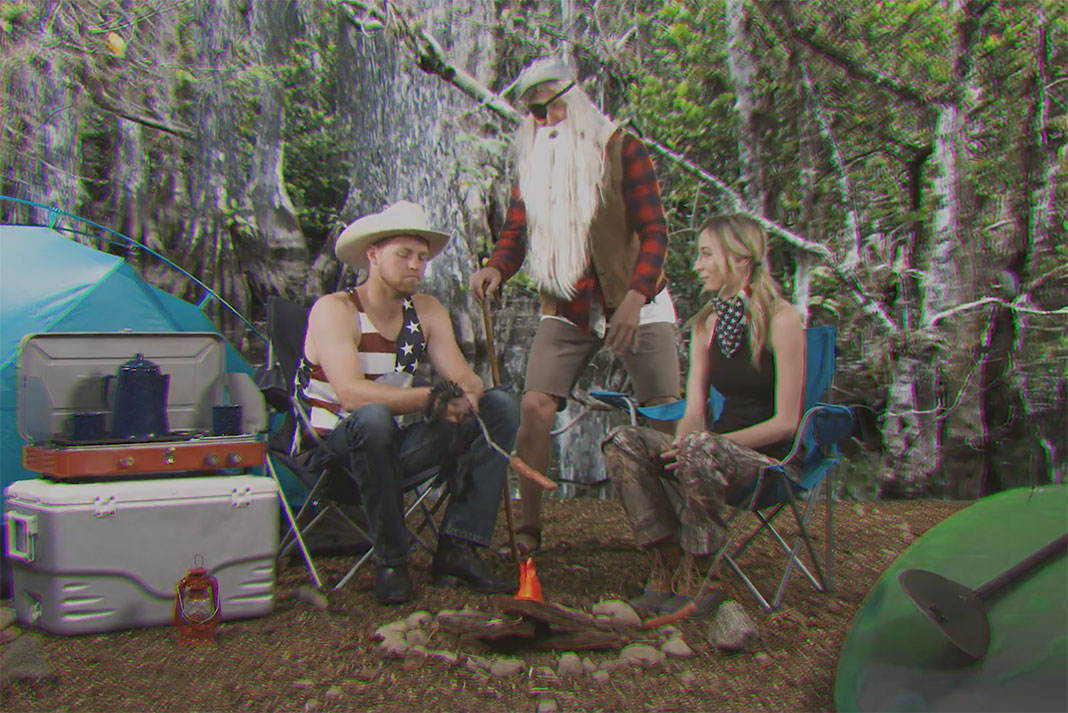
Speaker 1: I love America, you know. I love my hot dogs. I love my freedoms. I love paddling my SUP without a leash wherever I want to go.

Speaker 2: Really? Paddling without a leash?

Salty Jefferson: I learned that lesson the hard way.

Speaker 2: Paddling legend, Salty Jefferson?

Salty Jefferson: So there I was downwind standup paddling with my buddy Haird Lamilton. Haird wasn’t wearing a leash. Suddenly a whale surfaced underneath him. Being the waterman that he was Haird rode right up on the whale’s back like he was riding the rail on a snowboard. He didn’t stick the landing, though, and his board flew away in the wind. Never saw him again! Part of freedom is being alive to enjoy it. Always wear your leash.

Wear The Appropriate Leash When Stand Up Paddleboarding
  • Always wear a leash on open bodies of water like lakes, bays, and oceans. Due to the risk of snags and entrapment, leashes should only be worn on rivers if they include a quick release attached to your life jacket.


Best Kayaking In Michigan

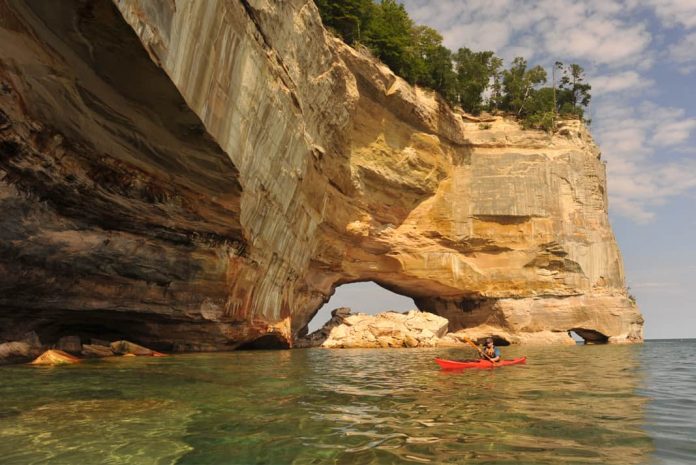
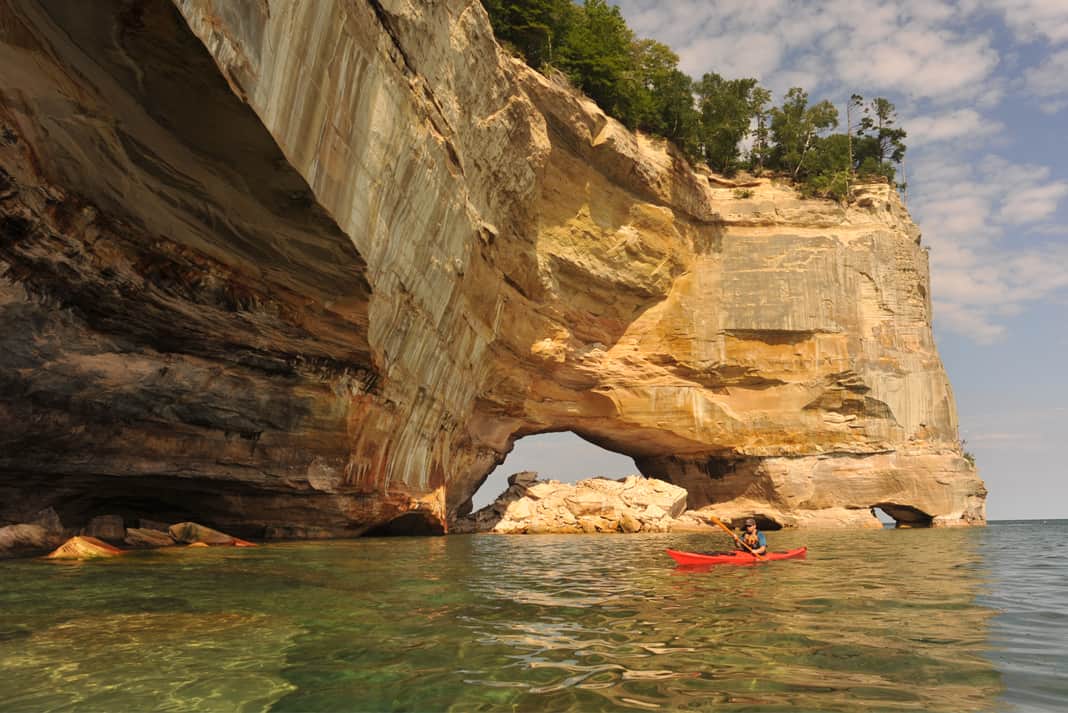
Lake Superior in Pictured Rocks, Michigan
Wild beauty on the Lake Superior shore. Photo: Virginia Marshall

Stretching more than 40 miles between the Upper Peninsula towns of Munising and Grand Marais, Pictured Rocks National Lakeshore protects a narrow corridor of jaw-dropping Lake Superior coastline. In the southern end of the reserve, 15 miles of spectacular, mineral-stained sandstone cliffs rise 50–200 feet above the lake, forming immense curtains and arches of colorful rock.

No surprise, then, that this section sees the lion’s share of park visitors—over 800,000 in 2018. Many arrive by powerboat, either on multi-deck tour ships or ubiquitous pontoon boats rented from area marinas. But on a calm day, paddlecraft provide a far more intimate perspective of the coast’s hidden sea stacks, caves, portals and passages.

[ See the largest selection of boats and gear in the Paddling Buyer’s Guide ]

Use good judgment and get a marine weather forecast before heading out on Superior. Strong winds, cold water and wakes from boat traffic can create hazardous conditions for paddlers.

Sheer cliffs amplify and confuse wave patterns, and make it impossible to get off the water in many places. In general, early morning offers the calmest conditions.

Where to Go

Best kayaking Michigan
Wild beauty on the Lake Superior shore. Photo: Virginia Marshall

If You Want to go guided

Joining a boat shuttle-assisted tour allows you to see the park’s most superlative sights in a single day. Munising-based outfitter, Paddling Michigan, offers a guided kayak-and-hike experience that includes 14 miles of coastal paddling, taking in Bridalveil Falls, Lover’s Leap Arch, Grand Portal Point, Chapel Rock and Spray Falls. The eight-hour tour includes picnic lunch at Mosquito Beach and finishes with a three-mile hike out from remote Chapel Beach, where kayaks are picked up by barge.

[ Plan your next paddling trip with the Paddling Trip Guide ]

For a less strenuous tour of the highlights with just five miles of paddling, Pictured Rocks Kayaking water launches guests from a dedicated mothership.

If you’re Into beaches

Pictured Rocks has no shortage of sandy shoreline—in fact, Twelvemile Beach and the Grand Sable Dunes dominate the lightly visited coastline beyond the cliffs. Put-in at Twelvemile Campground to explore the vast sand-and-pebble strand to the south. Land on the beach and follow short trails inland to a series of kettle lakes, remnants of vanished glaciers.

If you Want to paddle into the sunset

The Pictured Rocks’ vibrant color palette comes alive in the evening sun. Launch from Miner’s Beach picnic area and paddle 3.5 miles up the coast to Mosquito Beach. Leave ample time to stretch your legs at this quiet spot, then return southwest along the ochre cliffs with the sun setting behind Grand Island.

Wild beauty on the Lake Superior shore. | Photo: Virginia Marshall

Trips: Kayak In Lake Tahoe, California & Nevada

Hot Spots - Lake Tahoe, California & Nevada
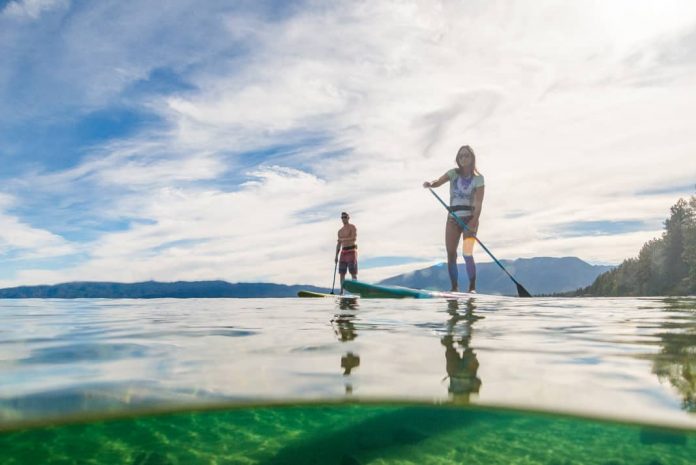
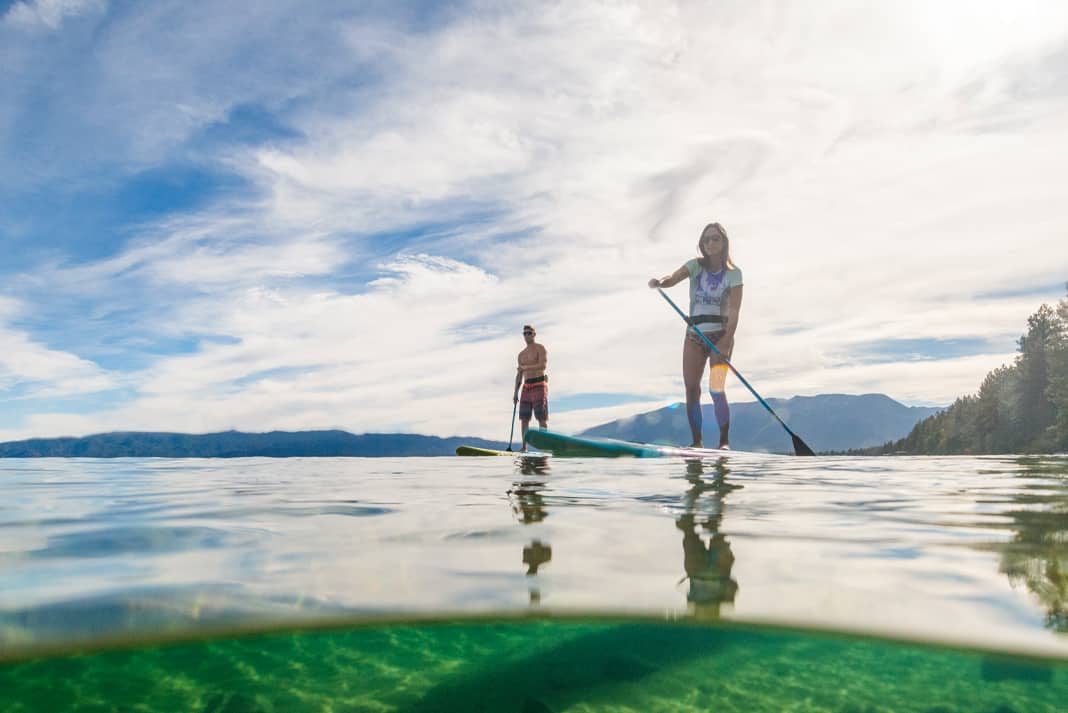
Lake Tahoe is the largest alpine lake in North America. | Photo: Richid Dahnoun/Lake Tahoe Visitors Authority

Can’t decide between mountains and beaches? Perched at an elevation of 6,225 feet, Lake Tahoe delivers an abundance of both, with a chill West Coast vibe and plenty of superb paddling thrown in for good measure.

Cradled amid the snowy peaks of the Sierra Nevada, the pine-scented shores and clear, cobalt waters of the world’s second-largest alpine lake have long attracted visitors seeking year-round relaxation and adventure. In 1872, widely traveled American humorist, Mark Twain, declared Lake Tahoe, “the fairest picture the whole earth affords.”

[ Plan your next paddling adventure with the Paddling Trip Guide ]

Evidence of Tahoe’s special appeal for kayakers and paddleboarders is apparent in the scores of outfitters, guides and rental shops that have sprouted around the lake. Each side of this dazzling blue jewel offers a different experience.

South Lake Tahoe boasts splendid sand beaches, while the North Shore features scenic, boulder-strewn bays and breathtaking mountain vistas. Head to Nevada’s pristine East Shore for Tahoe’s longest undeveloped coastline.

Where to Go

Hot Spots - Lake Tahoe, California & Nevada
Lake Tahoe is the largest alpine lake in North America. | Photo: Richid Dahnoun/Lake Tahoe Visitors Authority

If you Want to paddle and dine

Rent boards and boats (or bring your own) and launch at Waterman’s Landing, a hip collective in Carnelian Bay on the North Shore that operates a beachside café as well as paddle education programs and a racing series.

Tour east along bustling King’s Beach and glide among the water-worn rocks in Crystal Bay, then return to the Landing (seven to eight miles round-trip) to sample their tasty lunch menu, organic coffee and local microbrews.

If you’re Into beaches

Three National Forest Service beaches in South Lake Tahoe offer soft sands, panoramic views and convenient access and amenities for paddlers. Pitch a tent at Nevada Beach’s popular campground, or explore the bird-filled marshes of the Upper Truckee River from Pope Beach. Launching from Baldwin Beach provides the closest boat access to beautiful Emerald Bay.

Allow a full day for the eight-mile round-trip, including a waterfall hike, stop at Fannette Island and tour of the century-old, Scandinavian-style Vikingsholm mansion. Kayak Tahoe (www.kayaktahoe.com) offers rentals and route suggestions at all three beaches.

If you Want to paddle into the sunset

For spectacular sunsets—and one of the prettiest places in all of Tahoe—head to Sand Harbor State Park on the northeast shore and slip into the crystalline shallows. Here, a rocky point embraces crescents of golden sand and tranquil bays sprinkled with polished granite boulders.

Arrive early and paddle south along miles of stunning coastline, with Insta-worthy sights around every point, including Bonsai Rock and Secret Cove. Find your own rock garden and watch the sun descend behind the Sierras across the lake.

Lake Tahoe is the largest alpine lake in North America. | Photo: Richid Dahnoun/Lake Tahoe Visitors Authority

Trips: Kayak in Boston, Massachusetts

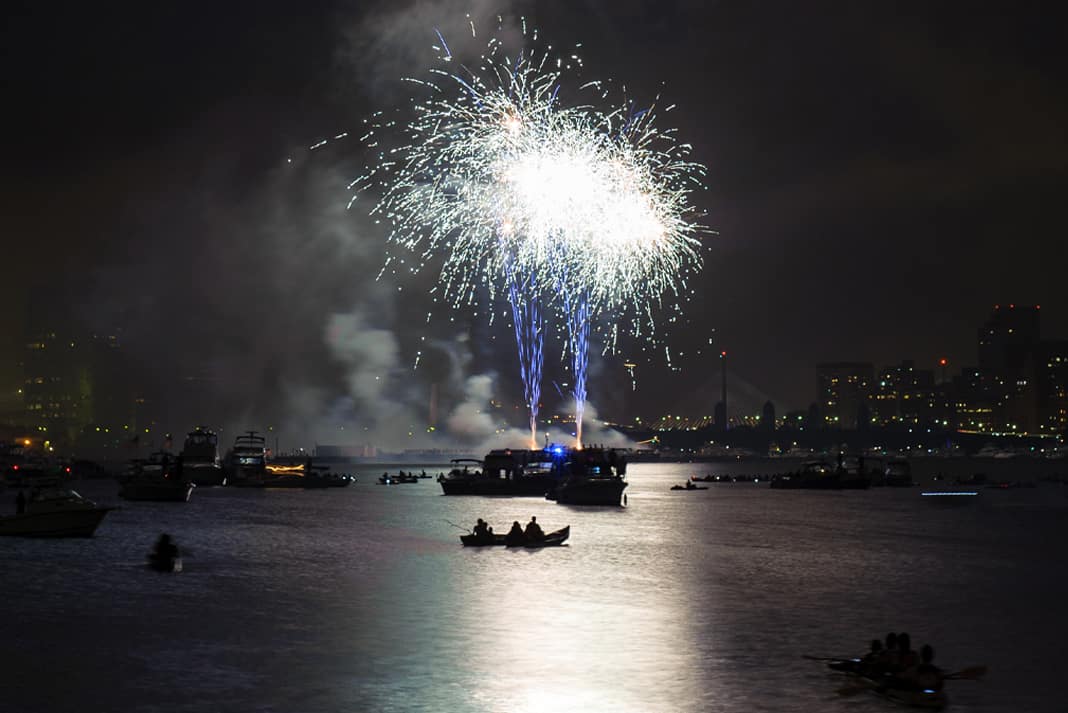
Kayakers and boaters enjoy the Fourth of July fireworks display on the the Boston Harbor.
Kayakers and boaters enjoy the Fourth of July fireworks display on the the Boston Harbor. | Photo: istockphoto.com/ Jesse James Photography

With more than 4.6 million inhabitants and the oldest continually active seaport in the Western Hemisphere, the Greater Boston area wouldn’t sound like an obvious place to get away from it all in a sea kayak,” writes New England guidebook author and veteran paddler, Michael Daugherty.

And yet it’s possible to do just that.

Among the rugged, offshore outposts of Boston Harbor Islands National Recreation Area, experienced kayakers can tour America’s second-oldest working lighthouse and even pitch a tent within sight of the city’s skyscrapers.

Paddlers seeking a more intimate view of central Boston’s vibrant waterfront neighborhoods should explore the diverse shoreline of the Charles River Basin.

The Basin and its leafy park esplanades are remarkable examples of early urban recreational planning, created in 1910 by damming the formerly tidal river and permanently flooding its marshes and mud flats.

[ Plan your next paddling adventure with the Paddling Trip Guide ]

Today, the Charles is beloved by Bostonians and plays host to an annual canoe, paddleboard and kayak race; dragon boat festival; and rowing regatta, as well as a year-round community of fitness paddlers.

Where to Go

Kayakers and boaters enjoy the Fourth of July fireworks display on the the Boston Harbor.
Kayakers and boaters enjoy the Fourth of July fireworks display on the Boston Harbor. | Photo: istockphoto.com/ Jesse James Photography

If you Want to go guided

Join Charles River Canoe & Kayak (www.paddleboston.com) for an entertaining and educational tour of Boston Harbor, departing from the Cambridge side of the river and including a voyage through the Charles River Locks.

Their four-hour kayak tour visits the Charlestown Navy Yard and Fort Point Channel, finishing off with a tasty meal on the wharf at the open-air Barking Crab Restaurant. Paddleboarders can opt for two-hour skyline trips on the Lower Basin.

If you Want to paddle like a local

Tour the Charles River Basin between Herter Park and the Esplanade, a section known for its quintessential skyline views and passionate paddling community.

[ View the largest selection of boats and gear in the Paddling Buyer’s Guide ]

Verdant parks border both sides of this five-mile stretch; while just beyond, Back Bay’s orderly columns of exquisitely preserved Victorian Brownstones march to the foot of Beacon Hill and its gold-domed State House.

If you’re visiting on the 4th of July, join the paddle-wielding throngs for a front-row seat to Boston’s famous fireworks display.

If you’re Looking for adventure

Plan a day-trip or overnight journey among the 34 islands and peninsulas making up the Boston Harbor Islands Recreation Area. A 14-mile round-trip from Hull will get you to the wild and dramatic shorelines, remote campsites and open ocean vistas of the rocky Outer Islands.

Exposure and challenging tidal currents make this a trip for experienced paddlers only. Shorter trips to the more sheltered Inner Islands depart from Hingham Harbor or South Boston’s City Point Park.

Kayakers and boaters enjoy the Fourth of July fireworks display on the Boston Harbor. | Photo: istockphoto.com/ Jesse James Photography