Home Blog Page 223

Fit To Be Tied: The History & Significance Of Voyageur Sashes

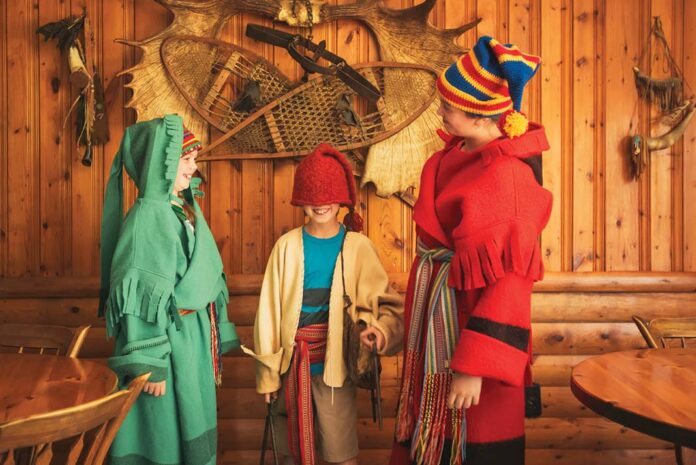
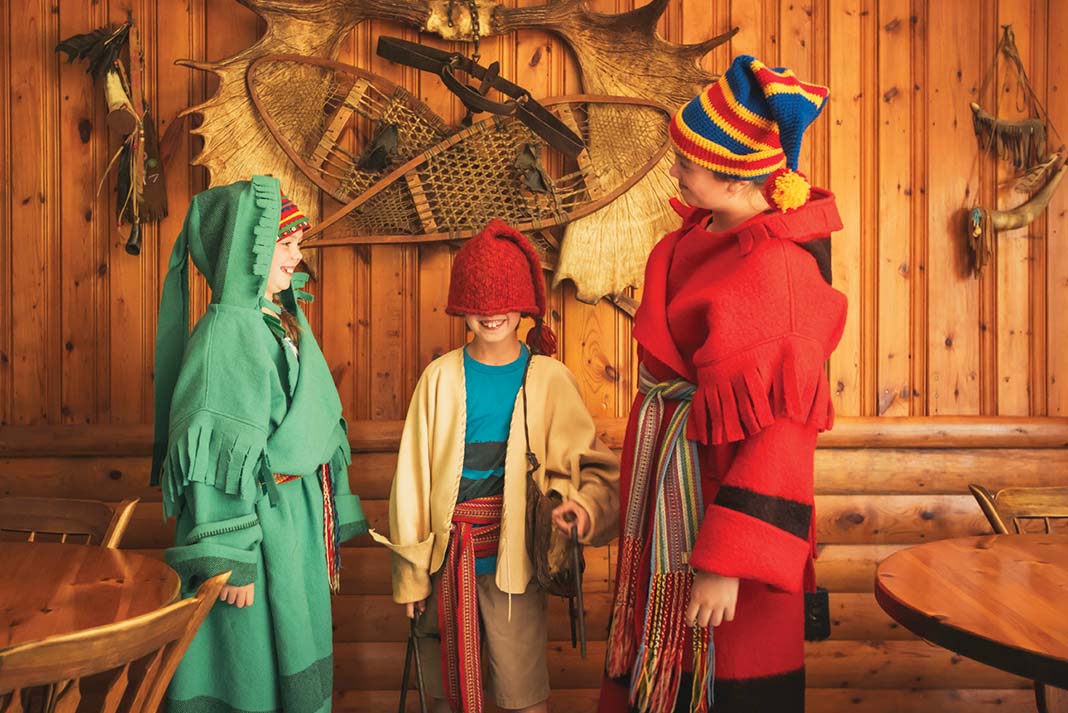
three children inside a wood cabin laugh as they dress up in colorful voyageur sashes
Chiropractors would have hated them. | Feature photo: Goh Iromoto/Ontario Tourism

I have traveled across the country, from coast to coast, and I’m always amazed at how people get themselves tangled up in their voyageur sashes. Also called a ceinture fléchée, the sash was worn by members of the North West and Hudson Bay companies during the fur trade. Today the sash remains an important cultural symbol for the Metis people. From its practical past to its decorative uses today, properly wearing a sash is simple—but how to tie it depends on your purpose.

The history and significance of the voyageur sash

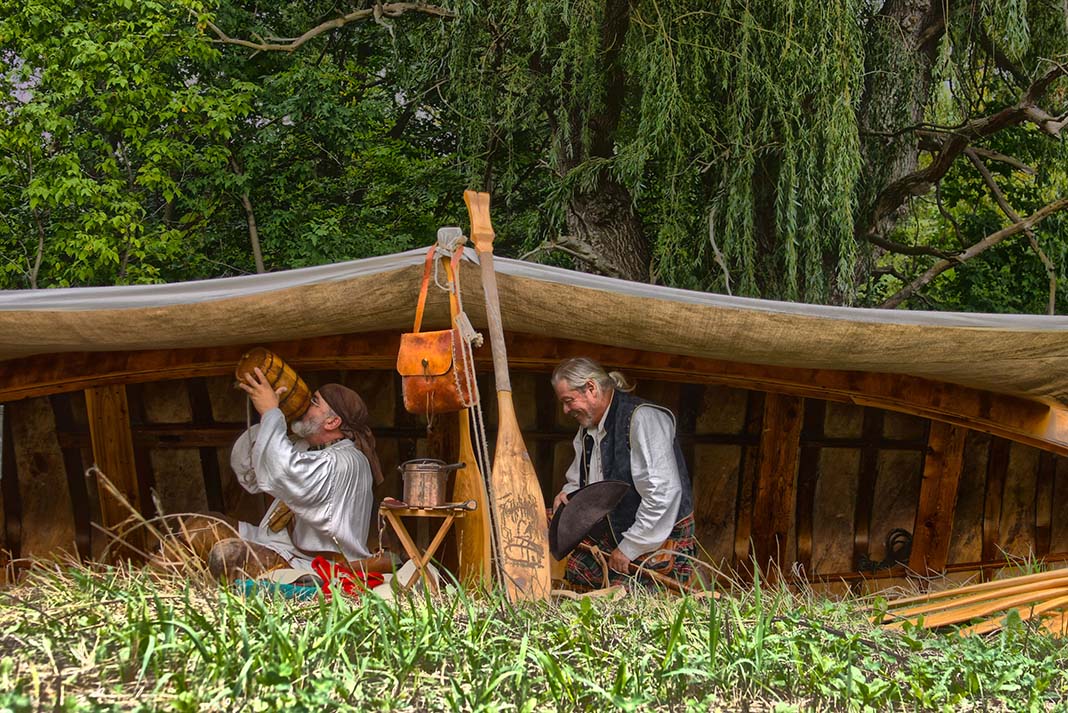
For the voyageur paddling and portaging from ice-out to ice-in, the sash was a functional item to help cope with the physical stress of the job. For this reason, the voyageur would wear a sash that was at least eight inches wide and 12 feet long.

To wear this sash with historical accuracy, the sash should sit high on the waist, set between the top of the pelvis and the bottom of the ribs. Wrap the sash around the belly two to three times. The sash should be tight to support the lower back—voyageurs regularly tumped hundreds of pounds of furs and supplies down portage trails and along shorelines. When the sash is tied in this way it acts like a rudimentary weightlifting belt, and a voyageur’s back can take many more hours of paddling and lift gear with less chance of injury. Just don’t tell your chiropractor I said so.

Chiropractors would have hated them. | Feature photo: Goh Iromoto/Ontario Tourism

Once wrapped tightly around the waist, the sash is tied securely by the fringe in front of the body. The remainder of the long fringe should hang between the legs, but it should not hang lower than the knees. Tie it tightly with a simple double knot. Sorry, no fancy knot work here.

In most paintings that depict voyageurs and in photos of modern recreationists, you’ll see the sash worn in a decorative style. This style is tied to show off its beauty during dancing or for a special event rather than for supportive purposes.

When worn in this way, the wearer wants the length of the sash to fall alongside his body to flash its colors. Only wrap the sash once around the waist. When an eight-foot-long sash is worn this way, much drapes down over the knees, with fringes brushing the ankles that bounce with the movement of dance.

5 unlikely uses for a voyageur sash

  1. Holding your capot (jacket) closed, and as a belt to hold up loose-fitting pants.
  2. A storage pocket for snacks, especially cheeses.
  3. The sash can provide extra support and hold in a hernia during weight-bearing exercises—not doctor recommended.
  4. Multi-purpose rope.
  5. Record keeping. Since many voyageurs were illiterate and couldn’t keep written records, they might tie five knots in the fringe of their sash to indicate a $5 debt owed. Or, a trapper would tell his family he’d be back in 10 days, and then tie 10 knots in his fringe and remove one every day. When his knots were done it was time to come back home.
[ Browse the widest selection of boats and gear in the Paddling Buyer’s Guide ]

Miguel Vielfaure is the owner of Étchiboy, a Manitoba-based company that weaves sashes, and a regular at the annual Festival du Voyageur.

Cover of the Spring 2017 issue of Canoeroots MagazineThis article was first published in the Spring 2017 issue of Canoeroots Magazine. Subscribe to Paddling Magazine’s print and digital editions, or browse the archives.


Chiropractors would have hated them. | Feature photo: Goh Iromoto/Ontario Tourism


Land Before Time

FINDING PALEOZOIC PLEASURE IN THE PATHLESS WOODS. | PHOTO: PETER MATHE

The world’s very first trails are found in a cave on Mistaken Point in Newfoundland. In keeping with the sentiments of those who named the peninsula, they’re not what you expect.

More than 565 million years ago, a soft-bodied, jelly-like sea creature did something that had never been done before. It stretched. Then it scrunched. And in doing so, it moved itself just a few millimeters across the ocean floor.

To call the Ediacarans a kingdom of trailblazers wouldn’t be entirely correct, according to Robert Moor, author of On Trails. His book is as much love-letter to footpaths of the planet, as it is a meditation on the nature of existence. Traces might be a preferable term for the half-moon prints preserved in ancient ash on Mistaken Point. You and I would likely mistake them for scuffs.

Yet, these marks rocked the world of evolutionary biologists. The fossils represent the first time life began in one spot and struck out for another. Why did animal life move in the first place, Moor asks. What was it seeking?

It’s upon this unknowable, abstract nugget that my mind settled while huffing along the 2,350-meter Hell’s Canyon portage on the Missinaibi River. The double-carry gave me a combined total of seven kilometers to swat horse flies, and contemplate the origin of the tidy thread carving a path through the encroaching chaos of deadfall and scraggy pine.

FINDING PALEOZOIC PLEASURE IN THE PATHLESS WOODS.
| PHOTO: PETER MATHE

This portage was sketched out first (as many as 2,000 years ago) by the James Bay Cree to connect the James Bay Basin to Lake Superior, 750 kilometers distance. When Europeans went north in the 18th and 19th centuries seeking furs, they followed the same paths of least resistance around the many falls and rapids. In the late summer of 2016, so did we.

For 11 days we followed by foot and paddle, tracing a thin blue line 300 kilometers north to Moosonee. More than 1,000 canoeists paddle the Missinaibi each year, but we saw only one other boat. In the isolation of our Old Town Appalachian we felt like we were one of the first explorers here—despite the orderly portages’ clear evidence to the contrary.

“We are inheritors of that line but also its pioneers,” writes Moor. “Every step we push forward into the unknown, following the path, and leaving a trail.”

That feeling of being both follower and explorer is a sentiment every wilderness canoeist can relate to.

Since Ediacarans first moved themselves all those millions of years ago, all manner of life on land has created trails. From the tiniest insects to the largest mammals, to humans, who have changed entire landscapes and ecosystems with our trail building. Whether made in the search for resources or safety, those trails guide us, offering a collective wisdom through the otherwise pathless woods. Yet, nothing new is explored by staying on trail.

The dense softwood forest and bog land squeezing the blue ribbon of the Missinaibi River on its journey north has the feel of a place primordial and unchanged.

That same evening I follow a game trail that leads away from our gravel bar campsite and into the forest. On the river, the path is clear, but here the trail soon disappears in a snarl of boughs and deadfall. I check the map, take a bearing on my compass and set off.

The trail points the way, but can only take us so far. Then, just like the Ediacarans, we explore on our own.

After five years at the helm, the Spring 2017 issue was Kaydi Pyette’s final issue with Canoeroots.


This article originally appeared in Canoeroots
 Spring 2017 issue.

Subscribe to Paddling Magazine and get 25 years of digital magazine archives including our legacy titles: Rapid, Adventure Kayak and Canoeroots.

Calling For Help

Calling For Help | Safer Paddling Series: Episode 8 | Rapid Media

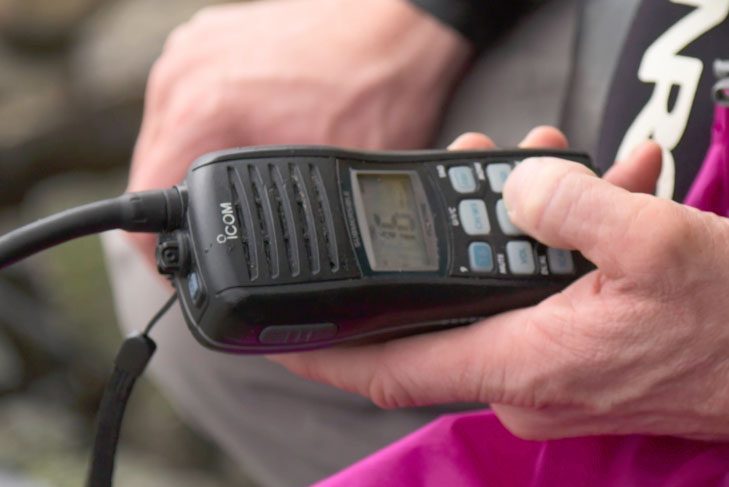
In partnership with the U.S. Coastguard and the Water Sports Foundation, instructors Paul and Kate Kuthe of the American Canoeing Association teach proper radio protocol for emergencies on the water in Safer Paddling Series: Episode 8.


Knowing how to properly call for help is crucial to your safety on the water.

1Turn your VHF radio to channel 16.

To call the coast guard or any other boat during an emergency, turn your VHF radio to channel 16.

Channel 16 on a VHF radio will connect you with the coast guard or other boats during emergencies.
Learning how to call for help is vital to your whitewater safety skills


2 Repeat the word “mayday” 3 times.

Repeat the word “mayday” three times. Say “this is,” then repeat the name of your vessel three times. If you’re in an unnamed kayak, use a visual description, like the colour of your boat.

A stranded kayaker describes his boat to emergency responders on VHF radio.

3 Repeat “mayday” +  description of your kayak.

Repeat “mayday” once more, and the description of your kayak.

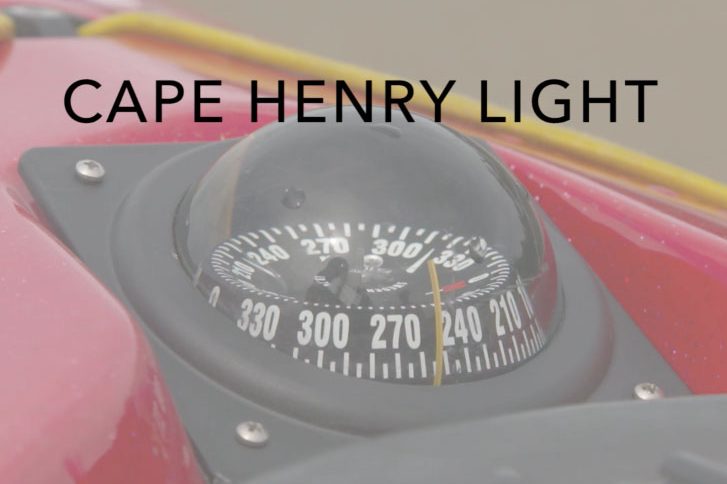
Use a compass bearing to give your coordinates.

4 Give Your GPS Coordinates

Next, give your position. If you have them, use your GPS coordinates. If not, the next best thing is a compass bearing and a distance to a well-known landmark, like a navigational aid or a small island.

Adding any descriptive information can help with your rescue.

5

State the nature of your distress

State the nature of your distress, the kind of assistance needed, and the number of people in your group. Add any other information that might help with your rescue. Then, say “over.”

Be smart. Be safe. Have fun.

As a United Stated Coast Guard nonprofit grant recipient, the Water Sports Foundation produces paddling safety outreach materials and distributes them through boating and paddling media providers. Paddle sports currently has an inordinately high rate of accidents and deaths that for the past five years has been increasing, while power boating stats have been decreasing during the same period. The goal is to create heightened public awareness of safer paddling making paddle sports safer and to ultimately reduce the total number of paddle sports related deaths annually.

Exciting Whitewater Hazard News

Photo: Joshua Wyrick
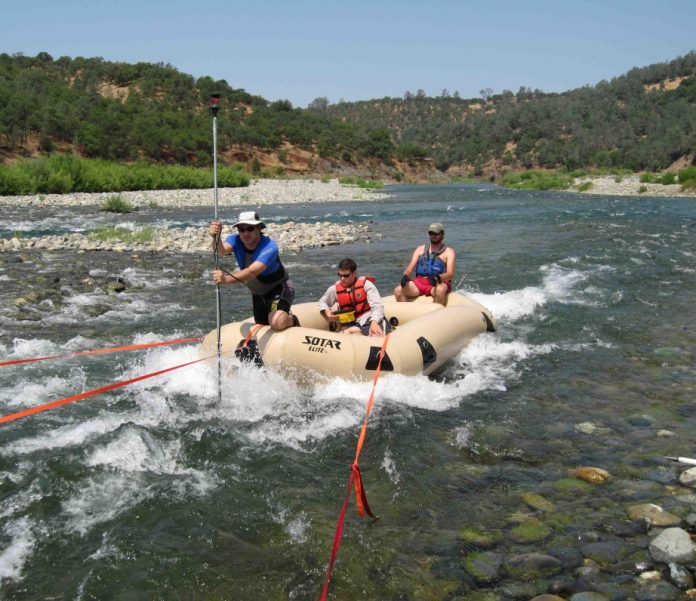
UC Davis studying the physics of horseshoe riffles on the Yuba River using a raft.

Rapid editors’ inboxes are generally full of links to exciting edits and pitches about whitewater trips snaking rivers across in remote corners of the globe. We rarely receive in depth scientific articles from river scientists, so we were intrigued to hear from Dr. Greg Pasternack from UC Davis about important work his research group has just published. 

Dr. Pasternack’s team has published a scientific article where they explain a new metholodoly that can be used to map the spatial pattern of whitewater river hazards. These hazards are mapped in 1-m resolution over lengthy river segments, and they produce maps that display two variables: passage proximity to a hazard and the paddler’s reaction time before encountering the hazard.

As many whitewater paddlers are aware, the basic and often vague class rating system is often used to define rapids or long stretches of whitewater. Engineers use a basic computation of what it takes to sweep someone off their feet in flood waters.

“I think you will find this is not only a scientific novelty, but of importance for river safety and for improving how boaters prepare to navigate and enjoy rivers. It will take effort to deploy this nationwide, but it is feasible and foreseeable to do so if the will exists,” writes Dr. Pasternack. 

Mike McVey Riverboards 70-Foot Waterfall

Vimeo user TacomaKayak11
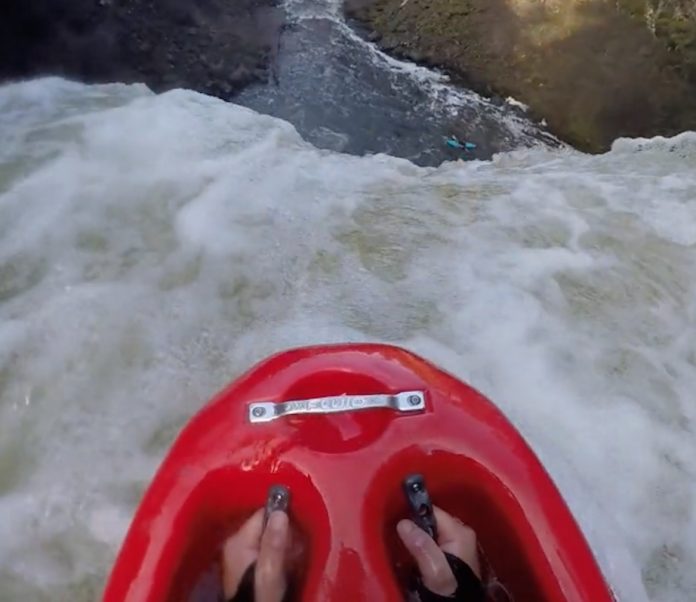
Riverboarder Mike McVey goes over 70-foot Outlet Falls in Washington

{Vimeo}213383452{/Vimeo}

Vimeo User TacomKayak11

Mike McVey is well known in whitewater circles for his boundary-pushing riverboarding pursuits. In this video he shows he is still innovating within the sport, dropping 70-foot tall Outlet Falls in Washington State to the cheers of paddlers waiting below. 

Balkan Rivers Tour 2 Dispatches: Part 2

Photo: Andraž Fijavž Bačovnik
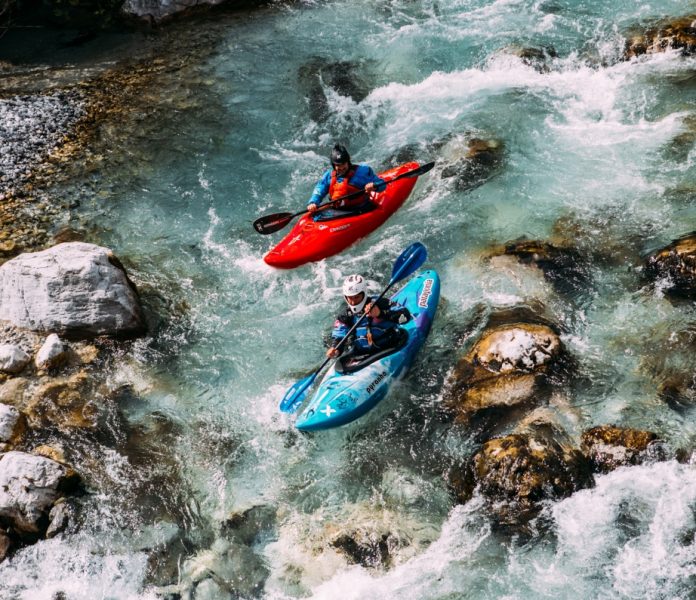
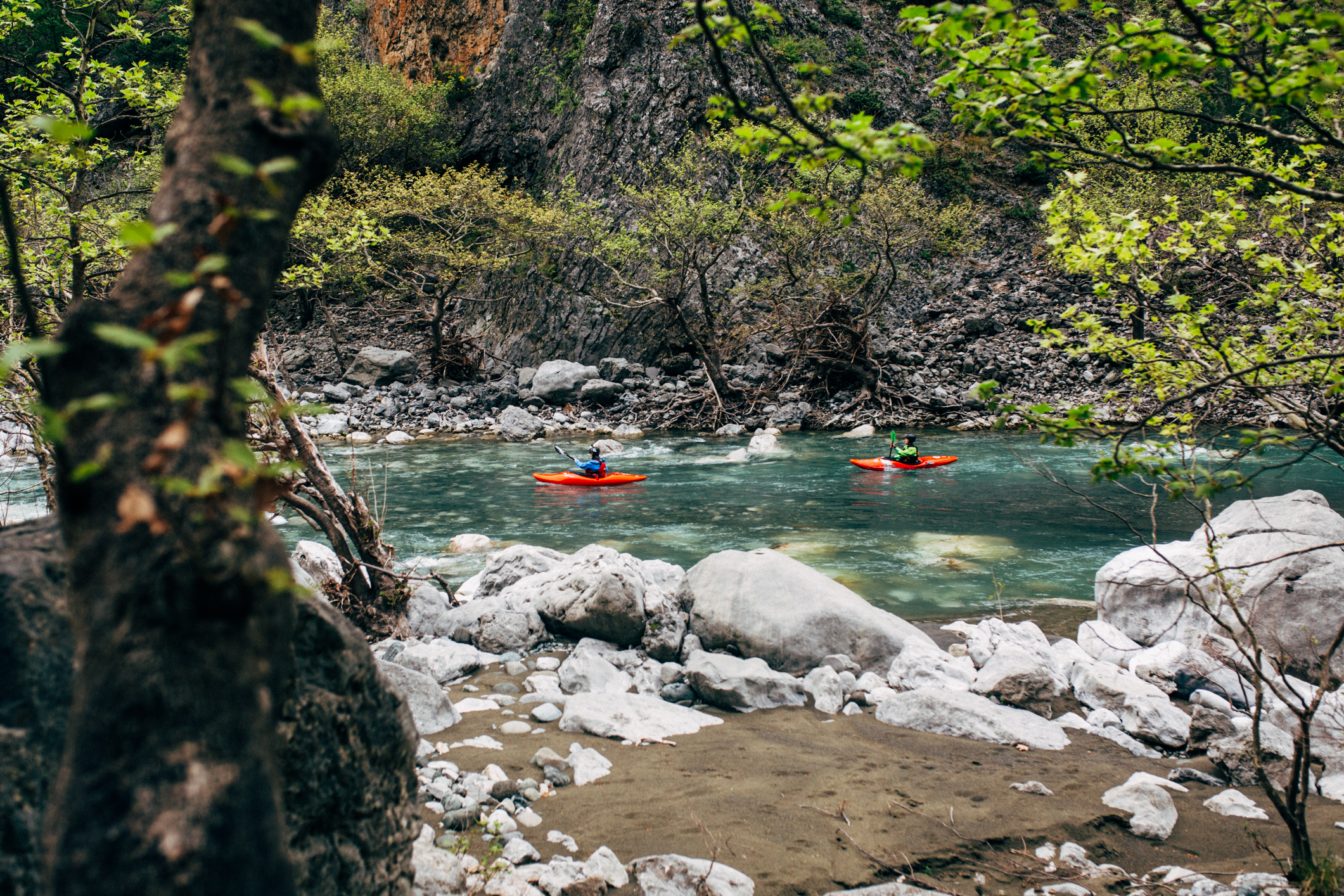
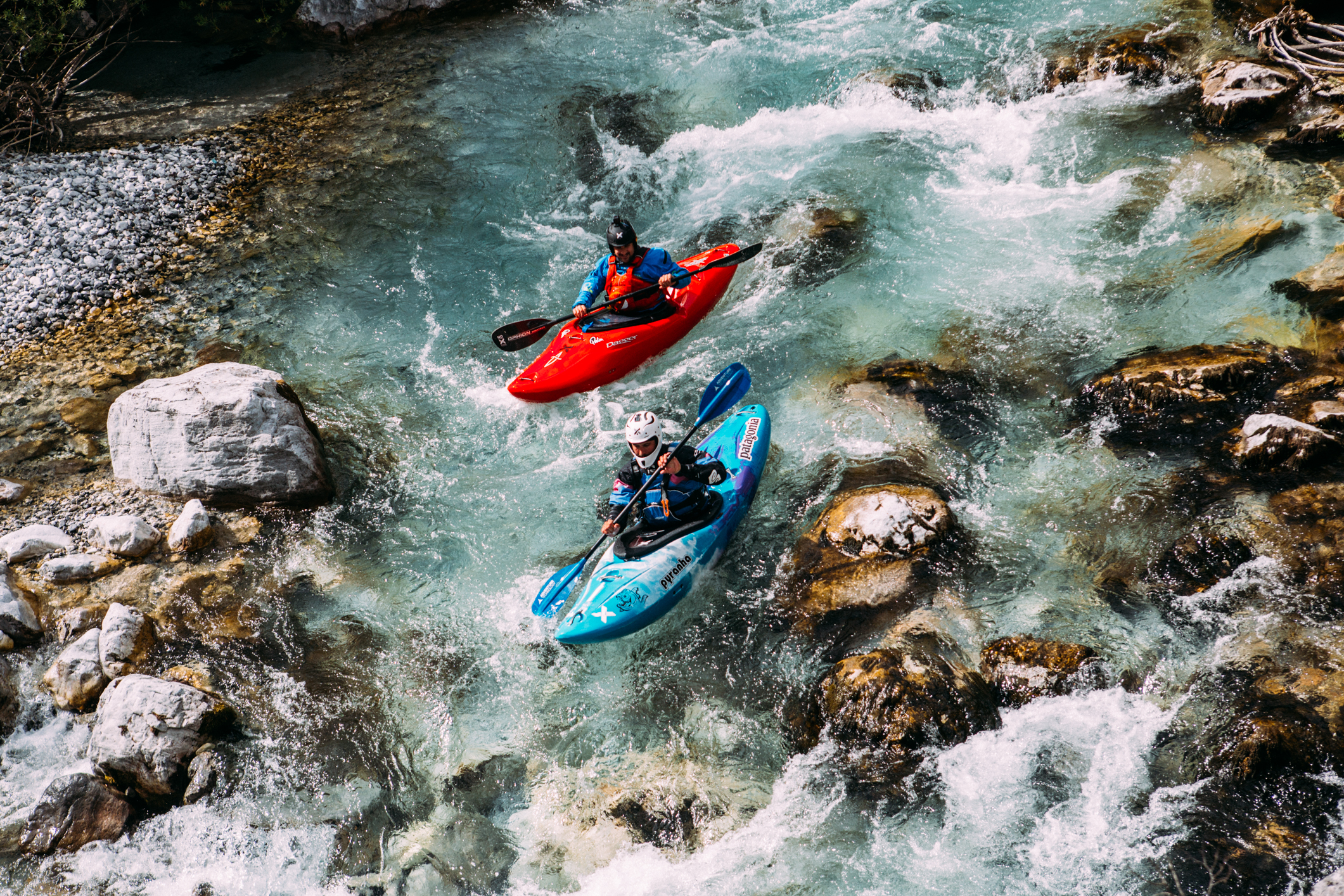
Kayakers on the Valbona River during Balkan Rivers Tour

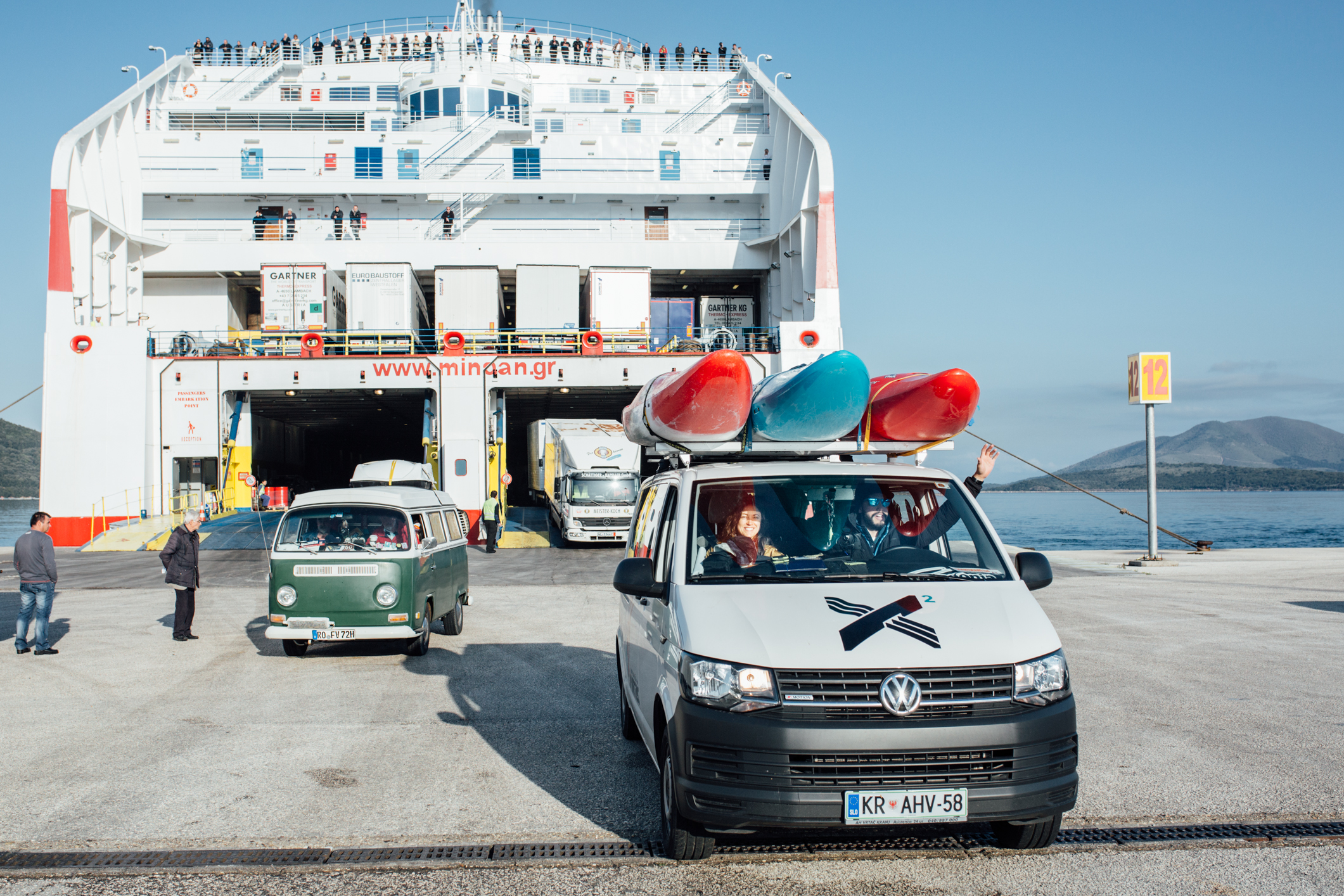
You know the living is good when you spend the morning ski touring untouched snow high in the alpine, and the afternoon boofing your way through spectacular limestone canyons. The Balkan Rivers Tour 2 team hopped a ferry in Venice, Italy after paddling the Soča River from source to sea and landing in Igoumenitsa, Greece days later.

From the mountains that act as the source for the rivers below, the team followed the water from up high to down low. But hearing the blast of dynamite while sitting around the campfire at the end of the day seemed to take all the good lines from the river and mountain and replace them with a sickening feeling of being helpless and angry.

Igoumenitsa Ferry ANDRAZ FIJAVZ BACOVNIK
Photo: AndraŽ Fijavž Bačovnik

The focus of the Balkan Rivers Tour is two-part. Draw attention to the beauty and adventure sports tourism potential in these relatively unknown areas of the Balkans. But also to shed light on the injustice and construction of hydropower plants and dams in these last untouched valleys of Europe.

Greece

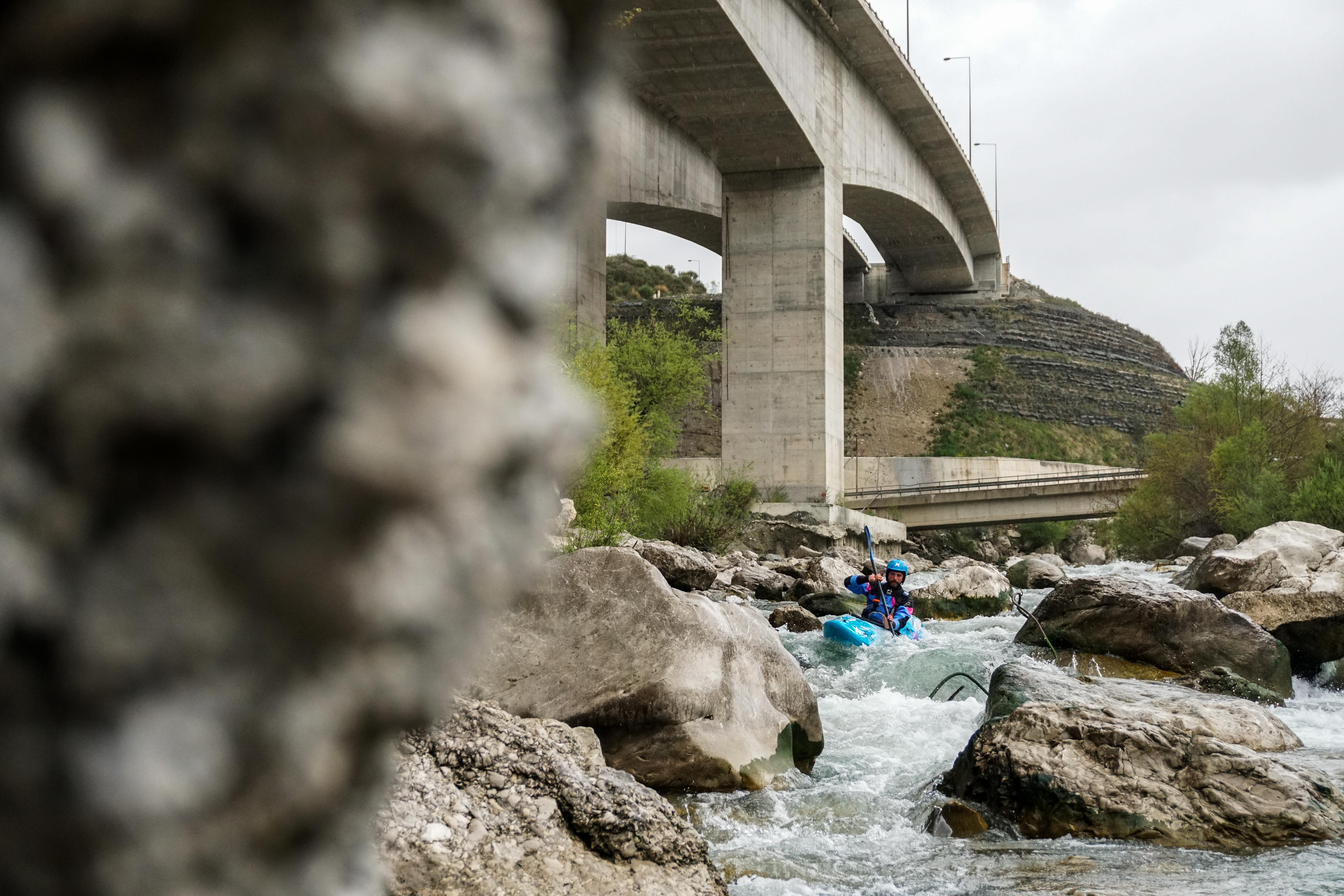
The Metsovitikos River runs through a deep valley in Epirus, Greece, and is one of the primary tributaries of the Arachthos River. A section of exciting whitewater runs through rust-coloured rocks, a hundred meters below the highway and under a massive bridge. But only a section had enough water to paddle and was littered with rebar, garbage and discarded concrete.

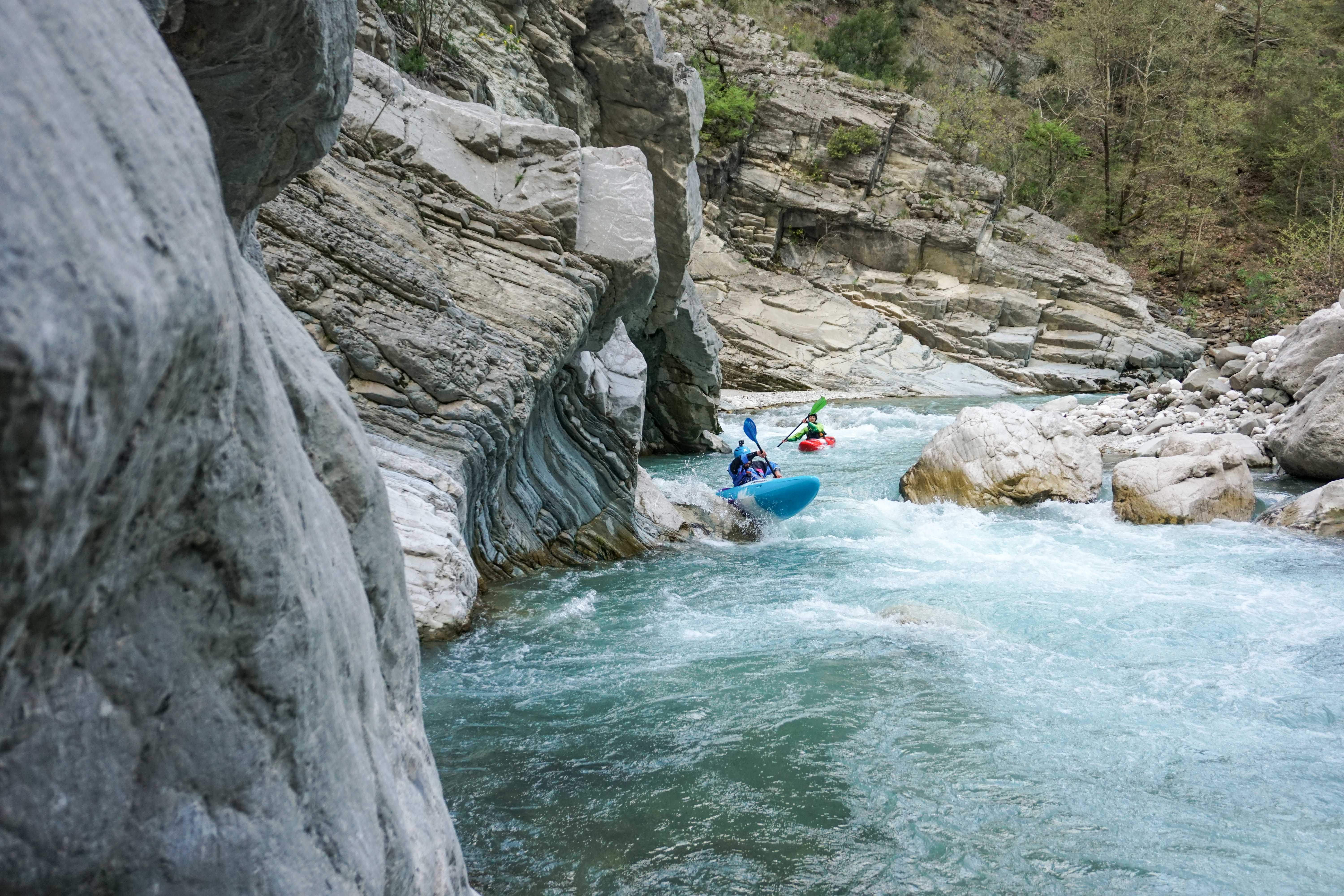
After spending two days skiing in the snow-filled and almost endless ranges of the Smolikas Mountains the BRT team were excited to paddle. They knew the Kaliaritikos and Arachthos Rivers would be scenic, but had no idea these two joining rivers would completely take their breath away—multiple times. It was the first time paddling in Greece for two of the three BRT kayakers, and the high, colourful limestone walls, lined with electric green trees and purple blossoms meant they were paddling looking up for most of the afternoon. Even at the low water levels available, the lines and rapids were playful, with the potential to be challenging at higher water. The river squeezes into tight, two to three meters canyons at times, then opens to faster flows passing waterfalls and springs bursting out of the karts walls.

After a couple night at Via Natura Kayak Camp in Plaka, Greece, which is the takeout for the Kaliaritikos and Arachthos and the put in for the lower Arachthos, they moved on to the Voidomatis River. After a steep trek down from the town of Vikos, they paddled the clear water with a combo of rain and sun accompanying them. The smooth boulder gardens of the Aoos offered more challenging whitewater, and the still cliff and fingers of rock were lined with bonsai-like pine trees, endemic to the area. Time spent on the water in Greece was equal parts whitewater kayaking, and enjoying the remoteness and scenery that a kayak gives you access to. The team was not seeking the most technical rivers but taking the time to find beautiful wild rivers, rivers threatened by dams, and rivers already dammed.

Aoos ANDRAZ FIJAVZ BACOVNIK
Photo: Andraž Fijavž Bačovnik

Albania

Driving into Albania, the untouched rivers of Greece were contrasted sharply with the litter-filled tributaries of a country still developing. Driving into Valbona Valley National Park, the team felt relief and relaxation as the left the busy Albanian towns, but were immediately faced with corruption and destruction as fences along the road blocked the view of construction of three illegal hydro developments already being built in this National Park.

Eleven months ago when BRT 1 came through to paddled the Valbona, the valley was untouched with just talk of these dams. Today, a fresh roads cut a scar across the mountainside and the best section of class V kayaking has bulldozers clear cutting right to the edge of the water. In just weeks, bulldozers and construction trucks will be working right down to the edge of the most technical and most beautiful section of class V whitewater. In a few weeks, this section will be destroyed forever.

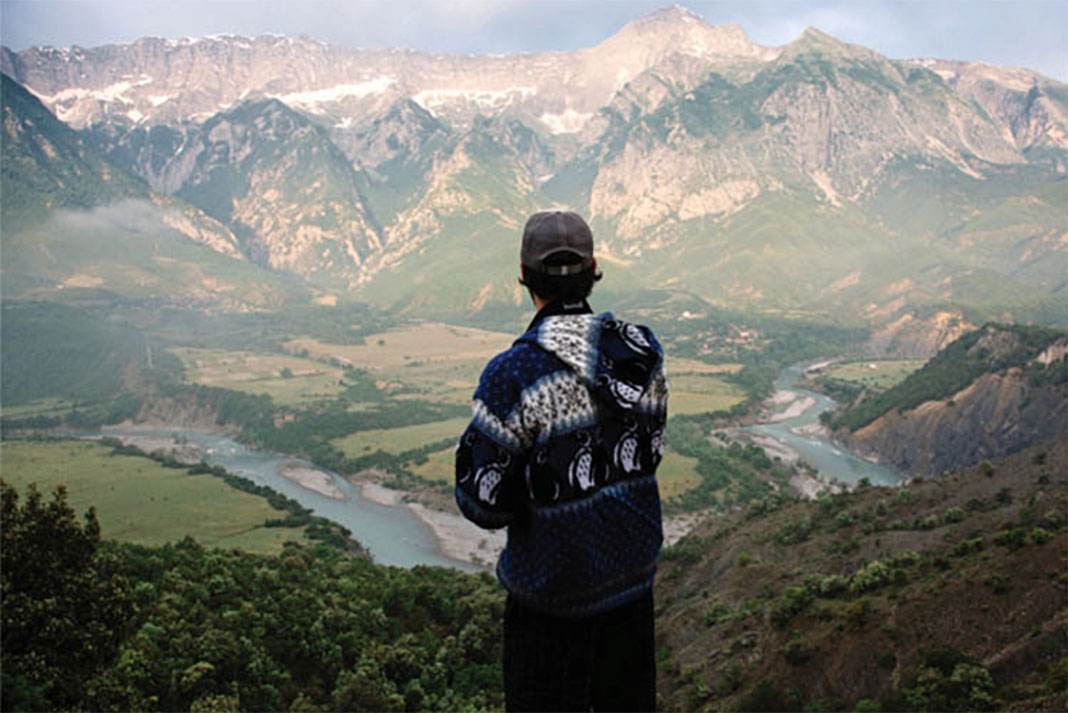
With Slovenian-like Alps on one side and lush forest on the other, the Valbona River is like what the Soča River in Slovenia was like before dams were build there. Foreign visitors to the region often remark they had no idea such an unspoiled, pristine place still existed in Europe. But the race against the clock and the Albania Government is on.

With bulldozers and dynamite already invading the valley, the BRT team put together a short video to share with the world what is going on, with the hopes of creating international recognition of the river that would put pressure on the Albanian Government to halt construction and perform a proper environmental assessment.

Valbona ANDRAZ FIJAVZ BACOVNIK 1
Photo: Andraž Fijavž Bačovnik

To take action and add your voice to the fight for the Valbona, share the video Valbona Under Attack and write your own message, tagging Albanian Prime Minister Edi Rama on social media. It doesn’t matter where you live, if you paddle or enjoy wild rivers, this one is worthy of protection.

The tour will wrap up with an all-are-welcomed paddling action on the Morača River where the BRT team and kayakers from all over the world will kayak for 8-days in a source-to-sea descent of the Morača River, traversing Skadar Lake, and onto the Bojana River before paddling into the Adriatic Sea. With two full days of festivities including concerts, food and DJs will BRT 2 will come to end, but the fight for wild rivers will continue. Check out the BRT Facebook Page and Wild Party for Wild Rivers for more info and follow along as we paddle the beautiful Morača starting tomorrow!


What If I Flip?

In partnership with the U.S. Coastguard and the Water Sports Foundation, instructors Paul and Kate Kuthe of the American Canoeing Association instruct what to do if you flip your kayak in Safer Paddling Series: Episode 7.

Paddlers often say that we’re all between swims. There are many ways to get back into your kayak if you flip.

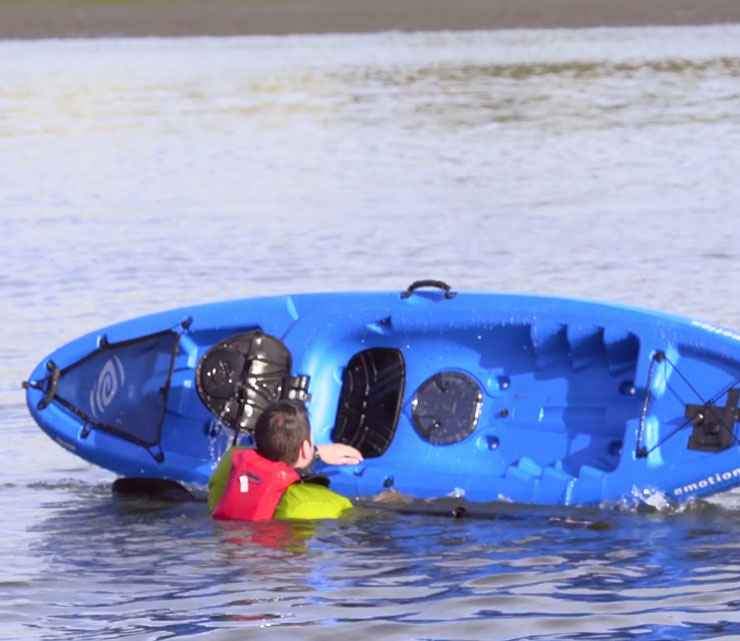
Paul Kuthe flips his kayak right side up.

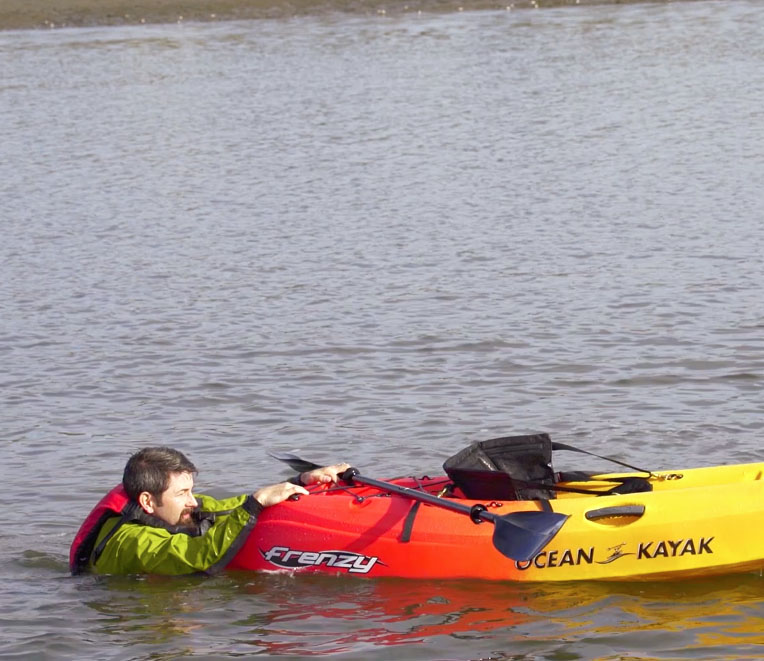
First, make sure your boat is floating right side up. Push on one side while pulling on the other.

Paul Kuthe prepares to get back inside his kayak.

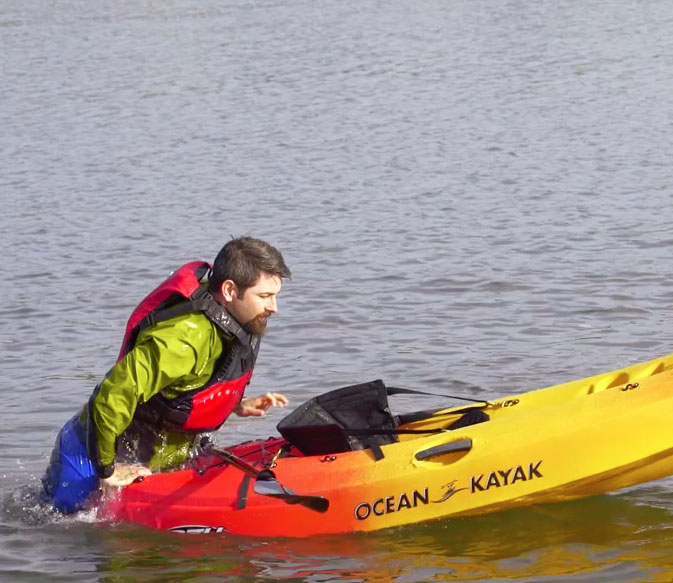
Swim to the back of the kayak and pull your chest onto the boat. It helps to start floating your legs behind you on the water’s surface.

Paul Kuthe pulls his body onto the back of his kayak.

Kick with your legs and slide your body towards the cockpit.

Paul Kuthe carefully slides towards his seat.

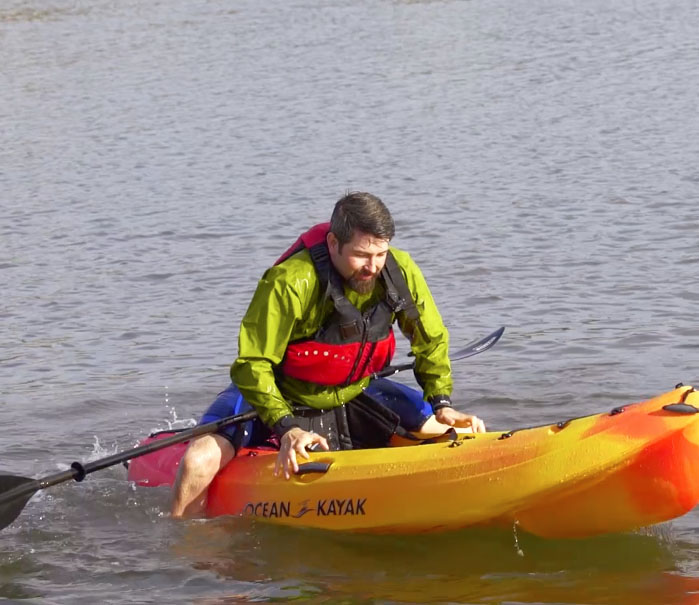
Pull with your arms and let your legs hang off either side for stability. Once you reach the cockpit, sit up, straddling the boat.

Paul Kuthe slides back into the cockpit.

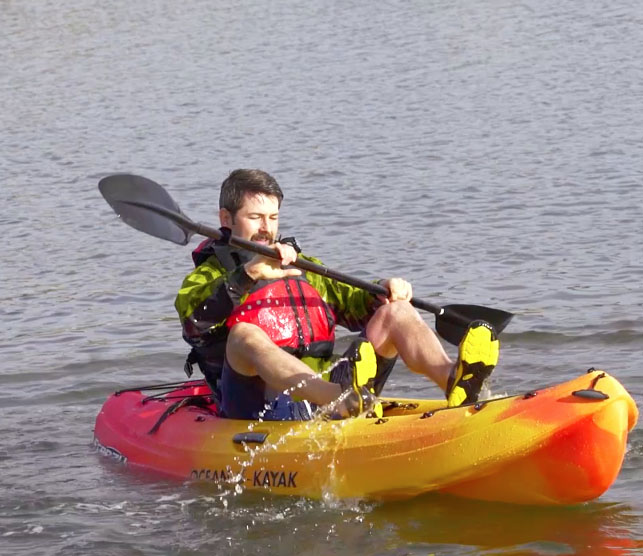
Swing your legs into the centre until you are sitting low in the seat.

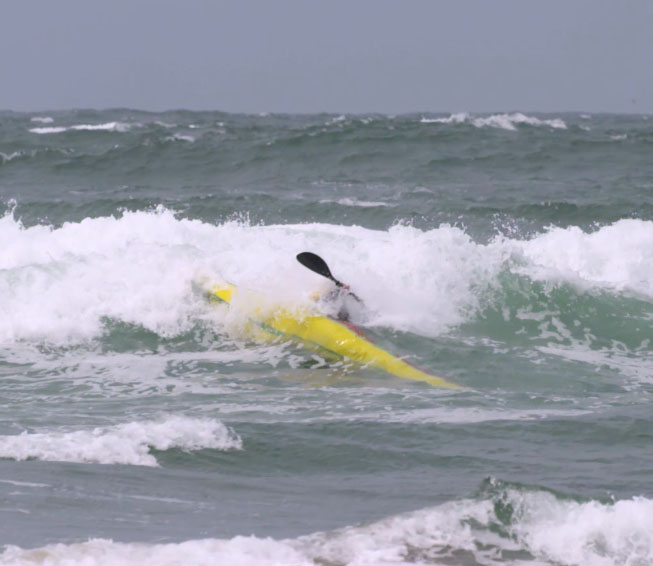
A paddler flipping a kayak in harsh weather.

Remember to practice in real-world conditions, outside of the harbor, since you are most likely to flip in wind and waves.

Be smart. Be safe. Have fun.

As a United Stated Coast Guard nonprofit grant recipient, the Water Sports Foundation produces paddling safety outreach materials and distributes them through boating and paddling media providers. Paddle sports currently has an inordinately high rate of accidents and deaths that for the past five years has been increasing, while power boating stats have been decreasing during the same period. The goal is to create heightened public awareness of safer paddling making paddle sports safer and to ultimately reduce the total number of paddle sports related deaths annually.

A Season Kayaking Uganda’s Victoria Nile

Photo: Robbie Mingay
A whitewater kayaker does an airscrew on a wave on Uganda's Victoria Nile, shot by Robbie Mingay in 2017.

All photos by author. 

The first time I heard about paddling in Uganda was through Steve Fisher’s Inga Project.  I was working as a guide at a summer camp in the Canadian woods at the time and there was a small group of us just getting into whitewater kayaking.  After waiting an entire day for the movie to download a few of us hunkered down in a cabin to watch. What we saw completely changed our perspective on what big whitewater was.  However, it wasn’t just the Congo’s Inga Rapids that we found so incredible.  To train for the Congo, Fisher and his team paddle in Uganda.  The vegetation, the wildlife, the realities of paddling in a lesser developed country; it was completely different to the river life we knew.  

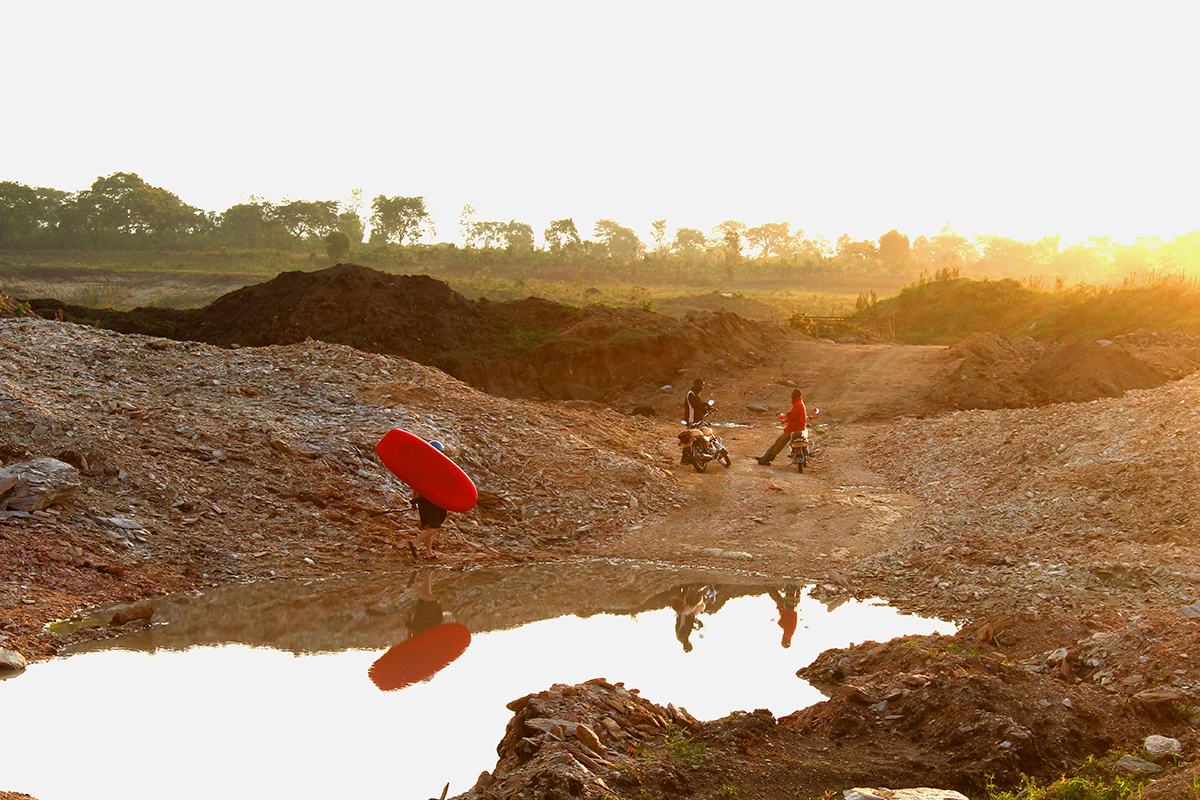
Fast forward to January 2017 and I’m at the start of a nine-week paddling adventure in Uganda, perched on the back of a motorcycle taxi nervously holding onto my kayak and paddle balanced on my lap between myself and my throttle-happy pilot.  With serious whitewater, a welcoming paddling community, and a low cost of living, Uganda has been a dream kayaking destination for close to 20 years.  The whitewater community here is about to experience drastic transformation as the soon-to-be-completed Isimba Dam will flood a significant section of the Victoria Nile’s famous rapids. Though excellent whitewater will remain after the Isimba Dam is operational in May 2018, the future of Uganda as a premier paddling destination for advanced paddlers remains uncertain. 
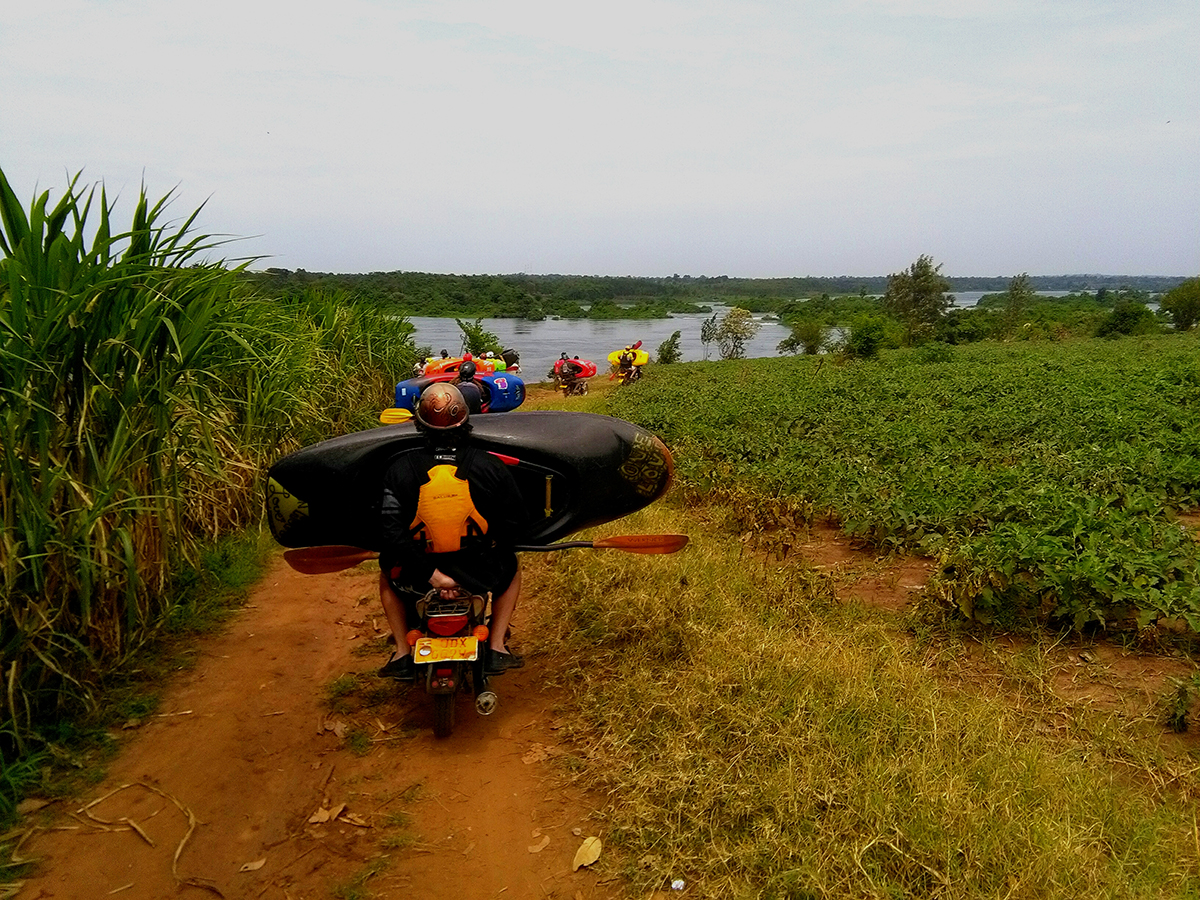
 

Bodas kayaks in the Victoria Nile area of Uganda

Motorcycle taxis, called boda bodas, are the most popular form of transit in Uganda. 


As we speed down the network of rust-coloured dirt roads passing farms and mud-brick homes children drop whatever they are doing to run to the road and shout, “Muzungu! Muzungu! How are you?” Muzungu is the local word for someone with white skin but it’s often used to describe anyone not from East Africa. It’s not meant in a mean or malicious way and anyone with light skin gets used to hearing it. No time to answer as we fly by, I smile and quickly wave back not wanting to let go of my boat, or the bike, for too long. A little later we are weaving our way through a herd of cows being shepherded down the road.  Kayakers and drivers alike are careful not to bump the animals, no one wanting to find themselves on the wrong end of their huge horns. Soon we are at the put-in and after paying for our shuttle ride we’re making our way to the water. To the Nile!

I’d been in Uganda for a few days at this point but this was going to be my first river run.  Our first rapid was Babooga, a simple tongue down the left and a punch through a crashing wave.  So far so good.  Next, the popular play wave/hole Superhole. One paddler in the group, Jonas, points out that if Superhole was in his home country, Germany, people would drive for hours just to surf it. In Uganda though, Superhole is a great place for a “rest” day.  We keep going.
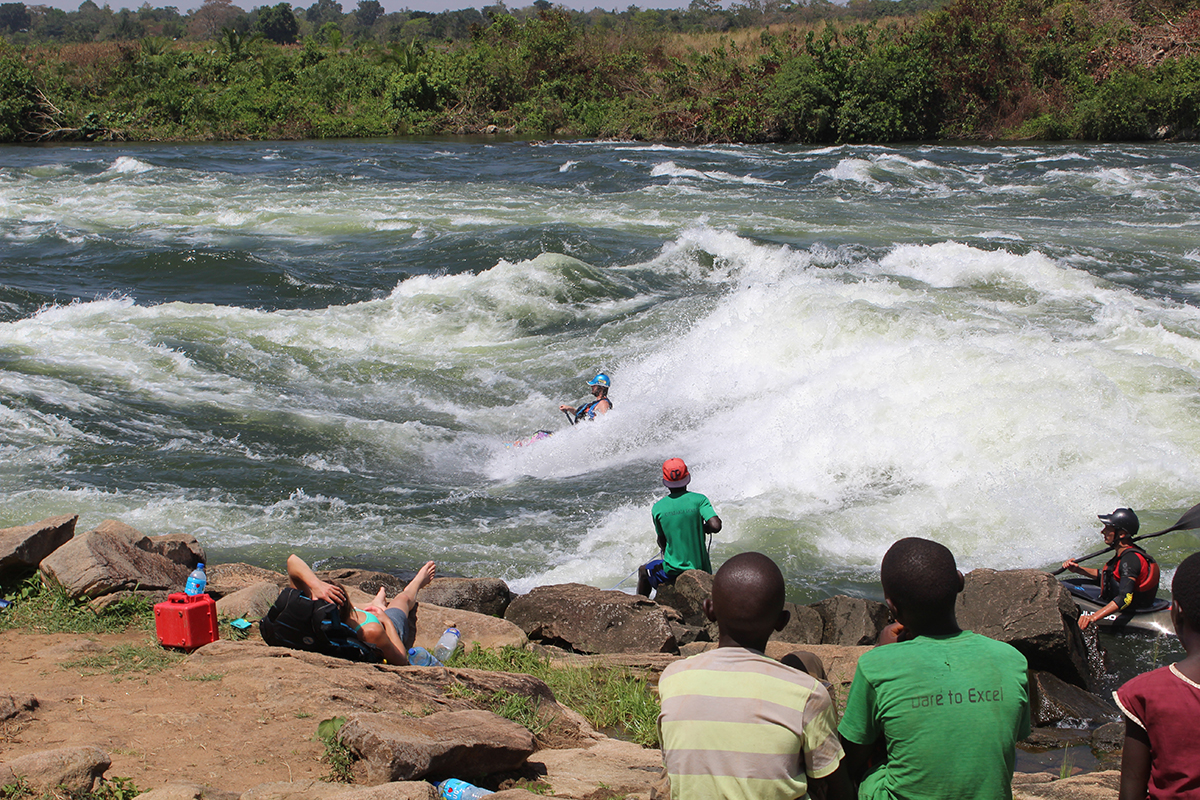
 

Jonas Unterberg surfs while onlookers watch

Jonas Unterberg surfs while onlookers watch

A stretch of flatwater takes us past fishermen hauling in their nets from narrow wooden canoes. Most pay us no mind; those that do smile and laugh as we greet and exchange “how are you’s?” in Lugandan, one of the prevalent local languages.  Paddlers are nothing new in Uganda. Rafting has been a popular tourist activity in Uganda since the late 1990s but it wasn’t until the early 2000s that kayakers really took notice of the Nile’s potential. The growth of big-wave surfing and freestyle saw Uganda’s popularity grow as paddlers from around the world were attracted by stories of giant rapids and a raucous paddling scene.  

In this section the river banks are 40 feet tall and steep, made of exposed red earth and sand.  In some spots, farmers have managed to grow corn on these precipitous banks.  The river is lined with reeds while thick bushes grow at the waterline.  In a different time this would have been prime hippo and crocodile habitat.  Thankfully, at least for paddlers, those animals do not live on this section of river anymore.
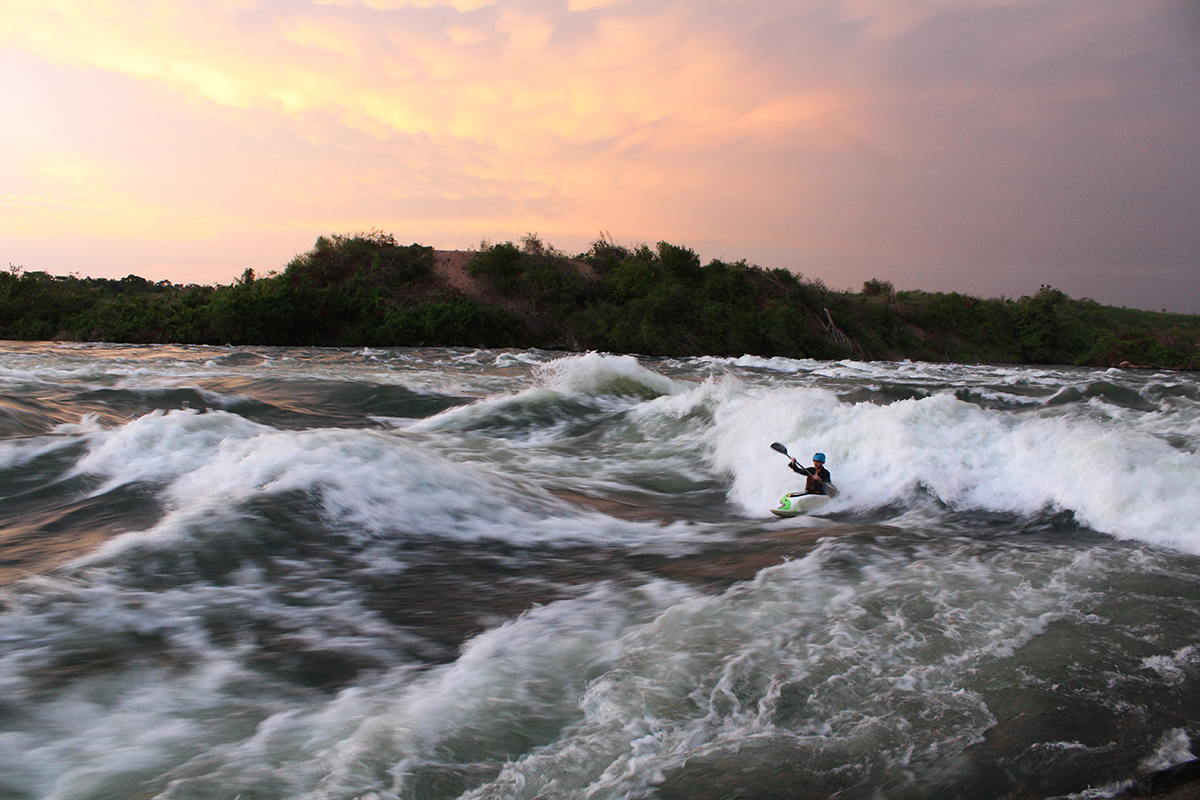
 

Sunset soul surfs, there's nothing better. Paddler: Stewart Wintersgill

Sunset soul surfs, there’s nothing better. Paddler: Stewart Wintersgill

The flatwater ends with a horizon line broken up by dozens of islands each exploding with vegetation.  No doubt they are crawling with snakes and other creepy crawlies.  Three huge class V rapids begin here depending on which route you take. Kalagala, a small waterfall with a nasty hole, is on the left.  Hypoxia, meaning ‘a lack of oxygen to the brain’, is the biggest hole I’ve ever seen and occupies the middle channel and Itanda, a massive rapid requiring paddlers to enter on the left and then ferry all the way right before scampering back to the middle, is on the right.  

We choose Itanda.  Today, being my first time down the river, I opt to portage and watch the line from shore.  One person from our group, David, decides to run it today and we cheer from shore as he nails the line.  I’m impressed. This is a big rapid. It will take me some time getting used to the challenging water of the Nile before I run Itanda.  After watching David, the rest of us run the bottom half. It’s huge and I’m happy to make it through.  

The stoke is high as we continue downstream but it’s at this moment that someone mentions that in a year’s time everything past this point will disappear because of the reservoir caused by the Isimba Dam.  In a year’s time, everything around me will be underwater. That somber and surreal realization makes me stop and appreciate each feature just a little bit more.
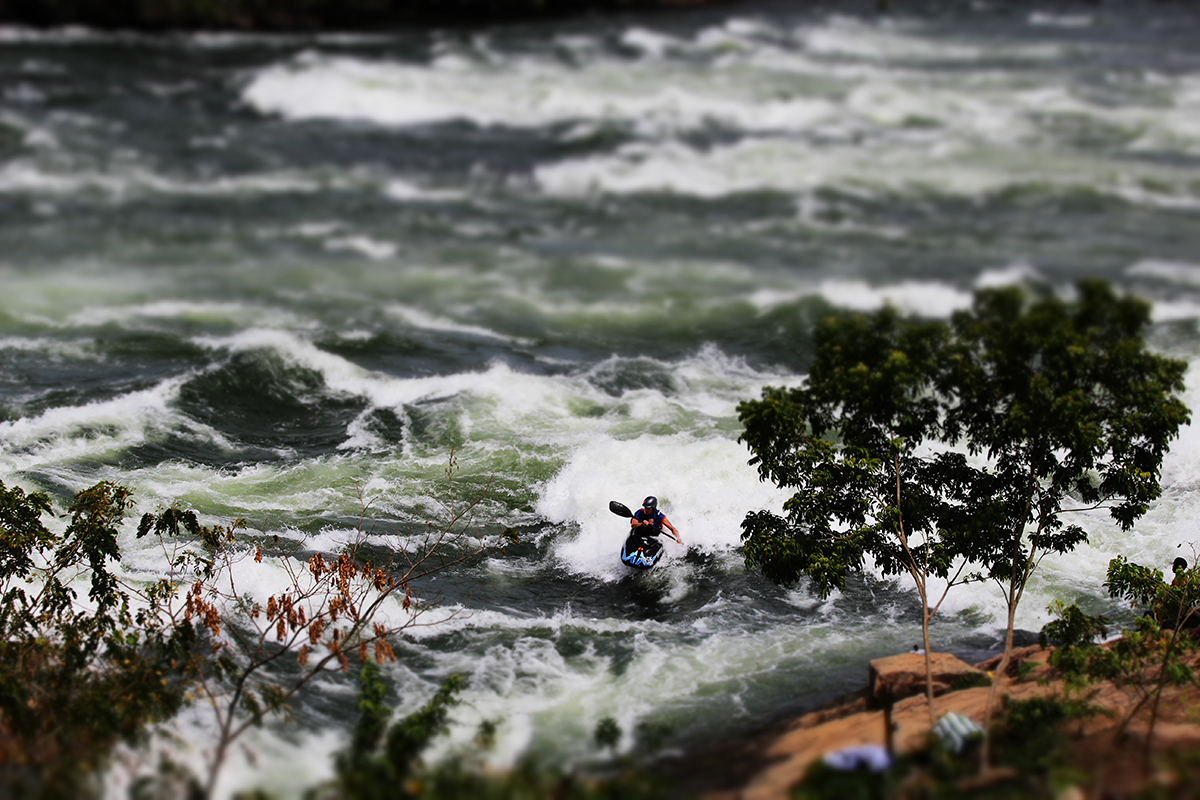
 

Paddler: David Silk

Paddler: David Silk

To so many people I’ve spoken to since, it seems crazy the government would allow a dam to destroy so much much whitewater.  Afterall, it was only ten years ago when, in desperate need of affordable electricity, the Ugandan government approved the construction of the Bujagali hydroelectric power station.  Completed in 2013, this 250-megawatt dam halved the number of rapids on the commercially run section of the river and dealt a serious blow to the rafting and paddling community.  Even worse, it displaced thousands of Ugandans, many of whom were subsistence farmers and thus dependent on their land to earn a living.  In a country with skyrocketing electricity prices, consistent power shortages, and an intense urge to modernize, the need for power trumped the needs of a few thousand farmers and a growing adventure tourism industry.  

Despite the loss of several world-famous rapids Uganda has continued to attract paddlers largely because of popular surf waves Nile Special and Mulalu. In truth, the Bujagali Dam was probably inevitable given Uganda’s growing need for electricity and the immense energy potential of the Nile.  

One positive outcome of the Bujagali Dam was a 2007 indemnity agreement between the Ugandan government and the International Development Association—a branch of the World Bank who helped finance the Bujagali Dam.  This agreement, known as the Kalagala Offset, protected the river downstream of Kalagala Falls from further hydroelectric development. It’s for this reason the announcement of the construction of the Isimba Dam came as such a shock. Having just dealt with the consequences of the Bujagali Dam, the whitewater community must once again deal with an incredible loss of premium whitewater.
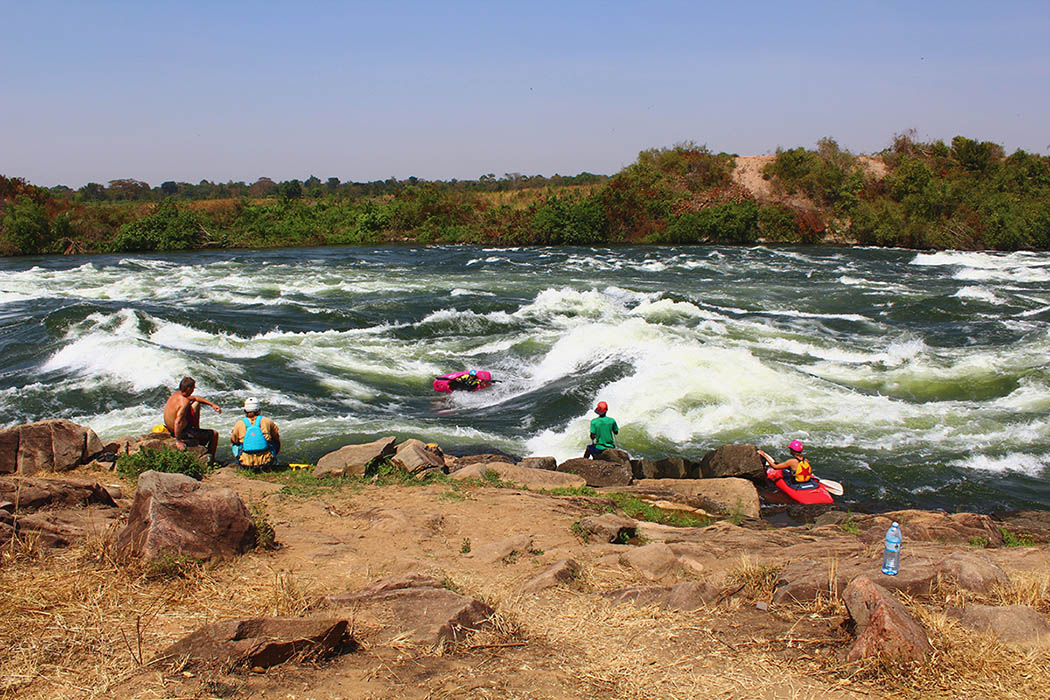
 

While Brooke Hess surfs, others enjoy the sunshine on Uganda's Victoria Nile.  While Brooke Hess surfs, others enjoy the sunshine. 

It’s a lot to think about. As a paddler, I value the free run of rivers more than most but still, the Isimba Dam appears to be a glaring disregard to the Nile’s others users.  That feeling is shared by many and is validated when we hear Isimba could have been built further downstream where it would have had far less an effect on the whitewater industry.

It’s hard not to feel angry but a new horizon line appears ahead and we are forced to push non-essential thoughts from our minds.  Running a rapid requires focus, it’s one of the reasons I respect rivers so much.  A river, especially the Nile, demands your attention.

The next three rapids, Vengeance, Hair of the Dog, and Kula Shaker, are giant wave trains. Each have the same line – down the middle!  As the huge waves lift you up you catch a brief look of the rapid in front of you and can adjust your line. However, just as fast as the waves lift you up, they pull you down into their troughs and, once again your entire field of view is occupied by the next hulking wall of water.  More than once a wave crashes just as I reach the peak and I’m easily picked up and hurled backwards into the trough. Thankfully, hitting rocks is not a concern on the Nile and you may take your time to roll.  

After a bit more flatwater we arrive at the final rapid of the day, Nile Special.  Named after Uganda’s popular strong beer Nile Special is an epic wave train and home to an equally epic surf wave of the same name. World famous for being big, fast, and bouncy it’s easily the most popular kayaking spot on the river.  Add the fact that it has eddy-service and the water is a balmy 25 degrees and it’s easy to understand its popularity. The rapid is a playboaters’ paradise. Depending on the water level, many of the waves on this rapid are surfable and, of course, all named after beer.
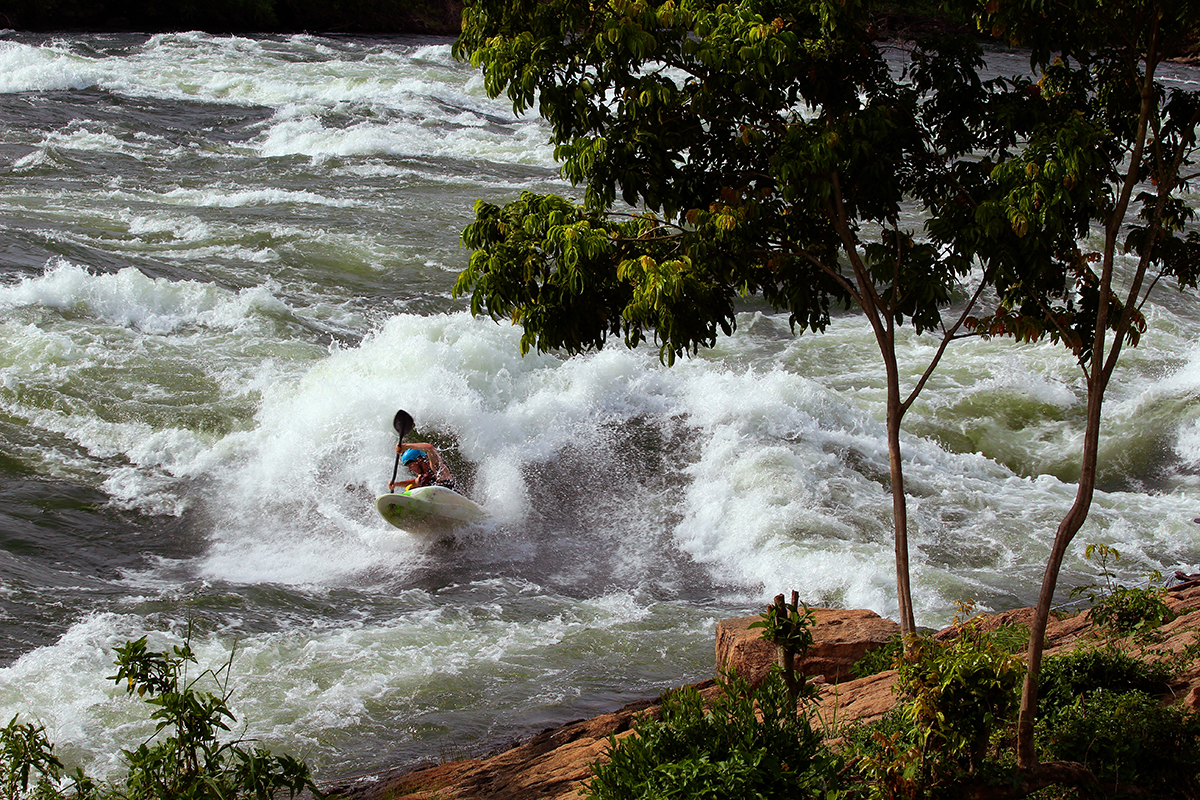
 

A whitewater kayaker surfs on the Nile Special wave on the Victoria Nile in Uganda during winter 2017 Big, fast, and bouncy, Nile Special is by far the most popular play spot on the river.  Many paddlers consider it to be one of the greatest waves in the entire world.  One of the reasons for that belief is you can surf it without any need for drytops or neoprene 365 days a year. In this photo Stewart Wintersgill works on his freestyle.    

Water levels on the Nile fluctuate depending on electricity demand.  Typically, levels are low in the morning and they reach their peak in the evening. Because of this, playboaters can stay at Nile Special rapid all day and surf different waves as the water rises.  It’s so good many kayakers never even bother to run the river or surf different waves.  

Having finished our run of the river we make our way back to our Ugandan home, the Hairy Lemon Island which is amazingly located just a 10 minute paddle away from Nile Special.  Owned by Paul and Nicci, a Tanzanian and South African couple, the Lemon is a kayakers paradise. The Lemon is made up of three main islands and the water is pumped by water wheel while any electricity is generated by solar panels.  Generally most kayakers choose to camp though dormitories are an option as well. When you’re not paddling there’s slackline, plenty of hammocks to chill out in, volleyball, and lots of wildlife to watch. I spent more than a few evenings watching  the acrobatics of the red-tail monkeys as they leapt from branch to branch in the canopy above.  Also calling the Lemon home are plenty of birds such as the colourful Malachite and Woodland Kingfishers.  Interestingly, the Hairy Lemon is also home to a few pangolins which are incredibly rare and have the dubious distinction of being the most trafficked mammal in the world.  
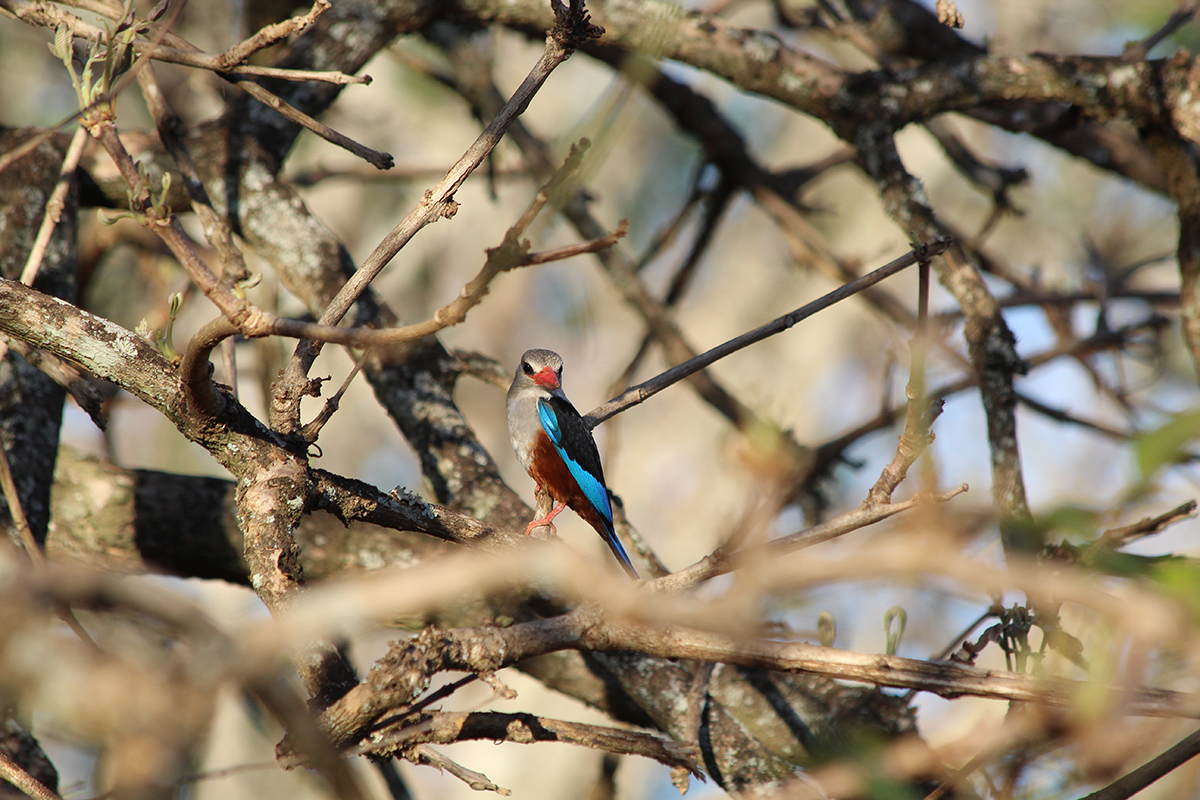
 

A bird at the Hairy Lemon Eco Lodge on the Victoria Nile, Uganda

A grey headed kingfisher, one of the hundreds of types of birds that call the area around the Nile River home. 


Kayaking all day is tiring work, luckily the Lemon has two fantastic chefs Milli and Charles who prepare delicious meals for those who choose to not cook for themselves. Breakfasts typically consist of fruit, eggs, and fresh baked bread.  Lunch is generally vegetarian but always satisfying.  Dinner on the Lemon consists of soup and fresh bread followed by a hearty main such as curry, roast pork, or potato lasagna. In the evenings most kayakers can be found socializing around the Lemon bar, often operated by a paddler trading their labour for a few extra days of accommodation. It’s at this time when the day’s stories of epic surfs and long swims are shared over cold beers.  Beware though, a swim will result in a beer funnel while doing something for the first time on the Nile will earn you a Bujagali sunset, a particularly complicated shot involving Sambuca, fire, and your nipples.

The loss of the Hairy Lemon to the Isimba reservoir is a sore spot for all paddlers and it’s devastating to Paul, Nicci, and all the staff on the island. For many of the Lemon staff, the loss of the island is a lot more than a loss of a kayaking destination, it’s a loss of livelihood. Some staff, Charles included, hope to find similar employment opportunities at the area’s other tourist-oriented hotels and restaurants while others have decided they will search for jobs closer to home.  One of the staff in charge of the Hairy Lemon farm, Ojambo, has decided he will return to his home to be a fisherman on Lake Victoria. Because he cannot swim, Ojambo traded with a kayaker for a life-jacket for when he’s out fishing on the world’s second largest lake.

Though many are frustrated and disappointed with the government’s decision to allow the construction of the Isimba Dam, there remains a sense of optimism within the whitewater community.
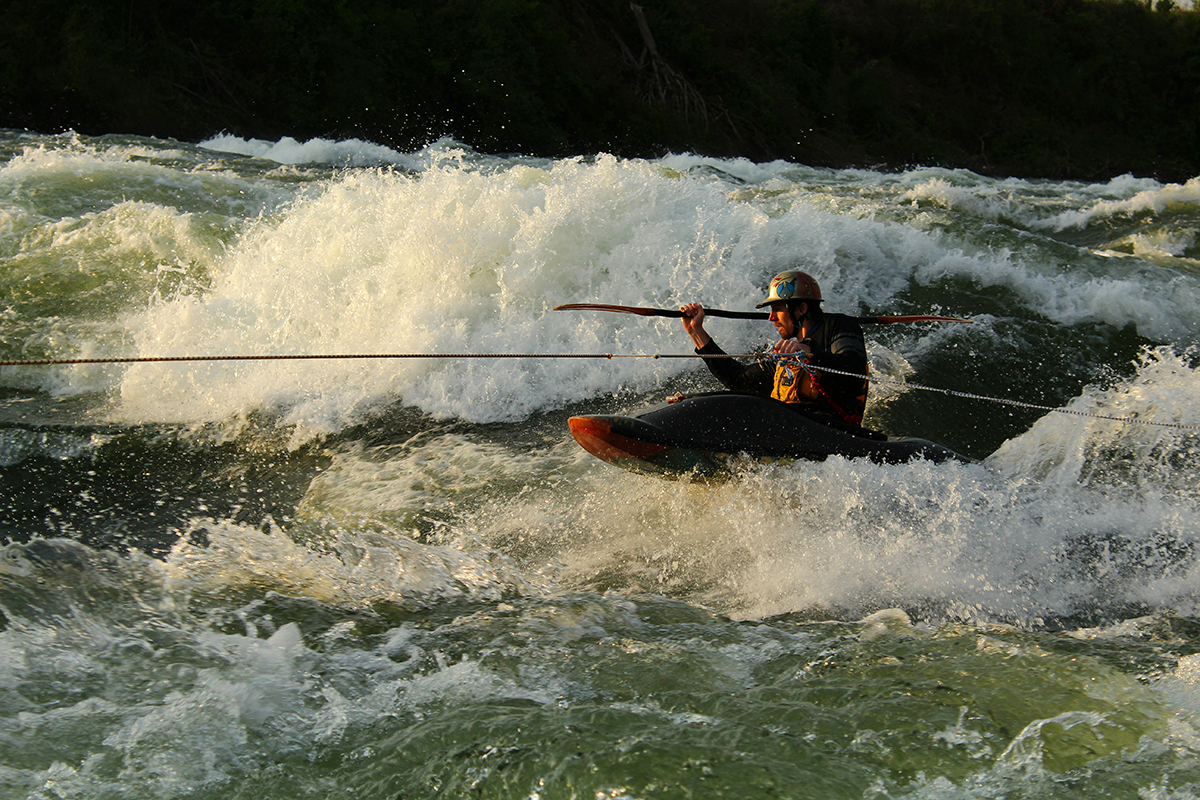
 During a sunset session Ottawa Valley paddler Brendan Kraiker uses the rope to tow on to Nile Special.

During a sunset session Ottawa Valley paddler Brendan Kraiker uses the rope to tow on to Nile Special.

“The impacts on the rafting is going to be tremendous… The reality is we’re going to be reduced to a smaller section of rafting and with that, we would produce half day rafting, complimented by additional activities” says Marc Myers, development manager of Adrift Rafting, Uganda’s longest running rafting company.  However, “there’s a lot of potential for additional activities both above and below Itanda Falls.”  Adrift is planning to diversify and expand the range of experiences they offer.  This includes becoming more than just a rafting company and offering people the chance to connect with the Nile on a deeper level through improved participatory experiences including; nature and cultural based interpretation, wildlife experiences, canopy tours on the islands and additional land and river based activities.  Eventually, Myers would like to see other sections of the Nile open up to rafting-based adventures. “We see the future as being bright, but we’ll have to be more dynamic.” 

Similarly, Kayak the Nile, Uganda’s premiere kayak school run by former Great Britain team member Sam Ward, remain positive about the future of paddling in Uganda.  “It’ll still be a world class place to learn to kayak and even for intermediates it will be great for improving, but it’s not going to be as big a draw as it was for big wave surfing for top level freestylers,” says Ward. Few people know the Nile as well as Ward so when he says there will be enough features to warrant a visit, I believe him. “There are a good number of holes that most people don’t even know exist, and a few waves that are quite good”.  He also notes that there is excellent creeking in neighbouring Kenya and eastern Uganda that is still relatively unexplored.  

No doubt difficult times are ahead for those who depend on the Nile River for their livelihoods and recreation. Thankfully, the Nile is a world-class river and Uganda an increasingly popular tourist destination.  While fewer expert paddlers may choose to visit Uganda, the Nile will always be an attractive place to learn about kayaking and the fundamentals of whitewater.  Who knows, once a river reserved in kayaker’s minds for experts only, the Nile may soon be thought of as an excellent place to take your first paddle strokes.

So, what does this all mean for paddlers?

The completion of the Isimba Dam will likely mean the end of Uganda as a whitewater kayaking destination for expert-level kayakers.  Rising water will submerge at least three of the four fantastically huge wave-train rapids—Hair of the Dog, Kula Shaker, and Nile Special—that make up the most continuous, and popular, section of whitewater left on the Victoria Nile. The fate of the rapid Vengeance remains to be seen.  From a freestyle kayaking perspective, the greatest loss may be the end of the Nile Special surf wave.
The under construction Isimba Dam on Uganda's Victoria NileJust past the popular play-wave Mulalu is the quarry for the currently-under-construction Isimba Dam.  As you walk through the quarry to catch a boda boda you can’t help but be reminded of the immense change this region is about to experience.  In one year’s time a massive reservoir will submerge many of the Nile’s popular rapids and playspots and have drastic effects on the lives of those who live around the Victoria Nile. 

So, if you are a playboater or someone who wants to push their big-water river running abilities, my advice would be to go sooner rather than later.  The reservoir for the Isimba Dam is expected to be full by May 2018 so you have until then to enjoy the rapids that will disappear.  For us in North America, it’s a big trip and an expensive flight but I guarantee it’s well worth it.  There’s just something so amazing about paddling enormous whitewater, in beautiful sunshine on a warm and safe river.  

In case you needed another reason to go 2017 will be the Nile River Festival’s final year in its current format (NRF will continue on in an adjusted format after Isimba). Highlights of this year’s NRF included epic carnage on the Itanda Falls head-to-head race, massive freestyle combos on Nile Special, and some truly questionable behaviour during a late evening jello wrestling tournament (don’t ask).  

With that said, all I can say is go. Go and see one of the world’s most extraordinary whitewater playgrounds before it’s changed forever. I guarantee you won’t regret it.


Traffic Rules For Paddlers

In partnership with the U.S. Coastguard and the Water Sports Foundation, instructors Paul and Kate Kuthe of the American Canoeing Association give the how-to on navigating harbours and marinas in Safer Paddling Series: Episode 6.


Boat traffic, especially in harbours and marinas, can make your kayaking trip risky.  It’s important to understand the proper navigation rules. These can be downloaded online or found at any boating store.

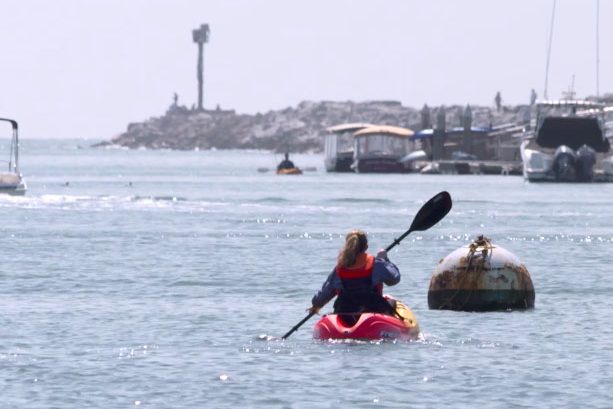
Kate Kuthe navigates a busy channel in a kayak.

Boats don’t come with brakes. So if you have any doubt, stay clear.

A powerboat crossing through a deepwater channel.

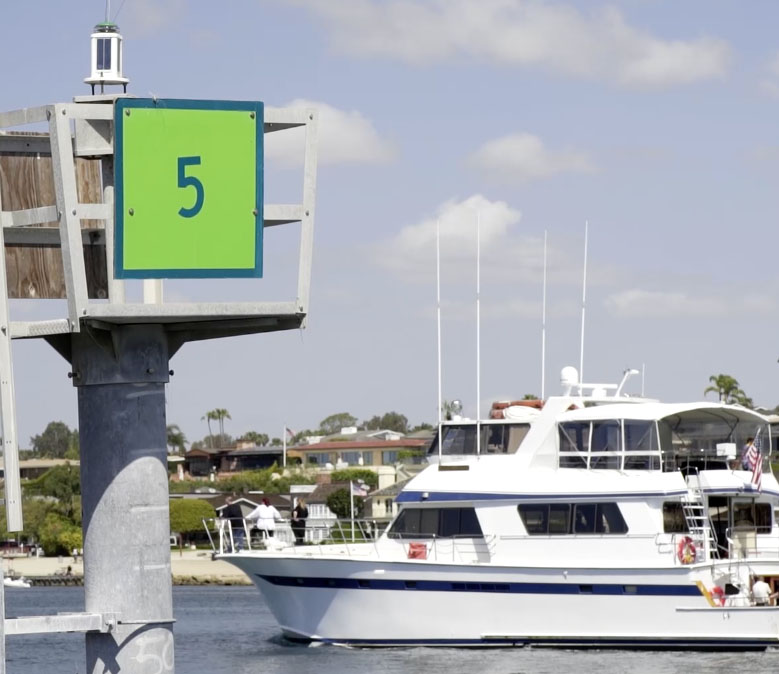
Most ships stay in the shipping channels—these are marked with red and green numbered channel markers. To avoid collisions, stay out of the deepwater channel. If you must cross it, look both ways and cross at a 90-degree angle.

Paul Kuthe makes sure he is seen by a powerboat.

Motorboats, sailboats, and ships sit much higher in the water than kayaks, making it challenging for them to see you. Wear bright clothing and paddle defensively.

Be smart. Be safe. Have fun.

As a United Stated Coast Guard nonprofit grant recipient, the Water Sports Foundation produces paddling safety outreach materials and distributes them through boating and paddling media providers. Paddle sports currently has an inordinately high rate of accidents and deaths that for the past five years has been increasing, while power boating stats have been decreasing during the same period. The goal is to create heightened public awareness of safer paddling making paddle sports safer and to ultimately reduce the total number of paddle sports related deaths annually.

An Invisible Danger: New England Waters Cold Into Spring

a coast guard ship

Timothy Bare clung to the inside of his capsized kayak as the 43-degree water soaked through his clothing. As his core body temperature dropped, his natural reflexes kicked in, pulling blood from his arms and legs to his vital organs.

His time was limited.

Given the water temperature and clothes he wore, he had two hours to be rescued – or die.

Northeast waters remain cold well into spring. It is tempting to shake off winter by hitting the water on the first warm days of the new season, but the reality is that the water temperature hasn’t caught up to the air temperature yet. This is an often-overlooked danger.

In 2016, the number of recreational boating deaths involving paddlecrafts, such as kayaks, more than doubled in Northeast waters.

Luckily, Bare did not become part of this statistic.

He was fortunate enough to have had his kayak spotted by a good Samaritan on shore who called 911.

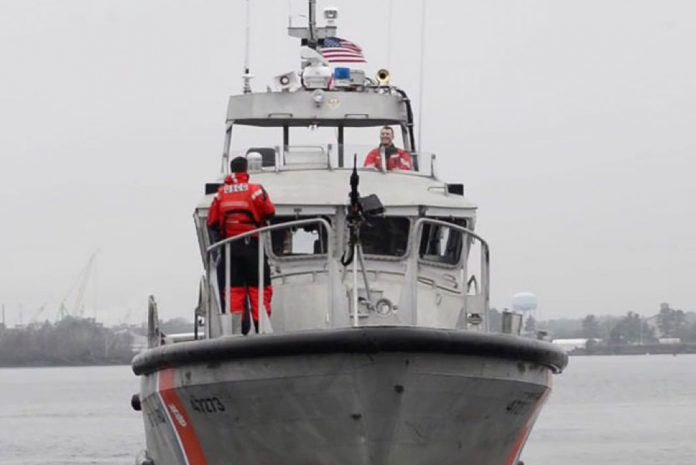
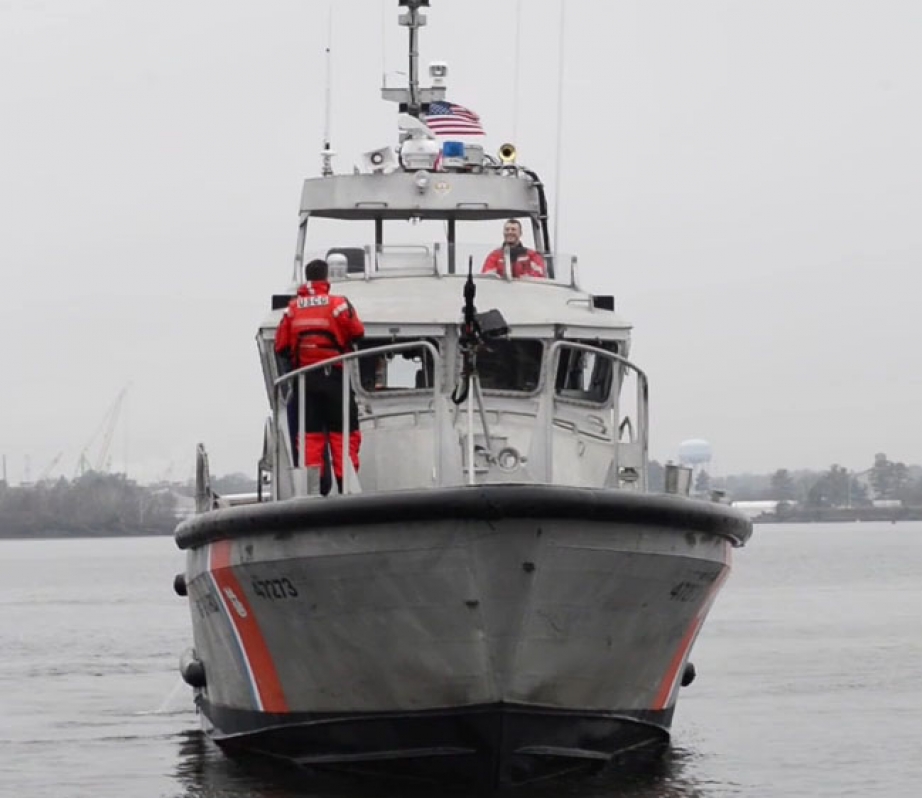
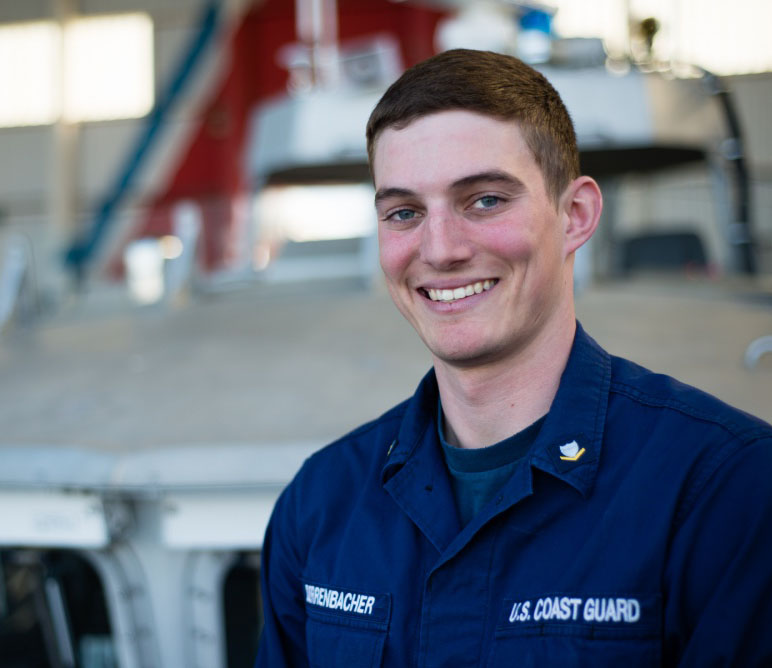
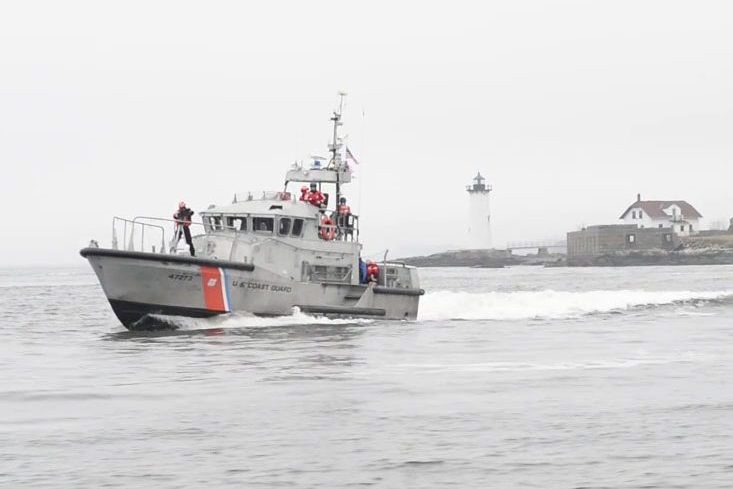
Coast Guard Petty Officer 3rd Class Perry Derrenbacher, a crewmember at Station Portsmouth Harbor, was in the area at the time of the call on a training mission aboard a 47-foot Motor Lifeboat.

The lifeboat crew, along with a New Hampshire Marine Patrol boat, began making way toward the reported location of the kayak.

“At first we didn’t know if anyone was associated with the kayak,” said Officer Nick Haroutunian, of the New Hampshire Marine Patrol. It is fairly common for kayaks or other small watercraft to break loose from shore and drift out to the open water, he explained.

The Coast Guard ship from Station Portsmouth Harbor. | Screen Shot | Petty Officer 3rd Class Andrew Barresi

As the crews approached the kayak, they didn’t initially see anyone around it until they were almost on top of it, and noticed the man’s legs sticking out from under it.

“We got up alongside, and I threw my head over and looked look down and saw a person who was barely conscious,” said Derrenbacher.

“Once we made it to the kayaker, it was very time sensitive,” said Haroutunian. “We had to get him onboard and to shore as quickly as possible to transport him to the hospital.”

The Coast Guard crew was able to pull the man from the cold water onto the deck of the lifeboat.

Timothy Bare capsized his kayak and was stranded in 43-degree water. He was rescued by the New Hampshire Marine Patrol and recovered from hypothermia in the hospital.
“He was severely hypothermic,” said Derrenbacher. “One of the first things you want to do is remove the wet clothing and get him dry.”

Derrenbacher and his shipmates did just that, removing his clothing with first aid shears and grabbing dry blankets to cover him.

“We actually sandwiched our bodies next to him and threw the blanket over us to try and give him some of our warmth,” said Derrenbacher.

This quick action worked: Bare began to moan and became more responsive.

“We got to watch someone go from being almost dead to alive, and I was able to talk to him on the phone in the hospital only two hours later,” added Derrenbacher.
The Coast Guard ship from Station Portsmouth Harbor. The crew’s quick response saved Bare, who recovered from his hypothermia. Had the crew not been so close, he could have become part of the growing statistic of paddlecraft-related deaths.



“Whether you’re surfing, kayaking, or paddle boarding, you want to have some kind of protective clothing on, whether it’s a wet suit or dry suit,” said Derrenbacher. “As soon as you hit the water, all the blood is going to rush from your extremities to your core, and you’ll lose your ability to swim.”

A life jacket is another essential piece of safety equipment that can save your life if you lose consciousness in the water.

“If you were to flip over and hit your head and go unconscious, it doesn’t matter how good of a swimmer you are,” said Derrenbacher. “Michael Phelps could still drown if he’s unconscious.”