Home Blog Page 222

Live The Good Life: Q&A With 8 Inspiring Paddling Coaches

paddling coach Angela Bueckert
Angela Bueckert | Photo: Yasmeen Strang

Wondering whether to seize the day or sleep in? Or which nightcap to pack for your next campfire social? Perhaps your dilemmas are more existential: how to make the world a better place, what advice to offer others, or why is it so difficult to turn dreams into reality?

When we put these questions to some of paddling’s finest coaches, we learned a lot about the leaders we trust to make us better in our boats, safer on the water and, yes, happier in our lives. From dirty jobs and pet peeves to speculations on the true nature of contentment, their responses surprise, inform and reaffirm what we already know: kayakers share many core values, but we are a wonderfully diverse community.
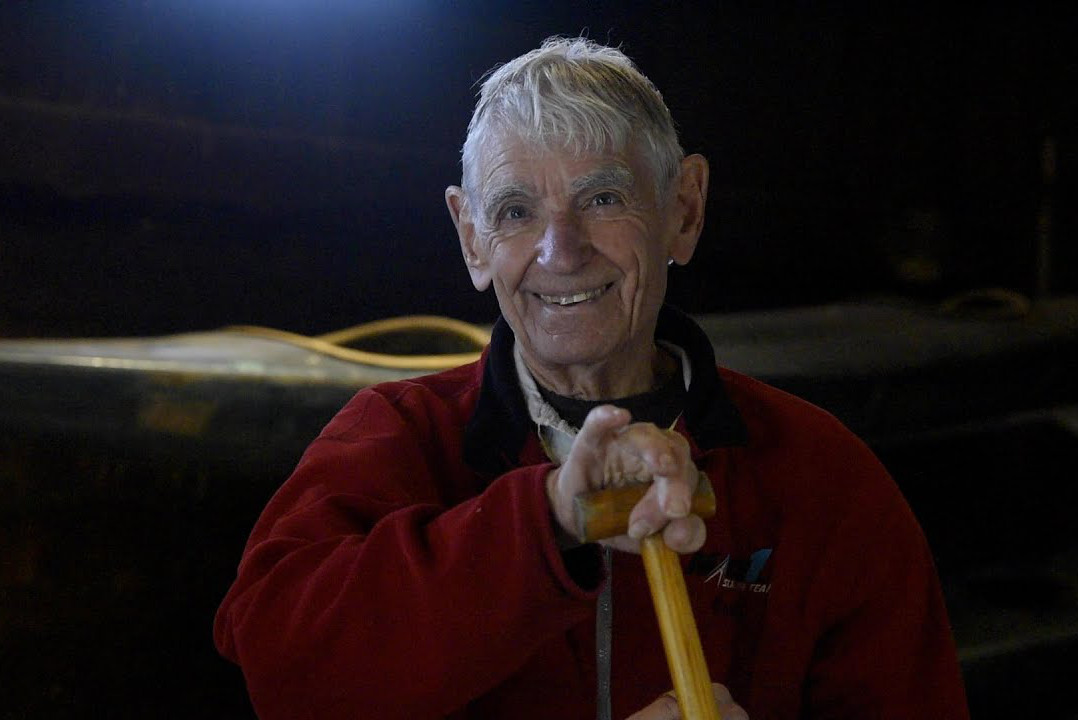
Our panel of paddling coaches
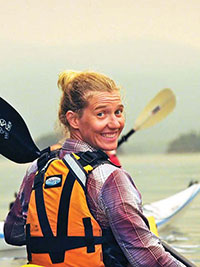
paddling coach Angela Bueckert
Angela Bueckert | Photo: Yasmeen Strang

1 Angela Bueckert (AB)

Location: Ucluelet, British Columbia
Occupation: Adventure Guide, Co-owner of Expedition Engineering

Roots: For the past 12 years, skis and kayaks have been Bueckert’s tickets to mountains, rivers and saltwater around the world. From teaching whitewater paddling in Tibet, Nepal and Ecuador to guiding sea kayak expeditions in Norway, Greenland, the South Pacific and throughout British Columbia, she’s expertly spun these once-in-a-lifetime trips into her full-time job.
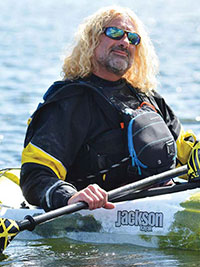
paddling coach Chris Audet
Chris Audet | Photo: Christopher Lockyer

2 Chris Audet (CA)

Location: Searsport, Maine
Occupation: Outdoor educator and athletic trainer

Roots: His high school students know him as Mister Audet, while his Friday night fans know him as lead singer, rocker and Sammy Hagar lookalike in the Van Halen tribute band, Balance. A registered Maine sea kayaking guide since 2001, Audet’s wild blonde curls are equally recognizable on the water, where his paddling students benefit from his years of teaching and performing.
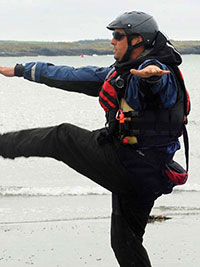
paddling coach Christopher Lockyer
Christopher Lockyer | Photo: Virginia Marshall

3 Christopher Lockyer (CL)

Location: Bay of Fundy, Nova Scotia
Occupation: GIS mapping tech

Roots: Out of a desire to develop a strong community of skilled kayakers in his backyard and showcase the region’s first-rate paddling opportunities, Lockyer founded Committed 2 the Core Sea Kayak Coaching. In 2013, the Nova Scotia native expanded on those goals with the establishment of the annual Bay of Fundy Sea Kayak Symposium, drawing top coaches from around the world.
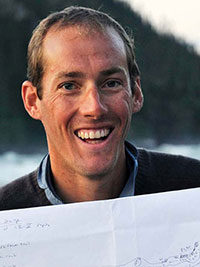
paddling coach Conor Mihell
Conor Mihell | Photo: Virginia Marshall

4 Conor Mihell (CM)

Location: Sault Ste. Marie, Ontario
Occupation: Magazine writer, part-time college educator

Roots: Descendent of a Lake Superior lightkeeper, Mihell has lived with the restless lake all his life, drawing from its infinite well of inspiration and adventure. His students and friends respect him as much for his work-to-paddle lifestyle as his exhaustive knowledge of the north shore.
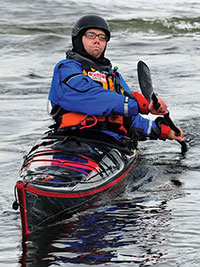
paddling coach David Johnston
David Johnston | Photo: Virginia Marshall

5 David Johnston (DJ)

Location: Toronto, Ontario
Occupation: Web designer

Roots: Kayakers across the country know Johnston as the tireless and self-effacing chair of Paddle Canada’s sea kayak program development committee. While the role can be a challenging one for the busy coach and father, it embodies his belief that the best instructors listen as well as they lead.
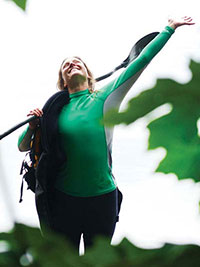
paddling coach Ginni Callahan
Ginni Callahan | Photo: Freya Fennwood

6 Ginni Callahan (GC)

Location: Loreto, Mexico and Skamokawa, Washington
Occupation: Founder of Sea Kayak Baja Mexico and Columbia River Kayaking

Roots: Callahan boasts that while she’s never held down an indoor job for an entire year, she’s survived on sea kayaking for nearly twenty. An impulsive move to Baja in 1998 kicked off her journey to top certifications in coaching and guiding, as well as the migratory pattern she follows between paddling seasons in the Sea of Cortez and the Columbia River.
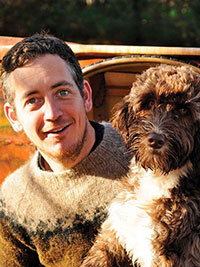
paddling coach James Roberts
James Roberts | Photo: Virginia Marshall

7 James Roberts (JR)

Location: Parry Sound, Ontario
Occupation: Co-founder of Ontario Sea Kayak Centre

Roots: A product of surfing the steep, gray swell of his native Isle of Wight and exploring the rugged coastlines of Canada, Roberts has also mastered a remarkable repertoire of Greenland rolls, making him a true student of the world. Those who’ve mentored with him appreciate his insightful feedback and outrageous sense of humor.
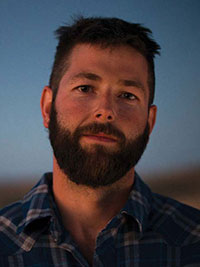
paddling coach Paul Kuthe
Paul Kuthe | Photo: John Waller/Uncage the Soul Productions

8 Paul Kuthe (PK)

Location: Portland, Oregon
Occupation: Business, life and paddlesports coach

Roots: Parlaying his extensive kayak coaching experience into a growing life and business coaching career was a natural next step for Kuthe. When he’s not teaching the finer points of paddling as program director for Portland outfitter Alder Creek, he’s helping students achieve their personal and professional goals through his work at Tributary Coaching.

Paddling coach Q&A

My advice for paddlers who want to step up their game is…

AB: Do solo trips. Relying on your own judgment and decision-making lets you know pretty fast where you’re at.

CA: Paddle with as many different people as possible.

CL: Repetition is the key to learning.

CM: Paddle rough water.

DJ: Set specific goals with a deadline for this paddling season.

GC: Try whitewater, surf, open canoe, SUP, competition, sailing, rock hopping and journeys.

JR: Learn to roll. This will increase your confidence and the rest of your skills will get way smoother.

PK: Get some quality coaching.


If I weren’t so into kayaking, I’d…

CA: Take up flying airplanes.

CL: Take up mountain biking.

CM: Take up triathlon.

DJ: Be a professional waterslide tester.

GC: Take up outrigger team paddling, underwater photography and writing a book.

JR: Take up kite surfing.

PK: Take up something more lucrative.


My biggest blunder was…
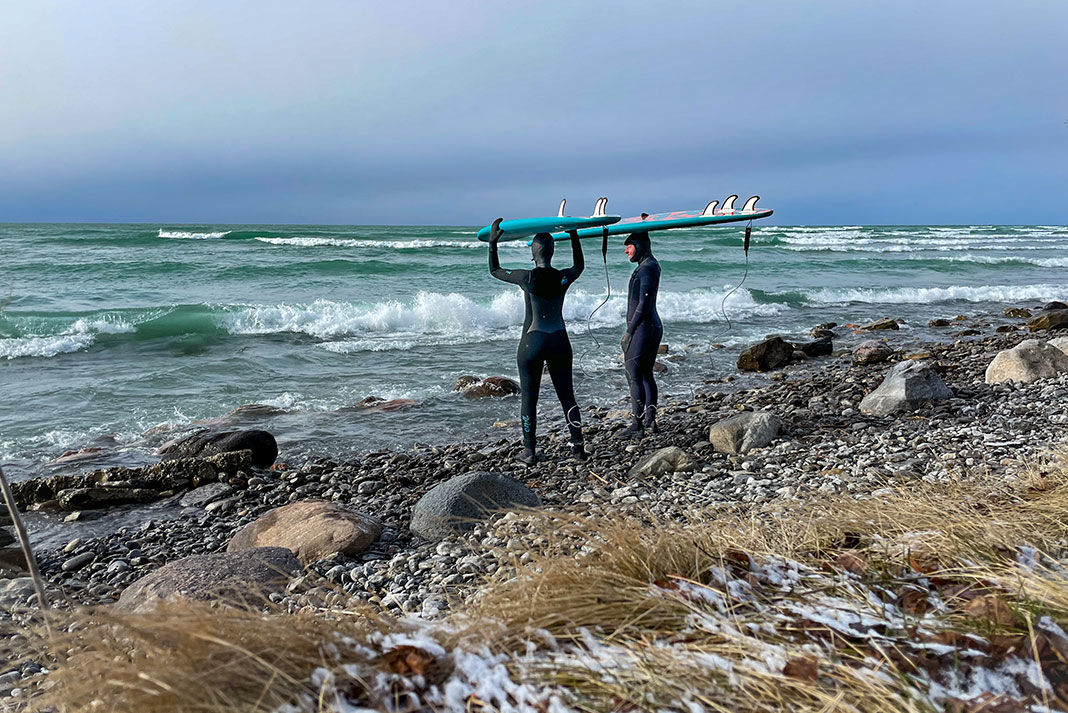
AB: Not being patient with the weather and I learned that it always pays to wait out the wind.

CA: That I didn’t start kayaking until my late twenties and I learned that the younger you start the more experiences you can have.

CL: Getting lost in dense fog around the Tusket Islands and I learned to never underestimate the ocean environment and the power of the tides.

CM: Not taking advantage of each and every opportunity I’ve had to go paddling and I learned that if you make an excuse not to go, you’ll likely regret it.


Happiness is…

AB: In the moment, not something that is wrapped up in the next big thing.

CA: A large glassy wave and a boat to surf it in.

CL: Catching rides on the Shubenacadie River with other members of Team Core.

DJ: Sitting around a campfire with friends.

GC: Living daily according to one’s values. And paddling the turquoise lagoon of a palm-studded atoll in the South Pacific.

JR: An amazing meal, a glass of wine and a stellar sunset in the wilderness.

PK: Sharing the sport we love and making a difference in the lives we share it with.


The coastline that stirs me most is…

AB: Norway because I feel my Viking warrior princess heritage taking over.

CA: Maine because I feel at home.

CL: Brier Island because I feel I am paddling at the end of the world.

CM: Lake Superior’s north shore because I feel at home here.

GC: The Sierra La Gigants because I feel awe, inspiration and at home.

PK: The Oregon Coast because I feel insignificant.


One thing you probably wouldn’t guess about me is…

AB: I am a Feldenkrais Practitioner.

CA: I hate swimming with a passion.

CL: I know every word to Phantom of the Opera and I am a huge Prince fan.

CM: I was once a hockey goaltender. It taught me to be thick-skinned in the face of criticism.

DJ: I absolutely love china plates, teacups and teapots.

JR: I used to play trumpet in a jazz band.

PK: I’m scared out there sometimes.

My biggest pet peeve is…

AB: Negativity.

CA: When people call a chart a map, or worse, a water map.

CL: People who don’t give things an honest go and self-handicap themselves before leaving shore.

CM: Cell phone towers creeping into the wilderness.

DJ: That my puppy only pays attention to me because I have food in my hands.

GC: Dragging kayaks on the beach, especially fiberglass, and especially mine!

JR: Packing trips.

PK: When students attribute either success or failure to their equipment.


More paddlers should learn to…

AB: Roll and pee while in their boats (not necessarily at the same time).

CA: Navigate properly.

CL: Swim.

CM: Make the time to go on long, unsupported journeys.

DJ: Paddle with a faster cadence.

GC: Look behind them.

JR: Invite me when going somewhere cool.

PK: Roll in conditions.


The worst job I ever had was…

AB: Working in a bookstore and it taught me to do what you love.

CA: Painting houses in college and it taught me that life is too short to have a job that isn’t fun.

CL: Painting fishing boats and it taught me to appreciate how much hard work will pay off.

CM: Assisting with the managing of an outfitting business and it taught me I’d rather be the guy on the water than the one steering the ship.

DJ: Working in a hotrod restoration shop but it taught me how to use an automotive sandblaster.

GC: One day in the Sterilite plastics factory in Lake Havasu City, Arizona and it taught me the tremendous freedom of being outside.

JR: Sanding the woodwork on a sailboat and it taught me that working hard and not drinking enough can make you faint.

PK: Housekeeping and it taught me humility.


Things I can’t live without on trip are…
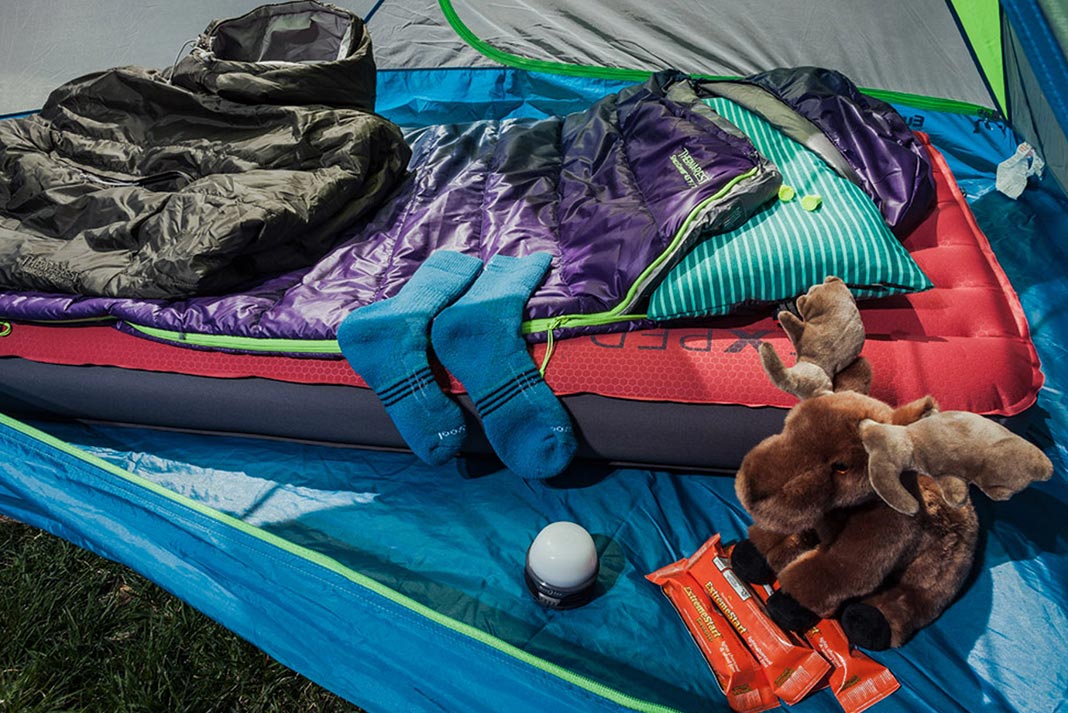
AB: Dark sea salt Lindt chocolate.

CA: Lots of coffee.

CL: Good friends.

CM: A good book and my harmonica.

DJ: A decent camping chair.

GC: Lip sunscreen.

JR: Chocolate.


The best companions are…

AB: Funny and brutally honest and that’s true when you want the truth.

GC: My husband Henrick and my stuffed moose and that’s true even on a small sailboat together for six months.

PK: Willing to challenge you as much as they support you.


The greatest piece of advice I ever got was…

AB: It’s all a game and I made that up.

CA: Don’t be afraid to walk away from a rapid if you’re not feeling it and I got that from Michael J. Smith.

CL: Remember to take things as they come and don’t push yourself too hard and I got that from Andy Stamp, my BCU Level 5 mentor.

CM: Always make contingency plans and backup your backup and I got that from my friend Bruce Lash.

DJ: If you are unsure of the answer just speak with confidence and everybody will believe you and I got that from my father.

JR: When paddling in surf you are playing in a three-dimensional world with X, Y and Z axes—forward, turning and revolving—and I got that from Turner Wilson.

PK: Don’t worry about what you can’t change and I got that from my mom.


Ten years from now…

AB: I will be whispering to wild mustangs.

CA: Will still be trying to improve my personal paddling skills and instruction methods.

CL: I will be watching my three boys surfing waves on the Shubie.

CM: I hope I am doing the same things I do today.

DJ: I will still be debating if I should get that tattoo or not.

GC: I would love to have helped inspire a local, self-sustaining community of paddlers in Loreto.

JR: I will own a Mercedes Sprinter 4X4 dream van.

PK: I want to go on a huge expedition with my son who is now two.

The kayak I’m paddling most right now is…

AB: The kayak that I rent from whatever country I am paddling in at the time.
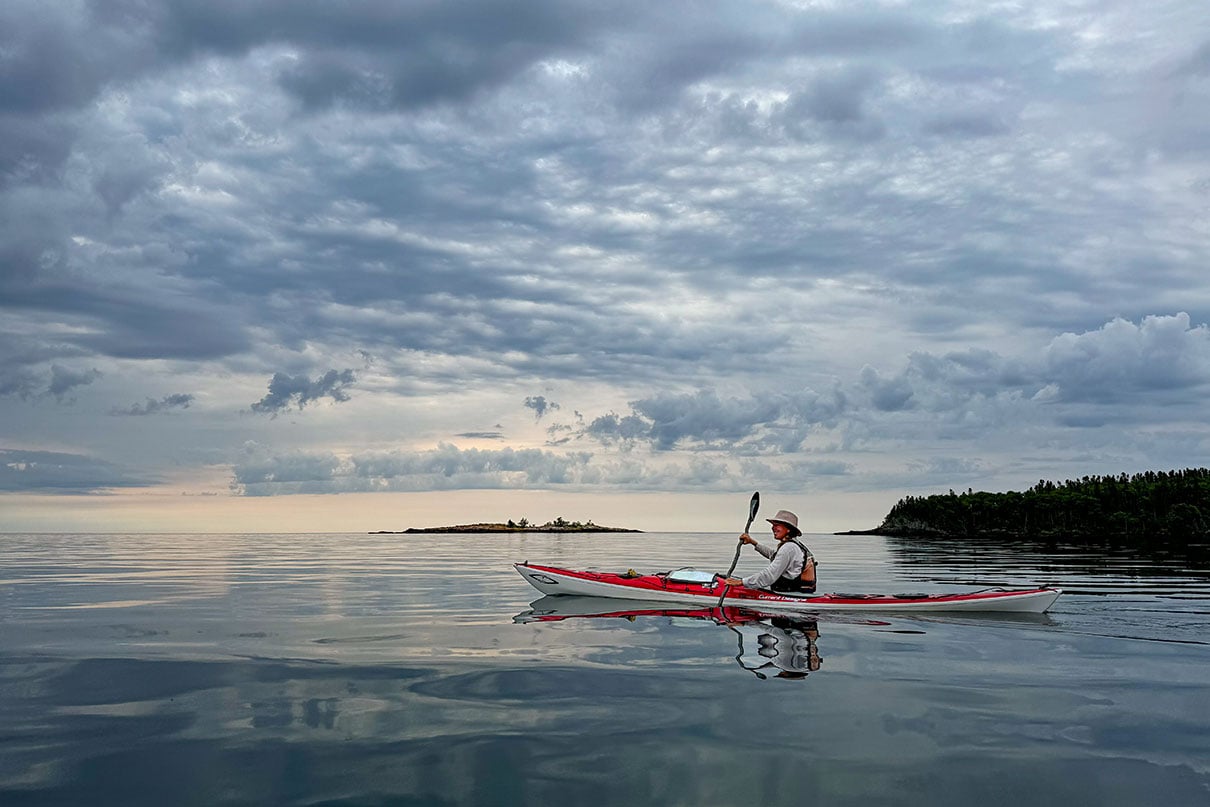
CA: Jackson Karma RG and my TideRace Xplore.

CL: P&H Aries 155.

CM: Valley Nordkapp.

DJ: P&H Cetus LV.

GC: NDK Romany Classic for coaching, NDK Explorer for guiding, and Pygmy Arctic Tern 14 for kicks.

JR: My Valley Anas Acuta.

PK: P&H Aries.


The world would be a better place if more people…

AB: Would give and receive hugs.

CA: Got together and went to wild places on a regular basis.

CL: Were honest to one another and appreciated the things they have.

CM: Supported the political notion that education, vacation and health care are fundamental human rights.

DJ: Listened to Air Supply.

GC: Giggled like Tara Mulvany. Or paddled like her.

JR: Cared about the environment.

PK: Experienced new places and cultures.


The most important qualities of a leader are…

AB: Great communication, no ego and stoke.

CA: Listening and empathy.

CL: The ability to give quality feedback and ask appropriate questions.

CM: Tolerance and the ability to set a good example.

DJ: The ability to make it fun. Check your ego at the door. Students are there to learn, not to worship you.

GC: The ability to build a team and to help each member feel like they contribute something elemental to its success.

JR: Listening well.

PK: Empathy, confidence and communication.

The hardest part about making that dream trip happen is…

CL: Vacation time.

CM: Choosing between so many dream trips.

DJ: Getting everybody’s availability synced up.

GC: Picking a date to leave. Without a date, it’s just a dream.

JR: Getting free time during the peak season.
Cover of Adventure Kayak Magazine, Spring 2017 issueThis article was first published in the Spring 2017 issue of Adventure Kayak Magazine. Subscribe to Paddling Magazine and get 25 years of digital magazine archives including our legacy titles: Rapid, Adventure Kayak and Canoeroots.
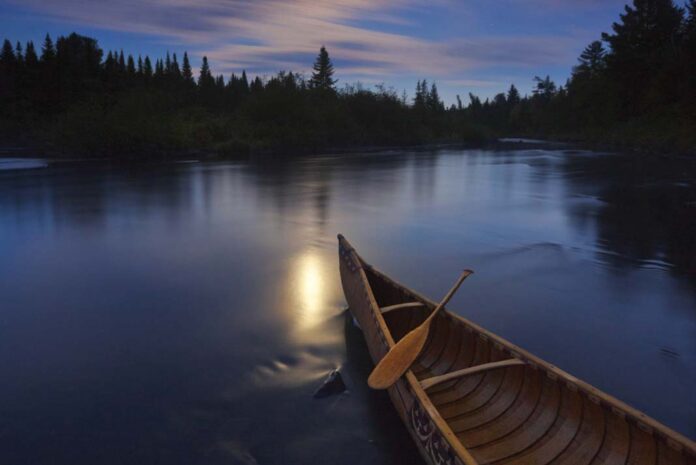
 

Rethinking the Canoe

TROUBLED WATERS BELOW.| PHOTO: MICHAEL MELFORD

A while back, a publisher sent me a manuscript for review that eventually became the book, Inheriting a Canoe Paddle: The canoe in discourses of English Canadian nationalism. I didn’t particularly like what author, University of Victoria English professor Misao Dean, had to say about the canoe as a vessel of conquest.

In the book, Dean alleges the canoe to be a symbol of theft, genocide and colonialism, appropriated by mostly white, middle and upper class men. She charges that by turning the canoe into a symbol synonymous with the natural world, we’ve disassociated ourselves from the crimes the Canadian government and Canadians committed against First Nations.

While I chafed at the post-structuralist language she used to make her argument—and that she pointed to romantics like me as perpetuators of the idea of the canoe as a “morally untouchable symbol”—I knew at the core of what she had to say was a perspective all canoeists must engage.

Fast forward to 2016. I ran into Jim Brown, the irrepressible host of contrarian radio program, The 180. “Got any contentious canoe stories?” he asked. Did I ever. I tipped him off that Dean would be sure to put the contrarian post-modern cat amongst the self-possessed paddling pigeons.

Following the radio program, response to Dean’s thesis blew up. Reaction was swift and largely furious, expressing vitriol that would never be used in face-to-face conversation. Even Fox News picked up the story.

The recent findings of the Canadian Truth and Reconciliation Commission call for a long overdue righting of historic wrongs put upon North American Indigenous by those of us who followed Columbus in 1492. The central message of the TRC Report is that these transgressions are so deeply seated in our ways of thinking and so seamlessly integrated into the decision-making structures of our governments as to be totally invisible. We see, hear and experience ongoing consequences of conquest and still, for the most part, configure trauma in Indigenous communities as problems for “them” to solve.

TROUBLED WATERS BELOW.| PHOTO: MICHAEL MELFORD

The ongoing legacy of colonialism is not their problem. It is our problem—it belongs to us all. And it’s high time we started taking collective action to reinvent ourselves, as individuals, as communities and as nations. The trouble is finding workable ways to turn that desire to become part of the solution into our everyday lives. That’s where the canoe has massive untapped potential.

Canada is a river of nations flowing through a nation of rivers. The canoe in all its forms is still the often best and most appropriate way to get around. It’s also something that Indigenous and settler peoples of every stripe have in common. Whether in Albuquerque or Attawapiskat, we are all in the same proverbial boat. If we are to reconcile successfully, all paddlers need to pull together. That means listening to all well-considered voices, including Misao Dean. While I respectfully disagree with much of Dean’s views on the canoe, she does say some things that are worth repeating.

Toward the end of The 180 interview, the host asks what the author would like paddlers to do.

“When they go to their put-in points, when they plan their trips, they should ask themselves, ‘Whose traditional territory is this? How did it get to be in public domain? How do I feel about the fact that kind of narrative was done in my name?’” says Dean. “Look online and see where you can support the struggles of Indigenous people, for their legal rights, for their treaty rights and for their real valuation in Canadian culture.”

That’s a sentiment all canoeists can get behind.

CCC PartnerBadge WebJames Raffan is the director of external relations for The Canadian Canoe Museum in Peterborough, Ontario. Watch THE CANOE, an award-winning film that tells the story of Canada’s connection to water and how paddling in Ontario is enriching the lives of those who paddle there. #PaddleON.


This article originally appeared in Canoeroots
 Spring 2017 issue.

Subscribe to Paddling Magazine and get 25 years of digital magazine archives including our legacy titles: Rapid, Adventure Kayak and Canoeroots.
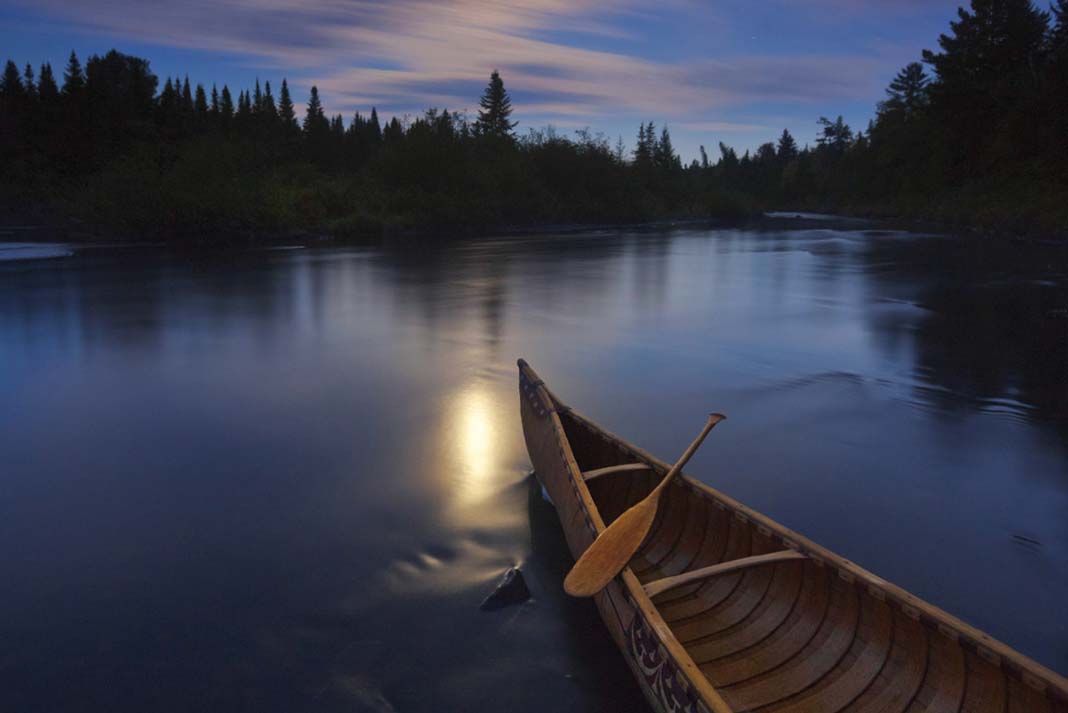
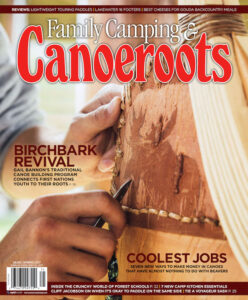
Birchbark Dreams: Canoe Building Connects First Nations Youth To Their Roots

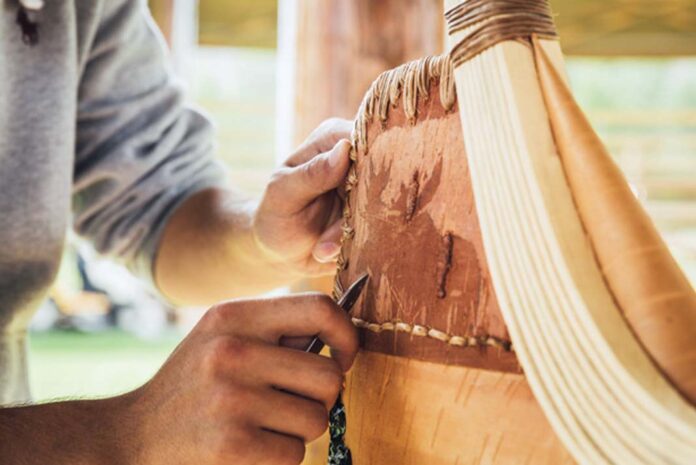
A student uses bark etching (scrafitto) to add a moose to the canoe
A student uses bark etching (scrafitto) to add a moose to the canoe. | Feature photo: Courtney Boyd

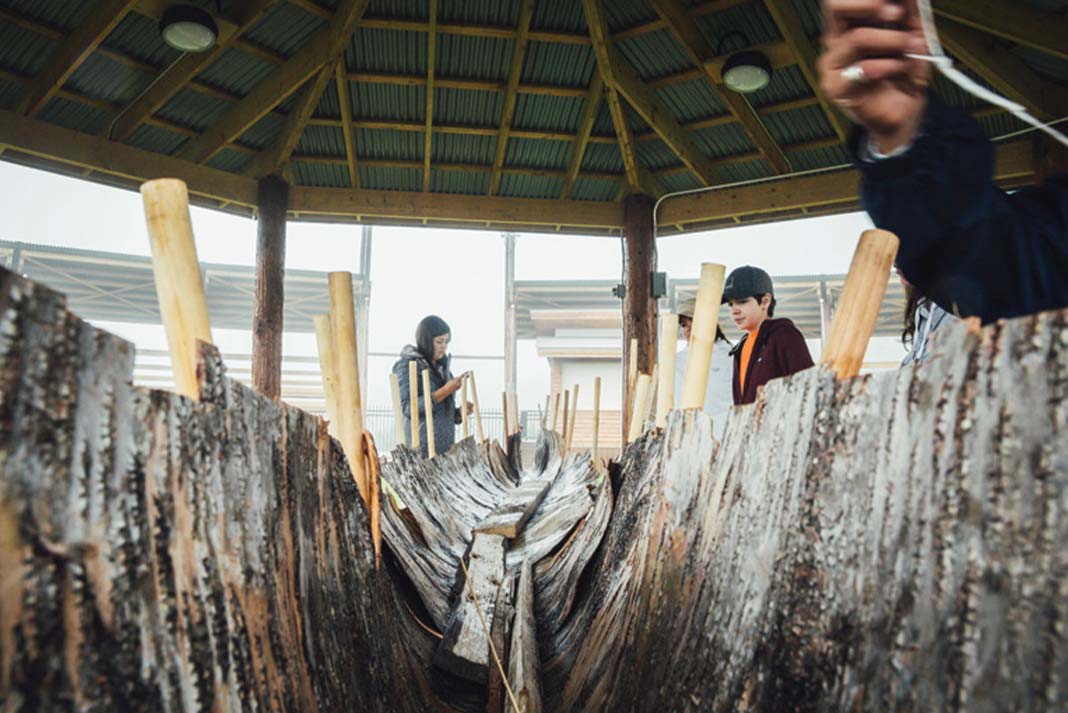
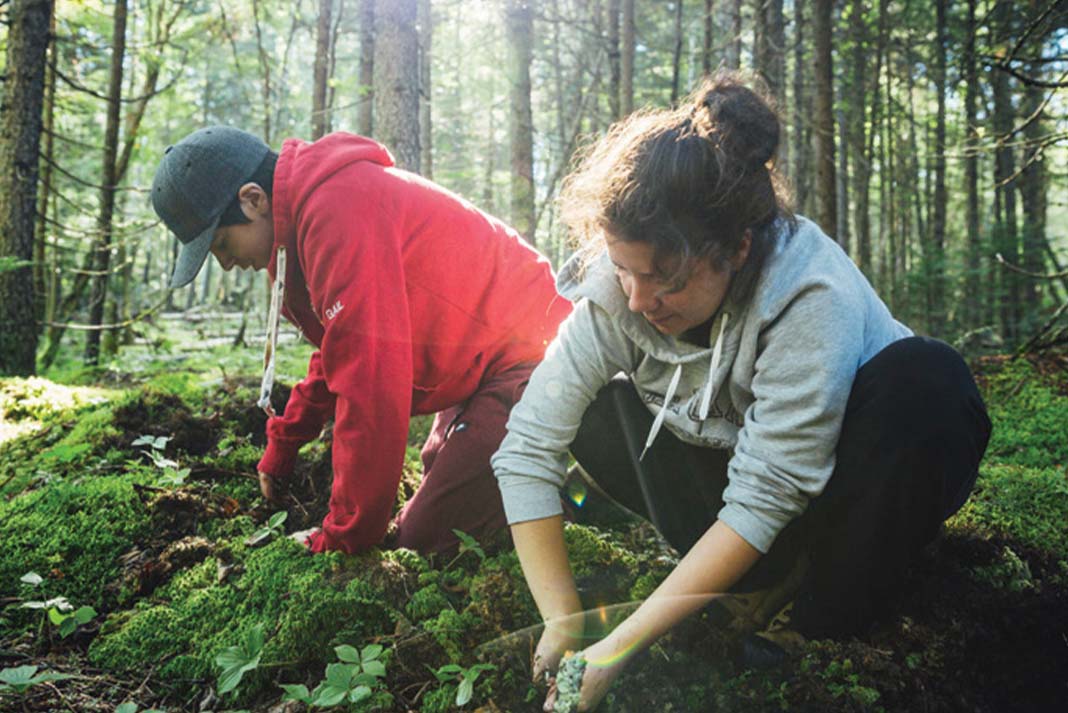
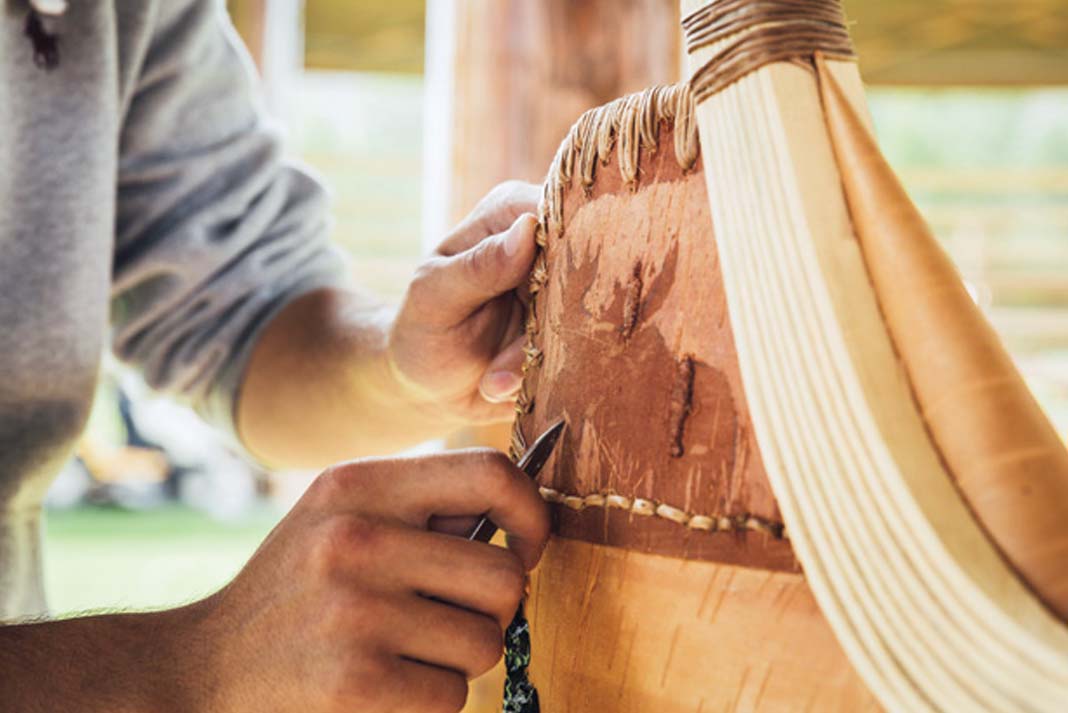
It’s a cool, misty morning at the powwow grounds on Anemki Wajiw, which overlook the City of Thunder Bay on Fort William First Nation on Lake Superior’s north shore. A group of four young men and women are prepping the workspace and materials to build a birchbark canoe. They’ve already gathered the bark, spruce roots, cedar and spruce gum from the land, following traditions of their ancestors. Their work is part of a resurgence of Ojibwe culture at Fort William, but what appears to be a lesson about craftsmanship is actually about respect—for the land, culture and each other.

Birchbark dreams: Canoe building connects First Nations youth to their roots

Fort William First Nation is located just outside of Thunder Bay, Ontario, on the north shore of Lake Superior. It’s a region steeped in canoe culture lore. The area’s earliest inhabitants traveled the waterways by birchbark canoe. Thousands of years later so did the European fur traders who came seeking beaver pelts.

Nestled where the Kaministiquia River flows into Lake Superior, the area was also a voyageur mecca and host to an important fur trading post. Today Fort William Historical Park—the world’s largest reconstructed fur trading post—stands as a testament to that era.

Nowadays, there are not many birchbark canoes in the Thunder Bay area, save those used for re-enactments. This group of Fort William First Nation youth are working to change that.

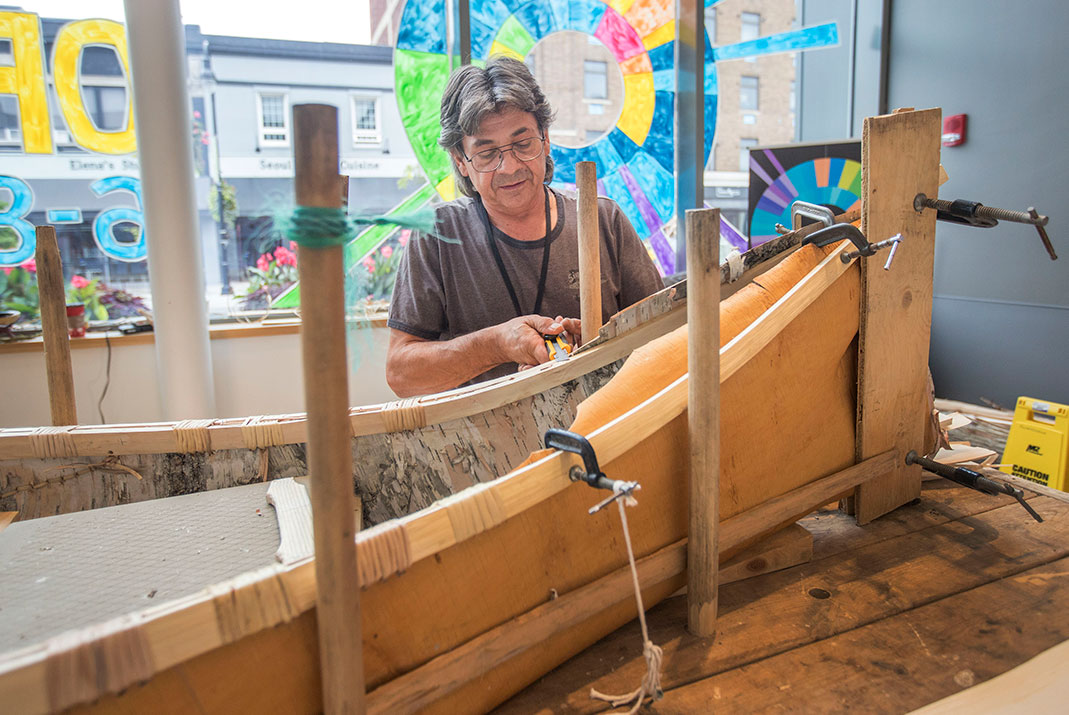
Each student dedicated hundreds of hours to achieving the finished piece of living history. | Photo: Courtney Boyd

For the past two years, Gail Bannon, Fort William First Nation’s community and recreational coordinator, has lead a group of local youth in canoe building. The small team has built a 15-foot and an 18-foot birchbark canoe completely by hand. The project evolved from Bannon’s love of birch and passion for involving youth in harvesting materials to make baskets and wigwams.

“I’ve always been into watersports, so I thought ‘let’s get them into that,’” she says. “I don’t see many of the kids out there swimming in the bay or going out on boats, so I thought this would be a cool project.”

Reaching out to rediscovering traditional knowledge

In 2015, Bannon contacted Darren Lentz, a local elementary school principal with experience teaching in Indigenous communities.

“She wanted to revive Fort William’s canoe culture, and get youth out on the land engaged in cultural teachings,” says Lentz. He agreed to provide the expert skills instruction for the youth, having learned to build canoes while working at nearby Fort William Historical Park.

Eager to learn more than his coworkers could teach him, Lentz initially sought out an elder at Fort William First Nation who knew how to make snowshoes. By spending time with elders and craftspeople over several years, Lentz learned to make a variety of traditional items, including drums, sleds, tikanagans, baskets and canoes. As an educator, he is passionate about bringing these lessons into schools and to youth.

Gores are added along the side to bend the bark into the shape of the canoe. | Photo: Courtney Boyd

“I want students to explore and feel the connection and relationship to the land. A connection back to the land is a connection to culture, language, community and, in the end, ourselves,” Lentz says.

When Bannon started talking to Lentz about building canoes, she didn’t know of anyone in her community with that knowledge.

“I don’t know of anybody in my mother’s generation that knows how to build one. I asked myself, how could we have lost that?” she says.

[ Paddling Buyer’s Guide: View all wooden canoes ]

Prior to this initiative, canoe building at Fort William First Nation was last done during the Great Depression of the 1930s as part of a government effort to create jobs on the reserve. However, those were cedar strip canoes built using modern tools.

Though many youth were eager to sign-up for the project, it was a small and dedicated team of five that persevered and completed the canoes, giving more than 200 hours each towards the build.

Photo: Courtney Boyd

Tanya Fenton, a young mother and college student who helped supervise the group in 2016, says it was the opportunity to work outdoors as part of a team that attracted her 18-year-old daughter. Shaylah was part of the first build in 2015 and was in the unique position to share her knowledge with her mother the following year.

Teenagers turned expert canoe-builders

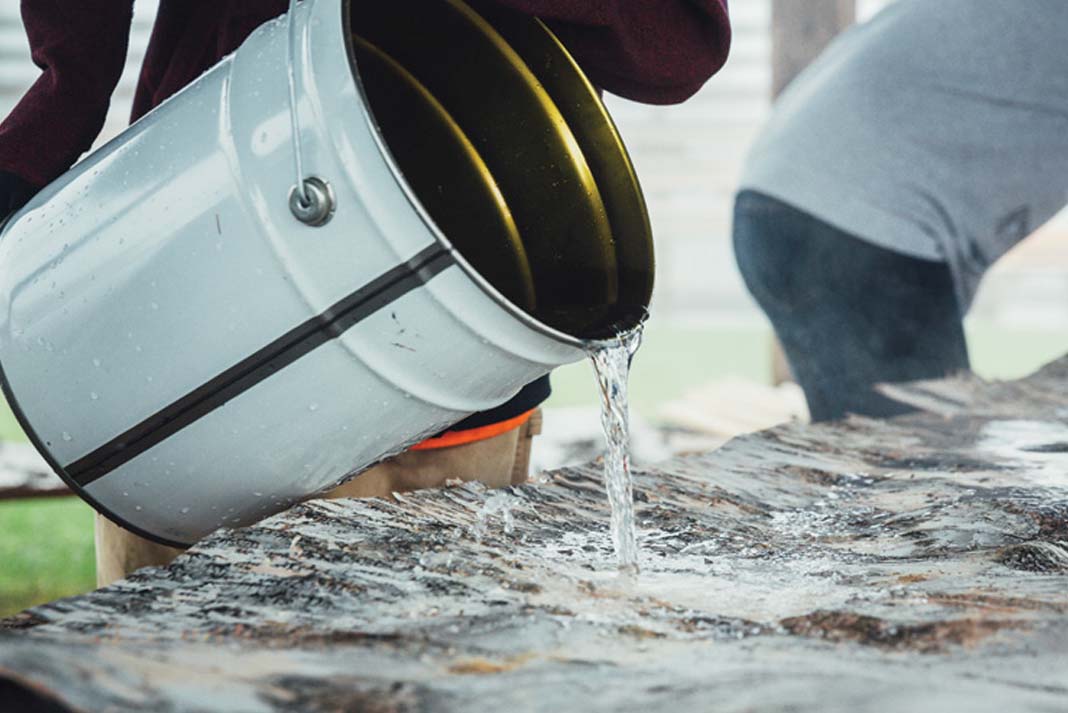
When I visit, the small group at Anemki Wajiw is laying out huge sheets of birchbark on a long table while spruce roots soak in a pail filled with steaming hot water. It’s an egalitarian effort with no clear leader. The youth are in constant communication. They move confidently around the table, passing tools and materials back and forth; it seems to me they’ve done this a hundred times. Conversation is punctuated with laughter as they discuss the prospect of taking the 18-foot canoe they built the previous summer out for a sunrise paddle. It’s a dreamy yet seemingly insurmountable prospect for the teenagers given their shared disdain for the dawn hour.

An integral part of any build is collecting materials from the land. Although the materials required depend on the size of the canoe, approximately six to seven square meters (60 to 80 square feet) of bark is needed. Winter bark is preferable—it is removed with the inner rind attached, whereas summer bark can be dry and prone to cracking.

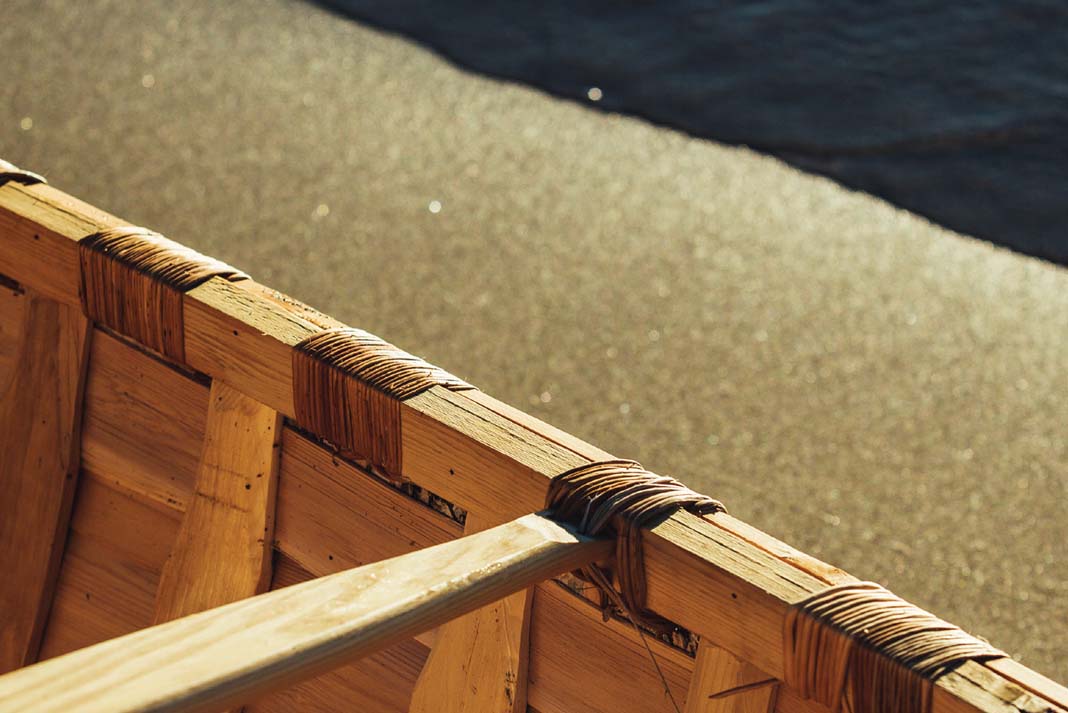
More than 210 meters (700 feet) of spruce roots is needed to complete the lashings on the gunwales and stitching of the bark.

Lentz says that the time required gathering materials “depends on whether you know where to collect them and whether you have scouted spots last year.”

It’s like picking blueberries or fishing—having someone take you to their favorite honey hole is always more efficient than scouting your own.

Bannon believes showing respect for the resources is showing respect for oneself. “Knowing how the canoe comes to be forges a deeper connection to the land.” It’s a unique introduction to canoeing—collecting materials, building the canoe and then learning to paddle.

“It’s cool to learn traditional crafts and make something that can be shared with the community,” adds Shaylah. Lentz confirms her work was meticulous and her lashings “stunning.”

A student uses bark etching (scrafitto) to add a moose to the canoe. | Feature photo: Courtney Boyd

“She might never build a canoe again, but what I see in her is excellence,” Lentz says. He thinks the experience was positive for all of the youth involved, whether they only participated in the early stages or stuck it out until the canoe was completed. The project isn’t really about building a canoe. It’s about building relationships with one another, cultural traditions, and the land.

Program provides for the teachers of tomorrow

Bannon knows building a canoe is meaningful to the youth. It’s a hand-on experience and a lot of hard work—there’s no abstract learning or classroom daydreaming. “It’s a lot of touching and feeling—they get to really experience the materials,” she says.

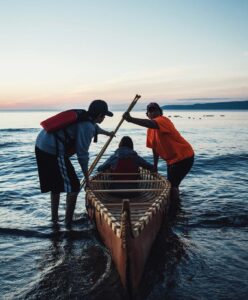
Not even paddling their new birchbark canoe for the first time compared to the proud moment when Fort William First Nation elders visited and expressed happiness at seeing the teenagers learning a traditional craft. For the elders, it’s a sign that traditional knowledge will continue on.

“If we do this five years in a row we’ll have a few students that will know how to build a canoe from scratch on their own,” she says. “Then they’ll be able to pass on that knowledge and connections. That’s what it’s all about.”

Michelle McChristie is a freelance writer who loves writing about the people and places of Northern Ontario. She lives on the north shore of Lake Superior.

Cover of the Spring 2017 issue of Canoeroots MagazineThis article was first published in the Spring 2017 issue of Canoeroots Magazine. Subscribe to Paddling Magazine’s print and digital editions, or browse the archives.


A student uses bark etching (scrafitto) to add a moose to the canoe. | Feature photo: Courtney Boyd


Otterbox Premium Coolers

Courtesy Otterbox
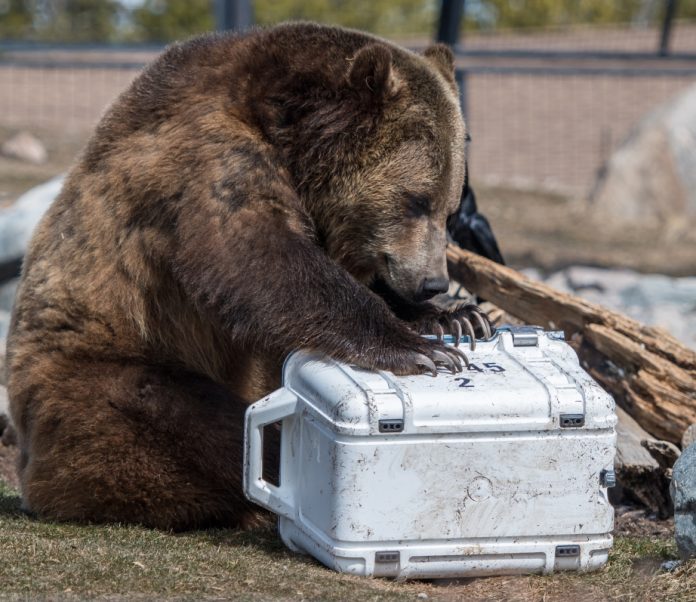
A grizzly bear tries to open the otterbox venture cooler.

OtterBox innovates bold products that deliver confidence and trust in any pursuit. From its humble beginnings with a drybox in a Fort Collins, Colo., garage, OtterBox has honed and leveraged its expertise in manufacturing and design to become the No. 1-selling smartphone case brand in the U.S. and a leader in rugged outdoor lifestyle products. At the center of every OtterBox innovation is a deeper goal to effect positive, lasting change. In partnership with the OtterCares Foundation, OtterBox grows to give back by inspiring kids to change the world through entrepreneurship and philanthropy. For more information, visit www.otterbox.com.

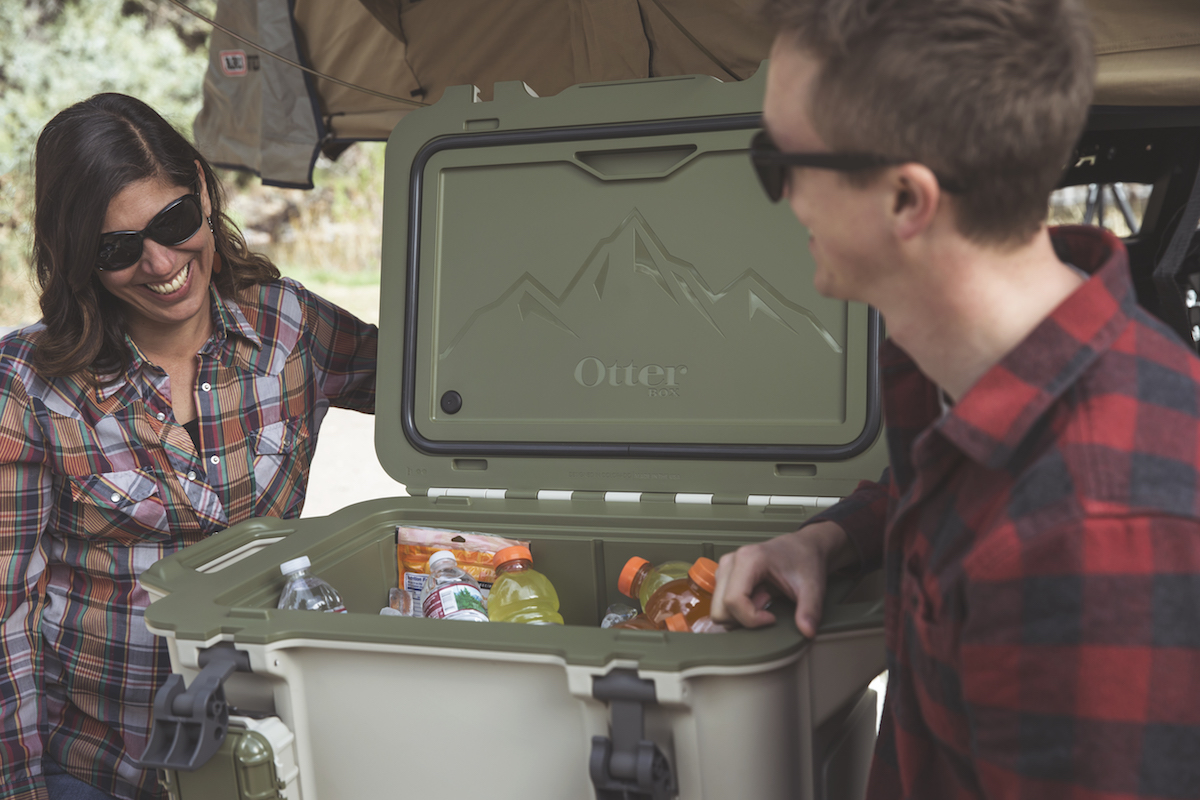
Two people stand beside an open venture cooler full of drinks.

OtterBox, an outdoor staple since 1998, is proud to introduce the Venture line of premium rugged coolers.

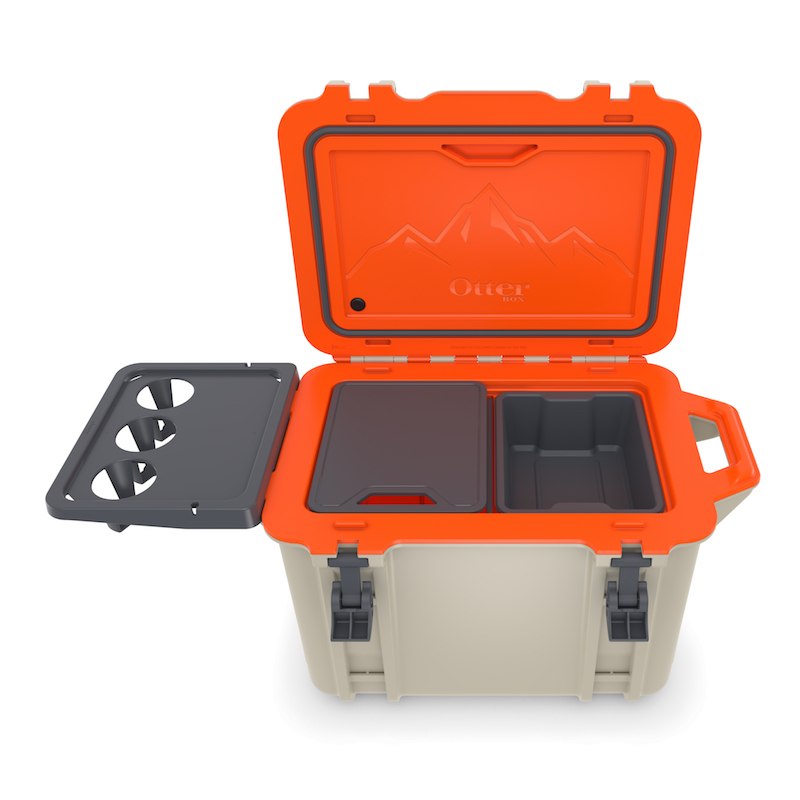
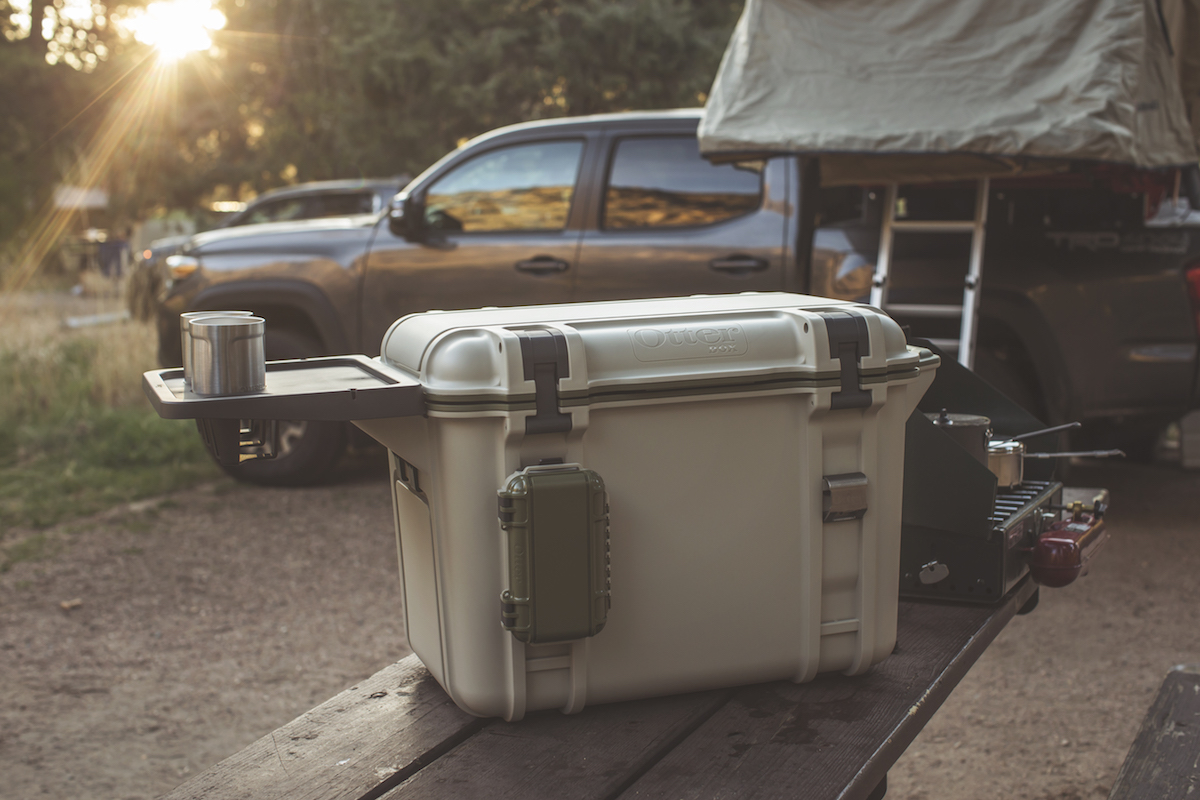
Venture coolers incorporate superior cooling technology and trusted OtterBox durability. The design is certified bear-resistant, can hold ice for up to 14 days and has been drop tested for durability on every side and edge, empty and full. 1 But Venture takes it even further with a fully customizable experience. A subtle and sturdy mounting system lets users attach accessories that fit their lifestyle. A cutting board, dry storage tray and separators help organize and maximize the internal space, while the sidetable, cup holders and drybox clips extend use beyond the confines of the cooler.

A shot of the venture coolers from Otterbox showing the internal accessories

Venture coolers are available in three sizes — Venture 25, Venture 45 and Venture 65 — and are designed and manufactured in the U.S. Other features include:

  • Sturdy, user-friendly latches that snap securely closed and hang out of the way when the cooler is open. The design allows for easy one-handed close and open.
  • Anti-slide rubber feet: keep Venture where it’s put.
  • Durable integrated handles that double as tie-down anchors and offer a comfortable, stable carry.
  • Slanted interior bottom for easy draining.
  • Interior nesting grooves, cutting board and storage tray rest on inner rim even when fully loaded.
  • Organization slots to create custom compartments (Separator sold separately).
  • Each Venture cooler is true to size: Venture 25 provides 25 quarts of internal capacity, etc.
  • Customizable experience with a variety of durable accessories, including a bottle opener, cup holders, dry storage tray, cutting board, side table and drybox clip.
  • Backed by OtterBox Limited Lifetime Warranty.

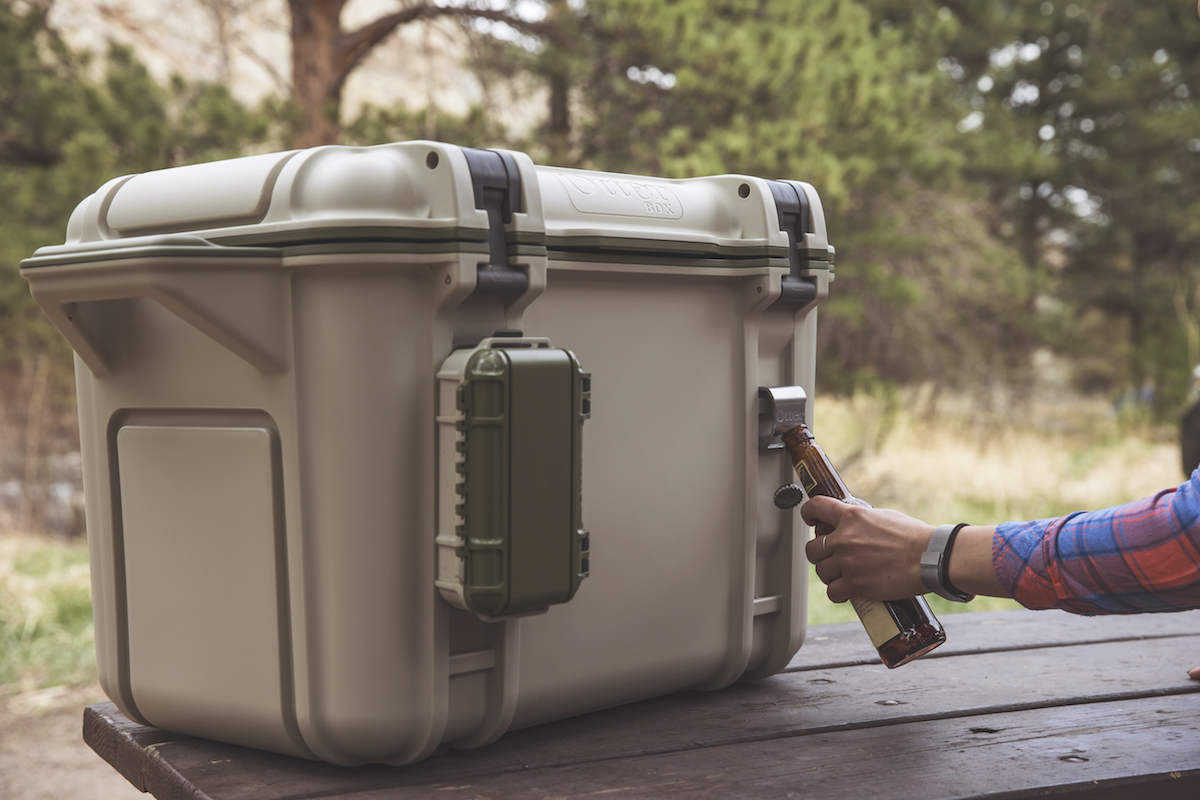
Venture 25, $249.99, comes with a bottle opener accessory that snaps securely to the front of the cooler.

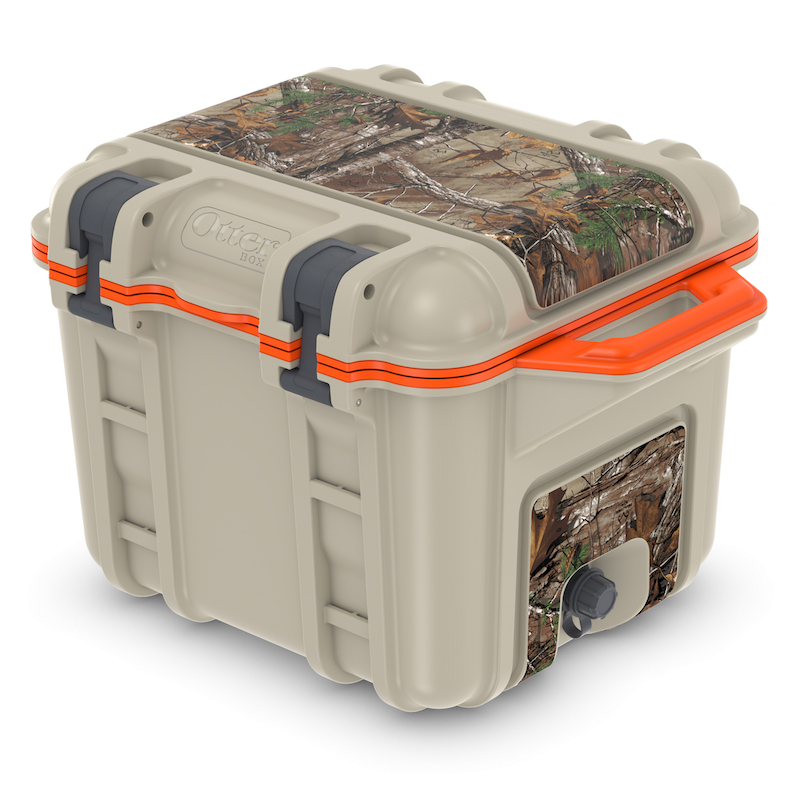
A shot of a closed venture cooler from otterbox.

Venture 45 and 65, $349.99 and $399.99, respectively, include a bottle opener and dry storage tray. Venture coolers are available in Hudson (white and blue), Ridgeline (tan and green) and Back Trail (Realtree Xtra camo).

VENTURE COOLER ACCESSORIES

BOTTLE OPENER

| Included with all Venture Coolers

Never misplace your bottle opener. This one stays put.

Mount the Bottle Opener to your Venture Cooler or screw it onto a drawer or wall and always know where to open up a cold beverage. 100% stainless steel ensures a long life opening all your bottled beverages.

FEATURES

  •     100% Stainless steel
  •     Attach to Venture Coolers
  •     Mount to walls, drawers, workbenches, etc.
  •     Open bottles with one hand easily
  •     Backed by OtterBox Limited Lifetime Warranty

——————————-

DRY STORAGE TRAY 

| Included with Venture 45 & 65 | also sold separately for $19.99

Convenient compartment keeps dry stuff separate from wet stuff in your Venture. It also keeps your grapes and peaches from getting smashed and creating a sticky mess. Whatever things you want to protect in your cooler, this is the place to keep ‘em. Also, isn’t it handy how the Storage Tray fits right into the lower interior groove of your Venture? We love that too.

FEATURES

  •     Food grade certified: cleans easily and sanitizes
  •     Fits all Venture Coolers
  •     BPA Free: safe for your life and health
  •     5.7 quart capacity
  •     Backed by OtterBox Limited Lifetime Warranty

——————————-

CUTTING BOARD $29.99

Cutting boards are handy tools to take on adventures. But they’re also so easy to forget or pack in the wrong box never to be found until you’re back home cleaning up. What’s great about this Cutting Board is that’s it’s an integrated piece of your Venture Cooler. Simply fill up your cooler and place the cutting board on the upper interior groove. Voila! Never misplace your cutting board again.

FEATURES

  •     Food grade certified: cleans easily and sanitizes
  •     Fits all Venture Coolers
  •     BPA Free: safe for your life and health
  •     Backed by OtterBox Limited Lifetime Warranty

——————————-

SEPARATOR $24.99

 Create compartments in your Venture Cooler to keep your snacks separate from the day’s catch and your beer separate from sodas. Designed for Venture Coolers, you can use up to three at a time to divvy up your space any way you wish.

FEATURES

  •     Food grade certified: cleans easily and sanitizes
  •     Fits Venture 45 & 65: divvies up your cooler space
  •     BPA Free: safe for your life and health
  •     Use up to three separators at a time
  •     Backed by OtterBox Limited Lifetime Warranty

——————————-

A person opens a beer bottle using the venture cooler from otterbox.

DOUBLE CUP HOLDER $29.99

Snap on the Double Cup Holder to your Venture Cooler and keep your bottles, cans, red cups and Elevation tumblers out of the dirt. Double Cup Holder is the solid base that keeps your drinks above ground and out of foot, bug and dirt level. When every drop of every beverage matters, you want the Double Cup Holder to keep your beverage safe.

FEATURES

  •     Fits all Venture Coolers
  •     Holds 2 Elevation tumblers, 2 red cups, 2 bottles, 2 cans or a combo of your choice
  •     Backed by OtterBox Limited Lifetime Warranty

——————————-

SIDE TABLE $69.99

Call it your outdoor sidekick, sideboard and side arm for your Venture. Attach this handy multi-use Side Table to your Venture to extend your working surface and add three cup holders. It also includes a Cutting Board that adds additional surface area. Pack it along and configure it in an instant.

FEATURES

  •     Fits all Venture Coolers
  •     Holds 3 Elevation tumblers, 3 red cups, 3 bottles, 3 cans or a combo of your choice
  •     Includes Cutting Board (BPA free)
  •     Backed by OtterBox Limited Lifetime Warranty

——————————-

DRYBOX CLIP $4.99

Little things don’t get lost when you pack them in your Drybox and clip it to your Venture Cooler. An ingenious attachment, Drybox Clip snaps onto your Drybox 3250 Series and then onto your Venture Cooler. Keep tiny tools and fishing flies on hand with this nifty clip.

FEATURES

  •     Attaches Drybox 3250 Series to Venture Coolers
  •     Slides on and off easily
  •     Backed by OtterBox Limited Lifetime Warranty

——————————-

A venture cooler from Otterbox sits on the bed of a truck in the sunshine.

LOCK

Secure your Venture with the American Lock padlock. Venture latches are designed to work precisely with the 5-inch long shackle lock. Kids, bears and your campsite neighbor Bob can’t get in and steal your stuff.

FEATURES

  •     Durable long shackle padlock (5 inches)
  •     Fits all Venture Coolers
  •     Includes 2 keys
  •     Backed by OtterBox Limited Lifetime Warranty

——————————-

TIE-DOWN KIT $39.99

Use the versatile Tie-Down Kit to ensure your Venture Cooler stays put for the long haul. Strap it on your raft, your four wheeler and your truck for rough rides. The Tie-Down Kit ensures your Venture and its contents arrive at the destination intact.

FEATURES

  •     Premium, die-cast zinc alloy, non-slip buckles
  •     Two, 6-feet straps
  •     Durable, high-density 1-inch polypropylene material
  •     2,100 lb breaking strength | 700 lb working load
  •     Works with all Venture Coolers
  •     Backed by OtterBox Limited Lifetime Warranty
  • {loadposition EndContent}

Fluid State: Why Whitewater Classification Continues To Embrace Ambiguity

a young man paddles through whitewater on the Gatineau River
High tension on the Gatineau River. | Feature photo: Thiomas Fahran

Looking back, the American Canoe Association’s River Safety Report 1982–1985 is one of the more important artifacts in our relatively short and lightly-documented whitewater history. A paddling friend found a stained but otherwise decent copy in a used bookstore and left it on my doorstep. The thin volume makes for a fascinating read because, except for obvious improvements in equipment, very little about running rivers has changed in the last 35 years.

Why whitewater classification continues to embrace ambiguity

The book provides a snapshot of paddling via an unlikely medium; accident reports. The majority of these accidents resulted in fatalities, of which the echoes can still be heard today. Collected at a time when whitewater kayaking was just emerging from its fiberglass infancy in the 70’s to an adolescence driven by a plastic polyethylene revolution, this little booklet managed to capture a fringe group coming to terms with the risks inherent in our sport.

Edited by the venerable grand-daddy of river safety, Charlie Walbridge, the reports are succinct, honest and insightful. Some examples: A discussion of the “unusual mental fitness” required for running class V rapids, the near futility of rope rescue when dealing with a heads-down pinned kayaker, and the moral dilemma involved in offering to help a group of struggling paddlers make it to the take-out.

High tension on the Gatineau River. | Feature photo: Thiomas Fahran

Even in these pre-Dancer days (the Perception Dancer being the boat that brought kayaking into its first boom beginning in 1986), the limits of the sport were well understood and, quite frankly, are mostly unchanged. All of the bread and butter classic runs, including the Gauley in West Virginia and Colorado’s Arkansas, were well traveled even by 1982. The majority of high-end difficult rivers even by today’s standards were already run.

A new look at an old problem

It was at the back of the booklet in the appendix that I took the most interest. A five-page piece entitled “River Classification—A new look at an old problem” essentially set the tone for managing risk in a way that we have all adopted and use today, perhaps without even knowing it.

The paper was intended to standardize our class I to V difficulty rating scale by benchmarking well-known runs against each other. The hope was to create equilibrium between a class III in New Mexico and a class III in Maine, or equate a class IV in Idaho with a class IV in Georgia. Whitewater paddling was regionalized up until this point, so this benchmarking movement was somewhat contentious.

Classification was first inspired by the already established mountaineering hiking route difficulty scale. Over the years, there have been proposals seeking to refine and specify a river scale that could account for gradient, volume and navigational hazards. None have caught on. More than 30 years later, the class I to V river classification system remains a bit vague with much room for interpretation, even though the descriptions themselves have barely changed since 1959.

The appendix is notable for its underlying message: Rivers are too complex to simplify into a number. Walbridge goes to great lengths in this piece to explain what a river classification cannot do. It cannot account for all of the variables of every river, for cold weather or poor paddling partners, nor for ego or ignorance. These themes are woven throughout the accident analyses that precede the discussion on river difficulty rating, and point to an ethic on risk now pervasive in whitewater.

“With this [class I to V scale] and a bit of healthy skepticism resulting from the realization that accurate classification is an elusive goal you should be able to stay out of trouble,” concludes Walbridge.

Walbridge plants responsibility firmly in the hands of the paddler to deal with every river on a rapid-by-rapid and hazard-by-hazard basis. Since then, rather than eliminate ambiguity, whitewater has grown to embrace it.

Our dynamic environment is what sets our activity apart from almost all others, and that elusive goal of standardization has more or less disappeared. What is left is every individual paddler’s choice to walk an easy rapid or to charge a hard one—either way it is up to individuals to decide for themselves.

Scout, come up with a plan, anticipate and accept what can go wrong and commit to that or come up with a plan B. None of this has changed from the earliest days of running whitewater.

Cover of the Spring 2017 issue of Rapid MagazineThis article was first published in the Spring 2017 issue of Rapid Magazine. Subscribe to Paddling Magazine’s print and digital editions, or browse the archives.


High tension on the Gatineau River. | Feature photo: Thiomas Fahran


5 Questions For Dale Williams On Surfing The Tybee Triangle

Dale Williams paddles his sea kayaking near Georgia's Tybee Triangle
Williams: A free stern is a free mind. | Feature photo: Jan Bloch Photography/Sea Kayaking UK/NDK

Following a move to the East Coast, Dale Williams developed a fascination with riding the chaotic beach waves of Georgia’s now-famed Tybee Island, opening up new terrain for a sport he’d discovered quite by accident. When Williams co-founded Sea Kayak Georgia out of his Tybee home in 1994, it was the only high-end retail and instruction center between New Jersey and Tampa. By the end of the decade, the sleepy barrier island was appearing on Top 10 lists for adventurous paddlers from coast to coast.

Q&A with Dale Williams on surfing the Tybee Triangle

1 Who talks about yaw?

I do, all the time. I came to sea kayaking from skiing, paragliding and competitive skydiving. I also spent six years as a fighter controller in the U.S. Air Force training programs. Yaw, pitch, roll—such great conversation starters. It’s become my default language for translating body-boat-blade relationships to my students. They either love it, or I get the blank stare.

2 What guides your approach to coaching?

I’ve had many great coaches and I learned from every one of them, but two aspects of training I never enjoyed were the boot camp-style emphasis on pass/fail performance and the use of ill-constructed on-water scenarios.

Williams: A free stern is a free mind. | Feature photo: Jan Bloch Photography/Sea Kayaking UK/NDK

The stress management skills necessary for real world decision-making are not the same as those learned in manufactured situations. These develop good acting skills and a tolerance for illogical suspensions of reality, but they may also delay productive action in real situations.

I might ask students to surf with a cockpit full of water or with half a paddle, but I stopped asking them to pretend to be someone they’re not, or to pretend that environmental conditions exist that actually don’t.

3 When did you start surfing your kayak?

I started going out daily in the winter of 1994, when I first moved to Tybee Island. Steve Braden, who would help me found Sea Kayak Georgia, and I were temporarily unemployed, with lots of time on our hands.

We knew very little about kayaking and hardly anyone who intentionally tried to surf sea kayaks. But I was hooked as soon as the first wave walloped me in the face.

We learned that sea kayaks don’t fit on the face of a concave wave like surfboards or surf kayaks. Bury your bow or stern on a big wave and you broach. So it was back to lift, drag and stall—basic aerosports principles that work wonders for long boats on waves.

4 Where is Tybee Island’s most exciting paddling?

When I moved here to be with my wife Debbie, it was mostly backwater paddling by naturalists and camping enthusiasts. Kayaking then was an extension of backpacking culture.

I wanted to see if expeditions were feasible ocean side. With so many creeks and rivers emptying into our coastline, the sandy sea bottom moves and throws up new wave dynamics every day. These beach waves are confused and small compared to West Coast point breaks, but Tybee Island’s river mouths make for great tide races and learnable surf, year-round.

It was experimental at the time, but by offering rough water instruction, we got people into the surf zone and helped bring a new athleticism to the sport.

5 Why aren’t you bored yet?

Before I discovered surfing, I thought sea kayaking was one of those “safe to ignore” sports, with not much sense of urgency or risk management required. Shows how little I knew. After that first winter learning rough water, I remember thinking: not only does kayaking take you to places of amazing beauty, it’s also full of peak experiences.

Right now, I’m all about new paddling destinations and more wilderness. You know, it’s not wilderness unless other critters are above you in the food chain. So I’ve been organizing trips with Turnagain Kayak in Alaska and I’m collaborating with partners for excursions in Chile, Ecuador and possibly China.

Cover of Adventure Kayak magazine, spring 2017 issueThis article was first published in the Spring 2017 issue of Adventure Kayak. Subscribe to Paddling Magazine and get 25 years of digital magazine archives including our legacy titles: Rapid, Adventure Kayak and Canoeroots.

Williams: A free stern is a free mind. | Feature photo: Jan Bloch Photography/Sea Kayaking UK/NDK


Paddle Lake Superior’s Rossport Islands

a canoe with a spray deck rests on the shores of Lake Superior along with a tent at sunset
Feature photo: Gary McGuffin

One of our favorite places to introduce canoeists to Lake Superior is the Rossport Islands. The largest archipelago on the largest lake on the planet is also the gateway to the largest protected freshwater ecosystem in the world. The forest here is boreal, and it is festooned with hanging lichens and thickly carpeted with mosses—attractive habitat for woodland caribou, moose, black bear and wolves.

Paddle Lake Superior’s Rossport Islands

Each island in the archipelago provides a unique natural and cultural experience for the modern-day adventurer and naturalist. In shallow channels, paddlers can feel the powerful ebb and flow of the lake’s seiches, a phenomena caused by changing pressures over the lake’s vast surface. Occasionally, we are treated to the thrill of finding human-made pottery shards pressed with signature-corded patterns, or nature-made agates cracked open revealing sparkling crystal structures. Whether we are camped on the island’s grassy clearings or on smooth bedrock, we are reminded that the traditional campsites have been in use for thousands of years.

Painter Lawren Harris wrote of the North Shore, “At times, there were skies over the great Lake Superior, which, in their singing expansiveness and sublimity, existed nowhere else in Canada.”

a canoe with a spray deck rests on the shores of Lake Superior along with a tent at sunset
Feature photo: Gary McGuffin

Rossport paddling trips

If you have a half-day:

Circumnavigate Channel Island. Paddling southeast from Rossport, navigate between Quarry and Healey Islands to Steamboat Channel where beautiful clear green water meets the low cliffs of Jacobsville sandstone—billion-year-old banded rock that is brick red, pink, grey and black.

If you have a day:

Paddle to the stromatolites east of Rossport. Blue-green algae, the Earth’s earliest producers of oxygen, left geologic footprints in the form of beautiful concentric circles embedded in the shoreline of what is now Schreiber Channel.

[ Plan your next Great Lakes paddling adventure with the Paddling Trip Guide ]

If you have a weekend:

When your weather radio reads fair weather, a trip to Battle Island Lighthouse is high on my must-visit list. In its 140-year history, the light station has been witness to some of the Lake’s greatest storms.

If you have a week:

Pack and paddle from Rossport to Silver Islet taking in the varied coast of the outer islands. My favorite features are Superior’s own Giant’s Causeway of honeycomb black basalt and the infamous island of silver off the tip of the Sleeping Giant.

Rossport Island stats

Island population: 65

Summer temperature: Can range from 5°C to 25°C, pack accordingly.

Wildlife: Lake trout, salmon, eagles, herons, black bear, woodland caribou, wolves.

Diversion: Hike a portion of the 53-kilometer Casque Isles Trail between Rossport and Terrace Bay as an alternative to paddling on a windy day.

Must-see: Meet the potter of Island Pottery, whose Lake Superior-inspired work is rooted in the ancient tradition of ceramic making in these islands.

Best eats: Serendipity Café and Gardens is famous for its trout, salads and desserts. Dine while enjoying the view of Rossport Harbour.

Luxury: Stay at the Willows Inn B&B overlooking Rossport Harbour.

Must-have: A seaworthy canoe with full spray deck cover.

CCC PartnerBadge WebGary and Joanie McGuffin fell in love with Lake Superior while paddling across Canada in 1983. Years later, a summer-long circumnavigation of the lake began and ended near Rossport. Ever since, the McGuffins have been championing the world’s largest freshwater lake, even forming the Lake Superior Watershed Conservancy and building a water trail to encompass it.

Watch THE CANOE, an award-winning film that tells the story of Canada’s connection to water and how paddling in Ontario is enriching the lives of those who paddle there. #PaddleON.


Starry Night: The Cosmic Story Behind A Beautiful Kayaking Photo

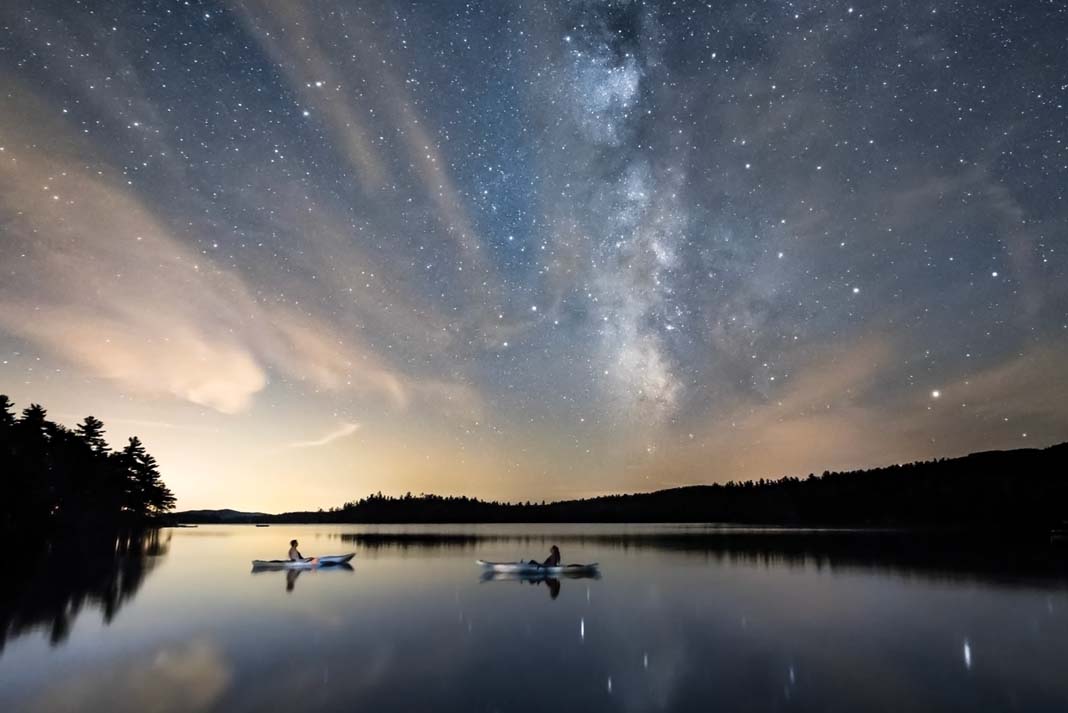
a photo of two kayakers floating on still water under the starry night sky
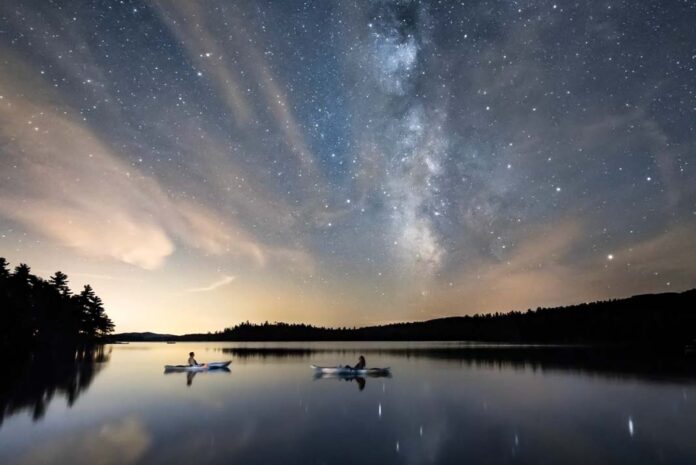
The photographer’s friends share stories under the starry night sky. | Feature photo: Will Strathmann

The night sky has always fascinated photographer Will Strathmann.

“My earliest memories of stargazing are from the exact dock where I took this photo,” says the Philadelphia lensman. Laying south of New Hampshire’s White Mountains, Squam Lake is also where Strathmann learned to paddle, and where he returns year after year for still waters and mesmerizing skies.

How Will Strathmann captured his starry night photo

Staying at the lake during a new moon, Strathmann and his friends launched their kayaks for a spontaneous night paddle.

“Kayaking on a lake that is as calm as Squam was that night feels as if you are floating within the stars,” he says. “Your sense of space and proximity disappears. It’s as if the only thing holding you up from falling into infinite darkness is the thin shell of the kayak and the glow of the stars pulling you up to the sky. I wanted a photo that captured that feeling—a combination of vulnerability and awe.”

The photographer’s friends share stories under the starry night sky. | Feature photo: Will Strathmann

Strathmann positioned his Nikon D750 SLR on a tripod and used an intervalometer to trigger the camera’s shutter at set intervals. “When shooting landscapes at night, I start with a 15-second exposure, f/2.8 and ISO 2000, then tweak the settings to get the photo just right,” he explains. “The biggest challenge was getting the kayaks in the right place and remaining still enough to not create motion blur.”

In low light, it helps to have obliging subjects

Strathmann and a helpful friend spent 15 minutes watching the stars and staying statue-still while the camera fired away.

“Capturing night scenes takes a lot of patience and practice,” Strathmann admits. Even then, getting the perfect after-dark adventure shot “comes down to trust and luck.” After he’s selected equipment, composition, location and timing, “everything else is up to the cosmos.”

“I wanted a photo that captured that feeling…of vulnerability and awe.”

“Sometimes you get unlucky and it clouds over or the shooting star falls just out of frame. But it’s those times when preparation meets good luck and the lake is calm, the clouds are just right and the kayaks don’t move—that’s what makes astrophotography exciting and why I love what I do.”

Cover of Adventure Kayak magazine, spring 2017 issueThis article was first published in the Spring 2017 issue of Adventure Kayak. Subscribe to Paddling Magazine and get 25 years of digital magazine archives including our legacy titles: Rapid, Adventure Kayak and Canoeroots.


The photographer’s friends share stories under the starry night sky. | Feature photo: Will Strathmann


How The British Co-Opted Kayaking

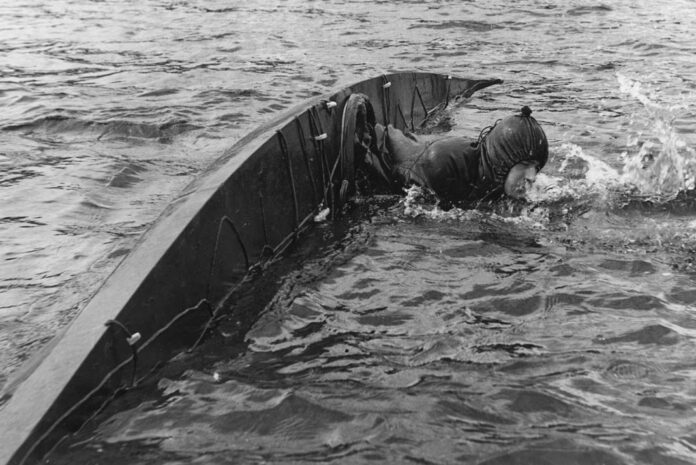
British sea kayaking pioneer Ken Taylor demonstrates chest swelling at Loch Lomond in 1960
The kayak that started it all: Ken Taylor demonstrates chest swelling at Loch Lomond in 1960. | Feature photo: Courtesy Ken Taylor

When the British pound sterling plunged in currency markets recently, my paddling friends pounced, snatching up made-in-England kayaks and other kit. Around the same time, a landlubber friend asked me why sea kayaking—an activity with roots in Arctic North America—has its modern epicenter in the U.K.

How the British co-opted kayaking

It’s a good question. You’d expect contemporary sea kayaking to have originated in Denmark, which governs Greenland; or Russia, which colonized Alaska, encountered the Aleuts and renamed their traditional iqyax the baidarka. But we don’t put in boat orders when the krone or ruble drop.

British sea kayaking pioneer Ken Taylor demonstrates chest swelling at Loch Lomond in 1960
The kayak that started it all: Ken Taylor demonstrates chest swelling at Loch Lomond in 1960. | Feature photo: Courtesy Ken Taylor

Sure, English explorer and privateer Martin Frobisher brought a Baffin Island kayaker and his boat back to London in 1577. Yet British dominance of sea kayaking stems from a much more recent happenstance involving two Scots and the work of a German-American.

The first Scot was a geologist named Dr. Harold Drever, who visited Greenland to study rocks and along the way developed an affinity for kayaking. In 1958, back in Scotland, he met a University of Strathclyde student and paddler named Ken Taylor. Drever encouraged Taylor to study Greenland kayak culture at Illorsuit in West Greenland. Taylor traveled to Illorsuit and returned in 1959 with a kayak built for him by Greenlander, Emanuele Korneliussen.

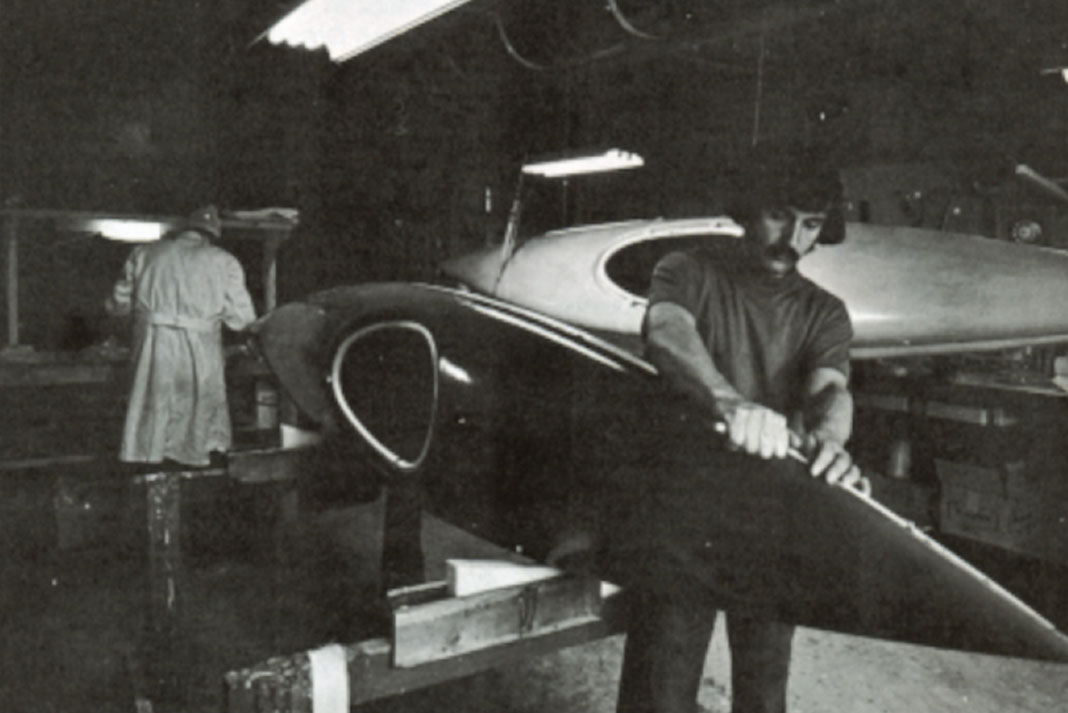
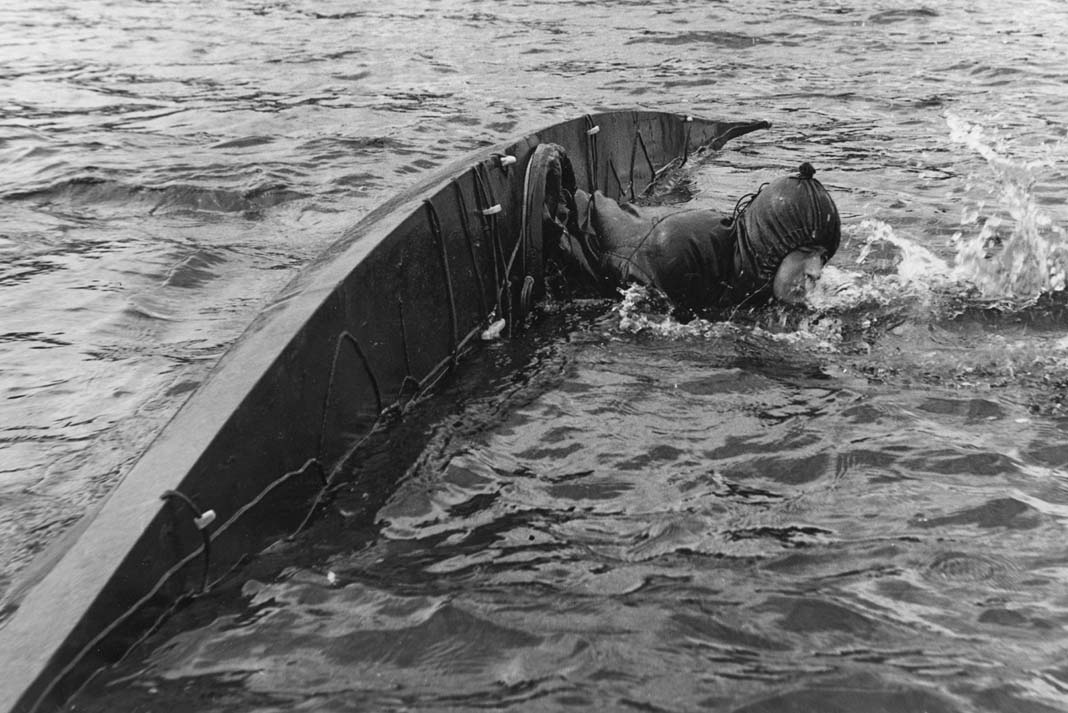
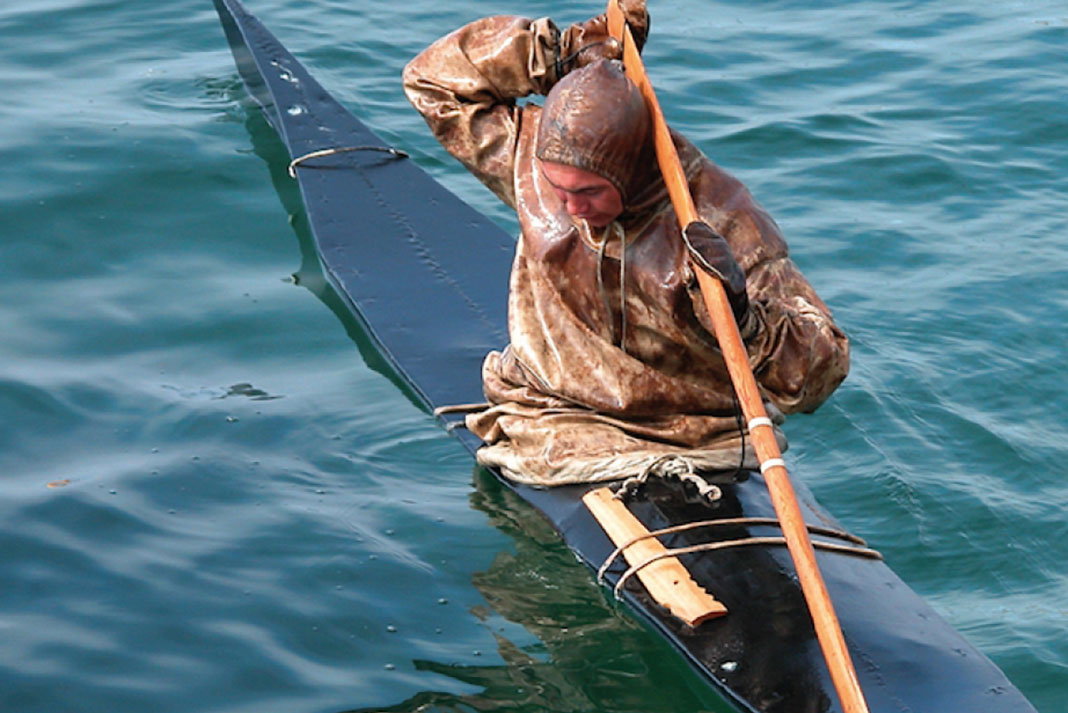
Taylor belonged to the Scottish Hostellers’ Canoe Club and demonstrated kayaking and rolling on Loch Lomond. When he moved to Wisconsin five years later, he left his kayak behind with fellow club members Joe Reid and Duncan Winning. Winning (later appointed officer of the Order of the British Empire for his contributions to kayaking) took measurements from the craft and shared the drawing with English paddler Geoffrey Blackford. Blackford built a slightly larger plywood version. In 1972, England’s Valley Canoe Products began commercially producing a fiberglass version called the Anas Acuta. The rest, as they say, is history.

Kayaking could have shaped up differently

Now enter Ernst Mayr, a German-born ecologist who migrated to the U.S. in 1931.

Mayr was the first ecologist to describe Founder Effect and Genetic Drift, which explain what happens when a few individuals from a species in one area colonize another area. The colonists represent a tiny sample of their home population, and may have a higher concentration of random traits, like blue eyes (HMS Bounty mutineers on Norfolk Island) or longer legs (anole lizards on Caribbean islands). This original non-representative sample then evolves in its new surroundings, sprouting skegs, hatches, deck compasses and other adaptations.

Taylor’s Illorsuit kayak is the random founding ancestor that spawned a sport. Its progeny include the Nordkapp, Romany, Cetus, Explorer, Xcite and nearly 40 other derivatives. Chance played an enormous role: kayak designs vary highly across Greenland’s regions.

[ Paddling Buyer’s Guide: View all sea kayaks ]

“If Ken had based himself in a different part of Greenland or used a different kayak builder, the style of the sea kayaks we paddle today might well have been different,” notes the origin story on Valley’s website.

Taylor’s boat isn’t kayaking’s only Founder Effect. In 2010, Ginni Callahan brought a few kayak sails back to North America after a visit to Australia, where sailing is an endemic part of kayak culture. The sails, designed by the late Mick MacRobb, have caught on and are thriving in their new habitat. So well, in fact, that you can now order a British-built P&H Aries with a new sailing adaptation: a skeg in the front. Somewhere, Ernst Mayr is nodding.

Neil Schulman celebrates kayaking’s diverse heritage in Reflections.

Cover of Spring 2017 issue of Adventure Kayak MagazineThis article was first published in the Spring 2017 issue of Adventure Kayak Magazine. Subscribe to Paddling Magazine’s print and digital editions, or browse the archives.


The kayak that started it all: Ken Taylor demonstrates chest swelling at Loch Lomond in 1960. | Feature photo: Courtesy Ken Taylor


Seasons Of Change: Growing A New Generation Of Kayak Guides

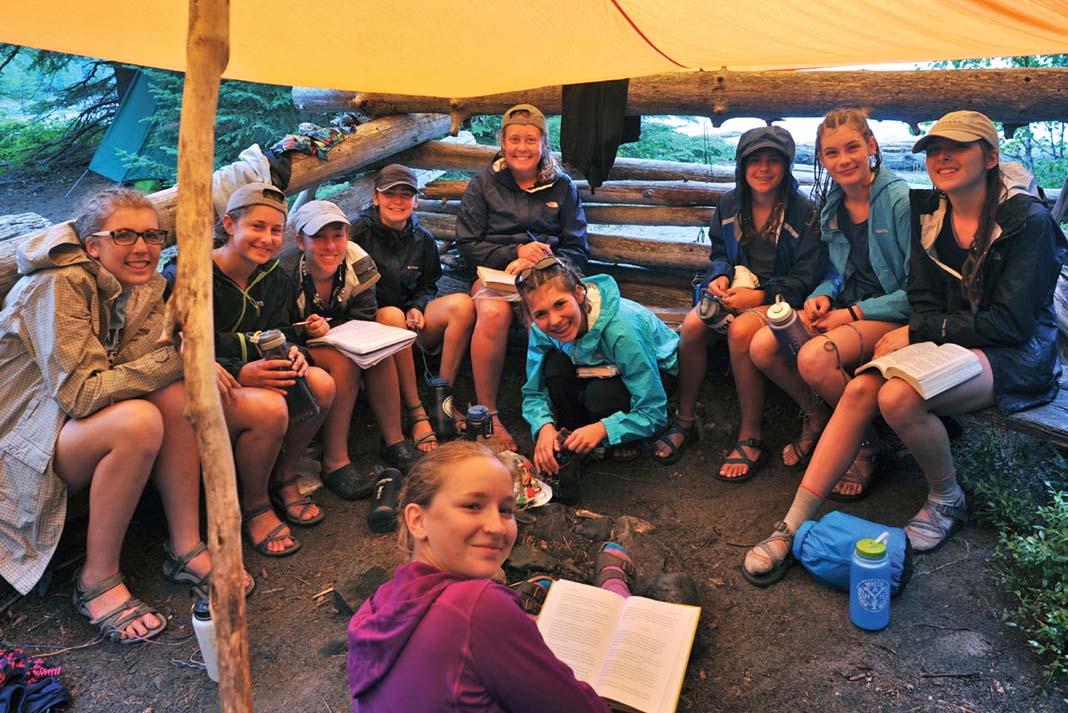
a group of young women learning to be paddling guides gathered under a tarp
“Tell me, what is it you plan to do with your one wild and precious life?”—Mary Oliver | Feature photo: Virginia Marshall

Autumn transformed my summer. At the outfitters where I’d signed up for a stint of glory days guiding, my boss tasked me with the responsibility of role model for my 17-year-old co-guide. I’ll admit, I wasn’t sure how to connect with this up-and-coming cohort of kayak guides.

He asked me to show my young protégé more than just the mechanics of a successful trip, or even the qualities of a good leader. I was to model for Autumn possibility. “She has the potential to be a great guide,” he said. “Show her the way.”

Seasons of change: Growing a new generation of kayak guides

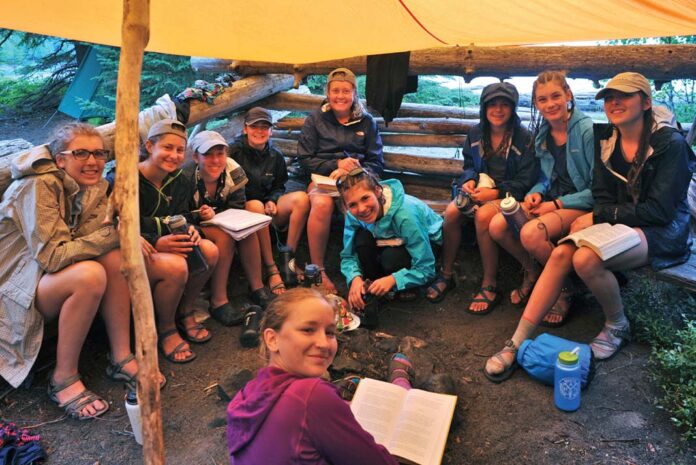
Our group was not the clutch of nearing-retirement engineers, professors, doctors and teachers I typically shepherded down the coast and pampered with gourmet meals for seven days. Rather, they were a gaggle of 14-year-old girls and two equally fresh-faced counselors from a Michigan summer camp—all cornrows, sunscreen and shy smiles crowded with train tracks and multi-colored elastics.

I was nervous as hell. Did I even know how to talk to teenagers anymore? How could I conceal my cluelessness about all things pop culture for 10 whole days? More frightening still, who was I to be a pillar of possibility?

I remembered a novel I’d read recently, Halfway Man, by the late Wayland Drew. Its title describes the protagonist’s uncertain position between worlds: traditional and modern, spiritual and material, developed and wild. Ultimately, he bridges the divides with a long paddling trip in the same northern country I was to guide the girls through. I felt neither naïve nor sage. Perhaps the solution to my own halfway-ness was as simple as going kayaking.

“Tell me, what is it you plan to do with your one wild and precious life?”—Mary Oliver | Feature photo: Virginia Marshall

We launched in enthusiasm-sapping headwinds and crawled doggedly north up the coast. A dance instructor in her blink-and-you-miss-it hometown, Autumn was equally fluid in a kayak. As the waves built into whitecaps, her focus never wavered from the group. In the sweep position, she stayed beside the slowest tandem, offering encouragement and pointers on strokes and steering. As a leader, she navigated wide berths around shoals and headlands, positioned herself between the group and potential hazards, and picked out the finest campsite on a long stretch of surf-washed beach.

As the days stretched to a week, I realized Autumn was halfway herself. Sometimes, her maturity made the older counselors seem girlish by comparison; at other times, her own girlishness allowed her a wonderful connection and closeness with the campers. Maybe that familiar bridge was the foundation of the friendship that grew between us.

Worry washes away in the moment

“No pressure,” I’d cracked to my boss before the trip, masking nerves in sarcasm the way I often do. On the water and in camp, however, the anxiety washed away. Watching the girls become confident paddlers, sharing with them hidden swimming holes beneath cascading waterfalls and red rock amphitheaters rimmed in perfect jumping cliffs, showing them where people long ago recorded their most powerful stories and dreams in ancient rock paintings, I felt only joy and gratitude at helping them discover this world. My world.

Our experiences shape us, begin to define us, but they don’t have to limit us. It’s a trick of psychology that we tend to believe that the person we are today is our final self, fundamentally the person we’ll always be. That the many changes of our less experienced decades are reserved for our headstrong youth, not an ongoing process throughout our lives. Halfway men, and women.

My young campers, still in the fresh springs of their wild and precious lives, were filled with it. And none embodied it more fully—or compelled me to do the same that summer—than Autumn. Possibility.

After eight years at the editor’s desk, this is Virginia Marshall’s final issue of Adventure Kayak.

Cover of Adventure Kayak magazine, spring 2017 issueThis article was first published in the Spring 2017 issue of Adventure Kayak. Subscribe to Paddling Magazine and get 25 years of digital magazine archives including our legacy titles: Rapid, Adventure Kayak and Canoeroots.


“Tell me, what is it you plan to do with your one wild and precious life?”—Mary Oliver | Feature photo: Virginia Marshall