Home Blog Page 24

Best Aluminum Canoes For 2026

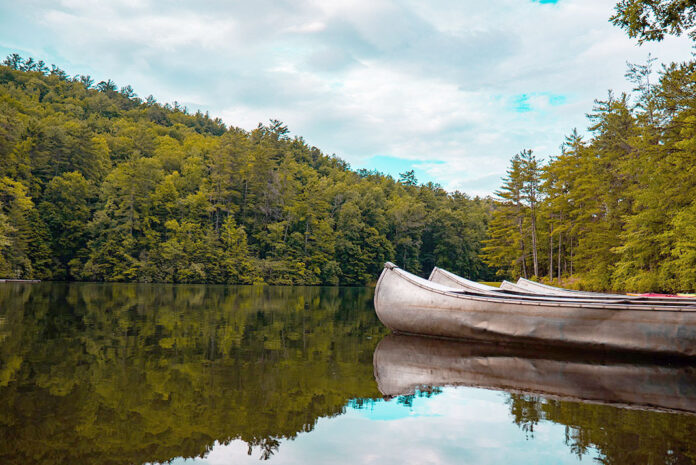
aluminum canoes sit on a calm lake
Feature photo: Aaron Burden/Unsplash

Aluminum canoes were once ubiquitous in campgrounds and parks across the continent. Thanks to their durability, many of those canoes may still be on lakeside racks today. The age of aluminum canoes dawned after World War II, when aircraft maker Grumman took the techniques used for bending and riveting aluminum for aircrafts and applied them to making canoes. This created the first recreational canoe: stable, durable, light and requiring little to no maintenance.

For a generation of paddlers, one’s first canoeing experience often included the numbing cold of aluminum on bare legs, and the groaning of the metal hull as it plowed through the water.

The subsequent rise of synthetic materials like fiberglass and advances in plastic manufacturing created more options for canoeists. Ultralight materials like aramid composites mean canoes can now be portaged with amazing ease, and ABS laminates like T-Formex provide durability for running burly rivers. Aluminum canoes have felt the crunch. Flipping through any current paddling magazine, or walking a shop floor today, you’ll be hard-pressed to find an aluminum canoe.

But they are still out there. Aluminum canoes are dependable boats requiring virtually no maintenance. What they lack in grace, they make up for in grit. An aluminum canoe is for you if you want something you don’t have to worry about.

If this sounds like you, read on: we’ve put this guide together to help you find the best aluminum canoe. Continue reading for more information about aluminum canoes and follow the links below to learn about specific models.

Wear A Life Jacket
  • Everyone, even strong swimmers, needs to wear a life jacket at all times when on the water. It is extremely difficult to put a life jacket on once you fall into the water. Even a light wind can blow any paddlecraft away from you, faster than you can swim.
  • Always wear a USCG-approved Level 70 or Type III life jacket designed for paddling.

Best aluminum canoes: Our top picks

Grumman 15′ Double-Ender

Grumman 15′ Double-Ender Specs
Length: 15′
Width: 35.1”
Weight: 69 lbs
Capacity: 650 lbs
MSRP: $2,249 USD

Grumman 15' Double-Ender

Buy from:

MARATHON BOAT
One of the most familiar names in the aluminum canoe market, Grumman has been making canoes since 1945. In particular, the double-ender models are some of the most familiar to paddlers; shaped like a traditional canoe and the lightest of Grumman’s models, these canoes were a favorite of canoe trippers and summer camps. The canoes are handcrafted from a special age-hardened, stretch-formed aluminum alloy with added ribs, thwarts and gunwales for extra rigidity and stiffness. The arched hull and keel also provide a blend of stability, tracking and performance that’s suited to beginners and experienced wilderness and river trippers alike. The 15-foot model is the perfect size for two folks to embark on day paddles up to weeklong trips.


Grumman 17′ Double-Ender

Grumman 17′ Double-Ender Specs
Length: 17′
Width: 36.1″
Weight: 75 lbs
Capacity: 755 lbs
MSRP: $2,399 USD

Grumman 17' Double-Ender

Buy from:

MARATHON BOAT

The 17′ is the longest of Grumman’s three double-ended canoes, enabling you to bring an extra paddler—or two pipsqueak-sized paddlers, or a furry pal—along, as well as extra gear for an extended adventure. The extra length allows the canoe to glide farther and track straighter. With the same manufacturing process, material and design as all Grumman’s other models, the 17′ Double-Ender is a virtually indestructible and maintenance-free boat that’ll keep offering adventure for generations to come.


Grumman 15′ Sportboat

Grumman 15′ Sportboat Specs
Length: 15’3″
Width: 43”
Weight: 122 lbs
Capacity: 450 lbs
MSRP: $4,199 USD

Grumman 15' Sportboat

Buy from:

MARATHON BOAT

One of two square stern models from Grumman, the Sportboat is as stable as they come thanks to its 43-inch width and Bulb T keel and hull design—a design that’s commonly used on sailboats to aid in stability and efficiency at moving through the water. The exceptional stability of the Sportboat combined with the fact that it’s made of aircraft-grade aluminum and has added ribs means it can handle bigger lakes and mild saltwater, too. Grumman refers to this canoe as a three-in-one because it can be paddled, rowed or motorized—simply add a seven-horsepower motor to the stern and get to your fishing hole that much faster.


Osagian Canoes 18′ EXP.3

Osagian 18′ EXP.3 Specs
Length: 18′
Width: 43”
Weight: 97 lbs
Capacity: 1,000 lbs
MSRP: $1,425 USD

Osagian 18 EXP.3

Buy from:

OSAGIAN CANOES

The EXP.3 is Osagian Canoes’ longest boat and nearly its widest, a mere one-inch shorter than their 17′ Fisherman.3 Canoe. Its extra length and ample width make it exceptionally stable and spacious—you can spare no luxury on your next camping trip. This model has three seats, but look to the EXP.4 model—with otherwise identical specs and a barely noticeable price difference—if you need a fourth. Osagian Canoes’ boats are handmade in Denmark and the United States.


BW Marine Products Radisson 14′ Square Stern

BW Marine Products Radisson 14′ Square Stern Specs
Length: 13’6″
Width: 51”
Weight: 38 lbs
Capacity: 850 lbs
MSRP: $1,295 USD

BW Marine Products Radisson 14' Square Stern

Buy from:

BW MARINE PRODUCTS

Manufactured in North Bay, Ontario, Canada, the Radisson canoe hearkens back to the time of the fur trade, named after the 17th-century coureur-des-bois and explorer Pierre-Esprit Radisson. BW Marine Products began making aluminum canoes in 1947; today, they manufacture Radisson canoes for the U.S. market and Sportspal for the Canadian. As Paddling Magazine reviewer, Jesse McEntee, puts it, the Radisson is “a durable and family-friendly recreational canoe popular among anglers and hunters … [it] is often recognizable thanks to its distinctive black foam sponsons.” McEntee purchased his Radisson because it was much lighter than other aluminum canoes of a similar length.


Meyers Michicraft T-16

Meyers Michicraft T-16 Specs
Length: 16′
Width: 36″
Weight: 79 lbs
Capacity: 770 lbs
MSRP: $1,430 USD

Meyers Michicraft T-16

Buy from:

MEYERS BOAT

The T series of Michicraft canoes by Meyers are most often used by rental outfitters, camps and lodges, but also make great personal canoes thanks to their simplicity and durability. These models also have stretch-formed sponsons on the sides above the waterline, which act as ‘safety foils’ that give the canoe a wider profile for extra stability while keeping a streamlined profile during normal paddling. The 16-foot canoe is a great size for weekend to weeklong trips.


Meyers Sportspal 12′

Meyers Sportspal 12′ Specs
Length: 11’7″
Width: 44″
Weight: 48 lbs
Capacity: 500 lbs
MSRP: $1,366 USD

Meyers Sportspal 12'

Buy from:

MEYERS BOAT

Not to be confused with the Sportspal aluminum canoes manufactured by Canadian company, BW Marine Products, these Sportspal boats belong to Meyers Boat Company, out of Michigan. Meyers’ Sportspal canoes are made of aircraft-grade aluminum, which is thicker and more durable than the marine-grade aluminum used by BW Marine Products. The sponsons and liner on Meyers’ Sportspals are also larger and thicker than the Canadian models.


Carry A Whistle (And A Light For Night Use)
  • Every paddler should have a whistle attached to his/her life jacket.
  • Carry a light at night. Consider carrying a distress signal device.

Shopping for a used aluminum canoe?

Buying a used canoe is a great way to save money. With aluminum canoes in particular, it’s a reasonably safe assumption that the canoe will still be in good shape. They are amazingly resilient, so a 20-year old “tin” canoe should still paddle as well as a brand new one.

Here are three key things to consider when shopping for a used aluminum canoe:

1 Look everywhere

If you are looking for aluminum canoes for sale, Craigslist, Kijiji, or other online classifieds are great resources. Ask around as well. There may be an aluminum canoe that’s been sitting in a neighbor’s backyard for years that they’ll be willing to sell.

2 Know what it’s worth

The tricky part is going to be gauging the value of a used canoe, especially older ones. How much is a used aluminum canoe worth? Even if the canoe is in near-perfect condition, if it is decades old, don’t pay more than $1,000. For that price, you can nearly buy a new plastic canoe.

3 Try it before you buy it

Like any canoe, test the aluminum canoe before you buy it if you can. Ensure you are comfortable paddling it and it doesn’t have any leaks (a potential problem area is a cracked stem plate).

For more general tips on what to look for when selecting a used canoe, read our article How To Buy A Used Canoe.

Aluminum canoe buying guide

Before you buy an aluminum canoe, read the answers to these questions. Although the canoes were extremely popular in the past, they are a bit of a niche item now. Canoes made from modern materials like plastic or composite are much more common, but that doesn’t mean there’s no value in an aluminum canoe.

Why should you buy an aluminum canoe?

The best feature of these canoes is their durability. They can be banged, bashed and dragged with little caution. Aluminum does not degrade from UV exposure like other canoe materials, so aluminum canoes can be stored outdoors as well. Many are tailored toward recreational paddling and will have wide, flat bottoms or square sterns for motors to be attached.

What shape aluminum canoe should you buy?

Aluminum canoes come in two main styles: square-sterned and pointed-end, sometimes called double-ended. Square-sterned canoes can have small outboard motors attached to the back. Consider these boats if you are planning to attach a motor. Go for a pointed-end canoe if you won’t use a motor, as the tapered stern helps the canoe travel through the water more efficiently, making it easier to paddle.

In terms of length, standard canoe sizing rules apply. Sixteen feet or less is good for one or two paddlers, and trips on rivers and smaller lakes. Seventeen-foot canoes are good tandem canoes for both river and lake travel, and hulls 18-feet and longer are fast on open water and have much more cargo space. As the length of a canoe increases, the maneuverability generally decreases.

Where can you buy an aluminum canoe?

Buying an aluminum canoe is a little different than buying other, more common canoes. You will not find them in most paddling-specific shops. The companies making them often make other aluminum products as their primary product—typically motorboats and pontoons. Look to them for high-quality riveting and construction. Because they’re made by marine manufacturers, you may be able to order them directly.

Otherwise, search for aluminum canoes at hunting and fishing outlets. These canoes are preferred by sportsmen because they are so durable and can withstand being left outside when they aren’t being used.

Want to know more? Find our answers to common questions about aluminum canoes below.

Education: Get Some!
  • Take a paddling safety course from the American Canoe Association (ACA), your local paddling shop or outfitter, or other reputable source.
  • Take a boating safety course from the U.S. Coast Guard Auxiliary, U.S. Power Squadrons® or your own state’s boating agency.
  • Take on-the-water skills training.
  • Aluminum canoe manufacturers

    Does anyone still make aluminum canoes? They aren’t front and center at paddle shops, but aluminum canoes are still around. Many of the original aluminum canoe manufacturers like Grumman, Michicraft, Meyers and Sportspal are still making canoes.

  • Does Grumman still make canoes?

    The Grumman canoe is still made, under the parent company Marathon Boats.

  • Aluminum canoe brands

    Many used aluminum canoes were made by brands that no longer exist, or do not focus specifically on canoe-building—the market is too niche. You will find that companies like Meyers make aluminum boats of all sorts. This harkens back to the roots of metal canoes, with Grumman originally being a company that built aircraft.

  • Aluminum canoe weight

    How heavy is an aluminum canoe? Aluminum canoe weights vary based on their construction and length. In the continuum of canoe materials, they are on the lighter side, but heavier than ultra-light Kevlar or Aramid composites. A 16-foot aluminum Sportspal canoe with two pointed ends will weigh around 58 pounds, but the transom version weighs 78 pounds.

  • Are aluminum canoes lighter than plastic?

    Aluminum canoes are lighter than their plastic counterparts. A 17-foot Grumman canoe weighs 75 pounds compared to the Nova Craft SP3 which tips the scales at 99 pounds.

  • How much does a 15-foot aluminum canoe weigh?

    A 15-foot aluminum canoe weighs anywhere from 69 to 85 pounds. The model, width of the canoe and thickness of the aluminum sheets will change the weight.

  • How much does a 16-foot aluminum canoe weigh?

    A 16-foot aluminum canoe’s weight can be between 73 to 90 pounds. The model, width of the canoe and thickness of the aluminum sheets will change the weight.

  • How much does a 17-foot aluminum canoe weigh?

    A 17-foot aluminum canoe weighs between 75 and 99 pounds. The model, width of the canoe and thickness of the aluminum sheets will affect the weight.

  • Aluminum canoe weight limit

    Aluminum canoes will have a high weight limit. Individual canoe capacities depend on the model, but even a 15-foot aluminum canoe’s capacity is well over 500 pounds. It’s nice to know many are built with sealed bulkheads to prevent the canoe from sinking, if that limit is breached.

  • Aluminum canoe dimensions

    Check the manufacturer’s specifications for exact dimensions of aluminum canoes. Note that canoes often incorporate the length (in feet) in the model names.

  • Aluminum vs fiberglass canoe

    Are aluminum canoes lighter than fiberglass canoes? In exceptional cases, aluminum canoes may be lighter, but generally fiberglass canoes are lighter than aluminum canoes of equal size.

  • Kevlar vs aluminum canoe

    The reduction in weight and increased performance of a Kevlar canoe compared to an aluminum canoe is incredible. It’s sort of like comparing a sportscar to a minivan.

    Kevlar canoes cost significantly more than aluminum canoes, but the price comes with a reduction in weight. They also paddle smoothly and silently on the water, without the noise and cold feeling that accompany an aluminum canoe.

    If you want a canoe you can crash around with, or leave at your camp without needing to worry about it, aluminum is the better option. They require virtually no maintenance either, and will probably still be in good condition for your grandkids’ kids to paddle.

  • Aluminum vs plastic canoe

    Plastic canoes emerged to oust aluminum canoes in the “affordable and durable” corner of the canoe world. They are more susceptible to UV damage than aluminum canoes, but can withstand many of the same physical impacts as aluminum canoes. New plastic canoes are easier to find than aluminum canoes.

    There are more options for square-stern aluminum canoes that are closer to “freighter canoes” than the canoe type you would expect to see when paddling in Quetico. These are workhorses for hauling goods, and can be transported more easily than a full-size motorboat.

  • Aluminum canoe prices

    It’s possible to find used aluminum canoes for less than $500. New aluminum canoes cost anywhere from $1,200 to $3,000 depending on the manufacturer, model and length.

  • How much does a 17-foot aluminum canoe cost?

    You might find a brand new 17-foot aluminum canoe will cost as little as $1,200, but used ones may be much less than that. Patience can lead to getting a cheap aluminum canoe for less than $500.

  • Aluminum canoe modifications

    Many aluminum canoes can have motors added to them. Another popular modification is adding foam knee pads for extra comfort and warmth. Padding on the yokes can also be added for more comfortable portaging.

  • Are aluminum canoes slow?

    Aluminum canoes are slow on the water compared to modern canoes. The riveted sheets do not make for the smooth entry lines, and they are heavier than more modern canoe materials. When they were first made, they outperformed many wooden canoes but modern materials like composites now dominate racing circuits.

    For most of us who aren’t canoe racers, this technology still floats its way over to recreational paddling. There’s a reason most canoe shops carry plastic and composite canoes now.

  • Are aluminum canoes durable?

    Aluminum canoes are extremely durable. They last decades and can handle being stored outdoors much better than canoes made with other materials. In contrast to wood, the other traditional canoe material, aluminum canoes will not rot either.

  • Do aluminum canoes sink?

    Aluminum canoes with sealed bulkheads or “flotation compartments” will not sink. These are placed at the bow and stern of the boat and are essentially bubbles of air. In the event the canoe fills with water, these compartments will keep it afloat.

  • Do aluminum canoes leak?

    A properly built aluminum canoe will not leak. The sheets are riveted or sealed with an adhesive. Over time, the canoe may lose its structural integrity and leak small amounts, but this is not common. The most common place for a leak to occur is through smashed and cracked stem plates under the bow or stern, if the canoe has been mistreated repeatedly.

  • Aluminum canoe pros and cons

    Pros of aluminum canoes:

    Used aluminum canoes are cheap
    They last practically forever
    They require no maintenance

    Cons:

    Aluminum canoes are noisy
    They get very cold on cool days and roast in the heat
    They are slower than composite canoes
    They are not particularly easy on the eyes

  • How are aluminum canoes made?

    Aluminum canoes are made by bending sheets of marine-grade aluminum into shape and riveting them together. The shape is held by the gunwales running end to end along the top of the hull and the thwarts spanning the space in between.

  • Where to buy aluminum canoes

    Many paddling shops have ceased to carry aluminum canoes, but some may still carry them, particularly shops catering towards anglers and hunters. Use the dealer locator tools from Grumman or order direct from the manufacturer.

  • Types of aluminum canoes

    The main types of aluminum canoes you will find are pointed-end, square-sterned, and wide-hulled. Pointed-end canoes look like traditional canoes, with both ends narrowing to points. These canoes are used for general paddling. Square-sterned canoes resemble skinny boats and can have a small motor mounted on them. Wide-hulled canoes can have either a pointed or square end. These boats are extra wide, for even more stability.
 

Sunrise Sessions: The Story Behind The Iconic Shot

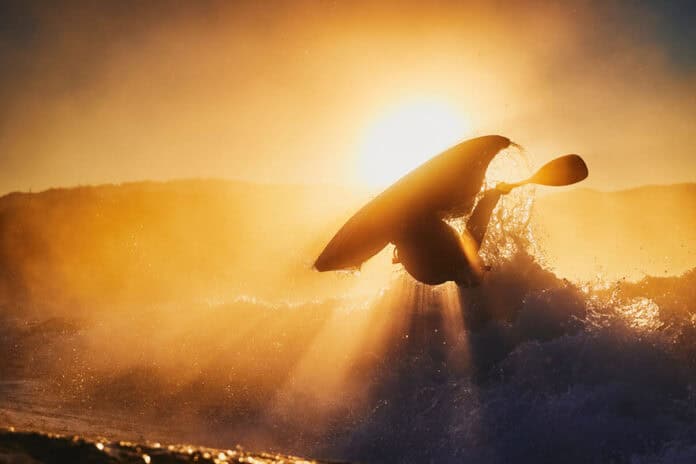
freestyle kayaker is silhouetted by the rising sun during a sunrise kayaking photography session
“I love backlit photos. The trick I’ve found is to go into manual focus. If you shoot autofocus in backlight, the camera doesn’t know what it’s doing.” | Feature photo: John Webster

This sunrise session very nearly didn’t happen.

Boise, Idaho-based photographer John Webster had been invited before. His friend and former freestyle world champion, Nick Troutman, told him for years to make the early morning pilgrimage to Kelly’s Whitewater Park in Cascade, Idaho. “He was like, dude, you need to come up here. There’s all-time light at the beginning of the day,” Webster recalls. But it was just far enough to worry about striking out.

Last summer, on the Fourth of July, he listened.

Sunrise sessions: The story behind the iconic shot

He woke around 5 a.m., a five-minute drive and 500 feet above the wave. “I turned on my car and saw the temp—it was 60°F. I was like, ‘It’s not going to happen.’ Nick had said if it hits 40°F, the fog is really good. We were 20 degrees off. But I was like, screw it, I’m up, let’s go for it.”

freestyle kayaker is silhouetted by the rising sun during a sunrise kayaking photography session
“I love backlit photos. The trick I’ve found is to go into manual focus. If you shoot autofocus in backlight, the camera doesn’t know what it’s doing.” | Feature photo: John Webster

Driving downhill, the temperature dropped: 60… 55… 53… 52. Hope rekindled.

“Sunrise was 6:15 a.m., so we agreed he needed to start surfing at 6:10 a.m. Nick looked at me and said, ‘You just tell me when to stop.’ I was like, that’s a horrible thing to say to me—I’ll run you into the ground,” laughs Webster.

The two had agreed a silhouette of a loop would be best. Wave tricks weren’t going to do much with the lighting. But a big loop? That would work. Troutman threw loop after loop—just the two of them, the roar of the wave, and the sun peeking over the hills.

“It was harmonious. We were both exactly where we wanted to be,” said Webster. “No clients, no obligation. Just ambition.”

For an hour, Webster shot. “I don’t think I’ve seen a shot quite like this before,” he says. “Fog, backlight, whitewater—it’s pretty rare.”

Cover of Issue 73 of Paddling MagazineThis article was first published in Issue 73 of Paddling Magazine. Subscribe to Paddling Magazine’s print and digital editions, or browse the archives.
“I love backlit photos. The trick I’ve found is to go into manual focus. If you shoot autofocus in backlight, the camera doesn’t know what it’s doing.” | Feature photo: John Webster


How To Bake A Backcountry Pizza

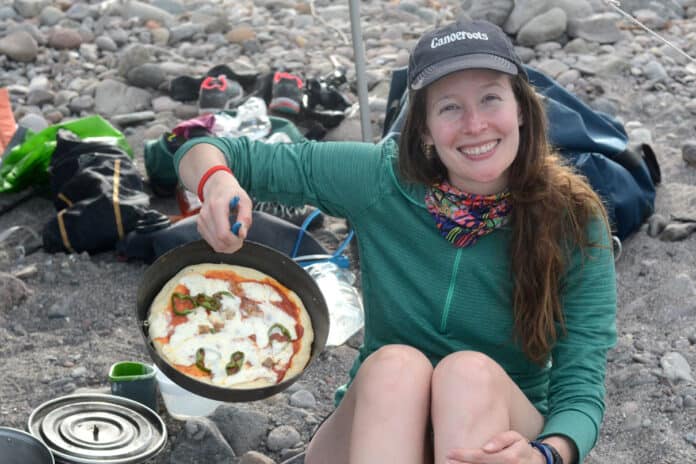
woman sitting near campfire holds up a cast iron skillet with backcountry pizza baked inside
It's not delivery, it's delicious! | Feature photo: Paddling Mag Staff

Done poorly, campfire pizza will have uncooked toppings and half-melted cheese on a burnt bottom and black crust. Instead, follow these simple steps and bite into a takeout-quality slice of backcountry heaven.

How to bake a backcountry pizza

woman sitting near campfire holds up a cast iron skillet with backcountry pizza baked inside
It’s not delivery, it’s delicious! | Feature photo: Paddling Mag Staff
Ingredients
  • 1 package (2 ¼ tsp) dry active yeast
  • 1 tsp white sugar
  • 1 pinch salt
  • 1 cup warm water
  • 2 cups flour
  • 2 tbsp cooking oil

Preparation

  1. Build a hot fire first for this recipe—you’ll need it to get started with a warm cup of water for making dough, and a hot bed of coals will be ready by the time the pizza is ready to bake.
  2. Stir the yeast, sugar and salt into warm water until dissolved. Dunk your hands in the flour and pour it into the water mixture. Blend the mixture with your powdered fingers until a firm lump of dough forms.
  3. Pour a generous dollop of oil into your Dutch oven or fry-bake and spread it using a finger, coating the bottom of the pan and an inch up the sides. Once baking begins, the pizza’s success depends on a well-oiled pan—better to overdo it here than to risk not having enough.
Toppings
  • 1/2 cup pizza sauce
  • 500g block mozzarella cheese, grated.
  • Pre-shredded cheese has more surface area and will melt much faster than a block of cheese. If you don’t want to pack a grater, thinly slice the cheese to layer over the sauce.
  • Peppers, mushrooms, olives, onions, garlic, summer sausage (or other cured meat not requiring refrigeration).
  1. Flatten the dough into a small circle and plop it in the oiled oven, stretching to fill the entire bottom and half an inch up the pan’s wall to help hold the toppings in place.
  2. Spread sauce, then cheese over the dough, and add desired toppings.
  3. Put the lid on the pan and place it directly on the fire, scooping coals alongside to create a nest for your oven. Bake the pizza for 20 minutes, periodically checking the coals for consistent heat and rotating the pan to ensure an evenly crisp crust.
  4. Keep the lid on while baking to melt the cheese and cook the toppings. Once the time is up, slide a fork down the inside of your oven to lift the pizza and check the bottom—if the crust isn’t golden brown, take an additional five and try again.
  5. Remove the lid from the pan and let the pizza sit for five minutes before bringing it out to slice and enjoy. This recipe feeds three hungry campers.


Cover of Issue 73 of Paddling MagazineThis article was first published in Issue 73 of Paddling Magazine. Subscribe to Paddling Magazine’s print and digital editions, or browse the archives.

It’s not delivery, it’s delicious! | Feature photo: Paddling Mag Staff


A Kayaker’s Guide To Solving Life’s Problems

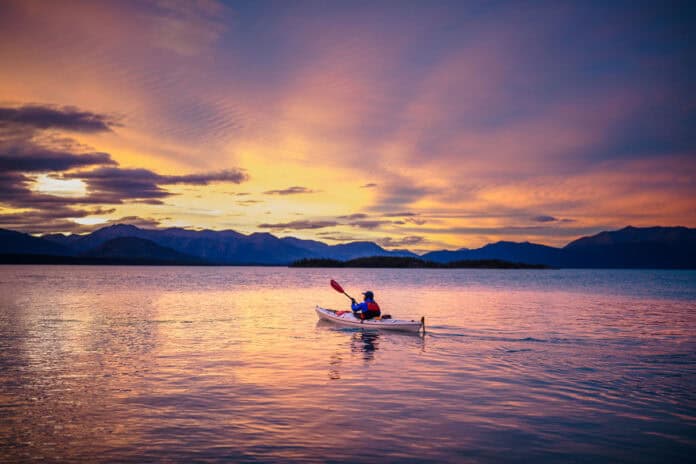
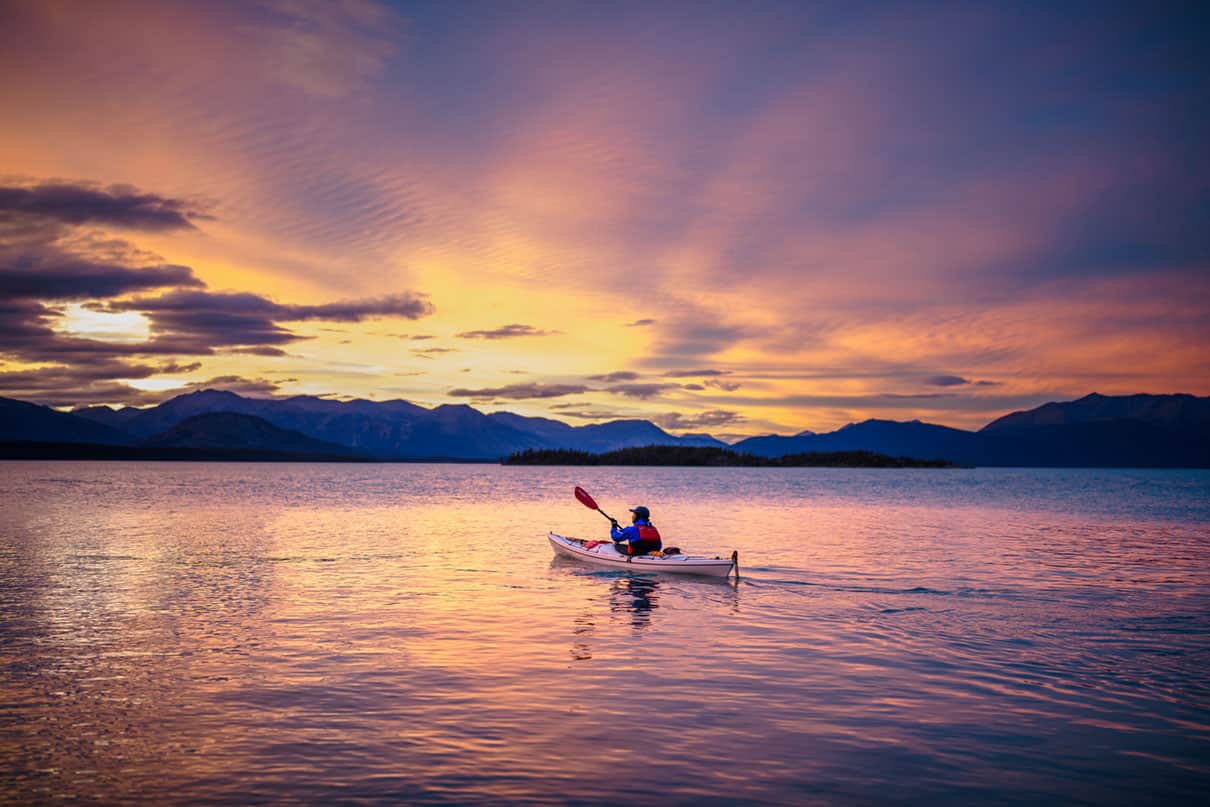
A kayaker paddles on calm water at dusk
Coming to you from the Sea Suite. | Feature photo: Andrew Strain

There’s a highly successful and well-paid management consultant who, whenever he gets in a stressful pickle at work, solves his problems by sitting down to do needlepoint.

This is according to a book I am reading to better myself. It’s called The Breakout Principle: How to Activate the Natural Trigger That Maximizes Creativity, Athletic Performance, Productivity and Personal Well-BeingWouldn’t you like to know the secret to all that?

A kayaker’s guide to solving life’s problems

According to the authors, Herbert Benson and William Proctor, when you get stuck with a problem at work or in life and grapple with it for a while until you aren’t getting anywhere, you can break out of that rut by doing something physically or mentally repetitive. They suggest meditation, walking, scrubbing the toilet—it can be just about anything.

A kayaker paddles on calm water at dusk
Coming to you from the Sea Suite. | Feature photo: Andrew Strain

The needle pointing business guru supposedly solved a big problem by engrossing himself in a particularly intricate form of embroidery called petit point. Focusing on a repetitive activity pushes the brain’s reset button, allowing you to find new thought patterns for old problems. Your mind evolves and you get smarter through successive cycles of struggle and breakout. The harder the struggle, the greater the enlightenment is likely to be. It’s a “work hard, play hard” philosophy coming to you from a pair of authors that includes a professor of medicine at Harvard—so it must be true.

Before you rush out to the craft store for needlepoint supplies, take it from me that kayaking has all the same breakout benefits while being a lot more fun. I find there’s no better way to get over writer’s block than to go out for a long paddle. The best escape comes in a following sea that’s big enough to make me pay attention, but not so big it really scares me—the golden mean between too easy and too hard that produces the mental state psychologists call flow.

After a few good hours paddling downwind in a moderate swell, the first two things I need to do when I get to shore are 1) pee, and 2) pull out my notebook to write down all the brilliant ideas I just had on the water. Often the two are emergencies of equal urgency. If I start carrying a pee bottle in my cockpit, I will also have to bring my phone to make voice notes. Sitting at a computer, though our careers often demand it, is not a great way to be inspired.

I have come to think of my kayak cockpit as the Sea Suite because it’s where I do my best work. Indoor work can nourish the mind, but it takes water to digest.

Cover of Issue 73 of Paddling MagazineThis article was first published in Issue 73 of Paddling Magazine. Subscribe to Paddling Magazine’s print and digital editions, or browse the archives.
Coming to you from the Sea Suite. | Feature photo: Andrew Strain


Meet The Gen Z Paddlers Proving Expeditions Aren’t Dead

the all female time paddling the Inside Passage in 2025
Meet the all-female team of sea kayak guides paddling the Inside Passage in 2025. Feature Image courtesy Whitney Frame.

Big paddling expeditions have a reputation of being for the rich or retired, for the career adventurers and legacy paddlers, but a handful of young paddlers are charting their own course. In a world long past the paddling heyday of the nineties, where Gen Z has a reputation for being glued to an iPhone, meet the Gen Z adventurers who have bucked the stereotype to live out their own dream paddling trips.

They’re broke and they’re crowd-funded; they’re setting records and making history, paddling ambling paths and following historic routes, but they all have one thing in common – these young adventurers are out proving the soul of expedition paddling is alive and well.

The Hudson Bay Girls are paddling from Lake Superior to the Hudson Bay

The all-female Girl Scout team that makes up the Hudson Bay Girls aims to paddle from Lake Superior to the Hudson Bay, in summer 2025 a route that will take the paddlers 1,200 miles through the Canadian Wilderness. Abby Cichocki, Emma Brackett, Helena Karlstrom and Olivia Bledsoe connected through their various roles in Girl Scouts and Scouting America. The team then spent the school year prepping for their expedition between college classes.

The expedition was inspired by Natalie Warren and Ann Raiho’s first documented female journey of the same route, and the now historic route was first popularized in Eric Sevareid’s 1935 Canoeing With The Cree.

Hudson Bay Girls to canoe from Lake Superior to York Factory on the Hudson Bay in summer 2025
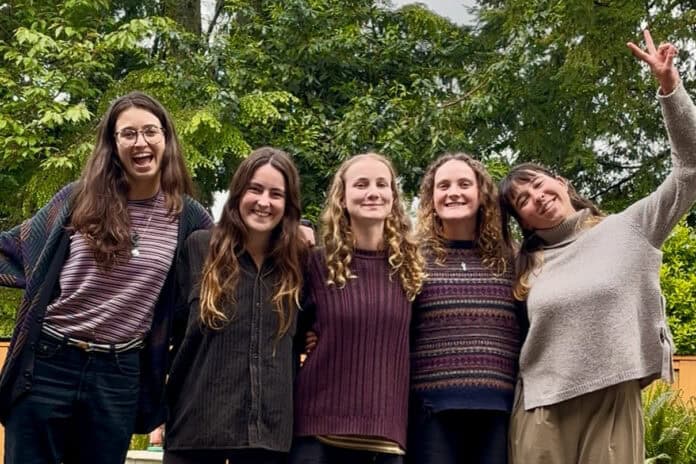
From left to right Emma Brackett, Abby Cichocki, Helena Karlstrom, and Olivia Bledsoe at Canoecopia 2025. Image courtesy Hudson Bay Girls.

One of the goals of the Hudson Bay Girls expedition is to inspire young women in paddlesports. After years of guiding in the Boundary Waters Canoe Area Wilderness and hearing the phrase “is that a girl under there” on the portage trail, the Hudson Bay Girls are committed to being the next role models for a new generation of young paddlers.

“If we can change one person’s life and have one young girl look up at us and think maybe I can do that too, I think that would be a success for us,” said expedition member Helena Karlstrom.

30+ Indigenous youth paddlers are paddling a “first descent” on the undammed Klamath River

Beginning June 12, 2025 a group of over 30 teenagers from multiple tribes throughout the Klamath Basin will paddle the Klamath River, now free-flowing for the first time in over a hundred years. These teens will paddle over 300 miles in celebration of the largest dam removal project in history, a project supported by nonprofit Rios to Rivers.

“We’ve really grappled with this [the term first descent] a lot, recognizing that our river’s been a highway for water transit since time immemorial, canoes have existed from the top of the headwaters down to the mouth at Requa,” Danielle Frank, Director of Development and Community Engagement for Rios to Rivers and member of the Hoopa and Yurok tribes shared. “We may not be the first people to run these places and we recognize that, but we will be the first ultimate source to sea whitewater kayaking descent.”

The team will reach the mouth of Klamath River at the Pacific Ocean in mid-July.

Kyle Parker is paddling from the Pacific Ocean to Miami

When Kyle Parker secured the fastest known time for solo canoeing the Wisconsin River in September 2024, the need for speed was motivated by a need to work within the constraints of a full-time job.

Angling for a long canoe trip for summer 2025, Parker doubled up on work over the winter before quitting his jobs in the spring to head up to Cape Flattery, Washington and begin his paddle from the northwesternmost point in the contiguous United States to the southeasternmost point in Miami, Florida. Parker’s latest route is in stark contrast to his speedy Wisconsin River trip. Parker is tackling this new challenge with the express goal of slowing down, experiencing the paddling route and catching a few fish along the way.

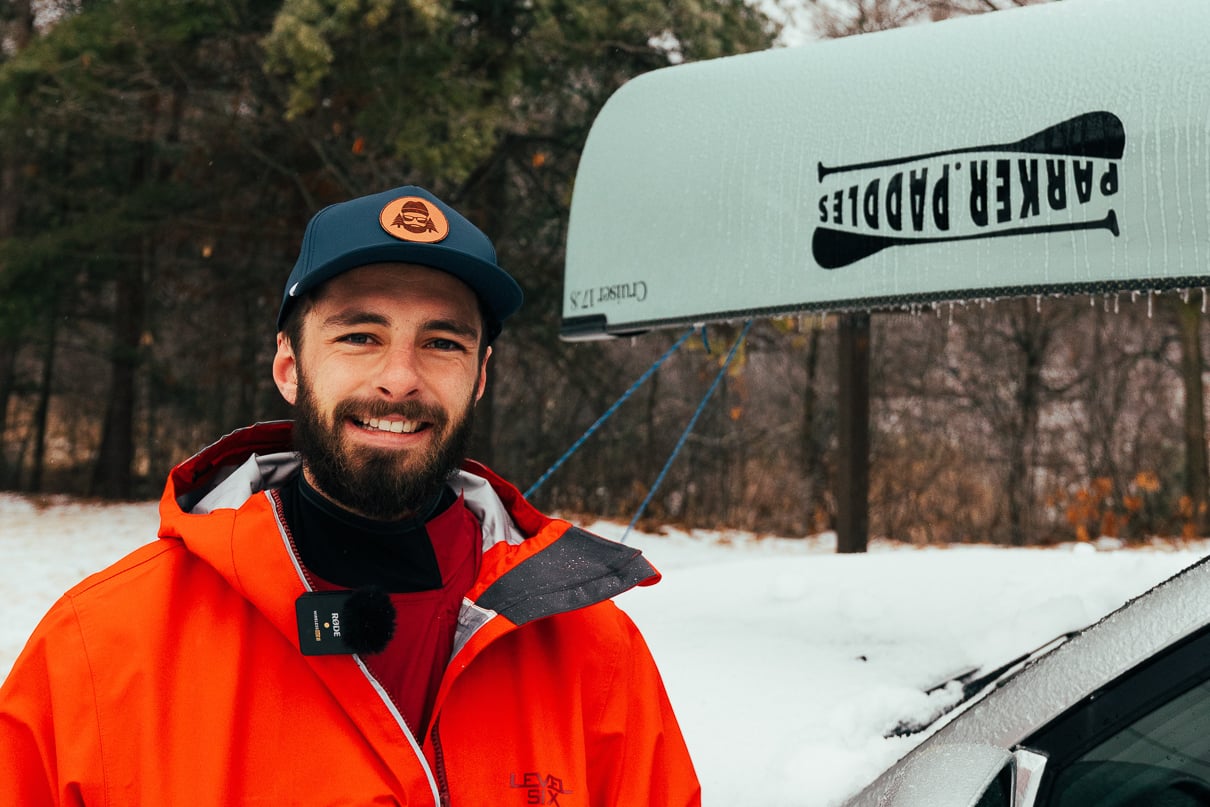
Kyle Parker in front of a canoe
Kyle Parker spent the winter working two jobs and training to paddle across the United States. Image Courtesy Kyle Parker and @_thenorthernnerd_

“I’m going to be traveling at three miles an hour, but at the end of the day after doing the whole thing it might feel like the United States is actually kind of small,” shared Parker.

While a big paddle trip like Parker’s might seem unattainable for the average twentysomething, Parker maintains it might be more in reach than most realize.

“I want to show people that it takes a little bit of planning and a little bit training and some hard work, but if you want something you can get it,” Parker said. “You just have to start planning. That’s it. Figure out a route, figure out what you want to do and then just start, because I’ll put it this way, how do you eat an elephant? You eat it one bite at a time.”

This all-female team is paddling the Inside Passage

Sea kayak guides Alex Corboy, Whitney Frame, Ella Pratt, Heather McLoughlin and Michelle Martin make up the all-female team headed from Telegraph Cove, British Columbia up to Skagway, Alaska along the classing sea kayaking route the Inside Passage. Most of the team works as seasonal guides in New Zealand, making June-September their off season. They expect the route to take around 80 days and to travel approximately 1000 miles.

According to expedition member Whitney Frame, the expedition is just as much about living simply as it is reaching a destination.

“Just because we have a start goal and an end goal doesn’t mean we have to stick to that or complete it,” shared Frame. “It’s about pushing our bodies to see what we can do and just exploring and having fun.”

Beyond the simple heart of the expedition, part of the goal of the team is to create and share stories about young women in paddlesports and inspire more women to tackle all-female trips.

the all female time paddling the Inside Passage in 2025
Meet the all-female team of sea kayak guides paddling the Inside Passage in 2025. Feature Image courtesy Whitney Frame.

“I’ve worked for some companies where I’ve been the only female guide or instructor there,” explained Frame. “What an interesting experience that was – adapting to a strong male crew, coming in as a female…you really have to prove yourself.”

Frame explained that while most of the barriers she and other female guides encountered in the field were initially small, these small barriers often compounded over time and started with assumptions.

“I can drive a car with manual or stick shift and I can back a trailer down a ramp,” explained Frame. “Just because I’m a girl doesn’t mean I can’t do it.”

Peter Frank is canoeing the 6,000-mile Great Loop dressed like a pirate

In a canoe trip of odyssey-like proportions, Peter Frank is paddling from Michigan to Michigan, circumnavigating the eastern United States. Frank’s route has taken him from the Great Lakes to the Erie Canal, down the Atlantic and Gulf Intracoastal Waterways, and will take him up the Tennessee-Tombigbee Waterway and Mississippi River eventually back to the Great Lakes, a classic route known as the Great Loop.

Frank is paddling the loop clockwise, against the prevailing winds and currents, and has faced hurricanes, freezing temperatures, brutal headwinds and alligators. Tackling the route in clothes he made himself, Frank’s pirate-like costume has proved more functional than meets the eye, with every detail aimed for practicality.

When asked what advice he had for aspiring young long-trip paddlers, Frank said “it’s going to be the hardest thing you’ve ever done in your life, but it’ll definitely be the most rewarding.”

John Coyne kayaked from Dublin to Istanbul

Facing freezing temperatures, multiple arrests and even a night spent camping beneath the Cliffs of Dover, John Coyne, Liam Cotter and Ryan Fallow tackled a route of epic proportions sea kayaking from Dublin, Ireland, to Istanbul, Turkey. It was the first recorded sea kayak journey of this route.

While Coyne was the only paddler to tackle the entirety of the journey, both Cotter and Fallow paddled large sections of the route alongside Coyne.

Joyne Coyne paddles from Dublin to Istanbul
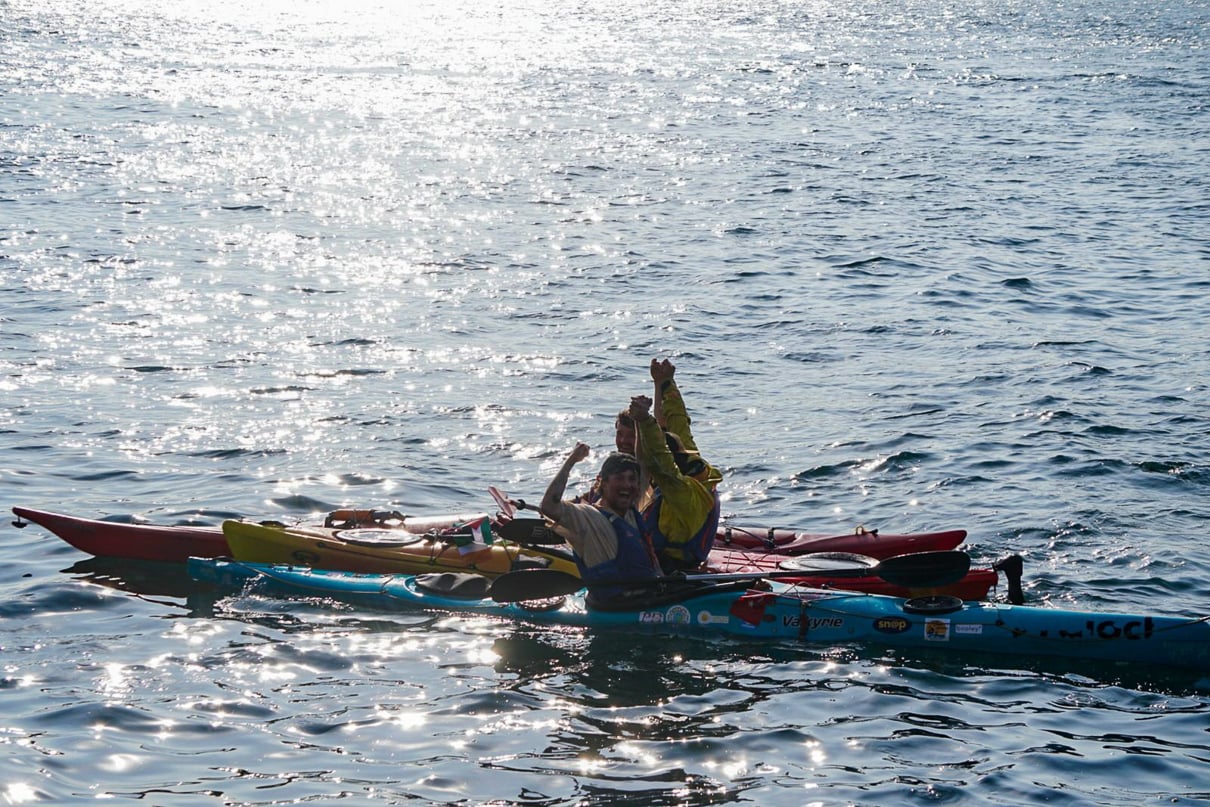
The team arrives in Istanbul. Feature Image courtesy Johnny Coyne.

Coyne recommends that paddlers looking to have an adventure of their own start by putting some money aside.

“If you’re a paddler that’s the first step, isn’t it?” said Coyne. “It’s all about just going for it, I think, and just not being afraid. Even if you do run out of money and you do have to come home, at least you tried it. You are still going to have a story and you’re still going to have an experience for life.”

Best Kids Paddleboards For 2026

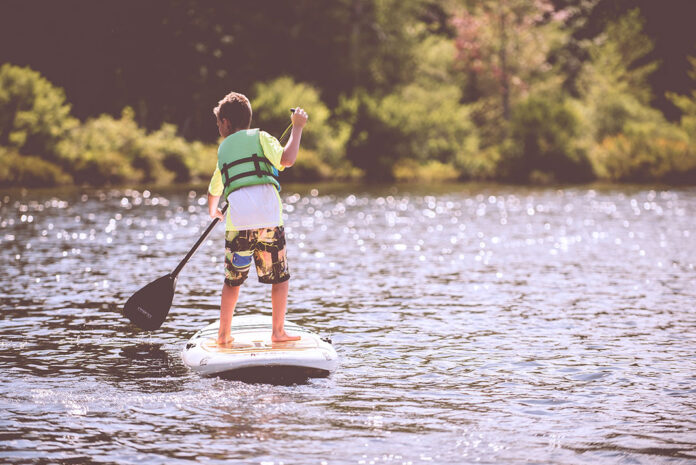
kid paddles on a standup paddleboard
Feature photo: Ben White/Unsplash

Paddleboarding is a great way to get the whole family on the water. For smaller children, having a properly sized paddleboard that they can control helps build confidence, independence and technical paddling skills at a very early age. As paddleboarding’s popularity continues to grow, brands are making boards specially tailored for youth.

Expect to see more of these emerge in the coming years. For now, we’ve compiled some of this year’s best paddleboards for kids, along with some buying advice for new and used boards.

Best kids paddleboards: Our top picks

Sea Gods Elemental Wave CX

sea gods elemental wave kids sup

Sea Gods Elemental Wave CX Specs
Length: 10’6″
Width: 32″
Weight: 18 lbs
Capacity: 350 lbs
MSRP: $1,195 USD

Buy from:

SEA GODS

About the Elemental Wave CX

The Elemental Wave Ten6 inflatable paddle board made with new cross weave technology is the perfect Supremely Light Weight All Around Adventure Board. Inspired by the natural flow and pull of the energy from the spirits in the water, creating a desire to be one with the waves. Feel the longing to play in “Please Don’t Go” by Folk Surrealism artist Heather Renaux.


GoPlus Inflatable SUP 11′

Go plus inflatable sup kids

GoPlus Inflatable SUP 11′ Specs
Length: 11’0″
Width: 30″
Weight: 18.5 lbs
Capacity: 300 lbs
MSRP: $145 USD

Buy from:

AMAZON

About the GoPlus Inflatable 11′

Do you want to try a different sport with your friends? This inflatable paddle board can give you a cool and wonderful water experience on a hot summer day. You can use it to surf, paddle, fish, do yoga and rest at sea, river or lake. Made of high-quality PVC material, it has strong load-bearing capacity, making it ideal for teens and adults. There is a fin at the bottom to help control direction and improve speed. With an adjustable paddle, you can choose the right length for easy paddles. Equipped with a backpack and a comfortable grip handle for easy movement, carrying and storage. A manual air pump helps you quickly inflate and use it.


Retrospec Weekender Nano Kids’ Inflatable SUP

retrospec weekender nano kids

Retrospec Weekender Nano Specs
Length: 8’0″
Width: 29″
Weight: 12.2 lbs
Capacity: 140 lbs
MSRP: $229.99 USD

Buy from:

RETROSPEC AMAZON

This all-around paddle board’s wider body and rounded hull provide better stability and control in a variety of conditions, and its surfboard-like shape helps small seafarers glide through the water with accuracy.At only 12.2 lbs, this paddle board is light enough to bring just about anywhere, but thanks to durable, puncture-resistant PVC made with AerGlide-Lite technology, it’s so sturdy, they might even forget it’s filled with air.Includes a dual-action pump, kid-sized backpack, 3-piece adjustable paddle, removable fins, leash, repair kit, and waterproof phone case.


Solstice Maui

solistice maui kids sup

Solstice Maui Specs
Length: 7’11”
Width: 29″
Weight: 13 lbs
MSRP: $359.99 USD

Buy from:

SOLSTICE WATERSPORTS

About the Solstice Maui

The Maui is an all-around recreation iSUP intended for kids and smaller paddlers. Measuring 8’ x 29” x 5”, the Maui iSUP is a very manageable board to handle for smaller paddlers. It is a super lightweight board, easy to carry, roll up, store away and bring on every adventure.


Onata Rider 9

Onata Rider kids sup

Onata Rider 9 Specs
Length: 8’11”
Width: 30”
Weight: 16 lbs
Capacity: 209 lbs
MSRP: $699 CAD

Buy from:

ONATA

About the Onata Rider 9

Pump up and get ready to go with the Onata Rider 9 inflatable paddleboard (SUP). It is ideal for inland lakes and mellow flat water. It’s easy to transport and when deflated, it can easily be stowed in small spaces thanks to its compact carry bag. Plus, it comes with everything you need to get started: a paddle, a pump and a repair kit. And to ensure safe navigation, it is recommended to have access to a functional boat security kit and to wear a PFD on board. For further information, visit Transport Canada’s website.


FlowRider Aero 8′ Native Rips Hybrid

Bote FlowRider kids sup

FlowRider Aero 8′ Specs
Length: 8’0″
Width: 32″
Weight: 15 lbs
Capacity: 150 lbs
MSRP: $559 USD

Buy from:

AMAZON BOTE

About the BOTE FlowRider Aero 8′

Let the kids dive into the world of water sports with our FlowRider, a tailor-made children’s hybrid paddle board. Expertly designed with a detachable seat and a custom Kids SUP+Kayak hybrid Paddle, the FlowRider offers the ultimate “on-the-water training wheels.” Your little one isn’t just learning; they’re conquering both kayaking and paddle boarding. Their future in watersports starts here.


Snapper Inflatable Red Paddle Co.

snapper red paddle co kids sup

Red Paddle Co Snapper Inflatable Specs
Length: 9’4″
Width: 27″
Weight: 16.95 lbs
Capacity: 130 lbs
MSRP: $1,019 USD

Buy from:

BACKCOUNTRY RED PADDLE CO

About the Red Paddle Co Snapper Inflatable

When our little shredder outgrows the bow of our board, we get them their own. The Snapper Inflatable SUP gives them the performance they need to stay with the pack. The drawn-out, rounded nose reduces drag for gaining quick speed, while the twin fin setup keeps them tracking straight.


Shopping for a used kids paddleboard?

Kids are constantly outgrowing things. This high turnover ensures a steady supply stream of used junior paddleboards.

Most traditional buying advice applies when looking for a junior paddleboard, but a unique aspect to consider is how long this board will fit your children. You do not want to buy a board in the fall that your youngest child has outgrown by springtime.

Look for boards that come with adjustable paddles to meet different heights, especially if more than one child will be using the paddleboard. This will also ensure that a growth spurt doesn’t have you shopping for a new paddle right away.

Wear The Appropriate Leash When Stand Up Paddleboarding
  • Always wear a leash on open bodies of water like lakes, bays, and oceans. Due to the risk of snags and entrapment, leashes should only be worn on rivers if they include a quick release attached to your life jacket.

This is where chatting with the seller, or other parents with kid-sized paddleboards can give some insight. When you go to see the board, make sure your kids get a chance to try the board, and establish it is something they are interested in continuing to do. It’s a fantastic opportunity to get the kids active and develop a lifelong passion for being on the water.

For more tips, check out our article How To Buy A Used Paddleboard.

Kids paddleboard buying guide

Inflatables are the best paddleboards for kids because of their durability and forgiveness. If rigid paddleboards hit a rock, they dent or scrape—whereas an inflatable SUP bounces off them. This forgiveness not only helps avoid damage to the board but also to the paddler. Falls on an inflatable are much softer than a rigid board. Foam boards also provide this bit of softness.

  • What is the best-sized paddleboard for kids?

    The best kids paddleboard needs to be the best all-arounder. It should offer some room to grow, and there should be sufficient volume so that the largest child can stand on it comfortably. A wide paddleboard, at least 30 inches, offers lots of stability.

    Kid-sized standup paddleboards are shorter than standard boards—eight feet or shorter. But kids don’t necessarily need a board specifically sized for them. Depending on their size, they can likely also use a paddleboard designed for smaller adults. This gives them room to grow into the board.

  • What size is a kid paddleboard?

    Look for boards less than eight feet long. Junior paddleboards shorter than six feet are made for the really young ones. A specific youth paddleboard is best for kids committed to paddleboarding and looking for better performance. If paddleboarding is a family outing, younger paddlers will appreciate the additional control that comes with a child-size paddleboard.

Check The Weather
  • Plan for changing weather conditions. Prepare for the worst case.
  • Don’t forget to check tide, currents, or river levels.


How To Tie Down A Kayak On Your Car’s Roof Rack

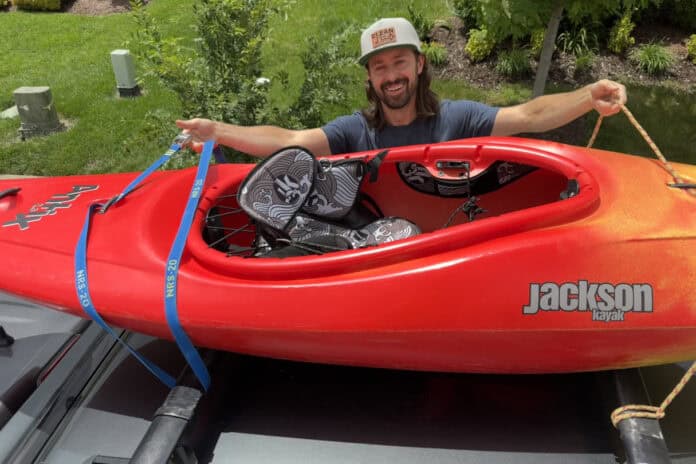
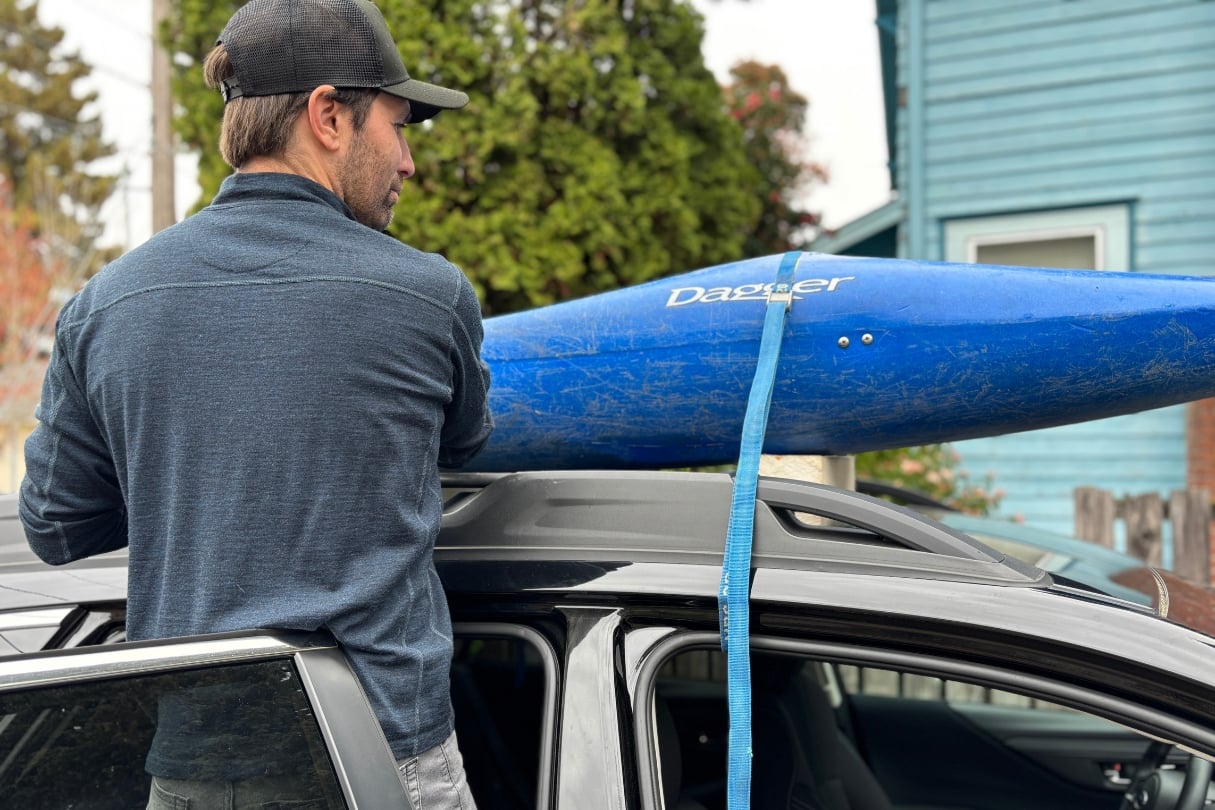
Man tying kayak to roof of car.
Whether you use cam straps or rope, it's important for safety and the sake of your boat to secure it to your vehicle properly. | Image: Boyd Ruppelt

I could feel the rumble of rocks under the truck as I worked my way back up the dirt road in the dark. My headlights swayed into the trees with every bounce. Then, my eye caught a reflection. It was a helmet. I stopped and picked it up.

Soon, I found a paddle, and then a boat, and another paddle. As I continued, I found more boats and gear scattered along a mile of remote forest road. The truck ahead of me, just out of sight, was full of seasoned professional kayakers I had spent the day with on the river, and even with their collective experience, a bad tie-down job had led to a yard sale. While losing a boat or gear along a road once or twice is a sort of rite of passage in paddlesports, it raised the question, if a group of the best whitewater kayakers in the world couldn’t tie down a kayak right, what hope is there for the rest of us?

It’s not just inconvenient or expensive to have kayak gear come off the roof of a car; it can also be dangerous. Two years ago, a kayak flew off a car on a highway in Wisconsin, killing a man driving a truck. The year before, a motorcyclist was struck and killed by a kayak falling off a trailer in Tennessee. The good news is, there are some very simple ways to safely secure your kayak and avoid losing a boat or putting others at risk.

Know The Local Hazards
  • Check navigation charts before you launch.
  • Check with those who have local knowledge of man-made and natural hazards, e.g. low-head dams; sweepers, strainers and undercuts; tides and currents; and rocks and shoals.

How to tie down a kayak on your car’s roof rack

What you’ll need

  • A solid roof rack. A rigid-bar roof rack system works best. Soft racks can be an affordable or convenient alternative, especially for travel and rental cars.
  • Two tie-downs. I recommend using cam straps or rope. Ratchet straps may seem like a good idea, but they tend to get too tight, potentially damaging your kayak or causing more problems down the road. Always replace them when they start to look worn.
  • Additionally, every paddler should learn at least two simple knots: the trucker’s hitch and the half hitch. While most paddlers use cam straps, you may not always have them, and a rope will work just fine if you know a couple knots. The trucker’s hitch is a fixed loop created to cinch and tie off a load with a rope. I always recommend using three twists before creating your loop though, instead of the one or two generally recommended. This keeps your knot from locking up after a long trip or bumpy road, and makes it easier to untie later. The half hitch is used to secure the trucker’s hitch or to use up the spare webbing from a cam strap.
Man adjusting cam strap.
Place the kayak on the bars, and run a pair of straps or rope around each bar and over the kayak. It’s often preferred to have the kayak upside down (pictured here) but either side will work depending on the boat’s size and shape. | Image: Boyd Ruppelt

Step 1

Position your kayak parallel to the car and centered on your roof rack.

It’s typically better for it to be positioned upside down to protect the hull on the bottom of your kayak from denting, also called oil-canning. It also prevents your kayak from filling with water if you drive through rain. That said, I often transport my kayaks upright anyway because it can be easier to secure a strap through the security loops if the kayak is upright. And, modern whitewater kayaks often have a deck shape that doesn’t sit well on a roof rack upside down. It doesn’t matter if the kayak is bow first or stern first, but I always position it as aerodynamically as possible based on the kayak type or shape.

Also, if you store your gear inside the kayak, make sure it is secured to prevent it from falling out of the cockpit.

Step 2

Loop each strap (or rope) around the bars and between the towers (where the bars connect to the car) to prevent the tie down from slipping off the ends of the rack.

If you are using cam straps, shorten the end with the buckle and drape both ends over your kayak. If you’re using a rope, use a loop, I prefer a Figure Eight on a Bight, on one end and pass the rest of the rope through the loop to secure your rope to the bar.

Step 3

Always run a side of each strap or rope through a security loop or handle near the cockpit when possible. This keeps the kayak from slipping forward or backward while also keeping it on your car if one of the straps breaks.

If the boat is upside down, this may mean only running one strap over and the other side of the cam strap under and through the security loop, but going through a security loop or handle is always better if you can.

Tightening strap or rope on roof rack.
Whether you are using a rope (foreground) or cam strap (background), it’s important to cinch them down until the kayak is secure. | Image: Boyd Ruppelt

Step 4

Run the strap back around the bar, between the towers again, and cinch it down until the kayak is secure but not flexing.

If you’re using a rope, this is where the trucker’s hitch comes in. Twist a portion of the rope three times and pull a small loop through above the bars. Run the rope around the bar and back up through the loop, and pull it down to tighten. Cinch it down until the kayak is just tight enough not to move, but no more. Then finish the hitch off with a few half hitches at the base of the loop. Be sure the half hitches are slipped up against the loop so the rope can’t loosen while you’re driving.

The trucker's hitch is a useful knot to tie down kayaks.
Every paddler should learn to tie a trucker’s hitch for those days when all you have is rope.

Step 5

Secure any extra rope or strap.

I like to tie off the extra with a half hitch and then run it back around the rack and through a security loop or handle again before adding more half hitches. It’s a great way to use up a lot of rope or strap, but it also acts as a fail-safe if one, or even both, of the straps break. You can do the same thing with spare rope.

Step 6

Always have a backup.

If a strap snaps or part of your rack fails, you don’t want anything becoming a projectile. If you were able to secure each of two straps through the security loops of your kayak, then you’re all set for a standard trip. But, if your kayak doesn’t have security loops or handles near the cockpit, is longer than 10 or 11 feet, or if you’re transporting kayaks over a long distance, it’s good practice to use separate bow and stern lines. There are a variety of hood loops and trunk anchors to choose from, but each should be secured to your frame and to the ends of your kayak.

Education: Get Some!
  • Take a paddling safety course from the American Canoe Association (ACA), your local paddling shop or outfitter, or other reputable source.
  • Take a boating safety course from the U.S. Coast Guard Auxiliary, U.S. Power Squadrons® or your own state’s boating agency.
  • Take on-the-water skills training.

Additional tie-down tips

Always carry spare straps in your car. Consider locking straps for urban areas. And never leave your kayak on the racks if you aren’t going to and from the river. It can be exciting to always be ready to paddle, but extended time on a car in the heat or sun can warp your kayak. The extended sunlight also adds wear to your rope or straps.

The longer you paddle, the more methods and tricks you’ll learn for tying down boats with minimal ropes and straps. Creativity will often win the day for a shuttle. Just make sure you always go through the security loops or handles and always have a back up in your system.


Feature Image: Boyd Ruppelt

Wenonah’s SuperLite Canoes Are Lighter Than Ever Before (Video)

Based on the banks of the Mississippi River in Winona, Minnesota and the canoe of choice Boundary Waters Canoe Area Wilderness and beyond, Wenonah knows what makes a good long trip canoe.

A good canoe for long stints in the wilderness is durable and fast, portage-friendly, with essential features to make the canoe comfortable and adjustable, but with no more bells and whistles than you want to carry on the portage trail. Previously, Wenonah had made their canoes in Ultralight. In 2025, they’re going SuperLite.

Inside look at the Minnesota II in new SuperLite Aramid construction

With the new SuperLite Aramid construction Wenonah revisited their classic canoe construction to shave off as much weight as possible without sacrificing essential features for canoe tripping.

“Every aspect of the canoe has been gone over with a fine-toothed comb. The core has been worked, the fabrics have been rearranged,” Brain Day from Wenonah told Paddling Magazine at Canoecopia 2025. “We’ve ended up with a canoe that comes in roughly 15% lighter than a conventional Ultralight Aramid.

For reference, the Minnesota II model in SuperLite comes in at just 36 and a half pounds while the traditional Ultralight Kevlar Minnesota II weighs 42 pounds.

Canoe manufacturer Wenonah comes from a canoe racing heritage and many of the features in their canoes honor that legacy; the SuperLite aims to keep those legacy features while keeping the boat as light as possible. The canoes feature carbon fiber bucket seats, a foot brace for efficiency paddling, and a sliding seat in the canoe’s bow to allow for adjustment of trim – weight distribution and how that impacts the handling of the canoe – on the fly.

When it comes to lightweight boats one question tends to come front of mind for consumers: does cutting all that weight make the canoe less durable?

“There are hundreds of these canoes up in the Boundary Waters that get horribly abused every single year in a rental situation and they hold up fantastic,” shared Day. “The way most people would use a canoe, they’re not going to damage it.”

In short: even the SuperLite canoes are still extremely durable, but try not to throw it off the roof of your car on the way to the put-in.

The Near Future Of Fishing

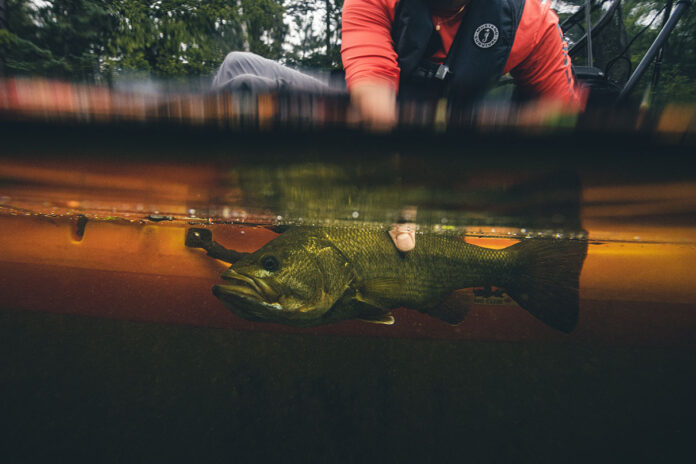
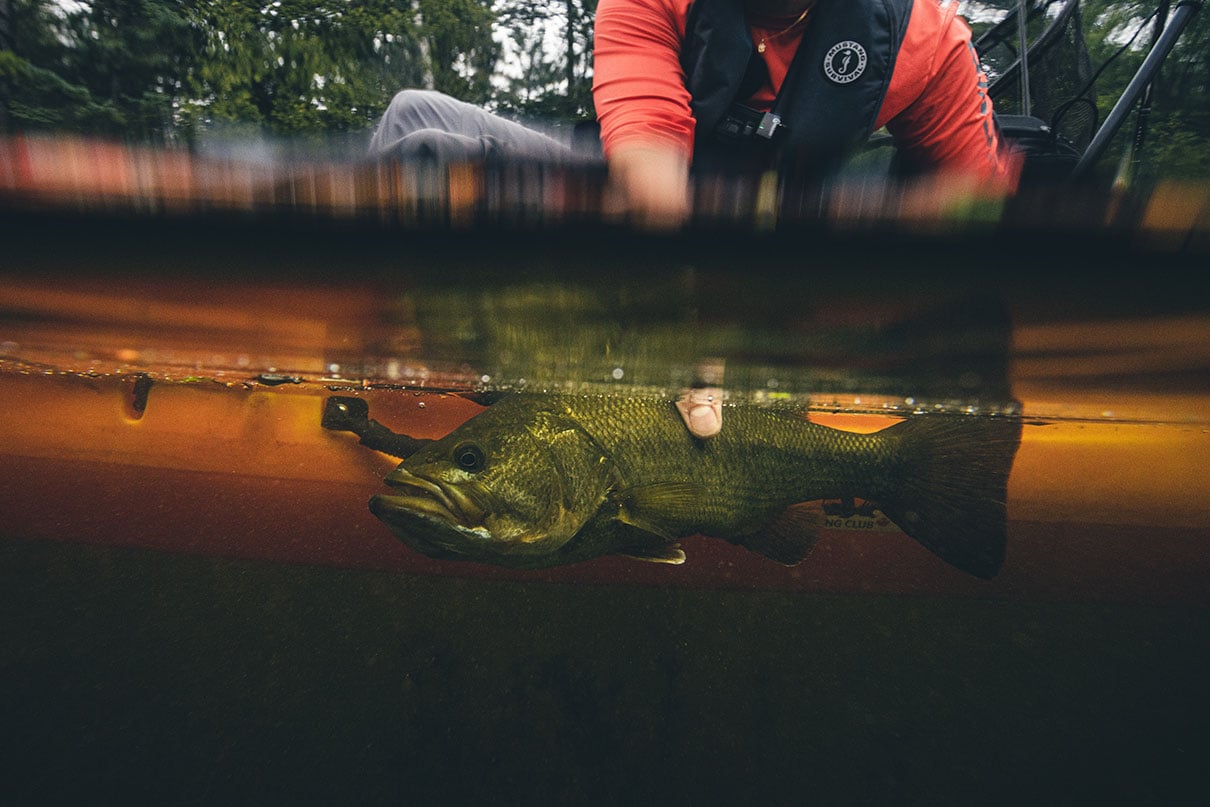
underwater photo of angler handling fish below water's surface by side of fishing kayak
Catch anglers as they transition from newbies to enthusiasts. | Feature photo: Doyle Smith

On the first day of Florida’s ICAST 2024 tradeshow, at the annual State of the Industry breakfast, Glenn Hughes, president of the American Sport Fishing Association, addressed hundreds of tackle manufacturers and media representatives, sharing the good and bad news.

The good news: According to the Recreational Boating and Fishing Foundation (RBFF) Special Report, 57.7 million people went fishing in 2023, a six percent increase over 2022. That’s 19 percent of the U.S. population, the highest participation rate in 16 years. The bad: The number of people who quit fishing each year is holding steady at 23 percent.

While young people are more likely to start fishing, aging anglers are leaving the sport. Although more people are fishing overall, the average number of trips is down—31 percent of anglers fish once a month or more, and just six percent of anglers fish once a week or more. We reached out to Hughes and business leaders in the audience for their responses on the opportunities and obstacles the industry faces.

The near future of fishing

Glenn Hughes | President, American Sportfishing Association

Glenn Hughes’ journey to president of the American Sportfishing Association (ASA) started at a family cottage on a lake filled with fish. When it was time to choose a career, Hughes entered the sportfishing industry, eventually leading some of the largest boating and fishing magazines. In 2018, Hughes became president of ASA, bringing his knowledge of the sport to advocate for its success.

“Business reaction to the current environment varies from manufacturer to retailer. Manufacturer sales are generally soft as retailers are lowering the levels of inventory they are carrying. We have seen slightly smaller investments in R&D and technology overall, as well as belt-tightening on travel, sponsorship, discounted products and more. In general, independent retailers are placing more but smaller orders to minimize the inventory and debt they are carrying. There is more competition from international websites that discount products and avoid excise taxes with direct sales into the U.S.

underwater photo of angler handling fish below water's surface by side of fishing kayak
Catch anglers as they transition from newbies to enthusiasts. | Feature photo: Doyle Smith

Fishing participation last year was up from 2022, with 57.7 million Americans spending time on the water. However, this growth is not from avid anglers; it’s from entry-level anglers and a growing group of women and Hispanic anglers. Manufacturers and retailers need to acknowledge these trends and support a more diverse audience who feel welcome and comfortable in this space. I would recommend outreach via social media or other online platforms to offer free lessons on knot tying, casting and introductory fishing techniques.

Responding to a drop in sales has resulted in tight margins. We’ve seen lower employment, less investment and more focus on core business. Cash flow is important, so there is more effort to collect what’s due and fewer term extensions for future business.

The biggest challenge has been the economy. Inflation is hitting hard. People are hesitant to spend more money on fishing tackle when food prices have gone up more than 20 percent and gas prices have gone up 37 percent over the last four years. This scenario has consumers looking for deals. If they can save $10, they are going to do it.

The biggest growth is in the Southeast markets as people continue to move to these states, and the weather allows for 12 months of fishing. Take advantage of entry-level anglers and start them down the path of becoming avid anglers. Offer incentives to participate and stay engaged. Use research posted on Recreational Boating and Fishing Foundation and ASA websites to get an overview of today’s anglers and develop a plan to focus on future anglers.”


James McBeath | Marketing Director, Hobie Kayaks

James McBeath spent years as the product director at Jackson Kayak. During the COVID pandemic, McBeath and others at Jackson were let go. After a year working at a media company, McBeath landed on his feet as the new marketing director at Hobie. During the pandemic, Hobie suffered blows to production and service. We asked McBeath about his plan to rebuild the future of fishing kayaks.

“When I came to Hobie, I had a holy shit moment. COVID hit this company at a key moment in its evolution and it was challenged through the pandemic. Now we’re humming again. Factories are back up and we are playing catch up, but we have an eye on the future.

Our focus is helping dealers sell boats. Across the industry, at the end of 2021 to 2022, dealers were ordering and manufacturers were producing a lot of products that filled the market. Manufacturers and dealers are now working hard to move products. I see discounted boats and gear, direct-to-consumer plays from companies and other creative ways to move products.

In response, Hobie is returning to innovation. We need new products to get consumers stoked about the next big thing in fishing, sailing and kayaking. During COVID, many companies couldn’t afford innovation. Hobie, like other manufacturers, didn’t take advantage of its research and development strengths. Now, we’re working on a five-year product development plan. We’ve lit a fire under a couple of projects to get our product development moving.

The other key for us is less dependence on overseas manufacturing and materials. We’ve moved parts manufacturing to North America and eliminated our dependence on third-party suppliers. We built a boat factory in Mexico to accommodate capacity issues and bring the technology we need to respond to growing demand. Streamlining the manufacturing process puts more boats in stores.

During the COVID boom, people bought gateway kayaks to test the waters. Now, they are ready to move up to a better kayak for a better experience. These people are on the cliff of becoming die-hard anglers. Manufacturers need high-quality boats with great customer service experiences to ensure hesitant anglers become enthusiasts.”


Dave Martin | CEO, YakAttack

Before becoming chief executive officer (CEO) of YakAttack in 2023, Dave Martin spent his career in the tackle industry. As a kid, Martin used PENN tackle to fish his local waters. Eventually, he worked his way to become the CEO of PENN. When PENN was sold, Martin moved to vice president of engineering and manufacturing at Zebco Brands and then president of Big Rock Sports’ Camp, Marine Division.

“The statistics on participation reveal the demographics and segments of consumers entering and exiting the sport are crucial. We’re seeing an influx of new recreational participants with lower spending, while the boomer generation, known for higher spending, is exiting. Therefore, it’s not just about the number of participants but their level of engagement in the sport.

The increasing participation numbers present a real opportunity for our industry. Our task is to keep these new participants engaged and help them grow in the sport. As they do, their investment in equipment and products will increase, and their influence will attract new participants.

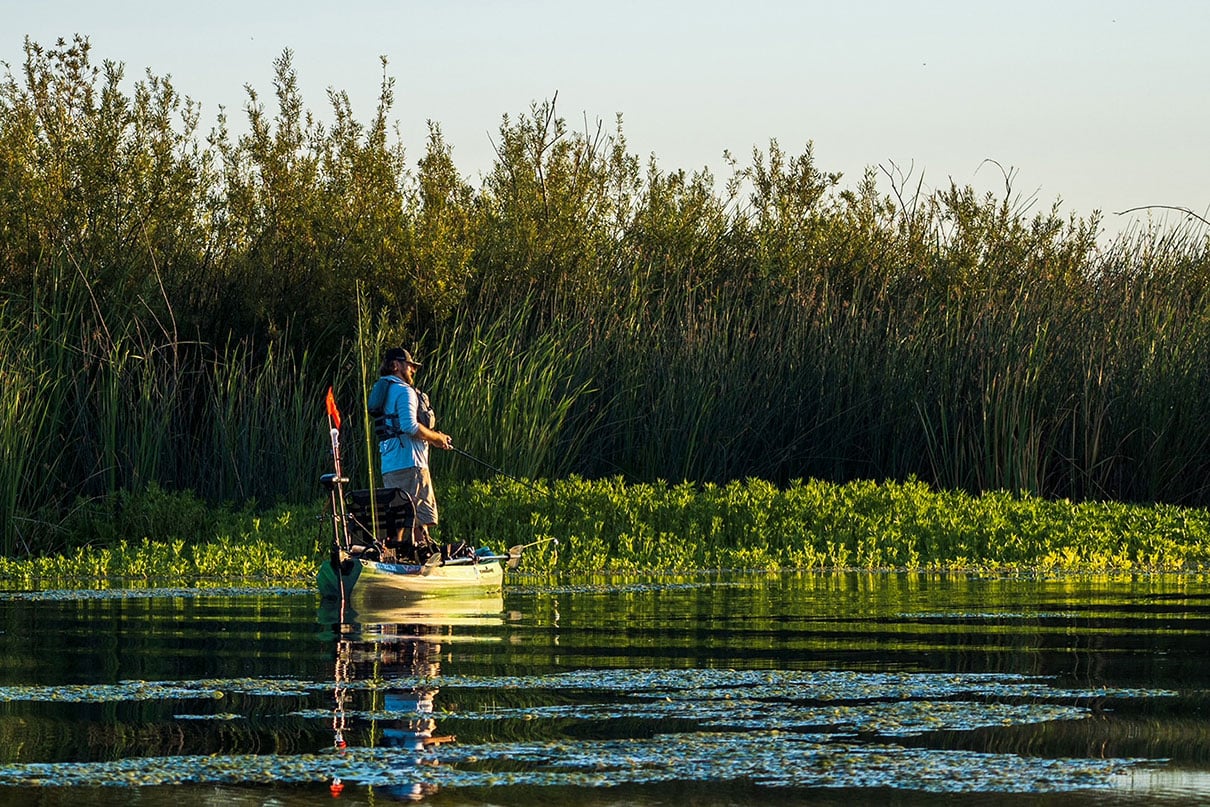
man stands and fishes from a kayak near grass flats in golden afternoon light
More days on the water leads to more money in the cash register. | Photo: Matt Vahle

Our industry must work collectively to transition new anglers into avid enthusiasts. In today’s environment, it’s not enough to simply create products; we must educate our consumers on how to use them and understand their needs.

It is vital to enhance our digital presence and community engagement through social media, online forums and virtual events. Our goal is to foster a sense of community among participants, encouraging them to share experiences and knowledge, which drives loyalty and repeat business.

There are several elements to engaging these new participants. We need a robust retail base to engage with all levels of consumers. Additionally, we need to focus on the details driving the demand curve. Similar to fishing, paddlesports has seen an increase in participation as people seek outdoor activities. Consumers prefer experiences over high-priced equipment, with lower price points and used equipment becoming popular.

I believe our industry needs to break down some of the silos that exist today and find more effective ways to collaborate and cooperate. By focusing on engagement, education and community-building, our industry can turn new participants into dedicated enthusiasts, ensuring growth and sustainability.”


Houman Nikmanesh | President, Bixpy

Houman Nikmanesh was pedaling his kayak through strong currents and winds when he cooked up the idea for a small, powerful and indestructible kayak motor. The result is Bixpy, an impeller-driven motor and lithium battery system that fits on any kayak, canoe or paddleboard. Nikamesh had no engineering experience, so he hired talented people to help him realize his vision. While other businesses have seen a slump in sales, Bixpy continues to ride the wave of motorized paddlecraft.

“It is interesting to make sense of a growing industry that is churning along despite a drop in sales for most vendors. I suppose this is the lingering side effect of COVID.

We are not strictly selling to the fishing crowd. We’re able to hit paddleboarders, photographers and recreational kayakers. From the very early days, we have tried to cast the widest net to ensure we’re not tied to one demographic. That said, kayak fishermen are our bread and butter.

As an after-market add-on for most buyers, we’re enjoying all the extra kayaks on the market that now need a motor. In a sense, we’re still riding the remains of the COVID spike in sales for outdoor equipment.

To stay relevant in the changing landscape, we listen to how people use our products. We look for ways to improve our existing products and stay up to date on the industry. For example, when we realized the popularity of our rudder adapters, we went on a mission to make the best rudder on the market. We didn’t limit ourselves to designing a rudder just for our motor system; we set out to create the best rudder for any kayak.

I don’t know how long the wave will last, and we’re diversifying our demographic to ensure we continue to grow and keep our sales steady. Three years ago, paddleboarders were a single-digit portion of our client base. We worked hard to get the message out about our paddleboard motors; now, a large portion of our business is paddleboarders.”

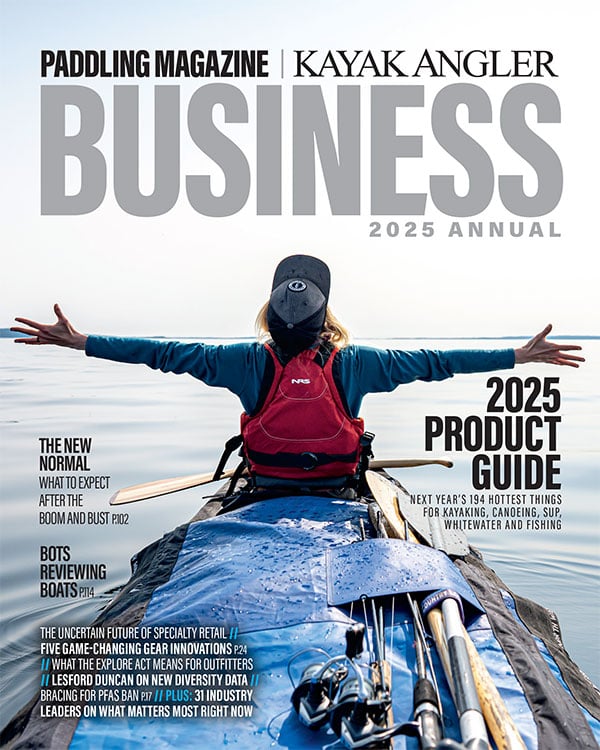
cover of Paddling Business 2024This article was first published in the 2024 issue of Paddling Business. Subscribe to Paddling Magazine’s print and digital editions, or browse the archives.

Catch anglers as they transition from newbies to enthusiasts. | Feature photo: Doyle Smith


Woman Arrested After Kayaker Dies In Jet Ski Hit-And-Run (Video)

Two arrests have been made in connection with the hit-and-run that killed 18-year-old kayaker Ava Renee Moore on May 25, 2025. Moore was kayaking on Grapevine Lake in Texas over the holiday weekend when she was struck by two women on a personal watercraft (PWC).

Two arrests made in relation to hit-and-run resulting in kayaker death

The PWC passenger stayed at the scene while the driver fled in a car with a man, striking another vehicle while fleeing. Photos taken by an eyewitness of the suspected PWC driver were released by the Grapevine County Police and the woman was identified as Daikerlyn Alejandra Gonzalez Gonzalez. The male suspect arrested was identified as Maikel Coello Perozo.

Fox4 News reported Gonzales is being charged with second-degree felony manslaughter with a bond set to $500,000. The PWC passenger who stayed on scene and talked with investigators has not been taken into custody.

Arrests made in Texas Jet Ski hit and run that resulted in kayaker death.
Daikerlyn Alejandra Gonzalez Gonzalez upon arrest. Featured Image: FOX 4 Dallas-Fort Worth | YouTube

It is presently unknown if alcohol was involved or if the PWC was rented.

Fox4 News also reported that the arrest affidavit indicates the PWC was traveling at high speeds near swimmers when it struck Moore from behind. Moore was pulled from the water by bystanders and treated for severe head trauma by first responders before being transported to a local hospital; ultimately she did not survive.

Ava Renee Moore was a talented basketball player and was joining the U.S. Air Force Academy class of 2029.

“My heart breaks for Ava’s family and friends, and my prayers are with them as they face this tragedy,” said Texas Attorney General in a press release. “My office will continue to work with local, state, and national law enforcement partners to secure justice for Ava.”

How common are boat collisions with kayakers?

Boater strikes on kayakers are uncommon, but often result in serious injuries when they occur.

In August 2016, a group of 10 paddlers were on the Hudson River when struck by the NY Waterway ferry Jersey City injuring three people and highlighting the potential hazards of paddling busy waterways. A Coast Guard investigation found causes of the collision to be a lack of communication between the kayaks and ferry, and glare from the sun. Due to the glare the ferry captain relied on radar to ensure the path was clear; kayaks do not appear on radar. The guide shouted and waved his paddle while the ferry beared down on the group at speeds of 22 knots, but they were not seen. All survived the incident and a lawsuit was settled outside of court.

In August 2024, a father and son were run over by a motorboat while kayaking in southern Puget Sound. The pair shouted and waved their bright yellow paddles when they noticed the motorboat on course to hit them. The boat did not change course and the pair made the decision to dive into the water and under the kayak.

The kayak was pushed into the father’s back as the motor boat went over it, nearly completely severing the kayak into two pieces. Both father and son survived with no injuries. The driver of the motor boat did not stop, but was later arrested.

While it is undoubtedly the responsibility of the drivers of motorized boats to be aware of and avoid hazards in the water, including kayakers, there are steps paddlers can take to make themselves more visible to motorized boat traffic or signal to boaters if they find themselves facing impending collision.

A VHF radio can be used to alert commercial traffic of your presence and call for help in an emergency, an air horn can be used to signal all boaters. Additionally, brightly colored equipment and displaying proper lighting if paddling at night can make paddlers more visible to motorized boaters.

However, even when paddlers take all the right precautions, it only works if everyone else is doing their part too. The best safety precautions can’t overcome the most reckless of boaters.