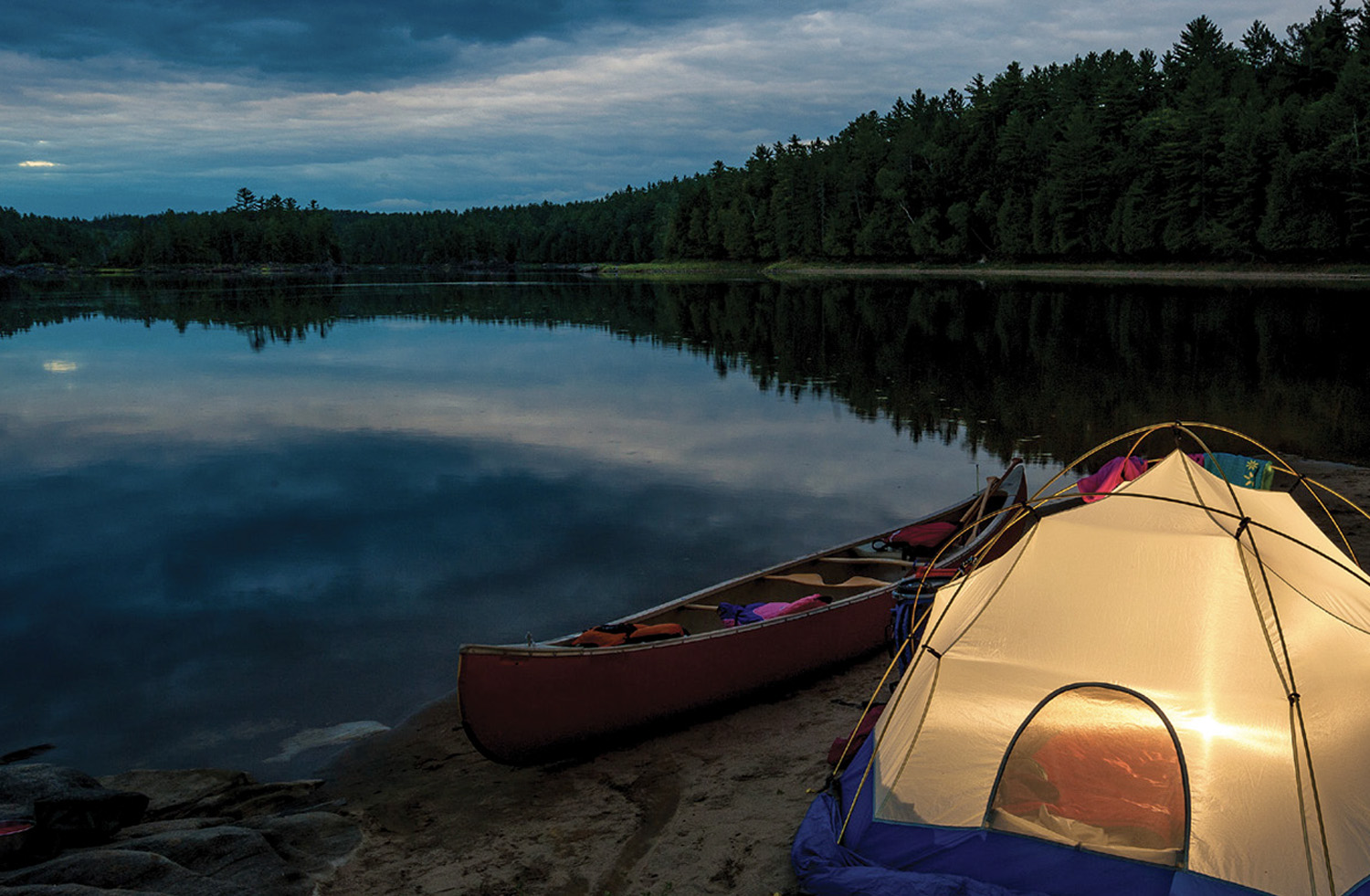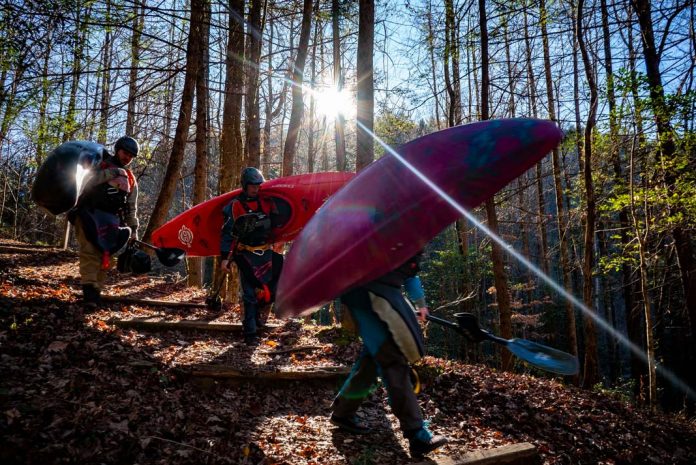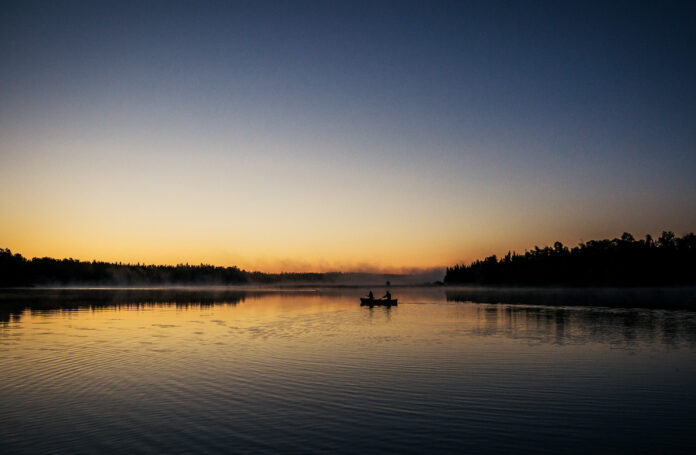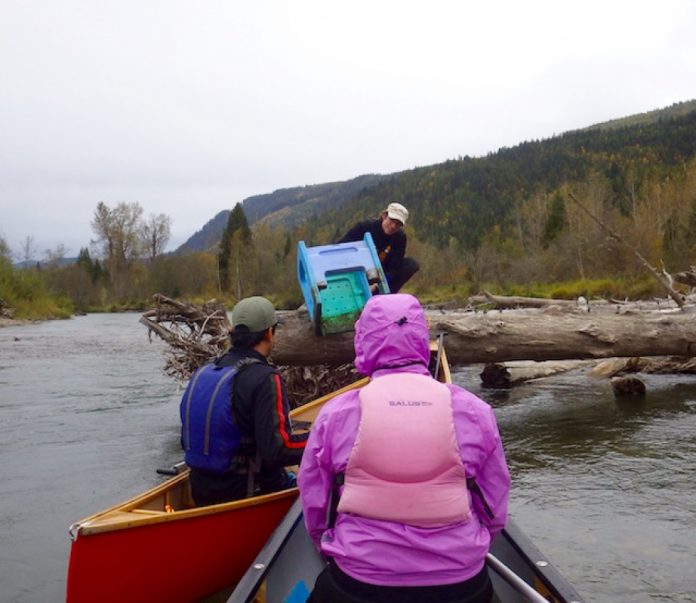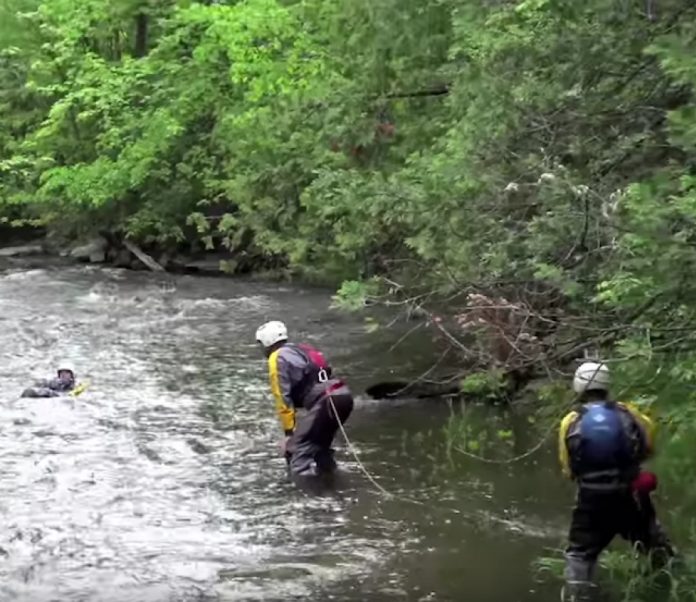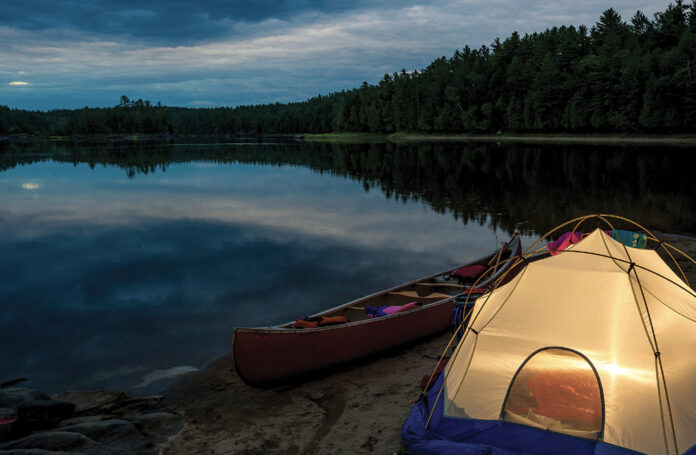
Learn the safest and most efficient way to get your canoe on your shoulders. Canoe tripping guide Erik Fenkell, an experienced guide at Temagami Outfitters (www.icanoe.ca) in Temagami, Ontario, shows you how.
Sander Jain’s Terrifying Sasquatch Encounter In Clayoquot Sound
“Paddling up the inlet feels like a reverent intruder entering a magnificent throne room. Along the fiord’s steep sides, bald eagles stoically perch on ancient treetops protruding from the fogged mountain slopes. From this high vantage, they stand sentinel, guardians of a sacred place that keeps nature’s secrets…”
I wrote these words in summer 2012, after falling in love with one of Clayoquot Sound’s remotest corners. A pristine region on Vancouver Island’s west coast, the inlet radiates the mystical air of the Pacific Northwest more than any other place I have visited. A dramatic topography covered in an exquisite expression of the ancient temperate rainforest ecosystem, the river valley and adjacent fiord are powerfully humbling.
The wild charm of the place cast a spell over me. After venturing out there on kayak trips and camping in the valley for one or two nights, I knew I would return some day to spend much longer.
Sander Jain’s terrifying Sasquatch encounter in Clayoquot Sound
In early summer 2014 everything seemed to fall into place. I prepared for a stay of one to two months. A solitary, hidden cabin clinging to the vastness of the wild scenery and representing the only human trace in this realm would act as a perfect home base. My intention was to explore the nature of wilderness living, tune in with this region’s pristine air, observe wildlife and sharpen my senses in interplay with the natural world. I wanted to deeply connect to the feeling of being in this place and situation rather than exploring the place itself.

The spirit of this trip would be quite different from my past wilderness journeys, in that I wasn’t looking to go on an ambitious destination-driven adventure. My aim was simply to see what I could learn from being myself in my favorite wild place.
I found myself heading out into the sound on a sunny morning in mid-July. When the shuttle boat I had hired entered the mouth of the inlet, I felt the overpowering dimensions of the place reduce our human scale to insignificance.
A rustic cabin in the woods
The cabin nestled secretly between the waterline and steep forested mountain slopes behind. I unloaded my kayak and boxes full of gear, waved at the driver and watched his boat disappear into the distance. This had been my dream for two years. I moved into the cabin, settled in and started the simple, rustic, yet very comfortable and gentle way of wilderness living I had imagined.

this is what mortal fear feels like.” | Photo: Sander Jain
The cabin was an ideal home base and a safe shelter. The days were sunny, without a single cloud in the sky, the nights starlit and cool. I observed the morning fog lifting off the mountains and the fiord when I awoke, saw the tides roll in and out in front of the cabin, watched the light revealing the many different facets, shades and moods of my favorite place.
In most wild and abundant places, you rarely see the wildlife, although it is there on its elusive missions, defying human understanding. Here, however, bald eagles, kingfishers, gulls, ducks, seals, sea lions and river otters revealed themselves quite frequently. The haunting call of a loon traveled across the water from the estuary in the evening, and often I could hear the deep booming of male sooty grouse resounding from deep inside the mountain valleys.
I paddled to the river estuary each day and evening, quietly sitting in my kayak, observing and listening. After dark, I ate dinner by candlelight inside the cabin, and then switched on my headlamp to write wildlife reports and journal notes. Later, I lit incense sticks to keep the mosquitos away and fell asleep comforted by the solitude of this remote place, so used to echoing back at itself without the attendance of a human witness.
My mind was free of distractions, and time seemed to stretch—four beautiful days of living in the moment felt like weeks. I came to realize that part of the beauty of my favorite place and its appeal to me was its unapproachable seclusion. As much as it was a place of bright beauty, abundance, peace, retreat and serenity, it also carried an obscure air of reticence, inaccessibility, twilit hostility and deep mystery.
I could sense nature’s inexhaustible potential and energy there. It was wild. A place for humans to visit but not to remain.
Boulders rolling in the night
On the fifth day, I lay down for a nap in the afternoon and awoke to the filtered light of early evening. I launched my kayak and went for my customary paddle to the river estuary. When I returned, I noticed the first weather change since my arrival. After dinner, I stepped outside onto the front porch. The clouds were a lid sealing the roof of the fiord and making the standing air close and muggy. In the pitch-black beyond the porch, the night was conspicuously silent. The water was still, there wasn’t a breath of wind, and I couldn’t hear any bird calls or seals catching fish close to shore like the previous nights.

I went back inside and exchanged texts with my friend in Tofino on my satellite communication device. Then I heard a strange sound somewhere in the distance. I stepped back out onto the porch and listened carefully. Yes, there it was again. It sounded as if big rocks or boulders were being turned over or thrown.
It must be a black bear looking for a late night snack in the intertidal zone, I reasoned, or perhaps rocks loosened by the change in temperature falling out of the cliffs. I strained to hear any other clue as to the source. That’s when the strange, owl-like vocalizations started. It seemed like several of them replying to each other from different locations in the distance. Between these sounds was absolute silence.
Half an hour later, the tumbling boulder sounds continued. Brushing my teeth, I tried to convince myself that the periodic silences were peaceful rather than strained. Suddenly, one of the rock sounds erupted with the intensity of an explosion.
It was much closer than before!
My toothbrush nearly fell out of my mouth. My hairs stood on end. Was I not alone? Was there illegal logging nearby? I hadn’t seen any lights, no traces of human activity at all. It couldn’t be, especially not at 11:45 at night. No, I was completely alone in this remote corner of Clayoquot Sound. And I was beginning to feel it.
My instincts told me to retreat into sleep. I had probably just allowed myself to get spooked. I felt almost comfortable retiring to the cozy half-attic under the roof, away from the dark window panes that stared blindly out into the raven-black night from three sides of the cabin. Very soon, I drifted into sleep. The rock sounds and eerie calls continued cutting the silence outside.
“I was rudely awakened from my dreams into a nightmare. I sensed this is what mortal fear feels like.”
I was rudely awakened from my dreams into a nightmare. Fully and immediately present, my eyes opened widely, my breath came to a stop, my heart pounded wildly and I felt a torrent of adrenaline flood my body. I was petrified. My senses had never been more acute. I sensed that this is what mortal fear feels like.

Loud stomping on the ground right next to the cabin’s surrounding boardwalk shook me to the very core. Each stomp made the cabin tremble. The massive force applied and its rhythmic nature were absolutely intimidating. More than that, they were beyond anything that I could associate with the animals you would usually expect to encounter in these forests.
The stomping was joined by the most horrifying vocalizations— disturbingly erratic and deliberate at once, tribal, not quite like human speech but similar enough to recognize certain elements. It sounded as if something was trying to speak, shout, articulate itself without quite mastering the language.
It is our senses that are the primary knower of truth and not our mind. Even before my brain jumped in with a thought, my senses understood the message: Clear out! Go away! Leave! We are here! You cannot be here!
I suddenly yearned to start a life in the city and work in the safe boundary of an office, drawing a heavy curtain around everything that is wild.
After several seconds of this turmoil, I heard them leave with emphatic steps. Two bipedal creatures erratically running off with tremendous speed and agility, each footfall causing the ground and the cabin on it to tremble.
I pressed my hands against my ears as hard as I could. I wanted to seal off my senses. I hid under my sleeping bag in the darkness, every muscle in my body strained, fully covered in cold sweat. For the next few hours I remained frozen, still pressing my hands against my ears and vowing that I would leave as soon as the light of dawn released me.

Getting on the first flight out
My love of adventure stems from challenging situations that make me present in the moment, but this experience was way too visceral, and my passion for adventure faded in those moments. I suddenly yearned to start a life in the city and work in the safe boundary of an office, drawing a heavy curtain around everything that is wild.
That night I tried to send 17 messages on my satellite device, daring only to lift one hand to text my friend 55 km away: “I NEED A PICK UP RIGHT AWAY. PLEASE SEND A FLOATPLANE!!!”
Of course, I didn’t have a clear view of the sky from my hideaway under the roof. Still, I prayed that the messages would somehow send through the tiny air circulation window under the gable. I couldn’t imagine moving to a more exposed spot.
As dawn slowly seeped into the cabin, I carefully allowed my ears to listen again and my eyes to see again. I tentatively climbed down the ladder into the main living area and started packing the most necessary things into a few immersion bags. The floatplane wouldn’t be able to transport all my gear, but I didn’t care about leaving things behind.
I didn’t dare look outside.
Finally, I received a message back from my friend: “I’m on my way down to the dock. I’ll send you a floatplane!” An hour later, I heard the plane descending into the gigantic scenery of the fiord. I stepped outside into the overcast morning without turning back or looking around the cabin, walked down to the water and caught the pilot’s attention with my red rain jacket.
“How are you doing?” the pilot asked, searching my face for clues.
“I’m alright,” I lied. “Just didn’t feel safe here last night. The ground was shaking and I heard the sounds of moving boulders. Might not be a good thing to be trapped in this spot in case of an earthquake or landslide, right?”
There was no way I could tell him the truth without seeming crazy. But he pressed me, curious to learn more about the sounds I had heard. I described them more precisely.
“Hmm, that sounds like Sasquatch to me,” the pilot offered. “I hear stories from people up around here who see them turning over boulders on the shoreline.”

Later, my friend in Tofino would echo the pilot: “I guess there’s a reason why the First Nations call that place Home of the Sasquatch.”
The plane turned down the fiord, picking up speed and lifting into the cloudy Clayoquot morning. We flew over the dense and mysteriously fogged forest cloaking the inlet’s mountain slopes. For the first time, I saw the waters, mountain ranges, cliffs and river valleys of my favorite place from the air. I couldn’t peel my eyes away. A mere four hours before it had taught me what real fear is, and now I fell hopelessly in love with it all over again.
Sander Jain is an outdoor photojournalist with a focus on wilderness, natural history and conservation topics. His work has appeared in GEO, explore, Adventure Kayak, Natural History Magazine and Kanu.
The dramatic fiords of Clayoquot Sound humble a lone paddler. | Feature photo: Sander Jain
Video: How To Repair Gelcoat
This video from Nova Craft Canoe shows you how to do a simple gelcoat repair.
The canoe in the video is made from Aramid Lite, but the same technique can be applied to any composite canoe with a gelcoat finish including fiberglass, TuffStuff, TuffStuff Expedition, and Blue Steel.
Rollin’ with the Kids
Getting kids into kayaks, let alone practicing skills in them, parents and adults have to lead the way by example. When Andy Parry is in his kayak, he acts like a big kid. With high energy and a contagious smile he blends into the swarm of kids that paddle and play around him.
Born and raised in the UK, Parry paddled at the national and international level and is now a Physical Education teacher, with a degree in Sports Coaching. He is the owner and main instructor for the Muskoka Kayak School where he incorporates fun and learning into each session on the water. When it comes to paddling with kids, laughter and goofing around are all part of the lesson. Parry shares his knowledge – as a professional coach but also as a father – on how to get kids in, on and around whitewater.
BRING A FRIEND
“I think the key is getting youngsters in paddling is to have their friends there too,” says Parry. “It’s such a social thing for them.” Being on the water with friends helps diminish fear and apprehension and also helps with progression.
“Kids that are of the same ability start to push each other more to progress. Kayaking is no different than any other sport–making sure they have friends to paddle with them is so important,” he says.
FOCUS ON FUN, NOT WHITEWATER
Parry now calls Port Sydney, Ontario home and paddles there with his eight-year-old son and five-year-old daughter. “The first time the kids got in kayaks was on the river,” says Parry, referring to a section of slow, moving water along the Muskoka River where he holds many lessons. When you get on the river with kids, make sue the focus is fun. “Take their mind off being in whitewater,” says Parry. “The key is to make it normal for them. Don’t make a big deal. Don’t worry about it and don’t be scared yourself. If it’s scary to you, then they take on that fear.”
Substitute the bigger, more technical whitewater you like to paddle for something more forgiving and gentle. “Take them places that aren’t scary, don’t take them places you want to go,” Parry suggests. “You (the parents) need to be okay with not having any fun yourself – you have to take on their fun, to eat their fun.”
Parry’s son Daniel paddled the gentle whitewater of Palmer Rapids on own at six.
GEARING ‘EM UP
Paddling gear for growing kids can be costly. But the proper gear is important for a good day on the water. “Boats are really important,” says Parry. “They can’t be small adult boats, they need to fit the children. But then you are talking expense.”Parry does not encourage parents to go out and buy new boats. In fact he doesn’t approve of kids paddling new kayaks. But he does recognize that kid-sized boats are hard to come by, especially if there isn’t a whitewater club nearby. Affordable alternatives are becoming more common. “Not many people know that the Daggar Axiom 6.9 exists,” say Parry of the youth-size whitewater boat.
Paddles and proper layering is also important. “Hand size and grip size are really important when it come to paddles,” he says. “It should feel like you are holding a teaspoon when you pick up a kids paddle.” Layers of non-cotton clothing are vital to keeping kids warm on the water. “Spray skirts…don’t bother,” says Parry. “They don’t need it.” He gives his students the option but feels that they skirts can sometimes contribute to fear.
POOLS, ROLLS AND WHITEWATER
Encouraging you child to get comfortable on whitewater can be done very informally. “Find some moving water where they barely notice that it’s moving and they just learn to adapt to the water,” says Parry. Kids begin learning to read water by feel, without knowing it. “If they are in a suitable boat, in a suitable river then kids are often better than adults,” he says with regards to whitewater newbies.
“They will have mega amounts of fun on the tiniest amount of whitewater that you wouldn’t even notice.”
If winter has set in, or whitewater is far away, hit the pool. “Pool sessions provide a warm and user-friendly environment to practice all skills,” he says. Play around. Make your own fun. “Just play with the boats: on, in, around them,” he says. “Fill them up with water. It all builds confidence and that in turn builds confidence in whitewater.”
When do you start teaching kids to roll? “When they ask,” say Parry. “If you teach them to roll, that’s all they will end up doing. If you teach them to stay upright, that’s what they’ll do. And that’s what we want!”
“If they have friends to paddle with them and you can keep them warm, then normally, they make their own fun!” Try Parry’s approach. If you can think like a kid, paddle like a kid and show them how much fun whitewater is, you will be on your way to raising a life-long paddler.
Kids Bushcraft: 9 Wilderness Skills Every Wild Child Should Know
TRAVEL LIKE BIGFOOT
When you travel in the backcountry, you’re a visitor. Just like when you visit a friend’s house, you don’t throw your garbage in their yard, carve your name in their furniture or put soap in the drinking water. Those same courtesies apply when you’re outside. Hiking and camping without a trace are signs of an expert outdoors person, according to Jason Grubb, program director at the Leave No Trace Center for Outdoor Ethics in Boulder, Colorado. The principles of
Leave No Trace wilderness travel teach us how to limit the combined effects of millions of outdoor visitors. “By being aware of how feeding wildlife habituates them to humans, how irresponsible campfire use can destroy entire forests, and how to properly dig a cat hole when nature calls, we protect the environment and increase our own skills and knowledge,” Grubb says. Find four more principles to leaving no trace at lnt.org.
ONE KNOT TO RULE THEM ALL
“One of the most useful knots in any camper’s arsenal is the mighty bowline. It’s quick, versatile and reliable,” says Black Owl Outdoors’ instructor Anthony Beaston (blackowloutdoors.com). “Use it when you need a fixed loop in the end of a line that is capable of holding weight or when you need to secure something to a stationary object. A properly tired bowline is easy to untie even after being tightened under load.” A quick way to remember how to tie the bowline is the rabbit-in-a-hole story. Form a small loop near the end of your line. Pass the running end through the loop from underneath (the rabbit comes out of the hole). Next wrap the line around the standing line and back down through the loop (the rabbit goes around the tree and back down the hole). Finally, tighten the knot by pulling on the free end while holding the standing line.

IDENTIFY POISON IVY
Leaves of three, let it be. Learn all about poison ivy from Canoeroots here.
EASIEST DIY FIRE STARTER EVER
“Cotton balls are my favorite. They’re lightweight and when Vaseline or petroleum jelly is worked into the ball, it’s highly flammable. I’ve even dipped them in paraffin wax and melted Vaseline and stored them in my pack in a Ziploc bag.” —Happy Camper Kevin Callan

RECOGNIZE COMMON ANIMAL TRACKS
Man-made trails through forests and by riversides are walkways for all sorts of wild animals. Stop mistaking dog tracks for wolves and moose tracks for deer with the tips below.
DEER: Deer tracks, shaped like upside down hearts, are about three inches long and are often found on hiking trails. A doe’s back hooves usually fall on top of her front hooves or slightly outside of them. A buck has a wider chest than hindquarters, making his rear tracks fall to the inside. his rear tracks won’t reach the front ones.
WOLF: Many a camper has had their heart race when they found a wolf track, only to meet up with a dog further along the trail. Mature wolves have larger paws than pets; more than four inches long. Their front paws are larger than their rear, and elongated middle toes help distinguish their tracks from the rounder track of your furry best friend.

MAKE A SLINGSHOT
“There are only two rules: always know what is behind your target and never aim your slingshot— loaded or not—at a person, an animal or anything expensive and fragile. All you’ll need is a forked stick, eight to 12 inches from top to bottom, and latex tubing. Notch both top ends of the Y and tie your latex in place. Aim to make the tubing the same length as the distance between the child’s wrist and elbow. Make sure to keep thumbs out of the path of projectiles.” —Dave Quinn, Outdoor Educator

BE BEAR AWARE
The best defense against a bear encounter is keeping a clean campsite and not giving a bruin a reason to get interested in the first place. Still, it helps to learn the basics of bear behavior so you can recognize the difference between a defensive attack versus a predacious attack.
“A typical defensive bear makes a lot of noise—it’ll huff and swat the ground. The bears that are going to get you in serious trouble a r e the bears that follow you and don’t make noise,” says world- renowned bear ecologist and retired University of Calgary professor, Stephen Herrero. He adds that bear attacks are incredibly rare. “That there are 800,000 black bears in North America and so few attacks is really a testament to how benign they are.”
SURVIVE GETTING LOST
If you become lost, the U.S. National Forest Service recommends using the simple Boy Scout prompt: STOP. As soon as you realize you may be lost, stop, stay calm and stay put. Think through the situation—how did you get here? Observe your environment—which landmarks should you see? Don’t take a step until you have a good reason. “Based on your thinking and observations, come up with some possible plans, think them through, then act on one of them. If you are not very, very confident in the route, then it’s always better to stay put,” the organization recommends. Signaling devices, such as a whistle and mirror, will aid rescuers. Learn more at fs.fed.us.
DIY SHELTER
A well-insulated shelter should be your top priority in a survival situation, but building one can also be a fun learning activity. Man’s number one survival threat is the weather. A good shelter in cool weather provides insulation, wind block and sheds moisture.
Build a simple A-frame structure using a fallen tree resting at an angle and dead wood. Place large limbs against the sides of the tree first, followed by smaller branches. Then cover the en- tire structure with leaves and forest debris. Utilize local vegetation, such as evergreen boughs, dry pine needles and dry leaves to create a bed eight to 10 inches thick. Once inside, the front entrance should be plugged with more leaves and debris. A shelter like this will help to contain precious body heat and keep the elements at bay.” —Survival Instructor Creek Stewart (willowhavenoutdoor.com)

This article first appeared in the Fall 2015 issue of Canoeroots Magazine.
Subscribe to Paddling Magazine and get 25 years of digital magazine archives including our legacy titles: Rapid, Adventure Kayak and Canoeroots.
Video: Grand Canyon of the Pacific
See below to watch a bit of the adventure down the Beriman River in Papa New Guinea that allowed Ben Stookesbury, Chris Korbulic, Pedro Oliva and Ben Marr to be nominated for National Geographic’s Adventure of the Year award. Read the interview with Ben Stookesbury here.