Home Blog Page 261

How To Set A River Free

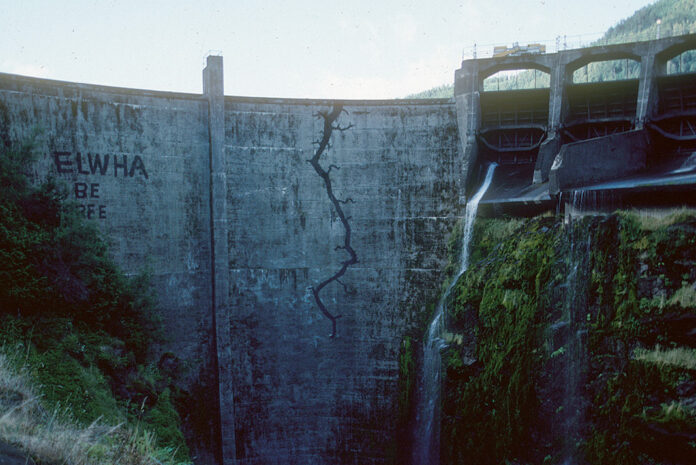
graffiti on the Glines Canyon Dam advocating for the dam's removal
ELWHA BE FREE: Painted in 1987, the iconic crack on the Glines Canyon Dam was a cry to set the river free. The dam was demolished in 2014. | Feature photo: Mikal Jakubal

As decades-old debates about the costs and benefits of America’s massive dams drag on, river advocates are quietly clearing smaller clogs—and the combined impact of removing little dams is making a big difference.
How to Set a River Free

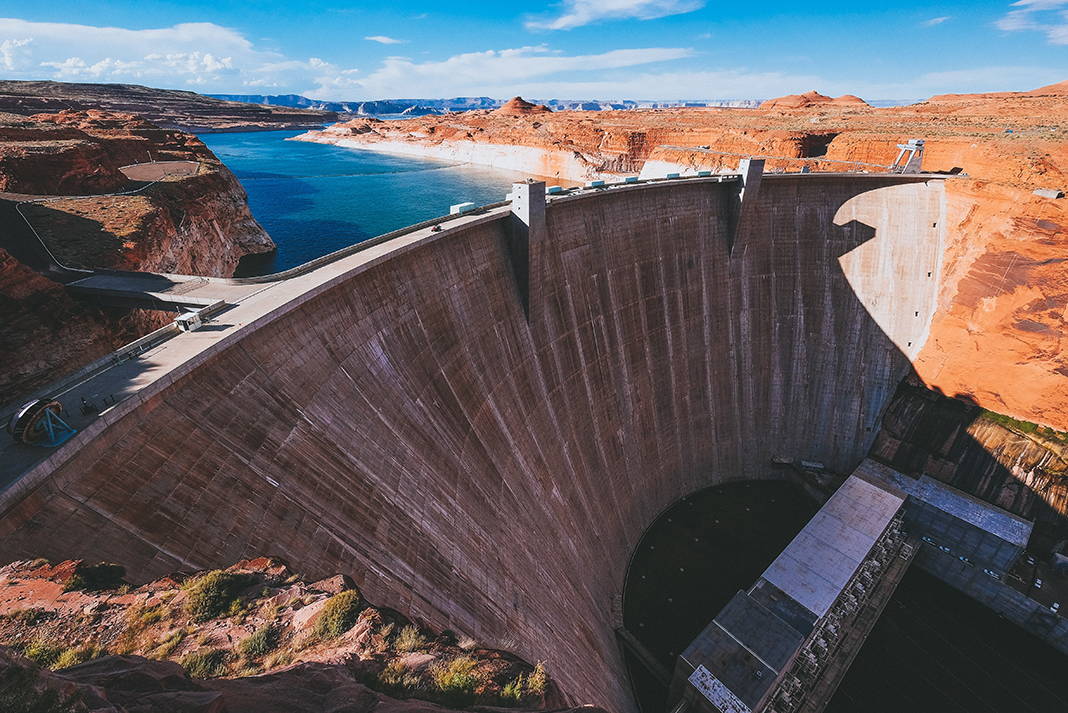
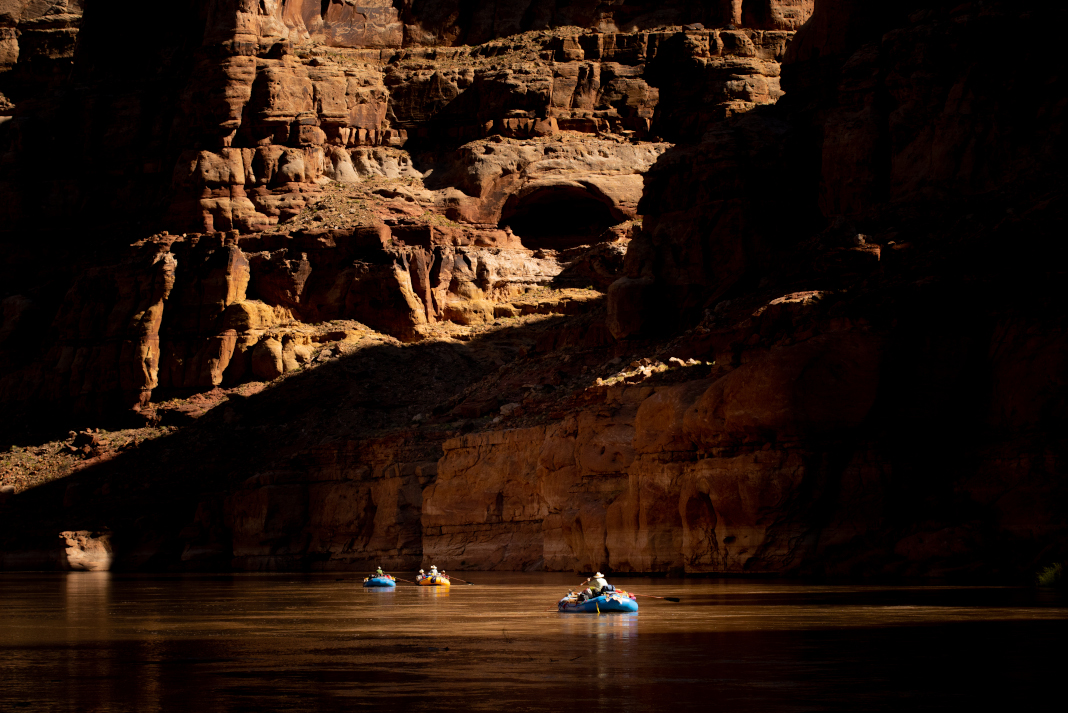
To river lovers, Glen Canyon Dam is the Death Star and Voldemort combined. Blocking the Colorado River in Northern Arizona, it stands 750 feet tall and a third of a mile wide, and drowned 186 miles of Glen Canyon, along with 96 side canyons. When the dam was completed in 1966, it transformed the Colorado through the Grand Canyon from a wild flood-prone, sediment laden desert river into a clear, cold, engineered flow, changing beaches, river running and river ecology.
Glen Canyon Dam in Arizona
An aerial view of the Glen Canyon Dam in northern Arizona. | Photo: John Gibbons/Unsplash

Glen Canyon Dam has been in the crosshairs of river lovers for 50 years, inspiring periodic dreams of removal and the occasional short-lived public debate when parts of Glen Canyon emerge from Lake Powell during droughts.

It’s not the only hydroelectric establishment to fall under scrutiny. Four dams on southeastern Washington’s lower Snake River: Little Goose, Lower Monumental, Lower Granite and Ice Harbor, have also been a target of river advocates since Snake River salmon were listed under the Endangered Species Act in the 1990s.
Massive dam projects like these make headlines, but they also obscure key facts about rivers and dams. For every large federal dam like Glen Canyon or Lower Granite, there are thousands of minor ones: nearly 80,000 small dams restrict the rivers of the U.S. and while lawsuits about the Snake River dams drag into their third decade, river lovers have been quietly clearing smaller clogs.

Reframing the dam debate

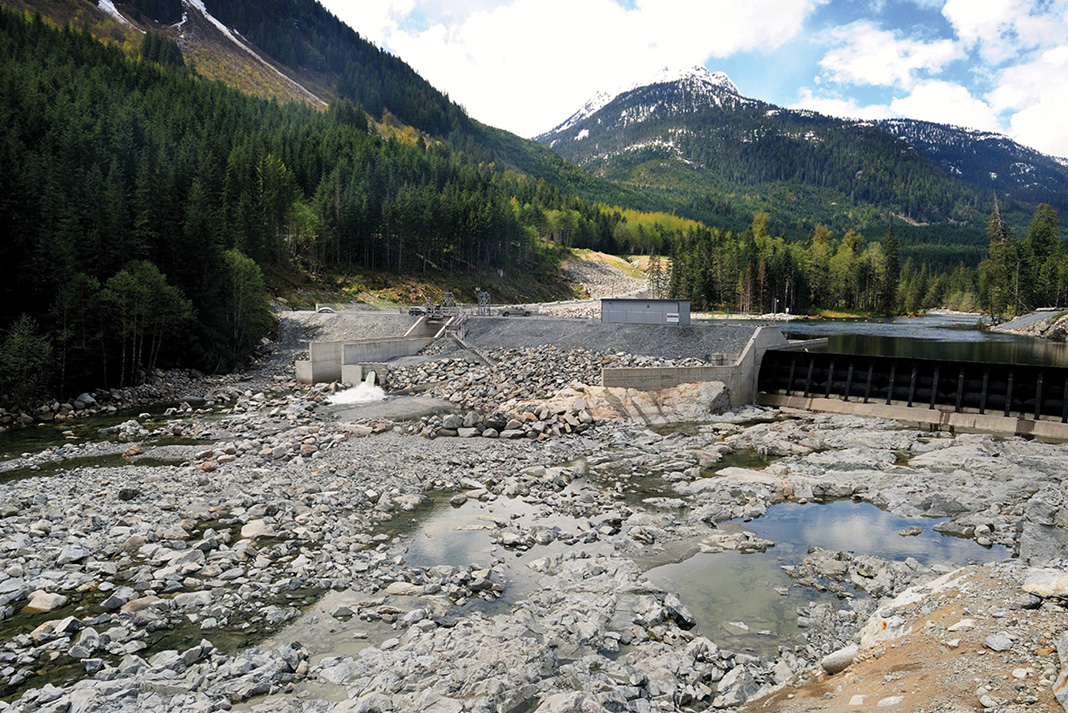
The Elwha and Glines Canyon dams in Olympic National Park were removed between 2011 and 2014, freeing one of the Northwest’s best salmon rivers. The Condit Dam on the White Salmon River in Washington was breached in 2011 and at 125 feet tall and 470 feet wide, it is the largest dam ever removed. Compared to its larger Glen Canyon-style cousins, however, it is still considered a small dam on a tiny tributary.

Removing modest dams like Condit, Elwha and Glines Canyon has reframed the dam removal debate from large federal dams to smaller river obstacles.

“It’s easy to focus on the big dams, but the combined impact of many small dams can be much larger,” says Brian Graber, director of river restoration at American Rivers. “They block fish passage. They create shallow impoundments that warm up and reduce oxygen more than a big reservoir.” Small dams can also divert most of a river out from its bed, leading to severely dewatered stretches. “The large dams become the story, but few people realize that 72 dams were removed last year alone,” Graber says.
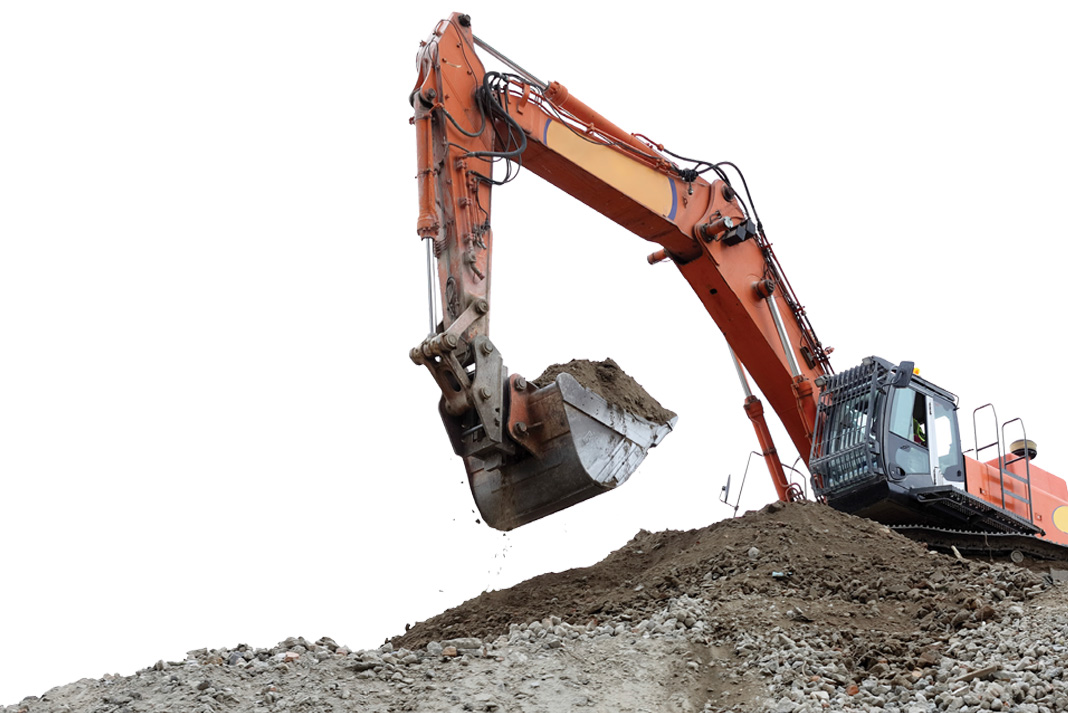
A caterpillar moves earth at the site of a dam removal
When sediment has accumulated behind a dam for decades, there’s the question of what will happen when the river is set free. | Photo: iStock

Most small dams were built between the 1800s and the 1960s, and they’re showing their age. Some are unsafe, and owners are finding the cost of repairs and upgrades exceeds the small amount of power they generate. In many cases, they generate none at all. Faced with these economics, removing old dams can be smart for the bottom line of the power companies, irrigators and government agencies that own most of the nation’s small dams—and smart for the river.

Dam building followed settlement, meaning dams in eastern North America are typically older than those in the West, and safety problems are more severe. In 2005, the town of Taunton, Massachusetts, was evacuated after the wooden Whittenton Pond Dam, built in 1832, buckled and nearly failed.

“A lot of funding comes from fisheries, but a lot of the impetus for removing small dams comes from public safety,” says Graber.

According to Graber, most dam safety offices around the country are badly understaffed, and they can’t keep up with the inspections of hundreds or thousands of aging dams. This creates an incentive to remove small dams rather than have them decay and risk collapse.

Dam removal remains complicated and contested

While small dam removal projects don’t take the time and money of larger-scale projects, they can still be rife with opposition and obstacles that river advocates must work hard to overcome.

When a dam dates back to the early 20th century, there’s no public memory of a free-flowing river. “People will associate a place with a pond or lake, and change itself is always difficult,” says Kevin Colburn of American Whitewater.
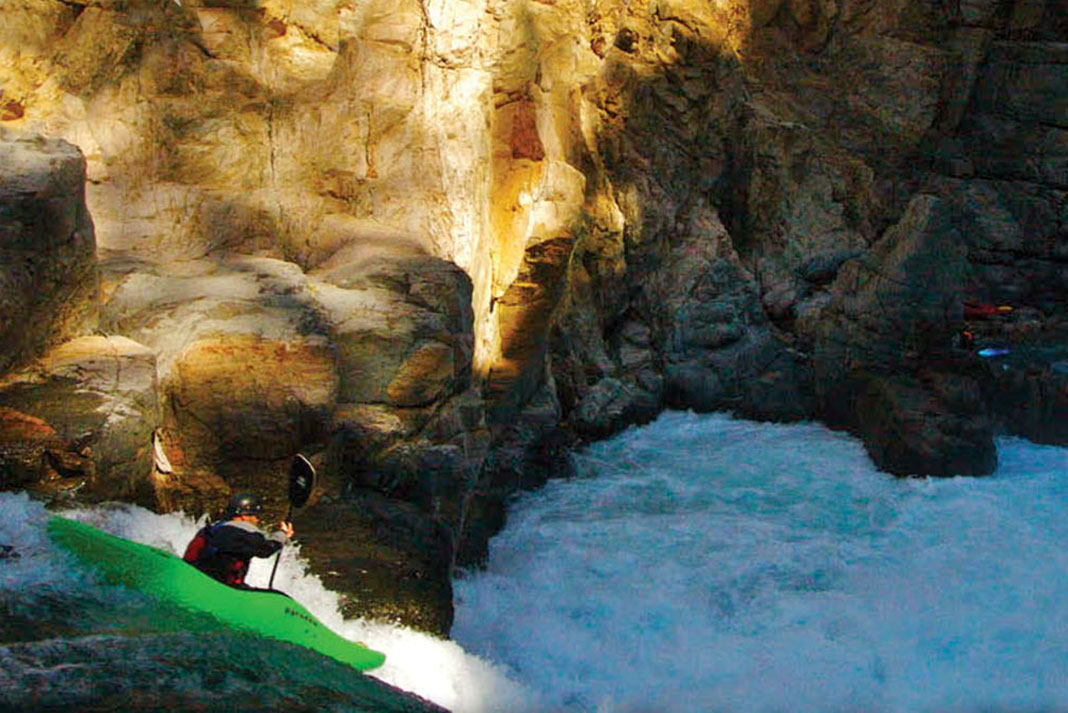
“You’ll have people who like fishing for pond fish rather than river fish,” Graber adds. “I can’t say that what I like is better than what you like, but removing these dams is better for the river and public safety.” Listening to those concerns can help mend fences between people who might see themselves on opposite sides of the issue, such as longtime residents, landowners and out-of-town kayakers.

When you dam a river, along with stopping the natural flow of the water, you stop the natural flow of sediment. When sediment has accumulated behind a dam for decades, there’s the question of what will happen when the river is set free. Dam removals on the Sandy, White Salmon and Elwha rivers indicate that the sediment flushes downstream quickly. When the 45-foot Marmot Dam was removed from Oregon’s Sandy River in 2007, nearly a million cubic yards of sediment that had been accumulating for 90 years cleared itself in less than two years.

Although most rivers return to health rapidly of their own accord, public perception is still a challenge. “People will always have a fear that without the impoundment, there’s going to be a stinking mudflat for eternity,” says Graber. “We draw on other projects for examples of how the rivers restore themselves.”

On Washington’s Sullivan Creek, American Whitewater commissioned a landscape architect to create images of what the river might look like immediately after dam removal, five years and 10 years afterwards to help convince locals it wouldn’t be a mud pit.
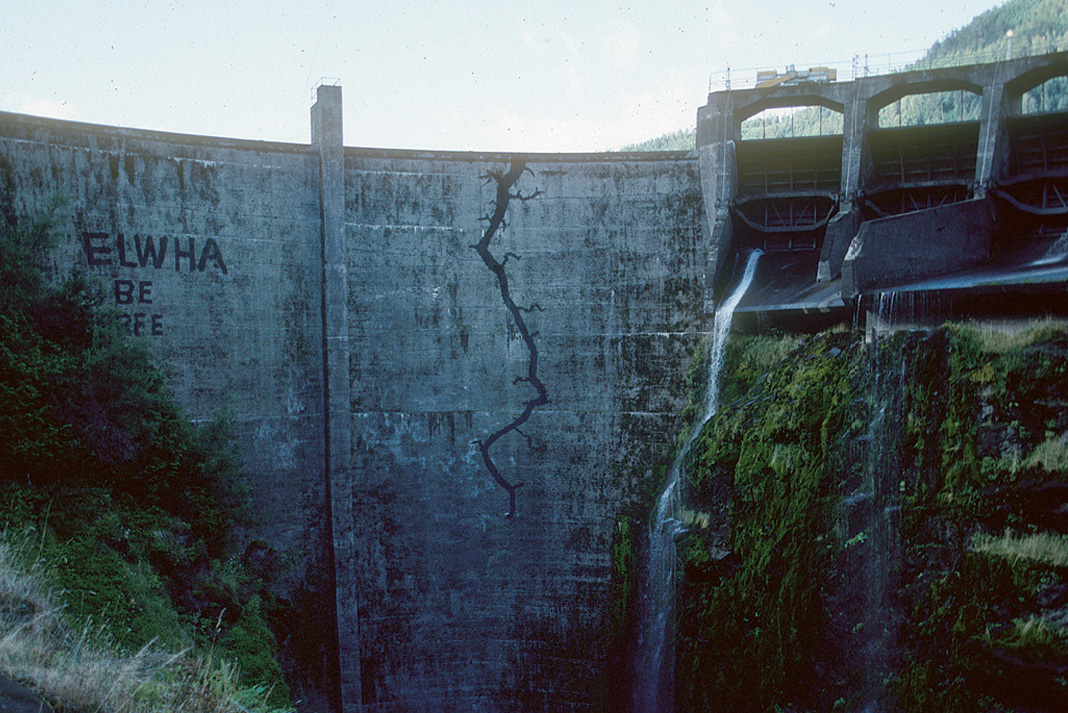
ELWHA BE FREE: Painted in 1987, the iconic crack on the Glines Canyon Dam was a cry to set the river free. The dam was demolished in 2014. | Feature photo: Mikal Jakubal

Even when the process of agreeing to remove a dam is quick, the act of freeing the river often takes much longer. “We tell people to expect a three-year process for a typical small dam,” says Graber, who trains people to negotiate agreements, make removal and river restoration plans, raise money and manage dam removal projects. “The first year is for initial reconnaissance and fundraising. Year two is design, getting permits and more fundraising. Year three is actual removal.”
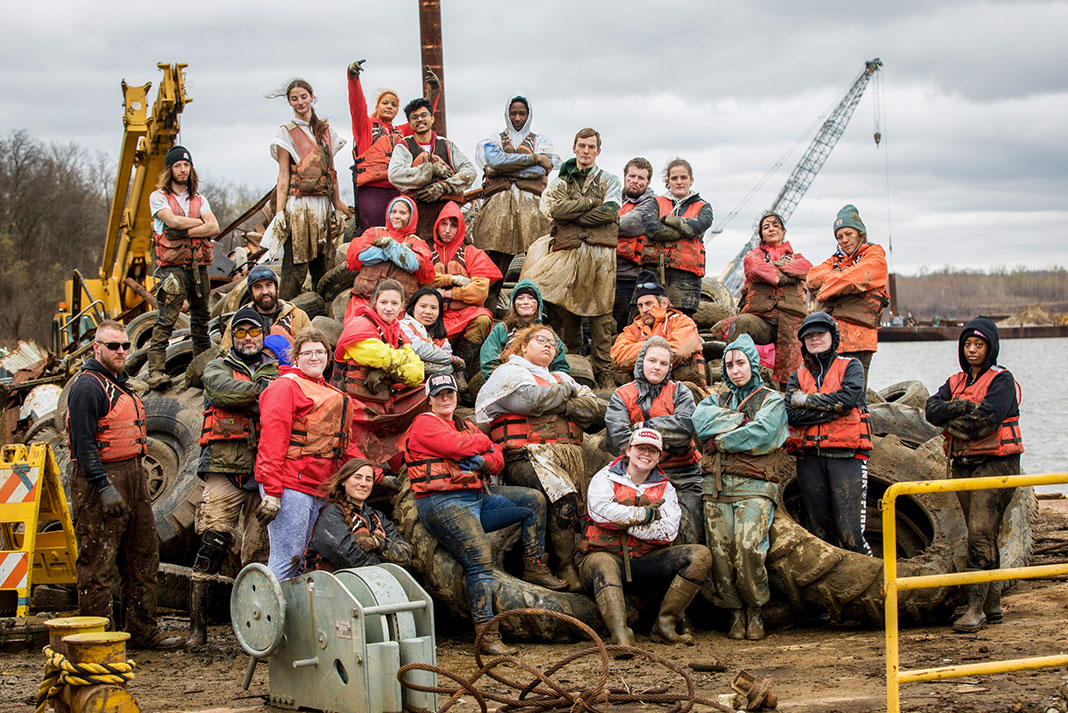
A three-year project involving permits, engineering, complex negotiations and raising seven- or eight-figure sums may seem beyond the staying power of even the most committed river paddlers. Understanding the many eddies and boils of dam removal, such as hydropower economics, dam relicensing and river ecology, can boggle the mind. That’s where more formal river organizations come in. Local river advocates often turn to established organizations, such as watershed councils and national groups like American Whitewater and American Rivers, for help. They have staff that know the warp and weft of dam removal and fundraising, are in it for the long haul, and can draw on experience from other successful removals across the country. Once federal agencies, pubic safety and dam owners are all on the same side, the question often becomes about how, not if, which removes the acrimony that often swirls around river issues.

Setting priorities for setting rivers free

With 80,000 small private dams dotting the country’s rivers, one of the hardest decisions is which dams to remove first. “There are two ways American Rivers tends to prioritize,” says Graber. One is to look at all the dams in a watershed, do a prioritization exercise with GIS, fish runs, habitat and recreational areas, and assess how many river miles each dam would open up if removed. “But that usually points to larger dams, which are generally still used for hydropower and will be more difficult to remove.”

“The question becomes about how, not if, which removes the acrimony that swirls around river issues.”

More often, Graber works with dam safety officers and fish biologists to identify smaller dams where owners are interested in removal. He tries to remove multiple dams on the same river whenever possible.

As paddlers, deciding which dams to target is often a much easier process—the ones in our watershed, the rivers we care about the most, and the ones that will have the most benefit for our local region.

Recovery proceeds quickly when dams are breached. Insects and fish usually return in months or a few years, and vegetation flourishes in the first growing season. Salmon touched the upper reaches of the Elwha mere months after the removal of Glines Canyon Dam. Herring returned to the Taunton River in Massachusetts the year after the dam was removed, migrating upriver for the first time since the War of 1812. On Oregon’s Sandy River, the run from Marmot Bridge to the old Marmot Dam site is now a continuous class III run with a class IV drop. Paddlers can routinely run the “Lower Lower White Salmon” from the former Northwestern Lake to the Columbia River, including a newly rediscovered gorge.

Like a river carving a canyon, removing a dam is about becoming a patient, steady, irresistible force. As Graber puts it, “The most important thing is not having skills in engineering or fisheries biology. It’s having persistence.”

5 success stories of small dam removals

1 Big Hungry Creek

North Carolina

“I got calls from boaters paddling the famous Green River Narrows, saying ‘the water in the Narrows is very muddy, what’s going on?’” says Kevin Colburn, Asheville resident and stewardship director for American Whitewater.

Colburn knew the sediment was from a bulldozer removing one of two dams on Big Hungry Creek, a tributary of the Green. Plans for removing a second are underway. “Big Hungry Creek is a warm-up for the Narrows. When you put in for the Narrows now, you put in at the Confluence of Big Hungry and the Green,” Colburn says. “Soon you’ll be able to put in on Big Hungry and float all the way to the Narrows instead of having to portage over an old dam.”

The dams hadn’t generated a single kilowatt of hydropower for nearly half a century. “The state asked, ‘Do these dams serve a purpose? Do they pose a risk?’” says Colburn. “When the answers were ‘no and yes,’ the state decided to remove them. American Whitewater didn’t suggest it—we wrote letters of support, and paddlers had been beating the drum.”

While bulldozers dismantle the lower dam, sediment moves downstream. “It’s a very high gradient system and the river will cut through the sediment like a hot knife through butter,” says Colburn. “It may change the rapids in the Narrows for a little while, making it more dynamic, a little more natural.”

[ Browse the widest selection of boats and gear in the Paddling Buyer’s Guide ]

2 Pine Meadow Ranch Dam

Whychus Creek, Oregon

Whychus Creek, near the town of Sisters, flows into the Deschutes River. The Upper Deschutes Watershed Council has been working for years to restore some of Central Oregon’s best fish habitat. Salmon and steelhead were reintroduced in 2007—the first salmon in the river in 50 years. One of the obstacles was at Pine Meadow Ranch, a 200-acre farm that had been in the Sokol family for generations. The ranch had a six-foot-high concrete dam that blocked 13 miles of spawning habitat.

The dam was removed last fall.

“It literally took five years of kitchen table conversations with the family,” says Ryan Houston, the council’s executive director. “We talked about a range of ideas, and what worked was to remove the dam, relocate their diversion to another part of the creek where it wouldn’t require a dam, and to get fast-track approval from regulators to move the ranch’s irrigation water right.”

The dam removal also allowed the ranch to upgrade its irrigation system. “If they save 30 percent of their water, they can sell the remaining water right back to the creek and still irrigate the same amount of land,” says Houston. “It’s a clever way of being forward-thinking.”
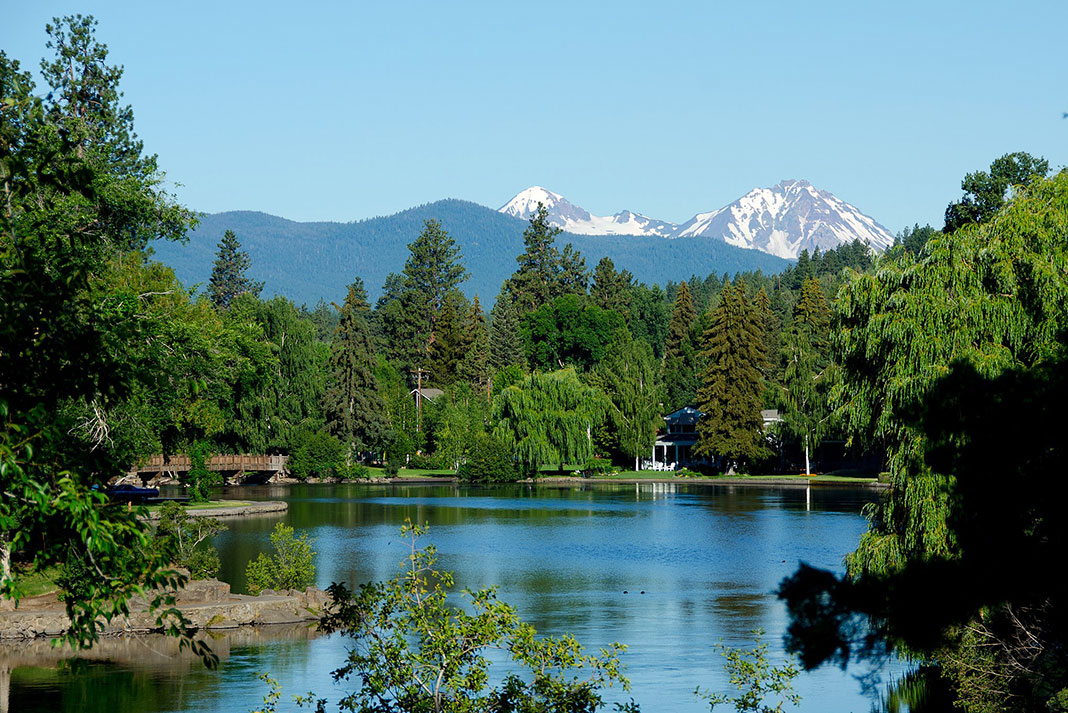
Mirror Pond in Bend Oregon
The view from Mirror Pond in downtown Bend, Oregon. | Photo: Spencer Dahl/Wikimedia Commons

3 Newport Avenue Dam

Deschutes River, Oregon

Mirror Pond in downtown Bend, Oregon, is as iconic a feature as a town can have. Surrounded by parks, it reflects the 10,300-foot South Sister volcano and is on the label of Deschutes Brewery’s Mirror Pond Pale Ale, the best-selling beer for one of Oregon’s first microbreweries. It’s doubtful anyone alive today has seen the Deschutes River flow freely through downtown Bend.

The 12-foot Newport Avenue dam is leaking. Built in 1910, it no longer generates enough power to make it worth repairing, and Mirror Pond is slowly but surely filling with sediment. At first, two options threatened to divide the community: repair the dam and dredge the sediment, or restore a free-flowing river to downtown Bend. Many longtime residents were attached to Bend’s iconic viewshed and fought hard to keep the pond. Die-hard fishermen, environmentalists and those newer to town gravitated toward a free-flowing river.

In 2014, the volunteer-driven Bend Paddle Trail Alliance offered a third option. They proposed replacing the dam with inflatable bladders, like those installed in a whitewater park under construction, just upstream at the Old Mill. The plan would remove the dam, allowing trout to migrate, and maintain the visual landscape of the pond. It would also improve use for paddlers, put a trail next to the river and redevelop part of downtown Bend.

“It’s a compromise,” says Justin Rae, a board member of the Alliance. “It keeps the iconic view, allows fish passage and recreational use, and removes an industrial eyesore, but it does shrink the pond by about a quarter.”

While the hybrid option has gathered a lot of support, many questions still remain. Who will pay the bill? Will the design flush enough sediment?

“It’s a great vision. Cost, financing, schedules and design are critical details that will need vetting, and that will take time and work. We’re keeping the conversation at a high level right now, gathering community support and trying not to get into the weeds,” says Michael McLandress of the local chapter of Trout Unlimited and former Mirror Pond project manager. “Really great ideas need time to percolate before you dive into the details.”

4 Connecticut River

New Hampshire, Vermont & Massachusetts

The Connecticut River is heavily managed, with no less than five dam relicensings underway in the past year. “The dams on the Connecticut have substantially impaired whitewater paddling,” says Bob Nasdor of American Whitewater. “There could be miles-long runs, if not for the dams.” Some park ‘n’ play features still exist, but the whitewater features are dewatered by First Light and TransCanada hydropower operations.

According to Nasdor, this project is not about dam removal: it’s about securing flow releases for whitewater boating in key stretches like a 2.7-mile section at Turners Falls and a perfect skill development area at Bellows Falls.

American Whitewater has also proposed a whitewater park in the bypass reach below Bellows Falls dam. “It would be nice to talk about removing them,” says Nasdor. “But the goal now is to get enough flows for boating in the dewatered sections, and get rid of one obsolete low-head dam that limits recreation and damages habitat.”

American Whitewater, the Appalachian Mountain Club and New England FLOW have pushed for studies to determine release levels for whitewater boating from Wilder Dam, Bellows Falls and Turners Falls.
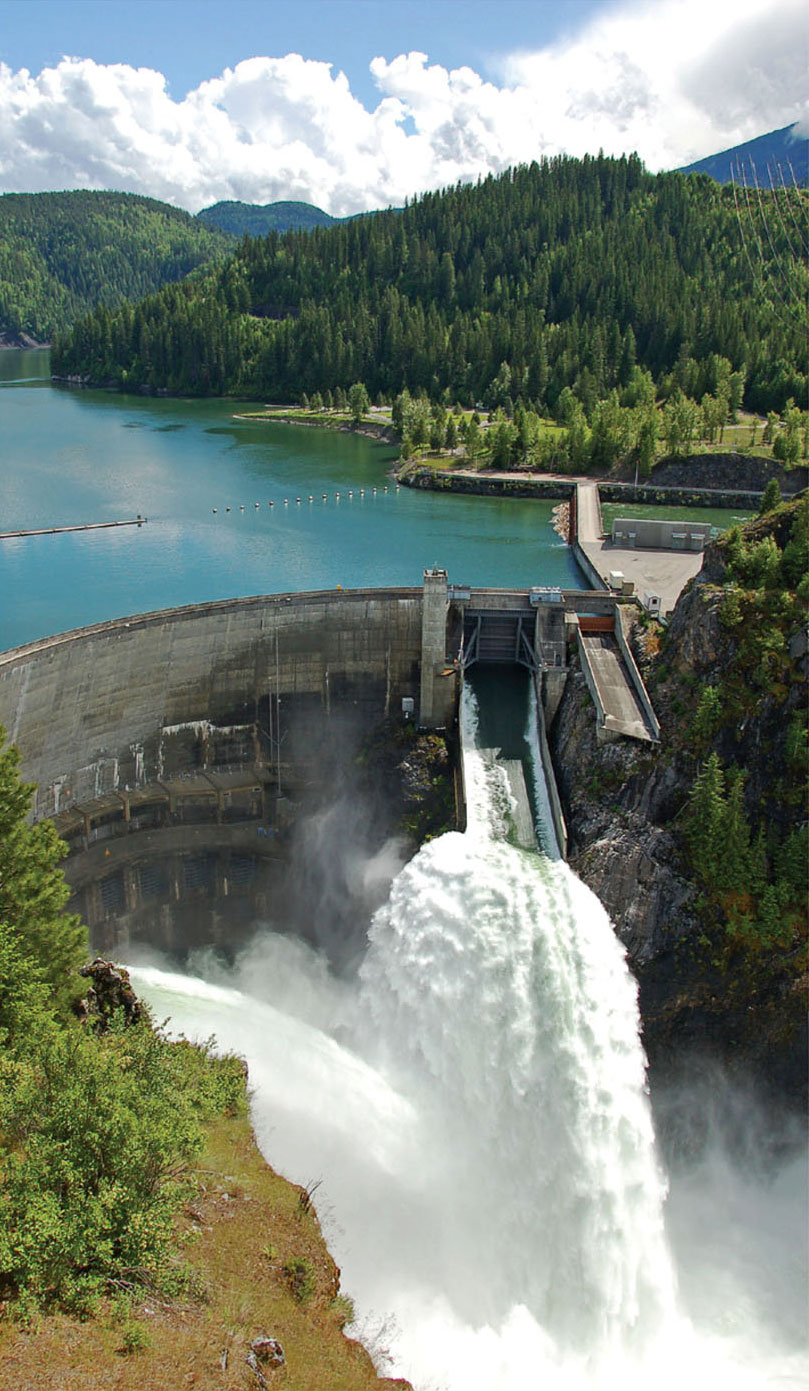
the Boundary Dam in Seattle
Follow the money: To keep the large Boundary Dam in operation, owner Seattle City Light helped fund the removal of Mill Pond Dam on Sullivan Creek. | Photo: Kevin Colburn

5 Mill Pond Dam

Sullivan Creek, Washington

The Mill Pond Dam in northeastern Washington’s Purcell Mountains hasn’t generated power since the ‘50s. Landslides repeatedly damaged the wooden diversion flume that brought water to the turbines. The potential for paddlers was enormous: an old powerhouse overlooks the last class IV rapid. “Someday it could make the ultimate riverside brew pub,” says Colburn.

What seemed like a slam-dunk ran into problems. The dam owner was the Pend-Oreille Public Utility Commission, a small utility with 8,500 rural ratepayers. Nobody wanted to saddle a tiny group of ratepayers in a town with a struggling economy with removal costs into the millions. And many local residents still wanted to save the pond, seeing the project as benefiting out-of-town kayakers.

The game changed when the river found a surprising partner: a dam owner that wanted to keep its dam operating. Seattle City Light was trying to relicense their Boundary Dam downstream, a 300-foot-tall major dam supplying over a third of Seattle’s electricity. Because of bull trout and cutthroat trout in the river system, Seattle City Light was required to do mitigation in the same river system and decided to help fund the removal of Mill Pond Dam. The project moved forward. “It isn’t like everyone is singing Kumbaya,” says Colburn. “Dam removals are about change, and it’s not without personal impacts.”

Removal is slated for 2018, and American Whitewater has pushed for local residents to be hired to do as much of the removal as possible.
Neil Schulman is a paddler, writer and longtime river advocate based in Portland, OR.
Cover of the Early Summer 2015 issue of Rapid magazineThis article was first published in the Early Summer 2015 issue of Rapid Magazine. Subscribe to Paddling Magazine’s print and digital editions, or browse the archives.


ELWHA BE FREE: Painted in 1987, the iconic crack on the Glines Canyon Dam was a cry to set the river free. The dam was demolished in 2014. | Feature photo: Mikal Jakubal
 

Why Investing In Good Gear Is Key To Your Kids Success And Happiness Outdoors

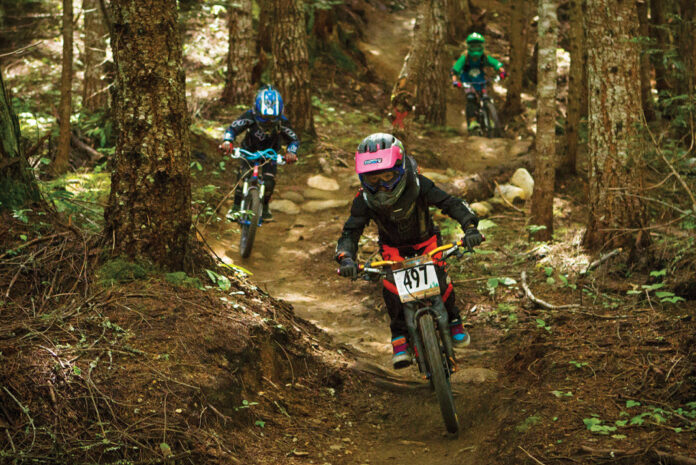
INVESTING LONGTERM, ONE CAN EXPECT SOME UPS AND DOWNS ALONG THE WAY. | PHOTO: JUSTA JESKOVA / WHISTLER BLACKCOMB

I was 10 years old during the severe economic recession of the early 1980s. The unemployment rate was the highest since the stock market crash of the 1930s. Mortgage rates at the time exceeded 21 percent. At the supermarket I pushed the buggy and tallied up the cost of the groceries my mother put inside. Times were tough and families were on tight budgets.

It was a time when discretionary spending was at an all-time low. If you were lucky enough to have a job and a house, you worked extra shifts and squirreled away every little bit of money to pay down the mortgage principal. If you could afford holidays, families flocked to campgrounds for simple, cheap vacations.

Camping wasn’t fancy in those days. We wore what we always wore. We ripped through the campgrounds on whatever bikes were handed down to us and we paddled whatever canoes our parents borrowed or rented.

JUST LIKE MOM. | PHOTO: MATT STETSON

The world is a different place today. Discretionary spending has increased every year for the last 30 years. My mortgage floats at an unbelievably low 2.6 percent. Not only do parents today have more discretionary money, they also have fewer children to spend it on.

I truly enjoy spending time with my kids. And the time I enjoy most is when we’re off on outdoor adventures together.

As my kids have gotten older and more able, I’ve realized how important good gear is to their success and happiness. On an all-day mountain bike ride last fall, I started doing some math.

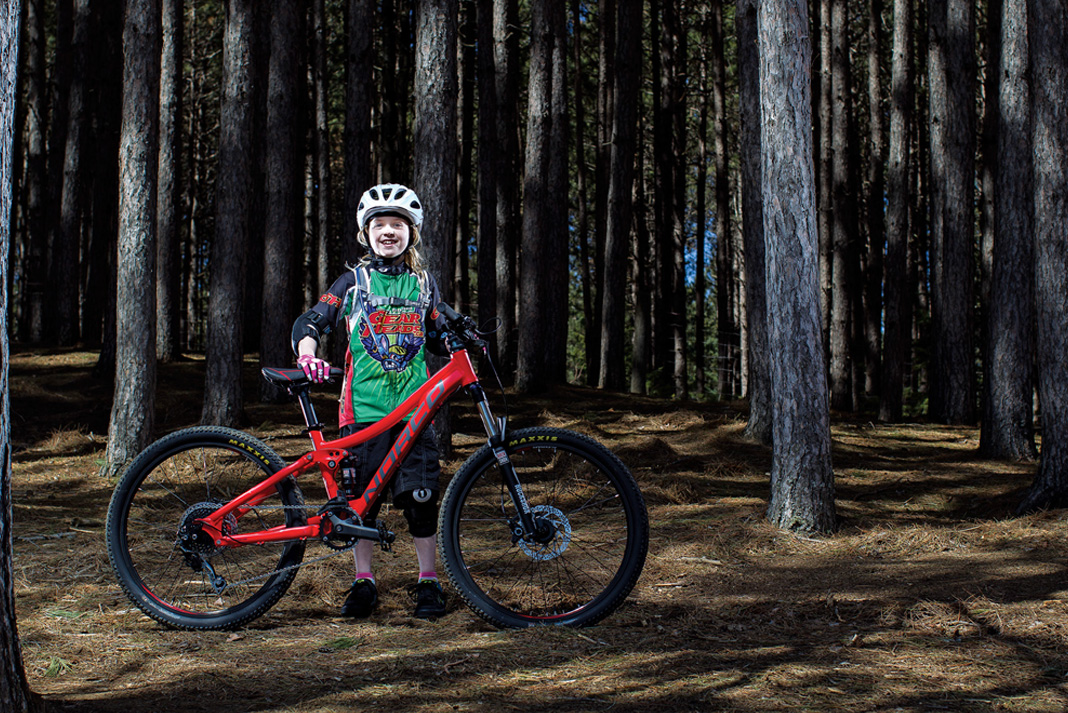
I weigh around 175 pounds and my mountain bike weighs just shy of 26 pounds with five inches of highly tuned suspension on the front and back. My daughter is eight years old and weighs only 52 pounds. Her bike weighs 30 pounds. That hardly seems fair.

Using the same bike-to-body weight ratio I calculated that my bike should be 101 pounds of low-grade alloy and pogo stick shocks.

INVESTING LONGTERM, ONE CAN EXPECT SOME UPS AND DOWNS ALONG THE WAY. | PHOTO: JUSTA JESKOVA / WHISTLER BLACKCOMB

On the water I see kids in old cast-off whitewater kayaks with long heavy paddles. In the winter I see kids on gear-swap alpine straight skis from the ‘80s. This doesn’t make sense. How is a kid supposed to tilt or roll a kayak three times wider than her hips. And let’s see that ski dad try the bumps on a pair of 30-year-old, 260-centimeter (length calculated to scale) Olin Mark VIs race skis. We would be saying the same thing: “This sucks!”

“If we want our kids to ride with us, paddle with us and ski with us; if we want them to love the things we love; we need to be investing some of what we’re not paying in interest on good outdoor kids gear.”

Outdoor gear and apparel brands are figuring this out—probably because their CEOs have children of their own. In each issue of Canoeroots, we’ll be picking an outdoor activity and decking out a kid from head to toe. In our Early Summer issue, it was mountain biking. On the list we have fly-fishing, standup paddling, backpacking, whitewater kayaking, and maybe even birding.

Please don’t look at it like an expense they’ll out-grow in a couple years. Look at it like playing the futures market. Buy commodities they’ll enjoy today and that you hope to cash in down the road. Winning in this market is when my grown children have an afternoon off work and call me to go riding, paddling, fishing or skiing.

Scott MacGregor is the founder and publisher of Canoeroots. He and Kate are headed to the Whistler Mountain Bike Park (bike.whistlerblackcomb.com) for a few days of father-daughter downhill mountain biking. 


Screen_Shot_2015-06-12_at_11.26.38_AM.pngThis article first appeared in the Early Summer 2015 issue of Canoeroots and Family Camping magazine.
Subscribe to Paddling Magazine and get 25 years of digital magazine archives including our legacy titles: Rapid, Adventure Kayak and Canoeroots.

The Secret To Becoming A Successful Kayak Commuter

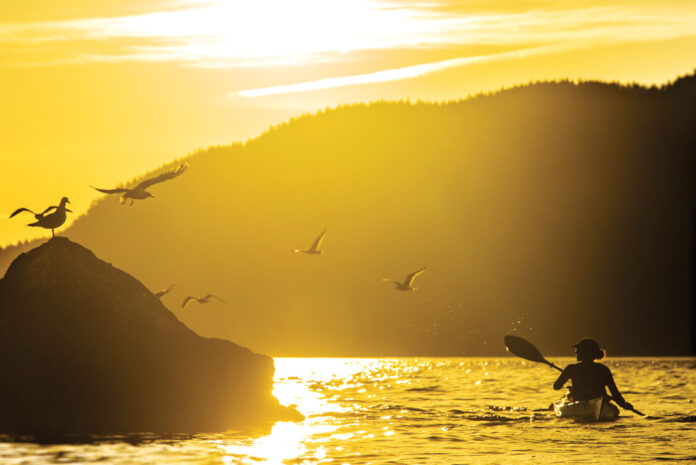
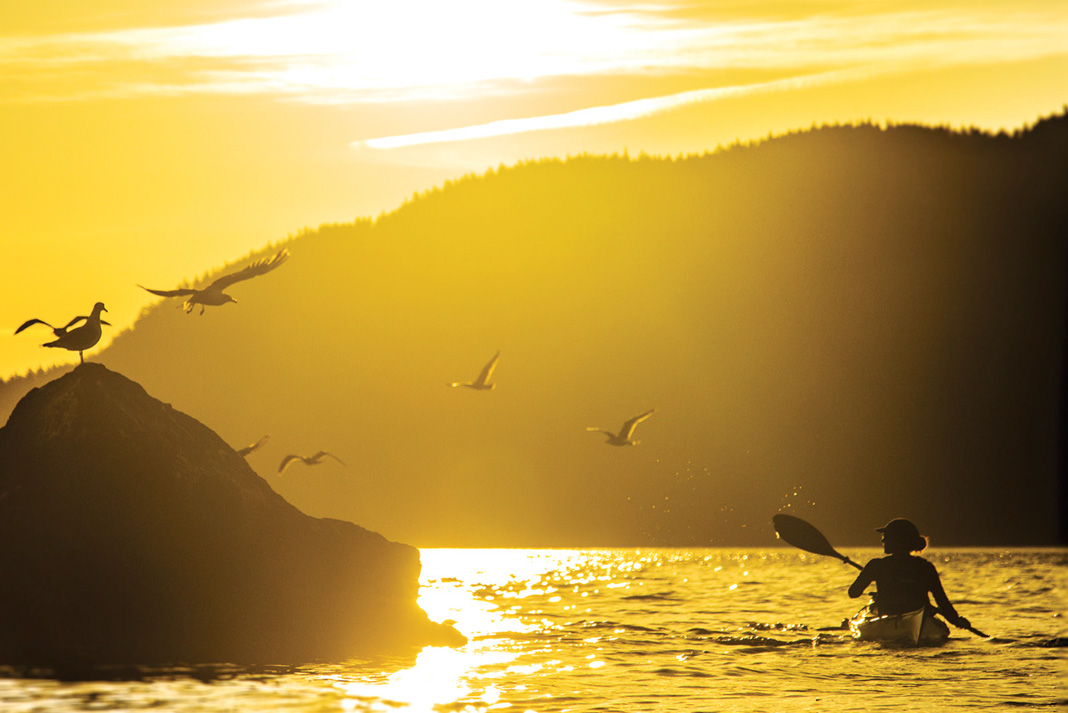
person kayaking by rocks and seagulls in the sunshine during a kayak commute
Enjoy your calm-mute. | Feature photo: Jaime Sharp

Shrill and insistent, the alarm announces the arrival of another workday. Five out of every seven mornings, the to-do list begins before we even leave the driveway: fix a cup of coffee and breakfast, listen to the morning news, tune out the traffic report for a distant city. The fast-talking reporter fires off tips with staccato efficiency—which routes are moving slowly, where to expect construction, how to avoid the inevitable caffeine-fueled collisions.

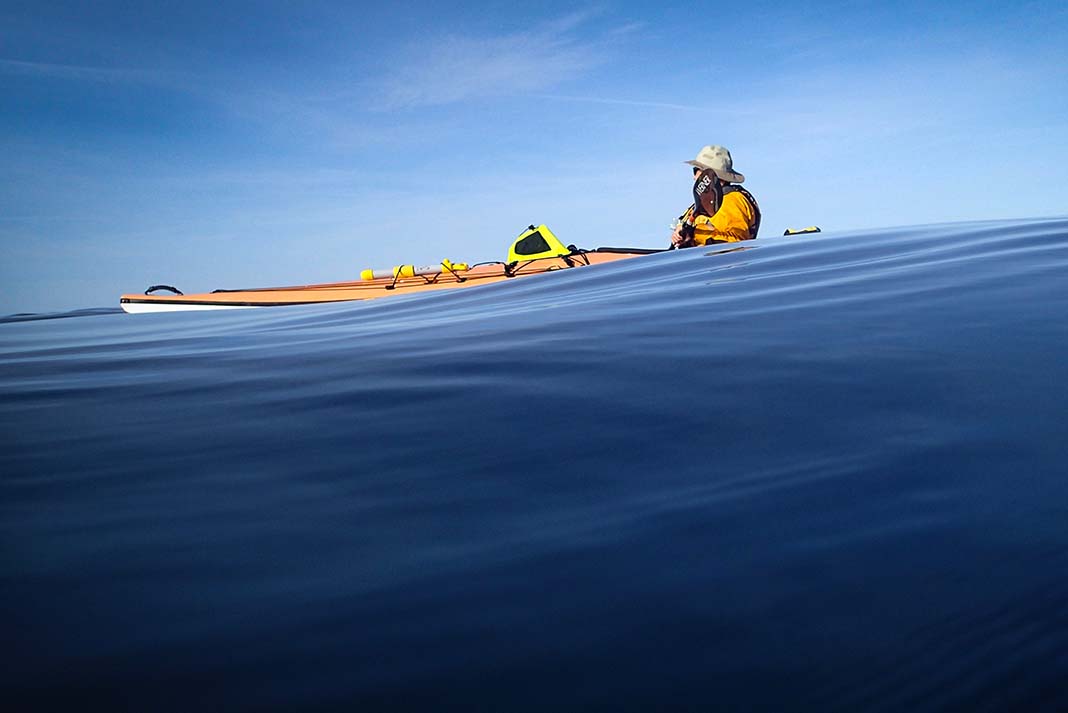
I turn off the radio and cheerfully pull on my sprayskirt. The only traffic I’ll encounter on my commute consists of porpoises and seals.

The secret to becoming a successful kayak commuter

Paddling is one of the oldest forms of transportation, yet it is easy to forget its functionality. For most modern kayakers, time on the water is far more than a straightforward passage from A to B. It’s a shift in perspective. Time moves differently. Light behaves in new ways. Water is a unique medium and there is something both liberating and relaxing about it.

I often sigh as soon as I push away from shore. When I feel my body no longer supported by my legs, cradled in the cockpit of my kayak, I’m immediately immersed in the effect that shift in medium has on my whole being.

Enjoy your calm-mute. | Feature photo: Jaime Sharp

For the kayaker who lives and works near riverbank or coastline, there is no better release than taking your daily commute to the water. It may start as a novel concept—an impress-your-colleagues- once-or-twice stunt—but repetition soon becomes routine.

At first, I agonize over the extra time it takes to paddle six miles (roughly one hour and 20 minutes, depending on fog, tides and wind) versus driving 12 miles of pavement (around 20 minutes, barring traffic jams). Still, I make it a weekly habit. In the winter months, when the sun shuttles below the horizon earlier, I compromise, paddling in and taking the bus home.

Serenity in the slow lane

The secret to becoming a successful kayak commuter is this: it has nothing to do with speed and efficiency. Save those priorities for when you walk through the office doors. Sure, it takes longer than driving, but this is one of the reasons we paddle: to slow down and experience the world around us with the awe it deserves.

Paddle commuting restores sanity and satiates an unquantifiable side, perhaps my better half. I arrive at work with a happy body and I land at home feeling relaxed and free of any stress that may linger from the office. Sometimes, in lieu of a grocery store, I stop and pick fresh mussels on the return paddle.

The rhythmic dance of the paddle dipping on either side of the kayak creates ephemeral eddies of water and low-angled light. Mind at ease, pacified by reflections of trees and clouds, time fades into an abstract construction of an overly linear society. A surfacing porpoise breaks the meditative silence, a reminder of the rich, near-forgotten realm below.

To paddle is to travel along a transitional line between two worlds. More than simply a healthy way to commute—carbon-free and good cardio—it’s a new way of seeing. Could there be a finer path to creativity and contentment in the workplace than the path of the commuter’s paddle?

[ Browse the widest selection of boats and gear in the Paddling Buyer’s Guide ]

Laura Prendergast parks her paddle at Pygmy Boats, located on the water in Port Townsend, WA.

Cover of the Early Summer 2015 issue of Adventure Kayak magazineThis article was first published in the Early Summer 2015 issue of Adventure Kayak Magazine. Subscribe to Paddling Magazine’s print and digital editions, or browse the archives.


Enjoy your calm-mute. | Feature photo: Jaime Sharp


Skills: DIY Ditch Kit Essentials

elements of a DIY ditch kit for paddlers
Feature photo: Charlotte Jacklein

Over the past decade of tripping, I’ve discovered that when minor or major disasters strike, it pays to have key items on hand immediately. An effective ditch kit holds the essentials for survival in a compact and easy-to-carry package, so you’re prepared at all times—even if you get separated from the rest of your gear, or your group. We can’t control all variables, but these basics will help mitigate many potential misadventures.

Whether on a month-long northern river trip or local day trip, the following items always accompany me, conveniently packaged in my holy sh*t kit—a bright red, waterproof and portable 10-liter dry bag. It’s never failed to avert disaster.

Stay Warm and Happy

High-density fuel sources, like chocolate and granola bars, help maintain body temperature, prevent hangriness, and keep energy and morale high.

A lighter and matches, along with waterproofed fire starter, will get a blaze going even in a torrential downpour.

Bring extra layers to bundle up an unexpected swimmer, including a warm fleece sweater, a hat, mitts and a pair of woolly socks.

In case the unexpected swimmer isn’t rescued fast enough or in case your day trip turns into an overnighter, pack a bivy bag and emergency blanket.

Fix People and Things

A mini repair kit should include the bare necessities: multi-tool, Gorilla tape, zip ties and lightweight rope. Many basic field repairs—and shelter construction—can be made quickly and efficiently with these items.

Pack a mini first aid kit. It should contain gloves, a CPR pocket mask, small bandages, gauze and sports tape, plus a wilderness first aid book, notepad and pencil. Carry a more thorough first aid kit in your camp pack. These basic supplies are at hand to address only the most critical (or common) first aid scenarios.

On Your PFD

A signalling device is important for attracting the help of rescuers in a worst-case scenario. A whistle, compass with mir- ror, and light with strobe are helpful. Even more helpful for remote trips are communication devices such as a VHF radio or satellite phone.

In a PFD pocket, keep an extra sheet of water treatment tablets and back-up map.

A knife has a hundred uses in a survival situation. Keep yours sharp and close at hand.

Fold a garbage bag in your pocket. Its multiple uses might surprise you—use it as a water container, as a not-so-trendy little poncho and—if you buy the orange ones—a handy signal flag.

Charlotte Jacklein is a teacher, trip guide and experienced adventurer. 


Screen_Shot_2015-06-12_at_11.26.38_AM.pngThis article first appeared in the Early Summer 2015 issue of Canoeroots and Family Camping magazine.
Subscribe to Paddling Magazine and get 25 years of digital magazine archives including our legacy titles: Rapid, Adventure Kayak and Canoeroots.

Memory Game: Why Research Tells Us To Paddle More

a person kayaks down a stretch of rapids on a river bordered by dense trees
In case you needed one more reason. | Feature photo: Ryan Creary

I keep a river log. A record of all the rivers and sections I’ve run. It dates back to 1989 and lists almost 300 rivers. Some of those rivers I’ve paddled a hundred times, like the Middle Channel of the Ottawa, where I can picture in my mind’s eye every little current and wave. If I can’t fall asleep at night, I often imagine floating Utah’s five-day Canyon of Lodore section, where I guided for four years, remembering every turn, riffle and technical line through the rocks. I usually don’t make it to the take-out.

There are also rivers in there that draw a total blank—I have no memory of them whatsoever. Brown’s Canyon on the Ark in Colorado—I’ve run it three times and have no mental image. The Lower Yough in Pennsylvania—nothing. The Scott River in Oregon—blank. Other than what my logbook tells me, it’s like I’ve never been there. Nothing comes back to me when I try to remember those days. Or so it seems.

Memory game: Why research tells us to paddle more

Memory is a fascinating thing. Once thought of as dusty old photo albums in our mental attic, advances in cognitive neurology and neuro-imagery are rewriting what we know about what we do with our past. It turns out we do almost everything with our memory: it is tied to our emotions, our reactions, our habits and routines and is the key driver in how we make decisions.

This new understanding of memory has made obsolete what we thought we knew about decision-making and judgement—a topic oft written about in this column and in the outdoor leadership field.

In case you needed one more reason. | Feature photo: Ryan Creary

In analytical problem solving, we identify options, assess each, select the best one and implement it. With heuristics, we use rules of thumb to make decisions. But long before these slow, conscious decision processes have even warmed up, a much more sophisticated process has already settled on the best course of action.

As our brains recognize environmental cues, they are subconsciously tested against any existing memories that may identify them—this happens instantaneously.

Memories endure, conscious or not

We also instantly recall things we’ve done in the past, simulate if they could work in this new situation and act accordingly. No conscious decision is actually made—we live more by a reliance on our past actions. Memories are the catalyst. This is known as naturalistic decision-making.

If you think back on your own paddling memories, it is likely the non-normal days that stand out. For me, it’s the Upper Yough, where I felt a good dose of fear, got stuck in a hole and my buddy’s boat got pinned. Or the Yampa River in Colorado, guiding a raft with a blind passenger I had to keep within arm’s reach; rappelling into the Coulonge Gorge in the long-boat days; aborting an eddy on the Yukon’s Tutshi upon realizing a moose had parked there ahead of me—the list goes on.

These adventures stand out because they’re out of the ordinary, but it’s the less notable trips that form the bulk of my unconscious memories—an indistinguishable base that makes up my experience. And so it is with my forgotten rivers: they are not forgotten at all, but have been integrated into a vast memory bank defining a normal river run. Our experience is really about how many memories we’ve accumulated, not how many we remember.

[ Paddling Buyer’s Guide: View all river running kayaks ]

The benefits of building up your memory banks

This experience is the raw material for the naturalistic, on-the-fly decisions we make all the time, every day. When there are no options available in our bank of memories, the slow cognitive machine has to wake up and analyze the problem—judgment has to fill in the gaps. We’re not very good at making decisions this way, so the less often this process gets called into action, the better.

The mandate then, is clear: paddle a lot.

A larger databank of memories by its very nature will stumble upon variations, boundaries and non-normal events, all of which make for better decision-making when it really matters.

Jeff Jackson is a professor with Algonquin College’s Outdoor Adventure guide training diploma and is the co-author of Managing Risk: Systems Planning for Outdoor Adventure Programs.

Cover of the 2023 Paddling Trip GuideThis article was first published in the Early Summer 2015 issue of Rapid Magazine and was republished in the 2023 Paddling Trip Guide. Subscribe to Paddling Magazine’s print and digital editions, or browse the archives.


In case you needed one more reason. | Feature photo: Ryan Creary


Why Some Canoe Builders Believe Innegra Is The Next Big Thing

Photo: Ken Chen
Is Innegra the future of canoeing?

How do you create a tougher canoe without increasing the price or weight? Some manufacturers claim they have answered this age-old quandary with the composite material Innegra.

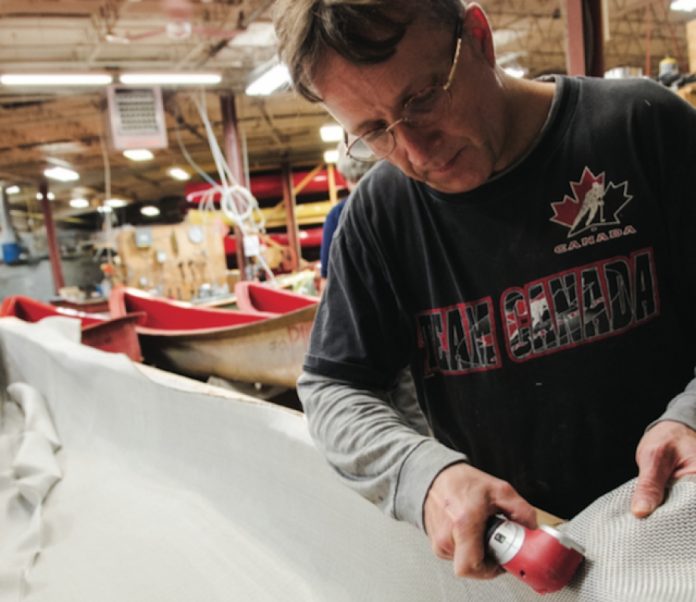
Though not a new material, Innegra has gained popularity on the water this year. The polypropylene-based fiber is being woven into canoe and kayak hulls to complement other high performance materials, like carbon, aramid and fiberglass, creating well-priced, extra durable designs.

“I tested our Innegra boats by doing things I’ve never done to a composite hull in 28 years,” says Nova Craft Canoe president, Tim Miller. Nova Craft released new material TuffStuff, an Innegra and basalt blend, earlier this year. To test the prototypes, Miller subjected them to a battery of tests including vices, sledgehammers and being thrown from a 10-story factory rooftop (view the video here).

For the toughness and price point, “there’s nothing else quite like it,” he adds.

Canadian manufacturers Swift Canoes, Handcrafted Canoes and H2O Canoe Company also released Innegra-infused layups this season.

Innegra is produced exclusively by Innegra Technologies, located in Greenville, South Carolina. Major markets for the yarn include the automobile, military and sporting goods industries. In the paddlesports industry Innegra is also found in helmets, rescue ropes and paddleboards.

“Innegra was designed to fill a need for strong, damage-resistant and cost-effective lightweight composite materials,” says Mark Smith, president of Innegra Technologies. Pure Innegra is not rigid enough to make a canoe or kayak hull, but when combined with other composites the result can be impressive. “It’s lighter than fiberglass, less expensive than carbon, buoyant, impact-resistant and dampens vibrations.”

Though Innegra was first manufactured in 2003, Adventure Technology Paddles were among the first to popularize the material in the pad- dlesports industry with the 2013 release of their Duraweave whitewater kayak paddle series. The blades have been heralded as some of the lightest and strongest on the market.

Not everyone is enthralled with Innegra, however.

“We don’t see it as a game-changer,” says Bill Kueper, vice president at Wenonah Canoe. In 2010, Wenonah introduced an Innegra-containing canoe called the Barracuda. “We made more than 100 Innegra-contain- ing canoes and we didn’t see a true advantage to the consumer in price or durability [over other Wenonah products].”

Kueper adds that Wenonah has Innegra in stock for further research and development, but there are no immediate plans for its use. Mad River Canoe is also testing Innegra for possible future use in their line of composite canoes.

According to Jeff Hill, owner of H2O Canoe Company, which released an Innegra blend as part of its new Epoxy Pro Series, a couple factors have contributed to Innegra’s recent popularity.

“Everyone who makes canoes is challenged by the consumer to create a tougher product. If we even get a sniff that there’s a tougher material out there, we’re going to chase after it,” says Hill. “I think everyone knows that for 10 years the canoe market has been fairly stale in technology—a new material is exciting.”

H2O’s Epoxy Pros were a hit at spring tradeshows. “We’re very happy with Innegra,” he adds, “however, we are careful not to say it’s the be-all and end-all. Nothing is indestructible, and it doesn’t fill the entry-level price-point void that is left by Royalex.”

The material void on the market, created when hull material manu- facturer PolyOne ceased Royalex production in April 2014, has likely contributed to Innegra’s rise in popularity. “It seems like it’s the right material at the right time,” agrees Nova Craft’s Miller.

Innegra Technologies reports five additional canoe manufacturers have been in contact for samples, and it expects we’ll see more Innegra-blend canoe and kayak hulls on the water soon.


Screen_Shot_2015-06-12_at_11.26.38_AM.pngThis article first appeared in the Early Summer 2015 issue of Canoeroots and Family Camping magazine.

Subscribe to Paddling Magazine and get 25 years of digital magazine archives including our legacy titles: Rapid, Adventure Kayak and Canoeroots.

Story Behind the Shot: Waiting Game

Story Behind the Shot: Waiting Game | Photos: Daniel Fox

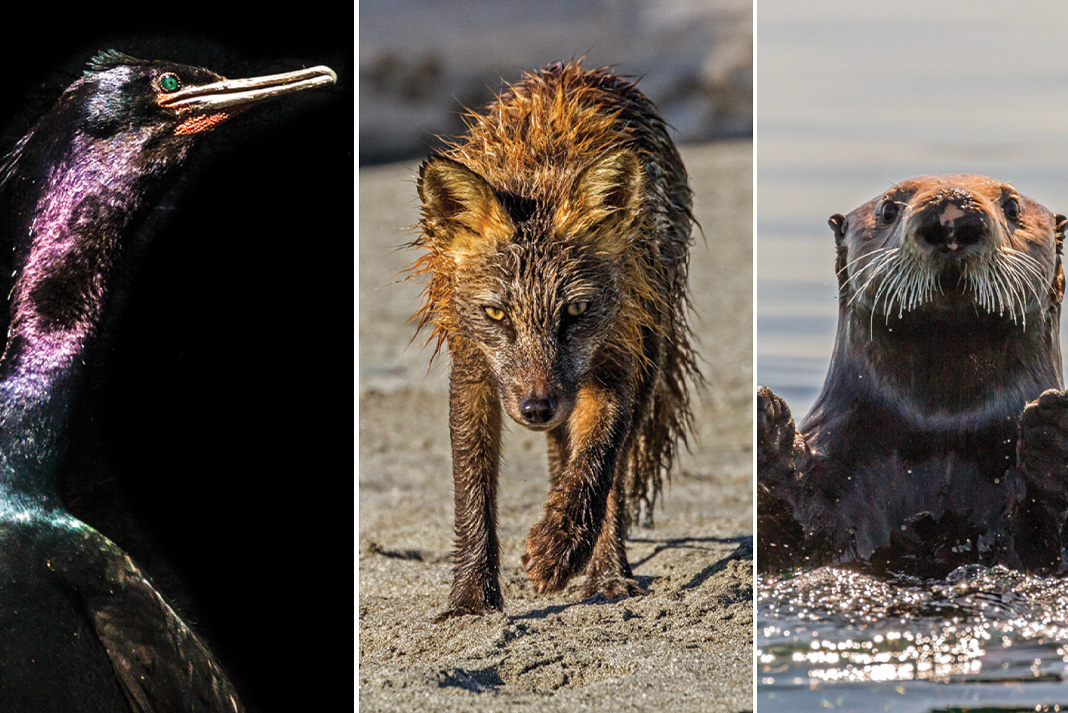
If I followed a direct line from the beach at Partition Cove on Alaska’s Kodiak Island out across the ocean, I would find myself passing by Hawaii and landing on the banks of Sulzberger Bay in Antarctica, 9,000 miles away.

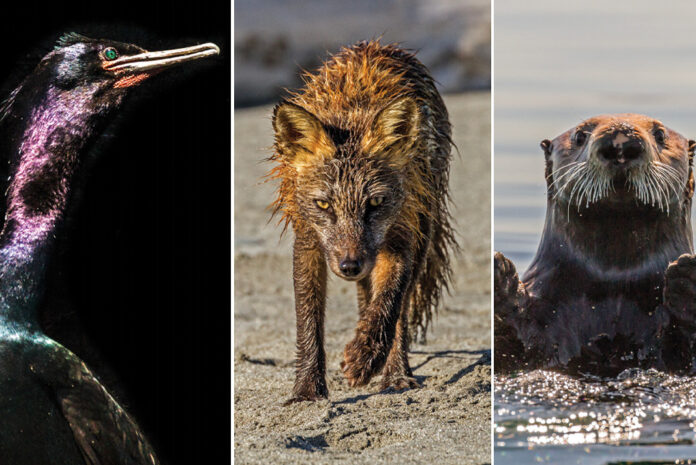
I’m sipping a mug of tea and contemplating this watery horizon when, from the corner of my eye, I notice movement. Turning, I see a fox making its way across the sand. His fur is wet and spiky from a recent plunge into the cold Pacific, perhaps lunging at a fish or a stranded fowl. My presence tickles his curiosity; his upbeat footstep brings him closer to my campsite.

For a moment, I feel like we are having a conversation. I never hide from animals. In fact, I want them to see me. Photography is an exchange between a subject and an observer. In these portraits made while kayaking around Kodiak Island there is a dialogue between the animal and myself. This is my philosophy in all photography and especially with wildlife—I don’t want to take the shot, I want to receive it.

Story Behind the Shot: Waiting Game | Photos: Daniel Fox

Often, receiving such a shot—when our eyes meet and we share that unspoken communication—is a matter of waiting. I have lain on the sand for interminable hours, my eyes glued to the camera. Bones aching, skin itching, fingers numb. Waiting for 30 minutes without pause and then—the second I break my concentration—a perfect, fleeting combination of eye contact, light and composition. And so I wait some more.

Nothing would ever be accomplished if we just waited for things to happen. But you must be able to wait for the unique to manifest.When it does, all those minutes, all those hours, all those years waiting, suddenly are worth the wait.


Screen_Shot_2015-06-15_at_3.44.39_PM.pngThis article first appeared in the Early Summer 2015 issue of Adventure Kayak magazine. 

Subscribe to Paddling Magazine and get 25 years of digital magazine archives including our legacy titles: Rapid, Adventure Kayak and Canoeroots.

Treasures Await Paddlers In The Bowron Lakes

Bowron Lakes | PHOTOS: KELLY KURTZ

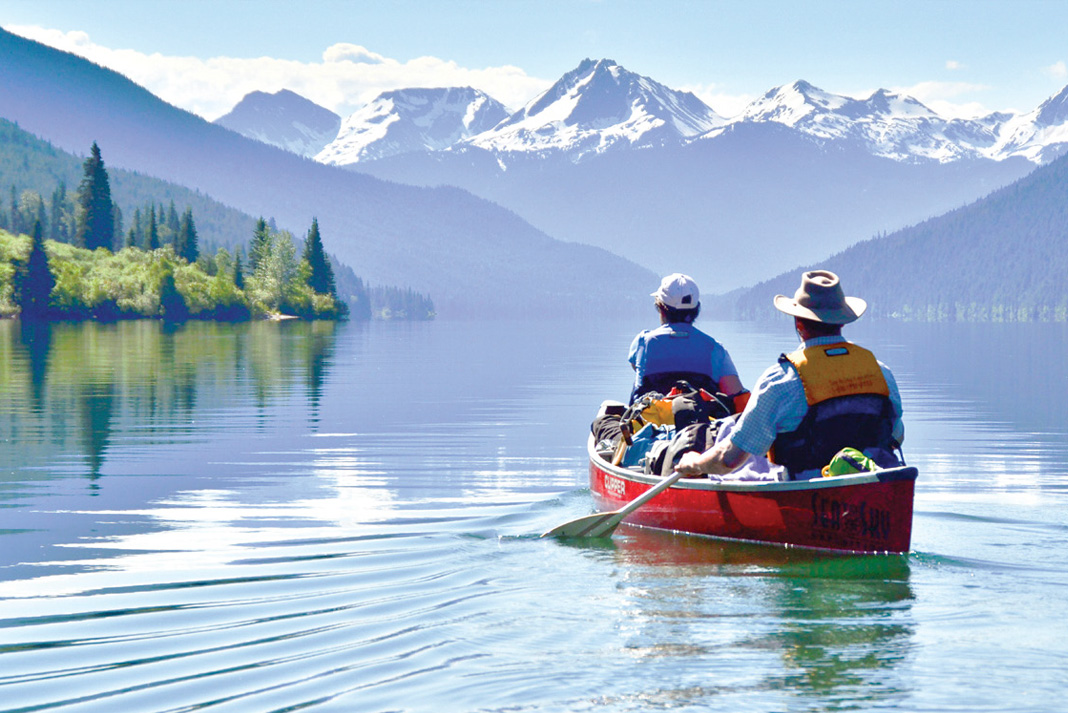
The call of a loon echoes across a glassy calm lake and our group sips hot cups of tea by the campfire. The sun dips beyond the hori- zon, painting the sky red and orange.

Solitude is the most common way my guests describe their experience on the Bowron.

The Bowron Lake area provides the quintessential mountain canoeing experience, and is often rated one of the top 10 canoe routes in the world. Sprawling over four eco-zones and nestled in the majestic 1,500-meter Cariboo Mountains, it’s a visually impressive route.

In addition to the diverse scenery, wilderness paddlers are rewarded with rushing waterfalls, wild edibles, fresh fish and abundant wildlife. A canoe trip here offers the perfect balance of challenge and reward.

TRIPS

If you have a half day, paddle and fish Bowron Lake. An hour and a half east from small city Quesnel, you can put in right on Bowron Lake. The best spot for fish is where the Bowron empties north into Bear River.

If you have a day, paddle seven kilometers to the Bowron River estuary, leaving powerboats behind. Watch for moose and enjoy this birdwatcher’s paradise—bring your binoculars.

If you have a weekend, paddle the West Arm of the Bowron circuit. Camp at Pat’s Point on your first night, then paddle to Unna Lake where you can swim, pick blueberries and visit Cariboo Falls (26 meters). The West Arm is prime moose habitat.

If you have a week, paddle the whole 116- kilometer circuit. Expect it to take six to eight days. The 11 kilometers of portage trail are cart- accessible. Along the way, shoot the chute at the end of Isaac Lake, visit waterfalls, view wildlife, fish, swim and go berry picking. Groups of seven or more need to book campsites, smaller groups are first-come, first-serve.

Bowron Lakes | PHOTOS: KELLY KURTZ

STATS

Population: 30 permanent residents

Wildlife: Moose, black and grizzly bears, wolves, beaver, lynx, waterfowl, loons, osprey, otters, bald eagles, trout, Rocky Mountain whitefish and kokanee salmon.

Campsites: Boreal forest to sandy pines, often with moose. Sites feature tent pads, fire rings, metal bear lockers and outhouses. Woodlots are found along the way; bring an axe.

Diversion: Travel back to the 1850s by visiting nearby gold rush town and national historic site, Barkerville.

Best Eats: Can’t beat fresh Kibbee Lake rainbow trout. For dine-in, try Bear’s Paw Café, Big H’s Fish ‘n’ Chips and Savala’s Steak House.

Best Fly-fishing: Kibbee Lake rainbow trout and whitefish on Thompson Lake.

Outfitters: Sea to Sky Expeditions (seatoskyexpeditions.com) and Pathways (bowronlakes.com) offer guided trips. Pick up last-minute items at Bear River Mercantile (bowronlake.com).

Must-have: Camera and a telephoto lens.

Seasoned wilderness guide Kelly Kurtz considers the Bowron Lake area in northern British Columbia an old friend. She’s never without her fly rod and camera, capturing the stories that emerge from guiding. 


Screen_Shot_2015-06-12_at_11.26.38_AM.pngThis article first appeared in the Early Summer 2015 issue of Canoeroots and Family Camping magazine.

Subscribe to Paddling Magazine and get 25 years of digital magazine archives including our legacy titles: Rapid, Adventure Kayak and Canoeroots.

6 Pro Tips For Canoeing In Waves And Swells

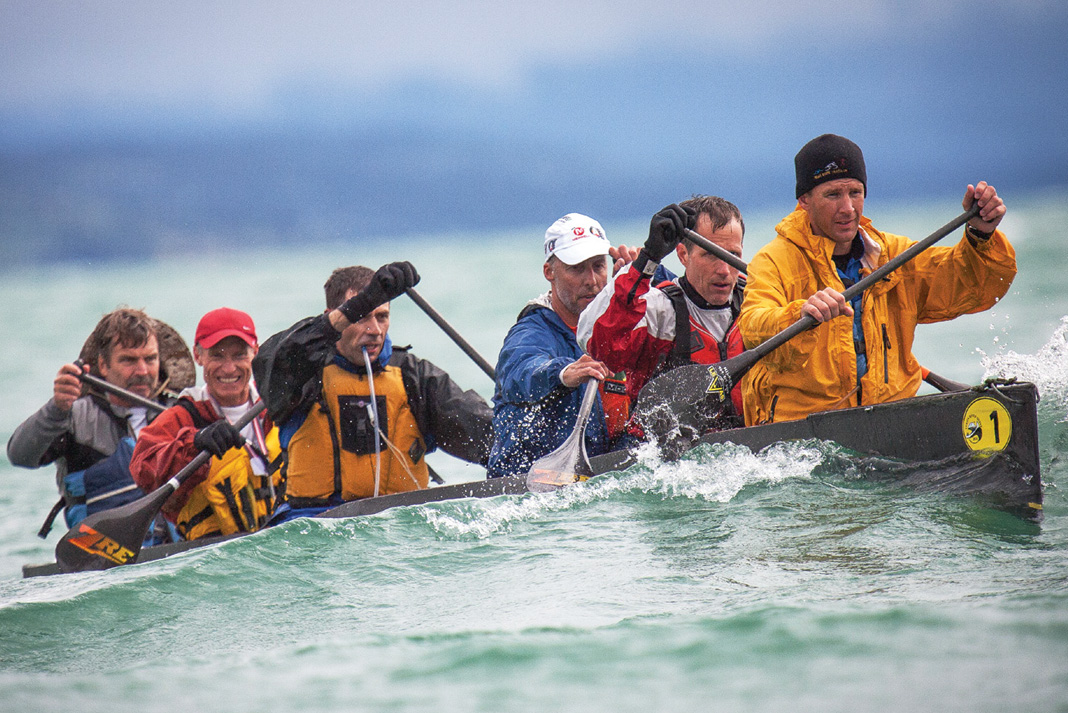
six people canoeing in swell and waves
A smooth sea never made a skilled sailor. | Feature photo: Justin Kennedy

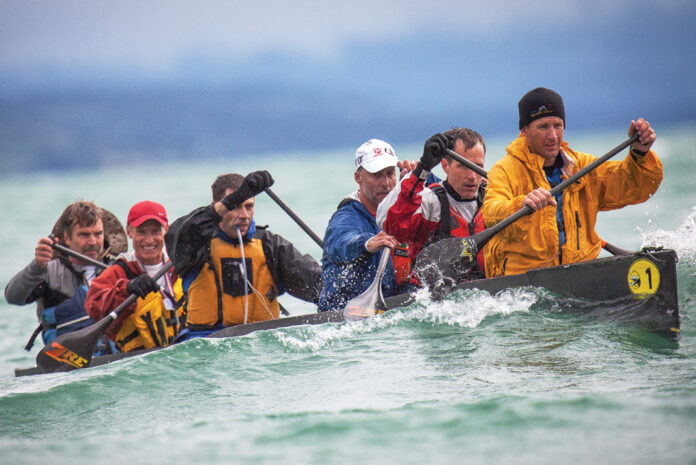
Most canoeists know a cold swim is often preceded by a wave taken at a bad angle. Depending on your skill level, canoeing in waves can be either frightening or fun. Follow these simple tips for paddling in waves to keep your experience positive.

6 pro tips for canoeing in waves and swells

1 Wind waves versus swells

Not all waves are created equal. Wind waves are short, choppy and steep, and are generated by the wind in a local area. Swells are characterized by smooth surfaces with longer wavelengths and are generated by distant weather systems. Swells are found only on the largest lakes and the open ocean; wind waves are found everywhere.

A smooth sea never made a skilled sailor. | Feature photo: Justin Kennedy

2 Play the angle game

When paddling into wind waves, it’s common for the bow to crash into an oncoming wave, giving the bow paddler a free shower. The solution is to take the waves on a 45-degree angle. This lengthens the distance between the crests of the waves. It also decreases the slope and makes for a drier ride.

Paddling parallel to a wind wave is an unstable position and should be avoided. If you must paddle in wave troughs, keep your hips loose and allow the boat to move with the wave as it passes under. When paddling with wind waves from behind, use a strong rudder to keep the boat from broaching.

3 Hurry on

Momentum is your friend. When faced with an oncoming wave, many inexperienced paddlers will freeze; instead, maintain your rhythm and keep paddling. Your boat is more stable with your paddle in the water and with forward momentum. Concentrate on planting your paddle at the top of every wave and imagine driving your hips forward and over the crests.

Trimming the canoe by shifting some weight to the stern may help the bow ride over the waves, but be careful not to overdo it; you may have to change direction at some point.

4 Get decked

By far the best addition to paddling in areas likely to encounter swells and wind waves is a spraydeck. Spraydecks keep water out of the boat better than any other accessory and significantly add to your comfort and safety in waves.

5 Design matters

The open design of a canoe means that even moderate waves can break over the bow and cause the boat to take on water. Canoes with greater rocker and flare are more enjoyable and safer to paddle in waves. Tripping canoes will fit the bill much better than race boats.

6 Look out

Because swells come in sets of differently sized waves, some will break over underwater rocks and ledges where others will not. Nautical charts show underwater features you may wish to avoid that topographical maps do not. Always look well ahead of where you are and make a mental note of where swells are breaking before you get there.

Richard Alexander is a former president of Paddle Canada and canoeing instructor in Newfoundland.

Screen_Shot_2015-06-12_at_11.26.38_AM.pngThis article was first published in the Early Summer 2015 issue of Canoeroots Magazine. Subscribe to Paddling Magazine’s print and digital editions, or browse the archives.


A smooth sea never made a skilled sailor. | Feature photo: Justin Kennedy


World-Class Creeking In Veracruz, Mexico

PHOTOS: DYLAN PAGE
PHOTO: DYLAN PAGE

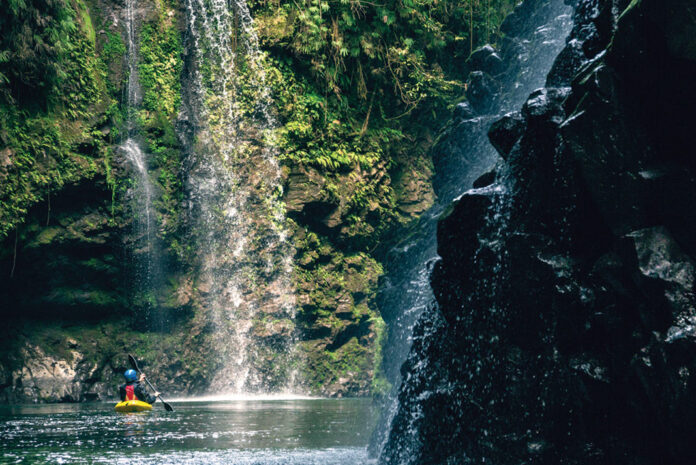
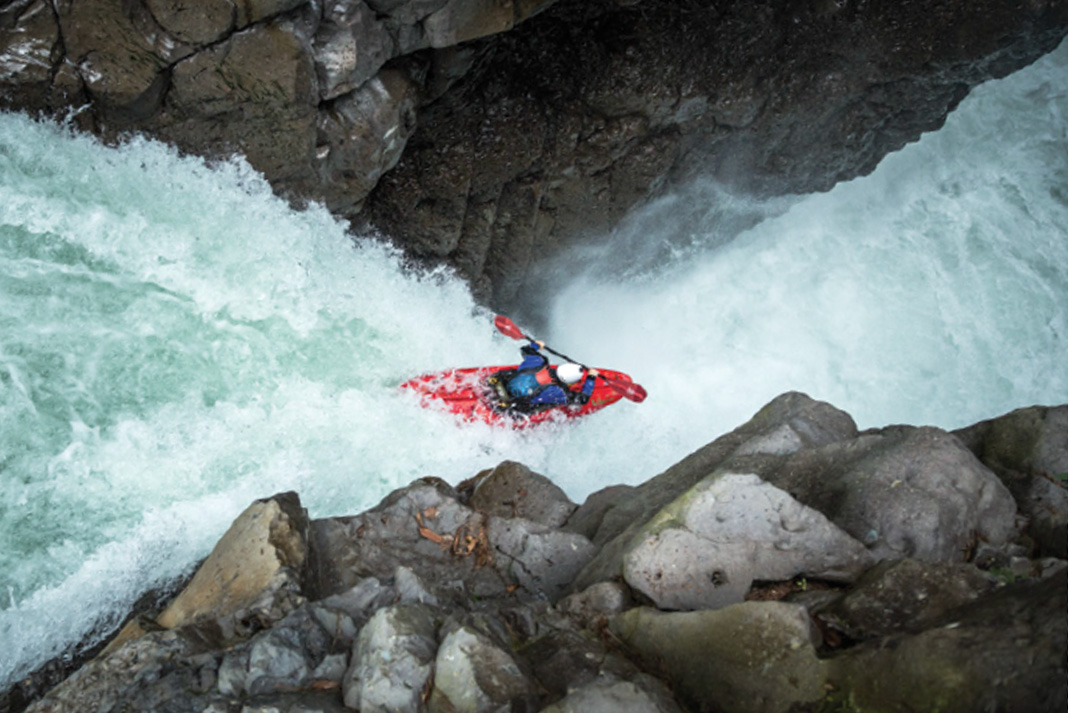
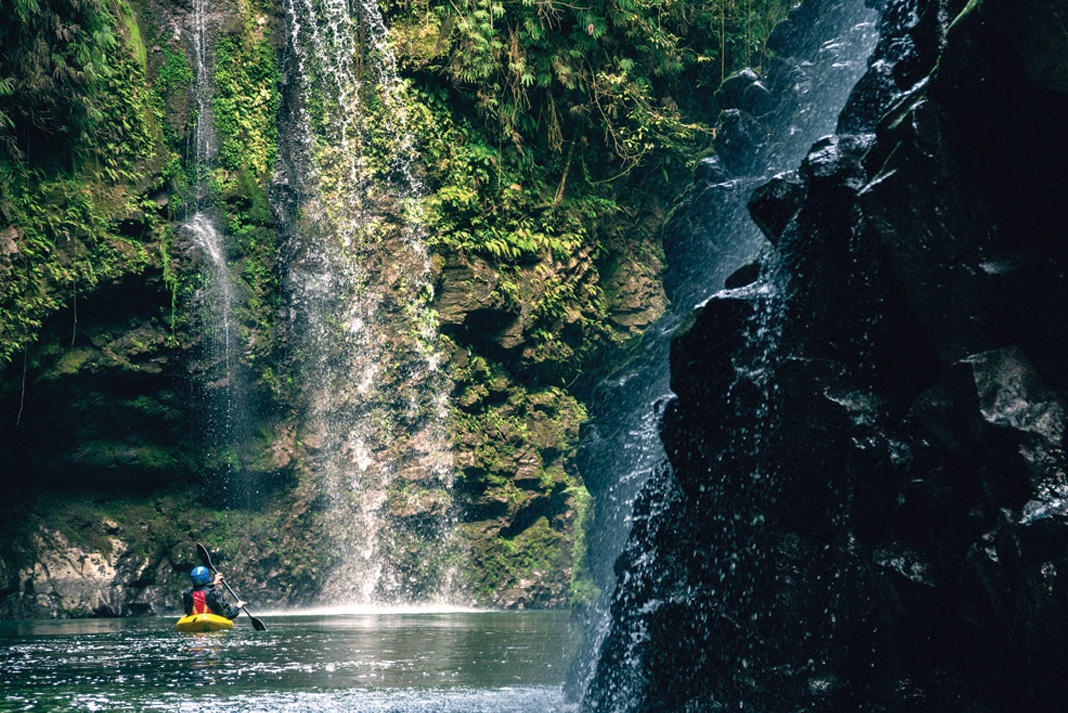
Two hundred miles from Mexico City, the small city of Tlapacoyan lays nestled in the thick of lush Mexican jungle. “The scenery is like something out of a movie,” says Rafa Ortiz, who grew up in Mexico City and started rafting on the Alseseca River in Veracruz at age nine.

Best known for running big drops, Ortiz now travels the world as a professional kayaker, but will never stop visiting Veracruz.

“I’ve traveled a lot, and have friends who’ve paddled hundreds of rivers around the planet, and we pretty much all agree that the Alseseca River has the most awesome whitewater,” Ortiz says.

Seemingly countless sections of the Alseseca keep drawing paddlers to the region. “It’s one river where you can spend a couple weeks and not get tired of it.”

Though a great day on the river for Ortiz may include 40-foot falls, there’s something in Veracruz for everyone. You’ll easily find whitewater within a class III and IV comfort zone on the Alseseca and other rivers nearby, plus a community of boaters to help you push your limits. “It’s a great place to run your first waterfall,” says Ortiz.

PHOTO: DYLAN PAGE

Don’t miss…

The Alseseca Race takes place on the famous roadside section of the river every January drawing competitors, volunteers and spectators from around the world.

Travel

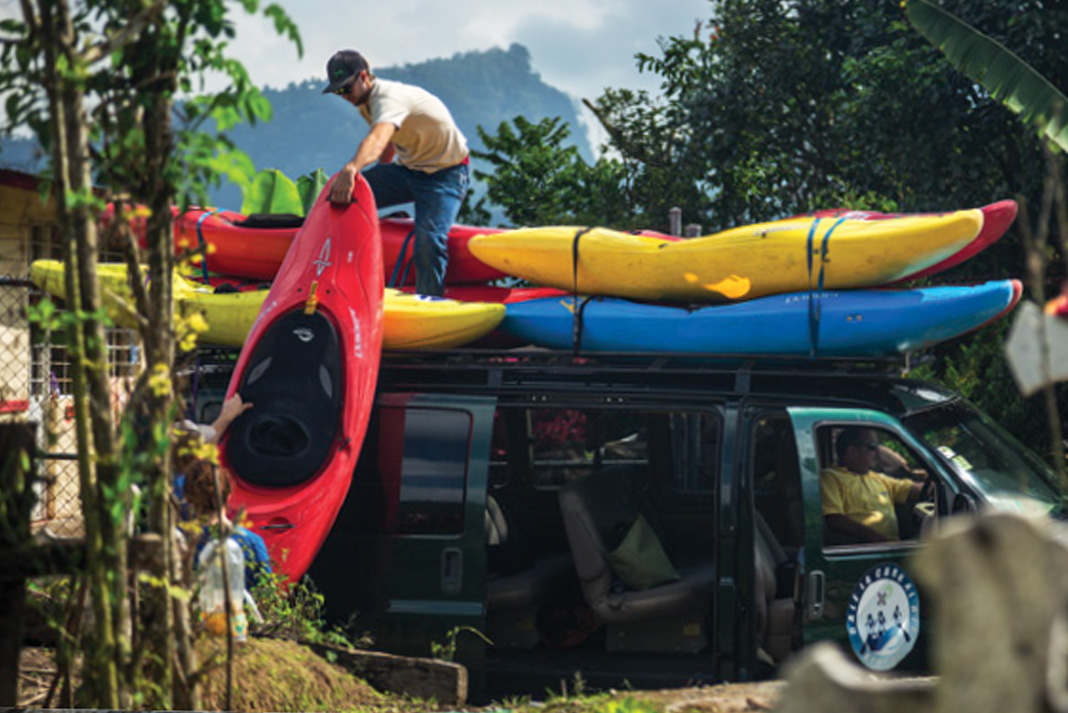
Fly to Mexico City and catch a bus to Tlapacoyan. It’s an easy trip, though less convenient with a boat on board (see below for gear advice.) Car rentals are available at the international airport.

Stay

Adventurec in Tlapacoyan has cabins and camping for kayakers, as well as guides, raft trips, equipment rentals and a variety of adventure and cultural activities. It’s a great place to meet other boaters (www.Adventurec.com).

Gear

If you’re visiting Veracruz for less than 10 days, rent a boat from Adventurec. If you’re there for longer, bring your kayak, says Ortiz. Keep in mind that big impacts on Alseseca’s steeps are notorious boat breakers.

Safety

The rivers in the area can be challenging, and there are many canyons. Though online beta can be helpful, it’s smart to find a guide or connect with boaters who know the region well.


This article on whitewater canoeing was published in the Early Summer 2015 issue of Rapid magazine.This article first appeared in the Early Summer 2015 issue of Rapid Magazine. 

Subscribe to Paddling Magazine and get 25 years of digital magazine archives including our legacy titles: Rapid, Adventure Kayak and Canoeroots.