Home Blog Page 293

In Alaska, Kayakers Go To Extreme Measures For Citizen Science

two researchers stand beside sea kayaks while they seek out field samples for a study
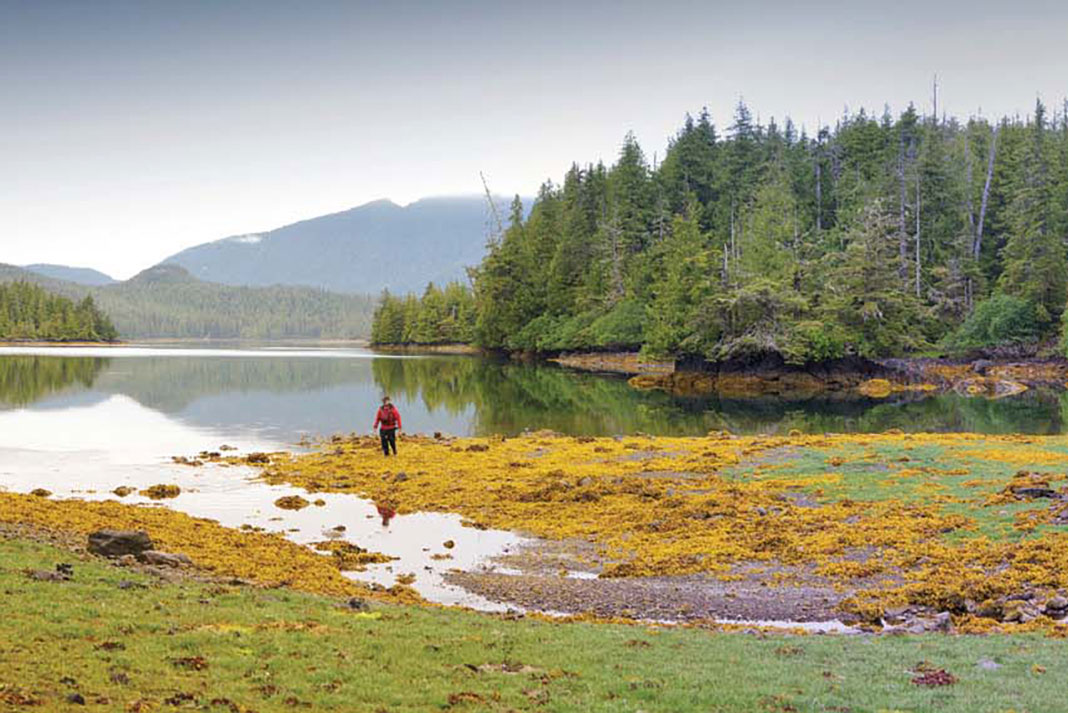
The Outer Island Survey team landed on every beach to collect data no one else could. On Coronation Island, Paul Norwood makes a botanical inventory. | Feature photo: Adam Andis

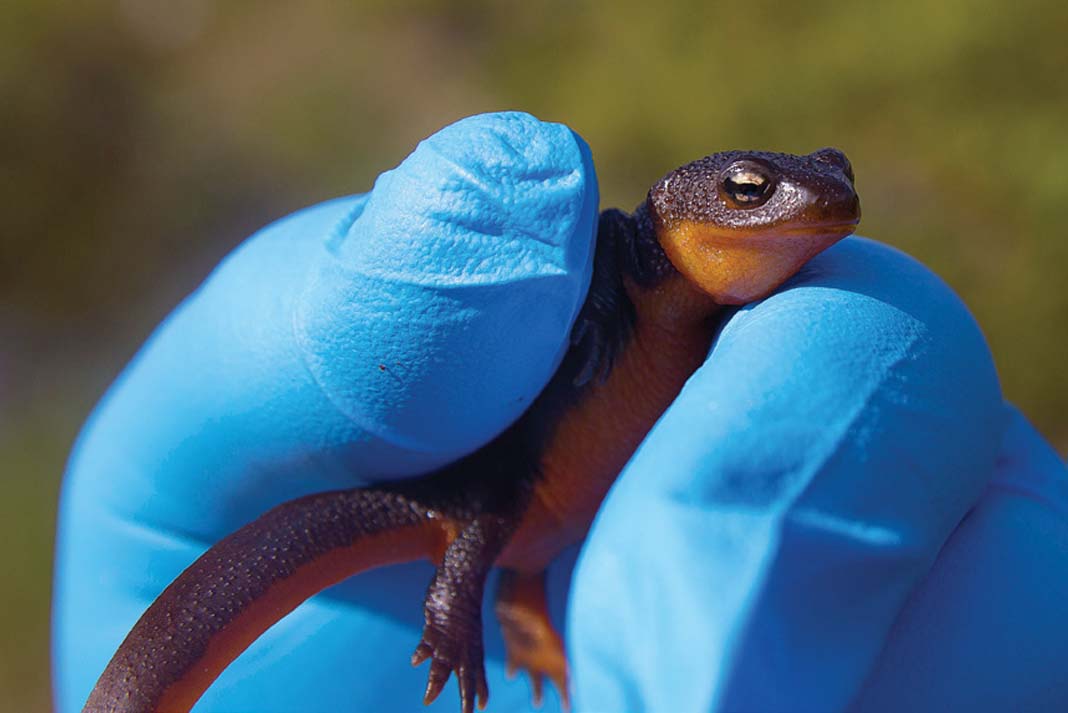
Want to know if the deadly fungus Batrachochytrium dendrobatidis is affecting the Boreal toads and rough-skinned newts on Alaska’s Coronation Island? To find out is no beginner-friendly bit of citizen science. Here’s what you have to do:

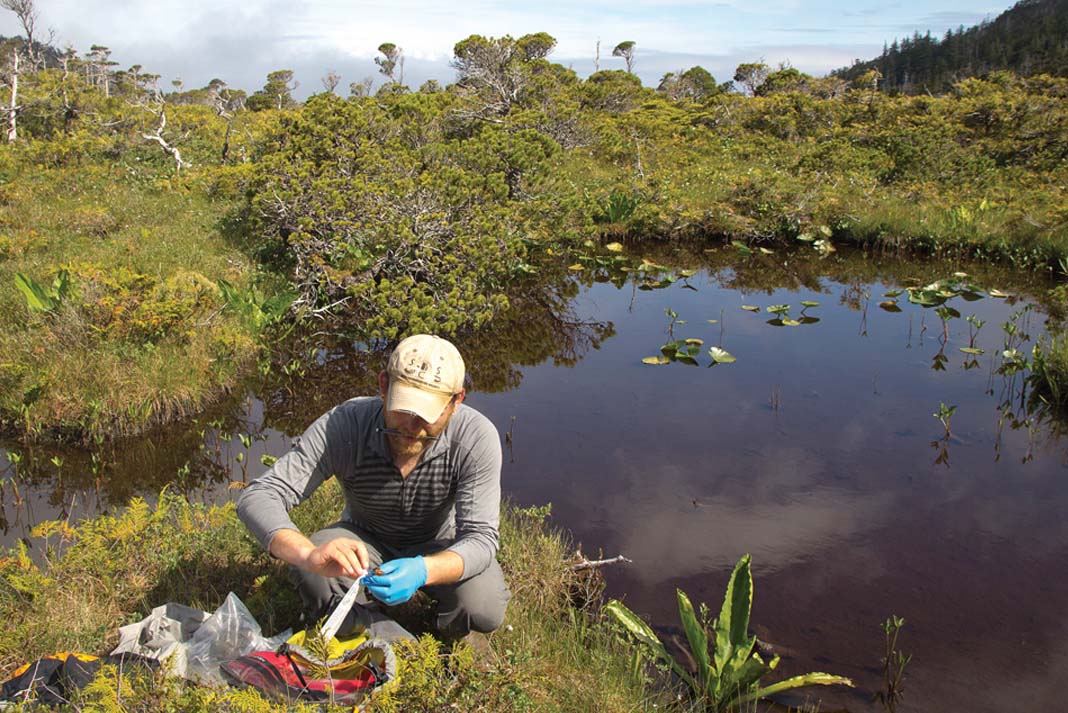
Kayak the foggy and swell-battered outer coast for six days. Land through surf and wrestle with maddening thickets of devil’s club and alder to reach the alpine zone. Catch the elusive amphibians in chilly ponds. Rub a swab along the squirming creature’s belly, then break off the swab’s tip and attempt to air-dry it for five minutes in the notoriously soggy climate. Place the swab in a tube and label it. Bushwhack back down to the coast and launch through the surf. Paddle another 10 days to reach a post office. Mail the samples to a lab in Ohio for analysis.
In Alaska, kayakers go to extreme measures for citizen science

The hardships of conducting field ecology in remote and rugged places like Alaska are legendary. But that same ruggedness draws kayakers from all over the world. The brainchild of Adam Andis, Wilderness Stewardship Director of the Sitka Conservation Society (SCS), the Outer Island Survey partnered experienced kayakers with the Society and the U.S. Forest Service. The expedition represents part of a growing strategy for extending science into wild places using sea kayaks as the vehicles.
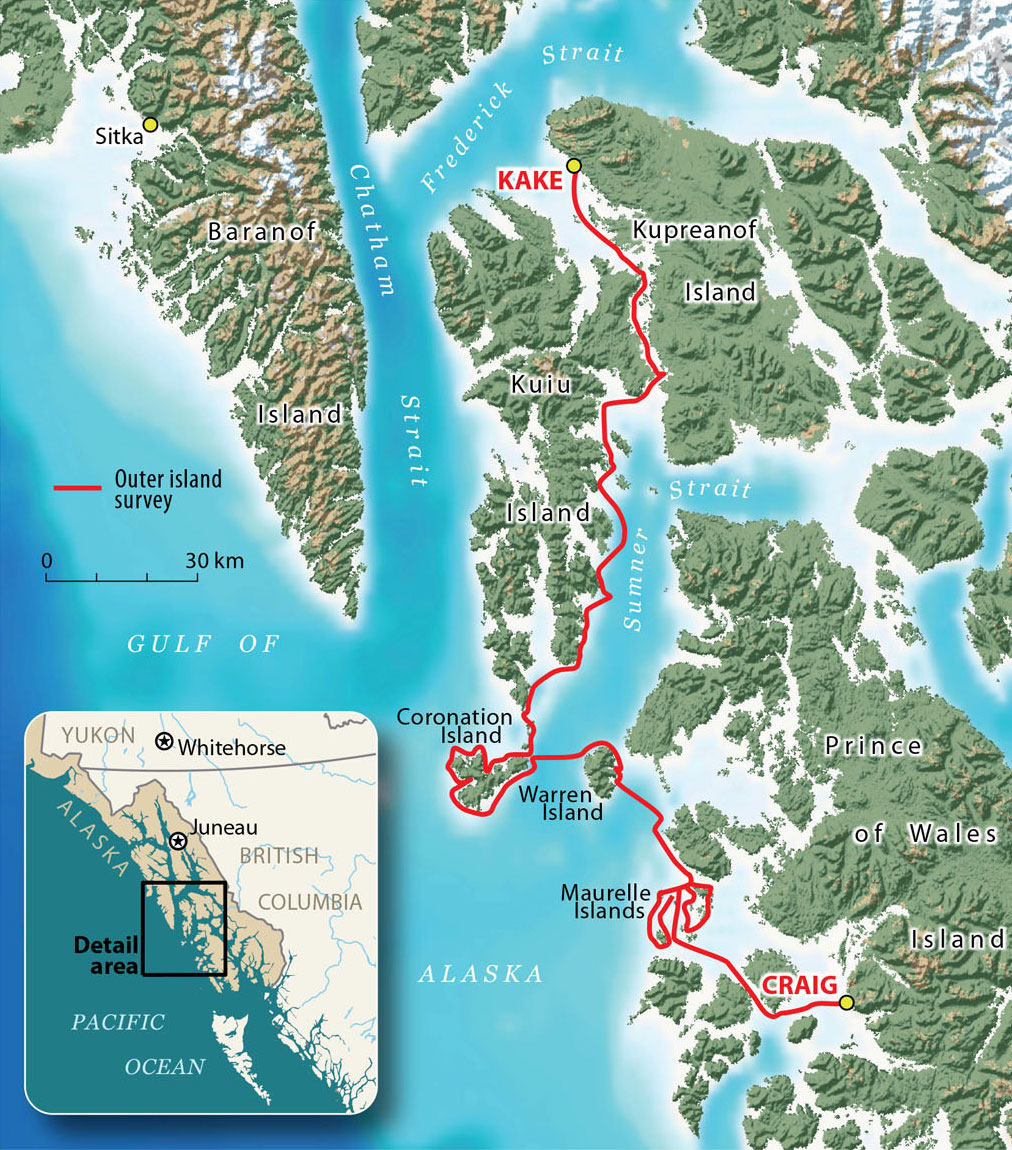
map of the Alaska Outer Island Survey route
Map: Chris Brackley

A thick braid of current-swept channels and mountainous islands, Alaska’s panhandle may be small by the standards of the 49th state, but it is still a vast wilderness. The panhandle is dominated by the Tongass National Forest, a single forest larger than the state of Maine. Hemmed between icefields and the North Pacific, travel is by floatplane and boat. The season is short. Weather delays are as common as rain.
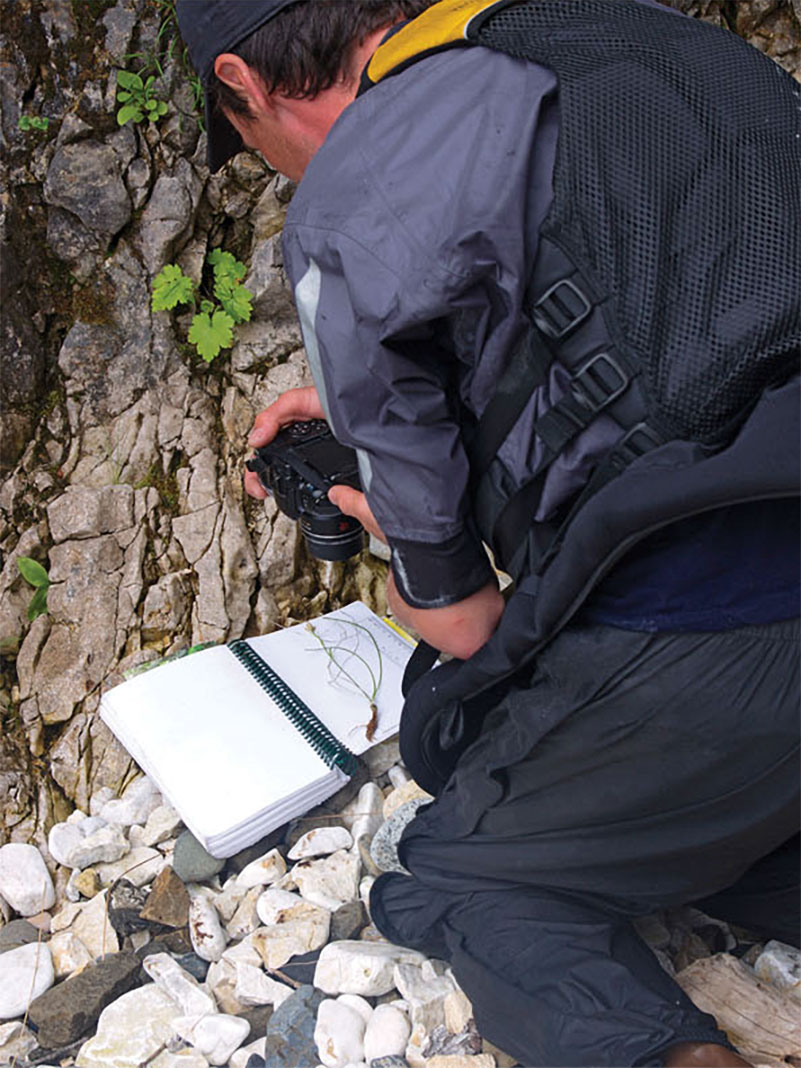
man makes a botanical inventory in remote area of Alaska
On Coronation Island, Paul Norwood makes a botanical inventory. | Photo: Adam Andis

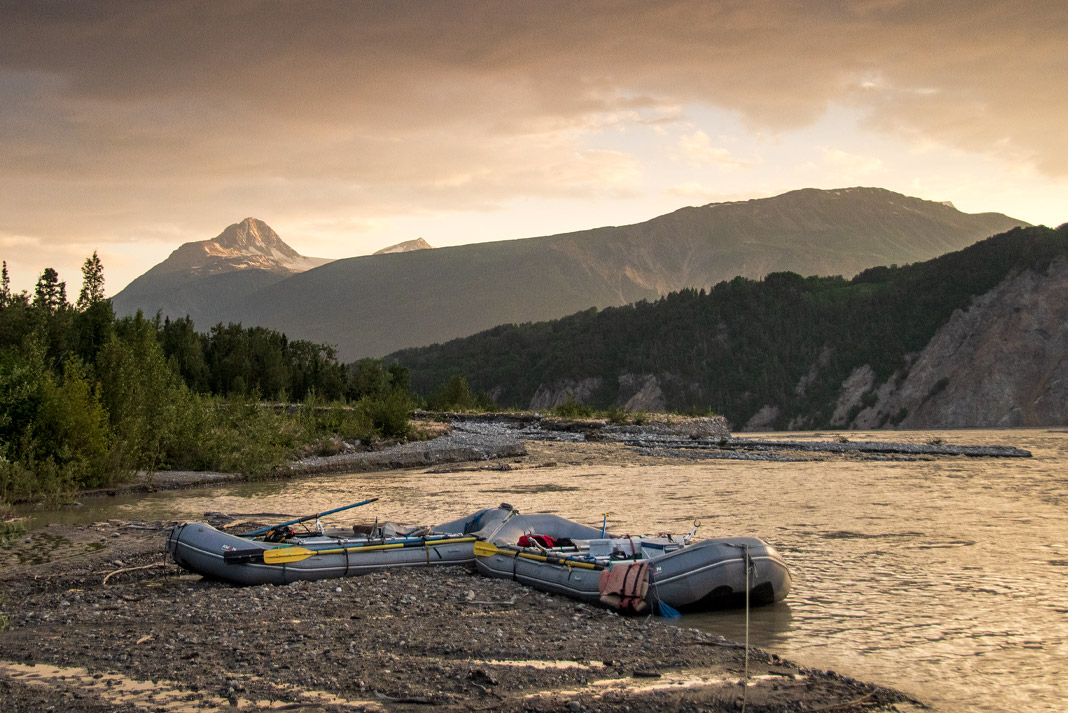
The Kuiu, Coronation Island, Warren Island and Maurelle Islands wildernesses lie in one of the most isolated parts of this already-remote area, clinging to the southwest edge of the panhandle, exposed to the stormy Gulf of Alaska and the massive tidal exchanges of Chatham Strait. In June 2013, the Outer Island Survey team spent 16 days tracing every nook and cranny along 230 miles of this wild coastline, collecting data no one else could.

Working from 6 a.m. until well after sundown, they surveyed alpine plants, swabbed amphibians and landed on every single beach to check for invasive plants and signs of human use, from modern campsites to centuries old culturally modified trees. They recorded birdsongs, mammal tracks and every human encounter, including distant fishing boats and airplane flyovers. After dark, they hiked into the woods to play owl calls and listen for responses.

The results of Andis and his team’s efforts will help shape an accurate picture of ecological well-being and human use on these islands, allowing conservationists and land managers to create strategy based on facts on the ground. “We can use the data from the Outer Island Survey to inform management decisions and assess what’s a reasonable carrying capacity for outfitter permits in the wilderness,” says Tory Houser, a Recreation Planner for the Forest Service. The data will also provide a baseline for a 2018 Forest Plan update.

The hardships of conducting field ecology in remote and rugged places like Alaska are legendary. But that same ruggedness draws kayakers from all over the world.

Recruiting skilled ocean paddlers

This rubber-boots-on-the-ground approach to ecology is essential in remote landscapes like Alaska’s Southeast. Far from the watching eyes of land managers, these areas can easily suffer from benign neglect during the long intervals between visits. Camps and boat traffic can intrude into areas meant to be refuges. Sensitive species can decline before anyone notices.
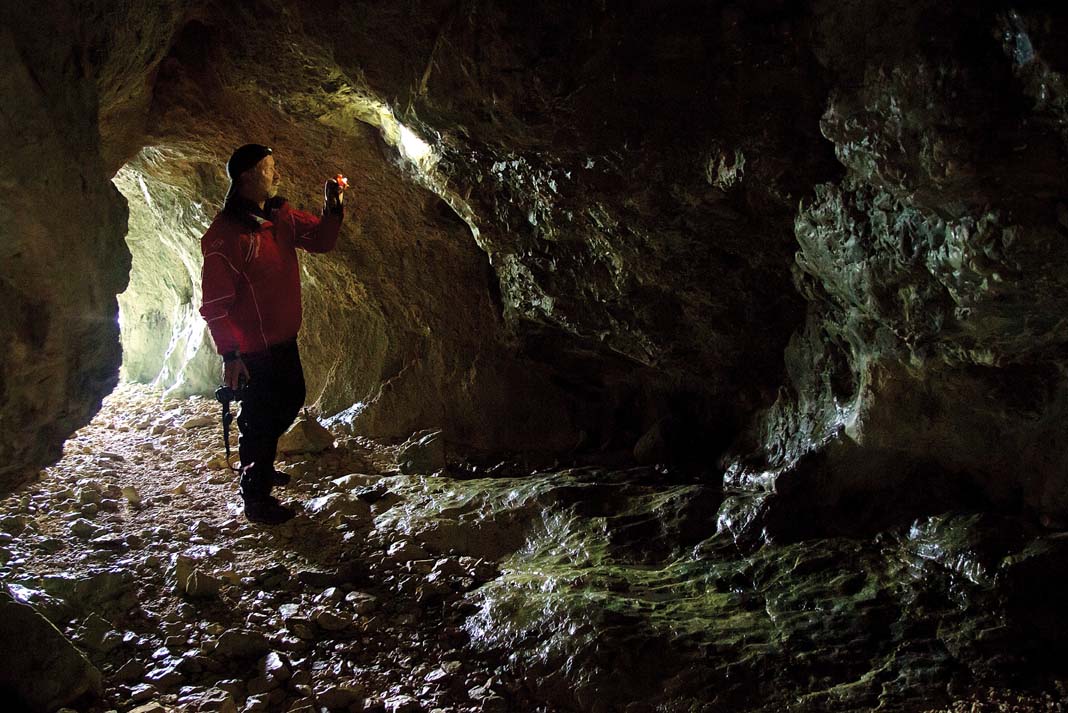
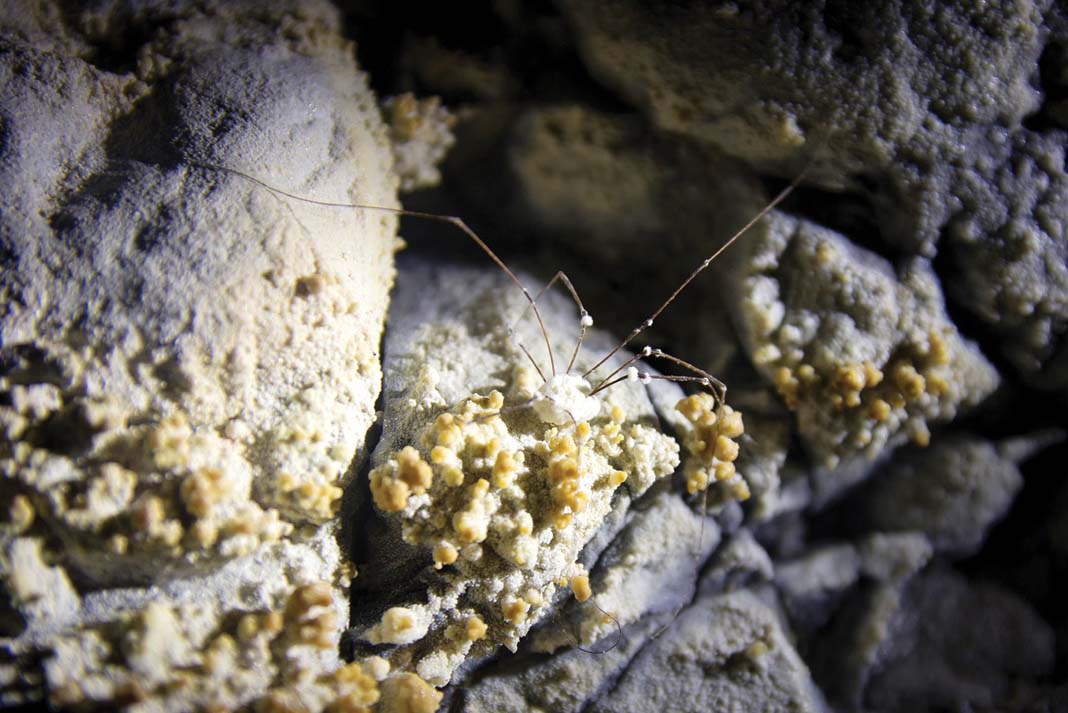
Rob Avery explores a living cave on Coronation Island
Rob Avery explores a living cave on Coronation Island; the rock formations inside are actively growing. | Photo: Adam Andis

Southeast’s particular geography makes studying the region as critical as it is difficult. Islands like Coronation, far out to sea, will be the last to feel the disruptive effects of invasive species that are spreading across the globe. But if invasive species do make it to Coronation, they will spread like wildfire thanks to the isolated biogeography of small islands.
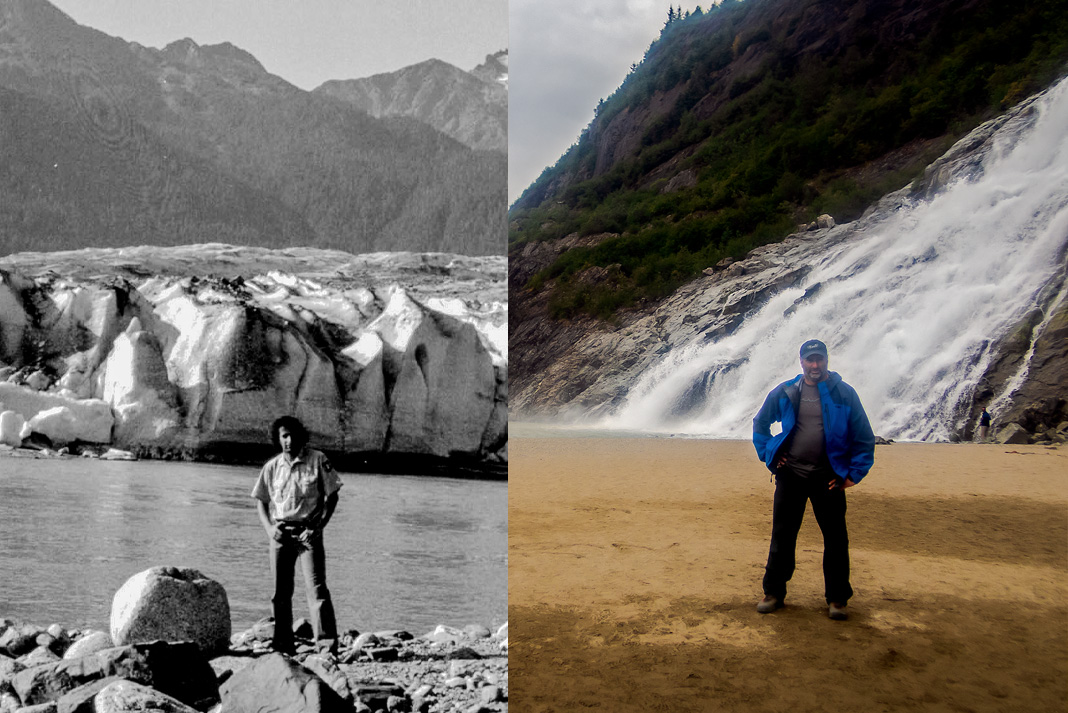
Southeast Alaska is also the northern limit for many plant species. “We expect forests to move northward with warming trends,” says Lauren Oakes, a researcher at Stanford University who used kayaks to study Alaska yellow-cedar decline, “so the latitudinal margins are a critical laboratory for understanding the effects of climate change.”

Declining Forest Service budgets in the sprawling Southeast have taken “spreading thin” to the point of gross understatement. “We’re lucky if we can get out there once a year,” says Houser. “You charter a boat months in advance, and then you get held up by weather. We couldn’t put in the time you can from a kayak, seeing the shoreline on a slow, intimate level.”

Nor can satellite imagery, LIDAR and Geographic Information Systems provide answers. These gizmos can’t reliably tell a stand of Alaska yellow-cedar from hemlock, let alone distinguish native from invasive plants in the alpine zone where a whole botanical community exists in a single square foot. Satellites can’t spot outlaw cabins hidden under trees, swab newts or measure the elusive feeling defined as “wilderness character” that includes everything from the sound of aircraft to footprints on a beach.

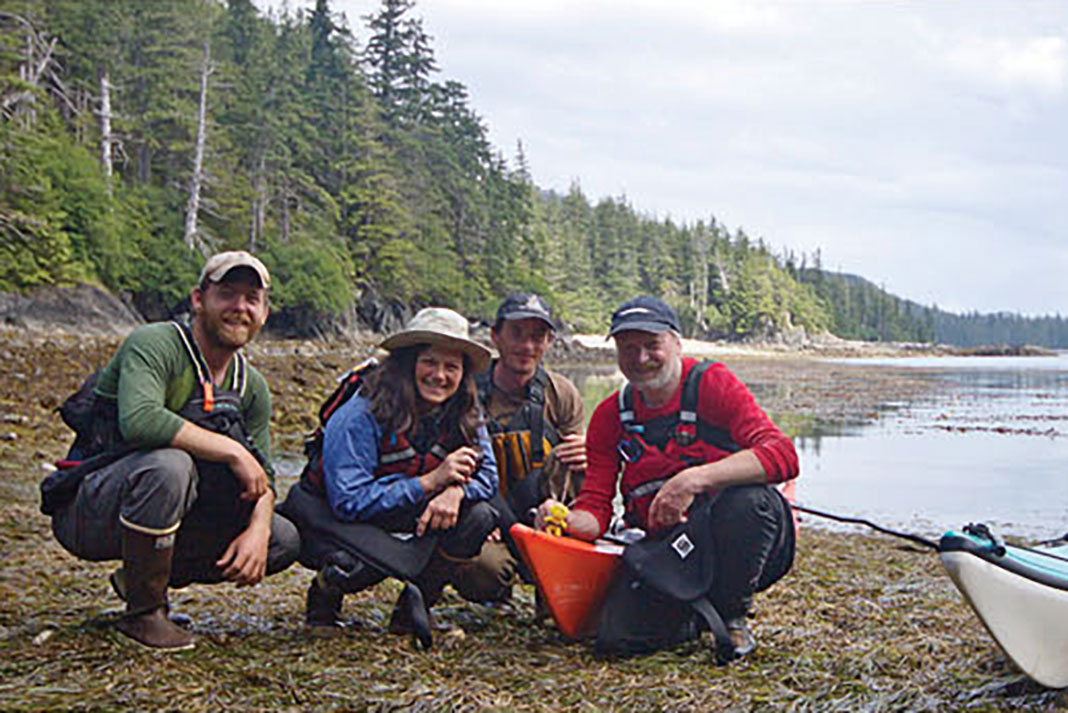
The Sitka Conservation Society has long tapped local paddlers, hikers, hunters and fishermen to report on-the-ground conditions, but the Outer Islands’ pounding surf, open-water crossings, powerful wind and thick fog demanded a more experienced team. Andis, an advanced American Canoe Association instructor and former Alaska sea kayak guide, sought out skilled ocean paddlers from the broader sea kayak community. He recruited Rob Avery, a Seattle-based BCU five-star paddler and veteran of Alaskan expeditions; Cris Lewis, who hails from California’s Half Moon Bay and cut her teeth in the rock gardens of Cape Mendocino; and Paul Norwood, a 13-year Sitka resident, SCS intern and botanist.
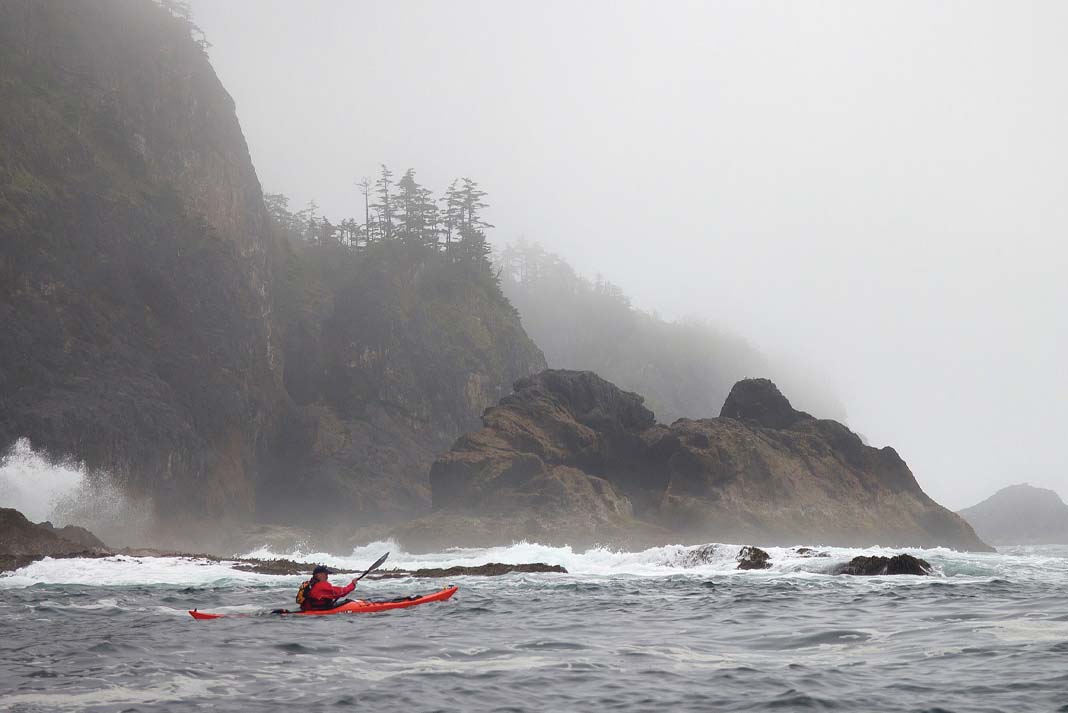
kayaker paddles along the misty outer coast of Alaska with cliffs, rock gardens and pounding surf
The outer coast of Coronation Island is exposed to the full fury of the Pacific, eroding the limestone cliffs into massive rock gardens, canyons and caves. | Photo: Adam Andis

“Nobody but seasoned sea kayakers could go where we went,” notes Avery, “A trip like this requires interpreting the weather and currents, reading the barometer and knowing what the sea will be doing.”

Adding a scientific workload to an already challenging expedition took its toll on the group. Wind slowed their pace, and two expedition members fell ill from the daily grind. On top of coping with sea conditions, complex navigation and camping in bear country, there were data sheets to keep track of, plant presses to keep dry and extra batteries to haul around.
Decisions had to be made for science. “Do we want to paddle six more miles up that inlet and back to survey that beach—yes, we have to,” explains Avery. “You’re not on a pleasure trip. There’s a job to be done and we’re going to do it right.”

Alaska’s natural bounty

There’s another critical element to the hands-on-science done by outdoors lovers: a deep and complex relationship with wilderness. It’s been central to Alaska ever since William Seward scraped together $7.2 million in 1867 to buy 586,412 square miles of wilderness from the Russian Empire.

Alaska’s natural bounty is its raison d’etre. Everyone who comes here, for a week or a lifetime, comes either for the natural environment, for a job related to the natural environment or for a job providing infrastructure to those who are here for the natural environment. As a tourism report dryly notes, “Very few people visit Alaska for the culture or the built environment.” The conflicts that have polarized Alaska over the decades have been about the best use of this bounty: as board feet, fish, solitude or science.
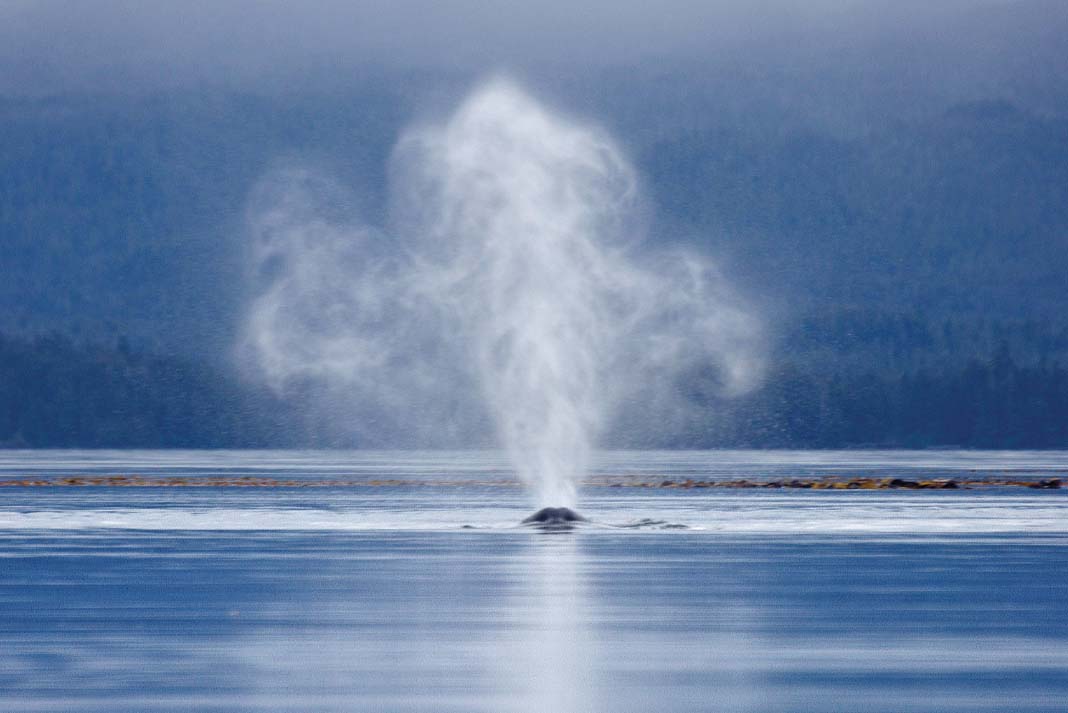
humback whale breaches near the Maurelle Islands in Alaska
The team paddled with humpback whales in the Maurelle Islands. | Photo: Adam Andis

In Southeast, 50-year contracts between the Forest Service and the timber industry after World War II built an economy on logging old-growth trees from public lands and feeding massive pulp mills. Commercial and recreational fishing made up the rest. Conservation gathered steam with the environmental laws of the 1970s, culminating in the Alaska National Interest Lands Conservation Act in 1980, which spawned the state’s vast network of parks and wilderness areas.
By the late ‘80s, both sides in the logging versus environment debate had dug in. Conservation organizations saw the Forest Service as favoring logging and settled on two strategies: litigation and lobbying. Then the ground began to shift under their feet. Tourism overtook timber, then fishing, in job creation and economic impact. As the economic tide turned, wilderness science offered a path to common ground amongst Alaskans who loved the land.

Today, conservation groups still litigate and lobby, but SCS also fights for the Forest Service’s budget, trying to stave off a 50 percent cut in wilderness management and redirect funds from large timber operations toward science and stewardship.

“We’re surrounded by public lands, and we depend on them for subsistence, for our fish and deer and beach asparagus,” says Andis. “All the tourism operators understand viewsheds and pristine areas. They have to.”

In addition to local paddlers ground-truthing proposed timber sales in preparation for appeals, in 2009 the Sitka Conservation Society began running wilderness expeditions to provide the Forest Service with data for management. Two years later, they also helped the Southeast Alaska Conservation Council create similar trips. By 2013, SCS was running 21 expeditions to nine wilderness areas, including nine paddle trips.

Adventurers and scientists for conservation

The trend of paddlers donning lab coats under their PFDs reaches well beyond the borders of Southeast Alaska. “In the sea kayak community, people have always gone on expeditions to raise awareness of one thing or another, but now we’re seeing more involvement in hard science,” says Steve Weileman, who founded The Ikkatsu Project in 2012 with partner Ken Campbell. Through expeditions and films, The Ikkatsu Project monitors and raises awareness of tsunami debris and plastic pollution on the Olympic and Aleutian coasts. Weileman and Campbell conduct beach surveys and water sampling and share their findings with NOAA and other scientific organizations.
researcher crouches down in Alaska alpine pond to take sample from amphibian
Over a demanding 16 days, the Outer Island Survey team hiked to alpine ponds and collected samples from amphibian populations. | Photo: Adam Andis

SCS runs more paddle-based expeditions each year. But the surface has barely been scratched. “Kayakers, climbers and hikers have the potential to gather data scientists need but can’t access,” says Gregg Treinish, founder of Adventurers & Scientists for Conservation, a Bozeman, Montana-based organization that has been matching adventurers with scientists since 2011. “There’s a potential army of outdoor enthusiasts all around the globe—we have over 1,400 adventurers collecting data for 130 scientists on everything from ocean microplastics to ice worms.”

Nor is a rugged expedition required. “We have samples collected by the world’s best mountaineers and by people going for an afternoon spin across Lake Washington,” notes Treinish.

One of the challenges with citizen science is collecting data accurate enough to be useful. Few paddlers with skills for the open coast can also tell invasive Timothy grass, Phleum pretense, from the native Phleum alpinum, or recognize the song of a Eurasian Collared Dove. The Outer Island Survey team was built to address both. Andis and Norwood’s deep ecological knowledge helped Avery and Lewis recognize and collect useful data. “Paul would say, ‘We’re looking for this plant, here’s where it grows, see if you can find it,’” recalls Avery. “If you have good powers of observation and can be detail-oriented, a non-scientist can contribute.” Andis agrees, “Anyone can take photos, report problem areas, fill out simple data sheets and record GPS points.”

Citizen science closes the gap between trained scientists and outdoor enthusiasts. Anyone can take photos, report problem areas, fill out data sheets and record GPS points.

Matchmaking groups like Adventurers & Scientists for Conservation offer another window onto how to close the gap between trained scientists and outdoor enthusiasts. When someone going on a trip contacts them, ASC scours the scientific literature for related projects. When a scientist wants samples from a particular spot, ASC looks for someone headed there. Scientists use Skype to train adventurers on sampling and surveying techniques, and ASC confirms results with labs and looks for large data sets.

Outer Island Survey member Cris Lewis says there’s another reason to embrace your inner scientist. “If you want to learn the [local] ecology, what better way to do it?” she asks, “That education was part of the magic.”

What drives paddle-powered science

Budding wilderness stewards may well have an even greater impact than paddle-wielding science nerds. During a debate about protecting Southeast’s salmon streams, veterans of the Sitka Conservation Society’s science expeditions generated 60 letters and several hundred postcards. The potential is huge. “Americans spend about the same amount of money on outdoor recreation as we do on cars and gasoline every year,” Andis says, “We just need to put our mouth where our money is.”
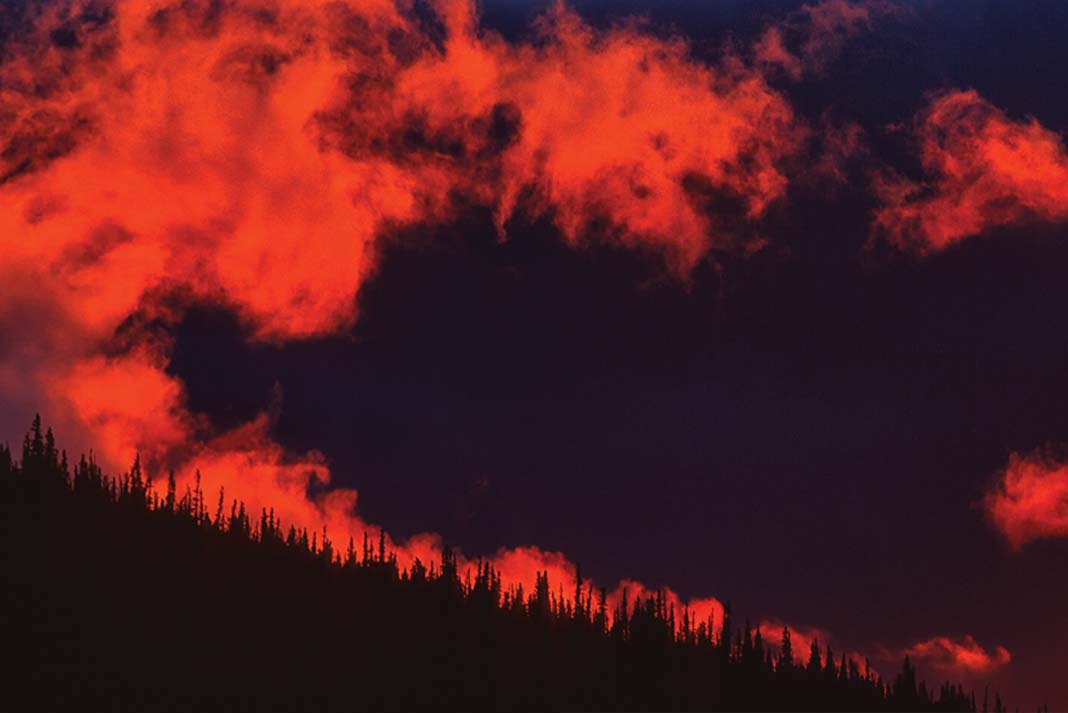
The rubber-boots-on-the-ground approach to ecology is essential in remote landscapes like Alaska’s Southeast. | Photo: Peter Mather

Ultimately, a deep love for wilderness drives paddle-powered science. “I suppose I could have done something in my backyard, but in the larger sense, places like Coronation are my backyard,” muses Avery. Andis is philosophical about his chosen craft. “I think doing our work by kayak rather than by floatplane or motorboat is what the writers of the Wilderness Act would have wanted,” he says.

Even as SCS continues to disseminate the Outer Island Survey findings, fundraising is underway for upcoming expeditions. Meanwhile, on Coronation Island, mysteries remain. “Some years we see tons of wolf sign, and then nothing for five years,” notes the Forest Service’s Tory Houser. “What happens? Does the population crash? Do they swim to other islands?” Someday, someone will find out. They might arrive by kayak. One of them might be you.

Extreme citizen science tips

1 Do your research

Make finding scientific opportunities a part of your trip planning. “Is there a friends group? Is there a land manager? Usually the answer is yes, but most people don’t plan ahead or make contact,” says conservationist Adam Andis.

2 Don’t be intimidated

“We were afraid we wouldn’t be taken seriously,” says Steve Weileman of The Ikkatsu Project. “All of a sudden, there were seven PhDs who wanted to meet with us. They thought we were rock stars.”
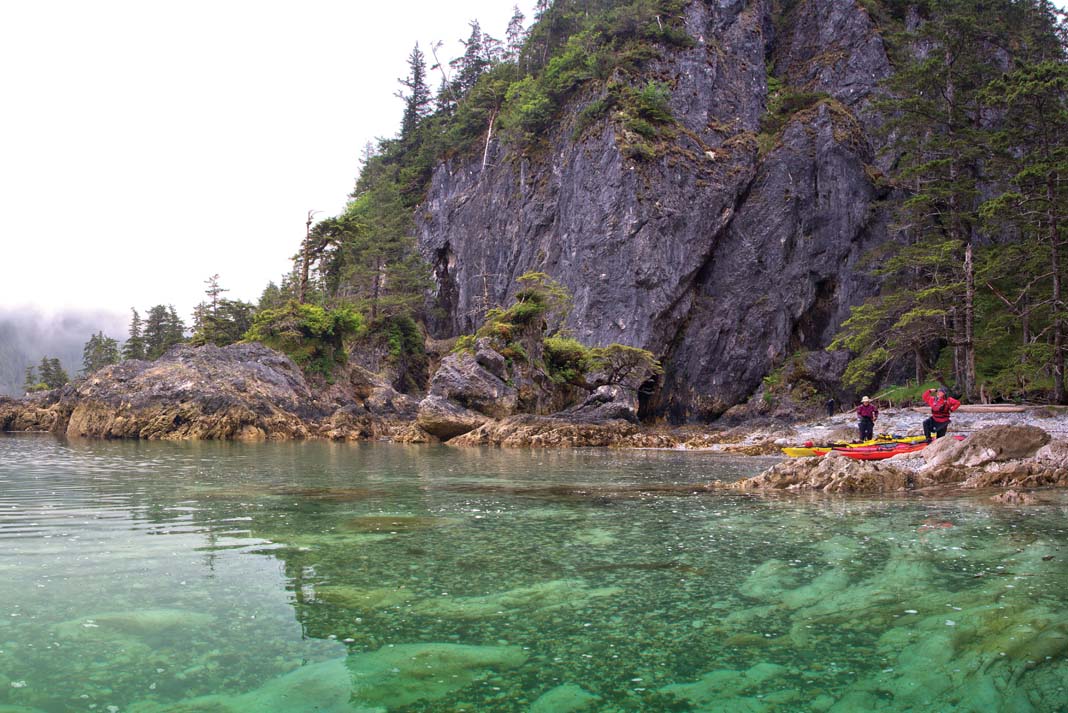
The Outer Island Survey team landed on every beach to collect data no one else could. | Feature photo: Adam Andis

3 Make it a party

“It’s harder to work with individuals than with groups, for reasons ranging from communication to liability,” says the Forest Service’s Tory Houser. Working with clubs and shops can provide people power and a social component.

4 Use your voice

Let decision makers know you value wild places. “Any time you visit public land, write a quick email that says you appreciate that place and send it to two people: the land manager and your elected official,” says Andis.

Scientists in sprayskirts

From urban waterways to the planet’s most remote coasts, paddlers turned citizen scientists are using kayaks to bring back findings no one else can. Here are a few to look out for:
citizen science kayaker paddles with yellow ghoul doll tied to the bow of his boat
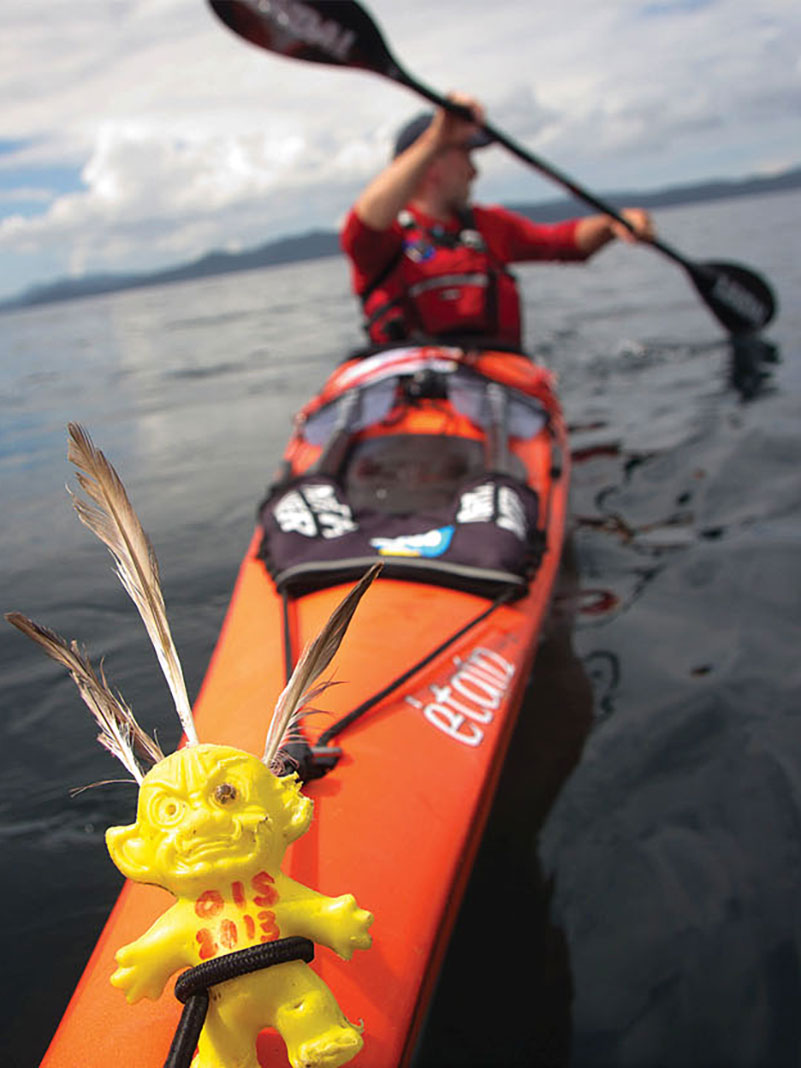
Outer Island Survey team member Rob Avery’s ghoulish alter ego. | Photo: Adam Andis

Adventurers & Scientists for Conservation matches outdoor recreationists with scientists who need data from the field.

Center for Coastal Margin Observation & Prediction uses a sensor-laden kayak to collect data on water quality and algae blooms in the Columbia River Estuary.

The Ikkatsu Project tracks tsunami debris for NOAA on the Olympic and Aleutian coasts.

The Kamchatka Project, a crack kayak team led by Bryan Smith, collected hydrologic and water quality data on pristine rivers in the Russian Far East in 2010.

U.S. Forest Service Kayak Rangers in Tracy Arm-Ford’s Terror Wilderness near Juneau, Alaska, monitor air quality emissions from cruise ships.

Margo Pelligrino, a self-styled “stay-at-home mom who paddles for the ocean,” collected microplastic samples on outrigger journeys along the Atlantic, Gulf and Pacific coasts between 2007 and 2010.

Forest Succession Study at Stanford University used sea kayaks in the summer of 2012 to study the ripple effects of Alaska yellow-cedar decline linked to climate change.

The Cetacean Society and Bay Area Sea Kayakers collect observations of harbor porpoises, which have returned to San Francisco Bay after a 65-year absence.

Willamette Riverkeeper volunteer paddlers monitor water quality on Oregon’s Willamette River.
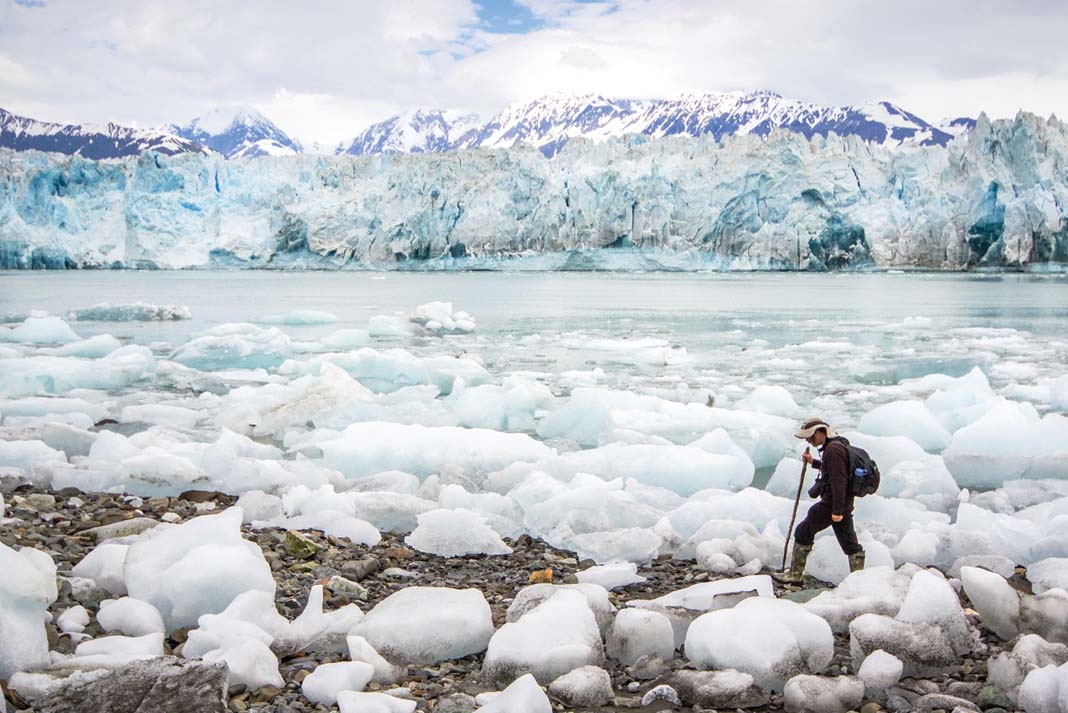
Neil Schulman is a kayaker, writer and co-founder of the Confluence Environmental Center in Oregon. He lived in Southeast Alaska long before cellphones or Google Earth.
Cover of Adventure Kayak Magazine Spring 2014 issueThis article was first published in the Spring 2014 issue of Adventure Kayak Magazine. Subscribe to Paddling Magazine’s print and digital editions, or browse the archives.


The Outer Island Survey team landed on every beach to collect data no one else could. On Coronation Island, Paul Norwood makes a botanical inventory. | Feature photo: Adam Andis

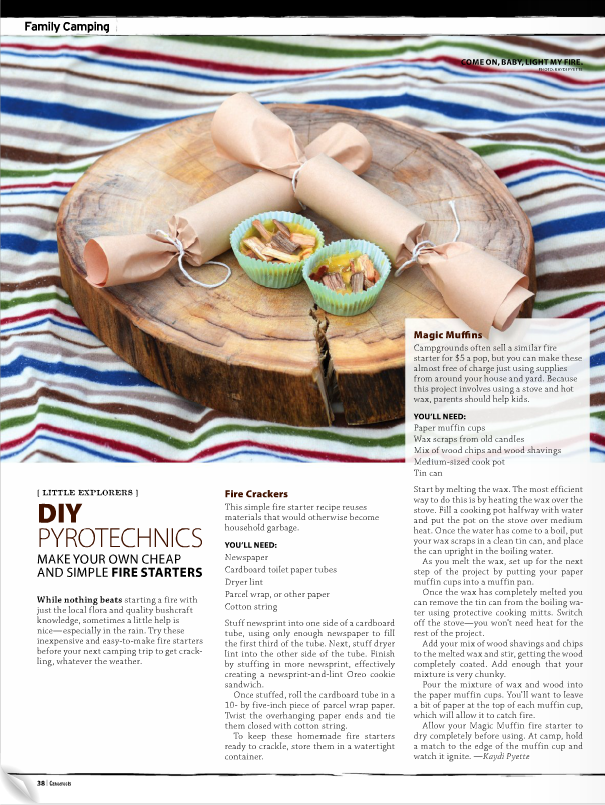
 

DIY Fire Starters

Photo: Kaydi Pyette
Homemade firestarters
This campcraft article about how to make homemade fire starters was first published in Canoeroots and Family Camping magazine. 
While nothing beats starting a fire with nothing but the local flora and quality bushcraft knowledge, sometimes a little help is nice—especially in the rain. Try these inexpensive and easy-to-make fire starters before your next camping trip to get crackling, whatever the weather.
 

Fire Crackers

This simple fire starter recipe reuses materials that would otherwise become household garbage.
 
You’ll need:

Newspaper

Cardboard toilet paper tubes
Dryer lint
Parcel wrap
Cotton string

Stuff newsprint into one side of a cardboard tube, using only enough newspaper to fill the first third of the tube. Next, stuff dryer lint into the other side of the tube. Finish by stuffing in more newsprint on that side, effectively creating a newsprint and lint Oreo cookie sandwich.

Once stuffed, roll the cardboard tube in a 10- by five-inch piece of parcel wrap paper. Twist the overhanging paper ends and tie them closed with paper string. Ta da—your fire starter is complete.

Magic Muffins

Campgrounds often sell a similar fire starter for $5 a pop, but you can make these almost free of charge just using ingredients from around your house and yard. Because this project involves using a stove and hot wax, parents should help kids.

You’ll need:

Paper muffin cups
Wax scraps from old candles
Mix of wood chips and wood shavings
Medium-sized cook pot
Tin can

Start by melting the wax…


Screen_Shot_2014-04-24_at_2.13.08_PM.pngContinue reading this article in the digital edition of Canoeroots and Family Camping, Spring 2014, on our free iPad/iPhone/iPod Touch App or Android App or read it on your desktop here.
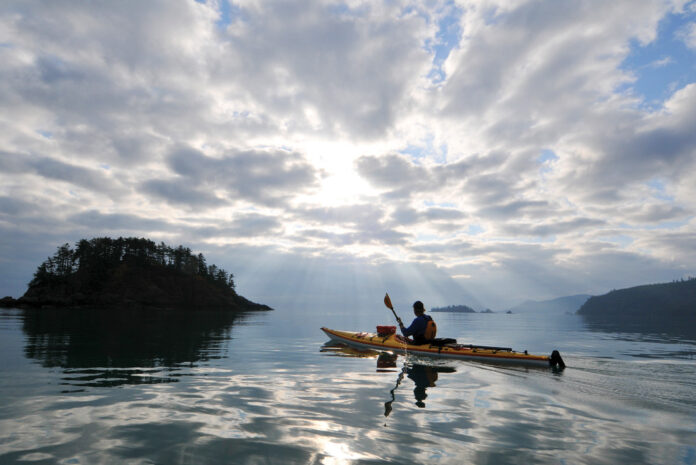
 

Story Behind the Shot: Siren Song

Story Behind the Shot: Siren Song | Photo: Dave Quinn

All Alone Stone. A lonely islet with a lonely name, a microcosm of Haida Gwaii that sits like a siren in the middle of tempestuous Juan Perez Sound, on the eastern edge of the Gwaii Haanas protected area. Although crowned with a toupee of wind-sculpted spruce, the curved dome of this tiny islet has been stripped bare of vegetation for 30 meters by the fury of Hecate Strait’s storm-driven swell.

For nearly two decades the stone has fired my imagination, calling to me on literally dozens of kayak trips along the more sheltered coast of Moresby Island to the west. As I paddle past, the stone slides slowly by in the distance, encircled by breaching humpbacks, a pod of cruising orcas or a herd of rambunctious dolphins. but I never go out to it.

Until this past summer.

Bruce Kirkby and I were in Gwaii Haanas, British Columbia, for a light and fast, four-day paddle mission, documenting the first traditional Haida monumental pole raising in the park area in 130 years. After leading guided trips in these unforgiving waters, it was sheer delight to be there with a strong paddling partner and no agenda.

Story Behind the Shot: Siren Song | Photo: Dave Quinn

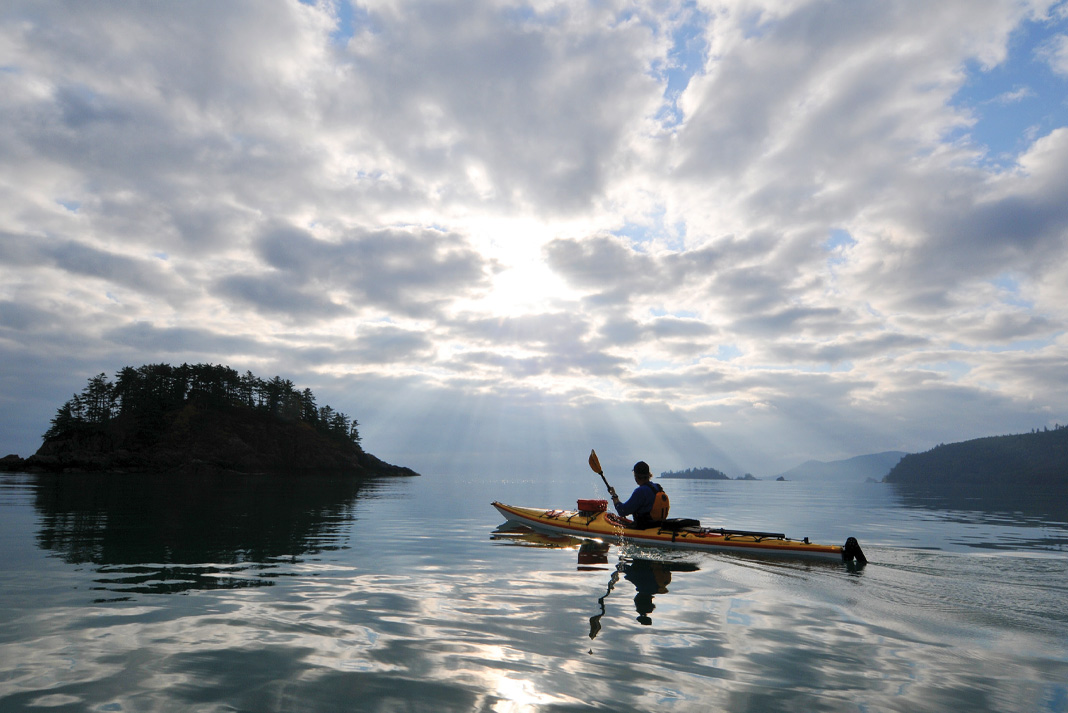
On the second morning, Juan Perez Sound was glassy calm. We reached the All Alone Stone just as God rays burst through cracks in the grey sky. This made for tricky, high-contrast shooting—perfect conditions for the backlighting of this photo. I really wanted to capture the remoteness of the islet, but in the end, i opted for a simple silhouette of paddler and beckoning stone.

it is an image of contrasts: light and dark, hard rock and supple water, a lone paddler isolated in a vast marine wilderness, and a millpond in the stormy north Pacific.


AKv14i1 cover300This article first appeared in the Adventure Kayak, Spring 2014 issue. Subscribe to Paddling Magazine and get 25 years of digital magazine archives including our legacy titles: Rapid, Adventure Kayak and Canoeroots.

Gear: P-Tec Vizz HeadLamp

Photo: Kaydi Pyette
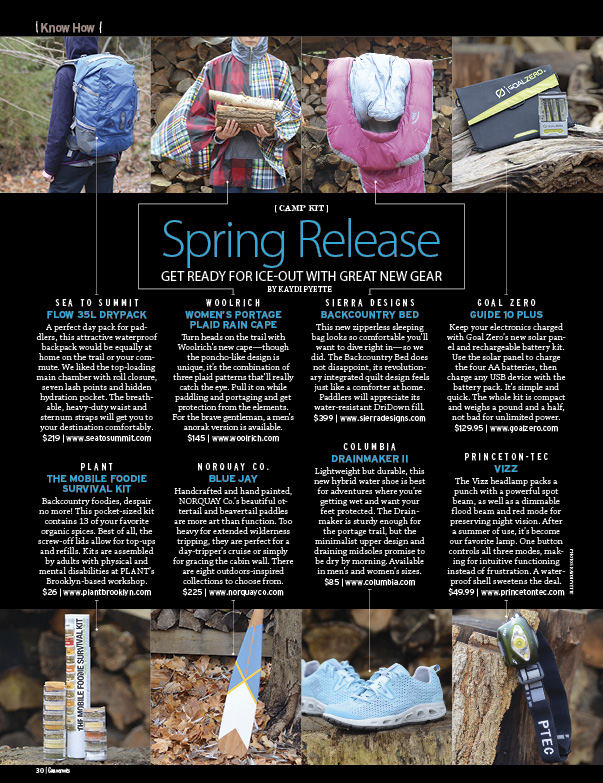
P-Tec Vizz head lamp

The Vizz headlamp packs a punch with a powerful spot beam, as well as a dimmable flood beam and red mode for preserving night vision. After a summer of use, it’s become our favorite lamp. One button controls all three modes, making for intuitive functioning instead of frustration. A waterproof shell sweetens the deal.

SPECIFICATIONS

POWER 165 Lumens
LAMP Maxbright LED, Ultrabright White LED, Ultrabright Red LED
BURN TIME 150 Hours
BATTERIES 3 AAA Alkaline or Lithium
WEIGHT 92 Grams

$49.99 | www.princetontec.com


CRv13i1-30 This article originally appeared in Canoeroots and Family Camping, Spring 2014. Get more great gear reviews by downloading our free iPad/iPhone/iPod Touch App or Android App or read it on your desktop here


Turn Faster with this Sea Kayak Stroke

Photo: Screen Capture
A screenshot of a smiling Leon Somme from their skills video explaining turning strokes for sea kayaking.

Turning a sea kayak effectively is an important skill to acquire so you can quickly change directions. Whether you want to snag a passing wave for a surf, or reach a fellow paddler in distress, the Haghigi is one of the best and quickest methods for getting to your destination point. The Haghigi was a name given to this low-angle stroke by Leon Somme of Body Boat Blade International (hyperlink) as it was taught to him by his dentist, Dr. Haghigi. This instructional video gives you multiple vantage points to begin practicing this kayak stroke without even having to get into your boat. It will not only help you turn a kayak quickly but will test your upper and lower body seperation and allow you to brush the rust off everyone’s favorite – the low-brace.


See more kayak techniques on Body Boat Blade International’s YouTube channel.


Skill Video: Kayak Momentum

Photo: Screen capture Whitewater Troubleshooter - Momentum - Episode 4
Skill Video: Kayak Momentum


When a student who has been paddling for a while expresses that they want better boat control, they are specifically referring to their ability to make the boat move the way they want relative to the current. When they say they want the ability to read water better, they mean they want to know how to identify and utilize how the motion of the boat relative to the current’s momentum will make them move through the river and its features.

In this video, we take a different approach to the typical progression and discuss why the boat moves the way it does through the physics of the hull and our stroke-work.


Chris Wing has been an instructor for as long as he has been a kayaker. He started H2o Dreams out of a desire to spur growth and reverence for paddle sports education all while providing a different spin to the presentation of familiar topics. Visit www.whitewaterdreams.com for more info or follow H2o Dreams on Facebook and Twitter


 Click for more pro tips on whitewater skills. 


Gear: Sea To Summit Flow 35L

Photo: Kaydi Pyette
Sea to Summit Flow 35 L backpack waterproof

A perfect day pack for paddlers, this attractive waterproof backpack would be equally at home on the trail or your commute. We liked the top-loading main chamber with roll closure, seven lash points and hidden hydration pocket. The breathable, heavy-duty waist and sternum straps will get you to you destination comfortably.

Features:


  • Waterproof, abrasion resistant, TPU laminated 420D nylon fabric
  • Top loading roll top main chamber
  • Fully seam sealed construction
  • White interior for improved visibility of contents
  • Internal zippered stretch fabric pocket for small items
  • Ergonomic integral back panel
  • Ventilating, perforated shoulder straps
  • Removable padded waist belt
  • Large top handle for comfortable lifting
  • Easy access hydration compartment


$219 | www.seatosummit.com 


CRv13i1-30 This article originally appeared in Canoeroots and Family Camping, Spring 2014. Get more great gear reviews by downloading our free iPad/iPhone/iPod Touch App or Android App or read it on your desktop here

Frozen Oceans

Words & Photos: Steve Ruskay
Frozen Oceans

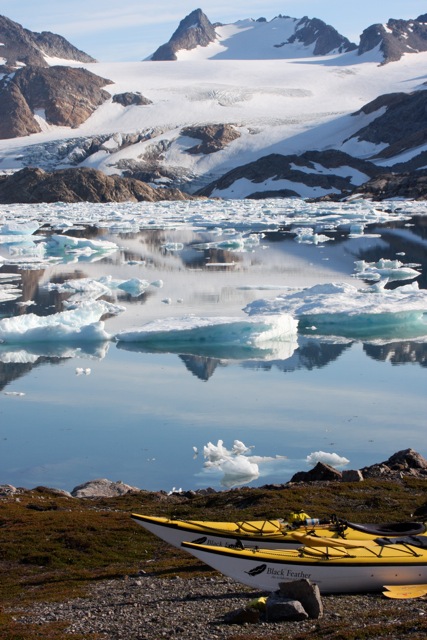
It only took three hours once I witnessed the first bits of ice being pulled into the fjord by the relentless ocean currents. This morning, the Agnassalik Fjord of Eastern Greenland was virtually ice-free. Now, this five nautical mile-wide passage was completely ice choked. Despite my efforts of navigating leads and bulldozing ice with my kayak, I was stuck. Very stuck. What would normally be an easy paddle back to shore was an exhausting struggle through an icy Arctic maze.

Ice has dogged mariners for centuries, brought feast or famine for ancient nomadic Inuit hunters, and stumped modern-day sea kayak explorers. One of the most fascinating and beautiful parts of high Arctic paddling can easily and quickly become one of the most dangerous. There are two main types of ice that the Arctic paddler—or even those stretching the season further south—might encounter, and each presents its own characteristics and hazards.


Sea Ice is the leftover frozen ocean from the previous winter’s freeze up. Chunks of ice, up to two meters (six feet) thick, float low and flat to the water surface. These chunks can drift close together to form an impenetrable pack, or slowly melt away by themselves. Sea ice pieces are generally quite stable, and are not likely to tip over or roll. If necessary, paddling close to sea ice is possible. When sea ice gets packed together, or is moved quickly by wind or current, it presents hazards to kayakers and mariners alike. Even relatively little ice coverage with any ocean currents possesses the ability to crush or strand a kayaker, turning a beautiful paddle into an extreme situation.


Berg Ice is formed on land as a glacier, and is calved from the toe of a tidewater glacier into the ocean. After thousands of years of snow accumulation, glaciers grow to be several hundred meters thick. The Greenlandic Ice Sheet is close to 3,000 meters (10,000 feet) thick, and produces the largest icebergs in the Northern Hemisphere. Icebergs can be as large as several city blocks, and can tower hundreds of meters out of the water. Even with the largest bergs, 75 percent of an iceberg’s mass is below the surface. As an iceberg drifts in the ocean currents, it melts faster below the water line, causing the berg to become top heavy. Without warning bergs can roll over, or even break apart, presenting a spectacular eruption of ice and water. Avoid falling ice and sudden waves by keeping your kayak well away from icebergs.

To determine a safe distance, estimate the iceberg’s height out of the water and double it. For example, if the iceberg is estimated to be 20 meters (65 feet) in height, you should paddle no closer than 40 meters (130 feet) to it. This serves as a rough distance guideline for a minimum safe setback.


 IMG_9316.jpeg


After four days of observing the ice-choked bay from the same campsite, expedition days were numbered. With extremely precise timing of tides, currents and daylight, I was able to inch towards the new expedition objective—getting home! During the brief hour of slack water, and favoring the ebb, the ice along shore became open enough to sneak a pod of kayaks through.

This was no easy task. Each mile took almost our entire paddling window. Once the ebb currents had picked up and began moving thousands of pounds of ice around, sitting in a kayak was the last place you would want to be. Leads start to close, kayakers get separated and kayaks can easily and quickly be crushed.

Each remaining day presented a new, yet familiar challenge. With careful ice and water reading, the expedition had a successful and safe ending, not to mention invaluable lessons and experience from the world’s greatest instructor—the waters of the Arctic Ocean.


Steve Ruskay is a Kokatat Regional Ambassador, and the lead guide at Black Feather – The Wilderness Adventure Company. He spends his summers guiding sea kayak expeditions in the high Arctic.


Expedition Paddler: What’s in My PFD

Marc DeLuca

On March 1, 2014, kayakers Marc DeLuca and Jim Windle finished the entire 1,515-mile Florida Circumnavigational Saltwater Paddling Trail. In this video made during the trip, DeLuca reveals what essential items—stored within reach on his PFD—kept him safe and comfortable on the four-month journey.

The two retired police officers from Charlotte, N.C., began their trip Nov. 2, 2013 at Big Lagoon State Park near Pensacola and finished near Fort Clinch State Park just south of the Georgia border. They are the 12th and 13th paddlers to complete the entire trail since it opened in 2007.

“While thousands of people paddle short segments of the trail each year, we can appreciate the few who have the time and fortitude to paddle the whole thing,” said Donald Forgione, Director of the Florida Park Service, “It’s a huge accomplishment.”

The two men faced extreme weather, large ocean swells and some health scares. On day three, DeLuca’s kayak almost sank in rough seas due to a leaky rear hatch cover. They battled a case of influenza near Miami, and a serious foot infection requiring hospitalization almost sidelined Windle in St. Augustine. The two pressed on, vowing not to give up.

Despite the hardships, what they remember most is the coastal beauty and acts of kindness and hospitality along the way. “People opened their homes to us, offered food, and helped out in various ways,” Windle said. “You find out how important the little things are like a hot shower or clean clothes.”

DeLuca added: “We saw some of the most stunning coastal scenery in the country in a way few others have. Pods of dolphins escorted us almost every day.”

Designated as a National Recreation Trail, the Florida Circumnavigational Saltwater Paddling Trail educates paddlers about Florida’s rich history and fragile coastal environment. Following the Florida peninsula from Pensacola around the Keys to the Georgia border, this 1,515-mile sea kayaking paradise is often described as the saltwater version of the Florida National Scenic Trail. The trail highlights 37 of Florida’s 41 aquatic preserves and offers paddlers access to numerous state, national and local parks, seashores, wildlife refuges, marine sanctuaries and historic sites.

For more information on the Florida Circumnavigational Saltwater Paddling Trail, visit www.FloridaGreenwaysandTrails.com.

A multi-media blog capturing DeLuca and Windle’s experiences can be seen at http://KayakAroundFlorida.wordpress.com/.


High Water Holy Grail

The promised land of triple combos, beatdowns and bliss. Photo: Nick Troutman
High Water Holy Grail

“Dude, Gladiator is in. Get up here as fast as possible.”

The voicemail on my phone was from Joel Kowalski, the Ottawa River local who got me into kayaking 12 years ago.

Dane Jackson and I packed up his Sprinter van, rearranged our schedules for the next three weeks and made our way to the land of epic river waves and equally epic parties—Stakeout, the forefront of big air tricks.

Bare trees, melting snow and the roar of running water marked the end of our 23-hour, Red Bull-fueled migration. First stop, Glad- iator, as Joel had suggested. Our initial scout ended in an impossible discovery: the high water was too high!

Water was coursing through the river valley at levels unheard of in our generation of boaters—perfect for the purpose of our Stakeout started in the early 2000s when a group of kayakers, including Pat Camblin, Marlow Long and the crew of Young Gun Productions, went searching for the biggest river waves ever surfed. With no idea where to go, we joined up with Joel, Pat and Ben Marr and, during some pre-partying, made a wave hunting plan. The following days were spent searching bulging riverbanks for the perfect whitewater.

THE BEST WAVE ON EARTH

The first two waves, Bryson Bowl and Trailer Park Wave, offered lots of air and trick potential, but we wanted even more.

On the fourth day we learned that Lucifer’s was in—a wave known for epic beat-downs and massive air potential. We stuffed six people and nine boats into the Sprinter van and headed off. The wave packed a punch with a meat-eating hole on surfers’ left and an ocean wave-style green shoulder on your right. Insanely aerial tricks and technical combos happened between beatings, until we got some news that made us drop everything and move on.

The Ruins had flooded in with the perfect level to draw big wave paddlers from around the world. The parking lot was filled with boats, shuttle rigs and drying gear.

Those who have surfed it claim it to be the best wave on earth.

It was a blank canvas—Triple Airscrew, Bread and Butter-Airscrew, Airscrew-Bread and Butter, Flash- back-Airscrew-Clean Blunt—only imagination could limit the poten- tial. With triple combos as a goal, we lined up to link as many tricks as possible, throwing continuous combos that hadn’t been seen until recently on almost every ride.

As a final Stakeout miracle, the river Gods granted Gladiator levels just in time for the Ottawa XL, a qualifying competition for the Whitewater Grand Prix. Gladiator, the Holy Grail of Stakeout, has one of the biggest green faces known to man, ridiculous airtime potential and a frightening ledge hole behind it.

After three weeks of endless tricks and a new limit for what can be done in freestyle, it was time to move on. But when spring melt draws the waves back out of hibernation, you’ll find the same group making their migration, flooding to the banks for Stakeout, the greatest time of year.


Scott MacGregor is the founder and publisher of Rapid magazine. 

This article was first published in the Spring 2014 issue of Rapid Magazine. Subscribe to Paddling Magazine’s print and digital editions, or browse the archives.