Home Blog Page 294

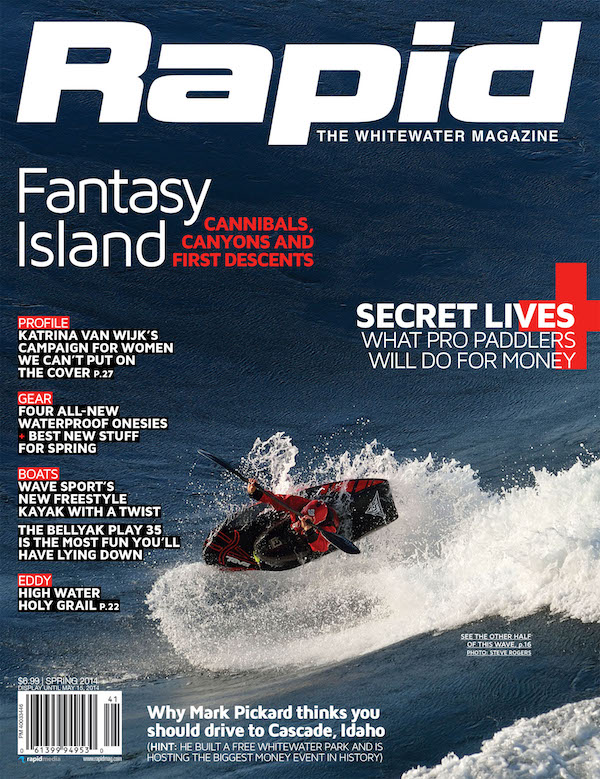
Monster In The Dark

Photo: Steve Shannon
midnight descent

 In the utter darkness of midnight, stage lighting blinded Blair Trotman as he launched a Wave Sport Recon off the edge of the visible earth, plunging into the abyss 60 feet below the lip of Sutherland Falls. Then, from behind a pile of high-end camera equipment, someone told Trotman it was time for take two. And then three.

“Blair was an absolute trooper and hit the falls three times that night to ensure we got the shots we were looking for,” says Steve Shannon, who snapped this photo while tagging along on a video shoot for Dark Water, a short film by Kelsey Thompson.

The lights, dragged to the river by a crew of Revelstoke locals, gave the falls a different feel than the sunlight that lit Trotman’s practice runs earlier that day. It was hardly enough for Shannon to capture the midnight descent.

“This was primarily a shoot for Kelsey, so I was limited to shooting with the available light from his filming lights. This was extremely challenging, as you don’t need as bright of lights for shooting video as you do for capturing still images. I had to push my equipment to the absolute limits.”

He joined Trotman in the water for a moment, though not on purpose. “There were a lot of extra people milling around, getting in the way of shots and making things fairly difficult,” says Shannon. “I ended up exploring alternate angles by paddling to the other side of Blanket Creek…let’s just say I got a little wet.”

Around 1 a.m., as one of the most unique shoots of his career was wrapping up, Shannon grabbed this shot of Trotman, standing below the falls “eyeing up the monster in the dark he had just destroyed.” EMMA DRUDGE


This article was first published in the Spring 2014 issue of Rapid Magazine. Subscribe to Paddling Magazine’s print and digital editions, or browse the archives.

Canoe Review: Souris River Quetico 17 Canoe

Souris River Quetico 17
Souris River Quetico 17 | Photo: Kaydi Pyette

It was somewhere along the nearly dry creek bed I was dragging up that I decided I really liked Souris River’s Quetico 17 Canoe.

Souris River Quetico 17 Canoe Specs
Length: 17’3”
Width at gunwales: 35”
Depth at bow: 20”
Depth at center: 13.5”
Depth at stern: 20”
Weight: 44 lbs (Kevlar), 42 lbs (Carbon-Tec)
MSRP: $2,995 to $3,345

We’d been on the water for eight hours, were 10 portages in and had just spent the last two miles battling a headwind. This creek was supposed to be the easy part—a straight, albeit thin, blue line on the map.

As we weaved through a maze of bulrushes and reeds under a darkening August sky, it was the kind of moment where you might start to think dark thoughts. Instead, I was impressed. This canoe was light, it was maneuverable and it felt durable. Each time we bottomed out we forged ahead on foot, pushing and pulling. Through sucking clay, over river rock and even into a hornet’s nest, the boat never so much as creaked in complaint.

At the end of that purgatory of marshland, I knew I’d found a canoe I could trip with again.

The Souris River Quetico 17 Canoe is designed to handle everything a tripper can throw at it. Its long waterline keeps it tracking straight and makes good time on big lakes. Thanks to two inches of rocker, it’s surprisingly maneuverable for a 17-foot boat, even in narrow, twisting creeks.

“Designers are quick to say that there’s no one design that does everything, but the Quetico series comes close to doing everything really well,” says Keith Robinson, designer and co-owner of manufacturer Souris River Canoes.

In designing the Quetico series, which also includes a 16-foot and 18.5-foot model, Robinson was inspired by the timeless Prospector and mimicked its water-cutting entry lines. However, the Quetico has more tumblehome than the classic design, as well as a flatter hull, making it stable enough that I felt comfortable standing up in it.

We picked up our loaner from Killarney Outfitters and immediately noticed it had enough space for a route far longer than our five days. It’s also noticeably lighter than many boats its size and, at just 44 pounds, only the three-kilometer portage en route seemed particularly arduous.

The translucent quality of the hull is unique to Souris River, a result of their Woven Color technology, which creates the boats’ bright color. Instead of paint and its additional weight, manufacturing begins with a colored polyester cloth. Combined with several layers of epoxy resin, Kevlar and glass, it makes for a very tough hull.

Founded in 1985 on the banks of the Souris River in Manitoba, the Robinsons moved their young company in the early ‘90s to Atikokan, situated on the northern edge of Quetico Provincial Park in Ontario. Back then, Souris River was producing a meager 35 canoes per year. Now they send almost 500 canoes across North America each year.

The Quetico 17 Canoe is one of their most popular models, says Robinson. Given its can-do attitude, it’s no wonder why.

[View all new boats and gear in the Paddling Buyer’s Guide]

Options for trim include black, silver and bronze aluminum.

Featured Photo: Kaydi Pyette

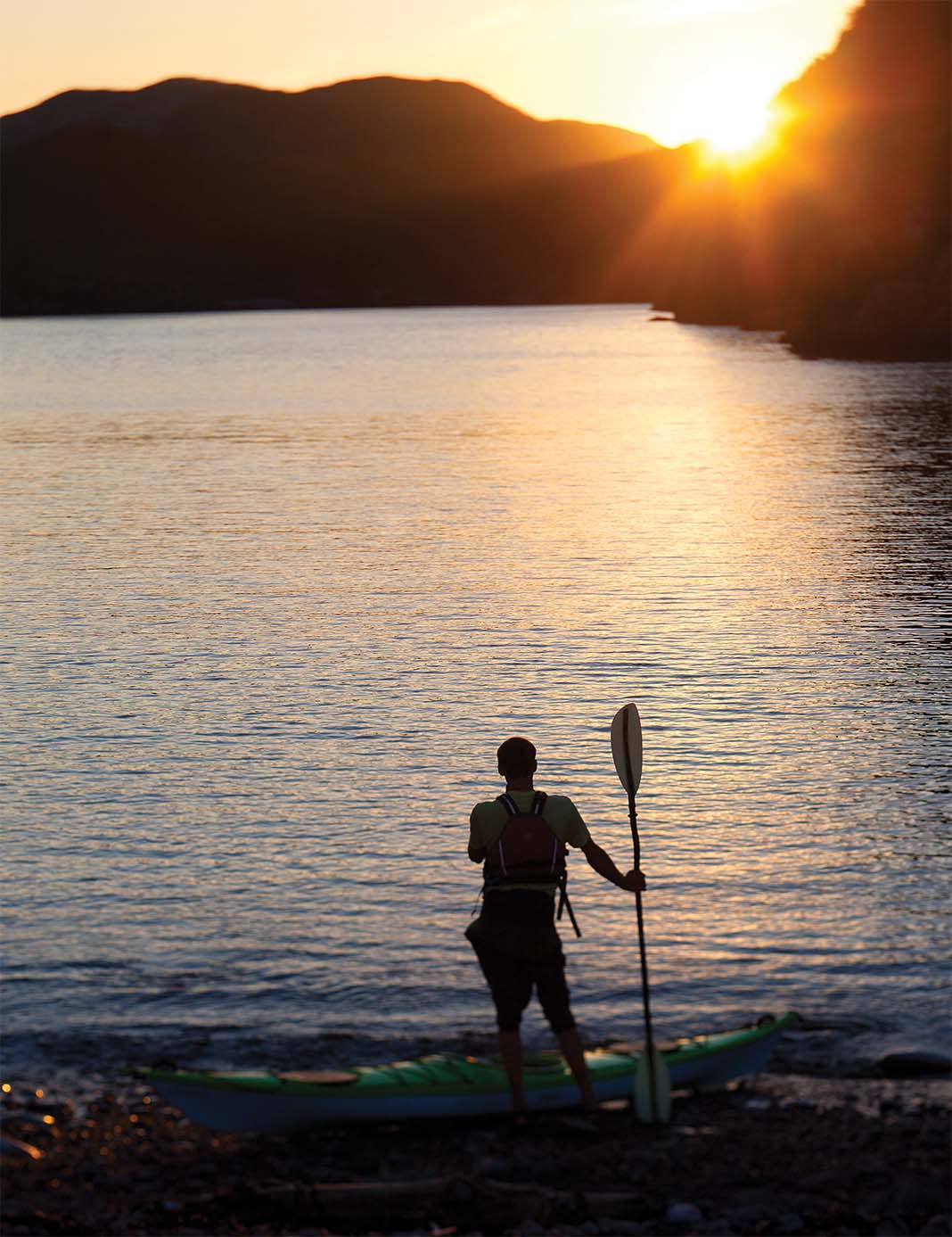
Kayaks speak volumes about love, personalities and dreams

HOMECOMING | PHOTO: RYAN CREARY

“For sale: used Valley Qajariaq. Good condition. Some spider cracking. $1,600.”

Like pets, we choose boats that resemble us, and how we see ourselves. In my case: tall, skinny, serious, slow-twitch for long distances, but with idiosyncrasies—design quirks and bit of a playful side.

Follow these intuitions and they can guide us to a perfect fit. Ignore them at our peril. Some things are inevitable, and we inevitably orbit back to them.

Buying the Q-boat felt like this, like coming home.

I’ve had a few such reckonings in my life. One led me to love. Another to a career. And most recently, back to kayaking—another kind of love.

When I first met my wife I found her irresistible. But she was like a kayak with poor primary stability that I lacked the experience to handle. I couldn’t think straight. One day after I first met her, I was so distracted I cut both of my thumbs in two separate kitchen accidents. Later that same day, I got pulled over for an illegal U-turn and the cop asked about my two bandaged thumbs. “It’s just not your day,” he surmised, and let me off with a warning.

I was overwhelmed and broke off the relationship. A couple of years later, she showed up in my life again and we became good friends. We were out kayaking when she looked at me and said maybe it was time our friendship “evolved.”

We evolved into marriage. The best choice ever, though it felt more like destiny. The certainty that old people tell you about when you’re young: “You’ll just know.”

Careers are like that too. Some things just fit. Sitting at a desk was never for me. So at age 38, I was writing an exam with 3,000 other hopefuls, trying for a spot on the city fire department. It was another case of coming back to what I really wanted, instead of what I thought I should do—better late than never.

Kayaks carry that same you’ll-know-it-when-you-feel-it certainty. Before you even begin shopping for a kayak, some kind of boat will be calling out to you. The salesperson may be saying one thing, the boat on the rack will be telling you its own story. Follow your impulses—they are connected to a deeper self-wisdom. There may be no water nearby, but if you crave a kayak, buy one and it will take you where you need to go.

How else does a boy who grew up next to the highway in an inland city end up becoming a sea kayaker? On a family vacation to Cape Cod, I saw a sea kayak on the wall of a tourist shop. The hatches for weeks’ worth of gear, and the limitless ocean across the dunes, called to me. The hull’s sleek curving lines traced the arc of my deepest longings.

In that instant, I put it all together and understood the pos- sibilities, the predetermination of my growing up, moving to the ocean, buying the longest, fastest, most capacious boat I could find. Fumbling, tipping, learning to paddle. Heading out for weeks on end. Spending 80 days kayaking a remote rainforest coast. Working for this magazine.

Then we bought a house in the city and had two kids. I started selling my kayaks to pay bills, especially the expedition ones I never paddled anymore.

Last year, I wrote about how kayaking didn’t fit with my life anymore (Rock the Boat, Summer/Fall 2013). What use was this sport that had no practical place in our wacked-out modern lives? I thought I was through.

HOMECOMING | PHOTO: RYAN CREARY

AN EMOTIONAL DECISION, NOT A LOGICAL ONE

This is what I’m thinking about as I drive home with the gear swap ad crumpled on the passenger seat and the Q-boat on my roof: we can’t escape who we are. Even when that undeniable truth doesn’t seem to make any sense. I saw that ad and just knew. I drove across town—allegedly just to “check it out”— with the exact asking price in crisp hundreds in my pocket and the roof rack on the car. The seller said he’d had other inquiries, but was waiting for the right person, someone who would appreciate it.

So my backyard is full of boats again. I orbited away from kayaking but now I’m back. I’ve lost count of how many times I’ve been out surfing while the kids are in school.

My wife didn’t get it when I arrived home with my new purchase.

“Why did you buy another sea kayak?” she asked in disbelief, “You never go kayaking. This isn’t a logical decision, it’s an emotional one.”

As if any other decision could have been possible, or true.

I brought her outside to look at it. She helped me lift it off the roof onto the grass.

“Isn’t it a beautiful thing?” I asked, beaming.

She looked at its long narrow form, at my boyish grin, and shook her head.

“Well, it does look like your type of kayak.”

Waterlines columnist Tim Shuff is a former editor at Adventure Kayak and embraces both the playful and serious sides of paddling. 


AKv14i1-1.jpgThis article originally appeared in Adventure Kayak, Spring 2014.

Subscribe to Paddling Magazine and get 25 years of digital magazine archives including our legacy titles: Rapid, Adventure Kayak and Canoeroots.


Mud Pots and Pelicans

Photos: Chuck Graham
Mud Pots and Pelicans

A dark wind line rose across the Salton Sea, howling west to east and engulfing us in frigid whitecaps. Seeking meager refuge on Mullet Island, we slogged three miles further to the craggy, guano-covered islet in California’s largest lake.

After dragging our kayaks and standup paddleboards up the island’s leeward side, we ducked inside the only manmade structure in sight—a bunker-like, roofless cubicle that acted as a much-needed windbreak against the winter chill. Frozen fingers fiddled with maps and GPS, searching for a decent campsite. We were in the midst of exploring the briny, 110-mile shoreline of this bizarre, manmade lake in southeastern California’s Colorado Desert. Our progress stalled, our group of five paddlers crusted in salt and struggling to stay warm, we began to question our sanity.


Filling the Sink

Formerly known as the Salton Sink, flooding on the Colorado River breached levees and dikes in 1905 and again in 1907, transforming one of the lowest elevations in North America into the Salton Sea. The body of sparkling water that eventually developed was a boon for the region that lasted for over 50 years. The Salton Sea became a Mecca for weekenders, boat races, waterskiing and fishing tournaments. Hollywood celebs like the Marx Brothers, Jerry Lewis and Frank Sinatra frequented the sea’s shores. For a while, the Salton was billed as “the next Las Vegas,” at one point receiving more visitors than Yosemite National Park.
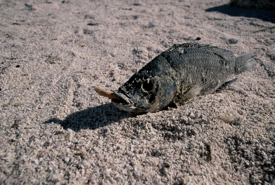
ChuckGraham SaltonSea IMG036But the boom wouldn’t last. More flooding followed, stymieing further development and the resort atmosphere. Over the years, as the floodwaters have receded—and because there’s never been an outlet for the water—the Salton Sea’s salinity levels have skyrocketed. Scorching summer heat evaporates the water, leaving behind natural salts—the sea is now 25 percent saltier than the Pacific Ocean. During the summer when temperatures are consistently at triple digits, there have been mass die-offs of fish. Only the hardy tilapia remains, the sole species able to withstand such high salinity levels.

Come winter though, the Salton is a major stopover for migratory birds, making it an overlooked gem for paddlers. Over 400 species of birds have been documented here, with 80 percent of the entire American white pelican population wintering on the tranquil shores.


Geological Wonders

As we continued to shiver, we could see the plump white birds soaring in V-shaped formations over thermal plumes wafting skyward. To thwart the winds, the pelicans roosted close together on the sea’s knobby peninsulas. 
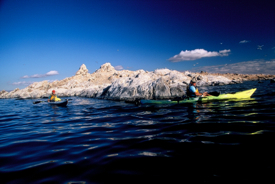
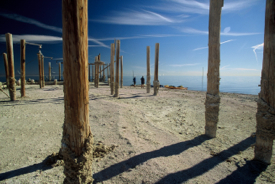
ChuckGraham MulletIsland IMG012Only 100 yards east of Mullet Island was an expansive mudflat where the thermal plumes steamed out of boiling mud pots. The region is a natural geological wonder of extinct and dormant volcanoes and thermal vents. Three miles south of Mullet, black volcanic glass is embedded in the sharp rocks surrounding Obsidian Point.

We found the mouth of the Alamo River a mile south of our windbreak and camped there for the night. The runnel flows up from Mexico and feeds the Salton Sea, one of the few reliable water sources in the region. It was too shallow to paddle, so we waded and portaged our kayaks in ankle-deep water to the river mouth. 

We tucked ourselves in the cattails and watched American avocets, western sandpipers, egrets and great blue herons wade in the shallows, the wind calming down enough for the birds to forage in the salty water and for us to pitch our tents without them taking off like kites.ChuckGraham SaltonSea IMG069
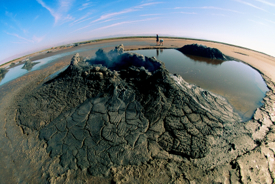
The next morning we paddled back toward Mullet Island, and then hiked across the mudflats to the boiling mud pots. I was barefoot, and the mud surrounding the boiling thermals was cool, but the pots were hot. We stayed upwind of the thermals and noticed we weren’t the only ones enjoying these unique geological features. Some shorebirds were also soaking in the warmth a good distance from their typical briny shoreline habitat.


Navy Site

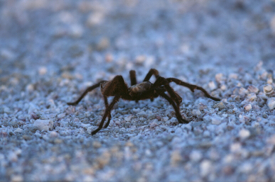
Early the next morning we paddled 12 mile southwest to an abandoned navy site, where expansive sand dunes drifted 300 hundred yards beyond the shoreline. We beached our kayaks in a small cove with amazing views of the Santa Rosa Mountains National Wildlife Refuge to the northwest. Coyotes howled behind us in the well-manicured dunes as a hairy tarantula tiptoed in front of my tent.ChuckGraham Tarantula IMG018ChuckGraham SaltonSea IMG019
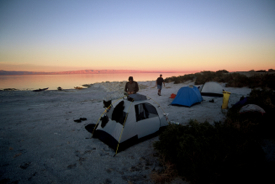
Shooting stars filled the night’s sky as a melody of lapping waves lulled us to sleep. In the morning, pink and purple hues eased across the mountains as we paddled down to the navy site. The scene was apocalyptic: brine-crusted, weather-beaten pilings leaned at drunken angles, cormorant nests clinging to their tops. Rusty, corroded beams lined the dock leading into the water.


Hold the Salt

The Chocolate Mountains loomed on the eastern horizon as we began a pre-dawn 12-mile crossing. Initially we aimed for what appeared to be an oil platform three miles off the shoreline, but as we drew near, we discovered nothing more than a wooden weather observation post ensconced in bird guano and cormorant nests. The desert plays tricks with scale.
ChuckGraham SaltonSea IMG021

ChuckGraham SaltonSea IMG025

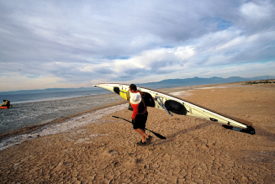
From there it was a long, uneventful crossing to the northeast shore. Halfway across the Salton Sea’s widest point, an annoying southeast wind picked up. Whitecaps sloshed over the starboard side of our kayaks. By the time we reached our destination, our kayaks looked like glazed doughnuts with thick salt crusted over every inch of their decks. 

A large flock of American white pelicans had congregated in the shallows, plunging their yellow beaks in the water. They weren’t alarmed by our presence, barely ruffling their creamy white feathers as we hauled our gear to our trucks near the historic Salton Sea Yacht Club, built in 1962.ChuckGraham SaltonSeaYachtClub IMG039
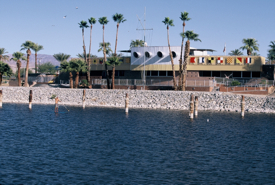
We grabbed our standup paddleboards and paddled inside the harbor beneath the yacht club.  The jetties forced the wind to lie down so we used old pilings standing in the harbor as a slalom course, racing from end to end. For a moment, we could almost imagine the Salton Sea of yesteryear, when glamorous weekenders—not just pelicans—flocked here by the thousands.


If You Go

Camping is of the primitive variety except at the Salton Sea State Recreation Area, and seven miles south at the Salt Creek Kayak Camp. Constructed by the Department of Boats and Waterways, the camp has shade, water, barbecues, showers and bathrooms. There are racks to store kayaks and standup paddleboards.ChuckGraham BombayBeach IMG001
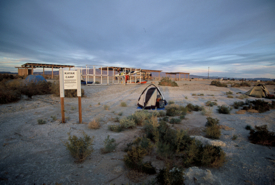
The best time to paddle the Salton Sea is from winter into spring, when bird numbers peak and temperatures are tolerable. Expect daytime temps in the 70s (Fahrenheit); nighttime temps can drop to freezing. 

For more information on the Salton Sea, visit www.parks.ca.gov.


Chuck Graham is a paddler, photographer and freelance writer in Carpinteria, California. See more of his work at chuckgrahamphoto.com


 

Muskoka River X

Photo: Rich Swift / Algonquin Outfitters
Muskoka River X | Photo: Rich Swift / Algonquin Outfitters

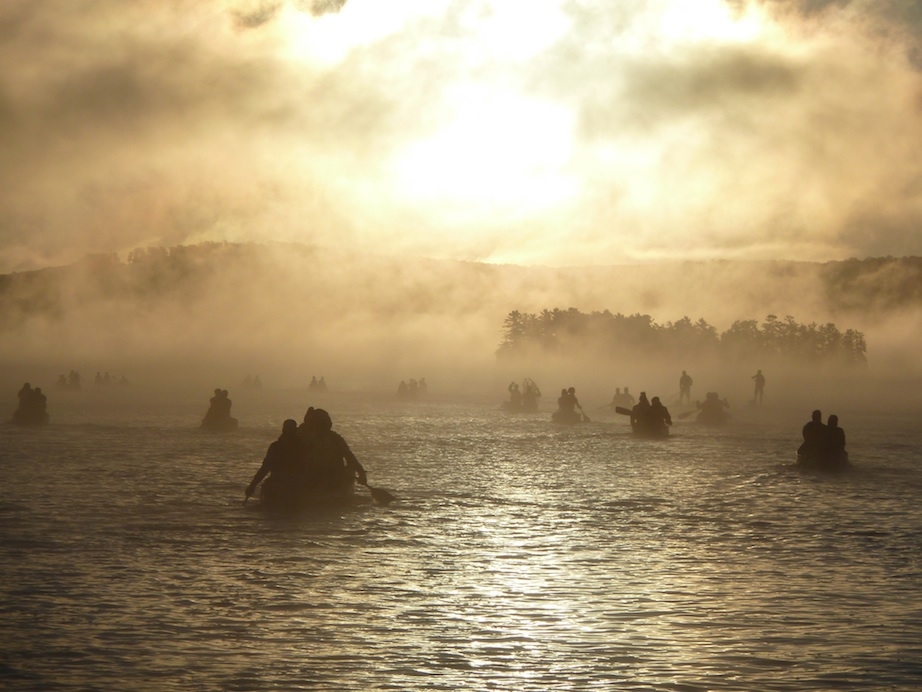
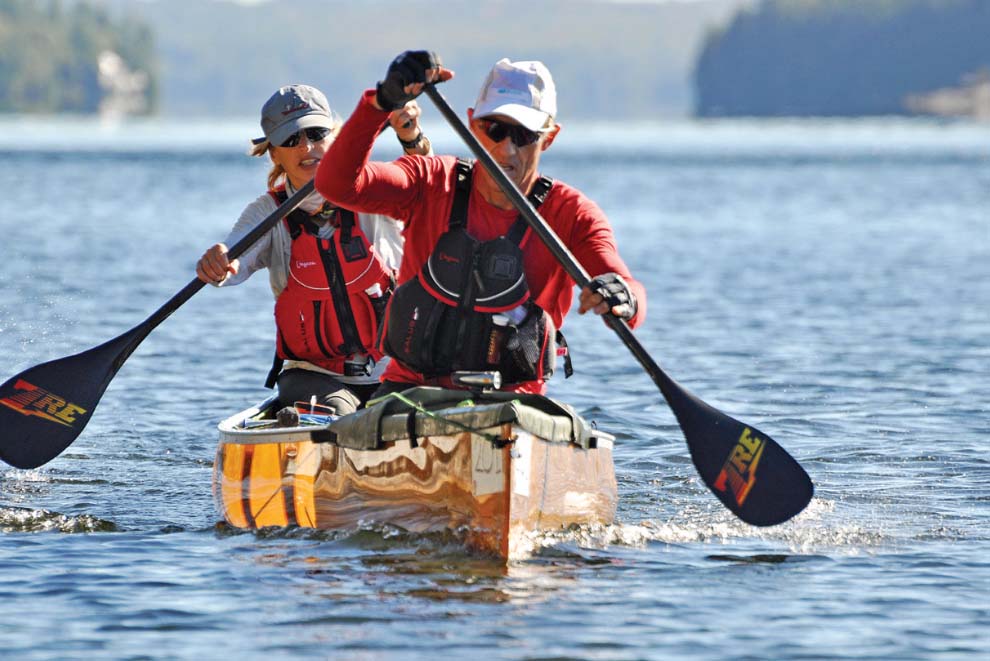
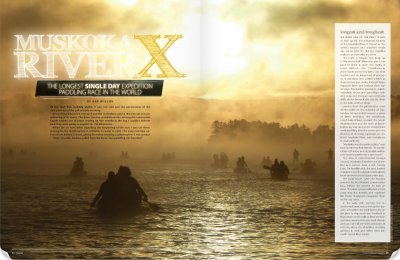
At the start line, nobody spoke. It was too cold and the anxiousness of the race permeated the pall of early morning. Misted breath hovered over each paddler as I looked around. We were an eclectic gathering of 50 teams. The three standup paddleboarders among the canoes and kayaks looked out of place, rearing up like wraiths in the fog. I couldn’t fathom how they were going to stand it for 130 kilometers. When the air horn blew, signalling the beginning of the race, I just sat there, waiting for the initial explosion of blades in water to calm. The early morning sun burst from behind a cloud, giving the misty morning a golden glow. It was surreal.

“Hap!” my wife, Andrea, called from the bow. “Get paddling, I’m freezing!”

Longest and Toughest

We were one of the first teams to sign up for the inaugural running of the Muskoka River X, touted as the world’s longest and toughest single day canoe race. Its 24-hour deadline makes it an event like no other.

The math is simple: Just keep up a five-and-a-half kilometer per hour pace to finish in time. The reality is more difficult—the 130-kilometer route tracks across four lakes, two river systems and six kilometers of portages. It translates into 23,466 strokes at three meters per stroke, through large, exposed lakes and remote river waterways. Navigating portages, rapids, waterfalls, chutes and gravel bars with only map and compass are necessary skills; all the better if you can do them in the dark, without sleep.

Navigating portages, rapids, waterfalls, chutes and gravel bars with only maps and compasses are necessary skills; all the better if you can do them in the dark, without sleep.

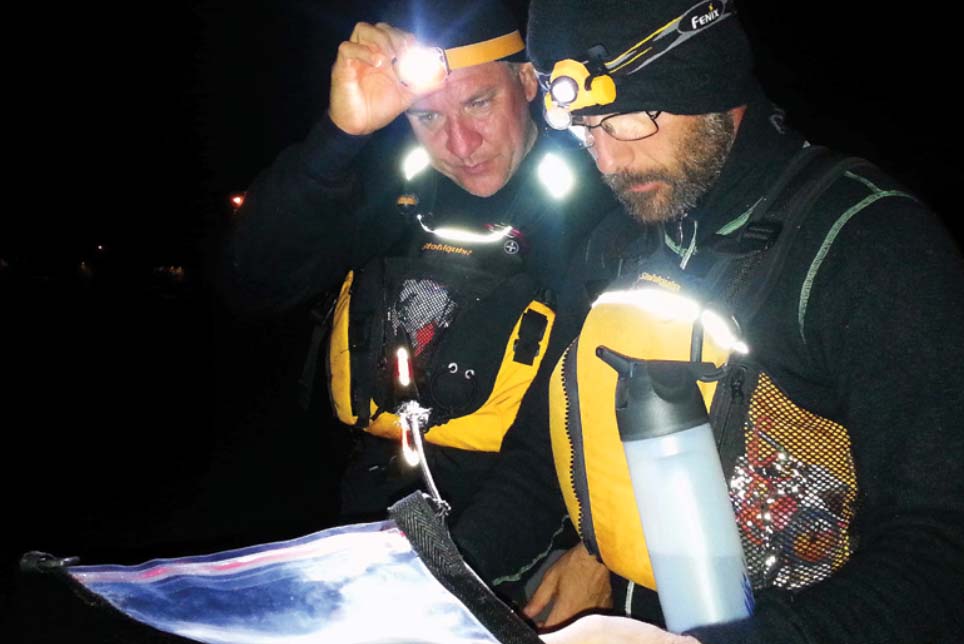
Leaving from the picturesque town of Huntsville on the morning of September 14, racers first crossed a series of lakes, including the notoriously rough Lake of Bays, to reach the South Muskoka River and the town of Brace-bridge. By that time, most competitors were paddling into the sunset and the final leg of the loop, upstream on the North Muskoka River, was completed in total darkness.

“Muskoka was the perfect place,” says race co-director Rob Horton. “Its combination of history and accessible wilder-ness made it perfect for a race route.”

The area is quintessential cottage country. Muskoka chairs line the shoreline and canoes have a rich history here. I’m familiar with the area, having mapped it out for a book I wrote about local canoe routes a dozen years ago.

The local routes were the hunting grounds for First Nations communities long before the coureur de bois arrived. The river systems afforded access deep into the interior, and explorers like David Thompson navigated them on his way west.

In the early 20th century, the re-source-rich area was a mecca for loggers, who plied the thick forests for gi-ant pine to ship south and hemlock to float down to the mills to feed the burgeoning tanning industry. Look closely, and you can still see some remnants of the industry along the shoreline, mooring anchors in rock and felled trees be-neath crystal blue waters.

Photo: Rich Swift / Algonquin Outfitters
Muskoka River X | Photo: Rich Swift / Algonquin Outfitters

Self Reliance

Race day excitement had begun the night before with a mandatory gear check in.

“All teams are required to carry essential wilderness tripping gear for the duration of the race,” explained Horton. That included sleeping bags, a tent, a water purifier, extra clothing for warmth and food for 24 hours or more. Looking around at the lightweight gear spread out in front of other participants, I noticed Andrea and I had considerably more—enough for three days out, in fact. Four decades of tripping in Canada’s harshest environments taught me to be prepared. We’d chosen to secure our gear in two watertight barrels—also not the norm for racing, I noticed.

The race’s mantra of self-reliance was inspired by the adventure racing world, which both Horton and co-director Mike Varieur are regular participants in. “We learned from other races,” says Varieur, who came up with the idea for the River X a year and a half ago. “I did all the logistics work and course design, while Rob [Horton] was the technology guy.”

Horton created a virtual map, so that armchair spectators could follow each team on the race’s website. Because of the remote route and potential risks, such as hypothermia, capsizing in rapids and night paddling, SPOT satellite messengers were part of the required safety equipment. Having the ability for racers to hit an SOS button for immediate rescue was reassuring to all involved—and some would use it before the day was done.

I couldn’t fathom not doing a proper J-stroke. That alone slowed us down by two kilometers an hour. It was enough to make a marathon paddler cringe.

Reflections

I was mid-route when I started reflecting on the differences between marathon paddlers and wilderness trippers. Trippers typically use a J-stroke for correcting steerage; racers use the “hut” stroke, switching sides constantly to keep the canoe aligned. They also use bent-shaft paddles, curved to eliminate the unproductive reach of the traditional blade. I couldn’t fathom not doing a proper J-stroke. That alone slowed us down by two kilometers an hour. It was enough to make a marathon paddler cringe.

Though sanctioned by the Ontario Marathon Canoe and Kayaking Race Association—necessary for insurance—few OMCKRA members participated. All crafts in the River X had to have the capacity to carry wilderness tripping supplies, so traditional racing shells were disallowed.

The end result was that the race attracted casual paddlers and trippers, many without any racing experience. Most of the racers were just your average canoe trippers with the crazy notion that paddling and portaging 130 kilometers in one day would be fun.

Stroke eighteen thousand, four hundred and thirty-nine... | PHOTO: BILL LANNING
Stroke eighteen thousand, four hundred and thirty-nine… | PHOTO: BILL LANNING

Pushing Upstream

Stroke after stroke can get the mind wan- dering. As the dim haze of the evening approached, I reflected on how history has a convoluted way of repeating itself, at least when it comes to canoeing. Marathon distances were the driving element governing success or failure during the frenzy of the fur- trade and exploration era.

In 1828, Sir George Simpson, governor of the Hudson Bay Company, pushed his heavily laden canoe upstream 630 kilometers on the Hayes River in Manitoba, from York Factory to Lake Winnipeg, in six days. Today, the same trip going downstream takes an average of three weeks.

Simpson was known for his physical stamina when traveling through the wilderness. In his day, paddling great distances in a short time meant profit for the company; paddlers were paid to push the limits of endurance. Today, marathon paddling is something entirely different; now, we gladly pay for the opportunity to test our mettle and see if we’re as tough as our forefathers.

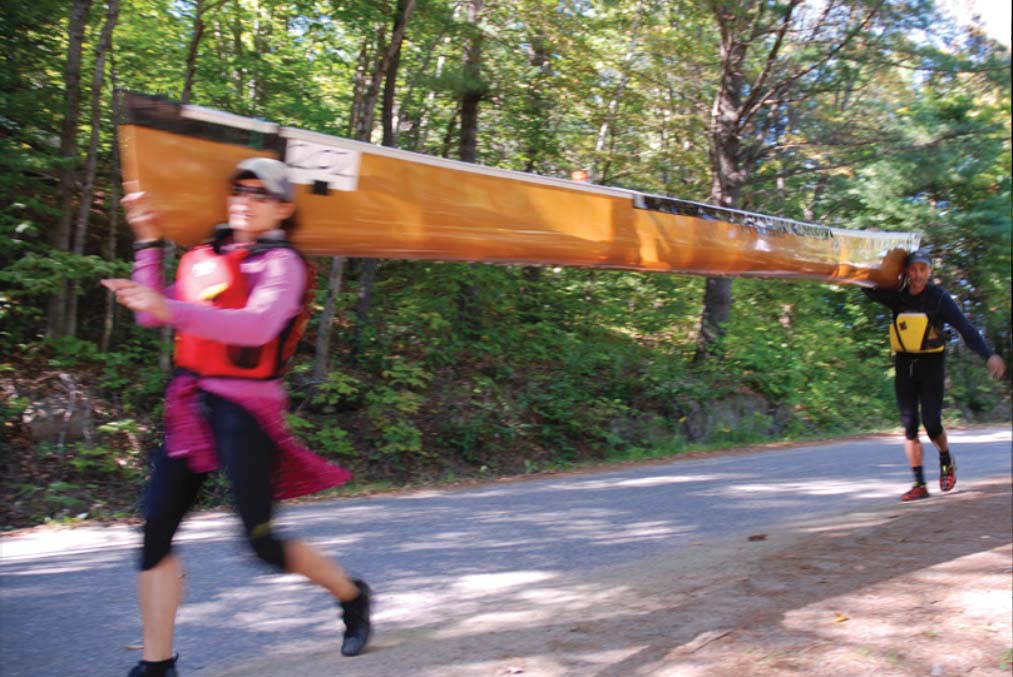
Just one of 20 portages.| PHOTO: BILL LANNING

Day’s End

By the time we reached our third and final checkpoint in Port Sydney at 2 a.m., we were just 20 kilometers from the finish line and chilled to the bone. We’d arrived after hours of slogging upstream through shallow rapids. A weak moonlight had illuminated the shore briefly, but once temperatures dropped below freezing the river fog consumed everything. Icy tendrils worked their way down our collars and through our carefully planned layer systems.

The fog thickened until the spotlights affixed to the bow of the canoe were useless and we were forced to feel our way upriver in total darkness. At the checkpoint, we were grateful to warm ourselves by a crackling campfire. Family had come out to cheer us on and while we chatted, rested and snacked, shore-side cottagers cheered other racers as they came and went.

Officials told us close to a third of the teams had quit—some had gotten turned around, some were lost and others were just dead tired and found solace by sleeping in the forest, waiting for sun-up.

With our 24-hour deadline approaching and committed to finishing, we paddled away from the checkpoint’s warmth. But back on the water, it wasn’t long before we started to drift into sleep, paddle in hands.

“It was scary,” Andrea later told me, “it was like falling asleep at the wheel.” We would paddle a few strokes then, leaning on the gunnels, fall half asleep and drift. And we continued that way for some time.

“It was scary,” Andrea later told me, “it was like falling asleep at the wheel.” We would paddle a few strokes then, leaning on the gunnels, fall half asleep and drift. And we continued that way for some time.

It was the brightening sky in the east that revitalized us. We spent the last hour of the race in a sprint, J-stroke and all. We crossed the finish line just as the sun peaked over the horizon, 14 minutes inside of the 24-hour cut-off. Exhaustion was forgotten in the excitement of success. Aside from the race coordinators, there was little fanfare. Most of the teams wait- ed for a post-race breakfast at a nearby restaurant, and we wasted no time in joining them.

Lost and found. | PHOTO: COURTESY GREG GOULTER/ALGONQUIN OUTFITTERS

Damage Report

As I dug into a plate of bacon and eggs, we got the damage report.

By morning, six emergency calls had been placed. Two were from SPOT panic buttons, one due to a shoulder injury and another because of exhaustion. Three teams also called for assistance via cell phone, due to being lost or exhausted.

“The sixth team was heading in the wrong direction and we were watching them on the live tracker and sent a team to intercept them,” said Varieur. “Only one person was taken to the hospital, and that was for pre-cautionary measures.”

Blowing away even the race organizers’ expectations, veteran marathon paddlers Bob Vincent, 71, and bow mate Dean Brown, won first place, clocking in at 14 hours and 12 minutes.

“Our plan was to never stop paddling except for the portages,” says Vincent of their strategy. Even snacking was done in shifts.

And while Andrea and I didn’t come in first, we did receive an award of our own—we won the prize for most gear carried. Trippers to the bone, our three-day supply of food, hot coffee and gear had not gone unnoticed.

Post-breakfast, paddlers shared stories of their difficulties and successes on route—tales of rugged portages, exhaustion-induced hallucinations and hidden river entrances. We talked about why we had signed up this year and why, even though many had sworn just hours prior that they’d never do it again, most of us probably will.

It was a kayaker, Allyson McDonald, who summed it up best: “If you’re not moving, then you’re dying.”

Aside from the occasional gig playing advisor to Hollywood, teaching Pierce Brosnan how to throw a knife and paddle a canoe, Hap Wilson is an author and artist. Over his four decades spent as a writer and researcher, he has published 12 books. www.hapwilson.com.


Screen Shot 2014-03-20 at 10.43.51 AM

This article originally appeared in Canoeroots and Family Camping, Spring 2014. Subscribe to Paddling Magazine’s print and digital editions here, or download the Paddling Magazine app and browse the digital archives here.


Kayak: A Repair Saga, Part II

Words & Photos: Dene Berman
Kayak: A Repair Saga, Part II

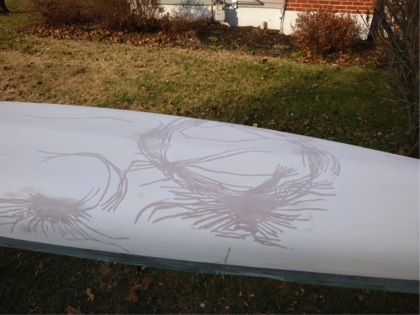
Some boat repairs are of the on-water emergency variety; other fixes may allow for minor gelcoat touch-ups done at one’s leisure. This story is about one boat so badly damaged that it was thought to be beyond repair.


Don’t miss the first installment of Dene Berman’s two-part repair guide—where we look at making structural fiberglass repairs and beginning to mend spider cracks.


Spider Cracks

What is needed is a waterproof bonding agent that will adhere to the fiberglass and the existing gelcoat, expanding and contracting with temperature changes at the same rate as the gelcoat. Material of this sort is referred to as a fairing compound, and can be shaped to blend in with the surrounding areas. The repaired area can then be determined to be “fair” to one’s eye and touch.

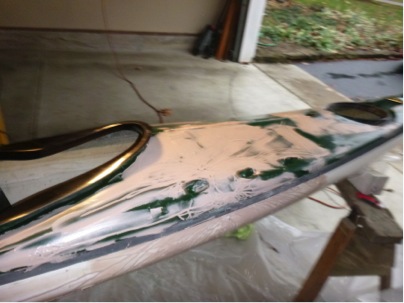
FairingUnable to find a satisfactory compound, I contacted the traditional source for all things needed to keep a boat supplied – a ship chandlery. Jamestown Distributors in Bristol, Rhode Island, was very helpful. Their fiberglass repair specialist knew just the right product to recommend. I took his advice and purchased Quikfair fairing compound by System Three. This product contains microbaloons, hollow glass micro-spheres that help create a strong yet lightweight fairing compound. This two-part epoxy putty is intended for use above or below the waterline, has a pot life of 10 minutes and can be sanded in a few hours. I mixed small, golf-ball sized batches, and used auto body putty spreaders to apply the mixture. The result looked like I was frosting a cake.

 

Sanding

Removing the excess fairing compound is a matter of sanding. Lots of it. Start with an orbital sander and 80-grit paper and work toward 220-grit. The goal is to use the original gelcoat as the guide for when to stop sanding. While that yielded rough results, it also revealed holidays, or missed spots, in the outcome as well as ridges and valleys in the finish. Nevertheless, the overall outcome of this stage was beginning to take the shape of an intact boat.

Sanding


Priming and Painting

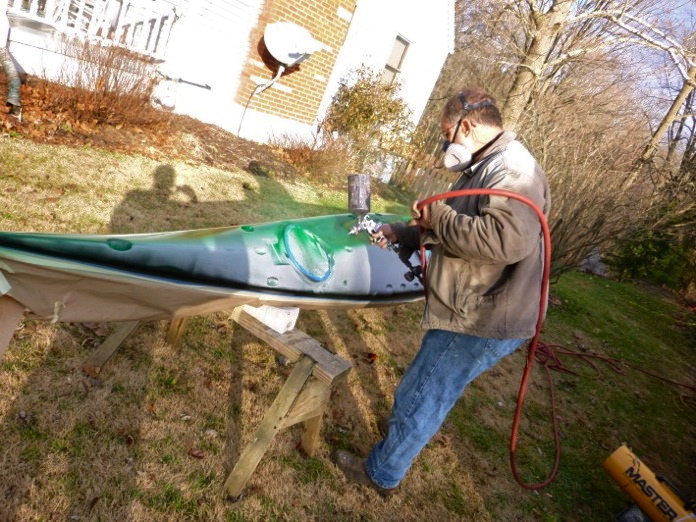
My neighbor Dave is a car body paint expert who, out of his van, goes around to car dealers, making the finish of cars look as near to new as possible. We talked about the right products to use, settling on two-component acrylic finishes that are appropriate for surfaces like auto bumpers – strong, resilient and weatherproof. We started with a primer coat that revealed many of the imperfections that made my fairing compound not quite so fair to the eye. This was followed by the use of thin coats of the fairing compound and lots of detailed sanding, even to the point of removing much of the primer.

Next was the final paint stage of painting the hull and deck. We chose Spies-Hecker two-component acrylic urethane mixing colors, scale-weighed to tenths of grams, to which bonding and curing agents are added.  For the finish coats, lots of thin coats are sprayed, with light sanding, close inspection, minor adjustments and more spraying. The process may seem easy, but involved masking off areas of the boat and finding the right colors – we started with the NDK color chart and modified from there. Waiting for the right temperatures, putting the boat inside during the rain, getting out the propane heaters when the temperature plunged, re-doing the mixture when the yellow hull was too translucent… Seeing Dave with his spray gun was like watching magic as he transformed the boat into a shining gem.

RepairMain


Final Touches

Repaired and painted, the boat needed only new hatch covers, stickers, deck lines and bungees to complete the transformation. With the help of suppliers and friends, what had been a rotting hull held prisoner for years is now a sleek craft that again awaits the spring thaw to carve beautiful lines in the water. This project is proof that an avid kayaker can resurrect a lost cause into a sea-worthy, beautiful craft.  -Dene Berman

Final

Final2

History of Kayaks

This entertaining film tells the remarkable and romantic 43-year history of Eddyline Kayaks, as well as the 5,000-year-old story of kayaking itself. Learn about the resourceful people who built the first kayaks, watch a modern thermoform kayak take shape from a few sheets of shiny plastic, see retro footage from the early days of modern kayaking, and enjoy the love story that is central to Tom and Lisa Derrer’s family-owned kayak company.


Gear: Mobile Foodie Survival Kit

Mobile Foodie Survival Kit by PLANT. Photo: Kaydi Pyette
Mobile Foodie Survival Kit by PLANT

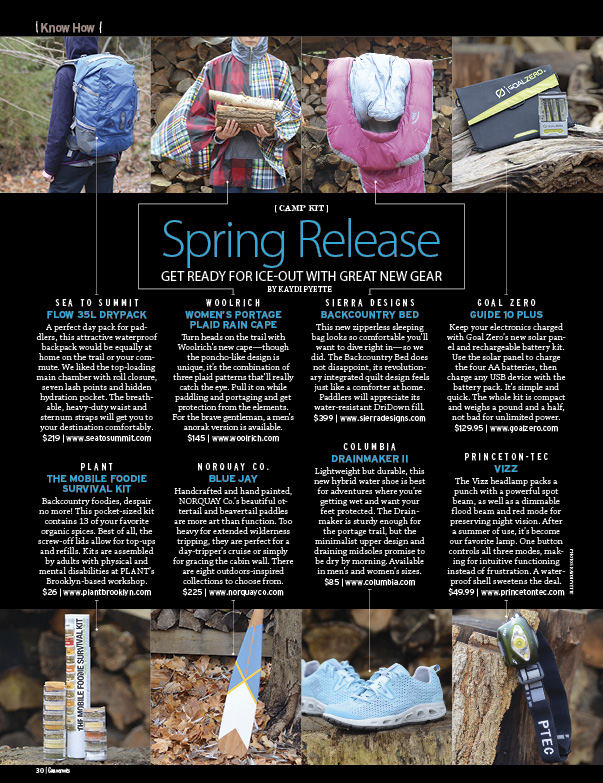
Backcountry foodies, despair no more! This pocket-sized kit contains 13 of your favorite organic spices. Best of all, the screw-off lids allow for top-ups and refills. Kits are assembled by adults with physical and mental disabilities at PLANT’s Brooklyn-based workshop.

Contents: organic basil, organic cayenne, organic curry, organic dill, organic granulated garlic, organic ginger, organic cinnamon, organic oregano, organic thyme, organic granulated onion, sea salt, organic black pepper, organic rosemary.

The herbs and spices have been certified by the Department of Agriculture as products that are grown entirely without antibiotics, hormones, pesticides, irradiation or bioengineering. The pots are BPA-free and fully recyclable, and tubes are made of post-consumer recycled paperboard.

$26 | www.plantbrooklyn.com 


CRv13i1-30 This article originally appeared in Canoeroots and Family Camping, Spring 2014. Get more great gear reviews by downloading our free iPad/iPhone/iPod Touch App or Android App or read it on your desktop here

Butt End: Wild Child

Photo: Kevin Callan
Butt End: Wild Child

Getting in touch with the wilderness has never been more important—and harder—than in our ultra-connected world. Kevin Callan discusses how to stay untamed in the modern age in this article first published in Canoeroots and Family Camping. 


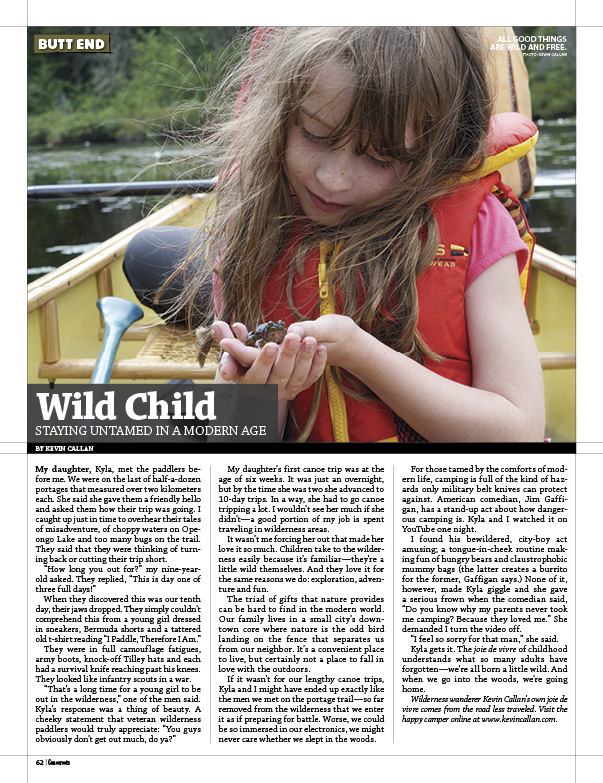
My daughter, Kyla, met the paddlers before me. We were on the last of half-a-dozen portages that measured over two kilometers each. She said she gave them a friendly hello and asked them how their trip was going. I caught up just in time to overhear their tales of misadventure, of choppy waters on Opeongo Lake and too many bugs on the trail. They said were thinking of turning back or cutting their trip short. 

“How long you out for?” my nine-year-old asked. They replied, “This is day one of three full days!”

When they discovered this was our tenth day, their jaws literally dropped. They simply couldn’t comprehend this from a young girl dressed in sneakers, Bermuda shorts and a tattered old t-shirt reading “I Paddle, Therefore I Am.” They were in full camouflage fatigues, army boots, knock-off Tilley hats and each had an eight-inch survival knife reaching past his knees. They looked like infantry scouts in a war.

“That’s a long time for a young girl to be out in the wilderness,” one of the men said. Kyla’s response was a thing of beauty. An almost Gandhi-like statement that veteran wilderness paddlers would truly appreciate: “You guys obviously don’t get out much, do ya?” …


CRv13i1-62Continue reading this article in the digital edition of Canoeroots and Family Camping, Spring 2014, on our free iPad/iPhone/iPod Touch App or Android App or read it on your desktop here.


Kayak Review: THE JURA HV By Venture Kayaks

THE JURA HV By Venture Kayaks | PHOTO: PO MARSHALL

WINDING AMONG THE DARK TRUNKS of a spring-flooded forest, then ferrying out across a wind-raked channel, it strikes me as ironic that the world’s first kayak equipped with a Skudder—that is, a combination skeg and rudder—seems to have little use for either. Let me explain.

The Venture Jura’s long waterline and slim stern yield excellent tracking even in heavy crosswinds. Heeled over on its hard chines, the Jura becomes quite nimble, carving gracefully between the shadowy trees.

Venture Jura HV
Length: 16 ft
Width: 23 in
Weight: 63 lbs
Max Capacity: 275 lbs
Price: $1,599
www.venturekayaks.com

Still, most paddlers expect a touring kayak to be equipped with either a skeg or rudder. Now you can have both.

“The Skudder is something that Graham [Mackereth, owner of Venture and sister brand P&H] has been interested in for a long time,” says Brian Day, Venture’s head of operations. “We’ve all paddled in conditions where a skeg helps to trim the boat in the wind. And a rudder allows paddlers to save energy by focusing on forward paddling. The Skudder gives you the benefits of both systems.”

Since the Jura’s well-mannered tracking means it doesn’t want to turn unless edged, the Skudder will aid beginners who don’t yet feel confident on edge. Fully deployed, the Skudder can be used to initiate turning, but its unobtrusive design and ability to function as a skeg means novice paddlers won’t outgrow the boat as their skills develop. Experienced paddlers with a pre-existing skeg or rudder bias will find the Skudder moves in either direction with them.

In rough water and following seas, the Skudder is more effective than a conventional rudder. That is, it spends more time actually in the water when paddling in steep, short period waves. Moreover, its under-stern placement doesn’t catch the wind or pose a hazard during rescues.

The Jura’s cruising speed is average for a 16-foot boat. But cruising, as any intrepid traveler will tell you, is about more than just speed—it’s about confidence, comfort and capability.

Jotting notes inside a Ziploc bag—head buried in my lap, hood lashed by a driving rain and the kayak pulled by a swift current that had also snared fallen branches and the odd ice floe—concerns about stability never crossed my mind.

The Jura’s near-flat, slightly V hull has the primary stability to put first-timers at ease. High volume in front of the cockpit rewards intermediate paddlers with stable yet dramatic edging, although shorter paddlers will have to reach a bit to paddle the HV on edge. An upcoming MV version will offer the same performance for smaller folks.

Plush, butt- and back-cradling outfitting pairs a contoured foam seat with a ratcheting backband. The large, ergonomic thigh braces combined with a high knee position round out the roomy and comfortable cockpit.

Bow, stern and day hatches offer plenty of volume for longer tours. The Skudder control cables are routed just below the deck and through a molded pillar to the hull, so there are no exposed wires to worry about damaging with carelessly crammed gear.

Venture’s Jura delivers as promised. This is a boat that fits a wide range of paddler sizes, styles and experience levels. Even better, it grows with the paddler as style and experience develop.

THE JURA HV By Venture Kayaks | PHOTO: PO MARSHALL

Happy Feet

The Smart Track foot braces are easily adjusted from a sitting position and combine a solid footrest for strong leg drive, with a user-friendly toe pedal for steering the Skudder.

Hide-a-Skudder

Part skeg, part rudder. The best of both worlds in one tough and tidy package.

The Secret Door

The Skudder’s control mechanism is covered for safe transportation, and accessible for easy cleaning and maintenance.


This article on why the kayak is the best way to enjoy the outdoors was published in the Early Summer 2014 issue of Adventure Kayak magazine.This article first appeared in the Early Summer 2014 issue of Adventure Kayak Magazine.  Subscribe to Paddling Magazine and get 25 years of digital magazine archives including our legacy titles: Rapid, Adventure Kayak and Canoeroots.