“For sale: used Valley Qajariaq. Good condition. Some spider cracking. $1,600.”
Like pets, we choose boats that resemble us, and how we see ourselves. In my case: tall, skinny, serious, slow-twitch for long distances, but with idiosyncrasies—design quirks and bit of a playful side.
Follow these intuitions and they can guide us to a perfect fit. Ignore them at our peril. Some things are inevitable, and we inevitably orbit back to them.
Buying the Q-boat felt like this, like coming home.
I’ve had a few such reckonings in my life. One led me to love. Another to a career. And most recently, back to kayaking—another kind of love.
When I first met my wife I found her irresistible. But she was like a kayak with poor primary stability that I lacked the experience to handle. I couldn’t think straight. One day after I first met her, I was so distracted I cut both of my thumbs in two separate kitchen accidents. Later that same day, I got pulled over for an illegal U-turn and the cop asked about my two bandaged thumbs. “It’s just not your day,” he surmised, and let me off with a warning.
I was overwhelmed and broke off the relationship. A couple of years later, she showed up in my life again and we became good friends. We were out kayaking when she looked at me and said maybe it was time our friendship “evolved.”
We evolved into marriage. The best choice ever, though it felt more like destiny. The certainty that old people tell you about when you’re young: “You’ll just know.”
Careers are like that too. Some things just fit. Sitting at a desk was never for me. So at age 38, I was writing an exam with 3,000 other hopefuls, trying for a spot on the city fire department. It was another case of coming back to what I really wanted, instead of what I thought I should do—better late than never.
Kayaks carry that same you’ll-know-it-when-you-feel-it certainty. Before you even begin shopping for a kayak, some kind of boat will be calling out to you. The salesperson may be saying one thing, the boat on the rack will be telling you its own story. Follow your impulses—they are connected to a deeper self-wisdom. There may be no water nearby, but if you crave a kayak, buy one and it will take you where you need to go.
How else does a boy who grew up next to the highway in an inland city end up becoming a sea kayaker? On a family vacation to Cape Cod, I saw a sea kayak on the wall of a tourist shop. The hatches for weeks’ worth of gear, and the limitless ocean across the dunes, called to me. The hull’s sleek curving lines traced the arc of my deepest longings.
In that instant, I put it all together and understood the pos- sibilities, the predetermination of my growing up, moving to the ocean, buying the longest, fastest, most capacious boat I could find. Fumbling, tipping, learning to paddle. Heading out for weeks on end. Spending 80 days kayaking a remote rainforest coast. Working for this magazine.
Then we bought a house in the city and had two kids. I started selling my kayaks to pay bills, especially the expedition ones I never paddled anymore.
Last year, I wrote about how kayaking didn’t fit with my life anymore (Rock the Boat, Summer/Fall 2013). What use was this sport that had no practical place in our wacked-out modern lives? I thought I was through.

AN EMOTIONAL DECISION, NOT A LOGICAL ONE
This is what I’m thinking about as I drive home with the gear swap ad crumpled on the passenger seat and the Q-boat on my roof: we can’t escape who we are. Even when that undeniable truth doesn’t seem to make any sense. I saw that ad and just knew. I drove across town—allegedly just to “check it out”— with the exact asking price in crisp hundreds in my pocket and the roof rack on the car. The seller said he’d had other inquiries, but was waiting for the right person, someone who would appreciate it.
So my backyard is full of boats again. I orbited away from kayaking but now I’m back. I’ve lost count of how many times I’ve been out surfing while the kids are in school.
My wife didn’t get it when I arrived home with my new purchase.
“Why did you buy another sea kayak?” she asked in disbelief, “You never go kayaking. This isn’t a logical decision, it’s an emotional one.”
As if any other decision could have been possible, or true.
I brought her outside to look at it. She helped me lift it off the roof onto the grass.
“Isn’t it a beautiful thing?” I asked, beaming.
She looked at its long narrow form, at my boyish grin, and shook her head.
“Well, it does look like your type of kayak.”
Waterlines columnist Tim Shuff is a former editor at Adventure Kayak and embraces both the playful and serious sides of paddling.
This article originally appeared in Adventure Kayak, Spring 2014.
Subscribe to Paddling Magazine and get 25 years of digital magazine archives including our legacy titles: Rapid, Adventure Kayak and Canoeroots.


But the boom wouldn’t last. More flooding followed, stymieing further development and the resort atmosphere. Over the years, as the floodwaters have receded—and because there’s never been an outlet for the water—the Salton Sea’s salinity levels have skyrocketed. Scorching summer heat evaporates the water, leaving behind natural salts—the sea is now 25 percent saltier than the Pacific Ocean. During the summer when temperatures are consistently at triple digits, there have been mass die-offs of fish. Only the hardy tilapia remains, the sole species able to withstand such high salinity levels.
Only 100 yards east of Mullet Island was an expansive mudflat where the thermal plumes steamed out of boiling mud pots. The region is a natural geological wonder of extinct and dormant volcanoes and thermal vents. Three miles south of Mullet, black volcanic glass is embedded in the sharp rocks surrounding Obsidian Point.


Unable to find a satisfactory compound, I contacted the traditional source for all things needed to keep a boat supplied – a ship chandlery. Jamestown Distributors in Bristol, Rhode Island, was very helpful. Their fiberglass repair specialist knew just the right product to recommend. I took his advice and purchased Quikfair fairing compound by System Three. This product contains microbaloons, hollow glass micro-spheres that help create a strong yet lightweight fairing compound. This two-part epoxy putty is intended for use above or below the waterline, has a pot life of 10 minutes and can be sanded in a few hours. I mixed small, golf-ball sized batches, and used auto body putty spreaders to apply the mixture. The result looked like I was frosting a cake.


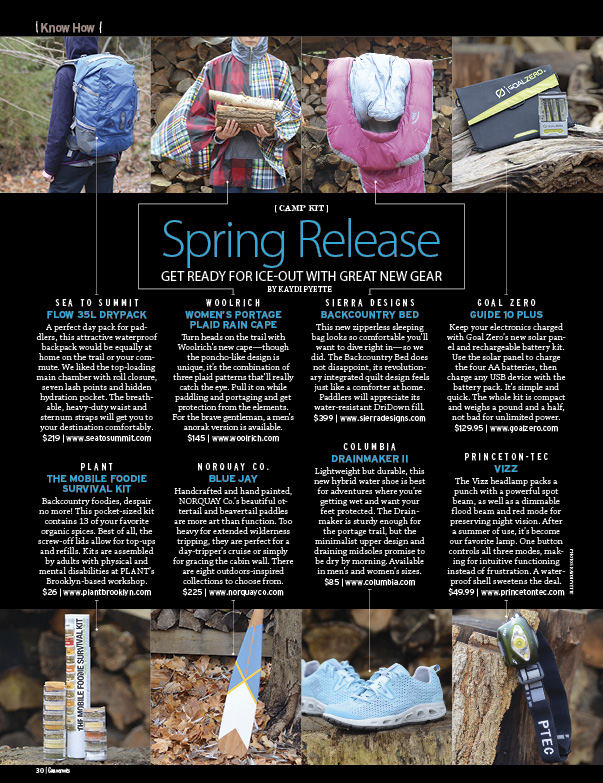
This article originally appeared in Canoeroots and Family Camping, Spring 2014. Get more great gear reviews by downloading our free 
Continue reading this article in the digital edition of Canoeroots and Family Camping, Spring 2014, on our free 

This article first appeared in the Early Summer 2014 issue of Adventure Kayak Magazine. 

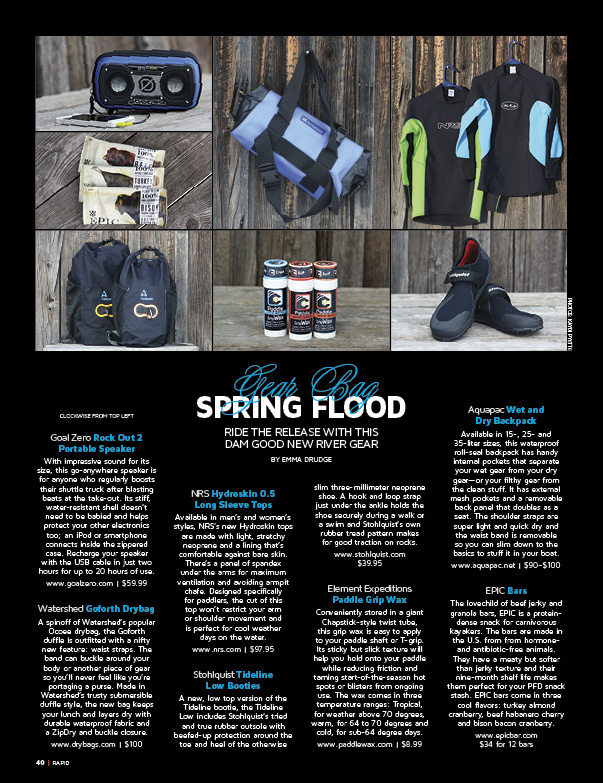
This article was first published in the Spring 2014 issue of Rapid Magazine.