Home Blog Page 3

Kayaker Who Was Trapped Under Ice Shares Harrowing Encounter (Video)

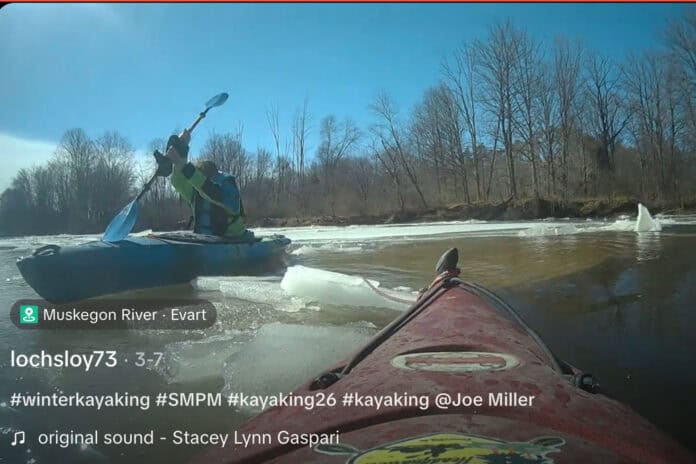
Image of a kayaker recovering another kayak on the Muskegon River in Michigan
The ice-choked Muskegeon River. Joe and Kevin Miller | TikTok

Kayakers Kevin and Joe Miller were paddling on the icy Muskegon River in Michigan when the the day turned nearly deadly – as chunks of ice flowed down the river, the current caught Kevin’s kayak and a surge of ice hit, sending him into the water. Kevin was then sucked beneath a sheet of ice and swept down river.

Stuck under an ice sheet on Muskegon River

“It started with an incredible experience of floating on an iceberg for nearly 25 minutes,” wrote Kevin on Facebook. “As the ice began to break up, we slid back into the water exactly as planned.”

It was here, back in the moving current that things began to go awry. In attempting to maneuver to where Joe was positioned on another sheet of ice the current caught Kevin’s kayak and ice hit his kayak, causing Kevin to capsize into the icy water.

Data from US Geological Survey (USGS) shows that between March 3 and March 10, 2026, Muskegon River levels near Croton, Michigan rose from approximately 5.2 feet to nearly seven feet. Additional data shows that water temperatures were 35 degrees Fahrenheit (2 degrees Celsius) between March 4 and March 7, 2026.

@lochsloy73

#winterkayaking #SMPM #kayaking26 #kayaking @Joe Miller

♬ original sound – Stacey Lynn Gaspari

A video posted by the pair illustrates the extremely dangerous river environment at play the day of the incident. River ice out conditions, or the breaking up and melting ice paired with moving water and strengthening currents, created a serious hazard for the paddlers as large chunks of ice mixed with strong currents and debris. Spring paddling on rivers as ice conditions change can be especially hazardous, as some sections of the river may look clear, while others are choked with ice. The ice itself can act as a surface-level strainer as current rushes beneath it.

“Before I could react, I was sucked under the ice,” wrote Kevin, adding that his inflatable PFD deployed, but he lost his glasses.

Kayaker grateful to be alive after nearly a minute trapped beneath the ice

Kevin estimated that he was trapped beneath the ice for 45 seconds and was swept 40 to 60 feet downstream.

“I tried to break through the 6-8”of ice wherever I saw light, but it was impossible,” shared Kevin. “Just as I reached the point where I could no longer hold my breath and had accepted the situation, I saw light above me.”

Kevin surfaced to the sound of Joe and bystanders on shore shouting to each other, altering everyone that Kevin had surfaced. Joe had positioned his kayak so Kevin could hang on to the bow and be transported and swim to shore.

“A bystander helped pull me onto the shore and up the hill to safety. EMS arrived shortly after to assess me,” wrote Kevin. “Miraculously, my only injuries were some abrasions to my face, bruised hands from fighting the ice, and a few bumps on my head that required three staples.”

According to a comment by Kevin following the incident, Kevin shared that he was wearing neither a drysuit nor wetsuit during the incident and his core temperature emerging from ten minutes in the river was 98.2 Fahrenheit.

Kevin shared that he now plans to purchase a drysuit, and that he and Joe were able to recover his kayak but his paddle, glasses and spray skirt were lost.

“All in all, it was an amazing day and I am incredibly grateful to be here,” wrote Kevin.

Lived experience of paddlers acts as a valuable community case study

“It took courage to post this. You could very well save a life by allowing others to learn from your close call,” wrote commenter Mick Hansen.

Other commenters noted clear lessons from Kevin’s experience.

“First, I am glad you survived,” wrote Rick Greenwald, before noting a few takeaways from the experience including avoiding paddling on moving current with thick ice sheets, the importance of a drysuit in winter paddling conditions and the importance of a foam PFD for paddling in cold conditions.

“You are also brave to put this out here in this group. Take what you’ve learned and share it with others so that you might prevent someone else from making the same mistakes,” concluded Greenwald.

Henry Davies, who shared that he regularly paddles with ice on Lake Superior, noted that floating and drifting ice can be one of the most dangerous aspects of winter kayaking.

“Even a gentle breeze can move the ice around and block you from your takeout,” wrote Davies. “The best plan if things are iffy is to leave the kayak on the car.”

Another commenter recommended Kevin buy a lottery ticket.

Feature Image: The ice-choked Muskegeon River. Joe and Kevin Miller | TikTok
Kayak Review: BorealDesign’s Storm 17

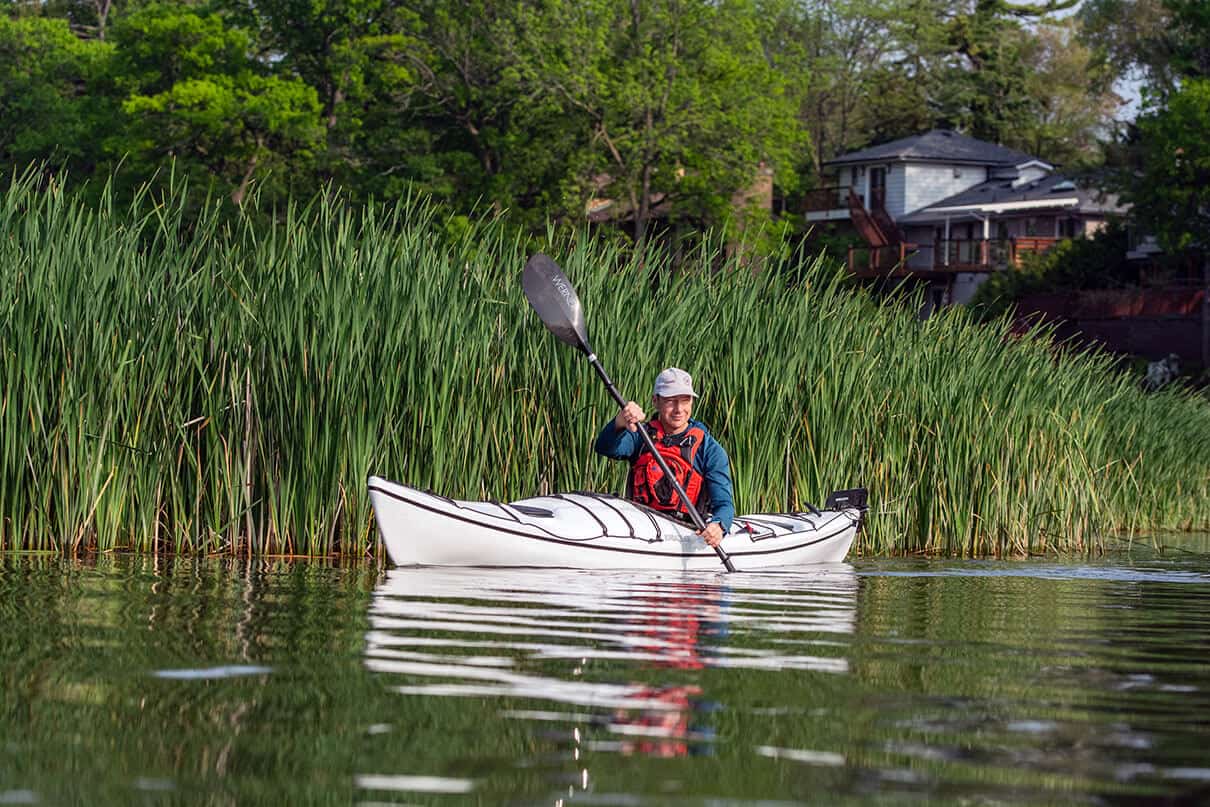
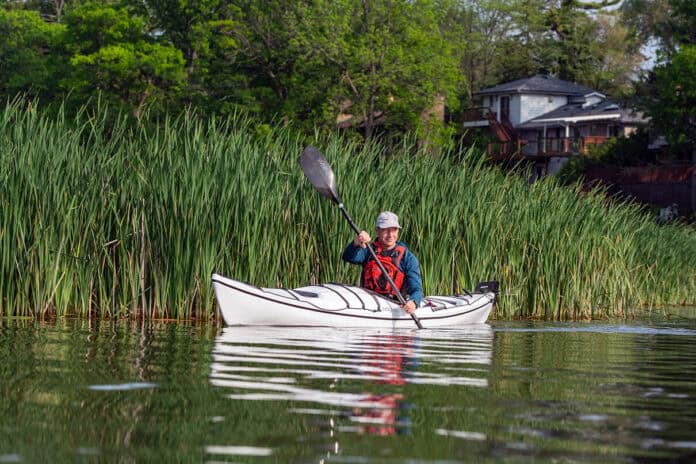
man paddles the Boreal Design Storm 17 thermoformed touring kayak in front of cattails with a house in the background
Beginner-friendly stability. Check. Easy packability. Check. Expedition-worthy performance. Check. The whole package in one touring kayak. | Feature photo: Kaydi Pyette

When I first heard of the BoréalDesign Storm 17, I assumed it was a direct descendant of the venerable Current Designs Storm, a kayak first produced in 1994 by the then-Vancouver-Island-based company as its first rotomolded polyethylene kayak. That Storm was based on designer Brian Henry’s bestselling composite design, the Solstice GT. It was subsequently manufactured for decades, achieving wide popular appeal due to its combination of user-friendliness and expedition-ready seaworthiness.

The BoréalDesign Storm 17 is not directly related to that Storm. But one could be excused for confusing the two, and not just because of their similar lines and dimensions. Let me explain.

Kayak Review: BorealDesign’s Storm 17

BoréalDesign Storm 17 Specs
Length: 17’0”
Width: 24”
Weight: 59 lbs
Capacity: 348 lbs
MSRP: $2,679 CAD
borealdesign.ca

Many years ago, a different Vancouver Island-based sea kayak company, Seaward Kayaks, wanted to round out its line of ABS thermoformed kayaks with a full-sized touring model. Two industry veterans, Mark Hall and Steve Hovarth, designed a 16-footer and named it the Storm—an admitted nod to Current Designs’ old plastic stalwart. Fifteen- and 17-foot versions were later added. But the Storm series never went into full production under Seaward.

Kayak Distribution (KD), the Quebec company that owns Riot Kayaks and BoréalDesign, eventually acquired Seaward’s thermoform division. KD began producing the Storm 15, 16 and 17 Ultralight touring kayaks under BoréalDesign in 2017. Coincidentally, in 2023, KD acquired Current Designs’ rotomolding division from Wenonah Canoe (which had taken over Current Designs in 1999).

History aside, I can’t help feeling like the BoréalDesign Storm 17 Ultralight is perfectly named, because it has the same approachability as the old Storm, which I reviewed in this magazine in 2004, but with the lighter weight and glossier sheen of a more premium material—thermoformed ABS.

man paddles the Boreal Design Storm 17 thermoformed touring kayak in front of cattails with a house in the background
Beginner-friendly stability. Check. Easy packability. Check. Expedition-worthy performance. Check. The whole package in one touring kayak. | Feature photo: Kaydi Pyette

BoréalDesign intends their entire Storm series to be easy to paddle, load and tour. The three sizes all share a similar soft-chined, shallow-V hull, which produces stable and predictable performance. KD’s marketing manager, Graham Ketcheson, explains that people tend to choose the one that fits their body size the best, with the middle-of-the-road 16 being the bestseller and the 17 attracting the largest paddlers or those who simply need the expedition capacity.

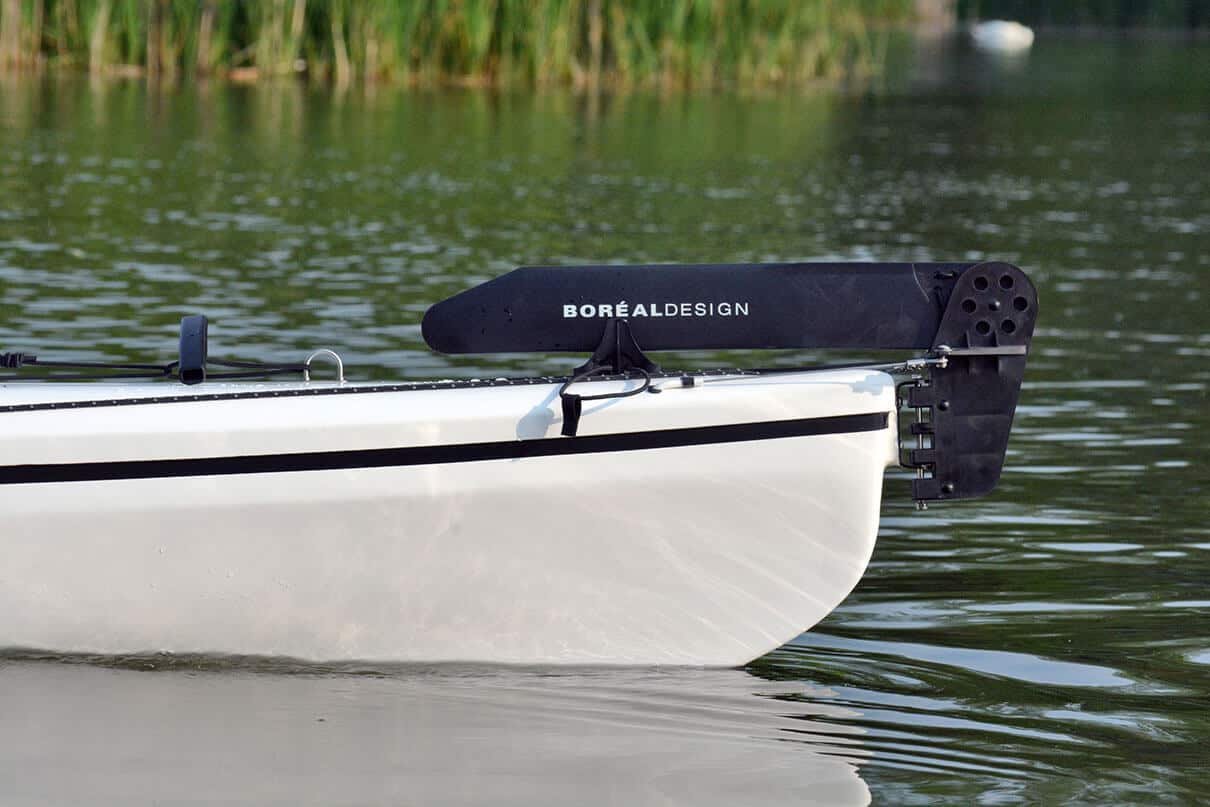
It’s safe to say the Storm 17 is among the roomiest touring kayaks on the market. There’s a day hatch above the cockpit for small items, a round bow hatch with an opening large enough for a small propane tank or 20-liter dry bag, and an oval rear hatch for large items. The Storm 17 is fully appointed for touring in every other way, too, from the reflective deck lines to the straps behind the seat for a paddle float self-rescue.

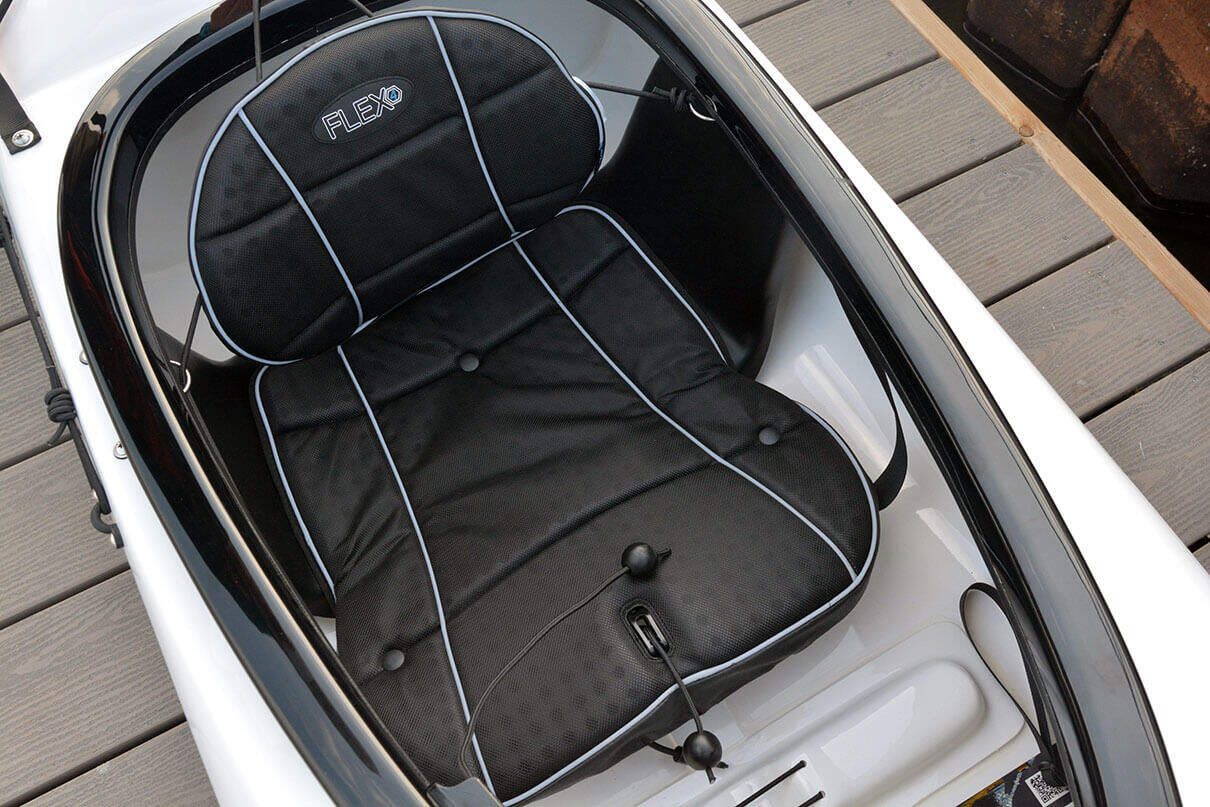
Inside the cockpit, BoréalDesign’s Flex 4 Seat with Drytech fabric provides a multi-way adjustable, crowd-pleasing padded throne that enhances efficiency and comfort by flexing slightly from side to side in synchronicity with the paddle stroke. I found it instantly comfortable and intuitive.

I can’t shake the old Current Designs comparison because paddling this Storm reminds me so much of how I remember that company’s Solstice series, which has always been my reference for an approachable, versatile West Coast-style ruddered touring kayak. A beginner could climb in and be immediately comfortable, but then load up and paddle from Seattle to Juneau.

However, this kayak reminds me more of the Solstice GT Titan, the highest-volume edition advertised for those who are “big and tall.” There’s a pic somewhere of my six-foot frame curled up inside the Titan cockpit with only my head poking out.

Ketcheson referenced 225 pounds as being a typical paddler size for the Storm 17 and recounts a strapping lumberjack of a fellow buying the floor model at an Outdoor Retailer show to ship home to Alaska, saying, “I’ve finally found a sea kayak that fits me!”

That said, at 14 inches, the depth of the Storm 17 is roomy but not extreme (the GT Titan is 15). It’s bigger than what I’d want in an ocean playboat, but would be comfortable for a long tour, which is this kayak’s main purpose. It tracks very straight, even without the rudder, and responds slightly to edging.

For a more rockered, maneuverable hull, you’d opt for BoréalDesign’s Epsilon or Baffin series kayaks. Those two kayaks each come in three sizes, too. Tellingly, they were once also available in thermoform but now only come in composite or polyethylene.

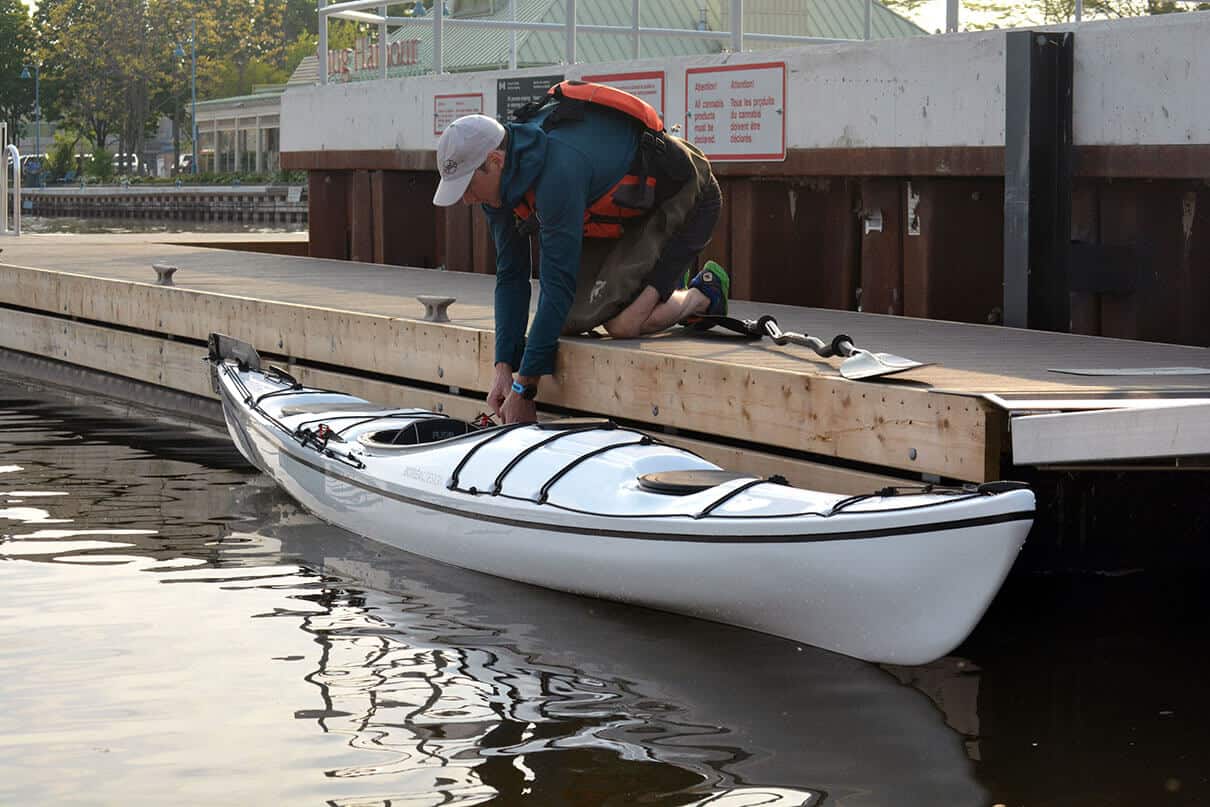
man launching the Storm 17 from a dock
Thermoformed kayaks use a plastic laminate construction to combine the affordability and durability of plastic with the lighter weight, shiny aesthetics and sleek feel of composites. | Photo: Kaydi Pyette

This is indicative of both where the Storm series and ABS thermoform fit—straight up the middle. Kayakers buying those more specialized designs weren’t interested in compromise, opting for either the cheaper and worry-free roto that they could virtually drop out of a helicopter or drag fully loaded across rocky tidal flats, or the price-is-no-object composite. Thermoform is the ultimate compromise—in a good way. It’s lighter than rotomolded poly and less expensive but just as shiny-slick as composite, and somewhere between the two in terms of weight, durability and repairability.

“ABS can be repaired fairly easily with a special type of epoxy and a fiberglass or Kevlar patch on the inside,” says Ketcheson. And if you take it to an expert, “like composite you can get it looking pretty new again. You can plastic-weld polyethylene boats but they’re always going to look terrible.” He also points out that a scratched thermoformed hull can be restored with special acrylic spray paint, similar to a gelcoat repair on a fiberglass kayak.

So it makes sense that BoréalDesign has dedicated its thermoform production, in the touring realm, to this most all-encompassing and accessible design. One that would likely most appeal to outfitters or to dedicated intermediate kayakers who want a serious sea kayak that will take them anywhere they want to go, with many of the attributes of composite, at a more moderate price.

For that niche, the Storm series is perfectly dialled in. No need to overthink it. Pick your size, load ‘er up, and set off wherever your heart desires.

Cover of Issue 74 of Paddling MagazineThis article was published in Issue 74 of Paddling Magazine. Subscribe to Paddling Magazine’s print and digital editions, or browse the archives.
Beginner-friendly stability. Check. Easy packability. Check. Expedition-worthy performance. Check. The whole package in one touring kayak. | Feature photo: Kaydi Pyette


9 Padding Gear Updates Making A Splash This Year

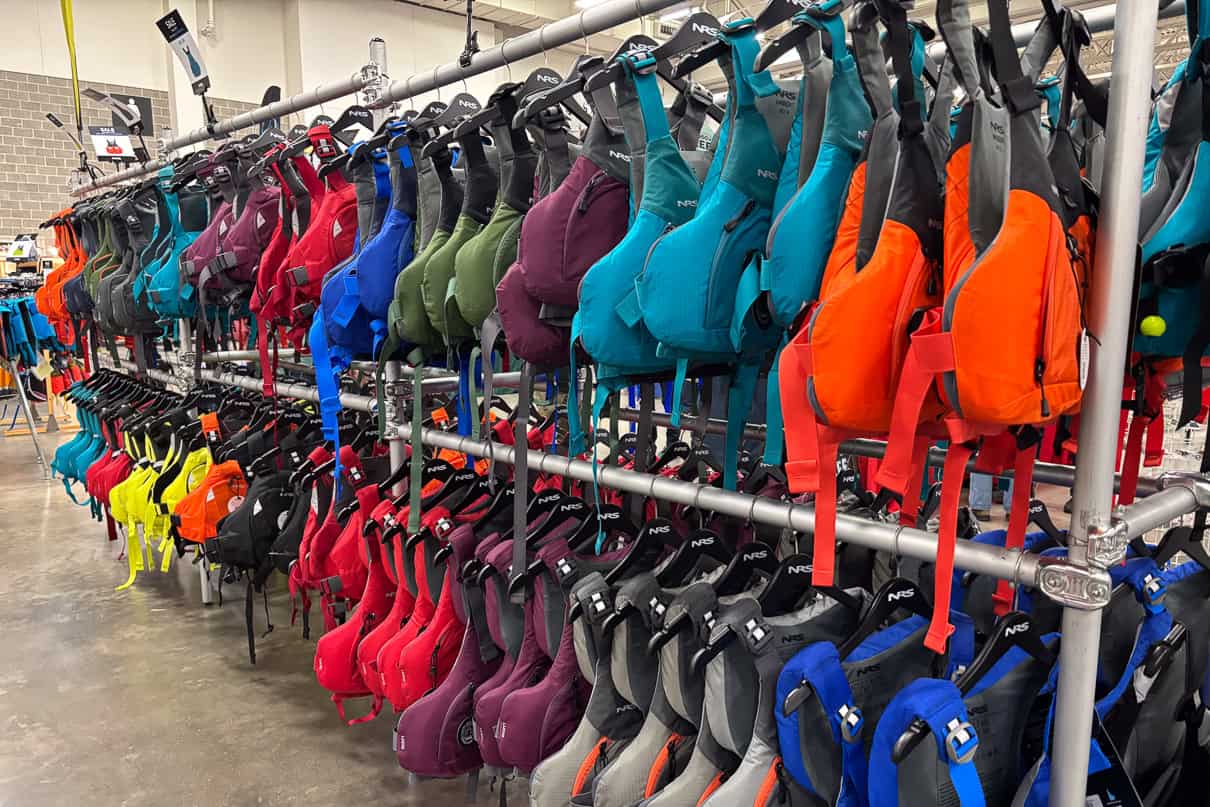
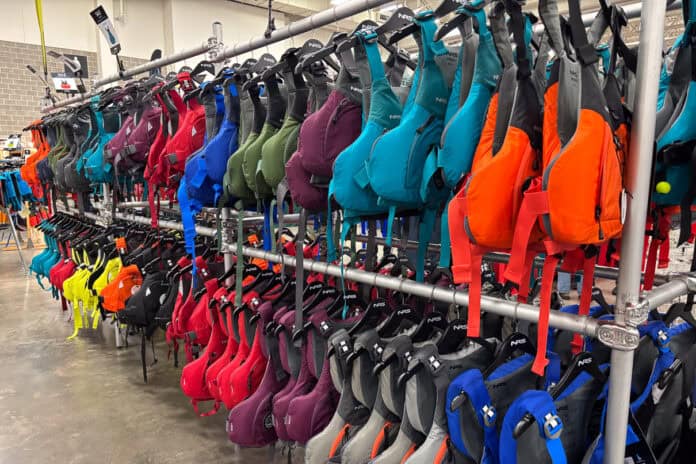
Image of NRS Orbit fit PFDs
So many colors, designs and perfect fits to choose from.

The sun is shining, the ice is melting and it’s time to get yourself a little gear treat to hold you through until paddling season begins. Lucky for paddlers, Canoecopia 2026 saw a cornucopia of exciting new products. From sweet new rides of all kinds to new and improved paddles, check out the best new paddling gear of 2026:

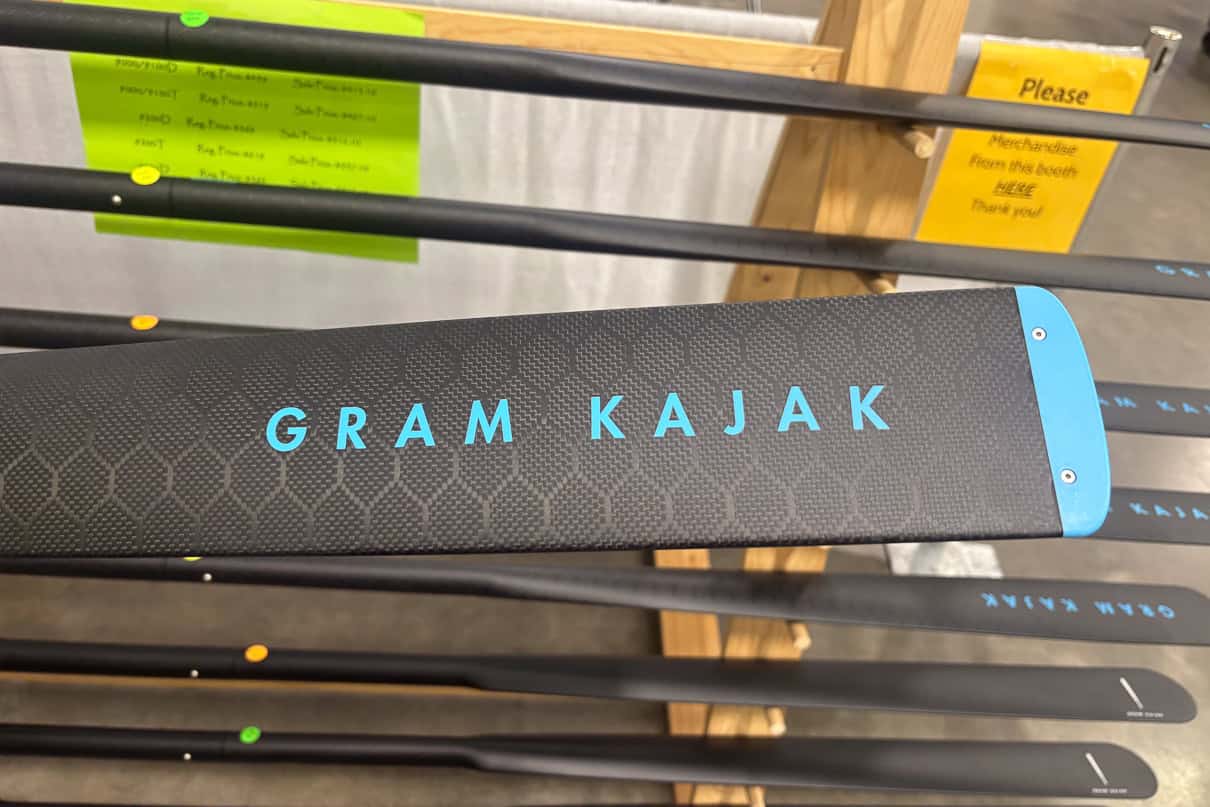
1) Gram Kajak Replaceable Tip Greenland Paddle

Gram Kajak has rolled out a new split carbon Greenland paddle with replaceable tips.

Image of a new in 2026 carbon greenland paddle with replaceable tips
The Gram Kajak replaceable tip greenland paddle.

To eliminate risk of leaks, the tip holder is integrated into the paddle rather than glued to the blade. The replaceable tip acts to protect the paddle from wear and tear over time.

2) Mocean Kayak And Canoe Ranger

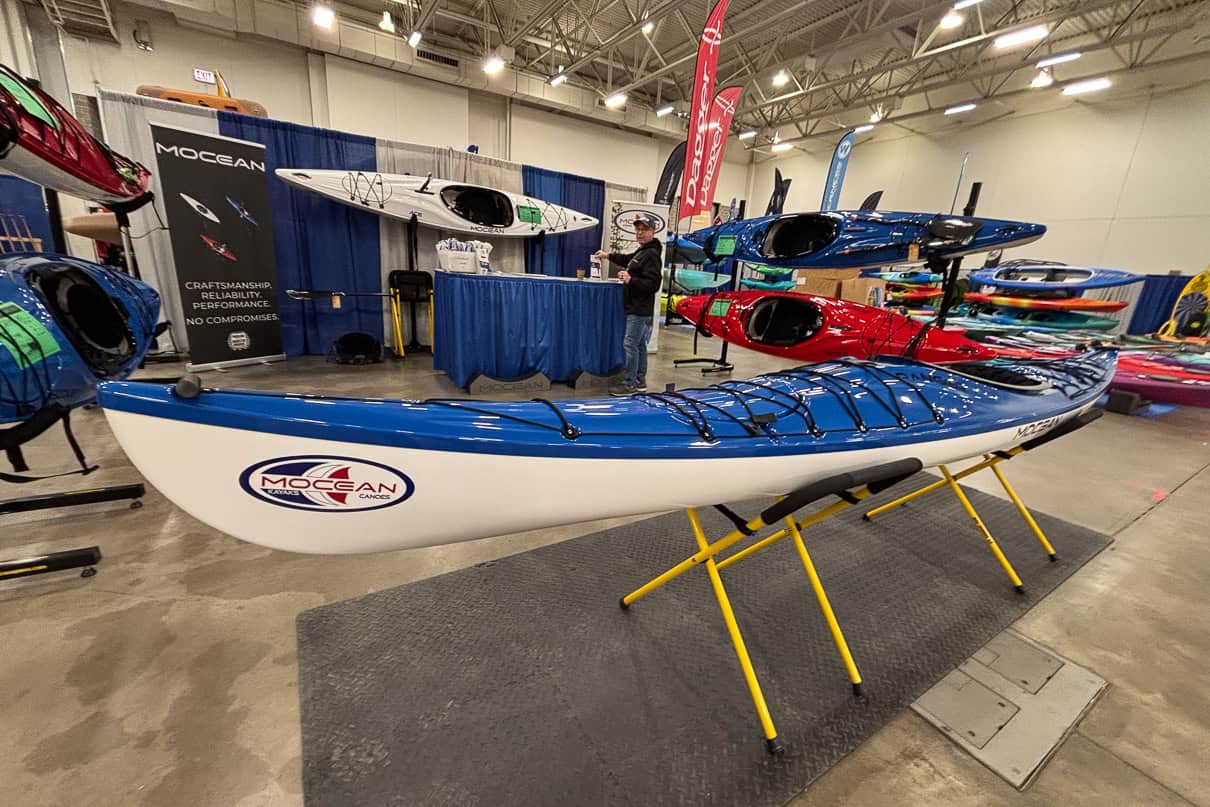
The 14-foot, six-inch Ranger from Mocean Kayak and Canoe straddles the line between a recreational kayak and sea kayak, designed for strong beginners looking for a boat with room to grow skills in.

Image of the Mocean Kayaks Ranger
Mocean Kayak and Canoe’s slick new ride.

This thermoform plastic kayak weighs less than 50 lbs (23 kg), and features a spacious cockpit for comfortable entry and exit.

3) Stellar Nomad LV

Similar to the Stellar Nomad but four inches shorter and a touch shallower and narrower, the Stellar Nomad LV is the latest performance sea kayak for smaller paddlers. With a reinforced back deck and foredeck and fiberglass keel strip, the Stellar Nomad LV in multisport layup weighs just 39 lbs (17.7 kg).

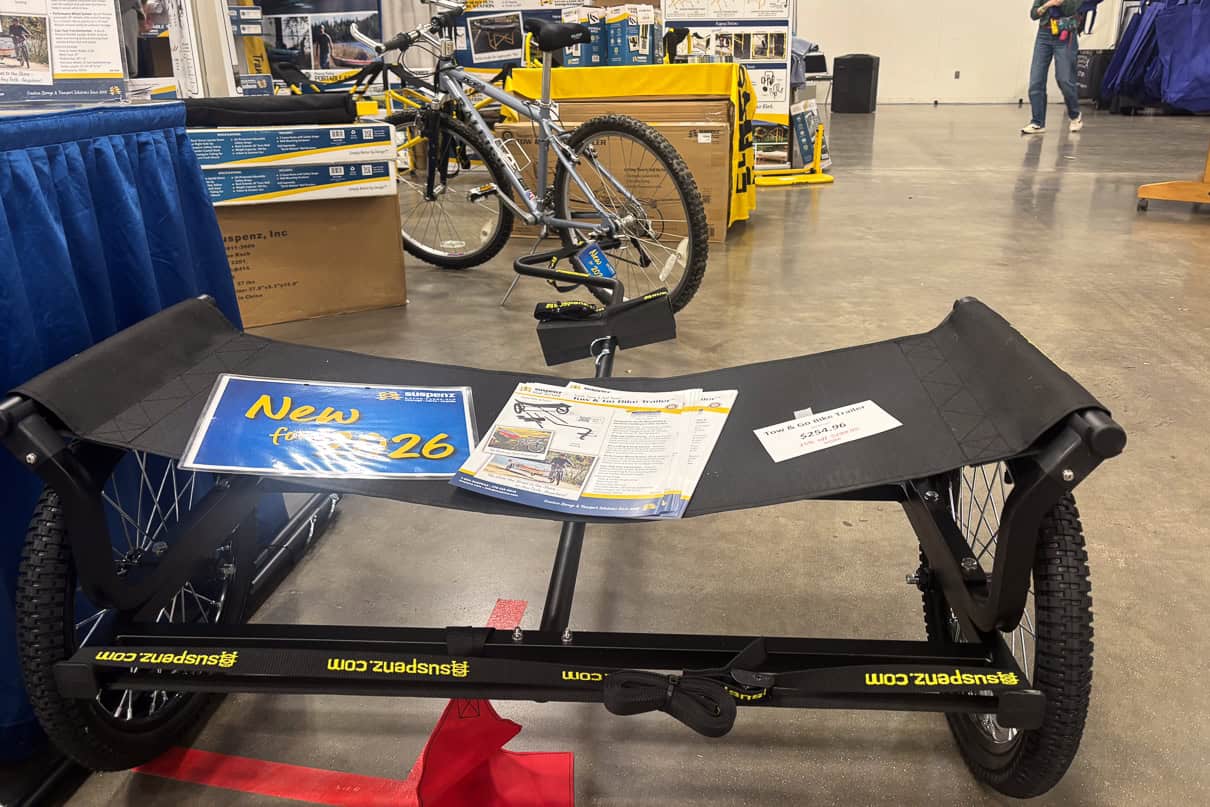
4) Suspenz Tow and Go Bike Trailer

If you’ve been looking for the perfect solution for your river shuttle woes, look no further than the Suspenz Tow & Go Bike Trailer.

New bike trailer for canoes
No second car for a shuttle? No problem.

The Tow & Go trailer supports most canoes, kayaks and paddleboards and is designed with a smooth ride in mind.

5) Bending Branches Horizon Paddle

The new Horizon canoe paddle from Bending Branches features a carbon shaft and compression molded fiberglass with Aramid blade and is designed for tough use on expedition trips and in class I-III whitewater. The Lam-Lok stitching offers edge protection from delamination as well as wear and tear from impact while out on the water.

6) NRS Orbit Fit PFDs

In 2025, NRS introduced the new Orbit Fit technology for PFDs. Now in 2026, Orbit Fit has been implemented in all of the NRS PFD models. Orbit Fit consists of multiple layers of thinly cut foam to create a natural curve in the structure of the PFD.

Image of NRS Orbit fit PFDs
So many colors, designs and perfect fits to choose from.

Along with Orbit Fit, NRS has implemented graded sizing, accounting for the amount of foam needed for individual body types with the goal of creating more comfortable PFDs across sizes.

7) Jackson Kayak Antix 3.0

In the spirit of the Jackson Kaya Antix 2.0, the Antix 3.0 features more bow surface area and volume for a higher and drier ride with all the playfulness of the earlier Antix models. The Antix 3.0 is redesigned with a wider hull and smaller stern to maintain speed over features and for easier squirting and splatting.

8) Esquif Echo 2.0

The Esquif Echo 2.0 is a solo touring canoe weighing 45 lbs (20.42 kg). The new Echo 2.0 features an additional inch and a half of depth for a greater load capacity and drier ride in whitewater.

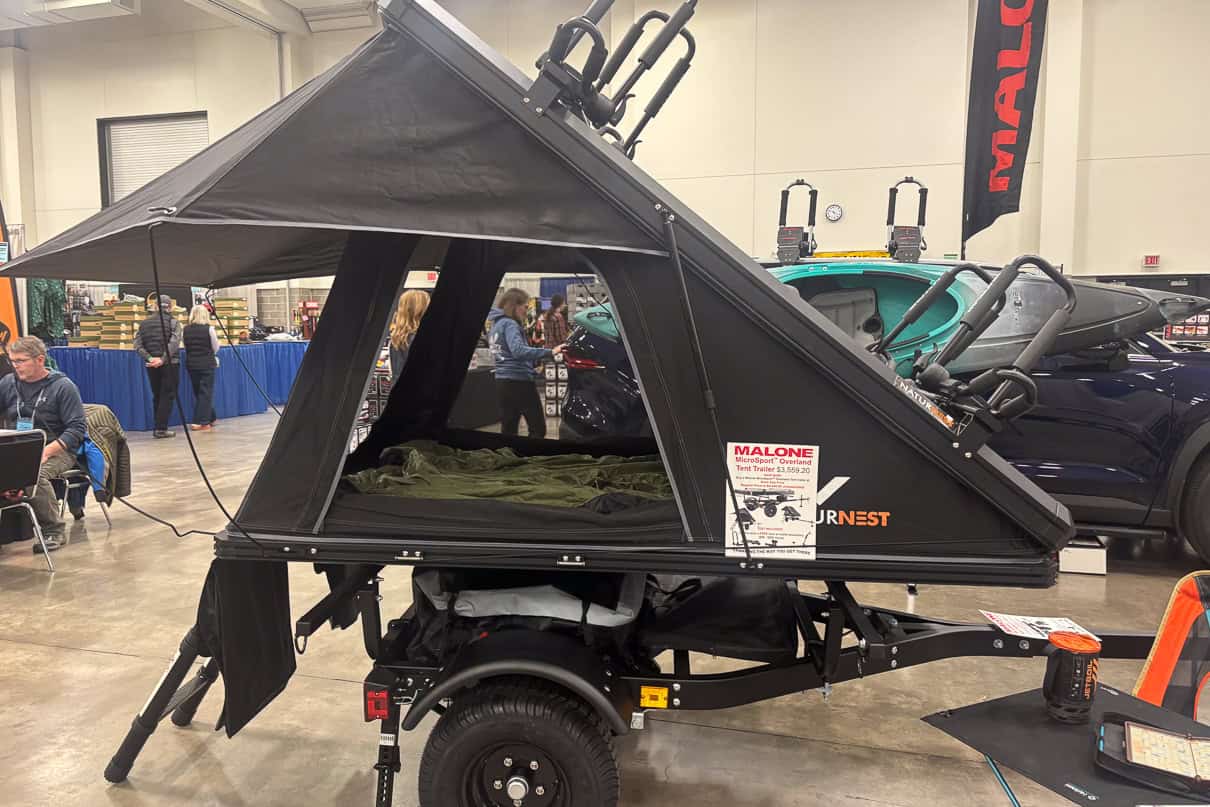
9) Malone Microsport Overland Trailer Package

If your dream trip involves camping on a beach just feet from your put in, then spiriting away no-hassle to your next paddling destination, the Malone microsport overland trailer package might be in your wheelhouse.

image of pop up tent kayak trailer combination
Your paddling road trip rig just got sicker than ever.

Built for off-road adventures, this trailer can transport your kayaks and bikes all while doubling as a pop-up roof-top tent.

Three Pros Reimagine How To Hook New Paddlers

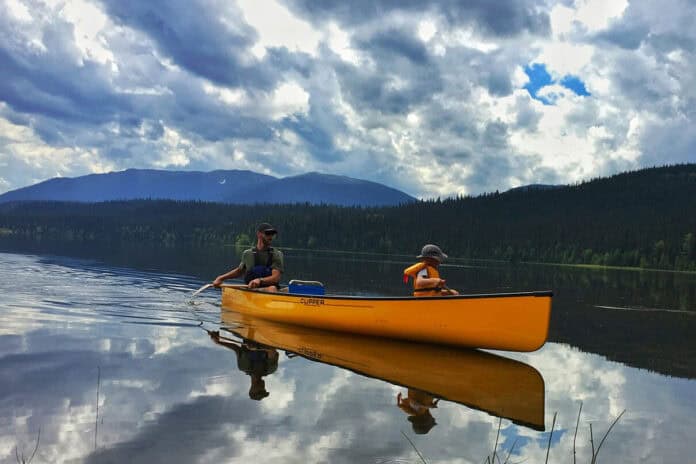
father and child in a Clipper canoe paddling on a lake with mountains and dramatic backlit clouds behind
Feature photo: Western Canoe Kayak/Unsplash

When you love paddlesports, you want to share the joy of getting on the water with as many people as possible. Growing participation supports the entire industry, from independent retailers to global brands, while delivering broader health benefits to individuals tied to time on the water. Below, three longtime industry professionals share strategies for engaging new paddlers and passing on the stoke.

Three pros reimagine how to hook new paddlers

Ethan Ebersold

Mindblown moments

We all remember the experience that hooked us on paddling. For me, it was the Boundary Waters in Minnesota, seven days living out of a boat, portaging from lake to lake, laughing around campfires. I came home thinking, “I need a canoe, right now.”

The conventional demo day, where we go around in circles on a pond, doesn’t paint that picture of what paddling can be. So I think we make a mistake when we tell new customers to start by taking an intro-to-paddling class first, because paddling is more than sweep strokes and bow-draws. It’s an overnight camp. It’s a paddle around the point to see a sunset. It’s that moment—the mindblown moment—where they go, “Oh my God, I need more of this!” All of us in the industry have had these experiences. It’s why we’re in this business. But a lot of people haven’t had their hook-set moment yet. It’s our job to show them that first, instruction second.

Paddling gives you that mind-blown moment—where there’s nothing else but your surroundings and you’re just soaking them in. It gets you there faster than a hike or a mountain bike ride, I believe, because once you leave terra firma, you’re predisposed to have your mind blown. You’re floating through space, essentially.

Ethan Ebersold is an independent brand rep based in Bend, Oregon

Mark Deming

There’s an app for that

We’ve seen firsthand how trail apps have democratized the outdoors. When I first moved to Idaho, I spent an entire summer getting hopelessly lost on the mountain bike trails, staring at maps I’d printed out from the internet, saying, “Where the hell am I?” Now, anybody can download the Trailforks app and know exactly where they are and where they’re going. It’s really lowered the barrier to entry.

NRS created the PaddleWays app to do the same thing for paddlers. When we built it, we thought it would be great for people who need to know where the crux rapids are, or when a remote creek comes in. But when we launched, we realized the need for this information is much broader. Rec kayaking, SUP and canoeing are our three biggest categories on PaddleWays. While avid whitewater kayakers and rafters are downloading the app and finding value in it, the adoption rate has been strongest among those people who are at the more casual end of the scale, and that’s super exciting to me. This technology gives us a pathway to welcome these folks into the sport. It’s also an avenue for promoting safety, responsible use and conservation. We’ve begun engaging our nonprofit partners in this work and look forward to building on those efforts.

Mark Deming is Chief Marketing Officer of NRS

Simon Coward

The gold standard

The thing that made paddlesports tick in the early days was demo day after demo day after demo day. It was like bashing your head against the wall, but it grew participation and interest. We don’t want to go back to that, but we must continue to be involved at the community level and at an interest-building level.

When I was younger and doing this, I used to think it’s not my job—the brands have all the money. They need to market and promote paddlesports. My mindset has changed quite dramatically. I think it’s the retailers’ responsibility to promote paddlesports in their local communities, but it’s the manufacturers’ job to support the shit out of those efforts. That is their job. That comes in the form of cooperative marketing dollars. It comes in the form of demo fleets that don’t cripple our cash flow.

We’ve made some huge inroads on that. We’re working on a guiding document of what a gold standard relationship is between retailers and manufacturers, and we’ll have something to present at the PTC Colab. Because at the end of the day, if we’re not moving everything forward together, then we’re just all squabbling over the same scraps.

—Simon Coward is the owner of AQ Outdoors in Calgary, Alberta, and a member of the PTC Board

cover of Paddling Business 2025This article was first published in the 2025 issue of Paddling Business. Subscribe to Paddling Magazine’s print and digital editions, or browse the archives.

Feature photo: Western Canoe Kayak/Unsplash


A Kayaker’s Close Encounter With Bottlenose Dolphins (Video)

Rupert Kirkwood is living every paddler’s dream. From whales to leaping tuna, this paddler spends his time exploring the waters and experiencing the wildlife of southwest England building an impressive resume of close encounters along the way.

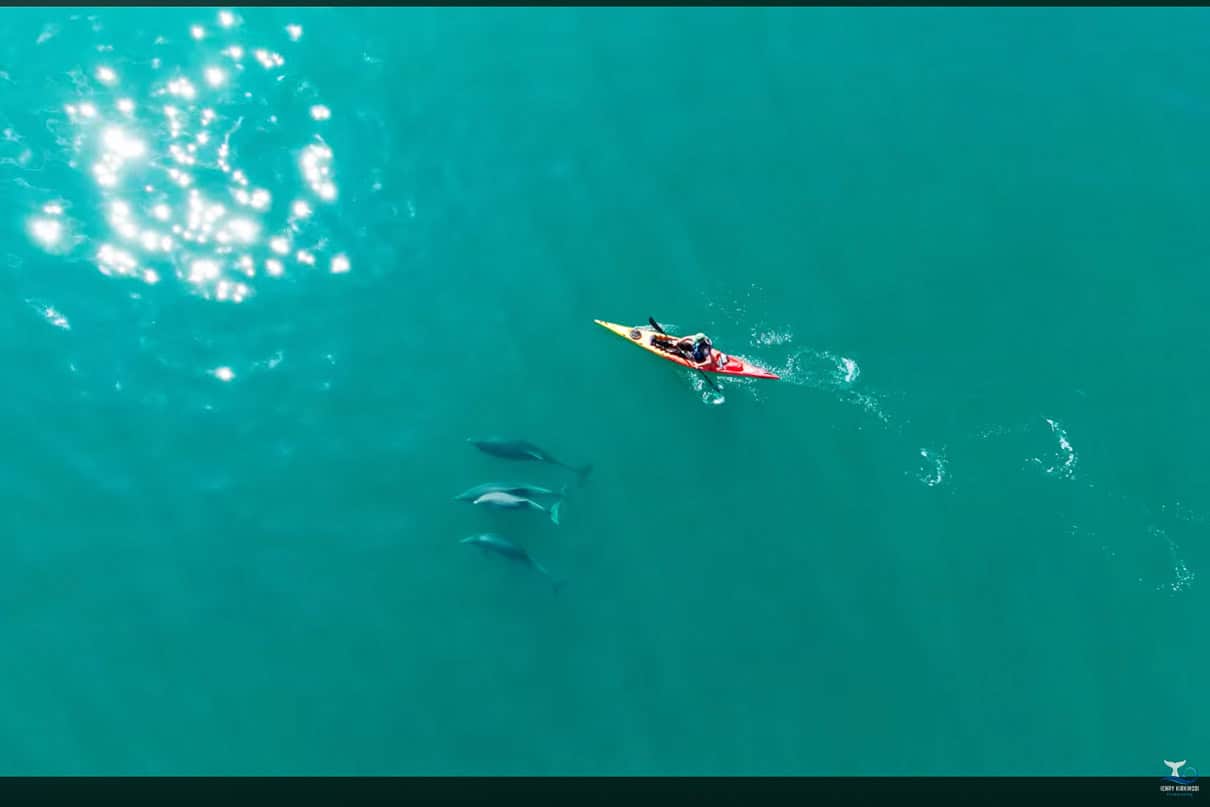
Rupert, who goes by The Lone Kayaker, has plunged into the world of wildlife paddling close to home, with his filmmaker son Henry Kirkwood there to document his close encounters. While kayaking off the coast of western Wales, Rupert had an encounter most paddlers can only dream of with a pod of bottlenose dolphins.

Father and son duo document wildlife and explore waterways in southwest England by kayak

“I have kayaked every inch of the coast of SW England, from Poole to Minehead, all 1156 miles of it,” wrote Rupert in his blog. “It really is that far if you paddle up every creek as far as you can get at high tide, and out to every island. Also 2,000 miles in Scotland, and short jaunts in Spain, USA, Mexico, Greenland, Chile, and Antarctica.”

Rupert has paddled with ocean sunfish, minke whales, Risso’s dolphins, seals and even humpback whales. Together with Henry, the father-son duo have experienced and captured close encounters with wildlife throughout southwestern Great Britain. One of their most memorable and viral encounters included Rupert in his comparatively small kayak, surrounded by leaping bluefin tuna, which weigh up to 600 pounds.

Family has the wildlife experience of a lifetime in Cardigan Bay, Wales

On a sunny day in western Wales, the family watched from cliffs above Cardigan Bay scouting out their route before heading out for a beautiful day of paddling.

Western Wales is home to a semi-resident population of bottlenose dolphins based in Cardigan Bay. Occasionally, these bottlenose dolphins can travel in groups of more than a hundred.

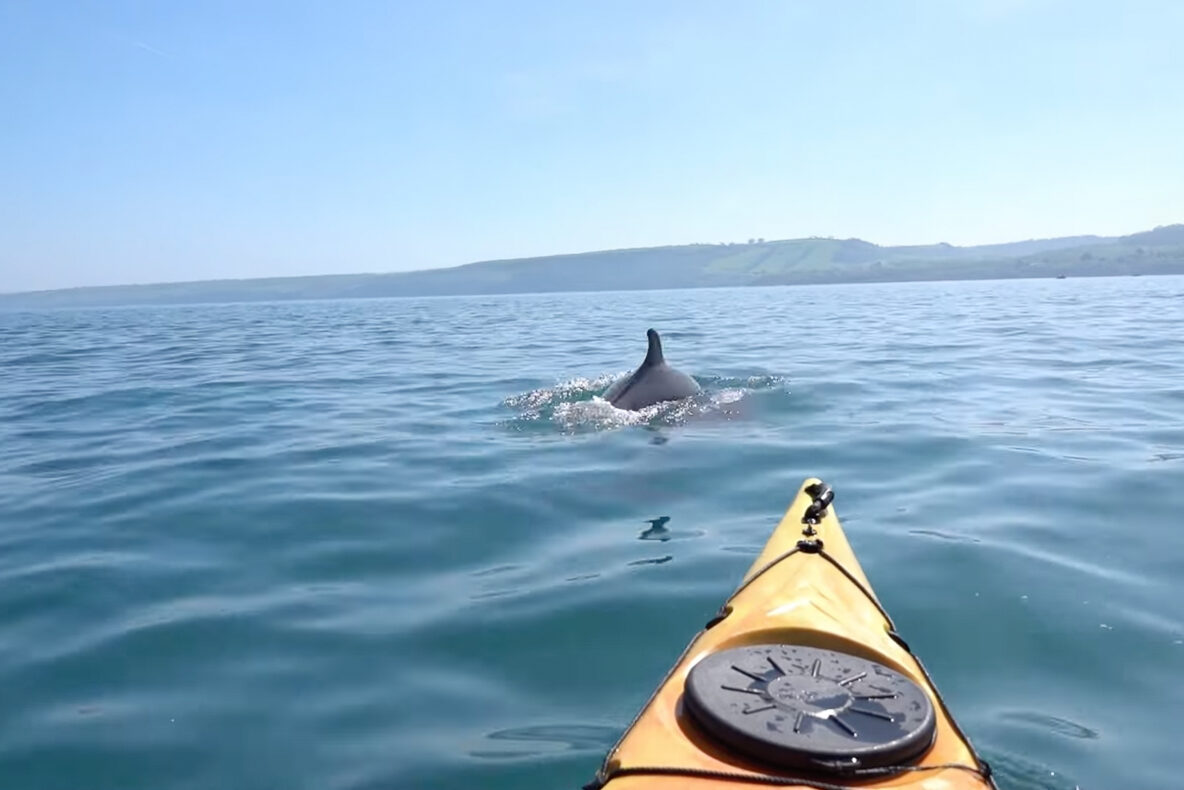
A dolphin surfaces off the bow of a sea kayak in Cardigan Bay, Wales
A bottlenose dolphin surfaces off the bow of Rupert’s kayak. Image: Henry Kirkwood Films | YouTube

With a glassy sea, the father-son duo spent their first morning paddling past jellyfish and kittiwakes then hiking headlands to scout for bottlenose dolphins. The second day, the pair became a trio, joined by Rupert’s wife and Henry’s mother, and they paddled toward where they had seen the bottlenose dolphins the previous day.

It wasn’t long before they spotted bottlenose dolphins in the distance and took their paddles out of the water to watch from a distance. The curious dolphins came over to check out the kayaks, giving this family an up-close encounter with one of the ocean’s most notoriously playful critters.

“I didn’t want to spend all my time photographing because I wanted to enjoy seeing them as well,” shared Rupert.

Off the coast of Wales in Cardigan Bay, a kayaker paddles with Bottlenose Dolphins
Rupert Kirkwood has a close encounter with bottlenose dolphins in Cardigan Bay. Feature Image: Henry Kirkwood Films | YouTube

Bottlenose dolphins played around the kayaks, diving beneath them and one even surfaced with a fish in its mouth near the paddles.

Henry launched a drone from the kayak to get footage of the bottlenose dolphins from a distance above.

“Dad continued to paddle in a straight line to avoid disturbing the dolphins but then they decided to come over to his kayak and check him out,” shared Henry.

Rupert found himself with a pod of six or seven bottlenose dolphins trailing him, bow riding and splashing. Eventually, the dolphins outpaced the paddlers.

Inside Justin Barbour’s 4,000KM Journey Across The Hardest Route You’ve Never Heard Of

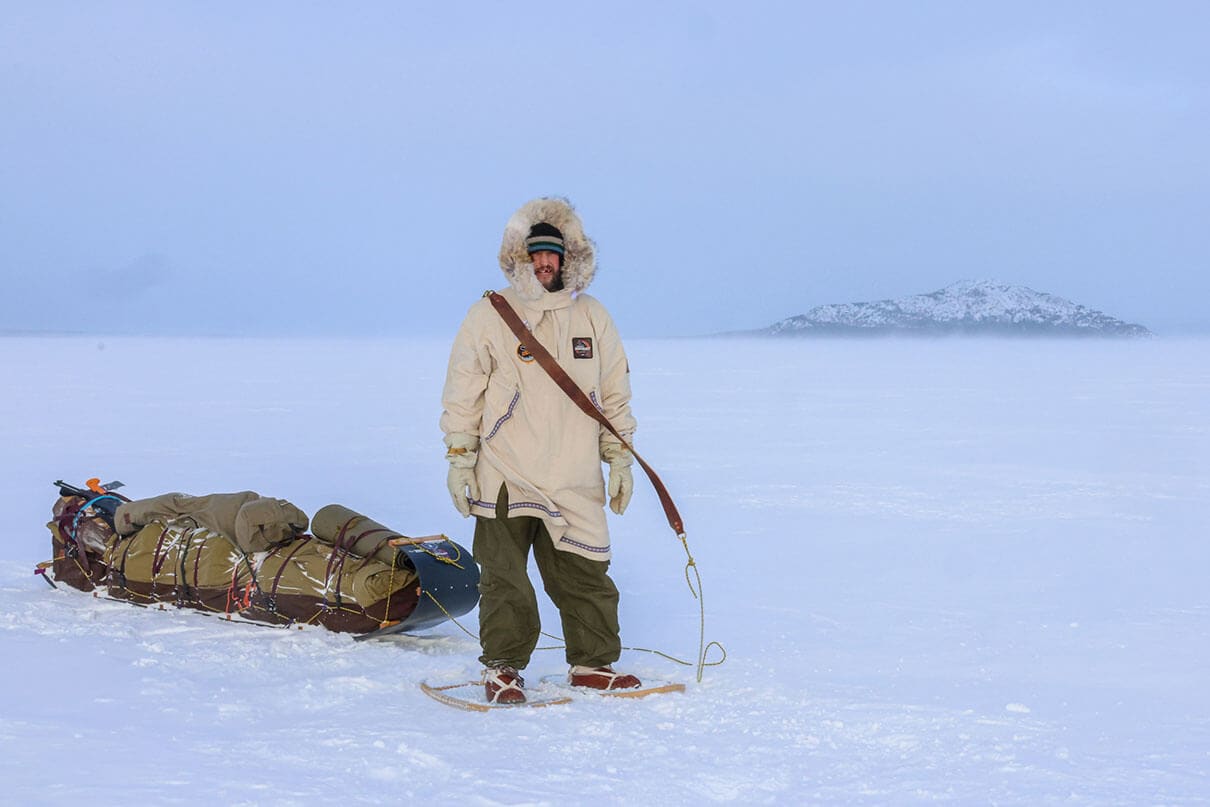
Justin Barbour stands in snowshoes and parka with his loaded sled in the tundra
Justin Barbour crossed Canada’s wild east during a yearlong expedition. | Feature photo: Courtesy Justin Barbour

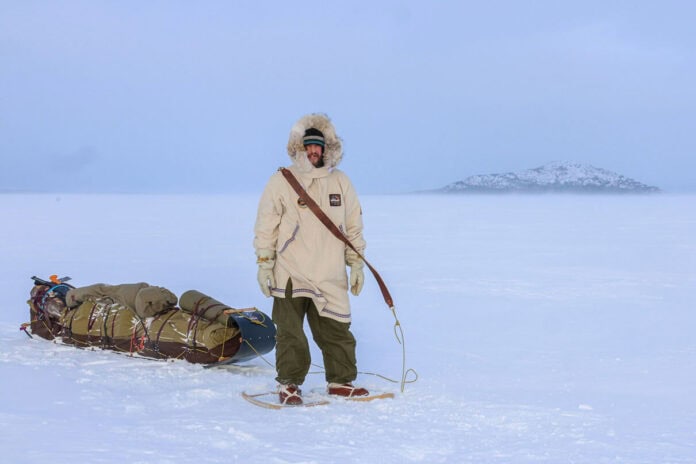
In late September 2018, Justin Barbour was barely 200 kilometers into a canoe expedition across subarctic Labrador and Quebec when winter arrived far earlier than expected. Barbour, a professional adventurer who goes by the handle Newfoundland Explorer on his popular YouTube and social media channels, recalls breaking ice with his paddle and spending “numb days, ill-equipped in the canoe with frost-nipped toes.”

But instead of feeling the sting of defeat when he eventually used his satellite communicator to summon helicopter rescue, Barbour was already planning a more audacious adventure. “I badly wanted to continue with a sled and snowshoes, but I did not have enough winter travel experience,” says Barbour. “Looking over the vast snowy landscape on the chopper ride out, I said to myself, ‘I’ll be back, and when freeze-up strikes, I’ll be ready.’”

Inside Justin Barbour’s 4,000KM journey across the hardest route you’ve never heard of

Barbour went home to St. John’s, Newfoundland, and studied winter travel by snowshoe, toboggan and canvas tent heated by a woodstove—“the way of the old Labrador trapper,” as he describes it. “The goal was to spend the year traveling in nature like the Indigenous people and earliest settlers, who inspired me and who lived much closer to the land than we do today.”

Five years later, Barbour started Expedition Northeast on the shores of northern Hudson Bay in Puvirnituq, Nunavik. His destination: Cape Pine, the easternmost point in Newfoundland, nearly 4,000 kilometers away. Traveling alone and sometimes with his dog, Saku, Barbour’s four-season journey would include canoeing, hiking, snowshoe and toboggan travel and mountain biking.

Justin Barbour stands in snowshoes and parka with his loaded sled in the tundra
Justin Barbour crossed Canada’s wild east during a yearlong expedition. | Feature photo: Courtesy Justin Barbour

“Essentially, I would cross a huge portion of Northeastern Canada,” he says. “I wanted to feel the seasonal changes in my soul, to experience every minute of it, and to complete the route by human power.”

Barbour was strategic in starting by canoe, knowing it would be most efficient to paddle across the water-dominated landscape of the Ungava Peninsula. “I wanted to eat up some big kilometers early in the expedition,” he says. “I also wanted to enjoy the fantastic Arctic watershed monster fishing.”

This initial paddling portion of the journey proved to be a highlight. Being out year-round meant “there were times when I had to push hard and other times I would lay off the gas,” he says. Barbour spent about a month in communities along the way, “cleaning up, swapping gear, backing up video footage to hard drives, dealing with logistical delays, learning about villages and local outdoor people, and spending time with my wife, Heather, who came to visit.”

As winter approached, Barbour camped for six weeks on the outskirts of Schefferville, Quebec, waiting for ice to form on the waterways. When he finally set out on snowshoes on New Year’s Day, 2024, Barbour faced brutal conditions and short daylight hours, making for slow progress.

He hauled a 250-pound toboggan through snowdrifts, storms and -50°C temperatures, and faced the time-consuming tasks of making camp and gathering firewood after each day’s travel. Over 86 days on the winter trail, Barbour covered just over 700 kilometers, before mountain biking 1,150 kilometers on the Labrador Highway to the Atlantic coast in the spring.

By the numbers
Days from start to finish: 372
Total distance: 3,902 km
Distance canoeing: 1,150 km
Distance by snowshoe & toboggan: 702 km
Distance hiking: 550 km
Distance mountain biking: 1,500 km
Number of resupply points: 6
Average distance on traveling days: 14.1 km

After riding the ferry to Newfoundland, Barbour bushwhacked south on the island’s Great Northern Peninsula. He finally completed his journey at Cape Pine on day 372. The feeling of being home “was almost out of body-like,” Barbour recalls. “It was difficult to comprehend I had come that far and been out so long. It was bittersweet, fulfilling and rewarding.”

A year later, Barbour is editing expedition video for a late 2025 or early 2026 release and reflecting on the bigger lessons of Expedition Northeast. “There’s no feeling more powerful than realizing a dream.”

Cover of Issue 74 of Paddling MagazineThis article was published in Issue 74 of Paddling Magazine. Subscribe to Paddling Magazine’s print and digital editions, or browse the archives.
Justin Barbour crossed Canada’s wild east during a yearlong expedition. | Feature photo: Courtesy Justin Barbour


Checking Sea Time In Washington’s San Juan Islands

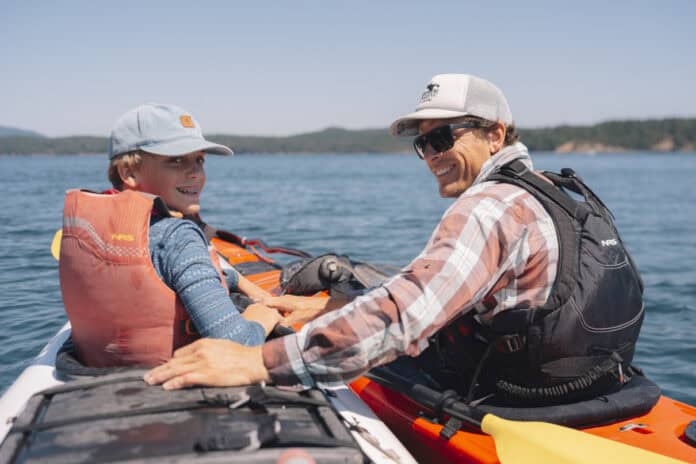
A guide and young boy sit in kayaks side by side on the water surrounding the San Juan Islands.
Image: Outdoor Odysseys

The pings arrive before morning coffee: work emails, news headlines, social notifications. Thirty minutes later, you’re thumbing through suggested videos, trying to remember what you were supposed to check in the first place. The glowing screen sapping attention before the day has properly begun.

The modern benefits of being accessible mean our smartphones are interrupting our sleep, our conversations, and even intended quiet moments. Studies link excessive screen time to stress, anxiety, fragmented attention and emotional fatigue. Yet stepping away from our devices isn’t easy with the dependency on them we’ve interwoven into our lives, and it can feel equally stressful, nearly impossible, to disconnect.

Ironically, just a few hours north of the tech capital of Seattle, there lies an unexpected reset.

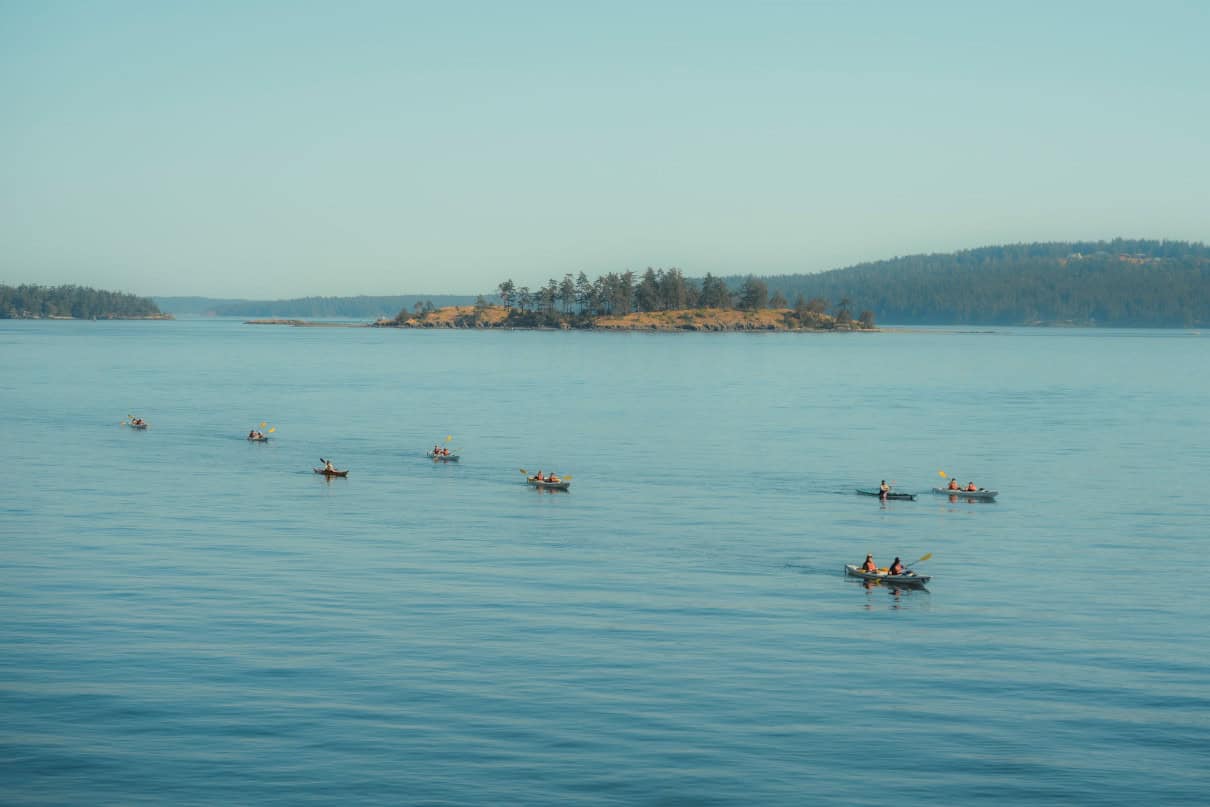
In Washington State’s San Juan Islands, guests launching sea kayaks with Outdoor Odysseys often begin their trip with a radical act: switching their phones to airplane mode (or as the advertising implies, kayak mode), and some even leaving them behind altogether.

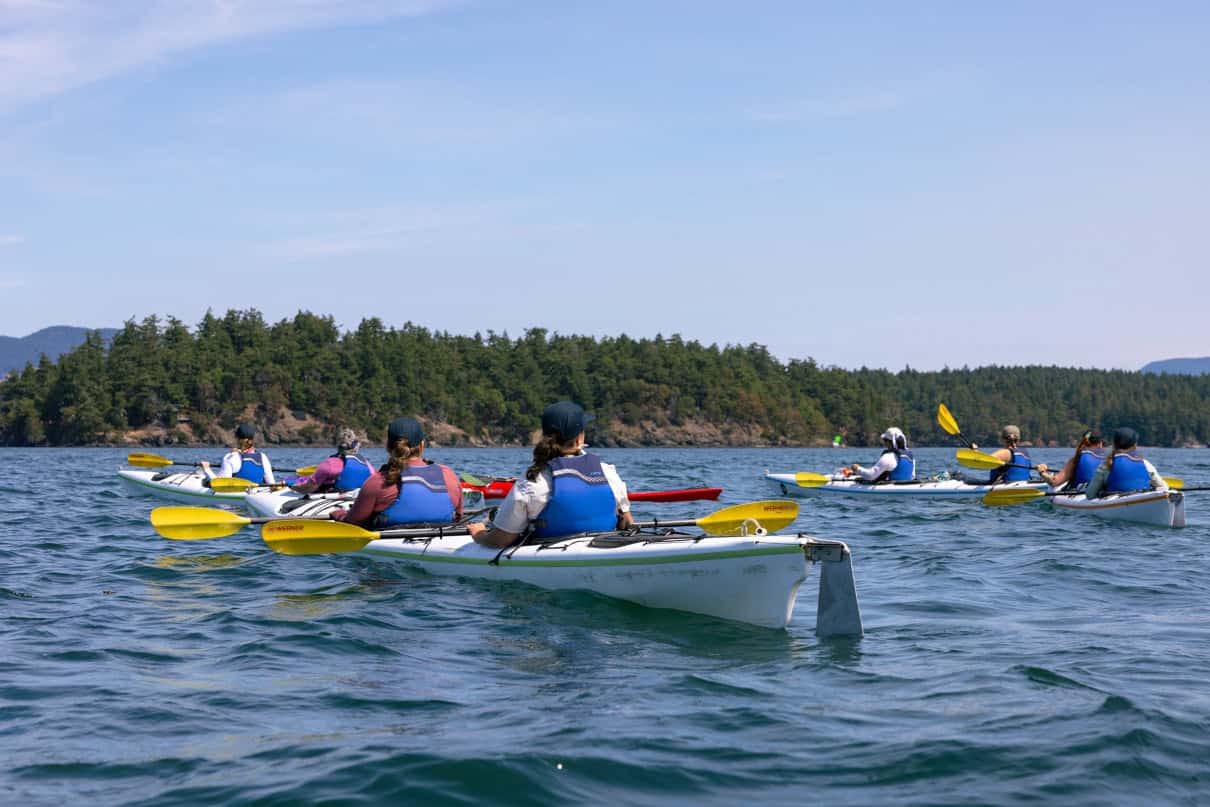
A group kayaks the San Juan Islands in Washington state.
Image: Outdoor Odysseys

“There’s information overload and mindless technology use. Both are taxing people in different ways,” says Tom Murphy, the owner of Outdoor Odysseys. Murphy has been with the outfitter since 2005 and purchased the company from founder Clark Casebolt in 2012. He believes strongly in the digital detox, an intentional period of time where we cut the cord and eliminate our screen time.

The research sides with Murphy. Exercise, meditative activities like paddling, and time spent outdoors, in nature, untethered from technology, have been found to reduce stress and symptoms of depression.

While everyone has the power to change their relationship with their phone anywhere, Murphy sees paddling the San Juan Islands as a transformative catalyst. “What we’re really helping guests do is reset their relationship with technology, to enjoy their time with us as fully as possible.”

Murphy and Outdoor Odysseys have built a four-decade reputation guiding paddlers through the waters around these islands. And as the small sea kayaking outfitter has evolved, they have become increasingly relevant with an essential need for modern travel: an analog antidote to our digital lives.

Digital Detoxing by Way of Kayak in the San Juan Islands

Rewriting the schedule on island time

Kayak travel dismantles urgency. Movement depends on tides, weather and daylight rather than rigid itineraries. Launch times sometimes shift. Routes sometimes adapt.

“We’re used to controlling our daily schedules,” Murphy says. “Out here, nature sets the pace, but no matter the route, you’ll have a great time on the water.”

That slower rhythm, commonly called “island time,” begins before paddles even touch water, with travel to the San Juans based on the schedule of ferries. The ride gives guests their first moment of pause to begin disconnecting from the mainland and focusing on the trip ahead and the people they will be traveling with.

Unlike viral destinations of social media fame, Outdoor Odysseys avoids performative tourism in the San Juan archipelago. “There are no queues for the perfect photo rock,” Murphy says.

Instead, you explore one place deeply rather than racing between highlights to check off a list.

Going out of office and into the blue

Sea kayaking demands presence almost immediately. Unlike passive sightseeing on a large boat, a kayak connects travelers directly at water level. The result isn’t an escape from reality, but more a recalibration, with attention returning to the physical world, truly IRL (in real life).

“You’re moving under your own power,” Murphy explains. “Your hands are busy, your brain is engaged, and you naturally start paying attention to what’s around you: the birds, the water, your paddling companions.”

Without engines or exhaust, the kayaks move almost silently, allowing you to tap into the marine network around you.

“It’s a respectful way to move through the water,” Murphy says. “You see things more organically, from urchins slowly crawling the sea floor in the clear waters to marine birds swooping and plunging nearby.”

A group of kayakers paddling across a stretch of open water in Washington stae.
Image: Outdoor Odysseys

Getting Real Without Reels

Wildlife encounters in the San Juan Islands are anything but predictable, but in a world of influencer-curated itineraries, that unpredictability is exactly what makes encounters so intimate.

“Seeing whales is a privilege, not an inevitability,” Murphy says as he expresses to aspiring detoxers that this is a kayak trip first and the rest is up to chance.

Encounters do happen regularly. Harbor seals appear on nearly every trip, curious heads bobbing like what Murphy jokingly calls “marine Labradors.” Sea lions announce themselves long before becoming visible. And occasionally, paddlers experience moments impossible to script, like the sudden breath of a porpoise breaking calm water or an orca surfacing nearby.

Guests often reach instinctively for cameras, but the quickness of these encounters usually foils their attempts. Murphy believes that dozens of rushed photos rarely replace one deeply lived moment.

But any wildlife interaction, according to Murphy, reminds us that there is a lot going on under the boat, and it’s worth slowing down to experience it and consider the positive impacts of marine conservation too.

Meanwhile, night paddling transforms perception of the waterscape entirely. During bioluminescence tours, darkness settles across calm water until paddle strokes ignite flashes of living light.

For many guests, Murphy says, it’s their first experience with true darkness, free from screens, streetlights, or artificial glow. Without visual overload, he says, awareness sharpens. The water sounds louder and stars appear brighter.

Replacing social media with social life

Once phones get put away conversation is inevitable. And in tandem kayaks, communication is essential to adjusting pace, pointing out wildlife, and getting to know your shipmate. Even strangers quickly develop a shared rhythm.

“You’re literally in the same boat,” Murphy says. “Everything becomes something you’re doing together.”

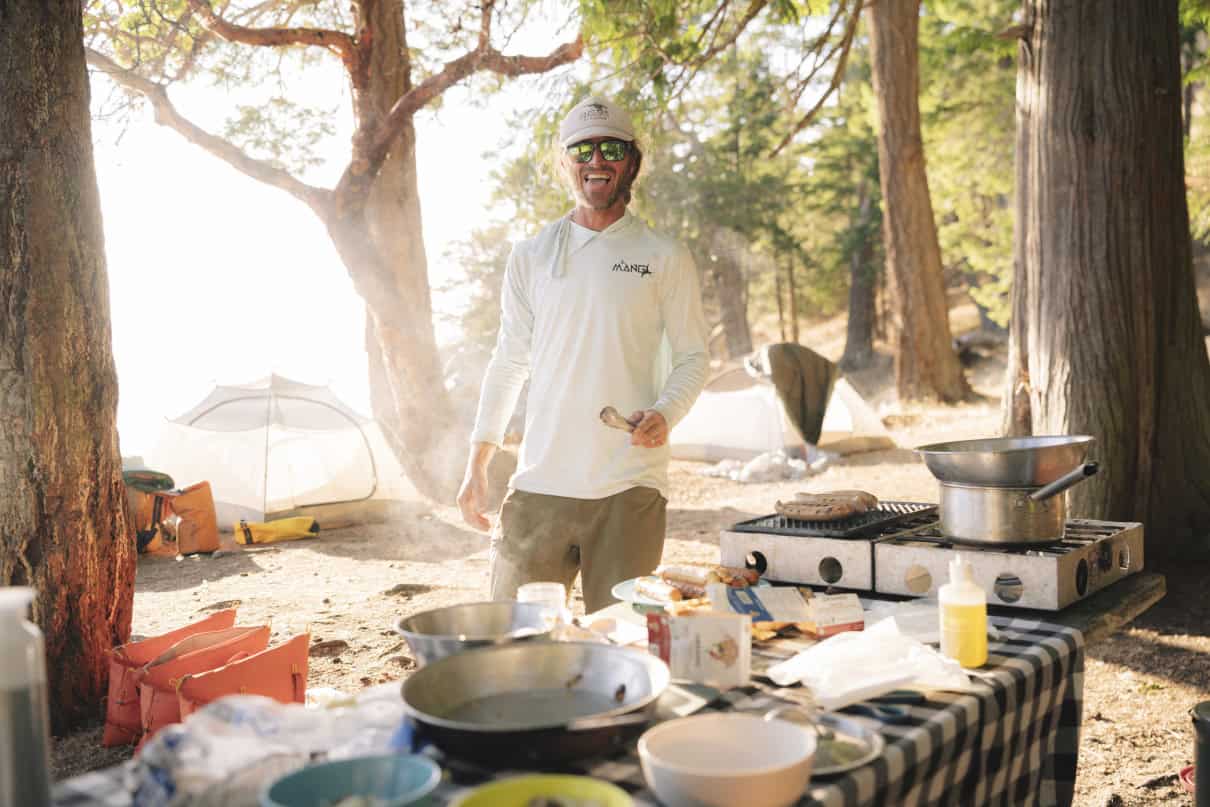
Evenings amplify that connection. Well-thought-out meals unfold slowly on remote beaches. Murphy, an avid cook, has shaped Outdoor Odysseys’ backcountry menu around sustainability and enjoyment rather than convenience and speed. Local produce is prioritized when possible, fair-trade coffee fuels mornings, and herbs grow beside the company’s office.

After hours of paddling, these shared meals become memorable rituals rather than refueling stops. Many of Outdoor Odysseys’ reviews comment on the excellent food, and amazing guides. So naturally, conversations at camp linger long after dinner ends.

A family kayak trip in search of a digital detox leads to unforgettable moments like rock jumps.
Image: Outdoor Odysseys

Connection found

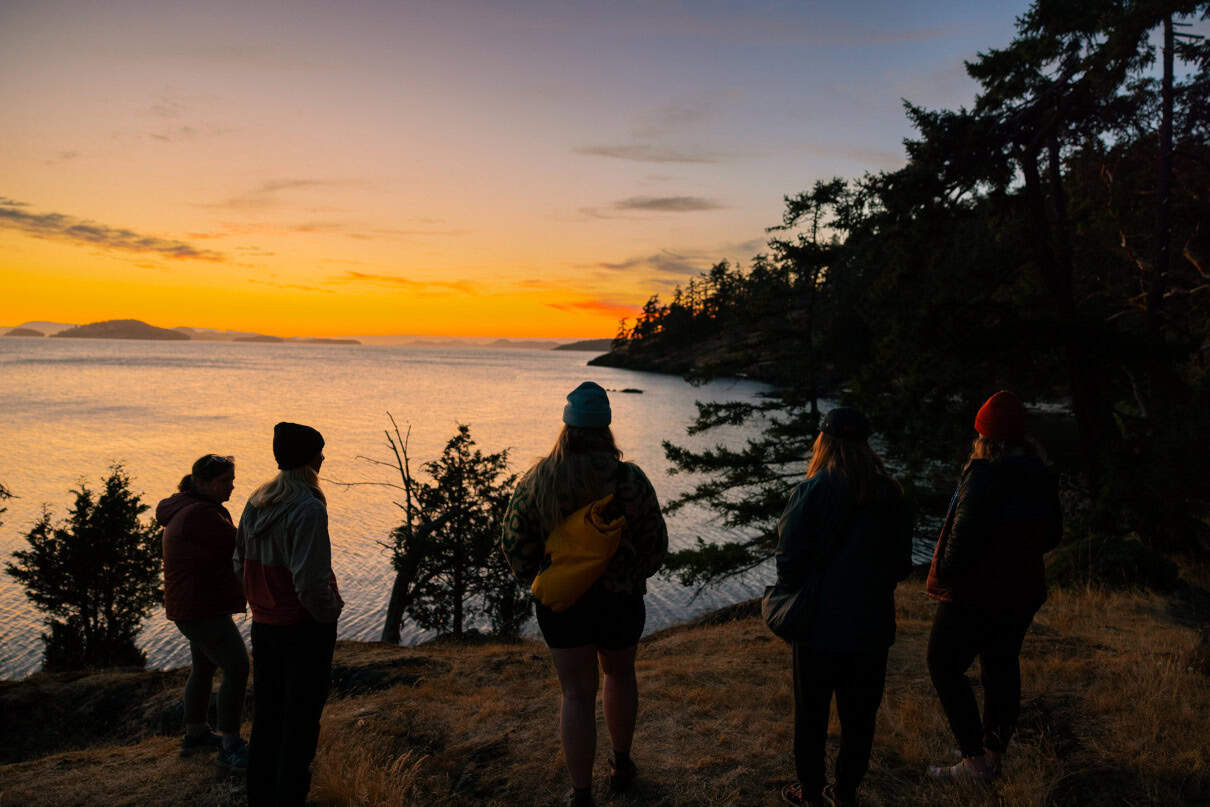
Without digital distraction, simple activities regain novelty: skipping stones, tidepooling, building driftwood sculptures, being mesmerized by flames dancing in a campfire, and watching sunsets that light up the sky.

Murphy recalls watching a young child sit happily in the middle seat of a triple kayak, occupied with nothing else as she turned her spray skirt into a tidal pool with some seawater, kelp and a rock crab.

“It pulls people away from a false urgency,” Murphy says. “They remember or figure out how to fill time differently.”

As trips end and phones reconnect, messages and notifications flood back. Headlines resume their relentless pace. And Murphy says that’s okay. What Outdoor Odysseys ultimately offers isn’t escape from modern life, he says, but perspective on how to live within it.

“We don’t need to abandon technology,” Murphy explains. “We just need a healthier relationship with it.”

Out on the water, paddlers rediscover things increasingly rare: sustained attention, shared experience and the quiet confidence that comes from moving through the water under their own power, immersed in the natural world.


Outdoor Odysseys offers half to multi-day kayaking itineraries in the San Juan Islands between Victoria Island, the mainland of British Columbia and Washington State.


The Canoe Confessional

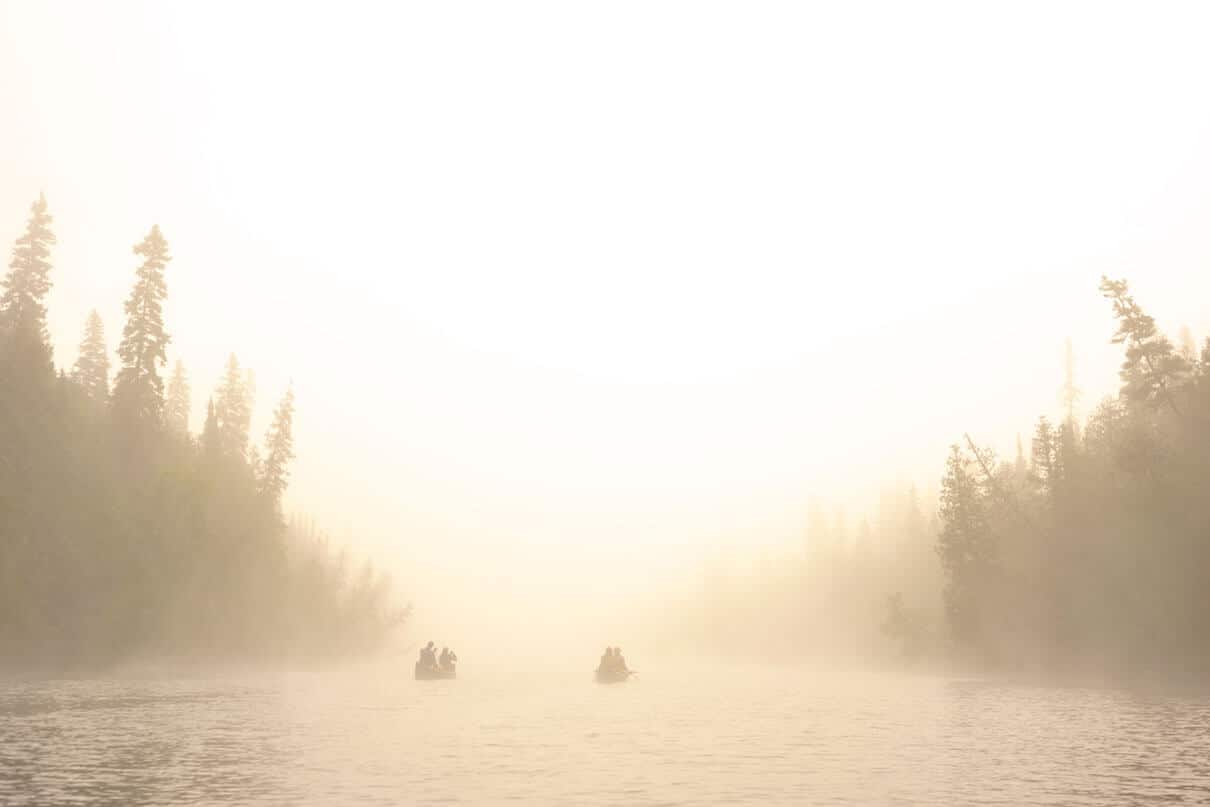
two canoes on a river on a misty day
Tell you all about it later. | Feature photo: Virginia Marshall

You’d be amazed what people will tell you in a ferry line. I’m leaning against my car on a scorching July day, trying to catch a faint breeze while waiting for the ferry to load. A man in the lane next to me is doing the same. He gestures to the canoe on my roof and delivers a classic opener:

“Nice canoe you got there.”

The canoe confessional

It’s the kind of throwaway comment you say to pass the time. I tell him I’m on the way home from a trip and that I work for a paddling magazine.

That’s all it takes.

“I haven’t paddled in years, but—”

And he’s off. The time he was on a weeklong Boundary Waters trip with his brothers. They dumped a canoe, lost a shoe and soaked their sleeping bags. His dad was still alive then. His brothers still talk about that trip.

I ask him if he has a canoe of his own, and instead he tells me about his daughter. He got a canoe for their first trip together. She was seven. A thunderstorm came out of nowhere and it poured rain for three days straight. A slog at the time but magic in memory. She’s 21 now, and he’s real proud, though he doesn’t see as much of her as he’d like.

two canoes on a river on a misty day
Tell you all about it later. | Feature photo: Virginia Marshall

It’s not just the ferry line. My cherry-red canoe is a conversation starter and a magnet for stories. Notice the canoe, and suddenly, we’re not talking about the weather, we’re into the summers that changed everything. The people we miss. The best times. Or the worst. I hear these stories everywhere.

A plaid-clad couple at a gas station tells me they got engaged three decades ago on the Nahanni River. “Ever heard of it?” they ask.

In the hardware store parking lot, a man throws out his arms to tell me, “Catch of a lifetime; fish was this big.” It was during his first solo trip, back when he was too scared of bears to get much sleep.

The quiet woman at table eight at a friend’s wedding lights up when she talks about her teenage summers spent at paddling camp. She lived off trail mix and met her best friend. She and that friend are going out for an overnight later this summer, she says, the first since her diagnosis.

Maybe you’ve had some of these conversations, too.

The canoe—or kayak—confessions, as I’ve come to think of them, are sometimes someone’s favorite paddling story; other times, it’s their only one. I’ve stopped trying to guess where they’re going. Some stories are about the boat. Most are about something else entirely. Who they were with. Where they were. What the trip made clear. The boat doesn’t matter so much. It’s who and what it connects us to.

Back in the ferry line, a man in a safety vest waves on the first vehicles and the motorcycle engines roar to life. Pulled from his reverie, my chatty lane neighbor looks a little startled.

“Nice chatting with you,” I say.

I still don’t know his name, and thanks to my canoe, we never did get to the weather.

Kaydi Pyette is the editor-in-chief of Paddling Magazine.

Cover of Issue 74 of Paddling MagazineThis article was published in Issue 74 of Paddling Magazine. Subscribe to Paddling Magazine’s print and digital editions, or browse the archives.
Tell you all about it later. | Feature photo: Virginia Marshall


Hey Paddlers, The U.S. Coast Guard Wants To Hear From You

a pair canoes while fishing
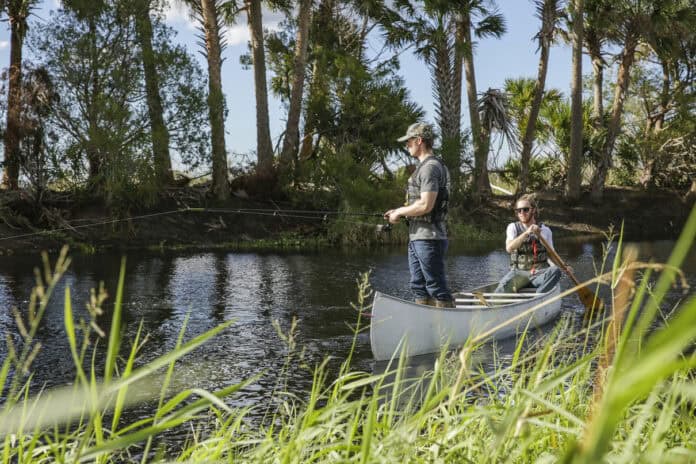
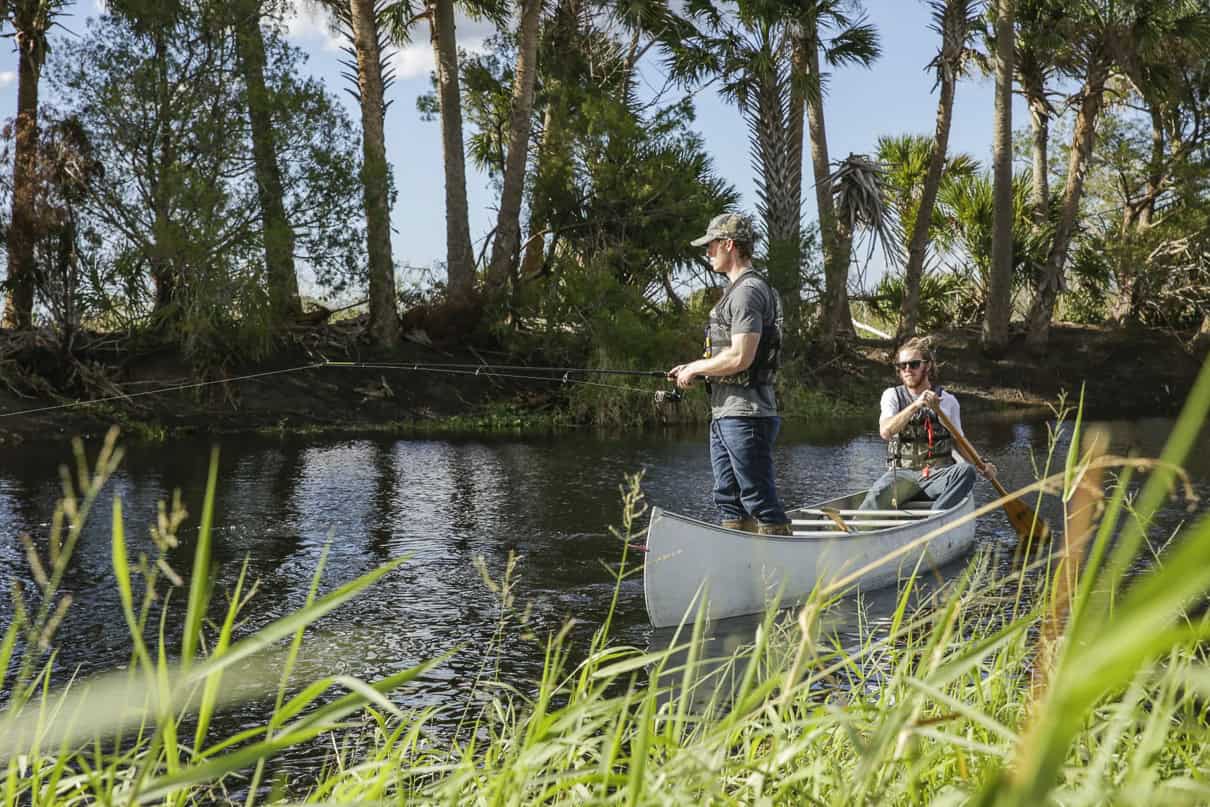
Fishing from a canoe on the St. Johns River near Christmas, Florida. Feature Image courtesy Watersports Foundation.

Once every five years, the National Recreational Boating Safety Survey (NRBSS) sponsored by the U.S. Coast Guard makes rounds collecting data on how many people go boating, the types of boats they use and how often they’re on the water.

As state boaters registrations typically target motorized vessels leaving human-powered kayaks, canoes and paddleboards unrecorded in many states, the NRBSS may be one of the best ways for paddlesports boaters to ensure their interests are represented and participation in boating recreation properly recorded.

Based on 2018 survey results, it is estimated that there are 84.5 million recreational boaters in the United States operating more than 25.5 million boats on over 25,00 miles of navigable waterways, according to the NRBSS. Now, in 2026 the survey returns for the first time since 2018, making this year’s survey the first time since 2020, when the industry experienced a rise in boating as an outdoor activity, that the survey has been conducted. In total, seven surveys have been conducted since 1973.

The Coast Guard is asking for your help in 2026. Volunteer to participate by completing a brief sign-up page sharing your boating habits and contact information with the Coast Guard. Later in the year, a large range of boaters will be invited to participate in the larger NRBSS survey.

Click here to volunteer.

Coast Guard’s NRBSS survey aims to guide future boating safety efforts

Conducted since 1973, the data collected through the NRBSS helps support national, state and local boating safety and law enforcement programs. Results are used by the U.S. Coast Guard and state agencies to make better decisions about how resources are used, and make boating and water recreation both safer and more enjoyable for all.

a pair canoes while fishing
Fishing from a canoe on the St. Johns River near Christmas, Florida. Feature Image courtesy Watersports Foundation.

“The NRBSS has an extensive history of giving important insight into how people are boating in waterways across the country,” shared Captain Brent Schmadeke, Coast Guard Office of Auxiliary and Boating Safety, United States Coast Guard. “The findings are critical in guiding the Coast Guard’s security efforts to keep boating safe and enjoyable for everyone.”

Boaters of all levels of participation are encouraged to apply, including those who consider themselves infrequent boaters. Participation from a variety of boaters helps ensure the NRBSS results accurately represent boating activity across the country. The survey is funded by a grant from the Sport Fish Restoration and Boating Trust Fund administered by the USCG and is being conducted by NORC, a nonpartisan research organization, at University of Chicago in partnership with the U.S. Coast Guard. All information provided is kept strictly confidential.

NRBSS survey may be the only means to estimate unregistered paddlecraft in the United States

Throughout the next year, NORC will collect information from more than 50,000 households throughout all 50 states to learn more about individuals who own or rent boats.

One particular strength of the NRBSS is estimating the number of boats not required to be registered by states, such as canoes, kayaks, paddleboards and rowboats. Presently, there is no authenticated count of these boats and an estimated 13.4 million boats owned in the U.S. are not required to be registered by the state where they’re kept.

The NRBSS also provides estimates on safety equipment used by boaters, including Emergency Position Indicating Radio Beacons (EPIRB), Personal Location beacons (PLB), Engine Cut Off Switch (ECOS) and VHF-Digital Selective Calling (DSC) Radios.

A Quick & Handy Guide to Repairing Waterproof Gear (Video)

Image of a green tent with a rainfly on a tent platform in the rain
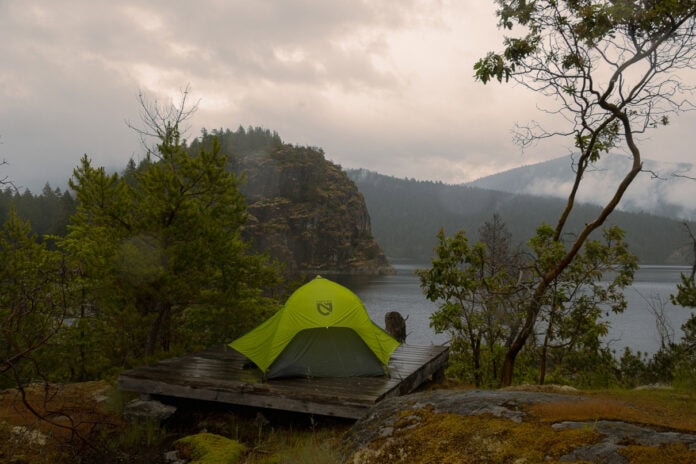
A waterproofed rainfly can be the difference between a happy camper and a trip cut short. Feature Image: Maddy Marquardt

Soon, the last of the ice will crack and melt on the northern lakes, the sun will warm the ground and it will be time to dust off your paddling gear for the first trips of the season. Before paddling season comes gear repair season, and now is the time to pick through the gear you promised you’d patch up in the fall to make sure it’s water-tight for the summer.

How to re-waterproof a rain jacket

Nothing ruins your paddle trip quite like getting to camp, pulling on your dry clothes, throwing on your rain coat and getting ready to cook under your tarp only to find your raincoat is soaking through. Just like that, you no longer have any dry clothes.

Luckily, this all can be prevented by properly refreshing the waterproofing of your jacket before the season starts. All you’ll need is Nikwax TX Direct Spray-On Waterproofing, your clean raincoat, and a hanger and space to dry the raincoat on after treating.

How to repair a leaky dry bag

Dry bags go through a lot. We fill them to the brim then roll them up tight. We jam our dry bags in kayaks, and to be honest, how many of us are really cleaning them out after every trip?

With all that wear, tear and questionable care, you might find that it’s time to patch your leaky dry bags.

There are a couple of things to keep in mind when repairing your leaky dry bag. First, you’ll want to make sure the points on the dry bag that you’re applying adhesive to are totally clean; rubbing alcohol is a good way to remove dirt and residue and prep your surface for the repair.

For larger cuts and tears, you’ll typically want to use a patch like a Gear AID Tenacious Tape Gore-TEX Fabric Patch. It often works well to use a patch on both sides of the hole to ensure full water proofing. You can also reinforce the edges of your patch with Aquaseal to reduce the changes of the patch catching and ripping off. For smaller, pinhole leaks, Aquaseal alone may be enough to repair the dry bag.

Patches like this are meant to be permanent patches to save your gear from an early grave rather than a temporary fix or quick trail repair.

How to repair a leaky drysuit

With drysuit prices running you several hundred dollars, no one wants to replace a drysuit that’s still mostly dry. When it comes to drysuits a savvy repair can save you a lot of money.

In order to effectively repair your drysuit you’ll need to check for leaks first. This can be done by sealing off your gaskets and filling the drysuit with air. Similarly to how you might locate leaks on a sleeping pad, spray the drysuit down with soapy water. Gently press on the inflated drysuit to check for leaks; you’ll be able to locate leaks from the soapy foaming bubbles as air comes out of pinholes.

From here, repair methods range from patches to gel adhesives. When patching a drysuit it’s extremely important to create a smooth patch that won’t catch and tear off as you’re paddling.

Check out a full guide on how to repair your drysuit.

How to repair a tent rain fly

A surprise leaky rainfly is one way to complicate your comfort on a camping trip, but the good news is rainflys are surprisingly easy to patch. Similar to other patches, you’ll want to be sure to clean your rainfly before applying your patch. Often, a Gear AID Tenacious Tape Gore-TEX Fabric Patch applied to both sides of the tear is enough to re-water proof a rainfly.

If your rainfly isn’t torn but soaks through in a heavy rainstorm, consider using Nikwax TX Direct Spray-On Waterproofing to re-up the waterproof coating exactly as you would on a raincoat.

A waterproofed rainfly can be the difference between a happy camper and a trip cut short. Feature Image: Maddy Marquardt