Home Blog Page 303

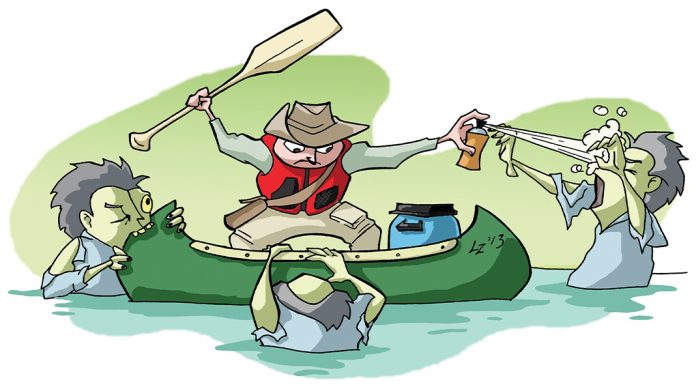
Why Canoeists Are Best Prepared To Fight Off A Zombie Apocalypse

Illustration: Lorenzo Del Bianco

It all started with one off-hand remark about how paddlers are more prepared for a zombie apocalypse than the general public. After that, every major morning show was eager to have me on. Instead of chatting about the latest camp gadgets, I was the new expert on the latest trend: zombie survival kits.

Since the classic 1968 film, Night of the Living Dead, zombies have been the focus of hundreds of movies and have invaded every corner of pop culture in the past decade. Ten million of us fans watched cable television show The Walking Dead religiously. Pre-teens stay up too late, killing corpses on their game consoles. The undead have even infested the classics, including revamped novel, Pride and Prejudice and Zombies, and the silver screen hit, Abraham Lincoln vs. Zombies.

Perhaps it should come as no surprise that zombies have crept into outdoor marketing, too.

The past few years have seen a surge in zombie apocalypse survival kits from outdoor companies. Their contents are a mix of traditional camping products and survival gear, accompanied by a tongue-in-cheek ad campaign.

Here’s a sampling: survival essentials manufacturer SOL (Survive Outdoors Longer) rebranded their cornerstone survival kit to create the SZL (Survive Zombies Longer) kit. It’s covered in blood splatter graphics, of course. Gerber’s got citizens covered, “if the Dead walk,” with their Apocalypse Kit, which features an array of machetes and knives. And if you’re looking for helpful tips and gear recommendations for the dawn of the dead, they’re on offer at Goal Zero’s zombie-themed microsite, zurvived.it.

Sales reps certainly seem to be having fun with the rebranded products. “We’d rather promote bivy bags, survival knives and our solar charge flashlights for zombie protection than some other, more serious, end of the world scenario,” says Barna Robinson, a sales agent for Goal Zero.

When it comes to end of the world scenarios, canoeists, I believe, are more prepared then anyone else. Zombie survival kits boast a mix of rope, water purification tablets, first aid supplies, shelters and waterproof matches, all tucked into a durable pack. I’ve got all that, and so do you. Axes and multi-tools aside, a quick trip to the gear attic can supply enough bivy bags, solar kits and ponchos to last at least a dozen zombie attacks. Add to that dehydrated chili packs and homemade jerky, cooked on non-petroleum cook stoves, and we’re set for the onslaught.

As backcountry paddlers, we practice for the apocalypse for days at a time. We’re used to eating dehydrated food, schlepping heavy supplies through the bush, foraging and fishing for dinner, warding off predators and traveling without leaving a trace. Best of all, we’ve got the means to travel to remote, zombie-free islands.

The truth about zombie culture, why the newest zombie movie outsells the last, is not the fear of the brain-eating zombies themselves. Instead, most of us have a deep desire to see if we could survive living in an untamed world. Well, I’ve survived the sweepers and five hellish portages on the Kopka River during blackfly season without DEET. Bring on the zombies, I say.

Kevin Callan’s bug-out bag includes two machetes and a bottle of the hard stuff.

Illustration: Lorenzo Del Bianco

Drybag Review: MEC Slogg

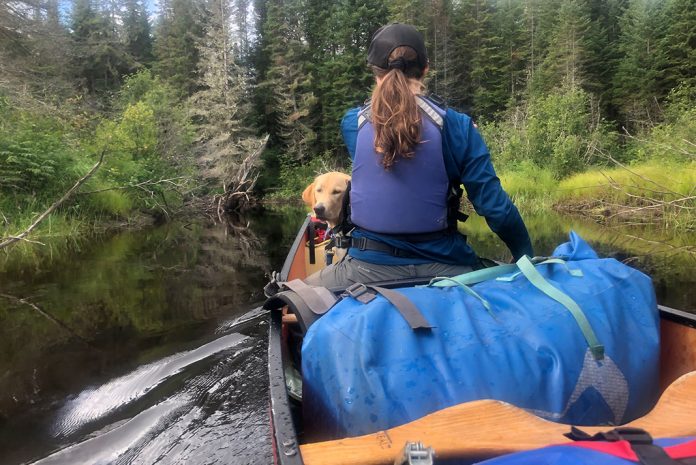
View from back of canoe of woman and dog in stern and blue dry bag behind.
One bag to carry it all. | Photo: Geoff Whitlock

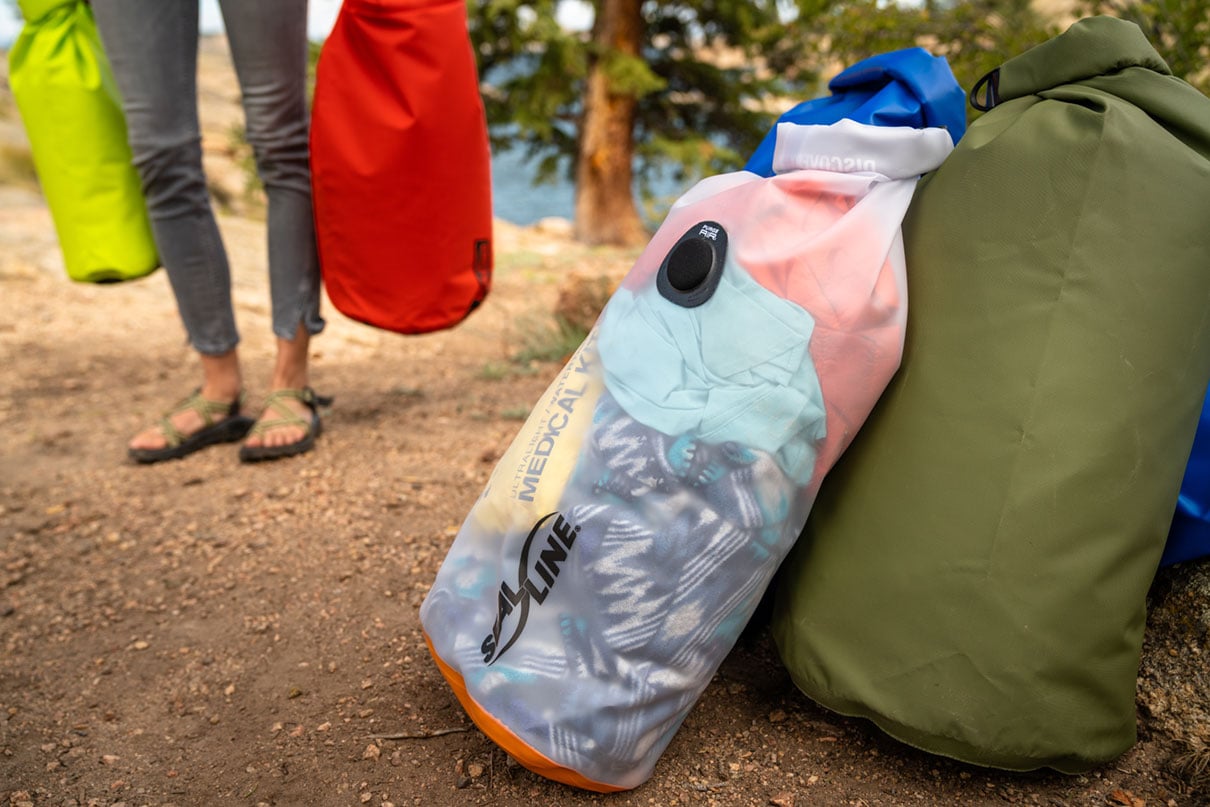
This big but lightweight drybag is simple, reliable and offers great value. Rugged and dunk-proof, it’ll find a home with backcountry canoeists and anyone else needing to keep their gear safe from the elements.

Contrary to its name, I was impressed by how comfortable MEC’s Slogg 115 is on long portages. The cushioned shoulder straps and hip belt on the easy-wearing Slogg help save your shoulders for paddling while it transfers weight effectively to your hips.

Its single 115-liter compartment means packing is super easy, but favors the already-organized. It’s cavernous blue interior will leave you searching if you drop in odd-and-ends or leave your rain gear at the bottom.

The Slogg is made of 840-denier, high-tenacity nylon and coated on both sides with PVC-free polyurethane. All seams are radio frequency welded. After seven years of hard use, the pack is only now starting to show it’s age. A couple of punctures have been easy to seal. Extend the Slogg’s life by avoiding picking it up by one handle or shoulder strap when it’s packed, to keep the attachment points in good condition.

Don’t stuff the bag too full—the stiffened roll-top closure requires a full four rolls to properly protect your gear from immersion. The closure system has been more than a match for any rainstorm and brief dunkings, but MEC warns it may not keep your gear dry during lengthy submersion.

The Slogg’s angled side handles are a welcome addition, making loading and unloading this over-sized bag much easier. They also act as anchor points, so the bag can be lashed securely if that’s your style. The Slogg comes in three sizes, a 35-liter, 70-liter and 115-liter option.

For those facing truly epic portages, MEC also offers a deluxe version with a welded frame, which mimics an alpine backpack’s ergonomics.


One bag to carry it all. | Feature photo: Geoff Whitlock


Here’s Why The Ocoee Is Nova Craft’s Best Open Boat

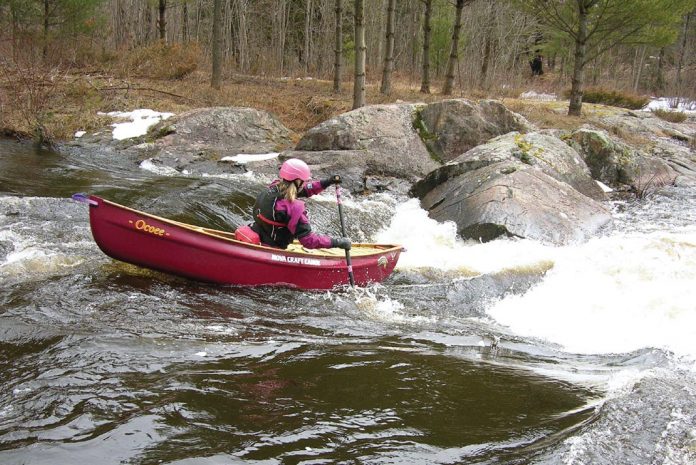
Woman paddling open boat down a rapid
Gail Shields on the Head River with the first production Nova Craft Ocoee. | Photo: Brian Shields

Before we talk about the Nova Craft Canoe Ocoee, let me first take you back in time to 1993. I was lined up for my instructor course’s final run at the top of Chalet Rapids. I had the option of running the course director’s then new Dagger Ocoee or doing my solo exam run in a 17-foot Prospector.

[ Paddling Buyer’s Guide: View all canoes from Nova Craft ]

All I’d heard for the past 10 days of the course were the instructors talking about how edgy the Ocoee was. How it was an advanced paddler’s boat. And it was then. At the time, the hot boats had been the Dagger Genesis, Impulse and Prophet and the Mohawk Viper 11—all very soft and forgiving by comparison. I admit it—I was afraid of the Ocoee. And with a pass or fail run ahead of me, there was too much at stake.

Nova Craft Canoe Ocoee Specs
Length: 11’3″
Width at gunnels: 25″
Width at waterline: 27″
Depth at bow: 21.5″
Depth at center: 15’5″
Depth at stern: 26″
Rocker: 5.5″
Capacity: 500 lbs
Royalex: 38 lbs
Royalex Plus: 44 lbs

Two years later I picked up a well-used Ocoee and learned to paddle it. As my skills improved, I learned to love it. It was the right boat at the right time.

By ‘99, in Rapid’s first open canoe shootout, all the intermediate open boaters wanted to be in the Ocoee, but most admitted they were still uncomfortable with its abrupt transition from primary to secondary stability. Like most flat-bottomed, hard-chined boats, the Ocoee doesn’t like to stay level; it wants to be tilted one way or the other. And that takes some getting used to.

The Ocoee set the standard for front surfing and technical paddling. Advanced paddlers love slicing across currents and truly carving deep into eddies. The Ocoee was also the first production boat that allowed advanced paddlers to offside tilt and engage outside edge to pivot turn an open canoe.

One of the best things about the Ocoee is how much you can play with its shape. I cut the top down, removing some of the Ocoee’s prominent sheer—the swooping up at the bow and stern. Then I narrowed the gunwales, rounding the bottom and sharpening the chines, making for faster and sharper carving.

Want it even faster? Andrew Westwood did. For slalom racing he played around with the shape, drawing the bow radically narrower than the stern. Westwood’s race boat was shaped like an arrowhead.

For creeking and rodeo (it was called rodeo then), Mark Scriver, Paul Mason and others sawed a foot or so out of the center and bonded the bow and stern back together. This modification was so successful, designer Frankie Hubbard ran with it to design the Pyranha Prelude—now the Esquif Prelude.

Nova Craft offers their Ocoee in either a Royalex or Royalex Plus, or what we used to call Royalite and Royalex. You have three gunwale options: vinyl, ash trim or bare hull.

Instructor Gail Shields, whose Bell Ocoee was used to build the Nova Craft mold, says she hasn’t been babying her lighter Royalite version and it’s holding up very well. She opted to install her own gunwales and Mike Yee Outfitting to create a hot rod of a canoe, weighing in at a crazy light 39 pounds. In fact, she needs the extra weight of nylon airbags so the boat will be legal in the rec class at ACA slalom events.

So, should you try Nova Craft’s version of this 20-year-old design? I think so, and so do Rapid readers. The Ocoee was voted favorite solo open boat of all time in our 2012 best boat survey. And if you still don’t think you’re ready for an Ocoee, no trouble, in the meantime Nova Craft makes a fantastic Prospector.

This article was first published in Rapid‘s Summer/Fall 2013 issue. Subscribe to Paddling Magazine’s print and digital editions here , or browse the archives here.


Scott MacGregor is the founder and publisher of Rapid. For the record, he passed his solo instructor level in the Prospector.

Gail Shields on the river with the first production Nova Craft Ocoee. | Photo: Brian Shields

Pyranha Nano River Runner Review

Photo: Dan Caldwell
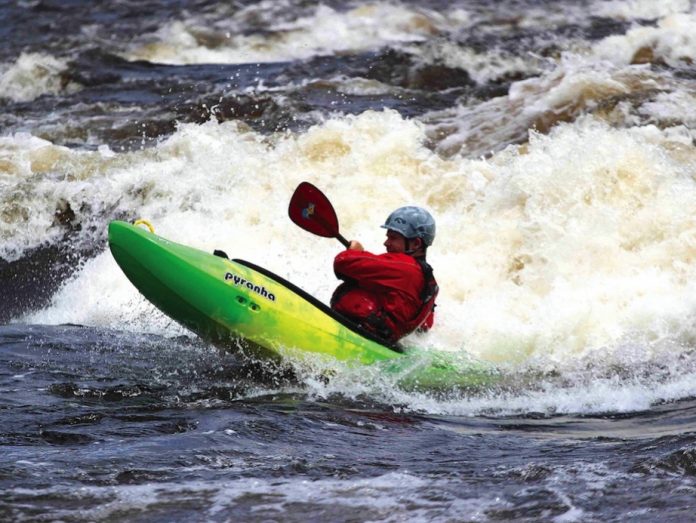
A review of the Pyranha Nano River Running kayak


It’s always a gamble when mixing design features together to come up with something new and exciting. Ideas that sound good on paper don’t always translate into success in the real world. Bassadors (a basset hound crossed with a Labrador retriever), the Ford Ranchero and McDonalds’ Land Sea Air burger are just a few unsuccessful mashups that come to mind. Fortunately, some get it right and create a product greater than the sum of its parts—this is the case with Pyranha’s new Nano.

We got our first glimpse of the Nano at Outdoor Retailer last summer, where Pyranha designer, Rich Taylor, confided to us that, “The hull is really the key.”

Flipping the boat over, he filled us in: “What we’ve done is combined three successful boats—the Shiva, the Jed and the Burn.” Line up all of these boats and you can clearly see the Nano truly does have a bow like the Shiva, Jed-like rails and a stern that takes lines from both the Shiva and Burn. The on-water result is a stable and playful ride. This kayak’s wide, semi-flat hull provides a rock-solid platform that…


This article originally appeared in Rapid, Summer/Fall 2013. To read the rest of the review, download our free iPad/iPhone/iPod Touch App or Android App or read it here.


Freestyle Move: Helix

Photo: Desre Pickers
Steve Fisher helix

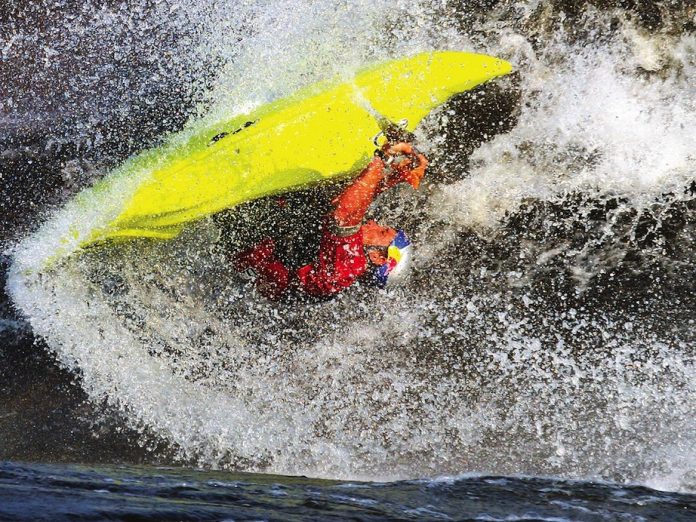
Ten years ago, I was hanging out in a bar with some mates in Zambia, using a Mosi Lager coaster to work out a new move. The following morning, I paddled down to the Zambezi’s Rapid 12B, dropped onto the wave and stuck the move first try.

Ironically, it was this wave—on this very day—that would have hosted the 2001 World Freestyle Championships had Spain not won the bid two years before. Too bad, the newly crowned helix would have had the judges scratching their heads!

A helix is an upside down spin where the boat does a 360-degree rotation on two of its three axes. It’s basically an extension of an aerial flip turn. The hardest part is figuring it out in your head.

1. Begin at the top of a fairly large, fast wave.

2. Speeding down the face, stern rudder to turn the boat and initiate your spin momentum. A slight bounce at this point helps.

3. Once your boat is pointing across the wave, use an aggressive hip flick to over edge the carve—digging your upstream rail into the water, then leaning downstream. This will flip the boat over your head and send you airborne. Lift your paddle out of the water.

4. It’s at this step that the helix and flip turn diverge. Aggressively twist your body into the spin to continue rotating the boat on a horizontal plane.

5. As the boat comes around a full 360 degrees, switch active hands and grab the water with the opposite blade from your stern rudder. This is the key to finishing the horizontal rotation of the boat and rolling you upright. You should land flat and facing upstream.

People often mistake a good flip turn for 
a bad helix. To helix, the stern of your boat must not touch the water as it comes around on the upstream side. If it catches, your bow will come over your head vertically—that’s a radical flip turn.


This article originally appeared in Rapid, Early Summer 2011. Download our free iPad/iPhone/iPod Touch App or Android App or read it here.

Trapper Corvus Canoe Review

Photo: Dan Caldwell
A review of the Trapper Corvus canoe

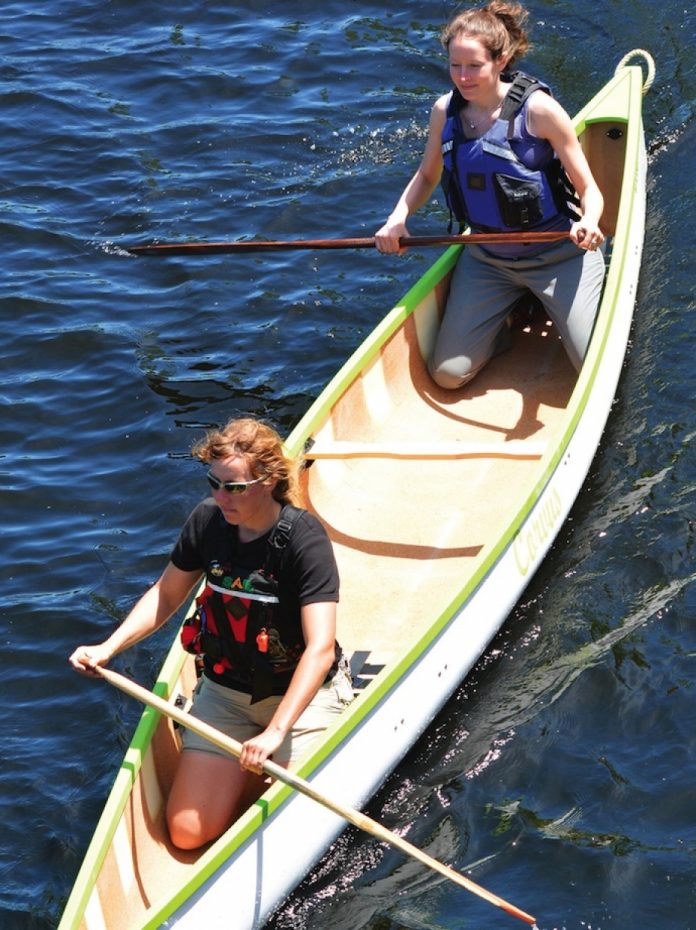
Unique and eco-friendly, Trapper’s Corvus will ensure you’re the talk of the canoe club. The smallest of Trapper’s expedition series, the sturdy Corvus was designed with both daytrips and weeklong paddles in mind and is ideal for paddling on slow-moving rivers and lakes.

If you’re not familiar with Trapper, don’t worry—this is their first year in the North American market. We paddled one of the first Corvus canoes in the country. Manufactured in Estonia, Trapper’s Ecolite construction sets its boats apart.

“Canoeing is a very green sport and we tried to provide product for it,” says Marek Pohla, co-owner of Tahe Marine, parent company of Trapper.

The Corvus’ laminate consists of woven biotex fabrics, cork, aramid and fiberglass. While Polha is resistant to claiming the title of most eco-friendly canoe line in the world, he does admit that he doesn’t know any other manufacturers going the same distance to create such ecologically sound boats.

Polha explains that 99 percent of the attractive cork that lines the hull is recycled, a byproduct of winemaking.

“When they make the cork for the wine bottle the rest is left, it’s recycled in sheet material and used in the base of the canoe,” he says.

Linen and hemp fabrics are used in the construction as well, which are over 90 percent natural products…

This article originally appeared in Canoeroots & Family Camping,  Summer/Fall 2013. To read the rest of this review, download our free iPad/iPhone/iPod Touch App or Android App or read it here.

Bluewater Prospector 17 Review

Photo: Kaydi Pyette
A review of Bluewater's Prospector 17 canoe

It’s rare that a paddler enjoys the portage as much as the paddle, but that’s just what Bluewater Canoe’s lightest weight Prospector promises. Weighing a carefree 41 pounds, this 17-foot lakewater tripping canoe is an easy walk in the woods.

“It wasn’t that long ago when a light boat couldn’t be very strong, now you can have your cake and eat it too,” says Brent Wood, operations manager at Mid-Canada Fiberglass, parent company to Bluewater.

Manufactured in an ultralight Golden Brawn lay-up, this canoe consists of three layers of Kevlar and e-glass, a mixture of Kevlar and glass. “The blend creates strength, impact and abrasion resistance, as well as rigidity,” says Wood.

The Prospector has long been heralded as the first choice of wilderness canoeists but each manufacturer has its own unique version of the traditional design. “We designed our 17-foot Prospector to be a hybrid. It was designed on the success of Bluewater’s popular Saugeen series, and we incorporated some of the Scott Prospector’s ease of use.” Wood adds that this design is narrow in the paddler stations for efficiency and boasts increased depth. “It’s a very efficient, stable family canoe.”

It’s the shallow-arch hull that provides ample stability for newcomers, yet also a feel that experienced canoeists enjoy. With just an inch and a quarter of rocker, Bluewater’s design has less rocker than traditional, river-ready Prospector designs, creating enhanced tracking. Thanks to its symmetrical shape, it can be paddled solo as well…

This article originally appeared in Canoeroots & Family Camping,  Summer/Fall 2013. To read the rest of this review, download our free iPad/iPhone/iPod Touch App or Android App or read it here.

4 Best Ancient Rock Art Sites In Ontario & Quebec

Photo: Virginia Marshall
Four areas that offer interesting rock art

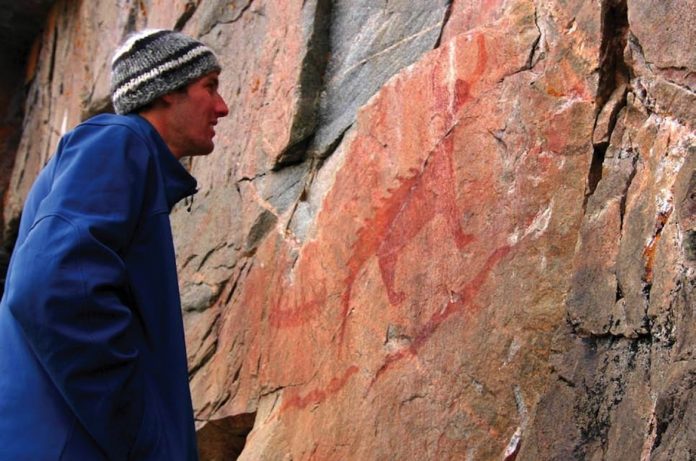
My feet shuffled uncertainly along the sloping, slippery granite. To my right, Lake Superior’s frigid green waters lashed at the precarious ledge on which I stood. To my left, a pink face of cold rock rose skyward in a single perfectly vertical pitch. Suddenly, I spotted them—caribou, men, canoes, snakes and a myriad of mythical creatures leaping and gliding across the granite canvas. To my young eyes, the creatures appeared almost alive. These were my first pictographs—ancient rock paintings symbolizing people, events and medicine important to the artists who created them hundreds or even thousands of years ago.

It’s no coincidence that many pictographs—including the ones I visited as a child at Agawa Rock—are found in spectacular natural settings. For it is in these places that the connection to the spirit world is strongest. The Agawa Rock paintings are still every bit as vibrant today, as are some 500 other pictograph sites found across the Canadian Shield.

[ Paddling Trip Guide: View all paddling trips and clinics in Ontario ]

Petroglyphs—carvings that have been incised, abraded or ground using a stone tool upon rock walls—are part of this same rock art tradition that denotes a connection with the spirit world. While pictograph sites are widespread in the Canadian Shield region, petroglyph sits are confused to the southern portion.

Want to see this fascinating artwork for yourself? Read below to find out more about pictographs and petroglyphs in Ontario and Quebec to plan your trip to see them.


How to read rock art

Pictographs and petroglyphs were used by the Ojibway, Cree and Algonkian peoples of Shield country to record historical events, share creation myths and give power to visions and medicine. Learn the meaning behind the imagery and you can read one of the most fascinating records of early history.

Radiating lines

Denote objects, places, manitous or people with great powers. For example, a human form with lines radiating from his head is probably a medicine man (Mide) who received a gift of power from a manitou and made the painting in recognition.

Tally marks

May represent the number of days fasted by a person on a vision quest or by a Mide seeking medicine.

Handprint

Prayer to Kitche Manitou (the Great Spirit), thanks for medicine received, or the mark left by maymaygwayshiuk—wise and mischievous fairies who live in the rock—when they closed the door to their rock home.

Bird

The Thunderbird was a powerful guardian Manitou that protected people from the bad underworld manitous of earth and water.

Serpent

Dangerous, malevolent spirits—often depicted with horns or spines, which signify power. Snakes lived in the water and would upset canoes and drown their occupants if not appeased by offerings.

Cross

Dates back 2,500 years in First Nation symbolism. May refer to the four cardinal directions and four Wind Manitous.

Circles

Another ancient symbol; refers to the medicine wheel. Medicine men used megis—small, round seashells believed to bring good luck—in medicine rituals. A circle around the head indicates a person with special knowledge.


Best places to see petroglyphs and pictographs

Mazinaw Rock

Bon Echo Provincial Park, Ontario

Above the waterline of Lake Mazinaw, at a level comfortably reached from a canoe, over 260 pictographs adorn a 1.5-km-long cliff face. Like the other tribes of Shield country, the Algonquins who painted these figures and symbols hundreds of years ago believed that the sheer 100-m cliff was not only a physical boundary between water and land, but also a gateway to the spirit world. The powerful messages they left for the spirits at Mazinaw Rock comprise the largest single collection of pictographs in Canada and are easily viewed by canoeists.

Stay Awhile: Take a tour of Upper and Lower Mazinaw lakes on the park boat, or by canoe (rentals available). Find comfortable wilderness campsites, sandy beaches and great fishing on Joeperry, Pearson and Mazinaw lakes.

Info: Bon Echo Provincial Park is located one hour north of Napanee (90 minutes from Belleville) on Hwy 41. (613) 336-2228.

The Teaching Rocks

Petroglyphs Provincial Park, Ontario

On a smooth, horizontal outcrop of limestone—in a peaceful Central Ontario forest—over 900 figures carefully etched into the rock comprise the most outstanding petroglyph site in all of Canada. The animals, birds, people, spirits and other images carved into the rock are estimated to be around 2,000 years old. Many of the visions, events and medicine depicted in the rock are not fully understood, but onsite interpreters can help explain some of the stories and meanings written in the stone.

Stay Awhile: Four short hiking trails round out a visit to this day-use park. Mountain biking, swimming and camping are available a 50-minute drive north at Silent Lake Provincial Park.

Info: Petroglyphs Provincial Park is located 45 minutes northeast of Peterborough, off Hwy 28. The petroglyphs site is closed Thanksgiving through early May. (705) 877-2552.

Oiseau Rock

Sheenboro, Quebec

Oiseau Rock, a 150-m cliff rising abruptly from a narrows in the mighty Ottawa River, is an example of the damage wrought by spray paint and ignorance. Nevertheless, those pictographs that are still visible—fish, canoes, a bear, a bird, arrowheads and a human-like figure (likely Nanabojou, a creator manitou who showed people how to make stone tools, weapons and canoes)—speak of the long history of the Algonkian people in this area. You can paddle or boat to the site from up- or downriver but no roads reach it.

Stay Awhile: In nearby Fort-Coulonge, adventurous families can sign up for the new via ferrata tour at Chutes Coulonge Park—literally, iron route, a guided exploration of the gorge and 48-m falls using zip-lines, bolted ladders and cable walk-wires.

Info: Oiseau Rock is located on the Quebec shore of the Ottawa River 13 km upstream from Fort William, QC, and 14.5 km downstream from Deep River, ON.

Agawa Rock

Lake Superior Provincial Park, Ontario

While many rock paintings survive because they are protected from the elements by an overhang or cave, the Agawa paintings have somehow defied centuries of pounding waves, grinding ice and harsh weather on an exposed cliff face. Members of the Ojibway mined ochre on nearby Devil’s Warehouse Island and mixed it with fish oil to create a lasting red paint, forming the images 150 to 400 years ago. One panel tells the story of Myeengun (The Wolf), an Ojibway chief who led his people across the lake in canoes to repel an invasion from the Iroquois tribe, while others depict manitous—natural spirits with special powers. The most fearsome of these manitous is Mishipizheu, a horned lynx who controls the moods of the lake and thrashes his tail when angered, whipping the waters into a fury.

Stay Awhile: A dozen day hikes explore the park’s rugged landscape. The Nokomis trail begins at Old Woman Bay and loops 5 km to a breathtaking view of the bay and its 200-m cliffs. A ride on the Agawa Canyon Train Tour also offers sightseeing through the heart of the park.

Info: The pictographs are located in Lake Superior Provincial Park,  140 km north of Sault Ste. Marie, off Hwy 17. At Sinclair Cove, take the half-kilometre Pictographs trail—and watch your step. (705) 856-2284.

This article originally appeared in Canoeroots & Family Camping‘s Spring 2010 issue. Subscribe to Paddling Magazine’s print and digital editions here, or browse the archives here.



14 Expert-Tested Ideas For Customizing Your Open Boat

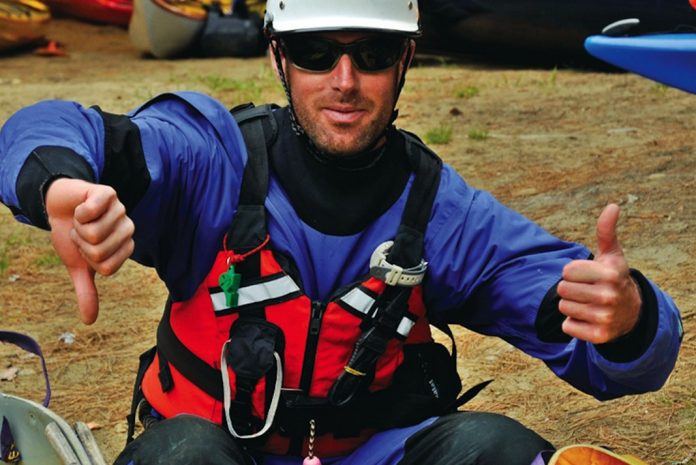
Male paddler sits in front of two canoes giving thumbs-up and thumbs-down hand signals.
How far will you take your canoe mods? | Photo: Virginia Marshall

There’s no reason to let auto buffs, washed up MTV hip hop artists and the Teutul dynasty have all the custom mods fun. Even un-tattooed, decidedly un-Teutuliar open boaters can reap the benefits of home tuning. And it doesn’t have to cost a rapper’s squandered fortune.

Take a lesson from the budget strokers and rice burners in the pages of Car Craft and Import Tuner and do more with less. Replacing a couple $5 thigh strap anchors, or spending just five minutes adjusting said straps correctly, can make your old beater perform as well as the slickest new digger and have you hanging louies, roscoes and U-turns—er, S-turns—with the best.

Here are some performance- and appearance-enhancing suggestions for whitewater canoe outfitting from canoeing Modfather Brian Shields.

1. Performance bucket seats

The saddle is your primary connection point with the boat. Use pieces of closed cell foam and contact cement to widen the saddle by an inch or so on each side to prevent sliding around on the seat. Create an even more secure feeling by gluing small foam wedges on the top edges of the saddle to make a custom bucket seat. Shag optional.

2. Clear coat and flames

Plastic paint in aerosol cans is readily available in most standard canoe colours. Restore a worn hull by painting just the bottom where the outer layer of ABS has worn away. If you can’t find your hull colour, use flat black and mask a symmetrically shaped area 
to allow you to paint just below the waterline. Or get bold and creative with air brushing, pin stripes, flames or metal flake to produce a one-of-a-kind show boat.

3. Material matters

Ultra-light, super-tough nylon floatation bags are must-have upgrades from vinyl beasts. Nylon bags take the heat better than vinyl, expanding rather than exploding. Nylon is also much nicer to work with, staying flexible in cool weather, and easy to deflate and stuff in your gear bag when transporting your boat. Harmony 3D End Bags come in three sizes: 30-, 54- and 60-inch. Buy bags that fill your cages to displace as much water as possible.

4. Transformer

Master playboat multi-day tripping with this mod. Using quick-release clips, create access openings in your float bag cage so you can carry gear on longer cruises. Start by sewing or gluing short loops of webbing onto webbing clips. Then cut your existing float bag cage cord and thread it through these loops.

5. Custom trim

Wooden gunwales are the granddaddy of canoe mods. Once you paddle with wood, everything else feels like an ‘81 diesel Jetta towing a Jayco Haul-All travel trailer.

6. Bobbed thwarts

The existing thwarts in most canoes are way over-engineered. The forces on the thwart when paddling are compressive, so 3⁄4-inch square material is all you need. This cuts the weight
 by nearly half and improves the appearance dramatically. Round over a straight-grained piece of cherry or ash, leaving just the ends square to improve fit under the gunwales.

Be warned, however; just as chopped roof struts and urethane body panels can reduce the structural integrity of street rods, scaled-down thwarts aren’t suitable for the paddler who portages like a rampaging Godzilla and exits his canoe like an Outfit crime boss splitting a chop shop bust.

7. Chop shop

Deck plates have no function except to hide the outfitting knots. Remove them and send them to the recyclers. Then tie neater knots. However, if you have wooden gunwales, you can install custom wood deck plates that—like aftermarket body kits and spoilers—do nothing for the performance of your ride, but look oh-so-hot. Choose a piece of wood with a grain you like, set it on the ends of the boat and mark the outline on the underside. Cut just outside the pencil line with a jigsaw and do the final precise fitting with a wood rasp. Just as quick and satisfying as a Ched ‘R’ Pepper burger at the Sonic Drive-In.

8. Lowrider

Lowering the saddle greatly improves stability. Try going down to an 8-inch saddle height. Bold paddlers with excellent joint flexibility can tolerate seats as low as 6 inches. Remove the saddle and trim off the desired amount using a band saw, or work top-down with a rasp. Aging and arthritic paddlers and those who enjoy a loftier perch can ignore this mod.

9. Lift kit

If your knees lift excessively when you’re strapped in, consider moving the anchors forward so the knee straps pass over your leg closer to your kneecap. A new set of anchors is inexpensive and helps make you one with your boat. Embracing tip #8 will also reduce knee lift.

10. Retention and retrofit

Avoid strap slip when rolling and bracing by checking to see if your thigh straps are installed with the wide, padded portion up and the strap completely contacting your leg (rather than hanging ineffectively in the air). Thigh straps are often installed or adjusted incorrectly, an oversight that—as with brake shoes, steering arms and sub woofers—tends to result in spectacular blowouts.

[ Paddling Buyer’s Guide: View all whitewater canoes ]

11. Suspension package

A lower seat results in paddling with your instep flat—kinesthetically disagreeable for all but the most elastic of boaters. Support your shins with hollowed-out minicell foam blocks glued to the floor with contact cement. There’s no sense in sporting a pimped-out ride if you can’t pull off the swagger to match. Warning! Paddling with your instep flat can result in your toes extending underneath the foot pegs and has resulted in foot entrapments. Rivet plastic plate extensions on your foot pegs to prevent this, or rip them out and install foam toe blocks instead.

12. Aftermarket accessories

Install a yoke in your tandem playboat… all those trippers can’t be wrong. Humping 55 pounds again and again to the top of the set can feel a lot more like work than play. A yoke leaves you with energy left over to paddle. Fine, sculpted cherry will make you smile every time you look at it—and at the frugal non-tuners nursing backaches at day’s end.

13. H2O in the trunk

Tired of your water bottle rolling around your knees on a carabiner? Modfathers know the best place to stash fuel—be it a cylinder of nitrous or a Nalgene of water—is in the trunk. Remove the rear seat block on your saddle, carve out a bottle-sized channel with a band saw or router, replace the block and hold the bottle in place with a bungee cord bolted through the foam. Or use a fret saw to cut your bottle bunkie in situ.

14. Bodywork

Using scrap material (broken hockey sticks work well) for temporary thwarts, experiment with various hull shapes. The stability of smaller, flat-hulled boats like the Esquif Zoom improves by lengthening the rear thwart by an inch and shortening the bow thwart by half that. Hulls that are rounded and soft chined are seldom improved from factory specs. Making them wider just makes it harder to reach the water. Narrowing them can cause stability to disappear entirely.

Brian Shields has been fine-tuning floating toys for 13 years, making handsome boats fit happy paddlers. 

Paddle Your Own Epic

Photo: Dave Fusilli
Paddle Your Own Epic

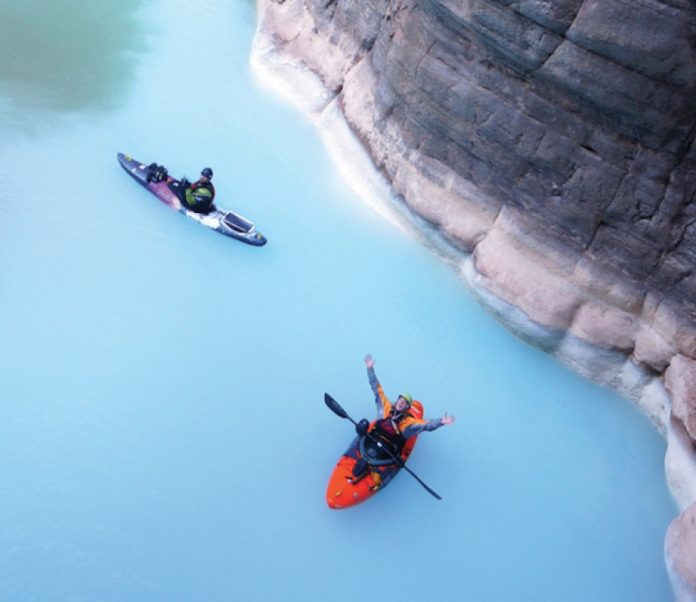
It’s day eight and we’ve reached Lava Falls, arguably the largest rapid in the Grand Canyon. Overhead, the sun is blinding. The canyon is a chameleon and has changed its look again, opening up to a panoramic desert view. Just yesterday, we were paddling with icicles forming on our helmets. The cold front that lingered for days is f inally gone. As we float closer, our anticipation heightens. Most of us take the scenic hike up river right to scout. Even from up here, it still looks big. After watching a few in the group style the rapid, the rest of us head down to our respective boats. One after another, we peel out. 

Any self-supported kayak trip, let alone one down the Grand Canyon, is an adventure of a lifetime. Although more common in recent years, remote multi-day whitewater trips are still a relative rarity amongst everyday paddlers and are usually reserved for epic first descents in far-off destinations. There are many rivers in the United States perfect for a multi-day trip, and it’s easier than you might think. In January, I paddled the Grand Canyon self-supported—instead of having rafts or larger crafts haul gear, we packed our kayaks to the brim with everything needed for weeks on the water, and I do mean everything. It’s not just paddling gear and rescue gear, but food and a cook stove, tents and sleeping bags, and, everyone’s least favorite, the groover. Once you’ve established your route, here’s how to do everything else. 

Heavy Hitter

The first step is to find your vessel. Look for a crossover boat. My boat of choice was the Pyrahna Fusion, a whitewater boat that allowed me to pack 20 gallons of gear in a dry storage hatch in the stern, fit a little more in the bow and still paddled well.

Even with such a big load, your kayak will handle fine, but you will feel the additional weight. What you lose in maneuverability, you’ll make up for with driving force. You’ll feel like you can blast through any rapid. The Colorado is big water with relatively few obstacles. There are certainly some large holes, but for the most part it’s large waves—perfect for a loaded boat. Since the rapids don’t require too much maneuvering, we were able to paddle the river with our skegs down. The skeg, traditionally used for staying straight and fast in flatwater, proved to be equally useful in the rapids. 

Chow Down

Expect to work on a self-supported trip and pack for burning extra calories. Kayakers usually paddle in 10 to 14 days what rafts take upwards of 20 days to do. Add in the amazing side hikes and you know your entire body is going to be fatigued by day’s end. Proper nutrition and hydration becomes of utmost importance to ensure you don’t become a liability to your group members.

As for what kind of food to bring, think classic river snacks. You need items that can be packed into your boat as efficiently as pos- sible. Lightweight, non-perishable items are the target. Peanut butter, oatmeal, bagels, tortilla wraps, jerky, dried fruit, trail mix, rice and bean packets, pasta and Clif bars are just a few common items. Blocks of cheese, tuna and dehydrated meats are also good choices. Watch out for spoilage in meats and cheeses, especially if you’re paddling in summer.

While everything mentioned above will certainly get you through breakfast and lunch, for dinner it’s nice to have something warm and flavorful. Dehydrated meals popular amongst backpackers are great—when you roll into camp tired from the day and still have to unpack your boat and set up your tent, you’ll be happy to have them. Just boil water and dinner is served.

Water, Water Everywhere

While having the proper amount of food is imperative, staying hydrated is your other primary concern. For group trips, gravity filters are becoming more popular because they’re efficient and simple to use. Simply fill up the bladder, then hang it on a tree branch and let the water be filtered into your water bottle via a hose. No need to stand by the water’s edge, pumping away. Whichever filtration method you use, ensure you know how to properly use and maintain it before venturing out. Bring a flavored drink mix to add as well, it’ll be a welcomed addition each day.

Staying Comfortable

For me, paddling the canyon in January meant dealing with cold temperatures. In fact, it was some of the coldest weather the canyon had seen in years. Luckily, we were prepared. Down coats, down booties, beanies, gloves, several pairs of wool socks and off-river pants were all essential pieces of clothing. Everyone wore union suits as a base layer. Remember, however, that you only have so much room in the kayak, so choose clothes wisely. Invest in a compression stuff sack for your clothes, it’ll save precious space that will be needed for other gear. 

Paddling Gear

As for paddling gear, take the basics. Keep in mind, space needs to be set aside for extra paddles and extra PFDs. Paddling in January meant a good dry suit was essential. Between paddling through large volume rapids and going on hikes that required wading through ponds of water, the dry suit made all the difference. Tucked in the canyon, direct sunlight can be elusive. Getting wet would have meant serious discomfort, and even hypothermia. 

Camping Gear

While your food and clothing take up plenty of space, you still need to fit in your camping gear. This is the part of packing that requires the most planning and coordinating. Not everyone in the group needs to bring his own tent. Paddlers can double up and split the gear between them when on the water. Even with the chilly weather, many of us couldn’t help but sleep out under the stars. Bring a high- quality sleeping pad—after a long day on the water you’ll be happy you did. Cooking equipment, including pots, pans, stoves and gas, are other items that can be shared.

If paddling in a national park you’ll be required to carry specific items for both your safety, as well as for the safety of the fragile ecosystem you are entering. Having fires is permitted, but they have to be contained in a collapsible fire pan and placed on a special fire blanket to prevent leaving ash behind. Water buckets and bleach provide a dishwashing station each day. And, of course, a compre- hensive first aid kit needs to be on hand.

Shit Tubes

The largest and most cumbersome item each one of us brought along was the human waste container—the groover. In the canyon you are required to pack out everything that you take into the park—all trash, ash from the fires, food particles and even human waste. This is common in sensitive ecosystems that see lots of traffic. The custom-made PVC tubes that each of us brought were the largest space-takers. Designed and built by a fellow trip member, these containers were placed between paddler’s knees and strapped down to a custom-made foam mount while paddling. The containers only got heavier as the days went by. Only semi-affectionately referred to as shit tubes, these containers were the source of much laughter and discussion. We were all pleasantly surprised that our custom-made tubes worked so well—they’re not a piece of gear you want to see malfunction. Since each person was responsible for his or her own groover, it made the entire process a much more sanitary and private matter. 

Fitting It In

Unfortunately, there’s no perfect way to pack your boat and finding the best method is largely trial and error. Each morning is like play- ing a new game of Tetris. With that said, there are some basic ways to go about it. Start with the big items. It may feel like a bit of a wrestling match, but once larger items are in the boat you can fill up the empty space with all the smaller, miscellaneous items. Your boat will get heavy in a hurry. Our fully loaded boats weighed anywhere from 200 to 300 pounds at the start of the trip. Once packed, it took two people to carry the boats to shore. Focus on evenly distributing the weight in your boat or it won’t sit in the water evenly. If this hap- pens, you’ll likely experience some discomfort all day.

Best 9–5 Grind

Expect to spend a couple hours getting ready each morning. After cooking breakfast, visiting your groover and tearing down sleeping arrangements, you’re ready to get into your gear and begin to repack your kayak.

The Grand Canyon is intersected with amazing hikes, there are more than enough to do one or two a day. For us, that meant pad- dling four hours a day, covering about 20 miles, then taking to the hills. After setting up camp, it was time to relax around the fire pan. As much as we would try and stay up at night, we found that not long after sunset, we were beat. You can be sure that after all of the pack- ing, kayaking, hiking, and then unpacking, you’re in for a sound sleep.

Rob Fusilli paddled the Grand Canyon in January 2013. Look for him this summer guiding on the Youghiogheny River. 

This article on expedition tips was published in the Summer/Fall 2013 issue of Rapid magazine.This article first appeared in the Summer/Fall 2013 issue of Rapid Magazine. For more great content, subscribe to Rapid’s print and digital editions here