Running sustained rapids in a canoe requires both dry lines and fancy boat work to keep water out when colliding with breaking waves. Wave blocking is one of the foundation skills that define success in open canoeing—reducing the water in your boat cuts down on pulling into eddies to empty and keeps you light and maneuverable throughout your run.
Recently a friend asked how I had run a series of haystacks while keeping my boat dry. Wave blocking was the trick, but to do it, you have to break an age-old taboo. I explained that you tilt your canoe upstream just as you strike the foam pile at the top of the breaking wave. This presents the belly of the canoe to the frothy part of the wave and knocks it out of the way. The combined height of the canoe’s sidewall and tilted hull reduces the likelihood of scooping water and having a wet ride.
To guard against the usually fatal faux pas of tilting upstream, reach downstream past the wave crest and plant a draw stroke to pull you up and over it. A vertical paddle shaft is key. This will maximize the bite of the blade in the current and give you the stability needed to hold your canoe upright during the impact with the recirculating water at the wave top.
Keeping your body upright is essential. Avoid leaning upstream; instead, tilt your canoe with knee pressure on the upstream edge. By keeping yourself centered over the canoe, your stability will be main- tained by keeping equal pressure on the paddle reaching downstream and knee pushing upstream.
POSITION YOUR CANOE
Positioning the canoe broadside to the wave helps stabilize the block as well. Having the wave strike the canoe amidships prevents the canoe from being suddenly turned by the wave. Striking a wave at an angle may result in the sudden twisting of the hull as the wave tries to turn you parallel to the crest, increasing the risk of an upset.
Wave blocking works—it’ll keep your canoe dry, allowing you to run longer rapids without having to pull over and empty. Best of all, when you get to the bottom of a wild set of rapids, success can be measured by how little water is in your canoe.
Andrew Westwood is an open canoe instructor at the Madawaska Kanu Centre, member of Team Esquif and author of The Essential Guide to Canoeing.
This article first appeared in the Summer/Fall 2013 issue of Rapid Magazine. For more great content, subscribe to Rapid’s print and digital editions here
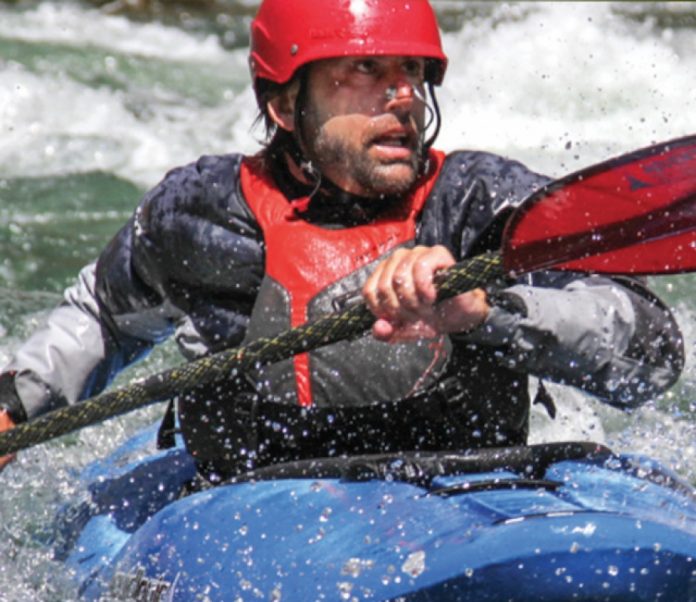
Erik Weihenmayer isn’t your average kayaker. The 44-year-old recently made official his quest to become the first blind person to paddle the Grand Canyon in 2014.
Weihenmayer is not new to firsts. The adventurer and motivational speaker was the first blind person to climb Mount Everest in 2001 and conquered the Seven Summits in 2008. He’s also an accom- plished alpine skier, rock climber and marathon runner. All of those achievements have helped prepare him for his hardest challenge yet.
“Kayaking is way more intense than anything I’ve ever done. So much is happening in such a short amount of time,” he says. “Learn- ing to ski was hard, but the ground doesn’t move below you.”
The whitewater learning curve over the past six years has been steep and left Weihenmayer uncertain and scared at times. “There’s moments where I’m swimming through a rapid and I wonder, what am I doing here—there’s a reason there are no other blind kayakers in the world,” says Weihenmayer.
He kayaks with a spotter who either yells instructions or communi- cates via waterproof radio. There’s usually at least one other paddler for backup and occasionally a kayaker out front, picking lines. He has only praise for his growing team of boaters who “have to line me up and anticipate what the river will do and where the river will take me.” He prefers paddling big water, as opposed to small creeks and technical runs that require precise lines.
“I still have that sense of going into something crazy before a rapid,” he says. “It’s pretty daunting. I’d like to see if that changes with more experience, if I will eventually feel like I can handle anything.”
KAYAKING IS A MENTAL GAME
In April, Weihenmayer completed a successful 12-day reconnaissance trip to the Grand Canyon before he committed himself to going back on a 225-mile, 20-day trip in September 2014. “The very first day, the very first rapid was bigger than anything I’d ever done. I did pretty well—I survived, I got sucked into whirlpools but managed to roll up, and that gave me confidence.”
Weihenmayer says his biggest challenge will be endurance. “Kayaking is such a mental game for me so I get fatigued. I can get flipped on easy, no-name rapids just because I wasn’t expecting it.
“Rivers are very complicated from a blind person’s perspective. The way currents and rapids form, they create a very wild, fast, un- certain and powerful environment,” he adds.
Even after next year’s Grand Canyon run, Weihenmayer expects to be hooked on kayaking for life—it’s something his whole family, including his two children, can enjoy, even from a raft. “We can all challenge ourselves in different ways, that’s the cool part about rivers.”
This article first appeared in the Summer/Fall 2013 issue of Rapid Magazine. For more great content, subscribe to Rapid’s print and digital editions here
My kayak was full of water. We were over a mile from shore when I made this unsettling observation. Already overloaded with two hundred pounds of food, camping gear and camera equipment, I hadn’t noticed my shrinking freeboard until now. Through my dry suit, I felt something bob against my thigh. With the waves continuously crashing over my deck, I called to Spencer and Daniel to raft up next to me. Pumping furiously, we bailed the frigid North Pacific only slightly faster than it poured in.
Reaching one of Douglas Channel’s scarce beaches, I carefully pulled my boat up on the slippery rocks to drain the flooded front hatch and cockpit, noticing the foam bulkhead between the two was not properly sealed. Still, I was thankful the worst was over. Then the bag containing our satellite phone and tide charts washed out, full of seawater.
With our primary means of communication destroyed (we carried an emergency transmitter for back-up) and our charts ruined, we had a difficult decision to make: return to the small Haisla community of Kitamaat Village where we had begun our trip just hours before, or continue as planned eight days into the remote coastal wilderness of the Great Bear Rainforest.
Adventure—and controversy—in the Great Bear Rainforest
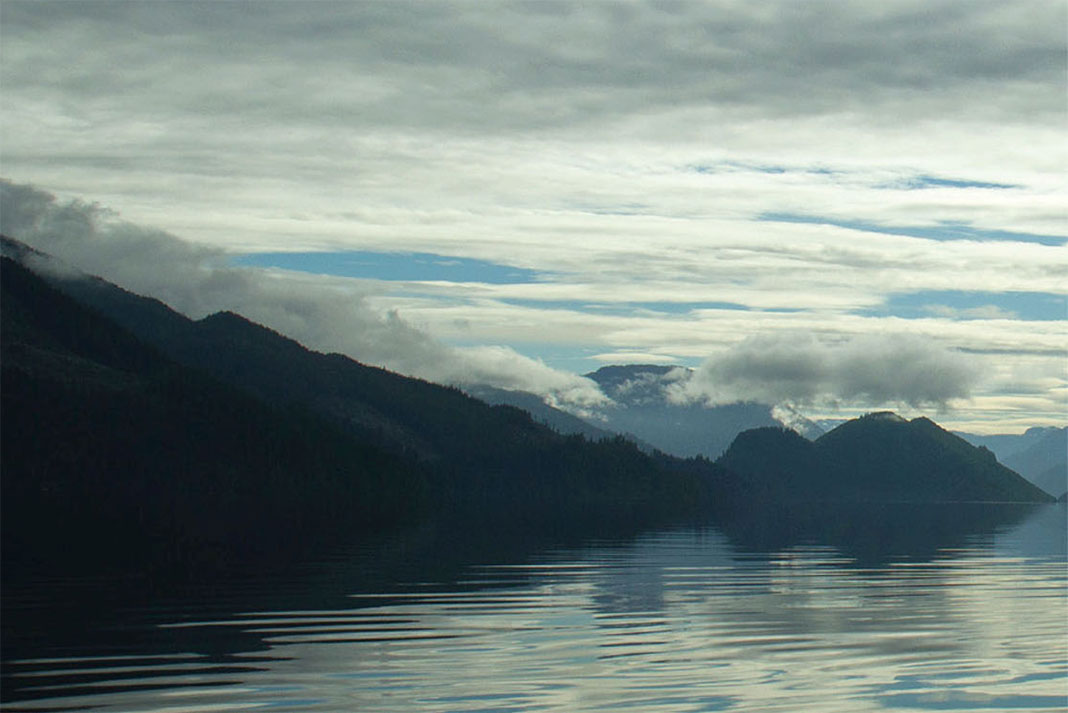
The largest temperate rainforest in the world, the Great Bear covers 70,000 square kilometers along the northern B.C. coast. When we had planned this trip two months before, I realized just how little I knew about this remarkable wilderness, despite its position at the center of an environmental debate surrounding the proposed Northern Gateway pipeline.
The Great Bear is the largest temperate rainforest in the world. | Photo: Paul Manning-Hunter
If completed, the pipeline will pump oil from the Alberta Tar Sands across Alberta and British Columbia to the Pacific Ocean where it can be loaded into tankers and shipped to Asia. Proponents of the project say it is necessary in order to diversify the markets available for Alberta oil, while opponents claim that it will bring toxic crude through sensitive and pristine ecosystems where a leak would have devastating effects.
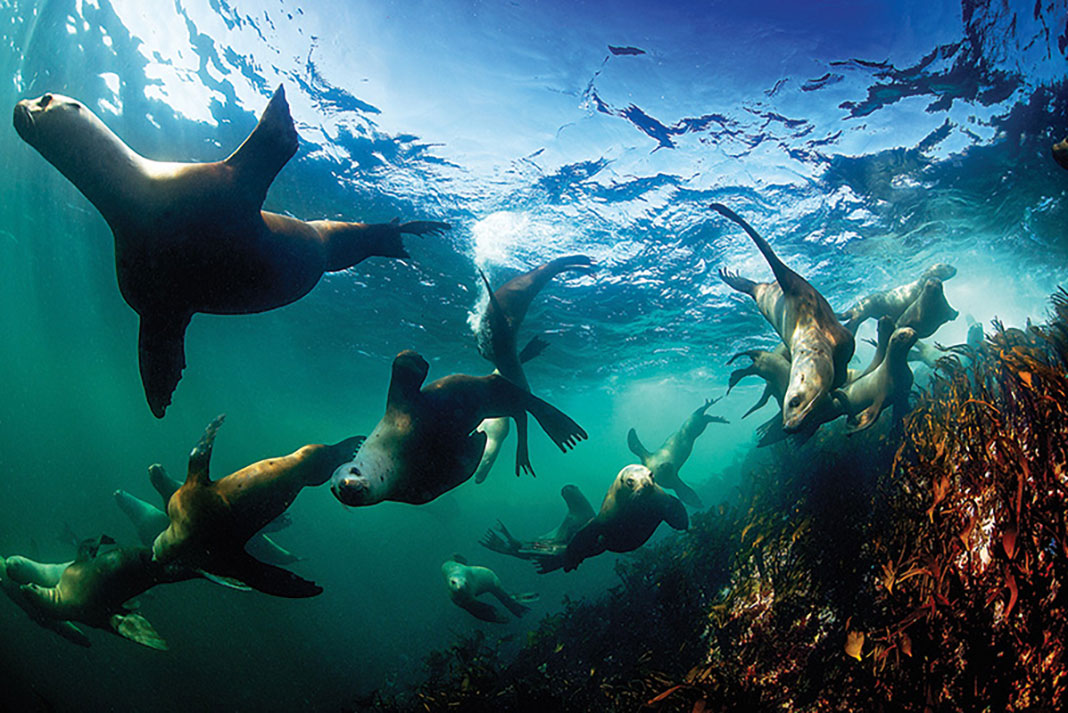
Environmental controversy isn’t new in this region. Neither are grassroots initiatives: the actions of small groups of people have already foiled bids to clearcut log, trophy grizzly hunt and open net salmon farm in the Great Bear. Eager to discover the area for myself, I also wanted to share our adventure so that others who couldn’t make the trip would be better informed on the Northern Gateway issue. Packing video equipment, I hoped to document some of North America’s most rare and majestic animals including spirit bears, cougars, grizzlies, dolphins and whales.
“Our sea kayaking experience was essentially zero.”
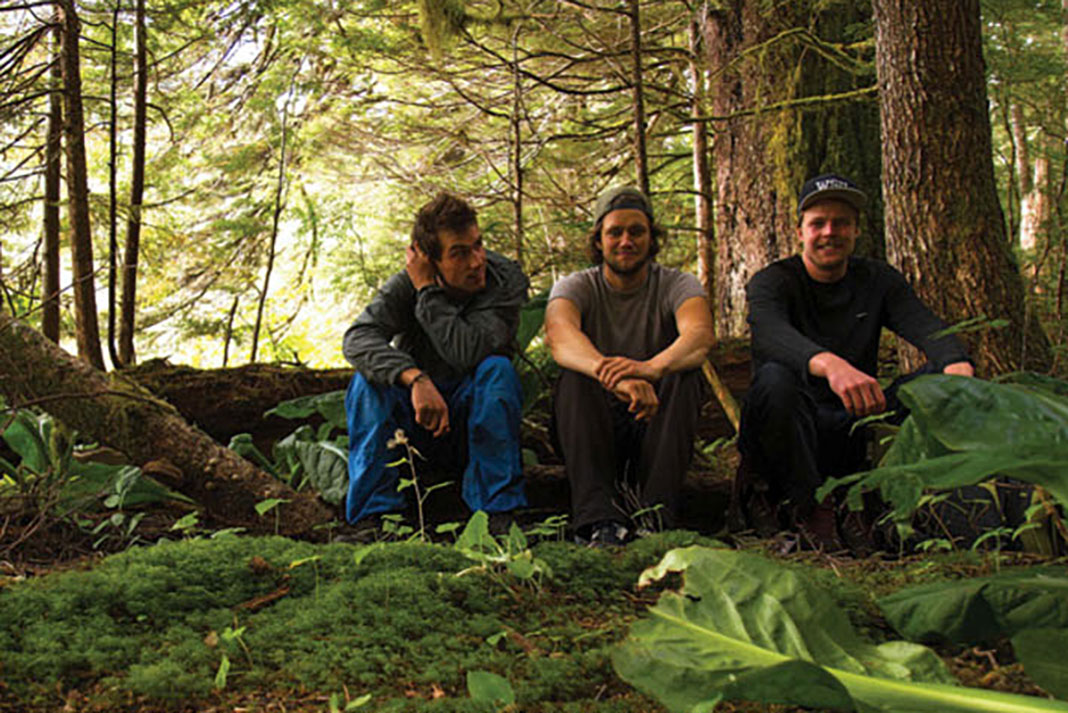
Friends for 20 years, Spencer Taft, Daniel Robb and I grew up within a few blocks of each other. We live much farther apart now, but our shared interest in nature and adventure keeps us close. Taft is pursuing his Masters of Ecology after returning from three months of hitchhiking from Kosovo to Lithuania. Robb spends his summers as a canoe guide in the Northwest Territories and his winters ski patrolling and guiding in British Columbia. He is one of the few people to complete the 20-day, 320-kilometer ski traverse along the Great Divide between Jasper and Lake Louise. Whitewater kayaking since age four, I paddle on the Canadian National Whitewater Slalom Team and train in the steep, beautiful rivers that cascade through the Rocky Mountains.
It was Robb who first mentioned the Great Bear. He told us that, when he took a recent fishing trip to the area, the Native community at Hartley Bay was protesting the plan to ship oil from the mainland through 150 kilometers of narrow, twisting and frequently stormy channels. The proposed route included the area where B.C. Ferries’ flagship Queen of the North crashed into Gil Island and sank on a gusty night in 2006. The Natives claimed that if a similar accident happened involving one of the oil tankers, the resulting spill would devastate the ecosystem their community has relied upon for thousands of years.
Talking it over, we agreed that together we were uniquely suited for an expedition through the Great Bear. I had two decades of kayaking experience, Spencer had extensive knowledge of the flora and fauna we would encounter, and Daniel had expertise preparing for multiday adventures. There was just one little problem—our combined sea kayaking experience was essentially zero.
High spirits, rough water
We started our trip near the city of Kitimat, where the proposed tanker route would begin. An industrial town planned and built by aluminum smelting giant Alcan in the 1950s, Kitimat is not commonly used as a departure point for kayak trips so there’s no paddle shop. Luckily, we found a passionate advocate for the rainforest in Joe Paolinelli, owner of Skeena Kayaking in Prince Rupert. Paolinelli had boats and equipment waiting for us in Kitimat, but in our inexperience we didn’t grab enough waterproof neoprene hatch covers, which is how our satphone arrived at its salty demise.
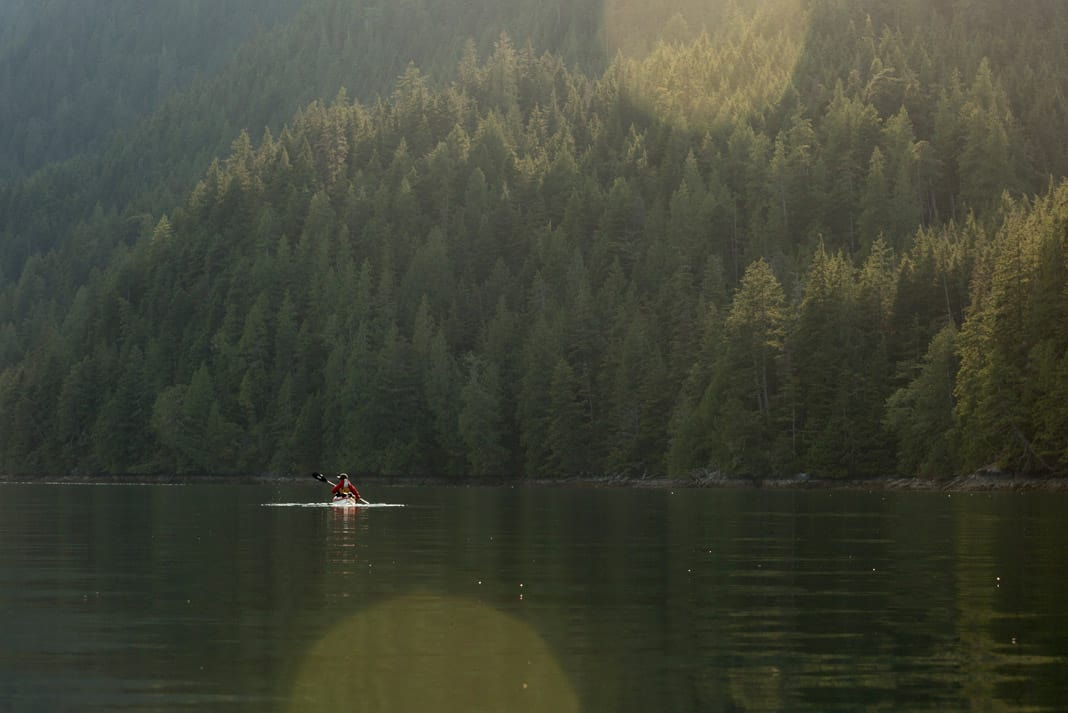
After sealing my leaking hatch with duct tape and a garbage bag, we were in high spirits as we navigated the rough water of Douglas Channel, drinking in the warm air and spectacular scenery. One of the area’s most beautiful features is also one of its most significant hazards—the shoreline is predominantly vertical rock cliffs with impenetrable vegetation beginning at the high tide mark. Getting off the water is often impossible.
Kayaking through this flooded mountain range, we wondered what might be gazing back at us from the thick curtain of woods. The Kermode, or spirit bear, is a black bear that possesses a recessive gene rendering it completely white. Found only in this area, the ghostly bears feature in Native folklore and the hope of spotting one fishing for salmon spawning up the creeks kept us close to shore.
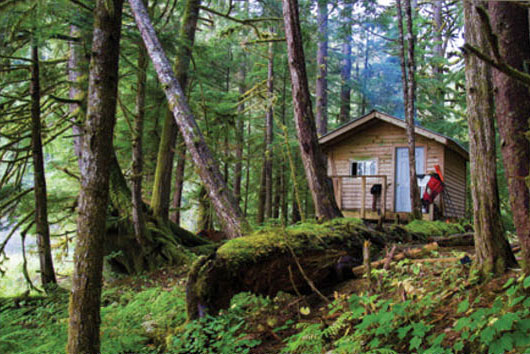
A cabin offers welcome refuge at Hugh Creek. | Photo: Paul Manning-Hunter
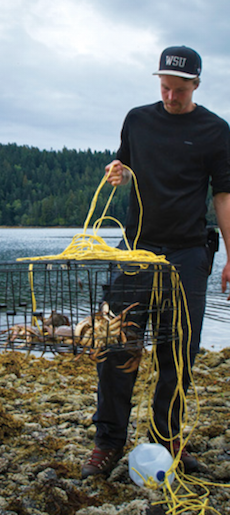
Out of their element (L-R): Paul Manning-Hunter, Daniel Robb and Spencer Taft. | Photo: Paul Manning-Hunter
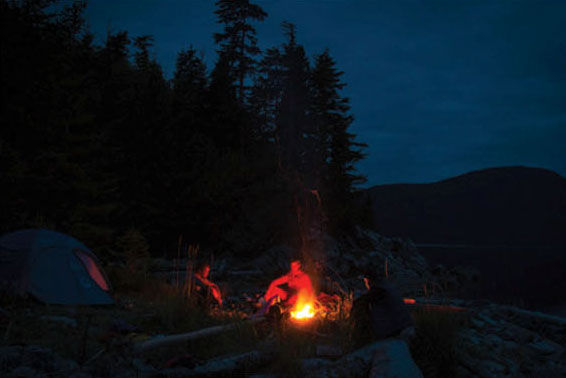
Shedding a little light in the darkness. | Photo: Paul Manning-Hunter
Eager to support our film project, the Haisla community had given us permission to use the tiny trapper’s cabins they have built throughout the region. The cabins are only eight feet by 10 feet and locating them amongst the thick vegetation was difficult. Reaching Coste Island, we couldn’t find the cabin at all and ended up tenting on a cliff overlooking the distant lights of Kitimat.
Nothing dries in the rainforest
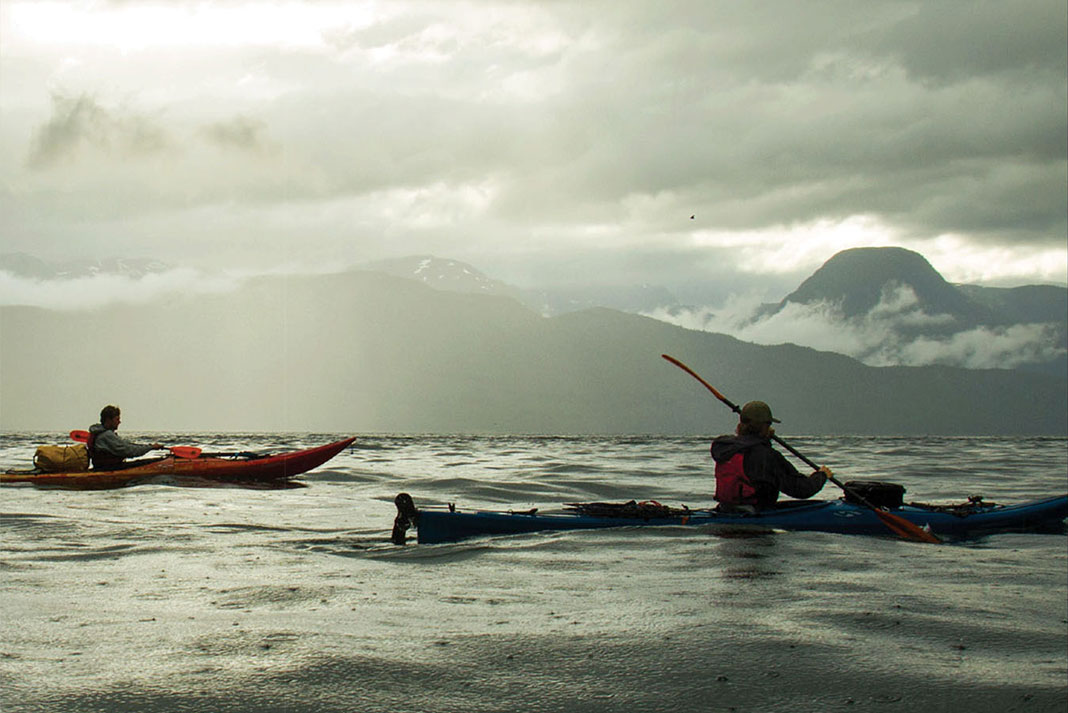
The Coste Rocks are 150-foot pillars that rise from the ocean floor to just break the surface as craggy islets. I hoped to film harbor seals hauling out and sunbathing on the rocks so we set off at sunrise to reach them on a favorable tide. Without our charts, we congratulated ourselves for calculating the tidal period using our knowledge of the sun and moon. But we prairie boys soon found ourselves paddling against the current as a thick fog and heavy rain rolled in. As we neared the rocks, dozens of seals slid into the water. I set up a camera and we ate lunch in the drizzle, waiting. But the shiny little heads only stared sulkily at us from the water.
Photo: Paul Manning-Hunter
To escape the funnelling wind and waves of Douglas Channel, we turned down sheltered Devastation Channel and pushed on through the fog. Low tide revealed mussel-coated rocks and we aimed for Hugh Creek with mounds of the molluscs on our decks. Paddling up into the fresh water, Spencer pointed into the coniferous jungle and gave a welcome cry, “Cabin!” The wooden cabin stood on three-foot piers above the mossy ground. One tiny window barely illuminated two sets of rustic bunks and an inviting wood stove. Within minutes, we had converted it into a sauna as we steamed mussels and listened to rain drumming on the roof.
A bright morning revealed three huge crabs in our crab trap and the soggy truth that nothing dries in the rainforest. As the crabs boiled, we watched eagles scanning the confluence of the shallow creek and the ocean for their own breakfasts. Eating from the sea and drinking from the creek, we felt a connection to the indigenous people who have been doing just that, probably right there, for thousands of years.
As hard as it was to leave, we couldn’t resist the allure of a nearby hot spring. Like the verdant forests, the Great Bear’s abundance of natural hot springs owe their existence to the region’s copious rainfall. Rain seeps down through the mountains’ sedimentary bases where it’s heated geothermally, and the hot water is forced back to the surface through natural fissures.
That night we decided to adjust our ambitious route plan. I needed footage of the Great Bear’s wild inhabitants to show others what was at stake, but trying to cover as much distance as possible meant that we hadn’t seen a lot of wildlife. The map showed a lake high up in the mountains behind our cabin. We would spend the next day hiking to it.
Threats to the Great Bear
Oil is not the rainforest’s only threat. When the B.C. government named the Great Bear a protected area in 2006, just 50 percent of the forest was made off-limits to logging, leaving half the old-growth forest at risk. Following a creek that tumbled down from Evelyn Lake, we found ourselves on an old logging road overgrown with willows and young spruce where centuries-old Sitka spruce, cedar and western hemlock would have once reached heights of 230 feet. We were clearly not the only users of this wilderness highway. The dirt was imprinted with wolf tracks as big as our hands and fresh piles of bear scat had us nervously fingering the triggers of our pepper spray cans.
After swimming and fishing in the crystalline lake, we returned to the coast along a game trail littered with half-eaten salmon. Spencer explained how a vital source of these forests’ nitrogen and other nutrients comes from fish carcasses carried into the woods by bears and wolves. Moments later, we climbed over a head-high log and found ourselves face to face with a huge black bear. Luckily, the bear had already filled its belly with salmon and we made it back to the cabin instead of nourishing the trees.
With our own food supply running low, we turned back toward Kitamaat Village the following day. At our cabin that evening, I was restless and frustrated. I had missed filming the bear on the game trail—I still didn’t have what I needed. Wandering down to the beach where I had collected mussels for dinner, I spotted a black bear eating from the exact spot I had been only minutes before! Elated, I ran back to the cabin to grab my camera and my friends. We sat on the edge of the forest and watched our neighbor crack open mussels and sniff at the new scent in the foggy ocean air.
Feature photo: Paul Manning-Hunter
On the final 20-kilometer push to Kitimat, carbohydrate withdrawal was obvious as we talked for an hour about different ways to cook yams. A cold wind, rain, fatigue and hunger had us in low spirits until a dozen dorsal fins popped up in front of us. A pod of Dall’s porpoises had come to investigate and offer us a reminder of why we were out here.
Leaving the Great Bear, I found myself pondering the issues facing this complex wilderness with a newfound clarity, and grateful to have had the chance to journey with my friends amongst the rainforest-cloaked mountains, foraging bears and playful porpoises. I was glad, too, that the trip was more than a personal adventure. Aspiring to share the Great Bear’s story with others enhanced my own connection to this special place. Hauling camera equipment and seeking out opportunities to film may have limited our miles, but it opened our eyes.
Great Bear trip planner
When to go
Mid to late summer has the most stable weather with the least wind and rain. However, keep in mind you are in a rainforest—plan for wet weather. In the spring, runoff from creeks and rivers creates currents that can make getting into the inlets dangerous. Storms plague the region beginning in late September. Expect bugs almost any time of year—a local told us the only insect repellent is winter.
Difficulty
Douglas Channel is renowned for wind and waves. Infrequent landings due to the surrounding cliffs compound the difficulty, making this an advanced route. The deep fjords and foul weather also make communication, even by satellite, unpredictable. Freshwater for drinking is available approximately every 10 kilometers.
Access
The city of Kitimat is accessed by Highway 37 off Trans-Canada Highway 16. There is no recreational boat launch, as the Alcan plant takes up the city’s entire waterfront. The best option is to drive 20 minutes southeast on Minette Bay Road to Kitimaat Village and launch for free at MK Bay Marina. Parking is $5 per day. BC Ferries does not service Kitimat, the nearest ferry ports are Klemtu and Prince Rupert.
Charts/Forecasts
Canadian Hydrographic Series chart 3743 (1:73,000). Find local wave heights and marine weather from the Nanakwa Shoal weather station at weather.gc.ca.
Guidebook
The Wild Coast, Volume 2 by John Kimantas (Whitecap Books, 2006) is excellent and has detailed maps and information on many routes in the region.
Guided trips
Albacore II Charters offers mothership services.
The Gitga’at Native community at Hartley Bay offers guided trips and accommodations.
This article was first published in the Summer/Fall 2013 issue of Adventure Kayak Magazine. Subscribe to Paddling Magazine’s print and digital editions, or browse the archives.
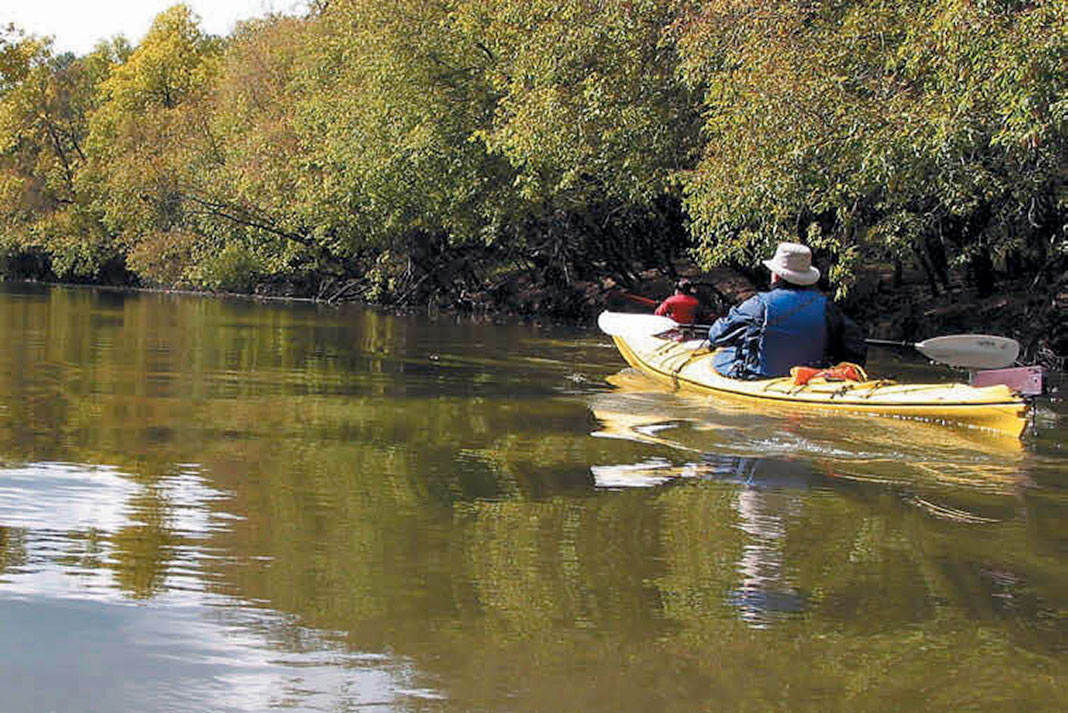
Kayak through meandering prairie rivers. | Feature photo: Courtesy paddlingmanitoba.com
A few kilometers from the longitudinal centre of Canada, Winnipeg may be far from the sea, but it has some surprisingly good kayaking. Two major rivers, the Red and the Assiniboine, meander through Winnipeg’s residential and business districts past great views of majestic skyline and stately houses that blend in with the shoreline foliage. There are over 100 kilometres of navigable waterway within the city limits.
Winnipeg, Manitoba: Kayak the city’s Seine and Red rivers
For a great full-day paddle through the heart of historic Winnipeg, you can put in on the smaller Seine River, follow its curves and riverbank forests to the confluence with the Red River, then paddle up the Red to the junction with the Assiniboine and back again. This route is a leisurely 12-kilometre roundtrip that can be paddled in a day with ample time to explore the many historic sites along the way.
To begin the route, drive to the intersection of Provencher and Des Meurons in St. Boniface, Winnipeg’s French Quarter. Park and launch from the Seine River Parkway, then paddle beneath Provencher Boulevard and a pedestrian walking bridge and discover the beauty of Lagimodiere–Gaboury Park.
Kayak through meandering prairie rivers. | Feature photo: Courtesy paddlingmanitoba.com
Lagimodiere was a Hudson’s Bay Company employee who was born in Lower Canada in 1778 and came west in 1800 as a voyageur. His wife, Marie-Anne Gaboury, was the first white woman to settle permanently in the West and was the grandmother of Louis Riel. You will see their homestead area on the left before you arrive at the Red and head upriver.
Paddle past the ruins of the St. Boniface Cathedral, Louis Riel’s final resting place, and on to the junction of the Red and Assiniboine rivers. The land at the confluence, called The Forks, is the city’s past and present-day gathering place. It is where aboriginal ancestors camped, hunted and fished for centuries and where the rival fur trade companies, the Hudson’s Bay Company and North West Company, later built forts.
The Forks today is Winnipeg’s tourist hub. It’s a great place to take out after the first few hours of paddling for a light lunch or to stretch your legs while visiting the Travel Manitoba Explore Centre.
As you retrace your paddle strokes back to the put-in, watch for a glimpse of Fort Gibraltar in Whittier Park on the right bank of the Red River. This is a re-creation of the original North West Company fort built at The Forks in 1810. Fort Gibraltar had a colourful history including its destruction in 1816 by the Hudson’s Bay Company, its rebuilding in 1817, its name change to Fort Garry in 1822 and its ultimate demise by flood in 1826.
In 1978, Fort Gibraltar was re-created on its new site for the Festival du Voyageur, Winnipeg’s annual winter festival. Today, it too is recognized as a National Historic Site and a welcome stop for those interested in lunch or exploring the interpretive trails along the river.
[ Plan your next prairie paddling adventure with the Paddling Trip Guide ]
4 things you didn’t know about Winnipeg
“Winnipeg” is derived from a Cree term meaning “muddy water,” which aptly describes the water at the confluence of the two rivers.
The Wilderness Supply Company is the largest retailer of kayaks between Lake Superior in Ontario and B.C.’s Okanagan.
Winnipeg enjoys over 2,300 hours of sunshine per year, more than any other Canadian city.
Winnipeg is the Slurpee capital of world. Slurpee retailer 7-Eleven reports their highest Slurpee sales here. Locals assure us that this is what the cup holders in touring kayaks are really for.
Other great places to paddle in the Winnipeg area include the Assiniboine River and the LaSalle River, the Fort Whyte Centre and the spectacular tunnel system of the Caddy Lake/South Cross Lake Route in Whiteshell Provincial Park, 1.5 hours from Winnipeg.
This article was first published in the Summer 2004 issue of Adventure Kayak Magazine. Subscribe to Paddling Magazine’s print and digital editions, or browse the archives.
Kayak through meandering prairie rivers. | Feature photo: Courtesy paddlingmanitoba.com
Learn to assess beaches to determine where to land | Photo: Paul Villecourt
If you choose to paddle in exposed coastal areas, you’ll have little choice but to launch or land your kayak in a surf zone. Breaking surf represents one of the greatest challenges to any paddler. It’s vitally important to choose the right beach for prevailing conditions because surf is an incredibly dynamic and powerful environment that offers both amazing play possibilities and potentially devastating beat-downs.
To assess a beach landing, consider the size, direction and frequency of the swell, the slope and composition of the beach, the tide level, and local currents. The overall size of the waves is one very major concern. Sitting in a kayak, the top of most paddlers’ heads will be roughly one metre (three feet) from the surface of the water. With practice, breaking waves up to this height feel fairly manageable, but larger surf is far more intimidating and challenging.
Wave frequency will also have a profound effect on your surf experience. Waves come in “sets”—groups of similar-sized waves alternating with periods of relative calm. If waves are nicely spaced apart and there is a bit of a lull between sets, a paddler will have plenty of time to react to incoming waves. If waves are closely stacked and rolling relentlessly in one after the other, conditions will be far harder to manage.
The slope of the beach is also important. A long, evenly sloping beach will generate surf that builds gradually. Wave faces will tend to get steeper and break predictably, spilling from the crest of the wave. Waves are relatively forgiving on this type of beach.
Waves that crash very close to shore rather than farther out are one sign of a dangerously steep beach that will not be suitable for launching or landing. There is incredible power in these waves which jack up suddenly and collapse or “dump” with tremendous force, expending their energy in one explosive crash rather than breaking progressively as they head toward shore.
Of course it’s always preferable to land or surf at a nice sandy or pebbly beach. A rocky shoreline strewn with big logs and other debris will make getting in and out a lot more difficult and dangerous. Having said that, opting for a sandy beach being pummelled by violent surf instead of a sheltered rocky shoreline would be a serious mistake. The direction of the swell will determine which areas of shoreline will have the largest surf and which coastline features will provide shelter.
[ Plan your next paddling adventure with the Paddling Trip Guide ]
It’s also important to be aware of currents and tides. A change in tide height can seriously alter the character of a break—sharp rocks might become exposed or beaches that provide a safe landing at some tide levels may disappear altogether at others. Riptides are a hazard that forms when water that has been pushed up on a beach by breaking waves is pulled back out by gravity. Because waves continually push more water up the slope of the beach, there can be a lot of water searching for the quickest way out.
Rips are tricky to spot, but at any popular surf spot they are well known, so take the time to search out local knowledge. A river draining into the sea may generate a similar current.
To escape from a rip, paddle (or swim) perpendicular to the current— generally parallel to the shore—until you are out of the grip of the current and can start heading to shore. If you simply try to go straight in, you will be fighting the powerful current the whole way.
No landing or launch site is ever perfect. Sometimes landings are very difficult, but you can still strive to make the best choice from a less than ideal lot. The key is to carefully inventory conditions and choose the path and timing where the waves are consistently weakest and the terrain is the best for exiting or entering a kayak.
Is sea kayaking suffering from an in surge of rec boats?
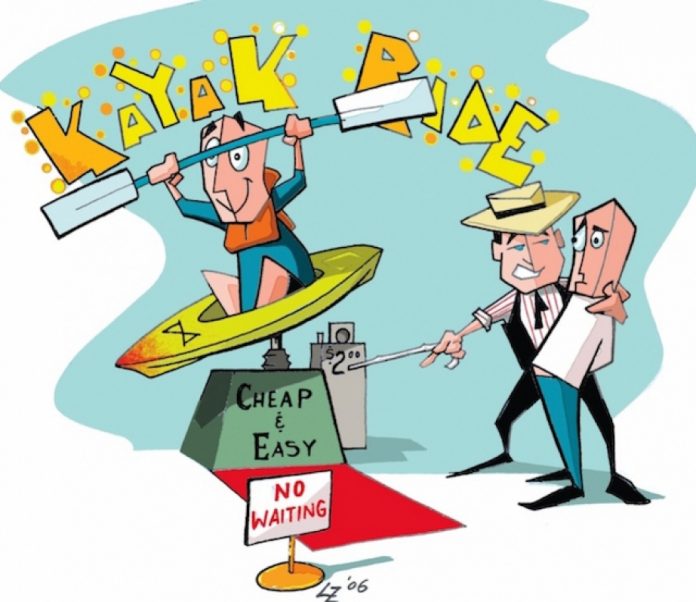
These days sea kayaking in North America is in danger of being dumbed down by the emphasis on selling the largest number of cheap boats to the largest number of people. Some big companies have discovered that the money is in beach-toy “rec boats” rather than the more complex sea kayak. And sea kayaking is the loser.
Sea kayaking has been around in North America for about 100 years, but it was not until enthusiast paddlers got their business acts together in the late ’70s and early ’80s that it emerged from the clubs and became an industry profitable enough to employ people. The result was a dramatic increase in the quality and availability (and price) of kayaks and kayak accessories. There was a flourishing of books and magazines that spread the word and raised the level of the information pool—sea kayaking is after all an information-based activity.
During the ’90s some of the most successful companies were bought out by large corporations that attempted to manufacture and market kayaks like they were plastic garbage cans—cheap and nasty little boats with a minimum of finicky features such as bulkheads, hatches and deck lines. At first the specialty kayak retailers welcomed these rec boats, believing that it would be good to get more “bums in boats” and everything would grow from there.
But that has not happened.
Instead, many customers are being diverted into dead end boats unsuitable for more than mucking about off the beach. They do not learn about the sea or how to self rescue; they don’t do courses or buy the accessories which are a big part of the specialty retailer’s business. Meanwhile, the production and sale of well-made sea kayaks has fallen, and specialty stores are feeling the pressure from discount no-service sporting goods stores and big box stores.
What to do? We can learn something from the experience of paddlers on the other side of that big kayaking pond. The Japanese went about sea kayaking from quite a different direction. They started with the large corporations whose executives identified kayaking as the new trend in North America during the late ’80s. Companies whose real business was steel or carpets raced to buy up all the spare production they could find around the world. Glossy catalogues displayed pages of sea kayaks and department stores carried some of the best boats available.
Pretty soon the bubble burst in Japan and, disillusioned by the lack of profitability and the slow penetration of the activity into the general population, most of the big players got out of sea kayaking as fast as they got into it. During those initial years, however, some very determined paddlers got into the sport. A small number of specialty stores sprang up. When the boom faded away, they were there to pick up the pieces and nurture sea kayaking in much the same way that it grew in North America during the ’80s.
On a recent trip to Japan, I saw many causes for optimism. First, there was not a rec boat to be seen. There was a hunger for knowledge, particularly the details of seamanship. Many of the local paddlers had long international kayak trips to their credit and many were highly skilled. Small specialty stores offer lessons and tours to beginners. Local manufacturers are producing boats suited to the need of the customers. Sea kayaking in Japan has been reclaimed from big business by the kayakers and the future looks bright. In North America, we could take a lesson from the Japanese to get sea kayaking back on course. The best way to do this is to support full-service specialty stores since these are the resource centres for training the next generation of paddlers. Another way is to encourage our friends who show an interest in sea kayaking to pay the extra money to get a seaworthy kayak, then learn the seamanship skills relevant to the trips they dream of.
I’m not suggesting that there is no place for rec boats, only that this is a different activity entirely. Sea kayaking is based upon knowledge and the seaworthiness of both our skills and our equipment.
John Dowd is one of the founders of the sea kayaking industry and the author of the book Sea Kayaking.
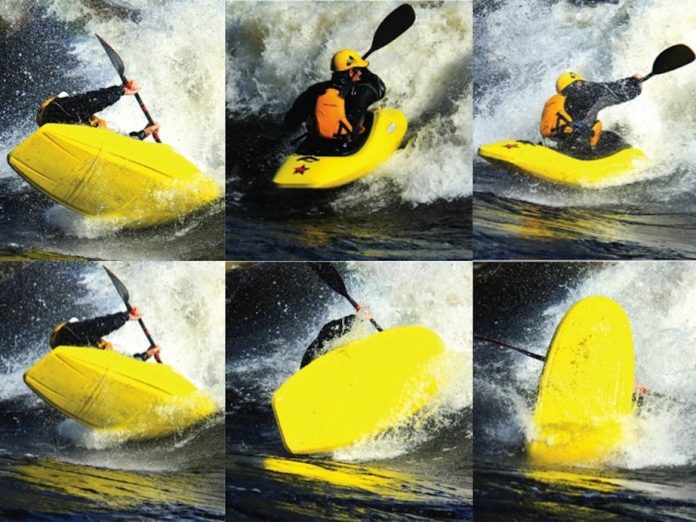
The back pan am is essentially a tricky back blunt, where your boat goes inverted during the rotation.
1. Find a nice, big wave and set up backwards at the top. The easiest way to do this is to move to the top of the wave in a front surf, then spin 180 degrees.
2. Shoot stern-first down the face—a back stroke on the right will help you get enough speed to bounce.
3. Bounce on the green water and load your bow by staying forward and stomping hard on your feet. At the same time, turn your head and look over your right shoulder. This winds up your body for the rotation.
4. Pull the boat over top of you by throwing your body back and pulling your knees toward your chest. Unwinding your body during this step helps pull the boat over your shoulders and begin its rotation. Take a powerful forward stroke by your left foot at the same time to assist a quick rotation.
5. Land on your stern and immediately take a forward recovery stroke with your right blade. The sooner you pull the recovery, the better. Sit forward and maintain a controlled front surf.
Having trouble? It’s super critical to unwind your body through the trick. Start cranked up to the right to throw, un-crank during the middle of the trick and, as you land, crank to the left to get a powerful recovery stroke.
In the past decade short solo canoes have bobbed into the whitewater scene. Now, short and long solo boats share the river in about equal numbers, and we expect to see four new sub-10- foot canoes hitting the rivers this year. Paddlers are attracted to these canoes because they are responsive, lightweight and well suited for technical rapids and popular low-volume creeks. They offer canoeists something different and are simply fun to paddle, once you figure them out.
Short canoes require adjustments in paddling style to maximize the performance of their unique hull features. Sure, these tricks work in long boats too, but the response time of a short canoe is almost instantaneous, and the effort required to accelerate and pivot is so much less than in longer and heavier boats.
Short canoes tend to be slower and have less glide, so you will want to reduce the use of speed-sapping friction strokes like the stern pry and J-stroke. Instead, paddle by carving an inside circle and use bow control strokes to adjust your direction while maintaining forward momentum. This will allow you to focus on dodging rocks and driving your canoe through converging currents.
Use the slower hull speed of the short canoe to your advantage. Cruise through a rapid at a relaxed pace, then when you need to manoeuvre, accelerate using on- or off-side forward strokes. These canoes are so responsive that simply adding one efficient correction stroke will completely change your direction. Anticipate this using the opposing forward or cross forward stroke to finish the move.
Playing with stroke length can help too.
A long stroke tends to turn short canoes. Why? Think about your traditional stroke with lots of torso rotation and reach. In many of these short boats you’d be engaging your paddle literally at the bow of the canoe—a long way from its sensitive pivot point at your hips.
Short strokes produce straighter paths and allow a quicker stroke rate. Typically most people paddle a Rival something like this: Long forward stroke—glide—stern correction—recovery—long forward stroke—glide—stern correction. However, an Esquif Spanish Fly is more like: Stroke— stroke—stroke—off-side forward stroke—stroke— stroke. With so little glide, if you need to get somewhere, you need to be always driving these little boats forward.
Some view short canoes as less stable than comfortable-feeling traditional solo canoes, when in fact, they are just more responsive to tilt.
The ease of tilting can actually keep you more stable because you can engage the boat’s edge by using leg and hip movement within your outfitting, and avoid risky body leans more commonly used in large canoes.
In short canoes you can easily use outside edge control for lightning fast pivot turns. By gently pressing down the outside leg to engage the outside edge, you can hold spectacular and dynamic draws to manoeuvre the tightest turns and mid-stream changes in direction. With your body held vertically throughout a turn you are less likely to capsize as the smaller and lighter boat can be securely gripped through good outfitting.
Low volume rapids filled with rocks, waves and slot moves are the playgrounds for which short canoes are made. Adapting paddling skills to short canoes is new and different and will expand your horizons of fun and excitement on the river.
Andrew Westwood is an open canoe instructor at the Madawaska Kanu Centre, member of Team Esquif and author of The Essential Guide to Canoeing. www.westwoodoutdoors.ca
Repairing a cracked kayak is what nightmares are made of, but there is no reason you can’t fix your trusted plastic boat and turn that nightmare into more pleasant memories.
Kayak repair guru Jamie Dors of Paddle Sports Repairs walks us through this straightforward, but sometimes sticky, fix. Sorry, but you’ll need to find a new excuse to buy a new boat.
Icy temperatures and craggy runs make spring paddling a recipe for cracked boats, but this is possible all-year round from collisions with rocky shorelines, pins or other random events. However it happened, these are the kayak repair tips you need to know to get back on the water.
Repairing a plastic kayak
Not all polyethylene is created equal. Most manufacturers use layered high-density polyethylene (HDPE). Alternatively, a few boats out there, including Jackson Kayak’s Elite lineup, are made of a variation called high-density crosslinked polyethylene (HDXLPE).
[ Paddling Buyer’s Guide: View all polyethylene kayaks ]
Both types of poly are weldable, but HDXLPE is a lot trickier. “Its melting point is very close to its burning point,” Dors warns. This makes not scorching HDXLPE more difficult for most people without professional experience and highly specialized equipment. If you’re not sure what type of plastic you’re working with, contact the manufacturer.
Kayak repair kit
You can weld plastic with either a heat gun or plastic welding iron. Learning how to fix a cracked kayak can take time. “The key is providing direct and constant heat,” Dors says. Hot air can pool material so it’s important to use a high-quality heat gun with the proper focusing tip nozzle.
A plastic welding iron may work better since it provides a more focused, consistent heat. If your boat’s manufacturer doesn’t sell poly welding sticks, they can be found at some auto or motorcycle body shops or online.
For a professional look, try matching colours, or go with whatever you can get your hands on—chicks dig scars. If you’re working on a particularly large crack, you’ll want reinforcement that will help the repair to hold. Use mesh for cracks in flatter surfaces like the hull or decks, and rods to support cracks in awkward areas such as around cockpit combing.
Stainless steel or aluminum works best because they won’t rust. Aluminum is lighter. Lastly, get your hands on a good scraper, some sandpaper, a file and a surform for prepping and finishing.
Prep the kayak
Your boat has to be clean before you begin work. Hose it down and then sand or scrape the surface around the repair area. Opening up the crack a little with a scraper will help with the binding process. Finally, clean the area inside and out with mineral spirits as dirt and grease can interfere with welding.
Repair the cracked kayak
Whether you’re working on a deep gouge or a crack, the process of heating and mixing is more or less the same. Dors says holes are rare, “but if you’re this unlucky, you’ll have to find a scrap piece of poly, cut it to size and follow the same process as welding a crack.”
Begin by preheating the material
If your hull didn’t crack on its first run down the river, then its surface is probably fuzzy and whitened. “You’ll know the surface is hot enough when it starts to get shiny and the fuzziness disappears,” Dors says. If you’re using a heat gun, you’ll also need to preheat the welding rod. When welding with a heat gun, lead with the gun and follow with the heated rod. Keep the gun 1 to 2 inches away from the work surface.
Mix the welding rod with the boat material using a stirring motion so as not to let the melted plastic pool. A steady, methodical hand will do the trick if you’re using a welding iron. Just take your time, ensuring the material mixes well, and leave the rest up to the iron.
If you’re using reinforcement, support the hull and realign the crack, then press the mesh or rod into the plastic as you heat. Allow the plastic to mix around the reinforcement for strength. “If it doesn’t mix well, the weld will pop open when it cools or is under stress,” Dors cautions.
[ Paddling Buyer’s Guide: View all maintenance and repair tools ]
Take your time repairing the kayak
This will ensure the heat penetrates the material completely. “Don’t rush,” suggests Dors, “plastic does not conduct heat well.” Continue the weld at least a half-inch beyond the length of the damage. This will prevent cracks from continuing to form after welding.
“The weld should be just as thick or thicker than the original surface of the boat,” says Dors. Reheating the area until it’s pliable and gently pressing it back into shape with a flat, metal object can smooth out lumps.
Recovery
Continue to support the weld while it cools to restore the boat’s original shape. Let the plastic cool naturally. Adding water or anything else to cool it will weaken the weld. Once the weld cools, use a scraper, file or surform to smooth out the surface.
Bruised egos will pass, scarring should be minimal and your boat will live to see another day on the river. Next up—perfecting your river-reading skills to avoid the carnage in the first place.
A portage a day keeps the doctor away. | Photo: Kevin Callan
A couple of years ago, I was diagnosed with benign positional vertigo. Its effect is a sudden spinning sensation similar to walking off the Tilt-a-Whirl after drinking a bottle of Jack Daniels. It’s caused by a disturbance within my inner ear.
The specialists administered drugs, told me to stop drinking coffee and sent me to physiotherapy, where they performed a fancy maneuver that involved shaking my head back and forth. I was also told that the illness lasts forever and that my hearing will gradually get worse, my balance will depreciate and wilderness canoeing, especially alone for extended periods, will have to stop.
[ Paddling Trip Guide: View all canoeing adventures ]
Being diagnosed with an odd affliction was a shock, losing my hearing was upsetting and walking around as if I were drunk most of the time would pose some serious challenges. The end of my solo canoe-tripping career was absolutely unacceptable.
So I did what any wilderness-loving paddler would do—I stocked up on the drugs I needed, taught myself how to do the head-shaking maneuver and packed enough decaffeinated coffee for an extended solo canoe trip. Most doctors advised against it, but my physiotherapist promoted it—and even helped me prepare for it.
The result was one of the best trips I’ve ever had—one that included awesome rapids, phenomenal fishing, incredible scenery, utter solitude and zero spinning episodes.
Maybe wilderness travel is the cure for all; maybe a stress-free environment should be put into a bottle and sold at a pharmacy; maybe the trip was more like taking a dash of placebo. The time spent paddling was proof that there’s magic in the woods—a drug like no other—and a reminder that wilderness is a necessity of the human spirit, not a luxury.
It’s no wonder we just smirk at people who don’t understand the importance of paddling.
My daughter, now 8, has understood the passion for wilderness paddling from the age of 6 months, when she completed her first canoe trip. My wife, Alana, understands. She insists our marriage has flourished because of our canoe trips together, but also never questions the times I head out alone. My friends understand as well. That’s how we became lifelong friends—we paddle together.
All of us, every culture on this planet, are born from wilderness. When we return to the familiarity of the outdoors, our senses peak and all the ills of society fade away. The dizziness disappears.
This article was first published in Canoeroots & Family Camping‘s Early Summer 2013 issue. Subscribe to Paddling Magazine’s print and digital editions here , or browse the archives here.
This is an adaptation of the title story from Kevin Callan’s newest book, Dazed But Not Confused.
A portage a day keeps the doctor away. | Photo: Kevin Callan



 This article first appeared in the Summer/Fall 2013 issue of Rapid Magazine. For more great content, subscribe to Rapid’s print and digital editions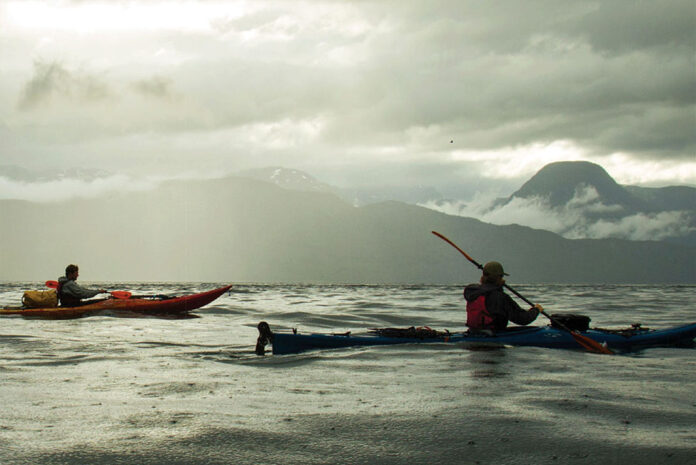
 This article was first published in the Summer/Fall 2013 issue of Adventure Kayak Magazine.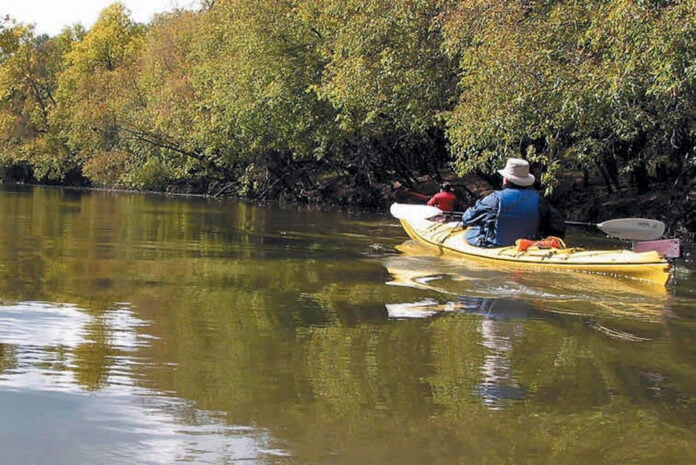
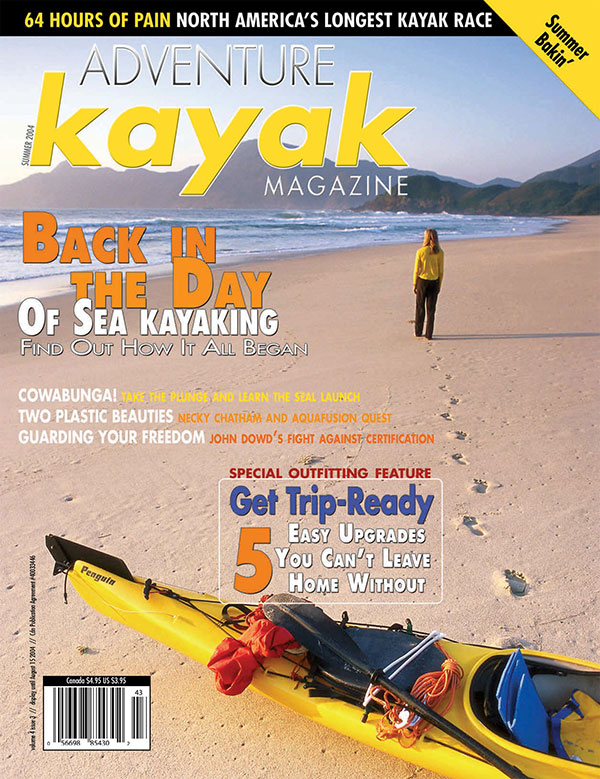 This article was first published in the Summer 2004 issue of Adventure Kayak Magazine.