Home Blog Page 309

Professional Kayakers On What Makes The Perfect PFD Kit

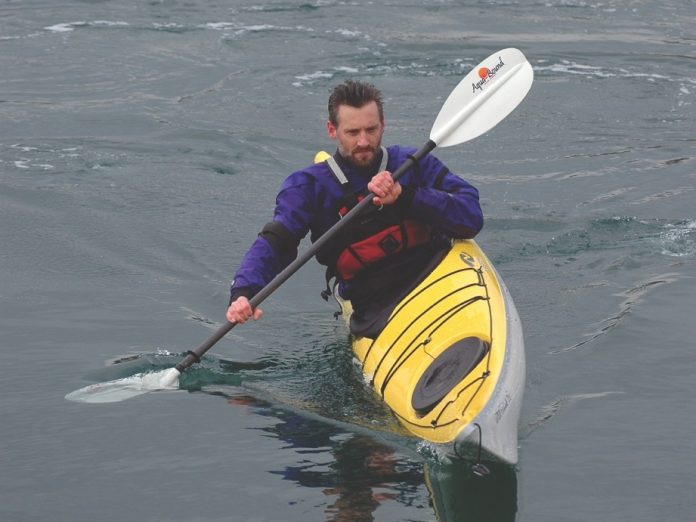
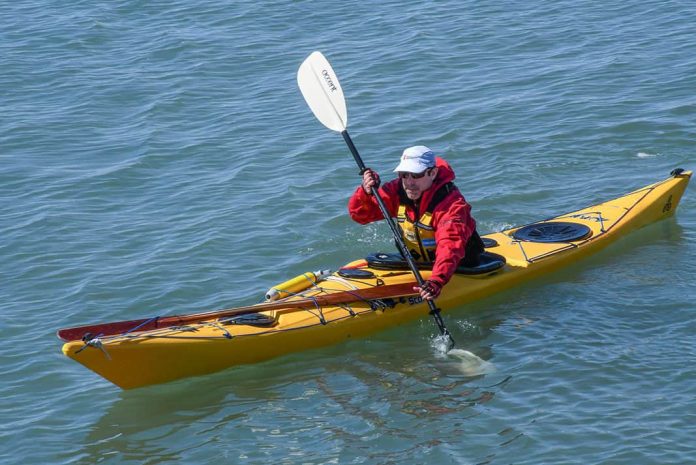
Man paddling yellow kayak
What do these experienced paddlers always keep close at-hand?

Finding a balance between preparedness and bulk isn’t easy. Lucky for you, we talked to seven experienced paddlers about what their time spent in the kayak has taught them they should have in their PFD kit—and what’s better stowed in a hatch or left behind altogether.

So, what are the essentials?

[ Paddling Buyer’s Guide: View all safety and rescue gear ]

Justine Curgenven

ADVENTURE FILMMAKER

PFD SHE WEARS: KOKATAT MsFIT

PHILOSOPHY: “I don’t like a lot of weight in my PFD. I consider the environment and go with as little as possible accordingly.”

WHAT SHE CARRIES: Hydration pack, camera, compass, energy bars, basic first aid kit, duct tape, camera lens cloth. If conditions warrant, a VHF radio, light and knife.

WHY? “I prefer to be comfortable and perform well rather than to be so encumbered by all my equipment that something is more likely to go wrong.”

Christopher Lockyer

OWNER OF COMMITTED 2 THE CORE

PFD HE WEARS: KOKATAT RONIN PRO

PHILOSOPHY: “Keep it simple. Be aware of what you need—you can’t have everything immediately accessible.”

WHAT HE CARRIES: Hydration pack, locator light, energy bar, folding knife, grease pencil, Denso tape, river gloves, mask for CPR, whistle, compass, sunscreen, lip balm.

WHY? “For 10 years I carried a lot more stuff—small repair kit, immersion bag, VHF radio, flares—where the hell do you put it? It’s a 50-pound PFD. And if you’re in the water all the time, all of it gets soaked and ruined. So now I prefer to tuck that stuff away.”

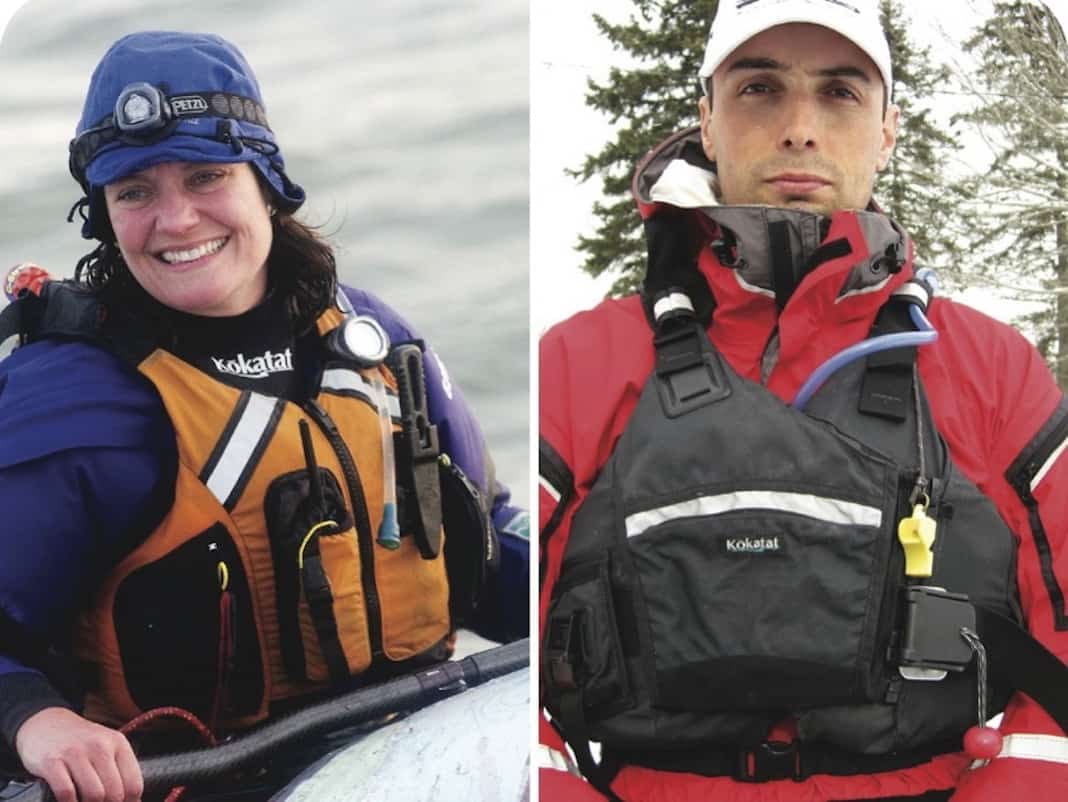
Woman (left) and man (right) both wearing PFDs

Shawna Franklin and Leson Sommé

OWNERS OF BODY BOAT BLADE

PFDs THEY WEAR: KOKATAT MsFIT TOUR

PHILOSOPHY: “My PFD is completely clean on the outside. I believe in having a clean body, clean boat.”—Leon. “It depends where I’m paddling.”—Shawna.

WHAT THEY CARRY: Hood, sunscreen, candy bar, grease stick, small repair
kit, aspirin, whistle, knife. If conditions warrant, a VHF radio. Shawna also carries a strobe light and hydration pack.

WHY? “I started with no PFD, and then a friend gave me one and I went whole hog with five pockets. But as I paddled and coached, I realized how little I used on a regular basis.”—Leon.

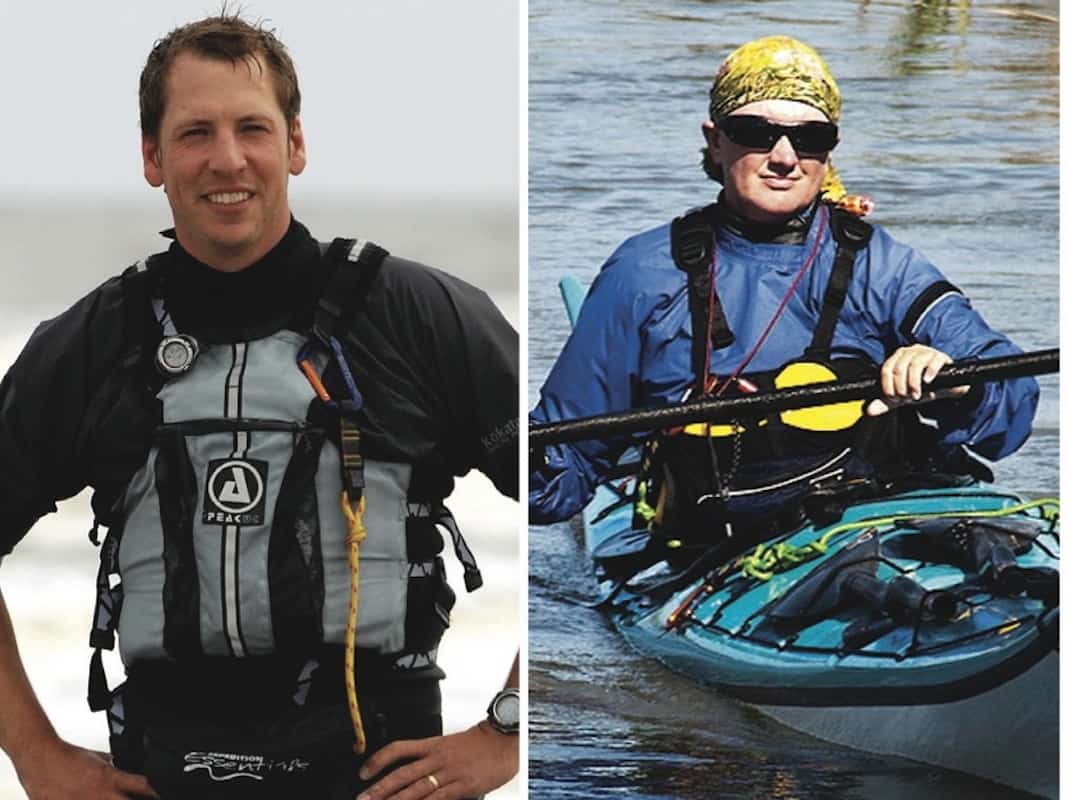
Ryan Rushton

OWNER OF GENEVA KAYAK CENTER

PFD HE WEARS: PEAK UK ADVENTURE ZIP

PHILOSOPHY: “Two words: simplicity and access, so the more multi-functional items, the better.”

WHAT HE CARRIES: Waist tow—rope stored in PFD pocket, laser flare, compass, knife, lip balm, sunscreen, small first aid kit, flares, VHF radio, gutter tape, light at night.

WHY? “From a group leadership standpoint, you need to be on your game. Most often I need the tow rope, compass, first aid kit and roll of tape.”

Marsha Henson

CO-OWNER SEA KAYAK GEORGIA

PFDs SHE WEARS: ASTRAL HYBRID, KOKATAT MsFIT

PHILOSOPHY: “I think of the most important things for the day and the paddle, and everything else goes in the day hatch where I can reach it.”

WHAT SHE CARRIES: Lip balm, sunscreen, whistle, small first aid kit, orienteering compass, nose clips, light, small knife, snack. If conditions warrant, a VHF radio.

WHY? “I really dislike crammed pockets. Because of the salt, sun and heat, everything has to be checked frequently.”

Two men wearing PFDs

Jeff Allen

CO-OWNER SEA KAYAKING CORNWALL

PFD HE WEARS: KOKATAT SEAO2

PHILOSOPHY: “Ease of movement is a big factor. I don’t want to be encumbered by my PFD.”

WHAT HE CARRIES: Flares, VHF radio, knife, roll of insulating tape, CPR face mask, neoprene gloves, compass, chocolate bar, whistle, headlamp, military waterproof pencil. On an expedition, an EPIRB. He also added a crotch strap to prevent PFD ride-up in sea survival situations.

WHY? “I spent a couple of hours in
 a survival tank with two-meter wave action. It was a lesson learned on the inadequacies of a swim aid [versus] a survival vest.”

Butt End: Camping with a Canine

Canine Canoeist | Photo: Kevin Callan

An hour after my canoeing companion of 12 years had been euthanized, I put my feelings about her life on paper. I wrote up a list of Bailey’s faults and strengths, her crazier character traits and the stunts she pulled during a life that included more than 600 nights out on canoe trips.

I posted my thoughts on my blog that evening and by the end of the next day I had received more than 500 emails of condolences from people who either knew of Bailey or were trippers who also rejoiced in canine company.

I wouldn’t have guessed that so many people knew my dog (or read my blog, for that matter) but I suppose it makes sense, since she has appeared in a dozen books and countless magazine articles.

More surprising was the number of people who wrote about willingly subjecting themselves to the maddening appeal of canoeing with a dog.

Bringing Bailey along on trips was a challenge. I carried her specially designed pack full of kibble and chew toys more then she. She was the first to have breakfast, lunch and dinner. Her sun umbrella strapped to the gunwale and foam cushion glued to the belly of the canoe made portaging difficult. She insisted the bug shelter be put up for her immediately once we reached camp. I lifted her in or out of the canoe at every single put-in and take-out.

Bailey was chased by skunks, porcupines, a lynx, raccoons, hawks, snakes, swarms of hornets, one nasty chipmunk, and a couple of black bears (some of which followed her right back toward me). She loved rolling in crap. When she was in the canoe she whined to be lifted out and once out she whined to be put in. Every time I hooked into a fish the ever-helpful dog would try to retrieve it for me.

Canine Canoeist | Photo: Kevin Callan

So, why did I, and all those other dog owners, put up with dog paddling? It wasn’t just because by attracting all the bugs she made a good shoofly-pie, or that she could sense a thunderstorm better than any polyester-clad weatherman or that if it weren’t for her ability to sniff out a trail I’d still be on one particularly confusing portage on the Steel River.

I loved tripping with Bailey because she never once left my side. She was a constant companion, no questions asked. My daughter, Kyla, even nicknamed her my shadow. How I miss my shadow. I doubt that canoe tripping will ever be the same without her.

[ Plan your next canoe tripping adventure with the Paddling Trip Guide ]

Rest in peace my dear friend.

KEVIN CALLAN won’t comment on rumours that Bailey was named for his favourite drink.

This article appeared in Canoeroots & Family Camping, Early Summer 2009. 

Tumblehome: Alone Across the Atlantic

Courtesy of James Raffan
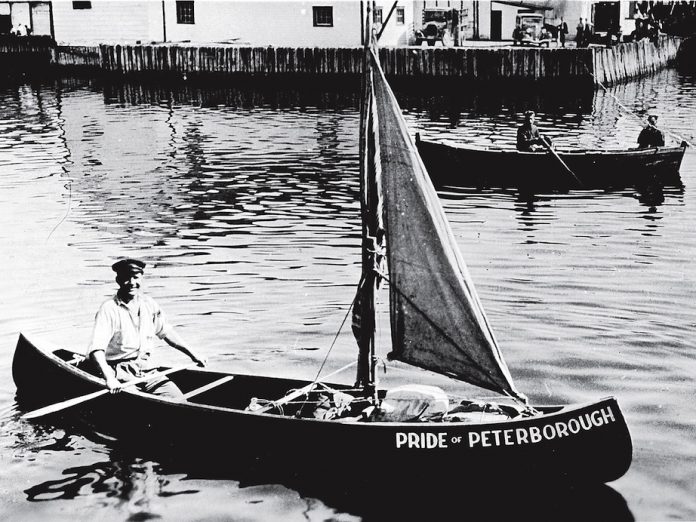
Pride of Peterborough

Sooner or later, everybody who owns a canoe scans the boat in the rosy light of evening and wonders what adventures it has been on and what future odysseys are in store. A trip upstream to the source of the local river? A trip across the country? In a nation of rivers like Canada, it’s easy to think that with the right boat, the proper gear, enough food and dollop of daring and ingenuity, epic journeys are possible for any- one willing to take a risk.

And then there’s John Smith of Peterborough.

It was the spring of 1934. Smith, 34, had spent the previous five years being a whaler and merchant mariner. But he had returned home to realize a dream that had been brewing in his fertile mind since his early adult years working for the Peterborough Canoe Company. The dream was simple. He would paddle a 16-foot cedar-canvas canoe, called “Pride of Peterborough,” from Peterborough, Ontario, to Peterborough, England—solo across the Atlantic.

Really. He would load the boat with 500 pounds of fresh water and hard tack, sew a canvas cover to keep waves at bay. All in, he would leave the George Street wharf on the Otonabee River in June and, in two to three months, would be relaying personal greetings to family and friends in Ireland. Then onward across the Irish Sea to Peterborough, Cambridgeshire, on the River Nene.

And that’s exactly what he set out to do. The reporter who broke the story in the Peterborough Examiner was initially skeptical. But Smith’s shy demeanour and earnest determination convinced him otherwise. “Yes sir, Smith is serious,” he wrote. “For the past eight months… he has been analyzing carefully the various problems involved. And right now he is busy seeking a canoe of the proper type and arranging for the food rations and equipment he will carry with him.”

Smith… well… didn’t make it. He’s buried in an unmarked grave near Stephenville, Newfoundland. He made his way safely to the tip of the Gaspé Peninsula and, from there, struck out into the open waters of the Gulf of St. Lawrence to make the 435-kilometre crossing to Newfoundland.

His journal, which turned up as beach flotsam in a waterproofed tin can, detailed that partway over he stopped aboard a freighter whose captain gave him a hot meal, a mariner’s rubber safety suit and a map and sent him on his way again. Somewhere between there and Newfoundland, Smith came a cropper.

His body washed up in one place, his surf-bashed canoe in another, the tin can containing his journal in another; all pieces of Smith’s impossible dream.

It was on those beaches that Smith’s story would have faded into obscurity had it not been for two Peterborough artists who have kept the tale alive.

Singer and songwriter Glen Caradus premiered a splendid new ballad about John Smith at a concert at The Canadian Canoe Museum earlier this year. When asked, he allowed that he was inspired to write the song by an art installation created by Mount Pleasant, Ontario, artist JoEllen Brydon.

In the early 1990s, Brydon was pulling up flooring in her 19th-century farmhouse and came upon old newspapers that included a June, 1934 edition of the Peterborough Examiner. So captivated was she by Smith’s story that she created a whole art installation around the tale—18 paintings installed on a wall behind a 1930s-style diner counter where visitors can sit on padded chrome stools and read reprints of the Smith story as it appeared back in the day. This work is now in the Museum of Civilization in Ottawa.

Not only do we need John Smiths for inspiration, we also need artists like Caradus and Brydon to keep their stories alive. The stories they tell remind us that epic journeys of discovery, whatever the vehicle, whatever the goal, begin far closer to home than most of us ever imagine.

All it takes is a dream.

James Raffan is the executive director of the Canadian Canoe Museum.

This article appeared in Canoeroots & Family Camping, Summer/Fall 2009.


Tumblehome: Godfather of Canoeing

Courtesy of James Raffan
Heritage canoe

Okay, it’s not War and Peace, or even an early edition of How to Shit in the Woods, but it’s noteworthy when a little-known volume called The Rob Roy on the Baltic by John MacGregor, first published in 1866, is being re-published in 2009.

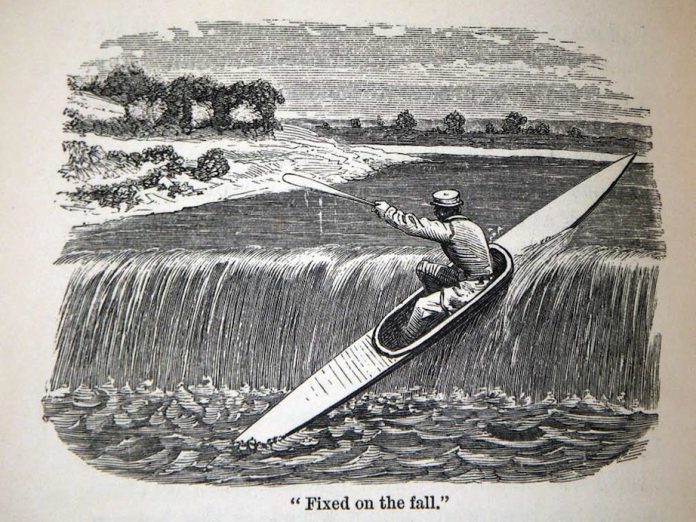
MacGregor revolutionized waterborne travel in Europe by turning around to face forward in what was essentially a rowing scull. Instead of rowing with oars he opted to alternate dips with a double-bladed paddle. His dream was to tour the Baltic and also paddle through Europe passing out religious tracts (but that’s another story) on water- ways possibly too small for a conventional rowboat. About the decision to “canoe” in- stead of row across Europe, he wrote:

“It was clear no rowboat would serve on a voyage of this sort, for in the wildest parts of the best rivers the channel is too narrow for oars, or, if wide enough, it is often too shallow; and the tortuous passages…that constantly occur on a river winding among hills, make those very parts where the scenery is wildest and best to be quite unapproachable in such a boat, for it would be swamped by the sharp waves, or upset over the sunk- en rocks, which cannot be seen by a steersman [facing the stern].”

MacGregor named his 15-foot decked canoe for his famous ancestor Rob Roy and when he returned from his odyssey in 1865 he wrote the best-selling A Thousand Miles in the Rob Roy Canoe. In it, he celebrated paddling just for the sake of paddling, which was then a novel idea. Building on the book’s success, he founded the Royal Canoe Club and the idea crossed the Atlantic.

And so began the sport of recreational canoeing, say some. Recreational canoeing in Canada inspired by a Brit? Maybe, in part. For more on the story we need to look into an exhibit at The Canadian Canoe Museum in Peterbrough, Ontario.

Its name is Harmony and it’s a lightweight decked canoe very similar to MacGregor’s. One might assume Harmony is derivative of Rob Roy, after all, the two were built only 10 kilometres from each other. But that gets turned upside down by research which suggests that Harmony was built before John MacGregor cooked up his design and paddled off to become famous.

In piecing the story together it seems that Dr. George Mellis Douglas purchased Harmony when passing through London and had the craft shipped home for his son Campbell. According to Douglas, writing in Forest and Stream in 1886:

“This canoe was built [before] Mr. MacGregor brought canoeing into notice by the publication of his well known cruise in the Rob Roy… On the eve of my departure for India in 1865, I had her sent out to Quebec… Last year I remembered my old canoe and had her sent to me at Lakefield, where she was renovated and again put in com- mission this spring. The Harmony is a paddling canoe, pur et simple [sic].” In the fullness of time, the son Campbell had a son—another George Mellis Douglas—who was one of the first Barren Land explorers to extensively photograph the Northwest Territories in the early 20th century. He lived out his days paddling Harmony, much in the spirit of MacGregor, on Lake Katchewanooka, not far from Harmony’s current home in the museum.

Was there a relationship between George Mellis Douglas, the elder, and John MacGregor? Did MacGregor model his boat after Harmony? Is Harmony the canoe that started it all? Questions. Lots of questions. A Thousand Miles in the Rob Roy Canoe (readable at www.ibiblio.org) or Rob Roy on the Baltic (re-released by Dixon-Price) are excellent places to start looking for answers

This article appeared in Canoeroots & Family Camping, Late Summer 2011.


The Dirt on Campsoap

Photo: Courtesy Proctor & Gamble
Soap Ad

This article originally appeared in Canoeroots and Family Camping magazine.

Penny-pinching campers and green-washing skeptics who wonder at the environmental merits of camp-specific “eco” soaps over Sunlight and Pert Plus, read on. The differences run deeper than packaging. But remember, all camp suds must filter through soil to allow bacteria to biodegrade the soap. That means no washing your dishes (or your hair, Fabio) in the lake—fill the camp sink and take it up on shore, at least 200 feet from any water.

Goat Mountain Skinny Dipper Delight Soap

Pros: glows in the dark—never lose your soap again. natural ingredients; also available in goat’s milk “wilderness” varieties with outhouse-humor names like Buffalo patty, skunk scat and Beaver Butt.
Cons: The lather glows too.
Bottom line: Perfect for discrete, total darkness baths.
$5 CDN • www.goatmountainsoap.com

No-rinse Shampoo/Body Wash

Pros: Biodegradable; rub in and towel dry— rinse- and fuss-free.
Cons: Seriously lacking in suds. Biodegradable doesn’t mean natural—contains chemicals and preservatives like propylene glycol, treithanolamine lauryl sulfate (tea) and methyl- and propylparabens that have been linked to serious helath problems in both people and aquatic life.
Bottom line: If you’re paddling in the Dead sea or just hate bathing, this is the soap for you.
$1.50–$4.50 US • www.norinse.com

Dr. Bronner’s Magic Soap

Pros: Contains nothing but organic fair
trade coconut, olive, hemp, jojoba, lavender, peppermint and other natural oils; ingredients are sustainably grown and ecologically processed by coddled farm workers.
Cons: Slippery when wet.
Bottom line: Ideal for dreadlocked, barefoot, vegan, goji berry-scarfing, patchouli-scented, earth-first hippies…and anyone else who gives a damn.
$4.50 US • www.drbronner.com

Campsuds

Pros: Made with vegetable-based, completely biodegradable ingredients. peppermint and lavender bath soap formulas smell delightful and moisturize.
Cons: Anything that “cleans hair, body, dishes, clothes and more” can’t do it all well.
Bottom line: The original green soap (literally and figuratively) since 1965 and still an acceptable, all-round option.
$3.75–$7.25 CDN • www.sierradawn.com

Sunlight dish detergent

Pros: Tough on grease.
Cons: Contains an arsenal of dangerous chemicals. can produce nitrogen and sulphur oxides—the same compounds responsible for acid rain—during decomposition.
Bottom line: Save it for the kitchen sink. Better yet, use a natural, eco-friendly alternative like simple green (www. simplegreen.com) at home, too.
$2 CDN

Ivory Soap

Pros: “The only soap that floats.” Most natural commercial soap choice.
Cons: Contains trace amounts of tetrasodium eDta—a toxic, persistent organic pollutant. Avoid “moisture care” varieties of ivory containing a host of other nasty compounds.
Bottom line: “99 and 44/100% pure” since 1879, and still a safe, economical choice for campers.
$2 US (3 pack) • www.ivory.com

Apple Cider Vinegar

Pros: For a natural shampoo substitute, combine a baking soda solution wash with an apple cider vinegar rinse (1.5 oz/50 ml vinegar to 2 qt/2 l water).
Cons: Opinions differ on whether you can smell the vinegar, but if you need to smell like pomegranates and hibiscus you should probably just stay home.
Bottom line: One enviro maxim has it: if you wouldn’t eat it or drink it, don’t put it in the water. These from-the-pantry ingredients also taste great in bannock and salad dressing, something we can’t say about Beaver Butt.
$4.40 US

This article appeared in Canoeroots & Family Camping, Early Summer 2011.


Forward Sweep Kayak Technique

Photo: Rochelle Relyea
A good turn of speed.

This kayak technique article on how to sweep turn while edging was originally published in Adventure Kayak magazine.

We sea kayakers earn every mile we travel, so we need all the paddling efficiency we can get. For turning, a forward sweep, which generates forward momentum as well as turning power, is more efficient than a stroke that has a braking effect on your kayak’s forward speed.

The power for sweep strokes comes from torso rotation, not independent arm movement. Initiate the forward sweep with your body wound up and your blade planted in the water at your toes. Keep your hands relatively low as your torso unwinds, pulling your paddle blade in an arcing path as far out to the side of your kayak as is comfortable, and ending within six inches of the stern of your kayak. Slice your blade out of the water before it touches the stern or it will get pinned against the kayak.

While the first third of the stroke is most effective for turning, concentrate on full, long sweeps, especially when practicing, to encourage torso rotation. Follow your sweeping blade with your eyes to make sure that you are actively twisting from the waist. As your skills evolve, you will naturally start to lead your turns with your head—looking where you are going, rather than watching your blade—but be sure to continue to use full and powerful torso rotation and not just arm movement.

For even greater turning potential, introduce some edging. Tilt your boat toward the side of the stroke (in the opposite direction that you’ll be turning), while keeping your head over the kayak. If you want to turn to the left, for example, think about weighting your right butt cheek and lifting your left knee while sweeping with the paddle on the right.

To balance with the boat on edge, use a climbing angle on your sweeping blade to create lift and support. This means that you hold the blade on about a 45-degree angle (power face downward) while sweeping it from the bow to the stern, effectively making it a combination sweep and high brace. Then recover the blade in a low-brace position, skimming the back of the paddle blade flat above the water, ready to supply support should you need it.


This article originally appeared in Adventure Kayak, Summer/Fall 2009. Download our freeiPad/iPhone/iPod Touch App or Android App or read it here.

Kevin Callan: Stranger in a Strange Land

Photo: Kevin Callan
Editorial

This editorial originally appeared in Canoeroots and Family Camping magazine.

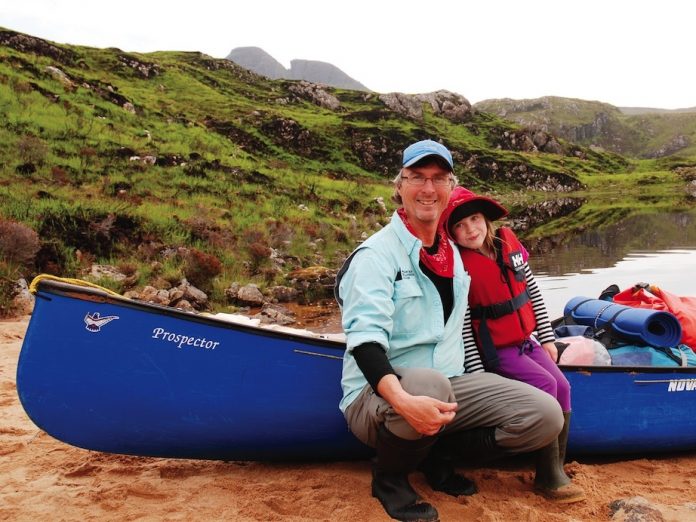
The butterflies began to twirl in my stomach the moment I stepped off the train in Inverness with my wife, Alana, and six-year-old daughter, Kyla. Everyone around us was wearing knee-high, green rubber gumboots. We were dressed in low, leather hikers—typical gear for a summer canoe trip in our neck of the woods. But not for the northwest tip of Scotland.

It didn’t help my confidence when our outfitter, Russell, picked us out of the crowd the moment he arrived. Looking down at our feet, he smirked and said, “You must be the Canadian paddlers.”

The uneasy feeling heightened as we dodged sheep and free-ranging cattle on the road to our put-in at Loch Buine Moire. The landscape stretched out in front of us—a shoreline of peat bogs, heather moorland, low-lying pockets of birch and, in the backdrop, the five stunted mountaintops that make up the Torridonian sandstone peaks.

Of course, we could see little of the scenery through the rain that met us at the put-in. We pulled off our leather hikers and replaced them with the gumboots supplied by Russell. Then he sketched a makeshift manual on how to erect the new tunnel tent he had packed for us, quickly described the art of lighting a Kelly Kettle with one match and a bundle of wet heather, pointed us in the right direction and sent us on our way. It was baptism-by-fire. It gave me the jitters.

After a lifetime of canoe tripping in Northern Ontario, I love the feeling of knowing how to make myself comfortable and safe out there. But into the cold rain we went, a clan of paddlers from across the Atlantic heading into the unfamiliar wilds of northern Scotland.

Once over the portage, I did what any canoeist with experience tripping during a rainstorm would do—I looked for a clump of trees to put up a tarp and light a warm fire. The problem was, clumps of trees are rare in northern Scotland and when found, they’re likely to be in the soggiest spot around. We resorted to a bog where the standing water was only ankle deep.

Two rock mounds gave us some protection against the numbing wind and amazingly enough, I was able to light the Kelly Kettle with a single match and a bundle of wet heather. I had underestimated the tunnel tent, an amazing piece of gear that was well matched to the elements surrounding us. It formed a self-supported shelter with add-on sleeping quarters. It protected us from the rain and wind and even allowed us to cook up our first meal—bangers and mash of course. We couldn’t possibly imagine cooking in our shelter on trips back home, ever wary of hungry black bears wandering the woods. Scotland’s most dangerous land mammal is the feral goat.

Once the rain stopped, we crawled out of the tunnel tent to soak in the scenery around us. We gawked as rising mist cleared from the surrounding mountains and unveiled the stunning landscape. Kyla, with her hot chocolate, and Alana and I, with a wee dram of single malt, had found comfort in our newfound, unfamiliar canoe country.

Kevin Callan may have been out of his element, but he’s no blethering skite. Despite being scunnered by midges, he fell in love with the green hills and purple heather of his mother’s land.

This article appeared in Canoeroots & Family Camping, Spring 2012.


Klondike Quest

Photo: Alan Macartney
Klondike Quest

So this is what adventure looks like.

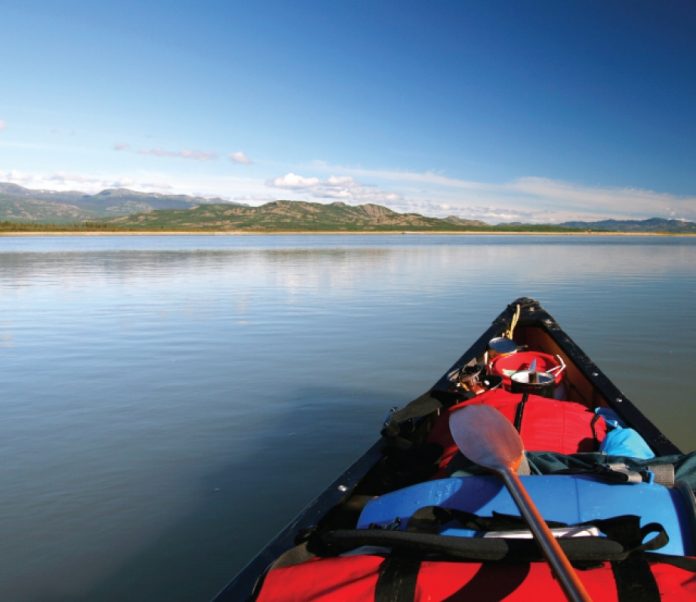
A storm raged overhead as I sheltered under my overturned canoe on the shore of the Yukon’s Lake Laberge. Watching lightning stab down at the surrounding hills in the gloom, I shivered.

Only three days into a five-week solo canoe trip down the Yukon River and I was already at the mercy of the elements, gusts of wind sending sheets of rain to pound against the hull. Against the howling wind, I clung to the gunwales of my only means of return to civilization.

I’m not the first to have come to the Yukon River for a taste of adventure. In 1898, news of a massive gold strike in the Klondike Valley swept the world and some 30,000 men raced to Canada’s Yukon Territory. Doctors called the fever “klondicitis.” After hiking heavy packs over the dangerous Chilkoot and White Pass to the headwaters of the Yukon River, prospectors built rafts and boats to float, pole and paddle their way to collect certain fortune. Gold lay thick in the creek beds, it was said. For most, the dream proved elusive. 

Hearing the story as a boy, klondicitis hit me hard. I never shook off its romantic beckoning. Each summer I escaped my government job in the nation’s capital to paddle remote areas, but still the Klondike haunted me. And that’s how I found myself lying under my canoe, waiting for the storm to pass.

Warnings

My river journey began in Whitehorse, the capital of the Yukon, with warnings. In full flood, the Yukon River was carrying up to 40 percent more water volume than past years. Entire trees were caught up in the floodwaters, making for dangerous paddling companions. Often considered one of the more accessible northern rivers because it’s reachable by road and has few rapids, the Yukon River during the summer of 2012 was a whole different beast. 

My heavily-laden 17-foot Nova Craft set off into strong current from a quiet eddy in town. My goal was to trace the gold rush to the Klondike Valley, then paddle to the Arctic Circle, 1,300 kilometers away. Paddling away from Whitehorse, almost immediately I was immersed in wilderness. That first night I set up my tent within sight of rotting paddlewheeler wharf pilings on the “marge of Lake Laberge,” a place made famous by Robert Service’s 1907 poem The Cremation of Sam McGee. 

Lake Laberge is a widening of the river north of Whitehorse, 54 kilometres long and a dangerous and unpredictable lake for any canoeist. More than a few Klondike paddlewheelers, a popular means for traveling the river in the 19th century, rest on the bottom, victims of sudden storms, high winds and waves, which can whip up in minutes. 

Chased all morning and afternoon by a storm, I was caught 30 kilometers down the lake. Already pitching and rolling when a grey wave swept over my stern, I headed for the nearby shore. And that’s where I stayed, sheltered under my canoe and then huddled in my tent, for two wet days. 

Released from the clutches of the storm, I had my sights set on a ghost town at the northern reach of Lake Laberge. Eight hours of hard paddling found me, exhausted, setting up my tent beside a lonesome paddlewheeler, its ribs protruding from the gravel like a prehistoric skeleton. Close by, the remains of a telegraph station slowly composted into history. Klondike miners didn’t go north as pioneers to settle the land. Interested only in striking it rich, most left within a year of their arrival, pushed south by the hard winter and disillusioned with the promise of gold. Their log cabins illustrate the hard lives they led: dirt floors, windows improvised from whiskey bottles or tanned moose hides and a solitary stove to keep the cold at bay. Most of these ghost towns have disappeared into the black spruce forests, but their bones are still there for those who look.

Exploring

Hootalinqua, where the Yukon meets the Teslin River, is a beautiful ghost town. Its name means “running against the mountains” in reference to the fast and narrow section I’d just paddled. A North-West Mounted Police post, telegraph station, solitary trapper’s cabin and log store are all that remain. A narrow path, guarded only by swarms of mosquitoes, leads through the forest to a rocky lookout. Nearby, the paddlewheeler Evelyn still stands upright—though tilting—on supports where dockside workers abandoned her 100 years ago. Deep in the wilderness, ravens and hummingbirds perch on her sagging bow and stern.

Constant vigilance is a necessity for any wilderness paddler. From its headwaters in British Columbia, the Yukon River carves a circuitous 3,100-kilometer path through the wilderness to the Bering Sea, making it the 10th longest river in the world. Moose, caribou, wolverine, bear and eagles are often more common than people along its banks. With a year-round frigid water temperature, hypothermia is a serious concern. Rapids, whirlpools and sweepers pose navigational challenges. In its flood conditions, logjams forced furious paddling to find a clear and safe path and submerged logs were a constant danger; getting rammed by one would certainly have capsized me.

The challenges of Canada’s north attract adventurers from around the world. More than 300,000 people visit the Yukon each year, says tourism spokesperson Jim Kemshead. One in five of those are adventure enthusiasts. “The Yukon has a landmass the same size as California but whereas California has a population of 38 million, the Yukon is populated with 36,000 people. This makes for great expanses of pristine wilderness.”

At Carmacks, a small riverside town named after one of the original Klondike gold miners, I met a German couple kayaking from Whitehorse to Eagle, Alaska, with their young son and husky dog. A wolf had stalked their husky at Selwyn, a remote ghost town, they told me. Englishman, Eddy Hely, was another freedom-loving paddler traveling downriver. At 32 years old, Hely travels the world seeking adventures, working when money supplies run dry. It’s not an uncommon story for travelers along the Yukon.

Klondike Gold

Three weeks in, I arrived at Dawson City, nestled deep in the Klondike Valley at the confluence of the Yukon and Klondike rivers. I resupplied and took a few days off. I spent a day on a palaeontology dig organized by Dr. Grant Zazula of the Yukon government who researches the prehistoric animals, including mammoths, scimitar cats, camels and nine-foot-long beavers, that roamed the area before the last ice age. I uncovered a 30,000-year-old buffalo horn and jawbone, complete with several teeth.

Most paddlers end their trip at Dawson, which retains its frontier, gold-rush feel. Called the Paris of the North when its population ballooned to 40,000 in 1898, today little over a thousand people call it home year-round. Its dirt-packed streets, old-fashioned street-side facades and employees dressed in period costume are at odds with the bustling RVs and tourists. Though only 4,000 men struck gold in the Klondike during its hey-day, today a handful of hardened prospectors still try their luck in the rivers nearby. 

If Dawson was the heart of the Klondike Gold Rush, then the Yukon River was the artery that fed it. Few prospectors followed the river past Dawson; fewer still to Fort Yukon, my final destination. Saying goodbye to Dawson and my Klondike quest, I took to the river. Warned of a wild ride ahead, anticipation spiked as I nosed the canoe into the strong current. Due to the flood conditions, I’d been clocking speeds up to 18 kilometers per hour and couldn’t imagine going faster. 

With the river unrolling before me—endless kilometers of spectacular mountain beauty—it was easy to see how the area captured the imagination of so many artists—writers Jack London, Robert Service and Pierre Burton, most famously. Signs of the gold rush dried up as skeletons of paddlewheelers disappeared from the shore. Past the granite marker at the Yukon-Alaskan border and several hard paddling days from the Arctic Circle, the river enters a vast swampland of islands called Yukon Flats, a major North American breeding ground for cranes, geese and ducks. The shoreline flattened, swallowing all recognizable landforms. Because the river tears down these islands and gravel bars as quickly as it builds them, my GPS was of no help. Lost in a 230-square-kilometer area of the braided river, at least I could be sure that as long as I was on the river, I was inching closer to the Bering Sea. With an ample reserve of food, I was far from panicked. Before turning in that night, a pair of sand-hill cranes silently drifted past my campsite in the gathering dusk. Then a pair of wolves howled in the distance. Bliss.

The following day, after covering almost 1,300 kilometers, I hauled my canoe out of the current at the Alaskan village of Fort Yukon perched just above the Arctic Circle. This was the finish line. After five weeks of paddling the Yukon River in flood conditions—taking more than 133,100 paddle strokes—my case of klondicitis is worse than ever. But unlike the prospectors before me, I know I’ll be back. 

If You Go…

Essentials for paddling the Yukon River

When to Go

Travel mid-June to take advantage of the daylight hours and experience the most of the midnight sun. On the summer solstice, June 21, travelers and locals alike meet on top of the Dome, a massive hill overlooking the river and Dawson City, to watch the sun dip below the mountains and rise again only a couple hours later. Or, paddle in July and time your arrival with the Dawson City Music Festival, a truly unique, grassroots event with world-class music (dcmf.com). August sees cooler temperatures, shorter days and fewer bugs. 

Where to Paddle

Most long-distance paddlers on the Yukon River start in Whitehorse and take out 460 miles and two weeks later in Dawson City. Shorten your trip by half by starting or ending in the town of Carmacks. Alternately, shorten your trip but not your route by participating in the Yukon River Quest, the world’s longest annual canoe and kayak race that spans the full distance from Whitehorse to Dawson City but takes place over five days—winners regularly cross the finish line in under 42 hours. yukonriverquest.com. 

Weather Concerns

“If you don’t like the weather, wait an hour” is a common saying in the Yukon. It’s unpredictable at best. Though temperatures can spike to 30 degrees Celsius and higher during summer months, a daily temperature of 18 degrees Celsius is average during the summer, dropping close to zero at night. Snow along the Yukon River is possible at any time of year. 

Don’t Forget

This wilderness journey takes place in the heart of grizzly bear country. Bear spray and an emergency communications device are musts. Don’t forget an eye mask to ensure you get some sleep. 

Outfitters and Guided Tours

Up North Adventures | upnorthadventures.com

Kanoe People | kanoepeople.com

Sea to Sky Expeditions | seatoskyexpeditions.com

Pathways Canada | canoe-yukon.com

Cabin Fever Adventures | cabinfeveradventures.com

Allen Macartney is an experienced wilderness paddler, writer and photographer. His expedition was sponsored by the Royal Canadian Geographical Society.
This article was originally published in the Early Summer 2013 issue of CanoerootsThis article first appeared in the Early Summer 2013 issue of Canoeroots Magazine.

 

How To Get Your Kids To Enjoy Fishing

Photo: James Smedley
How To Get Your Kids To Enjoy Fishing

Before having children, my wife and I spent just about every weekend exploring lakes and rivers by boat or canoe. Simply satisfying our angling habit had been demanding enough, but launching onto the stormy seas of parenthood created the sort of change and challenge that really rocked the boat. Thirteen-hour days on the water were suddenly no longer an option.

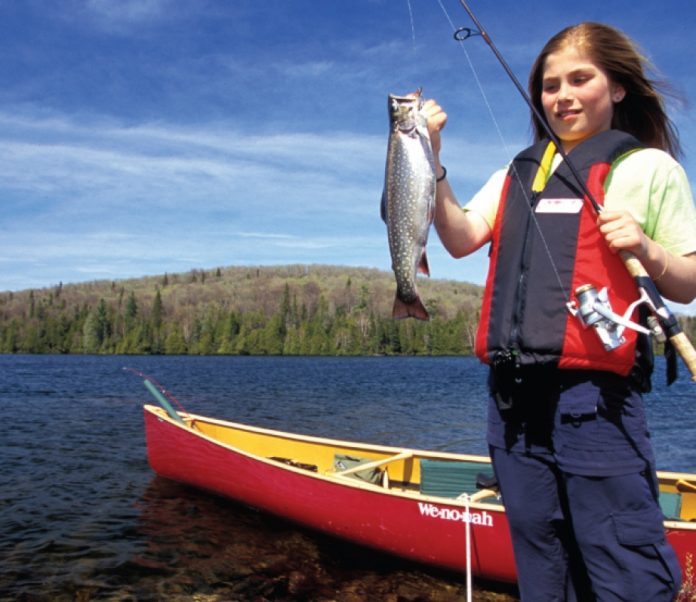
Even so, a young family doesn’t mean your rods and reels have to collect dust in the garage. Instil a passion for fishing in your young children and be rewarded with fun family excursions for years to come. Our girls are now in their mid-teens with infinitely more important distractions than fishing, but we still manage to spend time together on the water catching fish and having fun. As a parent, you can’t ask for much more than that. Create a life-long passion for fishing and nurture your angler from the cradle to the boat with these hard-earned pearls of advice.

Never Too Young 

Armed with a properly fitted PFD, a child is never too young to get out on the water. “I was about two years old when I started fishing with my dad,” says Gord Ellis, an outdoor writer, fisherman and father of two. “My boys were barely walking when they’d join us in the boat.” Ellis adds that they didn’t do much fishing at first, but being on the water became second nature to them and they get excited for each and every fishing trip now. 

A Rod of Their Own

A small spinning reel and three-foot rod is a great starter unit. Stay away from commercial kids-specific rod and reel combos that are more flash than function, can be frustrating to use and prone to breaking. Hand-me-down spinning reels paired with ice fishing rods were a solution for my girls. Like me, you’ll learn the hard way that pre-schoolers often simply let go of their fishing rods when they’re distracted. During the early stages of rod wielding, tying a string from the boat to the rod is a wise precaution. Ellis notes that his kids had a better experience with higher-quality gear and recognized quality early on. “By age six the boys started eyeing up my best jigging rods,” he says. Not until you’re older, Junior!

Choose Your Weapon

Like most adults, I was reluctant to let my daughters choose their own lures because I felt more qualified to select a presentation that would help them catch fish. I was quickly cured of this conceit when my three-year-old insisted on hooking her jig with the strangest looking soft plastic bait in my tackle box. While my wife and I used live minnows, my daughter worked a monstrosity called a “twin tailed skirted grub.” After she caught three walleye to our zero, I vowed never to doubt my daughters’ angling instincts. I still make general suggestions but I open my tackle box and let my girls choose their own lures. Often, I’m surprised and enlightened as to what works. 

Fish Where There’s Fish, Dummy

Children like catching fish more than fishing so go for the sure thing whenever possible. While hard-core anglers enjoy the search, youngsters are much happier casting off a point or into a pool at the base of rapids and experiencing instant gratification. Appreciating the subtleties of finding fish in challenging waters comes later.

Warm and Dry

Weather often doesn’t cooperate and an uncomfortable kid will not be receptive to the joys of angling. On the flipside, kids are surprisingly ambivalent to foul weather when they’re prepared for it. First on the list for angler Jamie Robinson is warm clothing and quality raingear for his son and daughter. 

“Thinking back, I’m surprised at some of the miserable weather we’ve been out in,” he says adding that when the kids are warm and dry there’s no complaining. Living in Northern Ontario, Robinson errs on the side of caution for his excursions, packing hats, mittens and warm jackets even in summer. “It’s nothing to see us in July in snow suits in the boat,” he jokes.

Bring Distractions

Even at the best fishing spots the bite is not always on and “I’m bored” can become an unpleasant soundtrack for the day. Robinson always brings snacks and books to occupy his kids during slow periods in the boat but draws the line at video games and electronics—kids get enough of that at home. It’s easier to keep excitable children entertained while fishing from shore than within the cramped quarters of a canoe as more distractions are at hand. For my girls, hot weather equals swimming, even if the fish are biting. Often, I’m pleasantly surprised that the walleye continue to bite in spite of the shrieking and thrashing limbs.

Pull Their Weight

While it’s tempting for parents to do everything ourselves, when kids assist with the duties that surround the trip they have an investment in the outing. As pre-schoolers, my daughters would pack their own snacks and help catch minnows and leeches for bait. Their experience has evolved to the point that my oldest can now back the boat and trailer into the water for me and my youngest can clean and fillet fish. Not only has involving them made them feel like an integral part of the adventure, but now they’re confident, capable and a big help.

Go One on One

With the whole family on board, a small craft can get cramped and hectic. The one-child-to-one-parent dynamic provides a great learning environment for kids and more time with a line in the water for parents. Young anglers love the undivided attention and mom or dad will have fewer snags and tangles to deal with. One-on-one provides the perfect opportunity to teach essentials like safe casting practices. Hint: Kids should always announce their casts. 

Learn When to Pull the Plug

Don’t let children push you around with early requests to leave but learn to recognise when your child has had enough. Better to have a shortened day on the water than imprint a bad experience. Whenever we couldn’t convince our daughters that boating and fishing was the most fun they could be having, we would head to shore, consistent with our pledge never to force fishing. 

While nurturing young anglers takes adaptation and even sacrifice, for parents who love angling and the outdoors, the investment is worthwhile, to be repaid with years of rewarding family adventures. 

An avid angler and camper, James Smedley’s life revolves around the outdoors. He has earned more than 30 U.S. and Canadian national awards for writing and photography.

This article was originally published in the Early Summer 2013 issue of CanoerootsThis article first appeared in the Early Summer 2013 issue of Canoeroots Magazine.

 

No Man’s Land: Paddler Fights For The Right To Paddle

Phil Brown paddling on Shingle Shanty Brook on a portion that flows through posted private land
Paddling into no man’s land. | Feature photo: Susan Bibeau/Adirondack Explorer

When Phil Brown set out on a two-day canoe trip in the heart of the Adirondacks in 2009, he thought it might make a good story. What he got instead was a three-year legal battle that ultimately upheld the public’s right to make that journey by boat, even though it cuts through private property.

No man’s land: Paddler fights for the right to paddle

The decision, issued by a state judge at the end of February, sheds a little light on the murky topic of waterway navigability in the United States. If the ruling stands, other paddlers in New York may be emboldened to challenge routes marked as private, and landowners may think twice before blocking access.

Brown is editor of the Adirondack Explorer, a magazine that covers the environment and recreation in New York’s six-million-acre Adirondack Park. As part of a route between Little Tupper Lake and Lake Lila in the state’s Whitney Wilderness, Brown paddled along a remote stretch including three smaller waterways.

Phil Brown paddling on Shingle Shanty Brook on a portion that flows through posted private land
Paddling into no man’s land. | Feature photo: Susan Bibeau/Adirondack Explorer

The owners of the land intersected by those waterways had hung no trespassing signs and cables to deter paddlers. Brown could have taken a mile-long detour across state-owned land to avoid those waters, but didn’t.

“I had done my research and had come to the conclusion that this waterway was likely navigable and therefore open to the public,” says Brown, who wrote an article called Testing the Legal Waters based on his trip.

When the landowners sued him for trespass they contended that the waterway—big enough for a canoe or kayak but little else—was too small for commercial use, an historic method of determining navigability in the United States.

Brown disagreed with that assessment. So did New York officials, who joined Brown in the case. Justice Richard T. Aulisi agreed: “Practical utility for travel or transport,” he wrote, are valid measures of navigability. And making that ruling on such a small waterway makes it clear that recreation rights apply to even the smallest craft.

Technically, Aulisi’s ruling applies only to the waterway involved in the case, as navigability is determined on a case-by-case basis. But other courts may look to Aulisi’s decision as a guide if future cases are filed, says John Caffry, Brown’s lawyer.

Attorney Neil Woodworth says the ruling is good news for paddlers across the state. If the ruling stands, “a fair number of paddlers will begin to try waterways where there had been posted signs and barbed wire,” he adds.

While state officials celebrated the ruling as a victory for the public’s right to access natural resources, they urged paddlers to be cautious. “The case does not mean that every waterway in the Adirondacks is now open to paddlers, nor does it mean that no trespassing signs on waterways can now be routinely ignored,” a spokeswoman for the state’s Department of Environmental Conservation wrote in an email.

Cover of Canoeroots Magazine Early Summer 2013 issueThis article was first published in the Early Summer 2013 issue of Canoeroots Magazine. Subscribe to Paddling Magazine’s print and digital editions, or browse the archives.

Paddling into no man’s land. | Feature photo: Susan Bibeau/Adirondack Explorer