Home Blog Page 310

Kinship In An Unbounded Land

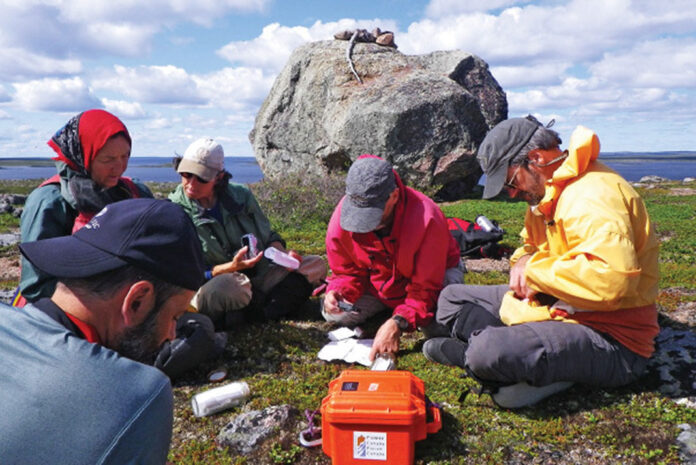
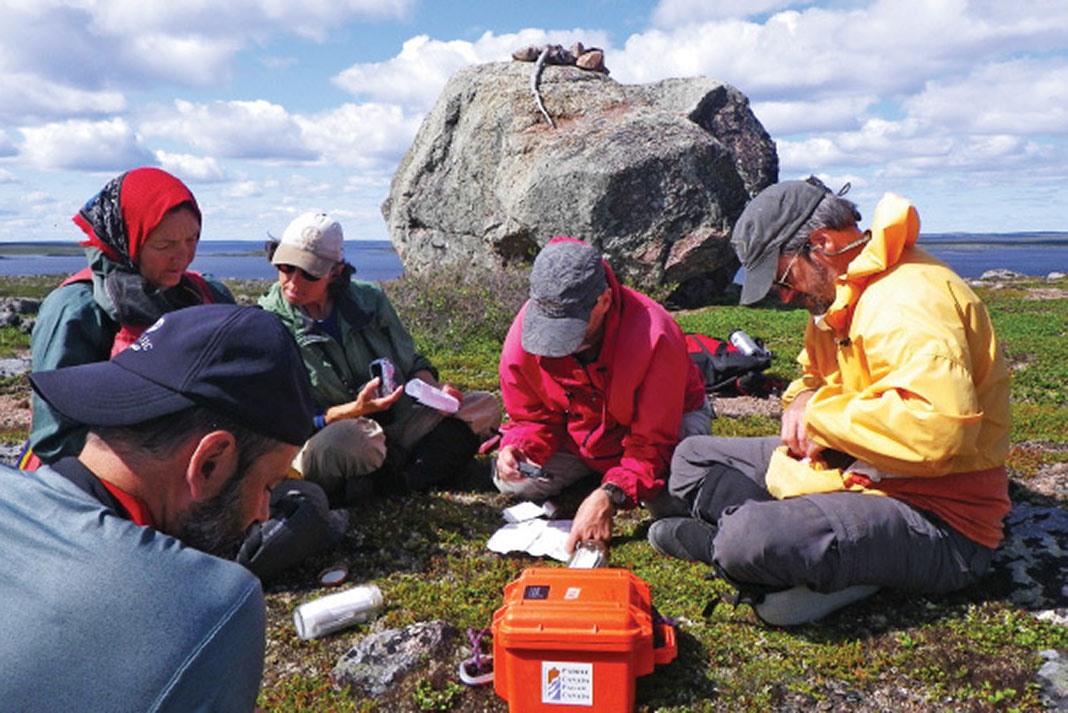
people review the notes left in a bottle by generations of wilderness canoeists
Lost messages in a bottle. | Feature photo: Brian Johnston

There’s a temptation to think that we somehow got from the era of explorers and voyageurs to modern canoeing with very little activity in between.

In truth, there was at least a century of prospectors, surveyors, clergy and gentleman and lady adventurers who pioneered routes and left cairns and journals that beguiled hardcore canoe trippers then and now. Names like Low, Bell Selwyn, Macoun, McConnell, Richardson, Dawson and Keele are still very much a part of the ongoing conversation about canoe tripping.
Kinship in an unbounded land

That conversation continued at this year’s Wilderness Canoe Symposium. One of the voices buried in the Saturday afternoon program was Fred “Skip” Pessl who stood up and said, “I’ve been on one canoe trip in my life. And it didn’t end well.”

And with that, he shared a memoir of his 1955 trip down the Dubawnt River with Arthur Moffatt. Along with four other college students, they followed routes pioneered in the 1890s by Geological Survey prospector Joseph Burr Tyrrell.

The leader of Pessl’s trip, 32-year-old Arthur Moffatt, died on that trip.
people review the notes left in a bottle by generations of wilderness canoeists
Lost messages in a bottle. | Feature photo: Brian Johnston

After publication of Moffatt’s journal and the macabre story in Sports Illustrated in 1959, the only public airing of the trip was a compelling and controversial 1996 book called Death on the Barrens: A True Story of Courage and Tragedy in the Canadian Arctic by Pessl’s trip mate and fellow survivor, George Grinnell.

Seventeen years after the publication of Grinnell’s account and 58 years after the actual journey, Pessl told the symposium audience that he is determined to augment Grinnell’s account with his own version of the story.

On his journey, J.B. Tyrrell built a cairn in the headwaters of the Dubawnt, leaving a note in a jar and a flag to mark the spot. From that time on, trips that followed would stop and add their notes to the jar—including the 1955 Moffatt trip—leaving a multi-layered experiential record of the echoes of history in a very particular wilderness location.

On Tyrrell’s trail this past summer, Manitoba paddler Brian Johnston stopped at the cairn. The jar and notes had suffered. Some—including Tyrrell’s original from 1893 and Moffatt’s from 1955—were illegible in visible light. Others detail the on-the-spot musings of parades of paddlers, also inspired by the original expedition from the Geological Survey. Johnston scanned the notes, refilled the jar with facsimiles and archived the originals.

What binds J.B. Tyrrell’s original 1890s report, George Grinnell’s haunting Death on the Barrens, Skip Pessl’s memoir and Johnston’s forthcoming On Top of a Boulder: Notes from Tyrrell’s Cairn, is the canoe and what Johnston refers to as “kinship in an unbounded land.” Without the prospectors, this kinship would not exist—there would be no jar filled with inspired notes tucked away inside a cairn built 120 years ago.
Cover of the Early Summer 2013 issue of Canoeroots MagazineThis article was first published in the Early Summer 2013 issue of Canoeroots Magazine. Subscribe to Paddling Magazine’s print and digital editions, or browse the archives.


Lost messages in a bottle. | Feature photo: Brian Johnston
 

Those (Im)Perfect Days

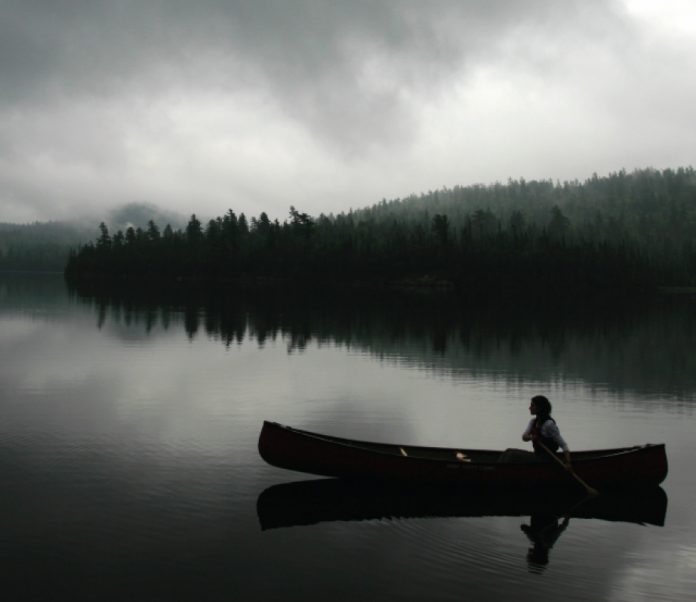
Photo: David Lee
Those (Im)Perfect Days

Last summer, I happened across a magazine article, lyrically penned and lavishly illustrated, extolling a perfect day of living large in the great outdoors. To my delight, the piece centered on a weekend canoe trip in a region of northwoodsy lakes and rivers I knew well. Digging deeper into the story, it soon became apparent that this was definitely unlike any paddling getaway that I’ve ever been on.

In the accompanying dreamy photographs, the GQ-ready paddler, complete with Brad Pitt’s dashing good looks and a perfect two days worth of stubble, was seated ramrod straight, sans PFD, in the stern of a classic wood-stripper canoe. The boat, with its classic lines and warm-hued natural wood finish, was stunning. Nearly as stunning as the statuesque bow paddler, an übersexy blonde attired in a sports bra and knockout tights, again, no PFD, who I swear I’ve seen gracing the pages of a Victoria’s Secret catalogue. 

In between the lavish images of the two beautiful models who just happened to be sitting in a canoe, the article waxed poetically about the glorious morning sun casting itself over the sky-blue waters and the sweet-smelling wilderness air. It rambled on about the sensual, hypnotic motion of the sleek canoe gliding over the mirror-calm surface, the enchanting yodeling of a pair of courting loons and the picture-perfect campsite under tall white pines awaiting day’s end.

Well, jolly good for Brad and Gisele, I say. For the rest of us Average Joe and Jane Bagadonuts who canoe in the real world instead of Never Never Land, all this pabulum was a bit much. 

In 35 years of dinking around in canoes, I’ve had my share of memorable days on the water. Though I have to admit, not one of them was ever shared with a supermodel and not a single person has ever mistaken me or any of my paddling buddies for Brad Pitt.

Some of my most vivid remembrances from canoe trips past have not been of days when life was blissful, beautiful and perfect, but rather those imperfect days. Days when canoeing was more about fearsome storms, chilling capsizes and portages from hell. 

Sadly to say, my canoeing-related misadventures are not isolated events, but I’m glad of them all. Even now, years later, these wayward recollections still make me grin in a puckered-brow, I-can’t-believe-this-happened-to-me kind of way.

By now I’ve resigned myself to the fact that I’ll never have an angel as a paddling partner, other than my wife, and I’ve been told I look a lot more like Larry David than any GQ coverboy.

Truth be told, canoeing as often as I do, I’m bound to have more of those indelible imperfect days. After all, shit happens, which only makes me appreciate it even more when everything does go right. Besides, for the paddlers I know, mishaps make better stories.

Larry Rice’s most recent imperfect day involved a sand-blasting, tent-flattening, all-night windstorm in the Lower Canyons of the Rio Grande in Big Bend, Texas.

This article was originally published in the Early Summer 2013 issue of CanoerootsThis article first appeared in the Early Summer 2013 issue of Canoeroots Magazine.


Why Highlighting Successful River Restoration Projects Is So Important

View down the Chicago River, lined up skyscrapers
The Chicago River is just one example of a successful river restoration project in North America.

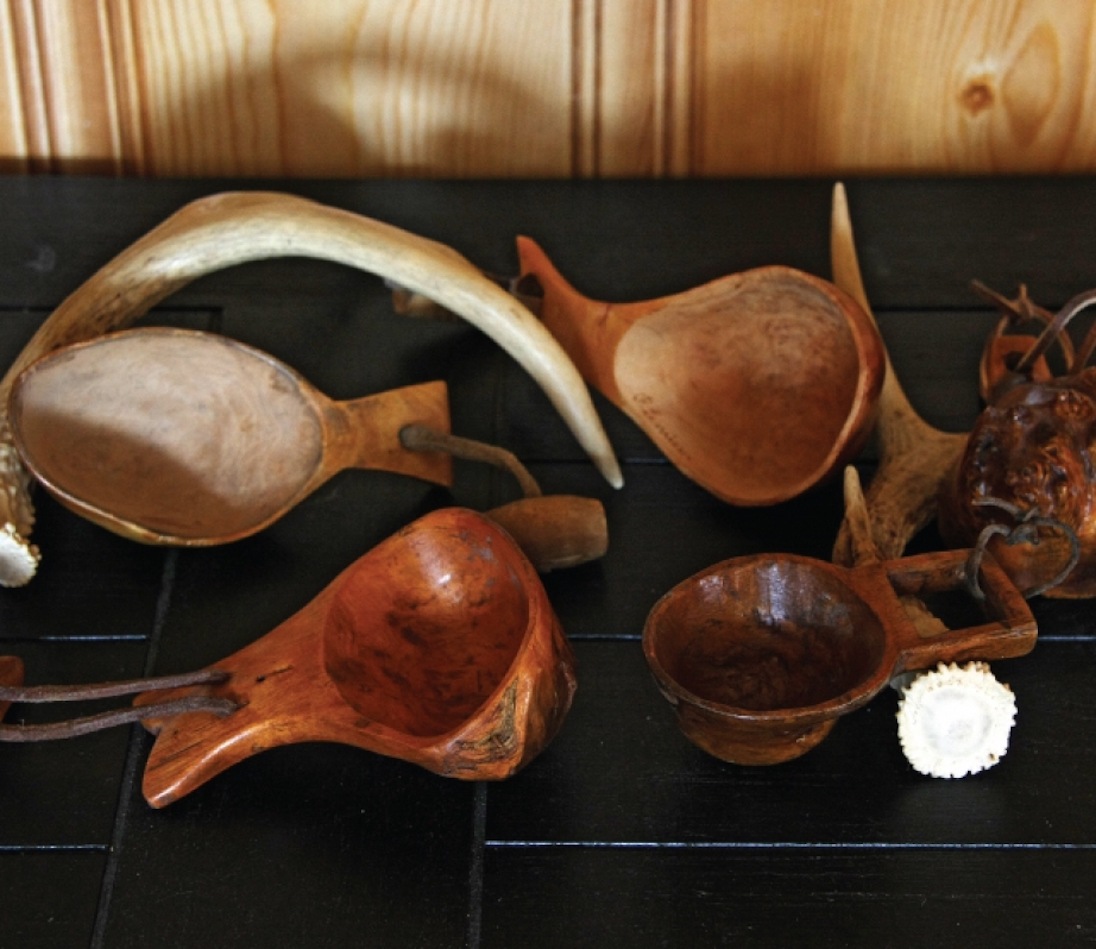
My dad collects antique canoe cups. They’re these beautiful, hand-carved noggins, shaped from the burl of a tree—usually a maple. Natives and voyageurs tucked the toggles under their belts, letting the cups dangle from their waists so they were at hand when thirst struck. They would dip the cups in the water, drinking straight from the lake or river. Imagine that.

Hand-carved canoe cups sitting on a table.
Now that’s using your noggin. | Photo: Michael Mechan

Any number of articles that cross my desk remind me that this is no longer possible. Voyageurs had to contend with beaver fever, but not industrial heavy metals or pesticide runoff.

My dad’s collection sits on display in my parents’ home. I often admire the workmanship when I visit. I also envy the simpler times when it was safe to use the cups now relegated to a shelf of artifacts. In my kit, these cups have been replaced by Nalgenes, charcoal and ceramic filters, plastic hose contraptions and chemical drops.

[ Paddling Buyer’s Guide: View all canoe tripping gear and accessories ]

Still, I can’t help but be optimistic. Headlines suggest the ruin of our waterways, but I think that’s just as much a problem with reporting as it is with the environment. There are many tremendous successes in improving access and quality of our waterways.

Organizations like Oregon’s Willamette River Water Trail and the Lake Tahoe Water Trail, featured in this issue’s 13 Amazing Adventures for 2013, have created fantastic resources to get people on the water. Use it, fall in love with it, invest in it, so the theory goes. So far so good for these and many similar initiatives.

Problem is, we don’t talk about them enough. The first three pages of Google search results for “most improved rivers” reveal coverage of the same single U.K. report. Nothing from North America. Where are the stories about the 62 dams that were removed across the U.S. in the past year? They brought the total number of removals in the past 20 years to well over 800.

None of this is to say we don’t all need to do our part to continue fighting the good fight. There are big environmental problems out there and awareness is an important first stop on the road to recovery. You may have heard the Colorado River just topped American Rivers’ annual Most Endangered Rivers List released in April. It was awarded this status because of the burden placed upon it by the 40 million people that rely on it for drinking water and irrigation.

The story less told is that this list isn’t a death sentence. Quite the opposite, actually. The Chicago River, for example, was a receptacle for untreated sewage until 2011 when it showed up on the list. Later that year, the problem was solved in response to public action spurred in large part by the publicity brought on by the list.

Shouting our successes from the rooftops (and riverbanks) instills hope as well as provides models of success from which to build upon. I may never use a canoe cup risk-free, but I believe restoration projects continue to grow and that there are more amazing waterways out there than I will ever get to paddle in my lifetime.

This article originally appeared in Canoeroots Magazine‘s Early Summer 2013 issue. Subscribe to Paddling Magazine’s print and digital editions here, or browse the archives here.


This is editor Michael Mechan’s final issue of Canoeroots. He plans on dedicating more time to exploring some of these reclaimed waterways.

Now that’s using your noggin. | Photo: Michael Mechan

Necky Elias Kayak Review

Photo: Virginia Marshall
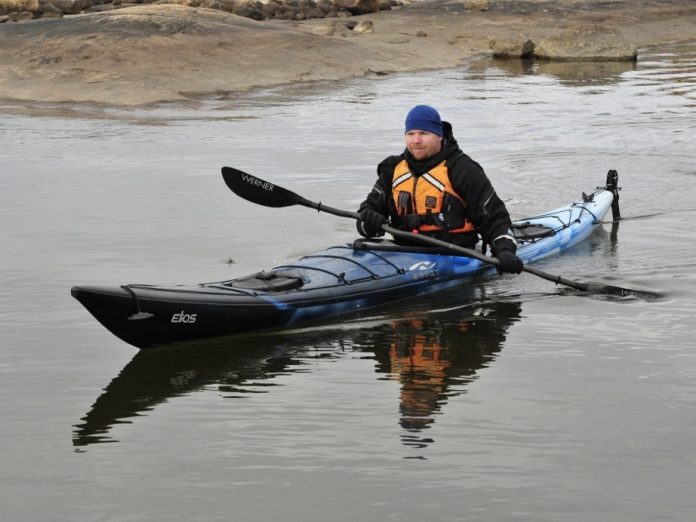
Necky Elias kayak

A review of the Necky Elias sea kayak by Adventure Kayak magazine.

At last, an Eliza for bigger folks. Unless you’ve been kayaking in a cave for the past six years, you’ve probably heard of Necky’s accolade-winning women’s specific kayak, or watched petite friends paddling these pretty boats. Watched and wondered, perhaps, “Hey, what about me?”

Well, big fella, meet Elias. Necky calls it “an agile, playful and responsive touring kayak” that is “extremely efficient for its size.” Sound familiar? By borrowing design cues from the Eliza—shallow V hull, semi-hard chines and high, buoyant ends—and then stretching the hull three inches and boosting volume, Necky has delivered a nimble performer that’s well matched to its little sister…


WATCH A VIDEO REVIEW OF THE NECKY ELIAS SEA KAYAK


Necky Elias Specs

Length: 15 ft
 6 in
Width: 22.25 in
Weight: 54 lbs
Price: $1,599 US / $1,679 CAD


This article originally appeared in Adventure Kayak, Spring 2013. To continue reading the full review, download our free iPad/iPhone/iPod Touch App or Android App or read it here.

Tumblehome: Life After Death for Peterborough Canoes

Photo: Ken Brown Collection
Editorial

This editorial originally appeared in Canoeroots and Family Camping magazine.

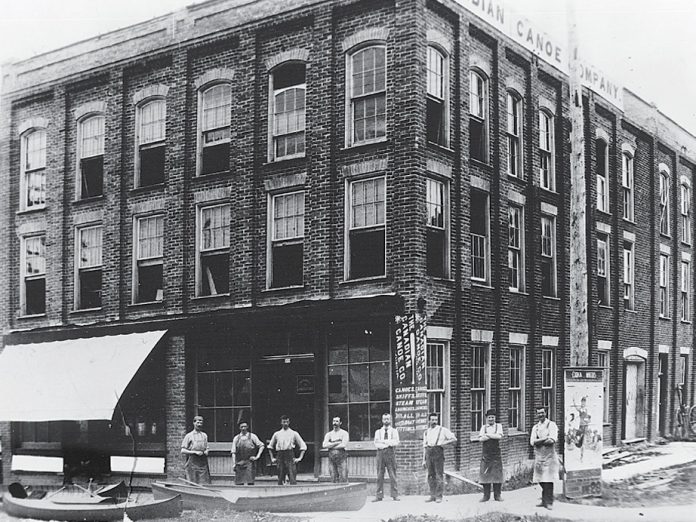
A fabulous new book called The Canadian Canoe Company and the Early Peterborough Canoe Factories (Cover to Cover Press, 2011) has got me thinking about reincarnation.

According to author Ken Brown, canoe building in Peterborough, Ontario, effectively died in the early 1960s with the Canadian Canoe Company ceasing operations in October 1961 and the Peterborough Canoe Company declaring bankruptcy soon after. But the presence of this book and a quick cruise on the World Wide Web indicates that the products of these venerable canoe companies are still very much on people’s minds.

The demise of industrial canoe building in Peterborough was real enough. Companies that had skillfully grown from an emerging 19th century cottage and craft activity into seven or eight canoe-building factories with robust domestic and international markets, struggled after WWII. Aluminum and fiberglass building techniques—innovations honed in wartime aircraft manufacturing— lent themselves naturally to canoe building. But tooling up for new materials and new building techniques was expensive. And training or retraining a skilled woodworking labor force to make canoes out of plastic or metal was also costly. It was only a matter of time before the wooden canoe companies floundered.

Yet Peterborough thrived through nearly a hundred years of uncommon industrial success. Ken Brown tells us that in a country bordering three oceans, in 1930 a quarter of the 778 Canadians involved in the building of small boats were employed in the land- locked center of the continent by Peterborough area firms, generating a third of the annual $2 million sales in this area of the economy.

After WWII, this tapered back and, after the closure of the Peterborough companies, passed to the skilled hands of later generations of small builders and hobbyists who continue to keep the tradition vibrant.

Today, you can buy Peterborough canoes at auction. Reprints of old catalogues are available for sale in hard and soft cover. The iconic company logos are available as decals for the growing corps of builders and rebuilders from Pacific to Atlantic and Arctic to Caribbean who still love Peterborough shapes in their shops.

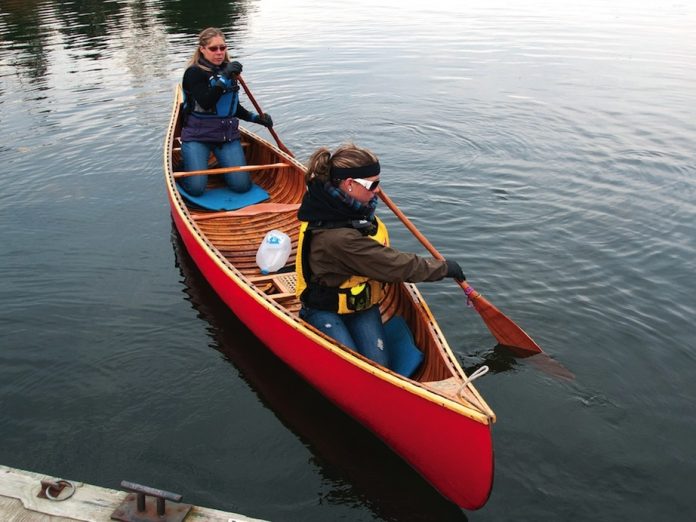
And then there are the T-shirts and calendars, and the advertisers who for the past 50 years have freely employed canoe imagery. Selling charcoal, beer, milk or maxipads with canoe imagery cashes in on the fact that from explorers, surveyors, itinerant clergy, police and fur traders to modern day hunters, anglers and recreational paddlers, Peterborough canoes have been involved in just about every aspect of life beyond the fringe in North America. They are part of Canada’s heritage and, as Ken Brown reminds us, part of the history of the U.S., U.K. and countries even farther afield. Advertisers know that consumers are drawn to canoe imagery because this vessel—the Peterborough canoe in particular—is part of who we are.

James Raffan is thinking of coming back as an explorer, writer and executive director of The Canadian Canoe Museum.

This article appeared in Canoeroots & Family Camping, Spring 2012.


Easy Dock Landing Technique

Photo: Marty Tannahill
Marty Tannahill

This technique article originally appeared in Canoeroots and Family Camping magazine.

Gracefully bringing your canoe to rest adjacent to a dock or deep rocky shoreline is the aim of a well-executed landing. In this position, paddlers can more conveniently exit the boat, stabilizing themselves by using the dock or shoreline for support.

The ideal landing is completed with the canoe under constant motion, stopping it snuggly against the dock. To make this happen, approach a fixed target on the dock in a straight line, roughly 45 degrees to the landing. As the boat nears the landing point, the stern paddler initiates the turn by using a draw or pry. If the landing is on the stern person’s paddling side, he or she should use a draw. The stern person should use a pry to initiate the turn if the landing is on the opposite side.


Immediately after the stern paddler initiates, the bow paddler reciprocates with a complementary stroke. If the stern paddler uses a draw, the bow paddler can assist with a draw or bow cut. If the stern paddler uses a pry, the bow paddler should choose from a pry, bow jam, crossbow draw or crossbow cut. Just before reaching the target, both paddlers provide well-timed reverse strokes usually followed by some subtle draws or pries to stop the canoe at the intended spot.

Practice the timing of your strokes. Initiating the maneuver too soon will leave you too far from your target. However, waiting too long could result in a collision with the dock.

As you develop this skill, communication between paddlers is important, especially when changing partners. Plan the landing out verbally before you begin. It’s best to start at slow speeds so you don’t ram the dock or damage the canoe. Increase the speed only after you can competently complete the maneuver. Try slightly different approach angles to see what works better for you and your partner. Knowing how your boat responds to the strokes is important as all canoes maneuver differently.

Marty Tannahill is a Master Canoe Instructor with the Ontario Recreational Canoeing and Kayaking Association. When he’s not paddling you’ll find him fly-fishing Ontario’s remote rivers.

This article appeared in Canoeroots & Family Camping, Spring 2012.


Handline Kayak Fishing Technique

Photo: Conor Mihell
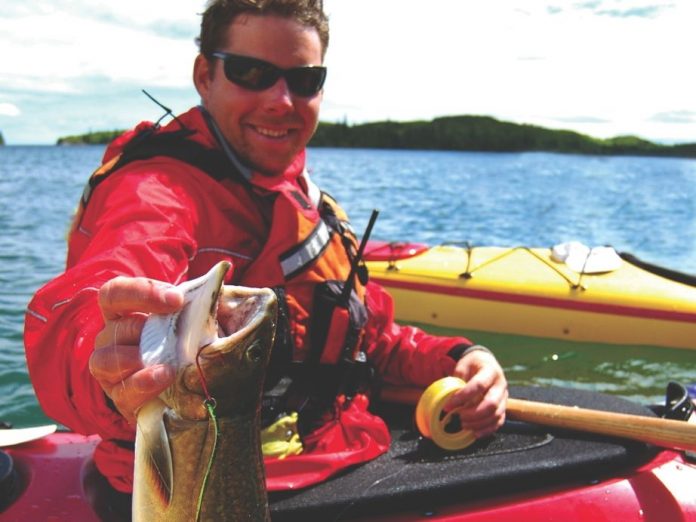
Handline trout.

This kayak technique article on how to catch fish from your sea kayak on a handline was originally published in Adventure Kayak magazine.


Handlines offer fishing without the fuss. A simple plastic spool or wooden shuttle wrapped with 60 to 100 meters of monofilament line, a handline avoids the storage hassles and maintenance
 woes of a rod and reel.

Handlines are dirt cheap to buy (5 to 10 dollars for a 4- to 6-inch spool) and damned easy to make yourself—use a jigsaw to cut 1-inch plywood into an I-shape with one end roughly the width of your grip, and wrap the line around a shaft of 5 to 6 inches.

Handlines are best used for trolling or jigging. Save casting for the cottage; without the mechanical advantage of a rod to assist your toss, you’re more likely to capsize than catch a fish. Kayaks are the perfect vehicle for trolling since most paddlers tour at the ideal pace for spoons and diving Rapalas. Whatever method or lure you use, heavy line (15- to 20-pound test) is necessary since handlines don’t offer the line-saving flex and drag capabilities of a rod and reel.

For hands-free trolling, attach the handline spool to your kayak’s deck line with an 18-inch length of bungee. Play out as much line as you want and tuck the spool under your deck bungees. When you get a bite, the spool will be pulled off your deck and the bungee will dampen the initial jerk, set the lure and keep the spool within easy reach for the retrieve.

Tip: to avoid snags and shredded Gore-Tex, replace troublesome treble hooks with single hooks.

This article originally appeared in Adventure Kayak, Summer/Fall 2009. Download our freeiPad/iPhone/iPod Touch App or Android App or read it here.

Q&A with Justine Curgenven

Photo: Courtesy Justine Curgenven
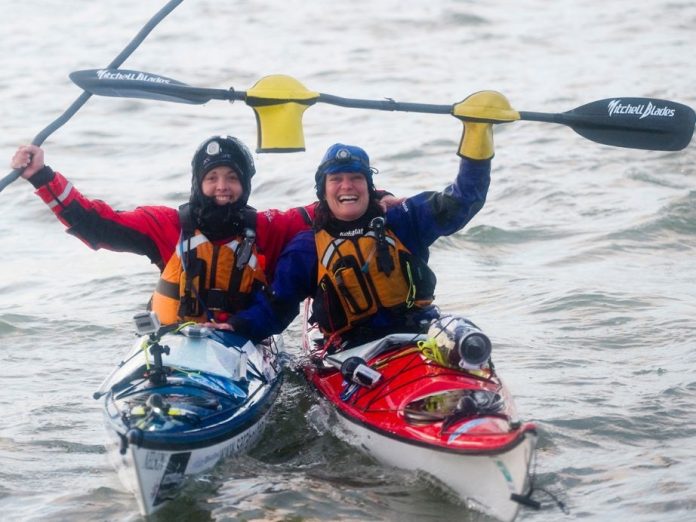
Round-the-World paddler Sarah Outen with Curgenven (R).

If you’re fond of kayaking, you’ve probably seen at least one of Justine Curgenven’s award-winning This is the Sea films. Maybe, like me, you’ve happily watched one of her five TITS DVDs from start to finish without so much as a popcorn or pee break (an impressive feat given TITS 5, released this year, is up to a whopping three hours). For many, the Welsh filmmaker’s videos aren’t just entertainment—they’re the inspiration to plan a long expedition, learn to surf, teach a friend to paddle, or make kayaking a part of day-to-day life.

Adventure Kayak caught up with Curgenven to reflect on 10 years of TITS, and look at how the sea kayak film has evolved over the past decade. To read the full interview, as featured in the premiere issue of our new monthly magazine, Paddling This Month, click here.

Stern Tap Technique

Adventure Kayak

Adventure Kayak editor Virginia Marshall demonstrates a great two-person technique to help keep a partner’s kayak going straight in windy conditions. 

This originally appeared in the Spring 2013 issue of Adventure Kayak. Click here for more ways to keep your kayak on course when the wind is howling. 

Download our free iPad/iPhone/iPod Touch App or Android App to read Adventure Kayak on your phone or tablet.

Creekboat Review: Wave Sport Recon

Whitewater kayak on a river
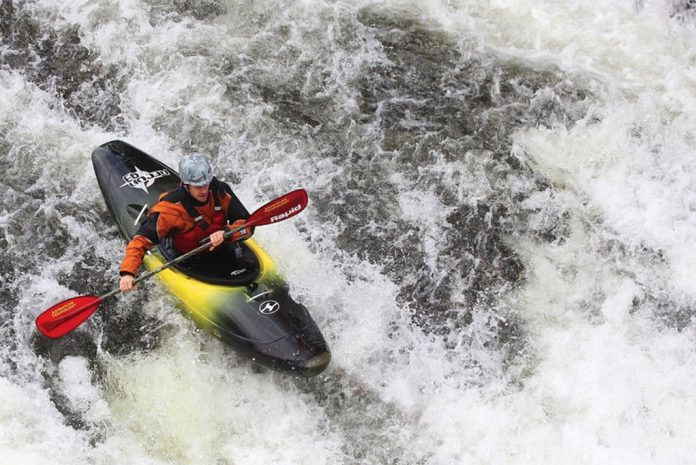
Time spent in reconnaissance is never wasted." —George Washington | Photo by: Jo-Anne Caldwell 

The Recon is a hardcore creekboat designed to take paddlers on the steeps in comfort and safety. If you want a boat that charges down rocky mank this could be the boat for you.

Looking beyond Wave Sport’s stylish, comfortable and easily adjustable Core WhiteOut outfitting you’ll find a boat that performs in Class IV–V+ water. The Recon has loads of integrated safety features: A safety step-out wall, seven points of rescue for boat extractions and an auto-adjusting bulkhead foot brace designed to fill up empty bow space so feet can’t get stuck behind it.

Wave Sport Recon S/M/L Specs
Length: 7’9” / 8’3” / 8’8”
Width: 25.5” / 26.5” / 27”
Volume: 70 / 83 /93 US GAL
Weight: 47 / 50 / 52 LBS
Paddler: 80–150 / 140–200 / 180–275 LBS
MSRP: $1,099
www.wavesport.com

At 50 pounds, the Recon isn’t light on the shoulder, but when I’m slamming into rocks all day I appreciate a beefier build. The soft end handles make the boat easy to drag around and the handle on the step-out pillar helps keep the boat on your shoulder when carrying.

Though the Recon replaces Wave Sport’s former creeker, the Habitat, “It has a new shape and paddles significantly differently,” says David Maughan, a designer at Wave Sport. “In terms of performance and features, we started with a bit of a blank slate.”

With a pronounced and continuous rocker profile, the Recon keeps its bow and stern well above the water. This means it’s super maneuverable, easy to boof and skips over holes. It’s in boulder-choked rapids and on slides where the Recon really shines as it slides up, over and through with ease.

“It’s a smooth and forgiving boat,” adds Maughan. “And its volume distribution makes it easy to roll for recovery.”

With its short waterline, the Recon jumps to top speed with a just few quick strokes. The dome-like stern sheds water and ejects the boat almost instantly. This is great for technical creeks where there isn’t room to build up speed and the moves are stacked close together.

Tilt the Recon on edge and it becomes an amazingly stable platform that you could hang out on all day. Don’t expect to carve around the river or deep into eddies though. With its edges engaged in the water, the Recon spins in and out of the current with authority. It’s perfect for grabbing a break in micro eddies or on runs where you don’t have room to make long, carving turns.

While the Recon can easily be piloted down Class I–III+ runs, it’s way more boat than these rivers require. However, if you love to tackle the Class IV–V+ steep, continuous and rocky rivers of the world, consider the Recon as your tool of choice to get the job done.

[ Paddling Buyer’s Guide: View all creekboats ]

This article originally appeared in Rapid’s Spring 2013 issue. Subscribe to Paddling Magazine’s print and digital editions here, or browse the archives here.


Time spent in reconnaissance is never wasted.” —George Washington | Photo by: Jo-Anne Caldwell