Home Blog Page 311

Expert Tips On Where To Position Oars On A Raft

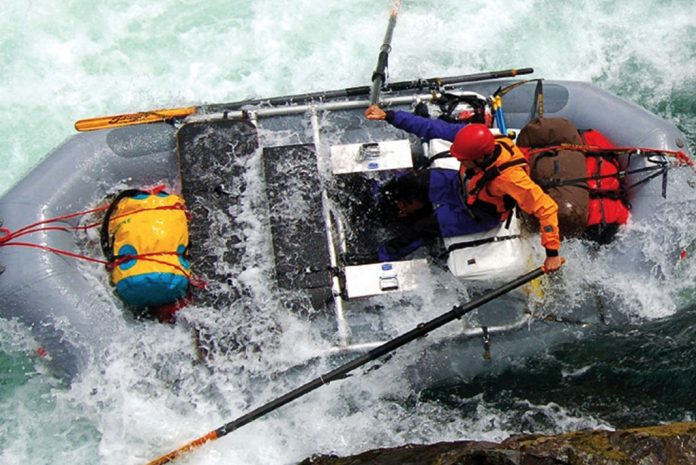
Single person manning oars on a raft in whitewater
Where you position the oars on your raft will affect your comfort and the balance of your boat. | Photo: Tom MeckFessel

You have your raft, you have your trip plan, you’ve carved out the prep time to set everything up. Now what? When it comes to mounting your raft rowing frame, most folks will tell you there are only two options.

Center mounts place the oarlocks at the halfway point along the raft’s waterline, putting the power on the pivot point. This is ideal for very heavy loads, and is the most common setup for multi-day rigs.

Stern mounts put the guide seat on the back tube, sitting high on the rocker with oars in lap. This is a typical commercial day trip setup, where the guide wants to keep the clients in view and away from the oars.

The fact is, the typical recreational rafter’s boat is not loaded with three weeks of food and gear, or with six to 10 passengers.

For a day trip or weekend, a centre mount will likely place passengers forward of the oars, making the raft bow heavy. With a stern mount, you can’t back ferry and the guide’s power is lost in flexing the raft’s rocker, rather than turning or moving the boat.

[ Paddling Buyer’s Guide: Browse all rafts ]

Figuring out a raft oar setup

The ideal position lies in between.

For a light gear load and a couple of passengers, placing the oarlocks two-thirds along the waterline with the guide seat in front of the stern rise makes for a balanced and predictable ride. The pivot stays near the centre of the raft, the guide can hold an angle pushing or pulling, is efficient pulling the flats and doesn’t mess with the stern rocker.

The trick is to experiment with different positions—don’t view the frame as fixed. You’ll find different setups for various load types. Move not only the frame, but also the oarlocks and seat to best position, and then mark those locations on the frame with a Sharpie. Several D-ring placements and long frame straps help keep options open.

Perception Essence Kayak Review

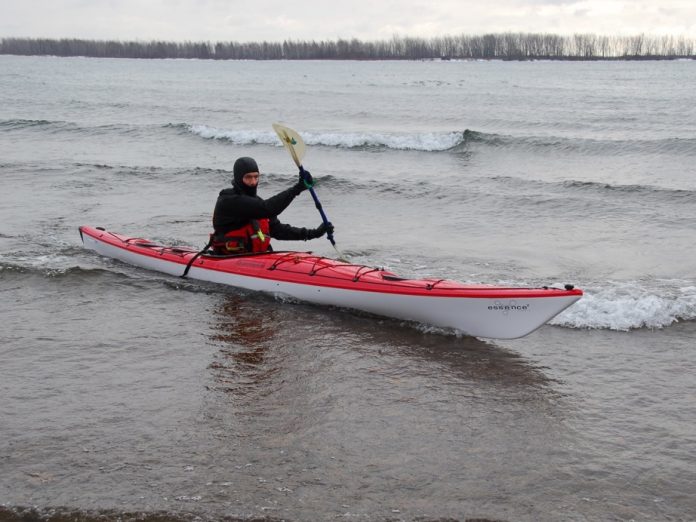
Photo: Tory Bowman
Perception Essence Kayak

When people say the Perception Essence 17.0 Airalite is a “good looking boat”—as they inevitably do—they’re likely referring to the sexy lines of the long, slender bow. For it’s here that the Essence reveals its designers’ intentions to prolong the transition from bow to midsection to make for the finest possible entry lines.

The Essence is a sharp contrast to rough water designs that carry more volume in the ends for buoyancy in waves. Crafted by long-time Confluence Watersports boat designer Bob McDonough to be a friendly, high-performance tourer, it has a sporty feel and excellent capacity and speed for its length. This is achieved by the tapered bow and the Swede form shape, with the widest point rear of the midsection like a racing kayak.

The stern is stockier than the bow—a nod to packability. In McDonough’s words, “You’ve got to carry the volume somewhere.”

The result is capacity for long trips combined with excellent efficiency that is refreshing to find in a plastic boat. The Airalite we tested is the lighter, thermoformed version but the Essence also comes in more affordable poly, and both options are available in a 16.5 length for smaller paddlers.

A limited rocker plus the tapered bow’s emphasis on knifing the water equals strong tracking and minimal weathercocking. There’s perhaps less need for the skeg than for the optional rudder, which novices might appreciate for easier turning.

The hull under the cockpit is a shallower V than other popular British-style 17-footers like Confluence’s Wilderness Systems Tempest 170 and the NDK Explorer. It’s also about an inch wider and the chine is slightly softer, resulting in greater initial stability and more smooth, predictable edging.

For this new top-end touring boat, Perception has taken a winning British formula and expertly honed it to be a tad more welcoming to a wide range of paddlers and uses. And, dare we say, a little faster and more spacious.

With a distance swimmer’s heart for the straight and narrow, the Essence is perhaps not your first choice for a day in the surf. However, like the touring edition of a high-end sports sedan, this kayak is perfectly capable of dialing up the adrenaline and having some fun if opportunity booms. Which, in our books, is the definition of the perfect tripping kayak.


Rudder Ready

In addition to the standard hydrofoil-shaped skeg and easy adjusting SlideLock foot braces, the essence comes rudder-ready with a mounting bracket on the stern and routings for cables.

Handy Hatches

The essence includes a 10-inch bow hatch, 8-inch day hatch and an oversized stern hatch, all with tight-fitting Kajak-Sport rubber lids.

Comfort Outfitting

Perception touts its Zone EXP Seating System as “expedition grade.” It includes a long, padded seat bottom with adjustable height to promote circulation on extended outings, and adjustable padded thigh braces. A long, spacious cockpit accommodates tall paddlers.


Perception Essence 17.0 Airalite Specs

Length: 17 ft
Width: 23 in
Weight: 50 lbs
Max. load rating: 350 lbs
Price: $2,299 US / $2,409 CDN
www.perceptionkayaks.com


This article originally appeared in Adventure Kayak, Spring 2011. Download our free iPad/iPhone/iPod Touch App or Android App or read it here.


UPDATE: The Airalite lay-up is no longer available from Perception, but the Essence 16.5 and 17.0 are still available in polyethylene, retailing for $1,299 US.

Tierra Del Fuego Trailer

Cackletv.com

Watch the trailer from acclaimed filmmaker Justine Curgenven’s new sea kayaking DVD, This is the Sea 5. Curgenven won the Best Sea Kayaking Film award at the 2013 Reel Paddling Film Festival for the DVD’s headline film, Tierra Del Fuego, the story of her and partner Barry Shaw’s circumnavigation of the treacherous, awesome island at the bottom of South America.

To discover more amazing paddling films, and learn where the Reel Paddling Film Festival is playing near you, visit www.reelpaddlingfilmfestival.com.

How to Use a Tumpline

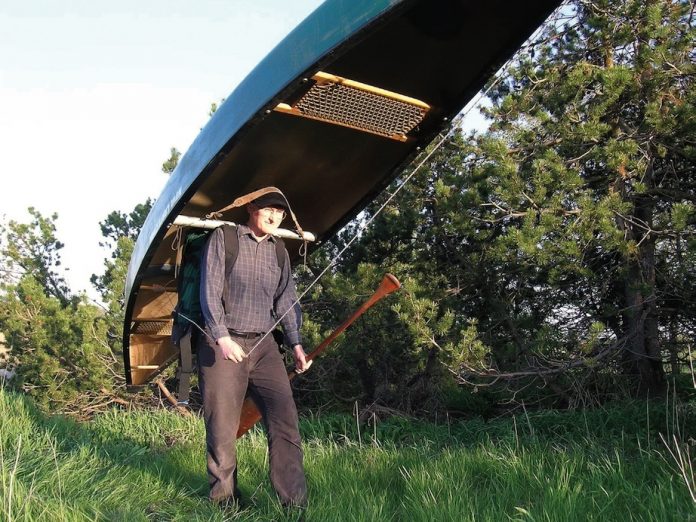
Photo: Andrew Fergusson
Tumpline carry.

This canoe technique originally appeared in Canoeroots and Family Camping magazine.

For too many, carrying a canoe means suffering through grinding shoulder discomfort and aching arms held high to balance the canoe. Make carries easier by adopting the tumpline method used by Aboriginals and early explorers.

Set up your tump by attaching a leather or nylon strap to either end of your centre thwart. For most canoes and carriers, the tump should hang to almost touch the bot- tom of the canoe when on the water.

Use your normal method to hoist the canoe so the centre thwart (rounded for com- fort, if possible) is resting on your shoulders. Position the tump over your forehead with one hand so that the weight pushes down with your head and neck in a comfortable position. The tump becomes a cushioning leaf spring that takes much of the weight off your shoulders and sends it straight down your spine, where it belongs.

The tump may take a few portages to tune and get used to but it will take you to the good places: canoe, pack and paddle in one trip

This article originally appeared in Canoeroots & Family Camping, Fall 2008.


How To Stash Your Food Safely Using A Bear Hang

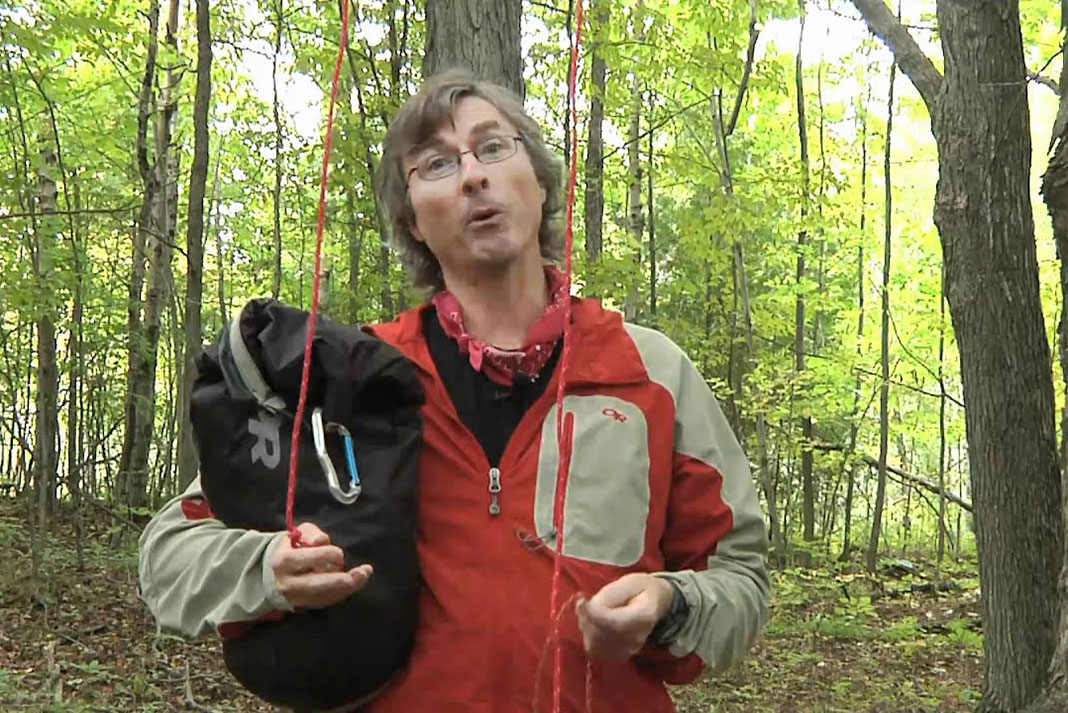
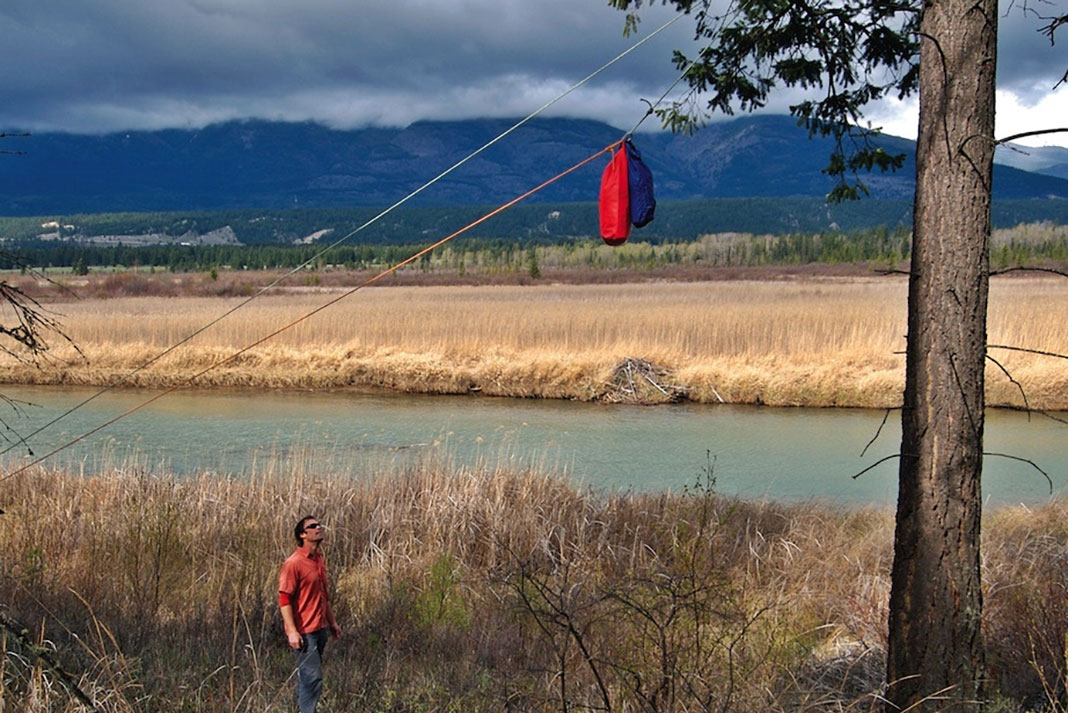
A man stares up at a bear hang on the side of a river
Far too many trippers have awoken on otherwise fine mornings to find a bear has stolen their food pack. | Feature photo: Dave Quinn

Making a proper bear hang the safe and easy way doesn’t have to be a skill learned from experience; take it from those who have hoisted more than a few packs themselves—and have the healed-up rope burns to prove it.

Far too many trippers have awoken on otherwise fine mornings to find a bear has stolen their food pack, peeled open a supposedly bear-proof food barrel like a tuna can or a clawed through an overturned canoe. This can wreck a trip and be fatal to the bear, since once a bear associates humans with food its fate is sealed.

4 tips to stash your food safely in a bear hang

Safeguard your provisions by stowing them out of reach of motivated claws and jaws. Raising the pack at least three meters off the ground is a good start, but too many campers leave their food close to tree trunks, serving up a boreal buffet for acrobatic bears.

The important second step is to pull the pack at least two meters away from the tree trunk. All sorts of pulleys, Z-drags, balancing acts and feats of strength will accomplish this, but the simplest method is to use two ropes: one to hoist the load and the other to pull it away from the tree.

1 Don’t delay

Set up your hoist rope as soon as you arrive at camp, not after dark. A perfect tree is at least 200 meters from camp and has a stout branch four to five meters up, with no ladder branches below.

2 Be a rock star

Slip a fist-sized rock into a stuff sack and tie the sack to the end of your rope. An underhand lob will send the sack and trailing rope over the branch and back down to the ground.

A man stares up at a bear hang on the side of a river
Far too many trippers have awoken on otherwise fine mornings to find a bear has stolen their food pack. | Feature photo: Dave Quinn

3 Two ropes are better than one

Secure the food pack and a dangling second rope to one end of the hoist rope. Pull on the free end of the hoist rope while a partner helps from below (a paddle helps get it high). Tie the hoist rope off to a nearby tree.

4 Try the trucker’s hitch

Now use the second rope and a distant tree to pull the load away from the tree trunk—a trucker’s hitch offers some mechanical advantage. Secure this rope, and get back to the campfire!

With practice, and a little tree karma, it should only take a few minutes to keep your food, yourself, other campers and the bears safe.

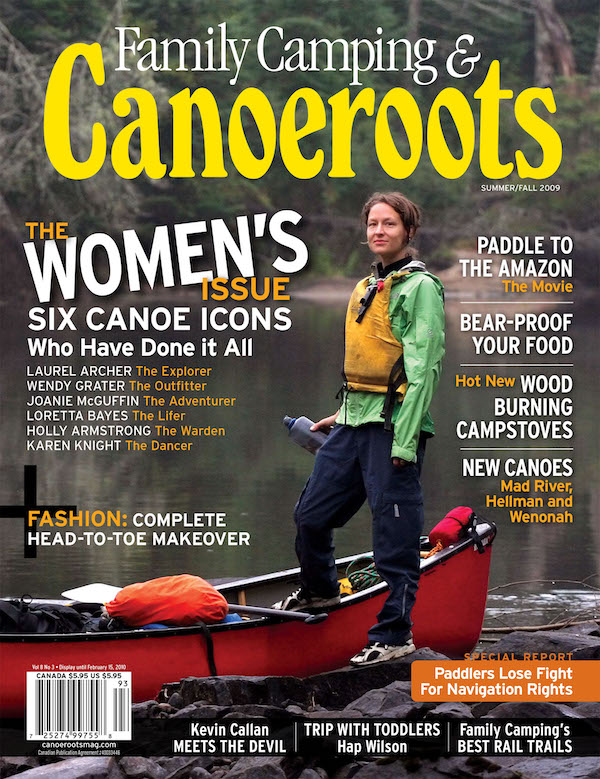
Cover of Canoeroots Magazine Summer/Fall 2009 issueThis article was first published in the Summer/Fall 2009 issue of Canoeroots Magazine. Subscribe to Paddling Magazine’s print and digital editions, or browse the archives.


Far too many trippers have awoken on otherwise fine mornings to find a bear has stolen their food pack. | Feature photo: Dave Quinn


How to Trip with Toddlers

Photo: Hap Wilson

This technique article originally appeared in Canoeroots and Family Camping magazine.

One of the toughest quandaries I had to overcome when deciding to have kids was the fear that I would have to curb my outdoor pursuits. I soon learned that kids are malleable; they can adapt to, and enjoy, just about any outdoor adventure when their basic needs are met.

Route Choice: This is wholly dependent on the temperament of the toddlers. Start with short day trips, then lengthen them accord- ingly, but don’t be afraid to think big. I took my two- and three-year-old kids on a 450-kilometre trip on Ontario’s Albany River. During those two weeks, plenty of gorp breaks and beach stops kept the kids happy, even on some 50-kilometre days.

Diapers: I generally despise disposables, but admit they are a godsend on canoe trips. You’ll need a barrel lined with garbage bags for either soiled disposables or dirty cloth diapers. The key is a liberal sprinkling of baking soda to keep the smell down and bears away.

Toys: Make room in the canoe for another small barrel full of toys, games and stuffed animals. Having these diversions readily available is essen- tial. Kids drop stuff overboard constantly, so you may want to tether in any “on-the-move” play toys, or risk perfecting your pivoting strokes.

Tents: A larger tent is a must. It’s a great play-place for toddlers and kids and will be well worth the extra effort it takes to pack it and carry it around when the bugs or weather are bad. A “family-bed” of sheets and throw blankets works best when toddlers need the security of their parents. Introduce toddlers to their own sleeping bags, and eventually an adjoining tent when they are ready, but if you rush it you’ll find they would rather stay home.

Bugs: Some might say I was cruel, but when my kids were toddlers I let them get bitten a little just to strengthen their immune systems. Today, black flies and mosquitoes don’t bother them, at least not enough to ruin an outing. That being said, some measures are sensible. I used to set up a light mesh tent at the end of portages where my wife and ba- bies could escape to while I carried over the gear. Sheets of loose bug netting can be draped over kid-carriers, and bug jackets are essential once they are a few years old. Don’t slather your kids with caustic repel- lent! A light dab of Tiger Balm, orange rind or citronella on the exposed backsides of their hands works well.

Safety: Your job is to plan well and remain calm if things get tense; your kids will pick up on neurotic behaviour and it may sour the next trip. As usual, safety comes down to attentiveness and common sense—don’t tether your kids to the canoe thwarts! There are excellent baby and toddler PFDs on the market. Make sure they wear them at all times, even around the campsite.

Invest some energy in making sure your kids travel in comfort and security when they are young and by the time they are seven or eight they will carry their own packs, paddle with efficiency and be full partners in your outdoor pursuits.

This article originally appeared in Canoeroots & Family Camping, Fall 2009. Download our freeiPad/iPhone/iPod Touch App or Android App or read it here.

3 Tricks For Climbing Back Into A Raft

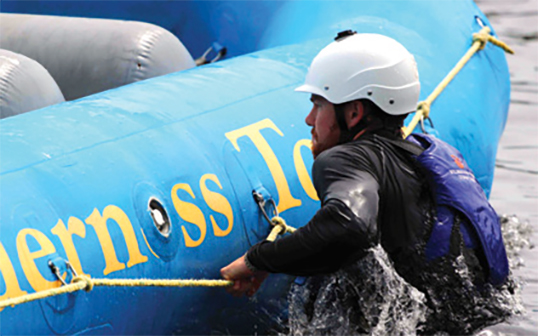
For when things get wild. | Photo: Destination Ontario

So you find yourself out of the raft and in the river. Getting back in ASAP is almost always your first priority. If the raft is upright and somebody is still inside, he or she can just haul you in, but climbing back in on your own is more of a challenge.

How do you get back into a raft? Follow these steps for two different scenarios.

[ Paddling Trip Guide: View all rafting trips ]

If the raft is upright

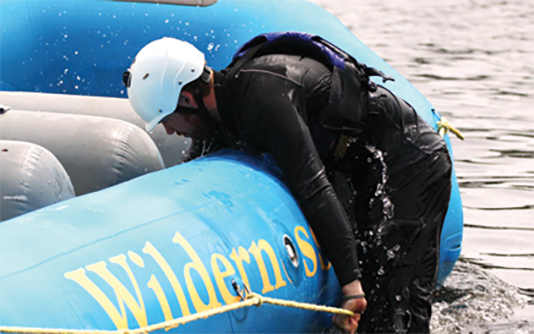
If the raft is upright, grab the side perimeter line on either side of a D-ring.

Trick #1

Push out with straight arms and kick your feet to get them to the surface. Don’t try to climb in until your body and feet are at the surface and your arms are extended. Then, with strong kicks and a swift pull, travel forward and up—you need momentum to get your upper body over the tube.

Trick #2

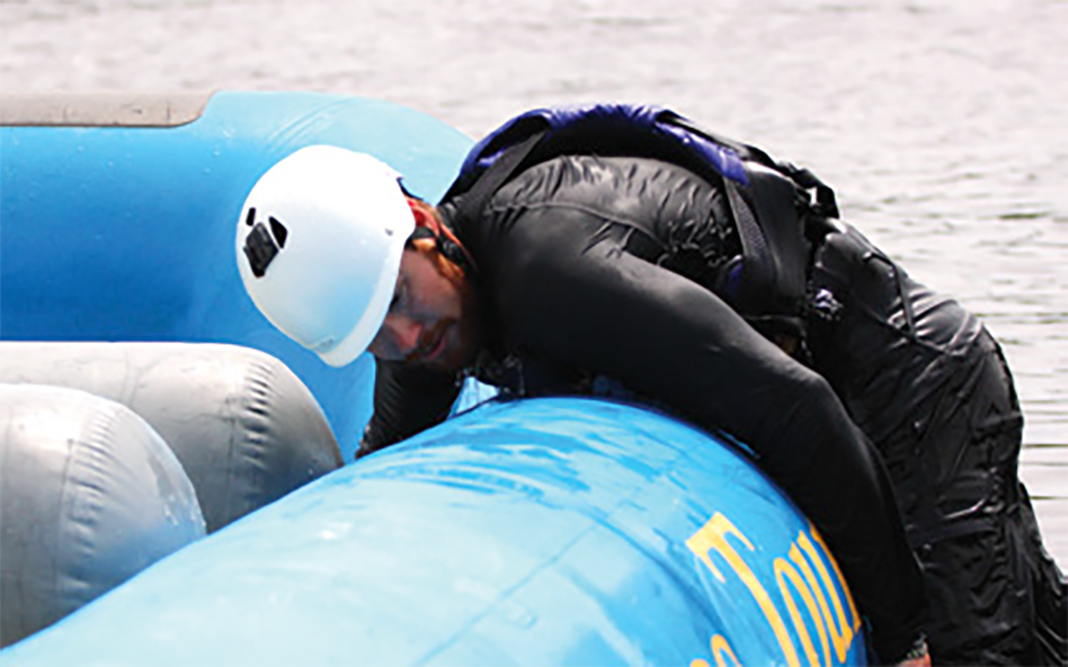
The other option is to turn your forward pull into a downward push, keeping your hands on the line until you are straight armed again, wrapping your upper body over the tube. Only then do you reach into the raft for a new handhold, likely grabbing a cross tube or the raft frame. Strong kicks this whole time keep you from stalling halfway.

Man leaning into raft

If the raft has flipped over

Your approach to how to climb in a raft when it’s flipped over is a little different. The trick is to work from the end where the floor angles down into the water like a ramp, using the floor lace as a handhold. Be warned: the hold isn’t great. Once you’ve climbed onto the bottom your job is to flip the raft over, but that’s another story.

This article originally appeared in Rapid‘s Summer/Fall 2012 issue. Subscribe to Paddling Magazine’s print and digital editions here, or browse the archives here.


In-text photos by: Dan Caldwell

Going Tidal Kayak Technique

Photo: Bryan Smith
Surfing Bay of Fundy tidal race.

This kayak technique article on how to paddle in tidal races was originally published in Adventure Kayak magazine.

On one of my early training trips to Anglesey, Wales, I was paddling out toward Penrhyn Mawr and the biggest water of my life when Nigel Dennis calmly paddled up beside me and said, “Remember, it’s the sea. It’s always worse than it looks.” Unsettled, I watched a two-meter swell roll through the Irish Sea and collide into four knots of current.

In the exploding waves my “highly maneuverable” 16-foot sea kayak felt like a fish in molasses. I’d sweep five or six times to get lined up with a wave; it would break and push me sideways and then I’d have to start all over again. I was all at once frustrated with my boat handling, nervous about the sea state and excited about being there.

The last few years have seen more and more paddlers enjoying tidal races like Penrhyn Mawr, Skookumchuck Narrows, Shubenacadie River, The Bitches, Deception Pass and others. Like paddling in the surf or wind, tidal water presents lots of mental and physical challenges and an equal amount of fun. Here are some basic concepts to ease you into the excitement of tidal rapids, including skills you can practice on flatwater anytime.

Paddle anything that moves

If you don’t have access to a tidal race—or even if you do—start out by paddling river whitewater at a moderate grade such as Class II. You’ll be surprised how accessible whitewater is and how much it improves your sea kayaking skill. This is one of the best ways to fast-track the water-reading skills you’ll need in tidal rapids.

Learn the environment

Perhaps the single most important skill in tidal race paddling is predicting how the water is going to affect your boat. Water- reading skill-level is directly proportionate to your cockpit time in moving water, so don’t get too frustrated if you can’t put your boat exactly where you want the first time.

Seek mentors to push you

To be an effective and efficient paddler in tidal races, you have to be comfortable and confident. The best way to safely increase your confidence is by paddling with coaches and peers who are capable of taking you into environments that are beyond your comfort level when paddling alone. With others covering the safety and leadership, you can experiment and learn.

Err on the side of edging

Get comfortable with spinning the boat 180 degrees with a series of forward and reverse strokes on flatwater. Edge the boat towards each sweep, using the stroke for support and balance. Increase the amount of edge as far as possible on flatwater. This will teach you to trust a more aggressive edge in moving water.

Chaos-proof your roll

When you add current to the equation, the potential for spending time in a low-oxygen, wet environment increases exponentially. A bombproof roll goes a long way to increasing your confidence and ability to perform. Practice by adding chaos to your flatwater roll practice: flip over mid-stroke and set up for a roll, but allow yourself to fail, capsize again and then switch to roll up on the opposite side; try flipping over with only one hand on the paddle—but first get a good pair of nose plugs.

Ease into leadership

Safe group management is critical in tidal races. Assuming that on the first several outings you have surrounded yourself with strong leaders and coaches, when your confidence increases it’s time to think about safety and leadership yourself. Assess the risks of the tidal venues you would like to paddle, considering the potential dangers as well as the best flows and tides, and whether you and your partners have the skills to resolve any situation that might arise.

BRYAN SMITH is a filmmaker and paddler in Squamish, British Columbia (www.reelwaterproductions.com).

This article originally appeared in Adventure Kayak, Early Summer 2009. Download our freeiPad/iPhone/iPod Touch App or Android App or read it here.

Matt Anderson’s Big Sheep

Matt Anderson's Big Sheep

Pirate of Lynnhaven, Matt Anderson, pulled this 11.75 pound sheepshead out of the pilings of Chesapeake Bay Bridge Tunnel.

Canoe Rescue Technique

While there is no one perfect way to deal with an swamped canoe there are a few techniques that work better than others depending on the situation. This parallel rescue is a great one to practice and learn because it can be adapted for a variety of situations.