Home Blog Page 312

Tierra Del Fuego Trailer

Cackletv.com

Watch the trailer from acclaimed filmmaker Justine Curgenven’s new sea kayaking DVD, This is the Sea 5. Curgenven won the Best Sea Kayaking Film award at the 2013 Reel Paddling Film Festival for the DVD’s headline film, Tierra Del Fuego, the story of her and partner Barry Shaw’s circumnavigation of the treacherous, awesome island at the bottom of South America.

To discover more amazing paddling films, and learn where the Reel Paddling Film Festival is playing near you, visit www.reelpaddlingfilmfestival.com.

How to Use a Tumpline

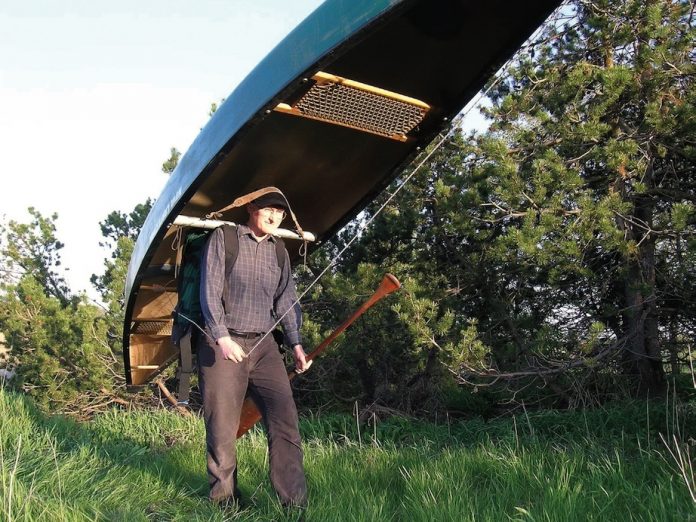
Photo: Andrew Fergusson
Tumpline carry.

This canoe technique originally appeared in Canoeroots and Family Camping magazine.

For too many, carrying a canoe means suffering through grinding shoulder discomfort and aching arms held high to balance the canoe. Make carries easier by adopting the tumpline method used by Aboriginals and early explorers.

Set up your tump by attaching a leather or nylon strap to either end of your centre thwart. For most canoes and carriers, the tump should hang to almost touch the bot- tom of the canoe when on the water.

Use your normal method to hoist the canoe so the centre thwart (rounded for com- fort, if possible) is resting on your shoulders. Position the tump over your forehead with one hand so that the weight pushes down with your head and neck in a comfortable position. The tump becomes a cushioning leaf spring that takes much of the weight off your shoulders and sends it straight down your spine, where it belongs.

The tump may take a few portages to tune and get used to but it will take you to the good places: canoe, pack and paddle in one trip

This article originally appeared in Canoeroots & Family Camping, Fall 2008.


How To Stash Your Food Safely Using A Bear Hang

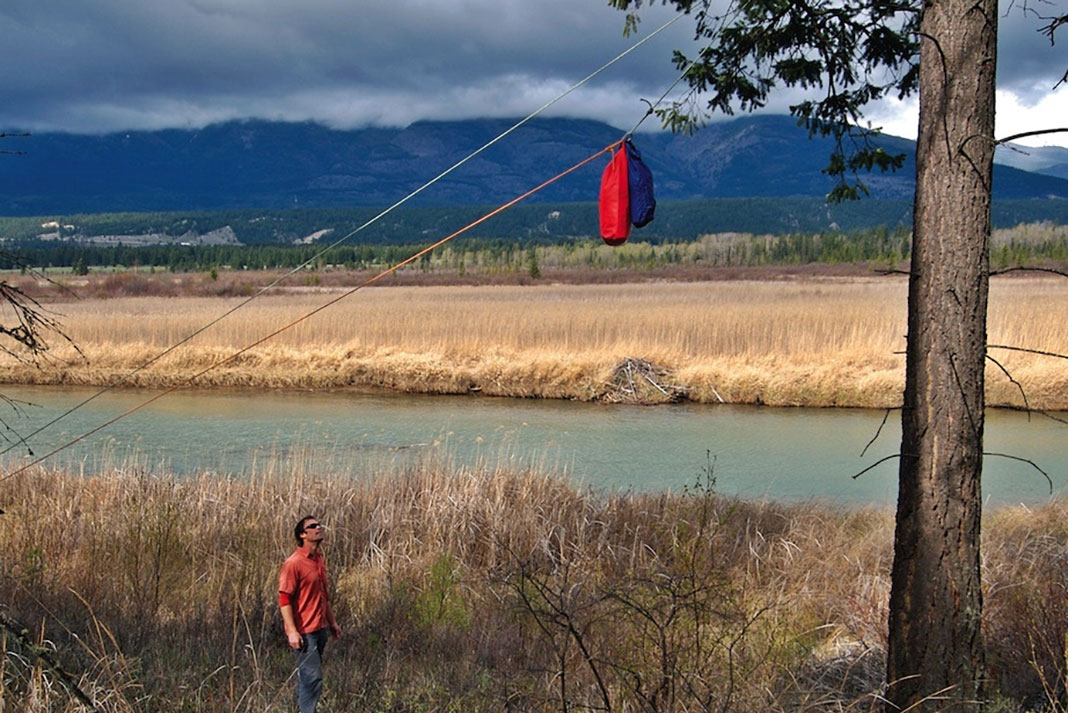
A man stares up at a bear hang on the side of a river
Far too many trippers have awoken on otherwise fine mornings to find a bear has stolen their food pack. | Feature photo: Dave Quinn

Making a proper bear hang the safe and easy way doesn’t have to be a skill learned from experience; take it from those who have hoisted more than a few packs themselves—and have the healed-up rope burns to prove it.

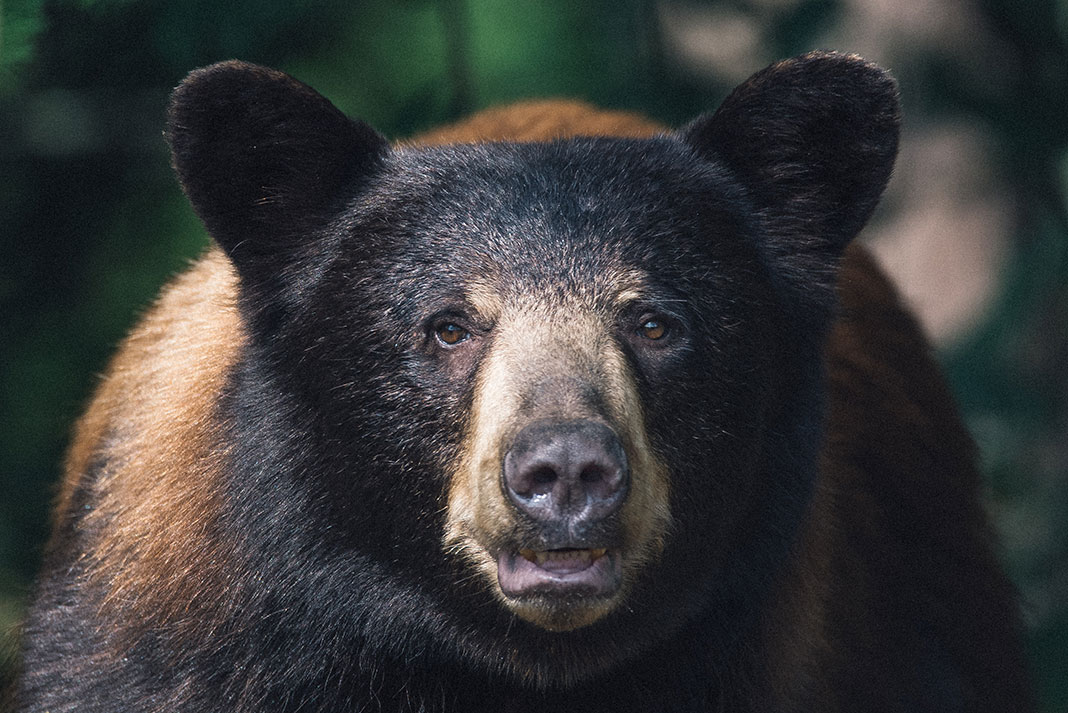
Far too many trippers have awoken on otherwise fine mornings to find a bear has stolen their food pack, peeled open a supposedly bear-proof food barrel like a tuna can or a clawed through an overturned canoe. This can wreck a trip and be fatal to the bear, since once a bear associates humans with food its fate is sealed.

4 tips to stash your food safely in a bear hang

Safeguard your provisions by stowing them out of reach of motivated claws and jaws. Raising the pack at least three meters off the ground is a good start, but too many campers leave their food close to tree trunks, serving up a boreal buffet for acrobatic bears.

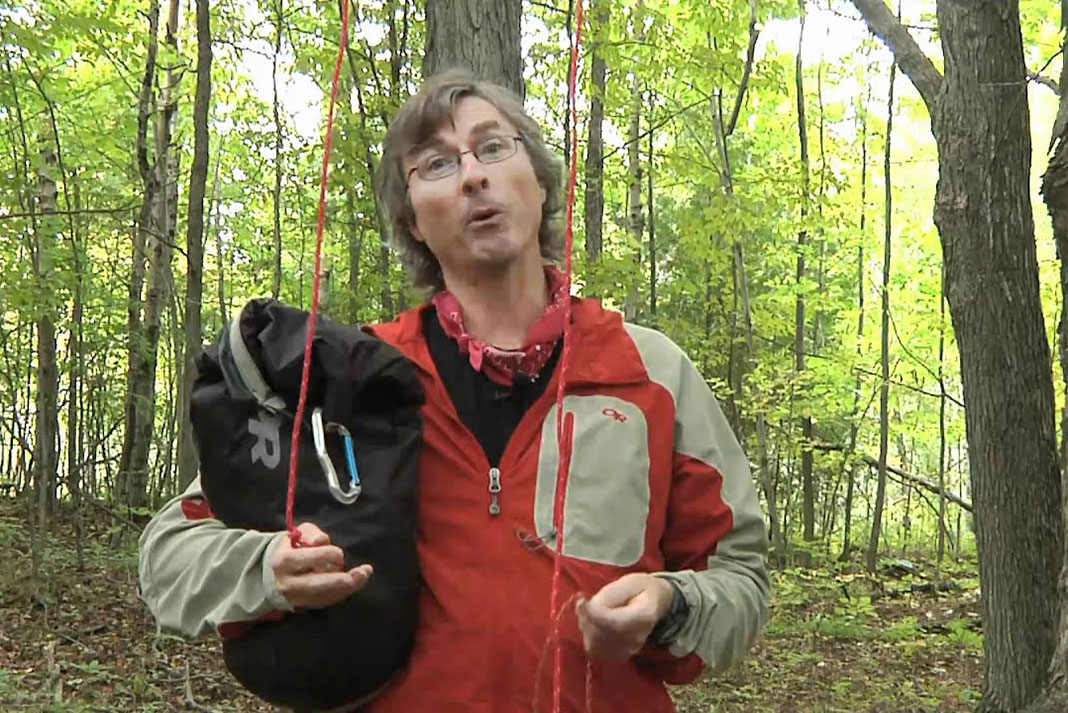
The important second step is to pull the pack at least two meters away from the tree trunk. All sorts of pulleys, Z-drags, balancing acts and feats of strength will accomplish this, but the simplest method is to use two ropes: one to hoist the load and the other to pull it away from the tree.

1 Don’t delay

Set up your hoist rope as soon as you arrive at camp, not after dark. A perfect tree is at least 200 meters from camp and has a stout branch four to five meters up, with no ladder branches below.

2 Be a rock star

Slip a fist-sized rock into a stuff sack and tie the sack to the end of your rope. An underhand lob will send the sack and trailing rope over the branch and back down to the ground.

A man stares up at a bear hang on the side of a river
Far too many trippers have awoken on otherwise fine mornings to find a bear has stolen their food pack. | Feature photo: Dave Quinn

3 Two ropes are better than one

Secure the food pack and a dangling second rope to one end of the hoist rope. Pull on the free end of the hoist rope while a partner helps from below (a paddle helps get it high). Tie the hoist rope off to a nearby tree.

4 Try the trucker’s hitch

Now use the second rope and a distant tree to pull the load away from the tree trunk—a trucker’s hitch offers some mechanical advantage. Secure this rope, and get back to the campfire!

With practice, and a little tree karma, it should only take a few minutes to keep your food, yourself, other campers and the bears safe.

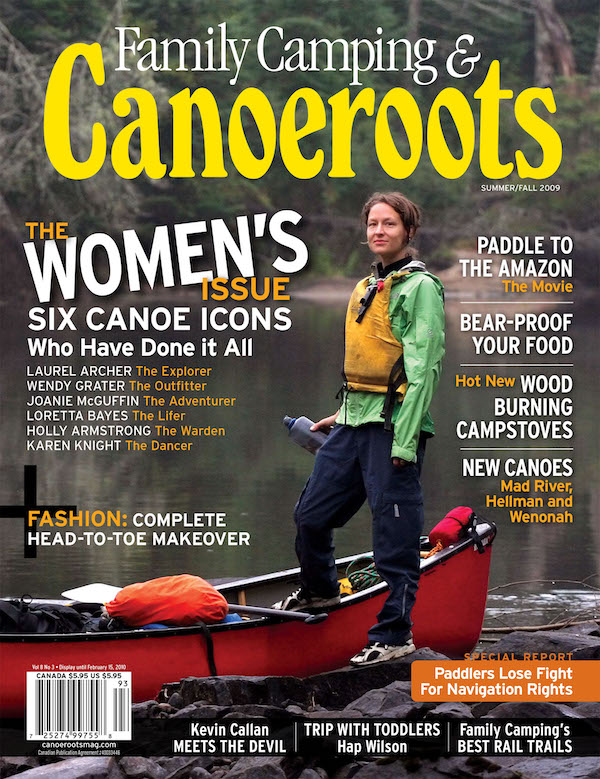
Cover of Canoeroots Magazine Summer/Fall 2009 issueThis article was first published in the Summer/Fall 2009 issue of Canoeroots Magazine. Subscribe to Paddling Magazine’s print and digital editions, or browse the archives.


Far too many trippers have awoken on otherwise fine mornings to find a bear has stolen their food pack. | Feature photo: Dave Quinn


How to Trip with Toddlers

Photo: Hap Wilson

This technique article originally appeared in Canoeroots and Family Camping magazine.

One of the toughest quandaries I had to overcome when deciding to have kids was the fear that I would have to curb my outdoor pursuits. I soon learned that kids are malleable; they can adapt to, and enjoy, just about any outdoor adventure when their basic needs are met.

Route Choice: This is wholly dependent on the temperament of the toddlers. Start with short day trips, then lengthen them accord- ingly, but don’t be afraid to think big. I took my two- and three-year-old kids on a 450-kilometre trip on Ontario’s Albany River. During those two weeks, plenty of gorp breaks and beach stops kept the kids happy, even on some 50-kilometre days.

Diapers: I generally despise disposables, but admit they are a godsend on canoe trips. You’ll need a barrel lined with garbage bags for either soiled disposables or dirty cloth diapers. The key is a liberal sprinkling of baking soda to keep the smell down and bears away.

Toys: Make room in the canoe for another small barrel full of toys, games and stuffed animals. Having these diversions readily available is essen- tial. Kids drop stuff overboard constantly, so you may want to tether in any “on-the-move” play toys, or risk perfecting your pivoting strokes.

Tents: A larger tent is a must. It’s a great play-place for toddlers and kids and will be well worth the extra effort it takes to pack it and carry it around when the bugs or weather are bad. A “family-bed” of sheets and throw blankets works best when toddlers need the security of their parents. Introduce toddlers to their own sleeping bags, and eventually an adjoining tent when they are ready, but if you rush it you’ll find they would rather stay home.

Bugs: Some might say I was cruel, but when my kids were toddlers I let them get bitten a little just to strengthen their immune systems. Today, black flies and mosquitoes don’t bother them, at least not enough to ruin an outing. That being said, some measures are sensible. I used to set up a light mesh tent at the end of portages where my wife and ba- bies could escape to while I carried over the gear. Sheets of loose bug netting can be draped over kid-carriers, and bug jackets are essential once they are a few years old. Don’t slather your kids with caustic repel- lent! A light dab of Tiger Balm, orange rind or citronella on the exposed backsides of their hands works well.

Safety: Your job is to plan well and remain calm if things get tense; your kids will pick up on neurotic behaviour and it may sour the next trip. As usual, safety comes down to attentiveness and common sense—don’t tether your kids to the canoe thwarts! There are excellent baby and toddler PFDs on the market. Make sure they wear them at all times, even around the campsite.

Invest some energy in making sure your kids travel in comfort and security when they are young and by the time they are seven or eight they will carry their own packs, paddle with efficiency and be full partners in your outdoor pursuits.

This article originally appeared in Canoeroots & Family Camping, Fall 2009. Download our freeiPad/iPhone/iPod Touch App or Android App or read it here.

3 Tricks For Climbing Back Into A Raft

For when things get wild. | Photo: Destination Ontario

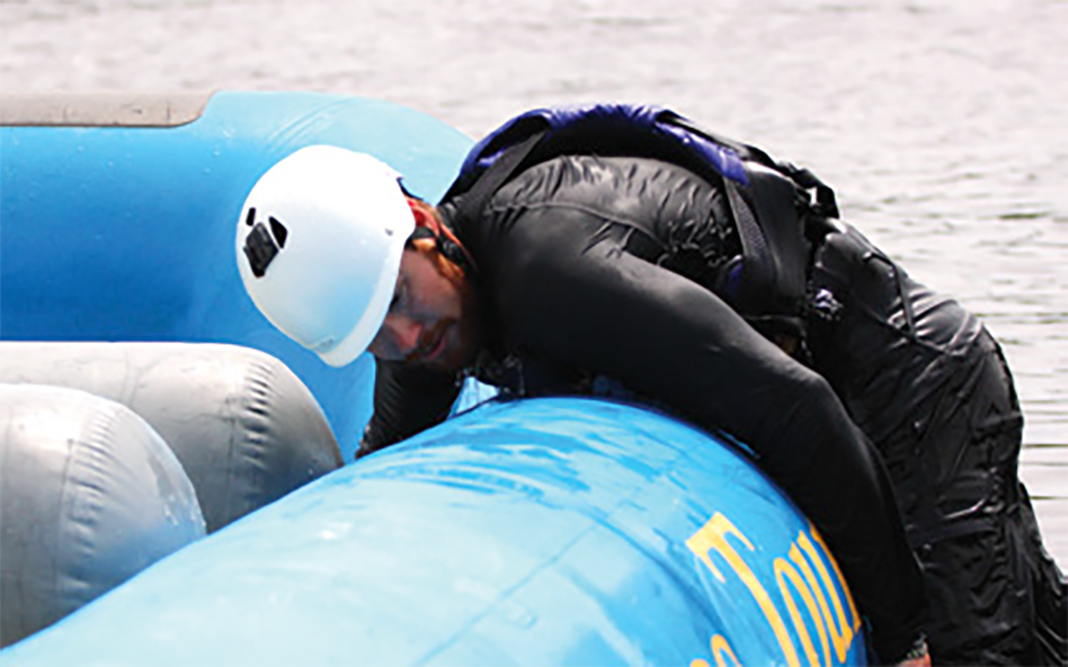
So you find yourself out of the raft and in the river. Getting back in ASAP is almost always your first priority. If the raft is upright and somebody is still inside, he or she can just haul you in, but climbing back in on your own is more of a challenge.

How do you get back into a raft? Follow these steps for two different scenarios.

[ Paddling Trip Guide: View all rafting trips ]

If the raft is upright

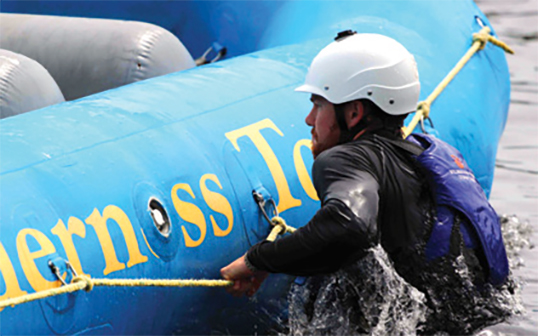
If the raft is upright, grab the side perimeter line on either side of a D-ring.

Trick #1

Push out with straight arms and kick your feet to get them to the surface. Don’t try to climb in until your body and feet are at the surface and your arms are extended. Then, with strong kicks and a swift pull, travel forward and up—you need momentum to get your upper body over the tube.

Trick #2

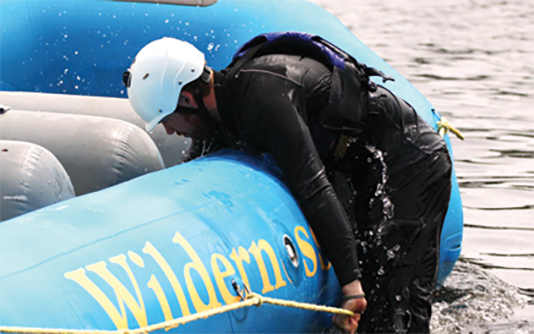
The other option is to turn your forward pull into a downward push, keeping your hands on the line until you are straight armed again, wrapping your upper body over the tube. Only then do you reach into the raft for a new handhold, likely grabbing a cross tube or the raft frame. Strong kicks this whole time keep you from stalling halfway.

Man leaning into raft

If the raft has flipped over

Your approach to how to climb in a raft when it’s flipped over is a little different. The trick is to work from the end where the floor angles down into the water like a ramp, using the floor lace as a handhold. Be warned: the hold isn’t great. Once you’ve climbed onto the bottom your job is to flip the raft over, but that’s another story.

This article originally appeared in Rapid‘s Summer/Fall 2012 issue. Subscribe to Paddling Magazine’s print and digital editions here, or browse the archives here.


In-text photos by: Dan Caldwell

Going Tidal Kayak Technique

Photo: Bryan Smith
Surfing Bay of Fundy tidal race.

This kayak technique article on how to paddle in tidal races was originally published in Adventure Kayak magazine.

On one of my early training trips to Anglesey, Wales, I was paddling out toward Penrhyn Mawr and the biggest water of my life when Nigel Dennis calmly paddled up beside me and said, “Remember, it’s the sea. It’s always worse than it looks.” Unsettled, I watched a two-meter swell roll through the Irish Sea and collide into four knots of current.

In the exploding waves my “highly maneuverable” 16-foot sea kayak felt like a fish in molasses. I’d sweep five or six times to get lined up with a wave; it would break and push me sideways and then I’d have to start all over again. I was all at once frustrated with my boat handling, nervous about the sea state and excited about being there.

The last few years have seen more and more paddlers enjoying tidal races like Penrhyn Mawr, Skookumchuck Narrows, Shubenacadie River, The Bitches, Deception Pass and others. Like paddling in the surf or wind, tidal water presents lots of mental and physical challenges and an equal amount of fun. Here are some basic concepts to ease you into the excitement of tidal rapids, including skills you can practice on flatwater anytime.

Paddle anything that moves

If you don’t have access to a tidal race—or even if you do—start out by paddling river whitewater at a moderate grade such as Class II. You’ll be surprised how accessible whitewater is and how much it improves your sea kayaking skill. This is one of the best ways to fast-track the water-reading skills you’ll need in tidal rapids.

Learn the environment

Perhaps the single most important skill in tidal race paddling is predicting how the water is going to affect your boat. Water- reading skill-level is directly proportionate to your cockpit time in moving water, so don’t get too frustrated if you can’t put your boat exactly where you want the first time.

Seek mentors to push you

To be an effective and efficient paddler in tidal races, you have to be comfortable and confident. The best way to safely increase your confidence is by paddling with coaches and peers who are capable of taking you into environments that are beyond your comfort level when paddling alone. With others covering the safety and leadership, you can experiment and learn.

Err on the side of edging

Get comfortable with spinning the boat 180 degrees with a series of forward and reverse strokes on flatwater. Edge the boat towards each sweep, using the stroke for support and balance. Increase the amount of edge as far as possible on flatwater. This will teach you to trust a more aggressive edge in moving water.

Chaos-proof your roll

When you add current to the equation, the potential for spending time in a low-oxygen, wet environment increases exponentially. A bombproof roll goes a long way to increasing your confidence and ability to perform. Practice by adding chaos to your flatwater roll practice: flip over mid-stroke and set up for a roll, but allow yourself to fail, capsize again and then switch to roll up on the opposite side; try flipping over with only one hand on the paddle—but first get a good pair of nose plugs.

Ease into leadership

Safe group management is critical in tidal races. Assuming that on the first several outings you have surrounded yourself with strong leaders and coaches, when your confidence increases it’s time to think about safety and leadership yourself. Assess the risks of the tidal venues you would like to paddle, considering the potential dangers as well as the best flows and tides, and whether you and your partners have the skills to resolve any situation that might arise.

BRYAN SMITH is a filmmaker and paddler in Squamish, British Columbia (www.reelwaterproductions.com).

This article originally appeared in Adventure Kayak, Early Summer 2009. Download our freeiPad/iPhone/iPod Touch App or Android App or read it here.

Matt Anderson’s Big Sheep

Matt Anderson's Big Sheep

Pirate of Lynnhaven, Matt Anderson, pulled this 11.75 pound sheepshead out of the pilings of Chesapeake Bay Bridge Tunnel.

Canoe Rescue Technique

While there is no one perfect way to deal with an swamped canoe there are a few techniques that work better than others depending on the situation. This parallel rescue is a great one to practice and learn because it can be adapted for a variety of situations.

Autumn Solitude

Photo: Brad Badelt

Long after you’ve paddled through the summer, as the warmest of seasons fades into your wake, the fall – perhaps anxious not to be forgotten – begins a visual celebration. Slowly at first, the earliest trees begin to yellow, eventually joined by those around them. Maples turn a vibrant red, reminding Canadians just where their national colours come from.

Though the waterways may be quiet, they are just as welcoming. For canoeists like Brad Badelt, a paddle along part of the Magnetawan Loop in Ontario is one of the many pleasures of the fall season.

Labrador Plateau Canoe Trip

Photo: Frank Wolf
Labrador Plateau Canoe Trip

It’s July 22, 2012. I’m only halfway there, carrying the canoe up a three-kilometer-long, 1,500-foot-high portage. A storm of black flies keeps me company and have bludgeoned me to the point where the protective shirt wrapped around my head is soaked in blood. The temperature in the windless Poungasse Valley has crept to 30 degrees Celcius and sweat mixes with blood, running in a pink stream down my chest. We’re trying to crawl out of this chasm to reach the expansive Labrador Plateau. “Shoot when it’s hard,” they say. It’s showtime.

I drop the canoe on the tundra, pull the camera out of the case strapped to my chest and go to work. First, a close-up zoom and comment on my beaten face and the general situation. Next, run ahead 20 meters to set up the camera on a tripod for a third-person perspective of the carry. Finally, flip the canoe back on my head, grab my little point-of-view (POV) camera and turn the lens to my face before continuing to march uphill past the tripod. Drop the canoe again, pack up the camera gear, pop the canoe up and carry on with the journey.

Doubling back down the mountainside I meet up with Todd. He’s been seized with heatstroke and is on the verge of puking. Of course the camera comes out. I interview him about how he feels, then set up the tent so he can escape the black flies, hydrate and sleep off his condition. He drops into the shelter and immediately conks out for three hours. I tell the camera what’s happening and then film his passed-out body from an aesthetic angle shot through the tent screen that initially focuses on him before fading to a foreground of no-see-um mesh. I put away the electronics, grab a couple of bags and start back up to the canoe. So goes day three of a 620-kilometer, 21-day expedition and film production through Nunatsiavut and Nunavik with my friend Todd McGowan.

As an adventure filmmaker, this is just a typical day juggling the duties of director, videographer, editor, producer, expedition leader, camp cook and sherpa. Working within this creative box, I try to create intimate portraits of the landscapes I pass through. With national broadcasts of my past three productions, I’ve managed to scrape along from one project to the next.

To avoid burnout, I take an occasional break from filming. In 2010, I completed a canoe trip to Hudson Bay without my cameras and it was bliss (read an account of this trip in Canoeroots, spring 2012, www.canoerootsmag.com/0040). I basked in the experiential simplicity of that adventure—just a friend, a canoe and the boreal forest. Then I struggled with committing to film my next adventure. 

I knew that I wanted to use film to show the interconnectedness of life in Labrador, but the all-consuming process of shooting a layered, broadcast-worthy movie about a tough expedition is like adding the logistical complexity of a third person to the canoe. In terms of energy and effort, it’s like bringing a toddler along. On the other hand, films I’ve made in the past have always been deeply rewarding. The tug of war in my mind didn’t end until the morning we left Vancouver for Goose Bay. The third person was coming. 

Labrador is a vast region, the most eastern part of Canada’s mainland, and home to more caribou than people. North of its southern towns there are no connecting roads and the only way up is by plane or ferry. 

With our canoe on board, we take the MV Northern Ranger on a two-day voyage along the coast to its terminus at the Inuit village of Nain. This community is my only chance to get the Inuit perspective of the land. Nain is the capital of Nunatsiavut, the Inuit region that comprises northern Labrador.

Filmmaking is a journey that parallels the canoe trip—you have an idea of where you want to go but never know exactly what, or who, is around the next corner. Unknown twists and turns are where adventure and inspiration arise. Likewise, the camera and the canoe are powerful tools if you have a purpose and mission. Both invite local populations to share ideas and stories they otherwise wouldn’t tell. I immediately begin hunting for relevant interview subjects.

Sarah Leo is the recently elected President of Nunatsiavut. I ask her about the area we’re to canoe through. She laughs heartily and says, “That’s not an area people go in the summertime—partly because of the difficult access…but mostly because of the flies.” I’ll use this quote in the narration of our buggy portage up the Poungasse a few days later. One interview down.

From Nain, it’s 238 thick kilometers to the George River in Nunavik and after speaking with Leo, I want to know if the rest of the locals think what we’re doing is rational, mad or somewhere in between. In a grassy field along the shoreline, I interview Johannes Lamp, an experienced hunter and local politician. He encourages and discourages me at the same time. “It will be difficult…but if you are determined, I think you can make it.” A nice bit of narration to lay over the portage footage, I think. In just a few hours I’ve managed to grab the local commentary I need to give context to the first leg of the film. 

Though the Inuit and Innu have been roaming these lands for millennia, British explorer Hesketh Prichard is the only known person to have crossed over the Labrador Plateau from Nain by canoe. He paddled—then abandoned his canoe and hiked—a route north of ours over a hundred years ago. Back in Vancouver, I’d looked at the maps and crafted a route that I thought made more sense than Prichard’s. Here’s hoping. 

On July 29th, Todd and I huddle behind a monolith on the shore of a large, unnamed lake while we wait for a heavy head wind to ease off. That’s the thing with the Labrador Plateau, it’s either windy or it’s buggy. Though it’s pleasantly bug-free behind this hunk of rock, we’re just sitting. 

Progress has been slow since we crested the Poungasse and gazed across the Plateau’s moonscape of rock and heather. Many of the rivers and lakes shown on our maps are severely shallow, boulder-choked and unnavigable. As a result, we’ve had to be content with dragging slowly over the tundra with short spurts of paddling across small lakes. Averaging only 12 kilometers or so per day, it’s been a grind. 

The wind across the Plateau doesn’t make it practical to carry the canoe so I’ve had to drag it overland with a line harnessed to my PFD. In the past week I’ve shot every conceivable dragging angle possible, to the point where the leading candidate for the film’s title is Dragging my Canoe across Nunatsiavut: A Fool’s Journey.

Groping for a fresh perspective, I pull out the rubber mosquito mask I’ve made for this trip. I slip it over my head and strip down to my briefs. Having recently filmed super close-ups of mosquitoes and their natural movements as they crawl over various parts of my body, I begin filming a sequence where I crawl, mosquito-like, around the tundra that will fade into a shot of a mosquito doing the same in the film.

On a deeper level, I want this film to illustrate the interconnectedness of all living things in the region—this scene will bridge the gap between man, mosquito and everything in between. The Inuit spoke of this connection during my interviews in Nain—though it’s unlikely they foresaw it this way. 

Finally released by the Plateau several days later, we paddle into the crystal clear, brook trout-laden Natikamaukau River. This waterway is a privilege to descend as very few, if any, people have done so before. The Natikamaukau is 22 kilometers long and drops 400 feet from its source, snaking through water-smoothed rock slots down a deep valley framed by high, barren ridges roamed by caribou and black bear. It eventually spills into the oft-travelled George River, which we’ll ride north to our finish in Ungava Bay. 

Todd is waiting with the canoe at the top of a class III rapid while I set up a fisheye lens on a bluff to get an overhead view of the run. Mounted on the back of the canoe is the POV camera set up on a three-link boom called a Magic Arm so both of us are in the shot. Often used as a lighting mount in studio work, the arm is the perfect device for shooting canoe films as it can be clamped anywhere and at any angle on the gunwales or thwarts. Having at least two unique perspectives of the same rapid is key to making a dynamic sequence. I don’t portage back up rapids to re-do shots so this is a one-shot deal.

I give Todd the signal, press record and scramble over the rocks, bash through the shore alder, splash through the shallows and hop into the canoe. With the POV camera rolling, I tuck into the spraydeck and we’re off.

The canoe slips into the current and we engage the river. I forget that I’m filming and enjoy the moment as a series of standing waves crash over Todd in the bow. We side-slip a series of pillow rocks before peeling safely into an eddy behind a large boulder.

After a bit of euphoric hooting and hollering, I hop out, scramble up the embankment and run 100 meters back to the still-running camera. In my mind I can already see how I’ll cut the scene when I get home. Surrounded by the barren splendor of Nunavik it dawns on me that this is a pretty good office—and I’m glad the third person came with us on our journey. As film and trip draw closer to conclusion and destination, I realize as both a filmmaker and adventurer, I couldn’t ask for anything more than this.

Frank Wolf is an adventurer and filmmaker who specializes in environmental documentaries. He lives in Vancouver.
This article was originally published in the Spring 2013 issue of CanoerootsThis article first appeared in the Spring 2013 issue of Canoeroots Magazine.